Category Archives: Paddy's Writing

Remote places and landscapes in Greece – Walks in the footsteps of Patrick Leigh Fermor: Part 9

The ninth of Christian Peter’s walks and still in the Dodecanese.

9.     Astypalaia /Dodecanese

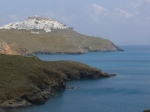
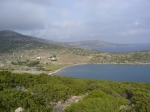
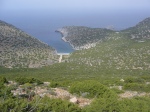
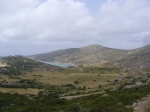
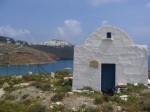
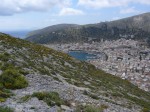
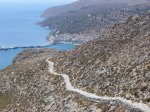
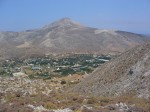
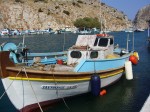
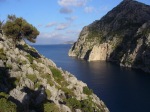
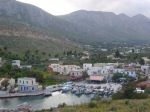
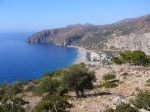
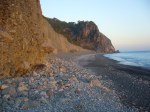
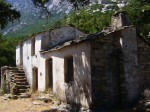
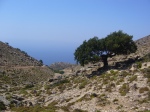
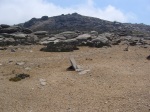
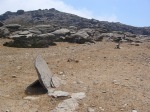
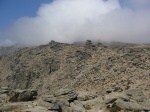
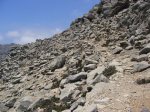
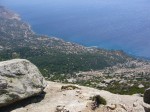
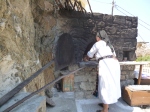
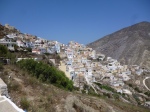
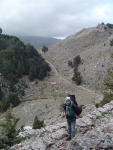
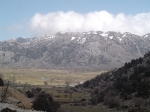
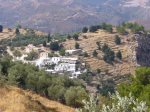
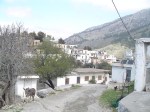
Situated between the Cyclades and the Dodecanese the “forgotten” island of Astypalaia  is even today calm and traditional.  Having the form of a butterfly a small band of land of only 200 meters separates the island into two sections: Exo Nisi and Mesa Nisi.  A day-long hike over the entire island starting in Chora ( Exo Nisi) brings you to the remote, almost abandoned village of Exo Vathy (Mesa Nisi). Only a few people live here leading a very simple and traditional island life as fisherman and farmer. One old couple runs a tavern.

Help Build a Kiln in Transylvania

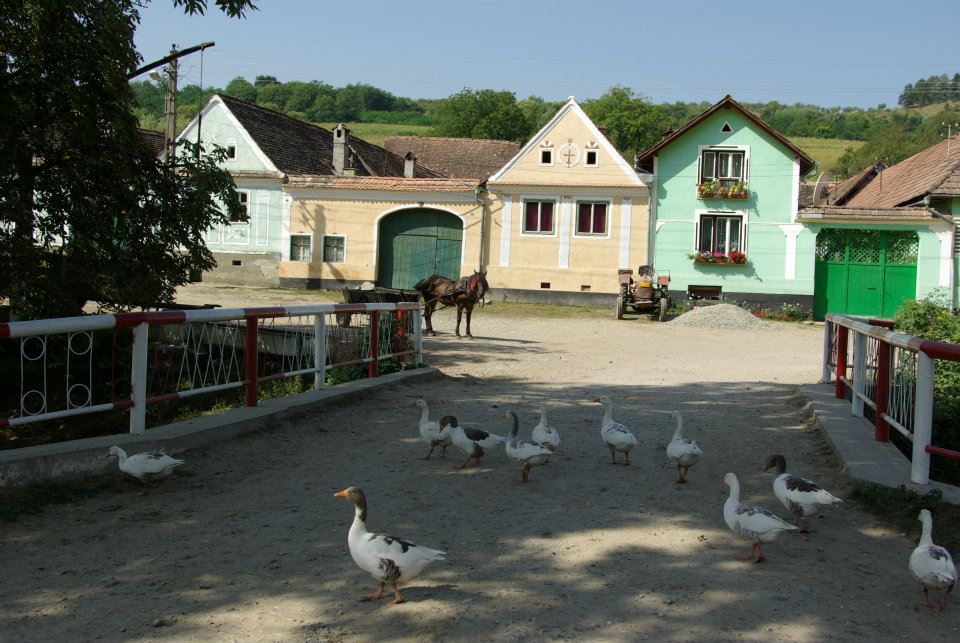
Malancrav, near Sighisoara, Romania

Malancrav, near Sighisoara, Romania

Global Heritage Fund UK and the Anglo-Romanian Trust for Traditional Architecture (chaired by William Blacker) have begun a project to protect and restore the cultural landscape of the Saxon villages of Transylvania.  The beautiful buildings are in desperate need of repair using only the traditional materials from the new kiln, and local people are in need of jobs. To address this, Global Heritage Fund is raising money to build a traditional brick and tile making kiln. Run by a Romanian expert, this kiln will directly employ locals and provide much-needed materials for the on-going work of restoration and conservation of the early vernacular buildings.

A crowd-funding site has been established to raise $20,000, of which they have raised almost $5,000,  and I support the attempt. If you would like to know more, and to donate, please visit the crowdfunding page here.

Remote places and landscapes in Greece – Walks in the footsteps of Patrick Leigh Fermor: Part 8

The eighth of Christian Peter’s walks.

8.     The “Italian Road” from Pothia to Vathi – Kalymnos

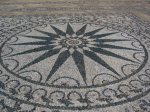
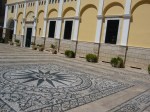
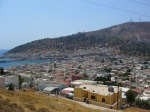
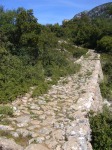
Paddy must have widely been travelling the Dodecanese, as he was so obsessed by pebbelstone mosaics. The islands of the Dodecanese offer a great variety of fantastic pebblestone mosaics. Nearly every old church has one  and the Kalymnian capital of  Pothia has one of the largest and most beautiful. Recently Kalymnos became a world class destination for rock climbers, but there are a number of wonderful walks on the island, too. The best known one is the walk on the old Italian Road (Italikós drómos) from the vibrant city of Pothia into the fertile valley of Vathys. Those who really want to follow Paddy’s footsteps  should visit Kalymnos for Easter celebrations. What you will find to happen in the streets of and on the mountains around  Pothia on those days is really Paddy-like: The local people like to celecrate the holy days with dynamite, this is why during those days people tend to call their island the “Aegean Afghanistan”.

Xan Fielding Crete books to be republished

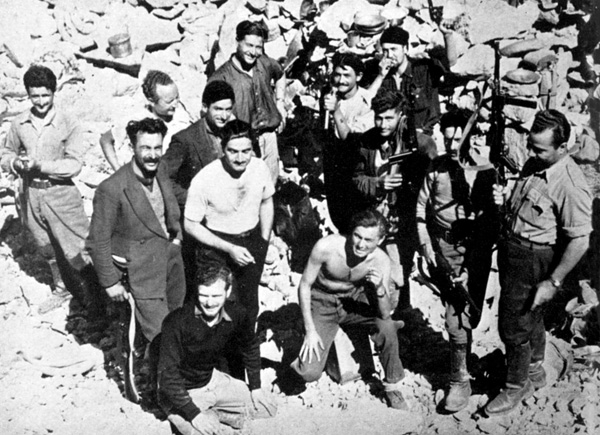
Xan Fielding in Crete

Xan Fielding (front centre) in Crete

I have just discovered that Xan Fielding’s books about his time in SOE and wartime Crete are to be republished by Paul Dry Books and will be available, if Amazon is to be believed, in June 2013.

Hide and Seek: The Story of a War-Time Agent
is available for pre-order now at £9.95 on Amazon – pre-order through the link above.

The Stronghold: The Four Seasons in the White Mountains of Crete
is also available for pre-order now at £9.95 on Amazon – pre-order through the link above.

These books are very difficult to get hold of and The Stronghold in particular is quite rare and sells for between £200-£500 on eBay.

Paul Dry Books link is here.

Don’t forget that you can also pre-order the third volume of Paddy’s trilogy,The Broken Road: From the Iron Gates to Mount Athos

Remote places and landscapes in Greece – Walks in the footsteps of Patrick Leigh Fermor: Part 7

Back to Crete for the seventh walk in Christian Peter’s series.

7.     From Sougia to Agia Roumeli – Crete

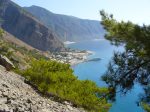
a.       One of the wildest and most difficult walks on Crete is the one along the coastline  between Sougia and Agia Roumeli. But it is rewarding as it offers not only a great variety of natural beauties, but also access to the Gorge of Tripiti which as “a clandestine landing point for the whole of the area” played a major role during the occupation. In his book “The Stronghold” Xan Fielding describes it  as “a needle-narrow opening in the littoral  ramparts, which travelers until recently believed to be inaccessible  except by sea” (p. 55). The Tripiti gorge marks the border between the provinces of Selino and Sfakiá and offers insights into the “highland labyrinth” above Koustogerako which during WW II “was probably the only habitable area in the whole of Crete  which could have sheltered in safety such a vast clandestine concourse as ours had been (Xan Fielding; Hide and Seek, p. 167).

Remote places and landscapes in Greece – Walks in the footsteps of Patrick Leigh Fermor: Part 6

The sixth of Christian Peter’s walks.

6.     From Christos Raches to Manganitis  – Ikaría

This unknown, but astonishing walk starts in the mountain village of Xristos Raches in Western Ikaria. The day long walk first heads towards the high plateau of Ammoudia from where you follow a steep, but paved kalderimi into the fishermen´s village of Manganitis.  As Ikaría even today does not have too much tourism, walking on the island still feels like the expedition into the everyday island life of former times .

The Broken Road – book cover artwork

The Broken Road book cover

The Broken Road book cover

A message from Artemis Cooper who is preparing Vol Three – The Broken Road – with Colin Thubron.

Here is the art work for ‘The Broken Road’, the final volume of Paddy’s great walk which comes out on 12 September… it is by Ed Kluz, a great choice of artist by John Murray. Ed is very much in the English pastoral and Romantic tradition, like John Craxton who did all the covers for Paddy’s books. I know Paddy would have LOVED it.

Available to pre-order from Amazon The Broken Road: From the Iron Gates to Mount Athos

A postcard from Cluj

The Hotel New York in the 1920's

The Hotel New York in the early part of the 20th Century

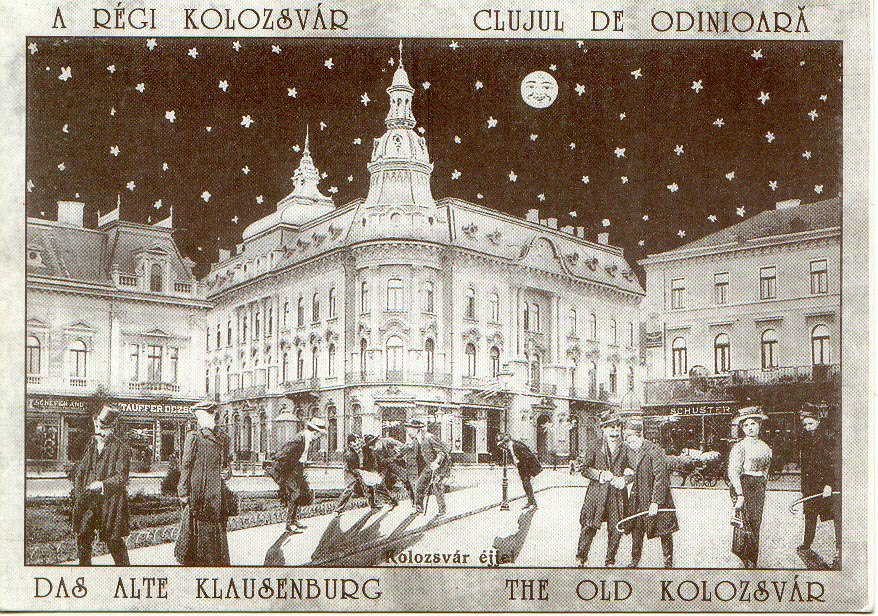
Thank you to my friend and colleague in Cluj, Stefi Timofte, for finding this picture for me. Of course it shows the Hotel New York (now the sad and decaying Continental) that Paddy visited with Angéla and István in the summer of 1934.

This story has been debunked in Artemis’ biography but I am not entirely convinced by the explanation in her book. Paddy says he got the details from a book in German, but the level of detail (see my story about the internal decor) implies that this book had very good photographs in colour or Paddy at least visited during one of his later visits to Romania.

For me, Paddy’s description of the romance of those days on the road, and the nighttime trysts with Angéla can never be diminished.

Related articles:

An eye for detail and the memory of the Hotel New York in Cluj

Angéla, Paddy, István and Tom in Cluj-Napoca

£1 a week – Rendezvous in Cluj

Remote places and landscapes in Greece – Walks in the footsteps of Patrick Leigh Fermor: Part 5

The fifth of Christian Peter’s walks. I hope that you are enjoying this; the scenery is stunning.

5. Amorgos/Cyclades

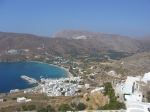
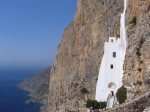
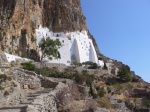
a. The longest hike on the Cycladic island of Armogos is also the most beautiful. The old connection between the main island villages of Chora in the Island centre and Aigiáli in the North is a one day walk on old, partly paved paths with fantastic bird eye views upon the whole island. Along the way lies the monastery of Chozoviótissa which is among the most important monasteries of the Aegean Sea.

Remote places and landscapes in Greece – Walks in the footsteps of Patrick Leigh Fermor: Part 4

The fourth of Christian Peter’s walks.

4.   Sfakián Monopatia – The old connection between Asi Gonia and Anopoli  – Sfakiá/Crete

How often did Paddy, Xan Fielding and George Psychoundakis walk the old Monopati from Asi Goni via Askifou to the Sfakian mountain villages of Anopoli and Agios Ioannis? Did that connection play a major role during the Cretan resistance?

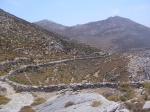
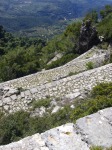
The mountain region of Sfakiá is the heartland of what Xan Fielding called The stronghold.  Here, in the Highlands of the White Mountains, Crete until today remained as pure and unspoiled as it always was. The walk starts in the birthplace of the Cretan Runner, George Psychoundakis, then reaches the hamlet of Goni in the Askifou-Plateau and continues via to Kali Lakki to Anopoli. Next to Anopoli, on the ridge of the Aradena Gorge, lies the ruined village of Aradena, where in 1947 a vendetta broke out and made its inhabitants leave. Aradena is as well the imaginary village, where Ioanna Karystiani’s novel Suit in the earth (Greek title: Koustoumi sto choma) might take place. Karystiani’s family is originally from Askifou. Following the bridge over the gorge, the walker continues to Agios Ioannis, Crete`s highest mountain village. A little bit underneath of Agios Ioannis you can find a place called Sellouda, which for me is the most impressive place in entire Crete. With the Levka Ori in your back you stand thousand meters high above the sea spotting Africa on the horizon. Although the cliffs seem impossible to pass through you can easily follow a stone paved Kalderimi through steepest terrain which leads you almost thousand meters difference in altitude down to the church of Agios Pavlos on the beach. From there you can continue your two days trek to Agia Roumeli.

This slideshow requires JavaScript.

Books about the region:

Xan Fielding (1954): Hide and Seek. Secker and Warburg.

Xan Fielding (1955): The Stronghold: An account of the four seasons in the White Mountains of Crete. Secker and Warburg.

Ioanna Karystiani (2000): Suit in the earth (German title: Schattenhochzeit)

Loraine Wilson (2002): Crete. The White mountains. A walking and Trekking guide. Cicerone

Peter Trudgill (2008): In Sfakiá. Passing time in the Wilds of Crete. Lycabettus Press.

Remote places and landscapes in Greece – Walks in the footsteps of Patrick Leigh Fermor: Part 3

The Third of Christian Peter’s walks.

3.   The village of Olymbos in the North of Karpathos

There is no village like Olymbos in the entire Agean Sea. I don`t know if Paddy ever visited the Dodekanese Island of Karpathos and the vilalge of Olymbos. If not he missed an important impression.  A village without bakery due to the fact that the Olymbites still use their old ovens in the gardens, a village where the women still wear their old costumes, a village where byzantine traditions (Songs, easter Tuesday) are still alive.

The old Monopati from Spoa to Olymbos is one of the most impressive walks I have ever made on Greek islands. It is partly paved, especially the last part leading into the village of Olympos is fantastic. If you want to understand what life was like in this remote village in former times, you need to get there by walking the old path.

Remote places and landscapes in Greece – Walks in the footsteps of Patrick Leigh Fermor: Part 2

The second of Christian Peter’s walks.

2.    The old Kalderimi to the village of Altomirá – Exo Mani

a.    I have often been thinking which way Paddy and Joan might have taken when they first walked over the Taygetos Mountains into the Mani in summer 1952.  Starting in Anavriti they probably headed towards Pighadia and Altomirá. That means they must have come down the fantastic Kalderimi from Altomirá to Kambos. For me this is even today the most impressive way to reach the Mani.

Miklós Bánffy’s Transylvanian trilogy to be published in new edition by Everyman’s Library

Count Miklós Bánffy

Count Miklós Bánffy

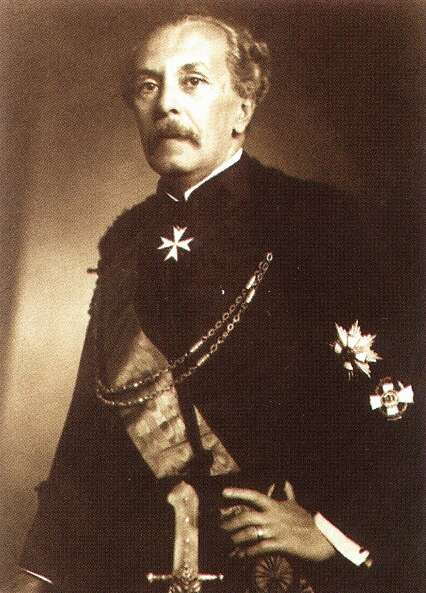
Many of the longer term readers will know that I am a true fan of the work of the great Hungarian-Transylvanian writer and statesman Miklós Bánffy. His Transylvanian trilogy is a masterpiece, and the autobiography, The Phoenix Land, re-published last year offers an insight to the character and soul of this intelligent, hardworking, and resourceful man.

Read more about Miklós Bánffy in the articles on the blog which you can find at this link.

I was recently contacted by blog reader Scott Walters from San Francisco who informed me about a new version coming out in 2013.

As you seem to be the go-to resource for all things Patrick Leigh Fermor, I thought you might be interested to know – assuming you haven’t heard already – that the English translation of Miklós Bánffy’s Transylvania trilogy (They Were Counted, They Were Found Wanting and They Were Divided), for which Paddy wrote an introduction and which you’ve blogged about on occasion – is going to be reissued this summer in hardcover by Everyman’s Library. Publication date is in July.

I’m thrilled about this – I’m a great fan of the trilogy and have long bemoaned the price of the existing paperback editions, which despite being reissued in 2010 still seem difficult to obtain at a reasonable price (though a Kindle edition is now available). That Everyman’s Library has opted for the work suggests that it’s finally attained the recognition it deserves. I posted an announcement on my blog, but should you put one on your Fermor blog I expect word will get out to more people who may be interested. All best, and a very happy new year.

I am grateful to Scott for getting in touch. Not so sure about the price issue as it affects UK readers. You can buy good copies of his work on eBay for around £8-£10. The Everyman versions appear to be coming out in July 2013 with a website price tag of $26 for a hardback edition.

All I can say is it is great that more people will read Bánffy, and that prices of books vary enormously depending upon where you are. Moral of the story is look around for bargains and read some Bánffy now!

Remote places and landscapes in Greece – Walks in the footsteps of Patrick Leigh Fermor: Part 1

Paddy is quite popular in Germany, there being a lot of interest in his work about Greece, and of course A Time of Gifts is set mostly in Germany. His is also famous for the Kreipe kidnap. We have many fellow blog readers from Germany, but one of the longest is Christian Peters who lives in Koln but has a passion for Greece. He sent me a series of short articles about walks in a variety of locations in Greece, with accompanying photographs. If you are thinking of what to do for your holidays in 2013, I hope that Christian’s articles which I will publish over a period of weeks will help to inspire you. Of course some are in the footsteps of Paddy. Over to Christian for an introduction …..

When I traveled in Greece this summer (2012), the consequences of the crisis were capable everywhere. The decrease in this year’s incoming tourism might create the need for a bit of stimulation. 🙂  And the remote places and landscapes, Paddy talks about in the introduction of his Mani-Book, are still there. They probably changed a lot during the last sixty years, but are still worth to be visited.

If you are interested I would send you a couple of ideas (8-10 walks and places with short texts and two or three photos each) of remote walks, places and landscapes in Greece I have been traveling during the last years. The places and walks are partly related to Paddy and his life, but there will be some, which I only assume, he would have liked.

1.    Walk one – Kalderimi in Western Crete – Selino

a.    Koustogerako, the village of the Paterakis Family in the Selino Eparchía of Western Crete, played a major role in the Cretan resistance during WWII. On the 29th of September 1943 it was completely burnt down by the Germans. Paddy visited the village a couple of times because Manoli Paterakis, one of the Kreipe abductors, was a close friend of him. Today, one of the most fascinating Kalderimi-Walks in Western Crete leaves the Omalos Plateau from Agii Theodori to the west, then descends into the Irini Gorge (Faragi Agia Irinis) until it reaches the main road heading towards Sougia between the villages of Moni and Livadas. From there it is only about an hour ascent up to Koustogerako.

I felt like staying there for ever

A short extract from Paddy’s masterpiece about Greece, the Mani, and a lost way of life. And of course he did stay.

Beyond the bars of my window the towers descended, their walls blazoned with diagonals of light and shade; and, through a wide gap, castellated villages were poised above the sea on coils of terraces. Through another gap our host’s second daughter, wide-hatted and perched on the back of a wooden sledge and grasping three reins, was sliding round and round a threshing floor behind a horse, a mule and a cow – the first cow I had seen in the Mani – all of them linked in a triple yoke. On a bank above this busy stone disc, the rest of the family were flinging wooden shovelfuls of wheat in the air for the grain to fall on outstretched coloured blankets while the husks drifted away. Others shook large sieves. The sun which climbed behind them outlined this group with a rim of gold and each time a winnower sent up his great fan, for long seconds the floating chaff embowered him in a gold mist.

The sun poured into this stone casket through deep embrasures. Dust gyrated along the shafts of sunlight like plankton under a microscope, and the room was full of the aroma of decay. There was a rusty double-barrelled gun in the corner, a couple of dog-eared Orthodox missals on the shelf, and, pinned to the wall above the table, a faded oleograph of King Constantine and Queen Sophia, with King George and the Queen Mother, Olga Feodorovna, smiling with time-dimmed benevolence through wreaths of laurel. Another picture showed King Constantine’s entry into re-conquered Salonika at the end of the Balkan war. On a poster, Petro Mavromichalis, the ex-war minister, between a pin-up girl cut-out from the cover of Romantzo and a 1926 calendar for the Be Smart Tailors of Madison Avenue, flashed goodwill from his paper monocle. Across this, in a hand unaccustomed to Latin script, Long live Uncle Truman was painstakingly inscribed.

I felt like staying there for ever.

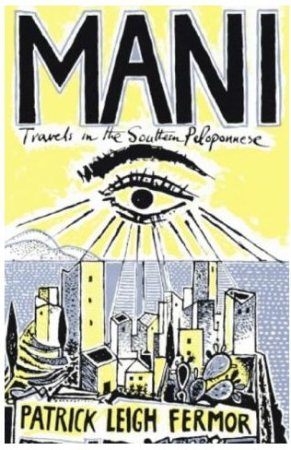
From Mani: Travels in the Southern Peloponnese, by Patrick Leigh Fermor which you can buy here,

Order Paddy’s biography Patrick Leigh Fermor:An Adventure by Artemis Cooper here.

Event – Sounds of the Greek World and Beyond: The travel writing of Patrick Leigh Fermor

A commemoration, presented in collaboration with the Society for Modern Greek Studies.

This event will celebrate the travel-writing of Sir Patrick Leigh Fermor (1915-2011), author and Hellenist. After a welcome by Professor Roderick Beaton, Director of the Centre for Hellenic Studies, and an introduction by Professor Tim Youngs, there will be three individual reflections on Patrick Leigh Fermor’s contribution to travel-writing, followed by a panel discussion. Participants include:

  • Professor Tim Youngs, Director: Centre for Travel Writing Studies, Nottingham Trent University; Founding Editor of Studies in Travel Writing
  • Professor David Roessel, Interdisciplinary Centre for Hellenic Studies, The Richard Stockton College of New Jersey; author of In Byron’s Shadow: Modern Greece in the English and American Imagination (Oxford 2003)
  • Sir Michael Llewellyn-Smith, Visiting Professor: King’s College London and former British Ambassador to Greece; author of Athens: A Cultural and Literary History (Oxford 2004)
  • Dr David Wills, Treasurer-elect: Society for Modern Greek Studies; author of The Mirror of Antiquity: 20th Century British Travellers in Greece (Newcastle 2007)
  • Artemis Cooper, author: Patrick Leigh Fermor: An Adventure  (John Murray 2012)

After a vote of thanks by Professor David Holton, Chairman of the Society for Modern Greek Studies, a reception in the Anatomy Museum will follow. By kind permission of the publisher, copies of Artemis Cooper’s new biography of Patrick Leigh Fermor will be available for purchase at the reception.

For further details of the programme, please see the event flyer

The event is open to all and is free. Prior registration is not necessary.

Organisers: John Kittmer & Dr Liana Giannakopoulo.

Location: King’s College London, Anatomy Lecture Theatre, K6.29 King’s Building, King’s College, Strand, WC2R 2LS – map

When: 20/11/2012 (18:30-20:00)

Contact: Queries should be directed to chsevents@kcl.ac.uk


‘A Tonic and a Treat’ – Patrick Leigh Fermor: A Celebration

Last Wednesday over seven hundred people packed out the main lecture hall of the Royal Geographic Society to hear Colin Thubron question Artemis Cooper about Paddy’s life in a joint event with the Royal Society of Literature, of which Colin is President. The event, sponsored by Art Tours, was entertaining, if perhaps a little shorter than one would have liked.

By Tom Sawford.

Artemis revealed how difficult it was to get Paddy to talk about his life, his experience and friends until on one visit to Kardamyli after Joan’s death she found every horizontal surface of his study, including the floor, covered with groaning piles of books, magazines, journals and personal correspondence (and I daresay some unpaid bills!). She offered to help him create some order and in doing so she started to ask questions: ‘I didn’t know that you had met so-and-so’ at which point Paddy, always happy to be distracted from his Herculean struggle with Vol Three, would brighten and start to expound on this outing, that visit or other glittering adventure. It was in this way that Artemis was able to make notes and get behind what she describes as the ‘waterfall’ of banter when asked directly to talk about his life.

It appears also that Paddy was perhaps always happy to receive visitors and recount old stories as he suffered both from bouts of personal depression and writer’s block.  Colin Thubron described the time that he and Paddy went for a long swim at Kardamyli and when well away from the house and others he talked to Colin about his struggles with this block, and his inability to understand this and his state of mind. Artemis said that Paddy was not ‘an intellectual’ and did not think too deeply. He was a ‘polymath’, less inclined to ask why, but rather dazzled, entertained, and fascinated by outward appearances and the sheer joy of being.

The other great excuse for not working was his correspondence with the three great correspondents of his life: Debo Devonshire, Annie Fleming and Diana Cooper. They were an ‘entertainment’ which Paddy approached with great enthusiasm and which ‘took up a lot of his time’ enabling him to divert his energies from his other writing.

We were also given a glimpse of The Broken Road (Vol Three) which is being edited jointly by Artemis and Colin. As the biography tells us it will be based almost entirely on the work that Paddy wrote in the early sixties for a US magazine ‘A Youthful Journey’ which was meant to be no more than 5,000 words. Once Paddy had reached the Romanian-Bulgarian border in this retelling he was suddenly gripped by a passion to write down this story in great detail, the result being over 50,000 words about the leg from Romania to Istanbul, although Colin said that the account does not include his time in the City.

Colin told us that this is difficult work, and they are being most careful not to add their own words. There is much work to be done but as I was told last week by Roland Phillips from John Murray, the publication date remains September 2013, not far short of the 70th anniversary of the start of Paddy’s youthful journey.

During the question and answer session a variety of subjects were raised from the condition of the house at Kardamylli – things are moving forward – to whether or not the Horace ode recitation actually did happen – yes it did but it may not have been on Mount Ida.

When it came to the last question a rather large man, wrapped in colourful braces stood up and shouted out that this was not a question but a statement, a Traveller’s Tribute. I think I could hear the whole audience groan quietly in apprehension, but all turned out well. Holding up a copy of the biography he boomed ‘This book is nothing short of a tonic and a treat! It kept me sane today during a long and boring train journey from Scotland!!’ Cue laughter and applause.

The event was sponsored by Art Tours who are arranging a tour of Patrick Leigh Fermor’s Mani in the spring of 2013. Places are limited and already about half are taken so if you wish to go on this tour, which will include Artemis Cooper as a guide and key speaker, please make contact with Edward Gates at Art Tours as quickly as you can edward[at]arttoursltd.com

In addition Art Tours have 15 signed copies of the biography Patrick Leigh Fermor: An Adventure to give away in a competition. To have a chance of winning, please send your Name, Postal Address, email address, and telephone number to Edward. Winners will be contacted in early November.

If you would like to know more about the Mani tour please download this pdf or contact Edward Gates at Art Tours Ltd on +44 (0)207 449 9707 or by email edward[at]arttoursltd.com


A quinquereme among abbeys

‘This year marks the millennium of St Coloman’s martyrdom in 1012 and his feast day of October 13th, Kolomani, will be marked with celebrations in Melk’. Above, the abbey at Melk, Wachau Valley, Austria. Photograph: Elfi Kluck/Getty Images

Irish saints and the Abbey of Melk. Surely there is a link to Paddy? Of course he visited here in 1934 and wrote about it at length in A Time of Gifts pp 154-158.

By Alexander O’Hara.

First published in The Irish Times, October 9 2012

The Abbey of Melk sits like a benevolent sleeping giant above the little town of Melk and the Danube. To the east lies the Wachau, one of the most magnificent stretches of river scenery in Europe, and the eastern foothills of the Alps, to the west, Mauthausen and Bavaria.

This Baroque pile, a Benedictine monastery since 1089, is one of the most recognisable attractions in Austria. The Anglo-Irish writer Patrick Leigh Fermor, who died last year, memorably described it as a “quinquereme among abbeys” in his 1977 classic A Time of Gifts, a wistful memoir of his travels by foot through Central Europe on the eve of Hitler’s rise to power in 1933 when he was 18. He captures the awe of approaching Melk in the snow and seeing the Abbey rise up on its limestone bluff above the Danube valley. Most of the tourists who now visit the Abbey church (which, with all the gold, has been memorably likened to being inside a giant rapper’s mouth by AA Gill) – probably take little notice of a side altar and Baroque tomb to the left of the high altar. This is the tomb of St Coloman, an Irish martyr and the first patron saint of Austria. This year marks the millennium of his martyrdom in 1012 and his feast day of October 13th, Kolomani, will be marked with special celebrations in Melk.

How did an Irish man come to be patron saint of Austria? The story begins in the autumn of 1012 when an Irish pilgrim named Colmán (Coloman is the Germanised version of the name) was on his way to Jerusalem following the old Roman road along the Danube towards Vienna. He was on the overland pilgrimage route, an ancient path that followed the course of the Danube valley through Hungary. This had been reopened following the conversion to Christianity of King Stephen of Hungary in 997 and the destruction of the Holy Sepulchre by Caliph Al-Hakim in 1009 had provoked an upsurge in pilgrimage to the Holy Land. Coloman only made it as far as Stockerau, a town 30km to the north west of Vienna. He had unwittingly entered a war zone in what was a borderland known as the Bavarian Eastern March, a strategic frontier wedged between the Magyars or Hungarians to the east and the Moravians to the north. The Babenberg margraves, the rulers of the March, were in the process of extending their control and territory in this colonial land.

Stockerau stood on the borders of the March and was subject to frequent raiding. The locals were in no mood to welcome exotic strangers, and garbed as a pilgrim and speaking Gaelic, Coloman clearly stood out. According to a near-contemporary account, the locals suspected him of being an enemy spy and summarily lynched him from a tree (on dying for the cúpla focal see Frank McNally, An Irishman’s Diary, March 16th, 2012).

The exact circumstances of Coloman’s murder will never be known, but following his death, miracles began to take place – the dead man’s hair and nails continued to grow, the dead tree on which he was hanged began to bloom, and people were healed who came in contact with his body. News of these miracles came to the attention of Margrave Henry I at Melk. One of the powerful Babenberg dynasty who were to rule Austria from 976 to 1246, Henry recognised the power of this new saint and sent his soldiers and clerics to take the body from Stockerau to his residence at Melk which later became the famous monastery we know today.

The Austrian Babenbergs traced their descent to the Franconian Babenbergs whose fortress at Bamberg in Germany gave the dynasty its name. The patron saint of Franconia was (and still is) St Kilian, another Irish man who was martyred in 689, and whose relics lie in the cathedral of Würzburg. It is noteworthy that both Henry I’s father and brother were both buried in the same cathedral where Kilian’s relics were kept. By promoting the new Irish martyr Coloman as a dynastic and regional patron for the region that would become known as Austria, Henry may have hoped to shape a spiritual landscape for this new land that drew on common cultural traditions of Bavaria and Franconia where there was a strong tradition of veneration to Irish missionary and martyr saints such as St Kilian.

The new cult of St Coloman became a vehicle for the Babenberg margraves, which they were keen to latch on to from the beginning in order to cement their new power base in the Eastern March and to bring cohesion to this frontier region. In time, Coloman came to be venerated as the patron saint of the historical core of Austria, Österreich ob und unter der Enns, from 1244 until 1663. Today Coloman is the patron saint for convicts who are hanged, passengers, and livestock as well as being one of the many ironies of history. As an eminent Austrian historian remarked, “It might seem particularly ironic today that the first Patron of Austria had fallen victim to Austrian xenophobia; something which nobody could have foreseen”.

Coloman’s feast day this Saturday (13 October) will be celebrated in Melk, the millennium anniversary of the death of the unfortunate Irish pilgrim who became Austria’s first patron saint.

Visit Saint Coloman’s Wikipedia page.

The ultimate pilgrimage to Paddy’s house in the Mani?

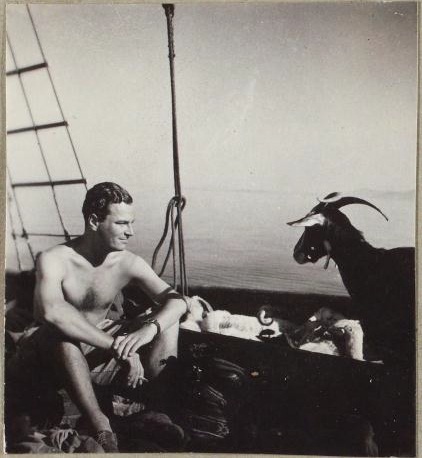
Paddy with Goat! Photo by Joan Leigh Fermor, from the Trustees of the National Library of Scotland

If you wanted to make a trip to see Paddy’s house at Kardamyli and to visit the wider Mani this may be the one for you. In the company of Paddy’s biographer, Artemis Cooper, this six-day tour will take in Mistra, Monemvasia, and Paddy’s house in Kardamyli, as well as other sites in the Mani.

This tour has been arranged by Art Tours (sponsors of the Royal Geographic Society event about Paddy 24 Oct) and is designed to celebrate Paddy’s life, whilst exploring the dazzling, rocky region he loved best in Greece, and where he and Joan lived for over forty years.

It is a celebration of his life and travels and is planned to run from 7-12 May 2013. Artemis will bring a unique insight into Paddy’s life and personality, and to cover the wider history of the region she will be joined by art historian James McDonaugh.

If you would like to know more please download this pdf or contact Edward Gates at Art Tours Ltd on +44 (0)207 449 9707 or by email edward[at]arttoursltd.com

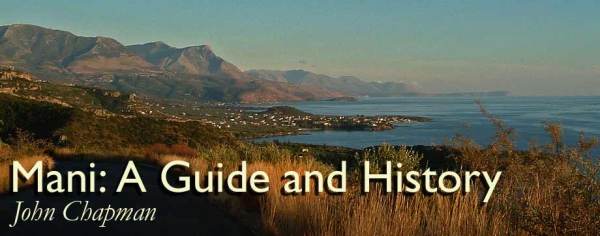
John Chapman’s ManiGuide

The publication this week of the article by Kevin Rushby about his search for the memories of Paddy and Bruce Chatwin in the Mani prompted a degree of comment; not much of it particularly flattering. There were many unfavourable comparisons made with the excellent work of John Chapman in his ManiGuide website.

Back in 2010 I did a feature about the Guide saying ‘Having had a quick scoot around it certainly looks very comprehensive, so if you are planning on a visit to the Mani you may wish to use it…  the content looks very useful indeed.’

Following the comments about Rushby’s article I thought it would be a good idea to bring John’s work back to your attention, particularly as he has now become a regular contributor to the blog, having provided some excellent photographic material and articles.

As I said ‘ …. if you are planning on a visit to the Mani you may wish to use it.’ In fact I would recommend it. Visit —> Mani: A Guide and History by John Chapman

Related articles:

On the trail of Patrick Leigh Fermor in Greece

John Chapman at Kardamyli

John Chapman’s photographs of Paddy at home in Kardamyli 2005

Flying to the moon

Inside the Hotel New York (Continental), Cluj

As many of you will know by now, I travel to Romania pretty frequently and I am fortunate enough to stay and work in the beautiful city of Cluj which Paddy says he visited during his road trip tryst with Angéla in the summer of 1934.

Paddy’s descriptions in Between the Woods and the Water are very accurate and detailed, and the one of the Hotel New York was the most impressive which I highlighted in this article last year with accompanying photographs.

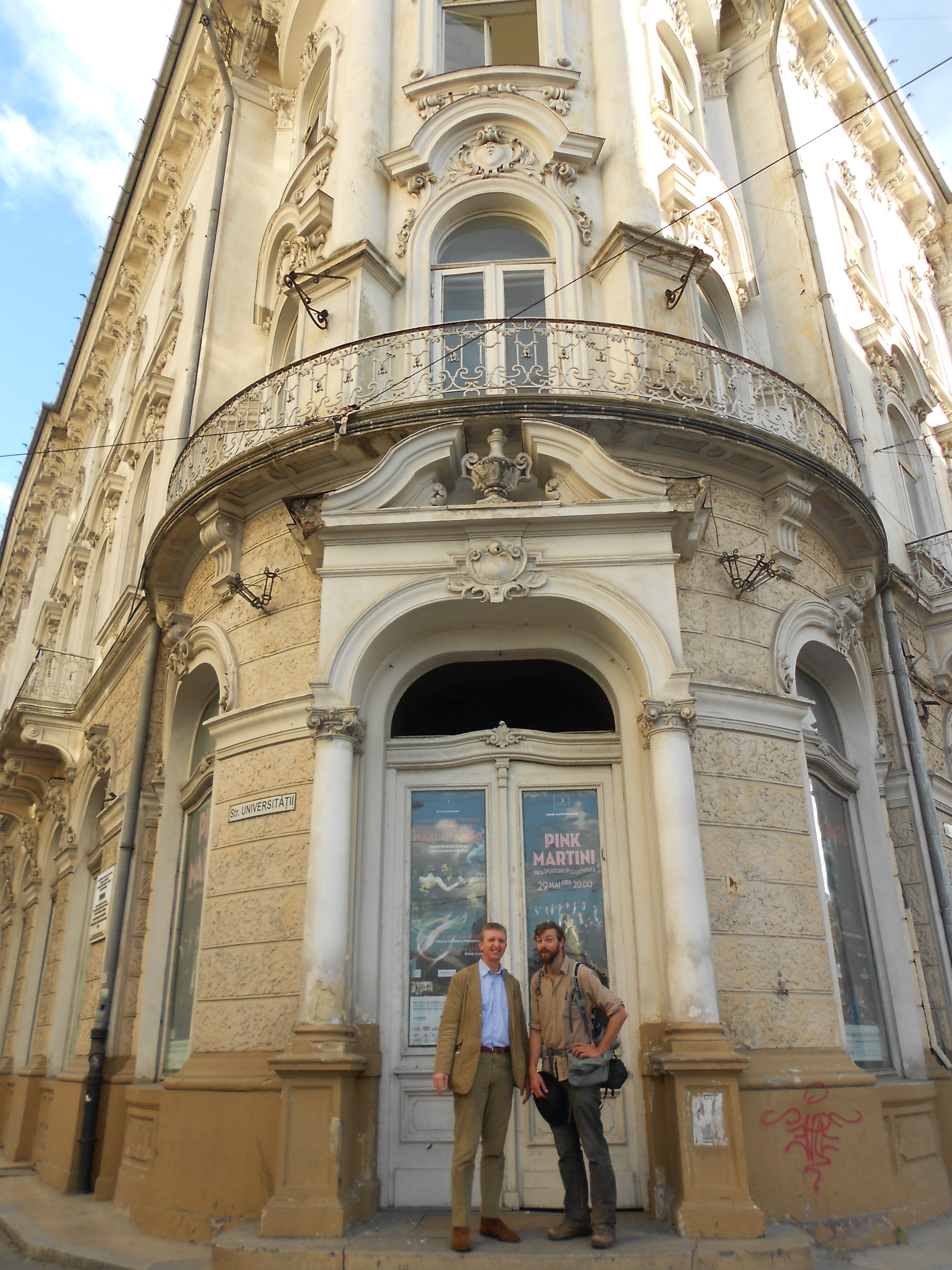
Nick and Tom outside the Hotel New York (Continental), Cluj

During Nick Hunt’s recent walk across Europe we were able to meet up outside of the hotel and I was desperate for us to drink a cocktail there just like Paddy, Istvan and Angéla. The fact that the hotel is closed should not have been a barrier to this; all I had to do was find the recipe and a willing local barman and all would be OK. Unfortunately following an ‘occupy’ protest security at the hotel was heavy and we were firmly told we could not enter. It must have been Nick’s road weary look and dusty attire which was the blocker!

I had done some research, and whilst I could not find the recipe of the Cluj cocktail which was described by Paddy thus in Between the Woods and the Water …

An hotel at the end of the main square, called the New York – a great meeting place in the winter season – drew my companions like a magnet. István said the barman had invented an amazing cocktail – only surpassed by the one called ‘Flying’ in the Vier Jahreszeiten bar in Munich – which would be criminal to miss

… I contacted the Bar Manager of the Hotel Vier Jahreszeiten Kempinski in München to find out the recipe for Flying. Florian Fischer kindly replied as follows, so maybe this autumn, to celebrate the publication of the biography, you may order one or even make it at home.

Dear Mr. Sawford,

thank you very much for your request. These are the things which are creating culture!

I am really interested in cocktails of this period. I was thinking about the recipe and I am quite sure, that it must be the following :

Flying Cocktail

2 parts of Gin
1 part of curacao Triple sec ( Cointreau preferred )
1 part of freshly squezzed lemon juice

fill up with champagne
served in a champagne flute

Actually it is the famous “White Lady” with champagne and this drink was really popular in these times.

Greetings from Munich and enjoy your “Flying Cocktail”

Cheers

Florian Fischer

Barmanager

Hotel Vier Jahreszeiten Kempinski München

Maximilianstr. 17 · 80539 München · Germany Tel +49 89 2125 2217· Fax +49 89 2125 2222 florian.fischer@kempinski.com

Related article:

An eye for detail and the memory of the Hotel New York in Cluj

On the trail of Patrick Leigh Fermor in Greece

This is a little bit toe-curling but as I always say we place all things Paddy related here …  for the record!

Ahead of a new Patrick Leigh Fermor biography, Kevin Rushby visits the Mani peninsula, home of the great man and unsung resting place of another British travel writing giant, Bruce Chatwin.

By Kevin Rushby

First published in the Guardian 28 September 2012.

Kardamyli, on Greece’s Mani peninsula, was home to Sir Patrick Leigh Fermor.

Old Mr Fotis turned my question over in his mind while sipping his morning coffee. Below the veranda some youths had been playing noisily on the harbour wall, but now they all dived into the turquoise sea and set off on the long swim to the rocky island in the bay. It had a fragment of crenellated wall on top of it, the ruins of a Venetian fortress. Fotis watched them go, half-smiling.

“We do seem to attract a lot of writers,” said the old man eventually. “But that’s a name I don’t remember.”

“Bruce Chatwin, Baroose Chit-win, Chaatwing.” I tried a few variations but none struck a chord. “His ashes are scattered somewhere in the hills.”

“No, I never heard of him.”

“What about Sir Patrick Leigh Fermor? You must know about him.”

I’d first heard of Kardamyli because of Leigh Fermor, who had made the place his home. I’d always hoped we might meet, but then the grand old man of British travel writing had died in June 2011 (leaving the literary world praying that he had finished the final volume of his Time of Gifts trilogy). I’d come to the Mani on a sort of literary homage, hoping to find a little of the magic that had attracted first Leigh Fermor and later Chatwin.

The old man shook his head. “No, I don’t think so. There was a writer called Robert. Now he was famous – cured himself of cancer by walking around Crete. [Former South Africa cricketer Bob Crisp wrote of his walk around Crete in the 1970s.] He was very famous.”

This felt all wrong. Was I in the right place? How annoying that the locals should raise this unknown above the two giants of travel literature.

Fotis leaned back and shouted in Greek to his wife in the kitchen. She came through, cloth in hand. “Robert Crisp,” she said, smiling. “What a wonderful man! So handsome! I remember him sitting up at Dioskouri’s taverna drinking and talking with Paddy. They were always laughing.”

My ears pricked up. Fotis’s face underwent a transformation. “Ah Paddy! That is him – your English writer. Of course, Paddy – or Michali we called him. Yes, Paddy was here for years and years. When I was young we used to say he was a British spy and had a tunnel going out to sea where submarines would come.”

It didn’t surprise me. Leigh Fermor had been, by all accounts, extremely old school, endlessly curious and an accomplished linguist – all well-known attributes of British spies. He produced a clutch of good books and two classics of the genre, A Time of Gifts and Between the Woods and the Water, detailing his journey as an 18-year-old on foot to Constantinople.

“Did you see a lot of him?” I asked.

Fotis shrugged. “Sometimes. He liked to walk a lot. Now Robert Crisp – I used to see him. What a character!”

“Is Paddy’s house still empty?” I persisted. “I heard it was now a museum.”

Fotis shook his head. “No, no. He left it to the Benaki Museum in Athens (benaki.gr) and they’re supposed to turn it into a writers’ centre. My guess is nothing will happen for a while.”

I could hardly complain about Greek tardiness: Leigh Fermor himself had taken 78 years over his trilogy, and even then no one seemed very sure if he had completed the task. There was, I decided, only one way to get close to the spirit of these colossi of travel-writing: to walk.

“Which paths did Paddy like best?”

Fotis fetched a map and gave me directions. It was already hot when I left him on his veranda. I could see the youths lazing on the harbour wall again, tired by their long swim. Was this really the time of year for walking?

I headed through the ruined village, as instructed, and found a narrow steep path rising up the hillside. Before too long I came across the stone tomb that locals say is the grave of Castor and Pollux, heavenly twins and brothers to Helen of Troy. Kardamyli is mentioned in Homer’s Iliad as one of the seven towns that Agamemnon gave to Achilles.

Sweat was pouring off me now, but I kept going. Scents of thyme and sage rose from the undergrowth. Fotis had said there were lots of snakes up here, but I didn’t see any. The views of the bay below, however, were becoming more and more magnificent.

The Mani is the middle finger of the three-pronged southern Peloponnese, a 40-mile long skeletal digit that was almost inaccessible, except by sea, until recently. When Leigh Fermor first came here in 1951, it was by a marathon mountain hike across the Taygetus range, whose slopes seem always to be either burned dry by summer sun, or weighted with winter snow.

Tower in the Taygetus mountains. Photograph: Kevin Rushby

The people here were different. For a start they had turned vengeance into a lifelong passion, building war towers to threaten their neighbours and generally making life on a stony mountain even grimmer than it needed to be and clinging to weird atavistic beliefs. No wonder that in the 1950s most of the younger people abandoned it for places not as badly infested with saltwater ghouls and blood-sucking phantoms – Melbourne and Tottenham were particularly popular.

Fotis himself had been one of them, settling in Australia for many years before coming home and opening a hotel. Nowadays some parts of the Mani are thick with holiday homes and development, but Kardamyli remains delightfully quiet and understated, the sort of Greek village where old widows in black sit out every morning watching the world go by.

Having reached a good height on the mountain I started to follow the contours, dipping in and out of the shade of walnut trees and cypress, drinking clear cold water from a spring. Further on I came to the village of Proastio, where Fotis had told me there was a church for every family, the ancestors having been sailors, and very superstitious. At the gorgeous little basilica of Agios Nikolaos in the main street I got the priest to come and unlock the door, revealing a gallery of perfect 17th-century Byzantine murals.

Byzantine murals in Proastio church. Photograph: Kevin Rushby

I tried the name Chatwin on him, and wondered how to mime death, cremation and scattering of ashes. But the Orthodox Church does not approve of cremation and his face told me I would not get far.

Returning to Kardamyli by a steep cobbled donkey trail, a kalderimi, I passed Fotis’s veranda once again.

“Who was that writer?” he called. “My wife thinks she knows.”

Anna came out. “Paddy himself scattered the ashes of a writer friend of his, up in Exochori.”

That was where I had just been walking, only higher. Next morning I started much earlier and with a water bottle. Fotis was already up and about when I passed his house.

“Exochori is my home village,” he said. “But what you see now is just old people up there. The old Maniati culture is gone. We used to grow silkworms and our mothers made all our underclothes from it. Can you believe it? We were peasants in the most remote part of Europe, but we wore silk.”

He tried to give me directions to the church, but it got so confusing that I just pretended to understand and resolved to ask along the way. As it happened, this was a useless strategy since the few old people I bumped into spoke no English, and my phrasebook was inexplicably silent on the important line, “Where are scattered the remains of the travel writer?”

In the end I came across a small white-washed shrine with a view of the sea. There was just room to enter, and inside a votive candle burned on a tray with some fresh flowers. A white dog appeared. I elected to call it the Chatwin Church. After a few minutes of contemplation I set off again, southwards past one of the war towers, a gorgeous forest monastery and finally the unspoilt hamlet of Castania, where the taverna owner marched me into the kitchen, pointed out the various dishes and then served a vast quantity of delicious food with a jug of rough wine. It took several strong coffees to get me moving again for the long tramp home.

Back in Kardamyli late that afternoon, Fotis was keen to hear of my walk, but he scoffed at my description of the Chatwin Church. “No, no! That is not it. Come on – I’ll take you there.”

“I’m a bit tired.”

“Good God, we’re not walking! In my car.”

Soon we were on a longer, twisting route. Fotis pointed out landmarks and patches of land that his family owned. I asked about his ancestors.

“The Mani was always where people came to hide,” he said. “Our family are said to have arrived when Byzantium fell to the Ottomans in 1453.”

“They came from Constantinople?”

He nodded. “Our family tradition is that we were clowns for the Byzantine emperor.” He smiled. “But I’ve no idea if that is true.”

He slowed the car down. “Look. This is where you turn off the main road, between the school and the cemetery.”

We pulled up in the shade of two pine trees then set off walking. We picked our way through some old stone houses, their walls overgrown with vines, their shutters closed.

“Holiday homes now,” said Fotis. “Exochori people working in Athens.”

Sunset above Kardamyli. Photograph: Kevin Rushby

Then we were on a grassy rill of land and I could see the church, a tiny Byzantine basilica, its rough stone walls and ancient pantiles crusted with lichens. Laid out before it was a wonderful tranquil panorama of the sea, its surface smooth as a sheet of silk. It was obvious why a traveller would want to come to rest here, overlooking the sea Homer’s heroes had sailed.

I stood there for a long time. Fotis was searching for the key to the church, normally left in a crack or niche, but there was no sign of it and we gave up. Back in the car, I asked Fotis to point out the house of Paddy Leigh Fermor and glimpsed a low pantiled roof almost submerged in trees on a crag next to the sea.

“Is there no way to see it?”

He shrugged. “It’s all shut up.”

“Is there a beach?”

“Yes – a tiny one.”

I memorised the spot. When Leigh Fermor came to the Mani he did some impressive wild swimming. To honour his adventurous spirit I felt I should swim around to his house and take a look. So next morning, before the heat of day, I entered the sea by the harbour and swam south down the rocky coast hunting for that tiny beach. I swam for what seemed a long time and had given up and turned back when I saw it: a little shingly beach with a single-storey house above. I swam closer until I could stand in the water.

It was a lovely place: deep verandas and stone walls under a pantile roof. Mosaics of pebbles had been made on a flight of steps. I called out but got no answer. The house was shuttered and quiet as though still in mourning. I waded up the beach and sat at the foot of the pebble path. I could see a colonnade with rooms off it, then a larger living room.

I thought of the years that Leigh Fermor had spent here: by all accounts he was a great host and storyteller. When I’d asked one old lady in the village if she had read any of his books, she’d laughed, “Why would any of us read his books? He told us all the stories himself!”

The last story had been that third volume of his epic walk across Europe, but he had never finished it, perhaps never would have. And now a great peace had descended on the place, a peace I didn’t want to disturb. I walked back down to the water and swam out into the bay. Without thinking, I found myself heading for the island of Meropi, the one that those youths had swum to. I would explore the ruins of that Venetian castle.

Order Paddy’s biographyPatrick Leigh Fermor:An Adventure by Artemis Cooper here.

Related article:

Chatwin and Paddy: In the Footsteps of Bruce Chatwin

Ada Kaleh: the lost island of the Danube

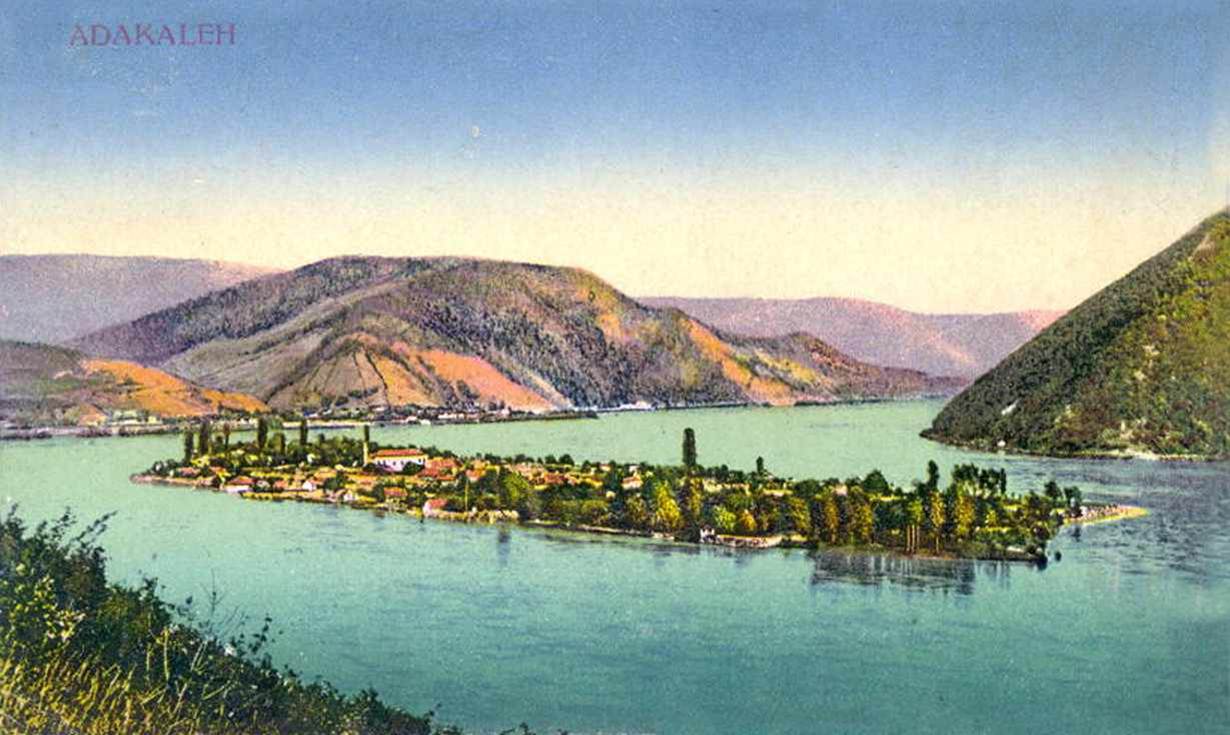
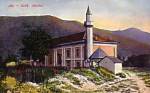
Ada Kaleh island postcard

Towards the end of Between the Woods and the Water, Paddy is exploring the Danube which he described as wild, with ‘many scourges to contend with’ including the Kossovar winds which in the spring could ‘reach a speed of fifty or sixty miles an hour and turn the river into a convulsed inferno.’ A long, long, way from the tamed beast that the once great river is now.
In the midst of this occasional inferno lay an island with a Turkish name, Ada Kaleh, which means ‘island fortress’. Paddy tell us that he had read all that he could find about the island, and was very keen to explore this lagoon of Turkish descendants which was quite probably abandoned by the retreating Ottomans as their empire shrank. Although placed under control of the Austro-Hungarian Empire following the Berlin Conference in 1878, very little changed and it was ceded to Romania at Versailles. The Romanians too had better things to do with their time and left the inhabitants undisturbed.

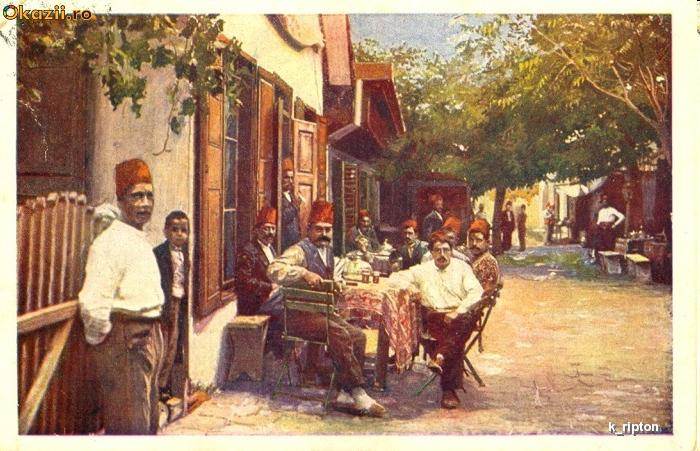
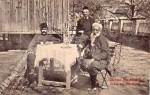
It was into this cultural, religious, and demographic time capsule that Paddy stepped in August 1934 and immediately joined a group of men at a rustic coffee-shop, who were armed with ‘sickles and adzes and pruning knives’. Paddy describes the moment as if he had suddenly been ‘seated on a magic carpet.’

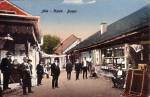
Ada Kaleh – “as if seated on a magic carpet”

Paddy spent a night on the island, and slept out by the Danube, under the stars, watching meteors, and listening to the sounds of owls and barking dogs, interrupted by the occasional sound of a cart wheel or the splash of a fish in the now calm and lazy river. He dreamt of crusaders under King Sigismund of Hungary attempting to turn back the Turkish tide in 1396. They crossed the river almost at this point, and what excited Paddy most was the thought that ‘the last pikeman or sutler had probably reached the southern bank this very evening, five hundred and thirty-eight years ago.’ Sigismund’s allied army of Hungarians, Wallachians, French, Germans and Burgundians, with a few Englishman, was shattered by Sultan Bayazid at the battle of Nicopolis further down the Danube, with the captured dying in ‘a shambles of beheading lasting from dawn to Vespers’.

Like the storks he saw the next day, who were preparing to fly off to “Afrik! Afrik!”, as an old Turkish man gestured, Paddy departed after breakfast to Orsova. Ever one for losing things he discovered that he had left behind an antler which he had been carrying as a trophy. Paddy writes that ‘perhaps some future palaeontologist might think that the island had once teemed with deer’.  This cannot be as the river was dammed and Ada Kaleh submerged by the rising Danube. Its population was evacuated and its mosque removed to a new, safe location. Such mitigation measures did not satisfy Paddy as he states in the Appendix to BTWW. The second of the two attached presentations is also a heartfelt, but belated cry of protest in Romanian.

Please take a look at these presentations. If you have PowerPoint you will find there is appropriate musical accompaniment (slide show one has a song called Ada Kaleh). The images show the place and its people almost exactly as Paddy would have seen it, something that we can truly say will be seen no more. The pdf copy is for those who do not have access to PowerPoint. I do hope that you enjoy them.

Tom

PowerPoint 1

PDF of PowerPoint 1

PowerPoint 2

PDF of PowerPoint 2

There are lots more great pictures to be found on Google images.

A PLF Pilgrimage to the Abbey of St Wandrille

Ed Ricketts has been travelling again and taking the opportunity to follow in the Paddy’s footsteps, this time at the Abbey of St Wandrille where Paddy spent much time writing, and described in A Time to Keep Silence. Ed has sent some pictures for us to enjoy.

If you have your own stories about Paddy related journey’s please send them to me. See About & Contact for details.

Dear Tom,

Hope you are well. Good to hear the news on the Artemis Cooper biog – should make for good Christmas reading!

If it’s of any interest to you, just to say that I was on a brief cycle tour of Normandy last week and passed by (well, it was intentional) the Abbey of St Wandrille, memorably described of course at the start of ‘A Time to Keep Silence’. As you can see from the attached photos, it was a glorious day with the surrounding countryside looking extremely green and in bloom.

I made a quick tour of the Abbey buildings, and slightly regret that I didn’t have more time to ask if it was known which ‘cell’ was PLF’s, or indeed if the connection is still remembered in any way today (no evidence of this from the gift shop). I would recommend a visit some time, it can be enjoyably combined with Rouen and the riverside abbey of Jumieges, a few kilometres to the south. A series of ferries also cross the Seine at various points nearby, which is somehow also quite a Leigh Fermorian experience. Finally, a paperback copy of ATTKS can easily be carried on a bike! (you just about make this out in one of the photos).

I think, from now on, I might try to follow a principle of ‘visiting one place PLF wrote about per year’ – there are worse ways of spending your time.

Cheers and keep up the good work,

Ed Ricketts

Related Articles:

A pilgrimage to Esztergom

An eye for detail and the memory of the Hotel New York in Cluj

Eight articles related to A Time to Keep Silence

Patrick Leigh Fermor’s archive acquired by the National Library of Scotland

From a National Library of Scotland press release dated today.

The archive of one of the most important travel writers of the 20th century and a war hero whose exploits were made into a major film has been acquired by the National Library of Scotland (NLS).

Sir Patrick (Paddy) Leigh Fermor, who died last year at the age of 96, is regarded as a central figure in understanding and appreciating mid-20th century culture.

To describe his life as colourful does scant justice to the reality. At the age of 18 he set off to walk from the Hook of Holland to Istanbul , a year long journey described in his books A Time of Gifts and Between the Woods and the Water. The Independent described the former as “rightly considered to be among the most beautiful travel books in the language.”

His war record is equally impressive. After the fall of Crete in 1941, he was sent back to the island to organise guerrilla operations against the occupying Nazis. He spent much of this time disguised as a Cretan shepherd, living in freezing mountains caves.

In 1944 Leigh Fermor organised one of the most daring feats of the war when he kidnapped the commander of the German garrison on Crete . This was made into a film Ill Met by Moonlight in 1956 starring Dirk Bogarde.

The archive consists of literary manuscripts and typescripts, correspondence with leading figures including the poet Sir John Betjeman, photographs, passports, portrait sketches and personal papers including visitor books and various honours awarded to Leigh Fermor. One of the star items is the only surviving notebook from his youthful trek across Europe .

It offers an unrivalled insight into his life and writings and adds to the wealth of travel literature at NLS. Acquisition of this archive is seen as helping to establish NLS at the forefront of 20th century travel literature research collections

“This is a fantastic collection which will be made available at NLS,” said David McClay, Manuscripts Curator. “We hope it will excite people who know of Paddy and introduce him to a whole new generation of people who may not be aware of his work.”

Its arrival at NLS comes just before a new biography of Leigh Fermor by the British writer and family friend Artemis Cooper is to be published.

Leigh Fermor died before he could complete the third volume in his travel trilogy. Artemis Cooper has worked on the uncompleted manuscript and this third volume – entitled The Broken Road – is expected to be published in 2013. This will all add to the interest in Leigh Fermor’s life and in the NLS archive.

The archive has been bought with a grant from the John R Murray Charitable Trust which assists NLS in the care and promotion of access to the Library’s John Murray Archive. Leigh Fermor was published by the Murray family.

The connection with the Murray publishing house was one of the reasons NLS was chosen by Leigh Fermor’s executors as the home for his archive. He also knew the Library, having donated his wife’s photographic collection to NLS just before he died.

NLS has also taken possession of the personal archive of Leigh Fermor’s close friend Xan Fielding, an author, translator and traveller who also fought in Crete . This has been donated to the Library by Fielding’s family.

Volume Three of Patrick Leigh Fermor’s trilogy to be published in Autumn 2013 and called The Broken Road

We have waited a long time, and now like London buses, or English summer rain, it is all coming at once. Following on from her work on Patrick Leigh Fermor’s biography, An Adventure, to be published in October 2012, Artemis Cooper will pull together Paddy’s work on Volume Three ready for publication in autumn 2013.

The book will have the title The Broken Road. If you Google that you will find a catchy country song by Rascal Flatts. In fact the title has been taken from the sixth volume of Freya Stark’s letters. I am told that everyone concerned with the publication is agreed that it “sets up the right resonances, because although The Broken Road completes the story, the text is taken from more than one unpublished source.”

It is perhaps not well-known that Paddy started to work first on the events of Vol 3. Much of it was written before his defining work on A Time of Gifts and Between the Woods and the Water, the other two volumes in the trilogy.

Artemis Cooper tells me that although “it does not have their high polish, it does provide an extraordinary insight into Paddy the writer, and the interplay of his memory and imagination.” and whilst “it’s not going to sound like ATOG or BWW”, I am sure it will be one of the most anticipated publication events of next year.

Whilst we wait we can sing along ….

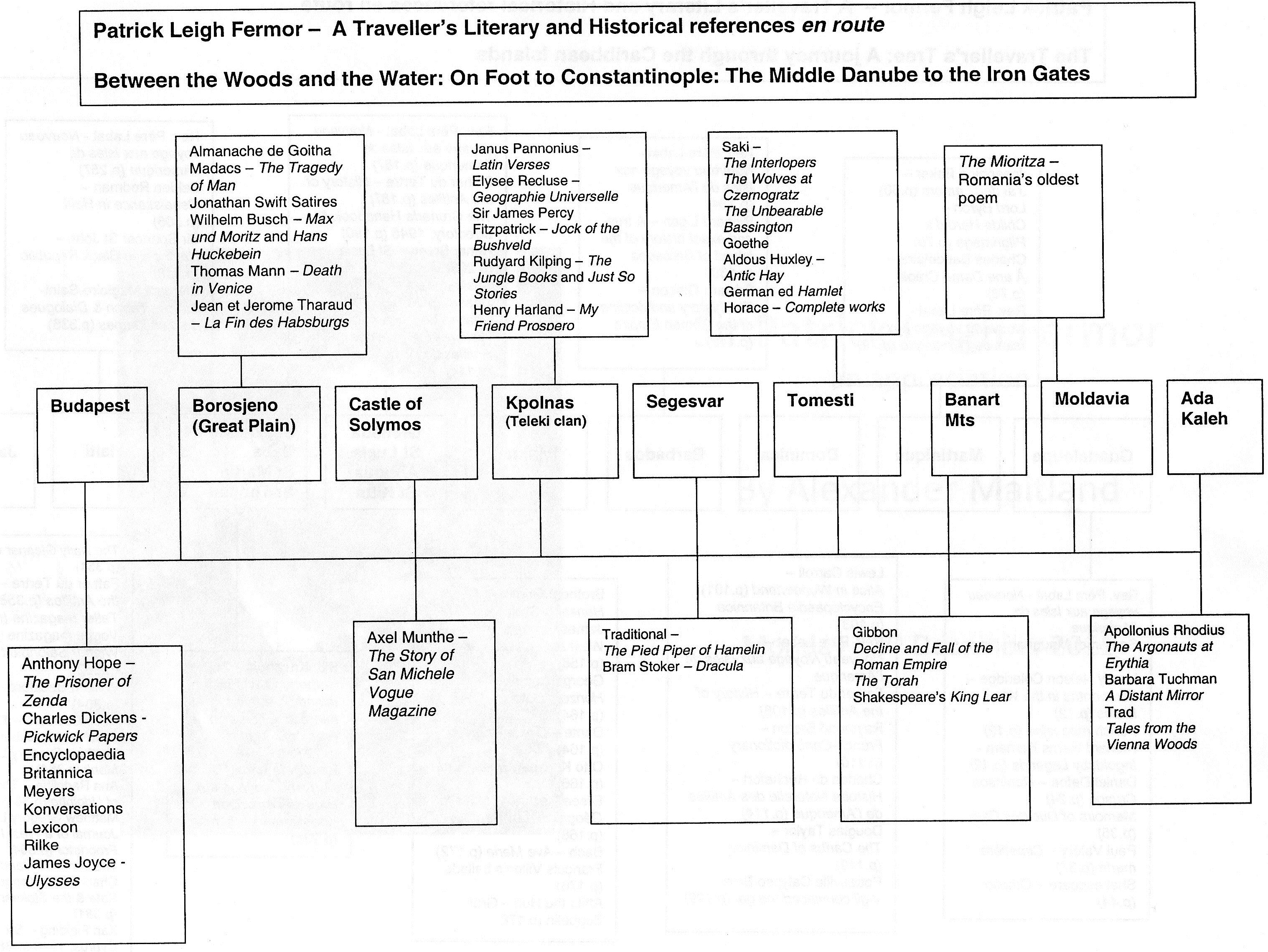
Literary and Historical References – Between the Woods and the Water

The last in the series which presents the work of members of the Royal Geographical Society which analyses chapter by chapter, literary and historical references from some of Paddy’s key works.

This was presented at the RGS in the afternoon talk on 12 December 2012,”Patrick Leigh Fermor: An Appreciation by Alexander Maitland, FRGS”.

My thanks to the Royal Geographic Society for permission to present this.

Download a pdf of this document here.

Related article:

Literary and Historical References – The Traveller’s Tree

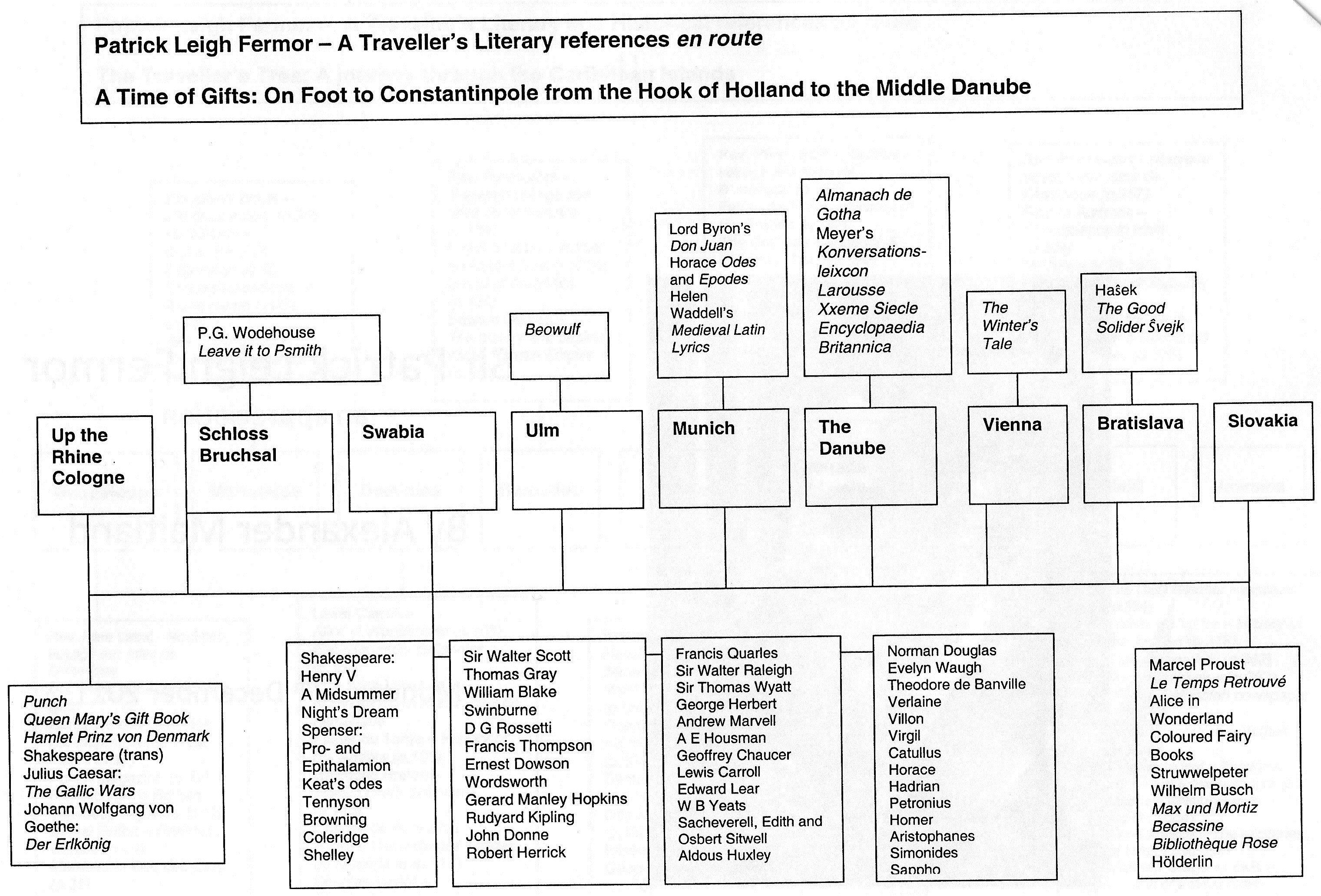
Literary and Historical References – A Time of Gifts

The second in the series which presents the work of members of the Royal Geographical Society which analyses chapter by chapter, literary and historical references from some of Paddy’s key works.

This was presented at the RGS in the afternoon talk on 12 December 2012,”Patrick Leigh Fermor: An Appreciation by Alexander Maitland, FRGS”.

My thanks to the Royal Geographic Society for permission to present this.

Download a pdf of this document here.

Related article:

Literary and Historical References – The Traveller’s Tree

Ein edler Landstreicher – Roumeli republished in German

From der Freitag. The German love affair with Paddy’s work continues. Rumeli in German.

In den Romanen von Patrick Leigh Fermor werden Landschaften zu Kunstwerken – und der Leser zu dem, der er war, als er mit der Taschenlampe unter der Bettdecke hantierte

Es sind Bilder, die haften bleiben, Bilder einer wild zerklüfteten Felslandschaft an Europas äußerstem Rand, von Menschen mit gewaltigen Schnauzbärten, die noch in der Mitte des 20. Jahrhunderts Dolche an ihren Gürteln tragen und die archaische Praxis der Blutrache kennen. Ihr Schöpfer, der englische Schriftsteller Patrick Leigh Fermor, durchwandert im Jahre 1952 Griechenland, genauer: die Mani, wie der mittlere Finger des wie eine Hand ins Mittelmeer greifenden Peloponnes heißt. Vor sehr langer Zeit, nach seiner Eroberung Karthagos, war der Vandalenkönig Geiserich auf die Mani vorgerückt, wurde aber mit heftigen Verlusten geschlagen, woraufhin er voller Zorn 500 Gefangene nehmen, in Stücke schlagen und auf dem Rückweg nach Karthago im Meer verstreuen ließ. Wenn Patrick Leigh Fermor davon erzählt, entsteht der Eindruck, die Geschichte der Menschengattung sei eine deprimierende Aneinanderreihung wahnwitzigster Episoden.

Read more here.

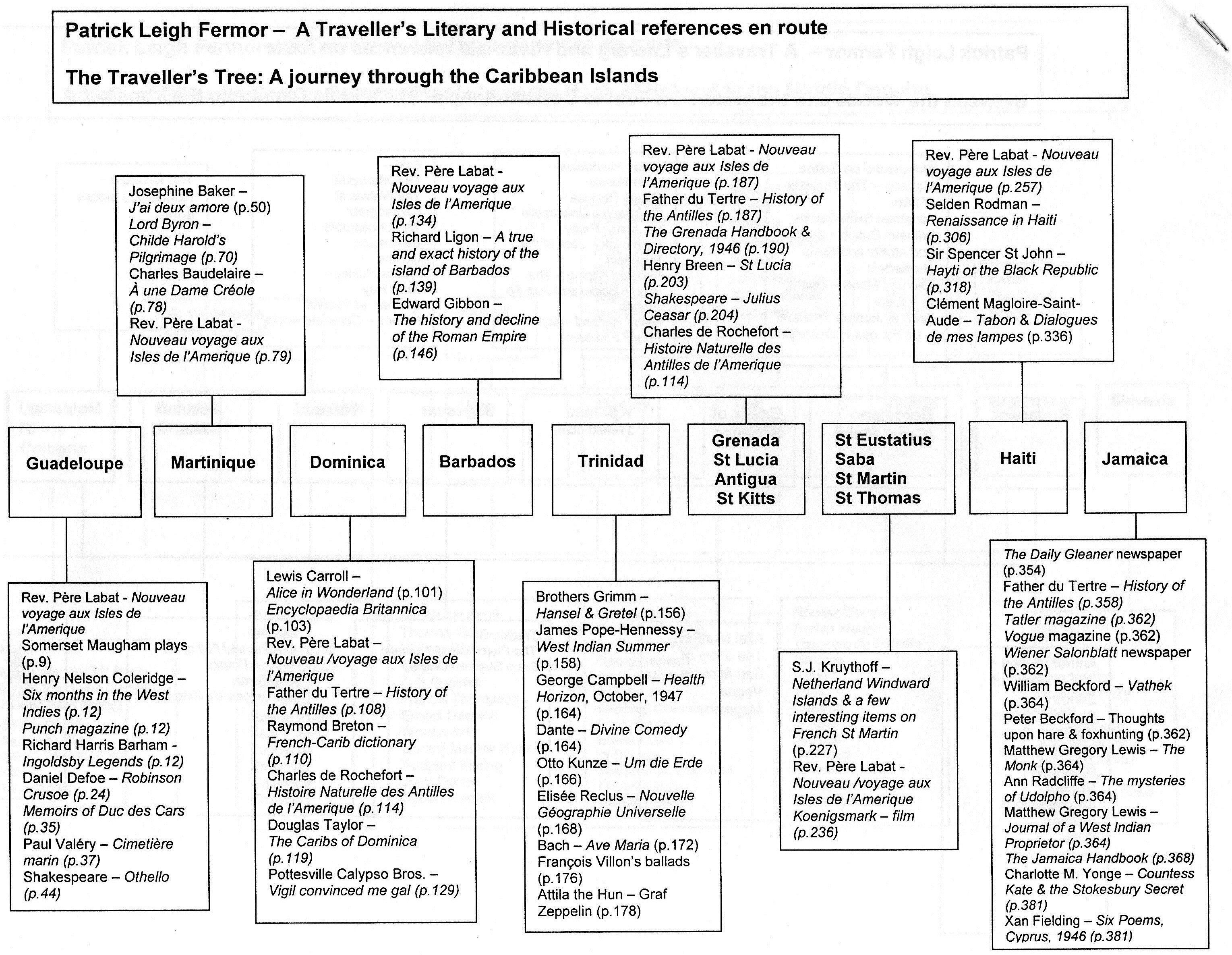
Literary and Historical References – The Traveller’s Tree

The first of a series which presents work done by members of the Royal Geographical Society which analyses chapter by chapter literary and historical references from some of Paddy’s key work.

This was presented at the RGS in the afternoon talk on 12 December “Patrick Leigh Fermor: An Appreciation by Alexander Maitland, FRGS”.

My thanks to the Royal Geographic Society for permission to present this.

Download a pdf of this document here.