John Craxton: A Modern Odyssey

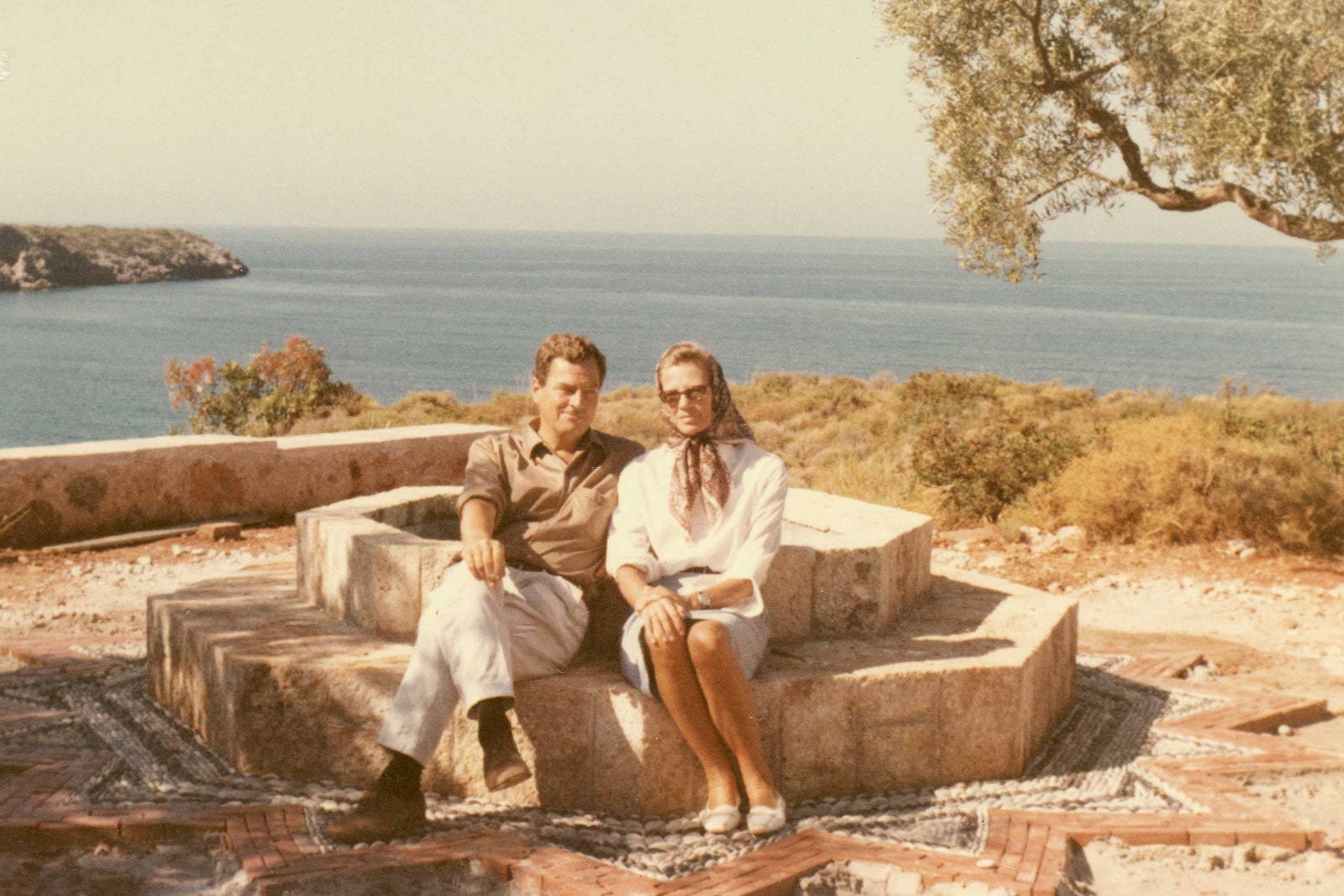
Sorry to fill my first few posts with events and exhibitions, but I thought that you would want to know about this as soon as possible. So annoyed I missed it before. An exhibition devoted to the beautiful work of Paddy’s book cover illustrator and great friend, John Craxton, that runs until 21 April 2024. It sounds like a marvellous couple of hours or so to immerse yourself in John’s work and maybe to get out to the sea around beautiful Chichester, a town that has some lovely restaurants, good shopping, and of course a beautiful cathedral.

From the website of the Pallant Gallery:

Take a journey out of the shadows of wartime Britain and emerge amongst the sun-lit landscapes of Greece and its vibrant people.

This retrospective will follow the works of celebrated British Romantic artist, John Craxton R.A. (1922–2009); from his melancholic images of poets within brooding landscapes created in Britain in the early 1940s, to the radiant paintings and drawings inspired by his adopted homeland in the Mediterranean.

The development of his work reveals Craxton’s experiences of confinement and exile, his personal liberation as a gay man, and his celebration of travel and colour, all set within the historical context of mid-century Britain and Greece. Inspiration taken from Greek archaeology, mythology and Byzantine mosaics shines through his art, as do affinities with acquaintance Pablo Picasso and, youthful best friend, Lucian Freud.

Marking the rebellious twists and turns in his life, the exhibition will showcase glorious paintings, poetic drawings, book cover illustrations, ceramics, dynamic theatre set designs, and rarely seen pieces from the Craxton Estate.

Shown for the first time alongside this exhibition, contemporary artist Tacita Dean will present Crackers (2023), a new two screen film projection which she recently created in Crete as a musing on her friendship with the artist.

Craxton’s versatility will be set within the context of some of his contemporaries in a separate display of pieces from the Gallery’s collection. Selected by contemporary artist Jake Grewal, this exhibit will include works by Graham SutherlandKeith Vaughan, John Piper, Paul Nash and John Minton.

Curated by Ian Collins, author of John Craxton: A Life of Gifts (2021), in partnership with Pallant House Gallery.

Includes other works from Pallant House Gallery’s collection and builds on the touring exhibitions John Craxton: Drawn to Light, currently at the Mesher Museum in Istanbul, and previously John Craxton: A Greek Soul at the Benaki Museum in Athens (2022-23).

You can book tickets here


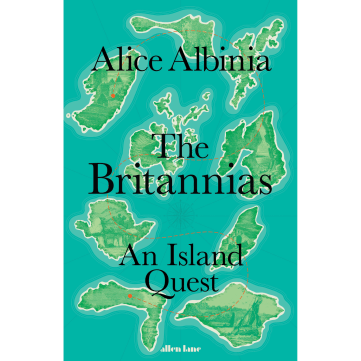
Event – The Britannias: An Archipelago’s Tale

I’ll say more about the way forward for the blog over the coming weeks, but we’ve always spoken a lot about more general walking and the benefits of pilgrimage. That might be a theme! If you are in London on Tuesday 21st November, you can hear author Alice Albinia and Dr Guy Hayward of the British Pilgrimage Trust discuss Alice’s new book, The Britannias: An Archipelago’s Tale. There will be much talk about walking and pilgrimage! Hope to see some of you there.

The event will be held at any traveller’s favourite bookshop Stanfords. You can book tickets here.

Here are the details:

Alice Albinia has spent the past seven years travelling around the edges of Britain, piecing together ancient, medieval and modern myths of islands ruled by women.

Join us for an evening of fascinating conversation with Alice and fellow author and pilgrim Dr Guy Hayward as we journey through her new book The Britannias and discover some hidden histories.

The Britannias reveals how much of Britain’s culture, history and ways of thinking has been formed by the islands around it. From Neolithic Orkney to modern-day Thanet, Alice Albinia takes us on a journey around the furthest reaches of Britain’s island topography, once known (wrote Pliny) by the collective term, Britanniae. Sailing over borders, between languages and genres, trespassing through the past to understand the present, this book knocks the centre out to foreground neglected epics and subversive voices. An ancient British mythology of islands ruled by women runs like a secret, hidden river through the literature of this land – from Roman colonial-era reports to early Welsh poetry, Renaissance drama to Restoration utopias – transcending and subverting the most male-fixated of ages. The Britannias looks far back into the past for direction and solace, while searching for new meaning about women’s status in the body politic. Boldly upturning established truths about Britain, it pays homage to the islands’ beauty, independence and their suppressed or forgotten histories.

The Britannias boldly upturns established truths about Britain, while revealing its suppressed and forgotten beauty.

About the speakers:

Alice Albinia is an award-winning author of fiction and non-fiction. Her books include Empires of the Indus: The Story of a River and Cwen, set on an archipelago which comes under female rule, which was shortlisted for the Orwell Prize for Political Fiction. Albinia has worked as an editor and journalist, writing for publications including the Wall Street Journal, Financial Times and National Geographic. She has taught writing in Orkney for the Islands’ Council, at King’s College London and the University of Kent.

Dr Guy Hayward is Director of the British Pilgrimage Trust (britishpilgrimage.org), which he co-founded in 2014 to promote ‘bring your own beliefs’ pilgrimage in Britain, and leads guided pilgrimages around Britain. He has been interviewed about modern pilgrimage for BBC1 and BBC2 TV’s ‘Pilgrimage’ and Channel 4’s ‘Britain’s Ancient Tracks’, BBC Radio 4 and has written for the Guardian. Guy completed a PhD at Cambridge on how singing forms community, founded choralevensong.org and is half of musical comedy double act Bounder & Cad. His website is guyhayward.com follow him on IG / TW on @drguyhayward

The event will start promptly at 7.00pm

Tickets £7

Includes glass of wine/soft drink

£5.00 off the published price of The Britannias for ticket holders when purchased on the evening.

Patrick Leigh Fermor book sparks Spanish craze for travel writing

María José Solano

María José Solano

First published in The Times

The British war hero and writer Sir Patrick Leigh Fermor charmed everybody he met, from strangers hiking on mountain paths to the German general he kidnapped on Crete.

His appeal to women became the stuff of legend. His amorous entanglements led Somerset Maugham — who was not captivated by him — to dub him “a middle-class gigolo for upper-class women”.

Over a decade after his death, Leigh Fermor is winning hearts in an unexpected quarter: Spain. The recent publication of two Spanish books about his life, both impassioned homages written by women, has highlighted a fanatical following amongst the country’s social and literary elite.

“There is a sect of Leigh Fermorphiles that is really surprising given Spain has no great tradition of reading travel books,” said Santiago de Mora-Figueroa y Williams, the Marquis of Tamarón, who became friends with the author while serving as ambassador to London from 1999 to 2004. “Also he never wrote a book about Spain. But as a romantic figure, full of courage and wit, he is irresistible to certain Spaniards.”

Known to all as “Paddy”, Leigh Fermor, who died aged 96 in 2011, led a spirited life. Expelled from the King’s School, Canterbury, for — to use his euphemism — holding hands with a greengrocer’s daughter, his solitary trek as an 18-year-old across 1930s Europe formed the basis of his most famous work, A Time of Gifts. Serving with the Special Operations Executive during the Second World War on Crete, he kidnapped General Kreipe, the island’s German commander, with whom he struck up a friendship over a shared fondness for Horace’s Odes.

His derring-do, literary panache and good looks have prompted a posthumous flowering of aficionados in Spain, said María José Solano, whose account of her travels in Leigh Fermor’s footsteps was published this month. To Spanish minds, she added, his postwar, lifelong residence in Greece, where he built a home in the village of Kardamyli in Mani, made him a fellow Mediterranean.

“He belongs to the lineage of mythological heroes. And was a seducer. And a rogue,” said Solano. “My book is one of absolute admiration and I did not feel like hiding it.” Arturo Pérez-Reverte, the bestselling novelist, said: “Leigh Fermor was until now only appreciated by a very select minority of readers in Spain but Solano’s book has popularised him.”

Her unabashed love letter, Una Aventura Griega (A Greek Adventure), follows another written by Dolores Payás, Leigh Fermor’s Spanish translator, detailing their friendship and daily life at his house in his last years. Its title, Drink Time, refers to his routine of announcing at 1.30pm and again at 8pm that it was the hour for a strong tipple.

Calling her work an “homage without any complexes to a proud, invincible and adorable elderly gentleman”, Payas said: “My memories of working with him — we spent most of the time chatting and drinking wine — consist of a succession of glorious, radiant and golden days”.

The passion for Leigh Fermor has led to a group of Spaniards, known as “le club Paddy”, travelling in his footsteps to Crete to visit the scene of the famous kidnap (the subject of the film Ill Met by Moonlight) and Cairo, where the author and his comrades partied during the war.

Others have made the pilgrimage to his Greek house, which impressed Sir John Betjeman, hosted friends such as Nancy Mitford and “Debo” — the Duchess of Devonshire, and is now open to guests. Amongst those intending to make the journey to Leigh Fermor’s lair is Ramón Pérez-Maura, an aristocrat and journalist. “My love for Paddy’s books and Payas’s “Drink time!” have made me look forward to a visit to Kardamyli in the near future,” he said.

The Marquis of Tamarón, the former ambassador, said the adulation was because “he epitomises the idea of the best king of Englishman, whose virtues are the sort we would like to possess”. He recalled giving a lift in his ambassadorial car to Leigh Fermor from Chatsworth, the Duke of Devonshire’s Derbyshire seat, to London after a party. “Before we set off he shot back into the house and re-emerged with a bottle of whisky for the journey,” he said. “We have a Spanish expression ‘tiene buen vino’, which literally means ‘has good wine’, but signifies he was an entertaining, convivial drinker.”

It is a love that was not unrequited. Artemis Cooper, his biographer, said that although Leigh Fermor did not write a book about Spain, his letters and recollections of his travels in the country were tinged with fascination. “He adored Seville and went there to see the Fiesta de Nuestra Señora del Rocio,” she said. “He told me how magnificent the caballeros looked as they rode in, with their wives or girlfriends in fabulous flounced skirts behind them.” A letter written by him about a trip in 1975 begins: “Spain. This was all glory.”

Solano’s book is available on Amazon but only in Spanish

It’s been a while

Hello everyone. It has been some time since I was active on the blog and posting regularly. My excuse is probably somewhat weak but it is the best I can come up with!

Over the last nine months or so we have been quite distracted by a house renovation project. It commenced in February and was finished by our amazing builders in late July. Since then it has been a time of unpacking boxes and deciding where to hang the many pictures we have, an activity that is still not quite 100%. This is one of the most challenging of decisions, even perhaps more so than some of the architectural or building decisions (and there seemed to be at least two per day), that needed to be made!

Alongside that there has been a job change and the house move plus a whole host of other things. Matters are now much more settled and I am very much hoping to recommence posting here. as autumn closes in. I do have quite a lot of material and certainly want to tidy up some things which no longer work such as broken links for external things that have disappeared.

I am looking forward to posting on here and my Byzantine blog which has been neglected for even longer. Please do keep in touch and if you have suggestions or content to post please send it to me!

Richard J. Scheuer and Patrick Leigh Fermor – fellow travellers

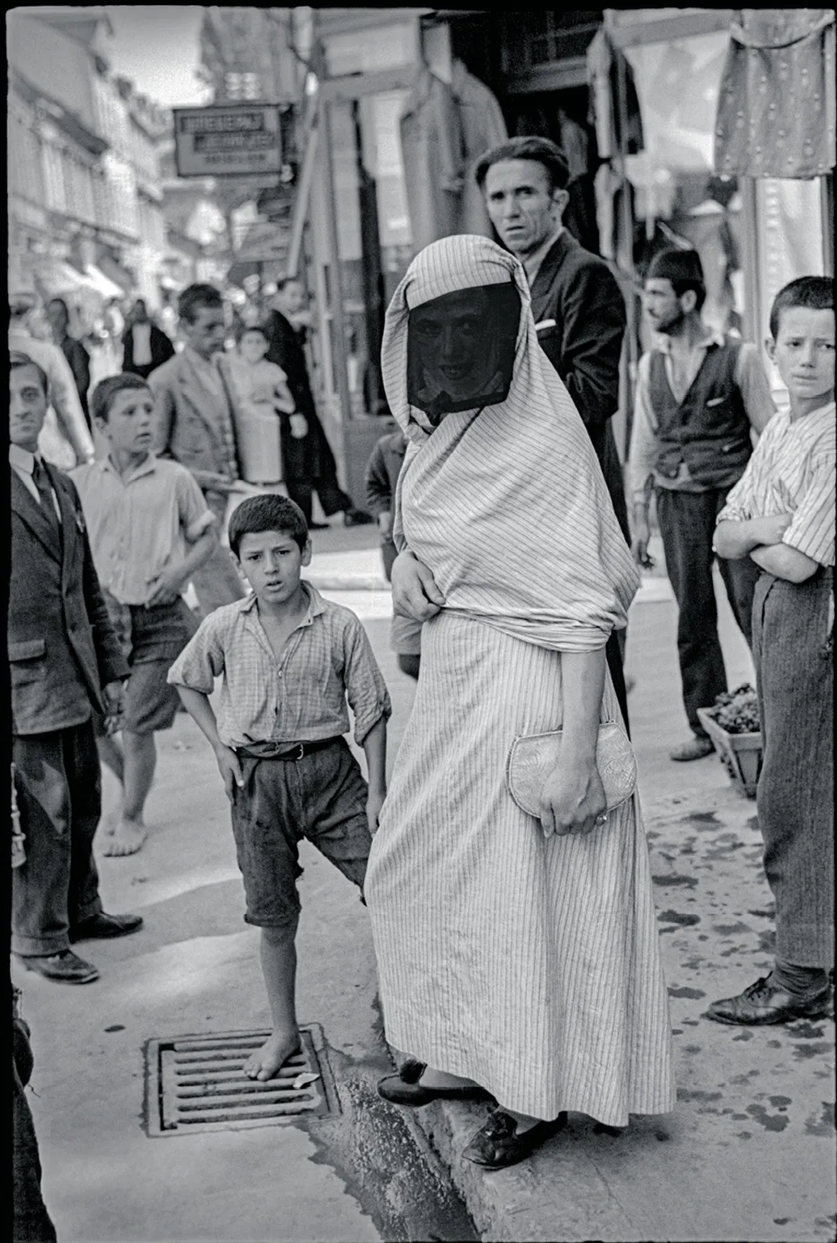
Richard J. Scheuer, Woman with Veil, Sarajevo, Yugoslavia, 1934/2018

I found this very interesting and I hope that you do too.

By Jeffrey Kastner

First published in Artforum

On a December evening in 1933, an English teenager named Patrick Leigh Fermor boarded a steamship in London bound for the Hook of Holland. Disembarking the next morning, Fermor walked into the snowy Dutch countryside with a rucksack full of clothes and gear from an army surplus shop to begin what would become a thirteen-month journey, on foot, to Istanbul. Along the way, he slept in workhouses, barns, and castles and drank with farmers, aristocrats, and budding Nazis, finally arriving at his destination on New Year’s Day 1935. Though he had recorded his experiences in journals—and eventually went on to have a distinguished career as a travel writer—it wasn’t until 1977 that Fermor published A Time of Gifts, the first volume of what would ultimately be a trilogy about his formative adventure, and one of the genre’s richest achievements.

Roughly seven months after Fermor left London, seventeen-year-old Richard J. Scheuer sailed from New York with his father, Simon, for Le Havre, France, where they began an eight-week journey around Europe, visiting Spain, Italy, Yugoslavia, Hungary, Poland, and Russia. Dick, as the younger Scheuer was known, had brought along a camera and took photographs everywhere he went. On his return, he had contact sheets made, but none of the images were printed until roughly eighty years later, after his son Dan discovered his late father’s negatives in an old cardboard box at the family’s home and enlisted a friend, Charles Seton, a photographer and photographic technician, to help restore them.

Beyond the wildly delayed way each body of work finally came to light, what unites Fermor’s travelogue and Scheuer’s documentary project—the latter of which was recently the subject of this modest but engrossing exhibition at the Jewish Institute of Religion at Hebrew Union College, a Reform Jewish seminary in New York’s Greenwich Village—is the uncanny mix of innocence and portentousness generated by the specifics of their shared temporality. In many ways, they are perfectly pendant. Fermor took no pictures, and no journals from Scheuer’s travels survive, so each account fleshes out the other. The two young men, strangers to each other yet joined by some force of history, ended up recording the same moment in time as oblivious witnesses to a continent on the brink of World War II.

The forty works in the exhibition, mostly shots of regular people in their everyday surroundings, confirm Scheuer’s compositional precocity. A skilled street photographer virtually avant la lettre, he had an eye for the revealing candid moment, stemming in no small part, one imagines, from the fact that he himself must have cut such an unassuming figure, being not all that much older than the gaggle of placid-faced French girls in summer chapeaus he captured in one image, or the members of a teenage kazoo band performing on a Moscow street in another. A number of pictures here featured vendors and customers in markets around Yugoslavia—showing both customs and costumes that suggest the nineteenth as much as the twentieth century—including a remarkable shot of a woman standing on a curb in Sarajevo, a black veil framing her face in a way that all but disembodies it. But none of the images crystalize the puncturing, melancholic “that-has-been” identified by Roland Barthes as the operative essence of the photograph as much as the ten taken in Warsaw’s Jewish Quarter. A smiling man outside a women’s clothing store, a watermelon seller with a thick hunk of fruit in his hand, a burly shoemaker who turns to the camera with a wide grin: These subjects would likely not have known that, next door in Germany, the country’s president, Paul von Hindenberg, had just died, and that Adolf Hitler had successfully merged party and state into what would become a murderous totalitarian machine. And they certainly could not have imagined a future that we now know as historical fact: During a summer six years later, that machine would build a ten-foot-high wall around their neighborhoods and transform them first into a ghetto, and then later a concentration camp.

Walk in the footsteps of Patrick Leigh Fermor with Simpson Travel

Inspired by the adventures of Patrick Leigh Fermor and other adventurers in wartime Crete, Simpson Travel will be hosting an 8-night walking holiday from 25 April to 3 May 2023, led by expert guide Jonathan Peat. Offering a chance to walk in the footsteps of brave British and New Zealand officers such as Patrick Leigh Fermor, Stanley Moss, Dudley Perkins, John Pendlebury and more, guests will explore three of the epic mountain ranges that played such a pivotal role in the island’s wartime operations.

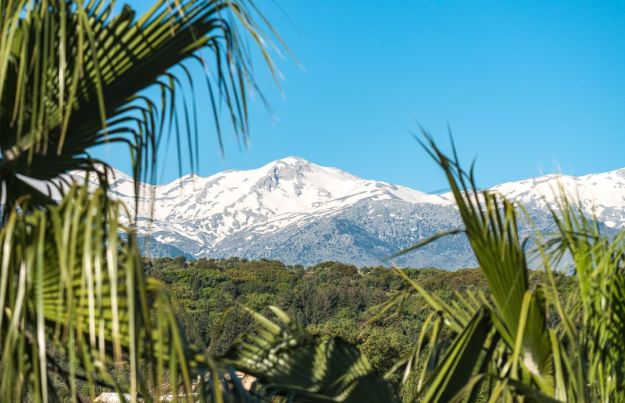
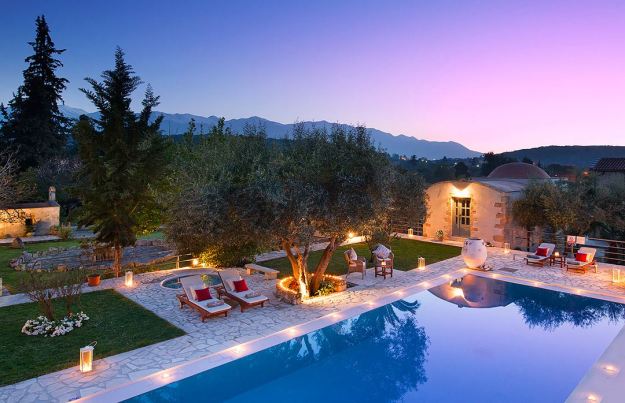
Visit the high mountains, wild coastal areas, remote villages and secret caves and, with Jonathan on hand to translate, meet some of the people whose families were touched by the extraordinary events that still echo across the island today. Stay at Simpson Travel’s delightful Arosmari Village Hotel in the foothills of the White Mountains before travelling east
towards Heraklion for the final leg of this very special journey.

Prices from £1,665pp, including flights, transfers, accommodation with daily breakfast, six escorted walks with lunch included and all taxes and entrance fees.

To view the itinerary and find out more visit Simpson Travel

PS – I gain no benefit from Simpson Travel for posting this information!

Walking for pleasure is the legacy of the pandemic with many people strolling and hiking more

“Three in four people said that walking has helped their physical and mental health already this year, according to a new survey.”

There’s nothing new here to those of us who walk or have read about the effects of walking on bodily and mental health, but it’s always good to have your views reinforced by others. Solvitur ambulando!

By George Styllis and Catherine Lough

First published in the Daily Telegraph

People may have abandoned many of the habits foisted on them during the Covid lockdowns, whether it was mask-wearing or elbow bumping, but walking isn’t one of them.

For two years a walk was one of the only forms of exercise available to people, as Covid restrictions kept businesses such as gyms closed and cars off the road.

But after millions opted to stroll more during the pandemic as one of the few available pastimes while restrictions remained in place, three in four people have said that walking has helped their physical and mental health this year, according to a new survey.

The study by retailer GO Outdoors and mental health charity Mind also found that 65 per cent believed this was a legacy of the pandemic. Prior to Covid, more than half of people (55 per cent) simply saw walking as a means to get from A to B.

The survey of 2,012 adults also showed that three-quarters of people now find walking to be their most preferred form of exercise because it has no financial barriers (75 per cent), is good for their mental health (74 per cent) and is inclusive (73 per cent).

Walking in nature has been shown to have positive effects for both physical and mental wellbeing. Andrew Lee, director of Countryside Policy and Management at the South Downs National Park Authority, said that for many: “The lockdowns provided an opportunity to experience the joys and benefit of walking in nature for the first time”.

Haroon Mota, who founded the walking group Muslim Hikers during the pandemic, said he did so to address rising loneliness.

“During the global pandemic, I enjoyed going out for a hike or walk as a way to get some fresh air and to destress but I found it strange that, despite living in a diverse city (Coventry), there weren’t many people that looked like me doing the same,” he told Parkrun.com.

“That’s why, at a time when lots of people were becoming increasingly lonely, I set up an online community with the aim of inspiring and empowering more ethnic minorities to enjoy the outdoors together.”

“I’ve found that some people just won’t go outside on their own and lots of people are motivated by the community side of what we do, which again is so similar to parkrun.”

The latest data from the capital shows that Londoners are more likely to walk since the pandemic.

Before Covid, around 35 per cent of journeys in London were made on foot, whereas the latest quarter of available data, from April to September 2022, showed that 41 per cent of journeys were now made on foot, and that the number of walking journeys made per person per day during the same period was 11 per cent higher than the 2019-20 pre-pandemic average.

Last year, Fitness app Strava found that the number of users worldwide uploading information about their hiking routes had tripled since the pandemic and launched a feature, “Trail routes”, in response to the phenomenon. The UK’s most popular hikes, according to the app, are Ben Nevis, the Llanberis path to Snowdon in Wales, and Pen-y-Ghent, the smallest of Yorkshire’s three peaks.

A merry Christmas to you all for 2022 – Kennt ihr das Land in deutschen Gauen

One of my favourite posts from 2011. I thought I would share this again at this Christmas time. A Merry Christmas to you all and best wishes for a peaceful 2023. Thank you for supporting the blog during the course of another year. Please keep sending in your contributions and comments; they keep it lively …

I guess that many of us enjoy the chapter in A Time of Gifts when the eighteen year old Paddy spent two nights in Stuttgart with two very pretty nineteen year old German girls, Lise and Annie. It was Epiphany, 6th January 1934, and they went to a party where Paddy had to pretend to be Mr Brown, a family friend. He particularly enjoyed singing a song about the Neckar Valley and Swabia. Paddy could not remember all the words but his stunning memory recalled most of them (page 66).

As we approach that time of year I thought we ought to share this delightful song.

As you play the You Tube video the words are below so that you too can sing along! Let’s hear it now, one two three ….

Kennt ihr das Land in deutschen Gauen,
Das schönste dort am Neckarstrand?
Die grünen Rebenhügel schauen
Ins Tal von hoher Felsenwand.
Refrain:
Es ist das Land, das mich gebar,
Wo meiner Väter Wiege stand,
Drum sing’ ich heut’ und immerdar:
Das schöne Schwaben ist mein Heimatland!

2. Kennt ihr das Land in deutschen Gauen,
Mit Wald und Flur so reich bekränzt,
Wo auf den weiten, reichen Auen
Im Sonnenschein die Ähre glänzt?
Es ist das Land, . . . . .

3. Kennt ihr das Land in deutschen Gauen,
Wo Tann’ und Efeu immer grün,
Wo starke Männer, edle Frauen
In deutscher Kraft und Sitte blühn?
Es ist das Land, . . . . .4. Kennt ihr das Land im deutschen Süden,
So oft bewährt in Kampf und Streit,
Dem zwischen seiner Wälder Frieden
So frisch die deutsche Kraft gedeiht? Ja, wackre Deutsche laßt uns sein!
Drauf reichet euch die deutsche Hand;
Denn Schwabenland ist’s nicht allein:
Das ganze Deutschland ist mein Hei

The global choir of roosters

Dear readers,

I am on a train and have received an email from a follower of the blog who asks “can you help me find a passage in which Paddy describes a global choir of roosters crowing as the sun rises around the globe?”

My first thoughts are to Roumeli, but then perhaps Mani.

Can anyone help us both?

Her Majesty Queen Elizabeth II 1926-2022

Queen Elizabeth II photographed at Windsor Castle in May 2022 CREDIT: Ranald Mackechnie /PA

Buckingham Palace has published the Order of Service for the State Funeral of HM Queen Elizabeth II, which will be held in Westminster Abbey today Monday 19th September 2022.

The service will be conducted by the Dean of Westminster, the Very Reverend Dr David Hoyle, who will say in his Bidding: ‘In grief, to this House of God and House of Kings, where Queen Elizabeth was married and crowned, we have come from across the nation, from the Commonwealth, and from the nations of the world, to mourn our loss, to give thanks to almighty God for her long life, and lovingly, confidently to entrust her immortal soul to the mercy of God, our Maker and Redeemer.’

The Archbishop of Canterbury, the Most Reverend and Right Honourable Justin Welby, will preach the sermon and will lead the commendation.

Among the hymns will be The day thou gavest, Lord, is ended; The Lord’s my shepherd, which was sung at the wedding of the late Queen when she married HRH The Duke of Edinburgh in the Abbey in 1947; and Love divine, all loves excelling, in an arrangement first sung at the wedding of TRH The Prince and Princess of Wales in the Abbey in 2011.

Like as the hart, a setting of Psalm 42 by Master of the King’s Music, Judith Weir, and the anthem Who shall separate us?, drawing on words from Romans 8, by Sir James MacMillan, have both been composed specially for the service.

The Right Honourable The Baroness Scotland KC, Secretary-General of the Commonwealth will read from Corinthians 15; and the Right Honourable Elizabeth Truss MP, the Prime Minister, will read John 14: 1 – 9a.

The prayers will be led by the Abbey’s Precentor, the Reverend Mark Birch, and will be said by representatives of the churches of the United Kingdom.

Last Post will be sounded by the State Trumpeters of the Household Cavalry, before a two-minute silence observed in the Abbey and throughout the United Kingdom.

The service will be sung by the Choirs of Westminster Abbey and His Majesty’s Chapel Royal, St James’s Palace, under the direction of James O’Donnell, Organist and Master of the Choristers of Westminster Abbey.

You can download the Order of Servce here.

In Full – Paddy on the South Bank Show 1989

Many of you have asked about, or searched for, this old video of Paddy talking to Melvyn Bragg at his home in Kardamyli. It was broadcast in 1989. We were able to offer you an excerpt in 2019, but now I have come across a video of the complete show.

As ever, we know these things can be swiftly removed due to copyright issues so if you wish to view Paddy in one of his best interviews I would advise taking time to view quickly.

Here is the direct link to You Tube.

As an alternative you might try to download the video. There are a number of programs available if oyu search on Google.

Patrick Leigh Fermor: An Adventure – Slightly Foxed Podcast

Slightly Foxed produce the most beautiful books, and run a quarterly podcast which we have featured before. This one features Artemis Cooper and Nick Hunt discussing all things Paddy. Something to listen to in bed on a Sunday morning perhaps.

You can listen to the podcast on the Slightly Foxed site here or below.

Artemis Cooper, Paddy’s biographer, and Nick Hunt, author of Walking the Woods and the Water, join the Slightly Foxed team to explore the life and literary work of Patrick Leigh Fermor.

Equipped with a gift for languages, a love of Byron and a rucksack full of notebooks, in December 1933 Paddy set off on foot to follow the course of the Rhine and the Danube, walking hundreds of miles. Years later he recorded much of the journey in A Time of Gifts and Between the Woods and the Water. In these books Baroque architecture and noble bloodlines abound, but adventure is at the heart of his writing. There was to have been a third volume, but for years Paddy struggled with it. Only after his death were Artemis and Colin Thubron able to see The Broken Road into print.

The trilogy inspired Nick Hunt to follow in Paddy’s footsteps. What were country lanes are now highways, and many names have changed, but Nick found places that Paddy had visited, with their echoes of times past.

Following discussions of a love affair with a Romanian princess, Paddy’s role in the Cretan resistance in the Second World War and Caribbean volcanoes in The Violins of Saint-Jacques, we turn our focus to his books on the Greek regions of Roumeli and the Mani, and the beautiful house that Paddy and his wife Joan built in the latter, Kardamyli. And via our reading recommendations we travel from Calcutta to Kabul In a Land Far from Home, to William Trevor’s Ireland and to Cal Flynn’s Islands of Abandonment.

Count István Pálffy, Hungarian aristocrat who fled the country in 1956 – obituary

Count István Pálffy (Image provided by The Telegraph)

Count István Pálffy, who has died aged 89, stood as a candidate in the Hungarian parliamentary election in 2018 aged 85. Though he was not elected, he was immensely proud of standing in a constituency that his grandfather had represented from 1872 until he died in 1933. He stood for Momentum, a party of young people which rejected the Right-wing policies of the prime minister, Viktor Orbán.

First published in The Telegraph, 6 July 2022

I am grateful to Daniel Bamford for bringing this to my attention.

Pálffy was born into one of the oldest aristocratic families in Europe. When writing his family history, he chose the somewhat tongue-in-cheek title The First Thousand Years. His great passion was history, and he liked to say that he received his education at the hands of the vagaries of history. The Second World War broke out on his first day at school; the Nazis marched into the territory of their Hungarian allies in 1944 and, soon after, he was to become a victim of Soviet communism.

Though born into the purple of Hungarian aristocratic life on both sides of his family, Pálffy only enjoyed the benefits which that station offered for a few years of his boyhood. By the time he was 15, he had been declared by the new Communist regime to be a class enemy and an enemy of the people. He was expelled from his private school and compelled to work as an unskilled labourer. He was later sent as a prisoner to a forced labour camp before escaping to England in 1956.

Count István Pálffy ab Erdőd was born in Budapest on 22 May 1933, the son of Count Ferenc Pálffy ab Erdőd and Countess Júlia Apponyi de Nagy Appony. His father’s family claimed descent from a Swabian knight who had settled in Hungary around the year 970.

His mother’s family was ennobled in the 13th century. His mother, who was related to Queen Geraldine of Albania, married Patrick Leigh Fermor’s great friend, Elemér von Klobusiczky, immortalised as “Istvan” in his book Between the Woods and the Water.

Both families produced legions of soldiers and diplomats in the service of Hungary. Therefore it delighted Pista Pálffy when he was press-ganged into the new communist-led army and given the lowest possible rank in the hope of humiliating him. This move did not have the desired effect. “You see,” he joked with friends, “I am the first Pálffy in history to be in the army and not be a general.”

In the long line of ancestors, in which he took pride, it was his maternal grandfather, Count Albert Apponyi, of whom he was most proud. It fell to him to lead the Hungarian delegation at the Peace Conference at Versailles in 1919; on his shoulders rested the terrible burden of returning to Hungary with the dictated terms of the Treaty of Trianon. This instrument reduced the ancient kingdom of Hungary to a mere rump state.

The outbreak of the Hungarian Uprising in 1956 allowed him to escape Hungary. Tall, elegant and with a decidedly aristocratic roll to his pronunciation of the letter “r”, Pálffy cut an unusual dash at Trinity Hall, Cambridge, where he read Moral Sciences.

He felt comfortable in England. His great-uncle, Count Albert Mensdorff, had been Austrian ambassador. István already spoke English fluently, and there was a ready-made group of Hungarian émigrés willing to welcome him.

He was grateful to Cambridge for absorbing this exotic Hungarian aristocratic exile. At Trinity Hall, he had an unusual encounter with CS Lewis when, on an after-dinner stroll back to his rooms, the tongue-tied and slightly nervous Pálffy broke the ice by asking Lewis if he thought the English obsession with the weather had anything to do with the sinking of the Spanish Armada.

Lewis remained silent, but the next day sent Pálffy a note saying he had found a reference in a medieval play showing the English obsession with the weather predating the Armada’s sinking by several centuries.

On leaving Cambridge, Pálffy was at a slight loss as to how he might use a degree in Moral Sciences. A friend advised him to try advertising, “because that profession is not too fussy about degrees and probably considers Moral Sciences to be all about being a good person”. A few years spent in the advertising industry provided him with an income but little intellectual satisfaction.

He was a regular patron of London’s famous Hungarian restaurant, the Gay Hussar in Soho. He once arrived for lunch to find a delegation from the Hungarian Communist Party being entertained by some diplomats. The Hungarian head waiter, sensing the potential sensitivity of the situation, asked him if he wished to be seated as far away as possible from the group. Pálffy replied: “Not an inch, put me right up against them.”

He found his intellectual metier in the emerging computer industry and applied his intellect to designing information systems for libraries; as a private consultant, his clients were as diverse as the British Museum Library and the Shah of Iran. Before the fall of the Shah, he spent several years travelling to Iran to develop the computer system for a proposed National Library. He also advised the Iranians on how they might apply developing computer technology to modernise their blood transfusion service.

With the collapse of Communism in 1989, István Pálffy returned to his native Budapest, where he bought a flat on the Rózsadomb, a hill in Buda overlooking the city. There, in his book-lined rooms, he was regularly sought out by historians such as Norman Stone or by those who were simply curious to know about a man who had survived the vicissitudes of communism without bitterness.

A son and a daughter survive him. His wife predeceased him.

Count István Pálffy ab Erdőd, born May 22 1933, died July 2 2022

John Pendlebury, Winchester College memorial

John Pendlebury mention on the Winchester College War Memorial Cloister at Winchester College. The year 1918 notes his date of entry to Winchester College

I was walking around the College and thought that you might like to see this.

Prague to Dresden – a walk down the River Elbe

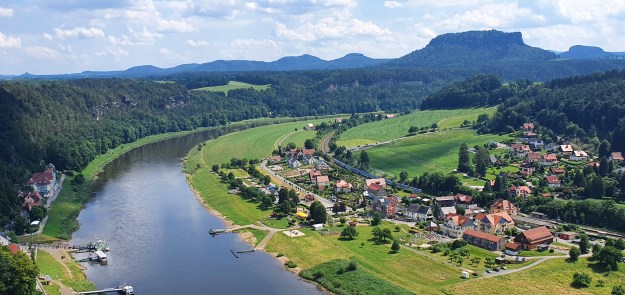
A view of the Elbe looking North towards the “Saxon Switzerland”


My Elbe walk was completed a couple of weeks ago. I walked about 160km in seven days, plus a rest day. I followed Paddy’s little paper boat and on the one occasion I was beside a boat paddled by two men, I was walking at the same speed, so that little paper boat would have taken a very long time to reach the sea at Hamburg, not to mention the hazards of passing through locks!

It was a varied walk. The first part being somewhat dull, with unvarying scenery, although I did hear at least five cuckoos. It has been more that ten years since I heard one in England. I didn’t follow the river all the time as I cut off some bends or sought out sites and interesting country by following countryside and forest tracks.

I have added a selection of photos to a Google shared album so that you might get a flavour. The journey starts in (very ) beautiful Prague, thence to Melnick, and some photos taken at Terezin, or as most of us would know it, Theresienstadt. Spending a night there was very peculiar; you can really feel the ghosts of those who suffered and died at the hands of the 20th century Nazis. The Bohemian and Saxon Switzerland (Sächsische Schweiz) was a very enjoyable change and I spent two days walking through some spectacular rock formations with equally amazing views of the river. I took a rest day at Bad Schandau. Dresden was the real surprise. We know it suffered devastating bombing, but the restoration is outstanding. Lots of grand baroque buildings and churches, as well as great food, with music in every square.

A final thank you to those who made donations to support the work of the Red Cross in Ukraine.

The selection of photos is here.

Obituary: Dervla Murphy

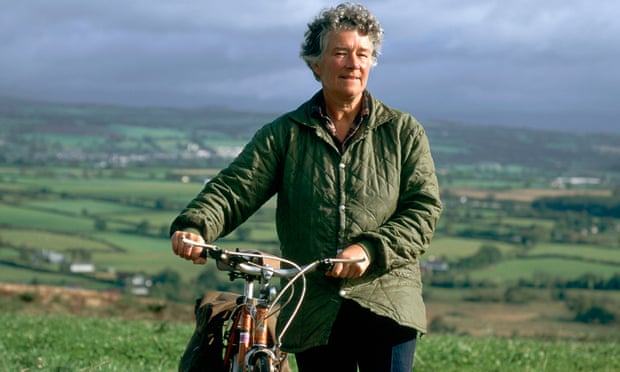
Dervla Murphy in 1990. She had a tolerance for hardship and a curiosity about everyday elsewheres, which she kept through half a century of advancing by bike, foot, mule and cart (she never drove a car) on and off road across four continents. Photograph: Gamma-Rapho/Getty

Travel writer who famously journeyed alone from her native Ireland to India on a bicycle, armed with a pistol and a compass

First published in The Guardian

Dervla Murphy’s Full Tilt: Ireland to India With a Bicycle, published in 1965, is now as much a historical document of a gone world as a travel book, but its feeling of release, cycling towards a wide future while running away from a confined past, still exhilarates. Like notable 19th-century women travellers such as Isabella Bird Bishop, when at last released from a cage of domestic duty Murphy travelled, riding through the cold, snowy winter of 1962-63.

She went armed with a .25 pistol and basic instruction from the County Waterford gardai on how to use it, which she did to confront wolves and thieves, and also with the maps and compass through which she had explored the planet in her imagination since childhood. Most of all she had a tolerance for hardship (her total budget was £64) and a curiosity about everyday elsewheres, which she kept through half a century of advancing by bike, foot, mule and cart (she never drove a car) on and off road across four continents.

Murphy, who has died aged 90, wrote 26 books, many in the diary style of Full Tilt, approaching each day, person and place, fresh on the page as she had experienced it. That directness appealed to readers, along with Murphy’s viewpoint, which was novel because of her background: she was a voracious reader but with little formal education and, being from the Irish countryside, outside those higher levels of the class structure that dominated travel writing. Rural poverty around the globe was no surprise to Murphy, who had attended a village primary school with barefoot, hungry classmates, and knew families dying of tuberculosis.

She arrived alone at each destination without social introductions, was shy at home but en route talked with anyone who responded, and, in life as well as writing, downplayed risks and tribulations – from injury, sickness and assault to dirt and nothing for supper.

Aged 10, she had realised on riding her first bike that simple pedal power might one day take her to India, and on the way there she discovered how each day’s whizz of the wheels of her Armstrong Cadet cycle, Roz (short for Rozinante, Don Quixote’s horse), carried her forward to kind strangers’ hospitality. Coming fast down a mountain road always thrilled her; touring the Balkans in her 70s, she was clocked descending at 65mph by a military patrol and reproved for not applying her brakes.

Murphy’s attitude to gender and social norms was also uncommon at the time. Tall, deep-voiced, muscled, practical and with a decisiveness accrued from constant solo choices, she was often taken for a man by other societies, and occasionally romanticised the restricted roles of those societies’ womenfolk, which she would never have put up with herself.

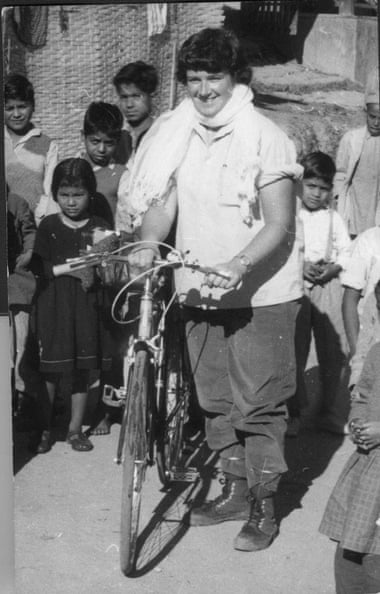
Dervla Murphy in India

She was sure of her own life’s direction, if uncertain of its meanderings. She never intended to marry, but once able to support herself through writing, did want a child. Her daughter, Rachel, deliberately conceived with Terence de Vere White, the literary editor of the Irish Times, was born in 1968, and her mother raised her alone, never naming the father publicly until after his death in 1994.

Rachel had her fifth birthday in Kodagu (then called Coorg), south-west India, on the first of her journeys with her mother; they later went to Baltistan, Peru, Madagascar and Cameroon. Until Rachel reached puberty, when the people they met travelling began to regard her as an adult who shared a sealed bubble of foreignness with her mother, she was an asset, a connection to families, though also, sometimes, a distraction, interrupting Murphy’s communion with the deep, pre-modern silence of the Himalayas or Andes. Their relationship could be difficult, but it lasted, and in time Murphy, Rachel, and Rachel’s daughters, Rose, Clodagh and Zea, all dossed down together on a Cuban beach for a three-generation trip on the usual shoestring, in 2005.

Murphy’s own hard family situation had formed her, she wrote in Wheels Within Wheels (1979). Her parents went from Dublin to Lismore in Waterford when her father, Fergus Murphy, was appointed county librarian. Soon after Dervla’s birth, her mother, Kathleen, contracted a rare rheumatoid arthritis that crippled her: perhaps in compensation she nurtured Dervla’s daring, giving her that first bike despite money always being short. But, aged 14, Dervla was withdrawn from the Ursuline convent boarding school in Waterford to serve as Kathleen’s carer for 16 years. Kathleen encouraged her brief bike jaunts to England and Europe, though Dervla had to return from each few weeks’ freedom to burdensome duty.

Fergus died in 1961 and Kathleen the following year, leaving Murphy with a house, books (her lifetime collection grew to 9,000), strong convictions about political and social injustice, and her freedom. After Full Tilt, based on diaries published only because of a chance meeting in Delhi with Penelope Chetwode, John Betjeman’s wife, came Tibetan Foothold (1966) and The Waiting Land (1967), which grew out of work with Tibetan refugees in India and Nepal. From the late 1970s, the purpose of her travels shifted to inquiring into the effects of recent history on people and places, beginning with A Place Apart (1978), a bike ride round Northern Ireland, then at an implacable stage of its Troubles.

On a Greyhound bus crossing the US, she passed close to Three Mile Island, the site in 1979 of the US’s worst nuclear power accident, which inspired Nuclear Stakes, Race to the Finish (1982), the first of the books in which her politics mattered more than the travelling, through Kenya and Zimbabwe during the Aids epidemic, Romania after its revolution, Rwanda after genocide, the Balkans after a decade of wars.

These culminated with an unfinished trilogy on Palestinian territorial fragments – Gaza Strip, West Bank, Jordanian camps – researched as ever over coffee in crowded tenements or tea on tent floors. She was strongly for socialism, and against almost everything else, especially mass tourism.

A hip replacement after a fall in Jerusalem, aged almost 80, plus arthritis and emphysema, finally confined Murphy to her austere base in Lismore, the remnant of a 17th-century cattle market plus eccentric outbuildings, where she organised a travel-writing festival and received pilgrims, including Michael Palin, visiting for a television documentary, Who Is Dervla Murphy?, in 2016. She asked him to join her daily skinny dip in the River Blackwater.

Her daughter and granddaughters survive her.

Dervla Murphy, traveller and writer, born 28 November 1931; died 22 May 2022

In the wake of Paddy’s paper boat

I’m in Prague. I have my battered, and much marked up copy of A Time of Gifts with me, and I’ve been struck just how wrong Paddy’s memory was! That section, whilst beautifully written as usual is a bit of a nonsense.

Anyway. Why am I here and not in England celebrating the Jubilee of our gracious Sovereign Elizabeth?

Many months ago I got the idea in my head to walk one of Germany’s great rivers. I have never been to Saxony and that appealed well enough. Then I discovered an area called Saxon Switzerland and knew I had to visit this beautiful sandstone landscape. So a walk down the Elbe seemed to fit. There’s a route for cyclists which is my guide and it starts in Prague and finishes Dresden. I’ve only discovered in the last couple of days that this “German” walk is actually 80% in the Czech Republic but that just adds to the enjoyment. 225 km in nine days. Easy peasy.

As you can see from the extract from ATOG, Paddy imagined a little paper boat making its way downstream. I shall be following in the wake of that little boat.

I also thought that it would be a good excuse to ask you, dear readers, for some money. If you would like to sponsor me please make a donation to the British Red Cross and the Ukrainian Red Cross Society (URCS) to support those who are suffering in Putins war of aggression against a peaceful sovereign state.

I’ll try to update you.

The link to donate is below. Maybe add a comment on the blog when you have done so. It would be nice to hear your thoughts.

https://donate.redcross.org.uk/appeal/ukraine-crisis-appeal

Following in Paddy’s footsteps – they still keep coming

Noah Chamberlain arriving in Bratislava

It was great to hear from Noah Chamberlain about his walk in Paddy’s footsteps. He’s walking all the way to Constantinople during his gap year. Last I heard he was in Sighisoara in Transylvania and having a ball.

Noah contacted me by email …

Dear Tom,

I have been a lurker on your blog for a couple of years now and I just wanted to get in touch to thank you for all the research you’ve put together concerning all things Paddy! I also thought you (or your readers) might be interested to hear of my own Paddy-inspired walk.

Back in February 2021, I was in my final year of sixth form, and, in yet another covid-induced lockdown, I picked up A Time of Gifts having listened to my dad rave about it nonstop over the years. I was hooked. I’d already decided that I wanted to take a gap year and go travelling before university and Paddy found me at the perfect time. So, in late January earlier this year, a caught a ferry across the North Sea from Harwich to Rotterdam and set off. I’m writing to you from Sighisoara in central Transylvania, and will soon be heading off as I trek to Fagaras and then Brasov. The last three plus months of solo travelling across Europe have been nothing short of brilliant. I’ve met so many interesting people, visited hundreds of varied places, and learnt so much about foreign worlds and about myself. Simply put, I’m loving it.

I hope to reach Istanbul in early July, but who knows where my travels might take me before then. If you’re interested, I’m also keeping a blog of my travels at www.noahachamberlain.com

Best wishes,
Noah Chamberlain

So, if you missed it first time around, catch up with Noah’s journey and his wonderful photos here.

Seeking monastic peace from the world

Rievaulx Abbey was a Cistercian abbey in Yorkshire (Photo: Getty/Andrea Pucci)

Rievaulx Abbey was a Cistercian abbey in Yorkshire (Photo: Getty/Andrea Pucci)

This interesting item which I’ve had ready to go for over a year reminds me a little of A Time to Keep Silence. Given the state of the world now, it is perhaps even more relevant.

By Sarah Sands

First published in inews.co.uk

As editor of the Today programme, I was addicted to news – but now I’m seeking monastic peace from the world. Sarah Sands believes there is a forgotten wisdom in monasteries that provides an answer to the tumult of our times – monks and nuns have acquired a hidden knowledge of how to live.

On a winter’s day, in which the sky hangs like a flat sheet over Norfolk, I look out at the remains of a 13th-century monastery wall. It’s in the field at the edge of my garden – all that remains of Marham Abbey, a Cistercian nunnery destroyed by Henry VIII.

The king found nothing of note in the abbey – the total loot was worth £46 – yet its last remnants exist as a centre of gravity in my life. The lessons of monastic life are contained within this wall, lessons that have increasingly offered guidance and inspiration for me in times of stress.

The great English Cistercian monastery is Rievaulx Abbey in North Yorkshire, a five-hour drive from my home. Deciding that I needed to learn more about the community who built my wall, one day in 2019 I set off with an inexplicable sense of purpose. I drove past miles of skeleton trees, descending into a remote valley of the river Rye in the North Yorkshire moors. The hidden nature of Rievaulx makes its revelation all the more heart stopping.

St Aelred, abbot of Rievaulx monastery, once said, ‘everywhere peace, everywhere serenity and a marvellous freedom from the tumult of the world”(Photo: Getty/Ian Forsyth)

St Aelred, abbot of Rievaulx monastery, once said, ‘everywhere peace, everywhere serenity and a marvellous freedom from the tumult of the world”(Photo: Getty/Ian Forsyth)

There, alone, I wandered through the vistas of columns and framed views of stirring countryside. I imagined the first monks who sheltered there under the rocks of the valley and among the elm trees. The remoteness of monasteries – best viewed from the heavens – is in their essence; it is a rejection of the material world, its rhythms and its values.

The monks lived by sunrise and sunset and spent their time between in learning, meditation and manual labour. This inner concentration buoyed them in an extraordinary weightlessness. In the 12th century, St Aelred, abbot of Rievaulx monastery said: “Everywhere peace, everywhere serenity and a marvellous freedom from the tumult of the world.”

When I returned from Rievaulx, I was changed. I saw my wall in a different light. My sense of kinship with it deepened and my curiosity tingled. I saw that it was part of a network of monasteries across the country; ruined, silent, consigned to history, they all had stories to tell.

I began travelling to more and more of them, exploring them one by one – and travelling to monasteries around the world, too, from Greece to Egypt, from Japan to Bhutan, journeys I’ve been since reflecting on for my book The Interior Silence.

There was wisdom in these institutions. There was medicine. From the monasteries came both universities and hospitals, and the monks showed an early understanding of what we now call mental health.

The monastic way of living intrigued me – it had become a secret corner of my life. My work is in London, but Norfolk is my place of sanctuary. The wall represents something antithetical to my London life. It is the still small voice that provides a contrast to the needy, WhatsApp-ing, power-conscious world of politics and media.

‘Today’ and tomorrows

The job that I held when I visited Rievaulx was editing the BBC’s flagship news and current affairs show, the Today programme, during the most politically and socially fractious of periods. People were angry about whether or not Britain should leave the EU, and Today was a lightning rod.

I was responsible for the running order of the show, which was a work in progress over 24 hours. My phone beeped incessantly. There were months when it buzzed hysterically between 3am and 5am, until I realised that, apart from all the journalistic messages, I had somehow become the switchboard for all the taxis ordered by the BBC news department.

Skimming six hours sleep a night and ever part of a jittery and constant news conversation, I was finding it hard to switch off.

One night, during which I simply could not sleep, I picked up a book. It was a slim volume, called A Time to Keep Silence, by the great adventurer Patrick Leigh Fermor. Published in 1957, it is an account of his sojourns at three wonderful French monastic buildings: the Abbey of St Wandrille, Solesmes Abbey and La Grande Trappe.

In the book, Leigh Fermor confessed to depression and anxiety; he yearned for peace and stillness. “In spite of private limitations I was profoundly affected by the places I have described,” he wrote.

“The kindness of the monks has something to do with this. But more important was the discovery of a capacity for solitude and (on however humble a level compared to that of most people who resort to monasteries) for the recollectedness and clarity of spirit that accompany the silent monastic life.”

There is a wisdom in the monasteries which answers the affliction of our times (Photo: Getty/Ian Forsyth)

There is a wisdom in the monasteries which answers the affliction of our times (Photo: Getty/Ian Forsyth)

He also experienced a higher plane of sleeping: “After initial spells of insomnia, nightmare and falling asleep by day, I found that my capacity for sleep became more remarkable and my sleep was so profound that I might have been under the influence of some hypnotic drug… Then began an extraordinary transformation: night shrank to five hours of light, dreamless and perfect sleep, followed by awakenings full of energy and limpid freshness.

Can you imagine this? City sleep resembles an operating theatre of lights, movement and bleeping devices. We seek instant remedies for sleep, as for everything else. Of course, I am not going to give up alcohol, but I will throw in a herbal tea at the end of the evening. And I know to close the day with a book, although every few paragraphs my hand slides towards my iPhone, just to check messages or to Instagram.

Sometimes I try to meditate for a few minutes, which only jolts my memory of the emails I should have sent. This is not the path to the dreamless and perfect sleep of which Leigh Fermor writes.

The following day, I bumped into my friend Tom Bradby, the ITV news anchor who had been off work for many months, suffering from extreme insomnia. He had recovered but had not forgotten his state or the causes of it. He had a new awareness of the meaning of what he called “the worried mind”.

I reflected again on what Leigh Fermor had written: “In spite of private limitations, I was profoundly affected [by the monasteries].” This was how I felt about my Norfolk ruins. I knew they touched me deeply but did not know why and certainly did not attribute it to any virtue on my part.

There is a wisdom in the monasteries which answers the affliction of our times. Renouncing the world, the monks and nuns have acquired a hidden knowledge of how to live. They labour, they learn and they master what is described as “the interior silence”. Some orders are in permanent retreat, but others are expected to maintain the stillness of self in the midst of public bustle.

How can they do that? Is the virtue of interior silence something that can prevail in an era of peak technological distraction? I was beginning to question my 5G life. The connectivity, the drip feed of news, the superficiality of politics.

As Radio 4 listeners will know, in the middle of the Today programme is Thought for the Day, a three-and-a-half-minute sermon by a religious figure. It is an anomaly in a daily news show, but I have come to appreciate it as an oasis of reflection. News counts but meaning matters more.

I experienced that juxtaposition of connectivity and meaning at a dinner for the tech industry in the same week that I had read Leigh Fermor’s book from cover to cover – properly read it, rather than speed-read it as I usually do.

The conversation at the tech gathering was all about pace of change and personal realisation. We are driven by multiples of success and scale. Meanwhile, at my table, a broadcaster was looking furiously at her Twitter feed because a political joke had started a bush fire of condemnation. By the end of the evening, her resignation from the BBC was being demanded. This was a time of maximum hubris, before the arrival of the great reckoning.

The ubiquity of news media is a form of hubris, at odds with monasticism. Aggravated by social media, the journalistic impulse is exhibitionism and noise and entitlement.

The former Conservative strategist Lynton Crosby, who campaigned for Boris Johnson as London mayor and later as prime minister, said to me that people were motivated by jobs, money and family. His candidates won, he said, because he and they understood this. The remarkable thing about the monasteries is that they are inspired by none of these things. They are there on behalf of humanity, suspended between heaven and earth.

What if I were able to step away, I thought, even in the midst of political and media battle? There is a history of spiritual retreat after all.

Lockdown isolation

After three years of editing the Today programme, I left the BBC last September. I had made the decision at the start of 2020. The addiction to news had become corrosive to me and I had learned how to exist outside the news cycle, thanks to contemplative trips to monasteries. My hectic, distracted mind had experienced stillness.

News is generally regarded as a form of enlightenment but it is often just information wrapped in judgement, or worse, incitement. News demands drama and hyperbole. I remember when I was the editor of The Sunday Telegraph more than a decade ago, looking at a headline claiming local ‘fury’ over a piece of planning permission. I remarked to the news editor that having read the quotes from residents it seemed more a case of mild irritation than fury. The news editor responded wryly: “Irritation isn’t a headline word.”

I was planning to visit more monasteries ahead of my departure. Easter week was meant to have been spent in Salzburg, at the Nonberg Abbey – otherwise known as the setting for The Sound of Music – but in March last year lockdown arrived. Flights were halted, hotels closed. Monasteries continued in their customary state of self-isolation, and I was unable to reach them.

The Government demanded that the population return to their homes: mine was in Norfolk, in the remains of Marham Abbey. A monument to mortality and the futility of secular ambition. Henry VIII destroyed this monastery but could not destroy its meaning; perhaps because its endurance was based on acceptance of powerlessness.

Newspapers carried photographs of vats of beer and wine being tipped away. This was the London economy – bars and coffee shops. Farewell to my working life.

The existence that I was trying to escape suddenly seemed unbearably delightful. I watched television scenes of dinner parties or concerts as if through a looking glass. My bank statements read like an historical archive. Soho House, Joe the Juice, Caffè Nero, Daniel Galvin and, in the final days, Wigmore Street Pharmacy, Boots, Boots, Boots.

The Today programme was being produced remotely, and I spent hours pacing the garden on Zoom. What were the latest death figures? What was the state of the Prime Minister’s health? The country staked its identity on the principle of caring for the sick. A principle begun in its monasteries. Indeed, St Thomas’ Hospital in London, where the Prime Minister was treated, grew out of a priory.

Like everyone else, I was separated from what and whom I knew and loved. My younger son FaceTimed me from Hong Kong. He told me that he would not be coming home for his summer break because of the strict rule of quarantine. My elder son sent me a photograph of my grandson, only 20 miles away, but beyond reach now. My daughter went into lockdown in London, the epicentre of the virus. Every family had a story to tell of separation.

Monasticism teaches that you can love and participate, while being absent. This was what I had to learn; to appreciate relationships in the abstract. To delight in the existence of others without physical engagement in their lives.

I would describe the feelings I associated with the wall in my garden during those weeks of isolation as intense serenity and a sense of belonging. Most of all, I associated it with birdsong. The trees surrounding the abbey remains were full of birds – blackbirds, blue tits, finches, wrens, chiffchaffs, robins, rooks and, descending from the wide skies, the first swallows.

There was one thing I wished to learn in isolation: the distinctive differences in birdsong. On the first day I picked up the alarm call of the blue tits and the different whistles of the great tit. I wondered at the lung capacity of the tiny wrens. The busy sound of the chiffchaff will always remind me of this time, this period of death tolls and birdsong.

I hope to be visiting more monasteries soon, when life opens up again, but I’m lucky to have my wall. There is something about the melancholy ruins against a Norfolk sky that reminds you that a contemplative life has a natural setting and that the endless striving and building around it will not last. The tranquil message of my ruins of Marham Abbey and the great Rievaulx is humility. Personal ambition is an impediment, not a triumphant force.

This is an edited excerpt from The Interior Silence: My Encounters with Calm, Joy, and Compassion at 10 Monasteries Around the World by Sarah Sands. Buy it here.

Beautiful Ukraine – Spring is coming


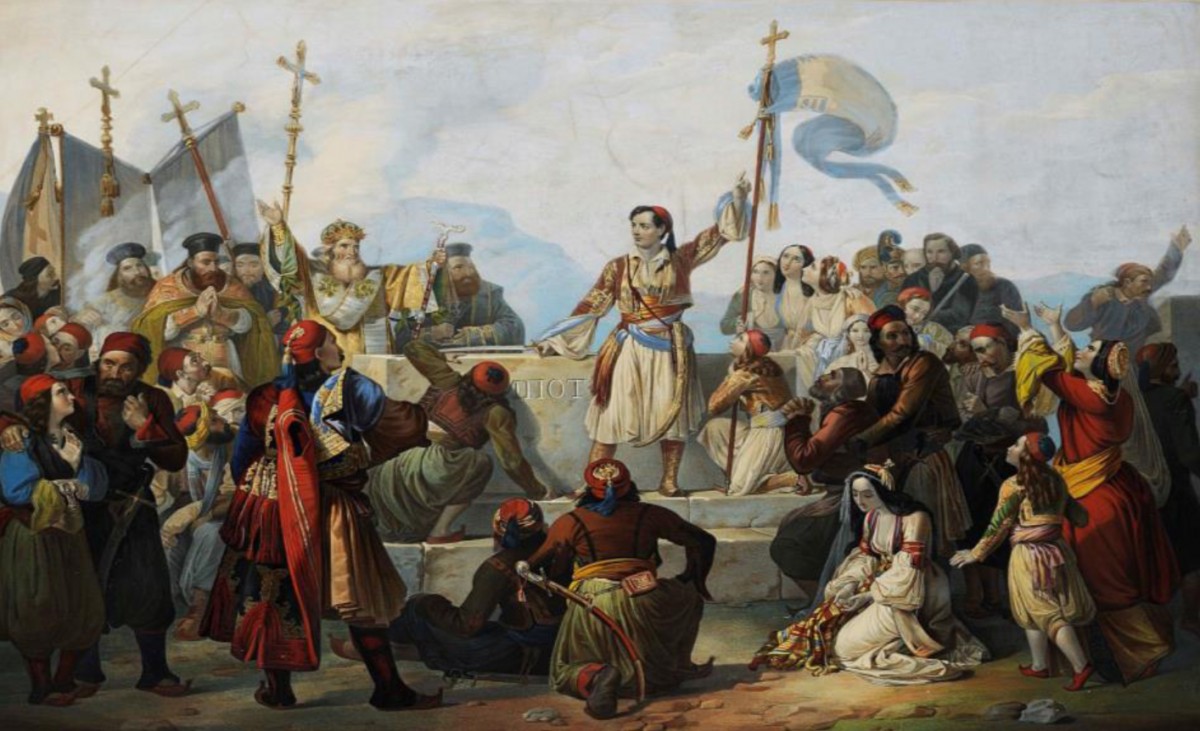
Like all of you I have been shocked and totally absorbed by the war (yes it is Mr Putin) in Ukraine over the past few weeks. I have work colleagues and friends there.

We have all seen too many dreadful images coming out of that beautiful and sophisticated country. I wanted to share something completely different. A music video called Vesna (which means Spring) that celebrates the beauty of the countryside, cities and people of Ukraine. It is by Dakha Brakha whose music is quite eclectic. This image of people caught up in the powerful rhythmic music always makes me smile and feel good. I hope it does the same for you.

Slava Ukraini !!


Artemis Cooper on Paddy’s home and my return

Paddy and Joan at Kardamyli: Patrick Leigh Fermor Archive, National Library of Scotland

Welcome to my first blog post for some time. Life has been very busy with work, but mostly trying to buy a new house in Winchester which has been a very time consuming and frustrating process over the last five months or so. We may at last have found a house that might actually proceed to completion! Fingers and toes crossed.

I will also admit to having a certain degree of “blog block”, which, if you are unfamiliar with the ailment, is like writers’ block but somewhat less serious. The symptoms generally involve regular statements to my partner that ‘I must do something about the blog’ or ‘this weekend I shall really get down to writing some posts’. These can be accompanied with a feeling of guilt which soon passes as I substitute a long run on the South Downs or by the River Itchen for a session in front of the laptop. So you find me now a little slimmer, and a lot fitter, and, it would appear, to have overcome the “block” by writing this. Welcome back to me!!!

We shall start the year with a gentle warm-up post so I don’t overdo things. This is an article written by Artemis Cooper for Conde Nast Traveller and was published in January 2022.

PS – I’m off out running now I’ve done this! 🙂

Patrick Leigh Fermor Archive, National Library of Scotland

Inside a restored Greek home that’s now open to visitors

By Artemis Cooper

First published in Conde Nast Traveller

The southern Peloponnese ends in three rocky peninsulas, reaching deep into the Mediterranean. The wildest and most remote of them is the middle one, known as Mani. It was the subject of Patrick Leigh Fermor’s first book on Greece, and the place where he and his partner, the photographer Joan Eyres-Monsell, built one of the most beautiful houses in the world.

He and Joan had been looking for the right place on which to build for some time before they found it in mid-1962, just south of the village of Kardamyli. Set between two ravines, the headland jutted out towards the sea. In the evening you could watch the sun going down ‘until its last gasp’, as he put it, while to the east rose the great flanks of the Taygetos mountains, glowing orange and pink at sunset.

Known as Paddy to his many friends in England, he was Mihalis in Greece – his code name in the Cretan resistance, where he was celebrated for leading the team who captured a German general and whisked him off the island in 1944. After the war he became a writer, and by the early 1960s he had published four books. They were all successful, but he was so gregarious and easily distracted that writing was painfully slow. He needed not only peace in which to write, but an almost monastic seclusion.

Buying land in Greece is a complicated business, and it took two years to complete the sale; but the vendors let Paddy and Joan spend months at a time in tents on the site, poring over books on architecture, pacing out imaginary rooms and making ambitious drawings. They found a sympathetic design partner in Nicos Hadjimichalis, who had made a study of Greek vernacular architecture.

Work began in 1965, with a team of local workmen under Nikos Kolokotronis, a master mason. Stone was dynamited out of the hillside, hewn into blocks on the spot and sent down the goat track on the backs of donkeys. When the foundation stone was laid, Maniot tradition demanded a blood sacrifice. The master mason brought a black rooster, sliced off its head with his trowel and poured its blood into the footings, while a priest chanted and sprinkled holy water. There was no electricity in Mani at that time, so the house was built with traditional tools; and as the walls rose, Paddy and Joan made trips to nearby Kalamata where old houses were being pulled down to make modern apartments. They salvaged marble carvings, broken columns and fragments of stonework that lay abandoned, and set them like jewels into the fabric of their home.

I remember being rather daunted when I first came here in 1984, to interview Paddy about a book I was writing. The taxi had vanished in a cloud of dust and I was alone, in front of a forbidding pair of doors set in a long wall. I had to hammer on them for several seconds before it was opened, with profuse apologies. He walked ahead with my case, chatting amiably. I followed along a pebbled path, inhaling the scent of lavender and rosemary. We passed through another pair of doors to the left, where I stopped with a gasp.

Framed by an arch from which hung a large lantern lay the green folds of a hillside: olives and pomegranates in the foreground, rising gently to a grove of cypresses with woods of pine and ilex in the distance. It looked as if all of Greece, bathed in light, was waiting for me to step into it. That night we had dinner overlooking the silvery sea, on a terrace with a marble table. Just below, a steep flight of rough-hewn stairs led to the cove from which Paddy swam every day. Outside and inside had little meaning in this airy house. Joan’s cats (‘born down-holsterers,’ said Paddy fondly, as they dragged their claws across the furniture) drifted through open doors and windows.

The heart of the house is the library, which John Betjeman once described as ‘one of the rooms of the world’. Low divans and arm-chairs invite happy hours of reading and talking round the fire. I remember Joan here, on the sofa with a book, a cat at her feet. On her lap was another cat, occasionally used to prop up the book.

Every year, the village would celebrate with Paddy on his Greek name day: 8 November in the Orthodox Church. It began with a service at the chapel in the olive grove, a five-minute walk from the house, so small that only the priest and his altar boy could get in. We all stood outside laughing and chatting until it was over, and then everyone repaired to the house for a feast that lasted most of the day. Later Paddy, accompanied by a two-man band of fiddle and accordion, led the dancers singing and looping across the terrace.

As the Leigh Fermors grew old I came more often, and especially after Joan’s death in 2003, which left Paddy desolate. Houses by the sea always feel clean, but even this one began to show signs of age: any book picked off the shelf released a shower of silverfish and dilapidated shutters fell off hinges stiff with rust. As Paddy’s sight failed, his study sank into a jumble of papers. While I was working on his biography, we would spend long hours at the southern end of the library, in the Turkish khayati overlooking the bay. We used to talk about his life, going over his old war reports and letters until he would sit back and say, ‘I think it’s time for a drink, don’t you?

Paddy and Joan left their house to the Benaki Museum; and until this last visit, I had not been back since it was restored. I was, I admit, apprehensive; but as I walked onto the terrace and into the library, I felt moved to tears. The essential spirit of the place was vividly present – but clearer, fresher, more alive. Details I had almost forgotten, such as the colours of Paddy’s intricate pebble designs on the terrace, had been revealed in all their glowing precision.

This is thanks to the painstaking restoration made possible by a grant from the foundation set up by the late shipping magnate Stavros Niarchos. New heating and cooling systems have been installed; the roof has been insulated, and old tiles carefully cleaned and replaced. The garden has been replanted, while leaving the wild myrtle, juniper and marjoram that always gave the place such a distinct smell. Discreetly set on a lower terrace is a new pool, where I swam before a lunch of local cheese, meat and dried figs.

In a house so open, the museum has understandably left little for the souvenir-hunter. But I spotted Paddy’s old chart of the kings and queens of England on the bathroom wall, exactly where I had remembered it. Paddy and Joan have been gone for many years, but the house they left has been given a vivid new lease of life.

Selling some Patrick Leigh Fermor first editions

I have an excess of Paddy first editions that I wish to sell before Christmas. I’ve created a page where you can browse what I have and indicate how you can purchase.

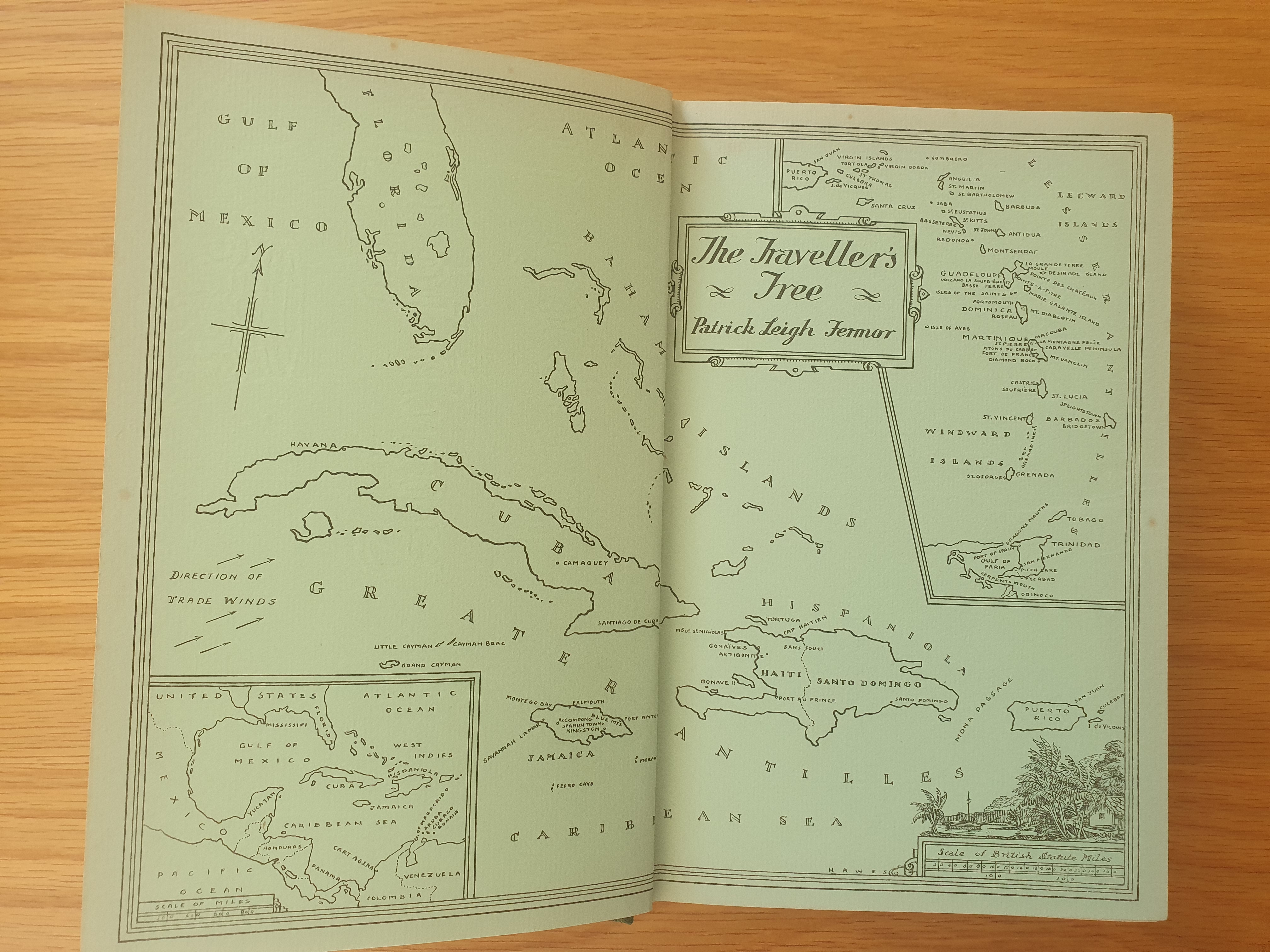
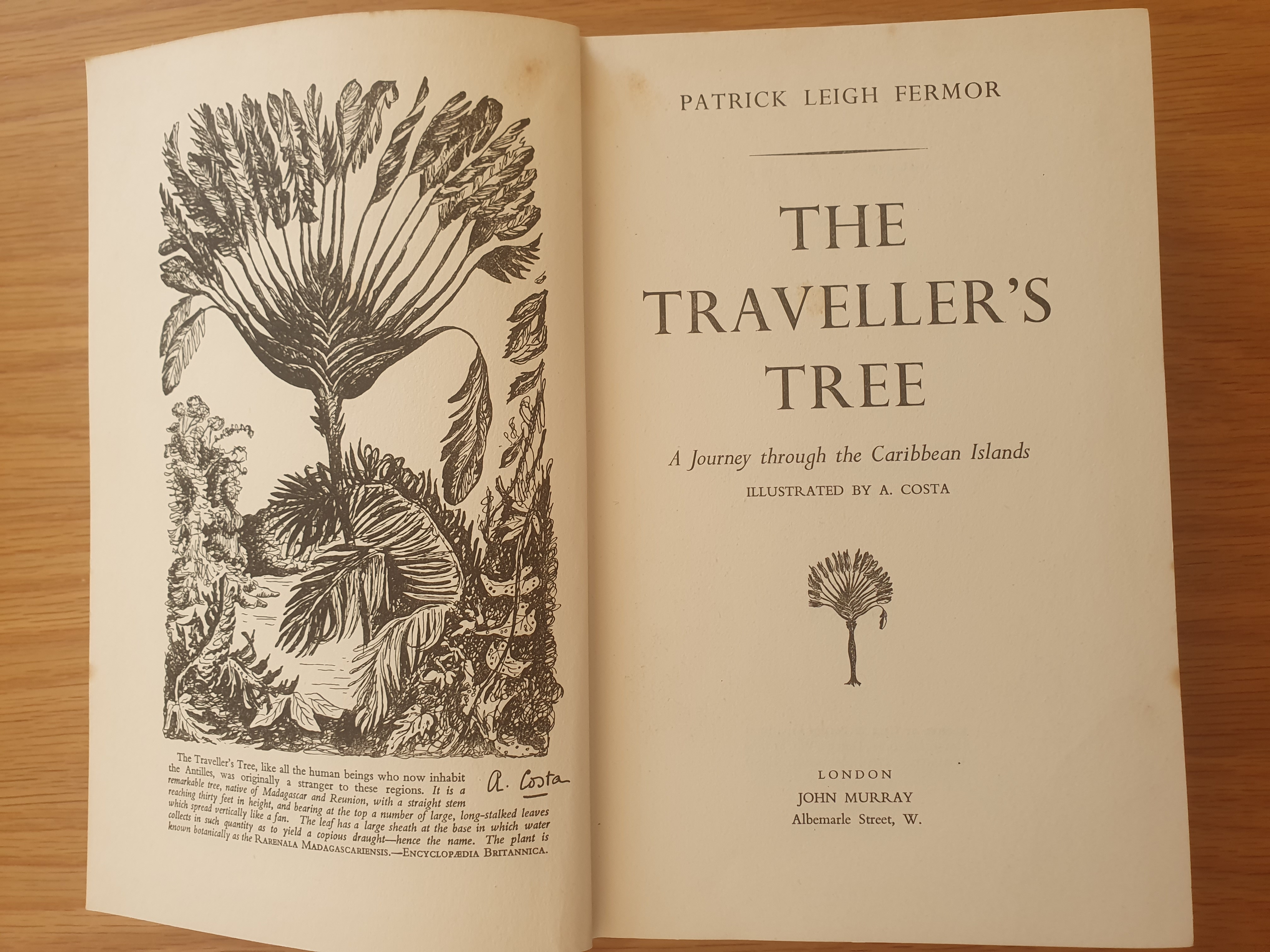
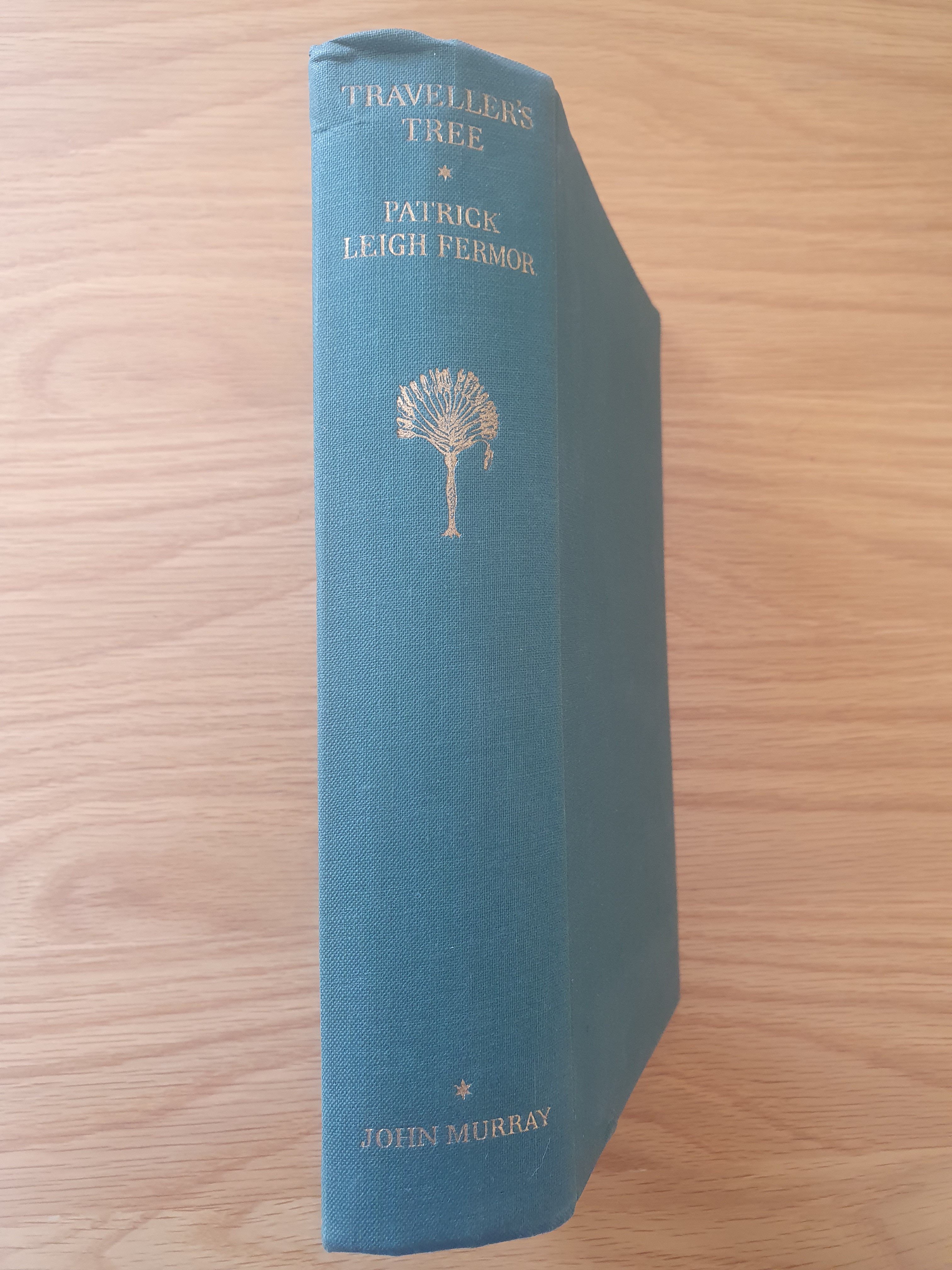
The first is a 1950 first edition of the Traveller’s Tree.

Hardcover. Condition: Very Good. A. Costa (illustrator). 1st Edition. Green cloth with gilt lettering and small gilt vignette of tree on spine. Although very slightly bumped at head and foot of spine, binding otherwise in very good condition – no fading. Free end paper misssing which was perhaps a previous gift inscription, but NOT a library copy. Some foxing to endpapers. 50 pages of unpaginated photographic plates (61 photos in all) before the Envoi and the index. With an illustrated frontispiece by A.Costa, plus a double-spread sketch-map by H.W.Hawes.

Offers in excess of £50 considered. Postage and packing can be quoted based upon your location. Payment via Paypal. Please contact me with any offers etc.

The Great Sermon Handicap

Dear Readers. I hope that you are all well. Life here in Winchester is very busy (it is true – post-pandemic the world has gone mad and everything is frantic as well as in short supply!), and I’m going through that most stressful of activities, a house move, so do please forgive the lack of posts.

However, a quick request. Tom Roper contacted me to ask if I knew anything about a translation Paddy made of PG Wodehouse’s story The Great Sermon Handicap into Classical Greek. I know nothing. Perhaps you do and can help? Maybe even have a copy?

Tom Asks:

In Artemis Cooper’s biography of PLF, she mentioned a translation he made of PG Wodehouse’s story The Great Sermon Handicap into Classical Greek. It was also mentioned in several obituaries and tributes published after his death, but none of them give a reference to the full text. Do you happen to know, please, if the text was ever published, either in print or online?

Can you help? Answers via the comments or send to me via email. Thank you and keep well!

… a quick response by email from Chris O’Gorman …

I don’t know about The Great Sermon handicap in Paddy’s translation – there is a Latin version published by Heinemann in 1989 but whether or not it was Paddy’s, I can’t establish:  https://www.abebooks.co.uk/servlet/BookDetailsPL?bi=19308018438&searchurl=kn%3DGreat%2BSermon%2Bhandicap%2Bvolume%2B1%26sortby%3D17&cm_sp=snippet-_-srp1-_-title9


Thank you for Friday!

Just a quick note to thank all of you who attended the Paddy Chat on Friday. We had a really interesting and eclectic mix of people from the USA, Germany, Belgium, the UK, a Briton on holiday in Greece, and a particularly devoted fan from Melbourne, Australia (0300 his time!).

We covered a range of topics, but mostly how we came to find Paddy.

Perhaps we might have one in the lead-up to Christmas, and I thought we could discuss Paddy at Christmas 🙂

For those who attended and still wish to access the information I mentioned, please contact me using the Gmail account on the About and Contact page.

Paddy chat 24 September – meeting details

For all of you who have expressed an interest in our meeting on Friday 24th September, and even for those that haven’t yet, here’s the link to the meeting.

Click this link!

Just click on the link to enter the meeting with your camera on. If it’s a little chaotic at first don’t worry. Relax and drink some gin or a cup of tea. If things go wrong there’s little I can do to support you so please keep trying. Nothing should go wrong, but …

Start time will be 1800 BST. The event will run for 90 minutes. Feel free to come and go as you please. Late arrivals always welcome! Do be prepared to say something or even read us something you like. We will try to stick to some of the suggested topics, especially how academics might view Paddy’s work as we may have young student guest who is working on this! Let’s see how it goes.

Further information and how to make sure you can use Google Meets (you will need a Google account – just create one!) can be found in this post.

After the meeting I shall issue all those who attend with a link to something special in the Paddy video world. If it works! A special surprise I hope.

Swish! Swish! Swish! podcast read by Dominic West

The ruined Maniot tower village of Vathia, Deep Mani, September 2021. Copyright Tom Sawford 2021

Many of you enjoyed reading the short chapter written by Paddy for inclusion in a Greek version of Mani, but not published elsewhere until it was “discovered” this year.

The LRB have now managed to secure Dominic West to read the piece for a podcast which I hope that you will all enjoy.

Listen to Dominc West read Swish! Swish! Swish! here.

Read Mary Beard’s 2013 review of Mani and Roumeli from another LRB article here.

A sensual Greek goddess

Joan: The Remarkable Life of Joan Leigh Fermor by Simon Fenwick is perhaps the outstanding biography of the Fermors. This review includes the background to Fenwick’s growing interest in Joan as a person, as Paddy’s muse, and not just the wife.

By Nicholas Shakespeare.

First published in The Spectator.

Joan Leigh Fermor died in 2003, aged 91, after falling in her bathroom in the house on a rocky headland of the Peloponnese which she had financed by selling her jewellery. Afterwards, whenever Joan’s husband and companion of nearly six decades reclined in her place on the sofa to read, eight of her 73 cats would gather round him in a recumbent group — but after a few minutes slope off. Paddy (who died in 2011) wrote: ‘They had realised they were being fobbed off with a fake.’

This biography, by the archivist who went to sort out Paddy Leigh Fermor’s papers before they returned to England, makes a charming case for Joan to be considered the proper foundation of Paddy’s existence; his muse and ‘greatest collaborator’, whose wealth and talent as a sounding board underpinned his career as an author. ‘Joan made it possible for Paddy to write.’

She was like one of her cats, all of whom descended from a single Abyssinian ‘which had mated freely with the village toms’: fiercely independent (she and Paddy had a ‘pact of liberty’), alluring, a watchful presence in the shadows. ‘Sensual, somewhat aloof and deeply private,’ writes Simon Fenwick. ‘This is Joan.’

Tall, slender, with her blonde hair cut short: Lawrence Durrell called her the ‘Corn Goddess’. To John Betjeman, who made a late declaration of love, she was ‘Dotty’, with ‘eyes like tennis balls’. To Cyril Connolly, with whom she went to bed during her first marriage — and whose photograph, ‘eaten by tiny insects’, she kept in her bedroom — she was a ‘lovely boy-girl… like a casual, loving, decadent Eton athlete’. To Noel Annan, on the first page of his 450-page history, Our Age, she was a ‘life-enhancer’. Careful never to tread into the foreground, she runs like a silken thread through the memoirs of her generation, a thread which Fenwick skilfully tugs out and spins into a gossamer portrait, reminiscent of Ann Wroe’s biography of Orpheus, composed of glances and glimpses — and fingerprints, like those that Joan left on Cecil Beaton’s bathroom wall at Ashcombe, ‘to the left of the towel rail’.

A semi-professional photographer, with a taste for bombed-out buildings and cemeteries, Joan ‘always hated being photographed’, and left her films to be developed by other hands. The image she had of herself was of a bad-tempered, selfish Aquarian, withdrawn, given to grumbling, and indecisive. In a 1936 pocket diary, one of only three fragments of the paper trail that survives from before the 1940s, she confessed her lifelong dilemma:

A gregarious loner, she steps across Fenwick’s pages as simultaneously self-effacing and attention-seeking — once gaining notoriety for wearing ‘a single extraordinary earring’ consisting of ‘a bunch of 42 small gilt safety pins’. To almost everyone (including the author of this review, who met her in Kardamyli), she exuded, as Michael Wishart remarked of Barbara Skelton, ‘a tantalising quality of needing a tamer, while something about her suggested she was untameable’. A walk-alone feline who fluttered at will into a social butterfly, and a pin-up for other androgynous admirers, like the Oxford don Maurice Bowra, she has, not surprisingly, proved hard to pin down.

She was born Joan Eyres Monsell, into ‘a great deal’ of money. The family wealth came from a rich skinflint, a Leeds wool baron, who, when asked why he travelled third-class on the train, answered: ‘Because there’s no fourth class!’ She claimed to have nothing in common with her family, but her father — an ‘odious’ bully — was a sailor (and later first lord of the Admiralty), and on both sides there were writers, travellers and explorers — like her cousin Gino Watkins, who disappeared in Greenland, his kayak discovered floating upside down ‘and his trousers on an ice floe’.

As well, she had the example of her triumphantly profligate great-uncle Charles Kettlewell, ‘the Wicked Uncle’, who spent two years sailing his 420-foot schooner on a scientific voyage round the Far East, before dying bankrupt aged 49, having got through his entire inheritance (£4.5 million per year in today’s money), leaving only a collection of stuffed birds that ended up in Leeds Museum.

The most remarkable thing about much of Joan’s life was its lack of focus. Her first 20 years were spent in the shadow of her gay brother Graham and his Eton and Oxford friends, such as the penniless aesthete Alan Pryce-Jones, with whom Graham had probably slept. When Joan accepted a marriage proposal from Pryce-Jones, Betjeman wrote to him: ‘There is one thing you must do before you marry— you must explain that you were once inverted. She won’t mind at all.’ But her father did. ‘No, no, Pryce-Jones, come back in a few years when you have something behind you.’

The person Joan came back with, after a wartime marriage to the Express journalist John Rayner (‘we gradually drifted apart,’ she explained), was an equally penniless aesthete: an officer with the Special Operations Executive called Paddy Leigh-Fermor, ‘with few clear prospects’, whose riches largely consisted in his appetite for life — described in his own phrase as ‘that of a sea-lion for the flung bloater’.

They met in Cairo in 1944. Their affair continued until they tied the knot in 1968; in the same year, their home in Kardamyli was completed. Leading separate lives had sustained their enchantment for each other. ‘At this distance you seem about as perfect as a human being can be,’ Paddy wrote from the French monastery where he was writing The Traveller’s Tree, in one of the letters that formed the marrow of A Time to Keep Silence. Whenever they came together, as they longed to do (‘I shall have tiny Fermors every year,’ wrote Joan, desperate for a family), they often found it hard to adapt, and there would ensue, in Paddy’s words, ‘a tremendous mutually vituperative blow up’. This might explain the most evocative entry in Joan’s commonplace book, the single Fuegian word mamihlapintafoi, meaning: ‘Looking-at-each-other-hoping-that-either-will-offer-to-do-something-which-both-parties-desire-but-are-unwilling-to-do.’

When Fenwick opened the calf-bound visitors’ book at Kardamyli he discovered ‘a Who’s Who of 20th-century society’. With only one of Schizo Joan’s diaries to rely on, and no memoir, his affectionate scrap-book of a portrait more closely mimics the ‘personalised disorder’ which he found in Paddy’s desk; one drawer was ‘aptly’ labelled ‘Total Confusion’; another drawer contained stray photographs, broken spectacles and ‘wads of small printed notices saying that he was very busy and unable to answer his correspondents’; at the bottom of a tin trunk were two pennants from General Kreipe’s staff car. ‘Somewhere, amidst all this disarray, was the story of Joan and Paddy and their lives together.’

September Paddy chat – 24 September

The online event we held on 2 July was very successful and great fun. Those who attended wanted more, and there were many others who were unable to make it on that occasion. We sort of agreed to run another sesson after the summer.

To that end I’d like to suggest the next event as Friday 24 September after I return from my trip to the Mani! It could start at 1730 BST or 1800 BST. Please suggest what works best for you in your timezone and I’ll make a Solomon-like call.

I spoke with Chris O’Gorman recently and we thought that this time (as many of us would have introduced ourselves before) that we try to run with some broad headings. We came up with ideas like:

– What is your favourite book or passage of writing by Paddy, and what attracts you to it?

– If you did meet Paddy in the past, is there a personal account you can share about the experience?

– What do you think Paddy has to say now to our fragile and pandemic struck world?

– Where should writers and scholars focus their attention next on Paddy’s life and times?

There are many more possibilities. Why not add your ideas to the comments section? We wil probably only have time for two of these at most; maybe three. We can always run another event.

Details

Date and Time: 1730-1900 or 1800-1930 BST Friday 2 July. Your call by majority!

Location: Google Meets – see link here for requirements including web browser

Invitation: a link will be posted on the blog nearer the time – you will have to click in or accept. There will be no invitation to your calendar so you will have to make your own reminder.

Special Invitations: If you have in mind someone that you would like to attend, please pass on the details to them. If there is anyone you might like me to invite eg a writer or someone similar, please make your suggestion and I’ll see what I can do.

Hosting and Admin: I shall host to start with but this is your meeting so very happy that you take over! If anyone wishes to contact me via email to help with any admin that will be welcomed.

Dress and Protocols: Wear anything you like, or not as the case may be! Bring a drink (Vodka tonic?). I see this as a “camera on” event, otherwise things get very sterile talking to blank black windows on a conference call. As a courtesy to others I think that you should be prepared to have your camera on so we can see you if you wish to attend. In my experience, the quality of video calling makes for flattering images!

If you have any questions or suggestions, please post a comment below or contact me via gmail address.

Remembering Paddy – Travel Writing world podcast with Artemis Cooper, Colin Thubron and Nick Hunt

Patrick Leigh Fermor – Δημήτρης Παπαδήμος,

Patrick Leigh Fermor – Δημήτρης Παπαδήμος

Perhaps you recall I introduced the excellent Travel Writing World podcast to you some months’ ago and bemoaned the Paddy deficit on the site. Editor Jeremy Bassetti has, as promised, remedied this with a 10th anniversary round table discussion with Artemis Cooper, Colin Thubron and Nick Hunt.

Listen to the episode here.

My roots burnt with Greece

A team of firefighters from Serbia tries to extinguish a wildfire in the village of Glatsona on the Greek island of Evia. Photograph: Angelos Tzortzinis/AFP/Getty Images

We have all watched the wildfires around the globe with some degree of horror and awe this summer, perhaps even real trepidation about the future of this warming third rock from the sun that we inhabit. As I think about a trip to the Mani later this year, my thoughts have also been about what we might find there; will the hills around Kardamyli be fire blackened? How will things have changed? This moving article by David Patrikarakos gives us some idea of the impact beyond the dreadful burning of forests. It speaks of the personal impact, and how close things have come to places many of you know in the Mani.

By David Patrikarakos

First published in The Spectator

On 11 March this year my father passed away from prostate cancer after several weeks in a hospital in central Athens. As we sat around his bed, I remember thinking that I was watching 3,000 years of Greek history slowly perish before my eyes. My father was an only child, and I am British. His line of Greeks is at an end.

Now fires have ravaged Greece and the olive trees that stood in my ancestral village for centuries have burnt to the ground. This year has seen the almost literal burning away of my roots: because if I am British, I am also a Greek — of sorts. This much is inescapable. My name is Patrikarakos, Pa-tri-ka-ra-kos, which falls — like a slab of Cycladic marble — between me and those I meet. So luminously foreign, so palpably un-English. I remember as a child reading that Ian Fleming had chosen the name James Bond for the main character of a spy novel he wanted to write because its two blunt monosyllables were, he said, ‘brief, unromantic, Anglo-Saxon and very masculine’. What then of my endless syllables and vulgar vowels, which fuse together in ululating cadences, and sound so alien — and presumably feminine — to British ears?

If my name screams ‘foreign’ to the British it signals something else to Greeks. Its stem — ‘akos’ means only one thing: that I originate in the Mani, a region of the Peloponnese in southern Greece. The origins of the word ‘Mani’ mean ‘a sparse and treeless place’ — and it’s apt. The land is hot and arid, the terrain mountainous and inaccessible. It was only relatively recently that a road able to reach many of its villages was built. Previously they had been accessible only by sea.

The people, who claim descent from the ancient Spartans, are notoriously ungovernable. Mani is home to vendettas. For centuries families killed each other through the generations over long-forgotten disputes. When my father died, we pondered what to do with the old family rifle that had been passed down to him. It was beautiful: rich brown wood married to deep grey metal. I had visions of it hanging on my wall, speaking to a history that, though distant, is not forgotten. I called a contact at the police to check out the legality of this.

‘Hmmm,’ he told me over video call, scratching a stubbly chin. ‘Theoretically you need to take it to a police station where they can confirm it’s been decommissioned and then register it.’

He paused. ‘The thing is… this is from the Mani, right?’

I replied that it was.

‘Yeah, the problem is that every so often we get a gun in from there and it turns out to have been used to shoot someone in a vendetta years ago, which causes no end of problems. I’d just bin it if I were you.’

I binned it.

Since ancient times Maniots have been pirates and warriors — impossible to enslave. The Mani is mentioned in Homer’s ‘Catalogue of Ships’ in the Iliad, while the Maniots supplied Augustus with troops for his battle with Mark Antony and Cleopatra at Actium. During the Greek war of independence against the Turks, the Greeks emblazoned ‘Freedom or Death,’ on their flags. The Maniots, though, replaced ‘Freedom’ with ‘Victory’ because, of course, the Mani had always been free.

If the Mani is famous for war, it is also famous for its olive trees. Mine were in my ancestral village of Skamnaki — the name means little stool — in the region’s east, close to Gythion bay in the plateau between mount Taygetos and the sea. The olive groves stood among some fields down a slope not far away from the thick stone house that my pappoús, my grandfather, and his family grew up in.

Their loss has scarred the entire village. Some are inconsolable; these people grew up in the shadow of trees that are now reduced to ash. For Maniots, olive trees symbolise a deeper emotional relationship with place: if the Mani is unconquerable, it is in large part thanks to its olives, through which the people could trade and feed themselves. Mani’s famous independence is inseparable from its trees. When enemies want to hurt the region it is the trees they attack. During the 1821 war of independence, Ibrahim Pasha ordered his army to burn several Mani villages to the ground, torching the olive trees in each one. The local population starved to death.

Patrick Leigh Fermor, the English travel writer who lived in Mani, talks about the importance of the olive harvest there. ‘Each tree has its personality,’ he tells us. ‘Every branch and knot and hole is familiar, and to damage one is an unlucky, almost a wicked act.’ This is because if the trees mark this land they also demarcate its people. Maniots are not Cretans for many reasons, but not least because they don’t beat their olive branches to make the olives fall as Cretans do — they don’t want to bruise the trees. They have a deeper connection with them. They know that trees surround their houses, their buildings, their churches.

And if the trees sit at the heart of community life, they have also powered social progress. For years, women were barred from taking part in almost all activities outside of the home except for the harvest: then they would put on old clothes and go out into the groves with the men and children. Everyone understood this relationship, which was clear and synergistic. The people tend the trees, and in return the trees give them olives — the source of life.

In the end, we cannot escape our roots. Here, it is the roots of the trees that sit deep in the ground, anchored to the soil and the story of families. Every Maniot understands that their history is interwoven with the olive trees — the two sets of roots perennially intertwined, indivisible from the land. It is something that I too now finally understand — if only in their demise. The fires in Greece have meant for me, not just the destruction of some vines but a rupture with history itself, and for my family, they have meant that once again we will come together this year to mourn death.