Author Archives: proverbs6to10

Unknown's avatar

About proverbs6to10

Interested in Byzantium and Patrick Leigh Fermor

Among The True Elect – A meeting with Paddy

Maj A T Casdagli RAOC

Maj A T Casdagli RAOC

On 1 June 1941 Major A. T. Casdagli was captured in Crete  and taken to Germany where he was held in various prisoner of war camps. There, in spite of risk of confiscation and reprisal, he kept a secret diary. His daughter, Alexis Penny, has for the first time brought together his story in a book entitled Prouder Than Ever, illustrated with Major Casdagli’s photographs, embroideries, prison memorabilia and documents, all of which he carefully preserved, as if he knew that one day his story would be published.

Alexis Penny runs a blog and I thought you might enjoy sharing her account of meeting Paddy in 1987.

by Alexis Penny Casdagli

First published on Alexis Penny’s blog

I had the honour of meeting Patrick Leigh Fermor in 1987 and was thrilled when, at that meeting, he launched into a vivid and detailed account of the famous abduction of the German General Kreipe during the night of 26 April 1944 on the Greek island of Crete. The circumstances that led to my being among those privileged few present are, I think, almost as extraordinary as Paddy’s telling of the story itself.

In September 1964, aged sixteen, I was travelling with my mother on a boat from Venice to Piraeus. I was to spend almost a year in Athens on my own before going to the Central School of Speech and Drama to train as an actress. Our boat stopped for half a day in Corfu. Although it was lashing with rain, my mother and I disembarked to explore the town. We didn’t get very far. A storm broke and we rushed into the nearest place to shelter, a cavernous, darkly lit, antiquated café, which didn’t feel Greek at all. It overlooked a large patch of ground, turning in the downpour to chocolate-coloured mud. Apart from a stocky man sitting pensively at the top of a table facing the door, who didn’t look Greek at all, we were quite alone. I noticed the man, while we warmed up, occasionally look at us. This wasn’t unusual. My mother, Wendy, a Captain in the Special Operations Executive in Cairo during the war, was still very beautiful with glorious red hair.

Suddenly, the door swung open and in ran two men, muffled like gangsters against the weather. They greeted the man at the table, who now ordered lot of drinks, and sat down and all three chatted loudly. Because of the deluge outside, we couldn’t quite hear their conversation, but it was definitely in English. Then a brandy arrived at our table for my mother and an invitation to join them. One of the men looked just like the actor, Albert Finney, whom I really admired and who, like my father, A T Casdagli, was born in Salford. We went over and soon learnt our host was Lawrence Durrell, the patch of mud a cricket pitch, the café Italian, and
the man who looked like Albert Finney was Albert Finney and the third man was the film director, Karel Reisz.

When Durrell discovered I was going to live in Athens for some months on my own, he told me I had to meet an artist called Maro Stathatos, neé Vatimbella. He scribbled her address and her telephone number on a cigarette packet and assured me – and my mother- that she’d make sure I’d meet ‘all the right people’ and that I would adore her. He was right on both counts and, in spite of the great age difference, Maro and I became firm friends.

I left Athens the following summer and, although we corresponded, I did not see Maro again for over two decades. In 1987, she travelled to London to stay with her son, John Stathatos, the poet and photographer. By this time, she was in a wheelchair and, I believe, about to be diagnosed with some kind of dementia. John decided to throw a party in her honour. Only her most cherished English friends were to be invited, probably a dozen of us, and among them would be Paddy, who happened to be in London.

The party was held in the top room of John’s house in North London, under the slant of its roof. I don’t know how John managed to get Maro and wheelchair up there but there she was, exquisitely dressed and looking radiant, her eyes sparkling.

In the opening lines of his poem about Maro, A Portrait of Theodora, Durrell
perfectly describes her look:

‘I recall her by a freckle of gold
In the pupil of one eye, an odd
Strawberry gold…’

Before long Paddy arrived. He was everything that is said about him, charming, debonair and a wonderful raconteur. Maro and he were thrilled to see each other again. Together they set the party to a different rhythm, of other times full of a wildness and gaiety that only sheer intelligence and a shared past can bring about.
It was delightful to see them sparring, reminiscing and teasing each other. Then Maro said,
‘Paddy, do tell us the story of the General, and how you kidnapped him! It’s a marvellous story and you tell it so well.’

Paddy looked rather embarrassed.

‘Oh no, Maro. It happened so long ago and everyone knows what happened anyway.’

‘No,’ said Maro quite firmly, ‘you must tell it.’

There was something in her voice that made him look up and, in that split second, something flashed between them. Maro was definitely demanding of Paddy not to refuse her in front of her guests. I also believe, in this moment, these friends for so many decades both realised this was the last time they’d ever meet, which was correct. Maro died two years later. But there was something else that does not go easily into words. Durrell’s poem about Maro ends,

‘Now only my experience recognizes her
Too late, among the other great survivors
Of the city’s rage, and places her among
The champions of love – among the true elect!’

If Maro was ‘among the true elect’ then, of course, Paddy was too. She was reminding him of that and inviting him to do something special with her and for her, something we would all remember, something to kick death down the stairs, something that without her asking it of him, he could not or would not be willing to do.

There was a pause. Paddy looked down into his glass. I held my breath. I thought he was going to refuse her. Then he said, ‘Well…’ and he was off. He gave the story a hell of a spin. Maro shed her years and looked just like she looks in the photograph below. She sat in her wheelchair as if it was a joke and belonged to someone else. She kept feeding Paddy with questions, prompting, cajoling him to go faster, to go back to collect a detail, to go slower so we guests could visualise the scene for ourselves. She was our Queen and Paddy was her gallant and we the guests knew, with adamantine certainty, that we were witnessing – no – that we were part of an extraordinary evening. And when Paddy finished speaking, we guests, as if one, got up to leave. We paid our respects to dear Maro and thanked Paddy again his wonderful re-telling of that powerful, historic affair and left. It was, as you guess, quite unforgettable.
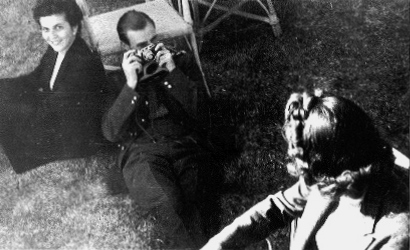
Maro, Paddy and Eve (3)

Maro, Paddy and Eve Willis at the Royal Yacht Club, Alexandria, November 1941, Photograph by David Smiley, courtesy of the Imperial War Museum (Private Collection)

Something else gives that evening, in recollection, a special and even more poignant resonance. Only after my mother’s death in 1999 did I learn from several of her closest friends that she and Paddy had had an affair in Cairo, before she met my father. And an affair is just what it was, apparently – just one of those things – but no less delicious for that! I don’t know if my father knew but I wish I had and had been able to tell Paddy I was Wendy’s daughter. O, the slender threads that bind us!

I don’t think my father, A T Casdagli, ever met Paddy, but I can’t be sure, and, in the absence of documented material either one way or another, it is, perhaps, permissible to speculate it’s highly likely that they did – and if they did not meet, then they should have done! Surely, they could have easily met at Shepheard’s Hotel or the Gezira Sporting Club in Cairo or brushed
shoulders in Athens at the GB – the Grande Bretagne Hotel – or, perhaps, even better, sat down together in a simple kafeneon in a village square somewhere in their beloved Greece.

It is impossible that Paddy living in Tara, the now legendary villa on Gezira Island in Cairo, did not know the name Casdagli. The magnificent Villa Casdagli, sadly torched by rioters on 1 February 2013, was a well-known Cairo landmark, and the Casdagli family, who lived there, were extremely wealthy and influential.

Although Paddy needs no introducing here, my father does. Alexis Theodore Casdagli was born in Salford, Greater Manchester on 10 April 1906 to Theodore Emmanuel Casdagli and Catherina Casdagli, née Ralli. After being educated at Stanmore Park Preparatory School and Harrow, he joined the family business, Emmanuel Casdagli & Sons with offices in Manchester and Cairo. On 23 September 1939, in Cairo, Casdagli was commissioned into the Royal Army Ordnance Corps. In April 1940, he was posted to Palestine and in November, sent to Crete.

On 1 June 1941, he was captured in Sphakia when the Battle of Crete was lost and spent the
next four years in various prisoner of war camps in Germany. From the moment of his capture
until his reunion with his family in April 1945, he kept a secret diary, now published as Prouder
Than Ever by Cylix Press. Whilst in prison, Casdagli was taught to speak Greek properly
by a Cretan General, Solon Kaffatos, wrongly imprisoned by the Germans, and a lifelong
friendship grew up between them. It was with threads from General Kaffatos’ pyjamas that
Casdagli embroidered the inner panel of this map of Crete. The khaki threads come from
Casdagli’s shirt and the white threads from German parachute silk, found in the island after
the landing. I think Paddy would have loved it.

Casdagli, A T, Prouder Than Ever, compiled Alexis Penny Casdagli (London, Cylix Press, 2014)

Evi Dimitrakaki’s response to the award of the first prize in memory of Billy Moss

In September last year I reported on the new award established by Gabriella Moss in memory of her father William Stanley Moss which will be awarded annually to the best student studying Philology, History and Archaeology at the University of Crete in Rehtymnon. The inaugural winner was Evi Dimitrakaki who is the granddaughter of Alexandros Platurrahos, a partisan who was actively engaged in the fight against the German occupation of Crete. Gabriella has been kind enough to pass on the text of the emotional speech given by Evi at the award ceremony.

Ladies and gentlemen, Dear friends and family,

I would like to share with you some personal thoughts and emotions, regarding the prize in honour of William Stanley Moss. Due to the nature of the prize and its relation with the Second World War and the fights of Cretan people, I considered to be almost obliged to participate as a candidate, no matter what the outcome would be. You may wonder why… As the granddaughter of one of the partisans, who fought on the Psiloritis mountain during the German Occupation, I think that I had the duty to do so!

Alexandros Platurrahos coming from the village Kouroutes of Amari in Rethymnon, my grandfather, used to tell us stories related with the National Resistance period. He was narrating to us while we were sitting under the lemon tree in the yard of his house almost every summer night. You can imagine two children (me and my brother Giorgos) hanging upon his lips. And later on, imagine two teenagers listening with interest and waiting anxiously for him to finish the narrations of his adventures.

In these stories of course, my grandfather was not the only one to participate. His brother, Giorgis, who was imprisoned and tortured by the Germans, and his younger brother, Haridimos, who fought although he was just sixteen years old, were also acting against the Germans. Furthermore, the women of the family, Popi and Marioleni, were providing the partisans with supplies, such as clothes and food. They were also offering shelter to other partisans at the risk of their own and the whole family’s lives. The members of my family were not the only fighters during the Occupation period. There were a lot of them all over the country!

I think that it’s worthwhile to let you know of one more thing: when I was informed that I was one of the candidates selected for the prize, I felt the same emotion I was feeling when I was a kid, during my grandfather’s narrations. I was informed on the 25th of March, which is my name day, while I was visiting my grandfather’s house in Kouroutes. Was it just a coincidence? Fate? Or maybe God?

Hence, you can understand the particular emotional feeling that overwhelms me just by participating in this contest. This prize is therefore dedicated to him, to his memory and his fights. It is devoted not only to the sacrifices he made, but also to those made by the rest partisans, sacrifices that were never acknowledged for most of them! For those of you that may feel touched, shed tears, or even resent by hearing these words: you know and we all know that their first and only thought was their country and they were never looking after for any kind of appreciation!

They did that not because it was easy or usual. As my grandfather used to say, “Evita (that’s how he was calling me) being and acting as a partisan was very difficult. We fought for the country risking our lives”. He also used to say: “They were extremely difficult times because fear and misery were spread everywhere”. So they were risking their lives without caring to the slightest bit. Their moral honour didn’t allow them to act otherwise! We should at least acknowledge that!

Having in mind as a life model my grandfather Alexandros and each one of us his own Alexandros, it is our duty to stand up and be worthy inheritors of their legacy, their morality and their virtues!

Reaching the end, I would like to thank my supervisor, Associate Professor Ioanna Kappa, who has always been helpful to me during my studies. I also want to thank Professor Elena Anagnostopoulou, since the project evaluated for the prize was accomplished under her guidance during her seminar lectures.

Above all, I would like to thank Mrs Gabriella Bullock who established the prize in honour of Stanley Moss. Not only because of the financial assistance (which is very important for me to carry out my studies), but mostly because in this way she recognizes the fights and sacrifices made by her father and our own people. We are grateful to you and your family, because like your father, who offered the maximum of his powers to the Cretan people without hesitating seventy-one years ago, you are honoring Crete today in your own way! Mainly though, I would like to thank you because due to the prize, you have given me the opportunity (I hope to others as well) to recall that we have the privilege to be proud children of those fighters, proud Cretan, proud Greek!

Thank you all for your attention!

The original story of the award is found here.

A bad day at the office

The Guardian newspaper is notorious for its errors. In these days of spell-checkers typos are less common. However, as this correction announcement shows, it, and its sister paper The Observer, are still capable of some major howlers. Clearly the author of the original book review had a very bad day at the office.

First published in the Guardian

A review of David Astor: A Life in Print, a biography of the former editor of the Observer, contained a number of errors (20 February, page 7, Review). In the article we suggested that William Waldorf Astor was named after a hotel, when in fact his name referred to the family’s native Rhineland village. He didn’t build Cliveden, as we suggested, but bought it, and he didn’t sack the editor of the Observer for spiking his contributions (although he did sack the editor of the Pall Mall Gazette, another Astor acquisition, for spiking his contributions). We said Katharine Whitehorn was women’s editor of the Observer when in fact she was a columnist. We said Patrick Leigh Fermor compared David Astor to Disney’s Pluto; Fermor actually compared the writer Philip Toynbee to that cartoon character. Terence Kilmartin replaced Jim Rose as Observer literary editor, not JC Trewin. During the war, David Astor didn’t merely suffer “a mild attack of dysentery” as suggested in the review. In fact he was wounded in action during a German ambush in the Ardennes. Terence Kilmartin is believed to have been involved in his rescue, and Astor was awarded the Croix de Guerre.

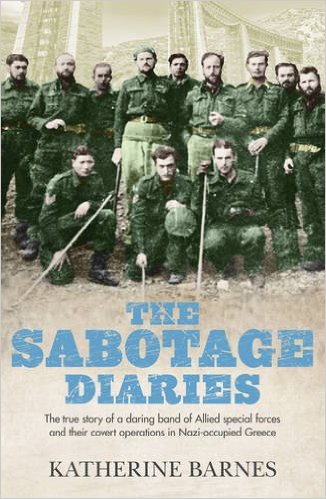
New Book: The Sabotage Diaries

Sabotage diariesThis book made much more sense to me following the excellent talk by Dr Roderick Bailey about the psychological effects of SOE operations on the men involved. Dr Bailey spoke at length about Operation Harling and this team.

The The Sabotage Diaries is written from the first person perspective of Tom Barnes (from his diaries) so has all the gripping suspense of a novel. It is a thrilling read of wartime exploits, daring, intrigue and resourcefulness. It is the true story of Allied engineer Tom Barnes, who was parachuted behind enemy lines in Greece in October 1942 with a small team of sappers and special operations officers. Their brief was to work with the Greek resistance in sabotage operations against the German and Italian occupation forces. Under-equipped and under-prepared but with courage to spare, their initial mission was to blow up a key railway bridge, cutting Rommel’s supply lines to North Africa, where the battle of El Alamein was about to begin. Operation Harling was only the start of a lengthy and perilous clandestine mission.
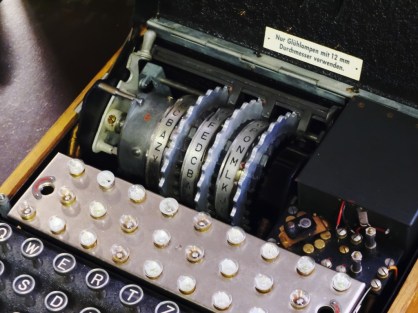
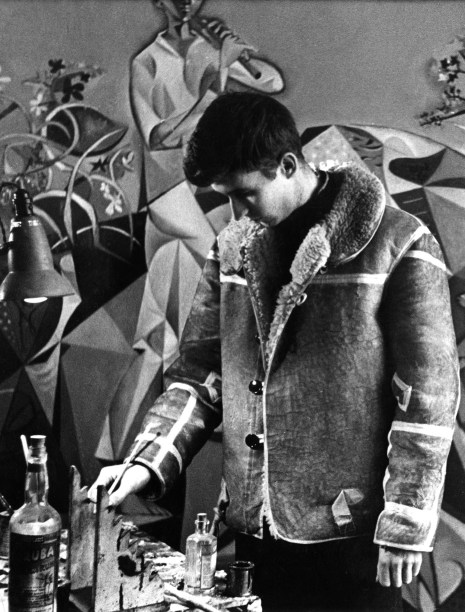
Written by Tom Barnes’ daughter-in-law, award-winning author Katherine Barnes, and drawn from Tom’s wartime diaries, reports and letters, plus many other historical sources and first-hand accounts, The Sabotage Diaries is a vivid and gripping tale of the often desperate and dangerous reality behind sabotage operations.

Buy The Sabotage Diaries

Celebrating Bletchley Park

DSCF0441-1024x768Sent this by Gabriella Bullock who thought that this event may appeal to some of you. Celebrating Bletchley Park is a two-day festival of expert speakers including Bletchley Park veterans, demonstrations, questions and answers, rare archive, and a chance to meet like-minded people in a beautiful village in the English countryside.

You will hear from: veteran codebreakers, historians researching the lives of workers sworn to secrecy forever; the people who rebuilt Bletchley Park’s secret code-breaking computers; Alan Turing’s nephew Sir Dermot Turing; and from a collection of authors and broadcasters who are all authorities on how the enemy’s codes were broken.

There will also be lots of stories about what life was like for the women and men, from all walks of life, who put in countless hours to give the Allies the information needed to outwit an enemy and thereby shorten World War II.

The event takes place over the weekend of 19-20 March at Firle Place in Sussex. Further details can be found on the event website.

Benaki appoints new director, and visiting Paddy’s house

Olivier Descotes

The Benaki museum have a website page dedicated to Paddy and Joan’s house which you can view here. It includes details of how to arrange a visit to the house.

Furthermore, the Benaki has appointed as its new director, Olivier Descotes, who has been director of the French Institute in Athens from 2011 to 2015. He takes up his post in March. An announcement about the future of the house will be made in April. Ekathemerini reports:

Olivier Descotes, artistic creation inspector at the French Ministry of Culture, has been appointed new director of the Benaki Museum, the organization’s board of trustees has announced.

Descotes, formerly director of the French Institute in Athens, will replace Angelos Delivorias, who headed the museum for 41 years before stepping down in 2014.

Descotes was among 82 candidates who applied for the position through an international competition carried out pro bono by global executive search firm Egon Zehner.

The Benaki Museum was founded by Antonis Benakis in 1930 and subsequently bequeathed to the state.

John Craxton ‘A Poetic Eye’: A life in art from Cranborne Chase to Crete

John Craxton working on Pastoral for P.W., 1948 Photograph by Felix Man

John Craxton working on Pastoral for P.W., 1948 Photograph by Felix Man

The Craxton exhibition has moved to Salisbury. Running until 7 May 2016, the exhibition is curated by Ian Collins, and explores the colourful life of artist John Craxton and his incredible emotional, physical and creative journey from Cranborne Chase to Crete.

From an early age Craxton lived with artists Cecil and Amy Waller near Farnham, a short walk from the Pitt-Rivers Museum, where he was inspired by art, archaeology and the landscape of Dorset. This exhibition shows his art as it changes from dark to light and as he moves across Europe to Crete, but the strength and importance of line in his work remains constant.

Location: The Salisbury Museum

The Kreipe kidnap from the Victor comic 1973

Victor coverIn 1973, the Victor comic, well-known to all boys of a certain age, published the story of the kidnap in their usual style. The British, brave and clever fighting against the odds. The Germans, cunning and morally bankrupt.

I have been able to obtain a copy of the Victor from October 6th 1973. Read and download the pdfs and enjoy! Page 1 and Page 2.


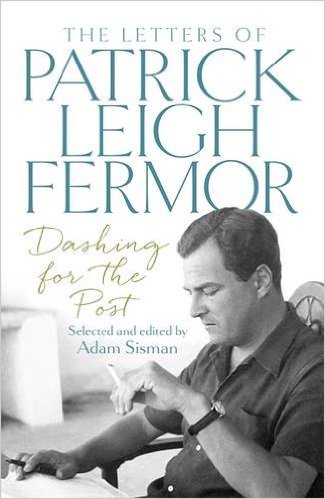
Dashing for the Post

dashing for postJohn Murray continues to offer us new insights into Paddy’s life and times. They will publish a collection of letters penned by Paddy on 6 October 2016.

The collection entitled Dashing for the Post was announced on 11th February on what would have been Leigh Fermor’s 101st birthday.

John Murray says the letters will exhibit many of his “endearing characteristics”, including “his zest for life, his unending curiosity, his keen sense of place, his lyrical descriptive powers, his love of words, his fluency in a remarkable range of languages, his boyish exuberance, and his sense of fun”.

Many of the letters are written to friends and family, but the collection also includes correspondence with Ian Fleming, Nancy Mitford, Lawrence Durrell, Diana Cooper and Deborah Devonshire.

Exclusive material will be taken from the National Library of Scotland, as well as letters drawn from private collections in the UK and abroad.

Adam Sisman, the book’s editor, is an honorary fellow of the University of St Andrews and a fellow of the Royal Society of Literature.

Dashing for the Post will be published in hardback and e-book on 6th October 2016. John Murray publisher Roland Philipps bought world rights from the Leigh Fermor estate.

Philipps said: “Paddy Leigh Fermor was one of the greatest prose stylists of the twentieth century. His letters have his hallmark high spirits, marvellous humour, magpie-like mind for the telling fact, erudition, linguistic mastery and sheer brilliance. Eight years ago In Tearing Haste (John Murray) Paddy’s letters to and from the Duchess of Devonshire, was a major bestseller. Dashing for the Post has his full range of correspondents, and is even more of a joy than that first book.”

You can pre-order Dashing for the Post: The Letters of Patrick Leigh Fermor by clicking here.

Happy Birthday Paddy!

Paddy1On this day in 1915 Patrick Leigh Fermor was born in London to Sir Lewis Leigh Fermor and Muriel Ambler. Happy Birthday Paddy!!

To celebrate, why not read this account by Artemis Cooper about the Weedon Bec area of Northamptonshire where Paddy was brought up?

Paddy’s Childhood Home: the Weedon Bec Route in Northamptonshire

Reg Everson and his powdered egg breakfast for General Kreipe on Mount Ida

From time to time I plan to re-publish some of the best blog posts as we have over 700 posts on here and many get lost. This first re-post was inspired by my attendance last night at the presentation by Dr Roderick Bailey – Hazardous Operations: British SOE Agents in Nazi Occupied Greece – which was both informative and entertaining. The story of Reg Everson and powdered egg was first published on 10 June 2012 …

At Paddy’s funeral last year, I stayed afterwards for a drink with a small group at the hotel  which used to be the Dumbleton estate manor house, originally home to Joan’s family. A man from Wales introduced himself as Vince Tustin. I recognised the name as I had been in touch with Vince by email in the preceding weeks on the subject of his father-in-law who was in the SOE.

‘Reg Everson, my father-in-law, spent three years on Crete and much of that time he worked closely with Paddy as a radio operator.’ said Vince.

His wife then joined us and after a while she said ‘I asked my mum and dad why I was called Patricia. It was an unusual name for a girl in Wales at the time. And my dad told me I was named Patricia after his good friend Patrick Leigh Fermor. They had served together in Crete.’

Such was the impression that Paddy made on people. It is a lovely story in itself, and perhaps serves a reminder on this first anniversary of his death, that Paddy affected the lives of  many, in different ways, as a man as well as a writer.

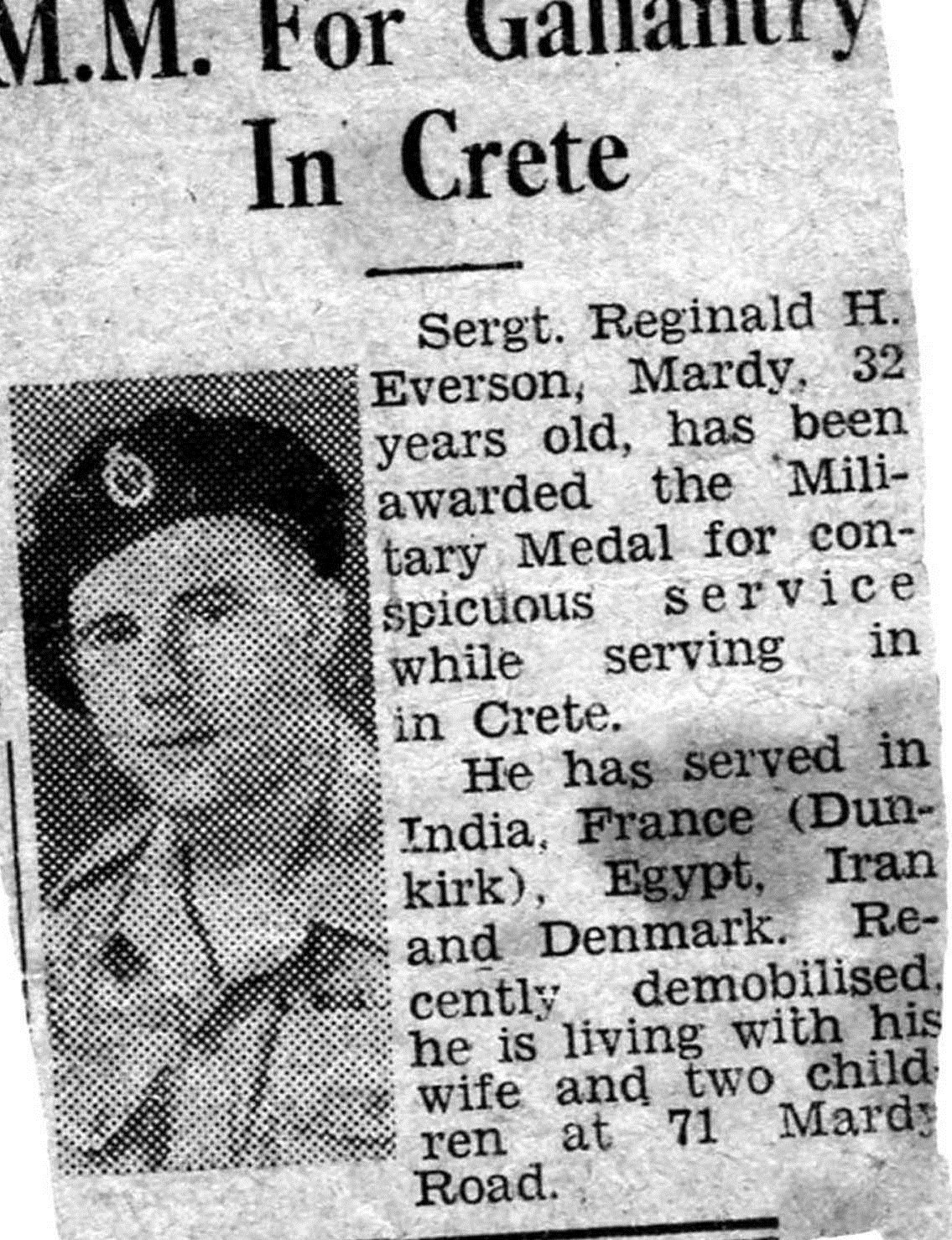
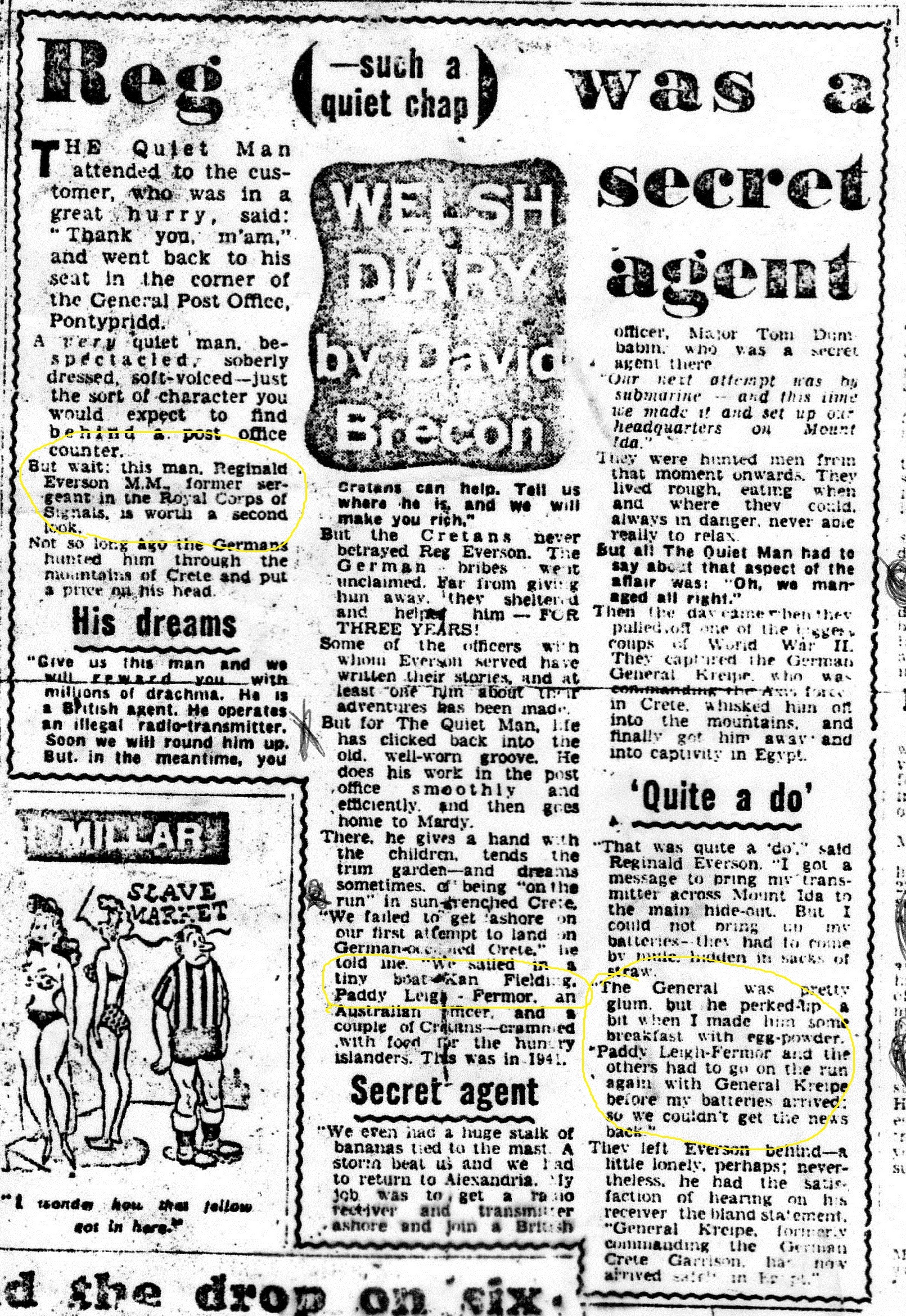
Vince told me that in the 1950’s Reg was interviewed by a local reporter.

I am sure that Reg didn’t want it to sound as if he was alone [on Crete]. He was a quiet mild mannered gentleman, and was in the Royal Signals from 1931 to 1946 and like so many servicemen lied about his age to get in, he was only 15 when he enlisted. For the three years he was on Crete his wife didn’t hear from him. His commanding officer was the only contact she had. People in the village even thought Reg had left her!

It wasn’t until I wrote a piece in the local paper that people understood where he had been because he didn’t speak about it. In the newspaper cutting from the 50s Reg talks about his involvement in the kidnap of General Kreipe and how he cheered up the General by making him some powdered egg for breakfast on Mount Ida.

We have his forged Cretan papers here, also a leaflet that was dropped by the Germans. He was awarded the Military Medal and Africa Star among other medals. He was also presented with a solid silver medal for bravery from the Maharaja of India.

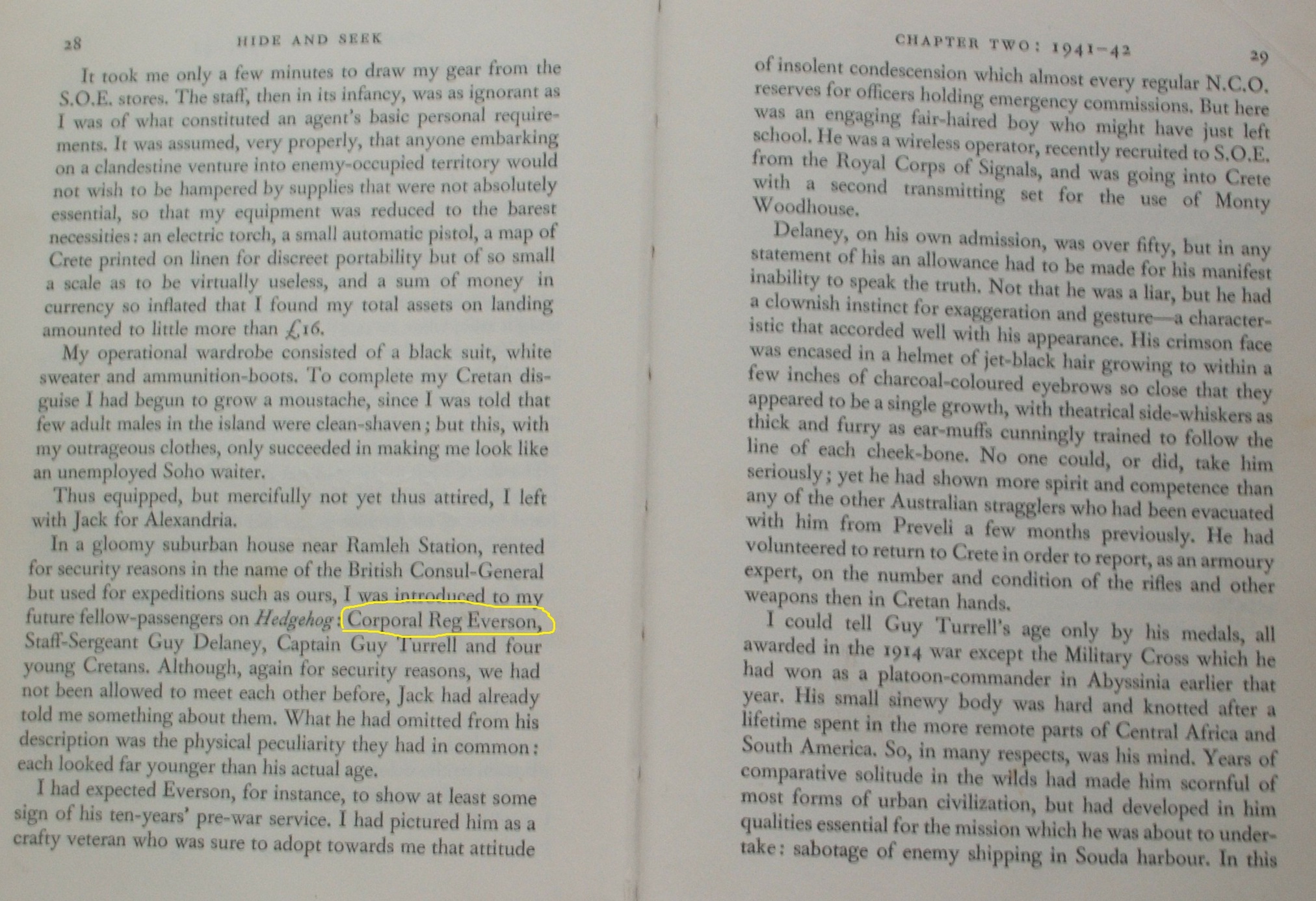
Reg Everson deployed to Crete with Xan Fielding, and Xan refers to this in his account of his time in Crete “Hide and Seek”.


In the newspaper interview Reg describes how he was summoned with his radio to Mount Ida to join the kidnap gang, but he had to wait for his heavy radio batteries to arrive so he made himself useful and he made breakfast for the General on Mount Ida …

“The General was pretty glum, but he perked-up a bit when I made him some breakfast with egg powder. Paddy Leigh Fermor and the others had to go on the run again with General Kreipe before my batteries arrived: so we couldn’t get the news [of the successful kidnap] back.”

Whilst we often hear the stories of the officers in SOE, we should not forget that they were supported by a large team including signallers such as Reg Everson who were especially brave. They risked being located by the Germans who were constantly trying to find the source of their signals to destroy the radios, and capture the highly skilled and valuable operators.

In Paddy’s Footsteps: Patrick Leigh Fermor’s Greece and Crete

The PLF Society are arranging a cracking tour of Greece and Crete between 17-30 June. The outline is as follows.

In Paddy’s Footsteps has been designed exclusively for members of the PLFS and is a unique journey into Patrick Leigh Fermor’s Greece and Crete. Between 17th and 30th June 2016, a group of no more than twenty travellers will visit major sites in PLF’s life: from his favourite restaurants and hotels, to the homes where he lived and wrote; from Classical monuments to the caves in which the Kreipe kidnappers hid. Guides will include several Leigh Fermor experts.

The tour begins in Athens, including a meal at Tou Psara, where Leigh Fermor and George Katsimbalis often met. It then travels through Mycenae and Epidavros to Leigh Fermor’s preferred hotel in Nafplion. From there, it visits Hydra, where much of Mani was written, and the mill at Lemonodassos where Leigh Fermor lived in 1935-36. Then, after stopping at Mystras, it will visit Leigh Fermor’s house at Kardamyli and explore the Mani. Next, it travels to Crete where, after visiting Knossos and the Kreipe kidnap site, it will trace the kidnappers’ journey into the mountains, and tour the Resistance sites of the Amari Valley. The journey ends at Rethymnon, where it will link up with the International Lawrence Durrell Society for dinner at the Old Fort.

• Four-star hotels, air-conditioned private transportation.
• Expert speakers and guides, including Chris White (contributing author of ‘Abducting a General’), Costas Malamakis (former curator, Historical Museum of Crete), and Simon Fenwick (archivist who has been researching the Leigh Fermor and Xan Fielding archives).
• Private visit to Leigh Fermor’s Mani home, guided by his housekeeper Elpida Beloyanni.
• Guided tours of the Kreipe abduction site and escape route, and the Resistance sites of the Amari Valley.
• Entry to the International Lawrence Durrell Society’s conference, On Miracle Ground, whose theme is ‘British Writers in World War II Crete’.
• Optional tours of the Benaki Museum,the Hadjikyriakos-Ghika House, the town of Chania, and the Samaria Gorge.
• The tour is strictly limited to PLFS members, and for a party of no more than 20 travellers.
• Cost: 2965 Euros per head, including hotels, breakfasts, 16 lunches or dinners, conference fees, guide fees, Athens-Heraklion flights and all private ground transportation.

To register or request further details from the organisers, please email the PLFS at info@ patrickleighfermorsociety.org.

Event – Paddy Leigh Fermor and Friends: Explorations in his Archive

An illustrated lecture by Sir Michael Llewellyn-Smith (former UK Ambassador to Greece 1996-9)

Thursday 25 February, 7.15 pm at Hellenic Centre, 16-18 Paddington St, London.

Free entry. Further information and bookings on 020 7862 8730 or at office@hellenicsociety.org.uk. http://www.hellenicsociety.org.uk. Organised by the Society for the Promotion of Hellenic Studies.

Event – Hazardous operations: British SOE agents in Nazi-occupied Greece and the strain of clandestine warfare

During the Second World War, small teams of elite Allied soldiers were dispatched into Occupied Greece to fight alongside local guerrillas. Most were agents of the Special Operations Executive, a secret British organisation tasked with encouraging resistance
and carrying out sabotage behind enemy lines. From Crete to Thessaly and Thrace, SOE personnel shared the dangers and straitened circumstances of the Greeks they had come to help – and suffered accordingly. Illustrated with images from declassified files, this lecture discusses the nature and impact of the mental and physical stresses and strains to which SOE agents in Greece were exposed.

Dr Roderick Bailey is a Wellcome Trust Research Fellow at Oxford University’s Wellcome Unit for the History of Medicine. A specialist in the study of the Special Operations Executive, he is currently researching the medical aspects of SOE’s work. His particular focus is the processes by which candidates were recruited and screened for this high-risk, high-strain, unconventional employment, the psychological stresses inherent in SOE work, and the procedures in place for diagnosing and treating survivors who returned from the field with psychological problems.

Monday 8 February, 6.30 -8 pm at Anatomy Lecture Theatre (K6.29), King’s Building, Strand Campus, London WC2R 2LS. Free to all.

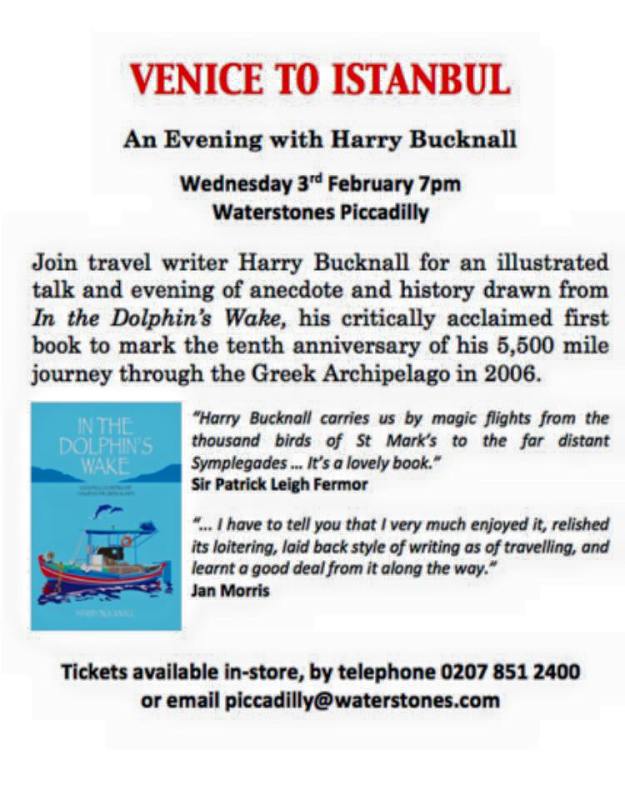
Venice to Istanbul – An Evening with Harry Bucknall

12552903_10153972425026209_1376961373577387968_nIt is all “events” at the moment, it must be something to do with emerging from the depths of the dark days of winter. Why not try a little bit of sunshine by joining with me and my good friend Harry Bucknall to celebrate the tenth anniversary of his first travelogue – In the Dolphin’s Wake – his description of his 5.500 mile journey around the islands of the Greek Archipelago?

Harry is very entertaining and his book was endorsed by Paddy. The evening will be held at Waterstones Piccadilly at 7.00 pm on 3rd February. See photo for booking details.

Progress on the house at Kardamyli

If anyone was wondering I hear that there is news of a sort.

As you may recall, the Benaki Museum was seeking approval for funding of the proposed renovations. From my sources it appears the the proposal as submitted has been turned down, and the museum has now re-submitted the proposal in a reduced form. Quite what this means no-one seems to know. No real surprises there then.

My own view, which has not really changed for a few years, is that the only way forward is for a group to seek to either buy the house outright, or lease the house for the remaining few years that the Benaki have the right to create the writer’s retreat, do that job for them, and then purchase the house outright at the end of the term which may be 2024 if I recall correctly. Any takers?

Tom

Event – Patrick Leigh Fermor and SOE in Crete

Costas Mamalakis at the Historical Museum of Crete. Photo: Mike Sweet.

Patrick Leigh Fermor and SOE in Crete – Costas Mamalakis is giving the next PLFS lecture. Costas Mamalakis is Crete’s leading expert on the Second World War and the resistance in Crete. Consultant in Modern History to the Historical Museum of Crete, Costas has been the moving force behind the publication of several memoirs of the resistance, including the most recent: ‘Tom J. Dunbabin: An Archaeologist at War’.

Costas will be spending the week prior to this presentation reviewing documents in the PLF Archive in Edinburgh, and will be able to bring new insights to the many documents in Greek that have yet to be properly evaluated. He will be supported by Chris and Peter White and Gabriella Bullock.

Monday 1 February, 7.15pm at Great Hall, Hellenic Centre, 16-18 Paddington St, London, W1U 5AS. Contact info@ patrickleighfermorsociety.org.

Paddy’s World – Transcript of John Julius Norwich’s talk for the PLF Society

Many blog readers and members of the PLF Society were privileged to her John Julius Norwich give a very personal account of his memories of Paddy at the Hellenic Centre in London on 10 November. My account of the evening is here

I am very lucky to be able to present the full transcript of the talk. Didn’t I say we had some good stuff coming up? Enjoy this 🙂

On 22 February 1951 my mother wrote to me: “Just off for my jaunt to Passy sur Eure to spoon with P. Leigh Fermor. Shy. Fluster.” At that time she had only just met Paddy and hardly knew him, and she would have been – as indeed she confessed she was – extremely nervous. But all was well. The next letter read:

Well, the gallivanting was a red letter. It took me a good two hours cross-country by Pontoise and Mantes. Strange little village house in which he lives – the loan of a Lady Smart – was warm and welcoming and I really felt myself back in the pond I was raised in. Fascinating conversation with a male man who delights in one. Paddy was superb. Cultured, funny, telling wonderful sagas, zealous. We had a charming filthy little lunch over the stove of sardines, Pernod and vin ordinaire and afterwards we walked for two hours over low wooded downs in sparkling sun, talking ten to the dozen about people, grievances and enthusiasms

That was the beginning. My parents saw quite a lot of Paddy and Joan – whom my mother thought looked just like Joan of Arc, except that Joan of Arc didn’t wear sun-glasses – in the next year or two. I was at Oxford at the time, and I remember seeing them once or twice during vacations, and being invariably knocked sideways – as everyone was – by the sheer brilliance of Paddy, and the glorious fun of him. Every time he walked into a room it was as if the sun had come out; never have I laughed more uncontrollably round a luncheon or dinner table, and as for his erudition, never have I met anyone who knew so much about everything under the sun, yet wore his learning so lightly. There seemed to be no language he could not speak, or indeed sing songs or recite poetry in: French, German, Italian, Spanish, Greek and Rumanian for a start, but there were probably several others as well.

Then, in the summer of 1955, a wonderful thing happened. By then I had joined the Foreign Service. My first wife Anne and I were by that time living in Belgrade, where I was Third Secretary at the British Embassy. Another letter arrived from my mother. She had been lent a Greek caïque by the ship-owner Stavros Niarchos for a fortnight’s sail through the isles of Greece. Paddy and Joan were coming; could we come too? As far as we were concerned, it was a question of “can a duck swim?” At the end of August we drove down from Belgrade – which in those days had no airport – to Athens, and thence to the Piraeus, where we boarded the Eros.

It was my first time in the Aegean, and Paddy gave it a whole new dimension. It was the first time I had seen him, as it were, on his home ground, and it was wonderful. He lived and breathed his beloved Greece – fluent in its language, encyclopaedic in his knowledge of its history, its customs and its literature. But nobody – and that was the wonder and joy of him and – I know I’ve said this before – nobody has ever carried his learning more lightly. His conversation was consistently dazzling. As we sailed from island to island – and in those days there were virtually no tourists, and I can’t begin to tell you what a difference that made – he talked about Greece, about Greek history, about Greek beliefs and traditions, about Byron and the Greek War of Independence, with those monstrously magnificent Greek heroes – men like Mavromichalis and Kolokotronis whose names roll so satisfactorily across the tongue – and about the Greek Orthodox Church and its quarrels with the west over more of those words, like filioque and ͑ομοούσιον; but his talk roamed far wider than that, taking in the whole eastern Mediterranean and, in particular, Byzantium.

Now in England Byzantium has always had a terrible press. The great nineteenth-century historian W.E.H. Lecky wrote that it constituted, “without a single exception, the most thoroughly base and despicable form that civilisation has yet assumed…. There has been no other enduring civilisation, he claimed, “so absolutely destitute of all the forms and elements of greatness”. He went on,

Its vices were the vices of men who had ceased to be brave without learning to be virtuous…. Slaves, and willing slaves, in both their actions and their thoughts, immersed in sensuality and in the most frivolous pleasures, the people only emerged from their listlessness when some theological subtlety, or some chivalry in the chariot races, stimulated them to frantic riots…. The history of the Empire is a monotonous story of the intrigues of priests, eunuchs and women, of poisonings, of conspiracies, of uniform ingratitude, of perpetual fratricides.

Strong words indeed – although to modern ears that last sentence makes Byzantine history sound not so much monotonous as distinctly entertaining. But that long campaign of denigration continued well into the twentieth century. It was only in the time of which I’m speaking – the fifties – that the writings of people like Robert Byron, David Talbot Rice and Steven Runciman, together with the new-found ease, speed and relative comfort of travel in the Levant, made the glorious heritage of the Byzantine Empire at last generally accessible. Now, thank heaven, the Empire has come into its own again, and is seen as a worthy successor to the two mighty civilisations which it followed and so beautifully combined, the Greek and the Roman.

The trouble was, for most of us, that we knew so little about it. Those old attitudes died hard. During my five years at Eton, the entire subject was the victim of what seemed to be a conspiracy of silence. I can’t honestly remember Byzantium being once mentioned, far less studied; and so complete was my ignorance that I should have been hard put to define it even in general terms till I went to Oxford. And, for heaven’s sake, why? After all, it was not even the successor, it was that same old Roman Empire of Augustus and Tiberius and Claudius and the rest, which continued to exist in its new capital of Constantinople for another one thousand, one hundred and twenty-three years before it was finally captured by the Ottoman Turks on that fateful day, Tuesday 29 May 1453, after one of the most heroic sieges in all history. It was Paddy and Paddy alone who revealed to me its mystery and its magic, although he also recommended to me, among much else, that I should read an extraordinary book by Robert Byron, The Byzantine Achievement, which that most precocious author wrote when he was twenty-five. I read it with utter fascination, and ended up completely captivated. When I got home I devoured every book I could find on the subject, and the following year Anne and I drove to Istanbul for a week. Twenty years later I was to write a History of Byzantium myself – three volumes of it, which were necessary if I was to cover more than a millennium; but I very much doubt whether, had it not been for that fortnight on the Eros, those three volumes would ever have been written.

One evening, I remember, Paddy was talking about a poor fisherman at Kardamyli – this was long before he went to live there – a friend of his called Strati Mourtzinos, who, he told us, might just possibly have been the last heir to the imperial throne of Byzantium. Suddenly his imagination took over, and he built a magnificent castle in the air. It seemed, by some miracle, that the Turks had restored Constantinople to Greece. Byzantium was reborn and Strati Mourtzinos was formally crowned as its Emperor. Paddy was later to work up the idea further in his first book about Greece, Mani:

Bells clanged; semantra hammered and cannon thundered as the Emperor stepped ashore. Then, with a sudden reek of naphtha, Greek fire roared, saluting in a hundred blood-red parabolas from the warships’ brazen beaks….. In the packed square of Constantine, a Serbian furrier fell from a rooftop. An astrologer from Ctesiphon, a Spanish coppersmith and a money-lender from the Persian Gulf were trampled to death; a Bactrian lancer fainted and, as we proceeded round the Triple Delphic Serpent of the Hippodrome, the voices of the Blues and Greens, for once in concord, lifted a long howl of applause. The imperial horses neighed in their stables, the hunting cheetahs strained yelping at their silver chains. Mechanical gold lions roared in the throne room, gold birds on the jewelled branches of artificial trees set up a tinkling and a twitter. The general hysteria penetrated the public jail: in dark cells, monophysites and bogomils and iconoclasts rattled their fetters across the dungeon bars. High on his Corinthian capital, a capering stylite, immobile for three decades, hammered his calabash with a wooden spoon….

Would you like a bit more? All right: Continue reading

Event – The Hospitallers (Knights of St John) in Mainland Greece, the Aegean and Turkey: 1306-1522

An illustrated lecture at the Hellenic Centre, London, by Michael Heslop, Royal Holloway, University of London accompanied by an exhibition of photographs entitled Broken Teeth Point at the Sky: Peloponnesian Castles at War in the 14th century.

Free entry; booking essential on 020 7563 9835 or at press@helleniccentre.org Organised by the Hellenic Centre

Catching up

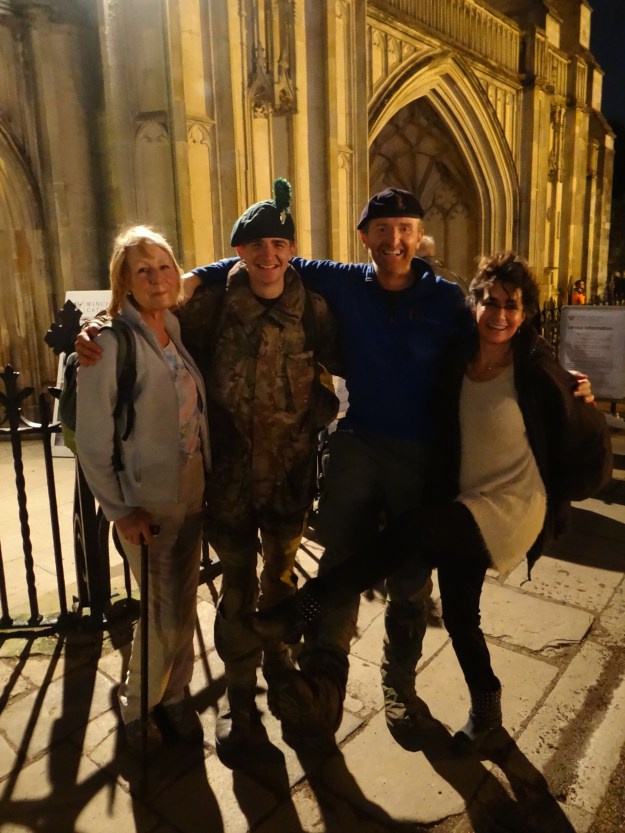
Journey's end with Billy Moss' daughter Isabelle and Jody Cole Jones at Winchester Cathedral

Journey’s end with Billy Moss’ daughter Isabelle and Jody Cole Jones at Winchester Cathedral

I have returned. Some of you may have wondered if I had disappeared in a bog on my long walk before Christmas, others perhaps that there is nothing more to add to the Paddy blog.

Fortunately neither is true although the walk was massively hard. I suffered a bout of flu the week before and was quite uncertain if I would be well enough to start on time. The main symptoms did disperse, but I was very weak and probably not strong enough to tackle the hills and terrible ground conditions that we found (see this video here). It was not really until we reached drier conditions in Hampshire in the last two days that I had recovered my strength enough, but aided my by walking companion, my son, and the ever-present need to meet the target and raise money for the two chosen charities, we pressed on. We were joined by Billy Moss’ daughter Isabelle and his grand-daughter Jody Cole Jones for the last 10 km into Winchester. They wished to support the causes, and Combat Stress in particular, as they wanted to highlight their belief that Billy probably suffered from some form of post-traumatic stress which may have led to his early demise. The Just Giving page remains open for any final donations here.

Since then I have been in Germany celebrating Christmas with my youngest daughter Harriet, and then preparing for a new job which I started in the New Year. So I am now ready to get back in harness and present you with some fascinating material. As ever I am grateful to those of you who have been in touch with ideas and material. I look forward to a successful 2016 for us all and send you my best wishes.

Tom

Patrick Leigh Fermor’s Rhineland Christmas

This may just be a little late but I guess it is still “seasonal”. I have been recovering from the long walk (raised over £3,600 so thank to all who pitched in) and then my very own time in Germany up to Christmas with my youngest daughter Harriet followed by an English Christmas. All very hectic. I have promised myself a calmer 2016, with hopefully more time for the blog. Thank you for your continued readership, kind thoughts and ideas. A very Happy New Year to you and those you love.

Tom

Paddy spent Christmas, 1933, in Coblenz/Koblenz a German town on the Rhine. From A Time Of Gifts:

Coblenz is on a slant. Every street tilted and I was always looking across towers and chimney-pots and down on the two corridors of mountain that conducted the streams to their meeting. It was a buoyant place under a clear sky, everything in the air whispered that the plains were far behind and the sunlight sent a flicker and a flash of reflections glancing up from the snow; and two more invisible lines had been crossed and important ones: the accent had changed and wine cellars had taken the place of beer-halls. Instead of those grey mastodontic mug, wine-glasses glittered on the oak. (It was under a vista of old casks in a Weinstube that I settled with my diary till bedtime.) The plain bowls of these wine-glasses were poised on slender glass stalks, or on diminishing pagodas of little globes, and both kinds of stem were coloured: a deep green for Mosel and, for Rhenish, a brown smoky gold that was almost amber. When horny hands lifted them, each flashed forth its coloured message in the lamplight. It is impossible, drinking by the glass in those charmingly named inns and wine-cellars, not to drink too much. Deceptively and treacherously, those innocent-looking goblets hold nearly half a bottle and simply by sipping one could explore the two great rivers below and the Danube and all Swabia, and Franconia too by proxy, and the vales of Imhof and the faraway slopes of Würzburg journeying in time from year to year, with draughts as cool as a deep well, limpidly varying from dark gold to pale silver and smelling of glades and meadows and flowers. Gothic inscriptions still flaunted across the walls, but they were harmless here, and free of the gloom imposed by those boisterous and pace-forcing black-letter hortations in the beer-halls of the north. And the style was better: less emphatic, more lucid and laconic; and both consoling and profound in content; or so it seemed as the hours passed. Glaub, was wahr ist, enjoined a message across an antlered wall, Lieb was rar ist; Trink, was klar ist. [“Believe what is true; love what is rare; drink what is clear.”] I only realized as I stumbled to bed how pliantly I had obeyed.

It was the shortest day of the year and signs of the seasons were becoming hourly more marked. Every other person in the streets was heading for home with a tall and newly felled fir-sapling across his shoulder, and it was under a mesh of Christmas decorations that I was sucked into the Liebfrauenkirche next day. The romanesque nave was packed and an anthem of great choral splendour rose from the gothic choir stalls, while the cauliflowering incense followed the plainsong across the slopes of the sunbeams. A Dominican in horn-rimmed spectacles delivered a vigorous sermon. A number of Brownshirts — I’d forgotten all about them for the moment — was scattered among the congregation, with eyes lowered and their caps in their hands. They looked rather odd. The should have been out in the forest, dancing round Odin and Thor, or Loki, perhaps.

Paddy imaginatively and sensually explores local landscapes by drinking its wine. Notice too the glorious description of the Catholic church in Coblenz at Christmastime.  That beautiful old church, the Liebefrauenkirche, was destroyed in the Second World War.

Two tramps walking!

patrickI am very pleased to announce that I will be joined by my son on the walk this year. He has a close affinity with the aims and objectives of our walk which are to raise awareness of mental health issues and homelessness amongst veterans, and to raise £5,000 for two charities that assist them.

By Tom Sawford.

The walk dates are now set at 14-19 December, starting in Ottery St Mary in Devon and ending early Saturday afternoon at Winchester Cathedral. If you would like to join us for a day or so please get in touch.

You can support the two if us in our walk and the charities that we support by giving on our Just Giving page here. We would like to start the walk with £2,000 raised and have a way to go to reach that so please, please consider giving something – the Just Giving site takes all major currencies. Every donation helps, no matter how small or large!

Combat Stress is the UK’s leading Veterans’ mental health charity. Mental ill-health such as PTSD affects ex-Service men and women of all ages. Right now, the charity supports over 5,900 Veterans aged from 18 to 97, and spends over £15 million per annum delivering its unique range of specialist treatment and welfare support which is always free of charge.

Winchester Churches Nightshelter provides a vital lifeline to the homeless, and remains the only night shelter offering direct access emergency accommodation in Hampshire. They support up to 200 homeless people annually. There is a direct link between mental health problems such as PTSD and homelessness. Money raised will go direct to the homeless which I feel may be a better outcome than through a larger charity.

We hope that you will feel inspired to support the fundraising and make some (doubly !!!) generous contributions at the Just Giving page where you can choose to split your donations between the two charities if you wish.

There is a public Facebook page if you want to follow the progress. https://www.facebook.com/walkinghomeforchristmas/

Thank you all very much. Please donate here. https://www.justgiving.com/teams/likeatramp

Print

Language Itself Resists

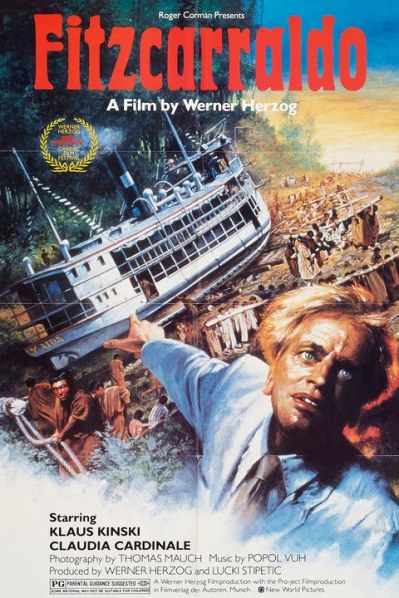
fitzAt the weekend I was watching with my partner the wonderful movie, The Mission, starring Jeremy Irons and Robert de Niro. The hot, humid, fly ridden jungle scenes reminded me of something by Werner Herzog that I had saved as a possible draft and it spurred me to share it with you.  It is clear that his experiences filming Fitzcarraldo were not particularly pleasant. This comes on the anniversary of our good friend Jasper Winn’s walk in the footsteps of Herzog’s 1974 walk from Munich to Paris in the depth of winter to save the life of a friend. 

by Werner Herzog

From the Paris Review

For reasons that escape me, I simply could not make myself go back and read the journals I kept during the filming of Fitzcarraldo. Then, twenty-four years later, my resistance suddenly crumbled, though I had trouble deciphering my own handwriting, which I had miniaturized at the time to microscopic size. These texts are not reports on the actual filming—of which little is said. Nor are they journals, except in a very general sense. They might be described instead as inner landscapes, born of the delirium of the jungle. But even that may not be entirely accurate—I am not sure.

A vision had seized hold of me, like the demented fury of a hound that has sunk its teeth into the leg of a deer carcass and is shaking and tugging at the downed game so frantically that the hunter gives up trying to calm him. it was the vision of a large steamship scaling a hill under its own steam, working its way up a steep slope in the jungle, while above this natural landscape, which shatters the weak and the strong with equal ferocity, soars the voice of Caruso, silencing all the pain and all the voices of the primeval forest and drowning out all birdsong. To be more precise: bird cries, for in this setting, left unfinished and abandoned by God in wrath, the birds do not sing; they shriek in pain, and confused trees tangle with one another like battling titans, from horizon to horizon, in a steaming creation still being formed. Fog-panting and exhausted they stand in this unreal world, in unreal misery—and I, like a stanza in a poem written in an unknown foreign tongue, am shaken to the core.

Santa Maria De Nieva, 14 October 1979

Seen from the air, the jungle below looked like kinky hair, seemingly peaceful, but that is deceptive, because in its inner being nature is never peaceful. even when it is denatured, when it is tamed, it strikes back at its tamers and reduces them to pets, rosy pigs, which then melt like fat in a skillet. This brings to mind the image, the great metaphor, of the pig in Palermo, which I heard had fallen into a sewer shaft: it lived down there for two years and continued to grow, surviving on the garbage that people threw down the shaft, and when they hauled the pig out, after it had completely blocked the drain, it was almost white, enormously fat, and had taken on the form of the shaft. it had turned into a kind of monumental, whitish grub, rectangular, cubic, and wobbly, an immense hunk of fat that could move only its mouth to eat, while its legs had shrunk and retracted into the body fat.

Iquitos, 8 December 1980

This morning, when I checked on the telex machine, Gloria was trying to make contact with the Narinho, the rusted-out ship that we had gotten to float here from Colombia, made buoyant with six hundred empty oil drums, but the onboard receiver must have been turned off. A young woman had shown up; she had no way to reach her husband, an electrician, who was on the ship. In the morning her child had been throwing up for two hours, then went into convulsions, and was suddenly dead. I did not know what I should say to the woman. She turned her face to the wall and cried; she had been keeping it in until then. I took her hand and held it, and when her silent sobbing had relaxed somewhat, I took her on the motorcycle and rode to the boat landing. The boatman did not want to set out because he was waiting for the cooks, but I hustled him off with the woman to the place where the Narinho was anchored. The woman was still very young, and it had been her first child, a son, only half a year old.

A still day, sultry. inactivity piled on inactivity, clouds staring down from the sky, pregnant with rain; fever reigns; insects taking on massive proportions. The jungle is obscene. everything about it is sinful, for which reason the sin does not stand out as sin. The voices in the jungle are silent; nothing is stirring, and a languid, immobile anger hovers over everything. The laundry on the line refuses to dry. As part of a conspiracy, flies suddenly descend on the table, their stomachs taut and iridescent. Our little monkey was wailing in his cage, and when I approached, he looked and wailed right through me to some distant spot outside where his little heart hoped to find an echo. I let him out, but he went back into his cage, and now he is continuing to wail there.

Iquitos, 18 December 1980

I have a snake on my roof again. A little while ago I heard something rustling up there, and then something dark fell into the banana fronds with a thwack. I took a look, and it was a poisonous brownish snake that had caught a bird, which was still peeping. I tried hitting the snake with a stick, but it disappeared like lightning into the grass. Only now and then did a blade quiver, and from the piteous cries of the bird I could tell where the snake was. I did not follow it into the grass, because I discovered that another snake was on the thatched roof, and directly above me a third snake was trying to get from a banana frond onto the platform of my hut. I tried to strike it with the machete, but the snake was too fast for me.

The power is still out. Evening descended on the countryside. What would happen if the rain forest wilted like a bouquet of flowers? Around me insects are dying, for which they lie on their backs. A woman in the neighborhood is suckling a newborn puppy after her baby died from parasites; I have seen this done before with piglets. Outside a bright moon is floating now above the treetops. The frogs, thousands of them, suddenly pause, as if they were following an invisible conductor, and start up again all at the same time. Their conversations come and go in curious waves. Waxy moonlight, as bright as neon, is shimmering on the banana fronds. I was called to the telephone in the house, and fell off the ladder that leads to my platform. It was one of very few phone calls that ever get through to us, and a stranger on the line was trying to make it clear to me that I was a madman, a menace to society. .. (more follows if you purchase the Paris Review issue here)

Read about Jasper Winn’s walk in Herzog’s footsteps here.

A glance at the life and times of Miklos Banffy

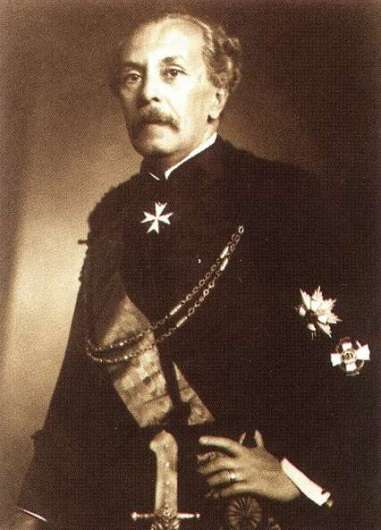
Count Miklós Bánffy

Count Miklós Bánffy

Many of you know that I admire the work of Miklos Banffy, the author and statesman who lived in Cluj, ran the opera house in Budapest, was foreign minister of Hungary and organised the last coronation of a king of Hungary. I have enjoyed the following article published on the blog of Lucy Abel-Smith who organised the first Transylvanian Book Festival and is planning a second for 2016. Enjoy this account of a recent tour through Hungary and Romania led by Lucy. Paddy very much followed in Banffy’s footsteps and wrote the foreword to the first English translation of Banffy’s wonderful Transylvanian Trilogy.

“In a brown velvet jacket and wide trousers he walked a little self conscious from one desk to the other… ‘I am drawing here, am writing there, at the third one I read’… I have forgotten what he did at the fourth… ’Somehow it seems more comfortable this way – he apologised and also I am very disorderly…”

In this charming description of his working habits, Miklos Banffy is disarmingly modest. This self deprecation is made all the more poignant by our visits to a few of his haunts – revealing something of this gifted, multilingual and many facetted man. Our journey was half in Budapest and then in Cluj and, at a slower pace in a few Hungarian Transylvanian villages in the traditional Saxon area. We behaved as if we were taking part in the Budapest Season before the war in a hectic race from place to place. From Cluj to Sibiu the pace was more measured.

Nearly seven decades after his death in Budapest in 1950, Miklos Banffy, one of the greatest novelists of the 20th century is only now being recognised by the English-speaking world. Jaap Scholten, in his Comrade Baron, describes what happened to so many of Banffy’s generation of Hungarian Transylvanians under Communism. Banffy’s own fate was no better. He died penniless, unsung and unread except by Hungarians. Jaap spoke to us over dinner on our first evening in the comfort of the Art’otel beneath the castle of Buda, on the bank of the Danube.

Day two began with a tour through the capital, bringing home the majesty of the Danube and the spirit of the 19th century movers and shakers in Buda and in Pest. At this time, Transylvania was still linked to the Kingdom of Hungary but ruled from Vienna. A visit to the truly National Museum, conceived by Ferenc Szechenyi, houses wonderful Renaissance furnishings from Slovakia and Transylvania including the great tomb monument of Michael Apafy (d. 1635), from Malancrav, which was relevant as this Baroque monument was carved by an artist from Spis and was commissioned for Malancrav, in Saxon Transylvania, where our journey would end.

Read more here.

Walking home for Christmas like a tramp

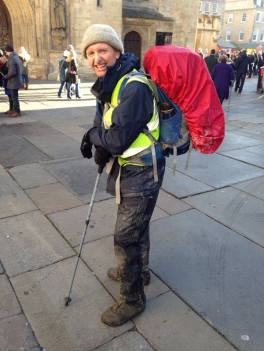
Tom in Bath at journey's end 2014

Tom in Bath at journey’s end 2014

Last year many of you made generous contributions to help me raise £2,500 for the homeless charity Shelter. This year I am almost doubling the distance I walk, and the nights out sleeping rough in the cold December weather, to achieve a doubling of the target to £5,000.

By Tom Sawford.

In December I will walk along the byways of England from the parish church of Ottery St Mary in Devon to Winchester Cathedral to raise awareness of the curses of Post Traumatic Stress Disorder and related homelessness. The route of around 120 miles will take me about 5-6 days and I will walk as a tramp, living off the goodwill of strangers, and sleeping rough in order to meet the goal of raising £5,000 for two charities that work tirelessly to assist those who struggle with these issues.

Combat Stress is the UK’s leading Veterans’ mental health charity. Mental ill-health such as PTSD affects ex-Service men and women of all ages. Right now, the charity supports over 5,900 Veterans aged from 18 to 97, and spends over £15 million per annum delivering its unique range of specialist treatment and welfare support which is always free of charge.

Winchester Churches Nightshelter provides a vital lifeline to the homeless, and remains the only night shelter offering direct access emergency accommodation in Hampshire. They support up to 200 homeless people annually. Residents benefit from a programme of practical and emotional support to help them to rebuild their lives and escape homelessness for good. Many of the people they deal with are ex-military. There is a direct link between mental health problems such as PTSD and homelessness. Money raised will go direct to the homeless which I feel may be a better outcome than through a larger charity.

I hope that you will feel inspired to support the fundraising and make some (doubly !!!) generous contributions at the Just Giving page where you can choose to split your donations between the two charities if you wish.

Some of you have asked about joining the walk and you would be very welcome to do so for some or all of the route. The dates are likely to be 12th or 13th December to 17th or 18th although these could shift to the right by a couple of days. I will publish the full route very soon.

There is a public Facebook page if you want to follow the progress. https://www.facebook.com/walkinghomeforchristmas/

Thank you all very much. Please donate here. https://www.justgiving.com/teams/likeatramp

#combatstress #homelessness #homeless #veterans

Print

Paddy’s World

None who attended the talk by John Julius Norwich on Tuesday were disappointed, as he gave a wonderfully warm and personal tribute to Paddy. One Greek lady praised John Julius so highly for his talk and his work as a Byzantine historian that she described him as “the loveliest man living”!

By Tom Sawford.

Apart from a few hearing difficulties there was little to indicate that age had slowed John Julius. His voice was strong and his recall of the times he spent with Paddy and Joan was vivid. He quoted a lot from letters between Paddy and his mother, Diana Cooper, to emphasise the range and scale of Paddy’s intellect.

This was no hurriedly put together speech. Reading from prepared notes, it was clear that John Julius had planned the talk in detail and kept to his subject clearly answering the question “what was Paddy’s world?”. It appears that the answer was Europe, in particular, its more easterly reaches, with Greece, and the lost past of Byzantium of course, at its centre. Paddy rarely travelled beyond its boundaries, the same boundaries that I often describe as the widest extent of the Roman Empire. He travelled only once to South America, recalled in his Three Letters from the Andes, and visited North America on a single occasion at the invitation of the Greek diaspora. Apart from his wartime experience he never ventured into the Levant. Paddy’s world was the one that he had walked through in 1934, but one that he mastered by speaking all of the main languages and developing an encyclopaedic knowledge of its history and customs.

John Julius ended on a very personal note, and holding back some tears, he said that he was blessed to have known Paddy and clearly misses him. During questions he described Paddy as the least self-centred of men, rarely talking about himself, happier to entertain people with his stories and singing, and only talking about the Kreipe kidnap when pushed into a corner. We can probably recognise this Paddy; despite extensive writing we know little of his personal thoughts. Apart from his introductory letters to Xan Fielding, John Julius said that Paddy never spoke about his life before his “great trudge”.

Thank you to John Julius Norwich for a wonderful presentation, and to the PLF Society for organising a very successful evening.

Maggie Rainey-Smith’s new novel set in Greece

maggieFew of you may be familiar with the writing of Maggie Rainey-Smith, but you will most likely have seen her wonderful photographs taken at Paddy’s house during Maggie’s 2007 visit to Kalamitsi when researching the book that was to become Daughters of Messene. I am looking forward to reading more about the book but here is some background from a recent press release. You can review Maggie’s pictures and her tribute to Paddy written after his death here.

Maggie’s book is titled Daughters of Messene and seeks to shed light on the experiences of young Greek women shipped to New Zealand fifty years ago. The press release continues …

When almost 300 unmarried Greek women arrived in Wellington in the early 1960s, the established Greek community feared the scandal that might follow. Instead the women settled into life here and the event has largely been forgotten. Inspired by this migration, Maggie Rainey-Smith’s powerful third novel Daughters of Messene, explores the complex interweaving of family and political events that caused one young woman to flee Greece after the Civil War, and half a century later motivated her daughter to return.

Wellington writer Rainey-Smith’s idea for Daughters of Messene started with a friendship with her neighbour Maria, one of the original ‘Greek girls’ to settle here.

“My father was in Greece during the Second World War and was captured on Crete, spending four years as a prisoner of war in Poland,” says Rainey-Smith. “As a result, he was awarded a medal and certificate by the Greek Government in the 1980s. My neighbour at the time was Greek, and she helped me to apply to the Greek government on behalf of my dad.”

“We became good friends and I discovered that she had emigrated from Kalamata in Greece as part of a deal done between our two countries. The girls all had to be under thirty, unmarried, and they came to work in the hospitality industry. I became fascinated by their stories.”

Maggie’s two previous novels About Turns and Turbulence (Random House) are set in New Zealand, but research for her third novel – published by Wellington’s Mākaro Press working in collaboration with Whitireia publishing students – took her to Greece for three months in 2007. Although the trip wasn’t quite what she had expected.

“I spent most of my time in Kalamata searching for stories, but found that people were reluctant to speak of the Civil War. In desperation I caught a bus to the Mani and ended up staying ten days in picturesque Kardymili, where I had the great good fortune to meet eminent travel writer Sir Patrick Leigh Fermor. It seemed like a blessing on the story, and so I persevered with working through the secret and sometimes shocking stories of what was a terrible time for Greece.”

The book has taken seven years to write, and has been released as part of NZ Book Week this week.

Daughters of Messene is described by Owen Marshall as “A strong, fresh novel, dense with closely observed and convincing detail of life in Greece and aspects of its history.”

Greek-NZ poet Vana Manasiadis says, “In many ways Daughters of Messene is a tender love poem dedicated to a place and its people, to the profound bonds of blood, and the legacies such bonds leave us. The tale is both touching and vivid, the unfolding masterful, and the novel’s heroines, spirited, huge-hearted and tough (in the very best sense).”

You can pre-order Daughters of Messene here.

Print

PLFS event – Paddy’s World with John Julius Norwich

John Julius Norwich in 2008

A reminder to you all that John Julius Norwich, who is patron of the Patrick Leigh Fermor Society and knew PLF for more than fifty years, will be giving a presentation at the Hellenic Centre on 10 November. This is a unique opportunity to hear from one of Britain’s greatest historians, and one of Paddy’s few remaining close friends.

DATE: Tuesday 10th November 2015 TIME: 7:15pm

LOCATION: Great Hall, Hellenic Centre, 16-18 Paddington St, London W1U 5AS

RSVP info@patrickleighfermorsociety.org

Print

Sons of Odysseus by Alan Ogden

Layout 1Sons Of Odysseus is a fascinating study of SOE heroes in Greece. Respected SOE expert and author Alan Ogden recounts how SOE missions through their courage, patience and determination, attempted to come to terms with reconciling British political and military objectives in the cauldron of internecine Greek politics.

From the very beginning, ‘political headaches’ abounded as SOE tried to establish a unified Greek resistance movement. For most Missions, it was a steep learning curve, accelerated by the experience of finding themselves in the middle of a bitter civil war during the winter of 1943 – 44, having to endure attacks by Axis occupation forces at the same time as being caught in fighting between EAM-ELAS and EDES guerrillas.

Living behind enemy lines for long periods of time, SOE officers and men were nevertheless able to bring off a series of spectacular sabotage acts and with the assistance of Greek partisan forces doggedly harassed German forces as they withdrew North in the autumn of 1944.

Ogden has been in contact with many of the families of these SOE heroes and has had access to letters, photographs and diaries. Drawing on these sources as well as official archives and published memoires, Sons Of Odysseus profiles the service records of nearly fifty SOE officers and men as they battled against a ruthless enemy, endured the privations of the Greek mountains and struggled to prevent civil strife. Their extraordinary stories illustrate the many and varied tasks of SOE missions throughout the different regions of Greece from 1942 – 44 and thus provide a fascinating collage of the history of SOE during the Axis occupation and in the run-up to the tragedy of the Greek Civil War of 1944-49.

Buy Sons Of Odysseus

Print

Time to get your running shoes on: time for the Kreipe Run!

Kreipe runI suppose it had to happen. An endurance run is being planned for 21-22 May 2016 which will follow the general line of the Kreipe kidnap route. I’m not entirely convinced by the choice of name for the event but it is as it is.

The race is not for the faint-hearted. A distance of 100 miles, with an elevation gain of 5,500 metres all to be completed within 30 hours. It would be great to hear from any of our intrepid readers who will be signing up for this inaugural event.

Find out more here.

 
Print