Tag Archives: Patrick Leigh Fermor

Der letzte englische Gentleman

I have at last made a start on the book review section. This is an attempt to bring together as many online book reviews as I can find. Most are pretty formulaic, repetitive and dull, but in the quest to build as complete an on-line archive as possible it has to be done. 

This is my most recent addition, to add also to the content of the site which is in German. There is nothing startlingly new here I am afraid, but it is an opportunity to practice your German (if you have any!).

Copy and paste into Google Translate if you need to.

by Sven Boedecker

First published in the Sonntags Zeitung, 4 July 2010

Abenteurer, Kriegsheld und Künstler: Mit Patrick Leigh Fermor können wir ein Griechenland entdecken, das inzwischen verschwunden ist

Als Hitler kam, ist er gegangen. Wie ein mittelalterlicher Pilger ist er 1933 von London nach Konstantinopel gewandert, hat in Scheunen und Schlössern übernachtet. Da war er gerade mal achtzehn Jahre alt. Über diese Reise hat er Jahrzehnte später zwei Bücher voller Esprit, Wissen und Lebenslust geschrieben – «Die Zeit der Gaben» (1977) und «Zwischen Wäldern und Wasser» (1986) haben Patrick Leigh Fermor zur Schriftsteller-Legende gemacht.

Aber der Engländer kann mehr als nur gut schreiben, er vollbrachte auch Heldentaten, für die er bis heute in seiner Heimat wie in Griechenland verehrt wird. Denn als Soldat sprang er im Zweiten Weltkrieg über dem Nazi-besetzten Kreta mit dem Fallschirm ab, lebte dort verkleidet als Berghirte und organisierte den kretischen Widerstand. Und dann entführte er 1944 in einer Nacht-und-Nebel-Aktion einen General der deutschen Wehrmacht und schmuggelte ihn nach Libyen. Dieser Coup machte Leigh Fermor später sogar zum Leinwandhelden, gespielt von Dirk Bogarde. Continue reading

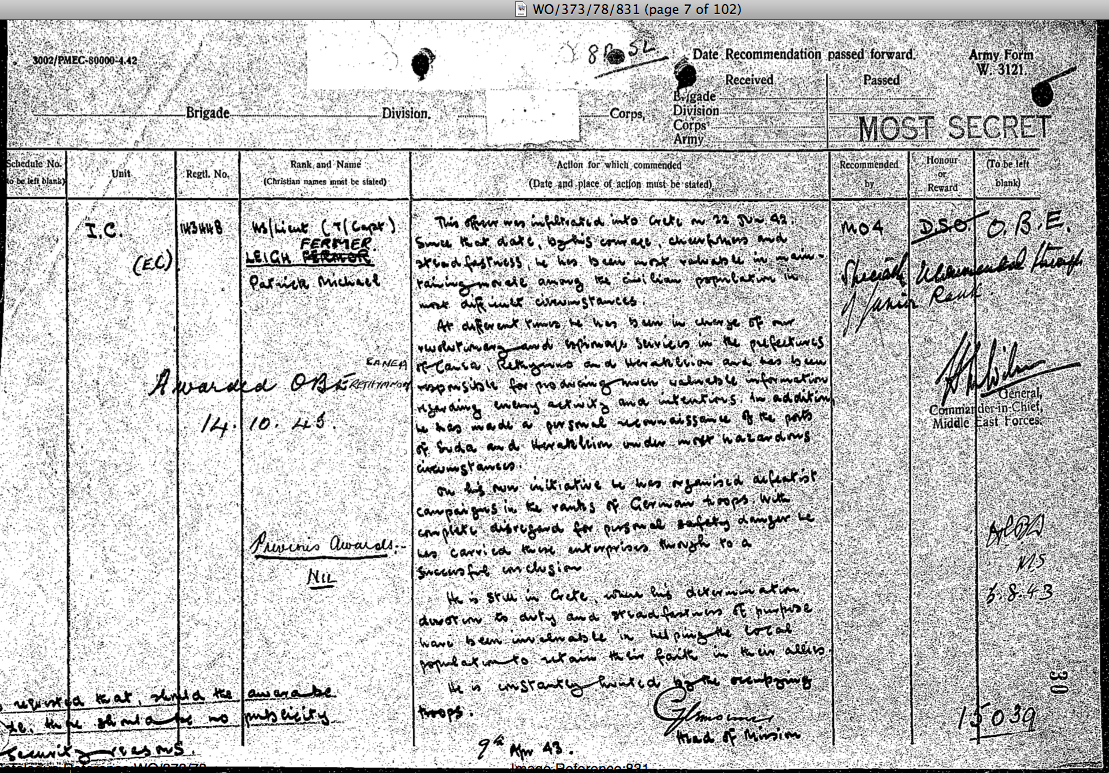
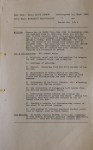
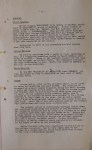
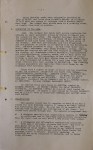
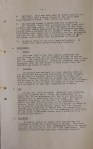
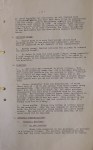
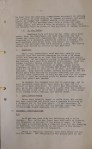
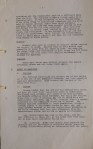
“He is consistently hunted by the occupying troops” – The commendation for Paddy’s OBE

It is clear the original intention was to award Paddy a DSO, but that was struck out in favour of an OBE. Paddy was later awarded the DSO for his part in the Kreipe abduction. Interestingly they had difficulties with his surname … Fermor is crossed out and replaced by Fermer!

The commendation reads:

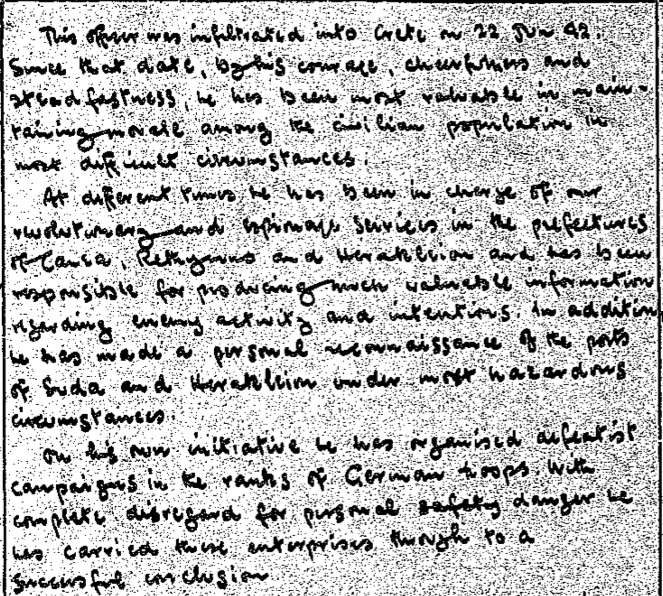
This officer infiltrated into Crete on 22 Jun 42. Since that date, by his courage, cheerfulness and steadfastness, he has been most valuable in maintaining morale among the civilian population in most difficult circumstances.

At different times he has been in charge of our revolutionary and espionage services in the prefectures of Canea, Rethymnon and Heraklion and has been responsible for providing much valuable information regarding enemy activity and intentions. In addition he has made a personal reconnaissance of the ports of Suda and Heraklion under most hazardous circumstances.

On his own initiative he has organised defeatist campaigns in the ranks of German troops. With complete disregard for personal safety … he has carried these enterprises through to a successful conclusion.

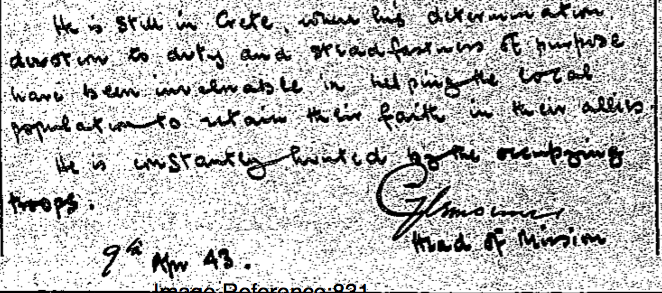
He is still in Crete, where his determination, devotion to duty, and steadfastness of purpose have been invaluable in helping the local population to sustain their faith in their allies.

He is consistently hunted by the occupying troops.

Signed by Head of Mission 9 Apr 43.

(requested that should the award be made there should be no publicity for security reasons.)

The source for this is the Kew public records office. This is not in Paddy’s SOE file.


Sex O’Clock High by Patrick Leigh Fermor

“Sex O’Clock High” – Get out your dictionaries, standby to Google … reading this short article by Paddy for the New Statesman (written in 1963) is at once both a joy and a frustrating, dizzying cornucopia of colourful and fiendish alliteration (thanks to my friend Carl Hagan for leading me to this). I am reposting this as it was first published in the days when the blog had just a few visits a day. Now I hope that more of you can appreciate it .

Taken from the New Statesman archive, 1 March 1963. The author of The Traveller’s Tree and A Time of Gifts, Sir Patrick Leigh Fermor is the doyen of British travel writers. He is also the central figure of W Stanley Moss’s Ill Met By Moonlight, a true tale of derring-do in wartime Crete. Now aged 91, he has written only rarely for the New Statesman: perhaps this item taxed the sub-editors’ patience too far.

It was an iridescent August morning and the effects of morphia and onanism were wearing off. Sitting up, Jack sipped his Earl Grey. Then he slipped into the Isabella-coloured pantaloons and a pair of Blucher boots proffered by his plimsolled and Jesuitical Jeames, byronically knotted his lavallière, donned a cardigan and a spenser and threw on a raglan. Trying a gibus, a trilby, an Anthony Eden, a fedora and a tam o’shanter, he finally pulled a billycock over his ears, narcissistically fluffed out his imperial and his dundrearies and, putting a lucifer to his Henry Clay, strolled downstairs to the electronic brougham.

Jill, attended by her gamp-grasping Abigail, was waiting for him by the wistaria’d Belisha beacon, her marcelled pompadour peeping roguishly from a Dolly Vardon in sarsenet. Soon, however, the brougham broke down. (Lack of volts? of amps, ohms, farads or watts?) The Jehu whispered that Jeames was a Jonah. Jill panicked, but their neighbour, jovial, Good-Samaritan Tom – a true Nimrod, martial in a stetson fitted with a havelock, a macfarlane, knickerbockers and wellingtons – quixotically gave them a lift in his phaeton, leaving Jeames there with the titanic gladstone-bag. (It was Shanks’s mare for him: Hobson’s choice.) They bowled over the macadam, passing many a stanhope and many a victoria, past Boniface with his churchwarden stuffed with cavendish outside the Marquis of Granby, where a peeler saluted; they finally settled under the bougainvillaea. But the food? Would they have a Barmecide feast: dine with Duke Humphrey? Jim thought of wartime maconochies and murphies. But soon Jeames arrived and panglossian Tom declared that it was all Sir Garnett.

They sipped John Collinses and grog with their sandwiches and discussed a lucullan soubise while Jeames cooked an Arnold Bennett omlette, boeuf strogonoff and, though Jill was banting, a gargantuan Chateaubriand. They washed these down with a Toby jug full of negus followed by a jeroboam of Mouton Rothschild. (Saturnine Jeames, their Ganymede, a professing Rechabite but secret slave to John Barleycorn, pharisaically out-Heroded Herod by swallowing a dozen baby Guinnesses.) Hermetic bakelite yielded pralines of filberts and logan berries, and soon Tom was sadistically guillotining his pêche Melba into procrustean slices. Jill put a Maréchal Niel behind her ear and picked a posy of hyacinths, dahlias, eschscholtzias, zinnias and Lady Diana Manners, while Jack, their amphitryon – a true epicure – extracted Napoleon brandy from the tantalus and offered Tom a Romeo and Juliet.

How they laughed at Tom’s odysseys! Jill declared that their Homeric and stentorian Mentor was a regular Munchausen. He related that, to forget an Oedipus complex, he had once crossed from a zeppelin to a mongolfier over a volcano somewhere in the Atlantic (O, for an atlas!), and, in his halcyon days, had performed caesarians in the Americas and taken Wassermans in the Gilbert Islands, broken up manichaean cabals with colts, bowie knives and shrapnel, joined the Fabians in San Salvador, practised as a psychiatrist and cured some Hudson Bay cyprians of nymphomania and the lotharios of Baffin land of priapism, seduced vestals in Rhodesia with aphrodisiac cereals, played cicerone to a croesus in Saudi Arabia, haussmannized Washington with mansards, swapped sanbenitos for fermorite in Liechtenstein, galvanized vandals with sapphics, published clerihews in morse and braille, taught Monroevians Sir Roger de Coverley, diddled Jack Ketch in Vancouver with a coup de Jarnac, turned the Trotskyites of Gorki into luddites among the diesels, mithridatized himself against nicotine in Virginia, prosecuted paulicians for simony in Columbia, driven St Simonism out of the Sorbonne, won pyrrhic victories with half-nelsons over herculean apaches in Sidi-Bel-Abbès, performed veronicas with mackintoshes in Bolivia, buggered a Buchmanite in Tasmania, stolen a strad from a musical Wykehamist in the Dolomites, built a mausoleum for a Maxim-gun mogul, out-witted the dogberries of Port Said, and confuted the Arians of Alexandria. He had lost his burberry at the Derby but returned from the Cesarewitch with a tin Lizzy-load of bradburies. A Mae West once saved him from Davy Jones between the Behring Straits and the Humboldt current. He had ranted, Roscius-like, among the thespians of the Palladium, sold plutonium and ammonia to Zwinglians in Louisiana, hunted Reynard and Bruin with yahoos and mohocks beyond the Mason-and-Dixon line, eaten a shaddock in mistake for a greengage when struck by Daltonism in Smithfield, bowdlerized pasquinades for Huntingdonians in Ekaterinoslav, and been boycotted as a quisling and almost lynched by Stakhanovites in the Bodleian.

Over the Benedictine, Jill told a rocambolesque story of how, as a girl, in Paris, with her hair tied en cadogan, she had slipped on a melted esquimau by a Wallace and fallen into a vespasienne! Mesmerized by Tom, she only tittered masochistically when he said her spooneristic malapropisms were Freudian. It was turning into bacchanal.

Were her feelings for Tom just platonic, Jill mused. How namby-pamby Jack seemed after the other’s hectoring rhodomontades. Sitting on the edge of a chesterfield by a Chippendale davenport that evening, she heaved a maudlin sigh and unscrewed her Parker to write Jack a collins.

The Feast of SS. Michael and Gabriel – Paddy’s name day

November 8th is the Name Day for Saint Michael in the Greek Orthodox church, and as the Greeks have a paucity of saints called Patrick, the tradition is that Paddy celebrated his name day using his second name Michael. The name day is considered to be more important than the birthday, and is marked by parties and gifts. 

Some of you may recall that the New Zealand writer Maggie Rainey-Smith happened to be in Kardamili in 2007 and somehow ended up at Paddy’s house and was able to join in the party.

“By 10.30am the service in his private chapel was over and we were seated in his lounge – books lining the walls from floor to ceiling: Nancy Mitford, Henry James, James Joyce – eating olives, meatballs, feta and drinking local wine.

On a person’s Name Day you are required to take a gift, and all I had with me was a copy of my first novel About Turns, which I gave to Paddy. He signed my copy of his own book with a personal inscription and a small drawing. We talked about Crete and my dad and his book on the Mani. I gushed, he charmed.

Then the singing began and Paddy was surrounded by adoring local women who toasted him with traditional Name Day songs.

At the end of the singing, Paddy stood and pretended to fire a pistol into the air (an old tradition where real pistols were once used). He is of English and Irish descent. Although his name is Patrick, his Greek Name Day is the day of Michali. Michael is the name he assumed while fighting for the Greek resistance.”

Maggie also took some video footage of local women singing to Paddy who does look pleased! (click image to play)


My sincere thanks to Maggie for letting us see this again.

Please visit Maggie’s blog where you will be able to read more about her visit and here you can discover her work as a writer.

You can read Maggie’s complete original article about her visit reproduced on the blog  here.

How to Kidnap a General – a review of Ill Met by Moonlight

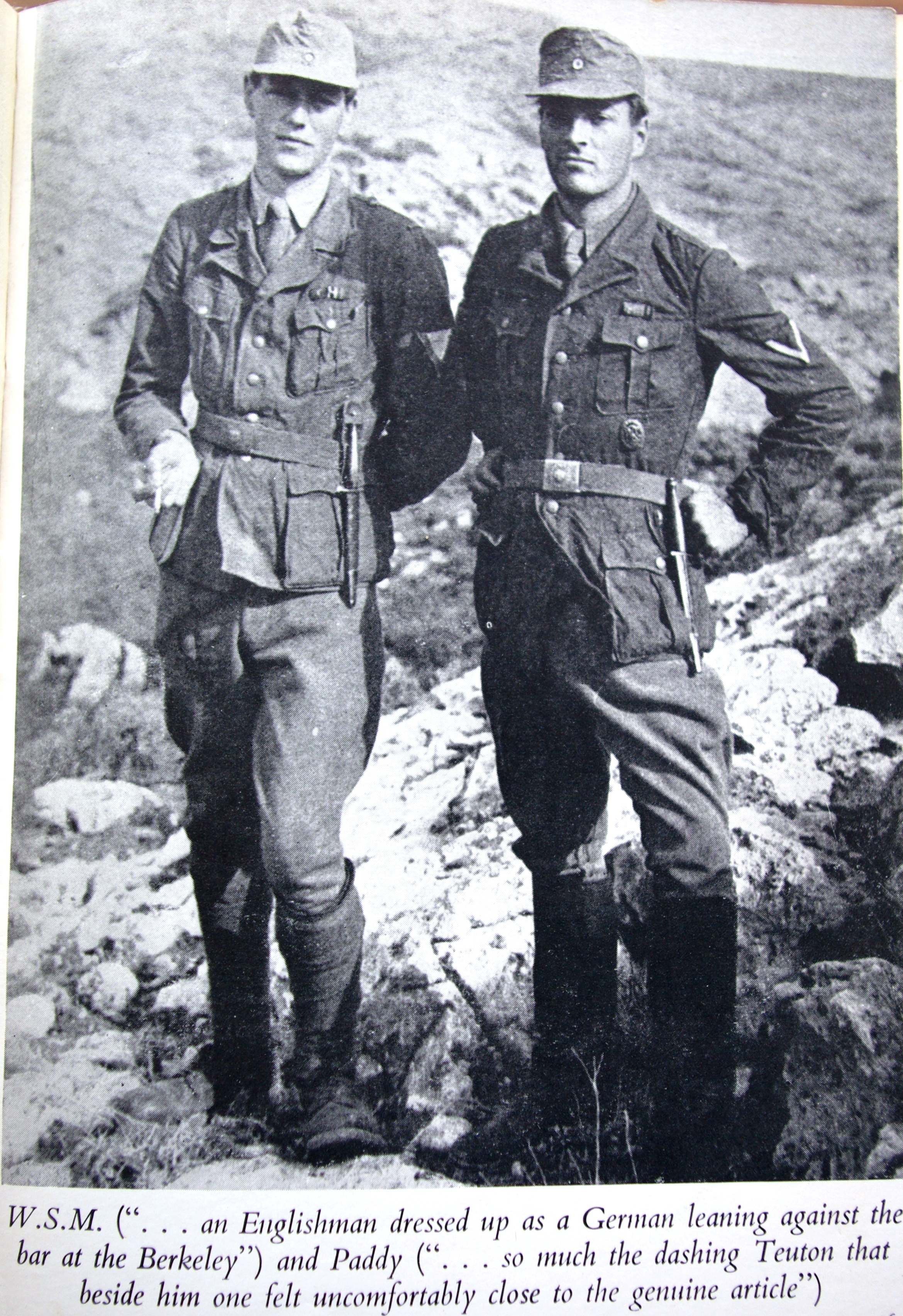
Patrick Leigh Fermor and Moss

Patrick Leigh Fermor and Moss in German Uniform Prior to the Abduction of General Kriepe

“There was a rush . . . our torches illuminated the interior of the car — the bewildered face of the General, the chauffeur’s terrified eyes . . . [The] chauffeur was reaching for his automatic, so I hit him across the head with my kosh [blackjack] . . . and George . . . dumped him on the road. I jumped in behind the steering-wheel, and . . . saw Paddy and Manoli dragging the General out of the opposite door. The old man was struggling with fury . . . shouting every curse under the sun . . . [We bundled] him into the back seat [and he] kept imploring, ‘Where is my hat? Where is my hat?’ The hat, of course, was on Paddy’s head.”

First published in Time magazine 4 September 1950

Why a German general’s hat should be on a British officer’s head is pretty much the gist of III Met by Moonlight. For as the staff car, driven by Author Moss, moved along the road in northern Crete, sentries at no less than 22 German traffic-control posts smartly saluted the behatted “general”‘ and waved the car on. They had no inkling that prostrate on the floor in the back seat lay the real general, with guns pointed at his head. Twenty days later, on May 16, 1944, kidnaped Major General Karl Kreipe was handed over to British authorities in Cairo, putting finis to what Harold Nicolson has called “one of the best adventure stories that I have read.”*

Behind the Lines. The scheme of raiding German-held Crete and trotting off with the divisional commander was the brain child of youthful Major Patrick Leigh-Fermor and Captain W. Stanley Moss, who had achieved the schoolboy dream of becoming secret agents. At their base in Cairo, they shared a villa and sampled the fleshpots of Egypt. It was in a nightclub that they first hatched the plot that was to land their party from a motor launch on the south coast of Crete.

The two Britons could depend on help from guerrillas and from intelligence corpsmen hidden in the hills. One British agent, a Cretan, actually lived next door to General Kreipe’s Villa Ariadne, near the north coast. Through him, Moss and Leigh-Fermor learned the general’s daily routine to a nicety—off to headquarters by car at 9 a.m., back in the evening any time after 8 or 8:30 p.m., depending on how many rubbers of bridge he stayed to play.

Slowly, painstakingly, the two agents planned a night ambush. Hidden guerrillas lay at vantage points on the road to the villa, a buzzer and torch flashes relayed warnings of the general’s approach to the waiting kidnapers, who were in German uniforms.

After the snatch, the general (who quickly became resigned and quite amiable) was marched from cave to cave half the length of Crete, while the furious Germans fruitlessly finecombed the island. By the time a Royal Navy motor launch nosed in to a southwest beach and took off both captive and captors, Moss and Leigh-Fermor knew that they had achieved their principal aim—to astound the enemy and make him the laughingstock of the local population.

Author Moss wrote his story in the mid-’40s, but the British War Office refused to let it appear then. Today, having reached the elderly age of 29, Moss is a bit abashed by the “22-year-old exuberance (almost bumptiousness) with which it was written.” Bumptious or not, it is one of the most melodramatic and audacious stories of the war.

*And notably more successful than another daring plan hatched in Cairo. In November 1941, British commandos under 24-year-old Lieut. Colonel Geoffrey Keyes made their way 200 miles behind Axis lines in an attempt to capture or assassinate Nazi General Erwin Rommel. At night, with cork-blackened faces, Keyes and his commandos achieved complete surprise, wrecked Rommel’s HQ with grenades. But Keyes was killed and Rommel was untouched: he had gone to a birthday party.

An evening in memory of Sir Patrick Leigh Fermor

A typically quaint translation from Google Translate of a press release from the Benaki Museum website about the handing over of the house at Kardamyli to the Benaki.

The original pdf in Greek is to be found here.

“The Benaki Museum hosted the evening Saturday, the 17th September 2011 an event dedicated to Sir Patrick Leigh Fermor. Acquaintances and friends from Greece and England, between in which the Ambassador of England Dr. David Landsman, the director British Council Richard Walker, the executors and the biographer, gathered at his home in area Kalamitsi Kardamili for a wine in memory of one the most beloved British Philhellenes. Education, warmth, unparalleled bravery, his liveliness and politeness of Patrick Leigh Fermor came alive again in the hearts of all that was also attended.

It was an emotional night. O Sir Patrick Leigh Fermor died on June 10, 2011, at age 96 years in Dumbleton, England. For many years he lived in Mani, who built a house he designed by Nick Hatzi. His relationship with the Benaki Museum keeps a long time;had contacts with Antonis Benaki Peace Kalliga later and maintained close friendships with the Director Mr. Angel Foundation Delivorrias. The Benaki Museum chose Patrick Fermor alive to donate his house, mediated by Tzannis Tzannetakis, and received at the Foundation after his death it. For several years it had been agreed by donors and Museum that the house will be used for hosting researchers poets and writers who visit Greece to work a few months. While for certain intervals Benaki Museum will have the option to rent the house to ensure the maintenance and hosting.

The coming months, once the full record library and archive and make the necessary maintenance of the house, the Administrative Committee of the Museum Benaki will make its modes of space. “The Patrick Leigh Fermor, moreover, were more Kardamylitis and less; a thoroughbred Englishman Maniatis ie, a Real Greek, a patriot would say, “said Director Museum Angelos Delivorias. He continued, “The love of even for Greece not only recorded many books has dedicated, and the choice of the place chosen to live.

It is this love shown by his decision to bequeath the home of the Benaki Museum, a spiritual body purveyor in the service of our country … From the Greeks and Greece also carried the words of my prayer for good katefodio, but the certainty that his departure would not be definite. Why do you remain vibrant traces the steps in Crete and the Peloponnese, Attica and Roumeli. As live will remain the narratives of his books, the memories of those who lived close by, the historical deposits of the altars of freedom, the breezes of a fascinating personality. The gratitude to the Benaki Museum in particular will, however, only be measured by the degree to fulfill the legacy and desires of the man who benefited. ”
The text of his speech Museum Director, Mr. Angelo Delivorrias

“Ladies and gentlemen, dear friends of Patrick Leigh Fermor and equally dear fellow from Kardamyli

On behalf of the Executive Committee of the Benaki Museum and President, I welcome you to a celebration held to honor the memory of Patrick Leigh Fermor, fastening ties from now on you’ll connect with you and us. The Patrick Leigh Fermor, moreover, were more Kardamylitis and less; a thoroughbred Englishman Maniatis ie, a real Greek, a patriot, I would say. Even his love for Greece not recorded only in what books have devoted but also in the location chosen to live. It is this love illustrated by its decision to bequeath the house to the Museum Benaki, a spiritual body purveyor serving the site us.

The Paddy, as they called friends of the Sun during the Michael fellow, he was a mythical hero in life by history, an internationally acclaimed author of the rigorous critique of the fellow, a man of rare gifts integrity and high optimally. It is therefore coincidental that he was connected with that best available human capital of Greece, from the fighters in the Cretan mountains during the war as the residents Kardamili time of peace; the big painter and also the benefactor of the museum, Nick ChatzikyriakoGkika as the Tzannis Tzannetakis in Maniatis militant resistance against junta, known political and translator of the book for Mani also a friend of the Museum. In this short invitation I can not not mention Nick Hatzi, a brilliant architect, friend and him, from which the Fermor claimed, jokingly of course, the authorship of the plans of the house that hosts us.

Touched on only a few of those who truly elite Greeks were connected with him, because, as also several of the British friends, is no longer with us. By the way, but the tonight’s event would not be allowed to fail warmer thanks to the Benaki Museum executors, his Alexander Mitchell and Michael Casey, supervisors managers, the beloved Olivia Stewart in particular, and to Greeks supervisors, Anthony Masouridi, the Tonya and Giannidi Peter Tzannetakis, his two children Tzannes. We thank you, finally, the Artemis Cooper in advance for her biography of Fermor prepare, and from our side Peace Geroulanou with all worthy partners of the Foundation have already demonstrated practical interest for the protection and enhancement of this the house.

When she died by Patrick Leigh Fermor, say that the moments of Goodbye is anyway difficult. Being made ​​but still more difficult when they are leaving our own people. Friends who stood beside us in critical situations, we loved and our shortcomings. The Paddy had loved the Greeks and Greece. Greece, he chose to live and the Greeks to syngenepsei. From the Greeks and Greece also brought the the words of my prayer for good katefodio, but the certainty that departure would not be definitive. Why should remain Live traces the steps of Crete and the Peloponnese, Attiki and Roumeli. It will remain vivid narratives of books, the memories of those who lived close by, the historical deposits on the altars of liberty, the breezes of a fascinating personality.
The gratitude of the Benaki Museum in particular will, however, only be measured by the degree to fulfill the legacy and desires of the man who benefited. ”

Angel Delivorrias

Kardamili, September 17, 2011 “

Post-operation interrogation of Patrick Leigh Fermor

A very revealing file from Paddy’s debrief upon his return from Crete. He operated under the cover name of Michaelis Frangielakis. It is very extensive discussing day-to-day operations and organisation in Crete. An interesting conclusion is that Italian interrogations of prisoners were less brutal than those of the Germans, and were more successful being psychologically more sophisticated: “The Italians understood the Mediterranean mind and methods much better than the Germans.”

The last of a magical breed

From Judy Stove who writes for The New Criterion.

“Readers may like to know that there is an excellent article by David Mason about PLF in The New Criterion, September 2011.  Unfortunately the online version is for subscribers only or by purchase.

Mason, as a young man, and his then wife visited PLF and Joan at Kardamyli.  He tried to impress with quoting Waugh and Anthony Powell, only to find that PLF and Xan Fielding actually knew these people…A funny and poignant memorial, one of the better PLF tributes going around.”

David Mason’s article begins thus:

The death of Sir Patrick Leigh Fermor on June 10 at age ninety-six has been mourned in virtually every major newspaper in the English-speaking world. He has been celebrated as the last of a magic breed, the Byronic hero, a man of action who was also one of our most vigorous writers. The fuss would have surprised Paddy, who never assumed his contributions were admired and became nonplussed when anyone heaped praise on his head. The long-refused knighthood he finally allowed to be conferred upon him in 2004 did nothing to elevate him above Greek shepherds or the myriad visitors to his villa in the southern Peloponnese. Paddy was youthful and convivial to the end, with an attractive and genuine interest in the world outside himself. People couldn’t get enough of him.

Yet his readers had to learn patience as the books arrived from his pen at a snail’s pace—he didn’t learn how to use a typewriter until in his nineties …

If you are a subscriber you can read the article here. If not go to the same link and you can access this one article for $3.00.

Joanna Lumley’s Greek Odyssey – tonight in Crete

Apologies for a second post so soon but it appears that in tonight’s episode Joanna will visit Crete and according to the blurb ‘… in the high remote mountains she spends time with the shepherds who played a key role fighting the Nazi occupation alongside British SOE Agent, Patrick Leigh Fermor – whose exploits became the basis for the film Ill Met by Moonlight.’ Don’t expect too much accuracy but I am sure that there will be oodles of gushing admiration for Paddy. 

Apparently ‘… Crete is also the birth place of Zeus and the home of raki, a local firewater that fuels traditional festivities.’ Enjoy but only available in the UK … and I am currently in Romania. 😦

Intimate portraits from Kardamyli by Miles Fenton

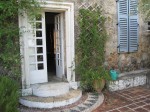
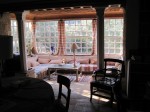
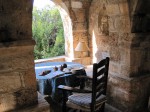
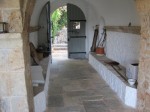
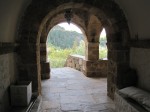
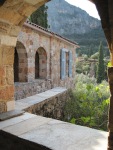
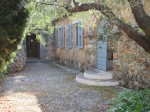
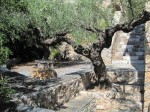
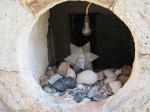
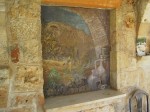
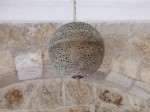
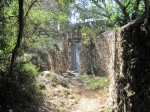
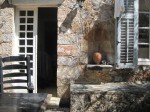
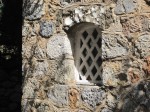
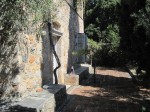
Some delightful images of intimate corners of Paddy and Joan’s house in Kardamyli by Paddy’s nephew, Miles Fenton. These pictures were taken in 2009.

As you put some lovely photos of my uncle’s house in Kardamyli I thought you might like to see, and perhaps post, some of my photos of his house on your site.

These are, apart from the usual views, vignettes showing some of the more unique and charming architectural details.

Click an image to increase its size and to start the gallery.

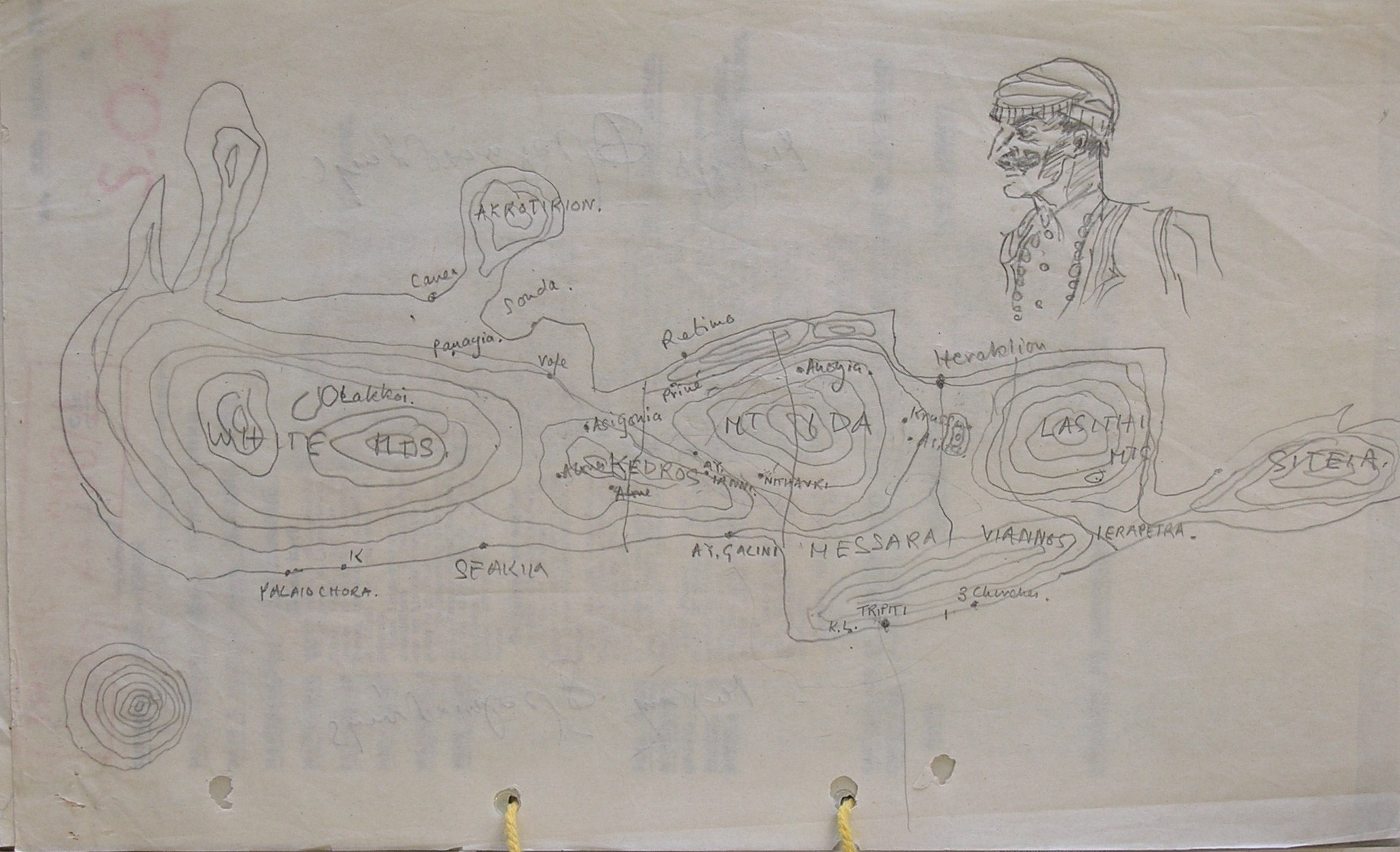
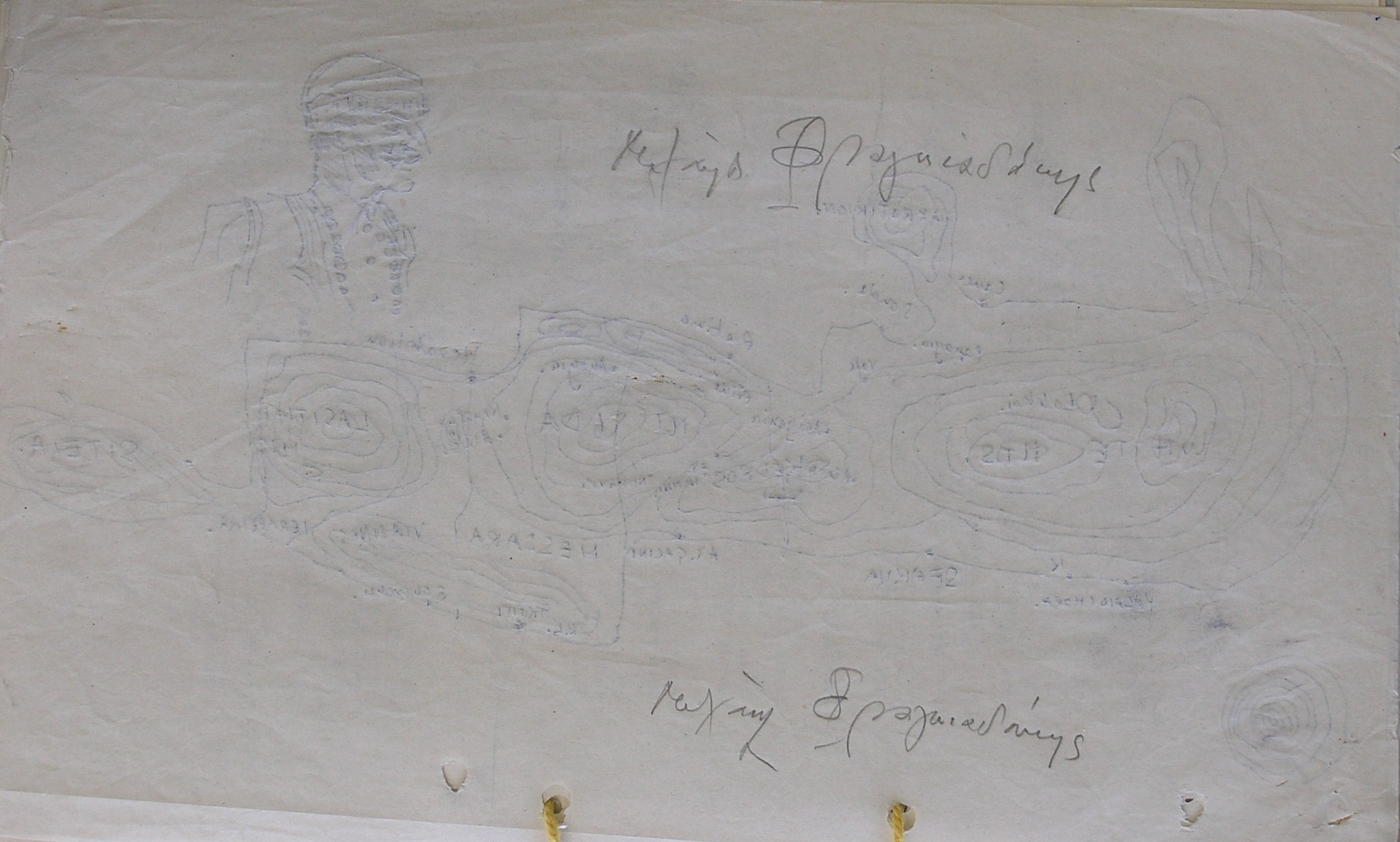
A map of Crete as drawn by Paddy on operations in Crete

This map was  hand drawn by Paddy, probably whilst on operations in Crete 1943-44, including, perhaps, a self-portrait. The map is from Paddy’s SOE file.

The reverse of the map …

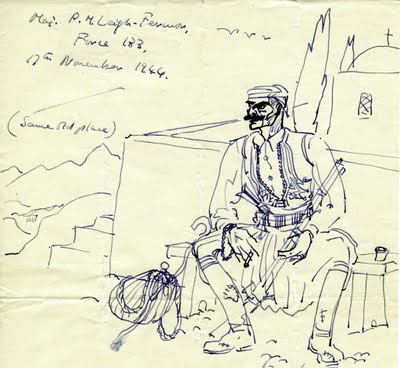
The drawing is typical of Paddy’s style. Compare it with this sketch sent to us by John Stathatos, about which John tells us:

This delightful sketch of himself in Cretan dress was penned at the top of a letter to my mother dated 17th November, 1944; as he explains, “I have been lost again in a forest of whiskers for about three weeks, and my old mountain chums are down in the plains now, looking incredibly wild and shaggy”.

"I have been lost again in a forest of whiskers for about three weeks, and my old mountain chums are down in the plains now, looking incredibly wild and shaggy"

Related article:

Traveller’s Rest by John Stathatos

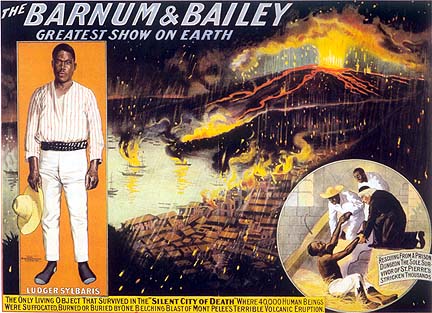
The only survivor of the devastating volcanic eruption of Mount Pelée

The ex-convict, Louis-Auguste Cyparis (aka Ludger Sylbaris), as billed as the last survivor of St. Pierre on this Barnum and Bailey Poster

A nice short piece by Simon Winchester, which, if true, adds something to our knowledge around Paddy’s story in The Violins of Saint Jacques.

The Violins of St Jacques, Patrick Leigh Fermor. 

I think this may be my favourite book in the world. I was asked to write the preface for the Oxford University paperback edition. It’s about the eruption of Mt Pelée in 1902 on Martinique. It sent this thing, a glowing cloud, a nuée ardente, ash and lava and hot air rolling down the hillside. It completely devastated the town of St-Pierre and there was one survivor out of a population of 30,000. It was the worst volcanic disaster of the century, until the tsunami of 2005. Before that it was Krakatoa in 1883 when 40,000 people died, but most of those died from the tsunamis that followed the eruption.

Tsunamis were detected all around the world after that eruption.

Anyway, there was a ball being held in St-Pierre that night and, of course, everyone at the ball died, but the way it’s written is that he supposed all the guests survived and the party continued under the water. Fishermen say that a few miles out to sea when they are waiting for the fish they fancy they can hear music under the water.

Who was the survivor?

Louis-Auguste Cyparis. He was in prison and that’s what saved him, the only window was a narrow grating in the door. He was bad guy. A very violent man. I think he’d killed someone in a drunken fight. He went on to be a celebrity with Barnum and Bailey’s Circus. I love all Patrick Leigh Fermor’s books, but this is his sweetest.

From The Browser

The Wikipedia page devoted to  Louis-Auguste Cyparis

Read more from the blog about The Violins of Saint Jacques

The oral heroic poetry of the Kreipe kidnap

I have extracted this from a fairly long book review about Professor M I Finley’s 1978 revised edition of his book The World of Odysseus. It has a fascinating section about an oral heroic song from Crete that is about Paddy and the Kreipe abduction, and how it had evolved in just the few years since the end of the war.

From Triumph of a Heretic by Bernard Knox, first published in the NYRB 29 June 1978.

It is now more than two decades since the Professor of Ancient History at Cambridge (who was then an ex-professor from Rutgers) published a book which in a limpid, hard-hitting prose and with a bare minimum of footnotes attempted to draw “a picture of a society, based on a close reading of the Iliad and Odyssey, supported by study of other societies….” This is how Professor Finley characterizes the book now, in the preface to a revised edition which makes only minor changes in the original text but adds two valuable and stimulating appendices, replying to criticism and bringing the argument up to date. He goes on to claim that “the social institutions and values make up a coherent system” which, however strange to us, is “neither an improbable nor an unfamiliar one in the experience of modern anthropology.” The fact that the later Greeks and the nineteenth-century scholars found it incomprehensible on its own terms he dismisses as “irrelevant” and adds that “it is equally beside the point that the narrative is a collection of fictions from beginning to end.” ….

… Oral heroic poetry is not a medium that preserves historical fact—as Finley pointed out, with a reference to the Chanson de Roland, which made out of a Basque attack on Charlemagne’s rear-guard an assault by Muslim beys and pashas, all carefully identified by names which are “German, Byzantine, or made-up.” A modern example, from the Second World War and from Greece itself, strengthens his case and gives a fascinating glimpse of epic “history” in the making.

In 1953 the late Professor James Notopoulos was recording oral heroic song in the Sfakia district of western Crete, where illiterate oral bards were still to be found. He asked one of them, who had sung of his own war experience, if he knew a song about the capture of the German general and the bard proceeded to improvise one. The historical facts are well known and quite secure. In April 1944 two British officers, Major Patrick Leigh Fermor and Captain Stanley Moss, parachuted into Crete, made contact with Cretan guerrillas, and kidnapped the German commanding general of the island, one Karl Kreipe.

The general was living in the Villa Ariadne at Knossos, the house Evans had built for himself during the excavations. Every day, at the same time, the general was driven south from the Villa to the neighboring small town of Arkhanes, where his headquarters were located. He came home every night at eight o’clock for dinner. The two British officers, dressed in German uniforms, stopped the car on its way home to Knossos; the Cretan partisans overpowered the chauffeur and the general. The two officers then drove the car through the German roadblocks in Heraklion (the general silent with a knife at his throat) and left the car on the coast road to Rethymo. They then hiked through the mountains to the south coast, made rendezvous with a British submarine, and took General Kreipe to Alexandria and on to Middle East Headquarters in Cairo.

Here, in Notopoulos’s summary, is the heroic song the bard produced:

“An order comes from British and American headquarters in Cairo to capture General Kreipe, dead or alive; the motive is revenge for his cruelty to the Cretans. A Cretan partisan, Lefteris Tambakis (not one of the actual guerrilla band) appears before the English general (Fermor and Moss are combined into one and elevated in rank) and volunteers for the dangerous mission. The general reads the order and the hero accepts the mission for the honor of Cretan arms. The hero goes to Heraklion, where he hears that a beautiful Cretan girl is the secretary of General Kreipe.

“In disguise the partisan proceeds to her house and in her absence reads the [English] general’s order to her mother. When the girl returns he again reads the general’s order. Telling her the honor of Crete depends on her, he catalogues the German cruelties. If she would help in the mission, her name would become immortal in Cretan history. The girl consents and asks for three days time in which to perform her role. To achieve Cretan honor she sacrifices her woman’s honor with General Kreipe in the role of a spy. She gives the hero General Kreipe’s plans for the next day.

“Our hero then goes to Knossos to meet the guerrillas and the English general. ‘Yiassou general,’ he says. ‘I will perform the mission.’ The guerrillas go to Arkhanes to get a long car with which to blockade the road. Our hero, mounted on a horse by the side of the blockading car, awaits the car of Kaiseri (that is what the bard calls Kreipe). The English general orders the pistols to be ready. When Kreipe’s car slows down at the turn he is attacked by the guerrillas. Kreipe is stripped of his uniform (only his cap in the actual event) and begs for mercy for the sake of his children (a stock motif in Cretan poetry).

“After the capture the frantic Germans begin to hunt with dogs (airplanes in the actual event). The guerrillas start on the trek to Mount Ida and by stages the party reaches the district of Sfakia (the home of the singer and his audience; actually the general left the island southwest of Mount Ida). The guards have to protect the general from the mob of enraged Sfakians. Soon the British submarine arrives and takes the general to Egypt. Our bard concludes the poem with a traditional epilogue—that never before in the history of the world has such a deed been done. He then gives his name, his village, his service to his country.”

So much for epic history. Nine years after the event the British protagonists have been reduced to one nameless general whose part in the operation is secondary and there can hardly be any doubt that if the song is still sung now the British element in the proceedings is practically nonexistent—if indeed it managed to survive at all through the years in which Britain, fighting to retain its hold on Cyprus, became the target of bitter hostility in Greece and especially among the excitable Cretans.

It took the Cretan oral tradition only nine years to promote to the leadership of the heroic enterprise a purely fictitious character of a different nationality. This is a sobering thought when one reflects that there is nothing to connect Agamemnon, Achilles, Priam, and Hector with the fire-blackened layer of thirteenth-century ruins known as Troy VII A (the archaeologists’ candidate for Homer’s city) except a heroic poem which cannot have been fixed in its present form by writing until the late eighth century, at least four illiterate centuries after the destruction.
To read the full article click here.

Charles Moore on Paddy

‘The intellect of man,’ Yeats famously wrote, ‘is forced to choose between perfection of the life, or of the work.’ Patrick Leigh Fermor, who has just died aged 96, managed to refuse this choice and achieve both.

He was what is now called a role model — a war hero, an intrepid traveller, a witty guest, a man with whom women fell in love, a Byronic romantic without Byron’s unkindness — but he was also a writer with the most exacting standards and unique imagination. His highly wrought prose was not affected: it expressed his delight in and minute attention to life and art, places and people — the stranger the better; and it inspired that delight in others.

All the letters I have from him overflow with enthusiasms. There is a silly idea for a cartoon he has sketched out in which a spherical man and a thin one with a hawk on his wrist stand outside a castle gate, staring disconsolately at a castle gate on which is pinned the notice ‘No Hawkers, No Circulars’. There is a poem called Message to Skopje:

Your claim to the name “Macedonia”

Could scarcely be flimsier or phonier

If you want an old name

For your state, what a shame

Not to bring back the real one, Paeonia.

He writes about ‘marvellous girls in tricornes’ hunting in France, and to recommend (he was always generous in advancing the careers of others) a self-taught village boy who has translated the whole of Homer into ‘wonderful Cretan rhyming couplets, taking just about the same time over it as Pope in his villa at Twickenham’.

Paddy was the best companion. Once, when he was already well into his seventies, we had him to dinner in London. As he was reciting a comic poem, his chair leg snapped. we were horrified that our furniture might have done for him, but Paddy managed an athletic parachute roll and ended up in the corner of the room with his back against the wall, laughing like a boy.

From the Spectator

Hunting Hitler’s Henchmen on National Geographic tonight at 7.00 pm

This programme showing tonight covers the story of Paddy and Moss and the brave Cretans who captured General Kreipe. However, it comes with an ‘accuracy warning’. It appears that the makers approached Tim Todd and fellow experts but in the end Tim did not work with them as it appeared that the makers wished to stray from some of the facts. However, for those who know little enough about this, it may be no worse than the Powell-Pressburger movie. I have no idea if 7.00 pm means UK time or some other GMT + or – time.

You can find out more on the National Geographic website. The blurb describes it as follows:

Their bravery has inspired countless films but, until now, the real story of some of Britain’s greatest war heroes has remained in the shadows.

Hunting Hitler’s Henchmen is a film about some of Britain’s bravest military. With ex-special forces soldiers as guides, venture beyond the movies to meet the snatch squads: commandos sent behind enemy lines to take out Hitler’s most-feared generals.

They slipped into Nazi-led Libya to kill the infamous Desert Fox, General Erwin Rommel, and succeeded in snatching General Heinrich Kreipe from under the noses of 15,000 soldiers.

Risking their lives to disrupt the Nazi war machine, these are the heroes who inspired Hollywood: incredible men sent to eliminate Hitler’s top brass.

Getting it right and that Taki article

I have to admit that there have been times over the last two years, when, running two blogs, I have either clearly been wrong to publish something, or I have posted an article that has created significant controversy and I subsequently wished I had not done so.

Life is always easy if one takes the uncontroversial path. I dare not mention the post I had in mind a year or so ago with the working title “Patrick Leigh Fermor: the Court Jester?” which was sparked by an interesting series of conversations and impressions I gained from reading ‘In Tearing Haste’. Whilst remaining an ardent admirer of Paddy, it would be wrong to say that he was a saint and beyond criticism. Few of us are.

Which brings me neatly to Taki, and the article that I posted last week entitled ‘Better a Hero Than a Celebrity’. Clearly Taki believes that he himself is beloved by all and can say and write what he wishes without fear of recrimination. He has a very old and a very thick skin. The article has sparked some significant debate in the comment section and I think it is worth bringing this to the attention of a wider audience for it sheds some light on Taki’s character and addresses some of the inaccuracies that I warn of in the introduction.

However, I stand by my response to the first comment which was as follows. Taki Theodoracopulos has had a place in European society over the last fifty years or so. Some may not like him, but clearly he has a role in commenting on the lives and loves of celebrities, which today appears to be of greater importance than the state of European banks and the future of the Euro; it is very big business. In fact Taki was one of the first ‘gossip columnists’. Whatever the inaccuracies of his article it meets the criteria of this blog. It is about Paddy and does possibly bring some new perspectives. This blog is fundamentally an archive of all on-line material about Paddy, and therefore the article stays.

I think it would be useful to all to highlight the points discussed in the Comments section, particularly the major error Taki made in stating that Paddy had killed Albert Fenske, the driver of General Kreipe’s car. Paddy had nothing to do with his death which was against orders and not at all part of the plan. Additionally the story about Paddy witnessing the death of the last German commanding General of Crete is pure fiction; it just did not happen like that.

So what is the moral of this tale? Yes, I would like it to be all sweetness and light, but you can’t please all the people all of the time. Let’s keep up the debate and remember I am more than willing to take in and publish articles that you have found or have written yourself.

Here are the comments up to this evening …..

From Chris Lawson:

“Known to the cognoscenti as Taki Takealotofcokeupthenose, Theodoracopulos is a man for whom the word “snob” might have been invented. Note the casual dropping of Agnelli’s name into his piece and Taki’s snide comments on Dirk Bogarde. It is NOT true that Paddy killed the driver of Kreipe’s car. Apart from the story of the execution of Kreipe’s successor (Name, details of crimes? Doesn’t mean Kreipe’s predecessor?), this brings nothing new to the saga of Paddy’s life. I would respectfully request that you remove the piece.”

My reply:

“No Chris – I don’t do censorship. Your comment can stand as a beacon to my error in posting it. However, Taki has a place in society over the last 50 years and this blog is a repository about Paddy. It stays.”

Chris Lawson responds:

“Fine by me. Of course it was not an error posting it and I agree entirely and whole-heartedly about what you say about censorship. Yes, Taki certainly has a place in the cultural pantheon de nos jours, and my thoughts are just the latest in a stream of negative comments directed at the former inmate of H.M. prisons. Whatever else one has to say about the gent, he is certainly one of life’s great survivors.”

Tim Todd (who runs the Il Met by Moonlight site and is an expert on the operation) interjected:

“That Taki could be so fundamentally wrong about the death of Albert Fenske, Kreipe’s driver, tells me much about the appropriately named Taki.

I believe that Fenske’s death, at the hands of two of his Cretan andartes and contrary to instructions, caused Paddy no end of personal grief, perhaps second only to the accidental shooting of his Cretan friend. I once listened to Paddy talk about this latter incident when, in the mountains after a cadet’s exercise, he failed to check his rifle before cleaning it when it was returned to him. I have to tell you he was still mortified by the whole business and sixty odd years on he was still visibly upset by it. Tom our webmaster and I, know from the best of sources that Fenske’s death was much regretted by Paddy. My own feeling is that but for that we might have seen Paddy’s own account of the abduction published.

I am thoroughly disappointed that anyone claiming to know the man would dare suggest Fenske died at Paddy’s hand. Paddy, perhaps the most honourable man I have ever met, would though have accepted responsibility for anything that may have happened under his command. He was that sort of man.

It is perhaps as well that Tom has published Taki’s piece for it provides an opportunity to compare the two and set the record straight.

I am pleased to say that, through Annette Windgass, Fenske’s family have recently been made aware of Paddy’s great sadness of that particular outcome of the operation.”

 Chris Lawson gave us some more about the story of the General’s death:

“On the General who succeeded Kreipe, and two predecessors

The Commandant of Crete, appointed on 1 May 1944 after Kreipe’s kidnapping, was Generalleutnant Helmut Friebe, Commander of the LXIV Armeekorps. He was captured by the Americans in May 1945 and released in 1947.

Two former commanders of Crete were tried and executed in Athens on 20 May 1947, the anniversary of the German invasion of Crete. One was the bloodsoaked Friedrich-Wilhelm Mueller, who was to have been the original target for the kidnapping until he was replaced by Kreipe. Mueller had a reputation for brutality and numerous atrocities were committed under his regime.

The other was General Bruno Bauer, a paratroop officer, who was appointed in 1942, replacing General Alexander Andrae. Bauer had gained the reputation of being hard and fair, and the “most humane commander” of Crete. Antony Beevor describes him as truly unfortunate, as he was executed for crimes “committed under another general”. Three years later the Association of Former German Paratroopers requested that his remains be returned to Crete. George Psychoundakis, resistance fighter and author of the Cretan Runner (already much-mentioned by Tom), reburied his remains.

Taki’s fourth paragraph is a complete fantasy.”

George joined the argument:

“The only readable part of Taki’s remembrance (sic ) is the last sentence, horrible in its clarity and even worse that it is written by someone whose trotters are deep in that particular trough.

His comments however, are an excellent example of the sponger’s wiles. The mildly mocking comment by Agnelli, humbly repeated to establish the writer’s honesty, while at the same time making it clear that the writer enjoys the same societal position.

Then the personal revelations as told uniquely to Taki, and no other. Who is to say it did not happen? Taki’s favourite method of asserting inside knowledge always has been to quote the ‘ confidences ‘ of dead people.

The lustrously depicted tale of an unrepentant Nazi Officer going blithely to his death comes straight out of ‘Boys Own ‘.

Next we have the gay bitchiness in his description of PLF’s relationship with his wife. Once again the vampire straddles an innocent’s grave seeking the lifeblood of fame by association.

Chris Lawson ( thank you ) marshalled all the necessary facts to give the lie to Taki’s comments. He was probably as irked by them as I was.”

Tim Todd concludes it all: 

“Inaccurate accounts of historical events, for personal vanity, or a film-makers preference for ‘a story’ over fact, infuriate me. This is especially so when such accounts may subsequently become part of history for those without inquiring minds. Last week saw the release of a new video by National Geographic half of which was about the abduction of Kreipe. It is appallingly bad and inaccuracies abound. I am so glad that some colleagues of mine and I, who know a thing or two (but not all) about the abduction, rejected the film makers request to assist them for it has turned out every bit as bad as we feared. Having read some of Paddy’s comments about Ill Met By Moonlight, I can imagine what he might of thought of the latest misrepresentation.”

… and you say ….??

The Carpathian Snail

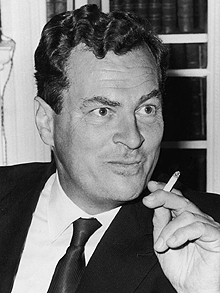
Patrick Leigh Fermor...British soldier and travel writer Patrick Leigh Fermor, 25th April 1966.

Paddy Leigh Fermor (obituary) was a man of many dimensions. He had an unquenchable curiosity about people and culture; when he met remote groups, be they Saxons in Transylvania, Vlachs in northern Greece or gypsies in Hungary, he would not just learn their language and song but remember it for the rest of his life. At Paddy’s last birthday party in London, William Blacker quoted two lines of a Romanian ballad in a speech about him; at the age of 96 Paddy sang the song in its entirety. There seemed no occasion at which he could not enliven the party by an adroit performance, or reminisce in half a dozen European languages.
by Patrick Reade.

First published in The Independent, 14 June 2011

For me it always involved a meal: the conversation would come to a point when there would an extraordinary outpouring of remembered verse or prose. He sang “Do you ken John Peel” in Italian once over tea in Dumbleton to entertain us – the verses were far more numerous than I had realised. And Peter Quennell told me many years ago of how Paddy pulled out of his memory an entire landscape of Cretan folk songs as they walked in the Abruzzi. He was known in Greece for his spontaneous ability to respond instantly to another table’s rhyming couplets – mandinathes, a feature of traditional party entertainment in which tables would compete for wit and content in the couplets.

His ear for language never failed him and he was interested in etymology, linguistics and semantics till the very end, correcting my own misattribution of medical terminology from Latin to Greek and then reciting in Ancient Greek the moment in Homer’s Iliad when Troy fell to the Greeks. He loved laughter, too, and in the Dean’s Close at Canterbury I heard him performing an entertaining parody of a John Betjeman poem in the garden where Thomas à Beckett’s assassins escaped. He had just been awarded an honorary degree by Kent University in the Cathedral and we were having tea with Jock Murray, his publisher.

He was the most generous person in spirit and in kind – he must have entertained thousands in his home in the Mani in southern Greece over many years – the names tumble out of the Dictionary of British Biography: academics, politicians and myriad writers, journalists and scholars, all ate at his table. He and his wife Joan were also extremely generous where they saw need and gave with an open hand.

Until last year he swam daily from his house, and swam across the Hellespont at the age of 70 – an astonishing feat, dodging the great liners from the Black Sea and coping with the current and the cold water and the Russian submarines beneath the surface.

On 1 June this year, 10 days before his death, he gave a small lunch party in the cool, stone-arched loggia of his home in Messenia and in the course of conversation we discussed our favourite 16th century pieces of poetry; he declaimed Sir Thomas Wyatt’s entire poem “They flee from me that sometime did me seek”.

For many he will be remembered for his correspondence as much as for his books – because by any reckoning he was a fabulous letter writer and responded to almost all who communicated with him until last year. From my first remembered encounter with him in 1961 when he pressed 12 shillings into my hand, until 50 years later, when he raised his wine glass to absent friends over lunch on the anniversary of Joan’s death, I can say that no other person I have encountered has shown such an embrace of laughter, learning, language and life as this towering genius of word and action. The great memorial will be his writing and a great excitement is that the third part of his trilogy about crossing Europe is due soon – I have seen it, and many have waited years for this crafted reminiscence so long in gestation, about which Paddy in self-mockery called himself “The Carpathian Snail”.

Event – Patrick Leigh Fermor: An Appreciation by Alexander Maitland, FRGS

A series of afternoon talks based on the Society’s Collections from 2.30-4.00 pm. This series of Collections-specific, monthly afternoon talks, given by speakers who have used the Collections to inspire their writing, travel or personal researches, intended to kindle interest from members and non-members alike in using our rich resources for their own projects.

Tickets: free to RGS-IBG members and educational users. Non-members: £5 payable in advance. Venue: Education Centre, Lowther Lodge.

Pre-booking required: Telephone: 020 7591 3044 Email: showcase@rgs.org

When: Mon 31 October 14:30 – 16:00 London

Where: Education Centre, Royal Geographical Society (with IBG) 1 Kensington Gore London SW7 2AR (map). Exhibition Road entrance.

More details here.

There are approximately 60 tickets left … see you there!

SOE’s correspondence to Paddy trashing the draft of Ill Met By Moonlight

“We have had the opportunity of reading this through and I must confess it seems to me the most unutterable trash. Literary criticism is, however, not within our province of officiality. Apart from that there are quite a number of points which it is undesirable to see published … and I very much doubt if descriptions such as that of General Gubbins acting as a horse in a sham bullfight would be sanctioned by those concerned.” Thus starts a correspondence from the War Office to Paddy on the subject of a draft of Stanley Moss’ book.
In April 1945 the War Office were in receipt of a draft Moss’ book Ill Met by Moonlight. Paddy’s recently released SOE file shows that not only were they sensitive to the security aspects of the book, but these Staff Officers thought very little of its literary style.

It appears that Moss had given Paddy ‘full powers’ to deal with the publication of the book. This seems to have dragged Paddy into some degree of trouble.

In a letter dated 29 March 1945 an officer says “LEIGH-FERMOR does not submit willingly to discipline, and I think, requires firm handling.”

The correspondence is quite amusing “Good taste and discretion are hardly attributes of the writer as illustrated by his description of one of his lady friends as an “over-sexed mongoose”. It is clear that the final version was quite severely edited, but some of the missing parts are quoted at length by Staff Officers who clearly had too much time on their hands .. or were they merely jealous that they had missed out on all the fun in Cairo?

Paddy himself in a covering letter to Colonel Talbot Rice with the submission of the draft for clearance says; “It is not a very good book – too much is made of too little” But he did think it would “sell like blazes”.

ugugukg

Better a Hero Than a Celebrity

Taki Theodoracopulos

Always a modest man, Taki Theodoracopulos, the great playboy and socialite, is someone who knows everybody, and it is no surprise that he too met Paddy as he recounts in this piece from his online Taki Magazine which humbly describes itself as being about ‘Cocktails, Countesses and Mental Caviar’! I am not sure if Taki gets the irony in the title 🙂 Beware some glaring errors.

First published in Taki Magazine 4 July 2011

I first met Sir Patrick Leigh Fermor in the summer of 1977 in Corfu. I was onboard Gianni Agnelli’s boat, and the charismatic Fiat chairman asked me to go ashore and bring “a very smart Englishman whose ancient Greek is much better than yours.” I knew “Paddy,” as everyone called him, by sight, because among us Greeks he was on a par with our ancient heroes. Leigh Fermor was not only famous for his books on Greece—Mani and Roumeli—he was renowned for his incredible heroics in a guerrilla operation in Crete in May 1944. Having spent two years disguised as a Cretan shepherd in the island’s rough mountains harassing German troops, Paddy dressed as a German police officer and stopped a car carrying General Karl Kreipe, the island commander. Having killed the general’s chauffeur, Leigh Fermor proceeded to wear the general’s hat and managed to bluff his way through Heraklion and 22 subsequent checkpoints. Kreipe was stuffed under the backseat while Leigh Fermor’s bat man and three hefty Greek rebels sat on him. For three weeks the group managed to evade frantic German search parties, finally marching the general over Mount Ida, the mythical post-birth hiding ground of Zeus.

“Heroics aside, Leigh Fermor was often compared to Lord Byron for being both a man of action and learning.”

One moonlit night high up, Fermor was guarding the general when Kreipe, gazing up at the snowy peak, recited the first line of Horace’s ode, Vides ut alta stet nive candidum…—“ You see how [Mount] Soracte stands out white with deep snow.…” Leigh Fermor then continued the poem in perfect Latin until the end. The two men stared at each other, realizing, as Paddy later wrote, that they had “drunk at the same fountain.” The German and the Englishman then made a pact. Kreipe gave his word as an officer that he would not try and escape; in return, Leigh Fermor never turned Kreipe over to the firing squad.

What follows came straight from Paddy to me in Corfu. Six months after Kreipe’s kidnapping, Leigh Fermor landed yet again on the island to celebrate its liberation. He was taken behind Heraklion’s main square, where the general who succeeded Kreipe was about to be shot. Paddy was aghast because the German was cool as ice and when Paddy introduced himself, the condemned said: “Ah, Leigh Fermor, you were lucky. Kreipe was an intellectual, a softie; I would have killed you on the spot.” When Paddy asked him if there was anything he could do for him, the German asked for one last cigarette, thanked him, smoked it while inhaling rather deeply, then said goodbye and went off and got shot ramrod-straight.

Heroics aside, Leigh Fermor was often compared to Lord Byron for being both a man of action and learning. His very good friend, Robert Byron (no relation), was a travel writer who greatly influenced Paddy, whose most celebrated book, A Time of Gifts, told the story of his walk across Europe from Rotterdam to Constantinople at age 18. Leigh Fermor continued writing travel books, and they stood out for rendering the past visible, for their evocation of youthful exuberance, and for the joy one felt reading them. He was a very good-looking man, an Anglo-Irishman whose adventures in Crete were made into a film back in 1957, Ill Met by Moonlight. The irony was that he was played by Dirk Bogarde, an outrageous homosexual whose greatest talent was spreading terrible rumors about others.

Leigh Fermor was 96 when he died but lived vigorously until the end. Three years ago his correspondence with the last surviving Mitford Girl, Deborah, dowager Duchess of Devonshire, was published to great acclaim. What a cast of characters in that book. Norman Douglas—another great influence—Steven Runciman, Osbert Lancaster, Cyril Connolly, Bruce Chatwin, and many others rich and famous and literate. Paddy was a hell of a ladies’ man, although he married only once—to Joan Rayner, who was his close and understanding companion until her death in 2003. The word ‘understanding’ is key. He also wrote the script for John Huston’s The Roots of Heaven, a vastly underrated film in which Errol Flynn made a comeback by playing a has-been of sorts, a character Flynn repeated successfully to the end.

One of Leigh Fermor’s great regrets was that while cleaning his weapon in the mountains of Crete it accidentally went off and killed his trusted guide. He told George Seferis, Greece’s first Nobel Prize winner for Literature, that this death was probably his life’s lowest point.

Leigh Fermor and his wife designed and built a beautiful but very simple house in Kardamyli, deep in the Peloponnese and overlooking the sea, and they lived there for most of his adult life. I was lucky to have met him, and now that I am of a certain age I realize how much better it must have been to have lived during heroic times—no matter whose side one was on—than today’s empty, horrible celebrity culture. Paddy, Rest in Peace.

The next stop After The Traveller’s Tree was ….

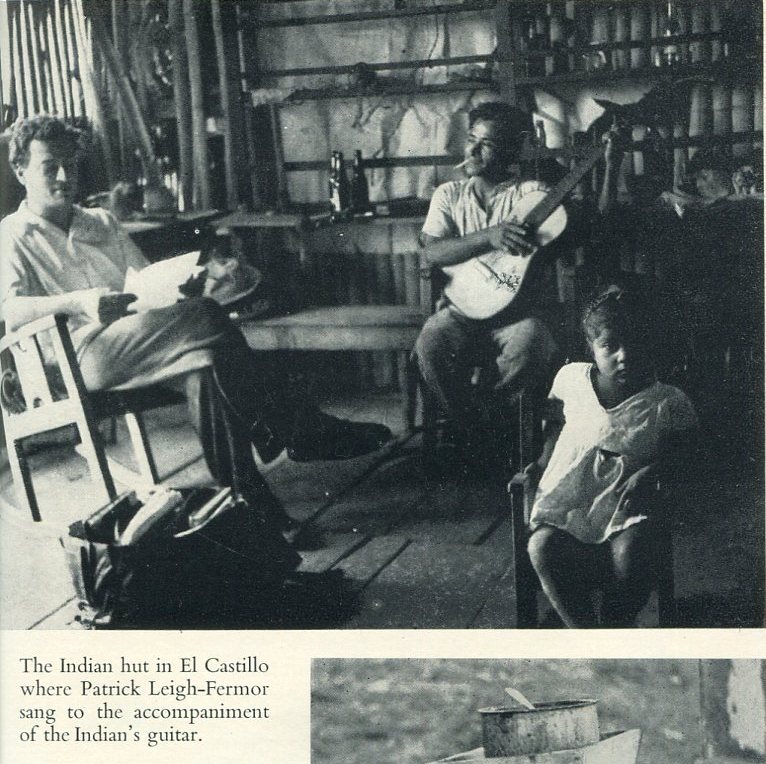
…. an Indian hut in El Castillo (Nicaragua?) where Paddy sang to the accompaniment of an Indian playing his guitar. What on earth did he sing? 

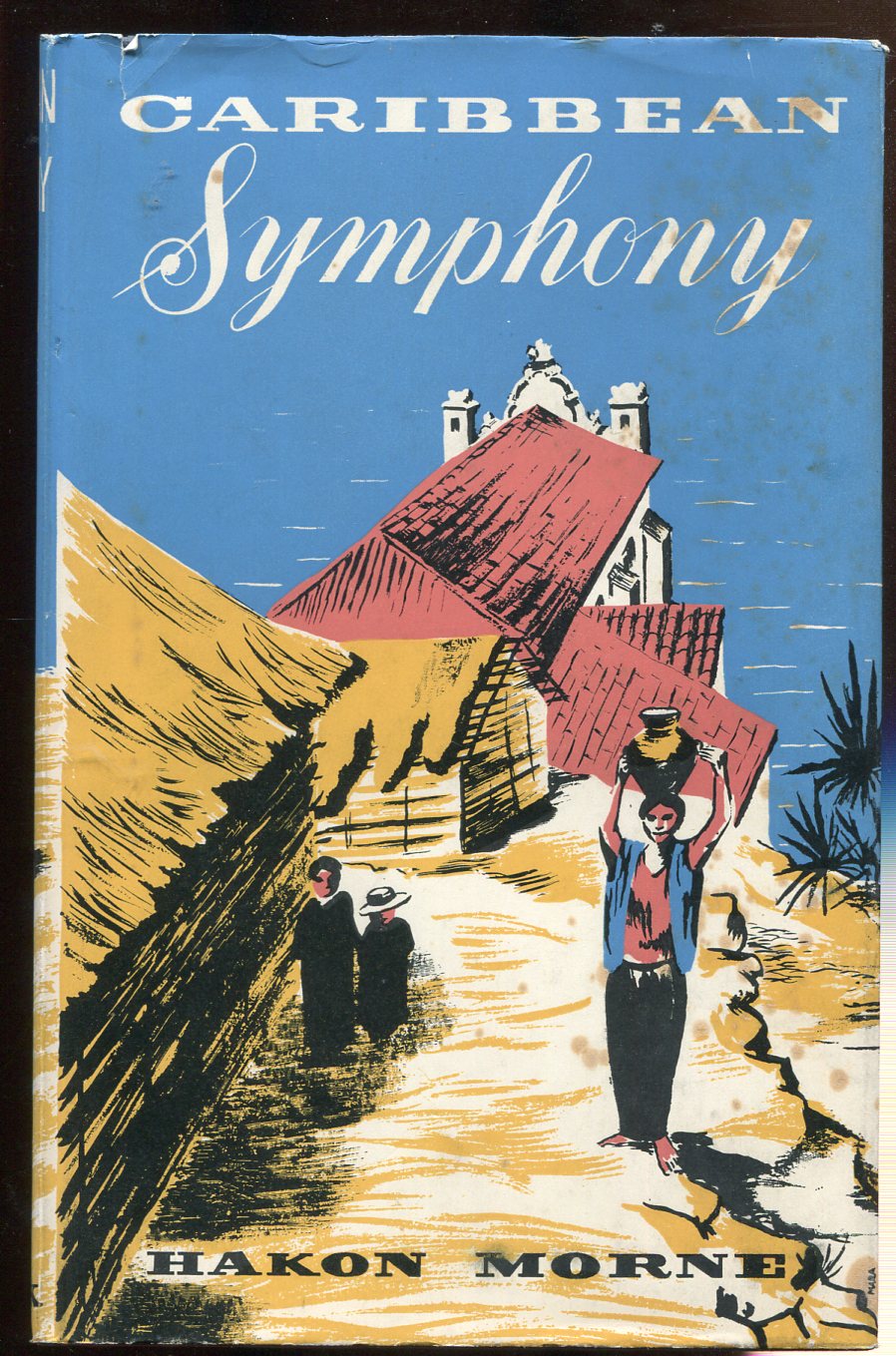
I am grateful to Phyllis Willis for being a better mole than me and finding Hakon Morne’s book translated into English as “Caribbean Symphony”. She has purchased a copy but was clever enough to get a couple of scans whilst she waits for her book to arrive. I am delighted to be able to share these with you now.

A few copies of the book are still available on Amazon.co.uk

After The Traveller’s Tree … what was the next stop?

I have received a very interesting email from Bo Nensén  in Sweden. He recounts a story from the work of the prolific Swedish travel writer  Håkan Mörne, about Joan and Paddy travelling onwards to mainland South America after their travels in the Antilles. I think this is something that we know little about. It raises the question of how do we find out more about this episode in their travels? Take a look at Bo’s message and let’s see if we can find out more together.

[Edit: something this morning reminded me that Paddy once wrote about speaking Greek in South America – was it in Roumeli, Mani or even Three Letters? This may give us a clue. … Further edit – found it: the start of Chapter 3 of Roumeli when in Panama City]

Tom,

Like many others I was also delighted to find your PLF blog. I must have missed it when I made a search for PLF last year but in any case I then noted the existence of “In tearing haste” and ordered it even if I haven’t read it until two months ago when I first learned about his death.

I first discovered PLF when I in a Swedish English language book-club found “Between the Woods and the Water” in early 1988. Soon I ordered “A Time of Gifts” as well. Later in the 90’s I read the books again in correct order. Later I also ordered “Mani” and “Roumeli” but never really got to read them in full. Still earlier I even bought “A Time to Keep Silence” but it remains unread. In the later part of the 90’s I discovered through the Internet “Three Letters from the Andes”. A year before, 1996, when following my son to a shop for second-hand comics when investigating the shelfs for ordinary books I to my surprise found a Swedish translation of “The Traveller’s Tree” from 1954! Price 2:- SEK, i.e. approx. 20 p! This of course only covers the Antilles and as far as I know he has not written anything about the part of the travel through Central America(?)

I had no idea about his visit to the mainland until I happened to read a book by a Finland-Swedish travel writer by the name Håkan Mörne (1900-1961). In one of his books he describes how he on a ship on Lago de Nicaragua meets Joan and Patrick (and Costa) and how they travel together to the Atlantic coast. This part comprises 30-40 pages and there is even a picture of PLF when singing(!) Mexican songs.

Are you aware of this book? I don’t know if anything by Håkan Mörne is translated into English. The version I’ve got is called, in translation, “Volcanoes and Bananas” but there is a previous, somewhat longer edition titled “TheGilded Poverty” (which I’m now about to order from an antiquarian bookshop.

Yours

Bo Nensén, Örnsköldsvik, Sweden

Related category:

The Traveller’s Tree 

A reconstruction of the Kreipe abduction in Crete

I believe this is something of a regular event in Crete. The story of the Kreipe abduction and then a ‘reenactment’ of the abduction on the actual spot it took place. The action starts at 2 minutes 20 seconds!

Don’t forget we have a whole section on these events and video as well:

Paddy talks about the abduction

General Kreipe, Paddy and the abduction gang on Greek TV 1972

more stories related to Ill Met by Moonlight 

Related article:

The Kreipe pennants 

The final gift of Patrick Leigh Fermor

We’d met him for the first time a few years ago at the memorial service for Earl Jellicoe in Athens, in his nineties but still handsome and charming. “You must come to our simple home”, he had said.

By Lauren O’Hara

First Published in Cyprus Mail 25 September 2011

I’d noted the “our” for I’d been told that although his beloved wife Joan had died in 2003, her room untouched and undisturbed.

It’s true the house nestling into the cliffs and olive groves just beyond Kardimyli has a simplicity, but as we gathered last week to raise a glass to the life of Patrick Leigh Fermor and his legacy for the future, with its arched walkways and pebbled courtyards, it was one of the most beautiful houses I had seen in Greece.

A place to find hidden stone benches, or cushioned window seats, to curl up with books: a place at which to reflect, as the cragged mountains of the Mani deepen to red and each angle on the Aegean provides another view.

We never made it there while he lived, so it felt strangely intrusive to wander at will through rooms still alive with his life, now he was dead.

The shepherd sacks from Crete, the stacks of hardbacks, the black and white photos of the many visitors who had sat on the same sofas. It was as if he has just popped down to Lela’s tavern for a gin and would be back soon.

So it is a relief to know that the house has been left in his will in the secure hands of the Benaki Foundation, to be used not as a place of pilgrimage, although there are many who would happily make that journey, but as a ‘study centre’.

One can’t help but wish that everything will remain unaltered, for it feels perfect as it is. A monument in our madcap e-world to another way of living: a world of books and blotters, of conversation and contemplation.

Of desks with inkwells and the time to handwrite notes laden with stories and sketches.

Around the garden as the sun dipped and the moon rose, people formed and reformed into casual groups: academics and locals, tradesmen and scholars.

It was as if the place itself had absorbed the personalities of its owners, still able to offer warm hospitality to all even though they had gone.

Nancy Mitford apparently once wrote to Evelyn Waugh that “Paddy” was “wasting his excellent language on Greek peasants.”

But as I listened to the conversations drifting into the night air, I thought that is exactly what she had misunderstood.

He may have come from a privileged background, but why he is so loved here in Greece – why he is so loved by so many people everywhere – is that he knew, like all great writers, including his close friend Bruce Chatwin, whose ashes are scattered nearby, that class is no owner of wisdom.

A Time of Gifts indeed…

Related articles:

John Chapman’s photos of Paddy’s house 

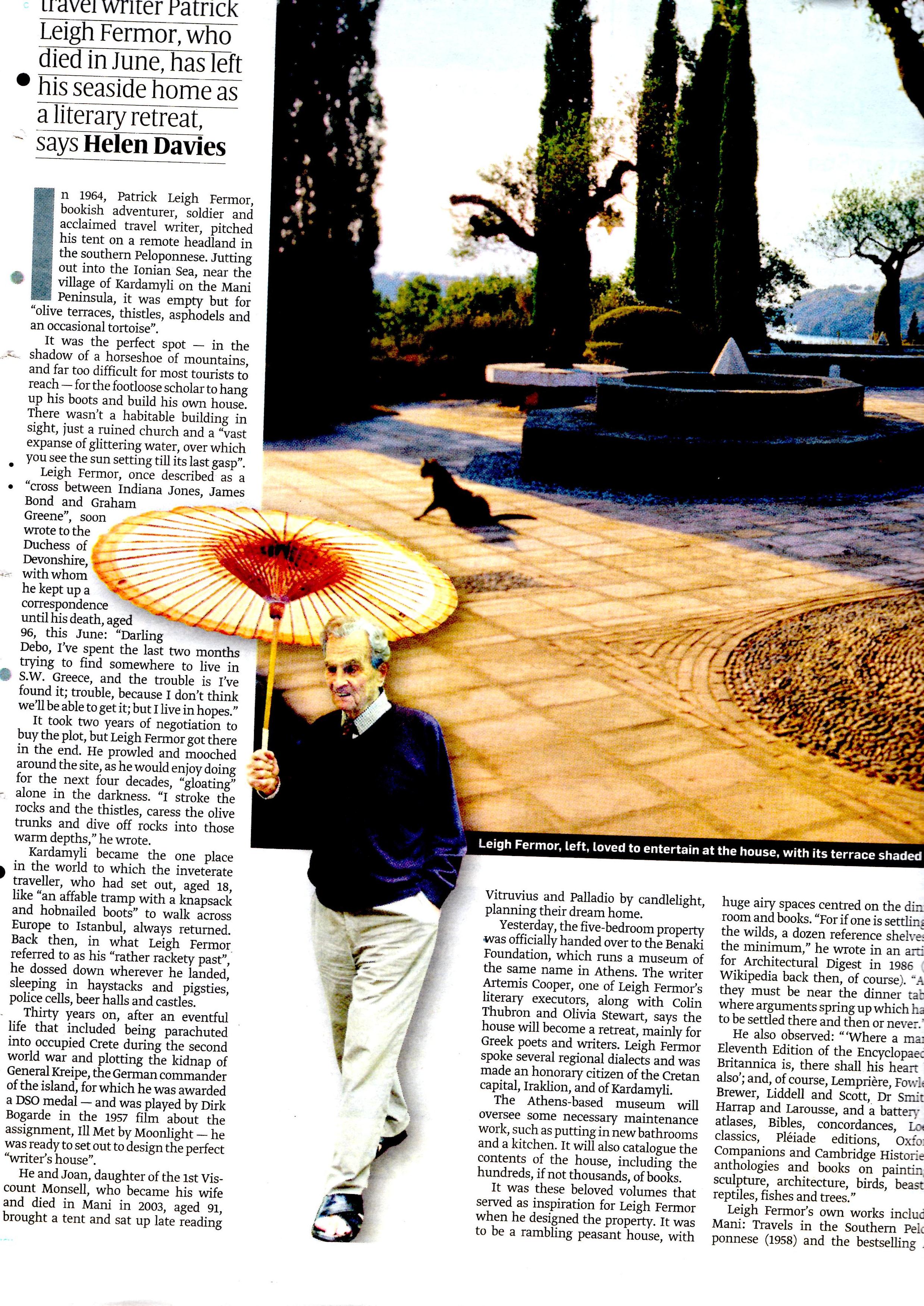
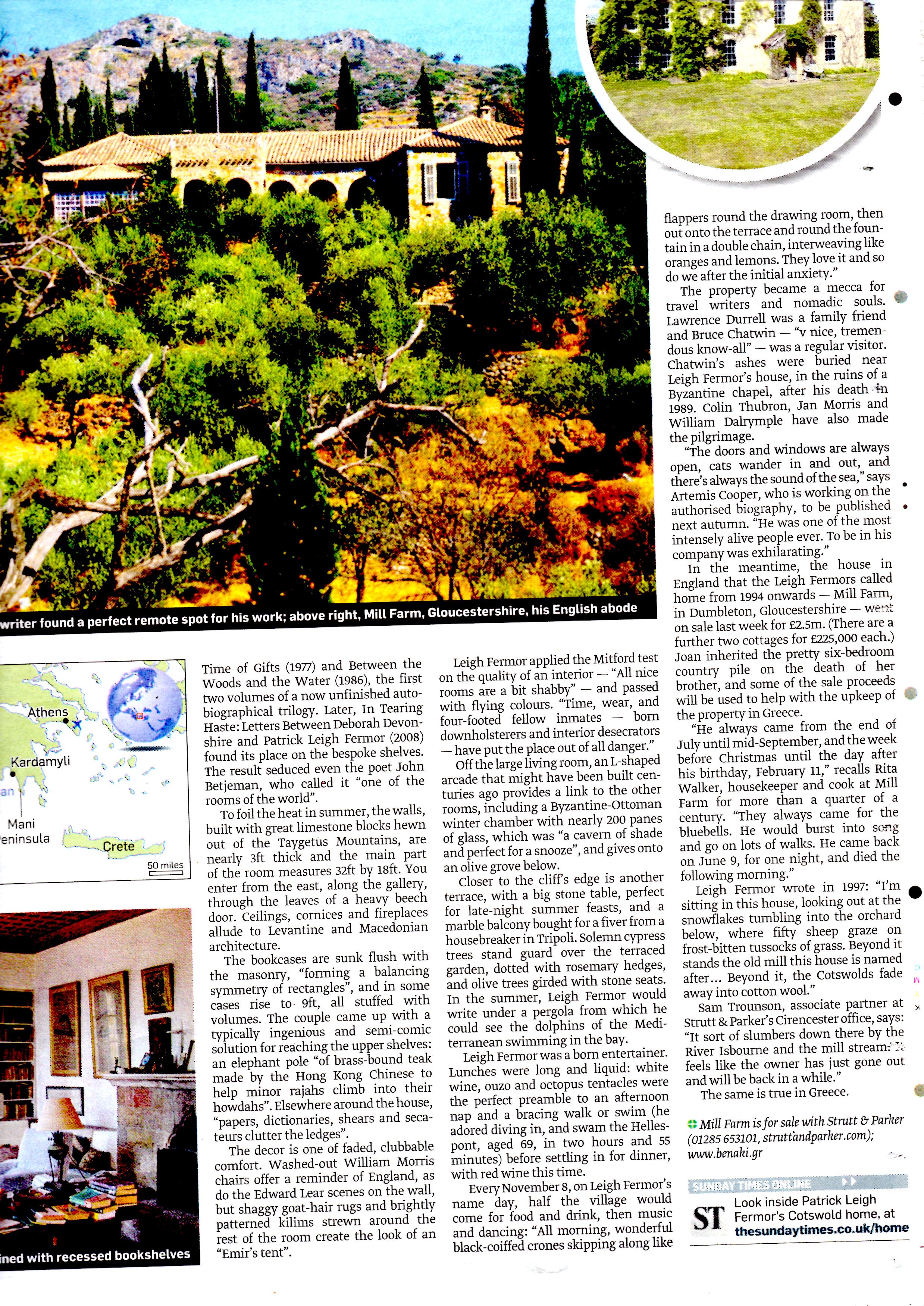
Paddy’s Gloucestershire home for sale for £2.5m

John Chapman’s photos of Paddy’s house

A little nugget from a friend of John Chapman (of Mani Guide fame) about the handover of Paddy’s house to the Benaki. This prompted me to ‘reveal’ John’s excellent series of photographs of Paddy  and his house taken during a visit on 2005.

Hi John,

Two days ago we went to Patrick’s evening with the Benakeion Institute taking over ceremony so to speak and a kind of farewell for Paddy..The President of the institute gave a lovely speech in Greek, well thought and with very high appreciation for Fermor’s personality and character and his love for Greece..He regarded him as much more of ”kardamyliotis than British man” because he ”lived here longer and loved this place a lot”.

In any case I had a couple of British friends with me and we all enjoyed it.

To see more of the photographs click here (and scroll down a a bit).

Main Mani Guide site here.

Related article:

Mani: A Guide and History

British Philhellene author, Patrick Leigh Fermor, donates Kardamyli home to Benaki

Late author, Patrick Leigh Fermor, has chosen Benaki Museum to donate his home in Kardamily. The donation was made through Giannis Tzanetakis, while the author was still alive and his home became the property of Benaki Museum after the death of the great British Philhellene on June 10th 2011.

Last Saturday, in honor of Patrick Leigh Fermor, Benaki Museum held an event at the late author’s home in Kalamitsi, Kardamyli, gathering acquaintances and friends from Greece and the UK, among them, UK Ambassador, Dr. David Landsman, Director of the British Council, Richard Walker, the executors of his will and his biographer.

Patrick Leigh Fermor lived for many years in Mani, in his home that he personally built, based on Nikos Chatdjimichalis designs.

His relationship with Benaki Museum dated years back; he kept contact with Antonis Benakis and Irini Kalliga later, while he maintained close friendly relations with the Institute’s director, Angelos Delivorias. Several years ago, it was decided by the donor and the museum, that his home would be used for the purpose of hosting researchers, poets and writers, visiting Greece to work for a few months. At the same time, for specified time periods, Benaki Museum will have the option to rent the author’s home, to obtain funds for maintenance and hosting. In the coming months, once recording procedures for the library and archives are complete, and all necessary maintenance activities are performed, the Administrative Committee of Benaki Museum will be announcing how the building will operate.

Source: ANA – MPA

Lawrence Durrell and Patrick Leigh Fermor – Bitter Lemons

I am republishing something that was first on the blog back in May 2010 following a request by Lynne Sanders.

In Bitter Lemons, the writer Lawrence Durrell describes a visit from Patrick Leigh Fermor –

“In that warm light the faces of my friends lived and glowed….Freya Stark…Sir Harry Luke…Patrick Leigh Fermor and the Corn Godess, who always arrive when I am on an island, unannounced and whose luggage has always been left at the airport (‘But we’ve brought the wine-the most important thing’).” [pp102-3]

“Last night the sound of the front door closing upon breathless chuckles and secretive ranting, then the voice of Patrick Leigh Fermor: ‘Any old clothes?’ in Greek. Appeared with his arm round the shoulders of Michaelis who had shown him the way up the rocky path in darkness. ‘Joan is winded, holed below the Plimsoll line. I’ve left her resting half way up. Send out a seneschal with a taper, or a sedan if you have one.’ It is as joyous a reunion as ever we had on Rhodes.

“After a splendid dinner by the fire he starts singing, songs of Crete, Athens, Macedonia. When I go out to refill the ouzo bottle at the little tavern across the way I find the street completely filled with people listening in utter silence and darkness. Everyone seems struck dumb. ‘What is it?’ I say, catching sight of Frangos. ‘Never have I heard of Englishmen singing Greek songs like this!’ Their reverent amazement is touching; it is as if they want to embrace Paddy wherever he goes.” (pp 104-5)

Related article:

Lawrence Durrell and Patrick Leigh Fermor by Thos Henley

Paddy’s Gloucestershire home for sale for £2.5m

I am trying to obtain a better copy, but here is a scan from today’s Sunday Times property section, of an article about the sale of Paddy and Joan’s house in Dumbleton.

It does in in fact focus on his house in Kardamyli (which it correctly says is going to the Benaki) but it is trying to highlight, as these sections do, that the house in Dumbelton is for sale for £2,500,000. Property particulars from Right Move and a full brochure on the Strutt & Parker website.

My favourite travel book, by the world’s greatest travel writers

Paul Theroux, William Dalrymple, Kari Herbert, Colin Thubron and many more writers tell us about the travel book that most influenced their own life and work. Others that one could say are slightly less well-known, and very pleased to be placed into the pantheon of “world’s greatest travel writers” – Mr Jasper Winn 🙂 – are included.

I was very pleased to see two of Eric Newby’s books chosen; no surprises that they were A Short Walk in the Hindu Kush and my absolute favourite, Love and War in the Apennines.

William Blacker chose all of Paddy’s books, including Between the Woods and the Water. Yesterday he sent me an email pointing out some deficiencies in the way the Guardian had edited his submission – Now, what did he really expact from the Grauniad? – , including the quotation from Kim at the end. William’s original submission can now be revealed in all its full and original glory …

It was not just the books of Patrick Leigh Fermor – notably Between the Woods and the Water about Rumania – which inspired me, but also the man. He was the quintessential free spirit. He didn’t bother with university, but at the age of 18 set off into the blue, on foot, across Europe , simply hoping for the best. His journey lasted five years. On the way he picked up a bewildering multitude of European languages, which led on to extraordinary wartime adventures, and then to a series of breath-taking books, which are peerless, and among the great masterpieces of twentieth century literature. The resounding success he made of his special brand of non-conformity should fill all would-be wanderers and fellow free spirits with hope. Read about his life, read his books, and if you are not similarly inspired and exhilarated by Leigh Fermor’s example then, as Kim said, ‘Run home to your mother’s lap, and be safe’.

William emphasises, for those who might miss it, “that I wrote, very deliberately, ‘great masterpieces of twentieth century literature’ and not  ‘great masterpieces of twentieth century TRAVEL literature’ !”

The list of choices can be found in this article in the Guardian.

The troubled waters of the mind grow still and clear

Paddy in Greece photographed by Joan

Don’t you feel like me that with the passing of Paddy as one of the last of his generation we have clearly entered a new age dominated by uncertainty; a lack of confidence in the values we once held as unquestionably true? These beliefs that bound us (in the West?) together for the latter part of the twentieth century are now unravelling at an ever-increasing pace. As we enter the End Game of the economic crisis, and as the decade of The Forever War rumbles on like the noise of a busy road in the middle distance – there only when we take the trouble to notice – we suffer a dearth of leadership and heroes of substance. Paddy and those of his generation had no such crisis of confidence; they served without question. They sacrificed themselves for the things they believed in, and they provided the leadership, entrepreneurship, creativity, and wisdom that helped rebuild Europe after almost half a century of ethnic and social strife, and destructive war. Maybe they also share some blame for the way things turned out, but who will step up now?

In this considered profile, which prompted my rambling reflection, Paddy’s good friend Colin Thubron assesses his contribution, not as a warrior, but as a writer, and I think for the first time, reveals the torment of Paddy’s troubling writer’s block towards the end of his life.

by Colin Thubron

First published in the New York Review of Books, Volume 58, Number 14

When Patrick Leigh Fermor died in June at the age of ninety-six, it seemed as if an era had come to an end. He was the last of a generation of warrior–travel writers that included the Arabian explorer Wilfred Thesiger, the controversial mystic Laurens van der Post, and the indefatigable Norman Lewis of Naples ‘44. Among these, Leigh Fermor shines with the élan and the effortlessly cultured glow of an apparent golden age. A war hero of polymathic exuberance, brilliant linguistic skills, and an elephantine memory, he was sometimes fancifully compared to Lord Byron or Sir Philip Sydney.

Two pairs of books came to exemplify his achievement. The first pair—Mani (1958) and Roumeli (1966)—celebrated the Greece that held his abiding fascination and where he lived for forty-five years on a once-wild promontory in the Peloponnese. In Mani, especially, he described this backwater region as a world whose way of life had survived in a fierce and enchanted time warp.

The land he depicted is barely recognizable now—tourism, he observed, destroys the object it loves—but it was less the Greece of classical antiquity that beguiled him than the spirit and folk culture of the hinterland: the earthy, demotic Romiosyne that he once contrasted with the Hellenic ideal in a playful balance sheet of the country’s character.

In these, and in later books, the style was the man: robustly imaginative, cultivated without pedantry, unstoppably digressive, forgivably swanky, and filled with infectious learning. The impression—overflowing into elaborate footnotes and flights of learned fantasy—is one of omnivorous delight in the quirks and byways of history, art, language, genealogy, myth, song, superstition, costume, heraldry, and everything else that struck his fancy.

His literary models were Norman Douglas and Robert Byron, but his writing was more vivid than the one, more kindly than the other. Despite the richness of his prose (occasionally slipping into purple) he forged an illusion of intimacy with his readers, as if they were sharing his mind in the moment of writing. But in fact his manuscripts were worked, reworked, and reworked again with such painstaking perfectionism that his publisher (the benign Jock Murray) often had to reset his galley proofs wholesale. The apparently natural flow of words was in reality a densely worked choreography, which came at cost.

Fifteen years ago, swimming in the Ionian Sea beneath his home, where nobody could overhear us, Paddy (as friends and fans called him) suddenly confessed to me the writer’s block that would plague the rest of his life. The expectations of a now-avid public, and his own obsessive perfectionism, were taking their toll, and he could not overleap this cruel impediment.

I remember him strong into old age. He swam every morning, with a sturdy breaststroke far out to sea, the tattoo of a twin-tailed mermaid glistening on his shoulder. He still kept up a striding march in the Taygetus foothills, where he and his wife Joan had designed their own house above the ocean. It was a place of “mad splendor,” he wrote. Its sitting-room library—bookshelves banked nine feet high—opened onto a vista of cypresses and the Messenian Gulf, and was flagged with the greenish stone of Mount Pelion. In the afternoon Paddy would disappear into his study to confront—or escape—the demons of his failed writing, and would emerge to the liberation of ouzo or whiskey, generally to report some arcane piece of research—that the Huns wore stitched field-mouse skins, perhaps—or to share a passage of Ovid. We dined in the monastic half-cloister he had built beside his home, and once we visited the tiny, red-tiled Byzantine chapel where—five years before—he had buried the ashes of Bruce Chatwin.

The conflict between a natural gregariousness and the solitude of writing never quite resolved for him. In a short, intriguing study named A Time to Keep Silence (1953) he recorded his sojourn in three great French monasteries. He described this retreat not as a religious exercise, but as a need for a haven for writing, and the nature of its cleansing—”the troubled waters of the mind grow still and clear”—remains suspended like a question mark in the oeuvre of a man to whom self-revelation seemed indulgence.

The second pair of books, which established Paddy’s primacy among travel writers, must be among the most extraordinary ever written. In 1933, as a youth of eighteen, he left England for a journey that would take a year and a half. As “a thousand glistening umbrellas were tilted over a thousand bowler hats in Piccadilly,” he set out to walk to Constantinople (as he nostalgically called Istanbul). Walking stick in hand, a copy of Horace’s Odes in his rucksack, he pursued a meandering course up the Rhine and down the Danube, across the Great Hungarian Plain, into Romania and through the Balkans to Turkey.

It was almost forty-five years before he published the first part of this journey, and another nine years before the second. A Time of Gifts (1977) and Between the Woods and the Water (1986) represent prodigious feats of memory. They record the rite of passage of a precocious, exuberant young man as he encounters the peoples and languages of a Middle Europe now littered with obsolete names: Bohemia, Transylvania, Wallachia. His story must have become the dream journey of every enterprising and footloose adolescent.

Inevitably the accuracy of Paddy’s memory was questioned, and he was frank about occasional imaginative license and conflation. (His first diary was stolen in Munich, a solitary last one recovered years later in Romania.) Certainly his recall was extraordinary. I remember the first time we met (by chance), when he quoted verbatim from my first book passages that I had myself forgotten. A year before his death we chanted verses from the Rubáiyát of Omar Khayyám together in an antiphonal competition (which he won).

His urge to describe his epic journey more than forty years after its end was a deeply natural one. He was revisiting his youthful persona with the judgment and knowledge of maturity; yet in a sense he had remained unchanged. Despite his sophisticated learning, he retained an almost boyish innocence, as if the troubles of the modern age had bypassed him. In the Peloponnese, where he settled to live in the 1960s, he had remained in thrall to a more ancient, rooted culture than that of the urban West.

The final volume of his proposed trilogy—carrying its author through the Balkans and down the Black Sea coast to Turkey—became his tormenting and elusive project for the next quarter- century, and was never completed. Some near-finished version, however, survives him, and will eventually be published.

With his youthful trek done, Leigh Fermor’s career took off into near fable. Caught up in Greek unrest, he joined in a triumphal royalist cavalry charge against wilting Venizelist rebels. In Athens he fell in love with the artist Princess Balasha Cantacuzene, twelve years older than him, and lived with her in Moldavia for over two years, before World War II recalled him to London.

As a fluent Greek speaker he was recruited by the Intelligence Corps, and sent as a liaison officer with the Greek army first to Albania and finally to Crete, where he survived the brutal German invasion. For almost two years, while an officer in the Special Operations Executive, he lived disguised as a shepherd in the Cretan mountains, organizing the gathering of intelligence.

Then, in 1944, occurred the exploit that—more than any other—was to burnish him into legend. He and his fellow SOE officer Stanley Moss dreamed up a scheme of harebrained bravado. Dressed in stolen German uniforms, with a party of Cretan guerrillas, they ambushed the car of General Heinrich Kreipe, the German commander of occupied Crete, kidnapped him, and concealed him under the back seat. Moss took the wheel, Paddy donned the general’s cap, and together they drove through twenty-two checkpoints to emerge on the far side of Herakleion and march Kreipe for three weeks over the mountains, to be picked up by motor launch and taken to Egypt.

It was during this hazardous Cretan march, as the dawn broke over Mount Ida, mythical birthplace of Zeus, that the abducted general began to murmur a verse of Horace: Vides ut alta stet nive candidum/Soracte….1 It was an ode that Paddy knew by heart, and he completed the six stanzas to their end. “The general’s blue eyes had swivelled away from the mountain-top to mine,” Paddy later wrote,

—and when I’d finished, after a long silence, he said: “Ach so, Herr Major!” It was very strange. As though, for a long moment, the war had ceased to exist. We had both drunk at the same fountains long before; and things were different between us for the rest of our time together.

This precocious kidnapping was later reimagined in a lackluster movie named Ill Met by Moonlight (1957) with Dirk Bogarde playing Paddy. But there were other exploits too. Paddy had already engineered the defection of the Italian General Angelico Carta from Crete; and he was due to undertake a near-suicidal mission to Colditz when the war ended.

His upbeat account of these events was tempered by regret. He had planned that the abduction of Kreipe be bloodless, but his accompanying Cretan partisans slit the chauffeur’s throat, and rumors of grim German reprisals for the abduction have never quite died down. Above all, Paddy’s accidental shooting of one of his fellow guerrillas may have stained his memory of the whole period.

On June 16 Leigh Fermor was buried back in the English countryside, attended by an Intelligence Corps guard of honor, to lie beside his wife Joan, his dear comrade since 1946. This was, in a sense, fitting. For in certain ways he was exemplary of a wartime Englishness now almost gone, whose more dashing qualities merged seamlessly into the hardy stylishness of Greek leventéa.

To those who knew him, his books are hauntingly redolent of his sensibility. His conversation was irrepressibly warm and inventive far into old age, moving from arcane anecdotes to fanciful wordplay or bursting into polyglot song (sometimes singing the lyrics backward). His friends ranged from Deborah, Duchess of Devonshire—last of the six legendary Mitford sisters (his correspondence with her was published in 20082)—to early acquaintance with a raffish interwar bohemia and his own great predecessor, the travel writer and aesthete Robert Byron, whose borrowed rucksack he bore across Central Europe as a youth.

Almost the last time I met Paddy, he had returned home after an operation for suspected cancer, and I feared he would be depleted, his old zest gone. He was growing deaf, and he suffered from tunnel vision (which he called Simplonitis). For a while, sitting over lunch, he seemed subdued. Then something struck him. He perked up, and said: “You know, there is an apple lying on a table in the hall. It’s been there all weekend. Wouldn’t it be marvelous if it cocked a snook at Newton, and simply took off into the air!”

This was typical of his boyish resilience. In the field of travel he evoked both the youthful wanderer who discovers another world and the avid scholar who melds with it. His prose was too rich and elaborate to be a safe influence on others (although a few have tried); but he brought to the genre not only the distinction of his densely brilliant books, but his innate dignity, ebullient mind, and capacious heart.

  1. 1″See Mount Soracte white with snow….”
  2. 2The correspondence, In Tearing Haste , edited by Charlotte Mosley, was published in the US by New York Review Books (2010), which has also republished the other books by Patrick Leigh Fermor mentioned in this article, as well as The Traveller’s Tree .