The ultimate pilgrimage to Paddy’s house in the Mani?

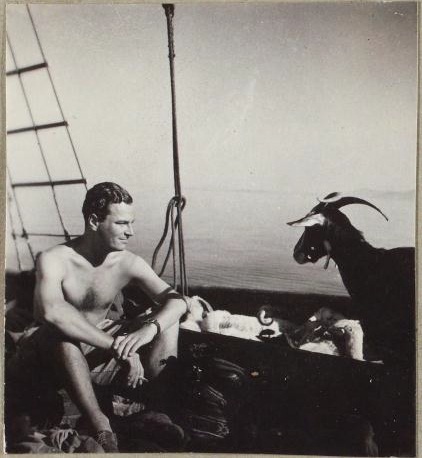
Paddy with Goat! Photo by Joan Leigh Fermor, from the Trustees of the National Library of Scotland

If you wanted to make a trip to see Paddy’s house at Kardamyli and to visit the wider Mani this may be the one for you. In the company of Paddy’s biographer, Artemis Cooper, this six-day tour will take in Mistra, Monemvasia, and Paddy’s house in Kardamyli, as well as other sites in the Mani.

This tour has been arranged by Art Tours (sponsors of the Royal Geographic Society event about Paddy 24 Oct) and is designed to celebrate Paddy’s life, whilst exploring the dazzling, rocky region he loved best in Greece, and where he and Joan lived for over forty years.

It is a celebration of his life and travels and is planned to run from 7-12 May 2013. Artemis will bring a unique insight into Paddy’s life and personality, and to cover the wider history of the region she will be joined by art historian James McDonaugh.

If you would like to know more please download this pdf or contact Edward Gates at Art Tours Ltd on +44 (0)207 449 9707 or by email edward[at]arttoursltd.com

Guardian review of Patrick Leigh Fermor: An Adventure

Perhaps the most remarkable thing about Patrick Leigh Fermor’s legendary life is that it lasted as long as it did. He died in 2011 at the age of 96, having survived enough assaults on his existence to make Rasputin seem like a quitter. He was car-bombed by communists in Greece, knifed in Bulgaria, and pursued by thousands of Wehrmacht troops across Crete after kidnapping the commander of German forces on the island. Malaria, cancer and traffic accidents failed to claim him.

By Robert Macfarlane

The Guardian, Friday 12 October 2012.

He was the target of a long-standing Cretan blood vendetta, which did not deter him from returning to the island, though assassins waited with rifles and binoculars outside the villages he visited. He was beaten into a bloody mess by a gang of pink-coated Irish huntsmen after he asked if they buggered their foxes. He smoked 80 cigarettes a day for 30 years, and often set his bed-clothes ablaze after falling asleep with a lit fag in hand. He drank epically, and would “drown hangovers like kittens” in breakfast pints of beer and vodka. As a young SOE agent in Cairo in 1943, the centrepiece of his Christmas lunch was a turkey stuffed with Benzedrine pills; at the age of 69 he swam the Hellespont – and was nearly swept away by the current.

Yes, Leigh Fermor was an insurer’s nightmare, an actuary’s case-study, and his longevity was preposterous. He might best be imagined as a mixture of Peter Pan, Forrest Gump, James Bond and Thomas Browne. He was elegant as a cat, darkly handsome, unboreable, curious, fearless, fortunate, blessed with a near-eidetic memory, and surely one of the great English prose stylists of his generation.

In 1933, aged 18, he set off to walk from the Hook of Holland to Constantinople, passing through a Europe on the brink of calamity. Decades later, he published two books recounting his wander through that enshadowed land, A Time of Gifts (1977) and Between the Woods and the Water (1985). Both were instant classics, celebrated for their evocation of a since-shattered world, and for the tendrils and curlicues of their language. In between that walk and those books, Paddy (as he was mostly known) was the lover of a Romanian princess, took part in a royalist cavalry charge in Greece, parachuted into occupied Crete to co-ordinate the resistance, spent months in silent retreat in monasteries, became the most famous English Hellenophile since Byron, was played by Dirk Bogarde in a Powell and Pressburger film, and transformed travel writing.

He lived an inspirationally heterodox life that combined adventure and reflection in unique measure. His story has hitherto been known only in parts, and mostly through the refractive prism of his own tellings. At last his biography has been detailed in full, in Artemis Cooper’s tender and excellent book. Reading it is an odd experience: there is the melancholy of having one’s hero humanised, joined with renewed astonishment at the miracle he made of himself. Continue reading

Writer’s last wish falls victim to the Greek recession – and response

A poorly researched article was featured in the Daily Telegraph on Monday which many of you may already have read. It concerned the perceived lack of progress towards meeting Paddy and Joan’s wishes with regard to the use of the house at Kardamyli, and  ‘state of disrepair’. This is a subject that I know many of you are concerned about. In response to an article by John Chapman following his spring visit to the house, there were many offers of help to which there will soon be a response.

Following the article below as is the summary of a response by Artemis Cooper which was posted on her Facebook page and a letter by Artemis has been written to the Telegraph to emphasise that work is being done behind the scenes and it is expected that an announcement can be made soon which will be clearly featured on this blog.

More than a year after the death of Sir Patrick Leigh Fermor, the seafront home in Greece where the travel writer spent most of his adult life is falling into disrepair, and his wish that it should become a writers’ retreat has not been honoured.

By Jim Bruce in Kardamili

First published in the Daily Telegraph 8 October 2012.

When Leigh Fermor and his wife, Joan, designed and built the house in the mid-60s their friend John Betjeman called it “a book in itself”

But now it is locked up and looks sad and neglected, its wooden shutters rotting and falling off their hinges.

Surrounded by sprawling gardens dotted with olive trees, the seven-bedroom house in Kardamili, in the Mani region of the southern Peloponnese, is estimated to be worth £1 million.

Leigh Fermor – who was awarded the DSO for one of the most daring feats of the Second World War, kidnapping the commander of the German garrison in Crete in April 1944 – had no children. He bequeathed the house to the private Benaki Museum in Athens, stipulating that it provide a home for writers visiting for a few months.

He also left it all the contents – including 7,000 books and several valuable paintings. But so far the Benaki does not appear to have begun to act on his wishes.

Greek locals and British expats in the picturesque tourist village are disappointed at the lack of progress, but mainly blame a lack of funds caused by the country’s severe economic slump.

Maria Morgan, a children’s author, who lives in Kardamili and was a close friend of Leigh Fermor and Joan, who died in 2003, said: “It makes me, and other villagers, very sad to see the house in this situation. If Paddy were still alive today, he would be extremely disappointed that his wishes for a writers’ retreat have not been carried out. Because of the economic crisis in Greece there’s no money for this sort of thing.”

She said that the Leigh Fermors received numerous visitors from around the world, including their close friends Betjeman and George Seferis, poets laureate of Britain and Greece respectively.

The library includes a first edition of Betjeman’s High and Low, with the handwritten inscription: “For Paddy and Joan inscribed with undying devotion by the pile-ridden poet John, 1969.”

But the house had always been open to local people. “All the villagers were friends of Paddy and Joan. They loved us to drop in and talk about our lives,” Morgan said.

David Rochelle, a British expat who runs a tourist shop in Kardamili, said: “The house was a massive party zone for the glitterati, with many famous visitors. It’s a beautiful house, but now it’s falling into ruin, and that’s very sad.” Elpitha Beloyiannis, housekeeper for Leigh Fermor for 11 years, has been kept on by the museum to look after the interior. She said: “The museum is trying to raise money for repairs, but it’s difficult with the economic crisis. I’m sure the museum will honour Paddy’s wishes.”

Last year, a notice on the museum website stated: “Over the next few months the Board of Trustees will announce how the house will be used.”

No announcement has yet been made however and the museum did not answer numerous calls and emails about the house.

The response by Artemis Cooper posted on her Facebook page on 8 October is as follows:

There was another piece, also in today’s Telegraph (‘Writer’s last wish falls victim to the Greek recession’, 8.10.12) about PLF’s house at Kardamyli. I have written a letter to the Editor which I hope will be published, because I felt it was very unfair – both to the Benaki Museum, and the people who look after the house. Just because the shutters are falling off (they’ve been like that for at least 15 years), people imagine nothing is happening.

The Benaki are determined to honour PLF’s wishes to use the house as a place for seminars and writing courses, as well as a writers’ retreat. The project has been outlined, costed, and a committee of ‘Friends of the House’ has been formed to help it come about. But at a time when Greece is undergoing a period of economic catastrophe, to expect the whole house to be refurbished and turned into a hub of literary endeavour in sixteen months is frankly unrealistic.

… and Artemis’ letter published in the Telegraph on 9 October:

SIR – Sir Patrick Leigh Fermor’s wish that his house in Kardamili, Greece, be turned into a writers’ retreat has not been abandoned (“Writer’s last wish falls victim to the Greek recession”, October 8).

Lola Bubbosh, who has close links with the Benaki Museum, to which Sir Patrick bequeathed his house, has outlined and estimated the cost of turning it into a retreat, while a committee, which I am on, has been set up in Britain to see it through.

Since Sir Patrick’s death over a year ago, people have stayed at the house, and Richard Linklater has just made a film there, with Ethan Hawke and Julie Delpy.

Things are moving forward. But in a time of economic catastrophe, one cannot expect the Benaki to refurbish the house and turn it into a full-blown writers’ retreat within a year.

Artemis Cooper
London SW6

You can still win some wonderful prizes in Heywood Hill’s Paddy competition

As many will know, Paddy set off on his European odyssey from Shepherd Market in Mayfair. His biographer, Artemis Cooper, has discovered that Paddy and Joan lived above Heywood Hill’s bookshop in Shepherd Market after the war. He kept an account there for Balasha Cantacuzene, the Romanian princess and great love of his youth, so that she could buy books whenever she wanted. He remained a lifelong customer of Heywood Hill.

This wonderful bookshop which I visited last week is offering you all the chance to win some amazing prizes in a draw to celebrate the publication on 11 October of Artemis Cooper’s biography of Patrick Leigh Fermor: An Adventure. If you order a copy through them you will be automatically entered to win:

1st Prize

Signed First Edition of A Time of Gifts by Patrick Leigh Fermor
Original John Craxton lithograph from A Poet’s Eye 1944
Watercolour of a View From The Library at Kardamyli by Isobel Brigham
Magnum of Laurent-Perrier Brut NV
£100 Heywood Hill voucher

You may well have already ordered a copy of the book at Amazon or some such place, but you know that you will need a second copy to give as a present to Aunty Mable, so why not order a further copy from Heywood Hill and have a chance of winning?

The first edition is worth in the region of £500 alone and was donated by John Murray, let alone a original Craxton!

The Heywood Hill Prize Draw closes on the evening of 29 November when the winner will be drawn from a hat by Artemis Cooper.

To order your copy and to enter The Heywood Hill Prize Draw 2012, contact them at:

10 Curzon Street, London W1J 5HH
+44 20 7629 0647

PLF@heywoodhill.com

More details available on the Heywood Hill website.

http://static.heywoodhill.com/prize_draw_2012.htm

A man so charming he won over his hostage

Charles Moore reviews ‘Patrick Leigh Fermor: an Adventure’ by Artemis Cooper (John Murray) 

By Charles Moore

First published in the Daily Telegraph 08 October 2012.

The single most famous story about Patrick Leigh Fermor is his kidnap of the German General Kreipe in occupied Crete in 1944. The fugitive party of two British officers and three Cretans spent an uncomfortable night on the slopes of Mount Ida. As the dawn broke, and lit the mountain, Leigh Fermor heard the General muttering the first line of Horace’s Ode to Thaliarchus: “See, Soracte’s mighty peak stands deep in virgin snow.” Leigh Fermor recognised the Latin, and quoted the rest of the poem. As he later put it, “…for a long moment, the war had ceased to exist. We had both drunk at the same fountains long before; and things were different between us for the rest of our time together.”

This moment of ancient, shared civilisation overcoming a terrible present is a great theme. It is the subject, for example, of Jean Renoir’s film La Grande Illusion, in which a French and a German officer on opposite sides in the First World War feel that they share what really matters.

Leigh Fermor’s long life (he died last year aged 96) was full of dash, variety and colour. He wrote beautifully, and entranced beautiful women. He was physically brave, and travelled widely, intrepidly and observantly. He was, in a self-taught way, learned, and a superb linguist. He could sing, dance, compose impromptu poetry and make everyone laugh. He and his wife Joan built a house in Greece of such character and interest that John Betjeman called it “a book in itself”. He was a war hero and, like Byron, a model for many aspiring writers greedy to combine art and life, rather than choosing between one and the other. I knew Paddy a bit myself, and I have never met a man with more charm, by which I mean the ability to create in his interlocutor the feeling of pleasure and possibility. But was it all a grande illusion, a wonderful holiday from reality?

Artemis Cooper was a family friend of Leigh Fermor, and loved him dearly. This excellent, well-sourced book is sympathetic to him. But she is aware of how he could be painted differently, and states the case. Was he, for example, a show-off and a sponger (he was chronically short of money and depended heavily on Joan’s private income)? Was he, as Somerset Maugham put it, “a middle-class gigolo for upper-class women”? Was he, both in life and art, a sort of Peter Pan, shying away from anything grown-up (such as fatherhood), always looking for a Wendy so that he could go on having smiling, heartless fun? He was once asked to contribute to a book about great parties in history with the astonishing title of Memorable Balls: does the phrase fit the life of Patrick Leigh Fermor?

There are certainly moments when it feels like it. The information that Joan used to give him cash so that he could visit prostitutes is one. So – though there is artistic reason for it – is his tendency to present the product of his imagination as fact. Some even argue that the famous kidnap was a piece of useless swagger – what Kreipe called a “hussar-stunt” – which ensured that the Cretans, in reprisal, were treated even more bestially by the Germans.

One cannot ignore these criticisms, and Leigh Fermor felt them himself. Like many delightful, gregarious companions, he doubted whether he deserved to be loved. But, in Artemis Cooper’s convincing reading, he wins in the end.

First, he wins as a friend. He was always grateful to people who helped him (not a well-known characteristic of most writers). He thanked them beautifully, and he did what he could to help them in return. He was famously hospitable, and his life was cluttered by efforts to advance the careers of others, particularly impecunious Greeks. As an editor, I quite often asked Paddy to write things. Most commissions would be refused or – he was famous for this – arrive incredibly late, but whenever I asked him to contribute a memoir of a friend who had just died, he did it with great speed and generosity.

Second, he wins as a writer. Not everyone likes what Lawrence Durrell called (in praise) his “truffled style”, but, unlike so much “fine writing”, it is saved by its energy and wit, its close attention to detail, and its astonishing virtuosity.

I think the friendships and the art went together. Leigh Fermor was profoundly sensitive to human character, particularly in its oddities. His interest in peasants, or monks, or petty gentry, cut off from industrialisation, his fascination with their traditions and customs, their languages and dialects (the more obscure the better) was a human interest, not an academic one. He loved them, and he wanted to rescue and decorate their story.

His most famous books, A Time of Gifts and Between the Woods and the Water, describe his journey on foot, which began in 1933, from the Hook of Holland to Constantinople. They capture, with painterly vividness, what he saw and whom he met. And because those scenes and people were almost obliterated by the Second World War and then by communism, by writing about them afterwards, he gave them the eternal status of literature rather than mere memoir.

In the early Seventies, Greek television did a sort of This is Your Life, in which Leigh Fermor was reunited with his Cretan companions and with General Kreipe himself. How had Paddy treated him, journalists asked the general. “Ritterlich. Wie ein Ritter,” Kreipe replied – “Chivalrously. Like a knight.” Possibly such virtues are dead, but if so, we are the poorer. In life and in literature, Patrick Leigh Fermor proved that chivalry was not all illusion.

Related article:

Patrick Leigh Fermor … This is Your (Ill Met by Moonlight) Greek Life

John Chapman’s ManiGuide

The publication this week of the article by Kevin Rushby about his search for the memories of Paddy and Bruce Chatwin in the Mani prompted a degree of comment; not much of it particularly flattering. There were many unfavourable comparisons made with the excellent work of John Chapman in his ManiGuide website.

Back in 2010 I did a feature about the Guide saying ‘Having had a quick scoot around it certainly looks very comprehensive, so if you are planning on a visit to the Mani you may wish to use it…  the content looks very useful indeed.’

Following the comments about Rushby’s article I thought it would be a good idea to bring John’s work back to your attention, particularly as he has now become a regular contributor to the blog, having provided some excellent photographic material and articles.

As I said ‘ …. if you are planning on a visit to the Mani you may wish to use it.’ In fact I would recommend it. Visit —> Mani: A Guide and History by John Chapman

Related articles:

On the trail of Patrick Leigh Fermor in Greece

John Chapman at Kardamyli

John Chapman’s photographs of Paddy at home in Kardamyli 2005

Fermor Honoured by Gennadeion Trustees

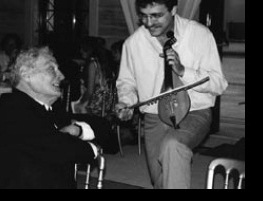
Sir Patrick sings mantinades with Cretan musician

In 2004, Paddy was honoured for his life and work and links with Greece by the American School of Classical Studies at Athens. A report of the evening appeared in the summer 2004 edition of the Gennadius newsletter.

War hero and renowned writer Sir Patrick Leigh Fermor was honored in June at the Gennadeion Trustees’ Second Annual Awards Dinner. Knighted this past February, Sir Patrick published his latest book, Words of Mercury, earlier in the winter. Regarded by many as one of the finest writers of the twentieth century, in Greece Sir Patrick is famed as the war hero who parachuted into Nazi-occupied Crete in World War II, capturing its German commander. After the war, Sir Patrick eventually settled in Greece near Kardamyli, where he has lived ever since. His love for Greece has infused much of his writing.

The evening began with cocktails in the new lobby of Cotsen Hall, followed by tributes presented in Cotsen Hall itself in an unofficial baptism of the new facility. Among the speakers were former Prime Minister of Greece Tzannis Tzannetakis, Alan L. Boegehold, Dimitris Daskalopoulos, Haris Kalligas, and, in response, Sir Patrick himself. The award was presented by Edmund Keely, the 2003 winner. After the tributes, guests sat down to dinner in the terrace in front of Cotsen Hall, transfigured by tents, lights, and flowers. Halfway through the evening, a pair of Cretan musicians serenaded Sir Patrick and guests with mantinades.

Among the 150 guests were former Prime Minister George Rallis and Mrs. Rallis; Lady Madden, wife of the British Ambassador to Greece; Mrs. Kelly Bourdara, Vice-Mayor of Athens; Mr. and Mrs. George David; Mr. and Mrs. Nicholas Egon; Mr. Sture Linnear; Mrs. Theodoti-Artemis Mandilas; Mr. and Mrs. Dimitri Marinopoulos, Mr. Panagis Vourloumis, and both the Mayor and the former Mayor of Kalamata, where Sir Patrick is an honorary citizen.

Co-organizers for the evening were Mrs. Margaret Samourkas and Mrs. Lana Mandilas. Thanks to underwriting from The Samourkas Foundation, the evening raised $29,000 for the Library’s gardens.

A copy of the newsletter with more pictures can be found on the American School of Classical Studies at Athens website, or downloaded from the blog archive here.

Related article:

Artemis Cooper “Patrick Leigh Fermor in Greece.” – webcast online at the Gennadius May 2012

Flying to the moon

Inside the Hotel New York (Continental), Cluj

As many of you will know by now, I travel to Romania pretty frequently and I am fortunate enough to stay and work in the beautiful city of Cluj which Paddy says he visited during his road trip tryst with Angéla in the summer of 1934.

Paddy’s descriptions in Between the Woods and the Water are very accurate and detailed, and the one of the Hotel New York was the most impressive which I highlighted in this article last year with accompanying photographs.

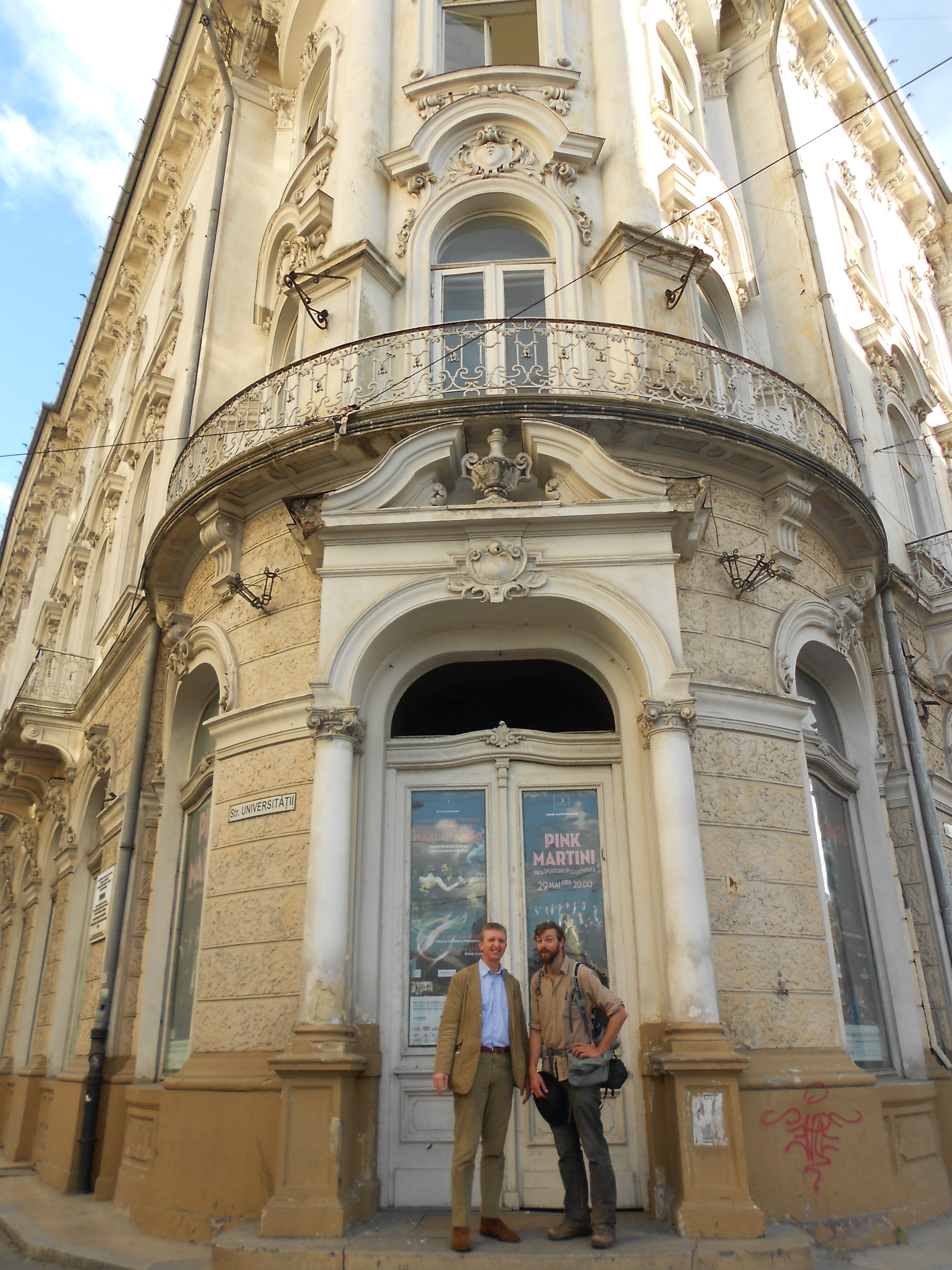
Nick and Tom outside the Hotel New York (Continental), Cluj

During Nick Hunt’s recent walk across Europe we were able to meet up outside of the hotel and I was desperate for us to drink a cocktail there just like Paddy, Istvan and Angéla. The fact that the hotel is closed should not have been a barrier to this; all I had to do was find the recipe and a willing local barman and all would be OK. Unfortunately following an ‘occupy’ protest security at the hotel was heavy and we were firmly told we could not enter. It must have been Nick’s road weary look and dusty attire which was the blocker!

I had done some research, and whilst I could not find the recipe of the Cluj cocktail which was described by Paddy thus in Between the Woods and the Water …

An hotel at the end of the main square, called the New York – a great meeting place in the winter season – drew my companions like a magnet. István said the barman had invented an amazing cocktail – only surpassed by the one called ‘Flying’ in the Vier Jahreszeiten bar in Munich – which would be criminal to miss

… I contacted the Bar Manager of the Hotel Vier Jahreszeiten Kempinski in München to find out the recipe for Flying. Florian Fischer kindly replied as follows, so maybe this autumn, to celebrate the publication of the biography, you may order one or even make it at home.

Dear Mr. Sawford,

thank you very much for your request. These are the things which are creating culture!

I am really interested in cocktails of this period. I was thinking about the recipe and I am quite sure, that it must be the following :

Flying Cocktail

2 parts of Gin
1 part of curacao Triple sec ( Cointreau preferred )
1 part of freshly squezzed lemon juice

fill up with champagne
served in a champagne flute

Actually it is the famous “White Lady” with champagne and this drink was really popular in these times.

Greetings from Munich and enjoy your “Flying Cocktail”

Cheers

Florian Fischer

Barmanager

Hotel Vier Jahreszeiten Kempinski München

Maximilianstr. 17 · 80539 München · Germany Tel +49 89 2125 2217· Fax +49 89 2125 2222 florian.fischer@kempinski.com

Related article:

An eye for detail and the memory of the Hotel New York in Cluj

On the trail of Patrick Leigh Fermor in Greece

This is a little bit toe-curling but as I always say we place all things Paddy related here …  for the record!

Ahead of a new Patrick Leigh Fermor biography, Kevin Rushby visits the Mani peninsula, home of the great man and unsung resting place of another British travel writing giant, Bruce Chatwin.

By Kevin Rushby

First published in the Guardian 28 September 2012.

Kardamyli, on Greece’s Mani peninsula, was home to Sir Patrick Leigh Fermor.

Old Mr Fotis turned my question over in his mind while sipping his morning coffee. Below the veranda some youths had been playing noisily on the harbour wall, but now they all dived into the turquoise sea and set off on the long swim to the rocky island in the bay. It had a fragment of crenellated wall on top of it, the ruins of a Venetian fortress. Fotis watched them go, half-smiling.

“We do seem to attract a lot of writers,” said the old man eventually. “But that’s a name I don’t remember.”

“Bruce Chatwin, Baroose Chit-win, Chaatwing.” I tried a few variations but none struck a chord. “His ashes are scattered somewhere in the hills.”

“No, I never heard of him.”

“What about Sir Patrick Leigh Fermor? You must know about him.”

I’d first heard of Kardamyli because of Leigh Fermor, who had made the place his home. I’d always hoped we might meet, but then the grand old man of British travel writing had died in June 2011 (leaving the literary world praying that he had finished the final volume of his Time of Gifts trilogy). I’d come to the Mani on a sort of literary homage, hoping to find a little of the magic that had attracted first Leigh Fermor and later Chatwin.

The old man shook his head. “No, I don’t think so. There was a writer called Robert. Now he was famous – cured himself of cancer by walking around Crete. [Former South Africa cricketer Bob Crisp wrote of his walk around Crete in the 1970s.] He was very famous.”

This felt all wrong. Was I in the right place? How annoying that the locals should raise this unknown above the two giants of travel literature.

Fotis leaned back and shouted in Greek to his wife in the kitchen. She came through, cloth in hand. “Robert Crisp,” she said, smiling. “What a wonderful man! So handsome! I remember him sitting up at Dioskouri’s taverna drinking and talking with Paddy. They were always laughing.”

My ears pricked up. Fotis’s face underwent a transformation. “Ah Paddy! That is him – your English writer. Of course, Paddy – or Michali we called him. Yes, Paddy was here for years and years. When I was young we used to say he was a British spy and had a tunnel going out to sea where submarines would come.”

It didn’t surprise me. Leigh Fermor had been, by all accounts, extremely old school, endlessly curious and an accomplished linguist – all well-known attributes of British spies. He produced a clutch of good books and two classics of the genre, A Time of Gifts and Between the Woods and the Water, detailing his journey as an 18-year-old on foot to Constantinople.

“Did you see a lot of him?” I asked.

Fotis shrugged. “Sometimes. He liked to walk a lot. Now Robert Crisp – I used to see him. What a character!”

“Is Paddy’s house still empty?” I persisted. “I heard it was now a museum.”

Fotis shook his head. “No, no. He left it to the Benaki Museum in Athens (benaki.gr) and they’re supposed to turn it into a writers’ centre. My guess is nothing will happen for a while.”

I could hardly complain about Greek tardiness: Leigh Fermor himself had taken 78 years over his trilogy, and even then no one seemed very sure if he had completed the task. There was, I decided, only one way to get close to the spirit of these colossi of travel-writing: to walk.

“Which paths did Paddy like best?”

Fotis fetched a map and gave me directions. It was already hot when I left him on his veranda. I could see the youths lazing on the harbour wall again, tired by their long swim. Was this really the time of year for walking?

I headed through the ruined village, as instructed, and found a narrow steep path rising up the hillside. Before too long I came across the stone tomb that locals say is the grave of Castor and Pollux, heavenly twins and brothers to Helen of Troy. Kardamyli is mentioned in Homer’s Iliad as one of the seven towns that Agamemnon gave to Achilles.

Sweat was pouring off me now, but I kept going. Scents of thyme and sage rose from the undergrowth. Fotis had said there were lots of snakes up here, but I didn’t see any. The views of the bay below, however, were becoming more and more magnificent.

The Mani is the middle finger of the three-pronged southern Peloponnese, a 40-mile long skeletal digit that was almost inaccessible, except by sea, until recently. When Leigh Fermor first came here in 1951, it was by a marathon mountain hike across the Taygetus range, whose slopes seem always to be either burned dry by summer sun, or weighted with winter snow.

Tower in the Taygetus mountains. Photograph: Kevin Rushby

The people here were different. For a start they had turned vengeance into a lifelong passion, building war towers to threaten their neighbours and generally making life on a stony mountain even grimmer than it needed to be and clinging to weird atavistic beliefs. No wonder that in the 1950s most of the younger people abandoned it for places not as badly infested with saltwater ghouls and blood-sucking phantoms – Melbourne and Tottenham were particularly popular.

Fotis himself had been one of them, settling in Australia for many years before coming home and opening a hotel. Nowadays some parts of the Mani are thick with holiday homes and development, but Kardamyli remains delightfully quiet and understated, the sort of Greek village where old widows in black sit out every morning watching the world go by.

Having reached a good height on the mountain I started to follow the contours, dipping in and out of the shade of walnut trees and cypress, drinking clear cold water from a spring. Further on I came to the village of Proastio, where Fotis had told me there was a church for every family, the ancestors having been sailors, and very superstitious. At the gorgeous little basilica of Agios Nikolaos in the main street I got the priest to come and unlock the door, revealing a gallery of perfect 17th-century Byzantine murals.

Byzantine murals in Proastio church. Photograph: Kevin Rushby

I tried the name Chatwin on him, and wondered how to mime death, cremation and scattering of ashes. But the Orthodox Church does not approve of cremation and his face told me I would not get far.

Returning to Kardamyli by a steep cobbled donkey trail, a kalderimi, I passed Fotis’s veranda once again.

“Who was that writer?” he called. “My wife thinks she knows.”

Anna came out. “Paddy himself scattered the ashes of a writer friend of his, up in Exochori.”

That was where I had just been walking, only higher. Next morning I started much earlier and with a water bottle. Fotis was already up and about when I passed his house.

“Exochori is my home village,” he said. “But what you see now is just old people up there. The old Maniati culture is gone. We used to grow silkworms and our mothers made all our underclothes from it. Can you believe it? We were peasants in the most remote part of Europe, but we wore silk.”

He tried to give me directions to the church, but it got so confusing that I just pretended to understand and resolved to ask along the way. As it happened, this was a useless strategy since the few old people I bumped into spoke no English, and my phrasebook was inexplicably silent on the important line, “Where are scattered the remains of the travel writer?”

In the end I came across a small white-washed shrine with a view of the sea. There was just room to enter, and inside a votive candle burned on a tray with some fresh flowers. A white dog appeared. I elected to call it the Chatwin Church. After a few minutes of contemplation I set off again, southwards past one of the war towers, a gorgeous forest monastery and finally the unspoilt hamlet of Castania, where the taverna owner marched me into the kitchen, pointed out the various dishes and then served a vast quantity of delicious food with a jug of rough wine. It took several strong coffees to get me moving again for the long tramp home.

Back in Kardamyli late that afternoon, Fotis was keen to hear of my walk, but he scoffed at my description of the Chatwin Church. “No, no! That is not it. Come on – I’ll take you there.”

“I’m a bit tired.”

“Good God, we’re not walking! In my car.”

Soon we were on a longer, twisting route. Fotis pointed out landmarks and patches of land that his family owned. I asked about his ancestors.

“The Mani was always where people came to hide,” he said. “Our family are said to have arrived when Byzantium fell to the Ottomans in 1453.”

“They came from Constantinople?”

He nodded. “Our family tradition is that we were clowns for the Byzantine emperor.” He smiled. “But I’ve no idea if that is true.”

He slowed the car down. “Look. This is where you turn off the main road, between the school and the cemetery.”

We pulled up in the shade of two pine trees then set off walking. We picked our way through some old stone houses, their walls overgrown with vines, their shutters closed.

“Holiday homes now,” said Fotis. “Exochori people working in Athens.”

Sunset above Kardamyli. Photograph: Kevin Rushby

Then we were on a grassy rill of land and I could see the church, a tiny Byzantine basilica, its rough stone walls and ancient pantiles crusted with lichens. Laid out before it was a wonderful tranquil panorama of the sea, its surface smooth as a sheet of silk. It was obvious why a traveller would want to come to rest here, overlooking the sea Homer’s heroes had sailed.

I stood there for a long time. Fotis was searching for the key to the church, normally left in a crack or niche, but there was no sign of it and we gave up. Back in the car, I asked Fotis to point out the house of Paddy Leigh Fermor and glimpsed a low pantiled roof almost submerged in trees on a crag next to the sea.

“Is there no way to see it?”

He shrugged. “It’s all shut up.”

“Is there a beach?”

“Yes – a tiny one.”

I memorised the spot. When Leigh Fermor came to the Mani he did some impressive wild swimming. To honour his adventurous spirit I felt I should swim around to his house and take a look. So next morning, before the heat of day, I entered the sea by the harbour and swam south down the rocky coast hunting for that tiny beach. I swam for what seemed a long time and had given up and turned back when I saw it: a little shingly beach with a single-storey house above. I swam closer until I could stand in the water.

It was a lovely place: deep verandas and stone walls under a pantile roof. Mosaics of pebbles had been made on a flight of steps. I called out but got no answer. The house was shuttered and quiet as though still in mourning. I waded up the beach and sat at the foot of the pebble path. I could see a colonnade with rooms off it, then a larger living room.

I thought of the years that Leigh Fermor had spent here: by all accounts he was a great host and storyteller. When I’d asked one old lady in the village if she had read any of his books, she’d laughed, “Why would any of us read his books? He told us all the stories himself!”

The last story had been that third volume of his epic walk across Europe, but he had never finished it, perhaps never would have. And now a great peace had descended on the place, a peace I didn’t want to disturb. I walked back down to the water and swam out into the bay. Without thinking, I found myself heading for the island of Meropi, the one that those youths had swum to. I would explore the ruins of that Venetian castle.

Order Paddy’s biographyPatrick Leigh Fermor:An Adventure by Artemis Cooper here.

Related article:

Chatwin and Paddy: In the Footsteps of Bruce Chatwin

Patrick Leigh Fermor: extract from the new biography

Patrick Leigh Fermor with Billy Moss in Crete, April 1944, wearing German uniforms Photo: Estate of William Stanley Moss, by permission

The Telegraph ran an extract from the biography over the weekend. It was the Kreipe kidnap again!

In an extract from her life of the travel writer and war hero Patrick Leigh Fermor, Artemis Cooper chronicles a daring kidnap in wartime Crete.

First published in the Daily Telegraph 29 September 2102.

After months of training in clandestine warfare in Palestine, Paddy Leigh Fermor joined the handful of SOE officers in occupied Crete who were working with the Cretan resistance in June 1942. His big chance came in the autumn of the following year when he formulated a plan to kidnap a German general: not just any general but the hated Gen Friedrich-Wilhelm Müller, responsible for the butchery of the Viannos villages in September 1943. Supposing Müller were kidnapped and whisked off the island? At a time when Greece was beginning to feel like a backwater as the war pushed up through Italy, an operation of this kind would generate a lot of noise and publicity: it would make the Germans look remarkably foolish, and give a terrific boost to Cretan morale.

Despite questions being asked about the mission because of the risks it posed to Cretan lives, the plan went ahead on January 6 1944. A car came to pick up Paddy and his number two, Billy Moss, a young Coldstreamer who had had a spell guarding Rudolf Hess, in the early hours of the morning, and drove them to Heliopolis where they met the rest of the party.

They flew to an airstrip east of Benghazi, where they spent two miserable weeks in sodden tents waiting for the weather to clear. Since it refused to oblige, they were flown to Bari, hoping for better flying conditions there. On February 4 they took off from Brindisi for Crete, aiming for the Omalo plateau, a tiny, shallow bowl in the jagged, snow-covered peaks in the mountains south of Neapolis. For the pilot, the zone was so restricted that the team could not be dropped in a “stick” formation – he would have to circle and come in again four times, dropping each man off individually.

Snow and loose cloud swirled around the open bomb-bay, and far below they could see the dropping zone marked by three pinpricks of light formed by three signal fires. Paddy was the first to jump. Welcoming Cretan hands hauled him to his feet, and then all eyes turned again to the snow-streaked sky. Paddy gave the all-clear with a torch to signal his safe arrival, but the clouds were thickening and the pilot could no longer see the signal fires: he was forced to turn back.

The bad weather continued. Paddy spent the next seven weeks in a cave with Sandy Rendel, the SOE officer in charge of the Lasithi area. But in late March came news that threw the whole mission into question. The intended victim, Gen Müller, had been posted to Chania as commander of Fortress Crete. SOE Cairo was informed, but decided to go ahead with the operation anyway. After all, the aim was to boost Cretan morale and damage German confidence; from this standpoint, one general was as good as another. Continue reading

Subscribing to the Patrick Leigh Fermor blog is free!

Don’t miss out on any of the blog posts about Paddy, his life and friends, the biography or of course the long awaited ‘Vol 3’ which will be published in 2013 and will be called The Broken Road.

All you have to do is press the ‘Sign me up!’ button in the top right corner, and join over 600 others subscribers. You will then receive an email notification for every new article. No spam just Paddy stuff.


A celebration of Patrick Leigh Fermor by Colin Thubron and Artemis Cooper

There are many events planned to celebrate the publication of Patrick Leigh Fermor: An Adventure by Artemis Cooper, but perhaps the one I am most looking forward to is this one held on 24 October 2012.

Artemis Cooper talks to Colin Thubron about their mutual friend at the Royal Geographic Society. This is a joint event with the Royal Society of Literature. There are membership discounts and RLS members should book through the Royal Society of Literature at http://www.rslit.org

Booking details for the Royal Geographic Society can be found here.

The event is sponsored by Art Tours Ltd who specialise in bespoke cultural travel for private clients. They also organise trips for museum patron groups, academic bodies and specialist clubs and societies. Art Tours’ aim is to bring painting, sculpture and architecture to life, using experts of the highest quality, while ensuring that their clients experience seamless luxury travel. The focus is on visits to private collections and behind the scenes access to public museums and historic sites. Visit the Art Tours website here http://www.arttoursltd.com/

Don’t forget you can purchase your copy of Patrick Leigh Fermor: An Adventure by Artemis Cooper here.

Related article:

Media coverage and updated events for Patrick Leigh Fermor: An Adventure by Artemis Cooper

Everyone fell in love with Paddy Leigh Fermor


Attracted to the man: ‘It wasn’t a sex thing,’ says the biographer Artemis Cooper, ‘Patrick Leigh Fermor was so curious, kind and funny’ Photo: Martin Pope

Like all those who met Patrick Leigh Fermor, his biographer Artemis Cooper found the travel writer and war hero utterly beguiling.

By Allison Pearson

First published in the Daily Telegraph 28 Sep 2012

It’s not usual to fall in love with an 83-year-old man when you are 37, but then Patrick Leigh Fermor was not your usual 83-year-old. It was 1998, and I had been sent to interview Leigh Fermor, the legendary travel writer and war hero. He was returning to Crete, where he had helped the resistance. Not much caring for either travel writing or wars, I was bemused by the assignment. I pictured myself having to look after some dear old boy and trying to get a few dusty stories out of him. Little did I know.

Two days later, I had drunk more in 48 hours than in the previous 20 years, and I think I spent large chunks of our delightful if inconclusive interview asleep in a bar under the Leigh Fermor jacket. I then found myself stumbling up a Cretan hillside with the “dear old boy” ahead, leaping from rock to rock, all the while telling me stories about Greek mythology, Dylan Thomas and Lady Diana Cooper. Did I know her? No. “Absolutely charming. And look at this flower over here, there’s this fascinating thing about its name. Have you ever been to Constantinople?” No, I… “You must be terribly hungry.” Yes, I… “Well, in the war we used to eat grass and snails, and the astonishing thing is…”

Occasionally, my handsome guide would break into song or poetry. By the time we reached a village, and tucked into a meal of melting lamb straight from a spit, I was exhausted but besotted. There was no prospect of getting that evasive, erudite faun to answer my questions, but I didn’t care. I have rarely felt happier. I had been Paddied.

“In Paddy’s company everyone felt livelier, funnier and more entertaining, and the gift never deserted him,” writes Artemis Cooper in her splendid new biography, Patrick Leigh Fermor: An Adventure. The book is a primer for those poor souls yet to encounter his work and a valuable, decoding manual for the multitude who believe that Leigh Fermor’s trilogy about his youthful walk from the Hook of Holland to Istanbul – A Time of Gifts, Between the Woods and the Water and the long-awaited third volume, The Broken Road (to be published next year) – marks one of the high points of 20th-century English prose.

Artemis Cooper laughs when I tell her my Paddy-crush story (he was always Paddy, never Patrick). Cooper was 17 when she developed a crush on him herself (he was a friend of her father, John Julius Norwich). Paddy was in his fifties. “I thought he was amazing. He had what the Greeks call leventeia – the jokes, the physical courage, the sheer joy of life. What he did to you, he could do that to anyone, both men and women,” she says. “It wasn’t a sex thing. It was the fact he was so curious about everyone, so kind and funny. And devastatingly attractive.”

If it were possible to be libidinous towards the whole world, then Paddy Leigh Fermor was. It wasn’t just a sex thing – though there were lovers aplenty, as Cooper was unsurprised to discover during her research. It was also a lust for experience that began when he was boarded as a baby with a Northamptonshire farmer’s family (his parents were in India). For four years, little Paddy ran wild in the fields, a state of “complete and unalloyed bliss” that ended when his mother (“a beautiful stranger”) returned to England and he was sent to a series of schools, from which he was soon expelled.

Cooper believes that Paddy spent the rest of his life pursuing the freedom and joy of his infancy. Her first chapter is called Neverland, and there was a touch of Peter Pan about her subject. Paddy and his wife, the photographer Joan Rayner, never had children. Cooper points out that Joan, like several women he was drawn to, was older, “a Wendy figure” who organised – and subsidised – his life so the boy wonder could go on flying. The most shocking story in the book comes when Joan, after dinner in Cyprus one night, hands Paddy some cash saying, “Here you are, that should be enough if you want to find a girl.” But more of that later.

I am talking to Artemis Cooper, who is married to the historian Antony Beevor, at the kitchen table of their house in Fulham. Looking much younger than her 59 years, Cooper is a descendant of the famous beauty and Leigh Fermor friend, Diana Cooper. She has her granny’s bluebell eyes as well as a dreamy look that belies a biographer’s forensic intelligence. Was it daunting, trying to tell the life story of a man who had told that story so brilliantly himself?

“It was sooo daunting,” she sighs. “Paddy had this enormous reserve, which he covered with a torrent of dazzling talk. And you think, ‘How am I going to get the other side of the waterfall, into the cave behind?’ ”

Cooper enjoyed many face-to-face interviews with him before his death, at the age of 96, in June last year. But such meetings could be infuriatingly unproductive. Leigh Fermor came from a generation that viewed talking about oneself with the deepest suspicion. Paddy never dwindled into anecdotage – he was still lapping up fresh stories in his eighties – but Cooper says he was happiest refining formal set-pieces rather than delving into more personal stuff. “There are certain things he loves talking about,” she smiles, “like that story about kidnapping the German general on Crete, but then I ask about his feelings and he completely clams up.”

She still speaks of Paddy in the present tense, and I understand why. It’s hard to accept all that springer-spaniel energy and the fabulous library of a mind are gone, and not writing at home in Kardamyli, the house that the Leigh Fermors built in Greece after decades of nomadic travels.

The incredible Paddy story about kidnapping a German general has the unlikely virtue of being true (see the Telegraph’s Review section tomorrow). It was immortalised in the film Ill Met By Moonlight. Paddy was played by Dirk Bogarde, though, for my drachma, the original was even more dashing, looking like Errol Flynn – who was, Cooper’s biography reveals, an old mucker of Paddy’s. Of course he was. Who wasn’t?

It was another heroic tale – swimming the Hellespont, love affair with a princess – to add to the Paddy mythology. Readers of A Time of Gifts have often wondered how the author, who was in his sixties when he sat down to write it, could possibly remember in such detail a journey he had made when he was barely 18. Artemis nods: “I said to Paddy, ‘Look, there seems to be this discrepancy here between two versions of how you got across the great Hungarian plain. In one version, you’re riding and in the other there’s no horse at all.’” She says Paddy admitted to “having smudged the facts a little. I did ride a fair amount, so I decided to put myself on horseback for a bit. I felt the reader might be getting bored of me just plodding along. You won’t let on, will you?”

She rolls her eyes. “Oh, no, I won’t LET ON. I’m only your biographer, for heavens sake!”

In the book, Cooper charitably calls this “just one instance of the interplay of Paddy’s memory and his imagination”, although playing fast and loose with the facts would be another interpretation. No matter. A Time of Gifts becomes more, not less, of a tale as you start to wonder how tall it is.

Knowing Paddy as a friend was sometimes a constraint on her probing. “I didn’t want to upset him. He would never talk about the women in his life.” Eventually, she deduced that whenever he said of a woman, “we were terrific pals”, he had been to bed with her.

The book reveals love affairs with Ricki Huston (ex-wife of John, the director) and Lyndall Passerini Hopkinson (daughter of Antonia White). “They aren’t necessarily the most interesting of his love affairs, there were loads of others; they just happened to be the two I had letters for on both sides.” She smiles. “Considering Paddy’s success with the ladies, it’s amazing that no children came out of the woodwork!”

Indeed, the Leigh Fermors had an open relationship. Joan announced she wasn’t going to have sex with Paddy any more but “she didn’t expect him to remain celibate”. That was many years into their loving relationship, but still a fair while before they actually married in 1968.

Cooper worries about what Paddy would have thought of the book. “I think he’d be horrified by certain bits. Horrified that I’ve broken faith with him and divulged secrets.”

I don’t agree. In the final weeks of his life, Artemis Cooper read A Time of Gifts to Paddy. The body may have been failing, but that great writing brain was still refining, still asking for a “but” to be changed to a “yet”. When he died, she raced to his side. “I had half an hour with him before the undertaker arrived. I found a copy of A Time of Gifts and I put it in his hands.” She is crying now. We are both crying.

On the front of Patrick Leigh Fermor: An Adventure is the photograph of the most glorious, sensitive, scholarly and dashing man it’s possible to imagine. Sometimes you can judge a book by its cover.

‘Patrick Leigh Fermor: An Adventure’ by Artemis Cooper is available to purchase here.

Related article:

Media coverage and updated events for Patrick Leigh Fermor: An Adventure by Artemis Cooper

Media coverage and updated events for Patrick Leigh Fermor: An Adventure by Artemis Cooper

Patrick Leigh Fermor: An Adventure b yArtemis Cooper

For those who want to catch an early glimpse of Paddy’s biography you will need to get down to the newsagent or on-line this weekend as the carnival is beginning.

Publicity kicks off this week. There will be an interview with Artemis in the Daily Telegraph tomorrow 28 September, and an extract in the Daily Telegraph Weekend section on Saturday 29 September. On the same day there will be a PLF feature in the Guardian travel pages (will that actually be a LPF feature?), with heaps more to come including a big Financial Times Magazine feature, Guardian Review feature, BBC Radio 4 Open Book interview, and a full programme of events between now and December, which you can download here. This is updated but you will need to check all details. I cannot be held responsible for errors or omissions.

Best of all Patrick Leigh Fermor: An Adventure will also be the BBC Radio 4 Book of the Week from 19th November onwards.

You can buy the book here.

Don’t forget to visit Artemis Cooper’s Facebook page for further information.

Defense de Craxtonner

A delightful drawing by Paddy of John Craxton who was the illustrator of all of Paddy’s books from A Time to Keep Silence onwards. It was sent to me by Artemis Cooper who says ‘It’s a very good likeness of JC’.

Paddy’s writing is rather faint but he has written:

‘Johnny is always painting goats browsing on olive branches, which lays the country bare…’

Defense de Craxtonner by Patrick Leigh Fermor

Related articles:

Remembering John Craxton – an influential art giant and a lover of life

A sign from the gods

Paddy’s Illustrator – John Craxton Telegraph Obituary

Remembering Lord Jellicoe by Patrick Leigh Fermor

In February 2007, following the death of his friend, Paddy wrote about George Jellicoe in the Spectator magazine.

George Jellicoe, who died last week, was an early member of David Stirling’s SAS, and soon became commander of the Special Boat Service. We first met in pitch darkness soon after midnight on 24 June 1942 in a cove off southern Crete, both of us in rubber boats, one of them taking off Jellicoe and his comrades — most of them French — back to Mersa Matruh, the other landing me on the island for a SOE mission. We exchanged shadowy greetings. On landing, I soon learnt from the Cretans of the success of their long, strung-out series of raids, and the number of enemy aircraft and the stockpiles of ammunition and fuel they had destroyed.

When George and I met by daylight a year and a half later in Cairo, I was struck immediately by the tonic effect of his presence, his initiative and his inflexible determination, and his knack of command. Also, his humour and buoyant spirits. We became great friends. He had a gift for getting on with his own soldiers and sailors and, most importantly, with our Greek allies. Among many operations, he worked several times with General Christodoulos Tsigantis — the ‘General Gigantes’ of Lawrence Durrell’s Alexandria Quartet — the dashing, original and very effective commander of the Sacred Brigade, mostly enlisted from guerrillas who had escaped from occupied Greece and which he led brilliantly from Cairo to Rimini. Many years later, Tsigantis told a friend that George was the bravest man he had ever met.

When the tail end of the German army was retreating from north Athens, George — well in advance of the advance mission — was already pedalling into the city centre on a borrowed bicycle. As we know, the same energy and flair carried him through his successful spell as a diplomat, and to great heights in postwar politics.

Tidcombe Manor, in the Wiltshire downs, was a delightful retreat from his manifold duties, which were here replaced by swimming, riding, reading and music, and the company of friends, in which he was wonderfully abetted by his wife Philippa. George meanwhile had painlessly developed from a young centurion to an active senator and then to a retired paladin, and evenings there were marked by lively talk and much laughter, a spirited combination of punctilio and bohemia.

George often returned to Greece, where his name is revered. Below the window of the house in the southern Peloponnese, where these lines are being hastily written, a favourite promontory juts into the sea, affectionately known as ‘Jellicoe’s leap’.

You can read more about Lord Jellicoe on the Royal Society website.

Ada Kaleh: the lost island of the Danube

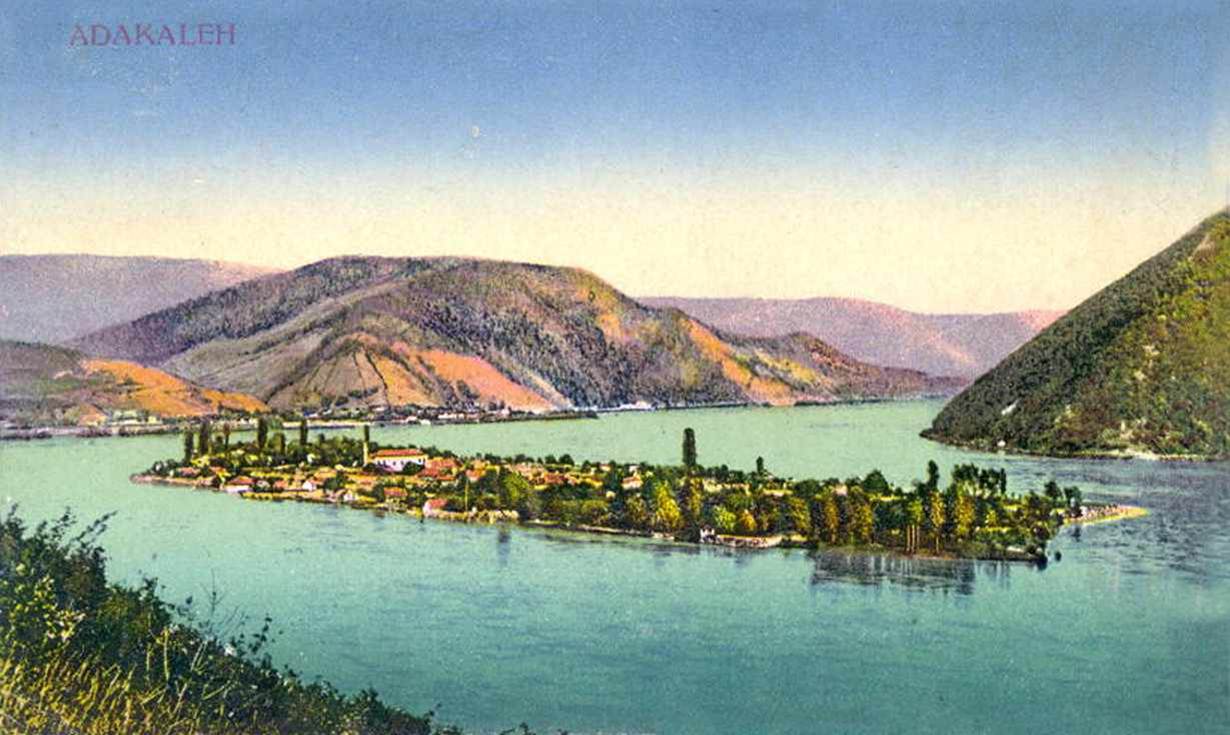
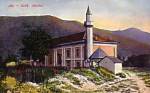
Ada Kaleh island postcard

Towards the end of Between the Woods and the Water, Paddy is exploring the Danube which he described as wild, with ‘many scourges to contend with’ including the Kossovar winds which in the spring could ‘reach a speed of fifty or sixty miles an hour and turn the river into a convulsed inferno.’ A long, long, way from the tamed beast that the once great river is now.

In the midst of this occasional inferno lay an island with a Turkish name, Ada Kaleh, which means ‘island fortress’. Paddy tell us that he had read all that he could find about the island, and was very keen to explore this lagoon of Turkish descendants which was quite probably abandoned by the retreating Ottomans as their empire shrank. Although placed under control of the Austro-Hungarian Empire following the Berlin Conference in 1878, very little changed and it was ceded to Romania at Versailles. The Romanians too had better things to do with their time and left the inhabitants undisturbed.

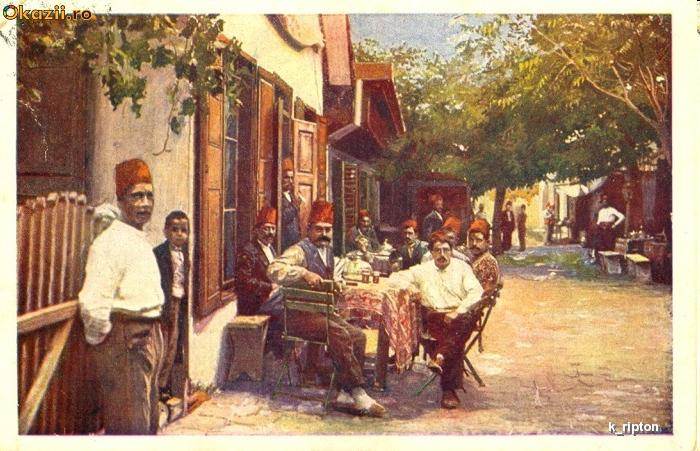
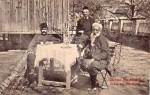
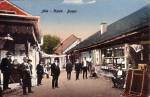
It was into this cultural, religious, and demographic time capsule that Paddy stepped in August 1934 and immediately joined a group of men at a rustic coffee-shop, who were armed with ‘sickles and adzes and pruning knives’. Paddy describes the moment as if he had suddenly been ‘seated on a magic carpet.’

Ada Kaleh – “as if seated on a magic carpet”

Paddy spent a night on the island, and slept out by the Danube, under the stars, watching meteors, and listening to the sounds of owls and barking dogs, interrupted by the occasional sound of a cart wheel or the splash of a fish in the now calm and lazy river. He dreamt of crusaders under King Sigismund of Hungary attempting to turn back the Turkish tide in 1396. They crossed the river almost at this point, and what excited Paddy most was the thought that ‘the last pikeman or sutler had probably reached the southern bank this very evening, five hundred and thirty-eight years ago.’ Sigismund’s allied army of Hungarians, Wallachians, French, Germans and Burgundians, with a few Englishman, was shattered by Sultan Bayazid at the battle of Nicopolis further down the Danube, with the captured dying in ‘a shambles of beheading lasting from dawn to Vespers’.

Like the storks he saw the next day, who were preparing to fly off to “Afrik! Afrik!”, as an old Turkish man gestured, Paddy departed after breakfast to Orsova. Ever one for losing things he discovered that he had left behind an antler which he had been carrying as a trophy. Paddy writes that ‘perhaps some future palaeontologist might think that the island had once teemed with deer’.  This cannot be as the river was dammed and Ada Kaleh submerged by the rising Danube. Its population was evacuated and its mosque removed to a new, safe location. Such mitigation measures did not satisfy Paddy as he states in the Appendix to BTWW. The second of the two attached presentations is also a heartfelt, but belated cry of protest in Romanian.
Please take a look at these presentations. If you have PowerPoint you will find there is appropriate musical accompaniment (slide show one has a song called Ada Kaleh). The images show the place and its people almost exactly as Paddy would have seen it, something that we can truly say will be seen no more. The pdf copy is for those who do not have access to PowerPoint. I do hope that you enjoy them.

Tom

PowerPoint 1

PDF of PowerPoint 1

PowerPoint 2

PDF of PowerPoint 2

There are lots more great pictures to be found on Google images.

Dying to tell her final story

Jan Morris

Jan Morris Photo: Mike Segar

This article by Toby Clements appeared in the Sunday Telegraph on 16 September 2012. Jan Morris who was both a friend and admirer of Paddy talks about her last book which will only be published after her death.

Authors usually see literary festivals as a chance to sell a few copies of their books, but Jan Morris, now 86, is at Scotland’s Wigtown Book Festival, sponsored by the Telegraph, to discuss an unusual project: her book which will be published posthumously, provisionally titled Allegorisings, though she is not sure if the word exists.

“I decided not to write another proper book after Trieste and the Meaning of Nowhere [her superb 2001 evocation of the Adriatic city] because it was the book in which I think I found my true voice, and I don’t think I’ll ever write a better one.”

But what is Allegorisings going to be about? Can we anticipate any dark revelations?

“No amazing revelations. It is a little book, about everything from childhood to whistling to the exclamation mark. It stems from a conviction that’s been growing in me for quite a while, that nothing is what it seems, and that everything has one or multiple meanings.”

If it didn’t first require the author’s death, it would sound like a treat, and it will take the number of Morris’s books up to 40, almost half of which are travel-related. She is adamant they are not to be called travel books, since they do not tell a reader where to go and what to see, but are rather “travel literature”, since they describe not a city – be it Venice, New York or Oxford – but her reaction to that city, or in the case of her first book, Coast to Coast, published in 1956, a whole country, the United States. She has also written a book about Wales.

But by the mid-Fifties, long before Morris underwent sex reassignment surgery in 1972, she was famous as James Morris, who brought news from Nepal that Edmund Hillary and Tenzing Norgay had climbed Mount Everest. Morris’s adventures on the mountain, including the coded message sent from an Indian army base and the perilous descent of the mountain, are brilliantly described in Coronation Everest (so called because the news reached London on the day before Queen Elizabeth’s coronation in 1953).

By a quirk of fate, Morris’s trip to Wigtown next month will take her through the Lake District, and her return journey to North Wales, where she has lived for 60 years, coincides with the memorial service for Michael Westmacott, the mountaineer who was with Morris on that hair-raising descent in 1953, who died in June. There are only two of the original party left: Morris and the New Zealander George Lowe.

This newsgathering brilliance meant Morris was considered likely to become influential and he was awarded a Commonwealth Fellowship scholarship, which allowed him to study International Relations at Chicago for a year. He did not enjoy the course and took the car (which came with the scholarship) and drove around America, “falling in love with it”. His first book came from this, but what changed his life, and made him the writer she has since become, was Venice, published in 1960. It followed his second visit to the city, which he first saw in 1945, when he was sent by his commanding officer to help run the requisitioned motorboats in Venice.

“The city was half-empty and had a curious melancholy that I found immensely attractive. It is what keeps me coming back to certain places, like Trieste, places on the end of one thing and the beginning of another.”

This interest in melancholy and decline led Morris to start a history of the decline of the British Empire, which grew into the Pax Britannia trilogy, research for which took her all over the world – to India, for example, where she found beauty in the crumbling bungalows of long lost imperial administrators.

It was while Morris was writing these three – in the late Sixties and the Seventies – that James became Jan, and the confusions and contradictions are vividly described in Conundrum (1974) and, later, Pleasures of a Tangled Life (1989) in which she describes the legal and emotional complications that arose from her sex change, including the necessary divorce of her wife. Morris bats aside any further questions on it.

“I don’t want to talk about that,” she says. Yet it remains a fascinating situation: Morris and her ex-wife, Elizabeth, had five children together and stayed with one another after the sex change and divorce and have entered into a civil partnership. Today they live together in North Wales, where Morris has become an advocate of Welsh independence.

She has since said that the best way to get to know a place is, borrowing from Psalms, to “grin like a dog and run about the city”, and I wonder if she has applied the same technique to her own life. There has been a delightful randomness, with one thing leading to another. Perhaps it is the open-eyed manner in which Morris approaches her life that allows these chances to blossom into something more meaningful.

* Jan Morris will appear at the Wigtown Book Festival on October 3 2012 at 6pm

An obituary to Paddy in German

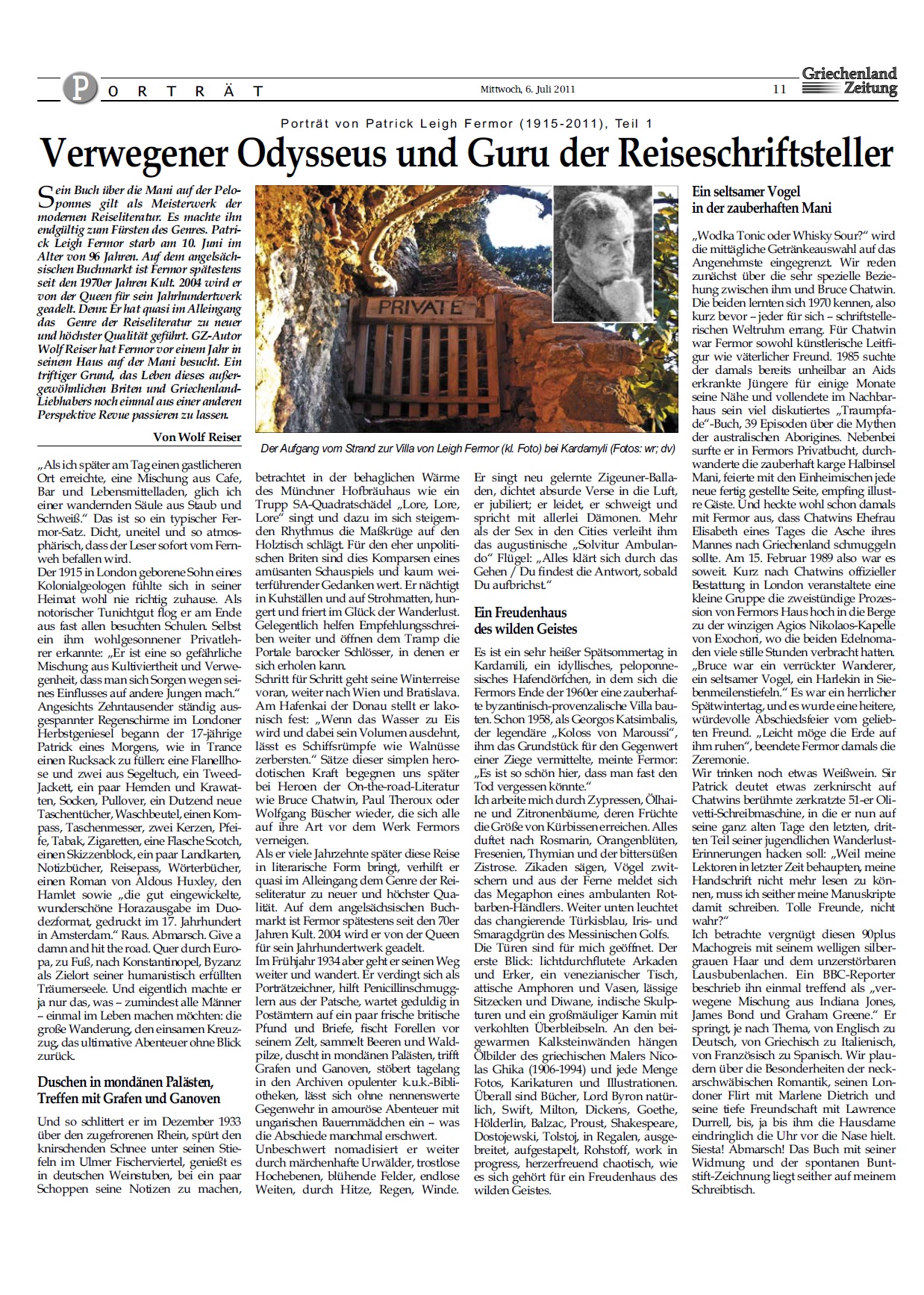
Greichenland Zeitung obituary

This obituary in German has been lurking in my drafts folder for too long. Christian Peters lives in Köln, Germany (Cologne) and keeps in touch regularly. I am not sure if he met up with Nick on his walk but I am sure Christian will tell us.

Dear Tom,

Thank you for bringing me in touch with Nick Hunt. I have had the plan to contact him for more than two months now, but now it came the other way around …

After Paddy’s death I tried to publish an article in the German newspaper in Athens called “Griechenland-Zeitung”. But a couple of days before my  article reached the editorial staff, they had published a much better one by Wolf Reiser. The chief editor was so nice to send me a copy of the first part of the article. Maybe that is interesting for the “German section” of your blog.

I am really pleased about your blog, day by day.

Next year I am gonna have a sabbatical in order to complete my dissertation on skateboarding . I am planning to write parts of it either in Kardamyli or in Sfakia /Crete, the region Xan Fielding has been writing about which is kind of my Greek homeland.

Thank you for your work.

Best from Cologne

Christian

Click the image to enlarge the text.

On the Coast of Terra Fermoor

The second of Bowra’s so-called poems which is about Paddy’s relationship with Joan. The full explanation can be found in the preceding article – here.

The first ‘poem’ – The Wounded Gigolo – has started some very interesting debate in the comments section. Why not join in that debate here, and also discuss On the Coast of Terra Fermoor in the comment section at the end of this article?
A link to the section of Henry Hardy’s website where he has buried the poems with some accompanying footnotes is here.

On the Coast of Terra Fermoor

On the coast of Terra Fermoor, when the wind is on the lea,
And the paddy-fields are sprouting round a morning cup of tea,
Sits a lovely girl a-dreaming, and she never thinks of me.
No, she never thinks of me
At her morning cup of tea,
Lovely girl with moon-struck eyes,
Juno fallen from the skies,
At the paddy-fields she looks
Musing on Tibetan books,
On the Coast of Terra Fermoor high above the Cretan Sea.

Melting rainbows dance around her – what a tale she has to tell,
How Carmichael, the Archangel, caught her in the asphodel,
And coquetting choirs of Cherubs loudly sang the first Joel,
Loudly sang the first Joel
To their Blessed Damozel.
Ah, she’s doomed to wane and wilt
Underneath her load of guilt;
She will never, never say
What the Cherubs sang that day,
When the Wise Men came to greet her and a star from heaven fell.

Ah, her memory is troubled by a stirring of dead bones,
Bodies that a poisoned poppy froze into a heap of stones;
When the midnight voices call her, how she mews and mopes and moans.
Oh the stirring of the bones
And their rumble-tumble tones,
How they rattle in her ears
Over the exhausted years;
Lovely bones she used to know
Where the tall pink pansies blow
And her heart is sad because she never saw the risen Jones.

Cruel gods will tease and taunt her: she must always ask for more,
Have her battlecock and beat it, slam the open shuttledore,
Till the Rayners17 cease from reigning in the stews of Singapore.
She will always ask for more,
Waiting for her Minotaur;
Peering through the murky maze
For the sudden stroke that slays,
Till some spirit made of fire
Burns her up in his desire
And her sighs and smiles go floating skyward to the starry shore.

10 June 1950

The Wounded Gigolo

Here is something interesting, new, possibly amusing, but probably more than a little controversial. The Oxford scholar, poet, wit and acquaintance of the Leigh Fermors , Sir Cecil Maurice Bowra, wrote two poems (in 1950) that poked fun at Paddy’s relationships with Balasha Cantacuzene and Joan Leigh Fermor. It appears that Paddy objected to these and prevented their publication in the 2005 poetry collection New Bats in Old Belfries, or Some Loose Tiles. Paddy apparently refers to them in his correspondence with the Duchess of Devonshire. Now that Paddy is no longer with us, it would appear that Henry Hardy (also known as Robert Dugdale) has decided to make them public.

The poems appear to be buried within Hardy’s website which he maintains on the subject of Isaiah Berlin. This poem, The Wounded Gigolo, is in pretty poor taste (all round) but in particular in relation to Balasha; far from spurning Paddy she delighted in their relationship but they were separated first by the war, and then by communism. She knew that their relationship would not be rekindled after the war and she apparently was pleased that Paddy had found happiness with Joan.

Hardy explains himself thus:

When New Bats in Old Belfries was published in 2005, two poems had to be omitted from the book which stated at the time “because their subject was still alive, and unwilling to give his approval for their inclusion in his lifetime.” It can now be revealed that Bowra’s target in the excised poems was Patrick (‘Paddy’) Leigh Fermor, writer and traveller – and Cretan war hero as a result of his activities while serving in the Special Operations Executive (SOE) during the Second World War. Leigh Fermor, born on 11 February 1915, died on 10 June 2011, aged 96.

In an extended correspondence with one of the editors of Bowra’s poems, Paddy showed that he was much put out by the poems about himself, especially ‘The Wounded Gigolo’, which he felt was ‘a bit cracked’. He vacillated about the other poem, but in the end voted against, no doubt partly influenced by the opinion of his late wife Joan, who ‘thought that all the people mentioned in the collection would have been cut to the quick, however much they put on non-spoilsport faces’. When James Morwood of Wadham College visited him later in his Greek home – to ask about his friendship with Bowra on behalf of Leslie Mitchell, Bowra’s biographer – he found Paddy was still smarting.

To Hardy, Leigh Fermor wrote: ‘Could Maurice’s shade ponder all this now, I think I might emerge as more of a saviour than a spoilsport.’ [Edit: I think Paddy was probably right and I publish here for our usual completeness]

My thanks to Mark Granelli and Margaret Campbell for getting in touch about this. Here is the first poem:

The Wounded Gigolo

O Balasha Cantacuzène,
Hear the war-cry of the Gael!
In his last fierce fight he’s losin’;
He will fight, but he will fail.
Cruelly his lady spurned him,
Struck him when he asked for more,
Flung him down the stairs and turned him
Bag and baggage from the door.
Oh unhappy gigolo
Told to pack his traps and go;
He may mope and he may mow,
Echo only answers ‘No’.

Hasten, every loyal Cretan,
To your wounded master’s aid;
He will not admit he’s beaten
While there’s money to be made.
Stalwart heroes stand beside him,
Captain Moss and Major Xan,
Knowing that, whate’er betide him,
He is still their perfect man.
Oh the hero gigolo,
Bleeding from a mortal blow,
He’s been cut off from the dough,
And he murmurs ‘Woe, woe, woe!’

What avail him now the dances
Which he led on Ida’s peak?
No more like a ram he prances;
Gone the bums he used to tweak.
Let him pick and scratch his scrotum,
Wave his cock and shake his balls –
She will never turn to note ’em,
Never listen to his calls.
Oh the jigging gigolo,
Plying his fantastic toe –
Like a wounded buffalo,
He can only belch and blow.

What avails the apt quotation,
What the knowledge of the arts,
What the lore of every nation
Learned from many unpaid tarts?
Ah, his mistress will not listen,
Floating vaguely to the moon;
Vainly do his molars glisten
When he tries to break her swoon.
Oh the learned gigolo,
What was there he didn’t know?
Now there’s nothing left to show
To the girl he dazzled so.

Yet remains his greatest glory,
His proud prowess in the bed.
Never tool renowned in story
Had so fine a lustihead.
Can he not be up and at her?
Strike the target? Ring the bell?
Ah, to her it doesn’t matter;
Nothing can restore the spell.
Oh the potent gigolo,
He could make the semen flow!
Though the cock may crow and crow,
He must pack his traps and go.

17 April 1950

Rory Cooper at Souda Bay and Chania

The pictures below were sent in by Rory Cooper who is a regular correspondent to the blog.

Hello Tom,

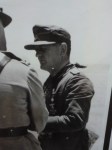
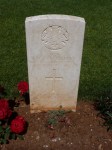
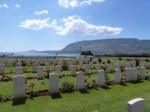
Am in Crete at the moment and have just come back from a visit to the CWGC in Souda Bay where John Pendlebury is buried. Here are a couple of photos as well as one of Gen. Kreipe from the Maritime Museum in Chania.

I have acquired a copy of the Erotokritos and will attempt a translation, although I have few illusions about making sense of 17th century Cretan dialect.

All the best,

Rory

Before Sunset sequel, Before Midnight movie shooting in Greece at Paddy’s House

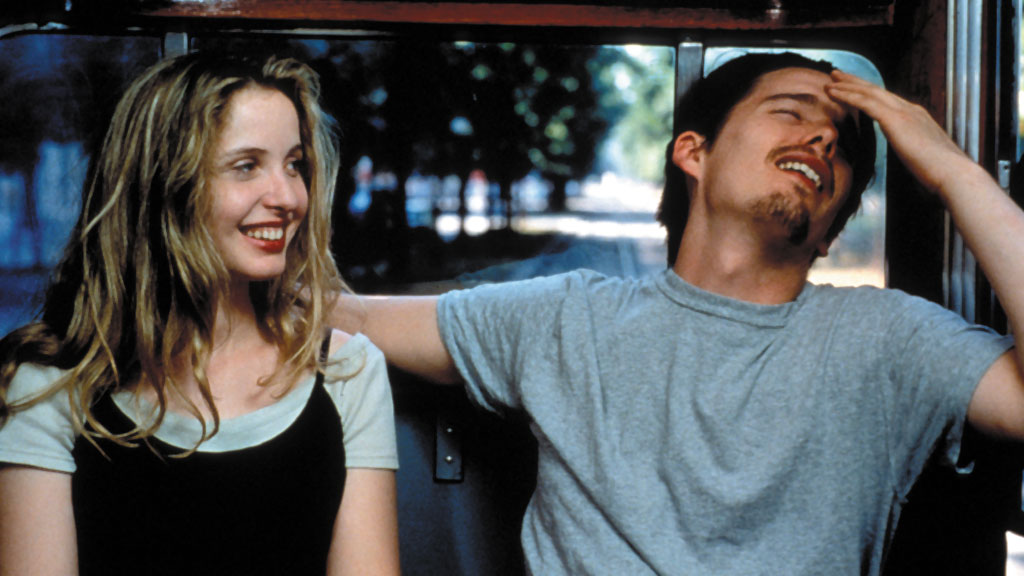
Julie Delpy and Ethan Hawke in Before Sunrise

The Paddy network is very wide and not much goes on without someone knowing something about anything Paddy related, and then getting in touch with your favourite blog. A couple of weeks ago I was contacted by our spy on the ground in Karadmyli to say that he had heard rumours that Paddy’s house was being used as a film set. Further investigations revealed this to be filming for a movie to be called Before Midnight which will star the actor Ethan Hawke, and co-start Julie Delpy. It is the third in a series of movies which I guess one could call the ‘Before Series’.

As we know the house was left by Paddy to the care of the Benaki museum and there have been some concerns voiced about the approach to essential maintenance at the house. Sources close to the museum and to Paddy’s family have confirmed that shooting has been taking place in the garden of the house and that Mr Hawke has been relaxing on the beaches playing his guitar whilst during some relaxed evening barbeques with fellow cast and crew and some locals.

The good news is that there should be a substantial fee for the use of the house which we hope will be put toward the essential maintenance, an issue highlighted only in July by John Chapman in his piece about a recent visit.

The movie series started with the 1995 film Before Sunrise which is all about a young man and woman who meet on a train in Europe, and wind up spending one romantic evening together in Vienna. Unfortunately, both know that this will probably be their only night together. But we all know that this can’t be the end, after all this is Hollywood, and nine years later the characters Jesse and Celine encounter one another during the French leg of Jesse’s book tour, and that film was called Before Sunset. I have no idea how that movie ended but it is possible that as travellers they had come across Paddy’s work and became true fans. Upset to hear that he had died each of them decided to make a summer pilgrimage to his house to make a ‘connection’. Whilst Celine gazes at the sunset across the bay from Paddy’s patio after sneaking in through the rickety blue gate, Jesse arrives with Elpida (Paddy’s housekeeper who has been kept on) and from then on they only have eyes for each other, and the local ouzo.

There is speculation that Hawke, who has apparently been in the area since late July, has plans to stay until early September so if you are quick you may be able to join as an extra. If it is of interest there are no reports of sightings of Delpy, so anything could be happening. So exciting! We will keep you posted.

A Poetic Tribute to Paddy by John Pinschmidt at the Whitehouse Bar, O’Connell Street, Limerick

I have just returned home from a trip to Kilrush in Co Clare, Ireland to visit the place of my father’s birth, and to see some of my family there. It has been far, far too long since I was there; I won’t say exactly, but far too long! The people were so friendly and by God the Guinness was good!

By pure chance, whilst I was in Ireland, a poet, John Pinschmidt from Limerick, which is just 40 miles away from Kilrush on the Shannon, stumbled across my blog and added a comment into the Your Paddy Thoughts section. It was a poem he wrote at the time of Paddy’s death in June 2011 and hs John’s personal tribute. Given that Ireland is a land full of saints, poets and scholars I thought it too much of a coincidence with my visit to leave it languishing in the tributes page so here is John’s poem …
A HIMBEERGEIST TOAST TO PATRICK LEIGH FERMOR

“Live, don’t know how long,/And die, don’t know when;
Must go, don’t know where;/I am astonished I am so cheerful”.
—A Time of Gifts, 1977

Oh, to read your restless spirit had set off on its last journey,
Age 96, sent me into the parlour for A Time of Gifts
And back to 1933, your age-18 trek across Europe
As clouds gathered above a soon-to-be lost world,
Which changed your life as much as my age-21 Europe
Hitchhiking Summer of 1968, my time of gifts too.

Oh, to see again your rich cascades of words,
Riffs on decaying schlosses, Passion artworks,
Architecture as music, the drunken Breugel-like chaos of
Munchen’s Hofbrauhaus—where I had gone in ’68—the debauched
Bavarian Brownshirts portending days far darker than that night.
And later, in bitter weather near Linz, you had your first Himbeergeist.

Oh, that riff sent me searching the yew cupboard for an old bottle
From Deutschland, and I froze it and a Waterford glass,
And late that night, by fire and candlelight, drank too much of your
Clear spirit, reading your words out loud to you and all,
Young or old, who set out on life-changing journeys:
“Oh for a thimble full of the cold north! Fiery-frosty potions,
Sequin flashers, rife with spangles to spark fires in the bloodstream,
Revive fainting limbs, and send travellers rocketing on through
Snow and ice. White fire, red cheek, heat me and speed me”.

Prost, Siar go Deo, Paddy!

And just to embarrass John further, I have found a video on You Tube of him reading the poem at the Whitehouse Bar, O’Connell Street, Limerick.

Patrick Leigh Fermor: An Adventure – Talks and presentations by Artemis Cooper

We are now only about six weeks away from the publication on 11 October of An Adventure, the biography of Patrick Leigh Fermor by his friend and literary executor, Artemis Cooper. Personally I am very excited and there are a number of events planned which will build up to the day and beyond.

Artemis will be speaking at a range of locations and signing her book. Entry to many of the events is by ticket, but some offer a refund of the ticket price off a purchase of the hardback book.

See the attached pdf for details which I will update as further information becomes available. This includes links to websites. I cannot be held responsible for errors or omissions.

An Adventure – talks by Artemis Cooper v3

Also you can visit Artemis’ new Facebook page here.

To pre-order or purchase your copy of An Adventure click here.

£1 a week – Nick to talk about his journey, Saturday 1 September in London

After a short period of adjustment to ‘normal life’, and, I dare say, some personal reflection, Nick has contacted us to say thank you for the support you gave to him and to announce that he will be giving a talk about his walk on 1 September.

Dear everyone,

Thanks so much for all your support before and during my walk to Istanbul. Knowing that people were following me, reading and enjoying my blog, made a lot of difference on the rocky, rainy days.

I hope you all got your postcards. Some of you are also due a handmade book, and/ or a CD of audio recordings from the journey. I will get round to these as soon as possible — be patient, they will come!

I’ll be starting work on the book very soon. It will hopefully be published next year — you can sign up for updates on my blog, if you want to be kept informed.

For anyone in London, I’m giving a talk about the journey at the Globetrotters Club, who also funded me. It’s on Saturday September 1st, around 3.00pm, here:

Church of Scotland Church Hall,
Crown Court,
London, WC2B 5EZ

I think it’s £5 or £6 on the door, but they normally have an enormous array of free biscuits. Come if you can.

Thanks again for all your support!

Nick

Here is a useful map!

A PLF Pilgrimage to the Abbey of St Wandrille

Ed Ricketts has been travelling again and taking the opportunity to follow in the Paddy’s footsteps, this time at the Abbey of St Wandrille where Paddy spent much time writing, and described in A Time to Keep Silence. Ed has sent some pictures for us to enjoy.
If you have your own stories about Paddy related journey’s please send them to me. See About & Contact for details.

Dear Tom,

Hope you are well. Good to hear the news on the Artemis Cooper biog – should make for good Christmas reading!

If it’s of any interest to you, just to say that I was on a brief cycle tour of Normandy last week and passed by (well, it was intentional) the Abbey of St Wandrille, memorably described of course at the start of ‘A Time to Keep Silence’. As you can see from the attached photos, it was a glorious day with the surrounding countryside looking extremely green and in bloom.

I made a quick tour of the Abbey buildings, and slightly regret that I didn’t have more time to ask if it was known which ‘cell’ was PLF’s, or indeed if the connection is still remembered in any way today (no evidence of this from the gift shop). I would recommend a visit some time, it can be enjoyably combined with Rouen and the riverside abbey of Jumieges, a few kilometres to the south. A series of ferries also cross the Seine at various points nearby, which is somehow also quite a Leigh Fermorian experience. Finally, a paperback copy of ATTKS can easily be carried on a bike! (you just about make this out in one of the photos).

I think, from now on, I might try to follow a principle of ‘visiting one place PLF wrote about per year’ – there are worse ways of spending your time.

Cheers and keep up the good work,

Ed Ricketts

Related Articles:

A pilgrimage to Esztergom

An eye for detail and the memory of the Hotel New York in Cluj

Eight articles related to A Time to Keep Silence

Patrick Leigh Fermor’s archive acquired by the National Library of Scotland

From a National Library of Scotland press release dated today.

The archive of one of the most important travel writers of the 20th century and a war hero whose exploits were made into a major film has been acquired by the National Library of Scotland (NLS).

Sir Patrick (Paddy) Leigh Fermor, who died last year at the age of 96, is regarded as a central figure in understanding and appreciating mid-20th century culture.

To describe his life as colourful does scant justice to the reality. At the age of 18 he set off to walk from the Hook of Holland to Istanbul , a year long journey described in his books A Time of Gifts and Between the Woods and the Water. The Independent described the former as “rightly considered to be among the most beautiful travel books in the language.”

His war record is equally impressive. After the fall of Crete in 1941, he was sent back to the island to organise guerrilla operations against the occupying Nazis. He spent much of this time disguised as a Cretan shepherd, living in freezing mountains caves.

In 1944 Leigh Fermor organised one of the most daring feats of the war when he kidnapped the commander of the German garrison on Crete . This was made into a film Ill Met by Moonlight in 1956 starring Dirk Bogarde.

The archive consists of literary manuscripts and typescripts, correspondence with leading figures including the poet Sir John Betjeman, photographs, passports, portrait sketches and personal papers including visitor books and various honours awarded to Leigh Fermor. One of the star items is the only surviving notebook from his youthful trek across Europe .

It offers an unrivalled insight into his life and writings and adds to the wealth of travel literature at NLS. Acquisition of this archive is seen as helping to establish NLS at the forefront of 20th century travel literature research collections

“This is a fantastic collection which will be made available at NLS,” said David McClay, Manuscripts Curator. “We hope it will excite people who know of Paddy and introduce him to a whole new generation of people who may not be aware of his work.”

Its arrival at NLS comes just before a new biography of Leigh Fermor by the British writer and family friend Artemis Cooper is to be published.

Leigh Fermor died before he could complete the third volume in his travel trilogy. Artemis Cooper has worked on the uncompleted manuscript and this third volume – entitled The Broken Road – is expected to be published in 2013. This will all add to the interest in Leigh Fermor’s life and in the NLS archive.

The archive has been bought with a grant from the John R Murray Charitable Trust which assists NLS in the care and promotion of access to the Library’s John Murray Archive. Leigh Fermor was published by the Murray family.

The connection with the Murray publishing house was one of the reasons NLS was chosen by Leigh Fermor’s executors as the home for his archive. He also knew the Library, having donated his wife’s photographic collection to NLS just before he died.

NLS has also taken possession of the personal archive of Leigh Fermor’s close friend Xan Fielding, an author, translator and traveller who also fought in Crete . This has been donated to the Library by Fielding’s family.

So Nick has decided to take the quick way home, but shares some thoughts with us as he prepares.

nickhuntscrutiny's avatarAfter the Woods and the Water

Although I have no religious beliefs, this walk has been a pilgrimage of sorts – or, at least, has taken on many attributes of one. Atheists can have pilgrimages too, and mine has involved physical hardship, and occasionally mental hardship, the retracing of a once-trodden route, and the process of arriving at a destination of deep importance. On the way I’ve experienced wonder, and genuine moments of transcendence, to which the hardship has obviously been essential. On several occasions I have felt the presence of Patrick Leigh Fermor – not in a looming, ghostly sense, but in the absolute certain knowledge that he had been in the exact same place, or looking at the exact same thing, as I was eight decades later. These were not places mentioned in his books, and the certainty I felt bordered, at times, on the uncanny. In this, and many other senses, the journey has been…

View original post 458 more words

An opportunity to win some wonderful prizes in Heywood Hill’s Paddy competition

As many will know, Paddy set off on his European odyssey from Shepherd Market. His biographer Artemis Cooper has discovered that Paddy lived above Heywood Hill immediately after the war. He kept an account there for Balasha Cantacuzene, the Romanian princess and great love of his youth, so that she could buy books whenever she wanted. He remained a lifelong customer of Heywood Hill.

To celebrate the publication in October the biography of Patrick Leigh Fermor : An Adventure, Heywood Hill are running a Prize draw. If you order a copy through them you will be automatically entered to win:

1st Prize
Signed First Edition of A Time of Gifts by Patrick Leigh Fermor
Original John Craxton lithograph from A Poet’s Eye 1944
Watercolour of a View From The Library at Kardamyli by Isobel Brigham
Magnum of Laurent-Perrier Brut NV
£100 Heywood Hill voucher

To order your copy and to enter The Heywood Hill Prize Draw 2012, contact them at:

10 Curzon Street, London W1J 5HH
+44 20 7629 0647

PLF@heywoodhill.com

More details available on their website.