Category Archives: Uncategorized

Patrick Leigh Fermor’s complete SOE file now on-line

I am very pleased to be able to present the complete SOE file of Patrick Leigh Fermor which was released to the public in August 2011 by the National Archive at Kew. My thanks go to Steven Kippax who is an SOE historian for gathering this information.

Click on the image to go to the new page which is in the Photographs section.

Alexander Maitland talk at RGS on the 31st October – postponed

I just head about this in an email. It looks like the event will be rescheduled for 12 December 2.30-4.00 pm.

For further information best to contact  the RGS. Details: Telephone: 020 7591 3044 Email: showcase@rgs.org.

Related article:

Event – Patrick Leigh Fermor: An Appreciation by Alexander Maitland, FRGS


Robin Gibb and The Soldiers launch the 2011 Royal British Legion Poppy Appeal

Buy your poppy, and wear it with pride.


… and buy the song to donate to this most worthwhile of causes. Remember that the only year a British serviceman has not died on operations since 1945 was, ironically, the year of 1969 when we were asked to keep the peace in Northern Ireland and were welcomed by the Catholic populace.

Joanna Lumley’s Greek Odyssey

Let’s have a nice interlude from Crete and the Kreipe abduction and follow the ever lovely, and not too intellectually taxing Joanna Lumley as she experiences an ‘Odyssey’ through and across Greece, the country that Paddy loved so much. She may come out with blinding glimpses of the obvious – about Byron “he was one of our greatest poets” and “his mind was full of poetry” – but when she meets an old man who was the only survivor of a Turkish massacre her tears are as genuine as can be. She is a British National Treasure and she is in one of the most beautiful countries in the world.

You can catch up with the whole series here on ITV Player.

Getting it right and that Taki article

I have to admit that there have been times over the last two years, when, running two blogs, I have either clearly been wrong to publish something, or I have posted an article that has created significant controversy and I subsequently wished I had not done so.

Life is always easy if one takes the uncontroversial path. I dare not mention the post I had in mind a year or so ago with the working title “Patrick Leigh Fermor: the Court Jester?” which was sparked by an interesting series of conversations and impressions I gained from reading ‘In Tearing Haste’. Whilst remaining an ardent admirer of Paddy, it would be wrong to say that he was a saint and beyond criticism. Few of us are.

Which brings me neatly to Taki, and the article that I posted last week entitled ‘Better a Hero Than a Celebrity’. Clearly Taki believes that he himself is beloved by all and can say and write what he wishes without fear of recrimination. He has a very old and a very thick skin. The article has sparked some significant debate in the comment section and I think it is worth bringing this to the attention of a wider audience for it sheds some light on Taki’s character and addresses some of the inaccuracies that I warn of in the introduction.

However, I stand by my response to the first comment which was as follows. Taki Theodoracopulos has had a place in European society over the last fifty years or so. Some may not like him, but clearly he has a role in commenting on the lives and loves of celebrities, which today appears to be of greater importance than the state of European banks and the future of the Euro; it is very big business. In fact Taki was one of the first ‘gossip columnists’. Whatever the inaccuracies of his article it meets the criteria of this blog. It is about Paddy and does possibly bring some new perspectives. This blog is fundamentally an archive of all on-line material about Paddy, and therefore the article stays.

I think it would be useful to all to highlight the points discussed in the Comments section, particularly the major error Taki made in stating that Paddy had killed Albert Fenske, the driver of General Kreipe’s car. Paddy had nothing to do with his death which was against orders and not at all part of the plan. Additionally the story about Paddy witnessing the death of the last German commanding General of Crete is pure fiction; it just did not happen like that.

So what is the moral of this tale? Yes, I would like it to be all sweetness and light, but you can’t please all the people all of the time. Let’s keep up the debate and remember I am more than willing to take in and publish articles that you have found or have written yourself.

Here are the comments up to this evening …..

From Chris Lawson:

“Known to the cognoscenti as Taki Takealotofcokeupthenose, Theodoracopulos is a man for whom the word “snob” might have been invented. Note the casual dropping of Agnelli’s name into his piece and Taki’s snide comments on Dirk Bogarde. It is NOT true that Paddy killed the driver of Kreipe’s car. Apart from the story of the execution of Kreipe’s successor (Name, details of crimes? Doesn’t mean Kreipe’s predecessor?), this brings nothing new to the saga of Paddy’s life. I would respectfully request that you remove the piece.”

My reply:

“No Chris – I don’t do censorship. Your comment can stand as a beacon to my error in posting it. However, Taki has a place in society over the last 50 years and this blog is a repository about Paddy. It stays.”

Chris Lawson responds:

“Fine by me. Of course it was not an error posting it and I agree entirely and whole-heartedly about what you say about censorship. Yes, Taki certainly has a place in the cultural pantheon de nos jours, and my thoughts are just the latest in a stream of negative comments directed at the former inmate of H.M. prisons. Whatever else one has to say about the gent, he is certainly one of life’s great survivors.”

Tim Todd (who runs the Il Met by Moonlight site and is an expert on the operation) interjected:

“That Taki could be so fundamentally wrong about the death of Albert Fenske, Kreipe’s driver, tells me much about the appropriately named Taki.

I believe that Fenske’s death, at the hands of two of his Cretan andartes and contrary to instructions, caused Paddy no end of personal grief, perhaps second only to the accidental shooting of his Cretan friend. I once listened to Paddy talk about this latter incident when, in the mountains after a cadet’s exercise, he failed to check his rifle before cleaning it when it was returned to him. I have to tell you he was still mortified by the whole business and sixty odd years on he was still visibly upset by it. Tom our webmaster and I, know from the best of sources that Fenske’s death was much regretted by Paddy. My own feeling is that but for that we might have seen Paddy’s own account of the abduction published.

I am thoroughly disappointed that anyone claiming to know the man would dare suggest Fenske died at Paddy’s hand. Paddy, perhaps the most honourable man I have ever met, would though have accepted responsibility for anything that may have happened under his command. He was that sort of man.

It is perhaps as well that Tom has published Taki’s piece for it provides an opportunity to compare the two and set the record straight.

I am pleased to say that, through Annette Windgass, Fenske’s family have recently been made aware of Paddy’s great sadness of that particular outcome of the operation.”

 Chris Lawson gave us some more about the story of the General’s death:

“On the General who succeeded Kreipe, and two predecessors

The Commandant of Crete, appointed on 1 May 1944 after Kreipe’s kidnapping, was Generalleutnant Helmut Friebe, Commander of the LXIV Armeekorps. He was captured by the Americans in May 1945 and released in 1947.

Two former commanders of Crete were tried and executed in Athens on 20 May 1947, the anniversary of the German invasion of Crete. One was the bloodsoaked Friedrich-Wilhelm Mueller, who was to have been the original target for the kidnapping until he was replaced by Kreipe. Mueller had a reputation for brutality and numerous atrocities were committed under his regime.

The other was General Bruno Bauer, a paratroop officer, who was appointed in 1942, replacing General Alexander Andrae. Bauer had gained the reputation of being hard and fair, and the “most humane commander” of Crete. Antony Beevor describes him as truly unfortunate, as he was executed for crimes “committed under another general”. Three years later the Association of Former German Paratroopers requested that his remains be returned to Crete. George Psychoundakis, resistance fighter and author of the Cretan Runner (already much-mentioned by Tom), reburied his remains.

Taki’s fourth paragraph is a complete fantasy.”

George joined the argument:

“The only readable part of Taki’s remembrance (sic ) is the last sentence, horrible in its clarity and even worse that it is written by someone whose trotters are deep in that particular trough.

His comments however, are an excellent example of the sponger’s wiles. The mildly mocking comment by Agnelli, humbly repeated to establish the writer’s honesty, while at the same time making it clear that the writer enjoys the same societal position.

Then the personal revelations as told uniquely to Taki, and no other. Who is to say it did not happen? Taki’s favourite method of asserting inside knowledge always has been to quote the ‘ confidences ‘ of dead people.

The lustrously depicted tale of an unrepentant Nazi Officer going blithely to his death comes straight out of ‘Boys Own ‘.

Next we have the gay bitchiness in his description of PLF’s relationship with his wife. Once again the vampire straddles an innocent’s grave seeking the lifeblood of fame by association.

Chris Lawson ( thank you ) marshalled all the necessary facts to give the lie to Taki’s comments. He was probably as irked by them as I was.”

Tim Todd concludes it all: 

“Inaccurate accounts of historical events, for personal vanity, or a film-makers preference for ‘a story’ over fact, infuriate me. This is especially so when such accounts may subsequently become part of history for those without inquiring minds. Last week saw the release of a new video by National Geographic half of which was about the abduction of Kreipe. It is appallingly bad and inaccuracies abound. I am so glad that some colleagues of mine and I, who know a thing or two (but not all) about the abduction, rejected the film makers request to assist them for it has turned out every bit as bad as we feared. Having read some of Paddy’s comments about Ill Met By Moonlight, I can imagine what he might of thought of the latest misrepresentation.”

… and you say ….??

The Eagle Has Two Faces: Journeys through Byzantine Europe

Alexander Billinis is an American with Greek parents and he is a very keen fan of Paddy’s writing. He has travelled and worked all over the Balkans and now lives with his family in Serbia, writing about the region, in particular the trials and tribulations of the Greeks. This review offers a very positive assessment of Alex’s latest book which is available from Amazon and all good booksellers

First published in Cape Cod Today.

Author Alexander Billinis’s subtitle to his book is, “Journeys through Byzantine Europe,” which he modestly describes as a “travelogue.”  Billinis, an international banker, traveler, and writer-journalist, has essentially written a romance with the Balkans. His love of the diverse Balkan peoples and of their history is evident with every paragraph.

The “Eagle” of his title is the two-headed Byzantine eagle, reflecting an empire, with Constantinople as its capital, that  looked eastward to Asia Minor and westward to the Balkans and Europe. The Byzantine Empire was the most advanced in the world, spreading knowledge and culture and prosperity until 1453, when Constantinople was ravaged by the Ottoman Turks and the whole empire thrown into its own dark ages for 500 cruel years.

It was not until the early 20th Century that the last of these lands, including Northern Greece, where my own parents were born, was freed from Ottoman rule. This left what are now the Balkan states 500 years behind the progress of the rest of Europe. Billinis’s travels take him and his wife through Greece and Bulgaria, Romania, Thrace, the region of Macedonia, to Serbia, the northern region of which fell under the Austro-Hungarian Empire rather than the Ottoman. Billinis’s father is from Hydra, an island near Athens, and his wife from northern Serbia. Their combined knowledge and impressions of the region give the book its unique flavor.

The book is liberally sprinkled with photographs reflecting the rich, different architectures of the various cultures that live in and have passed through the region. I’ve occasionally referred to the Balkans as “the dark region” of Europe because that area has been so eclipsed by Ottoman oppression that very little is known about its history and its own Christian empires compared with the rest of Europe. Billinis’s book sheds light on the darkness and brings the area and its people to life.

The book even addresses the Pontian Greeks of Russia and Greek-speaking enclaves that still exist in Italy.

For me, the book has been a Balkan primer and an enchanting read. It is essential reading if you want to round out your European history with 150 concise, but full, pages about Europe’s least known region written by one who has actually traveled its paths and tipped a glass of tsipouro with its people.

Subscribe to the Patrick Leigh Fermor blog and keep up with all the posts

You might like to know that on Sunday last we passed the 200,000 visit mark for the blog which is quite a milestone! 🙂 🙂

But the reason for this post is to remind you that you can subscribe to the Patrick Leigh Fermor blog and never miss a post. It is so easy with one click sign-up. No spam just each article delivered to your email inbox.

There is a lot to come with many articles in-line. Over the next year we can expect a lot of news about Artemis Cooper’s forthcoming biography and no doubt some updates on a publication date for Volume Three.

Just click on the subscribe button and join over 240 other readers …

Parish Notice – Travels With Paddy: The Blog Discussion Forum to close

The discussion Forum I created about a year ago has not been a total success. It has had very little use so I am going to allow it to expire on 27 September. There is plenty of comment and discussion in the comment section of the blog so I shall leave it at that for the moment.

The places in between by Paul Theroux

There are those who believe that technology has hijacked the whole of the visitable earth, snatched it away, miniaturised and simplified it, making travel so accessible on a flickering computer screen that there is no need to go anywhere except to your room. In a related way, the travel book is believed to have been not just diminished but made irrelevant by the same technology. Since we know everything – the information is easily dialled up – and the world has been so thoroughly winnowed by travellers, what is the use of a travel book? Where on earth would you go to remark each anxious toil, each eager strife, or watch the busy scenes of crowded life? Surely it has all been written.

by Paul Theroux

First published in the Financial Times, 27 May 2011

This isn’t a new conjecture. In 1972, in a blasé magazine piece of postmodernism, entitled “Project for a Trip to China”, the American writer Susan Sontag sat in her New York apartment ruminating on China. Sontag was that singular pedant, a theorist of travel rather than a traveller. She concluded her piece: “Perhaps I will write the book about my trip to China before I go.”

To such complacent and lazy minds, here is a suggestion. Try Mecca. After prudently having himself circumcised, learning to speak fluent Arabic, dressing as an Afghan dervish and calling himself Mirza Abdullah, the British explorer Sir Richard Burton travelled to the holy city of Mecca, a deeply curious unbeliever among devout pilgrims. This was in 1853. He published his account of this trip in three volumes several years later, his Personal Narrative of a Pilgrimage to Al-Madinah and Meccah. The last non-Muslim to do this and to write about it was Arthur John Wavell, of the distinguished British military family. An army veteran, and farmer in Mombasa, Kenya, Wavell developed an interest in Islam. In order to know more, he disguised himself as a Swahili-speaking Zanzibari, made the pilgrimage and wrote about it in A Modern Pilgrim in Mecca (1912). Wavell took the trip in the winter of 1908-1909, more than a century ago. No unbeliever has done it since. Now there’s a challenge for a technology-smug couch potato who prates that the travel book is over. Of course, this daring trip is not easy. It is, perhaps, not a journey for a gap-year student wishing to make his or her mark as a travel writer but it is a book I would want to read.

Nor has anyone, to my knowledge, gone in the footsteps of Apsley Cherry-Garrard. In the Antarctic winter of 1912-1913, “Cherry” sledged with two other men to observe the rookery of the emperor penguins and to remove some eggs. The six-week journey, pulling the heavy sledges themselves through the ice, was made in pitch darkness and temperatures of minus 79F. The men returned, delirious, starved and near death. How about that for a book?

A few years ago the journalist Tim Butcher attempted to retrace Henry Morton Stanley’s 1877 trip down the Congo River. He made a brave try but he failed. The river is as dangerous as ever, and though there are many friendly Congolese, the hostile ones are better armed than in Stanley’s time and more rapacious. Stanley spent three years on his epic journey – the first traverse and mapping of the continent’s mid-section. Butcher’s Blood River (2007) is a worthy book but it is not Stanley’s Through the Dark Continent (1878). The challenge remains, though God help the traveller who attempts it.

A modern version of Heinrich Harrer’s Seven Years in Tibet (1953) – he was there from 1944 to 1951 – has not been written either and, given the inflexibility, the disingenuousness and iron fist of the Chinese occupation, it would be fascinating. Harrer escaped from a British prisoner of war camp in India to make his trip. In the same spirit, the Italian Felice Benuzzi fled a British internment camp in Kenya to climb Mount Kenya – he did so, through the bamboo groves and the snow, with two fellow PoWs, and they descended to the camp to turn themselves in. He wrote an account of it, a book translated as No Picnic on Mount Kenya (1952). Kenya is full of prisoners and refugees in camps; none of them, so far, has duplicated Benuzzi’s gallant feat.

The people who wonder where the travel book is going should consider where it has been. In the course of compiling my Tao of Travel: Enlightenments from Lives on the Road, I have spent the past two years running to my nearest university library, taking out a dozen travel books at a time, reading them, making notes, extracting and typing out the best passages, then returning the books a week later and borrowing a dozen more.

After the first 300 books I was not entirely sure what a travel book is meant to be. Some are heroic jaunts, such as Benuzzi’s; some are ordeals or death marches – Cherry-Garrard’s The Worst Journey in the World (1922), or Geoffrey Moorhouse’s The Fearful Void (1974), the story of travelling for four months in the Sahara, mainly on foot; and some, such as Laurens van der Post’s Venture to the Interior (1952), are merely pretending to be ordeals. Others are best read in pairs, the same trip by fellow travellers and writers, such as Graham Greene’s dark Journey without Maps (1936) and, two years later, his cousin Barbara Greene’s Too Late to Turn Back – her cheerful account of the same trek through Liberia; or Dr Johnson’s Journey to the Western Isles of Scotland (1775), with Boswell’s Journal of a Tour to the Hebrides (1785). Some travel books are reminiscences written long after the fact, such as the wonderful two-volume retelling by Patrick Leigh Fermor of his walking through Europe before the war, A Time of Gifts (1977) and Between the Woods and the Water (1986).

There are too many categories to list – pilgrimages, both religious and secular; quests for peace of mind or love or a great meal; a search for the perfect wine and food pairing, or the jolliest spa experience. Many – perhaps most – are autobiographical but selectively so. Having a bad time on a trip is helpful. “Literature is made out of the misfortunes of others,” VS Pritchett once wrote. “A large number of travel books fail because of the monotonous good luck of their authors.”

There is a false and snobbish notion that the high watermark of travel writing occurred in the 1930s, with the work of Evelyn Waugh, Graham Greene, Peter Fleming, Robert Byron, Freya Stark and Rebecca West. Certainly in this period there flourished intrepid travellers with great prose styles but style was the important element, and the writers of this time sought to prove their own singularity by placing themselves in stark relief against a landscape that was primitive, or dangerous, or laughable, but in any case emphatically foreign. To my mind, the great travellers of that period and a bit earlier were the field anthropologists Bronislaw Malinowski in New Guinea, Margaret Mead in Samoa, Alfred Métraux in Easter Island, and Claude Lévi-Strauss in the hinterland of Brazil.

In my opinion, the best of travel, and of travel writing – ancient or modern – is a species of trespass combined with true discovery, the wanderer surprised and bringing back news of the outer world. It helps to be Captain Cook, or HM Stanley, or Knud Rasmussen in Arctic Greenland, with their pioneering journeys of discovery. But there are modest and just as readable more recent accounts of travel that evoke a sense of place, such as Carlo Levi’s Christ Stopped at Eboli (1945), Peter Matthiessen’s The Snow Leopard (1978), about Nepal and Jonathan Raban’s Bad Land (1996), on Montana.

When I arrived in Africa in the early 1960s, I realised how defective or insufficient the models were – Hemingway posturing and babbling in kitchen Swahili in The Green Hills of Africa (1943), or van der Post making a meal of a simple trip in Nyasaland (where I happened to live). Nothing had prepared me for the weather – it was colder than I had imagined in the Shire Highlands, where villagers went about in woolly jumpers; much hotter than I’d ever been in the far south of the Lower River, a district of bare breasts.

Though I read travel books in Africa, it did not occur to write one. I was struck by Dervla Murphy in Full Tilt (1965), travelling alone, a woman, riding a bike from Europe to India. She was a humble traveller, staying on the ground, making friends. Then there was VS Naipaul’s Area of Darkness (1964), a travel book with a theme – two themes really, the sentimental return to the motherland, the disappointment in the motherland. Naipaul’s book contained convincing dialogue. As a novelist, he was able to bring landscape to life. These were features I had valued in Mark Twain’s and Jack London’s journeys, the novelist’s art applied to travel. This suggested that I might write such a book myself, and that was the origin of my Great Railway Bazaar, which I wrote in 1974.

My travels in Europe and Africa began in 1963, almost 50 years ago. The world was quite different then and so was the travel book – some of them described the Sphinx and the Taj Mahal. In the 1980s and 1990s there was a profusion of travel books. These days, the bookstore browser is likely to yawn, seeing a shelf of them.

So where are we now? Of course, many would-be travel writers are plodding in the footsteps of those who have gone before and repeating or correcting the impressions. An irritating tendency of those books, and of travel pieces in general, is the use of the present tense: “I am on a bus in Bhutan and the woman next to me is smoking a cigar … ” There is a new frivolity in travel books, there is mock-drama, there is obvious embroidering, there is the frivolous quest as a theme. Such books do not interest me at all.

I have a love for reading about a really difficult trip, even better an ordeal. Such books, written with skill and appropriate detail, will always find a public, because they combine travel with problem solving and endurance, and that I suppose is the human condition. These people are suffering for us.

Not long ago, a Nigerian man was intercepted fleeing Libya, where he had been employed as a mechanic in the oil industry. His town was under siege, bombs falling, bullets flying. Prevented from going to Italy, he was being repatriated to Nigeria. He protested, saying, “Send me back to Libya – I would rather go there than home to Nigeria.”

This makes me wonder what Nigeria is like and provokes me to travel there. Around the same time, 1,000 people died in a rural village in Ivory Coast; this was a small news item in the western press, though when one person is injured in Jerusalem it’s on the front page as an outrage. I’d like to know why this is so. The fact that there are far fewer foreign correspondents makes the traveller more necessary as a witness and a reporter.

The world is not as small as Google Earth depicts it. I think of the Lower River district in Malawi, the hinterland of Angola, the unwritten-about north of Burma and its border with Nagaland. Nearer home, the urban areas of Europe and the United States. I do not know of a book that recounts the daily life in a ghetto in, say, Chicago; the secret life of a slum, or for that matter, the anthropology of Muslims on a depressed “sink estate” in the British Midlands.

The world is full of jolly places but these do not interest me at all. I hate vacations and luxurious hotels are no fun to read about. I want to read about the miserable, or difficult, or inhospitable places; the forbidden cities and the back roads: as long as they exist the travel book will have value.

‘The Tao of Travel’ by Paul Theroux is published by Hamish Hamilton

Lawrence Durrell and Patrick Leigh Fermor – Bitter Lemons

I am republishing something that was first on the blog back in May 2010 following a request by Lynne Sanders.

In Bitter Lemons, the writer Lawrence Durrell describes a visit from Patrick Leigh Fermor –

“In that warm light the faces of my friends lived and glowed….Freya Stark…Sir Harry Luke…Patrick Leigh Fermor and the Corn Godess, who always arrive when I am on an island, unannounced and whose luggage has always been left at the airport (‘But we’ve brought the wine-the most important thing’).” [pp102-3]

“Last night the sound of the front door closing upon breathless chuckles and secretive ranting, then the voice of Patrick Leigh Fermor: ‘Any old clothes?’ in Greek. Appeared with his arm round the shoulders of Michaelis who had shown him the way up the rocky path in darkness. ‘Joan is winded, holed below the Plimsoll line. I’ve left her resting half way up. Send out a seneschal with a taper, or a sedan if you have one.’ It is as joyous a reunion as ever we had on Rhodes.

“After a splendid dinner by the fire he starts singing, songs of Crete, Athens, Macedonia. When I go out to refill the ouzo bottle at the little tavern across the way I find the street completely filled with people listening in utter silence and darkness. Everyone seems struck dumb. ‘What is it?’ I say, catching sight of Frangos. ‘Never have I heard of Englishmen singing Greek songs like this!’ Their reverent amazement is touching; it is as if they want to embrace Paddy wherever he goes.” (pp 104-5)

Related article:

Lawrence Durrell and Patrick Leigh Fermor by Thos Henley

My unrelenting vice

Bora Cosic

Bora Cosic

Bora Cosic on reading books no one else reads. Sometimes one feels a little like this about Paddy’s work; so few people you meet have actually read him. Thanks to Chris Lawson for bringing this to my attention. I think we can all enjoy this.

I remember a scene related to me by a poet of the Belgrade surrealist circle, Dusan Matic. In 1941 he took part in the Montenegro guerrilla revolt, and while the fighters-to-be were cleaning their guns around him, the poet sat on a nearby terrace, smoking and reading Nietzsche. He was annoyed by the many soldiers who came to light their cigarette on his, he told me, he didn’t have the nerves to support the smoking habits of an entire people’s liberation struggle. So he returned to his room in Belgrade during the unpleasant period of occupation, with its many dangers. When I think about it now, I don’t believe that Matic distanced himself from war because of this smoker episode, but rather because the masses of soldiers had interrupted him while reading.

It was quite a long time ago that Valéry Larbaud wrote about his observations of reading as a vice practiced with impunity. For myself, I know that this prolonged staring into a book interferes with the production routines in my family, the manufacture of everyday life – the admission of one who engages in the vice Larbaud describes. Personally I require many hours of reading, because I usually read tremendously thick books, and also notably boring ones; I am always convinced that at the core of an abstruse sentence lies the magnificence of a discovery just waiting to be made. And so I remain true to the pre-Socratic philosophers, Musil and Lacan.

But I am not alone. I have read books that no one else has read, says Paul Valéry. Books from technical disciplines, these interest me. Balzac systematically read dictionaries, not specific entries but from start to finish, as if following a narrative. How many interesting things there are to read, which at first glance might seem irrelevant and meaningless. One woman expected Erasmus to write something that would help her husband get a grip on himself, Roland Barthes relates. Or as Claudio Magris mentions, Montecuccoli wrote his aphorisms on the art of war in a Stettin prison, during his hiatus from the Thirty Years War. Were I a poet, I would dedicate the most beautiful poem to roux soup, admits Bela Hamvas. “A Meditation Upon a Broomstick” is the title of an essay by Swift. I would give everything to find out what a German wrote about a lemon peel, as Rousseau says, what Erasmus wrote to bring a neurotic man to reason, or Montecuccoli’s “Art of War”.

Reading has only recently become a silent act. Two hundred years ago everyone read aloud. This was dictated by church ritual, in which one, or better said everyone, had to listen to the “holy” text. In the first cathedrals entire choruses of believers spoke aloud this reading material that they viewed as godly. This muttering was further practiced by those few people on earth who at the time were, by some miracle, able to read, as if everyone one of them fulfilled the role of today’s speakers and leaders. Then some anonymous Copernicus of reading came along, who brought the entire practice inside by following his text “in his mind”. Thus the letter-for-letter literalness of ecclesial or school reading was lost. Because what goes through my head when I do the work of reading is not necessarily the same as what someone else wrote.

One readily discovers this when undertaking a fresh reading of something that was once familiar. Not only do I rediscover what I had forgotten, but also I realise that “there” in the text I had read long ago there is nothing of what I expected to find! This is the valuable reading of a text, which the reader has created within himself by grinding up a mass of foreign material in his mill and transforming it into something different through unexpected combinations. Read again, many incidences that remained in one’s mind from before play out in a different way entirely.

We carry within the texts that fall into our hands. There are philosophers who believe: the things that we find in books are those that we have brought to them. Borges said that – his protagonist writes an already existing book all over again, convinced that only the repeat exists, not the original. In Musil’s novel, by the way, there is a strange librarian, who guards thousands of books without every having opened even one of them. But still he knows everything about them, because we apparently sometimes also read when we are not reading. As it is, libraries make normal people anxious, seeming like overload, regardless how orderly the catalogues may be. I therefore do understand those who flee from reading as if it were the plague. Everyone has a right to their individual fears. Canetti finds a way out of this in a novel about books by causing the library to burn down. However, after every barbarian plundering there will always be someone who reads the few remaining recognisable characters lying in the ashes.

So my daily ploughing through the pages continues, my unrelenting vice. There are many people guilty of making me this way. My grandmother, first and foremost, who already taught me to read and write at age four. (As we see, there are two phenomena that run parallel to one another; writing is a form of reading, and reading means writing.) I immediately pounced on everything legible, attentively deciphering the labels on the kitchen containers for salt, coffee and sugar, on the advertising pamphlets in the boxes of soap, on the chocolate wrappers, the dates on the wall calendar, the words on the enamel sign indicating where the basement or bathroom was. I studied the receipts my mother brought back from shopping; there were all kinds of letters and entire words on the inside of Papa’s hat, on the edge of Mama’s scarf, on the seam of my T-shirt. And then the signboards, the scenery on the streets of the city where my life began!

Today I think that these very things, the linguistic imprint of daily human existence, were my first reading material, long before Karl May and Tom Sawyer. And then after I had read Dostoevsky and Proust for the first time there was still an immense amount of room for the global vices of all-purpose books, handbooks, guides, what we call “technical literature” but which also includes a lot of unscientific, fantastical and almost crazy things. Since my youth I have tended to seize upon this odd reading material. In a used book shop in Belgrade the bookseller always set aside these kinds of things for me: about the migration of birds, the unusual meteorological phenomena in the Alps, the form of address in official letters, and beekeeping. Even before that, in Slovenia, where both my grandfathers come from, I derived particular pleasure from reading a little book on home remedies, raising children, on “world events”, regulations about male and female servants in the kingdom, “eternal calendars”, spelling books for schools, and etiquette tips for the village and the city.

What kinds of crazy publications came out in Russia after the October Revolution! We needed a whole series of new handbooks in paperback: for the Soviet locksmith, the Soviet lathe operator, the Soviet electrician, wrote Trotsky. These included, among other things, explanations of how to drink less, get into fewer fights, play less card games, how to keep from hitting your wife and children, how to do the washing, open the window and sweep the room.

Out of all of these, I must admit that as a child I was most drawn to a cardboard book, which actually only consisted of book covers; there was no content because the covers alone were sufficient to advertise a chocolate factory. There were the little papers that were rolled around medicine bottles, that one stuck into boxes of sweets – this all was great fun to me at an age when I did not yet understand the meaning of individual words. And so this old Egyptian tradition – as applied to the production of modern medicines and confections – had a belated impact on a child’s consciousness by teaching him that books are not only found in books but many other places.

This idea was revisited by the Pop Art artists and even our avant-garde artists of the Slovenian group OHO. What a motley collection of poetic messages they packaged into bigger and smaller boxes, believing that this would allow them to participate in the production of reading. Once I bought an iron book, which told the history of many iron objects, but its cover was actually made of tin. A magazine published in former Yugoslavia had a plastic binding, made from the same material used to produce raincoats. I read my fill at various times, not only of printed texts, I was also a careful reader of book covers, bindings, and what is printed on the dust jacket. I would say that one finds an entire culture of the written word in abbreviated form, if one only looks at the narrow column printed on the inner flap of the book jacket, where there is a description as succinct as a dictionary entry telling what the book is about. If all the books in the world were to disappear, (as in “Fahrenheit 451”) and only the book covers remained, perhaps one could reconstruct human thought in this way.

Thus early on I learned that the greatest driving force behind mankind’s culture of the written word unremittingly leads to the exceptional, irregular and astonishing – from which Dadaism and all of Surrealist literature has sprung. Where the reading of apparently incomprehensible texts originates, as early on in Mannerism, then in the crazy dialogues of Lewis Carroll, Edward Lear and Ionesco. Those wonderful fantasies before death in “Krapp’s Last Tape” by Samuel Beckett. As if people might be able to near their end in a surreal manner that nevertheless seems normal. When the eye doctor bids me to read aloud a single letter on the wall of his office, do I stand before the end of all reading?

The Serbian and Croatian author and essayist Bora Cosic (1932) lives in Berlin and Rovinj. His is the author of some 30 novels, volumes of collected stories and essays, including his acclaimed novel “My Family’s Role in the World Revolution” (1969). He is one of the last authors to describe his native language as Serbo-Croatian in a rejection of nationalist literature. In 2002 he was awarded the Leipzig Book Prize for European Understanding.

The article originally appeared in the Neue Zürcher Zeitung on July 30, 2011.

William Dalrymple – The essence of a landscape

The author of “Nine Lives” discusses his friendship with Paddy Leigh Fermor, and the boom-and-bust cycle of travel literature.

Related article:

Patrick Leigh Fermor: The man who walked

Sebastian Faulks on Patrick Leigh Fermor “He’s a bit of an old windbag”

There was a period last year when Sebastian Faulks was seemingly never out of the newspapers what with Birdsong coming to the stage and other activities. I found this little piece in the Independent

He is hailed as one of the greatest travel writers of the 20th century, but Patrick Leigh Fermor is not up to much, says Sebastian Faulks. The bestselling author of Birdsong tells me that despite several attempts he has never been able to get through Leigh Fermor’s seminal book, A Time of Gifts, saying “He’s a bit of an old windbag isn’t he?” Faulks was on garrulous form at the Hatchards’ authors party last week, turning his sights on Joan Bakewell too. “Why’s she gone and written a novel? Everyone thinks they can do one now.” Next up, Debo Devonshire: “Why has she written another book? They can’t be short of money can they?” Watch out!

I have to admit that I have actually made my way through two of Faulk’s novels: Charlotte Gray which was dull and Birdsong which is populated by unattractive characters and in the end becomes completely boring and fantastical. Never again!


Greek video is now working again!

Normal service has resumed for the Greek TV video!

Paddy talks about his home in Kardamyli and the Mani

George Katsimbalis documentary Part 1 – by the Acropolis and at the bar

George Katsimbalis documentary Part 2 – Paddy sings about Greek debt!

If there are any further problems please contact me by leaving a comment. Enjoy!

Tom

Greek video not working

We have three recent video links which show Paddy on Greek TV in the 1980’s. Unfortunately they appear to have stopped working for the time being. This looks like a technical fault with the Greek hosting server. Normal response is within just a few seconds. If you don’t have that experience the fault is persisting so try again later.

Sorry about this! All beyond my control.

Tom

Greeks in Hungary: A history in two acts

I thought this would be of general interest. I don’t recall Paddy encountering any Greeks in Hungary but he did come across Greek fishermen from the Greek diaspora when walking along the Bulgarian Black Sea coast in late 1934. That encounter was related in Words of Mercury and includes the Mystery of the Black Sea Cave.

by Alexander Billinnis

First published in The Hellenic Voice, 22 June 2011.

The Greek presence in Hungary is one of the oldest in Greece’s modern diaspora. It is, further, one of the most interesting, because as a tragic accident of war and politics, it received a new lease on life, a second chapter of sorts. The Greeks’ odyssey in Hungary is a tale of two diasporas and the efforts of current Greeks to unite the two acts into a common play.

Act I: The First Diaspora

After swallowing up the Balkans, the Turks shattered the Hungarian army at the Battle of Mohacs, and the Turks controlled most of Hungary, and up to the gates of Vienna in Austria, for more than 150 years. On the heels of the Turks’ second, failed siege of Vienna in 1683, the Austrians, at the head of a multinational European force, began the taskof evicting the Turks from Central Europe. When the guns fell silent, in 1717, the Austrians and Hungarians needed to rebuild their realm devastated by war, and many Ottoman Christians, primarilySerbs but also Greeks and Vlachs, responded eagerly.

Greek merchants quickly established themselves in major Hungarian cities, such as Buda, Pest, Szentendre, Miskolc and Tokaj. They were heavilyinvolved in the overland trade with the Ottoman Empire, but they also worked as agriculturalists and vintners. There is some evidence that winemakers from Macedonia first cultivated Hungary’s prized Tokaj wine. The Greek merchants were heavily involved in the coffee trade, and some of the oldest Budapest coffeehouses have Greek origins. As an avid coffee drinker, this makes me particularly proud.

The Greeks’ natural appetite for commerce, their large commercial network in the Ottoman Empire and their growing colonies throughout the Austrian (later Austro-Hungarian Empire) brought a great deal of wealth to the small but financially and politically powerful community. The Greek community supported schools, charitable institutions and of course church organizations. Initially the Greek students studied at the Serbian school, but by 1785 they established their own, which operated continuously until 1900. The Greeks and Vlachs established a church community separate from other Orthodox nationalities (though still subject to the Serbian Patriarchate), and their cathedral, built in 1809, continues (as the Hungarian Orthodox Church) to serve a largely Hungarian Orthodox community, often Balkan in origin. Other Greek Orthodox churches grace several Hungarian cities, including Tokaj, Eger and Miskolc.

The Greeks’ very success fostered an increasing assimilation. Greeks left the merchant class, became naturalized Hungarians, and in some cases nobility. Events in Hungary followed a similar pattern to those in Vienna and other key Austrian commercial centers. Lacking the critical mass of population that the Serbs had in southern Hungary (which later became the Serbian province of Vojvodina, where my family and I currently live), the Greeks became Hungarians, though some did keep the Orthodox religion of their ancestors, and vestiges of their culture.

Act II: The Second Diaspora

Just as the First Greek Hungarian diaspora faded into assimilation and history, events in Greece stirred up another wave of Greeks into Hungary. Many of these immigrants came from the same mountains as the first diaspora, but they were not merchants, but refugees – guerillas, villagers and intellectuals of the communist movement in the Greek Civil War. Many were children, many came involuntarily. Their connections with Greece were severed by the hard frontiers of the Cold War, but they did not forget Greece or their traditions.

In the “Greek” village of Beloiannisz (Beloyiannis), which I visited, or in small communities in Budapest, Miskolc, Pecs and Kesckemet, the Greeks kept their language and culture alive. In the communist period the Church played little role as a guardian of faith and identity, in contrast with the first Greek diaspora in Hungary, or Greek diasporas in the Americas or Australia. In the post-communist era, the role of the Church has reemerged.

Other virtues we associate with the diaspora, hard work and study, also marked this post Civil War diaspora. Greeks excelled in academia and professions well out of proportion to the small size of their community. All of the Greeks I met, including the second generation born in Hungary, spoke Greek with a precise fluency.

A fair percentage of the Greek Hungarian community repatriated to Greece, particularly in the 1980s, but the community by that time was quite well established in Hungary. The Hungarian government recognized Greeks as a distinct minority and cofunded cultural and educational activities. This support enables a diverse educational and cultural agenda, including an elementary school, weekly cultural performances and a growing literature about the community. When I arrived at the cultural center, I was welcomed as a fellow diaspora Greek, and loaded down with books on the community.

Closure

I spent an hour talking to Professor Nikosz Fokasz (Nikos Fokas), an eminent Hungarian sociologist and one of the Greek community’s leading intellectuals. Son of a Paris-educated Cephalonian architect and a mother from a village in Evritania, Professor Fokas is an urbane academic at home in university circles throughout Europe and North America. He considers thispostwar Diaspora to be the keepers and the descendents of the first diaspora. After all, both generally descended from the same Macedonian and Epirote mountains, a “diaspora of the Mountains,” as he calls it. Many Hungarians are now rediscovering their Greek roots, with the active help of this newer Greek diaspora.

Professor Fokas noted, with a particular pride, that Baron Simon Sina, a Greek Hungarian, financed Budapest’s most iconic Danube bridge, Lanc Hid (Chain Bridge), as well as a large part of the Hungarian Academy of Sciences, another signature Budapest building. Honoring him, Greek Hungarians have been instrumental in establishing the “Sina Award,” bestowed upon a member of the Hungarian business community for outstanding support of the arts and sciences. Fostering awareness of Hungary’s Greek and Orthodox elements in its history has been a key contribution of this new diaspora, and in so doing, it has honored, and in some cases, literally resurrected, the first diaspora.

As always when I travel among diaspora Greeks, I felt a common bond with the Greek Hungarians in spite of our very different histories. There was that love of Greece, somehow less jaded, than that of Greeks in Greece. There is also a very clear consciousness among Greeks in Hungary that the history of Hellenism and Orthodoxy is a long one in their country, and that custody of this tradition is an important role, which they assume with pride. It is a pertinent lesson for our community in America.

Alexander Billinis is a Greek American writer living in Serbia. He previously worked in international banking in the US, Britain and Greece. His book, “The Eagle has Two Faces: Journeys through Byzantine Europe,” will be released later this year. 

Related articles:

On the Pontic shores where the snowflakes fall

The mystery of The Black Sea Cave

Photographs of Paddy

A series of photographs that we have come across recently. I am grateful to Thos Henley for finding some of these.

The next big movie …

I have never done this before on the blog, but this is actually so funny that I could not resist it. Normal service will resume tomorrow.

In fact they were hasty. If they had waited a few days they could have had Zhang Ziyi as Wendi Murdoch, and CoCo the Clown as Mr Marbles.

Archduke Otto von Habsburg

Otto von Habsburg with a bust of himself at Paks, Hungary, in 2005

The funeral of the last heir to the Habsburg throne takes places today in Vienna. By family tradition his heart will be buried separately in a Bedendictine monastery in Hungary at Pannonhalma Archabbey, symbolising I suppose Vienna’s claim on the Hungarian empire. The characters in his early family life feature in Miklós Bánffy’s books. Many of the old aristocrats that Paddy came across in Hungary and Romania had served the collapsed Habsburg Empire.

First published in the Telegraph July 4 2011

Archduke Otto von Habsburg, who died on July 4 aged 98, began his public life as the infant Crown Prince of the multinational Austro-Hungarian Empire, and ended it as Father of the multinational European Parliament.

Within that neatly closed circle lay all the major political dramas of the 20th century, most of which he witnessed and some of which he influenced. He was centre stage for one of them — the unequal struggle against Hitler for the survival of his Austrian homeland, which he tried to conduct as an exiled Pretender in the 1930s. Not for nothing did the Führer call the triumphant march-in of March 12 1938 “Operation Otto”.

All that seemed unimaginable to the world in which young Otto, as he was known, started life during the deceptively tranquil Indian summer of the 650-year-old Habsburg monarchy. He was born third in line to the throne on November 12 1912 in the small Vienna palace of Hetzendorf and christened with a string of names demonstrating that the blood of all the Roman Catholic royal families of Europe flowed in his veins: Franz Josef Otto Robert Maria Anton Karl Max Heinrich Sixtus Xavier Felix Renatus Ludwig Gaetan Pius Ignatius.

His father, the Archduke Karl, was a great-nephew of the ruling Emperor Franz Josef, and was then serving as an infantry major-commander at the regimental barracks in the capital. His mother was the former Princess Zita of Bourbon-Parma, and their marriage the year before had been that rare event in a dynasty plagued with so many matrimonial mishaps and misalliances — a happy union of two people perfectly matched in attractiveness, temperament and lineage. Their firstborn was to follow the prescription almost to the letter in his own marriage 38 years later.

At the time of his birth, the 11-nation monarchy still seemed safe, if somewhat wobbly, and his own time at its helm still fairly distant. One Viennese newspaper hailed the newborn prince as the future monarch who “according to the human calculations, will be called upon to steer the future of Europe in the last quarter of the 20th century”.

The assassination at Sarajevo on June 28 1914 of the heir apparent, Archduke Franz Ferdinand, alongside his morganatic wife, put a brusque end to all such calculations. Indeed, the First World War which broke out six weeks later was to spell the doom of Europe’s continental empires, that of the Habsburgs included.

Half way through the war, in the early hours of November 22 1916, the old emperor Franz Josef, who had ruled for a record-breaking 68 years, died at last.

An era, as well as a reign, was over, but the succession was smooth. Otto’s father automatically became the new emperor, and he, aged four, the new Crown Prince. His first ceremonial appearance came on November 30 1916 when he walked, a tiny figure in a white fur-trimmed tunic, between his parents behind the hearse of the late ruler at the great funeral procession in the capital.

A month later he was greeted with wild enthusiasm by the monarchy’s Magyar subjects when his father was crowned in Budapest as the new King of Hungary. The official photograph shows the young boy, dressed in ermine and velvet with a great white feather in his cap, sitting between his parents in their ornate coronation robes.

He always retained vague memories of those events, but these became much sharper when, two years later, the monarchy collapsed under the combined pressure of domestic upheaval and defeat on the battlefield.

The beginning of November 1918 saw him and his siblings stranded in a royal shooting lodge near Budapest, where an armed revolution had broken out. They were rescued by one of their Bourbon uncles, Prince René, who smuggled them across the border to rejoin their parents in the Schonbrunn Palace of Vienna. Otto had a child’s eye view of the collapse of the monarchy, abandoned by the aristocracy it had created.

On November 11 1918 the Emperor Karl, though not formally abdicating, “renounced participation in the affairs of state”. That same night they fled the deserted palace, heading at first for Eckartsau, their privately owned shooting lodge 40 miles north-east of the capital.

The winter there passed fairly calmly, but by the spring their tiny self-styled “court” was under threat from Left-wing agitators. (Austria had promptly declared itself a Republic after their flight from Vienna.)

Their rescuer now was not a family member but a British Army officer — Lieutenant-Colonel Edward Strutt, dispatched on the personal authority of King George V with orders to escort the beleaguered Austrian emperor and his family to safety. This Strutt accomplished in some style, reassembling their royal train for the journey into Switzerland on March 25 1919. Otto never forgot the experience. Whenever he heard in later life complaints about British indifference to the Habsburgs’ fate he would reply: “Yes, but there was always Strutt.”

The two and a half years of their Swiss exile were marked by the two attempts of the ex-Emperor to regain his Hungarian crown. Both were blocked in Budapest by Miklos Horthy, who had now ensconced himself in power as Regent. After the ignominious failure of the second restoration bid the family were exiled by the allied powers to Madeira, where Karl died, a broken man, on April 1 1922. That same day the nine-year-old Otto heard himself addressed as “Your Majesty” by the tiny household-in-exile. To the end of his days he remembered the shock it gave him: “Now it was my turn.”

Under the protection of their kinsman, King Alfonso XIII of Spain, the family moved to Lequeitio on the Spanish Basque coast. Otto remembered the seven years they spent there as their most tranquil time of exile. They were also, for him, the most hardworking. Under the strict supervision of his mother he took, under various tutors, the Matura (roughly, English A-levels) in both German and Hungarian. His further education was also the motive for their next move — to the gloomy castle of Hams at Steenokkerzeel, in Belgium, so that Otto could take his degree at the nearby university of Louvain. It was at Hams that Otto reached his 18th birthday and was duly declared, in a family ceremony with few outside guests, “in his own right sovereign and head of the house”.

However ghostly that title appeared, it was enough to impress the Austrian-born Adolf Hitler, who was manoeuvring to seize power in Germany. When in the winter of 1931-32 the young Pretender spent a few months studying in Berlin Hitler twice suggested a meeting.

The first invitation came from Prince August Wilhelm of Prussia, the dim-witted Nazi son of the exiled Kaiser, and the second via Goering himself. Otto refused both times on the spurious excuse that he had not come to Berlin to discuss politics (in fact, he was doing nothing but). Hitler was incensed by the snub and it touched off a six-year battle between the two men for the fate of their Austrian homeland.

The climax was reached in February and March of 1938 when a Nazi takeover in Vienna seemed imminent, prompting a short-lived show of defiance from the Austrian Chancellor Kurt Schuschnigg — a monarchist at heart but without the strength of his convictions. His vacillation prompted a remarkably courageous offer from the young Pretender to return from exile to take over the reins of government in order to repel Hitler. Schuschnigg dithered but eventually rejected the idea — perhaps just as well for Otto, who was already high on the Gestapo’s wanted list.

He had moved close to the top of that list by the time, two years after the Anschluss, that German armies swept into France and Belgium. The exiled Habsburgs got away from Hams only a few hours before Goering’s bombers attacked the castle, and then they joined the vast stream of refugees heading south. They eventually reached Lisbon, where they were still being hounded by the Gestapo. President Roosevelt (whom Otto had met in Washington just before the fall of France) then honoured his offer of “hospitality in an emergency” and they were all flown by Clipper seaplane to the United States.

As Otto von Habsburg later admitted, he wasted far too much energy during those wartime years in America on the faction-fighting among Austrian refugee groups instead of concentrating on the broader political picture. But, thanks largely to his personal ties with the President, he was able to repair the image of Austria so tarnished by its supine surrender to Hitler in the Anschluss. And, in the last months of the war, he worked closely with the White House in the vain attempt to lure Horthyite Hungary over to the Allied side.

Churchill, whom he met at the Quebec Conference, warmly supported the vision of a post-war conservative federation in Central Europe. Stalin put paid to those visions, however, and it was to a Communist-controlled Danube Basin that Otto returned in the spring of 1945.

He made a brief foray into Western Austria but was expelled by the reborn Austrian Republic, which had reaffirmed the anti-Habsburg legislation of 1919. He then faced a personal crisis — without a valid passport, a home or any regular income. He solved the last problem by embarking on a career as a journalist and public lecturer. This was exhausting but highly remunerative and, within five years, he had paid off all his wartime debts and was enjoying a comfortable income.

He could now think of finding a home and founding a family. The ideal partner appeared by chance in 1950, when he visited a refugee centre near Munich. Working there as a nurse was Princess Regina of Sachsen-Meiningen, herself a refugee whose father, Duke George III, had died in a Soviet concentration camp. The ideally-matched couple were married a year later and settled in a comfortable villa at Pocking, near Lake Starnberg in Bavaria. Their first five children were all girls, and it was not until 1961 that the birth of Karl Thomas, the first of two sons, assured the line of direct succession.

This prompted Otto to renounce his own dynastic claims and pursue what had long fascinated him, a full-time career in politics. He acquired dual German-Austrian nationality, and in 1979 was elected to the European Parliament as Christian Democrat member for North Bavaria. There he stayed for the next 20 years, becoming the highly regarded Father of the House and its only member to have been born before the First World War.

He proved an accomplished debater with a fluent command of seven European languages. Though he spoke on a variety of topics, his abiding theme was the need to bridge the East-West division of the continent and ultimately to bring all the nations of the old monarchy within the new European Union. He continued to work successfully at this even after his retirement, using the pan-European movement as his principal platform. He had been the president ever since the death of its founder, Count Coudenhove-Kalergi, in 1972.

On October 3 2004, Pope John Paul II beatified Otto’s father, Emperor Karl. It was an important event in Otto von Habsburg’s life, and one that perhaps softened the blow that had occurred five years earlier.

He had hoped that his son Karl would carry on the Habsburg name in the European Parliament, but in 1999 the young archduke — who had been sitting alongside his famous father as a Right-wing member for Western Austria — was dropped by his party after a controversy over the financing of his campaign funds. A subsequent attempt to launch Karl on to the Austrian domestic political scene proved a dire, if gallant, failure.

Otto von Habsburg’s wife, the Archduchess Regina, died in February 2010.

Images of Iasi

Many of you will have read the article written by Ryan Eyre recalling his meeting with Paddy in 2009.

Ryan is now traveling through Europe on his way to take up a teaching position in  (Republic of) Georgia. I think he is in Kiev at the moment but he sent me these images from Iasi in north-eastern Romania. As we know Paddy spent a few happy years in Moldova with Balasha before the war and may well have visited Iasi.

Related article:

The words of Mercury are harsh after the songs of Apollo: Meeting Patrick Leigh Fermor

Paddy’s wartime files now available at the National Archive

For those of you who like to do a little first hand research, you may like to know that Paddy’s wartime file (1939-1946) has just been released for public viewing at the National Archives in Kew, London.

If you are interested I suggest some online research first and then get in contact with the staff to ask about access to his files. Please do tell us about anything of interest that you find!

On the same steps as Patrick Leigh Fermor

On the same steps as Paddy

“In the heart of them stood a massive building; my objective, the Hofbräuhaus. A heavy arched door was pouring a raucous and lurching party of Brownshirts onto the trampled snow.

I was back in beer territory. Halfway up the vaulted stairs a groaning Brownshirt, propped against the wall on a swastika’d arm, was unloosing, in a stanchless gush down the steps, the intake of hours. Love’s labour lost.”

By Tom Sawford

Those of you well versed in Paddy’s writing will by now have realised that the above is not my own feeble prose but an excerpt from the passage in A Time of Gifts when Paddy enters Munich’s Hofbräuhaus on a cold January evening in 1934, unaware that his rucsack including his notebook, the volume of Horace’s Odes given to him by his mother, and his last four pounds in the world was about to disappear taken by his neighbour in the jugendherberge .

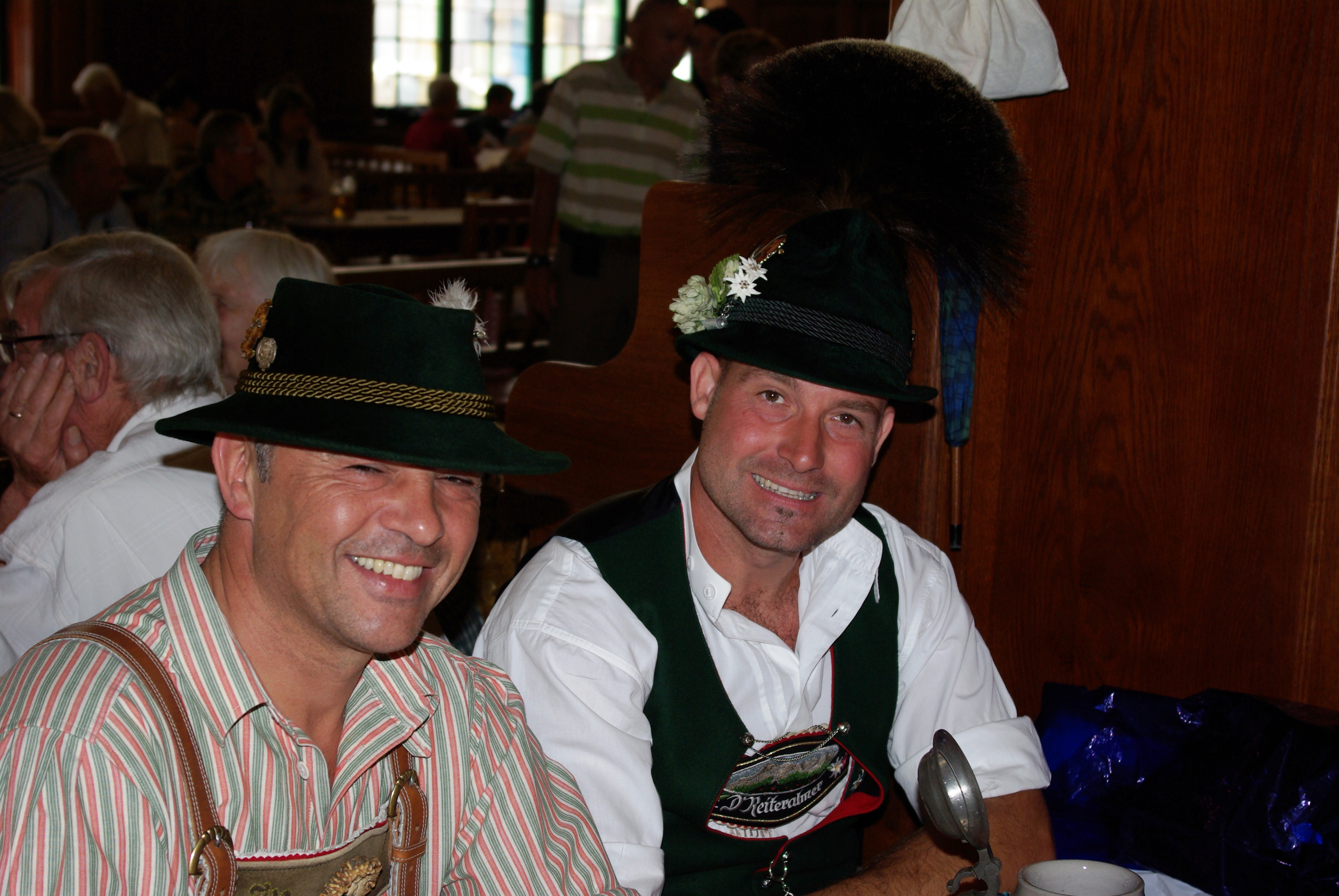
When I entered that vast temple to beer, sausage and sauerkraut, I instantly felt like I had been there before, and indeed I had when I read Paddy’s finest work. Instantly I wanted to visit the chamber bursting with SA men singing ‘Lore, lore, lore’, and overweight young German burghers ‘as wide as casks ’ who were ‘… nimbly, packing in forkload on forkload of ham, salami, frankfurter, krenwurst, and blutwurst’ and lifting stone tankards ‘for long swallows of liquid which sprang out again instantaneously on cheek and brow.’ Had it not been for the fact that this was midday instead of night I am sure I would have found it barely changed, save for the SA men, whose children and grandchildren (all ageing now) have taken up residency.

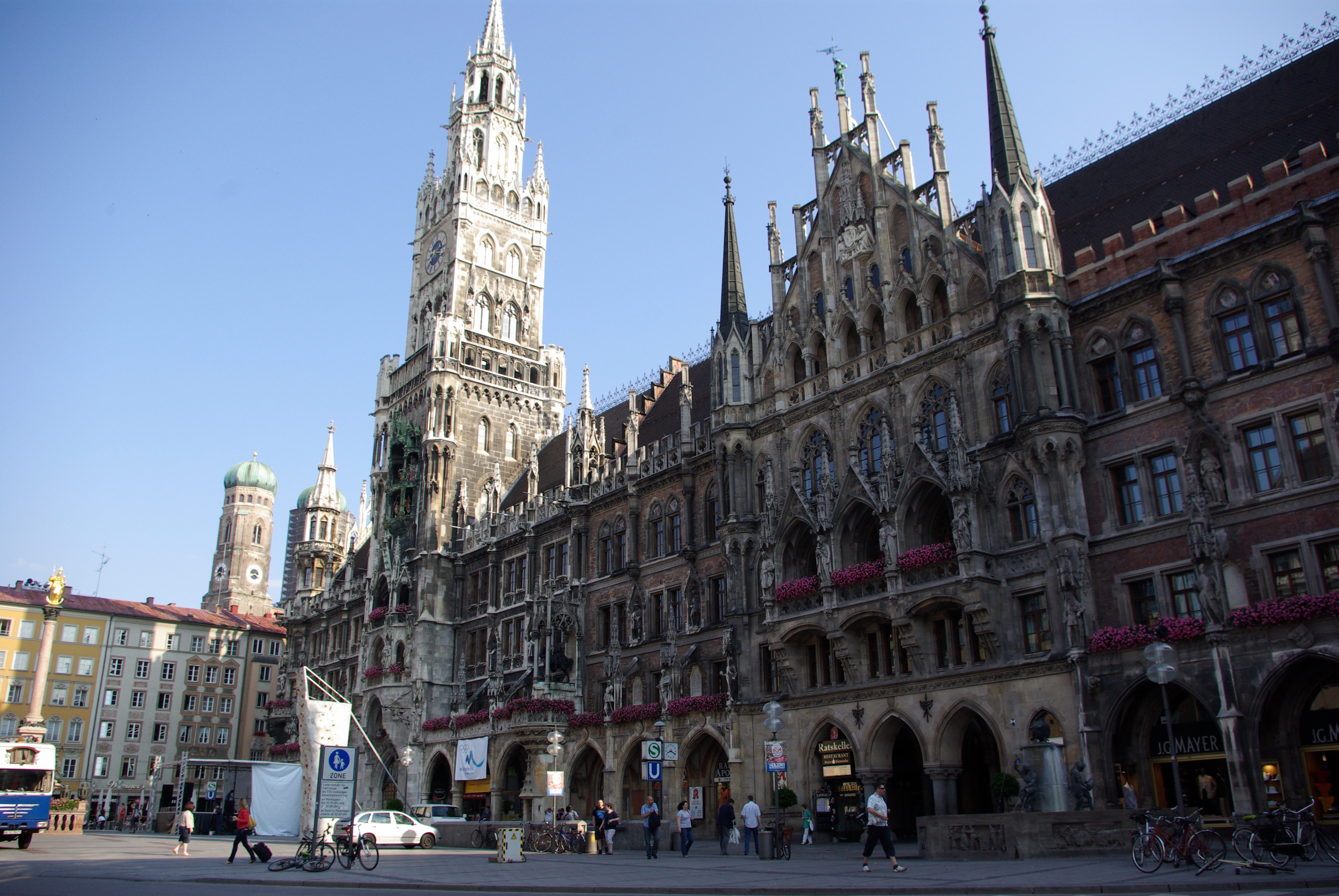
The Rathaus Munich

My wife and I were in Munich after taking the overnight sleeper from Paris Est to Munich on our journey to see the Passionspiele at Oberammergau. We had arrived at the relatively ungodly hour of seven o’clock in the morning and had seen Munich come to life on a Saturday morning.

At that time of day the air has a freshly bathed, cool freshness that excites all the senses. The Alt Stadt was almost exclusively ours apart from some stall holders preparing their wares of ripe and juicy, brightly coloured fruit and vegetables for the Saturday market; two young men demonstrating their ability on MX bikes beside a fountain; and a couple of drunks who had obviously made the most of the warm Friday evening and had now belatedly discovered that the party was over.

During the war Munich was severely bombed by the Americans. I recall when on a NATO course at the German Pioneerschule in the 1980’s a particularly loud American officer asking in all seriousness, whilst we were on a tour of the city, “How the hell did we miss that?” when seeing the massive towers and basilica of the Dom. Well, of course the USAF did not miss it. Seventy per cent of Munich was destroyed by the bombing and after the war there was a serious proposal to abandon the city and rebuild nearby. Fortunately for the Hofbräuhaus (which sustained minor damage), and for us, it was decided to rebuild the city. Many of the older buildings, as with so many German cities, were painstakingly restored. The Dom and the Hofbräuhaus were amongst these.

Following a morning of strolling around the centre, visiting some of the sights, drinking känchen’s of schokolade and eating cinnamon flavoured kuchen I was desperate to find the Hofbräuhaus. I was determined we would not to make the same mistake as Paddy and end up miles away; although the prospect of doing so and having a couple of himbergeist to see us on our way was not so unappealing!

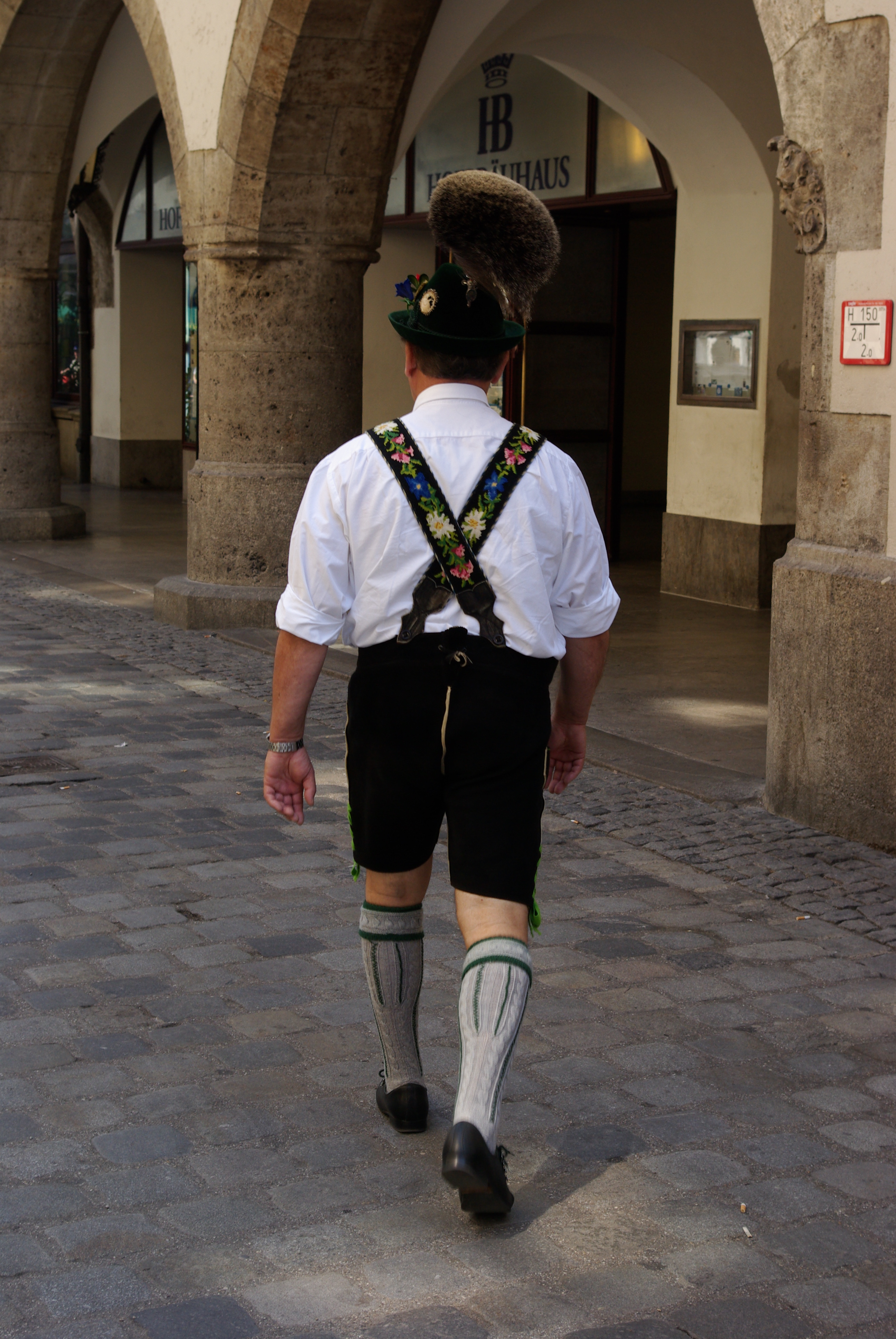
We followed a lederhosen clad gentleman …

Inadvertently we had somehow attached ourselves to an American tour party and listened patiently whilst the bored German tour guide briefed them all on practical logistics like not entering their PIN number more than twice in those mysterious, rapacious German cash machines, and what they might see on their one hour of ‘freedom from the group’ until it was time to meet up again, climb into their coach and visit yet another city – ‘It’s Saturday it must be …..’

When it came to question time I asked where I might find the Hofbräuhaus. The guide looked quizzically at me, thinking I must have some obscure mid-western American accent (when had I joined her group???) and told me in all seriousness that eleven o’clock in the morning was rather too early to make such a visit and drink beer. I persisted and reluctantly she gave me directions.

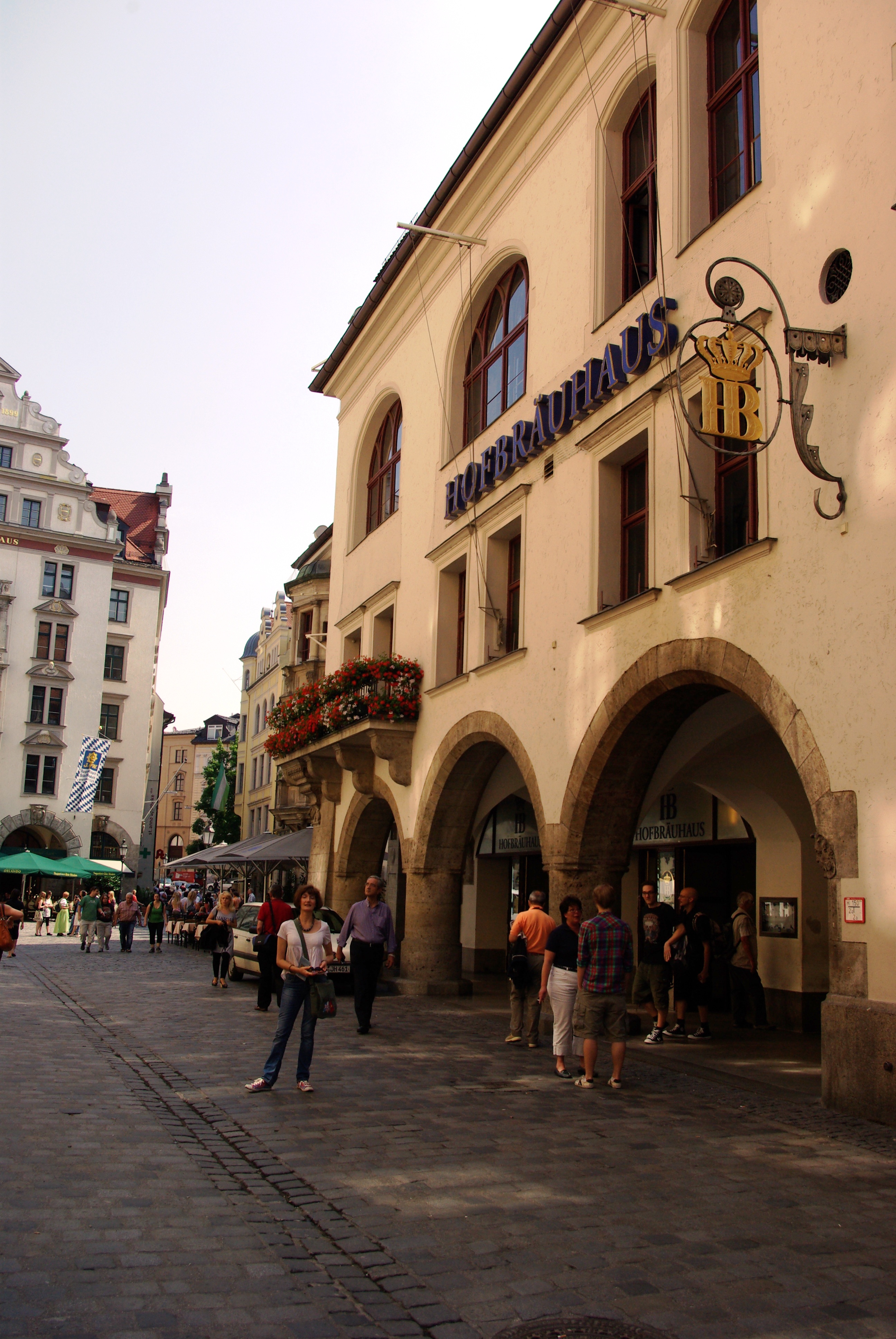
Hofbrauhaus exterior

We walked in the sunshine past the old schloss and down a lane to the ‘slanting piazza’ but I do not recall the ‘Virgin on a column presiding over all she surveyed.’ We followed a lederhosen clad gentleman wearing a traditional Bavarian felt hat which was adorned by the most amazing plume, reminding me of something that may have been worn by a Roman First Spear Centurion to enable his men to identify him in the midst of battle.

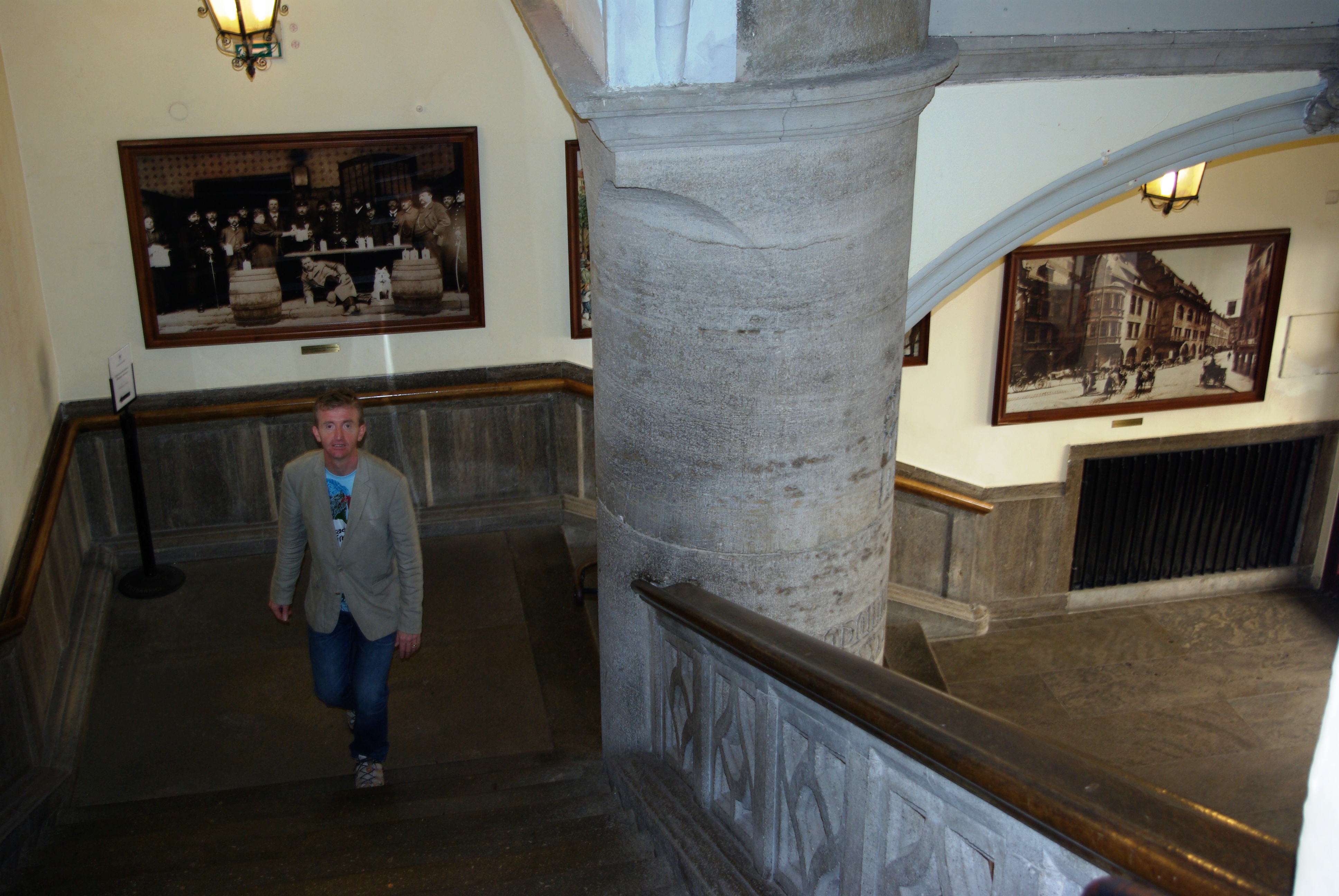
There before us was our goal. Gothic and grand just as Paddy described it. We entered through wide doors underneath the rolling Gothic arches and walked up those vaulted stairs which survived the damage of the war. It was here in January 1934 that Paddy encountered his Brownshirt. The steps are now lined with photographs, one of a maternal looking frau holding eight heavy steins full of the cool, golden Hofbräuhaus beer. Perhaps she had served Paddy on that famous, alcohol fuelled night?

The Hofbräuhaus has four floors devoted to the adoration of beer, sausage and pretzels, where the weary, penitent pilgrim can atone. Each floor is decorated in a different style with a large communal drinking hall, and a number of smaller private function rooms (all of which are for hire). It was on one of these higher floors that Paddy stumbled into the hall full of ‘SS officers, Gruppen and Sturmbannfuhrers, black from their lightening-flash-collars to the forest of tall boots underneath the table.’

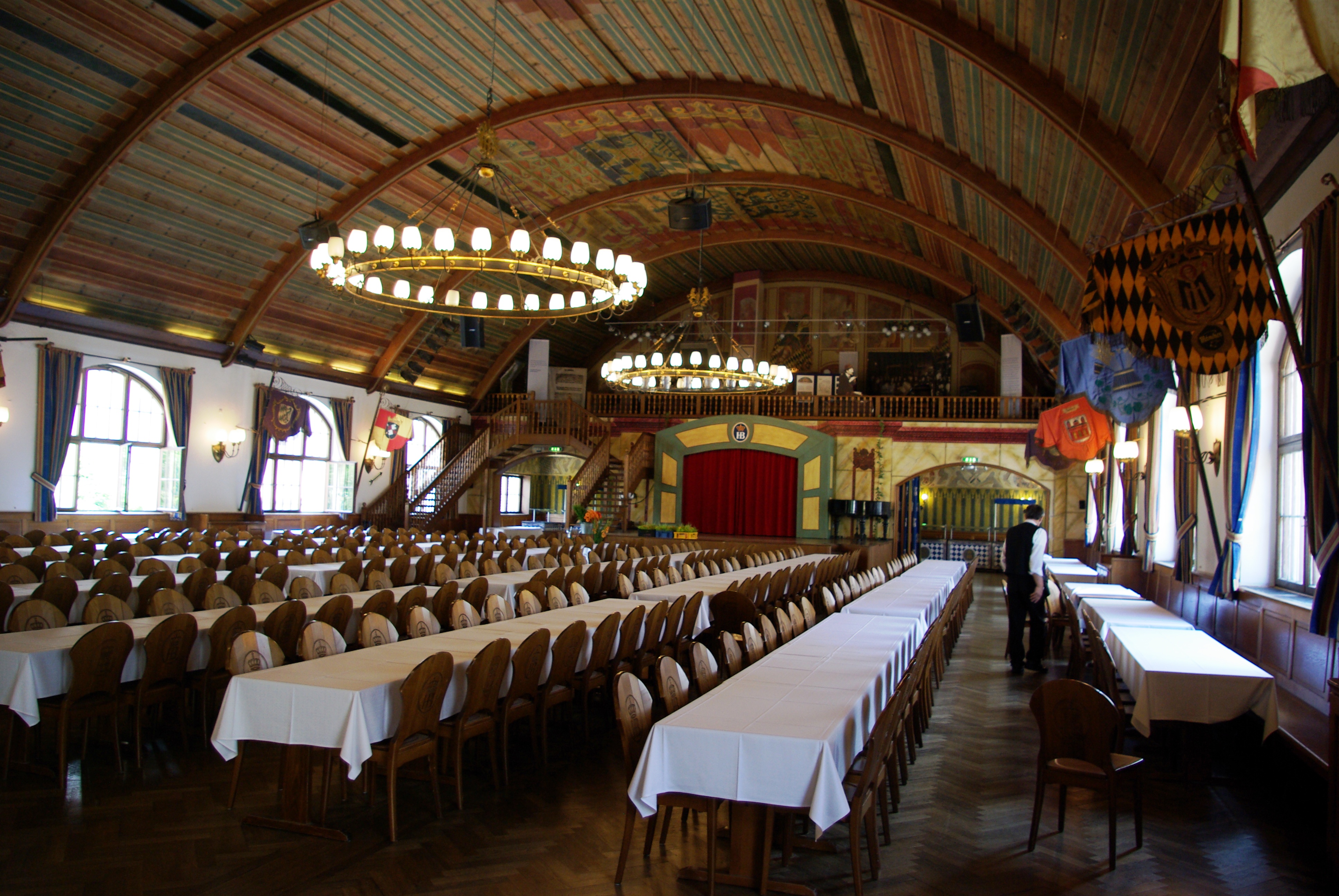
The highest floor is dominated by a large parquet floored room with a vaulted ceiling colourfully decorated with the predominantly pink and blue frescos of Bavarian coats of arms. This, the Festival Hall, was built in 1589. It is light and airy with broad windows on each side, large chandeliers and is dominated by a small stage with heavy, theatrically red, velvet curtains. The Hall can seat over 900 on its long tables arrayed in neat rows before the stage, and gives the impression of being eternally ready for a party. Indeed on the occasion of our visit, it was being prepared for the post- Abitur celebration for a very lucky young girl. The mood darkens somewhat when you know that it was in this very room, standing on that same stage, that the ambitious politician Adolf Hitler addressed his followers in the early days of the National Socialist Party in the late 1920’s and early 1930’s.

Hofbrauhaus Festival Hall

Given the passage of time this place has ceased to have any sinister effect, but it is a sobering thought, and it brought to life a period of history, and its aftermath, that has come to dominate my generation, and certainly those preceding us.

In Adolf’s steps?

It was about this time that I needed to answer the call of nature and I sought out a gentleman’s lavatory. Finding one at the end of a corridor leading from The Festival Hall, I hypothesised that perhaps Hitler had, on more than one occasion, made this same trip, accompanied by Herman Göring, and discussed the finer points of how to grab political power, create a Third Reich, and bring revenge on all those who had sought to so humiliate Germany via the Treaty of Versailles.

Like Paddy we were now guided right down to the bottom of the stairs, out of the doors and back through another larger door on the ground floor. After passing the obligatory ‘Hofbräuhaus shopping experience’ we entered a new hall where the ‘vaults of the great chamber’ did not fade ‘into infinity through blue strata of smoke’ as this was, unbelievably, 21st century, smoke-free Germany.

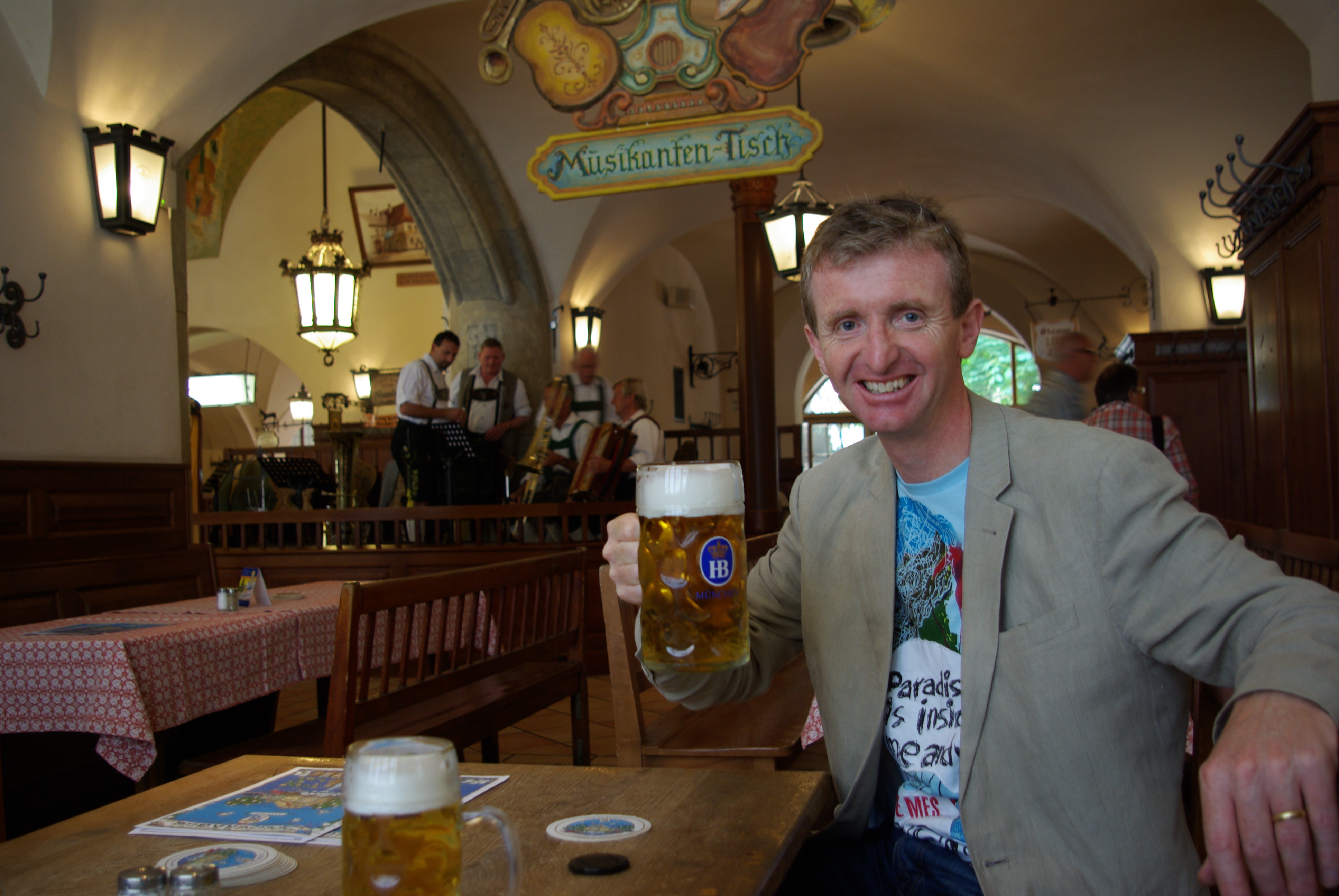
Drinking cool beer in The Schwemme

It was here that Paddy found the part of ‘the Bastille’ he was seeking. The Schwemme is a huge, richly frescoed hall that wound this way and that, past herculean stone pillars, toward the altar of Hofbräu beer where a small army of male and female waiters attend upon the fountain of beer pouring forth litre upon litre of the marvelous nectar. And it did not stop there. What Paddy would have missed on a dark, cold, snowy night in 1934 was the courtyard beer garden which by now was filling with locals and tourists all keen to bathe in the unique Hofbräuhaus atmosphere.

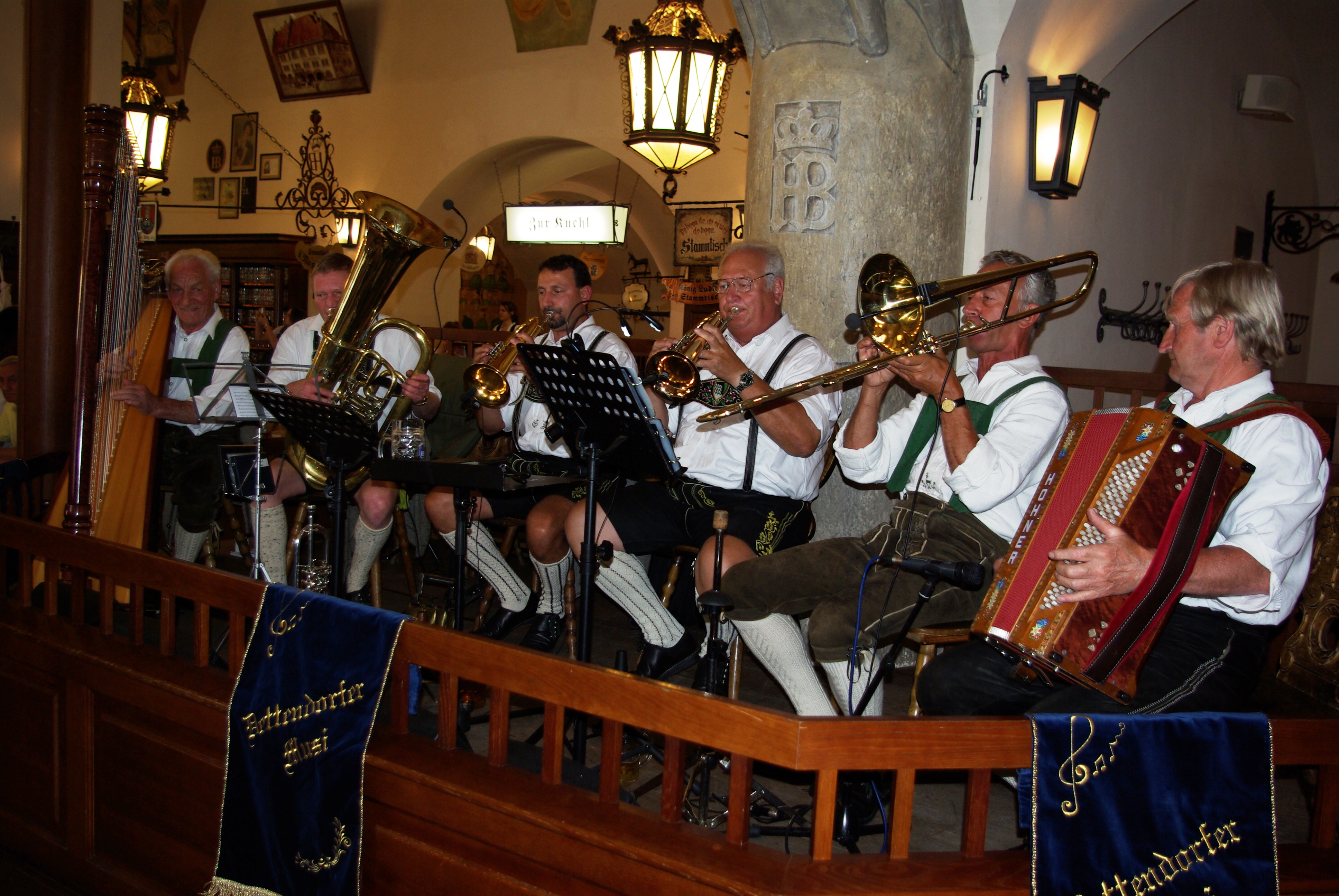
If you visit the website of the Hofbräuhaus you will see it includes a list of ‘regulars’; those who attend ‘services‘ on a regular basis, with the specific visit days recorded. They have reserved seats and for larger groups, or even families, whole tables are kept for them so that they can indulge and worship whilst listening to the suitably attired Bavarian band that have a dedicated stage in the centre of the hall.

Hofbrauhaus Regulars

The band plays on

We had arrived early, at around 11.00 am and had spent forty-five minutes or so making our tour of the building. It was quiet, with just a few other like minded souls wandering around and the staff getting ready for the rush ahead. By midday we had chosen a table and ordered our first refreshing litre of beer, a Würstlplatte  and Spanferkel  (read the menu in English here). The Schwemme was now filling with crowds of locals and tourists alike and the band had struck up. If you want to visit the Hofbräuhaus to look around and then eat and drink as we did, I would recommend going early.

It was a wonderful visit, and one that was brought to life even more as we imagined that young traveller avoiding the Brownshirts and knocking back beer with the farming folk he found in the Schwemme. One thing that has not changed is the hospitality and friendliness of the Bavarian people, and it was with some reluctance that we walked out of the Hofbräuhaus into bright sunshine to a now busy city to catch our train to Oberammergau.

Now, where did I leave my rucksack?

A different version of this article was first published on the Patrick Leigh Fermor blog 26 July 2010.
He Drank From a Different Fountain

I was going to wait a little longer to change the subtitle of the blog but I have decided to go ahead now. Clearly “The Greatest Living Englishman” is, sadly, no longer appropriate.

My proposal, which is currently on display in the header, is to change it to “He Drank From a Different Fountain.”

This is a clear reference to Paddy’s description of the bond he recognised had developed between himself and General Kreipe as they quoted Horace on Mount Ida during the evasion phase post-kidnap. I also think that it reflects the passing of Paddy and those of his generation who definitely had different values to those seemingly valued by Western society today. Perhaps also a melancholic recognition that we who remain will not have the same opportunities, no matter how much we might wish otherwise.

I am very open to other constructive suggestions and this change is not final. If you feel you would like to suggest an alternative please add a comment here or email me. All will be considered.

On a slightly different point I should like to say how appreciative I am for all the kind words about the Blog over recent days. Many of you have said how valuable it has been to you. Please continue to add your comments and carry on making suggestions for articles and links to other sites. If you have any personal anecdotes they may well be of value to those who wish to carry out research in the future.

Since Friday there have been over 25,000 visits, and it has surpassed 100,000 since I started it just over one year ago. It goes to show the level of interest and respect that there is for Paddy and his friends and wartime colleagues. They were great men and women who did indeed drink from a different fountain.

New blog page – Your Paddy Thoughts

I have created a new page where anyone can post comments about Paddy’s life, his work, friends … in fact anything vaguely related to Paddy. With a life spanning 96 years there is a lot we can write about and share with each other.

Don’t be shy, you can even be un-British and be a bit emotional. No-one will mind. It is important that we share our thoughts about the Greatest Living Englishman.

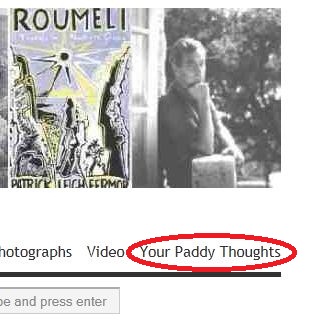
You can find the page at the right-hand end of the navigation menu in the header … for the non-technical here is a picture!

Ein Patrick-Leigh-Fermor-Abend 31 May, Literaturhaus Hamburg

Time: Tuesday, May 31 · 8:00pm – 11:00pm

Literaturhaus Hamburg

Schwanenwik 38
22087 Hamburg


Sich in die Welt zu begeben, eigene Erfahrungen mit den Sitten und Lebensformen anderer Länder zu vergleichen, das ist ein Reiz, dem sich Schriftsteller kaum entziehen können. Seit den Anfängen – man denke an Homers „Odyssee” – ist die Weltliteratur auch eine Literatur des Reisens und des Heimkehrens. Erbauungs-, Abenteuer-, Pilger- oder Kulturreisen bilden das unerschöpfliche Repertoire, und die steigende Mobilität im 20. und 21. Jahrhundert führt dazu, dass sich Autorinnen und Autoren immer häufiger aufmachen, die Welt zu erobern und das Gesehene literarisch – in Reportagen, Essays oder Romanen – festzuhalten.
Das Literaturhaus verfolgt diese Zusammenhänge in seiner Reihe „Unterwegs in der Welt” und präsentiert das Werk eines der bedeutendsten Reiseautoren der Weltliteratur: Sir Patrick Leigh Fermor. 1932 wurde er in Canterbury der Schule verwiesen, weil er sich „in ein Mädchen beim Gemüsehändler verguckte”. Während der Aufnahmeprüfung in die Armee hatte er die fabelhafte Idee, nach Konstantinopel zu wandern (nachzulesen in den Bänden „Die Zeit der Gaben” und „Zwischen Wäldern und Wassern”). Drei Jahre lang organisierte er als britischer Agent auf Kreta den Widerstand, konnte 1944 den deutschen General Kreipe gefangen nehmen und wurde ein Held. Fermor reiste in die Karibik, wo der Reisebericht „Der Baum des Reisenden” und „Die Violinen von Saint-Jacques”, sein einziger Roman, entstanden.

Patrick Leigh Fermor zählt zu den bedeutendsten englisch-sprachigen Reiseschriftstellern. Er lebt heute, 96-jährig, in der Mani, Griechenland. Die Berliner Kritikerin und Autorin Gabriele von Arnim lässt sein außergewöhnliches, vom Zürcher Dörlemann Verlag mustergültig wiederaufgelegtes Werk Revue passieren und hat Textstellen ausgesucht, die Christian Brückner – wir ahnen es – mustergültig vortragen wird.

EINTRITT 10,-/8,-/6,- EURO

Further details here.

Thos Henley and the inspiration of Patrick Leigh Fermor

Some of you will now be familiar with the work and music of Thos Henley from a few previous articles on the blog. Thos describes Paddy as one his main inspirations.

As you go about your busy lives maybe you can take a few minutes to listen to my favourite Henley song ‘Another Brother’ in which Thos sings about the intellect of Patrick Leigh Fermor’. Click on the picture to play.

Related articles:

Lawrence Durrell and Patrick Leigh Fermor by Thos Henley

I knew Patrick Leigh Fermor through his words, and he will know me by mine

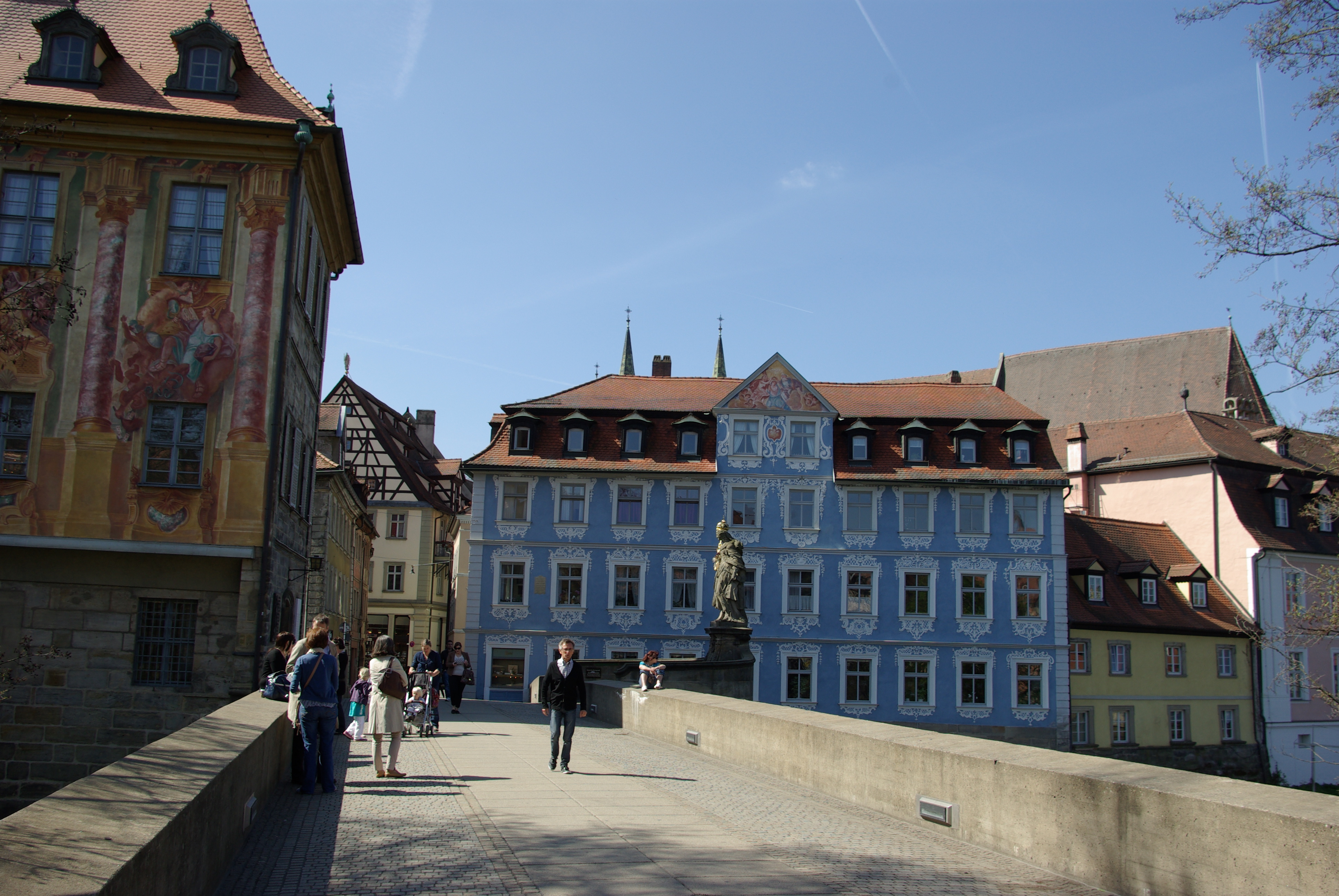
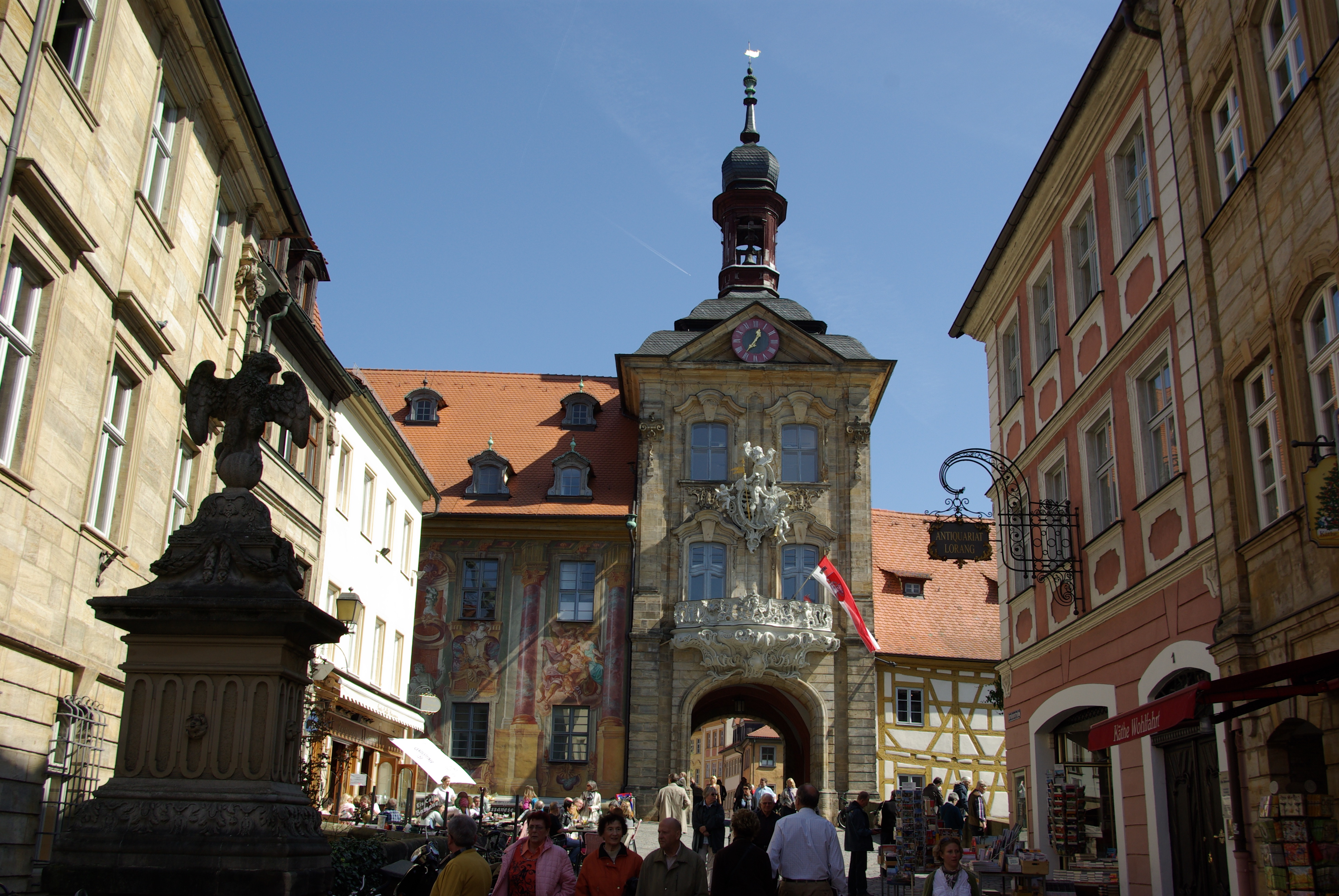
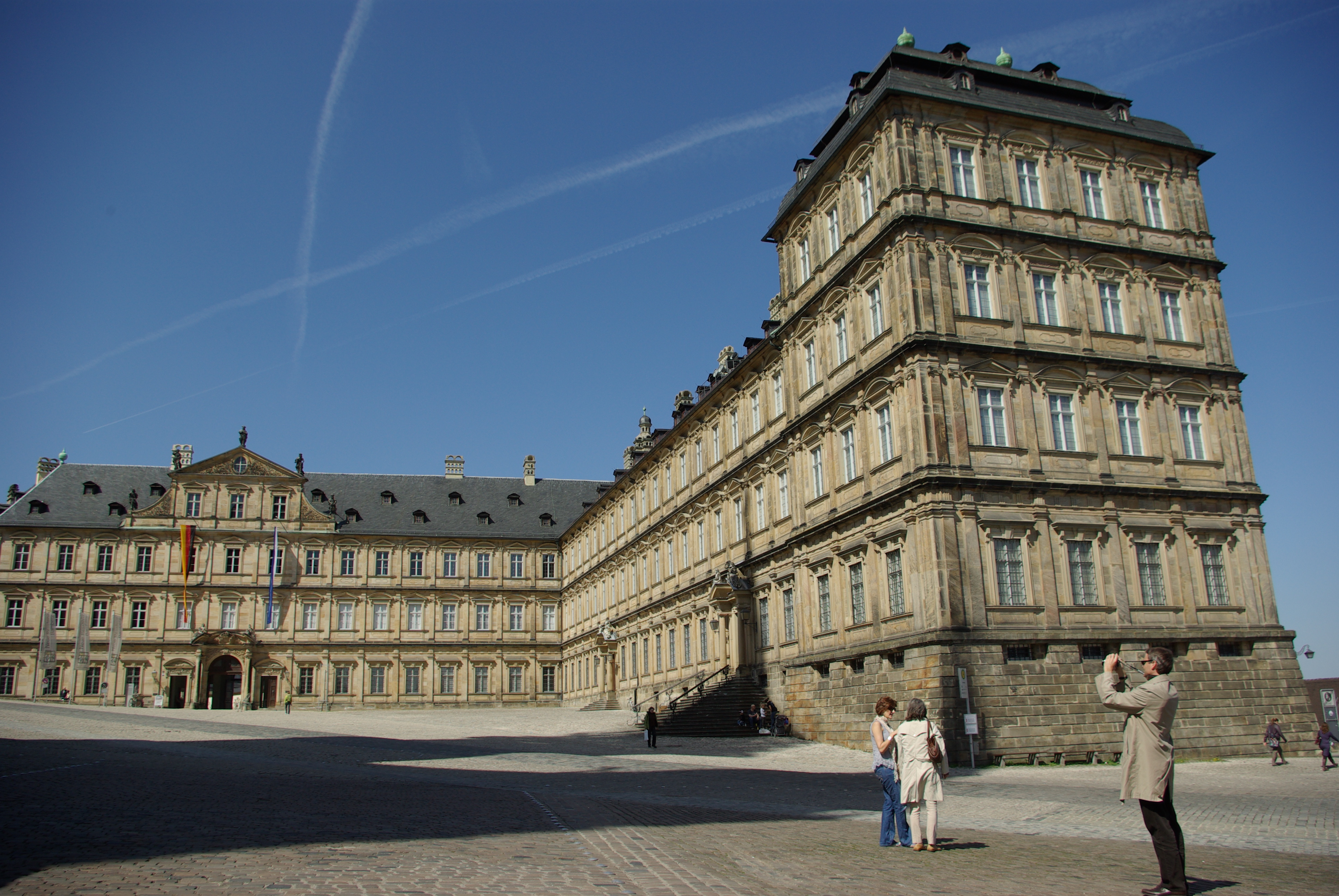
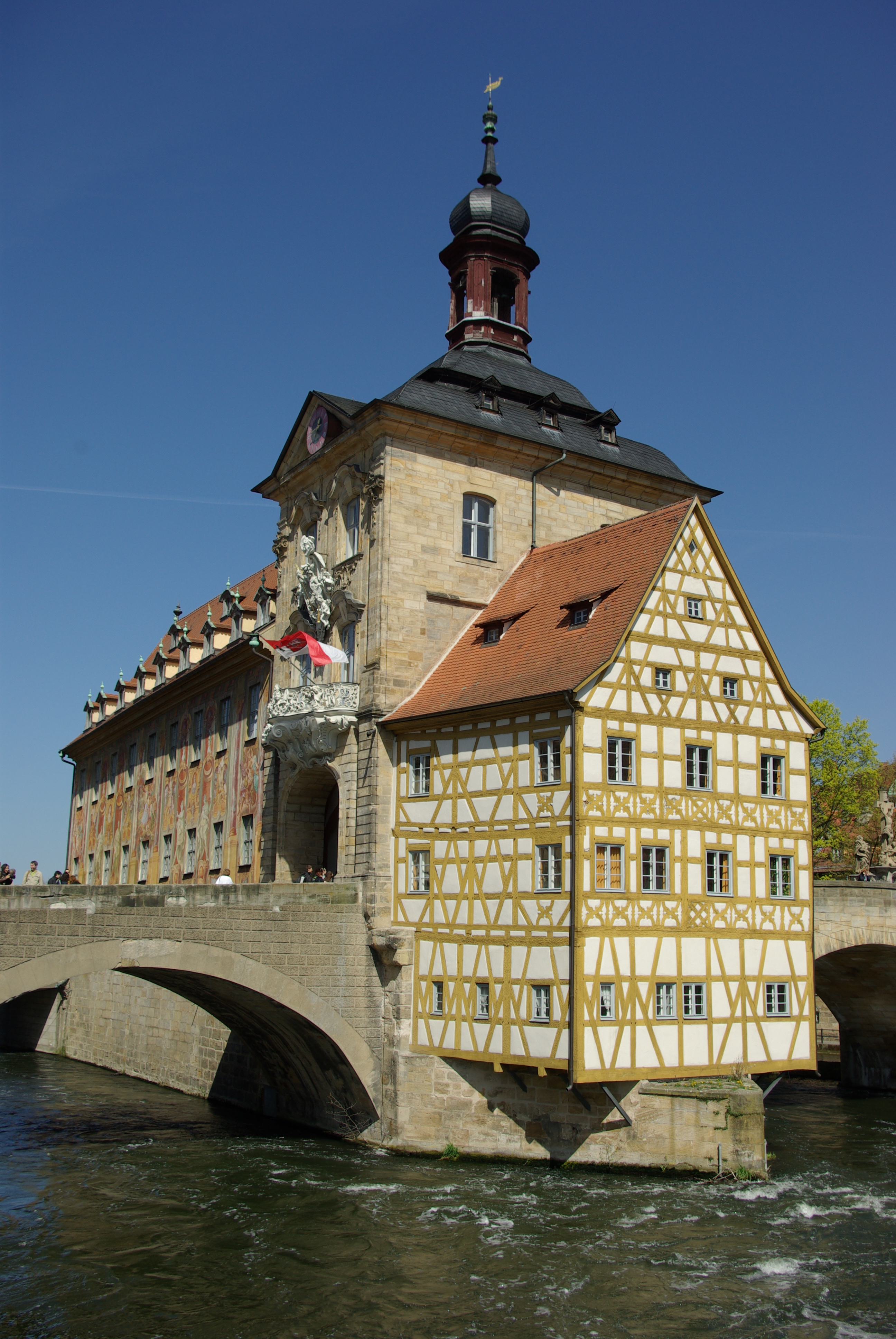
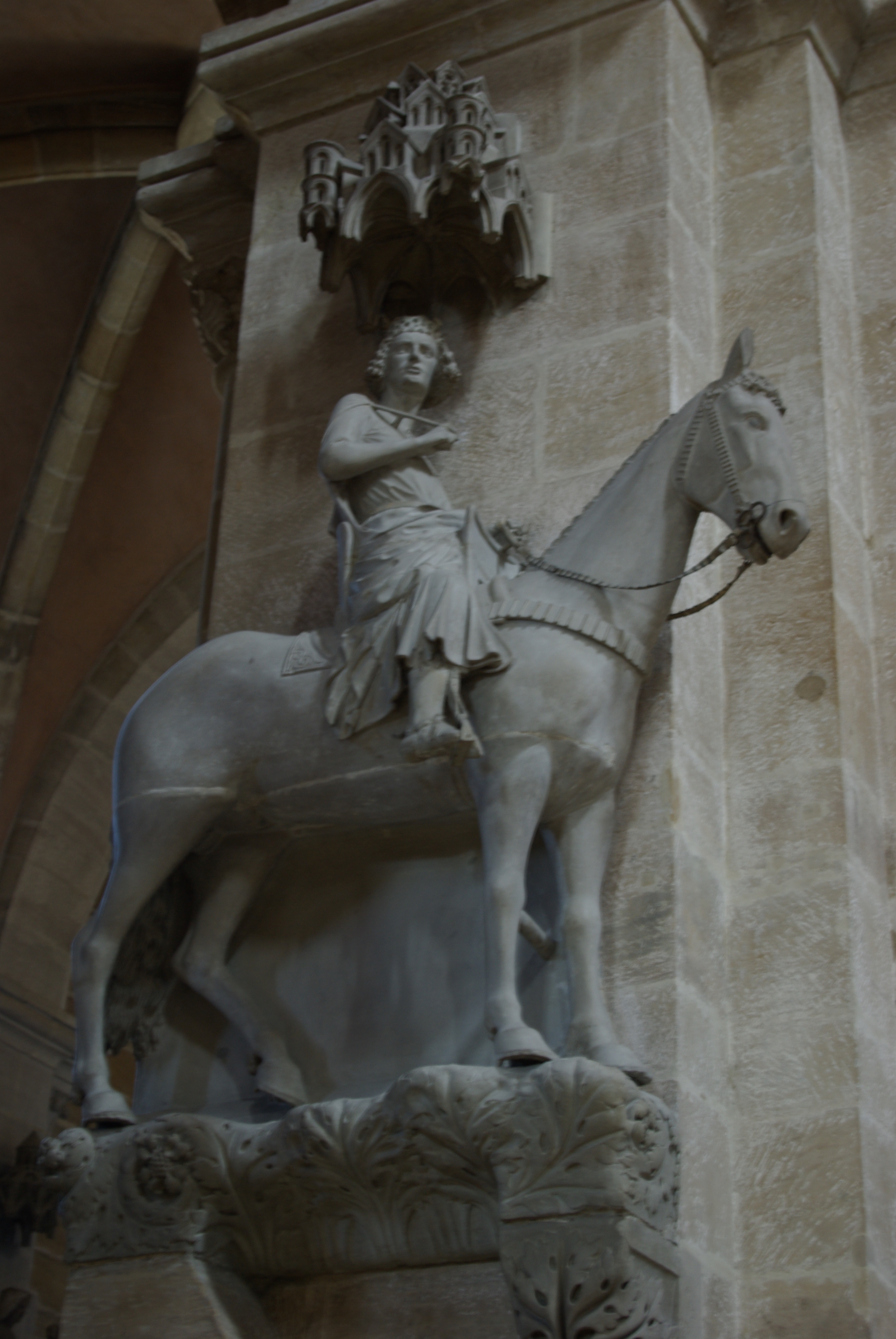
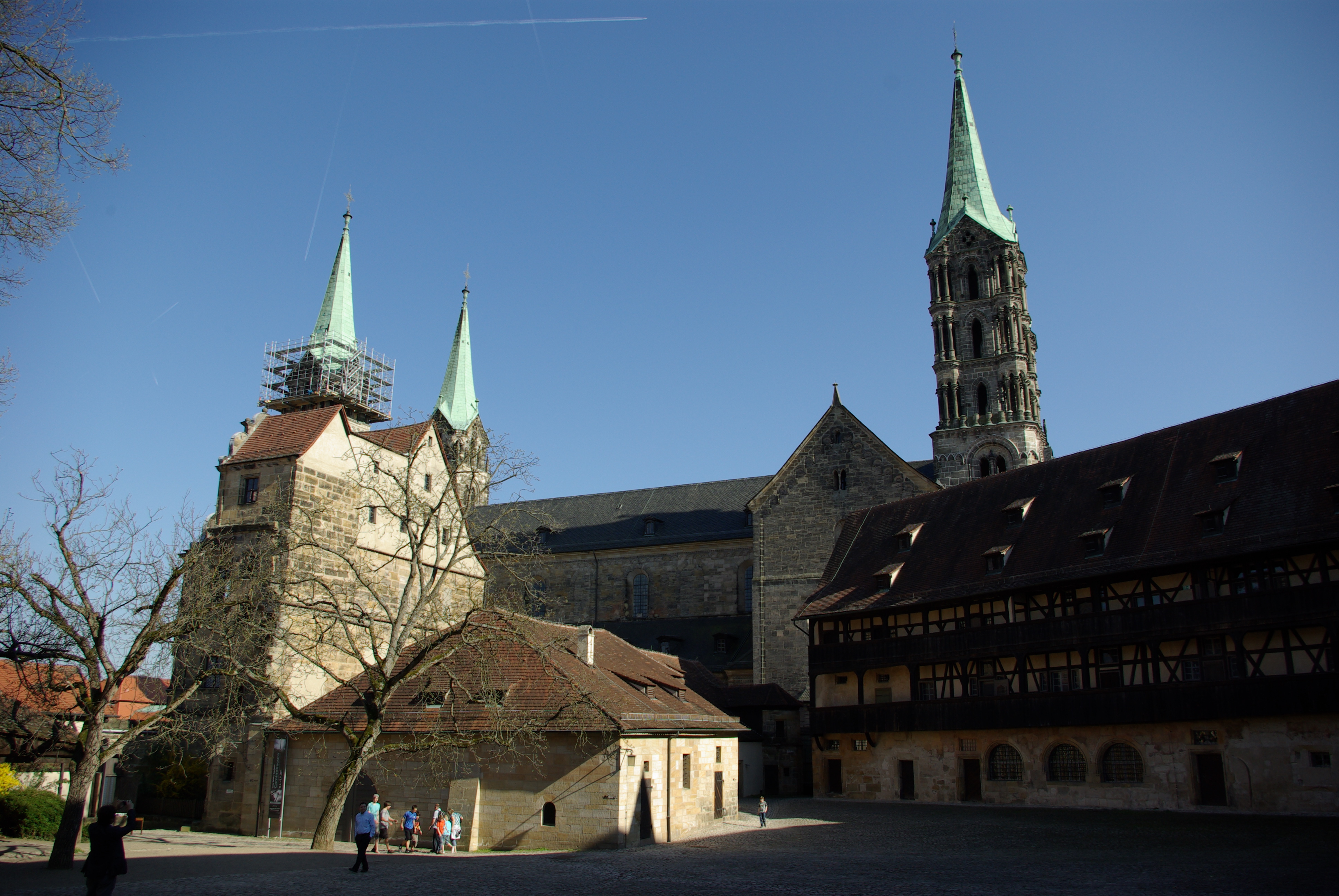
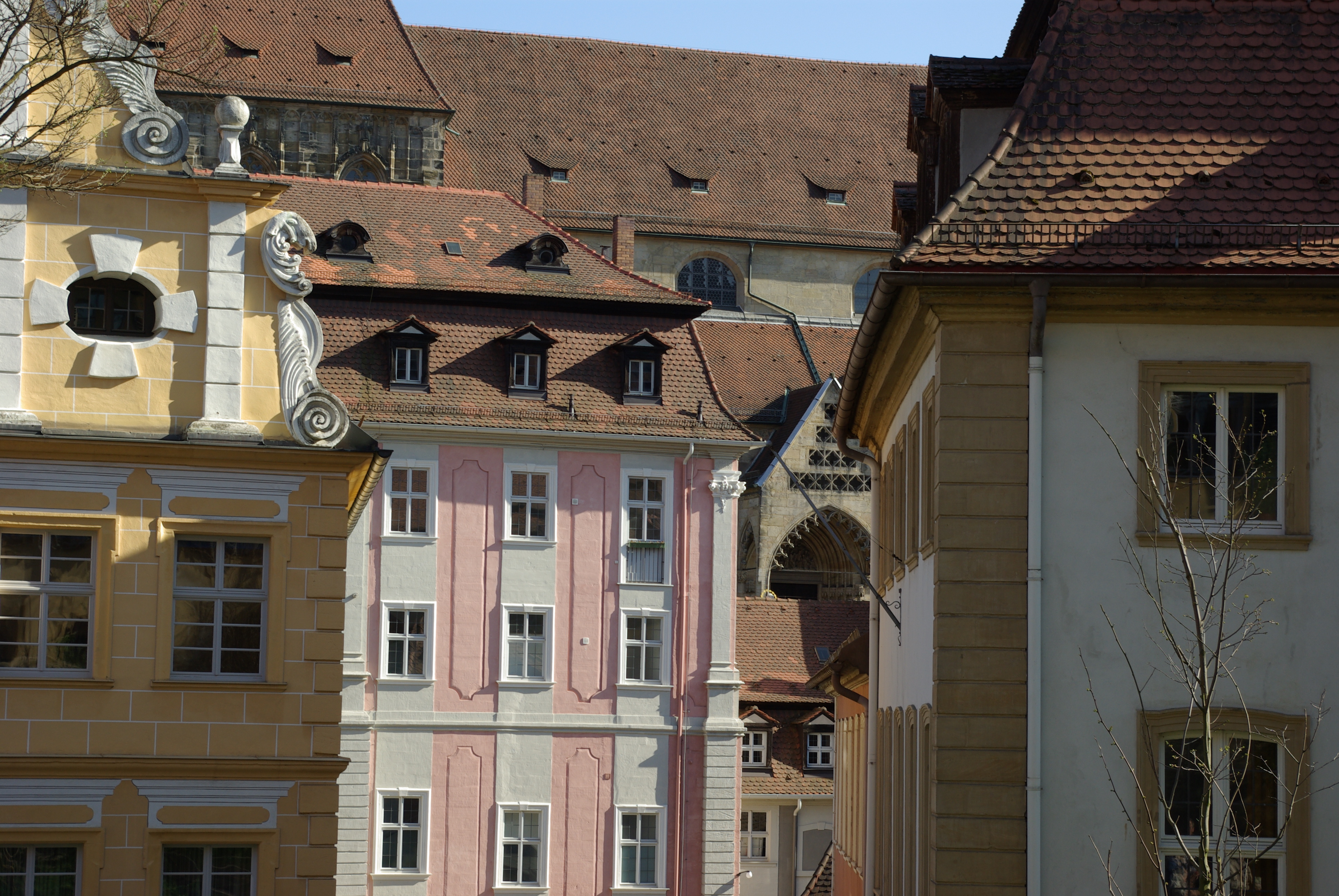
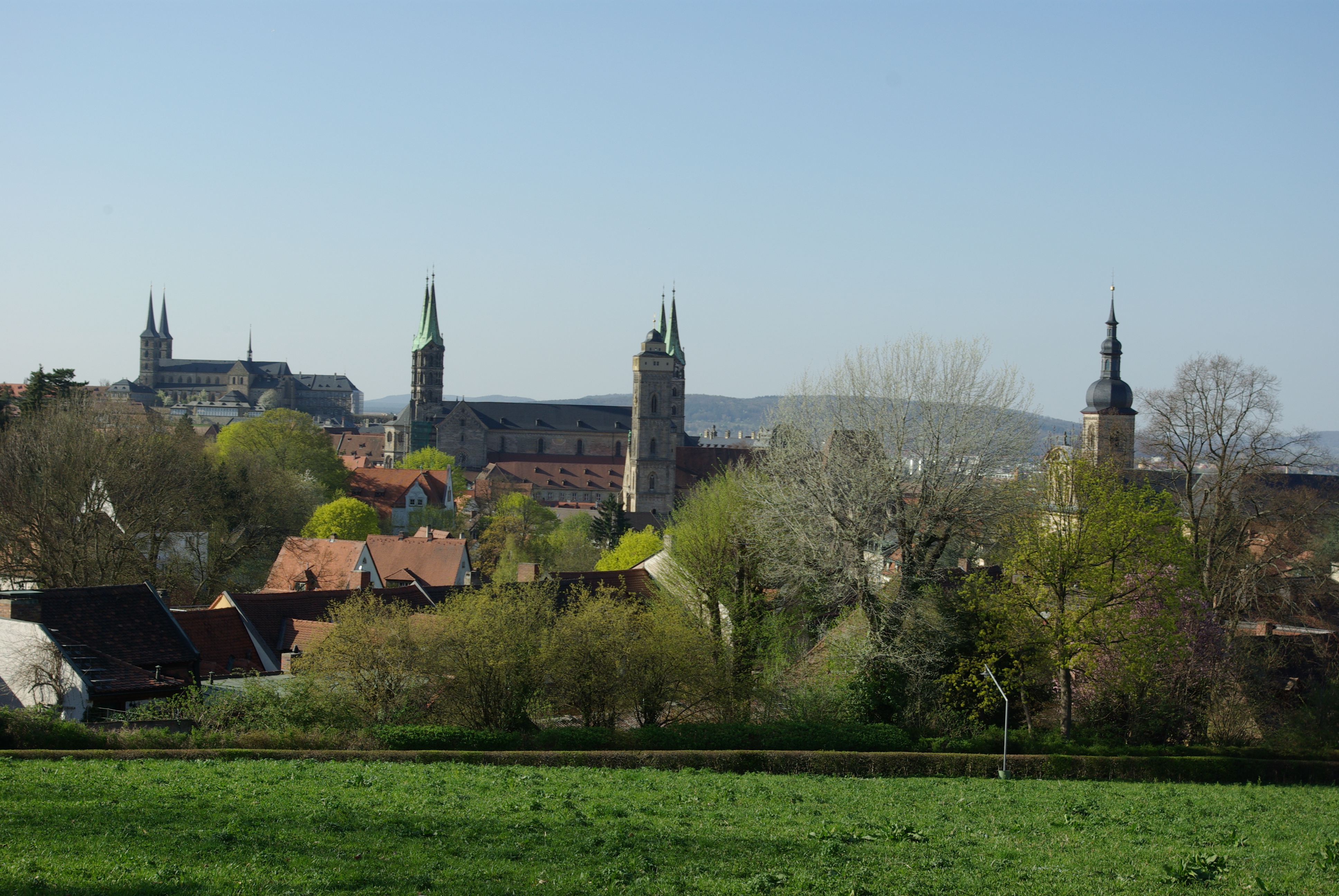
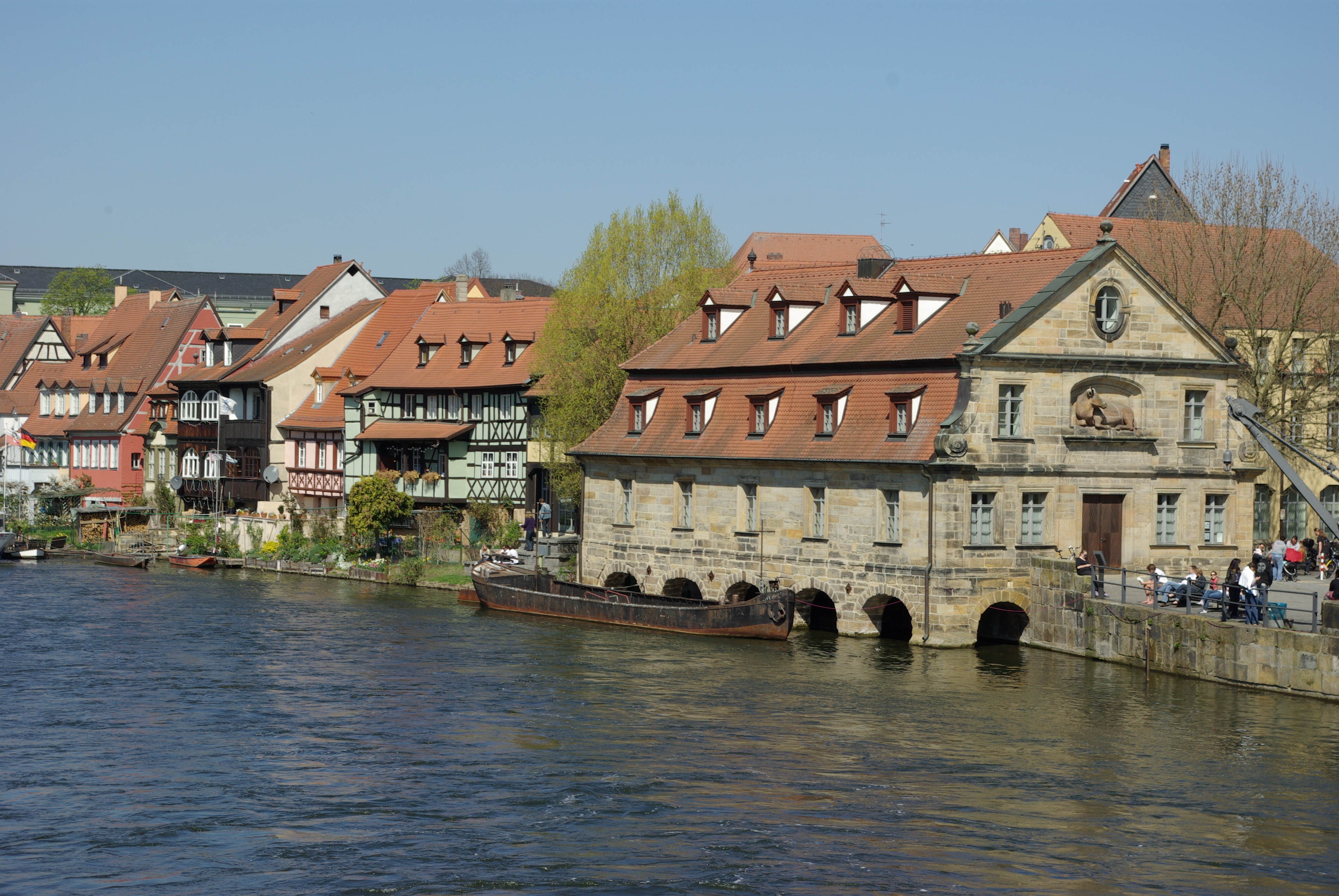
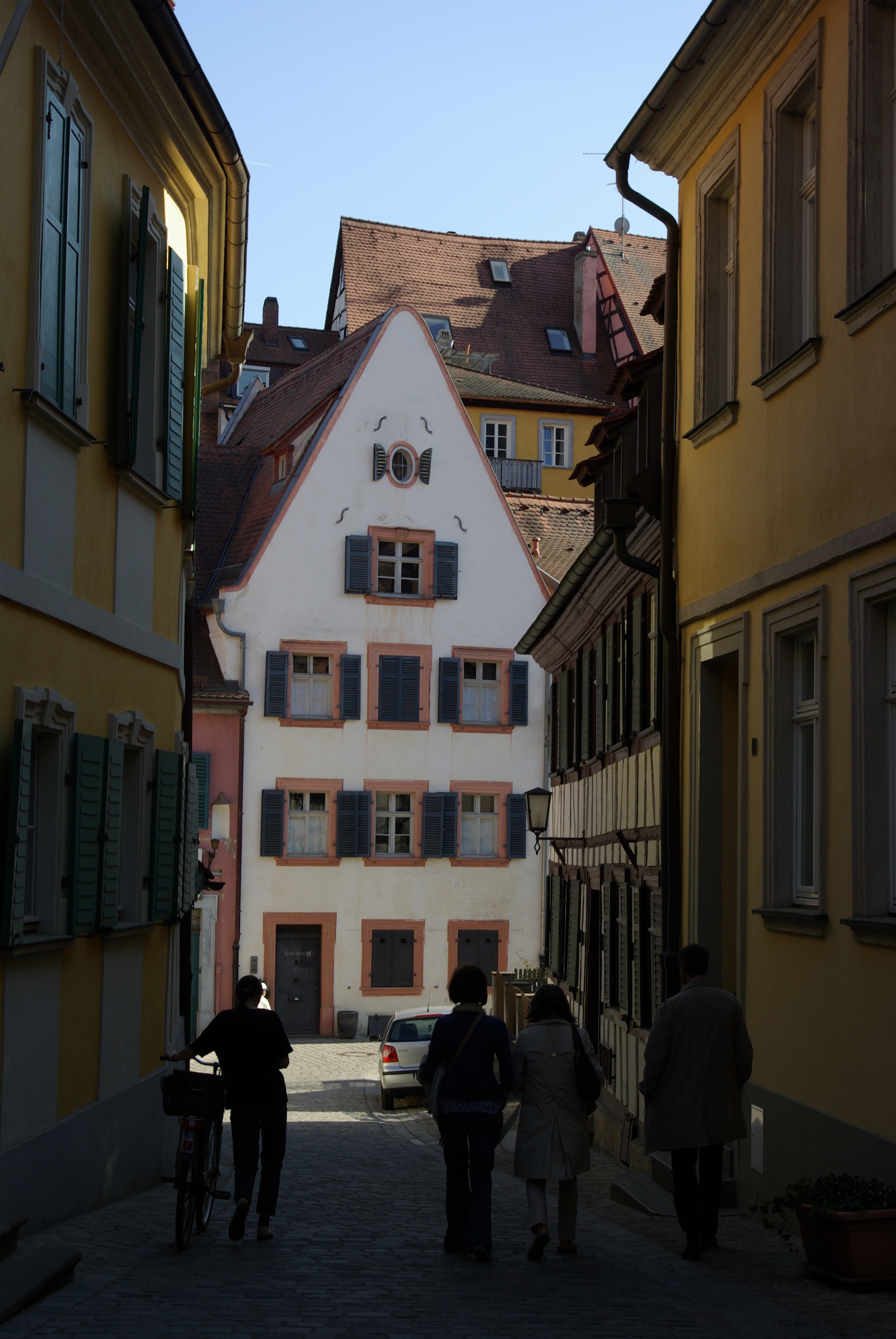
Bamberg

I am in Franconia this weekend, an area that as far as I know Paddy has not visited. It is however typical of the type of country that Paddy would have walked in 1934. The unsploit city of Bamberg, 80 km east of Wurzburg, is preserved almost as Paddy would have found any German city prior to the war.

Subscribe to the Patrick Leigh Fermor blog!

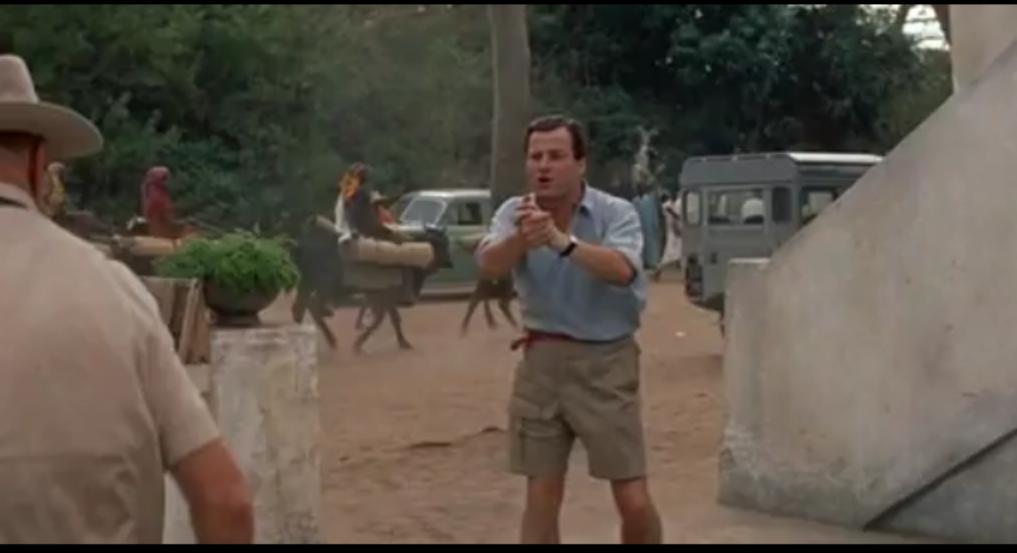
Patrick Leigh Fermor's run-on part in The Roots of Heaven

If you would like to keep up to date with the blog postings (of which there are many more to come I assure you!), why not subscribe to the blog?

It is easy. Enter your email, just in the top right –> where it says ‘Email Subscription, and you will receive an alert each time a new post appears; that is all. No spam!

I hope you enjoy ferreting around the blog. It is amazingly popular (well of course it is Paddy who is popular) with close to 6,000 visits a month so you will not be alone!

If you have an article or would like to share something you would like the world to see that concerns Paddy, or his friends and colleagues, please get in touch with me either by a comment or email tsawford[at]btinternet.com, and I will publish it with full credit to you.

Happy Reading!

Tom

Darkness is my closest friend

Kaiaphas was the Chief Priest in Jerusalem around AD 30. Beside his house which faced the Mount of Olives, was a long flight of steps than ran from Mount Zion to the base of the Kidron Valley.

It was down these steps that Christ would have walked after the Last Supper to the Garden of Gethsemane to begin his vigil and await his inquisitors. When he was arrested he would have been forcibly taken back up these steps to the house of Kaiaphas to face his interrogation.

The site of the house has been accurately identified and on the lower levels there are places that served effectively as dungeons. One of them was a cell that was a pit from which there was no escape. Whilst this was only rediscovered relatively recently, it was known in Byzantine times as we find numerous Byzantine crosses carved into the limestone as marks of reverence.

As I stood in that pit today, looking up at the circular exit in the roof which was the only way in and out, I thought of the mixed emotions running through Christ’s mind, who knew his own fate, as I listened to Psalm 88, the psalm of prisoners:

Lord, you are the God who saves me;

day and night I cry out to you.

May my prayer come before you;

turn your ear to my cry.

I am overwhelmed with troubles

and my life draws near to death.

I am counted among those who go down to the pit;

I am like one without strength.

I am set apart with the dead,

like the slain who lie in the grave,

whom you remember no more,

who are cut off from your care.

You have put me in the lowest pit,

in the darkest depths.

Your wrath lies heavily on me;

you have overwhelmed me with all your waves.

You have taken from me my closest friends

and have made me repulsive to them.

I am confined and cannot escape;

my eyes are dim with grief.

I call to you, Lord, every day;

I spread out my hands to you.

Do you show your wonders to the dead?

Do their spirits rise up and praise you?

Is your love declared in the grave,

your faithfulness in Destruction?

Are your wonders known in the place of darkness,

or your righteous deeds in the land of oblivion?

But I cry to you for help, Lord;

in the morning my prayer comes before you.

Why, Lord, do you reject me

and hide your face from me?

From my youth I have suffered and been close to death

I have borne your terrors and am in despair.

Your wrath has swept over me

your terrors have destroyed me.

All day long they surround me like a flood;

they have completely engulfed me.

You have taken from me friend and neighbour —

darkness is my closest friend.

Masada shall never fall again

Despite taking water from the Jordan to irrigate many thousands of hectares of land, much of southern Israel remains stony desert with just the occasional acacia tree clinging to life. To the east of the rift valley are the mountains of Moab in Jordan which was as far as Moses was permitted to come as he could not enter the Promised Land. Between those hills and those on the Israeli side is the still vast Dead Sea.

I was quite amazed by its size, even though it is diminishing rapidly by approximately 80 cm in depth per year. It is said that it will disappear completely in around ten years’ time, and already I could see large lagoons forming as the bed is exposed in certain areas.

The remains of the ramp built by the Romans to assault the fortress of Masada

As we headed south, out of the Israeli mountains the fortress of Masada rose sharply out of the rocky desert. We knew what it was without being told by our guide as it stands separate, proudly apart from the surrounding hills having been separated by an earthquake many millennia ago.

I took the option of walking up the Snake Path to the summit, the route that King Herod the Great would have taken to his palace on the northern edge. This is the route the Jewish Zealots would have used as they tried to hide away from the Romans of Vespasian and Titus during their brutal suppression of the Jewish revolt of the AD 60’s.

The ramp the Romans built from the western side to gain a position to assault the Jewish is still in place although much eroded. After all it is 2,000 years old. Amazingly you can still see many of the Legion camps and the siege wall the Romans would have built to contain the besieged Jews.

There are many doubts about Josephus Flavius’ account of the taking of Masada, and I wondered if he embellished the story in favour of the Jews, particularly the story of the mass suicide (certain archaeological evidence does cast some doubt on this). Josephus was a leader of the resistance to the Romans but when captured had gone over to them, and gained favour with Vespasian. Did he feel a pang of guilt as he realized that the taking of Masada meant the end of the resistance of his people? Did he try to make some amends by slanting some aspects of the story in favour of the Jews? We shall never know but the story of Masada is etched on the hearts of all Israelis, and to this day the Oath of their soldiers includes the words “Masada shall never fall again”.