Category Archives: Uncategorized

Testing email notifications for Followers

Hello dear readers. I have been told by a long-term blog follower who has signed up to receive emails that he has not been receiving them of late. There are over 700 of you signed up and I would be grateful if upon receiving this “post” you could email me at tsawford[at]btinternet.com to say that you have received it or add a comment to this post (click Leave a reply top left of post as shown in this picture) .

Capture10

This is just a test to see if the function is working correctly. If I get a few replies I will ask for a halt to stop my inbox being swamped! If I have none, then I know to contact WordPress to see what can be done.

If you appear to be having intermittent problems ie you receive some but upon visiting the site it appears that others might not have got through, it is worth checking your spam box and also to mark the notification email address as “not spam” and add to your safe senders list.

Thank you in anticipation for your help.

Tom

Natural Born Heroes: The lost secrets of strength and endurance

An interesting new perspective on SOE, the kidnap, why the SOE guys and gals were able to cope with the hardships of their particular kind of warfare, and how it may help us all live healthier lives. Well that appears to be the claim which we could take with a pinch of apparently unhealthy salt! A review of Natural Born Heroes: The lost secrets of strength and endurance
by Chrisopher McDougall.

by Chris Maume

First published in the Independent, 9 April 2015.

One of the most daring, madcap episodes of the Second World War was the kidnapping by Patrick Leigh Fermor, dirty trickster supreme, and his band of British eccentrics and Cretan hard men, of the German general Heinrich Kreipe.

Seventy years later, youngsters in inner-city London and the suburbs of Paris were becoming experts in parkour, using the urban landscape as an obstacle course to be negotiated with joyful freedom and intense physical discipline.

Christopher McDougall connects these two points, and many in between, in a heady confection that encompasses, among other subjects, military history, archaeology, Greek mythology, neat ways to kill a man and ideas on health and fitness that might just change your life. A line from an old M People song kept coming to mind as I read on, the one about searching for the hero inside yourself.

The Kreipe caper involved an insane trek across the murderous Cretan terrain, which by then should already have done for the motley crew of poets and classicists who had been tasked with detaining on the island German soldiers who would otherwise have been marching on Stalingrad. Had they failed, the progress of the war may have been very different, as Winston Churchill would later acknowledge.

Few of the Special Operations Executive men who joined Leigh Fermor in the Mediterranean could be described as hero material, however: they tended to be, like him, romantic misfits, many of whom might not even have got into the regular army. They proceeded by brain-power and imagination, but on the rugged island of Crete they also needed to hack it physically. And McDougall thinks he knows how they did that.

“The art of the hero,” he contends, is the art of natural movement,” and his answer to the question of how the Cretan mob were able to achieve so much boils down to two basic strands: one is the idea that true physical strength comes not from muscle power but from the fascia profunda, the net of fibres that envelopes our bones and muscles and imparts the energy of “elastic recoil” that allowed us to spring across the savannah in pursuit of lunch, as well as chuck the rocks or unleash the slingshot that killed the lunch for us.

Learn to use your fascia profunda, says McDougall, and you’ll find yourself able to do things you never thought possible. The Cretans, skipping across peaks and valleys like mountain goats, do it naturally, and the SOE boys, he says, learned from them.

The other ancient secret which Leigh Fermor and Co unwittingly accessed, according to McDougall, was the idea of using fat, rather than sugar, as fuel. The fatty-meat, low-carb diet which sustained our hunter-gatherer ancestors until agriculture came along and spoiled everything, has resurfaced from time to time (remember the Atkins diet?), and McDougall believes it’s the way to go.

Cut out those grains, all that pasta and anything remotely sugary, and get some flesh inside you, he recommends. Do that while preventing your heart rate exceeding a certain mark (for which there’s a simple formula) and soon you’ll be lean, lithe and fighting fit. The guru of carbo-loading for distance runners, Dr Tim Noakes, he reminds us, eventually recanted – and, McDougall notes, the SOE boys and their local comrades could cross the mountains on little more than a few nuts and a drop of wine.

He constructs a fascinating edifice of ideas around these two notions, and eventually finds a modern-day hero of his own. But the pleasures of the book are as much to do with the fascinating panoply of characters, war heroes all, British, Commonwealth and Cretan, whose exploits contributed so much to Hitler’s downfall.

Buy Natural Born Heroes: The lost secrets of strength and endurance

Remembering Gallipoli

A small tribute to remember those on both sides who fought and died in Gallipoli, a bloody campaign that started 100 years ago today.

The words of the great Mustafa Kemal Atatürk resound clearly today:

Those heroes that shed their blood and lost their lives … You are now lying in the soil of a friendly country. Therefore rest in peace. There is no difference between the Johnnies and the Mehmets to us where they lie side by side here in this country of ours … You, the mothers who sent their sons from faraway countries, wipe away your tears; your sons are now lying in our bosom and are in peace. After having lost their lives on this land they have become our sons as well.

The video below includes an extremely moving song by Eric Bogle and is mixed with pictures from Gallipoli with past and present Canadian troops.

Of Walking in Ice – a discussion with Jasper Winn

Copyright Jasper Winn http://www.theslowadventure.com/

Copyright Jasper Winn http://www.theslowadventure.com/

Many of you followed the slow adventure of Jasper Winn as he walked last November and December the 500 miles from Munich to Paris in the footsteps of German film-maker Werner Herzog. This podcast is the first of two that will cover the journey on the Outdoors Station. It is great to hear Jasper talking so eloquently and passionately about his walk and Herzog’s account, Of Walking In Ice: Munich – Paris: 23 November – 14 December, 1974, which was republished in the Autumn of 2014 to mark the fortieth anniversary of Herzog’s journey.

To listen to the podcast visit here.

Purchase Of Walking In Ice: Munich – Paris: 23 November – 14 December, 1974

Traveller’s Film Club

Eland publications are pleased to announce that the Traveller’s Film Club is back!It is held at Waterstone’s, 203-206 Piccadilly, London W1. Annoyingly the notification was sent late so I had no time to notify you all about the event on 10 February on Freya Stark. There is however, still time to put into your diaries two other events.

Tuesday 3rd March
Hugh Thomson introduces the film he made on the writer and human rights campaigner, Andrew Graham-Yooll in Argentina. Graham-Yooll, himself Anglo-Argentine, returns after many years of exile to Argentina, prior to the Falklands War, to confront some of the generals. Doors will open at 6.30pm, the screening begins at 7.00pm.

Tuesday 14th April
Benedict Allen introduces the 2008 BBC documentary on Eric Newby from the Traveller’s Century series he presented, directed by Harry Marshall (Icon Pictures; this is a definite one for me! Again doors will open at 6.30pm, the screening begins at 7.00pm.

All screenings at 7pm, doors open at 6.30pm. Please book a free place at Piccadilly@waterstones.com

Voices From Greece day at the University of East Anglia

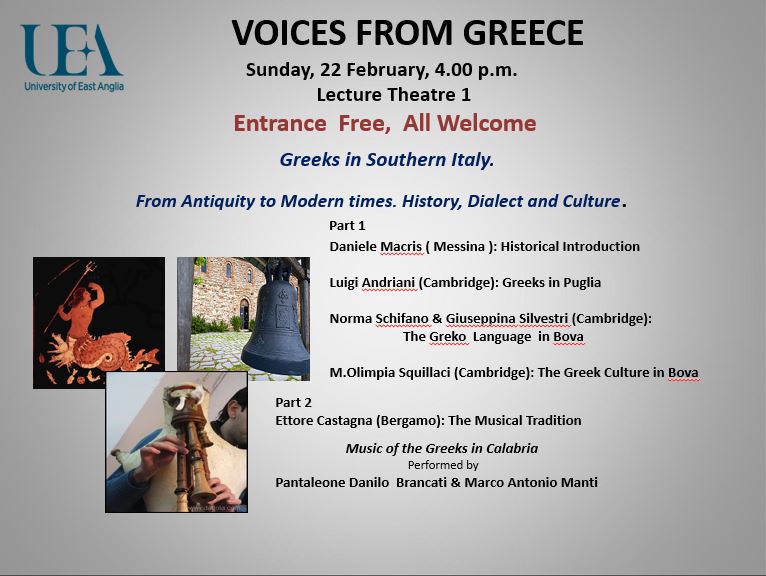
CaptureRegular blog correspondent Christos Paganakis has highlighted this event which is being held next weekend, 22 February, at the University of East Anglia. All are welcome. Contact  H.Anagnostopoulou[at]uea.ac.uk at UEA for details.

Christos tells me:

We have managed to resurrect our annual ” Voices From Greece ” day at the University here in Norwich ( the ones due for 2013+2014 were cancelled , due to funding from the Greek Min of Culture being unavailable due to the Economic Catastrophe in Greece )
I think the subject matter for this one might be of interest , and would certainly have interested Paddy , because it is all about the ethnically and culturally Greek populations still in southern Italy , their Language , Culture and Music , etc .

If it runs like previous ones it’ll start off with some lectures, then there’ll be a concert of traditional music and song related to the event theme , then mostly everyone goes out for a meal (where the musicians are usually inveigled into giving a second , extempore performance), and it all ends very late rather like a Greek peasant’s wedding, with earnest Oxbridge professors dancing the Pentoziali .

The Paddy blog is changing …

But don’t worry. It is only the look and layout that has changed. The format that I used up to now was no longer supported by WordPress who supply the engine behind the best blog about our favourite author and all round adventurer and gentleman.

I have chosen a neat and crisp format which is not so different to before and will enable me to take advantage of new features and plug-ins, when I get the time to find my way around.

You may find some of the older posts have lost a bit of formatting and where it is very bad I will try to sort out the issues, but with over 600 posts it won’t be possible to check them all. You can help me by getting in touch – see About & Contact – and informing me of howlers.

Would Paddy have understood any of the above? Probably not, but I am sure that if he had a computer he would enjoy browsing to find interesting articles and to look at pictures and videos of his dear friends and colleagues. More to come.

Finally it will be the centenary of Paddy’s birth on 11 February. If you have any suggestions about how we might mark this event please do come forward with your ideas and I will see what I can do.

Tom

A milestone passed

CaptureJust a little note say that in the very last minutes of yesterday we had our one millionth view of the Patrick Leigh Fermor blog. Not bad in just over four years.

Thank you for following and do come back for more in 2015.

Tom

The Patrick Leigh Fermor blog 2014 in review

CaptureHello to you all and a Happy New Year. I hope that your holidays were peaceful. This year promises to be interesting as it marks the centenary of Paddy’s birth on February 11th. As yet I know of no significant events to mark this but we shall see what occurs.

It is now traditional to review the previous years’ activity on the blog and as such I attach the report for 2014 prepared as usual by the WordPress.com stats helper monkeys. The big numbers are that you made around 230,000 visits to view the 82 new posts which brings our numbers up to 660 posts on the blog.

Quite amazingly we are just two or three thousand visits away from having over one million visits since I started the blog in 2010. I am looking forward to sharing more Paddy related material with you in 2015, and also to your comments which can sometimes be challenging but always informative and often very helpful to others who seek information.

Regards.

Tom

Here’s an excerpt from the WordPress report:

The Louvre Museum has 8.5 million visitors per year. This blog was viewed about 230,000 times in 2014. If it were an exhibit at the Louvre Museum, it would take about 10 days for that many people to see it.

Click here to see the complete report.

Update Walking from Winchester to Bath

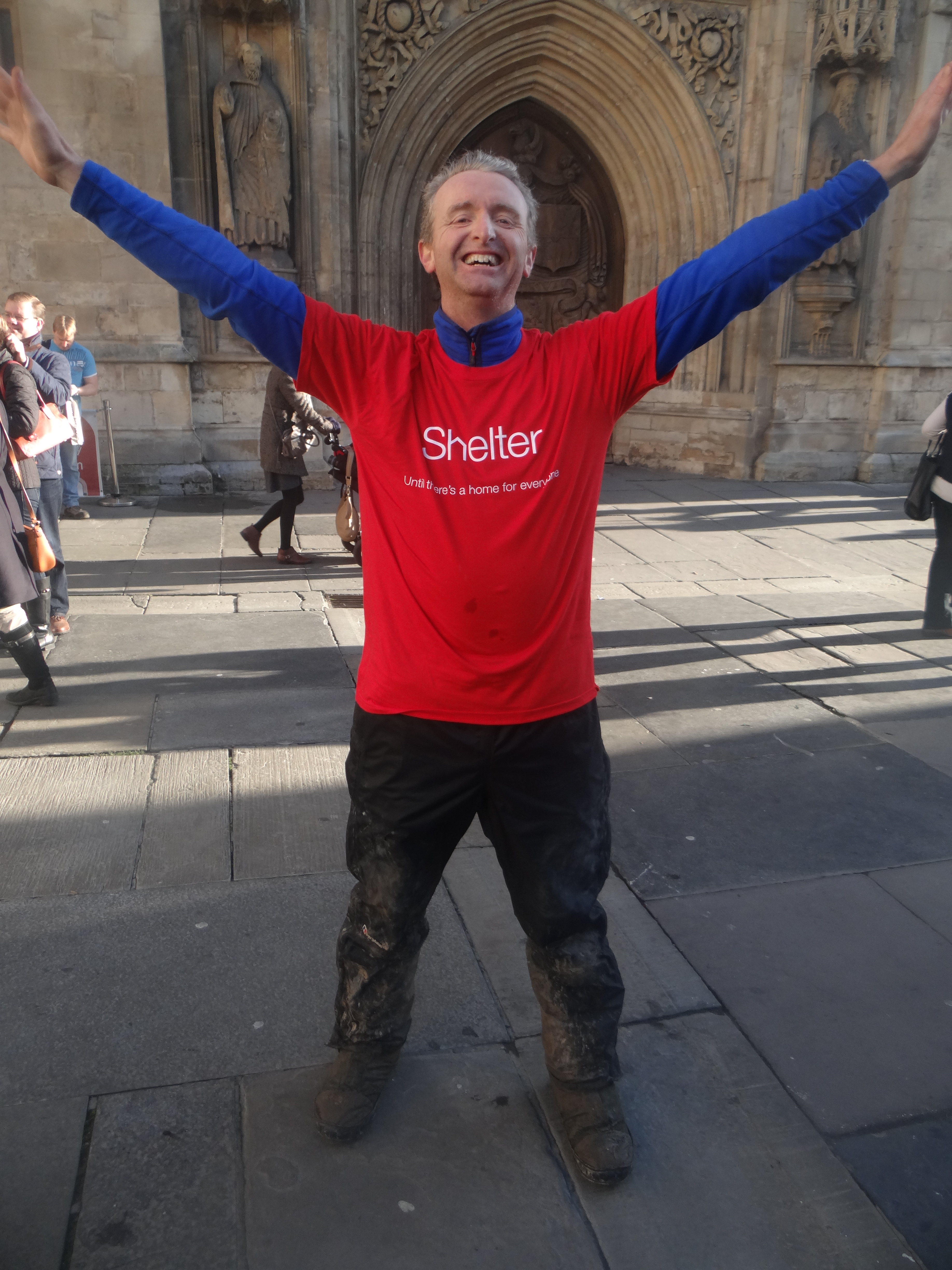
Arrival in Bath

Arrival in Bath

I wanted to pass on my thanks to all of you who gave financial and moral support to me during my walk from Winchester to Bath . My goal was to raise both money for, and raise awareness of, the plight of homeless people.

Both objectives were achieved. Donors gave around £2,400 for the charity Shelter when including Gift Aid (UK taxpayers) which is a really excellent amount. It was so encouraging for me to see the donations tick up as I paced out my walk.

It was a hard exercise and my experiences of sleeping rough gave me a new insight into what it may mean to try to find somewhere relatively warm, dry and safe to sleep. I managed to sleep in a shed in Winterbourne Gunner, a church porch in Heytesbury in Wiltshire, and an abandoned caravan in the Frome valley. The distance was around seventy miles or 115 km and lasted just over three days. Each day brought new challenges which were mostly environment related, with a big variation from the leafy by-ways of Hampshire, to the slippery and muddy remoteness of Salisbury Plain, and finally the boggy ground of Somerset and Avon. In order to make my proposed arrival time of 11 o’clock Saturday morning I had to make use of an abandoned bicycle to get me the last six miles into Bath along the Kennet and Avon canal towpath.

It is still possible to donate via my Just Giving page here.

I was quite speechless when I finally arrived at Bath Abbey but felt an enormous sense of release and relief when a busker started to play the Soft Cell hit Tainted Love – see video!


Here are some pictures if you would like to look at them.


This slideshow requires JavaScript.

Once again thank you and I wish you all a very Merry Christmas and a Happy New Year. All the best.

Tom

“Testing you sorely” or is it “Sorely testing you”?

Splitting the infinitive is almost as controversial as splitting the atom, but clearly a lot easier to do. What I hope is not easy dear readers is to upset you by the variety of posts on this blog, and in particular some of the more recent ones.

Yesterday Francis Fermor added a most unkind comment saying that the blog is no longer interesting as it is no longer all about Paddy and that “too many people are joining the band waggon and taking advantage for their own personal ends.” This was in relation to the post about Owen Martell’s walk across the USA.

For one thing I don’t think Owen has made any money out of his adventures. At least he has not written any books on the subject that I can find. I post such things as I personally find them interesting and they fit with my editorial policy of being “Paddy related”. Owen contacted me after his first walk as he was interested in Paddy and had been inspired by him. I am sure the man himself would have been most interested in Owen’s journeys: a lot of you are. Paddy would have encouraged him and wanted to hear his story.

Paddy may be dead, and not much new will emerge, but his work and his life remain as an inspiration to many, including those who read this blog. A lot of people are inspired to set out on journeys of their own. Nick Hunt’s attempt to follow Paddy’s route was not for any great “personal end” but because he wanted to do it and thought that others might like to read about the great changes that Paddy himself wrote about via his Polymath. Ed and Charlotte walk parts of his route each year for no other end than they enjoy it and find one of those Songlines to follow; a Songline chanted by Paddy and now in our memory.

How long can I continue with material on here? As long as there is an audience, and my stats tell me that there is one with over 20,000 regular visits each month. We are now within a few thousand visits of one million since opening in 2010. That I find pretty phenomenal. People visit here for a variety of reasons and the material that I post attempts to address those varied interests.

So how long can I continue? There is plenty more directly related material and my self-appointed “task” here is to create a unique on-line archive of Paddy related material. So I will continue to do that. And I will do it until I test you so sorely that you leave me alone with just a few die-hards.

Finally, to continue the theme of “personal ends” I would like to remind you that I will start my 70 mile walk to Bath tomorrow on behalf of the charity Shelter in aid of the homeless and there is still plenty of time to donate via my Just Giving page.

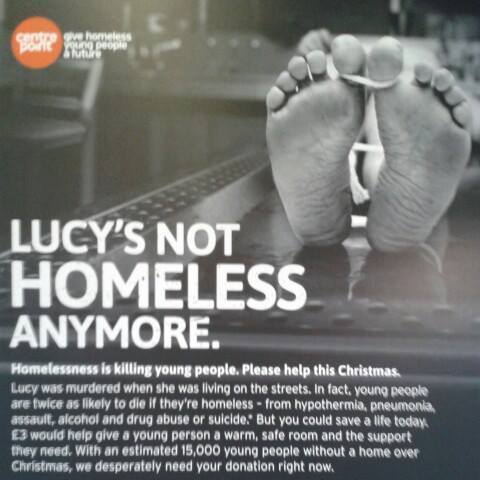
Between 10-13 Dec you can join with me to increase awareness of the scourge of homelessness and to help raise funds for the UK’s leading charity for the homeless, Shelter. I will walk 70 miles from Winchester to Bath over one of the most sparsely populated areas in England, sleeping rough under a simple shelter, enduring the December cold, and the long, cold, lonely nights: just like THEM. All you have to do to join me from your warm home is to please give some money to Shelter at my Just Giving page. These are your fellow human beings and they deserve some help and comfort. You can join me walking to Bath Abbey on 13 Dec. Just email me or comment on this post. PLEASE SHARE THE FACEBOOK EVENT I CREATED (click here) on your Facebook timelines: it is a public event. Give your money: £, Euros, US $, Yen, Lei, or whatever here.

lucy

Paddy, Pope Francis and the Second Vatican Council

I couldn’t resist the headline. It is not often that we get Paddy and the Pope mentioned in the same article. So, shameless as this is, I am going to publish as it meets my editorial requirements of “establishing an online archive of all things Patrick Leigh Fermor”. It is also in Italian, but there is always Google Translate for the non-Italian speakers.

The context of the article is the visit of Pope Francis to Turkey – Istanbul link to Paddy – and this new Pope’s role in reinvigorating the Catholic Church and the “trans-Mediterranean” role he is developing.

Read all here.

Thinking of buying a Kindle for Christmas?

Kindle fireThe time to start buying Christmas presents is upon us. Some may be considering buying a Kindle for their family members of even as a treat for themselves.

The Kindle Fire is now available at an amazingly low price from £129. It is ideal for reading your favourite books but gives you a whole lot more as it is a tablet allowing you to connect to the web, view video, check email and access thousands of apps. Accessing and buying kindle books online is so easy and takes just a minute to buy and download your books.

If you buy from the Paddy blog via any of the links here it will help raise a few pounds to assist with some of the running costs of the site.

Buy the Kindle Fire here.

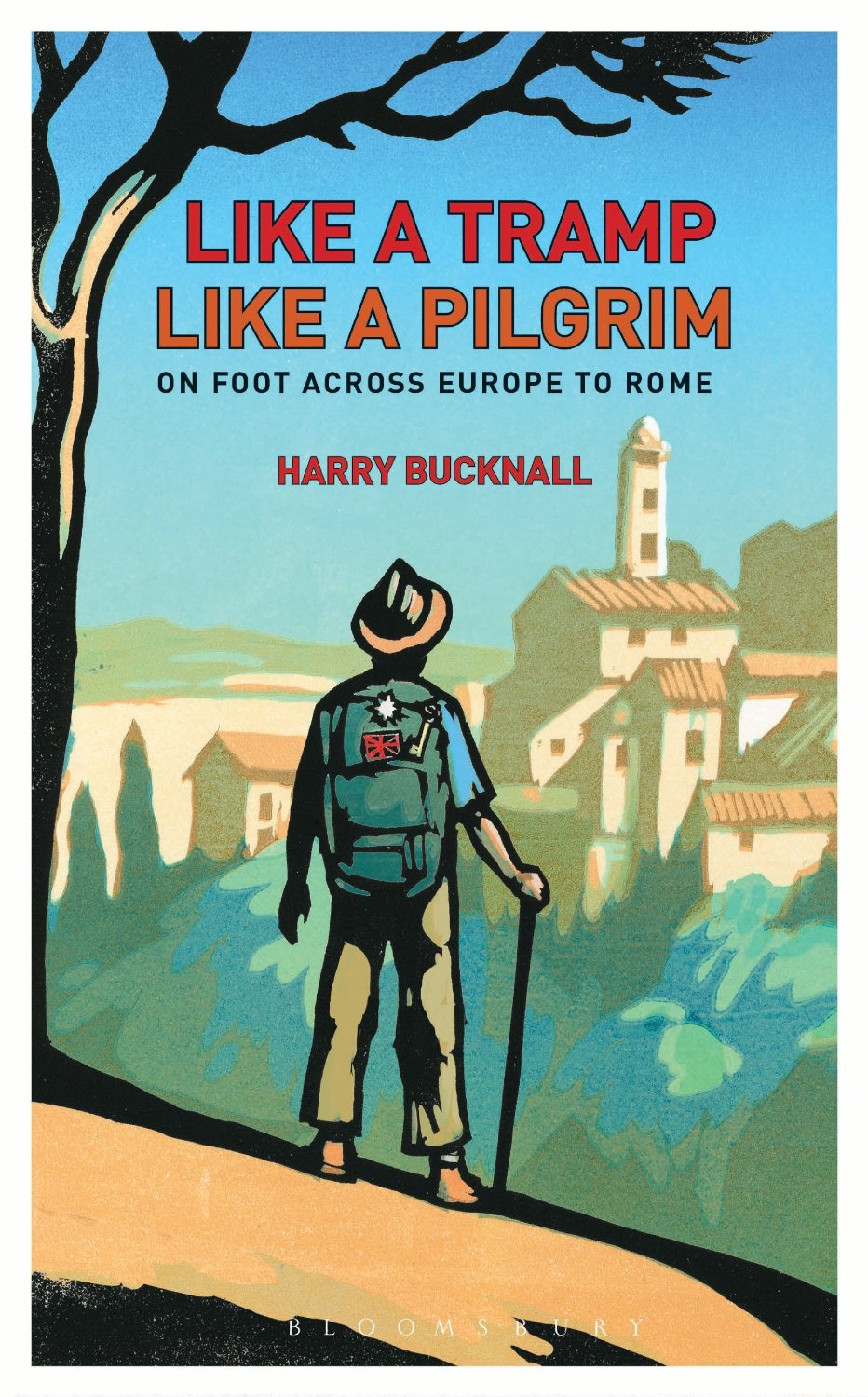
Like a Tramp Like a Pilgrim: On Foot, Across Europe to Rome by Harry Bucknall

Like a Tramp, Like a Pilgrim

One of the best travel books of the year has to be Like a Tramp, Like A Pilgrim: On Foot, Across Europe to Rome by former Coldstream Guards officer, and Blandford Forum’s premier travel writer, Harry Bucknall. Recounting his pilgrimage from Canterbury to Rome, it is fresh, and full of good humour.

By Tom Sawford

This is Harry’s second book. His first, In the Dolphin’s Wake, recounted a journey from Venice to Istanbul,  which is quite surprisingly a journey of more than 5,500 miles across the Aegean that included …

“the glories of Mount Athos, 36 islands, and every island chain in the Greek Archipelago. It also involved 57 sea passages on 35 ferries, four landing craft, three hydrofoils, a fishing caique, a sea plane, 11 buses, two trains, an open-top Land Rover, and a duck egg blue 1961 Morris Oxford.”

Like a Tramp, Like A Pilgrim: On Foot, Across Europe to Rome demonstrates Harry’s  development as a writer since his Greek Odyssey. As a Santiago peregrino myself I instantly empathised with the motivations, the pains, the joys, and the surprises to be found on the solo journey of a pilgrim. Even when walking with others there is a solitary dimension to pilgrimage which permits the walker to observe with a detached eye the changing landscapes, the historical dimensions of the road, and the sometimes absurd characters one meets on the way: Harry very successfully brings us a gently unfolding list of observations, anecdotes and stories of friendship.

The 1,500 mile route from Canterbury to Rome is an ancient and well travelled path. Our Anglo-Saxon chronicler Bede often sent his acolytes off to borrow books from the Vatican library but never made the journey himself. One has to ask if they managed to return them in time and how big the fines may have been.

It is a long journey and one much less well-known than other pilgrim routes such as the one to Santiago de Compostela. Only a handful of pilgrims start out each day, compared to sometimes hundreds in Spain. This makes Harry’s journey all the more interesting for his readers as he encounters things new, and brings a wryly observed perspective to others more familiar.

For me the second half of the journey was the most enjoyable. As Harry enters Italy the pace and temperament changes.  Less history.  More humour.  Rather like Nick Hunt and Paddy entering Slovakia there is some invisible border on such a journey.  One of the mind or the spirit. It may be related to something physical but it is more than this. From my own experience on the Camino it is clear that a long journey has many phases each with their own character. It is in Italy that Harry finds hilarious situations despite his tiredness. He reveals to us, and calmly copes with, the frustrations encountered in a country that does not function particularly well, whilst journeying with an ever growing band of assorted and garrulous pilgrims from many nations. 

As with all good travel books the tale ends with the enticing possibility of a further journey: a next phase. I look forward to that, but in the meantime I will recall with pleasure this enjoyable book. One for the Christmas list to help stave off (or possibly encourage?) wanderlust. It is potentially dangerous contraband.

Now, where did he get that title from? 🙂

Buy Like a Tramp, Like A Pilgrim: On Foot, Across Europe to Rome

Buy In the Dolphin’s Wake

Catch up with the Slow Adventure

Don’t forget to drop in now and then to catch up with Jasper Winn on his slow adventure from Munich to Paris in the footsteps of Werner Herzog. I have been enjoying Jasper’s short posts which are always insightful. He has crossed the Rhine, the Moselle and the picturesque but economic backwater of the Vosges. Clearly enjoying being in France he now faces mostly flat country in his last weeks walking to Paris, but as today’s post says, this brings it’s own challenges. Here is a little taster:

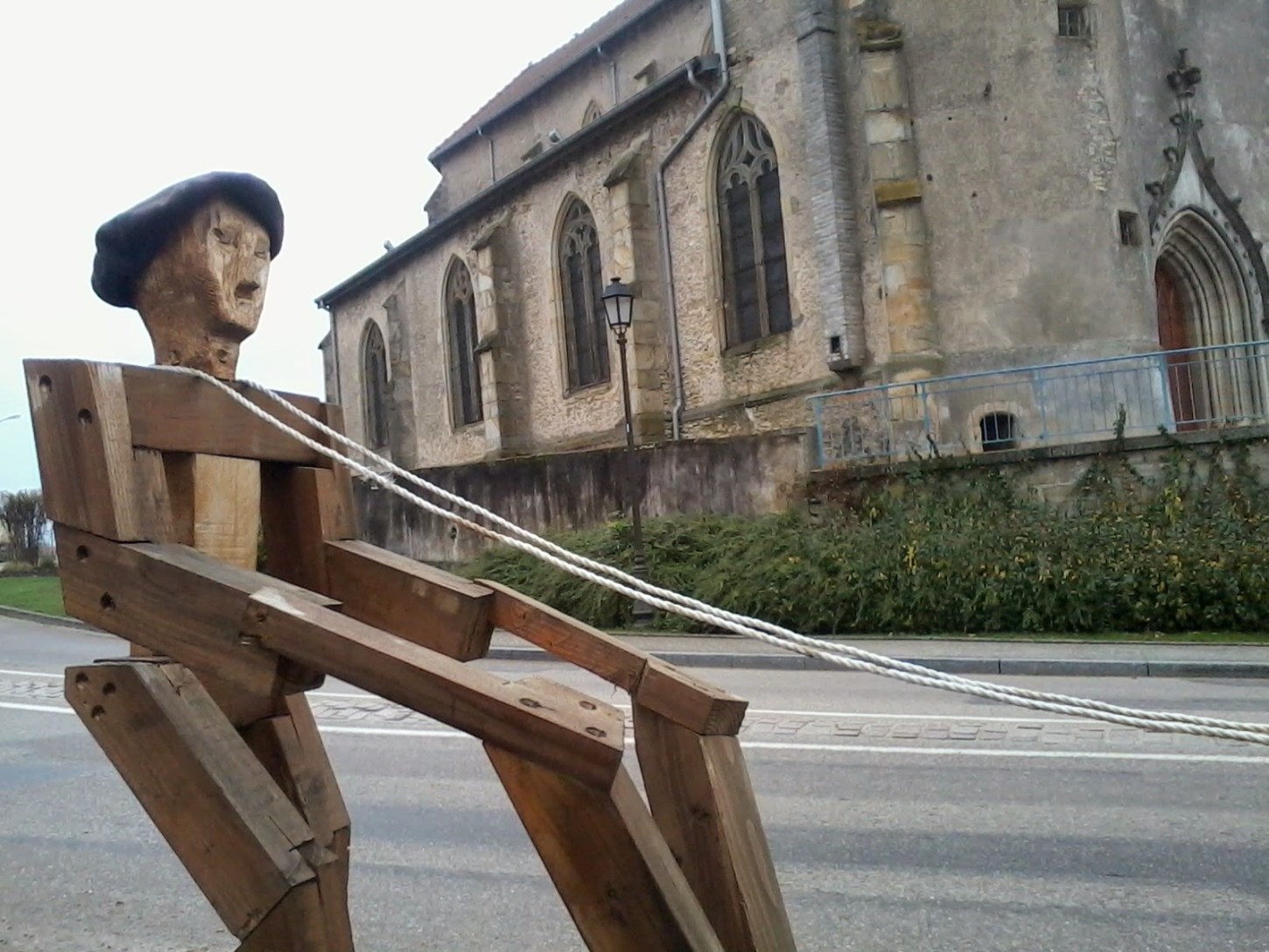
Always hard to avoid looking just a bit wooden in selfies. I’ve just crossed the Moselle at Thaon, so am across and out of the mountains that rise high on both sides of the Rhine valley, and with neither the snow nor storms that Herzog battled. The land being flatter brings it’s own challenges. Long slogs, little shelter, busy agriculture and so less hidden woods or derelict barns to sleep in, and speeding traffic on narrow twisting roads. And rural France is a struggle for many locals too – unemployment; so gambling, drinking, suicide. Symptomatic is the small number of village bars and cafes still open. I found just three still trading in over a hundred kms of walking and passing through tens of small villages. Now, in Thaon, I’ve found a joy. Bar Le Cosy. Good coffee. Wifi – hence another post. An armchair and friendly hostess and clients. It’s rather smart and chic and I may look a tad out of place

Read more ….

Patrick Leigh Fermor archive now fully available to public at National Library of Scotland

General archive itemsAfter a year of intensive work, Paddy’s archive is now available to the public at the National Library of Scotland. The inventory is 81 pages long and the list of Paddy’s correspondents is well over 1,000, with many many famous names including Gore Vidal, Truman Capote, Iris Murdoch, Lawrence Durrell, Bruce Chatwin, Cyril Connolly, the Duchess of Devonshire, Prince Charles and Paddy’s publisher John Murray. Future goals include digitising the most important material and to run some exhibitions.

The NLS have today issued a press release as follows:

The archive of one of the most charismatic characters of the last century, Sir Patrick Leigh Fermor, is fully available to the public from today (Tuesday, November 18) after being catalogued by the National Library of Scotland.

Sir Patrick, who was universally known as Paddy, was the finest travel writer of his generation and has been described as “a cross between Indiana Jones, Graham Greene and James Bond.” He was a decorated war hero, adventurer, scholar and Hollywood scriptwriter who could count princes and paupers among his friends.

The archive, which arrived at the National Library in 2012, is vast, occupying some 16 metres of shelving. Its contents offer a journey through the 20th century in the company of some of its key figures.

The inventory alone runs to 81 pages and lists extensive correspondence from fans, friends and associates; literary manuscripts, often with numerous annotations and revisions; diaries; notebooks, passports; sketches; photographs; articles and research papers. One of the star items is the only surviving notebook from his youthful trek across Europe which began in 1933 and provided the source material for his most famous books A Time of Gifts, Between the Woods and the Water and The Broken Road.

Sir Patrick died in 2011 at the age of 96 and is regarded as a central figure in 20th century cultural life. That is reflected in the archive which includes correspondence from many famous names including Gore Vidal, Truman Capote, Iris Murdoch, Lawrence Durrell, Bruce Chatwin, Cyril Connolly, the Duchess of Devonshire, Prince Charles and Sir Patrick’s publisher John Murray. One of the many unexpected items to be found in the archive is what appears to be an unpublished handwritten Sir John Betjeman poem, literally written on the back of an envelope.

Cataloguing the archive has taken a year and it has revealed a much larger number of correspondents than were expected – over 1000 – along with thousands more photographs.

“It is a history of the colourful life of a celebrated writer,” said Graham Stewart, the curator who worked on the cataloguing project. “He was undoubtedly a superstar of his day and his books have, if anything, grown in popularity over the years. There has already been a lot of interest in the archive and we expect this to increase now among Leigh Fermor fans and people interested in the 20th century more generally.”

The Library is working on digitising major elements of the archive which will be made available through its website. Plans are also being considered for staging exhibitions and displays of the material to reach as wide an audience as possible.

A major element of the archive is Sir Patrick’s war years which saw him organise guerrilla operations in Crete against the occupying Nazis. He spent much of this time disguised as a Cretan shepherd, living in freezing mountains caves.

In 1944 he organised one of the most daring feats of the war when he led the team that kidnapped the commander of the German garrison on Crete. This was made into a film Ill Met by Moonlight in 1957 starring Dirk Bogarde and the story was told by Sir Patrick in the recently published memoir Abducting a General.

“You get a real sense of how dangerous this work was when you come across letters that were smuggled from Cairo into Crete and carried miles across mountains, sewn into people’s clothes,” said Graham. “It’s an archive that holds many surprises and is likely to produce many more discoveries once it really starts to be used.”

The archive was presented to the National Library by the John R Murray Charitable Trust which also supported the cataloguing work. Sir Patrick’s books were published by the Murray family.


Robert Macfarlane on The Old Ways

Old WaysThe author of The Old Ways discusses some of the problems for any walker-writer such as how to spring surprises along the way, and how not to give your reader blisters.

by Robert Macfarlane

First published in the Guardian Book Club, 1 August 2014

“All I know is that at the very early stage of a book’s development”, wrote Vladimir Nabokov, “I get this urge to gather bits of straw and fluff, and eat pebbles.” Like Nabokov, I’m a pebble-eater and a straw-gatherer: my books begin as gleaned images, fragment-phrases and half-thoughts, scribbled on to file-cards or jotted in journals.

Tracking back to the earliest entries for what became The Old Ways: A Journey on Foot, from 2006, I find hundreds of these “pebbles”. Some are barely recognisable (“Dew ponds, ash frails, thin trails”), and others plain weird (“sunset as spillage; junk light of dusk”). Huh? Some mark the start of paths that never got followed: “Go see the bronze dragons in the Forbidden City; take Schiller along.” Why? Others now seem like fingerposts pointing in the right direction: “Dreamtracks and trespass; rites of way and rights of way.” “Each path to be told as a story, each story a path, leave cairns in the language as you go.”

That last line is pretty much The Old Ways: A Journey on Foot in miniature, though it would take another five years and 1,000 miles on foot for it to grow into a book. In that time I followed many different paths: Neolithic tracks on the chalk of southern England, pilgrim trails to a holy mountain in the winter Himalayas, a branch-line of the Camino in Spain, a tidal path into a mirror-world off the Essex coast and routes through the disputed territories of the occupied West Bank.

Because paths are places of encounter and company, I met scores of other walkers as I went: botanists, activists, archaeologists, poets, mapmakers – and everyday folk out with their dogs, taking a break. One early reviewer noted: “Macfarlane doesn’t seem to meet any dickheads.” Well I did meet them, several of them – but I didn’t find them interesting enough to write about. I had plenty to say as it was: songlines and pilgrimage, ghosts and memory, trespass and access, birdsong and light, the shimmer of detail … The book became an exploration of how paths run through people as well as places, and how landscape shapes – scapes – us both in the moment and in memory.

Walking is a repetitive activity. You put one damn foot after the other – and that’s what makes the walk. It’s often tiring and it’s sometimes boring. This poses a primary problem for any walker-writer: how to spring surprise along the way, how not to give your reader blisters. I wanted style to solve that problem. So I set out to devise a form that enacted its subject: to make a patterned book of path-crossings, full of echoes and back-glances, doubles and shadows. A book of many ways, then, through which readers might pick different routes. I also tried to leave those cairns as I went: guiding alignments of image, word and incident that only became visible at certain places along the journey.

I became obsessed with prose rhythm (Nabokov’s influence again). At one point I wanted to write each chapter with a different base-rhythm, a poetic foot (iamb, trochee, dactyl) that would tap its tempo through it. That ambition defeated me in the end (surely for the good) though I continued to scribble scansion marks above my sentences, revising some of them dozens of times to get the rhythms right on the ear. One chapter describes sailing old open boats along the sea-roads around the Outer Hebrides. Rhythm was crucial here to represent the sea’s own measures: the rolling whale-back swells that lofted us towards Sula Sgeir, 40 miles out into the north Atlantic; and the unforgettable experience of being in mid-Minch at the turn of tide: billions of tonnes of water pausing, trembling, unsure of their obligations – before starting the long slop back north.

“It’s hard to create a path on your own”, I note early on, and The Old Ways: A Journey on Foot accompanies other writers and artists as it goes, both dead (Edward Thomas, Nan Shepherd, Patrick Leigh Fermor) and alive (Ian Stephen, Raja Shehadeh, Steve Dilworth). The best contemporary non-fiction seems to me as formally intricate and experimental as any fiction, and among the books I kept close to hand while writing were the essays of John Jeremiah Sullivan, Rebecca Solnit and David Foster Wallace, the reportage of Katherine Boo, John McPhee and William T Vollmann, and the travelogues of Barry Lopez, William Dalrymple and Iain Sinclair. When energy was ebbing, I turned to the dark glitter of John Banville, or the baroque visions of Cormac McCarthy.

The book has lived some strange afterlives since it was published two years ago, and its paths have led me in unexpected directions and to fresh collaborations. One of the best things about being a writer is hearing from readers: a reminder that the artefact over which you privately labour for years goes into the world and – if you’re lucky – finds its way into the imaginations of others. Not all of these communications are kindly. “Robert Macfarlane, you are a charisma-free zone,” declared someone recently. But then a day or two later someone else got generously in touch: “Your writing gives me an erection of the heart!” I guess you can’t please all of the people all of the time.

Buy the book: The Old Ways: A Journey on Foot

The slow adventure – in the footsteps of German film-maker Werner Herzog

Jasper Winn

Jasper Winn

Adventurer, horseman, musician and walker, Jasper Winn will soon be striding in the footsteps of German film-maker Werner Herzog who walked a 500 mile route from Munich to Paris exactly forty years ago, starting in November 1974.

Herzog had heard that German film critic Lotte Eisner was ill and might die; she had championed his career from early on when his films challenged the notion of what films were for and how they were made; he decided that by making a pilgrimage on foot to her bedside he would stop her dying. He kept a private journal of his three week trudge. This was published some years later as the slim volume, Vom Gehen Im Eis/Of Walking In Ice. Jasper came across the book, in translation, when researching long walks and pilgrimages more than a decade ago, and it made an impression on him. He describes the writing as “stark, recounts only the images that he sees, and what he directly feels. It’s both beautiful and unsettling.” His trip was difficult – average 24 miles a day non-stop and he carried little to make him comfortable or weather proof. He left in cold and patchy snow and over the coming weeks it rained, snowed, froze and blew. At night he broke into holiday homes, barns or anywhere he could find shelter. There were occasional nights in inns.

Jasper Winn, the author of Paddle: A long way around Ireland, will be updating us on this recreation of the journey on his website, Slow Adventure. If you would like to keep up with him please subscribe to his posts here.

Good luck Jasper!

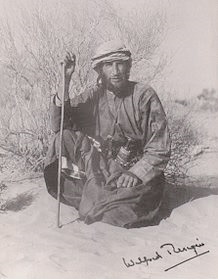
The Traveller’s Film Club – Wilfred Thesiger

Wilfred ThesigerFollowing on from the successful showing of the film about Paddy, the next Traveller’s Film Club event will be held on Thursday 13 November hosted by the middle‐east scholar and writer, Peter Clark, who will present original footage and two documentaries about the legendary desert explorer Sir Wilfred Thesiger and his return to Oman.

It will take place as usual on the lower ground floor of Waterstones Piccadilly from 6.30pm. There is an excellent travel bookshop and café on the same floor. The film screening will commence at 7pm, after which you will have the opportunity to chat over a glass of wine. No charge, no reservations, first come, first served. Further details here.

Related article:

Obituary: Sir Wilfred Thesiger

Ghika – Fermor – Craxton: 3 places, 3 creators

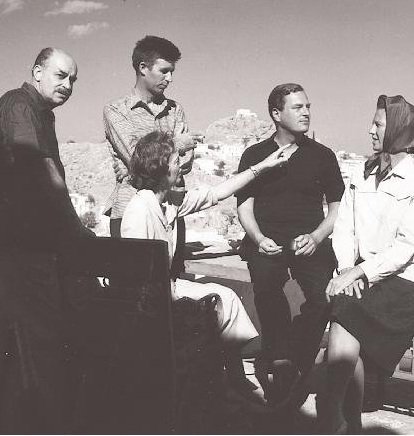
From the left: Nikos Hadjikyriakos-Ghikas, John Craxton, Barbara Hutchinson-Ghika, Patrick Leigh Fermor, Lydia Aous, 1958

Our favourite museum, the Benki, is presenting an exhibition dedicated to three creators, whose lives were bonded through common places: Hydra, Kardamyli, Corfu. Three houses-refuges, which became a source of artistic inspiration, and housed a friendship that lasted over 40 years.

Sir Patrick Leigh-Fermor, English travel writer, built his house in Kardamyli of Mani, a house that was later bequeathed to the Benaki Museum. There, he hosted since the 1960’s the painters N. H. Ghika and John Craxton, among other friends, whose works decorated the place.

Earlier, main feature for all three of them was Ghika’s manor in Hydra, “a perfect prose-factory” as it was called by Fermor, who lived there for two years, writing most of his book “Mani”.

John Craxton as well, was attracted by the landscape of Hydra and painted a series of them. His valuable help the days that folowed the fire at Ghika’s house in Hydra, in 1961, is described at their extensive correspondence. In one of these letters Craxton is suggesting to Niko and Barbara Ghika that perhaps it is about time to move on to other places. Indeed, the Corfu house was going to replace the void and become a new place of meeting and creation.

Letters, manuscripts, editions and photos are the main theme of the exhibition, accompanied by drawings by N. H. Ghika and John Craxton. Works of the above painters coming from the Fermor house in Kardamyli form a separate section at the exhibition which runs from 17 October 2014 to 10 January 2015. Further details here.

Why you should never meet your heroes

Would you have been disappointed if you had met Paddy?

By Philip Sidney

First published in The Spectator 14 October 2014

As we become steadily accustomed to life in the Age of Celebrity, it’s become a truth that, as Mark Mason put it in the Speccie last month, ‘meeting your heroes is almost always a bad idea’. Reading the letters page in the London Review of Books, it seems that this advice extends to visiting any place associated with your heroes. Last summer Max Long, an undergraduate at Magdalen College, Oxford, arrived at Patrick Leigh Fermor’s old house at Kardamyli in Greece, hoping to pay homage to one of his heroes (see The House is Not Always Empty). His visit, he reports, was unideal:

‘To the hairy, shirtless, sandalled old man who occupied Paddy’s studio as though he owned the place, and who refused entry on a sweaty August morning to a travelling student, despite his pleadings (and tears): you ruined a young man’s pilgrimage.’

It’s hard not to sympathise, particularly given the hospitality with which Fermor was himself received on his travels. But this kind of disenchantment isn’t exclusive to unsceptical youth. Jeremy Clarke laments the speed at which authors’ auras disperse:

‘Nothing lingers. When they’re gone, they’re gone. Even with a commemorative plaque on the wall, one is left only with a sense of vertigo at how easily all vestiges of even the recent past are obliterated and we move on.’

Both Long and Clarke are part of a rich tradition of disappointed pilgrims which began in the late 19th century, the joint result of improved transport networks and the growth of a mass audience for literature. In those days it was possible to be rebuffed by the great men themselves, as were the rather impatient tourists that called on Thomas Hardy in 1903:

‘[…] I have given mortal offence to some by not seeing them in the morning at any hour. I send down a message that they must come after 4 o’ clock, & they seem to go off in dudgeon.’

After any famous writer goes their own long journey, the difficulties of preserving their home for would-be pilgrims become more fraught: whether a literary shrine is tended or neglected, there will always be enthusiasts claiming that their idol has not been treated appropriately. As Simon Goldhill observes in Scott’s Buttocks, Freud’s Couch, Brontë’s Grave, Charlotte Brontë would have been horrified had she seen her stockings on public display at Haworth Parsonage, but in the 21st century they’re a precious link – however creepy – to a great talent now gone.

What options remain, then, for the would-be literary pilgrim? Continue to travel hopefully, sifting the let-downs for a trace of longed-for genius loci? Or stay at home, cherishing places in the imagination? Nick Hunt’s book, Walking the Woods and the Water: In Patrick Leigh Fermor’s footsteps from the Hook of Holland to the Golden Horn, provides a possible answer. His journey across Europe in the footsteps of Patrick Leigh Fermor shares the landscapes through which his hero moved (not to mention the physical strains incidental to thousand-mile walks), while also conscious of the changes that have reshaped the continent in the intervening 80 years. However fervently we revere our literary pin-ups, we must remain conscious, and as far as possible accepting, of the things that stand between us and them: be they an accumulation of years, a glass vitrine, or hirsute jobsworths in shorts.

Philip Sidney is a writer and academic, specialising in travel, literature and travel literature

Reminder for tonight – Traveller’s Century: Benedict Allen seeking Patrick Leigh Fermor

A reminder that Benedict Allen will be introducing his 2008 BBC documentary where he travels Paddy’s footsteps, tonight at Waterstones Piccadilly at 6.30pm.

There may be free tickets left. Call the shop on 0207 851 2400

Visiting Paddy’s grave

image

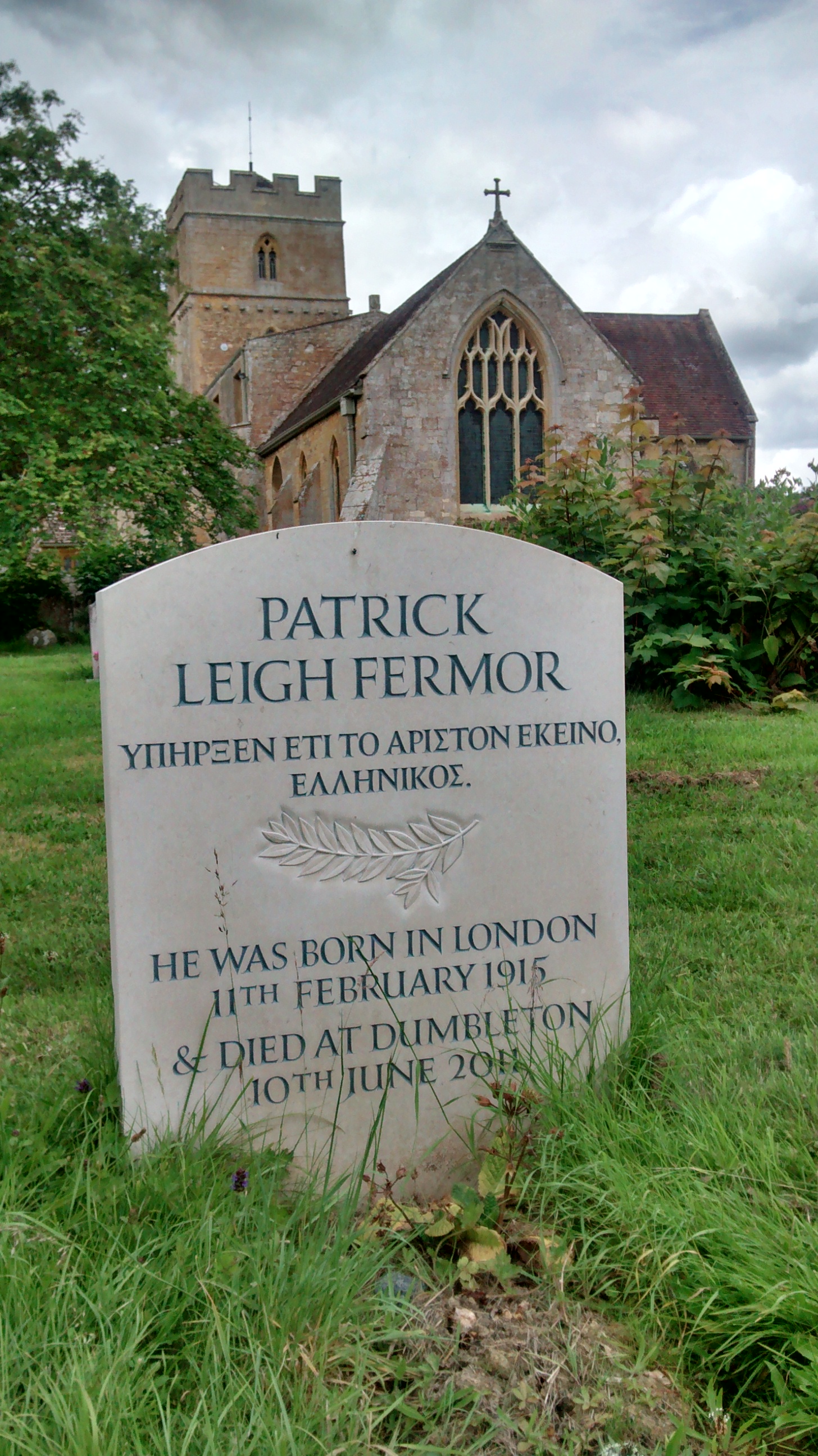
We were in Stratford-upon-Avon at the weekend to watch two brilliant performances of Shakespeare’s Henry IV parts I and II, and on the way home we paused to visit Paddy’s grave. It was a lovely day and as ever a beautiful and peaceful setting. Do visit if you can; Dumbleton is just 5 minutes off the A46.

‘The Ariadne Objective:’ Spooks, Germans and the battle for Crete

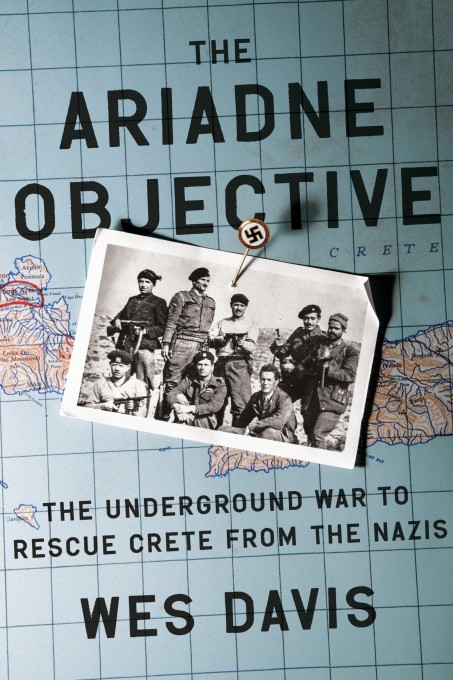
Ariadne-jacket-453x680A review of Wes Davis’ recently published book by Alexander Clapp.

First published in Ekathimerini.com 8 March 2014

On May 27, 1941, days after the first airborne invasion in history, the German army hoisted a Nazi flag atop an abandoned mosque in Hania, western Crete. The gesture was poignant. Crete – which had overthrown three centuries of Turkish rule just three decades prior – was again under the heel of an occupying power.

The Cretans were unshaken. The island’s peasantry armed itself with muskets and daggers and took to the crags and caves of the White Mountains. The campaign of sabotage that followed – an echo of repeated revolts against the Ottomans, Venetians and Arabs – marked the first mass civilian resistance to Nazi rule in Europe. “We had encountered for the first time an enemy that was prepared to fight to the bitter end,” marveled a German lieutenant.

Wes Davis’s “The Ariadne Objective” (Crown, 2013) traces the British intelligence service’s collaboration with this hardscrabble fifth column. The plans to wrest Crete from Nazi control formed part of a larger wartime strategy to “set Europe ablaze” through the Special Operations Executive (SOE), “Churchill’s secret army.” In Crete the stakes were particularly high. Cretan restlessness proved crucial to delaying Hitler’s march to the East. As the war in North Africa came to a close, the island was to become a strategic linchpin to the European theater. By 1943, the British naval command looked to Crete as a promising base from which to retake the Aegean and the Continent at large.

“The Ariadne Objective” distills existing accounts of the Cretan conflict – W. Stanley Moss’s “Ill Met by Moonlight,” George Psychoundakis’s “The Cretan Runner,” Antony Beevor’s “Crete” – into a thrilling, highly readable narrative. The book benefits from a remarkable group of protagonists. Just as the Greeks of 1821 attracted a spirited cast of Western philhellenes, so too did the Cretan resistance become a curious meeting ground for a platoon of Anglophone scholars. Most were Classicists who had scraped together the rudimentary basics of Modern Greek. Many – N.G.L. Hammond, Thomas Dunbabin – went on to hold distinguished academic posts after the war; others – Evelyn Waugh, Lawrence Durrell, Patrick Leigh Fermor – were to become the literary giants of their generation. “It was the obsolete choice of Greek at school which had really deposited us on the limestone,” recalled Leigh Fermor.

Davis weaves in and out of these figures’ fascinating back-stories. The book narrates Leigh Fermor and Xan Fielding’s respective hikes across Europe in vivid detail; the one-eyed Cambridge archaeologist John Pendlebury provides an excursion into the British excavations at Knossos; a chapter on life in wartime Cairo – including a detour into the rowdy antics of the “Tara villa” inhabitants – acts as a kind of comic relief from the grittiness of the Cretan front.

Sporting shepherds’ crooks and cork-dyed mustaches, these British guerrilla leaders spent months sleeping in caves, organizing resistance bands and smuggling supplies to the beleaguered islanders. Over time their efforts paid off. In the words of a German commander on Crete, the Nazis made the mistake of “regarding a quite substantial partisan movement as nothing more than a few gangs of cattle thieves.”

This thinking was not entirely unfounded. Some Cretans chose to collaborate with the Germans against their countrymen. Those who did resist were internecine and uncertain of their objectives. The available weaponry was hopelessly antiquated. “Stand still, Turk, while I reload” was still the threat of choice among the elderly fighters.

But if the Germans underestimated the determination of this ragtag uprising, so too did they misunderstand its means. In order to deny the Germans any legitimate right to bring reprisals against the local population, the British SOE commanders concentrated the Cretans’ efforts on disrupting Nazi supply lines, provoking discord between Axis commanders and draining the occupiers’ morale through a carefully crafted propaganda campaign. “We want not so much to kill Germans as to terrify and bamboozle them,” advised SOE resistance leader Tom Dunbabin. The smuggling of Italian commander Angelo Carta from Crete to Cairo in 1943 was one such bloodless blow to the enemy’s morale. It was also the dry run for a more devastating attack on German confidence – a ruse that forms the theatrical climax of the “The Ariadne Objective.”

On April 26, 1944 Patrick Leigh Fermor, W. Stanley Moss and a team of Cretan partisans abducted the German commander of Crete, General Heinrich Kreipe, from his headquarters at the Villa Ariadne in Iraklio. Passing through 22 enemy checkpoints, the team worked their way to the southern coast of Crete, sheltering in caves by day and evading German search parties by night. By May 15 Kreipe was in Alexandria; two weeks later he was a prisoner of war in Canada.

“The galvanizing effect of the mission could still be felt in the tense months that followed the end of the war,” writes Davis. “As the rest of Greece plunged into civil unrest – pitting factions of Communist partisans against each other and against various stripes of nationalists – Crete remained relatively calm.”

An intriguingly highbrow current runs through the book’s otherwise soldierly narrative. Greece was not merely a shared strategic prize for German battalions and British spies; it was also an intellectual middle ground for two competing nationalisms, each of which claimed the cultural mantle of the Classical world as its own. Evidence of this mutual enthrallment to antiquity resurfaces throughout “The Ariadne Objective.” The German invasion of Crete is code-named “Mercury.” The British cruisers stationed in the Eastern Mediterranean are named the Orion and the Dido. Shipping out to the front line, Pendlebury reads Edward Gibbon’s “Decline and Fall” for a crash course in military strategy. Following their conquest of Crete, the Germans import their archaeologists to tend to the island’s historical sites. The diary entry of a German commander flying out of Crete: “just as Daedalus had done so many centuries ago.” “Minotaurs, bull-men, nymphs of Ariadne, kings of Minos, and German generals – a splendid cocktail!” writes Moss after abducting Heinrich Kreipe.

The most arresting example comes a few days following the general’s capture. In a well-cited incident on the slopes of Mount Ida, Kreipe quietly quotes the opening lines of Horace’s “Soracte” ode. Taking up where the general had paused, Leigh Fermor, Kreipe’s captor, recites the rest of the poem’s 24 lines.

“It was a reminder that the war itself was the aberration, interrupting something far more important and lasting. The moment of connection he and the general had just shared had sprung from a deep-running current of literature, art, and civility,” notes Davis.

The incident – like much of the clash in Crete – represents a strange last flowering of the world of the 19th-century imperialist scholar. “The Ariadne Objective” examines that story ably and admirably. This is necessary reading for anyone interested in Greece in the Second World War.

The Ariadne Objective: The Underground War to Rescue Crete from the Nazis

Ariadne-jacket-453x680Recently I returned from a business trip to Cluj, the loveliest city in Romania, to find a parcel on my desk. It was a copy of The Ariadne Objective, a new book by Wes Davis about the resistance and SOE operations in Crete. It is added to my pile of books that I will read throughout the course of the year.Hugh and Gabriella Bullock (‘Billy’ Moss’ daughter) provided information to Wes about Billy and his wife Sophie Tarnowska. Hugh believes that this book makes ‘a different study of the people concerned’.

You can buy the book on Amazon. The Ariadne Objective: The Underground War to Rescue Crete from the Nazis

The blurb says this ….

The incredible true story of the WWII spies, including Patrick Leigh Fermor and John Pendlebury, who fought to save Crete and block Hitler’s march to the East.

In the bleakest years of WWII, when it appeared that nothing could slow the German army, Hitler set his sights on the Mediterranean island of Crete, the ideal staging ground for German domination of the Middle East. But German command had not counted on the eccentric band of British intelligence officers who would stand in their way, conducting audacious sabotage operations in the very shadow of the Nazi occupation force.

The Ariadne Objective tells the remarkable story of the secret war on Crete from the perspective of these amateur soldiers – scholars, archaeologists, writers – who found themselves serving as spies in Crete because, as one of them put it, they had made “the obsolete choice of Greek at school”: John Pendlebury, a swashbuckling archaeologist with a glass eye and a swordstick, who had been legendary archeologist Arthur Evans’s assistant at Knossos before the war; Patrick Leigh Fermor, a Byronic figure and future travel-writing luminary who, as a teenager in the early 1930s, walked across Europe, a continent already beginning to feel the effects of Hitler’s rise to power; Xan Fielding, a writer who would later produce the English translations of books like Bridge on the River Kwai and Planet of the Apes; and Sandy Rendel, a future Times of London reporter, who prided himself on a disguise that left him looking more ragged and fierce than the Cretan mountaineers he fought alongside.

Infiltrated into occupied Crete, these British gentleman spies teamed with Cretan partisans to carry out a cunning plan to disrupt Nazi maneuvers, culminating in a daring, high-risk plot to abduct the island’s German commander. In this thrilling untold story of World War II, Wes Davis offers a brilliant portrait of a group of legends in the making, against the backdrop of one of the war’s most exotic locales.

Patrick Leigh Fermor blog – 2013 in review

As usual the WordPress.com stats helper monkeys prepared a 2013 annual report for your favourite blog. WordPress is the blogging engine that I use. There were nearly 250,000 visits to the site in 2013, pushing the total since I started in March 2010 to over 760,000 visits. Please click through to read the summary.

I wish you all a very Happy New Year and hope that you come back often to visit in 2014. As usual I have an enormous backlog of material and will get around to posting it. Some of the material has been sent in by readers (you know who you are) and I promise that I will get it online one day! Life is so busy.

Tom

Here’s an excerpt:

The Louvre Museum has 8.5 million visitors per year. This blog was viewed about 250,000 times in 2013. If it were an exhibit at the Louvre Museum, it would take about 11 days for that many people to see it.

Click here to see the complete report.

Ignore the xenophobic hysteria and welcome our EU neighbours

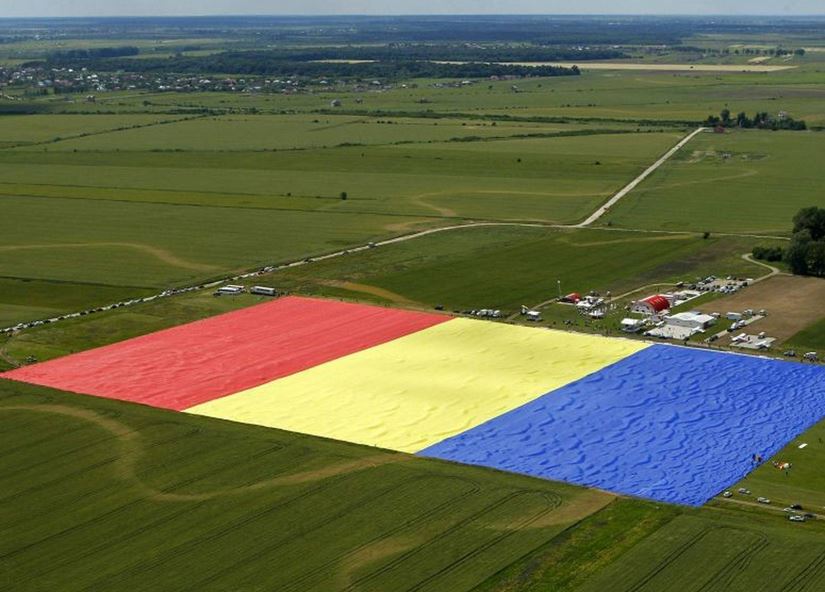
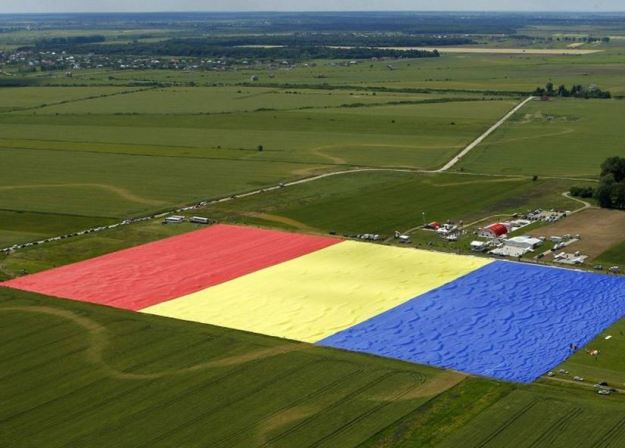
Villagers in Clinceni, Romania cover a field with what they claim is the world's biggest ever flag

Villagers in Clinceni, Romania cover a field with what they claim is the world’s biggest ever flag

Britain is in the Orwellian middle not of a Two-Minute Hate, but a Two-Year Hate.

By Boyd Tonkin.

First published in the Independent, 27 December 2013.

This may surprise alarmed observers in Sofia and Bucharest – or even in Westminster. But one of the best-loved British books of 2013 takes the form of a fervent and heartfelt tribute to the peoples of Bulgaria and Romania. War hero, writer and traveller Patrick Leigh Fermor died in 2011 before he could publish the third volume of memoirs about his “Great Trudge” though Europe in the mid-1930s. The Broken Road, which appeared posthumously in the autumn, takes the young literary vagabond from the “Iron Gates” on the Danube across both countries to the Black Sea coast.

Everywhere he walks, Leigh Fermor relishes the landscapes and the languages. He admires the culture and the customs. Above all, he comes to love the people of the Balkan peaks and plains: always hospitable and welcoming, forever willing even in the poorest backwater to greet this penniless young Englishman with unstinting generosity, feed him, shelter him and send him on his way with blessings – and with lunch.

Now, what would happen to a late-teenage Bulgarian or Romanian, without lodging, employment or any ready cash, who started to walk, say, from Dover to Glasgow in the spring of 2014? On the evidence of British public life just now, the result would not be a glorious trek across a land of smiles, fondly remembered from a ripe old age.

The Economist magazine has already issued its number-crunched fiat in their favour. Still, this column may count as an early squeak in the almost inaudible chorus of welcome for visitors or migrants to the UK from Bulgaria and Romania. More than a few of us belong to the open-hearted country of Paddy Leigh Fermor rather than the tight little island of Godfrey Bloom. If you wish to, fellow EU citizens, I hope that you will come. Should you choose, quite legitimately, to seek work here, then I hope that you prosper for as long as you stay. And most of all, I hope against hope that our morally bankrupt political class and ruthlessly cynical media will one day start to address the underlying reasons for home-grown fears: the living-standards crisis, deep-seated job insecurity, yawning chasms in wealth and opportunity, the greed and arrogance of a pampered “super-class”, and a chronic lack of decent homes for non-millionaires. Instead, they have set out on yet another sordid scapegoat hunt. Patrick Leigh Fermor Patrick Leigh Fermor

The grievances are genuine. But the actual culprits have got clean away. A useful watchword for 2014 might run: lay the blame where it belongs. August Bebel, a wise German social democrat at the turn of the 20th century, popularised the idea that “anti-Semitism is the socialism of fools”. A century on, the quarry may have changed, but not the toxic rhetoric, nor the squalid logic of victimisation. As all the 28 million people in the so-called “A2” accession countries of the EU must understand, this lather of dread has been whipped into a perfect storm by the confluence of cannily inflammatory media and the blind funk of a shaky governing party. As a result, if you’re looking for fraudulent crystal-ball predictions, outrageously deceitful hucksterism and a brisk trade in ideological scrap and junk, there’s no need to visit some mythical gypsy encampment. You can find all that and more via any visit to Westminster, TV studios and newsrooms – plus a detour, of course, to the Ukip HQ.

Crashing rollers of anti-immigrant vitriol break day after day, loud as an end-of-year storm surge, and just as implacable. Anyone who resists this tide – who says without any niggling proviso that all legal incomers from European Union member states, as from -everywhere else, presumptively deserve trust, goodwill, courtesy and fair dealing – may feel just now like the enemy within. The tone of paranoia, suspicion and targeted hatred has made British political discourse through

2013 resemble propaganda-fuelled dictatorships such as – well, let’s start with Nicolae Ceausescu’s Romania and Todor Zhivkov’s Bulgaria. As regards the citizens of those states, Britain is in the Orwellian middle not of a Two-Minute Hate, but a Two-Year Hate.

Plenty of the worried who fear this as-yet-phantom army of immigrants will have spent Christmas paying lip service at least to the festival’s religious roots. Presumably – and this, I’m afraid, is a rhetorical device shamelessly nicked from the works of Charles Dickens – their edition of the Bible fails to include the exhortation from Deuteronomy that insists “Love ye therefore the stranger, for ye were strangers in the land of Egypt”, the lines from Matthew’s gospel that run “For I was hungry, and ye gave me meat: I was thirsty, and ye gave me drink: I was a stranger, and ye took me in”, still less the advice of the Letter to the Hebrews: “Be not forgetful to entertain strangers, for thereby some have entertained angels unawares”. A few weeks ago, Nigel Farage commented: “We need a much more muscular defence of our Judaeo-Christian heritage.” To which one might reply: precisely.

Sentimental? Impractical? Airy-fairy? No more so that than the speculative pseudo-statistics that bedevil this “debate”. As to the likely numbers involved, absolute confusion reigns. An even-handed House of Commons briefing paper recently noted that the Foreign Office’s own inquiry into probable figures (commissioned from the National Institute of Economic and Social Research) had concluded that “it is not possible to predict the scale of future migration from Bulgaria and Romania to the UK numerically”. The Commons paper, by the way, also shows why the often-quoted Migration Watch prediction of circa 50,000 net arrivals per annum from Bulgaria and Romania is skewed. The numbers rest on an untested forward projection from events after the 2004 EU entry of Poland and its neighbours (the so-called “A8” countries) on to a wholly different set of circumstances.

Among the factors that suggest “low levels of migration”, the Commons researchers cite the obvious fact that “all remaining transitional controls will expire in all EU countries at the same time”. Among factors that may pull the numbers upwards are “high unemployment rates … in those EU countries that have so far been the preferred destinations for A2 nationals”, mainly Italy and Spain. In short, we don’t yet know. Maybe the invading wave will be crested by some of the estimated 14,000 doctors and 50,000 nurses who have left Romania since it joined the EU in 2007. If so, then our steam-driven pundits should on principle refuse treatment when their apoplectic xenophobia lands them in A&E.

Even if the feared influx of low-skill job-seekers does occur, and does put pressure on underfunded services in certain areas, then public figures still have a choice to make. Some of the windier press invective that craven politicians have done nothing to deflate – especially against Roma people – pretty much amounts to incitement to racial violence.

Whoever wins the dismal numbers game in 2014, a failure to condemn that sort of hate speech opens the door to further barbarism in political life.

We have been here, many times, before. Back in 1517, Londoners rioted on “Evil May Day” against foreign workers. According to legend, the mob was calmed by the then under-sheriff of London, Sir Thomas More. About 75 years later, the event was dramatised in a multi-authored play about the life of More – the kind of stage “biopic” common in the Elizabethan theatre. In the second act, when he faces down the racist rioters of London, the play’s language suddenly leaps into life. More’s great speech makes the case against anti-immigrant agitation with a moral force that still sings out today.

“Grant them removed,” says More about the detested foreigners. “Imagine that you see the wretched strangers,/ Their babies at their backs and their poor luggage,/ Plodding to the ports and costs for transportation.” “What had you got?” he asks the mob. “I’ll tell you. You had taught/ How insolence and strong hand should prevail.” In other words, mob rule – of the kind that, these days, tries to smash international treaties and tear up EU agreements. And what if the lawless migrant-bashers had to move abroad themselves, “to anywhere that not adheres to England”? In exile, “Would you be pleased/ To find a nation of such barbarous temper,/ That, breaking out in hideous violence,/ Would not afford you an abode on earth?” Just put yourselves in the foreigner’s shoes, More counsels: “What would you think/ To be thus used? This is the strangers’ case;/ And this your mountainish inhumanity.”

There used to be almost as much heated argument around the authorship of this passage (in a script known as “Hand D”) as about the imminent levels of migration from “A2” states. Now, a kind of scholarly consensus prevails. That scene was most probably written by William Shakespeare. Across the political mountains of inhumanity, let’s hope that the latest torrent, or quite possibly, trickle of “strangers” can locate and enjoy Shakespeare’s country.

Culture aside, a well-sourced report released this week by the Centre for Economic and Business Research argues that Britain will over the coming years overtake Germany as the strongest economy in Europe. And which ace do we hold up our sleeve as the Old Continent grows even older, less productive and more state-dependent? Why, “positive demographics with continuing immigration”. On which note, we should wish even the frostiest of Europhobes Chestita Nova Godina and Un An Nou Fericit!


“Paddy be quiet and sober up!”

An interesting comment recently added to the Your Paddy Thoughts section of the site by Lawrence Freundlich. I wanted to bring it to the attention of a wider audience and hopefully spark a debate. I agree with much of the sentiment in this comment:

Now that the last of PLF’s memoir of the grand trek is published and we can expect no more, I am left with abiding feelings and wonderments. First, if I had been his friend or if indeed I had loved him, after a while, I would have wanted him to be quiet. Also, I would have wanted him to be sober. I would have wanted these things, because without them I would believe that we could not be intimate and touch souls. I am left, also, speculating on what it is that drove PLF to monasteries and their isolation and enforced abstemiousness. Was it that he, too, was looking for silence and sobriety in which intimacy with a lover would be possible? And, deep down, because he never found this, is not this the tragedy which drives his achievement? He could conquer, but he could not surrender.

Let’s get going and debate this. Add your comment below.

Lest we forget – The Band Played Waltzing Matilda

Last week as I drove back from my work in Sussex I stopped to buy some petrol. In the shop my attention was drawn to the picture in the local newspaper showing the funeral of a young local soldier who had recently died in an IED explosion in Afghanistan. Being away for so long I may have missed the news of his death, but I thought perhaps maybe I have just stopped noticing.

At 11.00 am GMT this morning we will observe a silence and remember all British and Commonwealth soldiers who have died in wars since 1914, but also those of our allies and those whom we fought against, particularly in the Great War. It is too easy to forget. Remembrance not only honours the fallen but it may, just may, make us think a little longer about “starting all over again.”

This song is by Scottish folk singer Eric Bogle and is about the struggles and fears of Australian soldiers who fought against Turkish troops and were wounded and killed in the Battle of Gallipoli in World War I. Mixed with pictures from Gallipoli are pictures of past and present Canadian troops because this song and powerful slideshow was played during a Remembrance Day assembly at a Canadian public school to remind those young people that whilst the scale of the slaughter is now thankfully much less, war is always with us, and those in our military risk their lives every day serving us. It is an extremely moving song.

The Dust of Uruzgan

This is the time of year when we particularly remember those who gave their lives in wars past and present. Our understanding of the first and second world wars in particular has been enhanced by the contributions of the well-known war poets. More recent wars have really failed to produce the same work, but recently I have discovered the songs of Fred Smith an Australian folk singer and diplomat (yes, slightly contradictory) who as a civilian appears to really ‘get’ what it means to be a soldier fighting the modern insurgent war, this forsaken war, in Afghanistan.

His work is powerful, witty, ironic, gritty and realistic, whilst being entertaining. This is a man who understands this war from his time serving as a civilian adviser in the Afghan province of Uruzgan in 2009-2010. He has produced an album called Dust of Uruzgan which covers the whole gambit of the soldier’s life: fighting; reflection; boredom; missing beer, home and loved ones; being a brother in arms; loving the action; death; and “swaffelen“.

The title song to his album is about the death of Aussie Private Benjamin Ranaudo as told from the perspective of his mate who set off the IED. Sounds morbid but it ain’t and you can almost feel that Afghan dust in your hair, your eyes and your boots.

Fred’s album, the Dust of Uruzgan can be found on Amazon. It is great. If you are an ex-serviceman you will want to own this.

His website is here.

This version of Fred’s performance includes a full explanation of all the TLA’s that is the daily vocabulary of the modern day soldier.