Author Archives: proverbs6to10

Unknown's avatar

About proverbs6to10

Interested in Byzantium and Patrick Leigh Fermor

Preserving Transylvania’s Heritage

You will recall that I recently brought to your notice the efforts of the Global Heritage Fund as it seeks to raise money for the building of a new brick kiln in the Carpathian mountains of Transylvania. This is a totally wonderful area. The landscape is beautiful; the fauna, including wolves, lynx, and brown bear, whilst still numerous is in danger; the cultural heritage is unique – German Saxons, Sekler Hungarians, Romanians and Roma living side by side; but there is little money to ensure that this region, that marked the border between medieval Christendom and the empire of the Ottomans is preserved, as corruption and neglect permits its steady decline.

There are now less than two weeks left for the Global Heritage Fund, in conjunction with the author of Along the Enchanted Way,  William Blacker, to raise the $20,000 that they need to build a new brick kiln in the traditional style, so they they can continue to restore the decaying houses and preserve this environment.

As a lover of Transylvania, I ask you to consider giving a few dollars towards this worthy campaign which will not only preserve the buildings in the traditional way, but also provide employment for local people so that they can continue to live in the area, and ensure a future for them all. To those who siad before that they would rather give towards Paddy’s house, I think I should say that whilst that is a worthy position, it is perhaps best to deal with what we have today, and there is talk of a solution for the house which may not require any further giving.

All funds will go to the project on the ground in Romania and I ask you to consider giving generously to the project by visiting the crowdfunding site here.

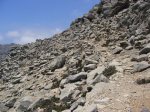
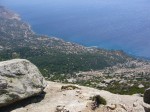
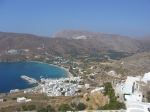
Some of my own personal images of the villages may inspire you further …

This slideshow requires JavaScript.

Summer reading – The Transylvanian Trilogy by Miklós Bánffy

New BanffyMore Miklós Bánffy propaganda to make you go out and buy these fantastic books! They have recently been republished by Everyman’s Library.

You can buy them here. They were counted.The Transylvania Trilogy. Vol 1.

And of course, Elisabeth Jelen Salnikoff,  the elder granddaughter of Miklós Banffy will be speaking about her grandfather, his life and work at the exciting Transylvanian Book Festival 5-9 September; see you there!

by Julian Glover

First published in The Guardian , 5 August 2011

A few years ago a friend sent me three very large paperback novels – a trilogy about Hungary before the first world war – which he said I should read.

The Writing on the Wall, as the books are known (better than “the Transylvanian Trilogy”, the inadequate English alternative), did not look promising. Their covers were relatively austere and their author was a dead Hungarian aristocrat of whom I then knew nothing. They sat ignored until, by chance, I took the first of them to Spain one summer and, having nothing else to read, opened it.

Since then their author, Miklós Bánffy, has never been far from my mind. The elegiac wisdom of his writing makes him one of those people whose life you wish could have ended in something other than calamity. His three great novels, which are really one and should be read as such, are significant and addictive works. Word of their excellence is spread largely by private recommendation. I know no one who, having begun them, has not charged through to the end.

The three books – They Were Counted, They Were Found Wanting and They Were Divided – are at one level a sort of Austro-Hungarian Trollope, with sleigh rides in place of fox hunts and the Budapest parliament instead of the House of Commons. So far, so dull, you might think – except that Bánffy was a great storyteller (his factual account, in his book The Phoenix Land, of the 1916 coronation of the last Hungarian monarch is spellbinding), and wrote as a member of a class and the citizen of a country that had both been brought to ruin.

Bánffy published his books in Hungarian between 1934 and 1940. By then, the pre-first world war aristocratic tradition he describes was dead; or at least the political part of it, for the trappings lingered on – not least at Bánffy’s own great family castle of Bonchida, by then in Romania and destined to be partly destroyed by the Germans in 1944.

Bánffy died in 1950, his papers burned, his books out of print. One of the connected delights of this trilogy is that his daughter was one of the joint translators, and Bonchida (thinly disguised as Denestornya in the novels) is being brought back from a roofless ruin.

That will not return to us the Hungary of which it was once a part, and only a third of which remained in Hungarian hands after the 1920 Treaty of Trianon (an ill-deserved robbery). As Bánffy describes, some of this disaster was his fellow citizens’ fault – the product of their incestuous politics, their semi-subservience to the emperor in Vienna, and above all the closed nature of Hungarian society, which did not know how to deal with the continent beyond its borders. That remains true today: there is something mysterious about Hungary, and not only because of its isolated language.

If I have made these sound sour books, or purely political ones, then I have misled you. More than anything, they are human, and beautiful, and descriptive, and rooted in a land and its natural environment that are both gone forever and less far away than we might think. “The radiant afternoon sunlight of early September was so brilliant that it still seemed like summer,” the trilogy begins. This summer I urge you to read on …

Related articles:

Read more about Miklós Bánffy on the blog by clicking this link.

Paddy’s Italian fans in the footsteps of Fermor and Moss

In the snow on top of Mount Ida

In the snow on top of Mount Ida

Some of Paddy’s fans from Italy recently struck out on an adventure in Crete to follow in the steps of Paddy and ‘Billy’ Moss and the rest of the abduction gang. They were on the route at the same time as Tim Todd and Chris White who, as regular readers will know, engage in some seriously detailed work on the route and the events of April 1944. However, the two groups did not manage to meet up in Crete, but did keep in touch with each other via the comments section of the blog!

Spiro Coutsoucos was leading the Italian group and passed me this short text explaining their motivation and a little about the journey which you can enjoy from the photographs that they sent me. The image of the crossing of Mount Ida is reminiscent of Moss’ own black and white image.

Most of us discovered Fermor (and the Peloponnese as well) thanks to “Mani”, which was the one and only book of Paddy’s translated into Italian until a few years ago. We are all good travelers and hikers and we love travel literature. Some members of the group were in Kardamili and hiked in Mani in spring 2009. We became more familiar on reading Paddy’s biography. After searching in vain for the abduction story among his other books we discovered Stanley Moss’s “Ill Met By Moonlight”. The next step was the exciting discovery of Tim Todd’s website.  And one day with Maria Cristina, who is our spring trek organizer we said… why not? Last winter we organized a meeting in Milan on the abduction story to propose the itinerary. A number of Italian fans of Fermor joined the meeting, some traveling considerable distances.

The next step was getting in touch with Cretan mountain guides to check the itinerary and locations.

We started hiking from Drossia, through Enagron, Axos, up to Anogia, Mount Ida, and down to Fourfouras, Petrochori, Ano Meros, Vrises, Ierakari. We then left Paddy’s way because we could not miss Moni Preveli. We rejoined Paddy’s footsteps again on Peristeres beach. Throughout the trek we enjoyed very pleasant weather, some very nice meetings with people related to Kreipe abduction, a huge amount of raki.  The whole team was very enthusiastic about our quest.

This slideshow requires JavaScript.

Wild Carpathia 2 Exclusive Screening at BAFTA

Those of you who enjoyed the movie Wild Carpathia, may like to know that the European Nature Trust is hosting an exclusive screening of the sequel, Wild Carpathia 2, at BAFTA in London’s Piccadilly on 5 June 2013.

The evening will include a drinks and canape reception before the screening, and further drinks afterwards.

You can order tickets here. I shall see you on the night!

Enjoy this taster.

You can watch the whole of the first film by clicking here.

Remote places and landscapes in Greece – Walks in the footsteps of Patrick Leigh Fermor: Part 9

The ninth of Christian Peter’s walks and still in the Dodecanese.

9.     Astypalaia /Dodecanese

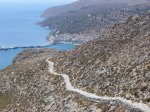
Situated between the Cyclades and the Dodecanese the “forgotten” island of Astypalaia  is even today calm and traditional.  Having the form of a butterfly a small band of land of only 200 meters separates the island into two sections: Exo Nisi and Mesa Nisi.  A day-long hike over the entire island starting in Chora ( Exo Nisi) brings you to the remote, almost abandoned village of Exo Vathy (Mesa Nisi). Only a few people live here leading a very simple and traditional island life as fisherman and farmer. One old couple runs a tavern.

Count Robert de la Rochefoucauld: Veteran of the SOE

Count Robert de la Rochefoucauld

Count Robert de la Rochefoucauld

A wonderful obituary of this brave and colourful figure who probably did not know Paddy, but was in the SOE, and whose story is well worth reading anyway. For some reason it is no longer available on the Telegraph website where it was published on 29 June 2012.  You can read a pdf of it here. The version below is written by Phil Davison and was published in the Independent on 21 June 2012. Thank you to Mark Granelli for bringing this to my attention.

Descended from an ancient French noble family, Count Robert de la Rochefoucauld was one of the last surviving French agents of Britain’s Special Operations Executive (SOE), the secret organisation set up by Winston Churchill to aid anti-Nazi resistance fighters. There are now believed to be only two surviving French agents of the SOE, which Churchill ordered to “set Europe ablaze” through sabotage.

While General Charles de Gaulle organised his Free French Forces (FFL) from his London base, some Frenchmen were hand-picked and trained by the SOE before being sent back to their occupied country to provide money, equipment and training to the local maquis. De la Rochefoucauld was recruited by Captain Eric Piquet-Wicks, who was in charge of the SOE’s RF Section of French nationals based at 1 Dorset Square, London. They worked in parallel with, though not always in agreement with, the more famous F Section run by the legendary spymaster Maurice Buckmaster. The SOE would later be dubbed “the Ministry of Ungentlemanly Warfare”.

De la Rochefoucauld received parachute, sabotage and commando training at secret locations in England and Scotland, including “silent killing” techniques taught by the renowned duo Fairbairn and Sykes – designers of the famous commando knife – at Arisaig, Inverness-shire, before being parachuted back into his homeland.

Dropped into France twice by the RAF, captured twice by the Nazis and once sentenced to death by firing squad, he survived by using the unarmed combat skills taught to him in the Scottish Highlands. He killed one German guard by strangling him, donned his uniform and shot two more guards to escape. He attacked an electric power plant at Avallon in the Morvan mountain massif of Burgundy, but perhaps his greatest feat, in the spring of 1944, was blowing up France’s biggest munitions factory, at Saint-Médard near Bordeaux, occupied by the Nazis and crucial to their war effort.

Count Robert Jean-Marie de la Rochefoucauld was born in Paris in 1923 into one of France’s oldest aristocratic families with records dating back to the 10th century. The family controlled most of what is now the Charente department, based in the magnificent Château de la Rochefoucauld on the river Tardoire, where a branch of the family still lives. On his maternal side, Robert was descended from the old de Wendel family. He was 16 when the Nazis stormed into France in May 1940.

Young Robert was living underground in Paris when he was tipped off by a sympathetic post office worker that someone had denounced him to the Gestapo as a “dangerous terrorist”. Deciding to join de Gaulle in London, he hooked up with the Resistance, who helped him cross the border into Spain in late 1942 along with two British RAF pilots shot down over France.

The three were apprehended by Franco’s police and interned for two months in the infamous Miranda de Ebro camp for foreign prisoners which had been used by Franco’s forces as a concentration camp for Republicans during the Civil War. De la Rochefoucauld was lucky to have been with the British airmen: Britain’s ambassador to Spain sprang all three of them and arranged an RAF flight to London.

Once there, de la Rochefaucould met de Gaulle at the latter’s headquarters in Carlton Gardens but, partly thanks to his two airmen friends, found himself recruited by the SOE. Churchill had asked his Minister of Economic Warfare, Hugh Dalton, to set up the clandestine SOE, partly to resist any German invasion of Britain and partly to support resistance groups in Europe. When de la Rochefoucauld told de Gaulle that the British SOE wanted to recruit him, the latter reportedly replied: “Even allied with the devil, it’s for France. Allez-y.”

Kept in the dark as to what his missions would be, De la Rochefoucauld was trained in unarmed combat at Arisaig, and later at RAF Ringway near Manchester (parachute training, including jumps from as low as 400 feet) and finally at the SOE’s “finishing school” on Lord Montagu’s estate around Beaulieu in the New Forest. Those who didn’t quite cut it were sent to the “cooler,” Inverlair Lodge in Scotland, where they were quarantined, albeit in comfort, so that they couldn’t reveal SOE missions. (Inverlair later became the inspiration for the backdrop to the 1960s television series The Prisoner starring Patrick McGoohan.)

After first parachuting into the Morvan region and destroying the Avallon plant, de la Rochefoucauld was caught by the Nazis and condemned to death, but escaped. He reached Calais, where a pro-Resistance fishing boat got him to a British submarine and back to England. After parachuting back again to the Bordeaux region, he led local maquis fighters in blowing up the sprawling Saint-Médard munitions plant 12 miles outside Bordeaux. The noise, at 7.30pm on 20 May 1944, was heard for tens of miles around and gave a major boost to the Resistance with D-Day in the air.

De la Rochefoucauld then linked up with the famous résistant known as Aristide – real name Roger Landes, a bilingual British citizen (Independent obituary, 12 August 2008) – but was again arrested by the Gestapo and thrown into the Fort du Hâ in Bordeaux, a fortress built by Charles VII in the 16th century. He considered two options, one of them to take the cyanide”L-Tablet” hidden in the heel of his shoe, which would kill him within 15 seconds. But he took the second option, faked an epileptic fit, strangled his guard and shot dead two others before fleeing.

After the war, de la Rochefoucauld trained French commandos in Indochina and for their assault on the Suez Canal in 1956. On retirement from the military, he set up a transport business in Senegal and ran a plantation in Venezuela to import bananas to Europe. He also served from 1966-96 as the popular mayor of Ouzouer-sur-Trézée in north-central France, where he died.

Robert de la Rochefoucauld published his memoirs in 2002, titled La Liberté c’est mon plaisir. His awards included Chevalier de la Légion d’Honneur, Croix de Guerre, Médaille de la Résistance and Britain’s Distinguished Service Order (DSO).

Count Robert de la Rochefoucauld is survived by his wife Bernadette (née de Marcieu de Gontaut-Biron), his son Count Jean de la Rochefoucauld and three daughters, Astrid, Constance and Hortense.

Count Robert de la Rochefoucauld, wartime SOE agent: born Paris 16 September 1923; married Bernadette de Marcieu de Gontaut-Biron (one son, three daughters); died Ouzouer-sur-Trézée, France 8 May 2012.

Help Build a Kiln in Transylvania

Malancrav, near Sighisoara, Romania

Malancrav, near Sighisoara, Romania

Global Heritage Fund UK and the Anglo-Romanian Trust for Traditional Architecture (chaired by William Blacker) have begun a project to protect and restore the cultural landscape of the Saxon villages of Transylvania.  The beautiful buildings are in desperate need of repair using only the traditional materials from the new kiln, and local people are in need of jobs. To address this, Global Heritage Fund is raising money to build a traditional brick and tile making kiln. Run by a Romanian expert, this kiln will directly employ locals and provide much-needed materials for the on-going work of restoration and conservation of the early vernacular buildings.

A crowd-funding site has been established to raise $20,000, of which they have raised almost $5,000,  and I support the attempt. If you would like to know more, and to donate, please visit the crowdfunding page here.

Remote places and landscapes in Greece – Walks in the footsteps of Patrick Leigh Fermor: Part 8

The eighth of Christian Peter’s walks.

8.     The “Italian Road” from Pothia to Vathi – Kalymnos

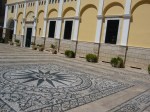
Paddy must have widely been travelling the Dodecanese, as he was so obsessed by pebbelstone mosaics. The islands of the Dodecanese offer a great variety of fantastic pebblestone mosaics. Nearly every old church has one  and the Kalymnian capital of  Pothia has one of the largest and most beautiful. Recently Kalymnos became a world class destination for rock climbers, but there are a number of wonderful walks on the island, too. The best known one is the walk on the old Italian Road (Italikós drómos) from the vibrant city of Pothia into the fertile valley of Vathys. Those who really want to follow Paddy’s footsteps  should visit Kalymnos for Easter celebrations. What you will find to happen in the streets of and on the mountains around  Pothia on those days is really Paddy-like: The local people like to celecrate the holy days with dynamite, this is why during those days people tend to call their island the “Aegean Afghanistan”.

The movie Before Midnight, featuring a certain house in a starring role

If you never get the chance to visit Paddy and Joan’s house in Karadmyli, it looks like you can have an extended viewing if you go to see the movie Before Midnight.

Related articles:

Before Sunset sequel, Before Midnight movie shooting in Greece at Paddy’s House

Intimate portraits from Kardamyli by Miles Fenton

£1 a week – Up Down and Across

Nick Hunt will be giving a talk about his epic walk in Paddy’s footsteps from Hook of Holland to Istanbul at London’s Westminster Reference Library on 11 May, and will be joined by other adventurers in an evening of talks, performances and art about walking.

Find out more on Nick’s blog, After the Woods and the Water here.

Nick Hunt outside the Hotel New York (Continental), Cluj

Nick Hunt outside the Hotel New York (Continental), Cluj

Crossing red lines and other clichés

Today I have had to ban two long term blog readers from posting comments on the blog as they had repeatedly posted offensive and potentially libellous comments even after they had been asked privately to cease.

The comment facility is open to all. It is sometimes a source of useful information; fellow readers help each other out with something or other; and at times it can be a forum for animated debate. There are occasions when fellow readers will argue passionately about some minor fact, and often come close to blows, but on nearly all occasions people know where to draw the line. All good knock-about fun. In the case of these two individuals they forgot the rules and did not play nicely with the other children.

I am able to see all comments and will not tolerate any behaviour that is these days called ‘inappropriate’ ie just plain bad. You can debate as much and as hard as you like, but I will not tolerate any comments that are racist, homophobic, insulting or libellous. These are red lines and I will apply a zero tolerance policy. If you are asked by me or another reader to desist, remove a comment, or apologise then please take stock, think about it, and act in a way that respects others, and also very importantly respects Paddy’s memory.

If anyone has any issue with what I have said, or wishes to seek further clarification please contact me through any of the usual channels including the comment facility.

Tom

Xan Fielding Crete books to be republished

Xan Fielding in Crete

Xan Fielding (front centre) in Crete

I have just discovered that Xan Fielding’s books about his time in SOE and wartime Crete are to be republished by Paul Dry Books and will be available, if Amazon is to be believed, in June 2013.

Hide and Seek: The Story of a War-Time Agent
is available for pre-order now at £9.95 on Amazon – pre-order through the link above.

The Stronghold: The Four Seasons in the White Mountains of Crete
is also available for pre-order now at £9.95 on Amazon – pre-order through the link above.

These books are very difficult to get hold of and The Stronghold in particular is quite rare and sells for between £200-£500 on eBay.

Paul Dry Books link is here.

Don’t forget that you can also pre-order the third volume of Paddy’s trilogy,The Broken Road: From the Iron Gates to Mount Athos

Can you help? Internship in Germany or Austria needed

I am making a pretty unusual request to you all today. My daughter Harriet is studying Business and German at Bath University and is nearing the end of her second year. She is meant to spend her third year living and working in Germany or Austria on an internship. The idea is to give her some solid business experience, improve her German, and to find a suitable subject during her internship to use towards her dissertation which should be on the topic of managing change.

The competition is tough and whilst she has a number of applications in the pipeline I thought that I would appeal to you, my good readers, to see if you can help in any way.

The basic requirement is for a paid internship, ideally with an international focus, for around 12 months starting from July/August 2013. Harriet is keen on a position in either marketing or HR. She has worked in Germany before, speaks fluent German,  and is a very reliable and enthusiastic worker.

If you can help, or know anyone who can, I would be most grateful. Her German CV can be found here.

Please get in touch with Harriet via the details in her CV or myself via tsawford[at]btinternet.com

Remote places and landscapes in Greece – Walks in the footsteps of Patrick Leigh Fermor: Part 7

Back to Crete for the seventh walk in Christian Peter’s series.

7.     From Sougia to Agia Roumeli – Crete

a.       One of the wildest and most difficult walks on Crete is the one along the coastline  between Sougia and Agia Roumeli. But it is rewarding as it offers not only a great variety of natural beauties, but also access to the Gorge of Tripiti which as “a clandestine landing point for the whole of the area” played a major role during the occupation. In his book “The Stronghold” Xan Fielding describes it  as “a needle-narrow opening in the littoral  ramparts, which travelers until recently believed to be inaccessible  except by sea” (p. 55). The Tripiti gorge marks the border between the provinces of Selino and Sfakiá and offers insights into the “highland labyrinth” above Koustogerako which during WW II “was probably the only habitable area in the whole of Crete  which could have sheltered in safety such a vast clandestine concourse as ours had been (Xan Fielding; Hide and Seek, p. 167).

Remote places and landscapes in Greece – Walks in the footsteps of Patrick Leigh Fermor: Part 6

The sixth of Christian Peter’s walks.

6.     From Christos Raches to Manganitis  – Ikaría

This unknown, but astonishing walk starts in the mountain village of Xristos Raches in Western Ikaria. The day long walk first heads towards the high plateau of Ammoudia from where you follow a steep, but paved kalderimi into the fishermen´s village of Manganitis.  As Ikaría even today does not have too much tourism, walking on the island still feels like the expedition into the everyday island life of former times .

The Broken Road – book cover artwork

The Broken Road book cover

The Broken Road book cover

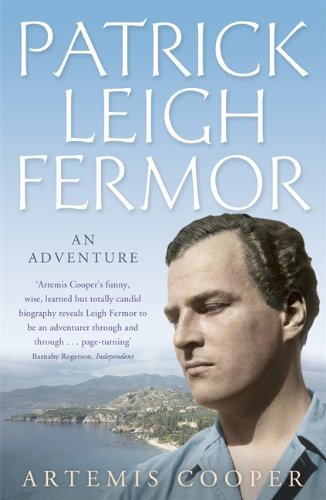
A message from Artemis Cooper who is preparing Vol Three – The Broken Road – with Colin Thubron.

Here is the art work for ‘The Broken Road’, the final volume of Paddy’s great walk which comes out on 12 September… it is by Ed Kluz, a great choice of artist by John Murray. Ed is very much in the English pastoral and Romantic tradition, like John Craxton who did all the covers for Paddy’s books. I know Paddy would have LOVED it.

Available to pre-order from Amazon The Broken Road: From the Iron Gates to Mount Athos

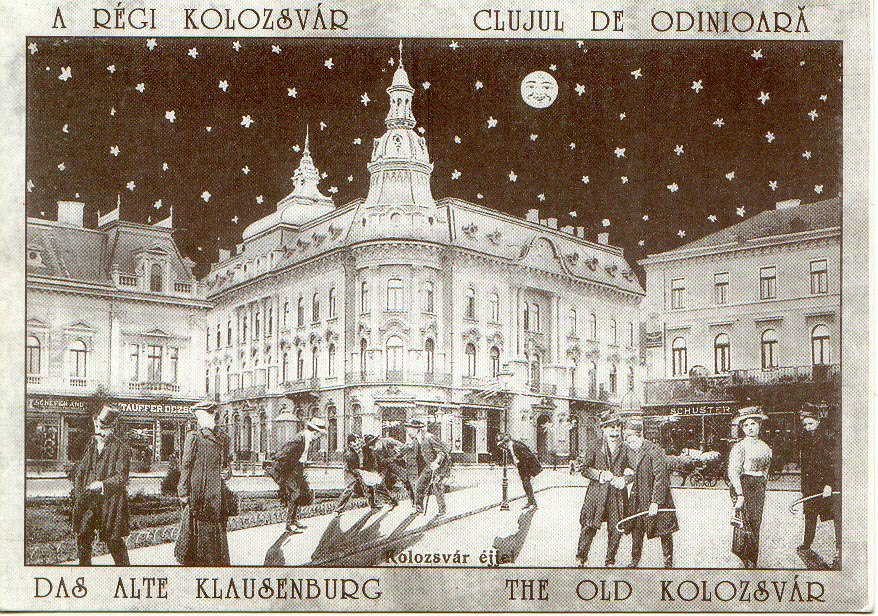
A postcard from Cluj

The Hotel New York in the 1920's

The Hotel New York in the early part of the 20th Century

Thank you to my friend and colleague in Cluj, Stefi Timofte, for finding this picture for me. Of course it shows the Hotel New York (now the sad and decaying Continental) that Paddy visited with Angéla and István in the summer of 1934.

This story has been debunked in Artemis’ biography but I am not entirely convinced by the explanation in her book. Paddy says he got the details from a book in German, but the level of detail (see my story about the internal decor) implies that this book had very good photographs in colour or Paddy at least visited during one of his later visits to Romania.

For me, Paddy’s description of the romance of those days on the road, and the nighttime trysts with Angéla can never be diminished.

Related articles:

An eye for detail and the memory of the Hotel New York in Cluj

Angéla, Paddy, István and Tom in Cluj-Napoca

£1 a week – Rendezvous in Cluj

Remote places and landscapes in Greece – Walks in the footsteps of Patrick Leigh Fermor: Part 5

The fifth of Christian Peter’s walks. I hope that you are enjoying this; the scenery is stunning.

5. Amorgos/Cyclades

a. The longest hike on the Cycladic island of Armogos is also the most beautiful. The old connection between the main island villages of Chora in the Island centre and Aigiáli in the North is a one day walk on old, partly paved paths with fantastic bird eye views upon the whole island. Along the way lies the monastery of Chozoviótissa which is among the most important monasteries of the Aegean Sea.

At Home in the World

Paddy at the house in Kardamyli. Photo by Joan Leigh Fermor, Courtesy the New York Review of Books

War hero, self-made scholar and the greatest travel writer of his generation, Patrick Leigh Fermor lived on a remote peninsula in the Peloponnese until his death in 2011. From a humble house he built himself, now being restored by an Athens museum, he explored Greece’s romantic landscape—and forged a profound link to its premodern past.

by Lawrence Osborne

First published in the Wall Street Journal Magazine 27 September 2012.

A famous anecdote, told by Patrick Leigh Fermor himself in his book Mani, relates how on one furnace-hot evening in the town of Kalamata, in the remote region for which that book is named, Fermor and his dinner companions picked up their table and carried it nonchalantly and fully dressed into the sea. It is a few years after World War II, and the English are still an exotic rarity in this part of Greece. There they sit until the waiter arrives with a plate of grilled fish, looks down at the displaced table and calmly—with an unflappable Greek stoicism—wades into the water to serve dinner. Soon the diners are surrounded by little boats and out come the bouzouki and the wine. A typical Fermor evening has been consummated, though driving through Kalamata today one has trouble imagining the scene being repeated. The somniferous hamlet of the far-off 1950s is now filled with cocktail bars and volleyball nets. The ’50s, let alone the war, seems like another millennium.

Fermor, or “Paddy,” as many educated Greeks knew him, died last year at the age of 96. He is remembered not only as the greatest travel writer of his generation, or even his century, but as a hero of the Battle of Crete, in which he served as a commando in the British special forces.

This slideshow requires JavaScript.

“For as long as he is read and remembered,” Christopher Hitchens wrote upon Fermor’s death, “the ideal of the hero will be a real one.” Hitchens placed Fermor at the center of a brilliant English generation of “scholar warriors,” men forged on the battlefields of the mid-century: This included poet John Cornford, martyred in the Spanish Civil War, and the scholar and writer Xan Fielding, a close personal friend of Fermor’s who was also active in Crete and Egypt during the war, and a guest of the aforementioned dinner party. When Fermor said Fielding was “a gifted, many-sided, courageous and romantic figure, at the same time civilized and bohemian,” he could have been describing himself.

But Fermor was a man apart. Born in 1915 into the Anglo-Irish upper class—the son of a famous geologist—Fermor, literally, walked away from his social class and its expectations almost at once. At 18, he traveled by foot across Europe to Constantinople—a feat later recorded in his books A Time of Gifts and Between the Woods and the Water. In the ’30s he traveled through Greece, mastering its language and exploring its landscapes with meticulous attention. He fell in love with a Romanian noblewoman, Balasha Cantacuzene (a deliciously Byzantine name), and the outbreak of war found him at her family estate in Moldavia.

Because of his knowledge of Greek, the British posted him to Albania. He then joined the Special Operations Executive (SOE) and was subsequently parachuted into German-occupied Crete. In 1944 Fermor and a small group of Cretan partisans and British commandos kidnapped General Heinrich Kreipe, commander of the German forces on the island, and drove him in his staff car through enemy lines disguised in German uniforms. (They would have been shot on the spot if discovered.) Kreipe was later spirited away to British Egypt, but as they were crossing Mount Ida, a legendary scene unfolded. Fermor described it himself:

“Looking across the valley at [the] flashing mountain-crest, the general murmured to himself: ‘Vides ut alta stet nive candidum Soracte.’ [See how Mount Soracte stands out white with deep snow.] It was one of the [Horace odes] I knew! I continued from where he had broken off… The general’s blue eyes had swivelled away from the mountain-top to mine—and when I’d finished, after a long silence, he said: ‘Ach so, Herr Major!’ It was very strange. As though, for a long moment, the war had ceased to exist. We had both drunk at the same fountains long before; and things were different between us for the rest of our time together.”

After the war, now decorated for his heroism, Fermor settled in Greece. He and his wife, Joan Rayner, a well-traveled Englishwoman whom he’d met in Cairo, built a house just outside the village of Kardamyli, a few miles down the jagged coast from Kalamata, in the wild and remote Mani. It was a place that, even in the early ’60s, almost no one visited. “Homer’s Greece,” as he put it admiringly.

“It was unlike any village I had seen in Greece,” he wrote in Mani. “These houses, resembling small castles built of golden stone with medieval-looking pepper-pot turrets, were topped by a fine church. The mountains rushed down almost to the water’s edge with, here and there among the whitewashed fishermen’s houses near the sea, great rustling groves of calamus reed ten feet high and all swaying together in the slightest whisper of wind.” It was timeless. Kardamyli, indeed, is one of the seven cities that Agamemnon offers a scowling Achilles as a reward for his rejoining the paralyzed Achaean army at Troy in The Iliad.

“Not a house in sight,” Fermor later wrote of his adopted view, in a letter to his friend the Duchess of Devonshire, “nothing but the two rocky headlands, an island a quarter of a mile out to sea with a ruined chapel, and a vast expanse of glittering water, over which you see the sun setting till its last gasp.”

The house, still largely untouched from when Fermor lived there, was bequeathed to the Benaki Museum in Athens. As I walked through it alone during a visit there this spring, it reminded me in some ways of Ian Fleming’s Goldeneye in Jamaica, a spartan but splendidly labyrinthine retreat devoted to both a productive life and to the elegant sunset cocktail hour. In one bedroom stood a set of Shakespeare volumes with painstakingly hand-penned spines; on a wall, a painted Buddhist mandala. In the living room there were faded wartime photographs of Fermor on horseback, armed and dressed like a Maniot. The whole house felt like a series of monastic cells, their piety replaced by a worldly curiosity, an endless warren of blackened fireplaces, bookshelves and windows framing the sea.

Fleming and Fermor were, perhaps predictably, close friends. Fleming’s Live and Let Die freely quotes from Fermor’s book about the Caribbean, The Traveller’s Tree. It was Fermor who made Fleming (and, of course, Bond) long for Jamaica. But where Fleming retreated to Jamaica to knock out six-week thrillers, Fermor lived in his landscape more deeply; he explored with dogged rigor its ethnography, its dialects, its mystical lore. His books are not “travel” in the usual sense. They are explorations of places known over years, fingered like venerable books and therefore loved with precision, with an amorous obsession for details.

Fermor led an active social life, and the house in Mani, however remote, was a place that attracted many friends, literary luminaries and even admiring strangers over the years. His circle included the historian John Julius Norwich and his daughter, Artemis Cooper; the literary critic Cyril Connolly; the Greek painter Nikos Ghika; and the writer Bruce Chatwin. In an obituary for Fermor in 2011, The New York Times put it thus: “The couple’s tables, in Mani and in Worcestershire, were reputed to be among the liveliest in Europe. Guests, both celebrities and local people, came to dine with them. The journalist and historian Max Hastings called Mr. Leigh Fermor ‘perhaps the most brilliant conversationalist of his time, wearing his literacy light as wings, brimming over with laughter.’ ”

Standing on Fermor’s terrace, with its fragments of classical sculpture and its vertiginous view of a turquoise cove of stones, I felt as if the inhabitants of 40 years ago had momentarily gone inside for a siesta and would soon be out for a dusk-lit gin and tonic. It seemed a place designed for small, intimate groups that could pitch their talk against a vast sea and an even vaster sky.

It also had something neat and punctilious about it. While sitting there, I could not help remembering that Fermor had once sternly corrected Fleming for a tiny factual error in his novel On Her Majesty’s Secret Service. Didn’t Fleming know that Bond could not possibly be drinking a half bottle of Pol Roger? It was the only champagne, Fermor scolded, never sold in half bottles. It was exactly the sort of false note that Paddy never missed, and that the creator of Bond should not have missed either. Truth for Fermor lay in the details, and his books show the same straining eye for the small fact, the telling minutiae.

I noticed, meanwhile, a handsomely stocked drinks cabinet inside the house, in the cool, cavernously whitewashed living room lined with books—the selection dominated by a fine bottle of Nonino grappa. On the mantelpiece stood a card with the telephone numbers of his closest friends, Artemis Cooper (whose biography of Fermor is being published this month) and Deborah Mitford, later the Duchess of Devonshire.

Fermor had been at the heart of many aristocratic circles, including those of the notorious Mitford sisters. The youngest of the Mitfords—”Debo,” as she was known—became Fermor’s lifelong intimate and correspondent. Their polished and witty letters have recently been published in the book In Tearing Haste.

He was a frequent visitor at her country estate, Chatsworth, and the two were platonically entwined through their letters well into old age. They were, however, strange epistolary bedfellows. The Duchess hated books (“Quelle dread surprise,” she writes upon learning that a famous French writer is coming to dinner), while Fermor was the very definition of the dashing, encyclopedic gypsy scholar. In one letter the Duchess boasts that Evelyn Waugh gave her a signed copy of his latest book, which turned out to have blank pages throughout; he knew she hated reading. But the gardening-mad Duchess slyly understood all her correspondent’s erudite gags.

Their gossip was gentle and civilized, and underneath it flowed a kind of unrequited love. In his first letter of the collection, written in 1955 from Nikos Ghika’s house on Hydra, Fermor proposes having himself turned into a fish by a young local witch and swimming all the way from Greece to Lismore Castle in Ireland, where the Duchess was staying.

“I’m told,” he writes, “there’s a stream that flows under your window, up which I propose to swim and, with a final effort, clear the sill and land on the carpet…But please be there. Otherwise there is all the risk of filleting, meunière, etc., and, worst of all, au bleu…”

The Mani, meanwhile, was a far cry from English country houses and fox-hunting parties. Its remoteness and austerity—especially immediately after the war—were truly forbidding. As Fermor pointed out, this was a place that the Renaissance and all its effects had never touched. It was still sunk in Europe’s premodern past—a place still connected by a thousand invisible threads to the pagan world.

Above Kardamyli rise the Taygetus range and the forests that Fermor loved to wander. Steep paved footpaths called kalderimi ascend up into half-abandoned villages like Petrovonni and, above it, the church of Agia Sophia, which looks down on the Viros Gorge. In Mani Fermor remembers that it was here, near the city of Mistra, that Byzantium died out a few years after the fall of Constantinople, and where the continuously creative Greek mind lasted the longest. It is a delicate, luminous landscape—at once pagan and Christian.

Fermor discovered that Maniots still carried within them the demonology of the ancient world, filled with pagan spirits. They called these spirits the daimonia, or ta’ xotika: supernatural beings “outside” the Church who still—as Nereids, centaurs, satyrs and Fates—lived in the streams and glades of the Mani. They still believed in “The Faraway One,” a spirit who haunted sun-blazing crossroads at midday and who Fermor deduced to be the god Pan. The Mani was only Christianized, after all, in the 10th century. Fermor also described how an illiterate Greek peasant, wandering through archaeological museums, might look up at ancient statues of centaurs and cry, immediately, “A Kallikantzaros [centaur]!” To him, it was a living creature.

I hiked up to Exohori, where Bruce Chatwin had, 25 years ago, discovered the tiny chapel of St. Nicholas while he was visiting Fermor. (I had, in fact, been given Chatwin’s old room in the hotel next to Fermor’s house.) Chatwin venerated the older writer, and the two men would walk together for hours in the hills. Fermor, for his part, found Chatwin enchanting and almost eerily energetic. Yet Chatwin was inspired not just by Fermor but by where he lived. When Chatwin was dying, he converted to Greek Orthodox. It was Fermor, in the end, who buried Chatwin’s ashes under an olive tree next to St. Nicholas, in sight of the sea of Nestor and Odysseus.

Exohori felt as deserted as the other strongholds of the Mani, its schools closed and only the elderly left behind. It possesses an atmosphere of ruin and aloofness. I remembered a haunting passage from Mani in which Fermor describes how villagers once scoured out the painted eyes of saints in church frescoes and sprinkled the crumbs into the drinks of girls whom they wanted to fall in love with them. So, one villager admits to Fermor that it wasn’t the Turks after all.

As a former guerrilla of the savage Cretan war, Fermor felt at home here. It was a thorny backwater similarly ruled by a warrior code. Its bellicose villages were, almost within living memory, frequently carpeted with bullet casings. It was a vendetta culture.

The Mani was for centuries the only place in Greece apart from the Ionians islands and Crete (which, nevertheless, fell to the Turks in 1669) to remain mostly detached from the Ottoman Empire. Its people—an impenetrable mix of ancient Lacedaemonians, Slavs and Latins—were never assimilated into Islamic rule, and their defiant palaces perched above the sea never had their double-headed Byzantine eagles removed. Here, Fermor wrote, was “a miraculous surviving glow of the radiance that gave life to this last comet as it shot glittering and sinking across the sunset sky of Byzantium.” Mani, therefore, explores wondrous connections in our forgotten Greek inheritance (it argues, for example, that Christianity itself was the last great invention of the classical Greek world). But Fermor’s philhellenism was not dryly bookish. It was intensely lived, filled with intoxication and carnal play.

His contemporary and fellow Anglo-Irish philhellene Lawrence Durrell was, in so many ways, his kindred spirit in this regard. They were also close friends and had reveled together at the famous Tara mansion in Cairo during the war. Mani, in any case, stands naturally beside Bitter Lemons and Prospero’s Cell as love songs to the Greece of that era. In Ian MacNiven’s biography of Durrell, we find an enchanting glimpse of a riotous Fermor visit to Durrell in Cyprus just after the war. The two men stayed up half the night singing obscure Greek songs, rejoicing in shared Hellenic lore and making a lot of noise.

“Once as they went through Paddy’s vast repertoire of Greek songs far into the night, the lane outside the house filled with quiet neighbors, among them the usually boisterous Frangos, who told Larry, ‘Never have I heard Englishmen singing Greek songs like this!’ ” Their shared virtuosity in the Greek language was remarkable.

Greece, for some of the young prewar generation, held a special magic. It was a youthful Eden, a place linked to the ancient world that was doomed to disappear in the near future. It’s a mood cannily incarnated in Henry Miller’s The Colossus of Maroussi, which records journeys that Miller and Durrell undertook together in 1939. But no one sang Greece more profoundly than Fermor, and no one tried more ardently to argue its core importance to Western culture, both now and—a more radical argument—in the future.

Roumeli and Mani are his twin love songs to Greece, but it is in Mani that he most eloquently lamented the disappearance of folk cultures under the mindless onslaught of modernity and celebrated most beautifully what he thought of as an immortal landscape in which human beings naturally found themselves humanized.

Consider his illustration of the Greek sky that always seemed to hang so transparently above his own house: “A sky which is higher and lighter and which surrounds one closer and stretches further into space than anywhere else in the world. It is neither daunting nor belittling but hospitable and welcoming to man and as much his element as the earth; as though a mere error in gravity pins him to the rocks or the ship’s deck and prevents him from being assumed into infinity.”

House in Wales

Cliff Cottage - Fforest Farm - Newport

Cliff Cottage – Fforest Farm – Newport

There is so much to discover about Paddy and Joan’s life. The detectives are always at work, and I thought I would share with you this note I received from Alun Davies, an ex-Army man like myself who somehow has become the Honarary Consul in Wales for Hungary. How do these things happen? 🙂 Please share with us your memories or investigations. You can always contact me at tsawford [at] btinternet.com and I promise to reply, ever so slowly!

Dear Tom – here is a small piece of the jigsaw of Paddy’s life which you might enjoy. Each summer we go down to West Wales as a family and stay at Newport in Pembrokeshire. When I read In Tearing Haste I noticed a reference to Newport and asked Artemis if she knew more.

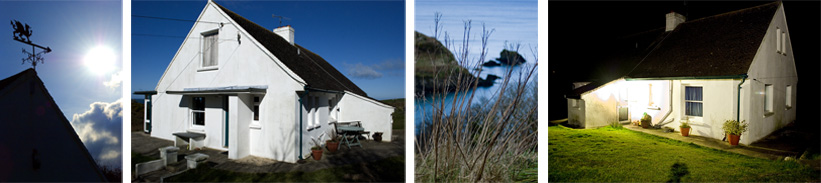
The long and short of it is that I have located the cottage in which Paddy and Joan stayed in the summer of 1961. This was not exactly difficult as on page 83 of ITH he gives the address as Cliff Cottage, Fforest Farm. In fact I know Fforest Farm but the property is now called Fforest Cottage.

I spoke to Joanna Ward who now owns the cottage – picture attached – who told me that her father had bought the property in 1963 from Rex Warner’s wife after he had died.

The footnote on page 84 of ITH says:

PLF had borrowed the house from Barbra Ghika (1911-1989), nee Hutchinson, who married the painter Nikos Ghika in 1961. She was married previously to Victor, 3rd Baron Rothschild 1933-46 and to Rex Warner, writer, painter and translator of Greek tragedies, in 1949.

I am wondering if Charlotte Mosley was right in thinking that the house was borrowed from Barbra when it seems to have been owned by Rex Warner and his later wife. Given Rex’s background in Greek classics, and the fact that he was the director of the British Institute in Athens after the war, Paddy must have known him well.

I realise this is not necessarily of great interest – but as I know that area well I found it interesting to follow up the lead.

Best wishes

Alun

Remote places and landscapes in Greece – Walks in the footsteps of Patrick Leigh Fermor: Part 4

The fourth of Christian Peter’s walks.

4.   Sfakián Monopatia – The old connection between Asi Gonia and Anopoli  – Sfakiá/Crete

How often did Paddy, Xan Fielding and George Psychoundakis walk the old Monopati from Asi Goni via Askifou to the Sfakian mountain villages of Anopoli and Agios Ioannis? Did that connection play a major role during the Cretan resistance?

The mountain region of Sfakiá is the heartland of what Xan Fielding called The stronghold.  Here, in the Highlands of the White Mountains, Crete until today remained as pure and unspoiled as it always was. The walk starts in the birthplace of the Cretan Runner, George Psychoundakis, then reaches the hamlet of Goni in the Askifou-Plateau and continues via to Kali Lakki to Anopoli. Next to Anopoli, on the ridge of the Aradena Gorge, lies the ruined village of Aradena, where in 1947 a vendetta broke out and made its inhabitants leave. Aradena is as well the imaginary village, where Ioanna Karystiani’s novel Suit in the earth (Greek title: Koustoumi sto choma) might take place. Karystiani’s family is originally from Askifou. Following the bridge over the gorge, the walker continues to Agios Ioannis, Crete`s highest mountain village. A little bit underneath of Agios Ioannis you can find a place called Sellouda, which for me is the most impressive place in entire Crete. With the Levka Ori in your back you stand thousand meters high above the sea spotting Africa on the horizon. Although the cliffs seem impossible to pass through you can easily follow a stone paved Kalderimi through steepest terrain which leads you almost thousand meters difference in altitude down to the church of Agios Pavlos on the beach. From there you can continue your two days trek to Agia Roumeli.

This slideshow requires JavaScript.

Books about the region:

Xan Fielding (1954): Hide and Seek. Secker and Warburg.

Xan Fielding (1955): The Stronghold: An account of the four seasons in the White Mountains of Crete. Secker and Warburg.

Ioanna Karystiani (2000): Suit in the earth (German title: Schattenhochzeit)

Loraine Wilson (2002): Crete. The White mountains. A walking and Trekking guide. Cicerone

Peter Trudgill (2008): In Sfakiá. Passing time in the Wilds of Crete. Lycabettus Press.

The life of the most extraordinary man to play Test cricket

Bob Crisp in 1935 at Cardiff, where South Africa were playing a match against Glamorgan. Photograph: Fox Photos/Getty Images

This article was sent to me by Charles Hennah, and I am sharing it with you for three reasons. The first his the life of Bob Crisp is pretty extraordinary and worth a read; as the generation who fought the war die-off we read less and less every day about these brave men. Second, Paddy gets a mention, but I doubt that they were very close even though they appear to have been virtual neighbours in the Mani. Finally, Crisp’s life was a mix of fact and fiction;he had this in common with Paddy.

From Kilimanjaro to war escapades, via Fleet Street and a wild century, the remarkable story of Major Robert Crisp, D.S.O, M.C.

by Andy Bull.

First published in the Guardian 5 March 2013.

“Not that it matters, but most of what follows is true.” That fine line is the first in William Goldman’s Oscar-winning script for Butch Cassidy and the Sundance Kid. Screenwriters enjoy a little more licence than journalists, but sometimes we play a little fast and loose too. “My concern with accuracy,” as Hunter S Thompson put it when someone pointed out to him that Richard Nixon didn’t actually sell used cars with cracked blocks, “is on a higher level than nickels and dimes”. The spirit of the story can be as important as the facts of the matter. It hasn’t been possible to check every detail in this article. But, for what it is worth, most of this is true too, one way or another.

Let’s start with the certainties. We can be sure of these few things, because they were set down in the Wisden Almanack: Bob Crisp played nine Tests for South Africa, the first of them in the summer of 1935, and the last of them in the spring of 1939, 77 years ago last week.

Crisp was a fast bowler, who had the knack of making the ball bounce steeply and, when the weather suited, swing both ways. His 20 Test match wickets cost 37 runs each. The best of them were the five for 99 he took against England at Old Trafford, including Wally Hammond, clean bowled when well-set on 29. Admirable but unremarkable figures those. A few more: Crisp took 276 first class wickets at under 20 runs each, twice took four wickets in four balls, and once took nine for 64 for Western Province against Natal. Impressive as those numbers are, they still seem scant justification for the description of Crisp Wisden gives in his obituary: “One of the most extraordinary men ever to play Test cricket.” But then, as the big yellow book puts it, “statistics are absurd for such a man.”

Wisden is right, the traditional measures aren’t much use. A few other numbers, the kind even Wisden’s statisticians don’t tally, may help make his case. The first would be two, which was the number of times Crisp climbed Mount Kilimanjaro. The next would be three, which is both the number of books he wrote, and the number of occasions on which he was busted down in rank and then re-promoted while he was serving in the British Army. Then there are six, which is the total number of tanks he had shot out or blown up underneath him while serving in North Africa, and 29, which is the number of days in which all those tanks were lost; 24 is the number of years he lived after being diagnosed with terminal cancer. And finally, most appropriately for a cricketer, comes 100, which is, well …

In 1992 Crisp, then 81, was in Australia to watch the 1992 World Cup. One of his two sons, Jonathan, had flown him there as a treat. At the MCG, Jonathan bumped into the old England wicketkeeper Godfrey Evans, who he knew through Evans’s work as a PR for Ladbrokes. “Godfrey said to me, ‘Your father is here? Oh God, I’ve got to meet him, he’s my hero,” Jonathan Crisp says. “I said ‘Come off it Godfrey, you were a proper cricketer, how can he be your hero?'” Evans replied that Bob Crisp was the first man make a 100 on tour. “I said ‘What? How can he be? Plenty of people have made 100s.’ And Godfrey said, “No, no, not runs, women, 100 women.”

Perhaps unsurprisingly, Jonathan Crisp and his brother were estranged from their father for a long time. Bob, too footloose for family life, abandoned them when they were still young.

In the mid-1950s Bob’s wife, the boys’ mother, won on the football pools. It was timely; Bob had just resigned in a fit of pique from his job on the Daily Express, who had told him he couldn’t run a scurrilous story about corruption in greyhound racing. Bob took her winnings and spent them all on a mink farm in Suffolk. “He did that, and did it so badly that my mother had to take it over and turn it into a successful business,” Jonathan says. “He ran off and got a job as a leader writer for the East Anglian Daily Times, a job which allowed him to live in the style he was accustomed to.”

Later, when Bob was 56, he ran further still, all the way to Greece. “He had some friends there who he could live with.” Jonathan says. “Or rather, live off.” When Jonathan found his father again, years later, Bob was living alone in a goat hut on the Mani peninsula. He had no running water, and no lavatory. But he did have a cravat, and a clipping from a biography of Field Marshal Alexander which read “the greatest Hun-killer I ever knew was Major Bob Crisp”. The page had been laminated, and Bob Crisp took great glee in handing it over to any Germans he met in the village. “He thought that sort of thing was funny.”

When Jonathan flew to Greece to meet his father, he found him at the head of table in Lela’s Taverna. “There were 10 women around him. And it was clear he was bedding all of them. He was 70 at the time.” Jonathan says that the lamentations of the local women became a familiar refrain: “You must help me, I am in love with your father.” Some of them were in their mid-20s. Some of them were in their mid-50s. It didn’t make any difference. Bob wasn’t the settling sort.

Lela’s was made famous by Patrick Leigh Fermor, who lived in that part of Greece at the same time. The two men, both writers and raconteurs, were friends and rivals. It would have given Crisp enormous satisfaction to read this story by Guardian journalist Kevin Rushby. When Rushby arrived in the village of Kardamyli last year, the locals had little recollection of Leigh Fermor (or, indeed, of another famous travel writer who had passed through, Bruce Chatwin), but could not stop talking about Bob. “What about Sir Patrick Leigh Fermor? You must know about him.” asked Rushby. “The old man shook his head. ‘No, I don’t think so. There was a writer called Robert. Now he was famous – cured himself of cancer by walking around Crete. He was very famous.’ [He] leaned back and shouted in Greek to his wife in the kitchen. She came through, cloth in hand. ‘Robert Crisp,’ she said, smiling. ‘What a wonderful man! So handsome!'”

Jonathan was too close to his mother to be that blind to his father’s faults, and too appreciative of his father to let those faults obscure his feats. “He was a remarkable and extraordinary man,” he says. “An absolute charmer. And an absolute shit.” The drinking, womanising, and gambling, Jonathan points out, “can seem heroic or can seem awful. It depends which side of the coin you were on.”

Not everyone had such a balanced view. As George Macdonald Fraser puts it in Flashman: “In England you can’t be a hero and bad. There’s practically a law against it.” One of Jonathan’s most vivid early memories is sitting down with a copy of the Eagle comic, only to open it up and find there was a story about his father in it, an illustrated account of his exploits in the war. “It was very odd, but he was that kind of man.” He and his brother, who are working on a book about their father’s life, are still trying to unravel the strands of his life, to sort, where they can, fact from fiction.

They think it is true, for instance, that just before Bob Crisp was called up for the South African team for the first time, for the tour to England, he climbed Kilimanjaro. The story goes just as he was coming down through foothills, he bumped into a friend of his and said: “It’s fantastic up there, have you ever been up?” He hadn’t. So Crisp turned right around and they climbed it again, together. Just below the summit, the friend fell and broke his leg, so Crisp picked him up, carried him up to the top, and then carried him all the way down again.

They know it isn’t true that, as the elderly Greek man reckoned, Crisp cured his cancer by walking around Crete. He was diagnosed when he was 60, and told it was terminal. “He had always wanted to walk around Crete with a donkey, so when he was told how ill he was he thought ‘fuck it’ and set off,” Jonathan says. Bob paid his way by selling the story to the Sunday Express. “When he came back he decided to row a boat around Corfu. But the boat sank.”

What cured Crisp’s cancer, it seems, was an experimental drug, an early form of chemotherapy, which he was given by the Greek doctors. He was told to apply it to his body, but instead he drank it. “It was so disgusting that he mixed it with a bottle of retsina and drank that instead.” There was a time, shortly after, when he was flown to England and the USA by various consultant oncologists, who were trying to find out whether he had found some miracle cure in the combination of this unknown chemical and rotgut alcohol.

That was his second death. The first was 30 years earlier. That was in the Libyan desert, the day after he discovered, while listening to the BBC’s 9 o’clock news on his tank’s wireless set, that he was to be awarded the Distinguished Service Order for conspicuous gallantry. Shell shrapnel hit his head. As he lay crumpled at the foot of his turret, Crisp felt “beyond a shadow of a doubt, that I was going to die. The darkness I was sinking in to was the darkness of the grave. Strangest of all, I didn’t care a damn. As I went out into eternal darkness the last thought I had was … death is easy.” He survived, thanks only, he was told by the gynaecologist who performed emergency surgery on him, “to the good thick bit of skull” that the metal hit.

So far as anyone can be, Bob Crisp was an honest memoirist. As his son says “like most biographers, while they appear to be critical of themselves they very rarely appear in a light that is totally unflattering”. He does write with startling honesty about his mistaken assault on an English tank. He accidentally killed its gunner, “a young lad, red hair, fair skin, freckled face. As they pulled him out, the head rolled side-ways and two, wide-open, empty eyes looked straight into mine. In that moment I touched the rock-bottom of experience.” The war moved so fast, though, that he scarcely had time to dwell on what he had done. More cheerfully, Crisp also admits that he once caught crabs after pinching another officer’s pair of silk pyjamas to sleep in (and foolishly tried to cure himself by dousing his genitals in high-octane petrol).

The early months of Crisp’s war were spent carousing in Alexandria, singing and dancing for his dinner (typically escalope Viennoise and a bottle of white wine) in the local cabaret clubs. He seduced a local showgirl, Vera, who he had to leave behind when he was sent to Greece. He writes so tenderly of their relationship that he almost persuades the reader he really was in love. Until he describes their final kiss: “I knew that I would always think of that last, innocent contact – and that if I ever missed her it would help me to remember how her breath always smelled, just a little bit, of garlic.”

Greece was little more than a rout, one long retreat from the border with Yugoslavia back to the bottom tip of the country. Along the way Crisp had three tanks blown up underneath him, hijacked a New Zealand officers’ Mess lorry, and shot down a low-flying German Heinkel bomber with a burst from his machine gun while it was in the middle of a strafing run. The beating he took seemed to fuel his thirst for action. He found it at the battle to lift the German siege of Tobruk, where he fought continuously for 14 days, on an average of 90 minutes sleep a night. He won his DSO at Sidi Rezegh, where he led his tank in a single-handed charge across an airfield that temporarily checked an advance of 70 German Panzers.

Crisp later told the cricket writer David Frith that his courage was a “reaction to the shame he felt at being afraid”. But his modesty concealed a darker truth, as he once confessed to Jonathan. To his shame, Crisp admitted to his son that he actually “loved the war. He enjoyed it. He thought it was fantastic”.

MacDonald Fraser, who also served in North Africa, writes brilliantly about men like Bob Crisp. They epitomise, Fraser says, “this myth called bravery, which is half panic, half lunacy”. After the attack on Sidi Rezegh, Crisp seemed to catch a fever for fighting. The next day, stranded on foot, he commandeered a signals tank whose crew had “never even fired their gun before”, let alone been in battle. Crisp hauled their officer out of his turret, and with a cry of “Driver advance! Gunner, get that bloody cannon loaded!” led them in a surprise attack on a group of German anti-tank guns. Afterwards the driver was so shell-shocked by this startling turn of events that he started running around in small circles with a wild look on his face. The poor chap hadn’t the faintest idea where he was or what he was doing.” Crisp cured him with a “tremendous kick up the backside”.

Jonathan Crisp says he has it on “very good authority from a lot of different people” that his father was recommended for the Victoria Cross, but Field Marshal Montgomery refused to allow it because Crisp was so ill-disciplined. He was demoted three times. But then he was also mentioned in despatches four times. Crisp was awarded the Military Cross instead. He was presented with it by King George VI, who asked him if his cricket career would be affected by the wound. “No sire,” Crisp replied. “I was only hit in the head.”

In fact Crisp was too injured to play cricket again. After the war he went back into journalism, and, almost a footnote in his life this, founded Drum, the radical South African magazine for the township communities. He fell out with his fellow editors there. “Like a lot of rogues,” Jonathan says. “He was very charming and entertaining until things started to go wrong.” So he came back to Britain to work on Fleet Street, and fell back in to his old friendships with two fellow rakes, Denis Compton and Keith Miller.

Having survived the war, and cancer, Bob Crisp finally died in his sleep, at home, in 1994. When Jonathan found his father’s body in the morning, there was a copy of the Sporting Life in his lap. The only thing Bob Crisp left in the world was a £20 bet on the favourite in that year’s Grand National. “It lost,” says Jonathan. “Of course.”

There is a line in Big Fish, Tim Burton’s movie about how we can never really know the lives of our parents, which goes: “In telling the story of my father’s life, it’s impossible to separate the fact from the fiction, the man from the myth. The best I can do is to tell it the way he told me. It doesn’t always make sense and most of it never happened … but that’s what kind of story this is.” Well, Jonathan Crisp knows that most of his father’s story really did happen. And if there are a few exaggerations and fabrications along the way, well, the story is truer for their inclusion. “One of the most extraordinary men ever to play Test cricket,” says Wisden. If there’s someone out there who tops him, I’d like to hear their tale.

The Longest Journey Will Always Lie Ahead

Last of the wartime generation of travel writers: Sir Patrick Leigh Fermor in 2011

Whilst digging around I came across this charming obituary to Paddy by Justin Marozzi who is famous for his book The Man Who Invented History: Travels with Herodotus, in which Justin describes an account of a lengthy retsina fuelled lunch with Paddy when he visited Kardamyli in 2007.

By Justin Marozzi.

First published in StandPoint July-August 2011

The longest walk has finally come to an end. After the most dashing life of literary wanderings, in which he crossed a continent on foot, fell in love and ran away with a beautiful princess, galloped into battle in a Greek cavalry charge, secluded himself silently with Trappist monks, kidnapped a German general, became one of this country’s greatest war heroes, swam the Hellespont and built a sun-filled house in the Peloponnese where he wrote what may yet prove to be one of the finest trilogies in modern literature, Sir Patrick Leigh Fermor’s ultimate journey was the return home to die in Worcestershire at the age of 96, an Englishman to the last.

The death of Leigh Fermor — friends and fans called him Paddy — removes the last link to that generation of travel writers who fought with such distinction in the Second World War. The prospect of that elusive final volume, which would see our footsore traveller and philhellene complete his serendipitous, marathon-walking tour from the Hook of Holland to reach the city he insisted on calling Constantinople, sometimes Byzantium, never Istanbul, is little short of exhilarating. All his fans who cherish the densely beautiful prose of A Time of Gifts (1977) and Between the Woods and the Water (1986) will be thrilled to hear the news from his biographer Artemis Cooper that an early draft “will be published in due course”. The posthumous gift cannot come soon enough.

The celebration of a life so well lived is likely to bring a renewed flash of interest in travel writing, a genre that has, almost from its very outset, been revered and reviled in equal measure. We may not know what sort of reception greeted the “publication” on clay tablets of the Babylonian Epic of Gilgamesh, the earliest forerunner of travel writing, if not of literature itself, but we are certainly familiar with the mauling received by the Ancient Greek Herodotus, the first great travel writer and historian, an exuberant pioneer of anthropology, geography, exploration, investigative journalism, tabloid hackery and foreign reportage in the 5th century BC. Within little more than a century, Cicero’s “Father of History” had become Plutarch’s “Father of Lies”, a classical harbinger of the suspicion which has bedevilled the first-person travelogue ever since. From Herodotus to Leigh Fermor via Marco Polo, John Mandeville and Bruce Chatwin, the hostile image of travel writer as self-indulgent fantasist and fibber has never been shaken off entirely.

In May, the doyen of American travel writers. Paul Theroux dropped in at the Hay Festival to promote his latest work, The Tao of Travel, an engaging distillation of travellers’ wisdom and a vade mecum worth popping into the Globetrotter suitcase this summer. The blaze of publicity surrounding Paul Theroux’s handshake that ended a 15-year feud with V.S. Naipaul, another writer who has excelled in the genre, suggests that contrary to many predictions, travel writing is in robust health. From one generation to the next it shrugs off with insouciance the obituaries that are written for it periodically by writers as diverse and removed from each other as Joseph Conrad and Claude Lévi-Strauss. Indeed the temptation must be to conclude that travel writing, like the poor, will always be with us.

In Britain, which has a proud heritage in this field, the ranks of great travel writers have been sadly thinned in recent years. The monumental Sir Wilfred Thesiger, author of Arabian Sands and The Marsh Arabs, last of the latter-day Victorian explorers, died in 2003. The same year saw the passing of the magnificent, under-appreciated Norman Lewis, whose Naples ’44 is one of the classic literary accounts to emerge from the Second World War.

In 2006, they were followed by Eric Newby, best remembered for his brave and hilarious A Short Walk in the Hindu Kush, a book that closes with the 20th century’s equivalent of the Stanley-Livingstone encounter. Newby and companion bump into Thesiger halfway up a mountain in Afghanistan, the formidable explorer trailing retainers and pack-animals bearing chests marked for the British Museum, bemoaning the declining standards of Savile Row and gleefully recounting his amputations of gangrenous fingers and removal of diseased eyes. They strike camp for the night. “The ground was like iron with sharp rocks sticking up out of it. We started to blow up our air-beds. ‘God, you must be a couple of pansies,’ said Thesiger.”

Profoundly different in their styles and interests, these three writers were bound nevertheless by the shared generational experience of war and their direct participation in it. Thesiger fought behind enemy lines in North Africa with the SAS, Newby was one of the earliest recruits to the Special Boat Section, as the SBS was then known, and Lewis was an intelligence officer in Naples.

Then there was Paddy. The last of his era was also surely the most admirable and admired of all, a Byronic incarnation of what Greeks call leventeia, defined in one of his most life-enhancing books as a “universal zest for life, the love of living dangerously and a readiness for anything”. His housemaster at King’s School, Canterbury detected “a dangerous mixture of sophistication and recklessness”. Leigh Fermor was the leading literary light among that band of travel writers who fought in the war and were coloured by it, whose lives and writings bear, to some degree at least, the imprint of that vast, world-changing hurricane. The justly celebrated Jan Morris, who caught the closing years of the war as an intelligence officer in Italy and Palestine, is already at a generational remove.

War may not have defined Leigh Fermor or his writing entirely (it brought to an end the first of his two great loves, a dreamlike romance with the Romanian princess Balasha Cantacuzene), but his quintessentially dashing, devil-may-care war record certainly underpins much of the affection with which his devoted fans view him today. In some instances, such as that of “The Greatest Living Englishman” blog that was published in his honour, it is a devotion that blossoms into outright adulation.

Meeting Paddy at his home in the Greek fishing village of Kardamyli in 2006, it was very difficult not to succumb entirely to hero-worship. My first sight of this unforgivably handsome man was sitting in what he called his hayati, a sun-bleached, south-facing winter chamber off what Betjeman called “one of the rooms in the world”, strewn with atlases, dictionaries, lexicons, icons, sculptures, lamps, flokkati goat-hair rugs, Turkish kilims and creased armchairs. He was clasping a Loeb edition of Herodotus. At 91, lunch remained unthinkable before two large vodka and tonics. Cigarettes were thoroughly approved of and an unstinting stream of retsina flowed alongside our conversation for hours. The polymath and oenophile was unstoppable. As the post-prandial ouzo shot to my head like a tracer-bullet, I had to pinch myself to remember that this debonair specimen of the literary man of action was the nonagenarian version of the 18-year-old adventure-seeking “tramp and pilgrim” who in 1933 had set out on his life-changing journey across Europe after a high-spirited farewell with friends in London: “A thousand glistening umbrellas were tilted over a thousand bowler hats in Piccadilly; the Jermyn Street shops, distorted by streaming water, had become a submarine arcade.”

If the prose-poetry of his books is riveting, at times sublime, very occasionally purple, the narrative of his war record is scarcely less vivid. Its crowning moment came at 9.30pm on April 26, 1944, when he stepped out on to a road in the heart of the rough Cretan countryside, intercepted a German staff car and kidnapped General Heinrich Kreipe with a team of Cretan resistance fighters and a fellow British officer in the Special Operations Executive (SOE). From a literary perspective, the glory of this episode had to wait until A Time of Gifts, the first instalment of his epic walk — a version was written in 1969 for the Imperial War Museum. In it Leigh Fermor described the terrifying, 18-day manhunt by German forces sweeping the island. At dawn one morning, surveying the crest of Mount Ida, the general started murmuring his way through a Horace ode. Recognising it as one of the few he knew by heart, the Englishman picked up where the German left off, reeling off the five remaining stanzas in perfect Latin.

“The General’s blue eyes swivelled away from the mountain-top to mine — and when I’d finished, after a long silence, he said: ‘Ach so, Herr Major!’ It was very strange. ‘Ja, Herr General.’ As though, for a long moment, the war had ceased to exist. We had both drunk at the same fountains long before; and things were different between us for the rest of our time together.”

Mani and Roumeli, which describe Leigh Fermor’s wanderings in southern and northern Greece respectively, were hailed by the FT as “two of the best travel books of the century” and contain numerous references to the courage, loyalty, humour and generosity of the Cretans among whom he fought. Artemis Cooper writes in Words of Mercury of the “unbreakable bond” war had forged between the Cretans and the SOE crowd. Typically, Leigh Fermor was not slow to acknowledge it.

In a touching tribute to the Cretan resistance, he translated the wartime memoirs of George Psychoundakis, his shepherd-guerrilla comrade-in-arms, and saw them into print. How many soldiers would have had the literary sensibility-or modesty-to recognise the value of an account told by a local resistance fighter, rather than a self-aggrandising story by yet another officer dropped behind enemy lines? In his introduction to The Cretan Runner, written in 1954, Leigh Fermor likened it to the Rualla Bedouin penning an Arab version of Lawrence’s Seven Pillars of Wisdom (the contrast with the self-promoting Lawrence, a very fine writer on the desert, is instructive). “For the roles were reversed, and the British officers and their signallers and NCOs, not the stage-mountaineers of most Resistance writing, were the foreign oddities; and it seemed to me that they were far better and more soberly appraised than their equivalents in English war books.”

Barnaby Rogerson, author and co-owner of Eland, a specialist publisher of travel literature classics, says war seared an indelible sense of place for this select group of writers. “I think the war gave the best of these travel writers a very intense relationship with one region, where their literary souls got mingled with a place apart, also a sense of writing for the dead others. This is obviously true of Paddy, who could sing, dance and drink as well as any Greek shepherd. I never could work out whether he was a reincarnation of Byron or Pan — probably both. Then there’s Norman Lewis with Naples and Sicily. Thesiger similarly bonded with Ethiopia in a totally passionate way as a boy and later as an adult soldier — and of course his best books are set in southern Arabia and Iraq.”

Thesiger was always more warrior than writer. It is only thanks to the persistent pressure of publishing friends, decades after his dramas in the desert, that we have his granite prose. He had seen wartime service under Orde Wingate in Abyssinia, served with SOE in Syria and then the newly-formed SAS in North Africa. In My Life and Travels, he wrote of his “passionate involvement with the Abyssinian cause”. Letters to his mother in 1943 describe how “bitter and discontented” he was not to have played a part at El Alamein. War was “exciting and exhilarating”.

During a lunch with Thesiger in the incongruous setting of his retirement home in the wastelands of Surrey suburbia, his misanthropic growl suddenly lightened into an animated purr as he spoke of his role in the Allied campaign in North Africa, having persuaded David Stirling, founder of the SAS, to take him on. “I said to him, ‘I hear you’re going to make a raid behind enemy lines. I speak Arabic and I know the desert. Three days later we were 150 miles or so behind lines. I came upon a tent packed full with people. Luckily there was no one on guard. I just raked it with machine gun fire a couple of times. It felt rather like murder.” The glacial blue eyes glowed.

The experience of war also formed a critical part of Lewis’s literary hinterland. He wrote in Naples ’44 of a decisive encounter that “changed my outlook”, shattering his “comforting belief that human beings eventually come to terms with pain and sorrow”. On November 1, 1943, contemplating a menu offering either disguised dogfish or horsemeat, he watched a group of blind orphan girls enter the restaurant scavenging for food. Each child was sobbing. “I knew that, condemned to everlasting darkness, hunger and loss, they would weep on incessantly,” he wrote. “They would never recover from their pain and I would never recover from the memory of it.” His horror of the war, combined with its alluring and unrepeatable intensity, propelled him into a lifetime of far-flung reporting from dangerous parts. It led also to his championing of the rights of indigenous peoples in “Genocide”, a seismically shocking Sunday Times article that resulted in the foundation of Survival International, the movement for tribal peoples, in 1969.

War likewise left its mark on Newby’s writings. It also brought him love. He fought gallantly with the SBS and was awarded the Military Cross for his courage during numerous sabotage missions along enemy coasts. Love and War in the Apennines, another Newby classic, tells the story of his time on the run after one dramatic and abortive SBS expedition, when he was smuggled out of a prison camp and later rescued by a young woman, Wanda, his future wife.

The travel writer Tim Mackintosh-Smith, who has spent most of the past decade writing an on-the-road trilogy in the footsteps and footnotes of his hero Ibn Battuta, the 14th-century Muslim traveller, says the war may have fostered a certain detachment among these writers. “War is death to, among other things, enthusiasms,” he says. “If you’ve been through it, nothing matters quite as much anymore. For someone writing travel, I think this may give a sort of lordly detachment to one’s observations, which isn’t a bad thing. I’m not sure that post-war generations can quite achieve this.” For John Gimlette, author of At the Tomb of the Inflatable Pig, war may have been an influence that “discouraged introspection and informality”. Today’s writers, he argues, have become less detached in their work, “using more humour and self-deprecation to place themselves amongst their subjects”.

The Second World War was only part of these writers’ stories. Theroux, who lists Leigh Fermor, Redmond O’Hanlon, Dervla Murphy, Colin Thubron, Lewis, Thesiger and Chatwin among those travel writers he most admires, believes there was another more important literary influence. “It wasn’t just the war, it was also the colonial world that defined them. They were writing with an imperial confidence.” We are talking in the bowels of the Royal Geographical Society, Britain’s Mecca for explorers and travel writers, and for a moment he could be speaking of Sir Richard Burton, another soldier-scholar, who made the haj to Mecca in disguise in the 1850s. “The end of the war also brought an end to this colonial mentality. Somehow the sense of superiority was dented during the course of the war. The bloom was off the rose. Brits could no longer travel as lords and sahibs and colonial masters.”

As the metaphorical baton passes from Leigh Fermor to Thubron, a master of lyrical prose, we lose a literary connection to that all-defining conflict of the 20th century and the more heroic age it encapsulated. The memory of it lives on, recorded in the words of historians, poets, journalists, soldiers, generals, biographers and travel writers alike. It was precisely in order to ensure that the “great and marvellous” deeds of another, much more ancient conflict were not “forgotten in time” or “without their glory” that Herodotus wrote his landmark Histories of the Persian Wars, 2,500 years ago. It is surely profoundly important that the world’s first history book, a fizzing masterpiece of storytelling, relied so heavily on experiential travel. Thucydides needed to get out more.

Scanning the horizon, there appears to be little reason to fret for the future of travel writing. A genre that seeks to understand a constantly changing world, with recourse to history, geography, politics, economics, biography, anthropology, philosophy, psychology and reportage, among other disciplines, is in little danger of losing its relevance. If you want to know what life was like in late 1930s former Yugoslavia, it is hard to beat Rebecca West’s Black Lamb and Grey Falcon, a meta-travel book (1,100 pages) of astonishing compass and vitality. For Iraq in the 1920s, who better than Freya Stark and Gertrude Bell to paint a many-layered portrait? The best travel writing opens up parts of the world that other disciplines can struggle to reach — and explain to a wider audience.

Consider the turmoil in the Middle East. While the breathless media rush to report the next dictator to catch Arab flu, leaving post-revolutionary countries like Egypt largely unreported in their wake, the field is left open for writers with more time and literary space on their hands to make sense of an irreducibly complicated society and situation. Digital communications, mass travel and the supposed shrinking of the world offer only the deadly delusion of a homogenised “global village”. News articles, foreign policy reports and jargon-filled government briefings on “failed states”, “post-conflict environments” and “stabilisation operations” pay only lip service to real-life complexities. What would Paddy have made of the Foreign Official who spoke to me the other day about “ground-truthing” in Benghazi? We should always beware of what Mauriac called “la tendance fatale à simplifier les autres”. Travel writing celebrates the world as it is, with nuance, shading and uncertainty.

William Dalrymple, who sped to fame in the late 1980s, after Theroux, Chatwin, Thubron, O’Hanlon and Jonathan Raban had blazed a renaissance trail of travel writing a decade earlier, points to the proliferation of fine writers of the genre far beyond these shores. It is parochial in the extreme to see this as a British or Western format. Among those with Indian roots alone Dalrymple lists Shiva and Vidia Naipaul, Pico Iyer, Amitav Ghosh, Vikram Seth, Pankaj Mishra and the novelist Rana Dasgupta, now working on a study of Delhi. Dalrymple says it will inevitably be a completely new take from his own City of Djinns, published in 1993, before Delhi and India had cast loose and surged forward at breakneck speed. “Each generation sees the world very differently,” he says.

Earlier this year, Kamal Abdel-Malek, Professor of Arabic Literature at the American University of Dubai, published America in an Arab Mirror, an anthology of Arab travel writing in the US during the past century that is at once unexpectedly illuminating and disquieting. OxTravels, a new anthology of writing co-edited by Rogerson, reveals a multicultural cast of 36 authors including Aminatta Forna, Oliver Bullough, Sonia Faleiro, Peter Godwin and Rory Stewart. “We could easily have added another three dozen, in a separate collection tomorrow, who would all be in the front rank,” says Rogerson. The compulsively readable Dutchman Cees Nooteboom would surely be among them. Ongoing translation of hitherto inaccessible foreign writers such as the fabulously curious, effervescent 17th-century Ottoman traveller Evliya Çelebi, author of the ten-volume Seyahatname or Book of Travels, only confirms the universality of the genre.

For a final verdict from the man Jan Morris called a “transcendentally gifted writer”, I travel to West London, where the two tribes of Holland Park and Shepherd’s Bush collide. Thubron is the first travel writer president of the Royal Society of Literature, a tribute both to his virtuoso skills and, if this is not wishful thinking, the enduring significance of the genre. His latest book, To a Mountain in Tibet, was published earlier this year to a symphonic swoon from the critics. It thrust the reader into an enchanted world of sky-dancers and demons, landscapes of fearful majesty and “charged sanctity” that clung to Thubron’s plangent prose. At the Tibetan border “the ebbing waves of the Himalaya hang the sky with spires while ahead the land smoothes into an ancient silence”. Nearing the lung-shredding, wind-haunted summit of his holy pilgrimage, “the mountain valley closes unsoftened around our strange heterogeneous trickle of beasts and humans drawn up like iron filings to the pass.”

Beyond the cool, book-lined sitting room, French windows open on to the blinding clatter of summer: shades of MacNeice’s sunlight on the garden. At 72, Thubron sounds a confident note. Travel writing’s long history of successful adaptation over many generations stands it in good stead, he says. “The genre is very flexible. It will always meld itself to what is there and available, which is abroad, and whether it’s more familiar or less familiar, it’s still going to need a voice to tell us about it. I do think the world has to be reinterpreted constantly, the impetus to explain it is just a human impulse. I don’t think any other genre has that opportunity.”

From Babylon to Ancient Greece, through the Middle Ages and into modern times, history suggests this: that for as long as the world continues to change and human nature remains the same, this curious international tribe will continue to go out and travel and write and tell stories that people want to read, fuelled by what Baudelaire called “la haine du domicile et la passion du voyage”. As Robert Louis Stevenson put it, “The great affair is to move.”

Paddy, of course, put it differently. One of his favourite sayings, which expressed his own creed as well as our preternatural need to travel, harks back to St Augustine. He personified it with élan: solvitur ambulando — it is solved by walking.

Related article:

Marathon Man – which includes the account of the retsina fuelled lunch with Paddy.

Print

Dashing hero – champion sponger

Ooops! I have a feeling Mr Peter Lewis will not be on the Cooper-Beevor Christmas card list.

By Peter Lewis

First published in the Mail Online, 25 October 2012

When he died last year at the age of 96, Sir Patrick Leigh Fermor, DSO, OBE, inspired long and admiring obituaries. They described him as an intrepid traveller, war hero and ‘the greatest travel writer of his generation’.

All this is borne out in this admiring biography by Artemis Cooper, granddaughter of Lady Diana Cooper, who knew ‘Paddy’ since her childhood. So Artemis’s knowledge and access to his papers, letters, and many friends is unrivalled.

There is one disadvantage to being so close to your subject – a certain blindness to their shortcomings. Fermor was known above all for a charm that most people found irresistible. It allowed him to get away with selfish and unfeeling behaviour that wouldn’t have been liked in ordinary mortals.

And Sir Patrick was certainly no ordinary mortal. He decided when he was 18 to walk across pre-war Europe, from the Hook of Holland to Constantinople, as a tramp with only £1 a week to live on.

Later, as an SOE (Special Operations Executive) officer during the war in Crete, he carried out another audacious plan: to kidnap and deport General Kreipe of the German occupying army. This escapade is the highlight of the book.

After ambushing Kreipe’s car, Paddy – wearing German uniform – and his SOE partner Billy Moss, drove through Heraklion, the German headquarters, clearing checkpoint after checkpoint with the General pinned down in the back of the car. Paddy even issued curt orders to the sentries in excellent German.

After some grim hungry days and nights crossing the mountains with the entire German garrison searching for them, they were taken off in a boat to Alexandria. By then General Kreipe and Paddy were almost friends, having discovered a mutual love of the Latin odes of Horace.

Paddy won his DSO for his part in the plot, which was written about by Billy Moss in his book Ill Met By Moonlight. His account was subsequently filmed, with Dirk Bogarde playing Paddy.

Yet Paddy’s start in life was inauspicious. He hardly saw his father, who was an archaeologist working in India. His mother fostered him out for his first four years then despatched him to prep schools that he hated.

Wild by nature, Paddy was nothing but trouble – expelled from school after school and failing every exam. He wound up at 18 as an incorrigible drunk and party-goer.

Then he turned his back on all that to tramp diagonally across Europe and write about its gypsies, remote towns, forgotten villages and colourful peasant customs – indulging his insatiable curiosity for foreign languages, history and architecture. He had few advantages but youthful ones: great looks and physical fitness (like a Greek God, said an admiring Freya Stark); a natural ebullience and eagerness to learn; a quick ear for languages; and an amazing memory for detail.

Wherever he went, women and men – whether peasants or aristocrats – took to him and offered him hospitality. One introduction led to another.

He sometimes slept rough in stables and barns but this was interspersed, we now learn, with sojourns in the castles and country houses of the eccentric, amusing, minor nobility of Bavaria, Hungary, Bulgaria and Rumania (as Cooper spells it).

It was a very superior form of tramping. And at the end of it, he was swept off by a Rumanian princess who took him to live with her in her manor house. Most of his hosts had splendid libraries that he ransacked for knowledge of local history and customs, on which he became a living encyclopaedia. He also had a great capacity for carousing, whether with peasants or princes, talking all night and singing songs in many languages.

Cooper chronicles many a riotous evening among Greeks and Cretans with near-unpronounceable names, until they dissolve into an indistinguishable blur.

The trouble is there is just too much of Paddy’s charm and charmed life, and they begin to wear thin after the halfway point.

Delightful company as he no doubt was, he made a wide range of upper-class friends in England and abroad, in whose houses he was welcomed. In short he was a champion sponger. There are also awkward questions that are not satisfactorily answered, such as an ugly incident in Crete when he accidentally shot dead one of his partisans by easing the bolt of a rifle that had – unbeknown to him – a round up the barrel.

He made profound apologies to the man’s family, which unsurprisingly they did not accept. No trained rifle handler would fail to notice a cartridge in the breech nor test the gun’s action other than by aiming at the sky.

Also, the 1944 kidnapping of Kreipe led to savage German reprisals on Cretan villages, which were razed to the ground. In fact it served no strategic purpose other than to raise morale.

Paddy was welcomed back to Crete as a hero (though not by the family of the man he shot) but one wonders how happy he was about his jape in retrospect. It may be why he never published his version of the story.

There is also his cavalier attitude to money. He was always borrowing it, even from the adoring office girls of the British Consul in Athens – and not often paying it back. Chronically short of finance for his incessant travels, he never stooped to earning any, except for the occasional magazine article.

For years he was financed by the love of his life, Joan Rayner – a photographer he met in Cairo in 1944. She fell hopelessly in love with him, and they travelled together in Greece and the Caribbean, and shared her homes in London and Athens.

She was the ideal travelling companion, his best listener, who tolerated his late-night binges and even his affairs with other women. She was seen to give him money, saying: ‘That should be enough to get a girl.’ But he would not marry Joan, though she plainly wanted it. He  preferred what he called ‘intermittent concubinage’ with vague ideas of marriage, ‘which we talk of and then forget’.

They finally wed in 1968, 24 years after they met, ‘because it seemed idiotic not to’. By then they (or rather she) had bought land in a Greek bay and had built a fine house to settle in. Joan, it seems to me, is the real hero of this book.

The biggest and perhaps unanswerable question that nags throughout is: why did Paddy not get on with the writing, given his power with words? He had an ideally patient publisher, Jock Murray, who made him advance after advance on promised manuscripts, which Paddy spent on yet another journey or party.

When his books on Greece did appear, he got rave reviews and won prizes. Yet the magnum opus, the account of his youthful walk to Constantinople, remained unwritten for decades. The first part, A Time Of Gifts, was finished in 1977, followed by part two in 1986, more than 40 and 50 years respectively after the journey they described.

I have to admit that, dipping into them again, I would never guess that a man of almost 60 was describing his experiences at 19. And the last words of the epic were ‘To Be Concluded’. It never was.

Cooper’s biography, though enjoyable and spirited, is essentially a flawed book about a flawed character.

Many writers have remorselessly neglected or exploited others in their compulsion to write. Fermor did so while producing surprisingly little. What there was, however, was worth it.

On Foot to the Golden Horn: A Walk to Istanbul

Jason Goodwin, author of On Foot to the Golden Horn

Whilst at the launch party for An Adventure, I met Jason Goodwin who, when just a little younger, walked in 1990 with two friends from Gdansk to Istanbul. Jason subsequently wrote On Foot to the Golden Horn: A Walk to Istanbul as a record of their adventures. It is an enjoyable read, but there is just not enough about Istanbul!

Of course before setting out on the journey, Jason sought Paddy’s blessing, as so many young writers have done over the years …

We met him for the first time in early 1990, just before we set out to walk from Poland to Istanbul. My aunt Judy asked him over for a drink. Impeccably dressed – touch of the dandy, old school, Guards… Shabby chic was not his style.

We told him our plan, to start walking from Gdansk. There was a cargo ship that made the passage to Gdansk from the Thames each fortnight, and offered berths.  From the Baltic to Czestechowa, then Cracow, over Slovakia into Hungary…. It was a wonderful moment to start out across the lost lands of eastern Europe. Paddy had known them so well before the curtain dropped, and we would be among the first to go in again, to see how this disjointed Europe might re-unite. To see what and who was on the Other Side.

‘What a marvellous idea!’ he exclaimed, as if – well. As if we were the very first people ever to think of it.

On Foot to the Golden Horn: A Walk to Istanbul won the John Llewellyn Rhys/Mail on Sunday Prize in 1993, and is now available in a Kindle edition. Jason’s review of Patrick Leigh Fermor: An Adventure was published in Country Life and you can read it here.

Remote places and landscapes in Greece – Walks in the footsteps of Patrick Leigh Fermor: Part 3

The Third of Christian Peter’s walks.

3.   The village of Olymbos in the North of Karpathos

There is no village like Olymbos in the entire Agean Sea. I don`t know if Paddy ever visited the Dodekanese Island of Karpathos and the vilalge of Olymbos. If not he missed an important impression.  A village without bakery due to the fact that the Olymbites still use their old ovens in the gardens, a village where the women still wear their old costumes, a village where byzantine traditions (Songs, easter Tuesday) are still alive.

The old Monopati from Spoa to Olymbos is one of the most impressive walks I have ever made on Greek islands. It is partly paved, especially the last part leading into the village of Olympos is fantastic. If you want to understand what life was like in this remote village in former times, you need to get there by walking the old path.

Transylvanian Book Festival Facebook page

FB pageThe new year has started off with a lot of activity for the team behind the very first Transylvanian Book Festival which will take place between 5-9 September 2013. The location is a great attraction, and those beautiful villages of the Saxon Lands in the Carpathian Mountains offer a unique location. More news coming soon.

The team hope that as many of you as possible can join themthere, but in the meantime, come on over and join the Transylvanian Book Festival page, by ‘Liking’ it on Facebook so you can keep up with the news and join in yourself.

Read more about the Festival here.
The European Nature Trust is currently seeking a Chief Executive/fundraiser

TENT logoThe European Nature Trust (TENT) is currently seeking a Chief Executive/fundraiser with a focus on fundraising to take the foundation forward with exciting projects based in Romania and Scotland.

We have mentioned TENT a few times on the blog for the work it does in trying to preserve the unique forests and wildlife of the Carpathians and Scotland. Most notably they produced the highly successful film Wild Carpathia. The current Chief Executive has announced his intention to depart and they are seeking someone new for what would be a very rewarding role.

If you are interested in pursuing the role please contact Juliet on by email: juliet[at]theeuropeannaturetrust.com with a covering letter and a copy of your curriculum vitae.

Click here for job specification.

They wish to receive all replies by Friday 1st March 2013. Visit the TENT website here.
An Encounter with Patrick Leigh Fermor

Patrick Leigh Fermor working at his home studio on 3 October 2004, then aged 89. Kardamyli. by Sean Deany Copyright 2012

Patrick Leigh Fermor working at his home studio on 3 October 2004, then aged 89. Kardamyli. by Sean Deany Copyright 2012

I was alerted to this article when its author, Sean Deany, posted some very nice comments on the blog. Thinking that this was one to share (there are some lovely pictures) I asked Sean if I could post on the blog. He very kindly said yes. Sean tells me he is off on a 1,700 km walk from Arles to Santiago de Compostela in 6 weeks time; so if you see an Aussie pilgrim reading A Time of Gifts wish him g’day.

by Sean Deany

In early 2001 restless and tired of my uneventful life I had the ambition to take a long walk and think things over. Hearing my complaints a good friend suggested to me that I should read Patrick Leigh Fermor’s two books “A Time of Gifts” and “Between the Woods and the Water”. Who? Was my reply. A bit surprised of my ignorance, he later supplied me with a tattered copy of the first book which would become a huge inspiration behind my travel ambitions. A few weeks later I discovered a near new copy of the second in the series of a planned trilogy. Then I had a great idea! I would write to Penguin Australia and naively ask them to forward my hand written letter to the author seeking his advice for my proposed walking tour across Europe.
This could have been the end to the matter. However and quite unexpectedly some weeks later a tiny envelope from Greece arrived into my post box. Inside it contained a two page hand scrawled response to my request  from the author himself Patrick Leigh Fermor. Common sense explained that I should not merely follow the same route he had taken all those years ago, since the world had changed to that of his youth when in hob nail boots he tramped across 1930s Europe. There and then he was really heading into the unknown! Instead he advised I should nonetheless traverse Europe, but perhaps begin in Portugal, Spain or France and head towards Eastern Europe by way of Poland and the Baltic States, before entering into Russia. From there I should swing down into the Crimea before plunging into the Caucasus. From there I could logically enter Turkey via Trebizond, following Xenophon’s Anabasis in reverse – all Greek to me –  before heading westwards to along the Turkish coastline! These were places he had always wanted to travel to, but now time was catching up on him and he doubted it would be possible. My head was by this time spinning in excitement with conflicting ideas into where and indeed when I should go.
Click here to read more …..

Remote places and landscapes in Greece – Walks in the footsteps of Patrick Leigh Fermor: Part 2

The second of Christian Peter’s walks.

2.    The old Kalderimi to the village of Altomirá – Exo Mani

a.    I have often been thinking which way Paddy and Joan might have taken when they first walked over the Taygetos Mountains into the Mani in summer 1952.  Starting in Anavriti they probably headed towards Pighadia and Altomirá. That means they must have come down the fantastic Kalderimi from Altomirá to Kambos. For me this is even today the most impressive way to reach the Mani.