Author Archives: proverbs6to10

Unknown's avatar

About proverbs6to10

Interested in Byzantium and Patrick Leigh Fermor

Sir Lewis Leigh Fermor’s Diary: Life in Colonial India

Map showing the area of India in which Fermor travelled during his first two field work seasons. [George Philip FRGS (ed.), Philips’ Record Atlas, London: The London Geographical Institute, 1934.]

Map showing the area of India in which Lewis Leigh Fermor travelled during his first two field work seasons. [George Philip FRGS (ed.), Philips’ Record Atlas, London: The London Geographical Institute, 1934.]

For those researching Paddy’s life, the Geological Society archives hold letters, papers and diaries of his eminent geologist father, Sir Lewis Leigh Fermor, and his experiences in India.

An introduction to the online element of his papers may be found here, and I quote …

The name Fermor may today be best known within the Society in association with the Fermor Fund, the bequest made by Sir Lewis Leigh Fermor’s second wife after her death to support research into her late husband’s areas of interest, or the Fermor Meeting. Outside geological circles it is more likely to be connected to Sir Patrick Leigh Fermor, Lewis Leigh’s celebrated travel writer son. Patrick could be said to have had adventure in his blood, with his father Lewis heading off to India at the age of 22, and being sent off on his first six month field work expedition less than a week later.

After applying for a job with the Geological Survey of India, Lewis Leigh Fermor (1880-1954) departed for Calcutta (Kolkata) in 1902. In 1909, after discovering six manganese minerals, his key report on the manganese deposits of the country was published. During WW1 he assisted the Railway Board and the Indian Munitions Board, for which he received an OBE in 1919. He led the surveying of the Archaean rocks of Madhya Pradesh both before and after the First World War. Although he officially became director of the Survey in 1932, he had previously acted as such for several years in the 1920s and from 1930 onwards. He retired from the Survey in 1935, but continued to live in India until 1939 as a consulting geologist, before returning to Britain.

The Society’s Archives hold a small number of notebooks and diaries formerly belonging to Fermor, in addition to personal papers such as his first Indian employment contract and a letter notifying him of a scholarship. His diaries are particularly interesting for the intriguing insight they give the reader into the life of both an early twentieth century geologist, and an English civil servant in British India.

Extracts from the diaries may be found online here.

Following Michalis in Mycenae

13694300_10105313766032178_664315251_oSoon I will be travelling to the Mani and will make my first visit to Paddy’s house, something that is rather belated, but an experience that I am looking forward too very much. My friend Ryan Eyre from Seattle has been on a long trip to Europe this summer. Not long after he stayed with me here in Winchester, he travelled to Greece and found himself in historic Mycenae. What he discovered was a virtually moribund tourist industry, and an interesting story about Patrick Leigh Fermor.

By Ryan Eyre

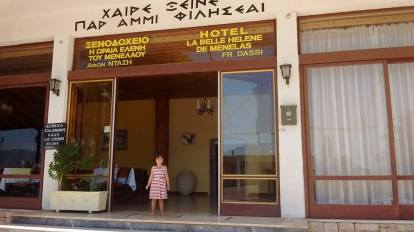
On a recent visit to Mycenae, the Oreia Eleni Hotel seemed the obvious place to stay. The Oreia Eleni, also known as La Belle Helene and the House of Schliemann, is a simple hotel but rich with historical associations. Heinrich Schliemann lived in the building during his excavation work at Mycenae in the 1870s and a generation or more later it was converted into a hotel. Agamemnon Dassis is the current proprietor and is the third-generation of his family to run it. He lives in a house next door with his wife and young daughter. A youthful looking man in his late 40s, Agamemnon is an energetic and quite attentive host.

Mycenae is one of the most visited archaeological sites in Greece but Greece’s economic woes have definitely affected business in the modern village half a mile below the citadel. The number of tourists has declined in recent years and most people who currently visit Mycenae do so as a day-trip and pass through the village without stopping. The owners of the almost empty shops, restaurants and hotels in Mycenae sit rather forlornly, waiting for customers who largely never appear.

I was the only guest at the Oraia Eleni during my two-night stay and Agamemnon told me that I was in fact the first guest they had had in three weeks. This was in July. As a guest, I benefited from being able to talk to Agamemnon at length.

The second day of my stay he showed me the small museum that is on the ground floor of the building. Agamemnon’s father photocopied famous people’s signatures from the guestbook and they are displayed in note-card size form behind glass. He pointed out the signatures of Agatha Christie (I was staying in the same room she supposedly did), Virginia Woolf, Stephen Spender, Carl Jung, Jean-Paul Sartre, Alec Guinness, Charlton Heston and J.K. Rowling (among others) and provided some anecdotal information about each visit. I was interested to note that Albert Speer, Heinrich Himmler, Joseph Goebbels and Herman Goering all passed through in the 1930s (it was unclear whether they visited separately or together).

Up to that point Patrick Leigh Fermor’s association with the hotel hadn’t crossed my mind. Thinking about it for a moment it seemed obvious he must have stayed here. I asked Agamemnon whether Leigh Fermor’s signature could be found anywhere on the display. “Oh, yes, I forgot to mention him”, Agamemnon said before pointing out PLF’s name scrawled in his own and dated from 1960.

“He came here many times over the years. He came in the 1950s, and in the 1960s and many times afterwards I remember when I was a young man he telephoned and asked me whether I was George. I said no, I am his son. Who is this? This was in Greek but I could tell from the accent that it was a foreigner. He said, tell George that Michalis from Kardamyli called. I was a little confused. Later I met him. As I said, he came here a number of times. I also visited him in Kardamyli. One time when his wife was in England he came and stayed for a week. He was a great man, a very great man. I last saw him in 1998. When I came back here in 2007 after some years living abroad I did not contact him before he died. I regret this.”

I didn’t immediately tell Agamemnon my own story about meeting Patrick Leigh Fermor in Kardamyli in 2009. That evening at the dinner table and after drinking an ouzo and some wine, I asked him to sit with me because I wanted to tell him something. I began to recount my last trip to Greece when I had gone to the Mani to try to meet the author, who was then 94 years old.

“You met him in the end?” Agamemnon asked before I could go on much further. I told him I had written PLF a brief letter that I had dropped off at his house and ended up being invited to lunch the next day, where I spent several hours drinking, eating and talking with the great man.

I acknowledged I was extremely lucky. Agamemnon agreed and opened up more. He told me about how Paddy would come to Mycenae and disappear for the entire day, only returning at night. Paddy didn’t tell people he was a famous writer; Agamemnon only discovered this on his own.

Paddy was pretty self-deprecating and didn’t take himself so seriously. He was happy to talk to all sorts of people and showed genuine curiosity in their lives. “He had this constant curiosity about people and the world. That’s why he lived so long,” Agamemnon remarked.

He told me about various friends of Paddy’s who have stayed at the Oraia Eleni and that the Patrick Leigh Fermor Society had also passed through in the last two years.

Moving into more salacious territory, he then told me that he was going to tell me something about Paddy that most people haven’t heard. He didn’t have the heart to tell the members of the PLF Society when they visited. Agamemnon asked me to keep it off the record so I can’t fully disclose what I heard. What I will say is that it was an anecdote that I have very reason to believe is true and confirms that well into his 70s Paddy was sexually active with women who were not his wife and were considerably younger than himself. Agamemnon and I agreed that Paddy’s mixture of looks, charm and erudition was remarkable. “He really had the mentality of a teenager,” Agamemnon added.

Drinking wine and hearing these stories as the only guest in an atmospheric place gave me the thrilling feeling of luck and leventia, or feeling of lightness, that Paddy would refer to in connection with Greece. It was an evening that reminded me why I travel.

Travels in Transylvania: The Greater Tarnova Valley

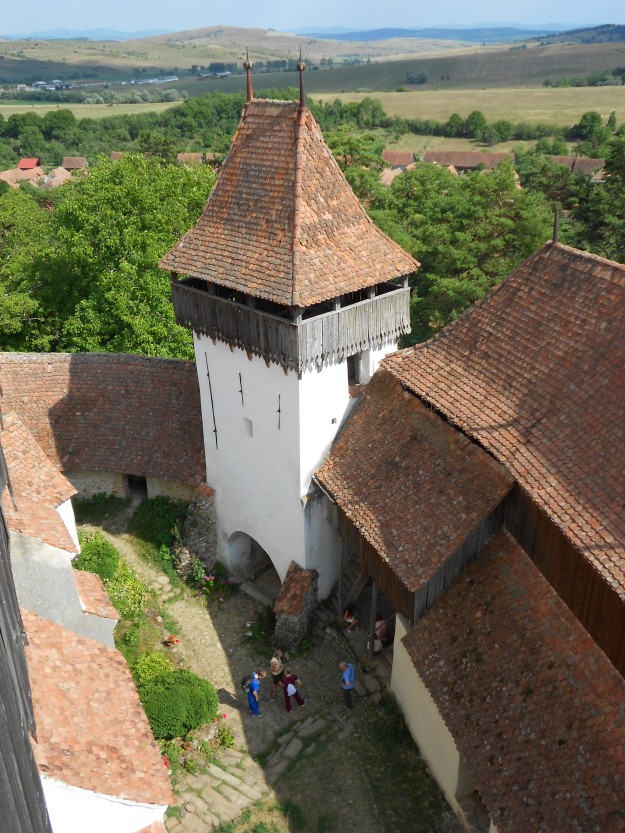
The UNESCO World Heritage fortified church in Viscri

The UNESCO World Heritage fortified church in Viscri

Whenever I mention Transylvania to friends and acquaintances most express a strong desire to visit this land of mystery. Few however, can place Transylvania on a map and even less ever actually travel there. Readers of the Paddy blog will know that PLF passed through in 1934 and returned during communist times. I have had the privilege of working and travelling there, and it is through this association that I met Lucy Abel Smith who is the organiser of the Transylvanian Book Festival 2016 and author of this new Blue Guide.

If you are thinking of visiting Romania with all its cultural, historical, and natural riches, it may be difficult to decide where to start for it is a large country with a relatively small population. Transylvania itself is an area three times the size of Wales with diversity in all corners. The recently published Blue Guide Travels in Transylvania: The Greater Tarnova Valley helps by picking one area and offers a detailed insight from someone who has been living and travelling since the time of Ceausescu, describing a journey through this one part of Transylvania, the fabled “Saxon Lands” of the south-east that Lucy knows so well. It essentially takes as its theme a 120km long journey along the course of the Tarnova river from Odurheiu Secuiesc in the Gurhui mountains, westwards along the Tarnova valley via Ruritanian cities like the beautiful Sighisoara and ends in Blaj.

Lucy herself describes the area thus:

“… there is still to be seen the stunning landscape, ancient farming methods and extraordinary botanical variety. But there is so much more. We travel through a fraction of ancient Hungary to encounter a vast array of the peoples of Central Europe, all up until recently living together, yet in distinct communities with different customs, architecture, costumes and languages. We find the Vlachs and the Szeklers, the Hungarians, the Saxons, and the the Jews, the Gypsies and others, such as the Armenians, who settled here to take advantage of this tolerant and diverse land in the very heart of Europe.”

The landscape that these peoples crafted and the architecture that they developed is both beautiful and unique. Accommodation is plentiful and will suit all budgets, with food on the whole being local and organic in many cases. It is easily accessible with flights from Vienna, London, and Munich amongst others, direct to Cluj, Turgu Mures, Bucharest, and soon Brasov. Above all the people are welcoming and it is safe. If you take Lucy’s excellent guide you won’t go far wrong. Your journey can be extended north to the baroque city of Cluj, west to Sibiu (a Saxon city and European City of Culture), or south to the large Saxon city of Brasov which is not far from the so-called Dracula’s castle (the violent warlord Vlad Dracul did live there) in Bran.

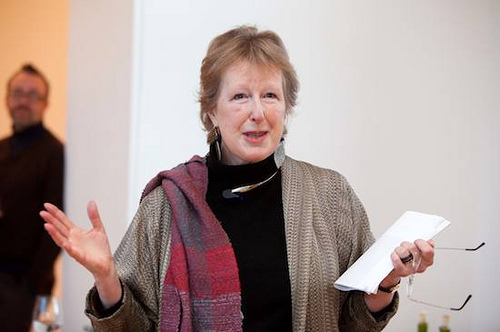
Lucy Abel Smith

Lucy Abel Smith

Lucy writes from a very personal perspective and is an engaging writer with an informative but never patronising style. She is an art historian and her explanations of church art – frescoes, altar-pieces and statues – are thorough but never boring. The guide is packed full of useful information, including accommodation details, and background history. There are some useful maps and illustrations. It could do with some colour photographs but other than this, the Blue Guide Travels in Transylvania: The Greater Tarnova Valley would be an invaluable aid for the independent traveller.

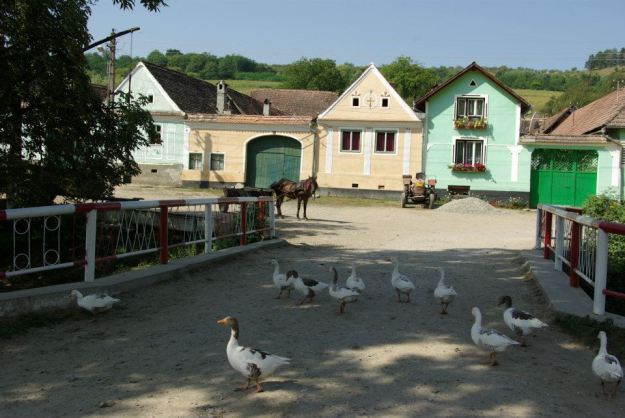
Malancrav, near Sighisoara, Romania

Malancrav, near Sighisoara, Romania

If you are thinking of an alternative holiday in Romania you could do worse than combine a tour of the Tarnova valley with a few days at the second Transylvanian Book Festival which runs from 8th to 11th September. Full details can be found on the Festival website.

For those who have any questions about travel in Transylvania I would be more than happy to attempt to answer them. See the About and Contact page for details of how to get in touch.

Stavros Niarchos Foundation to Fully Repair and Restore Patrick Leigh Fermor’s House

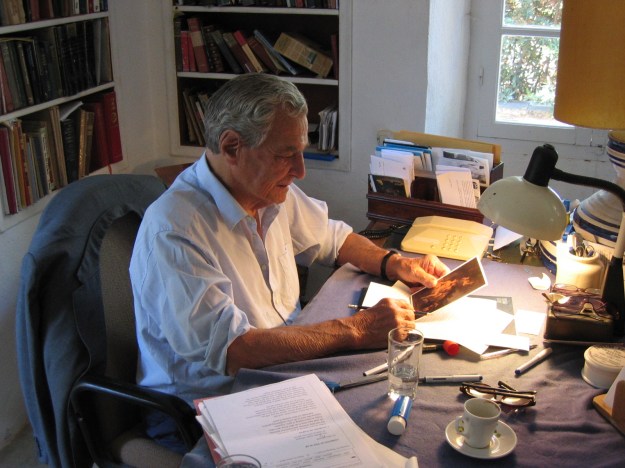
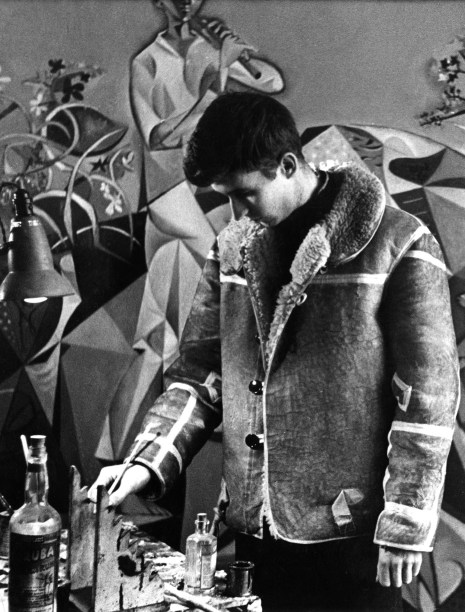
Patrick Leigh Fermor working at his home studio on 3 October 2004, then aged 89. Kardamyli. by Sean Deany Copyright 2012

Patrick Leigh Fermor working at his home studio on 3 October 2004, then aged 89. Kardamyli. by Sean Deany Copyright 2012

At last some very good news about the house at Kardamyli. The Benaki museum has made the following announcement in a press release as follows.

The Stavros Niarchos Foundation has approved a grant to the Benaki Museum to fully cover the repair and restoration works as well as the cost of the necessary equipment for the Patrick and Joan Leigh Fermor House in Kardamyli. This unique property will soon start operating as a centre for hosting notable figures from the intellectual and artistic worlds as well as a centre for educational activities in collaboration with Institutions in Greece and abroad.

The donation of Patrick and Joan Leigh Fermor

For many years Patrick and his wife Joan Leigh Fermor lived in Kardamyli in Messenian Mani, in the house which was designed by the architect Nikos Hadjimichalis in close collaboration with the Leigh Fermors.

In 1996, Patrick and Joan Leigh Fermor bequeathed their home in Kardamyli to the Benaki Museum, while still in life, with the intention that ownership of the house would be transferred to the Museum after their deaths. The option of donating the property to the Benaki Museum was suggested by their close friend Tzannis Tzannetakis. The bequest was accepted unreservedly by the Benaki Museum, particularly given Leigh Fermor’s close relationship with the Museum’s founder Antonis Benakis and his daughter Irini Kalliga.

According to the donation contract, the property must be used to foster the success of the Benaki Museum’s work, based on the decisions of its Board of Trustees. In addition, it may be used to host researchers seeking a quiet and welcoming place to work, while there is also provision for the option of renting the property for three months every year in order to secure its operating costs. Taking into consideration the donor’s personality and standing, the Museum added certain categories of guests such as writers, poets, artists and so on.

The Museum acquired full ownership of the property after the donor’s death, in the autumn of 2011. After receiving the gift, a study on its future use was initiated, and in parallel, a preliminary study on the repair and restoration of the property’s buildings was undertaken in collaboration with architects Andreas Kourkoulas and Maria Kokkinou and a budget was also drafted for the project. The Stavros Niarchos Foundation, in response to the Museum’s initial request for funding for the repairs and the acquis ition of the neces s ary equipment for the operation of the hous e, commissioned—and funded—a feasibility study, which was conducted by AEA Consulting, a firm specializing in the organization and management of cultural institutions. This study, which was based on the Benaki Museum’s proposal for the future operation of the house, led to a number of changes, mainly in regard to the financial planning respecting the sustainability of the project.

The Stavros Niarchos Foundation announced the approval of the Benaki Museum’s request to fully cover the repair works and the restoration of the Patrick and Joan Leigh Fermor House as well as its equipment, so that it can start operating as soon as possible.

The Benaki Museum’s Board of Trustees would like to once again thank the Stavros Niarchos Foundation for its continued and very generous support, and the inclusion of this project in its arts and culture grants. The unique location of the Leigh Fermor House, its distinctive architectural form and the luminance bestowed upon it by the author himself, in conjunction with the Benaki Museum’s supervision and the support of the Stavros Niarchos Foundation, guarantee the creation of an exceptional centre which will gain a high place among the many similar centers in Europe and the United States.

The property

The property is located in the Kalamitsi area on the outskirts of Kardamyli, in Messenia, and has a total area of about nine stremmata, a little over two acres. It is, by general consensus, one of the most beautiful properties in Greece. Its direct contact with the sea—narrow stone steps lead to a small pebble beach just below the estate—the low, discreet, stone buildings and the Mediterranean garden that goes down to the water, comprise an ideal environment for focus and the creative process.

In short, a sojourn in this place is a great gift that Greece can offer to notable figures from the intellectual and artistic worlds.

The vision

The creation of a centre in Greece (working title: The Patrick and Joan Leigh Fermor Centre), the operation of which, will commence in stages and planning of the following years will be based on evaluation of its activity.
The operations of the Patrick and Joan Leigh Fermor Centre will include:

– hosting of young writers and scholars for work and research purposes,
organization of higher-educational activities in collaboration with Universities and Institutions in Greece and abroad,
– honorary hosting of notable representatives from the fields of literature, the arts and other fields,
– organization of educational and cultural events for the general public and residents of Kardamyli,
– scheduled tours of the property, focusing on the donors, the history of the house and its use by the Benaki Museum,
– short term honorary hosting of benefactors and major supporters of the Benaki Museum.

As per a decision by the Museum’s Board of Trustees an international committee is to be set up, which will form and advise on the operation program of the Centre. The advisory committee will be unpaid, it will monitor the project underway and it will make recommendations regarding the selection of guests.

The Benaki Museum’s legal, financial and other services (including departments such as Educational Programs, Sponsorship and European Programs, Public Relations and Communication, and Conservation among others) will support and assist the project taking place at the Leigh Fermor House.

The Benaki Museum is aiming for the creation of an endowment based on third-party donations, which will be able to cover operating expenditure of the Centre and allow the proposed educational activities to evolve and grow.

Brief history – Up to date
– the archival material found in the house has been delivered to the executors of the will, in order for it to be handed over to the National Archives of the United Kingdom, as stipulated in the will,
– the staff selected by Leigh Fermor himself have been retained to ensure the ongoing care of the buildings and surrounding area are on a daily basis,
– the property has been insured,
– cataloguing of the library has progressed,
– detailed photography of the house and the recording of the household effects have been carried out,

– artworks and valuable books have been transferred to the facilities at the Benaki Museum in Athens for conservation and safekeeping, until completion of the requisite repairs,
– detailed mapping of the property has been completed as has the architectural and electromechanical study for repair of the buildings and maintenance of the gardens, with the principle of maintaining all those elements that render the property so unique (study team: Maria Kokkinou-Andreas Kourkoulas, Pantelis Argyros, Dimitris Pastras, Helli Pangalou),
– the process of legalizing buildings on the estate has been completed,
– the feasibility study by AEA Consulting on the future use, operation and viability of the house has been completed with funding from the Stavros Niarchos Foundation,
– two successive disinsectisations have been carried out for the protection of the house and
household effects, and in particular the wooden elements of the house such as the ceilings of the rooms, furniture, and so on,
– one bank account has been set up in Greece and one especially activated in the United Kingdom, in order to facilitate donations,
– discussions with Greek and foreign educational institutions regarding collaboration in the future operation of the Patrick and Joan Leigh Fermor Centre have been initiated,
– an implementation study for the repair work is in progress,
– a book in honor of Patrick Leigh Fermor, dedicated to his life and work, is in preparation and will be completed in 2016, and another publication about the house will follow,
– finally, a short—for the time being—presentation of the Leigh Fermor House has been uploaded onto the Benaki Museum website. A separate website for the house is currently in preparation, where detailed information about the project’s progress, the operation of the house, and scheduled events and guided tours will be posted. These presentations will also provide all the necessary details for donations to the endowment for the future operation of the Centre,
– from the day the Leigh Fermor residence came into the ownership of the Benaki Museum, the Museum has organized and/or coordinated a particularly large number of visits. During many of these visits, individuals working with the Museum have informed the guests about the house’s prospects and future programs. Revenue from visitor tickets is used exclusively for the needs of the house.

From now on:

– The commencement of the repair work is entirely contingent on the issue of the permit. It is anticipated that work will be completed in about 12 to 18 months from its commencement. Until such time as the preparation of the house for the repair work begins, the organized visits, upon arrangement with the Museum, will continue. (www.benaki.gr)
– The Benaki Museum is in the process of creating an endowment for the collection of donations, which will ensure that the operational expenditure of the Centre is covered and that the proposed educational activities will continue to evolve and grow.
– With the dual objective of informing the public of developments and the collection of donations, the Benaki Museum is planning a series of detailed presentations on the progress of the project and its future operation.
– More specifically, it is organizing a detailed presentation in early November 2016 in London, where there is a keen, ongoing interest in the author and the Kardamyli House, while in the interim, similar presentations are planned for Athens and Kardamyli.

For information about the Leigh Fermor House please contact Irini Geroulanou or Myrto Kaouki at the Benaki Museum, on the following numbers: 210 3671010 and 210 3671090, or by email: plfproject@benaki.gr

Download the full press release here.

Who was Stavros Niarchos?

What is the Stavros Niarchos Foundation?

Transylvanian Saxon and polymath, Rudolf Fischer – obituary

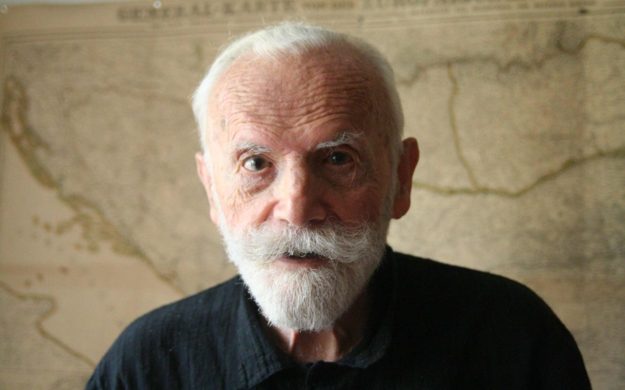
Rudolf Fischer

Rudolf Fischer

Rudolf Fischer, who has died aged 92, was a historian, linguist and polymath who advised and guided foreign writers through the minutiae of eastern European history, language, etymology and ethnography; the foremost of these, Patrick Leigh Fermor, acknowledged in 1986 that his debt to Fischer was “beyond reckoning”.

First published in the Telegraph 12 June 2016.

Fischer’s friendship with Leigh Fermor began after Fischer wrote a letter to him full of praise for A Time of Gifts (1972), the first volume of Leigh Fermor’s travel trilogy, with, attached to it, a long list of all the inaccuracies, misspellings and contradictions. Months passed without a response, and Fischer feared that his constructive criticism had gone down badly. In fact, Leigh Fermor was delighted, and wrote, eventually, asking if Fischer could bear to advise on his next volume. Gradually drafts of Between the Woods and the Water starting appearing in parcels from the Peloponnese which Fischer pored over meticulously.

There resulted a correspondence which lasted for decades, thrashing out the finer points of Transylvanian history, language, costume, traditions and legends. Fischer also read and made corrections to Leigh Fermor’s final, posthumous, volume of the trilogy, The Broken Road, published in 2013, and edited by Artemis Cooper and Colin Thubron.

Among others he also helped Bruce Chatwin, Robert Kaplan (who devoted an entire chapter to him in Eastward to Tartary), Dervla Murphy, Colin Thubron, Robin Hanbury-Tennison, Adam Sisman and William Blacker, many of whom made the pilgrimage to his small book-lined flat in Budapest.

Rudolf Fischer was born on September 17 1923 in the medieval city of Brasov, Kronstadt, in the Transylvania region of Romania. His father, Josef Fischer, was a Hungarian Jew, a descendant of the Hatam Sofer, the 19th-century leader of the Haredic movement which resisted modernisation and mysticism. His mother, Bertha Meldt, was a Saxon Lutheran. Rudolf attended the local Saxon school. But talk of war prompted his father to migrate with him to Australia, leaving his wife and younger son behind, for fear that the older one, Rudolf, would be enlisted.

The next few years were spent helping his father on a chicken farm on the outskirts of Sydney and serving in the alien corps of the Australian army in New Guinea, before attending Sydney University, where he met his first wife, Janet Gleeson-White.

At university Fischer studied under John Anderson, a Scottish philosopher, whose acolytes formed the libertarian movement known as the Sydney Push, one of whose principles was that no statement or assumption was to remain unchallenged. This, as one writer on Australian philosophy, James Franklin, later observed, was all very well but “hard on the wives and children”.

In the early 1950s Fischer moved to Britain, earning a living as a teacher. He felt that cultural life of London compensated for the poor living conditions in an attic flat; it was a view not shared by his wife, who was struggling with small children. So in 1957 the family travelled back to Australia. The marriage broke down, however, and Fischer returned alone to Europe in 1962 where, on a visit to Romania, he met his second wife, Dagmar von Melchner, a distant cousin.

After living in Greece for eight months, the couple moved to London, where, in 1968, Fischer became English Language editor for the New Hungarian Quarterly – an achievement given that his first language was German – and so they moved to Budapest, where they remained for 48 years. There, with Dagmar, he brought up his second family, deepened his knowledge of Central Europe and became a guide, critic and friend to writers of all nationalities who passed through Budapest.

Fischer’s library was packed with obscure 19th-century reference books on the Balkans and the Austro-Hungarian Empire, as well as a large map from 1853 of Europäischen Turkei – more accurate, he assured everyone, than the modern ones. Rudolf Fischer was a link to the pre-war Saxon world of Transylvania, and with his fine moustache, upright and dignified manner, collection of exotic Eastern European hats and excellent grasp of all the relevant languages, he more than fitted the part.

He was buried in Brasov in the family grave in a small Saxon Lutheran cemetery at the end of the street on which he had been born.

He is survived by his second wife Dagmar and his five daughters.

Rudolf Fischer, born September 17 1923, died February 18 2016

The Sabotage Diaries – video by author Katherine Barnes


The Sabotage Diaries from Katherine Barnes on Vimeo.

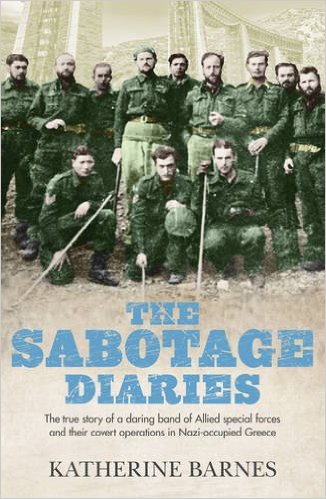
I first wrote about this excellent book in March. Author Katherine Barnes has now produced a video which is worth a watch, even if only to view some of the extraordinary photographs showing SOE operations in mainland Greece.

The Sabotage Diaries is the thrilling story of Allied engineer Tom Barnes, who was parachuted behind enemy lines in Greece In 1942 with eleven others to sabotage the railway line taking supplies to Rommel in North Africa. The target chosen was the Gorgopotamos bridge. Tom led the demolition party to lay the explosives while fighting raged between the Italian garrison and a combined force of Greek resistance fighters and Tom’s fellow-soldiers. A great story of courage and endurance.

Buy The Sabotage Diaries

Five years on – the house at Kalamitsi

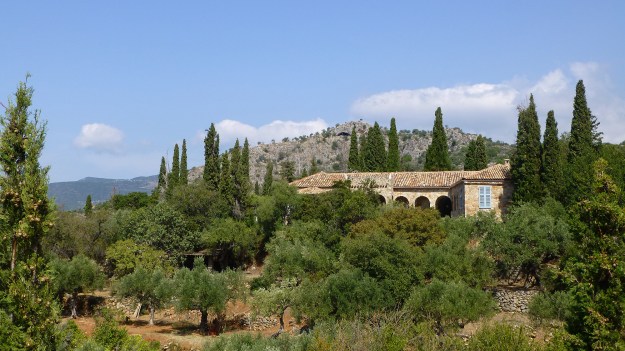
The house in Kalamitsi, September 2014 (John Chapman)

The house in Kalamitsi, September 2014 (John Chapman)

Today marks the fifth anniversary of Paddy’s death, an opportunity to ponder a little on his full and colourful life, and to think about his memory and all that he left us. This includes the house at Kalamitsi which to this day remains in some sort of limbo: uncared for; mouldering away; and its future unsecure. Most importantly, nowhere near meeting Paddy’s intentions that it should be available as a writers’ retreat and part-time holiday home to provide an income. To mark this anniversary I am happy at last to publish some thoughts from regular correspondent Dominic Green, FRHistS, who is a writer and critic who resides in Newton, Massachusetts. Dominic wrote to me following reports of frolicking nudes at Paddy’s house in 2014. It retains its relevance two years on. Dominic discusses an idea that I had shortly after Paddy’s death that the house be leased to a UK based charity or society that will carry out his wishes.

Dear Tom,

It was reading your website that sparked my interest in writing about the posthumous saga of the PLF house. So I’m delighted to return the favour by contributing some personal reflections.

I spoke with Irini Geroulanou, the deputy director of the Benaki, a couple of times on the phone, and also sent her lists of queries. She always replied promptly and helpfully. Without her help, I wouldn’t have been able to get inside the house, and might have suffered the disappointments of Max Long. Irini is, by the way, a reader of your site.

My impression is that Irini and the Benaki are committed to honouring the terms of the bequest, but on their own terms. My impression is also that this may take many years, if it’s done according to the Benaki’s current plan for what Irini calls a ‘holistic’ solution; ie, that no work be started until all the funds are secure. When I asked if the Benaki, having failed to raise funds, would sell the house, she insisted that this would not happen.

As we know, the Benaki has had severe financial problems. The outgoing director, Angelos Devorakis, has spoken of severe salary and budget cuts. Irini told me that the financial problems are not solely due to the expansion in Athens: since the crash of 2008, the museum has been obliged to restructure its relationship with the Greek government. I’m not an economist, but this also suggests that not much will happen for a long while.

Another of the questions I raised with Irini was whether the Benaki would be amenable to working with a British-based charity, which could raise funds for the restoration. I had heard that something along these lines was proposed to the Benaki a couple of years ago, and that the museum turned it down. Irini said she hadn’t heard about this offer; perhaps Angelo Devorakis might know.

Irini, though, was against the idea anyway. She said the museum preferred to receive direct donations, and a request directing the money to the PLF house, as opposed to the Benaki’s numerous other projects. She was under the impression that donors could do this through the Benaki’s website. But, at the time of going to press, this was not the case, at least on the English website. To me, this shows how high the PLF house ranks on the Benaki’s to-do list.

I thought that a combination of money troubles and institutional inflexibility might be the source of the problem, and that both might reflect high professional ambitions. So I was astounded to find that the house has no resident caretaker, and that many of PLF and JLF’s personal possessions are still in place [as seen recently by Rick Stein]. Having read PLF’s books and Artemis Cooper’s biography, I was able to identify some of the items as biographically
important. Anyone could break in and walk off with them.

While Benaki has stored the most important books, the majority of PLF’s possessions, including almost all of his books, items of handmade furniture and clothing, and many original photographs, are not secure. It is this majority of items that preserve the ambience of the house. If the Benaki is allowed to rent out the house, then there is no reason for it not to install a local person or a couple of interns as permanent caretakers. I suggested these ideas to Irini, and she rejected them.

This is not a safe state of affairs, andnot one I had expected to encounter, given that the Benaki is a major museum.

Clearly, the Benaki cannot find the relatively small amount of money needed for restoration – or even to secure the place in the meantime. Therefore, it should either sell the property to a institution capable of fulfilling the terms of the bequest; or allow a foreign ‘Friends of Paddy’ group to raise funds – perhaps on the understanding that it wouldn’t have a say in how the Benaki spends its donations. But I have the strong impression that the Benaki would rather do nothing in the hope of dealing with other institutions: EU funding was mentioned. To me, this is the wrong kind of inflexibility: the kind of bureaucratic inertia that is creating a dangerous situation at Kalamitsi.

I am not unsympathetic to the Benaki’s financial troubles, not all of which are of its own making. But I left the house deeply concerned by the risks the Benaki is running in its handling of the bequest, and disheartened by the apparent absence of prospects for improvement. Three and a half years have passed since PLF’s death. Publicity from the publication of The Broken Road and Artemis Cooper’s biography has created a unique opportunity for fundraising. But the Benaki seems determined not to use it. Perhaps my article will stir things up a bit. If the Benaki changed tack, and invited a British group to raise funds, I would contribute immediately. I’m sure that many other PLF readers would too.

Finally, I was greatly impressed by Elpida Beloyannis and Christos the gardener. Both have both done their utmost to keep the house going. Shutters aside, the interior is clean and cared for. It was a privilege to visit the house, and see their devotion to it and the memories of JLF and PLF.

With thanks for your website,

Dominic

Paddy’s Irishness

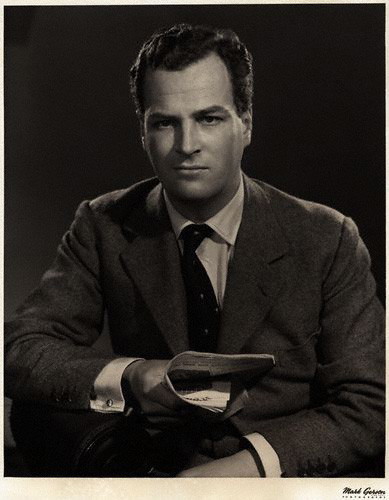
Paddy by Mark Gerson, bromide print, February 1954 (National Portrait Gallery)

Paddy by Mark Gerson, bromide print, February 1954 (National Portrait Gallery)

This gets better as you read it. I wasn’t going to publish it but I thought you might like the second half at least 🙂

By Michael Duggan

First published in the Irish Examiner 7 June 2016.

Patrick Leigh Fermor died five years ago this month, aged 96, and though he claimed to be part Irish, he was a man of the world, who walked from the Hook of Holland to Istanbul in his teens, and who later became a great travel writer.

British soldier and travel writer, Patrick Leigh Fermor, on April 25, 1966. Pictures: Evening Standard/Hulton Archive/Getty Images
ON the third of May, 1810, Lord Byron jumped into the waters of the Hellespont and swam the tumultuous four miles separating Asia from Europe.

In Greek mythology, Leander used to swim across this same stretch of water every night to visit his lover, Hero, who would light a lamp to guide his way.

Byron claimed that swimming the Hellespont was his greatest achievement. 174 years later, another English writer, Patrick Leigh Fermor — also, like Byron, revered by many Greeks for his part in a war of liberation — repeated the feat. Leigh Fermor, however, was 69 when he did it. Byron was 22.

The Hellespont swim, with its mix of literature, adventure, travel, bravery, eccentricity and romance, is an apt metaphor for Leigh Fermor’s life. ‘Paddy’, who died five years ago this month, at the age of 96, seemed to embody the lot.

And he claimed Irishness, too.

Leigh Fermor was born in London in 1915. His father was in Calcutta, where he worked in the Indian civil service. His mother, Aeileen, had planned to follow him, with Paddy and Paddy’s older sister, but the sinking of the Lusitania frightened her that both her children might die at once.

Paddy was packed off to a small terraced house in Northamptonshire. He was loved by his foster parents, and allowed to roam free around the town and countryside with their other children.

In June, 1919, his mother and sister returned from India and Paddy was whisked back to London. He did not adapt well to school. His education was a series of disasters and recoveries, experiments and ignominious expulsions.

After a time living it up with the fast set in London, Paddy decided to walk every mile from the Hook of Holland to the Gates of Constantinople.

Aged 18, this is more or less what he did. He disembarked in Rotterdam on December 8, 1933 and reached Istanbul on New Year’s Day, 1935.

By then, he had mingled with bargemen, peasants, nobles and gypsies, made countless friends, learned songs and languages, had love affairs, slept rough, slept in castles, and savoured a culture on the eve of extinction.

During the Second World War, he led a party of English commandos and local guerrillas, who, disguising themselves as German soldiers, kidnapped the general in command of Crete and smuggled him off the island.

After the war, he began to write, while continuing to indulge his eclectic tastes for travel, wild parties, seedy nightclubs and monastic retreats.

He eventually settled in Greece. where he was loved, with his wife, Joan, and became a legend among travel writers.

Patrick with Joan Rayner, after their wedding at Caxton Hall, Westminster, London, January 17, 1968. Picture: Evening Standard/Hulton Archive/Getty Images
The centrepiece of his achievement was a trilogy of books about his epic trek across Europe.

To get a flavour, new readers might try the opening pages of Between the Woods and the Water. The author is crossing the bridge at Esztergom, entering Hungary for the first time.

He attends the Holy Saturday ceremony at the cathedral. He is in the company of a local grandee, who “carried his scimitar slung nonchalantly in the crook of his arm” and who polished his rimless monocle with a silk bandana.

The passage concludes with the words “I kept wondering if all Hungary could be like this.” The first-time reader is left wondering whether all of Patrick Leigh Fermor could be like this. The books sometimes feel like a never-ending purple passage.

But this is not to say that everything they have to offer is there glittering on the surface. In A Time of Gifts, there is a charming vignette in a little tobacconist’s shop in Goch. Paddy picks up a ‘stocknagel’, a curved, aluminium plaque about an inch long.

On it is a view of the town and its name, and he tacks it onto his walking stick.

Then, with no preamble, the camera angle widens out to show a town hung with Nazi flags.

We hear “the crunch of measured footfalls” as Stormtroopers march into the square. It is the restraint of the writing that deepens the sick feeling in the reader’s stomach.

Intriguingly, Paddy liked to claim he was descended from Counts of the Holy Roman Empire, who came to Austria from Sligo.

Paddy could recite ‘The Dead at Clomacnoise’ (in translation) and perhaps did so during a handful of flying visits to Ireland in the 1950s and 1960s, partying hard at Luggala House or Lismore Castle, or making friends with Patrick Kavanagh and Sean O’Faolain in Dublin pubs.

He once provoked a massive brawl at the Kildare Hunt Ball, and was rescued from a true pounding by Ricki Huston, a beautiful Italian-American dancer, John Huston’s fourth wife and Paddy’s lover not long afterwards.

And yet, a note of caution about Paddy’s Irish roots is sounded by his biographer, Artemis Cooper, who also co-edited The Broken Road, the final, posthumously published instalment of the trilogy.

“I’m not a great believer in his Irish roots,” she told me.

“His mother, who was a compulsive fantasist, liked to think that her family was related to the Viscount Taaffes, of Ballymote. Her father was apparently born in County Cork.

“But she was never what you might call a reliable witness.”

“She was an extraordinary person, though. Imaginative, impulsive, impossible — just the way the Irish are supposed to be, come to think of it. She was also one of those sad women, who grew up at the turn of the last century, who never found an outlet for their talents and energies, nor the right man, come to that. All she had was Paddy, and she didn’t get much of him.”

Patrick Leigh Fermor: An Adventure, by Artemis Cooper
Paddy never tried to get to the bottom of his Irish ancestry, afraid, no doubt, of disturbing the bloom that had grown on history and his past, a recurring trait.

“His memory was extraordinary,” Artemis notes, “but it lay dangerously close to his imagination and it was a very porous border.”

But she is in no doubt about how exceptional a man he was: “The thing that inspired me most about him was his responsiveness to people, whoever they were.

“I had known him all my life. When I wrote the book, I was in my fifties and he in his nineties.

“He didn’t have to impress or charm me, and he never set out to do so. But he was so curious, so responsive.

“Every time I mentioned a book I thought he might like he, he made a note of it.

“Every time I told a joke, he roared with laughter. Every time I told a story, he sat forward, eager to hear how it was going to turn out.

“That wasn’t me, it was him. He made me feel funnier, better-read and more intelligent than I ever could be, and he did that to everyone,” she says.

A bugler from his former regiment, the Irish Guards, delivered the ‘Last Post’ at Paddy’s funeral five years ago.

It marked the passing of an extraordinary man: soldier, writer, adventurer, charmer.

We may not see his like again.

The life, times and legacy of geologist Sir Lewis Leigh Fermor

Geoscientist Cover Dec_Jan15_16This article is by Ted Nield on the life, times and legacy of geologist Sir Lewis Leigh Fermor, as seen through the eyes of his more famous son.

First published by The Geological Society, in Geoscientist, December 2015.

“…having made the most solemn oaths to me [he] has quite cheerfully broken them all – you can never guess just what a blighter and a mongrel that man is – he even astonishers me – and I thought I knew him pretty thoroughly … there is one thing I regret and that is that I didn’t leave him straight away the first time I longed to – which was three days after my wedding day. He is impossible.”

So wrote Muriel Ӕileen Fermor (née Ambler, 1890-1997) on 1 February 1923 to her mother – convinced that her austere geologist husband Lewis Leigh Fermor (1880-1954) had been cheating on her in far-away Calcutta, where he was then Acting Director of the Geological Survey of India. (He became Director in 1932.) Their desultory marriage – already a separation in all but name – had but another two years to run. They were divorced in May 1925.

The marriage resulted in two children, Vanessa Opal (b. Calcutta, 1911) and Patrick Michael (b. Endsleigh Gardens, St Pancras, 1915). It is perhaps fortunate that ‘Paddy’ was born in England, away from Lewis, else he might also have copped a mineral for a middle name. After the Lusitania was sunk, Ӕileen decided to leave the baby in England rather than risk losing both her children. Thus Paddy was farmed out to friends and grew up hardly knowing his father at all.

For this reason, little of what we know of Lewis comes to us via him – despite the fact that Paddy grew up to be a great (and largely autobiographical) writer. However, his books do contain rare, but often highly touching glimpses of Lewis, illuminating the peculiar upbringing that colonial service often imposed upon the children of its staff.
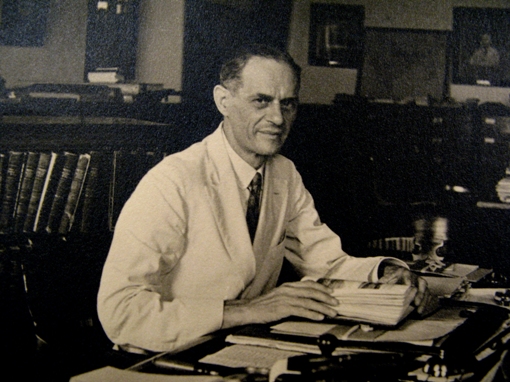
Sir Lewis Leigh Fermor at his desk in the Geological Survey of India, Calcutta.  From the Geological Society’s photograph collection.

By the time Paddy was 19, having been sacked from just about every school he was ever sent to and very far from achieving either his father’s ambitions (that he should study at science-strong Rugby, Haileybury or Oundle) or his mother’s (that he should go to Eton and join the ruling class) young Fermor was becoming tired of idling away his adolescence in Metropolitan dissipation. Aware he ought to become a writer but knowing he lacked material, he conceived the romantic idea of taking his meagre allowance and walking, alone, across Europe to Istanbul (or ‘Constantinople’, as he resolutely persisted in calling it), like a mendicant scholar of old.

The idea came to him in a flash, was the making of him, and met with (by today’s standards) shockingly little parental or other opposition. It was to prove the first in a lifetime of adventures, culminating most famously in his wartime work with the Special Operations Executive (SOE) in Crete, and his kidnap of the island’s commander-in-chief, General Kreipe – described in William Stanley Moss’s book Ill Met by Moonlight (1950) and the Powell & Pressburger film of the same name (1957), in which Paddy was dashingly portrayed by Dirk Bogarde.

The epic walk was described in three of the greatest travel books ever written in English (each, as they were published up to five decades later, a truly prodigious act of recall), marking the beginning of Paddy’s remarkable career as traveller, linguist, Hellenophile, polymath, autodidact, author, war hero and all-round national treasure. But when he set out for the Hook of Holland, just before Christmas on 8 December 1933, nobody would have believed that, one day, like his father, he too would become a Knight of the Realm – still less that his fame would completely eclipse that of his worthy forebear.

However, the eclipse is not quite total. The Society, at least, remembers Sir Lewis Leigh Fermor, through the gift of a substantial bequest that supports the Fermor Fund and the Fermor Meeting. But who was he, and what did he do?

Lewis Leigh Fermor (his middle name, given in honour of a family friend, was perpetuated through his children – but there is no hyphen) was born in Peckham on 18 September 1880, eldest of six. His father was a bank clerk. Adept at winning scholarships, after an initial 4d/week education at Goodrich Road Board School, Lewis moved to Wilson’s Grammar School, Camberwell, and the Royal School of Mines, studying metallurgy (with a view to a job in the Royal Mint).

Invited by Professor J W Judd (1840-1916, he became Student Assistant in Geology while working for his BSc. Judd also persuaded him to apply for a vacancy in the Geological Survey of India before graduating. He was appointed in 1902 – the year he joined the Society. He subsequently gained his degree by research, in 1909. Imperial later also bestowed upon him its DSc, for work he would perform in India: most notably a monumental tome on manganese ores.

We cannot be certain, but it is likely that his geological work in India led to his first marriage, because Muriel Ӕileen Ambler was the daughter of a quarrying magnate there. Educated by a series of governesses at the family home in Dulwich, she had returned to India, where the family had built a villa a few miles outside Dharhara, at Bassowni. While her brother Artie entered the family business, Ӕileen and her mother began the search for a husband in Calcutta. Ӕileen, spirited and venturesome, a lover of the theatre, was given to effusions and purple ink and liked to ennoble her Anglo-Irish family tree with glamorous royal connections of dubious accuracy.

She and Lewis met in 1907, probably in connection with the Survey’s work – the Survey had done load-bearing tests on the family’s product – and it was she who began the tradition of unofficially hitching the ‘Leigh’ onto the Fermor, even though it was only Lewis’s middle name. They seem an unlikely match, he so austere and ambitious, she so wild; but Lewis was, by all accounts a very elegant figure on the dance floor and his ambitiousness undoubtedly recommended him to his in-laws – and perhaps to Ӕileen, at least initially.

Colonial service staff received furloughs once every six years, so little Paddy was six when he first met his father. Embarrassed at being unable to impress this remote figure, Paddy camouflaged his youthful slowness, according to his biographer Artemis Cooper, by memorising long passages of literature by heart. Thus began his voracious love of books, and the first flexing of his prodigious memory.

Ӕileen never returned to India after World War 1, and (curiously for one so addicted to travel) Paddy never visited his father there. In 1924, Lewis once again came back to England, travelling with his family to Zweisimmen (near Gstaad). Paddy at that time had no school to go back to (having just been sacked again), so when sister Vanessa departed with her mother for England, Paddy stayed on with his father, who was joining a geological conference in Milan.

This was the first time Paddy and Lewis spent any time together, and sadly they were never to be as close again. Two particular memories turn up in Paddy’s writing about this special week. In the train to Lake Como, Lewis proudly demonstrated a knife he had just bought, by peeling an apple without breaking the skin. This he did – then tossing both peel and knife out of the window. Paddy became helpless with laughter. His annoyed father banished him to another carriage, where Paddy then tried to open the window – by pulling the communication cord.

Arriving in the Dolomites Lewis dressed for the field, where he collected specimens both geological and botanical. Paddy remembers cringing with embarrassment when he saw his father in this bizarre attire – his Norfolk jacket and ‘vast semi-circular cap, I think originally destined for Tibetan travel, like a bisected pumpkin of fur, armed with a peak, and with fur-lined ear-flaps that were joined (when not tied under the chin, which was worse still) by a disturbing bow on the summit.’

Worst of all, there was the geological hammer at his belt, bearing an arrow, marking it as government property. Lewis had joked to Paddy that only members of the civil service and convicts carried such hammers. Far from being amused however, and horrified by the thought that people might think his father a convict, nine year-old Paddy tried (under the guise of adjusting it for comfort) to turn the hammer around so that the arrow could not be seen.

This was to be the last time that father and son were to spend any extended time in one another’s company. As Cooper observes, Paddy was to grow up feeling ill at ease with his father, and the suspicion that he was a disappointment to him. On the other side, his mother was contrastingly jealous of him, seeing him as her, rather than Lewis’s, son (though she too, despite her possessiveness, blew hot and cold, turning clingy one minute and distant and uncaring the next).

Lewis had not been pleased to receive his gadabout son’s London tailoring bills (though he helped to settle them). So it is possible that Paddy’s proposed expedition may have seemed to him like a washing of hands. The hope that his son might become a scientist had died years before. Lewis (no doubt in desperation, because mathematics was one of Paddy’s many weak suits) had even suggested his son might consider a career in accountancy, so at a loss was the family to know what to do with him. At least this mad expedition was a goal, and his son’s own idea. His reply to news of his departure included a birthday gift of five pounds. (This was not the only birthday on which Paddy would have occasion to thank a geologist. On turning 21, two years into his trek, he learned that Sir Henry Hubert Hayden, one of Lewis’s predecessors as Director (1910-21) had bestowed a gift of £300 on him.)

Paddy would arrange for letters to be sent to him poste restante at various points along his projected route. Most important were those containing pound notes, but occasionally he found letters from his mother, often whimsical and amusing, and occasionally, more formal missives from Lewis: ‘full of geological advice’.

At the time when her favoured child was departing for Europe, Ӕileen herself was having a hard time. Divorced eight years, and suffering that diminution in her status, news had come through that Lewis was marrying again – to a certain Frances Mary Case. Within a year, Lewis was knighted, and thus her supplanter became ‘Lady Fermor’. Artemis Cooper speculates that this might have been a severe blow to the social-climbing Ӕileen; though in the days when directors of the British Empire’s geological surveys were habitually knighted, she surely realised what she was giving up – though this may not have made it any easier to bear.

Fermor’s main geological interest was (as reflected in the terms of the Fermor bequest) the rocks of the Archaean. Sir Thomas Holland had asked him to report on the manganese ore deposits of India, little expecting that Fermor (renowned for meticulous attention to detail) would take until 1909 to publish, nor that his report would run to nearly 1300 pages. Not only did this work earn Fermor great renown (and his FRS), it also revealed six new manganese minerals.

The experience gained in this work led to his being placed in charge, in 1911, of a systematic survey of the Archaean rocks of the Central Provinces (Madhya Pradesh), much of which he surveyed personally, at four inches to the mile. War interrupted this work, and Fermor finished his part of it in 1926.

His economic work continued – on copper, coal, iron ore, and mica, which led to an avalanche of publications in the Annual Reviews of the Mineral Production of India between 1921 and 1934. He also worked on the Deccan Traps, and even on meteorites (though his ideas about the origin of chondrules were incorrect – he thought they were formerly garnets). Finally, before retiring to Bristol and then Surrey, he began a memoir entitled ‘An attempt at the correlation of the ancient schistose formations of Peninsular India’. Sadly, this herculean project was destined never to advance beyond the opening general discussion (published 1940) and remained incomplete on his death.

His retirement in 1935, a year after being elected FRS, marked the beginning of a closer association with the Geological Society. He had already won its Bigsby Medal (1921), and he now joined Council (in 1943), and served as Vice President from 1945 to 1947.

When Paddy  learned that his father was dying, in 1954, he paid a final visit to him, in his new home near Woking. This at last was a home with the space to display his collection of early English glassware, as well as the fine Persian rugs he had collected. It was the first proper home that Lewis had ever owned – aptly named ‘Gondwana’ – and here he had hoped to finish his Archaean memoir. These hopes were dashed only a few months after moving in, when his final illness struck.

‘We had only met twice during the last six years and corresponded as little’ Paddy wrote. Hollow cheeked, and a sickly colour, ‘his enormous and luminous eyes, talking very slowly and almost inaudibly… The only consoling thing is that he has no idea he is dying. “Such a bore, being all cooped up when all the flowers are out”’. He died on 24 May. “What a strange business Daddy’s funeral was, a sort of nightmare’ Paddy wrote to Vanessa. ‘I am so glad you were there too – I don’t think I could have taken it if there hadn’t been your eye to catch now and then’.

In 1976, having just been declared clear of cancer himself, Paddy finally decided to visit India. After Christmas in Benares he went to Calcutta and found his way ‘rather timidly’ to the offices of the Survey. To his surprise, he found that ‘They seem to worship Daddy’s memory’. Indeed, Dr S V P Iyengar (1921-2012), Deputy Director General and a former pupil of H H Read and Robert Shackleton, described Lewis as ‘the most imaginative, helpful and constructive [figure, who] …contributed more than anyone else, and all his prophecies and conclusions have been proved right’ – a slight exaggeration, considering the chondrule theory, but understandable. As Cooper observes, such was the bitterness about Lewis that Paddy and his sister had absorbed from their mother, it was ‘strange’ for them to ‘discover him both loved and admired’.

The story of the Fermor bequest began in 1961, and in all took nearly 20 years. Lady Fermor wanted to make over a sum to be held in trust, the income being used to pay her a pension during her lifetime; but this was later shown to be impossible because of the Estate Duty that she would have to pay. Then, in October 1969, a letter from her solicitors arrived at Burlington House announcing her wish to make ‘a substantial bequest’. In March 1979, Lady Fermor presented the Society with a cheque for £1000 to establish the Fermor Lecture, held every three years, the first in October/November 1980. She was (eventually) granted Honorary Fellowship, and invited to attend the Fermor Lectures, which she did – enjoying the luxury of a free night in the ‘Fellows’ Bedroom’.

Lady Fermor died in November 1990, leaving the Society the residue of her estate minus some bequests to others. It is not known if the Society blushed about having made her sleep in the cellar when it found out that this residue amounted to £500,000-£600,000. It was, and remains, the Society’s biggest fund.

Related article:

Paddy’s childhood home: The Weedon Bec route near Northampton

Meeting Paddy at the 40th anniversary of the Battle of Crete

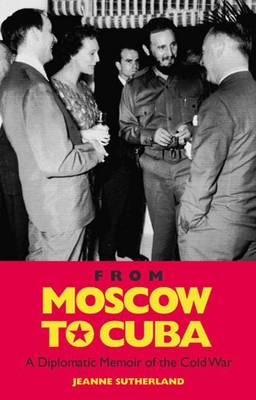
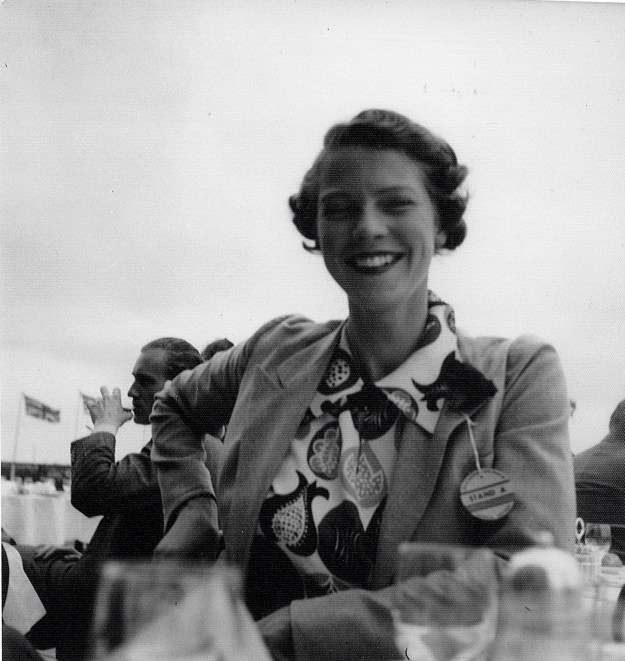
sutherlandJeanne Nutt and Iain Sutherland began their careers as professional diplomats in Moscow when Stalin was still alive. Although both had studied the language, literature and history they arrived in Moscow separately. Three decades later they would leave the city together, after three ageing leaders had died in a row and just as things were about to change for ever with Gorbachev’s perestroika.

By then, Jeanne’s career was long over. When she and Iain had married in 1955, she had been obliged, under rules not finally abolished until 1972, to resign. From then on her fate had been to pack and follow her husband wherever his career took him. She continued to take a lively and intelligent interest in the people and the politics of the places where she and her husband lived, and where they witnessed some of the turning points of the Cold War.

In her book From Moscow to Cuba and Beyond, A Diplomatic Memoir of the Cold War, she gave a flavour of the sometimes bizarre life diplomats led in those distant days.

The Sutherlands served in Cuba, Washington, Yugoslavia, Indonesia and Athens, where Iain was ambassador, and this is where they met Paddy. Her book focuses on their three tours of duty in Russia. The highlight of their first stint in Moscow was the death of Stalin in March 1953. That morning their maid arrived in their apartment shattered by grief. She made an inedible breakfast, broke down in tears, and fled. The old woman who guarded the front door was sobbing into her shawl. The following day the ambassador, the splendidly named Sir Alvary Gascoigne, went with his staff to pay their respects to Stalin as he lay in state in Moscow’s Hall of Columns. The ambassador insisted that all should wear top hats, wholly unsuitable headgear when the thermometer stood at -20C, and the diplomats were ushered past the coffin so fast that one of them missed Stalin altogether.

This account is taken from her diary of the events around the 40th Anniversary of the Battle of Crete.

Thursday, 21 May 1981

Lord and Lady Caccia arrived to take part in the Crete activities, this being the 40th anniversary of the battle. The Olympic (airlines) strike threatened to leave us without transport to Chania so we were all – the Australian and New Zealand delegations, Paddy Leigh Fermor and ourselves – given seats in the Minister (Averoff’s) plane which took off from Tatoi about 6. We arrived about 7.30 in Chania and poured into the already crowded Porto Veneziano Hotel. There were obviously too many, even of the British Delegation, to have a quiet taverna dinner altogether so we collected our party and Paddy and Johnny Craxton and had a fish meal at the taverna near the hotel.

The ceremonies of the next few days seemed never-ending as we toiled round with over 100 veterans, three Ministers of Defence and Mitsotakis, Scottish pipers, Australian buglers and Greek military bands. It was tiring, interesting and at times particularly moving, as in Galetas which was in the centre of the battle, and Souda Bay where the Australians broke into singing God Save the Queen as the anthems were played.

Sunday, 24 May 1981

The ceremony of the laying of the plaque dedicated to the members of the resistance in Crete who lost their lives, was delayed yet again and finally unveiled at 7.30 p.m. There were short speeches by Averoff and Iain and by Paddy Leigh Fermor at greater length after much agonising. (The story about the glass of water at the British Council lecture was true, he told me. When the attendant topped it up with more water it became cloudy and revealed to all that he was keeping up his courage with ouzo!)

Monday, 25 May 1981

The party set off from Heraklion for Mount Ida and the village of Anoya to meet Paddy Leigh Fermor’s resistance friends for a lunch in the mountains and to hear stories of how the men folk were shot and the village burned in reprisal for the acts of sabotage perpetrated by the SOE fighters. We collected the mayor and Dilys Powell in the Rolls and took it up the rough road to Psiloriti near the Cave of Zeus. Here the air was fresh and crisp, and together with the veterans of the underground resistance, we sipped raki and ate local cheese outside and then went inside for crisp hot lamb and more local wine; all this accompanied by playing of the lyre (lira) and singing by Paddy and his companions.

The climax was the ‘simple taverna party’ in the evening outside town for the veterans. It was given by Kefaloyannis, the large burly moustachioed Cretan (whom at the lunch I had taken to be a former shepherd and not a hotel owner), in his 600 bed hotel. Twenty or thirty of us were wined and dined, given champagne, serenaded by the hotel singers (more Filaden, Filaden), watched dancing and plate throwing and finally our host’s firing bullets through his hotel windows. Paddy told me the story of Kefaloyannis, who had abducted a young Cretan girl in the 1950s, the daughter of a Venizelos supporter and therefore a declared enemy, as K was a Royalist. When the island was on the brink of civil war over it he came down from the mountains, gave himself up and went to prison. Later they were married, but this did not last and he is now married to the sober black-dressed lady who was sitting on Iain’s right. Sitting opposite me was Paddy’s god-daughter whose father was shot, trying to escape from the village of Anoya, after sheltering Paddy several times during the war.

Home at 2 a.m.

Extracted from Jeanne Sutherland’s diaries and her book, From Moscow to Cuba and Beyond, A Diplomatic Memoir of the Cold War. Published by The Radcliffe Press in 2010 (p 276-277).

It took Joan to make him a gentleman

Joan Eyres MonsellSome of you may remember that Simon Fenwick was the archivist who was first tasked by Paddy’s estate to make an initial pass at cataloguing his personal effects and papers. I have bumped into Simon on a few occasions since Paddy’s death. In conversation he has told me that he is working on a book about Joan Leigh Fermor from her own papers and diaries, and one that will give us a very different perspective on Paddy and their life together. It promises to be somewhat revelatory.

Simon is a speaker at the second Transylvanian Book Festival where he will be in conversation talking about Joan and her life with Paddy. When asked for a little snippet of the sort of thing we might expect he gave me this:

You asked for an insight into their private life. Well, when they met Paddy may have been an officer but it took Joan to make him a gentleman. Paddy was totally undomesticated and remained so. He flooded baths and spilt drinks over sheets. He also smoked 100 a day, habitually set the bed on fire and woke up in clouds of smoke. In one of his letters Evelyn Waugh refers to Paddy and Joan as ‘the Nicotine Maniac and his girl’. Not unnaturally Joan and he had separate bedrooms although hers was invariably covered in cats which he wasn’t keen on. I suppose Paddy was quite a good advert for the fact that smoking doesn’t always kill you.

Further details of Simon’s book will be available here on the blog in the coming months. Information about the Transylvanian Book Festival can be found here.

Accounts of audacious abduction of Nazi General Heinrich Kreipe now in Greek

Coincidence always plays a special role, particularly in times of war. One example is the abduction of German General Heinrich Kreipe in occupied Crete in World War II by Patrick Leigh Fermor, Stanley Moss and their Cretan comrades: Kreipe had not been their initial target. Two chronicles of what is probably the most famous kidnapping of WWII are now available in Greek, the first Fermor’s own “Abducting a General” and the second Moss’s “Ill Met By Moonlight,” telling the tale of the fascinating adventure as experienced by the two protagonists (both by Metaixmio publications and translated by Myrsini Gana).

By Elias Maglinis

First published in Ekathemarini

Who was Fermor’s original target? The despised General Friedrich-Wilhelm Muller, commander of the Nazi forces in Iraklio and responsible for the massacres at Viannos. Yet even the idea of the abduction was a matter of coincidence: Following Italy’s capitulation to the Allies in September 1943, the Italian commanders on Crete, and particularly General Angelico Carta, became aware of the danger they were in. Carta asked for a private meeting with Fermor to discuss the terms of his surrender to the British and, more importantly, his escape from the Greek island.

Indeed, Fermor and Carta came to an agreement and, according to plan, the Italian general was spirited away by boat from a remote part of the island to North Africa, together with Fermor who briefly accompanied him. In Cairo, Fermor came up with the idea that they could orchestrate something similar with Muller – though this time without the occupier’s acquiescence. Fermor thought of the plan after the Allies had made it clear that they had no intention of landing on Crete; he believed the scheme would provide a much-needed boost to the Cretans’ morale and ridicule the Germans to boot.

Fermor presented his plan to his superiors, got the green light (though not without some reservations), formed his team and was promoted to the rank of major. After his return to Crete in early 1944, the scheme was put into action, but a chance occurrence nearly scuppered the entire operation: Muller was being transferred to Hania. Instead of calling the whole thing off, Fermor and Moss simply chose a different target: Muller’s replacement in Iraklio, Kreipe. No one knew much about the German general other than that he had just arrived from the Russian front.

Working with Cretan resistance fighters Manolis Paterakis, Giorgos Tyrakis, Stratis Saviolakis, Michalis Akoumianakis, Ilias Athanasakis, Antonis Zoidakis, Mitsos Tzatzas, Grigorios Chnarakis, Nikolaos Komis, Antonios Papaleonidas and Pavlos Zografistos, Fermor and Moss embarked on their ambitious, audacious plan. As Artemis Cooper writes in her comprehensive biography “Patrick Leigh Fermor: An Adventure,” the two Britons were shocked by what they were about to do, excited and terrified at the same time.

The chronicle of the kidnapping reads like a novel, full of moments of uncertainty and unexpected humor, plenty of drama (such as the death of Kreipe’s driver) but also humanity (how Fermor and Kreipe developed what could almost be described as a friendship in the rugged conditions of Mount Psiloritis).

The abduction was carried out at Knossos on April 26, 1944. The team managed to reach the southern coast of Crete and escape to Egypt on May 14 after a monumental trek filled with danger, deprivation and bold achievements. German retribution was swift and brutal, and many today question the wisdom of the plan. After the war, however, Fermor was informed that when news of Kreipe’s abduction reached the German barracks in Iraklio, many a soldier popped open a beer and celebrated: Kreipe had not been a popular commander.

Ultramarathon on the kidnapping trail

Stanley Moss’s “Ill Met By Moonlight” brought fame to the achievements of the small band of resistance fighters. It became a best-seller in the UK and was made into a film in 1957, with Dirk Bogarde in the role of Fermor. More ethnographic than historical, the book is the romantic narrative of a man who experienced the events firsthand. The publication includes maps of the area and a wealth of photographic material.

Patrick Leigh Fermor’s “Abducting a General” tells the tale of those events through the eyes of the great British writer. The two friends had agreed that Moss, who kept a journal throughout the course of the operation, would be first to tell the tale, so Fermor didn’t write his book until 1965. It includes war reports Fermor sent from Crete, as well as a recent guide by Chris and Peter White with all the information needed to follow the abduction trail.

This chapter of World War II history remains so popular that the British company ECR Sport Limited this year is organizing an ultramarathon on Crete along the route, dubbed the KreipeRun 2016. On May 20 and 21, 250 runners will cover the same 154 kilometers as Fermor and his band in a maximum time of 30 hours.

The 2016 Transylvanian book festival

IMG_4419Some of you will remember that the first Transylvanian book festival took place in 2013 and was a tremendous success. Typical comments were along the lines of “The Transylvanian Book Festival was not like any other book festival out there, it brimmed with excitement as visitors immersed themselves in the local culture to get a taste of the Transylvanian way of life, in a neatly packed event that transported you to a different world, one that has been suspended in time and that only now comes to light to the rest of the world.”

The organiser, Lucy Abel-Smith, is doing it again with another excellent line up of authors and events. This is a small festival with around 100 people attending each day, but one that permits those attending to mix and mingle with the authors in a way that is not possible at other events. All are tied together in the wonderful Saxon lands of Transylvania, in and around the village of Richis. It is more of a community of discovery than an event. And certainly a great holiday.

The 2016 festival runs from 8-16 September and places remain. The line up is varied and interesting, with excursions planned and many chances to sample the organic local food and excellent wines. The speakers confirmed so far include:

Anouk Markovits, author ‘I am Forbidden’
Alan Ogden, author ‘Winds of Sorrow’
Bronwen Riley, author ‘Transylvania’
Stephen Watts and Claudiu Komartin, poets who translate each other’s work
Bob Gibbons, botanist and author
John Wyse Jackson, author and founder of Zozimus Bookshop, who will speak on Walter Starkie
Dragos Lumpan, speaking on Transhumance
Mike Ormsby, author ‘Never Mind the Balkans, Here’s Romania’
Simon Fenwick, author who will speak on Joan Leigh Fermor
Bernard Wasserstein, author of ‘On The Eve’
Norman Stone, historian and author
Julie Dawson, speaking on the Medias synagogue
Zsuzsa Szebeni, speaking on Banffy’s designs

Find out more and how to book on the Transylvanian Book Festival website and enjoy this short video from 2013.

Jaap Scholten talks about Comrade Baron

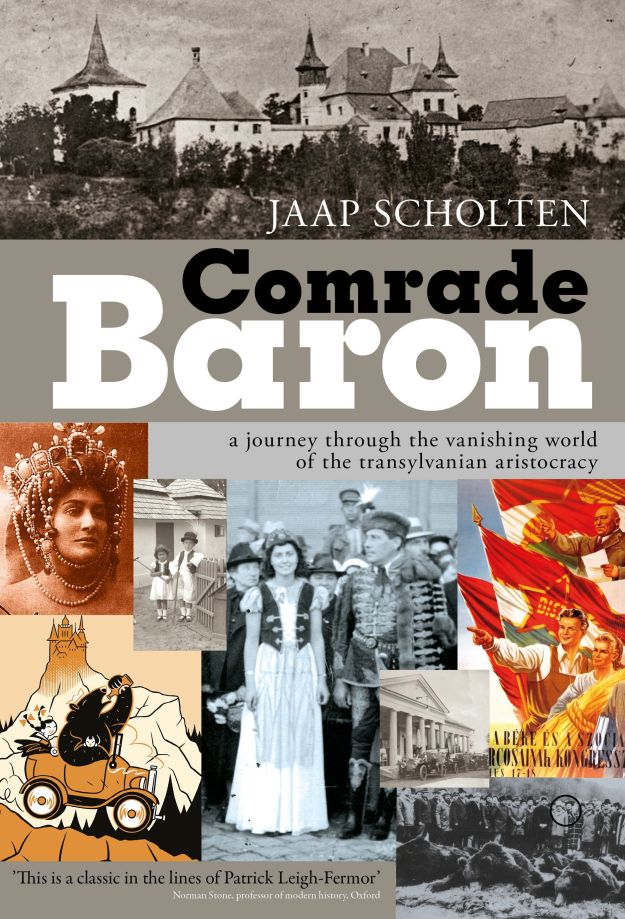
Dutch writer Jaap Scholten knows a good story when he hears one. In the early 1990s, when his Hungarian wife’s grandmother began telling him about life before communism, he was entranced. This was the beginning of the road to writing “Comrade Baron: A Journey Through the Vanishing World of the Transylvanian Aristocracy,” Scholten’s first work of non-fiction and the first to be published in English, launched May 5th.

“I have enjoyed this book so much – such a great tale, with brilliant original research and source material, and so many stories, tragic, humiliating, painful, yet all engrossing and highly readable” Petroc Trelawny, BBC presenter and journalist.

“This is a classic in the lines of Patrick Leigh-Fermor and it should be on the shelves of anyone interested in Mitteleuropa.” Norman Stone, Professor of Modern History, Oxford.

You can buy Comrade Baron: A Journey Through the Vanishing World of the Transylvanian Aristocracy here.

The launch event for the book, hosted by Petroc Trelawney will take place on Wednesday 4 May 2016 at 7pm at the Hungarian Cultural Centre, 10 Maiden Lane, Covent Garden, London WC2E 7NA. Attendance at the event is free but booking is required on bookings@hungary.org.uk.

Comrade Baron: A Journey Through the Vanishing World of the Transylvanian Aristocracy by Jaap Scholten

baronI am very excited about this and I know that some you will be too as you have asked about it on many occasions.

Comrade Baron A journey through the vanishing world of the Transylvanian aristocracy, is written by Jaap Scholten and will be published for the first time in English on 5 May 2016. The book was winner of the Libris History Prize 2011 and shortlisted for the Bob den Uyl Prize for best travel book 2011.

Comrade Baron will be launched at an event, hosted by BBC presenter, Petroc Trelawny, at the Hungarian Cultural Centre, London, on 4 th May. A best-seller in The Netherlands with more than 30,000 copies sold, Comrade Baron has been translated into French, Hungarian and Romanian. An extraordinary, passionate and important work, Comrade Baron is “in part, an oral history of a group we know little about, in part the account of a journey through one of the most beautiful and mysterious regions of Europe and in part a record of a Dutchman’s impressions on finding himself in an extraordinary milieu in the company of some exceptional families.”

In the darkness of the early morning of 3 March 1949, practically all of the Transylvanian aristocracy were arrested in their beds and loaded onto trucks. That same day the Romanian Workers’ Party was pleased to announce the successful deportation and dispossession of all large landowners. Communism demanded the destruction of these ultimate class enemies. Taken away with just the clothes they stood up in, what happened to these once mighty families? Their stories, as told first-hand in this fascinating and enlightening book, are ones of hardship and fear but also of determination, solidarity, family tradition, resilience and indomitable spirit…

Jaap Scholten lives in Budapest, which is where, in 2006, he first heard about the nocturnal mass deportation of the Transylvanian nobility. Fascinated by their plight, he determined to track down as many of the older members of the former aristocracy as he could, recording their stories before they were lost forever. His journey took him the length and breadth of Transylvania (a magical land that comes to vivid life through descriptions in the book), to apartment blocks, slums and ruined castles, and brought him face-to-face with a group of rare and fascinating families with an extraordinary tale to tell.

Supported by a selection of black and white photographs and told through poignant and illuminating first-hand conversations, Comrade Baron is their story – from the days that preceded communism to after the communists came to power and through to the modern day.

Grand houses were exchanged for homes in cellars, attics, laundry rooms and sculleries and pleasure-seeking lifestyles for work in quarries, steelworks or domestic service. Interrogation was a daily occurrence and many were sent to hard labour in the Romanian gulags. Yet despite living under terrifying conditions, inflicted upon them firstly by Gheorghiu-Dej and later Ceauşescu, the aristocrats were leading a double life. Secretly gathering at night, they maintained the rituals of an older world – “they carried on kissing hands and using other formal gestures, their conversations were governed by long established rules… They met in cellars to play bridge, rummy and canasta. They read poetry aloud and made music. The older aristocrats taught the children foreign languages and gave them music lessons.” In contrast, as Jaap travels through Romania and observes the behaviour of the new Romanian elite –extravagant behaviour at parties and restaurants, driving their Mercedes and SUV’s – he recognizes what has been lost and consider how best to rebuild a country in a moral vacuum.

Jaap Scholten studied Industrial Design at the Technical University in Delft, Graphic Design at the Willem de Kooning Academy of Arts in Rotterdam (BA), and Social Anthropology at the Central European University in Budapest (MA). He is the award winning author of seven books, novels and short story collections. Comrade Baron is his first non-fiction book. Jaap has lived in Budapest since 2003. His Hungarian wife is of noble descent and distantly related to some of the families in the book.

“I have enjoyed this book so much – such a great tale, with brilliant original research and source material, and so many stories, tragic, humiliating, painful, yet all engrossing and highly readable” Petroc Trelawny, BBC presenter and journalist.

“This is a classic in the lines of Patrick Leigh-Fermor and it should be on the shelves of anyone interested in Mitteleuropa.” Norman Stone, Professor of Modern History, Oxford.

You can buy Comrade Baron: A Journey Through the Vanishing World of the Transylvanian Aristocracy here.

The launch event for the book, hosted by Petroc Trelawney will take place on Wednesday 4 May 2016 at 7pm at the Hungarian Cultural Centre, 10 Maiden Lane, Covent Garden, London WC2E 7NA. Attendance at the event is free but booking is required on bookings@hungary.org.uk.

Retired head busks his way from Hebden Bridge to Italy

Roger Gill is walking from Hebden Bridge to Italy in a three months, to raise money for charity despite having a heart condition. Picture : Jonathan Gawthorpe

Paddy continues to inspire others, no matter what their age. Roger Gill, 69, is walking 1,200 miles from Hebden Bridge to Italy. Catherine Scott finds out why.

First published in the Yorkshire Post 20 April 2016.

The Italian media have dubbed him Yorkshire’s answer to Forrest Gump and today sees retired teacher Roger Gill set off on his epic walk from his home in Hebden Bridge to his holiday apartment in Santa Vittoria in Italy. The 69-year-old will have to cross the Alps and experience extreme temperatures as he backpacks, camps and youth hostels his way through Europe.

And what makes Roger’s expedition even more impressive is that six years ago he was diagnosed with a hereditary heart condition which had caused the death of his father and uncle in their 40s.

“I started to feel unwell,” explains the father of two. “I couldn’t walk 100 yards without sitting down two or three times. I went to the doctor and they said my artery was completely blocked. I think they were surprised I was still living.”

Roger, who has been married to wife Kate for 40 years, had some stents fitted to keep his artery expanded.

“They said ‘you can go and start jogging again’. It made me realise that life is too short to muck about without doing something and so I decided that once I had retired I would do this trip.”

When he was training to be a teacher many of his friends did exciting trips in the holidays or after college, but Roger was helping to look after his sick mother and disabled sister.

“They were all hitching around Europe in the summer holidays, but I couldn’t join them,” he says. “I always wanted to do something but the opportunity never arose and so when I was 60 I thought about retiring and doing something then, but by then I was self-employed and so I had to work until I was 69.”

But once retirement was losing and after his health scare Roger started to devise his adventure.

“I had read a book A Time of Gifts by Patrick Leigh Fermor who at the age of 18 decided to walk the length of Europe, from the Hook of Holland to Istanbul as he wanted to be a writer. He set off on 8 December 1933, less than a year after Hitler had come to power in Germany. He had plenty to write about as you can imagine. The book was totally inspirational.”

Roger decided that he wanted to follow, at least in some of, Fermor’s footsteps.

“We have a holiday house in Italy and got the idea that it would be a good idea to walk there following some of the route travelled by Patrick Leigh Fermor.” As well as a personal challenge, Roger decided he wanted to raise money for two charities close to his daughters’ hearts.

“Our eldest daughter Laura has cerebral palsy and needs 24 hour car which she receives in a marvellous place in Manchester. They have just bought a farm in Wiltshire which they want to turn into an outdoor centre for people with dementia, autism and other complex needs, called Creating Adventures so I want half the money I raise to go to them.”

Roger and Kate’s younger daughter Alice, 24, was born with one kidney. A nurse, Kate now works with kidney transplant patients at St James’s Hospital in Leeds.

“I said I was doing something for Laura, but I also wanted to do something for her and so she asked that any donations should go to the British Kidney Patients Association. I am hoping to raise £1,000 for each charity.”

Roger has been carrying out a British Heart Foundation approved training programme in readiness for his long walk which he estimates will take him until July 10. Kate will be joining him at points along the way.

“She has been so supportive and has given me her blessing, as has my doctor.”

Roger plans to average around 20 miles walking a day and plans to have a few days off to recuperate as well.

He has purchased a lightweight rucksack and plans to camp whenever possible.

“I have also joined the Youth Hostel Association which is a bit of a laugh at my age, as well as Air B&B and Couch Surfers. I am trying not to stay in any hotels if possible.”

Roger was due to leave home today at 8am for the four day walk to Hull to catch the ferry over night to the Hook of Holland. He will then follow the Rhine up through the Black Forest to Lake Constance and then over the Alps at Lech, which is set to be one of Roger’s biggest challenges.

Once he has conquered the Alps he descends into Italy at Trento then down to Lake Garda aiming to get to Ancona in early July for the final push to Santa Vittoria.

“After you get over the fact it’s a physical challenge the whole things a mental challenge,” says Roger who has an usual plan for keeping his spirits up.

“I am planning on doing some busking,” he says. “I was going to take a ukulele but it took up too much space so I am going to sing. I have a song list and I will have to learn the words along the way which is aimed at distracting me and keeping my mind busy. I’ve been told I haven’t got too bad a voice.”

To see Roger Gill’s progress follow him on Twitter: @walkingtoitalyTo sponsor him for Laura’s charity visit https://www.justgiving.com/Roger-Gill1To sponsor him for Alice’s charity visit http://bit.ly/1Z3YGJP

Greek media and environment professional seeking internship

Dear friends and readers.

I was recently stranded in Thessaloniki for a few hours whilst on my way to Skopje. It seemed like a good idea to see if I could have lunch with a Greek friend, Lia Papadranga, who I had met on my journey across Albania searching for the Via Egnatia in 2009. Lia is chief press officer for the Axios Delta national park, a great area of beautiful wetland just west of Thessaloniki.

Over a wonderful fish lunch Lia told me about her current Masters studies in Journalism and New Media, and the need to continue those studies with an Erasmus sponsored internship, ideally abroad. She told me that competition for such posts was tough and I offered to help by putting something on the Blog.

Lia is very hard working, bright and tenacious, with considerable experience in journalism and media. If you think that you may have an internship in your organisation please take a look at her CV here and introduction letter.

Thank you.

Tom

The Wildest Province

David Smiley (left) and "Billy" McLean in Albania 1944

David Smiley (left) and “Billy” McLean in Albania 1944

The stories of the activities of those who served in SOE are still emerging thanks to the availability of hitherto classified archives, and the release of personal diaries and accounts by those involved, in many cases, after their deaths. We are able to understand so much more of the successes and failures of the country missions, the work of individuals, and the strategic political and military context. Diligent researchers and authors are accessing these materials and writing new accounts which can raise as many questions as they answer, and debunk myths such as the extent of communist infiltration of British operational Staff HQs.

I have just got around to reading Roderick Bailey’s The Wildest Province: SOE in the Land of the Eagle, which charts the story of SOE operations in Albania over the period 1940 to 1945. It is an incredibly well researched book, presenting the story from ill-fated early attempts to overthrow the Italians in 1940-41 by MI6 and SOE, to the commencement of the more organised missions of “Billy” McLean and David Smiley, through to the expansion into well over a dozen different teams spread over all parts of the country.

The hardships experienced by them all, especially during the long and harsh winter of 1943-44 are unimaginable. There are many examples of personal bravery, doggedness, and also treachery by Nationalist elements within Albania. The Partisans, led by this time by Enver Hoxha and his LNC staff were almost wiped out in the north as were the SOE missions there. Further ‘drives’ against the LNC in the south in early 1944 had almost similar results. Bailey’s book argues that the significant efforts put into these eradication attempts by the Germans, and the high quality of troops they deployed, demonstrated the success of the resistance by the LNC and the overall quality of the Partisan Brigades, as well as the positive impact of the SOE mission to Albania. However, the fighting quality of Albanian Partisans was variable resulting in continued debate about whether or not back some Nationalist groups. Growing suspicion of the British by the increasingly communist LNC made SOE’s mission in Albania during 1944 and into 1945 increasingly difficult and towards the end almost impossible.

For those who have an interest in SOE operations and Albania, or who want to understand more about British and Allied operations in the Balkans this is a highly recommended book. You will want to know what happens to the individuals and the story for some did not end in 1945, but continued with the British sponsored MI6 and CIA attempt to overthrow Hoxha’s regime in 1953 which ended in disastrous failure and death for many.

Read more on the Blog about SOE operations in Albania: 

One Man’s Great Game: Lieutenant Colonel “Billy” McLean

Albanian Assignment

Buy The Wildest Province: SOE in the Land of the Eagle paperback here and the hardback here.

Among The True Elect – A meeting with Paddy

Maj A T Casdagli RAOC

Maj A T Casdagli RAOC

On 1 June 1941 Major A. T. Casdagli was captured in Crete  and taken to Germany where he was held in various prisoner of war camps. There, in spite of risk of confiscation and reprisal, he kept a secret diary. His daughter, Alexis Penny, has for the first time brought together his story in a book entitled Prouder Than Ever, illustrated with Major Casdagli’s photographs, embroideries, prison memorabilia and documents, all of which he carefully preserved, as if he knew that one day his story would be published.

Alexis Penny runs a blog and I thought you might enjoy sharing her account of meeting Paddy in 1987.

by Alexis Penny Casdagli

First published on Alexis Penny’s blog

I had the honour of meeting Patrick Leigh Fermor in 1987 and was thrilled when, at that meeting, he launched into a vivid and detailed account of the famous abduction of the German General Kreipe during the night of 26 April 1944 on the Greek island of Crete. The circumstances that led to my being among those privileged few present are, I think, almost as extraordinary as Paddy’s telling of the story itself.

In September 1964, aged sixteen, I was travelling with my mother on a boat from Venice to Piraeus. I was to spend almost a year in Athens on my own before going to the Central School of Speech and Drama to train as an actress. Our boat stopped for half a day in Corfu. Although it was lashing with rain, my mother and I disembarked to explore the town. We didn’t get very far. A storm broke and we rushed into the nearest place to shelter, a cavernous, darkly lit, antiquated café, which didn’t feel Greek at all. It overlooked a large patch of ground, turning in the downpour to chocolate-coloured mud. Apart from a stocky man sitting pensively at the top of a table facing the door, who didn’t look Greek at all, we were quite alone. I noticed the man, while we warmed up, occasionally look at us. This wasn’t unusual. My mother, Wendy, a Captain in the Special Operations Executive in Cairo during the war, was still very beautiful with glorious red hair.

Suddenly, the door swung open and in ran two men, muffled like gangsters against the weather. They greeted the man at the table, who now ordered lot of drinks, and sat down and all three chatted loudly. Because of the deluge outside, we couldn’t quite hear their conversation, but it was definitely in English. Then a brandy arrived at our table for my mother and an invitation to join them. One of the men looked just like the actor, Albert Finney, whom I really admired and who, like my father, A T Casdagli, was born in Salford. We went over and soon learnt our host was Lawrence Durrell, the patch of mud a cricket pitch, the café Italian, and
the man who looked like Albert Finney was Albert Finney and the third man was the film director, Karel Reisz.

When Durrell discovered I was going to live in Athens for some months on my own, he told me I had to meet an artist called Maro Stathatos, neé Vatimbella. He scribbled her address and her telephone number on a cigarette packet and assured me – and my mother- that she’d make sure I’d meet ‘all the right people’ and that I would adore her. He was right on both counts and, in spite of the great age difference, Maro and I became firm friends.

I left Athens the following summer and, although we corresponded, I did not see Maro again for over two decades. In 1987, she travelled to London to stay with her son, John Stathatos, the poet and photographer. By this time, she was in a wheelchair and, I believe, about to be diagnosed with some kind of dementia. John decided to throw a party in her honour. Only her most cherished English friends were to be invited, probably a dozen of us, and among them would be Paddy, who happened to be in London.

The party was held in the top room of John’s house in North London, under the slant of its roof. I don’t know how John managed to get Maro and wheelchair up there but there she was, exquisitely dressed and looking radiant, her eyes sparkling.

In the opening lines of his poem about Maro, A Portrait of Theodora, Durrell
perfectly describes her look:

‘I recall her by a freckle of gold
In the pupil of one eye, an odd
Strawberry gold…’

Before long Paddy arrived. He was everything that is said about him, charming, debonair and a wonderful raconteur. Maro and he were thrilled to see each other again. Together they set the party to a different rhythm, of other times full of a wildness and gaiety that only sheer intelligence and a shared past can bring about.
It was delightful to see them sparring, reminiscing and teasing each other. Then Maro said,
‘Paddy, do tell us the story of the General, and how you kidnapped him! It’s a marvellous story and you tell it so well.’

Paddy looked rather embarrassed.

‘Oh no, Maro. It happened so long ago and everyone knows what happened anyway.’

‘No,’ said Maro quite firmly, ‘you must tell it.’

There was something in her voice that made him look up and, in that split second, something flashed between them. Maro was definitely demanding of Paddy not to refuse her in front of her guests. I also believe, in this moment, these friends for so many decades both realised this was the last time they’d ever meet, which was correct. Maro died two years later. But there was something else that does not go easily into words. Durrell’s poem about Maro ends,

‘Now only my experience recognizes her
Too late, among the other great survivors
Of the city’s rage, and places her among
The champions of love – among the true elect!’

If Maro was ‘among the true elect’ then, of course, Paddy was too. She was reminding him of that and inviting him to do something special with her and for her, something we would all remember, something to kick death down the stairs, something that without her asking it of him, he could not or would not be willing to do.

There was a pause. Paddy looked down into his glass. I held my breath. I thought he was going to refuse her. Then he said, ‘Well…’ and he was off. He gave the story a hell of a spin. Maro shed her years and looked just like she looks in the photograph below. She sat in her wheelchair as if it was a joke and belonged to someone else. She kept feeding Paddy with questions, prompting, cajoling him to go faster, to go back to collect a detail, to go slower so we guests could visualise the scene for ourselves. She was our Queen and Paddy was her gallant and we the guests knew, with adamantine certainty, that we were witnessing – no – that we were part of an extraordinary evening. And when Paddy finished speaking, we guests, as if one, got up to leave. We paid our respects to dear Maro and thanked Paddy again his wonderful re-telling of that powerful, historic affair and left. It was, as you guess, quite unforgettable.

Maro, Paddy and Eve (3)

Maro, Paddy and Eve Willis at the Royal Yacht Club, Alexandria, November 1941, Photograph by David Smiley, courtesy of the Imperial War Museum (Private Collection)

Something else gives that evening, in recollection, a special and even more poignant resonance. Only after my mother’s death in 1999 did I learn from several of her closest friends that she and Paddy had had an affair in Cairo, before she met my father. And an affair is just what it was, apparently – just one of those things – but no less delicious for that! I don’t know if my father knew but I wish I had and had been able to tell Paddy I was Wendy’s daughter. O, the slender threads that bind us!

I don’t think my father, A T Casdagli, ever met Paddy, but I can’t be sure, and, in the absence of documented material either one way or another, it is, perhaps, permissible to speculate it’s highly likely that they did – and if they did not meet, then they should have done! Surely, they could have easily met at Shepheard’s Hotel or the Gezira Sporting Club in Cairo or brushed
shoulders in Athens at the GB – the Grande Bretagne Hotel – or, perhaps, even better, sat down together in a simple kafeneon in a village square somewhere in their beloved Greece.

It is impossible that Paddy living in Tara, the now legendary villa on Gezira Island in Cairo, did not know the name Casdagli. The magnificent Villa Casdagli, sadly torched by rioters on 1 February 2013, was a well-known Cairo landmark, and the Casdagli family, who lived there, were extremely wealthy and influential.

Although Paddy needs no introducing here, my father does. Alexis Theodore Casdagli was born in Salford, Greater Manchester on 10 April 1906 to Theodore Emmanuel Casdagli and Catherina Casdagli, née Ralli. After being educated at Stanmore Park Preparatory School and Harrow, he joined the family business, Emmanuel Casdagli & Sons with offices in Manchester and Cairo. On 23 September 1939, in Cairo, Casdagli was commissioned into the Royal Army Ordnance Corps. In April 1940, he was posted to Palestine and in November, sent to Crete.

On 1 June 1941, he was captured in Sphakia when the Battle of Crete was lost and spent the
next four years in various prisoner of war camps in Germany. From the moment of his capture
until his reunion with his family in April 1945, he kept a secret diary, now published as Prouder
Than Ever by Cylix Press. Whilst in prison, Casdagli was taught to speak Greek properly
by a Cretan General, Solon Kaffatos, wrongly imprisoned by the Germans, and a lifelong
friendship grew up between them. It was with threads from General Kaffatos’ pyjamas that
Casdagli embroidered the inner panel of this map of Crete. The khaki threads come from
Casdagli’s shirt and the white threads from German parachute silk, found in the island after
the landing. I think Paddy would have loved it.

Casdagli, A T, Prouder Than Ever, compiled Alexis Penny Casdagli (London, Cylix Press, 2014)

Evi Dimitrakaki’s response to the award of the first prize in memory of Billy Moss

In September last year I reported on the new award established by Gabriella Moss in memory of her father William Stanley Moss which will be awarded annually to the best student studying Philology, History and Archaeology at the University of Crete in Rehtymnon. The inaugural winner was Evi Dimitrakaki who is the granddaughter of Alexandros Platurrahos, a partisan who was actively engaged in the fight against the German occupation of Crete. Gabriella has been kind enough to pass on the text of the emotional speech given by Evi at the award ceremony.

Ladies and gentlemen, Dear friends and family,

I would like to share with you some personal thoughts and emotions, regarding the prize in honour of William Stanley Moss. Due to the nature of the prize and its relation with the Second World War and the fights of Cretan people, I considered to be almost obliged to participate as a candidate, no matter what the outcome would be. You may wonder why… As the granddaughter of one of the partisans, who fought on the Psiloritis mountain during the German Occupation, I think that I had the duty to do so!

Alexandros Platurrahos coming from the village Kouroutes of Amari in Rethymnon, my grandfather, used to tell us stories related with the National Resistance period. He was narrating to us while we were sitting under the lemon tree in the yard of his house almost every summer night. You can imagine two children (me and my brother Giorgos) hanging upon his lips. And later on, imagine two teenagers listening with interest and waiting anxiously for him to finish the narrations of his adventures.

In these stories of course, my grandfather was not the only one to participate. His brother, Giorgis, who was imprisoned and tortured by the Germans, and his younger brother, Haridimos, who fought although he was just sixteen years old, were also acting against the Germans. Furthermore, the women of the family, Popi and Marioleni, were providing the partisans with supplies, such as clothes and food. They were also offering shelter to other partisans at the risk of their own and the whole family’s lives. The members of my family were not the only fighters during the Occupation period. There were a lot of them all over the country!

I think that it’s worthwhile to let you know of one more thing: when I was informed that I was one of the candidates selected for the prize, I felt the same emotion I was feeling when I was a kid, during my grandfather’s narrations. I was informed on the 25th of March, which is my name day, while I was visiting my grandfather’s house in Kouroutes. Was it just a coincidence? Fate? Or maybe God?

Hence, you can understand the particular emotional feeling that overwhelms me just by participating in this contest. This prize is therefore dedicated to him, to his memory and his fights. It is devoted not only to the sacrifices he made, but also to those made by the rest partisans, sacrifices that were never acknowledged for most of them! For those of you that may feel touched, shed tears, or even resent by hearing these words: you know and we all know that their first and only thought was their country and they were never looking after for any kind of appreciation!

They did that not because it was easy or usual. As my grandfather used to say, “Evita (that’s how he was calling me) being and acting as a partisan was very difficult. We fought for the country risking our lives”. He also used to say: “They were extremely difficult times because fear and misery were spread everywhere”. So they were risking their lives without caring to the slightest bit. Their moral honour didn’t allow them to act otherwise! We should at least acknowledge that!

Having in mind as a life model my grandfather Alexandros and each one of us his own Alexandros, it is our duty to stand up and be worthy inheritors of their legacy, their morality and their virtues!

Reaching the end, I would like to thank my supervisor, Associate Professor Ioanna Kappa, who has always been helpful to me during my studies. I also want to thank Professor Elena Anagnostopoulou, since the project evaluated for the prize was accomplished under her guidance during her seminar lectures.

Above all, I would like to thank Mrs Gabriella Bullock who established the prize in honour of Stanley Moss. Not only because of the financial assistance (which is very important for me to carry out my studies), but mostly because in this way she recognizes the fights and sacrifices made by her father and our own people. We are grateful to you and your family, because like your father, who offered the maximum of his powers to the Cretan people without hesitating seventy-one years ago, you are honoring Crete today in your own way! Mainly though, I would like to thank you because due to the prize, you have given me the opportunity (I hope to others as well) to recall that we have the privilege to be proud children of those fighters, proud Cretan, proud Greek!

Thank you all for your attention!

The original story of the award is found here.

A bad day at the office

The Guardian newspaper is notorious for its errors. In these days of spell-checkers typos are less common. However, as this correction announcement shows, it, and its sister paper The Observer, are still capable of some major howlers. Clearly the author of the original book review had a very bad day at the office.

First published in the Guardian

A review of David Astor: A Life in Print, a biography of the former editor of the Observer, contained a number of errors (20 February, page 7, Review). In the article we suggested that William Waldorf Astor was named after a hotel, when in fact his name referred to the family’s native Rhineland village. He didn’t build Cliveden, as we suggested, but bought it, and he didn’t sack the editor of the Observer for spiking his contributions (although he did sack the editor of the Pall Mall Gazette, another Astor acquisition, for spiking his contributions). We said Katharine Whitehorn was women’s editor of the Observer when in fact she was a columnist. We said Patrick Leigh Fermor compared David Astor to Disney’s Pluto; Fermor actually compared the writer Philip Toynbee to that cartoon character. Terence Kilmartin replaced Jim Rose as Observer literary editor, not JC Trewin. During the war, David Astor didn’t merely suffer “a mild attack of dysentery” as suggested in the review. In fact he was wounded in action during a German ambush in the Ardennes. Terence Kilmartin is believed to have been involved in his rescue, and Astor was awarded the Croix de Guerre.

New Book: The Sabotage Diaries

Sabotage diariesThis book made much more sense to me following the excellent talk by Dr Roderick Bailey about the psychological effects of SOE operations on the men involved. Dr Bailey spoke at length about Operation Harling and this team.

The The Sabotage Diaries is written from the first person perspective of Tom Barnes (from his diaries) so has all the gripping suspense of a novel. It is a thrilling read of wartime exploits, daring, intrigue and resourcefulness. It is the true story of Allied engineer Tom Barnes, who was parachuted behind enemy lines in Greece in October 1942 with a small team of sappers and special operations officers. Their brief was to work with the Greek resistance in sabotage operations against the German and Italian occupation forces. Under-equipped and under-prepared but with courage to spare, their initial mission was to blow up a key railway bridge, cutting Rommel’s supply lines to North Africa, where the battle of El Alamein was about to begin. Operation Harling was only the start of a lengthy and perilous clandestine mission.

Written by Tom Barnes’ daughter-in-law, award-winning author Katherine Barnes, and drawn from Tom’s wartime diaries, reports and letters, plus many other historical sources and first-hand accounts, The Sabotage Diaries is a vivid and gripping tale of the often desperate and dangerous reality behind sabotage operations.

Buy The Sabotage Diaries

Celebrating Bletchley Park

DSCF0441-1024x768Sent this by Gabriella Bullock who thought that this event may appeal to some of you. Celebrating Bletchley Park is a two-day festival of expert speakers including Bletchley Park veterans, demonstrations, questions and answers, rare archive, and a chance to meet like-minded people in a beautiful village in the English countryside.

You will hear from: veteran codebreakers, historians researching the lives of workers sworn to secrecy forever; the people who rebuilt Bletchley Park’s secret code-breaking computers; Alan Turing’s nephew Sir Dermot Turing; and from a collection of authors and broadcasters who are all authorities on how the enemy’s codes were broken.

There will also be lots of stories about what life was like for the women and men, from all walks of life, who put in countless hours to give the Allies the information needed to outwit an enemy and thereby shorten World War II.

The event takes place over the weekend of 19-20 March at Firle Place in Sussex. Further details can be found on the event website.

Benaki appoints new director, and visiting Paddy’s house

Olivier Descotes

The Benaki museum have a website page dedicated to Paddy and Joan’s house which you can view here. It includes details of how to arrange a visit to the house.

Furthermore, the Benaki has appointed as its new director, Olivier Descotes, who has been director of the French Institute in Athens from 2011 to 2015. He takes up his post in March. An announcement about the future of the house will be made in April. Ekathemerini reports:

Olivier Descotes, artistic creation inspector at the French Ministry of Culture, has been appointed new director of the Benaki Museum, the organization’s board of trustees has announced.

Descotes, formerly director of the French Institute in Athens, will replace Angelos Delivorias, who headed the museum for 41 years before stepping down in 2014.

Descotes was among 82 candidates who applied for the position through an international competition carried out pro bono by global executive search firm Egon Zehner.

The Benaki Museum was founded by Antonis Benakis in 1930 and subsequently bequeathed to the state.

John Craxton ‘A Poetic Eye’: A life in art from Cranborne Chase to Crete

John Craxton working on Pastoral for P.W., 1948 Photograph by Felix Man

John Craxton working on Pastoral for P.W., 1948 Photograph by Felix Man

The Craxton exhibition has moved to Salisbury. Running until 7 May 2016, the exhibition is curated by Ian Collins, and explores the colourful life of artist John Craxton and his incredible emotional, physical and creative journey from Cranborne Chase to Crete.

From an early age Craxton lived with artists Cecil and Amy Waller near Farnham, a short walk from the Pitt-Rivers Museum, where he was inspired by art, archaeology and the landscape of Dorset. This exhibition shows his art as it changes from dark to light and as he moves across Europe to Crete, but the strength and importance of line in his work remains constant.

Location: The Salisbury Museum

The Kreipe kidnap from the Victor comic 1973

Victor coverIn 1973, the Victor comic, well-known to all boys of a certain age, published the story of the kidnap in their usual style. The British, brave and clever fighting against the odds. The Germans, cunning and morally bankrupt.

I have been able to obtain a copy of the Victor from October 6th 1973. Read and download the pdfs and enjoy! Page 1 and Page 2.


Dashing for the Post

dashing for postJohn Murray continues to offer us new insights into Paddy’s life and times. They will publish a collection of letters penned by Paddy on 6 October 2016.

The collection entitled Dashing for the Post was announced on 11th February on what would have been Leigh Fermor’s 101st birthday.

John Murray says the letters will exhibit many of his “endearing characteristics”, including “his zest for life, his unending curiosity, his keen sense of place, his lyrical descriptive powers, his love of words, his fluency in a remarkable range of languages, his boyish exuberance, and his sense of fun”.

Many of the letters are written to friends and family, but the collection also includes correspondence with Ian Fleming, Nancy Mitford, Lawrence Durrell, Diana Cooper and Deborah Devonshire.

Exclusive material will be taken from the National Library of Scotland, as well as letters drawn from private collections in the UK and abroad.

Adam Sisman, the book’s editor, is an honorary fellow of the University of St Andrews and a fellow of the Royal Society of Literature.

Dashing for the Post will be published in hardback and e-book on 6th October 2016. John Murray publisher Roland Philipps bought world rights from the Leigh Fermor estate.

Philipps said: “Paddy Leigh Fermor was one of the greatest prose stylists of the twentieth century. His letters have his hallmark high spirits, marvellous humour, magpie-like mind for the telling fact, erudition, linguistic mastery and sheer brilliance. Eight years ago In Tearing Haste (John Murray) Paddy’s letters to and from the Duchess of Devonshire, was a major bestseller. Dashing for the Post has his full range of correspondents, and is even more of a joy than that first book.”

You can pre-order Dashing for the Post: The Letters of Patrick Leigh Fermor by clicking here.

Happy Birthday Paddy!

Paddy1On this day in 1915 Patrick Leigh Fermor was born in London to Sir Lewis Leigh Fermor and Muriel Ambler. Happy Birthday Paddy!!

To celebrate, why not read this account by Artemis Cooper about the Weedon Bec area of Northamptonshire where Paddy was brought up?

Paddy’s Childhood Home: the Weedon Bec Route in Northamptonshire

Reg Everson and his powdered egg breakfast for General Kreipe on Mount Ida

From time to time I plan to re-publish some of the best blog posts as we have over 700 posts on here and many get lost. This first re-post was inspired by my attendance last night at the presentation by Dr Roderick Bailey – Hazardous Operations: British SOE Agents in Nazi Occupied Greece – which was both informative and entertaining. The story of Reg Everson and powdered egg was first published on 10 June 2012 …

At Paddy’s funeral last year, I stayed afterwards for a drink with a small group at the hotel  which used to be the Dumbleton estate manor house, originally home to Joan’s family. A man from Wales introduced himself as Vince Tustin. I recognised the name as I had been in touch with Vince by email in the preceding weeks on the subject of his father-in-law who was in the SOE.

‘Reg Everson, my father-in-law, spent three years on Crete and much of that time he worked closely with Paddy as a radio operator.’ said Vince.

His wife then joined us and after a while she said ‘I asked my mum and dad why I was called Patricia. It was an unusual name for a girl in Wales at the time. And my dad told me I was named Patricia after his good friend Patrick Leigh Fermor. They had served together in Crete.’

Such was the impression that Paddy made on people. It is a lovely story in itself, and perhaps serves a reminder on this first anniversary of his death, that Paddy affected the lives of  many, in different ways, as a man as well as a writer.

Vince told me that in the 1950’s Reg was interviewed by a local reporter.

I am sure that Reg didn’t want it to sound as if he was alone [on Crete]. He was a quiet mild mannered gentleman, and was in the Royal Signals from 1931 to 1946 and like so many servicemen lied about his age to get in, he was only 15 when he enlisted. For the three years he was on Crete his wife didn’t hear from him. His commanding officer was the only contact she had. People in the village even thought Reg had left her!

It wasn’t until I wrote a piece in the local paper that people understood where he had been because he didn’t speak about it. In the newspaper cutting from the 50s Reg talks about his involvement in the kidnap of General Kreipe and how he cheered up the General by making him some powdered egg for breakfast on Mount Ida.

We have his forged Cretan papers here, also a leaflet that was dropped by the Germans. He was awarded the Military Medal and Africa Star among other medals. He was also presented with a solid silver medal for bravery from the Maharaja of India.

Reg Everson deployed to Crete with Xan Fielding, and Xan refers to this in his account of his time in Crete “Hide and Seek”.


In the newspaper interview Reg describes how he was summoned with his radio to Mount Ida to join the kidnap gang, but he had to wait for his heavy radio batteries to arrive so he made himself useful and he made breakfast for the General on Mount Ida …

“The General was pretty glum, but he perked-up a bit when I made him some breakfast with egg powder. Paddy Leigh Fermor and the others had to go on the run again with General Kreipe before my batteries arrived: so we couldn’t get the news [of the successful kidnap] back.”

Whilst we often hear the stories of the officers in SOE, we should not forget that they were supported by a large team including signallers such as Reg Everson who were especially brave. They risked being located by the Germans who were constantly trying to find the source of their signals to destroy the radios, and capture the highly skilled and valuable operators.

In Paddy’s Footsteps: Patrick Leigh Fermor’s Greece and Crete

The PLF Society are arranging a cracking tour of Greece and Crete between 17-30 June. The outline is as follows.

In Paddy’s Footsteps has been designed exclusively for members of the PLFS and is a unique journey into Patrick Leigh Fermor’s Greece and Crete. Between 17th and 30th June 2016, a group of no more than twenty travellers will visit major sites in PLF’s life: from his favourite restaurants and hotels, to the homes where he lived and wrote; from Classical monuments to the caves in which the Kreipe kidnappers hid. Guides will include several Leigh Fermor experts.

The tour begins in Athens, including a meal at Tou Psara, where Leigh Fermor and George Katsimbalis often met. It then travels through Mycenae and Epidavros to Leigh Fermor’s preferred hotel in Nafplion. From there, it visits Hydra, where much of Mani was written, and the mill at Lemonodassos where Leigh Fermor lived in 1935-36. Then, after stopping at Mystras, it will visit Leigh Fermor’s house at Kardamyli and explore the Mani. Next, it travels to Crete where, after visiting Knossos and the Kreipe kidnap site, it will trace the kidnappers’ journey into the mountains, and tour the Resistance sites of the Amari Valley. The journey ends at Rethymnon, where it will link up with the International Lawrence Durrell Society for dinner at the Old Fort.

• Four-star hotels, air-conditioned private transportation.
• Expert speakers and guides, including Chris White (contributing author of ‘Abducting a General’), Costas Malamakis (former curator, Historical Museum of Crete), and Simon Fenwick (archivist who has been researching the Leigh Fermor and Xan Fielding archives).
• Private visit to Leigh Fermor’s Mani home, guided by his housekeeper Elpida Beloyanni.
• Guided tours of the Kreipe abduction site and escape route, and the Resistance sites of the Amari Valley.
• Entry to the International Lawrence Durrell Society’s conference, On Miracle Ground, whose theme is ‘British Writers in World War II Crete’.
• Optional tours of the Benaki Museum,the Hadjikyriakos-Ghika House, the town of Chania, and the Samaria Gorge.
• The tour is strictly limited to PLFS members, and for a party of no more than 20 travellers.
• Cost: 2965 Euros per head, including hotels, breakfasts, 16 lunches or dinners, conference fees, guide fees, Athens-Heraklion flights and all private ground transportation.

To register or request further details from the organisers, please email the PLFS at info@ patrickleighfermorsociety.org.