Tag Archives: Patrick Leigh Fermor

The Guardian: Sir Patrick Leigh Fermor obituary

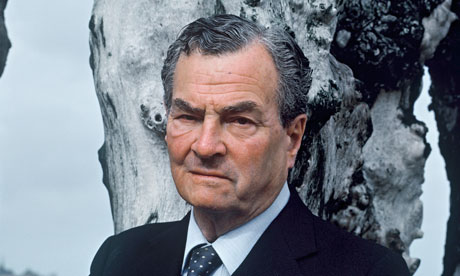
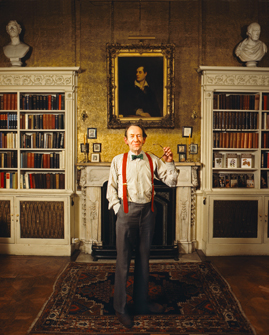
'A dangerous mixture of sophistication and recklessness': Patrick Leigh Fermor in Saint Malo, France, in 1992 Photograph: Ulf Andersen/Getty Images

Highly regarded travel writer and heroic wartime SOE officer

By James Campbell

First published in The Guardian 10 June 2011

Patrick Leigh Fermor, who has died aged 96, was an intrepid traveller, a heroic soldier and a writer with a unique prose style. His books, most of which were autobiographical, made surprisingly scant mention of his military exploits, drawing instead on remarkable geographical and scholarly explorations. To Paddy, as he was universally known, an acre of land in almost any corner of Europe was fertile ground for the study of language, history, song, dress, heraldry, military custom – anything to stimulate his momentous urge to speculate and extrapolate. If there is ever room for a patron saint of autodidacts, it has to be Paddy Leigh Fermor.

Rather than go to university in 1933, at the age of “18 and three-quarters”, he set out in December that year to walk from the Hook of Holland to what he insisted on calling Constantinople, or even Byzantium [Istanbul]. There was no hurry, he wrote 65 years later in an article for the London Magazine. His journey took him “south-east through the snow into Germany, then up the Rhine and eastwards down the Danube … in Hungary I borrowed a horse, then plunged into Transylvania; from Romania, on into Bulgaria”. At New Year, 1935, he crossed the Turkish border at Adrianople and reached his destination.

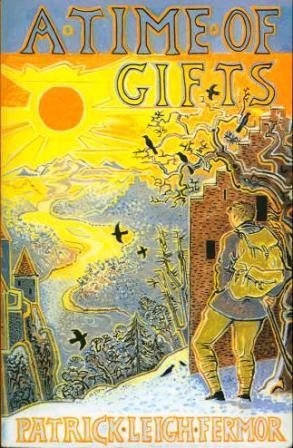
The European trek was undertaken with a book in mind – he was inspired by George Orwell’s Down and Out in Paris and London – but 40 years would pass before Paddy published the first volume of his projected trilogy on the adventure. Asked why it took so long, he shot back: “Laziness and timidity.” A Time of Gifts (1977) is not only a great travel book (a term he disliked), but one of the wonders of modern literature.

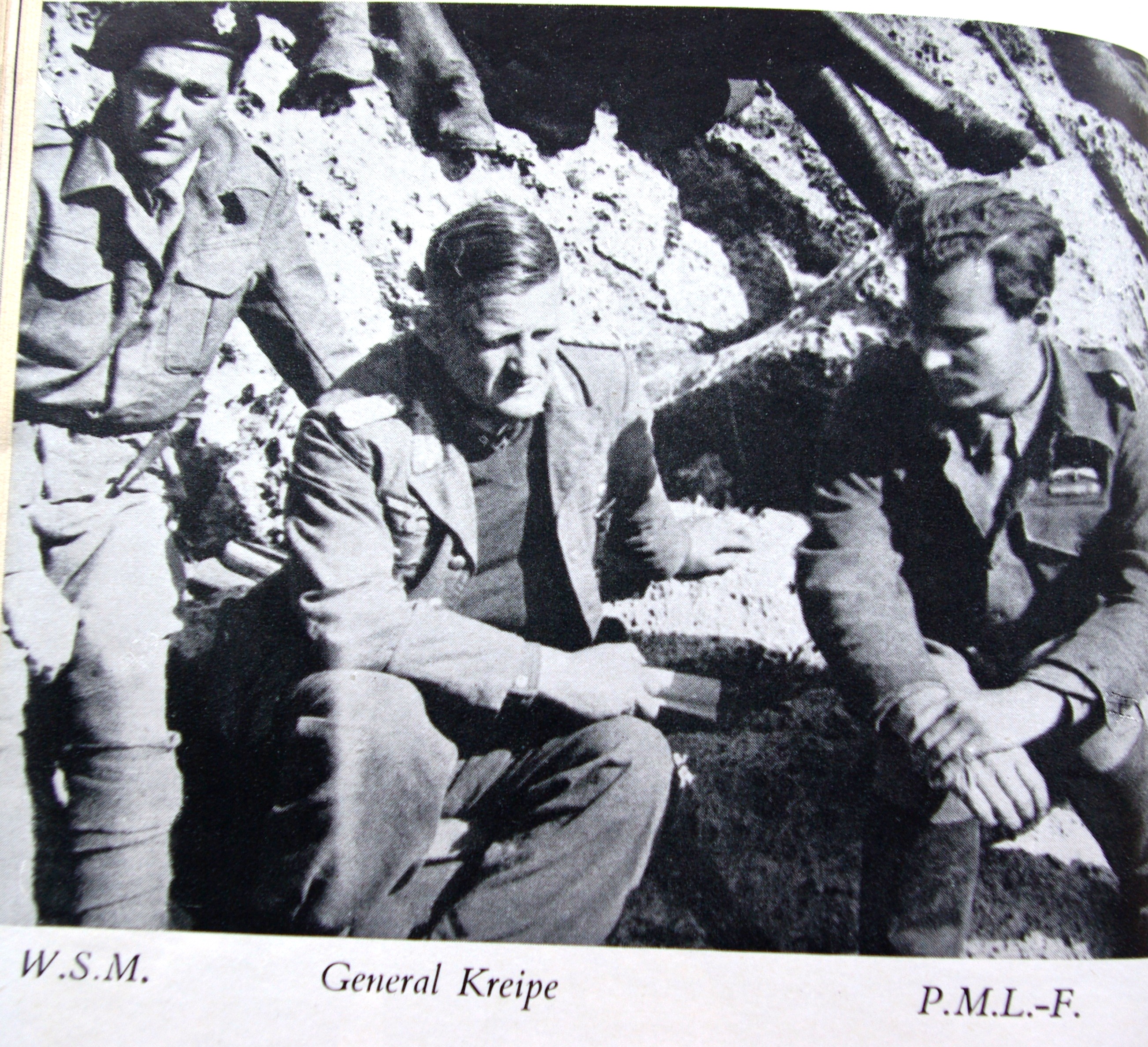
Five years after his journey ended, he was serving with the Irish Guards during the second world war. He joined the Special Operations Executive in 1941, helping to co-ordinate the resistance in German-occupied Crete, and commanding, as he put it, “some minor guerrilla operations”. The most audacious was the ambush and kidnap of the man overseeing the Nazi occupation of the island, General Heinrich Kreipe, who was spirited off to Alexandria.

Paddy’s adventures began practically at the moment he was born. His father, Sir Lewis Leigh Fermor, was the director of the Geological Survey of India. After giving birth to her son in London, his mother, Eileen (nee Ambler), a hopeful but unsuccessful playwright, took Paddy’s elder sister and returned to the east. The newborn was left behind, “so that one of us might survive if the ship were sunk by a submarine”. He was raised in Northamptonshire by a family called Martin and, as he told me when I interviewed him in 2005, “spent a very happy first few years of my life as a wild-natured boy. I wasn’t ever told not to do anything.” The experience left him unsuited to “the faintest shadow of constraint”. As for his parents, “I didn’t meet either of them until I was four years old”. Lewis and Eileen later separated, and Paddy then lived with his mother in London, near Regent’s Park.

With pride, he would tell how he went to a school “for rather naughty children”, and was expelled from two others, including the King’s school, Canterbury, where he had formed an illicit liaison with the local greengrocer’s daughter, eight years older than him, in whom perhaps he glimpsed a loving mother. His housemaster described him as “a dangerous mixture of sophistication and recklessness”, which was perceptive.

Among the books he packed for his European journey in 1933 was a volume of Horace. To pass the time while marching, he recited aloud “a great deal of Shakespeare, several Marlowe speeches, most of Keats’s Odes” as well as “the usual pieces of Tennyson, Browning and Coleridge”. This would be related with charming if showy modesty.

The immense repertoire had a frivolous side. Throughout his adult life, Paddy was a great performer of party turns: songs in Cretan dialect; The Walrus and the Carpenter recited backwards; Falling in Love Again sung in the same direction – but in German. When I was at his house in the Peloponnese, in Greece, he restricted himself, after a lunch that lasted several hours, to It’s a Long Way to Tipperary in Hindustani.

A Time of Gifts is written with a youthful eagerness, with intricately detailed descriptions of sights passed along the way, conversations, drinks imbibed, the cadence of birdsong. Yet it is almost entirely a work of mature recollection. The figure setting out for the Netherlands after a final celebration with friends – “a thousand glistening umbrellas were tilted over a thousand bowler hats in Piccadilly; the Jermyn Street shops, distorted by streaming water, had become a submarine arcade” – is a lad of 18, with all the appropriate responses, but his sensibility is in the control of a writer several decades older. While making a BBC television programme about Paddy’s journey in 2008, the explorer and film-maker Benedict Allen was able to authenticate many of the elaborate and seemingly fanciful descriptions in the book.

Back in Athens, after the main journey to Istanbul was completed, Paddy met the first great love of his life, Balasha Cantacuzene, a Romanian princess 12 years his senior, with whom he lived on the family’s “Tolstoyan” estate in Moldavia until the outbreak of the war. A quarter of a century later, he returned to Romania and found the princess living in a Bucharest garret, disgraced by the government, but with charm and humour intact.

In the 1950s, he lived the life of a nomad. His letters to the Duchess of Devonshire (their correspondence was published as In Tearing Haste in 2008) carry addresses in Italy, France, Cameroon, as well as various corners of England and his beloved Greece. He had a lifelong attraction to the aristocracy, and it sometimes seems as if every excursion involved a castle or a palace somewhere, and every other acquaintance had a title, but his charm and popularity resided in the fact that he was just as content dancing with Greek peasants and sleeping under stars.

Elaboration was Paddy’s forte. His manuscripts were like some literary version of snakes and ladders, with the revisions themselves undergoing repeated rewriting. A friend told me that even quotations from other authors were subject to revision. The second volume, Between the Woods and the Water, appeared in 1986, taking the traveller up to Orsova on the Danube south of the Carpathians. The final chapter closes with the hopeful words, “To Be Concluded”. All through his 80s and 90s, well-meaning friends and fans alike asked about the progress of volume three, and Paddy, hiding his irritation, would say that he was “going to pull my socks up and get on with it”. A visitor to his Greek home in 2008 saw an eight-inch-high pile of manuscript. When and if it does appear, this will be a series some eight decades in the making.

Paddy was never to match the productivity he achieved during the 50s. His first book was The Traveller’s Tree (1950), based on a voyage in the Caribbean in the company of Joan Eyres-Monsell, daughter of the First Lord of the Admiralty, whom he had met at the end of the war. Paddy and Joan became lifelong companions (they married in 1968). She had “more money than most of her friends”, an old school chum wrote at Joan’s death in 2003, aged 91. They settled in Greece in 1964 (three year before the colonels’ junta), while keeping a house near Evesham, in Worcestershire.

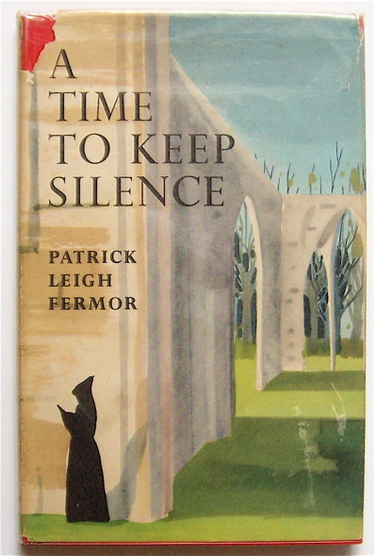
After The Traveller’s Tree came his only novel, The Violins of Saint-Jacques (1953), also with a Caribbean setting (it was made into an opera by Malcolm Williamson). Lodging at a Benedictine monastery in Normandy in the mid-50s in order to concentrate on the first of his two books about Greece, he ended up writing about the monastery instead. A Time to Keep Silence (1957) is the least elaborate and most accessible of his books. It included photographs by Joan, as did Mani (1958), a compendious account of the southernmost region of the Peloponnese. Its northern Greek twin, Roumeli, appeared in 1966. Other notable projects included translations from the French of Paul Morand and co-writing the screenplay for John Huston’s film The Roots of Heaven (1958).

He took no part in the making of the film with which most people associate him. Ill Met by Moonlight (1957) is Michael Powell and Emeric Pressburger’s rather feeble version of the kidnap of General Kreipe. Dirk Bogarde played Paddy, who disliked the film. “It was all so much more interesting than they made it seem,” he told me.

The kidnap took place in April 1944. With permission from the Special Operations Executive (SOE) in Cairo, Paddy and his team of British commandos and Cretan guerrillas stopped Kreipe’s car as made its way to HQ in Heraklion. With the general pressed down on the vehicle’s floor, Paddy donned his uniform and set off towards a prearranged hiding-place with the captive on board. The German chauffeur had been carried off and killed by the Cretans, much to the displeasure of Paddy, who had wanted to keep the operation bloodless in order to reduce the chance of reprisals.

Before reaching safety, they had to pass through several roadblocks and were saved only by Paddy’s command of German. The strange company – Paddy, the general and W Stanley Moss (author of the book Ill Met by Moonlight) slept in caves for a month until it was safe to have Kreipe removed to Egypt. Passing the time one day, Kreipe began to recite some lines from Horace’s ode Ad Thalictrum. The Latin syllables caught his captor’s ear. “As luck would have it, it was one of those I knew by heart.” After the general had run out of steam, Paddy carried on through the remaining 40 lines to the end. “We got on rather better after that.” In 1972, an almost equally unlikely event occurred, when the pair were reunited on a Greek version of This Is Your Life.

Until his death, Paddy was pursued by the rumour that his “jape” (as the historian MRD Foot called it) had brought terrible vengeance on the local population. In a Guardian obituary in 2006 of George Psychoundakis, a shepherd and a “runner” in the resistance, it was stated that villages had been burned in reprisal for the Kreipe kidnapping. This was denied and later corrected by the newspaper. In his book Crete: The Battle and the Resistance (1991), Antony Beevor went to some lengths to establish with the help of German documentation that no direct reprisals took place. Certainly, the Cretans were grateful to Paddy and the odd bunch of English classicists and scholars – some of them posted to Crete on account of having studied ancient Greek at school – who were among his colleagues. In 1947, he was made an honorary citizen of Heraklion. In the mid-50s, he translated Psychoundakis’s close-up version of the occupation, The Cretan Runner (1998), and was later responsible for having the shepherd’s vernacular rendering of the Odyssey published in Athens.

In 1964, the Leigh Fermors focused their energy on building a house on a peninsula about a mile outside the village of Kardamyli. A local mason, Nikos Kolokotronis, provided the expertise. “Settled in tents, we read Vitruvius and Palladio,” Paddy wrote. “Learned all we could from old Mani buildings, and planned the house.” Limestone was quarried from the foothills of the Taygetos mountains, which rear up behind the building as the Gulf of Messenia opens before it. Other materials, such as a seven-foot marble lintel, came from Tripoli and beyond.

He was justly proud of the garden (designed by Joan), the sundial table and the fabulous azure prospect below. There was nothing fussy about it. Paddy referred to his chair-scratching cats as “interior desecrators and natural downholsterers”, and enjoyed the day when “a white goat entered from the terrace, followed by six more in single file”. They inspected the living room, then left again “without the goats or the house seeming in any way out of countenance”.

It was from the same terrace that I first entered the living room, the only guest, apart from the goats, ever to have done so, according to Paddy. Staying in a pension in Kardamyli, I had loftily turned down the offer of a lift to our lunch appointment, and set out to walk with rudimentary directions. I was soon lost, scrambling down olive terraces, smearing and tearing my carefully pressed trousers. Worse, I was late. Eventually, I came to the sea and after climbing over rocks as large as a garden shed, arrived at a set of zigzag steps leading up the cliff face. I traipsed across the terrace and entered by the French windows, to find Paddy seated on a divan reading the Times Literary Supplement. He complimented me on my sense of direction, and said urgently: “We must have a drink straight away!” Paddy was a two gin-and-tonics before lunch man. He was, in fact, a promoter of the life-enhancing qualities of alcohol, and even of the “not always harmful” effects of a hangover.

In 1943, he was appointed OBE (military), and a year later received the Distinguished Service Order. His books won many awards, including the Duff Cooper memorial prize (for Mani) and the WH Smith award (A Time of Gifts). He was knighted in 2004.

Peter Levi writes: When Patrick Leigh Fermor announced his intention to walk to Constantinople through Bulgaria, he was warned by an old British sergeant with local experience that if he went that way, he would start out with a bum like silk and end up with one like an army boot. This view turned out to be mistaken, but among many other adventures, he played bicycle polo in Hungary, fell passionately in love with a princess in Romania, and took part in the last Greek cavalry charge, in a civil war he never quite understood.

He was exactly the right age to be a war hero, and in his two years with the Cretan resistance made a number of lifelong friends, blood-brothers and brothers by baptism. At one point General [later Field Marshal] Bernard Montgomery ordered him to depart at once and come on leave to Cairo, but received a telegram saying he had misunderstood, and that Major Leigh Fermor was enjoying himself enormously and did not want any leave. “What I liked about Paddy,” one of his Cretan blood-brothers said to me, “was he was such a good man, so morally good. He could throw his pistol 40 feet in the air like this, and catch it again by the handle.”

He was not meant for the boring side of military life. When he did get to Cairo. he learned the SOE song, to the tune of a popular song of the time. “We’re a poor lot of mugs/ Who were trained to be things,/ And now we’re at the mercy of the Greeks and the Jugs,/ Nobody’s using us now.” His Cairo parties were also memorable. It was the Indian summer of whatever Cairo had once been, and there was one party where he counted nine crowned heads among the guests. His way into this happy life was by volunteering for the Irish Guards, being put into the intelligence corps, and working as a liaison officer with the Greeks.

His way out was equally a matter of luck. After some time in airborne reconnaissance over Germany in 1945, he was made vice-director of the British Institute in Athens by Lieutenant General Ronald Scobie, who wanted courses in Greek culture and archaeology organised for his soldiers, who had nothing to do. One of his first recruits to the small corps of lecturers was the author and translator Philip Sherrard. They were both at the beginning of a long love affair with their subject.

Paddy came home to be demobbed, and lived for a time in the couriers’ rooms high up in the Ritz hotel that cost half a guinea a night. He arrived there with Xan Fielding, his comrade in arms, who had a barrel of Cretan wine on one shoulder, and with Joan.

He was so honestly high-spririted and friendly that many who were prepared to reject him fell at once under his charm. He was still as wild as he would have been at 16. He was the sort of man who would take you to White’s for dinner because you were handy, without telling you he was a new member, and proceed to sing the menu in Italian.

The house where he and Joan lived in Greece was as essential an expression of his creative power as Pope’s Twickenham or Horace Walpole’s Strawberry Hill. Its remarkable tranquillity and beauty were qualities seldom encountered. His writing house in the garden had a magnificent stove-like fireplace, an imitation from a prewar Bulgarian house, and the saloon or great room of their house had a huge window of Turkish inspiration. It was a feat that he stayed on intimately good terms with the Greeks for so many years. The only problem was about water rights: he supplied mountain water free, which was at once used as a basis for a new settlement with all the horrors of development to follow. When he cut off the supply there were growls, but peace soon returned.

He was a member of the Academy of Athens, and got a gold medal from the city authorities. His London life was dashing. Dressed for a night on the town in what he called his James Bond greatcoat, a present from Ian Fleming, he was a fine sight.

Among his casual attainments, he climbed a peak in the Andes with the mountaineer Robin Fedden and the Duke of Devonshire (who beat the others to the top), and he swam the Hellespont, where he encountered a Russian submarine. In the 1980s he underwent treatment for cancer, which proved successful. Yet his life was distinctly bookish and scholarly: he was a discoverer of obscure and new writers, he translated poetry, and was at some deep level essentially a poet.

• Patrick Michael Leigh Fermor, soldier, traveller and writer, born 11 February 1915; died 10 June 2011

• Peter Levi died in 2000

Telegraph obituary: Sir Patrick Leigh Fermor

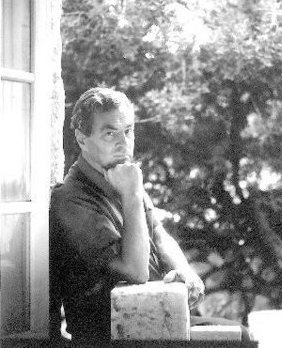
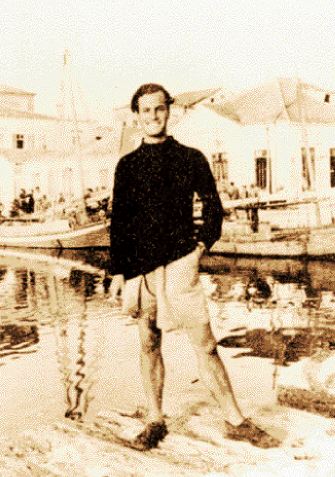
Paddy in 1966

Sir Patrick Leigh Fermor, who died today aged 96, was one of the few genuine Renaissance figures produced by Britain in the 20th century, a man both of action and learning, a modern Philip Sidney or Lord Byron.

First published in The Telegraph 10 June 2011

Leigh Fermor was the architect of one of the most daring feats of the Second World War, the kidnapping of the commander of the German garrison on Crete, and also the author of some of the finest works in the canon of English travel writing.

His most celebrated book told the story of his year-long walk across Europe from Rotterdam to Istanbul in 1934, when he was 18 and the Continent was on the verge of cataclysmic change. His account of his adventures was projected as a trilogy, of which only the first two parts have so far been published, A Time of Gifts in 1977 and Between the Woods and the Water nine years later.

The journey was a cultural awakening for Leigh Fermor that bred in him a love of language and of remote places and set the pattern for his future life. The exuberant personality revealed in his writing won him many admirers, who also revelled in the remarkable range of his learning and the irresistible flow of his descriptive prose, rivalled for luxuriousness only by that of one of his principal influences, Norman Douglas.

Others were not so taken with his tales, suspecting him at best of a faulty memory and at worst of private myth-making, and dismissing his parade of arcane erudition as more intellectual snobbery than dilettante scholarship. Yet such criticism misread the essential modesty of the man, insisted too narrowly on accuracy in a genre founded by storytelling, and failed to realise that Leigh Fermor was above all a comic writer. It was for comic, often self-mocking, effect that he loosed his great streams of words, their tumbling onrush of sound designed to intoxicate and above all to entertain.

Leigh Fermor began his journey in December 1933, carrying a rucksack that had accompanied the travel writer Robert Byron – 10 years his senior and a lifelong literary influence – to Mount Athos for the trip written up as The Station (1931). His course took him across Hitler’s Germany to Transylvania, then through the Balkans to what he insisted on calling Constantinople.

Though he at first kept to his aim of travelling “like a tramp or pilgrim”, sleeping in police cells and beer halls, by the time he reached Central Europe his charm led to his being passed from schloss to schloss by a network of margraves and voivodes. The architecture, ritual and genealogy of each halt were later recalled with a loving eye.

Critics legitimately doubted how such details could be remembered more than half a century later (especially since Leigh Fermor had lost some of the diaries he kept, although he often gave proof of having an exceptionally retentive memory). Yet the accuracy or otherwise of particular incidents was beside the point. Leigh Fermor’s achievement was, like Proust, to have rendered the past visible, and to have preserved a civilisation which had since been swept away like leaves in a storm. The books are also a brilliantly sustained evocation in youthful exhilaration and joy, and perhaps the nearest equivalent in English to Alain-Fournier’s masterpiece of nostalgia, Le Grand Meaulnes.

Leigh Fermor completed his journey on New Year’s Day 1935, albeit by train rather than on foot, having been compelled to travel thus across the militarised zone that then constituted the Turkish frontier. He next visited the country with which he would become most associated, Greece, spending his 20th birthday at St Panteleimon, the Russian monastery on Mount Athos. Later he attached himself to some friends fighting on the royalist side of the Venizelist revolution and took part in a cavalry charge with drawn sabres at Orliako bridge, in Macedonia.

Following a spell in Athens, he then moved to Romania to live with his first love, the painter Balasha Cantacuzene, at her country house in Moldavia. There he passed most of the three years before the Second World War, funded in part by the proceeds of his translation from the Greek in 1938 of CP Rodocanachi’s novel Forever Ulysses, which became a book club selection in America and of which he took a share of the royalties. Having not attended university, Leigh Fermor, who from youth had been an avid reader, used this blissful time to immerse himself in the literature of half a dozen cultures, including French, German and Romanian.

On the outbreak of war Leigh Fermor first joined the Irish Guards but was then transferred to the Intelligence Corps due to his knowledge of the Balkans. He was initially attached as a liaison officer to the Greek forces fighting the Italians in Albania, then – having survived the fall of Crete in 1941 – was sent back to the island by SOE to command extremely hazardous guerrilla operations against the occupying Nazis.

For a year and a half Leigh Fermor, disguised as a Cretan shepherd (albeit one with a taste for waistcoats embroidered with black arabesques and scarlet silk linings) endured a perilous existence, living in freezing mountain caves while harassing German troops. Other dangers were less foreseeable. While checking his rifle Leigh Fermor accidentally shot a trusted guide who subsequently died of the wound.

His occasional bouts of leave were spent in Cairo, at Tara, the rowdy household presided over by a Polish countess, Sophie Tarnowska. It was on a steamy bathroom window in the house that Leigh Fermor and another of Tara’s residents, Bill Stanley Moss, conceived a remarkable operation that they subsequently executed with great dash on Crete in April 1944.

Dressed as German police corporals, the pair stopped the car belonging to General Karl Kreipe, the island’s commander, while he was returning one evening to his villa near Knossos. The chauffeur disposed of, Leigh Fermor donned the general’s hat and, with Moss driving the car, they bluffed their way through the centre of Heraklion and a further 22 checkpoints. Kreipe, meanwhile, was hidden under the back seat and sat on by three hefty andartes, or Cretan partisans.

For three weeks the group evaded German search parties, finally marching the general over the top of Mount Ida, the mythical birthplace of Zeus. It was here occurred one of the most celebrated incidents in the Leigh Fermor legend.

Gazing up at the snowy peak, Kreipe recited the first line of Horace’s ode Ad Thaliarchum – “Vides ut alta stet nive candidum Soracte” (See how Soracte stands white with snow on high). Leigh Fermor immediately continued the poem to its end. The two men realised that they had “drunk at the same fountains” before the war, as Leigh Fermor put it, and things between them were very different from then on.

Kreipe was eventually taken off Crete by motorboat to Cairo. The exploit was later filmed (in the Alps) as Ill Met by Moonlight (1956), with Dirk Bogarde implausibly cast as Leigh Fermor, who was awarded the DSO for his part in the mission. Such was his standing thereafter on Crete that in local tellings of the deed Kreipe was heard to mutter while being abducted “I am starting to wonder who is occupying this island – us or the British.”

Patrick Michael Leigh Fermor was born in London on February 11 1915. He was of Anglo-Irish stock and the son of Sir Lewis Leigh Fermor, director of the Geological Survey of India and a naturalist after whom the mineral fermorite was named. He also discovered a worm with eight hairs on its back and a particular formation of snowflake.

Soon after Paddy’s birth, his mother and sister braved German submarines to sail to India to rejoin Sir Lewis, but for fear of the entire family being lost the infant Paddy was left in the care of a farmer and spent the first four years of life roaming across the fields of Northamptonshire. Among his earliest memories was of attending a Peace Day bonfire in 1919 at which one of the village boys was killed after swallowing a firework he had been clutching in his teeth.

These undisciplined formative years confirmed in him a natural unruliness that was still less likely to be curbed once his parents divorced. His mother, a glamorous red-headed playwright, set up home in Primrose Hill, and persuaded a neighbour, Arthur Rackham, to decorate Paddy’s room with drawings of hobgoblins.

His formal education was thereafter sporadic. A spell at a progressive school where staff and pupils alike dispensed with clothing was remedied by a private tutor who imbued him with a love of poetry and history. He was then sent to The King’s School, Canterbury, from which he was expelled (after several mischievous incidents) when caught holding hands with a greengrocer’s daughter.

It was decided that he should be sent to Sandhurst, but while up in London studying for the necessary exams he drifted into the fringes of the bohemian set (making friends with, among others, Nancy Mitford and Sacheverell Sitwell) and lodging in Shepherd’s Market, Piccadilly, with Beatrice Stewart, once the model for the figure of Peace in the quadriga atop Constitution Arch at Hyde Park Corner. In her rooms Leigh Fermor began (unsuccessfully) to write verse and then, in the winter of 1933, to plan his walk across Europe.

After the war, which ended while he was preparing for a potentially suicidal mission to penetrate Colditz, Leigh Fermor first worked for the British Institute in Athens. There he renewed his acquaintance with Seven Runciman and Osbert Lancaster as well as with Greek writers such as George Seferis. Then in the late 1940s he was commissioned to write the text to a book of photographs of the Caribbean.

It was this trip that gave direction to his later career. From the captions he wrote for the pictures sprang two of his first three books, The Traveller’s Tree (1950) and The Violins of Saint Jacques, his only novel (later turned into an opera), based on an incident in which a ball on Martinique was abruptly ended by the eruption of a volcano. These two titles were separated by a short meditation on monasticism, A Time to Keep Silence (1953).

But after this flurry of activity, the rest of his slender literary output appeared at intervals of a decade or more. He was not wholly idle in the meantime, writing the script for one of John Huston’s lesser films, The Roots of Heaven, and occasional journalism (some of it collected in the anthology of his work Words of Mercury that was published in 2003), but in general he much preferred research to the business of writing, and re-writing; it could take him half a dozen drafts before he would be satisfied with a sentence.

Then there were friends to entertain, among them Cyril Connolly, the present Duke of Devonshire and Bruce Chatwin, who chose to be buried near Leigh Fermor’s home in Greece. This was a house at Kardamyli, deep in the Peloponnese and overlooking the sea, which he and his wife designed themselves. Leigh Fermor liked to bathe, and at the age of 70 swam the four miles across the Hellespont.

Greece was the inspiration for his two other important books, Mani (1958) and Roumeli (1966), distillations respectively of the history, legends, blood feuds and folk culture of the far south and north of a love and understanding of his adopted homeland.

Into his mid-eighties, Leigh Fermor retained the handsome looks (somewhat reminiscent of Jack Hawkins) of a man 20 years younger, and remained amused, energetic and excellent company. His mild manner concealed a sharper mind, and broader tastes, than might have been expected. High on his left shoulder there rode a large tattoo of a full-breasted, two-tailed Greek mermaid.

Patrick Leigh Fermor was awarded a military OBE in 1943 and was appointed a Companion of Literature in 1991. He received a knighthood in the New Year’s Honours List, 2004.

He married, in 1968, Joan Rayner (née Eyres-Monsell), daughter of the 1st Viscount Monsell and Paddy’s boon companion in all he did for more than 50 years. She died in 2003. There were no children.

Paddy died in England

I have heard via a source that Paddy died last night in Evesham, Worcestershire. Another source informed me that fairly recently he had become gravely ill and had asked to be brought back to England so that he might die here. He was evacuated to England on 9 June.

We can only presume that Paddy wanted to be near to Joan and their English home in the village of Dumbleton, Gloucestershire. Joan is buried in the churchyard of St Peter’s church in the village.

Post your tributes to Patrick Leigh Fermor on the blog

It is too soon for me to gather my thoughts, but if you would like to leave a comment or tribute to Paddy there is a page to do just that.

Your Paddy Thoughts

Your Paddy Thoughts - click the image

From The Telegraph: Patrick Leigh Fermor put the writing into travel writing

by Harry Mount

First published in the Telegraph 10 June 2011

Leigh Fermor, who has just died at 96, was blessed with many gifts, among them good looks, into old age, and an admirable war record. The two attributes were reflected in Dirk Bogarde being cast to play him in Ill Met by Moonlight, the story of Leigh Fermor’s daring kidnap, on Crete, of the German officer, General Heinrich Kreipe.

But his most extraordinary gift was his writing skill. Travel writers often depend on unusual destinations – the Antarctic, or wherever – or unusual stunts – ie taking a fridge to the Antarctic. Leigh Fermor went to more conventional places, but wrote about them beautifully.

His two best books – A Time of Gifts (1977) and Between the Woods and the Water (1986) – tell the story of his walk in 1933, aged 18, from the Hook of Holland to Constantinople. They combine total recall of events that happened half a century before, with his poetic, classical prose – itself rooted in his mastery of Latin and Greek (ancient and modern).

He is a lesson to all travel writers. It’s not enough to travel; you must be a writer, too.

Reports from Twitter saying Patrick Leigh Fermor has died

There are a number of reports on Twitter saying that Paddy has died. The posts started at around 12.30 pm today UK time.

I do know from reliable sources that Paddy has been gravely ill and may have been evacuated back to the UK from an Athens hospital.

These reports need substantiating but I do fear they may be true. I will keep the blog updated.


Benedict Allen’s Travellers’ Century on Patrick Leigh Fermor

This is from the television review pages of the Independent covering Benedict Allen’s 2008 ‘Traveller’s Century’ series and the episode that focused on Paddy’s walk ending at the Iron Gates. I have seen this programme and share some of the frustrations of the author, but on balance it was a pretty fair programme given the tight time slot of just one hour.

by Deborah Orr

First published in The Independent 8 August 2008

The bit that delighted us all in this final episode of Travellers’ Century was a clip from another television show. There he was, Patrick Leigh Fermor, the star of the Greek version of This Is Your Life, meeting all the resistance fighters that he had worked with on Crete during the Second World War. And there, unbelievably, and every bit as thrilled to be reunited with Leigh Fermor as all the others, was the German former general Heinrich Kreipe. The two men grinned, hugged and fell into excited conversation, absolutely chuffed to see each other again. That is charm, is it not, the ability to inspire the deep affection of a man you only ever knew because you had spearheaded his humiliating wartime capture, then imprisoned him in a cave? A man, indeed, who was then portrayed in the film of the operation, Ill Met by Moonlight, as a bull-necked, grunting, Nazi ugly, while his nemesis was played by Dirk Bogarde?

I’ve been lucky enough to meet Leigh Fermor – dazzlingly charismatic company in his nineties – on a couple of occasions. So it seemed apposite to gather round the telly with the mutual friends who introduced us, so that we could all watch this film about his life together. Such is the fervour of loyalty that the man inspires, though, that it quickly became apparent that this show, or perhaps any show, would disappoint us. The first heckles came when Benedict Allen described Leigh Fermor as “the accidental superstar of travel writing”, a description we all decided would make him squirm. Concerns over tone were swiftly replaced with outright indignation, when Allen announced that he would be retracing the steps of Leigh Fermor’s first great walk across Europe, which he set off on in 1933, aged 18, in order to judge whether his descriptions had been “accurate”. This idea, again we all agreed with some disgruntlement, was facile beyond belief.

Allen’s idea was perhaps not such a weird one, though. Leigh Fermor’s book detailing the first leg of his journey had been published in 1977, after all, decades after he had made it. The delay had come about because his notes had been stolen in Romania. Again, it is testament to the affection he inspires that the local people who recovered the young Englishmen’s journal hung on to it in the hope that they would one day get the opportunity to return it to him. We all abhorred Allen’s attitude, nevertheless. When he suggested that Leigh Fermor’s two books describing his travels, A Time of Gifts and Between the Woods and the Water, might have been “endlessly worked and reworked, with whole decades of hindsight”, there was a generally mutinous feeling in the room that our man was being seriously impugned.

Allen regained a little trust when he decided, having visited some little-altered spots in Heidelberg, that the writer had indeed told it like it was. But when Allen changed his tune, and started suggesting that the books were weirdly apolitical, and offered too little detail about his own inner life, we sank again into despondency. The purity of Leigh Fermor’s writing comes from his scrupulous observation of what he encountered, and the beauty with which he describes it. He doesn’t bang on about himself. Anyway, on it went, as we nit-picked every assertion. By the time Allen got to interview Leigh Fermor, at his home of very many years in the Peloponnesus, we hated and resented him, and were only too happy to dismiss the interview itself as a dead loss. “And the programme was too long,” we agreed at the end. “If we thought that, what did everyone else think?” Actually “everyone else” would probably have enjoyed the thing a great deal more, not being hampered, like us, by an almost deranged sense of hyper-loyalty.

Tales of a literary traveller: Sir Patrick Leigh Fermor

I have been amiss and I should have published this earlier. I was contacted by John Stathatos who is a Greek photographer and knows Paddy. He emailed me back in January which was during my ‘down time’ on the blog.
Dear Tom,
While chasing up references to Costa, I discovered that the Robin Hanbury-Tenison piece on your site (“The Friendly Isles: in the Footsteps of Patrick Leigh Fermor“) is actually based on an earlier and more wide-ranging article entitled “Tales of a Literary Traveller”, first published in the Geographical magazine in 2004. You can find the earlier one here: Why this should be available on a site called CBS MoneyWatch is entirely beyond me, but that’s the Internet for you…
All the best,
John

Tales of a literary traveller: Sir Patrick Leigh Fermor DSO, OBE is widely considered to be our greatest living travel writer, and was knighted earlier this year for, as he put it, just writing a few books. Robin Hanbury-Tenison, who has known ‘Paddy’ for 50 years, explains why the great man’s writing is as powerful and important today as it has ever been

First published in the Geographical August 2004

by  Robin Hanbury-Tenison

Robin Hanbury-Tenison

Patrick Leigh Fermor is a unique mixture of hero, historian, traveller and writer: the last and the greatest of a generation whose like we won’t see again. Bringing the landscape alive as no other writer can, he uses his profound and eclectic understanding of cultures and peoples, their origins and current place in the world, to paint vivid pictures–nobody has illuminated the geography of Europe better through literature. Everything is grist to his mill; nothing is ever banal. He expects much of his readers and we’re kept on our toes, constantly reaching for the dictionary or Brewer’s. In return for these achievements, he was finally knighted this year at the age of 88. He had modestly refused this honour previously on the grounds that all he had done was “write a few books”.

I first met Paddy (as he has always been known) in Athens in 1954 when I was a callow 18-year-old travelling through Greece. I remember sitting at a cafe in Metaxas Square while waves of witty erudition washed back and forth between him and my older travelling companion, and being humbled into awed silence. Paddy has always appeared larger than life, both in his personality and in his relatively rare and carefully honed writing. We corresponded from time to time over the years and eventually met again when he and his wife Joan had my wife and me to lunch at their house in Greece, where we were made to feel instantly at home.

Since Joan’s death, Paddy has spent more time in England, which gives us all more opportunity to see him. In May this year, a dinner was held for him by the Travellers Club, at which he was presented with a specially commissioned map of the route that he followed through Europe during the early 1930s and that he later wrote about so vividly. He spoke at the dinner and, now 89, held us all spellbound with some classic tales. One of the club waitresses was from Sofia and, to her delight and the amazement of all around, he launched into apparently fluent Bulgarian as she served him.

The bare details of his life, too, delight and amaze. The son of Sir Lewis Leigh Ferrnor, the director of the Geological Survey of India, Paddy was sacked at 17 from King’s School, Canterbury (for the terrible crime of “holding hands with the greengrocer’s daughter”), and spent the next 18 months walking to Constantinople, a journey that he wrote about with apparent total recall some 40 years later in A Time of Gifts, the first volume of a trilogy. It was followed by Between the Woods and the Water. We still await the final volume.

In the Second World War, Paddy served with the Special Operations Executive–the precursor of the SAS–and, because he spoke Greek, was parachuted into Crete behind enemy lines to help organise resistance against the Germans. In April 1944, having already spent more than a year living there, he pulled off one of the most dramatic exploits of the war.

Dressed as Feldpolizei corporals, Paddy and Captain Billy Moss–who subsequently wrote the book on which the film Ill Met by Moonlight was based–stopped the car in which General Heinrich Kreipe, the recently arrived commander of the German occupation forces, was being driven by his chauffeur. The driver was removed and handed over to members of the Cretan Resistance, while Paddy put on the general’s hat and proceeded to drive on through 22 control posts. The car was then abandoned, and the two soldiers marched their prisoner through that night and the next day to a cave high in the mountains.

In order to avoid reprisals against the Cretans, leaflets were to be dropped all over Crete, containing a message that the BBC also broadcast: that the general was safe, and would be treated with the respect due his rank; that the operation had been carried out by British officers; and that they were all on their way to Cairo by submarine. Two days later, they woke among some rocks near the summit of Mount Ida, just as dawn was breaking. Half to himself, General Kreipe recited in Latin the opening line of a Horace ode. As Paddy subsequently described in his report to the Imperial War Museum: “He was in luck. It is the opening line of one of the few odes of Horace I know by heart–Ad Thaliarchum, I.ix” and he went on to recite the remaining five stanzas. “The general’s blue eyes swivelled away from the mountain-top to mine–and when I’d finished, after a long silence, he said: ‘Ach so, Herr Major!’ It was very strange. ‘Ja, Herr General.’ As though, for a long moment, the war had ceased to exist. We had both drunk at the same fountains long before; and things were different between us for the rest of our time together.”

After the war, Paddy spent six months travelling through the Caribbean with Joan Eyres-Monsell–the woman who, 20 years later, was to become his wife–and Costa, the great Greek photographer. The result was his first book, The Traveller’s Tree, which brought the Caribbean to the notice of post-war Britain. Back then, the many islands they visited were thoroughly run down. The great buildings–of church, state and planters’ wealth–were mostly ruined and rotten. In the depressed economic climate immediately following the war, the future looked bleak; indeed, ‘King Sugar’ was about to die, this time as a victim of sugar beet and the macropolitics being played out between the USA and Europe.

Yet Paddy still managed to reveal the archipelago’s romance and magic, and The Traveller’s Tree was hailed as a masterpiece and won the Heinemann Prize. Paddy’s portrayal of the islands could be said to have jump-started the tourism industry upon which the Caribbean has since largely depended.

It was the Caribbean, too, that provided the backdrop to Paddy’s only novel, The Violins of Saint-Jacques, which brings alive the glamour and the passions of the planters in their heyday. This tale of a rich island being destroyed by a volcanic eruption in the middle of a splendid planters’ ball is based on the true story of the annihilation in 1902 of St-Pierre, the old capital of Martinique. There, 26,000 people died instantly in the New World’s Pompeii. The sole survivor was the town drunk, who was incarcerated in a cell below ground. He spent the rest of his life as an exhibit in Barnum and Bailey’s Circus.

Paddy eventually returned to Greece, where, during the 1960s, he built a wonderful house above a private cove near the fishing village of Kardamili in the southern Peloponnese. There, in a large room that John Betjeman, an early visitor, called “one of the rooms in the world”, he and Joan entertained a string of artists and writers with copious quantities of retsina, and Paddy wrote.

His greatest book, Mani, was about a journey through that little-known and, at the time, archaic region; the book has been in print ever since. Paddy travelled simply, staying with fishermen and farmers, which enabled him to capture the essence of the region, as this extract reveals:

Beyond the bars of my window the towers descended, their walls blazoned with diagonals of light and shade; and, through a wide gap, castellated villages were poised above the sea on coils of terraces. Through another gap our host’s second daughter, wide hatted and perched on the back of a wooden sledge and grasping three reins, was sliding round a threshing floor behind a horse, a mule and a cow–the first cow I had seen in the Mani–all of them linked in a triple yoke. On a bank above this busy stone disc, the rest of the family were flinging wooden shovelfuls of wheat in the air for the grain to fall on outstretched coloured blankets while the husks drifted away. Others shook large sieves. The sun which climbed behind them outlined this group with a rim of gold and each time a winnower sent up his great fan, for long seconds the floating chaff embowered him in a golden mist.

Almost every page has its own literary tour de force, often with intimidating displays of learning and research mixed with fantasy, imagination and acute descriptions of the scene itself. In his next book, Roumeli, about the minority communities of northern Greece, Paddy becomes fascinated by the last true nomads of the region, the Sarakatsans. His description of their wanderings is, for me, the best sort of literary geography lesson, and has even more geopolitical relevance now than when he wrote it:

The sudden cage of frontiers which sprang up after the Balkan Wars failed to confine them and they fanned out in autumn all over southern Albania and across the lower marches of Serbia as far as Montenegro and Herzogovina and Bosnia and into Bulgaria to the foothills of the Great Balkan. Those who thought of the Rhodope mountains as their home–the very ones, indeed, in the highlands that loom above the Thracian plains–were particularly bold in the extent of their winter wanderings. Not only did they strike northwards, like those I saw by the Black Sea, but, before the Hebrus river became an inviolable barrier, their caravans reached Constantinople and up went their wigwams under the walls of Theodosius. Others settled along the shores of the Sea of Marmara and spread over the rich green hills of the Dardanelles. Many crossed the Hellespont to pitch camp on the plain of Troy. Bold nomads would continue to the meadows of Bythinia and winter among the poplar trees or push on into Cappadocia and scatter their flocks across the volcanic wildernesses round the rock monasteries of Urgub. The boldest even reached Iconium, the home of Jellalludin and the metropolis of the whirling dervishes. They never looked on these enormous journeys as expatriation: until the deracination of the 1920s, much of Asia Minor was part of the Greek world; and even beyond its confines there were ancient Greek colonies.

Those attempting today to sort out the chaos in what was, for a while, southern Yugoslavia could learn a lot from reading Paddy’s books.

One of the main criticisms of Paddy’s writing is that there simply isn’t enough of it. But very few 20th-century writers, with perhaps the exception of Graham Greene, have managed to be prolific while maintaining consistent quality of this kind. The relatively small number of books (much boosted by the release of the paperback of Words of Mercury this mouth) is the work, to quote Anthony Sattin in the Sunday Times, of “one of the greatest travel writers of all time”, a heartfelt wanderer truly involved in mankind.

New editions of both Mani and Roumeli will be published by John Murray near the end of this year. A Time of Gifts and Between the Woods and the Water were reissued by John Murray in March. Words of Mercury is out now in paperback.

Early inspiration: Following Paddy around the Caribbean

Though Patrick Leigh Fermor’s most famous works recount his European travels, it was the Caribbean that inspired his first book. Fifty years later, Robin Hanbury-Tenison and his wife retraced Paddy’s steps:

We hired horses and rode, as Paddy did, between tall forest giants, listening to the jungle buzz and background twitterings. Suddenly, a beautiful, melodious note rang out. This was followed after o moment by three more notes of startling clarity and sweetness and the theme, a bit like the opening bars of Beethoven’s Fifth, was repeated every few minutes. It was a rufous-throated solitaire, which Leigh Fermor describes as making “a noise so melancholy that it seemed the perfect emanation of these sad and beautiful forests. It haunts the high woods of Dominica and nowhere else in the world.”

How does everything about a place change in 50 years, and yet the place itself remain the same? It is because of that unique mixture of cultures that is the Caribbean–and no-one has captured and evoked the extraordinary differences between the islands better than Paddy did in The Traveller’s Tree. Ash says: “Each island is a distinct and idiosyncratic entity, a civilisation, or the reverse, fortuitous in its origins and empirical in its development. “And then again, quoting an old Jamaican: “We’re always going somewhere. But we never get there.”

Patrick Leigh Fermor, however, not only travelled but also arrived. And those of us who read his dispatches home–those calm, intelligent tales of lives lived elsewhere–are in his debt.

Patrick Leigh Fermor awarded Lifetime Achievement Award

In  November 2004 Paddy was awarded a Lifetime Achievement Award by the British Guild of Travel Writers. He is in good company alongside Eric Newby, John Blashford-Snell, and  ….. Judith Chalmers? This account is from its website.

Author Patrick Leigh Fermor has been awarded the British Guild of Travel Writers’ (BGTW) highest honour in recognition of his 60-year writing career. The award was announced at the BGTW’s annual gala dinner held on Sunday night at the Savoy Hotel, London.

Patrick, 89, divides his time between Greece and Worcestershire and his biographer, Artemis Cooper, accepted the award on his behalf from BGTW Chairman, Melissa Shales.

In 1933, when he was just 18, Patrick walked from Rotterdam to Constantinople, through Germany, Turkey and Greece. His epic journey inspired his books, A Time of Gifts and Between the Wood and the Water, two classics of modern travel writing. His exploits in Crete with the SOE during WWII were the basis for the famous Dirk Bogarde film, Ill Met by Moonlight.

Over the years he has taken readers from Germany to the Caribbean, austere Benedictine monasteries and the high peaks of the Pyrenees and Andes. His 1958 book, Mani, explored the remote southern tip of Greece, then a place where foreign visitors were curiosities to be gawped at by the locals. He fell in love with the region and built a home in an olive grove.

Patrick, who continues to write, said: “Travel writing is like interpreting an ancient and dusty mosaic. Only by gently pouring on water, bit by bit, does the real pattern emerge.”

Commenting on his Lifetime Achievement Award, Melissa Shales said: “Patrick Leigh Fermor’s rich, flowing style, soaring imagination and wonderful journeys have inspired generations of younger travel writers. It is truly an honour to present him with this award.”

Speaking from his home in Greece Patrick said: “I am so sorry not to be with you to say how very moved and honoured I am by the choice of the British Guild of Travel Writers. I am very grateful for this splendidly encouraging pat on the back. I feel spurred on to do better. Meanwhile, as I am in my studio just above the sea, I plan to dash down the steps, dive in and swim towards the noonday sun revelling in this moment of glory.”

Pre-ordering Artemis Cooper’s biography of Patrick Leigh Fermor

Artemis Cooper

Just a quick note to regular readers and those who search for this book – there are many Google searches for this proposed biography.

It came to my attention that a book called Biography of Patrick Leigh Fermor by Artemis Cooper and Antony Beevor is due to be published by Penguin in September 2011. At least that is what it says on Amazon and a number of on-line book sites.

I contacted Amelia Fainey who is Publicity Director for Penguin books as my belief was that the agreement (and if I recall correctly actually mentioned in In Tearing Haste) is that the book will be published after Paddy’s death.

Amelia responded thus:

Hello

I’m afraid we don’t have a date scheduled for this yet – possibly 2013 – certainly not this September!

A

So, if you were hoping for a book this autumn you will have to wait …. at least two years, and I suspect a lot longer than that.

Related article:

A biography of Paddy by Artemis Cooper?
Artemis Cooper talks about Words of Mercury

Obituary: Jock Murray

Jock Murray in 1983 (Mercer photography)

by Patrick Leigh Fermor

First published in The Independent 24 July 1993

John Arnaud Robin Grey (Jock Murray), publisher: born 23 September 1908; MBE 1945, CBE 1975; Senior Director, John Murray 1968-93; married 1939 Diana James (two sons, two daughters); died London 22 July 1993.

JOCK MURRAY took such trouble about his authors, and in so many ways, and so unobtrusively, that perhaps they – or we , for I am one of them – were inclined to take it for granted, writes Patrick Leigh Fermor. But not quite: other publishers at home or abroad – not that I know much about them as I have only had one – would remind us now and then of our luck and our spoiled and privileged estate. This was because of Jock’s passionate interest in the work of his authors, his great kindness, and his gift for friendship. Nobody, in the Doctor Johnson sense, kept his friendships in a state of better repair.

It is hard to think of a more apt setting for him than No 50 Albemarle Street, with its beautiful rooms, and portraits and books and cases of mementoes, and its mixture of archaic style and informality, of activity and unhurried leisure. The traditions of Byron’s friendship with Jock Murray’s ancestor played a great part in the life of No 50, and the poet’s spirit seems to pervade those rooms. Looking through typescript, then galleys then page proofs there with Jock was a great delight. Especially when they were tossed aside to make room for tea or sherry or whisky and soda, and Osbert Lancaster on the way back from drawing his daily caricature would wander in full of marvellous gossip; or Kenneth Clark with an armful of illustrations or John Betjeman with news of a new Early English discovery in some remote Fenland parish – could they talk about it with John Piper? (Betjeman and Jock shared an expert knowledge of campanology.)

Cannon Lodge, halfway between Hampstead Heath and a slender steeple, with its Keats’-eye view of all London, had a similar uncontemporary charm. At the end of a day of last- minute corrections, under one of the tall trees, or by a blazing fire, any of the above might come to dinner, or Freya Strak fresh from Asia Minor, Ruth Jhabvala from Rajasthan or Dervla Murphy from the Andes and, very often, Jock and Diana’s favourite neighbour, Peggy Ashcroft.

Jock and Diana came several times to Greece and it was a great surprise to discover that Jock was an accomplished tree surgeon: one glance at an ailing growth would send him shinning up into the branches and putting things most knowledgeably to right with saw, twine, bast and tar.

Five weeks ago we were talking about the ravages of time that we noticed in ourselves and he said, halfway between a sigh and a laugh, ‘Yes. Old age is not for sissies.’ He confronted his own with great Stoicism, and leaves us all diminished.

Ein Patrick-Leigh-Fermor-Abend 31 May, Literaturhaus Hamburg

Time: Tuesday, May 31 · 8:00pm – 11:00pm

Literaturhaus Hamburg

Schwanenwik 38
22087 Hamburg


Sich in die Welt zu begeben, eigene Erfahrungen mit den Sitten und Lebensformen anderer Länder zu vergleichen, das ist ein Reiz, dem sich Schriftsteller kaum entziehen können. Seit den Anfängen – man denke an Homers „Odyssee” – ist die Weltliteratur auch eine Literatur des Reisens und des Heimkehrens. Erbauungs-, Abenteuer-, Pilger- oder Kulturreisen bilden das unerschöpfliche Repertoire, und die steigende Mobilität im 20. und 21. Jahrhundert führt dazu, dass sich Autorinnen und Autoren immer häufiger aufmachen, die Welt zu erobern und das Gesehene literarisch – in Reportagen, Essays oder Romanen – festzuhalten.

Das Literaturhaus verfolgt diese Zusammenhänge in seiner Reihe „Unterwegs in der Welt” und präsentiert das Werk eines der bedeutendsten Reiseautoren der Weltliteratur: Sir Patrick Leigh Fermor. 1932 wurde er in Canterbury der Schule verwiesen, weil er sich „in ein Mädchen beim Gemüsehändler verguckte”. Während der Aufnahmeprüfung in die Armee hatte er die fabelhafte Idee, nach Konstantinopel zu wandern (nachzulesen in den Bänden „Die Zeit der Gaben” und „Zwischen Wäldern und Wassern”). Drei Jahre lang organisierte er als britischer Agent auf Kreta den Widerstand, konnte 1944 den deutschen General Kreipe gefangen nehmen und wurde ein Held. Fermor reiste in die Karibik, wo der Reisebericht „Der Baum des Reisenden” und „Die Violinen von Saint-Jacques”, sein einziger Roman, entstanden.

Patrick Leigh Fermor zählt zu den bedeutendsten englisch-sprachigen Reiseschriftstellern. Er lebt heute, 96-jährig, in der Mani, Griechenland. Die Berliner Kritikerin und Autorin Gabriele von Arnim lässt sein außergewöhnliches, vom Zürcher Dörlemann Verlag mustergültig wiederaufgelegtes Werk Revue passieren und hat Textstellen ausgesucht, die Christian Brückner – wir ahnen es – mustergültig vortragen wird.

EINTRITT 10,-/8,-/6,- EURO

Further details here.

Crete, Greece: Ghostly soldiers on the Battle of Crete anniversary

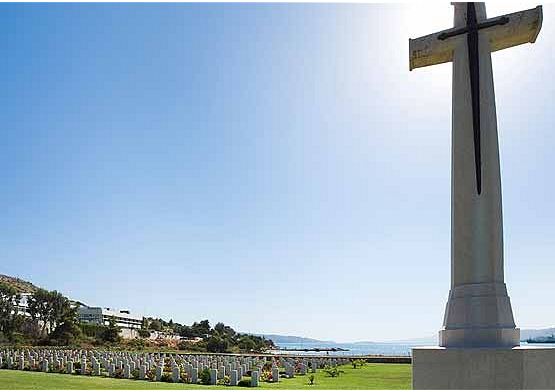
The Commonwealth War Cemetery at Souda Bay in Crete where the main anniversary commemorations will take place

It was sunny but cold, last month in Crete – what the locals call “ilios me dontia”, sun with teeth. I sat on the beach at Sfakia on the south coast of the island. Around me a toddler played among the stones while taverna owners were applying final licks of paint in preparation for the new tourist season.

My late father sat on the same beach in May 1941. Around him there was chaos and despair. Evelyn Waugh, who was there too, later captured the scene in the novel Officers and Gentlemen: “The ghosts of an army teemed everywhere. Some were quite apathetic, too weary to eat; others were smashing their rifles on the stones, taking a fierce relish in this symbolic farewell to their arms.”

This tiny harbour is the finish to the story of the Battle of Crete, which started 70 years ago on Friday, May 20 — a significant anniversary that will be commemorated across the island. There are few veterans left now, but strands of the narrative may still be picked up among the rocks and wild flowers of the beautiful western end of Crete.

I had long meant to do this journey, to discover what my father – and thousands of others – went through. He himself hadn’t been the best source as he wouldn’t say much about it. And then he died, with the story largely untold.
Related Articles

To help me uncover it, I enlisted the services of a Briton who has been a resident of Crete for 25 years and offers guided tours of the key sites. For Tim Powell, tourist guide, musician and lover of all things Cretan, the Battle of Crete was characterised by the heroic resistance of the civilian population. “This ‘insurgency’ led to a declaration that for every German soldier killed, 10 Cretans would be executed — which of course did nothing to stop them,” he said.

He started the story at the end, the Commonwealth War Cemetery at Souda Bay where the main anniversary commemorations will take place. The 1,500 headstones memorialise some colourful characters, none more vivid than John Pendlebury, an archaeologist with a glass eye who was operating in Crete as a secret agent when he was killed on May 22 1941.

The battle and its aftermath of guerrilla resistance threw up a cast of such chaps — suave British secret agents, brave Cretan warriors, even a monocle-wearing German aristocrat — whose deeds are recorded in some compelling accounts. Ill Met by Moonlight, for example, recounts the kidnap of the German General Heinrich Kreipe in 1944, masterminded by the secret agent (and future travel writer) Patrick Leigh Fermor.

But the Crete campaign also included many ordinary soldiers and civilians whose names and actions remain unrecorded and for whom the experience was far from glamorous. One of them was my father, a lance sergeant in the Northumberland Hussars, who was evacuated to Crete from Athens towards the end of April 1941 after mainland Greece fell to the Nazis.

He dug in with a force of about 21,000 combat-ready British, Australian, New Zealand and Cretan soldiers to defend the island. The Germans launched their attack on May 20 in wave after wave of paratroop drops by parachute and glider. What followed was a series of military blunders on both sides in which the Allies managed to snatch defeat from the jaws of victory.

The key fighting took place around the airfield at Maleme, and Hill 107 above it, to the west of Chania. Since 1974 Hill 107 has been the site of the German War Cemetery on Crete, the last resting place of 4,465 soldiers of whom nearly 2,000 were killed on that first day.

Many fell not to soldiers but to civilians. “The Germans had never seen something like this in Europe,” explained George Bikoyiannakis, the owner of the Café Plateia in the village of Galatas near Chania, the site of fierce fighting. “These people were fighting with farming tools. Even broomsticks. They would tie kitchen knives to them and use them as spears.”

George runs a little museum next to the church that commemorates the heroic efforts of locals and New Zealanders to defend the village. The Kiwis are remembered in the name of a street, Neozilandon Polemiston, which means “Road of the New Zealand Warriors”. Down a narrow alley, a garden gate has been fashioned from an old piece of British Matilda tank.

The civilian resistance — by women and priests and as well as men young and old — offended the Nazis’ sense of how war should be waged and their commander, General Kurt Student, ordered reprisals to be carried out “with exemplary terror”. The sites of these massacres are marked by monuments across the island, some of them displaying the skulls and bones of victims behind glass.

At Alikianos a marble column and canopy bear witness to one of the bravest feats of the Battle of Crete, in which 850 lads of the locally recruited 8th Greek Regiment held out for a week against German onslaught. More than 200 villagers, ranging in age from 14 to 80, were subsequently shot in reprisal.

“The Germans were surprised because the women didn’t turn away,” said Powell. “They watched their husbands and sons being executed.” The significance of the action at Alikianos is that it bought the Allies time to organise the evacuation of Crete. On May 27, realising the island was lost, the Allied commander, Major General Bernard Freyberg, ordered his forces to retreat south across the Levka Ori, the mountains that form the snowy spine of Crete, to an embarkation point on the southern coast.

My father and his fellow Geordies abandoned the ground they held around Chania and joined the exodus. The route they took, with little or no food, in rotting boots, under frequent attack from Stuka dive bombers, was nicknamed the Via Dolorosa. Today you can drive it in your little Nissan or Peugeot hire car.

In 1941 it was a dirt track that ended in the five-mile-long Imbros Gorge. A Stuka was shot down as it came in for the attack here. Its propeller is one of the prize exhibits in the war museum at Askifou, which lies on the Via Dolorosa. Walking the gorge myself, I tried to imagine the Stuka screech my father once remarked on, but all I could hear was goat bells.

His reward for reaching Sfakia, where Royal Navy ships evacuated 16,000 men over four nights, was to be told there was no room for him. He would have to stay behind and wait to be captured. All told, 5,000 Allied troops didn’t make it off Crete. None of those left behind was above the rank of lieutenant colonel.

One eyewitness talked of the “damnable and disgraceful scramble for priority, a claim to the privilege of escape based on rank and seniority”. Evelyn Waugh thought it a shameful episode. My father didn’t mention it.

After sitting on the beach at Sfakia I sat down for lunch at one of those spruced-up tavernas and ordered a plate of gigantes, butterbeans in tomato sauce. Then I remembered that butterbeans were my father’s favourite thing to eat. He would have appreciated a plateful as he sat twiddling his thumbs just a few feet away, waiting to be captured.

He spent the next four years, from the ages of 20 to 24, in various POW camps in Germany, but he took it all on the chin. The only bit I can remember him grumbling about was having to march the 50 miles back over the mountains, along the Via Dolorosa, after being taken prisoner. He said he could have done without that.

By Nigel Richardson – First published in The Telegraph

Related articles:

A Meeting between Paddy and George Psychoundakis the “Cretan Runner”

Ride of the Valkyries: The Vichy perspective on the German invasion of Crete

Patrick Leigh Fermor recounts the kidnap of General Kreipe on video

Crete: 11th Day Movie with Paddy

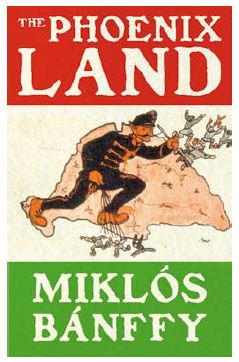
The Phoenix Land: The Memoirs of Count Miklós Bánffy

I am just ten tantalising pages away from the end of Miklós Bánffy’s Transylvanian Trilogy (They Were Counted, They Were Found Wanting and They Were Divided) published by Arcadia books. If I have time I will write a short review very soon.The books are lively, and Bánffy writes so well about love, life, and politics in Transylvania and Hungary in the ten years leading up to the start of World War One, an event which was to tear apart the lives of so many, and which ended the comfortable existence of Hungarian aristocracy in Transylvania.

The story will almost certainly end in tragedy and sadness but that does not deflect from from what Patrick Leigh Fermor describes in his foreward to the Trilogy as a story that is “beyond question, dramatic.”.

One cannot read these books without wanting to know more about the author whom Paddy characterises as “such a deeply civilised man.”

The good news is that very soon we shall be able to do so once more when Arcadia Books re-publish Bánffy’s memoirs “The Phoenix Land”. Due for publication on 23 June 2011 the book is already available for pre-order in bookshops such as Waterstones in the UK. Arcadia first published this in 2004 and you can read a Spectator review here.

Bánffy’s memoirs were once again translated from the Hungarian by his daughter Katalin Bánffy-Jelen and Patrick Thursfield,winners of the Oxford Weidenfeld Translation Prize. Paddy once more offers a foreward. The blurb describes the book as follows:

The thousand year-old year-old kingdom of Hungary, which formed the major part of the Austro-Hungarian Empire until the last Habsburg fled in 1918, was finally dismembered by the Western Allies by the terms of the peace treaties which followed the First World War. Phoenix-like the Hungarian people survived the horrors of war, the disappointment of the first socialist republic, the disillusion of the brief but terrifying communist rule of Béla Kun, and the bitterness of seeing their beloved country dismembered by the Treaty of Trianon. This is the world that Miklós Bánffy describes in The Phoenix Land.

In preparing this post I contacted Gary Pulsifer at Arcadia for some further background and to ask him to explain more about why Bánffy is one of their authors. He sent me this, including a little vignette about Paddy and his introduction:

Tom, two reasons, one general, one specific.  The first is that Arcadia specialises in translated fiction. The second is the story and this is it:

When I worked at Peter Owen Publishers I was invited to Tangier by the Hon David Herbert, one of Peter’s authors.  He took my partner and me to lunch with his neighbour Patrick Thursfield, who as you know is the Bánffy co-translator.  After lunch Patrick gave me the manuscript of THEY WERE COUNTED, which I read while I was on holiday, and was hooked.  I tried to persuade Peter Owen to publish the trilogy, but no go, so when I started Arcadia in 1996 volume one was one of our early titles.  I became quite close to Patrick, stayed with him in Tangier and saw a lot of him in London and he even once came along to the Frankfurt book fair.  He was overjoyed when THEY WERE DIVIDED won the Weidenfeld Translation Prize (this happened at an awards ceremony in Oxford, when Umberto Eco presented the prize).

A funny aside is that Paddy’s forward was written in longhand and he came into our tiny offices to have Daniela de Groote, now our associate publisher, word-process it.  Daniela, who is Chilean, hadn’t been in the UK all that long – she had been studying for a PhD here prior to working at Arcadia – and she had some difficulties in understanding Paddy’s upper crust accent as he dictated the foreword.  Daniela was also catching a plane to Santiago that afternoon and the whole thing was a little much for her.  So much so that I had to leave the office until they were finished . . .

You may enjoy browsing the current Arcadia 2011 catalogue which is here as a pdf.

Arcadia_2011

Related articles:

Paddy’s Introduction to the Transylvanian Trilogy by Miklos Banffy

If food be the music of love … Bánffy’s lover in Cluj (Kolozsvár)

Scholar in the wilds – a profile of Patrick Leigh Fermor

A comprehensive profile of Patrick Leigh Fermor.

By James Campbell. First published in The Guardian 9 April 2005

As a teenager, Patrick Leigh Fermor walked through Europe to Turkey, sleeping in hayricks and castles. Forty years later he wrote two pioneering books about it; a third is still in progress. He lived in Romania, met his wife in Egypt, and was decorated for his wartime exploits in Crete. Now 90, he continues to work in the house he built in Greece in the 1960s.
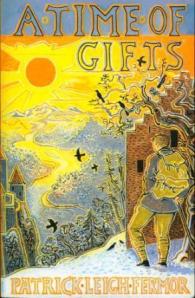
“So here’s the traveller,” a Hungarian hostess greets the teenage Patrick Leigh Fermor as he trudges towards her Danubian country house. The year is 1934 and Leigh Fermor is four months into his walk from the Hook of Holland to Constantinople, undertaken to shake off what he refers to, 70 years on, as “my rather rackety past”. The journey is captured, with erudition and fond detail, in A Time of Gifts (1977) and Between the Woods and the Water (1986). They are unique in several respects, not least that they were written more than 40 years after the events described. Leigh Fermor derived the former title from a couplet by Louis MacNeice, “For now the time of gifts is gone – / O boys that grow, O snows that melt”, which encapsulates the double vision involved in evoking one’s own adolescence from a distance. A concluding volume, which will take the boy to his destination, has long been promised.

Leigh Fermor is not a “travel writer” – like others, he disavows the term – but there is no denying he is a traveller. After Constantinople (as he still insists on calling it, though the name was changed to Istanbul in 1930), he moved to Romania, where he stayed for two years, barely conscious of the inklings of war from beyond the Carpathian mountains. In the 1950s, he explored the then-intractable southern finger of the Peloponnese known as Mani, where he lives, followed by a similar journey in the north of Greece, making his reports, in characteristically exuberant style, in the books Mani (1958) and Roumeli (1966). His stays in French monasteries, where he achieved “a state of peace that is unthought of in the ordinary world”, are recorded in an exquisite book of fewer than 100 pages, A Time to Keep Silence (1957).
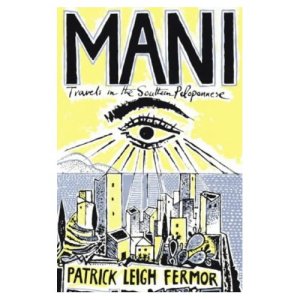
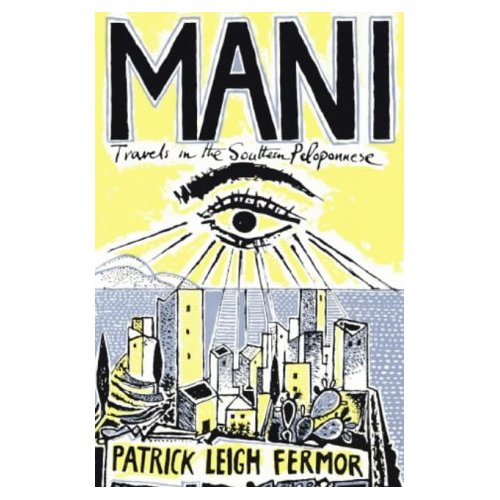
Mani: Travels in the Southern Peloponnese

Mani: Travels in the Southern Peloponnese

He is also a scholar, with a facility for languages so prodigious that he would amuse himself on his footslog by singing German songs backwards and, when those ran out, reciting parts of Keats the same way: “Yawa! Yawa! rof I lliw ylf ot eeht”, etc. “It can be quite effective,” he says. After a lunch of lemon chicken at home in Mani, accompanied by an endlessly replenished carafe of retsina, he entertains his guest with a rendering of “It’s a Long Way to Tipperary” in Hindustani.

In addition, Leigh Fermor is recognisably that figure many writers of the past century have yearned to be, the man of action. When the inklings could no longer be ignored in 1939, he abandoned his Romanian idyll and enlisted in the Irish Guards. A major in Special Operations Executive during the second world war, he was awarded the DSO for heroic actions on German-occupied Crete. Few writers are entitled to include in their Who’s Who entry: “Commanded some minor guerrilla operations.” His publisher, John Murray, whose father, the late “Jock” Murray, edited most of Leigh Fermor’s books, describes him as “almost a Byronic figure. If you met him on a train, before long he would be reciting The Odyssey , or singing Cretan songs. He loves talking, and people are always absorbed by him.”

Known as Paddy to the acquainted and unacquainted alike, Leigh Fermor has turned 90. He is still sturdy, with an all-round handsome appearance. Here is a man who at 69 swam the Hellespont (or Dardanelles), two kilometres wide at its narrowest, in emulation of Byron and Leander, who swam it nightly for the love of Hero. Leigh Fermor swam it under the concerned watch of his wife Joan, who followed in a small boat, and averted her eyes as he narrowly missed being sunk by a liner. An innocent sweetness hovers about his face, which finds a focus in his eyes as he makes a joke or stumbles on a happy recollection. There is a dash of the old soldier, clubbable and courteous, in his approach, his speech punctuated by “Look here …” and “I say …”, and not much of the “rather rackety” figure he claims to have been before he cured his ills by walking. When, relatively late in life, he became a mentor to Bruce Chatwin, the younger writer adopted Leigh Fermor’s motto, solvitur ambulando – it is solved by walking.
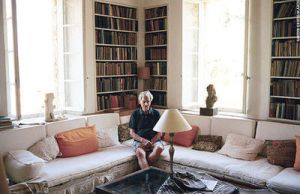
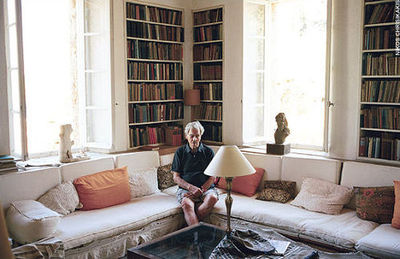
Paddy at home in the Mani

After more than six decades in the country, Leigh Fermor is inextricably tied to Greece. His command of the language extends to several regional dialects. He is an honorary citizen of the Cretan capital Heraklion, and of the village of Kardamili in Mani, and is a proud godfather to children in both places. In the mid-1960s, as if to lay the foundation for a committed life, he built a house that reflects the various aspects of his personality. Perched on a peninsula jutting into the Gulf of Messenia, it overlooks a small uninhabited island, behind which the sun sets nightly. He has described how he and Joan camped in tents nearby as the works progressed, studying Vitruvius and Palladio, but admits that the design was largely the result of improvisation. Ceilings, cornices and fireplaces allude to Levantine and Macedonian architecture. Hard by the commodious living room, an L-shaped arcade, which might have been built centuries ago, provides a link to the other rooms and gives on to an olive grove below. Out of nowhere, cats materialise on chairs and divans, prompting Leigh Fermor to remark on “interior desecrators and natural downholsterers”. The great limestone blocks of the main structure were hewn out of the Taygetus mountains, visible in the background, as the sea is present in the foreground. A weathered zigzag stone staircase leads down to a horseshoe bay. “There was no road here at all when we came. The stone had to be brought up by mule. We got most of the tiles from another part of the Peloponnese, after an earthquake. They were happy to be rid of them – couldn’t understand why we wanted this old stuff. They wanted everything new.” The master mason behind the house was a local craftsman, Niku Kolokatrones, whom Leigh Fermor met by accident while out walking. “I spotted his bag of carpenter’s tools and told him I was looking for somebody to help me build a house. He said, ‘Why not take me? I can do everything.’ And he was absolutely right.”

It was finally fit for habitation in 1968, and the couple “lived very happily here for 30 years”. Joan Leigh Fermor, daughter of the Conservative politician and First Lord of the Admiralty in Ramsay MacDonald’s coalition government, Bolton Eyres Monsell, died in 2003 at 91, after a fall. The couple met in wartime Cairo. She took the photographs for several of his books, including the first, The Traveller’s Tree (1950), an account of a journey through the West Indies, and for Mani and Roumeli – although these pictures have sadly been omitted from later editions.

He was born in London in 1915, to Sir Lewis Leigh Fermor, who became director-general of the Geological Survey in India, and Eileen Ambler, who was partly raised there. His childhood relationship with his parents was “rather strange, because I didn’t really know either of them until I was about three-and-a-half. My mother returned to India after I was born, leaving me with a family in Northamptonshire. I spent a very happy first three years of my life there as a wild-natured boy. I wasn’t ever told not to do anything.” When his mother returned, at the end of the first world war, “my whole background changed. We went to live in London. And she was rather unhappy, because I didn’t really know much about her, or my father or my sister, who had been born four years earlier. They hadn’t seen me since I was a few months old.” He claims he was “more or less tamed after that”, though he has written that his lawless infancy “unfitted me for the faintest shadow of constraint”.
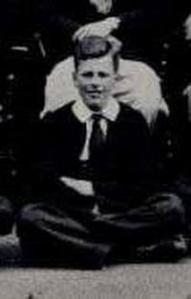
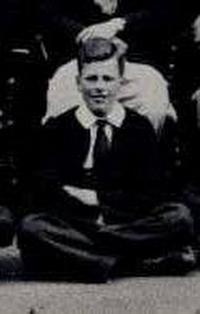
Patrick Leigh Fermor at school, Kings Canterbury

His mother “adored anything to do with the stage” and wrote plays that were never produced. She made friends with Arthur Rackham, who painted a picture inside the front door of their house in Primrose Hill Studios “of Peter Pan in Kensington Gardens, being blown along in a nest with a ragged shirt for a sail”. He wonders if it’s still there. When the time came to think about school, the “wild boy” re-emerged, and he was beaten from one educational establishment to another. “I didn’t mind the beatings, because there was a bravado about that kind of thing.” At one stage, he was sent to a school in Suffolk for disturbed children – or, as he puts it, “where rather naughty children went” – and later to King’s School, Canterbury, the oldest public school in England, where the unruly old boys included Christopher Marlowe. “It was all rather marvellous,” says Leigh Fermor, who casts a rosy light on almost all experience, “but my discipline problems cropped up again. Things like fighting, climbing out at night, losing my books.” Among his contemporaries at King’s was Alan Watts, who later wrote popular books on Zen Buddhism and became a hippie guru. In his autobiography, Watts recalled Paddy “constantly being flogged for his pranks and exploits – in other words, for having a creative imagination”. Watts confirms the familiar tale that Paddy was expelled “for the peccadillo of taking a walk with the daughter of the local greengrocer”. Leigh Fermor recalls: “She was about eight years older than me – totally innocent, but it was a useful pretext for the sack. I think it was very kindly meant. Far better to get the sack for something slightly romantic than for just being a total nuisance.”

Believing that the best place for a nuisance was the army, his parents tried to direct him towards Sandhurst, but his academic failures put paid to that too. The military historian Antony Beevor, who was an officer cadet at Sandhurst, and has known Leigh Fermor for many years, believes he would not have prospered. “I think he may have had a romantic idea of what army life was like, but he would have found the peacetime garrison incredibly stultifying. Army life in the 1930s was very staid. Paddy was too much of a free spirit.”

It was then that Leigh Fermor came up with a scheme “to change scenery”. Envisaging himself as “a medieval pilgrim, an affable tramp with a knapsack and hobnailed boots”, he decided to walk across Europe to Turkey. “It was a new life. Freedom. Something to write about.” To make it even more improbable, he set out in December when, as he states in the opening paragraph of A Time of Gifts, “a thousand glistening umbrellas were tilted over a thousand bowler hats in Piccadilly; the Jermyn Street shops, distorted by stream ing water, had become a submarine arcade.” When his ship docked in Rotterdam, “snow covered everything”. He dossed down wherever he landed, on one occasion outside a pigsty to the sound of “sleepy grunts prompted by dreams, perhaps, or indigestion”.

In addition to his sleeping bag, Leigh Fermor packed the Oxford Book of English Verse and a volume of Horace. An allowance of £4 a month was to be collected along the way. “My general course was up the Rhine and down the Danube. Then to Swabia, and then into Bavaria.” At the time, he had published a few poems (“dreadful stuff”), but was inspired to switch to travel writing by Robert Byron, whose book about a journey to Mount Athos in north-eastern Greece, The Station , had recently been published. “I was keeping copious notes, songs, sketches and so on, but in Munich a disaster happened. I stayed at a Jugendherberge and my rucksack was pinched, with all my notes and drawings.” And then comes the Paddy stroke: “In a way it was rather a blessing, because my rucksack was far too heavy. It had far too many things.” His sleeping bag was lost too -“good riddance, really” – and his money and passport. “The British Consul gave me a fiver – said pay me back some time.”

Leigh Fermor has pursued his literary career haphazardly. His Caribbean book was originally meant to be a series of captions for photographs. Then came his only novel, The Violins of Saint-Jacques (1953), followed by A Time to Keep Silence and Mani , all written in the mid-50s, after which he restricted himself to one public outing per decade. However, the 40-year interlude between the events of his European journey and the writing of the books enhances their appeal. At times, the hero of A Time of Gifts seems like a boy faced with a tapestry on which the entire history and culture of Europe is portrayed, unpicking it thread by thread. Byzantine plainsong; Yiddish syntax; the whereabouts of the coast of Bohemia (it existed, for 13 years); the finer nuances of regional architecture – “the wild scholarly enthusiasms of a brilliant autodidact”, as the writer William Dalrymple says. Theories are worked out, set down and often jettisoned, before another day’s walking begins. No one modulates as energetically from speculations on the origin of Greek place names to the “not always harmful effects of hangovers” as Leigh Fermor does. “If they fall short of the double vision which turns Salisbury Cathedral into Cologne,” he writes of his sore heads, “they invest the scenery with a lustre which is unknown to total abstainers.” When it came to writing about the journey, Leigh Fermor claims that “losing the notebook didn’t really seem to matter. I’d got all the places I’d been to noted down in another little notebook. Early impressions and all that sort of thing would only have been a hindrance.” It is impossible to say where imagination gets the upper hand over memory, and aficionados are adamant it does not matter.

Dalrymple, who as a student set out to follow the route of the First Crusade in emulation of Leigh Fermor, says: “I can’t think of any younger writers who have tried to write like Paddy, who have succeeded in the attempt. Not that I haven’t tried. When I set out on my first long journey in the summer vacation I had just read A Time of Gifts and I tried to write my logbook in faux-Paddy style. The result was disastrous. Just last summer I visited Mani and reread his wonderful book, and found myself again trying to write like him. I should have learned my lesson by now.” Dalrymple feels that the strongest influence of Leigh Fermor on the younger generation of travel writers “has been the persona he creates of the bookish wanderer: the footloose scholar in the wilds, scrambling through the mountains, a knapsack full of good books on his shoulder. You see this filtering through in the writing of Chatwin and Philip Marsden, among others.”

According to Jeremy Lewis, author of a biography of Cyril Connolly, with whom Joan was friendly, “Occasionally, one comes across some unromantic soul who objects to Leigh Fermor on the prosaic ground that he couldn’t possibly remember in such persuasive detail the events of 60 years ago.” Lewis suspects that “quite a lot of it is made up. He’s a tremendous yarn-spinner, and he has that slight chip on the shoulder of someone who hasn’t been to university. Sometimes one gets the feeling that he’s desperate to show he’s not an intellectual hick. He’s quite similar to Chatwin in that way. With Chatwin I find it irritating, but not with Leigh Fermor.” Lewis adds, “There is also a strong boy-scout element about him, which annoys some people, singing round the campfire and so on. I doubt if there was ever anything very rackety about Paddy.”
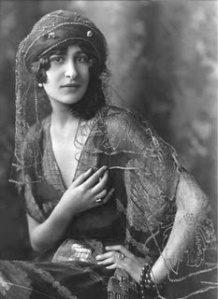
Balasha Cantacuzene

He has been asked many times why the composition of the books was delayed for so long, and has finessed the reply to his characteristic self-effacement: “Laziness and timidity.” He had a shot at writing during his sojourn in Romania in the late 1930s, “but I thought it was no good, so I shoved it aside. And I was right, actually, because when I tried it much later it all began to flow.” His companion in Romania, the first love of his life, was a young painter, Balasha Cantacuzene, whose family was part of an “old-fashioned, French-speaking, Tolstoyan, land-owning world. They were intensely civilised people. I spent the time reading a tremendous amount … when I wasn’t making a hash of writing. I felt rather different at the end of it all, from the kind of person I’d been before.”

After the communist takeover at the end of the war, the Ceausescu government branded the Cantacuzenes “elements of putrid background” and forced them to leave their property. Leigh Fermor made it his mission to rescue them from their new dismal circumstances, eventually succeeding in slipping into the country on a motorcycle and contacting Balasha and her sister. They met for only 48 hours. “We dared risk no more, and during that time I was unable to leave the tiny flat where they were then living, for fear of being seen.” He found that their early thoughts of leaving Romania had lapsed, “partly from feeling it was too late in the day; also, they said that Romania, after all, was where they belonged”.

His war service was spent mainly on Crete. After the British retreat from the island in May 1941, Leigh Fermor was among a small number of officers who remained, helping to organise resistance to the occupation, “living up in the mountains, dressed as a shepherd, with my wireless and so on”. In the spring of 1944, after an onslaught on villages “with fire and sword” by German troops in reprisal for the rash actions of some Cretan guerrillas, Leigh Fermor conceived a plan to kidnap the general responsible for the carnage, and to spirit him off to Cairo. The idea was to make a “symbolic gesture, involving no bloodshed, not even a plane sabotaged or a petrol dump blown up; something which would hit the enemy hard”. Together with a select band of associates, British and Cretan, he succeeded – except that the officer they were after, General Müller, had already left Crete, and they found themselves taking charge of his replacement, a milder figure by all accounts, General Kreipe. After three weeks of trekking through the mountains, they managed to get the captive on board a vessel bound for Egypt.

The events were drawn into a book, Ill Met by Moonlight (1950), by Leigh Fermor’s comrade in the operation, W Stanley Moss, and an inferior film in 1957, with Dirk Bogarde playing Paddy. He is polite about the actor, whom he met, but it is clear that Bogarde’s performance as Major Fermor failed to impress. “I didn’t go to the opening, or anything like that. It was all so much more interesting than they made it seem.” The military historian MRD Foot has referred to the Cretan escapade as “a tremendous jape”, which in Leigh Fermor’s opinion puts it in a “rather frivolous perspective”. Beevor, whose book The Battle for Crete (1991), pays handsome tribute to Leigh Fermor’s actions, feels the description of the kidnapping as a “jape” is unjust. “What was very clever about the Kreipe operation was that it was planned meticulously to give the Cretans a tremendous boost to morale. They needed to do something that would damage the Germans, but was not going to provoke civilian casualties. They were absolutely scrupulous about this.” Certain accounts of the exploit have suggested that it resulted in reprisals against the local pop ulation, but, says Beevor, “they are completely wrong. I’ve been through all the relevant documentation, and there is nothing to suggest that the kidnapping of General Kreipe provoked direct reaction from the Germans. It wasn’t just a jape. When I was researching my book, a member of the Cretan resistance told me, ‘The whole island felt two inches taller’.”

Captor and captive, stuck together in freezing caves (the general had to sleep between Leigh Fermor and Moss, all sharing a single blanket), found a common bond in the Odes of Horace. In a report written at the request of the Imperial War Museum in 1969, published in Artemis Cooper’s anthology of Leigh Fermor’s writings, Words of Mercury (2003), he described what happened: “We were all three lying smoking in silence, when the general, half to himself, slowly said: ‘Vides ut alta stet nive candidum / Soracte …’ [You see how Soracte stands gleaming white with deep snow]. I was in luck. It is the opening line of one of the few Odes of Horace I know by heart. I went on reciting where he had broken off: ‘… Nec iam sustineant onus …’ and so on, through the remaining five stanzas to the end.”
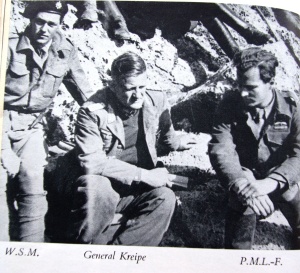
Moss, Kreipe and Paddy

The heroics in eastern Crete had a surprise sequel, which throws into relief the absurdity of war. Some 30 years later, Leigh Fermor was asked to take part in a Greek television programme based on This Is Your Life , in which the subject was to be General Kreipe. “I felt quite certain when I heard about it that it was not on the level, and so I found out General Kreipe’s number and got on the telephone to him. I said, ‘It’s Major Fermor’. He said, ‘Ach, Major Fermor, how are you? It seems we are going to meet again soon.’ I said, ‘So you are coming?’ He said, ‘Yes, of course I’m coming. Tell me, what’s the weather like? Shall I bring a pullover?’ And you know, it was the most terrific success. They were all there.” The exception was Moss, who died in 1965; and it is probably safe to discount the Cretan guerrillas who carried off the general’s chauffeur and slit his throat, much to Leigh Fermor’s displeasure.

He writes in a small studio apart from the main house. Dictionaries, volumes of Proust, books of verse in various languages and back issues of the TLS occupy every surface. Asked if he has a title in mind for the promised last volume of his European trilogy, he looks suddenly pained and answers no. He describes himself as “a very slow writer”. His pages are laboriously revised and readers who revel in his florescent style may be surprised to learn that the finished sentences are pared down from something the author considers “too exaggerated and flowery and overwritten”. Murray says: “It’s rather like a musician: each time he changes a word, he has to go back and change all the other words round about it so that the harmony is right.” Murray recalls “seven versions of A Time of Gifts being submitted to my father. And each one would be written-over, with bubbles containing extra bits. The early manuscripts are like works of art themselves.”

As he is writing, Leigh Fermor thinks of one or two friends “that it might amuse. How would they respond? Where would they sneer?” He refers to his old notebooks for things like dates and place names, but relies on memory for a clearer vision of the walking boy and the snows. “I’ve written quite a large amount. For some reason, I got a sort of scunner against it several years ago. I thought it wasn’t any good. I always think that. But now I think I was wrong. I’m going to pull my socks up and get on with it.”

Patrick Leigh Fermor

Born: February 11, 1915, London.

Education: 1929-33 King’s School, Canterbury.

Married: 1968 Joan Eyres Monsell.

Employment: 1945-46 deputy director British Institute, Athens.

Books: 1950 The Traveller’s Tree; ’53 The Violins of Saint-Jacques; ’57 A Time To Keep Silence; ’58 Mani; ’66 Roumeli; ’77 A Time of Gifts; ’86 Between the Woods and the Water; ’91 Three Letters from the Andes; 2003 Words of Mercury.

Some awards: 1944 DS0; ’47 honorary citizen of Heraklion, Crete; ’58 Duff Cooper Memorial Prize; ’78 WH Smith Award; ’86 Thomas Cook Travel Book Award; ’91 Companion of Literature; 2004 Knighthood.

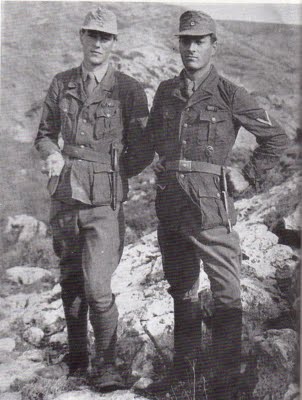
Sir Patrick Leigh Fermor opens new facility at King’s School Canterbury

An article found on the King’s School website. Paddy opens a new boarding house to replace the one where he spent his all too brief time at King’s!

First posted on the King’s School Canterbury website on 9th September 2007

Paddy opens new Grange House at Kings School Canterbury

The New Grange was officially opened at 12.15 pm on Sunday 9 September by Sir Patrick Leigh Fermor DSO OBE. Sir Patrick was a boy in the original Grange from 1929 to 1931, shortly after it became an independent house in 1928. He unveiled a plaque with an appropriate Latin inscription*, and spoke of his early days in The Grange and the effect of the School and the Precincts on his upbringing. He then cut a ribbon to declare the house formally open.

*in translation: “On 9th September 2007 Sir Patrick Leigh Fermor, once a pupil in the original Grange (and even then an outstanding free spirit) and, later, greatly daring in war and creative in letters, through his life an example to the young people of this School, inaugurated this building, so that the glory of the latter House might be greater – if that were possible – than of the former.”

The house is next to Harvey House on the St Augustine’s site. It overlooks the ruins of St Augustine’s Abbey.

Mount Athos: A visit to the Holy Mountain

In February 1936 the young Patrick Leigh Fermor walked along the peninsula that we know as Mount Athos. It was there he celebrated his twenty-first birthday with Russian Orthodox monks. In 2011 the CBS ’60 Minutes’ programme gained access to the Holy Mountain, the first television since 1981. Here is a unique opportunity to take a wider look at the community and beauty of Mount Athos which made such an impression on the young Paddy.

Bob Simon steps back in time when he gets rare access to monks in ancient monasteries on a remote Greek peninsula who have lived a Spartan life of prayer in a tradition virtually unchanged for a thousand years.

The programme is in two parts and if you are dedicated and clever, there are many other ‘extras’ – I have provided some links below. Enjoy!

Part One:

Part One

Part Two:

Part Two

Transcript of Parts One and Two

Extras:

Behind-the-scenes travelogue to holy Mt. Athos

Mt. Athos’ autonomy

Bastions of the Orthodox faith

Extra: Don’t call it art!

Life on Mt. Athos


The English in Hungary – for St George’s Day

From the blog of Greg Dorey, the UK Ambassador to Hungary. The  Ambassador takes us through many of the English associated with Hungary including our very own Patrick Leigh Fermor. You can download the PowerPoint including the notes here.

UK Ambassador to Hungary – England

Yesterday afternoon I participated as Patron in the 2011 BBC Entertainment and English Speaking Union (ESU) Public Speaking Awards in Hungary. Along with the Ministry of National Resources and Magyar Telekom, the event was also supported by the British Council, Oxford University Press and the Robert Burns International Foundation. It’s the first time the BBC have organised this event here, but it was such a success that they plan to repeat it in the future. The standard of English spoken by the young Hungarian participants was tremendous and the winner and runner up who go on to the ESU International Public Speaking Awards in London in May will be excellent representatives of their country.

And then it was off to the British Chamber of Commerce in Hungary’s (BCCH) third annual commemoration of St George’s Day – a week early because otherwise the concurrence with Easter would mean no one came! Having spoken about St George for the past two years I had exhausted my knowledge of him – so spoke instead of some of the famous Englishmen and Englishwomen with connections with Hungary (Edward the Exile, Sir Philip Sidney, Julia Pardoe, Patrick Leigh Fermor etc). For anyone interested, an edited version of my presentation is available on the Embassy website. The event was used to advance the cause of Corporate Social Responsibility. The BCCH Chairman Gergely Mikola has instituted a new annual St George’s Award to recognise examples of ethical business and together we presented the first such prize to Tibor Hejj of Proactive Management Consulting, whose firm helps prepare disabled people for the workplace.

Related category for more articles:

Between the Woods and the Water

Home truths on abroad – where now for travel writing?

William Dalrymple recalls an encounter with Paddy in the Mani in 2008, discusses the impact of Bruce Chatwin, and asks where next for travel writing.

First published in The Guardian, 19 Sep 2009

William Dalrymple

What is to become of travel writing now that the world is smaller? Who are the successors to Chatwin, Lewis and Thesiger? William Dalrymple names a new generation of stars and sees a sparkling future for the genre – one less to do with posturing and heroic adventures than an intimate knowledge of people and places

Last year, on a visit to the Mani in the Peloponnese, I went to visit the headland where Bruce Chatwin had asked for his ashes to be scattered.

The hillside chapel where Chatwin’s widow, Elizabeth, brought his urn lies in rocky fields near the village of Exchori, high above the bay of Kardamyli. It has a domed, red-tiled roof and round arcaded windows built from stone the colour of haloumi cheese. Inside are faded and flaking Byzantine frescoes of mounted warrior saints, lances held aloft.

The sun was sinking over the Taygetus, and there was a warm smell of wild rosemary and cypress resin in the air. It was, I thought, a perfect place for anyone to rest at the end of their travels.

My companion for the visit was Chatwin’s great friend and sometime mentor, Patrick Leigh Fermor, who was Chatwin’s only real rival as the greatest prose stylist of modern travel writing. Leigh Fermor’s two sublime masterpieces, A Time to Keep Silence and A Time of Gifts, are among the most beautifully written books of travel of any period, and it was really he who created the persona of the bookish wanderer, later adopted by Chatwin: the footloose scholar in the wilds, scrambling through remote mountains, a knapsack full of good books on his shoulder.

Bruce Chatwin, 1940-1989

Inevitably, it was a melancholy visit. Not only were we there to honour the memory of the dead friend who had introduced us, but Leigh Fermor himself was not in great shape. At dinner that night, it was clear that the great writer and war hero, now in his mid-90s, was in very poor health. Over dinner we talked about how travel writing seemed to have faded from view since its great moment of acclaim in the late 1970s and 80s, when both Leigh Fermor and Chatwin had made their names and their reputations. It wasn’t just that publishers were not as receptive as they had once been to the genre, nor that the big bookshops had contracted their literary travel writing sections from prominent shelves at the front to little annexes at the back, usually lost under a great phalanx of Lonely Planet guidebooks. More seriously, and certainly more irreversibly, most of the great travel writers were either dead or dying.

Wilfred Thesiger (1909-2003), who was in many ways the last of the great Victorian explorers, produced no less than four exemplary books in his final decade. More remarkable still, Norman Lewis was heading for his centenary when he published The Happy Ant-Heap in 1998, a characteristically bleak collection of pieces about trips to places so obscure, so uncomfortable and often so horrible, that they would tax anyone, never mind a man in his early 90s who should by rights have been shuffling around in carpet slippers, not planning trips to visit the smoked ancestral corpses of the highlands of Irian Jaya, or the torture chambers of Nicaragua, or any other of the grisly diversions Lewis settles on to bring “some stimulation and variety” to his old age.

One typical adventure of the nonagenarian Lewis took place on a trip to Kos. On reading a story in the local paper about a police investigation into rumours that “women on the small island of Anirini were disposing of unwanted husbands by throwing them down dry wells”, he merrily set off on a boat with three sponge fishermen and a prostitute they had picked up on the Piraeus waterfront (“they spent the crossing sleeping, eating and making love – the last on a strict rota”) in search of this barren island populated by homicidal widows. Before long Lewis, then aged 92, had hopped ashore, rented a room from one of the chief suspects, and was soon cheerfully peering down well-heads in search of rotting cadavers. Continue reading

Thos Henley and the inspiration of Patrick Leigh Fermor

Some of you will now be familiar with the work and music of Thos Henley from a few previous articles on the blog. Thos describes Paddy as one his main inspirations.

As you go about your busy lives maybe you can take a few minutes to listen to my favourite Henley song ‘Another Brother’ in which Thos sings about the intellect of Patrick Leigh Fermor’. Click on the picture to play.

Related articles:

Lawrence Durrell and Patrick Leigh Fermor by Thos Henley

I knew Patrick Leigh Fermor through his words, and he will know me by mine

Some Memories of King’s .. And the final word goes to?

We all know that Paddy was asked to leave King’s School Canterbury for what today would be called ‘inappropriate behaviour’; holding hands with ‘a ravishing and sonnet-begetting beauty’ of twenty four years of age. She was the local greengrocer’s daughter. In this short contribution to the school website recalling Paddy’s memories of King’s, she does not get a mention.

Patrick Leigh Fermor at school, Kings Canterbury

“Copious reading about the Dark and the Middle Ages had floridly coloured my views of the past; and the King’s School, Canterbury touched off emotions which were sharply opposed to those of Somerset Maugham in the same surroundings; they were closer to Walter Pater’s seventy years earlier, and probably identical, I liked to think, with those of Christopher Marlowe earlier still. I couldn’t get over the fact that the school had been founded at the very beginning of Anglo-Saxon Christianity – before the sixth century was out, that is: fragments of Thor and Woden had hardly stopped smouldering in the Kentish woods: the oldest part of the buildings was modern by these standards, dating only from a few decades after the Normans landed. There was a wonderfully cobwebbed feeling about this dizzy and intoxicating antiquity – an ambiance both haughty and obscure which turned famous seats of learning, founded eight hundred or a thousand years later, into gaudy mushrooms and seemed to invest these hoarier precincts, together with the wide green expanses beyond them, the huge elms, the Dark Entry, and the ruined arches and the cloisters – and, while I was about it, the booming and jackdaw-crowed pinnacles of the great Angevin cathedral itself, and the ghost of St. Thomas à Becket and the Black Prince’s bones – with an aura of nearly pre-historic myth.”

Patrick Leigh Fermor (KS 1929-31),A Time of Gifts (1977)

The Duchess of Devonshire talks about Patrick Leigh Fermor

The Dowager Duchess of Devonshire, the youngest of the legendary Mitford sisters reminisces about her life and her correspondence with the charismatic Sir Patrick Leigh Fermor, considered to be the finest English travel writer of his generation. An evening filled with wit, eccentric characters, and a celebration of courage and friendship. Charlotte Mosley, her niece and editor, joins the Dowager Duchess in conversation.

This was filmed on November 10 2010 at the Frick Collection in New York to mark the US publication of In Tearing Haste and her new memoire, Wait for Me

Paddy is mentioned at the start and she discusses her friendship with him from minute 35

Adjusting to quiet – A Time to Keep Silence

Many of you will know that I was recently in the Holy Land on a Pilgrimage. Seven days following in the footsteps of Christ from the synagogue at Capernaum to the Via Dolorosa had a significant impression. I learned, not for the first time, that it takes time to adjust to new surroundings and experiences, and to fully appreciate them for what they are, for what they offer. Paddy experienced this too when he visited the Abbey of St Wandrille de Fontanelle of the Benedictine order near Rouen. He wrote about this experience in the wonderfully concise “A Time to Keep Silence” published in 1957.

This article by Debra Bendis briefly compares her recent experience with that of Paddy.

Adjusting to quiet

First published Apr 14, 2011 in the Christian Century by Debra Bendis

While on retreat recently, I picked up Patrick Leigh Fermor’s A Time to Keep Silence. I was making my own transition from noisy life and noisy mind to four days of retreat when I came upon Fermor’s description of his retreat at a French monastery in the ’50s.

My adjustment process isn’t as difficult as Fermor’s. For one thing, I’m retreating close to home (and not close to Paris, as is Fermor); for another, I don’t find myself having to emerge from a “monsoon” caused by a drinking habit. (I sneak away from the monastery to find good coffee, but I have yet to sneak in a flask of Calvados.) In part because of his ignorance of monastic life and then his sudden immersion into it, Fermor’s is a humorous but accurate account of the transition.

Here’s Fermor after his first four days at the Abbey of St. Wandrile de Fontanelle:

My first feelings in the monastery changed: I lost the sensation of circumambient and impending death, of being by mistake locked up in a catacomb. . . .The mood of dereliction persisted some time, a feeling of loneliness and flatness that always accompanies the transition from urban excess to a life of rustic solitude. . . .the desire for talk, movement and nervous expression that I had transported from Paris found, in this silent place, no response or foil, evoked no single echo; after miserably gesticulating for a while in a vacuum, it languished and finally died for lack of any stimulus or nourishment.

Fermor ended up thriving at the monastery and focusing on the book he had hoped to write. He compares his coming with his going and says the departure was “ten times worse.”

Related articles:

Posts from the ‘A Time to Keep Silence’ Category 

Bamberg

I am in Franconia this weekend, an area that as far as I know Paddy has not visited. It is however typical of the type of country that Paddy would have walked in 1934. The unsploit city of Bamberg, 80 km east of Wurzburg, is preserved almost as Paddy would have found any German city prior to the war.

One year on … the Patrick Leigh Fermor Blog

I am back. Sorry that I have been so quiet for the last few weeks. I don’t have any real explanation. Excuses may range from work commitments through some form of ‘writer’s block’ (where has my muse gone?) to the genuine excuse of being totally absorbed by Miklos Banffy’s first volume of his trilogy – They Were Counted.

This is an exceptionally good book. I will write about it at greater length at some future date, but I do recommend it. He can sometimes get a little bogged down by Hungarian politics, but when he gets going, describing balls, duels, gambling and love, he really does have a very fine style. Paddy wrote the forward to the English translation whilst staying at Chatsworth during Christmas 1998. Much of the story is set in Kolozvar (Cluj) and our old friend the Hotel New York, where Paddy and Angéla went for a cocktail, is frequently mentioned.

We have just had a blog anniversary. The Patrick Leigh Fermor blog started in late March 2010. In that time it has reached almost the very top in any Paddy search you care to mention. There have been over 64,000 visits, 156 postings, 206 comments, and there are now well over 100 subscribers (you can sign up in the top right of the home page so that you receive future posts by email – no spam).

When I started I wondered if there would be any interest in our heroic and talented subject. There were just a few dozen visits in the first month. But visits grew rapidly to a peak of 9,400 in January 2011. We now track at nearly 7,000 visits a month on average so you are not alone in your interest in The Greatest Living Englishman.

I am extremely grateful to all of you who have got in touch with me with messages of support; offers of information; and especially to those who have sent me material to publish. I can assure you that there is much more material (I have over 60 items in various stages of draft) and it will come in a steady stream. To one of you, please be assured I remain your #1.

Finally, let’s not forget why we are here. Paddy is now 96 years of age and, as far as I can tell, in reasonably good health. I am sure we wish him all good health and pray that he is working as fast as he can on that third volume. It is without doubt one of the most eagerly anticipated books of the decade.

Why not visit some of our top posts?

Patrick Leigh Fermor recounts the kidnap of General Kreipe on video

A Meeting between Paddy and George Psychoundakis the “Cretan Runner”

Patrick Leigh Fermor – star of the silver screen?

On the Pontic shores where the snowflakes fall

I knew Patrick Leigh Fermor through his words, and he will know me by mine

Old days, new dawn in the Caribbean

We get to read very little about Paddy’s first book The Traveller’s Tree which was published in 1950. This is a fairly comprehensive review by Katherine Powers.

First published in the Boston Globe 6 February 2011

It’s impossible for me to put into words how much I would not like to take a winter vacation in the Caribbean. I have never had to, but do have fixed ideas of what it would entail, namely: air travel, the company of people in pastel clothing and not enough of it, and an oppressive, even dictatorial atmosphere of relaxation and fun. It would be different, of course, if I had interesting, well-to-do acquaintances with welcoming houses living on those islands and was traveling in the company of a couple of entertaining friends — and it was no later than 1950. Yes, I could bear that; and, indeed, just that very state of affairs may be found in Patrick Leigh Fermor’s richly detailed and ebullient “The Traveller’s Tree: A Journey through the Caribbean Islands,’’ first published in 1950 and now reissued (New York Review Books Classics, paperback, $19.95).

Fermor, born in London in 1915, is now best known for his accounts of walking from Rotterdam to Istanbul in the 1930s in “A Time of Gifts’’ (1977) and “Between the Woods and the Water’’ (1986). At the time of his trip to the Antilles in 1947, however, he was famous for his exploits in occupied Crete during the war, most especially his kidnapping of the German commander, General Kreipe.

“The Traveller’s Tree’’ was Fermor’s first book and, as Joshua Jelly-Schapiro notes in his excellent introduction, it is very much of its time, “brimming with the gratitude for life particular to a European generation that had just buried half its members.’’ Further, it is “suffused with the wondering spirit of an engagé asking after what will become of these New World islands which are passing from Old Europe’s imperial shadow.’’

It is clear to Fermor that American consumerism is going to be a powerful force in the region, signaled most aggressively by “the Coca-Cola plague.’’ (“It becomes the air you breathe, a way of life, an entire civilization — the Coca-Cola age, yoke-fellow of the age of the Atomic Bomb.’’) But, if Fermor is not happy with evidence of an Americanized future, he is also disparaging of certain manifestations of a colonial past, especially British ones. The middle-class British way of life in the Barbados reflects, he says, “the social and intellectual values and prejudices of a Golf Club in Outer London . . . which are not England’s most interesting or precious contributions to world civilization.’’

What he really likes and describes with infectious elation is the riot of diversity and exotic fusion that these islands have individually acquired from their vicissitudinary histories. Hurricanes, earthquakes, and volcanic eruptions of the past have left their furious marks, while side narratives of European history appear everywhere, written in frantic and fantastical hands. In Barbados he finds a ragged community made up of the descendants of the duke of Monmouth’s followers deported from England in the 17th century, and still “in the same humble plight as when they were first herded ashore.’’ In Jamaica he spends a pleasant time with the Maroons still living in the mountains where their ancestors, run-away slaves, had formed their own kingdom, finally acknowledged in a treaty with George II. He likes the way many women in the French Antilles wear costumes that hark back to 18th-century France, and he likes the cathedral in Guadeloupe constructed (he says) out of Meccano (the British equivalent of Erector Set).

He arrives in Haiti and grows exultant: “The sides of the road pullulated with country people chattering, drinking rum, playing cards and throwing dice under the trees. The air was thick with dust, and ringing with incomprehensible and deafening Créole. I felt I might like Haiti.’’ He does, for the most part, paying long and elaborate attention to voodoo and other island cults. His descriptions of what he witnesses are rich, spirited, and filled with curious detail. He attends a cockfight and describes the birds’ handlers filling their mouths with water and pressing “the birds to their lips, sucking and soaking the feathers so that they should cling to the body and afford no hold for the enemy.’’ As it happens, he and his friends find they cannot take the blood and gore and slink away.

Throughout the book he traces each island’s history. Race is a continuing preoccupation for Fermor and, it must be said that by today’s standards, his unabashed laying down of opinion on the racial characteristics of peoples from different parts of Africa and with the various kinds and degrees of black and white mixtures is unseemly. On the other hand, that is the world of the late 1940s, and he is positively reticent in these matters when compared with Lafcadio Hearn, who visited some of the same islands 60 years earlier. But, there again, we really cannot criticize people for writing as our age would have it. Both travelers, in fact, find the varieties of race and racial mixtures part of the exhilarating vividness and dash that so distinguished the islands from Europe.

I don’t know why it has taken me so long to become smitten with Hearn, but it has finally happened. Born in 1850 in Greece, he grew up in Ireland and moved to the United States when he was a young man. After that he had a strange career, impossible to summarize except to say he became a writer, traveled a lot, lived in Cincinnati, Louisiana, Martinique, and, finally, Japan, where he died. The Library of America has devoted a huge volume to his writings ($40) and that is where I turned after polishing off Fermor, specifically to Hearn’s “Two Years in the French West Indies.’’

The years in question were in the late 1880s and his prose, gorgeous and bounteous, reflects the period’s fascination with the exotic — and the macabre. The pages he devotes to the treacherous viper, the fer-de-lance, aroused an exquisite horror in me such as I have not felt since I was a child. His description of St. Pierre, Martinique, “the quaintest, queerest, and the prettiest withal, among West Indian cities,’’ is especially transfixing as the place was completely destroyed by the eruption of Mount Pelée 15 years after he wrote those words. “Is the great volcano dead?’’ he asks, answering “Nobody knows.’’ Except we do, safe in our snowbound fastness, happier than ever that we’re staying at home with this wonderful book.

Katherine A. Powers lives in Cambridge. She can be reached by e-mail at pow3@verizon.net.

Related Category:

The Traveller’s Tree – read more articles here

Lawrence Durrell and Patrick Leigh Fermor by Thos Henley

Some of you may recall an article I published by a young wandering minstrel, Thos Henley, about his visit to Paddy’s house (see here). Thos is a hard-working and aspiring musician who seems to have a happy life, perhaps somewhere on the Left Bank in Paris, entertaining the Parisians with his music and DJ talents. Recently Thos has completed a piece for the blog which contain excerpts about Lawrence Durrell and his meetings with Paddy.

by Thos Henley

These are all excerpts concerning Paddy from the book “Lawrence Durrell: A Biography” by Ian MacNiven about the life of Durrell the writer best known for his travel books and the infamous and epic romantic “Alexandrian Quartet”

After Lawrence Durrell is welcomed into Walter Smart’s social circle in Cairo he meets Paddy for the first time:

“Under tree in the Smarts’ garden in 1942 Larry met Patrick Leigh Fermor, and officer with the SOE who as a youth had walked from Holland to Romania, and the two talked far into the night.”

Now in living in Alexandria, Lawrence or Larry Durrell, who had recently published his first major novel ‘The Black Book’; would often have to travel into Cairo where he once again met up with Paddy and Xan:

“Closer to Larry’s old flat in Zamalek, Xan Fielding, transformed into an agent with the SOE, now camped intermittently at ‘Tara’, a mansion on Sharia Abou el Feda at the north end of Gezira Island. Patrick Leigh Fermor and William Stanley Moss had established Tara as the unofficial Cairo rest house of the SOE. Xan and Paddy had spent many months together ‘in caves and goat-folds’ on occupied Crete, and Xan had told Paddy about The Black Book and had regaled him with anecdotes about Larry  in Athens…

The men of Tara passed most of their time incognito in Crete, Greece, France or elsewhere, but when they hit Tara it was with months of back pay and a great deal of pent-up exuberance to spend. For a few weeks at least they could forget the German reprisals on Crete, the civil war that was shaping up in Greece, or the coming conflict between Tito’s Partisans and the royalists in Yugoslavia. Tara had many bedrooms, a grand ballroom with a parquet floor, and a piano borrowed from the Egyptian Officers’ Club. The resident spirit was the young Countess Sophie Tarnowska, separated from her husband. Among Larry’s familiars who were often found there were Ines Walter, remembered by Moss as ‘enormously décolletée, happy in the role of a Hungarian peasant’, and Alexis Ladas, ‘singing Phillidem’ and recovering from and appendectomy. Against heavy competition, Tara was arguably the site of the wildest parties held in the wartime Cairo. At one of these, Countess Tarnowska’s Polish friends shot out all the light-bulbs; at others, everything from gold balls to sofas were thrown from the windows; once King Farouk appeared with a case of champagne. Such happenings became almost the norm in wartime Egypt.

Paradoxically, Tara was also a place where some of the best literary conversation in Cairo was available. Paddy had been translating Villon, and the books that he and moss were later to take along on their seemingly suicidal but successful mission to kidnap General Kreipe, the Divisional Commander of Crete, indicate the range of their interests: Cellini, Donne, Sir Thomas Browne, Tolstoy, Marco Polo, Les Fleurs du Mal, Alice in Wonderland, Shakespeare.”

We catch up with Paddy and moss later on as Larry soaks up and contemplates the city of Alexandria, the two men are in Crete (McNiven also mentions Xan Fieldings capture and the help he received from the Polish SOE agent, Krystyna Skarbek):

“While Larry was experiencing the little death of Alexandria, his friend Paddy Leigh Fermor, together with William Stanley Moss, were confronting real death on Crete. Paddy had been parachuted into Crete on 4 February 1944, and Moss had followed him two months later. With the help of several bans of andartes, Cretan guerilla fighters, they kidnapped General Kriepe, the commander of the Germain garrison, and kept him hidden on the island for eighteen days while the entire German Force frantically combed the island. Finally a rendezvous was made with a fast patrol boat sent from Egypt. Then shortly after the Normandy invasion Xan Fielding was dropped into southern France, where he was captured by the Gestapo. He was due to be shot, but was rescued through the courage of a woman accomplice.”

After the war, Larry wrote an account of his pre-war life on Corfu and then found himself indulged in the two best years of his life in the idyllic and reforming island of Rhodes:

“In the late Summer of 1946 several old friends showed up for a week of rollicking days of exploration and nights of talk and song around the baobab tree. Xan Fielding, Paddy Leigh Fermor and ‘the Corn Goddess’, as Larry called Paddy’s wife Joan Eyres Monsell, burst upon the scene. During that ‘first miraculous summer’ after the war, Paddy had read Prospero’s Cell on Corfu, and the trio had resolved the visit Larry. For Larry it was and orgy of talk about books: “We sat up in my churchyard till three every morning reading aloud,’ until the Mufti rattled his shutters in protest. Paddy had a vast repertoire of songs in at least five languages and Larry pronounced him ‘quite the most enchanting maniac I’ve ever met’. With full daylight they would plunge into the turquoise sea, pack some food and wine, and set off. Larry took them one day to the ruins of Cameirus, where ‘wine-sprung curiousity’ sent them into the vast network of the ancient plumbing, ‘crawling on hands and knees through the bat-infested warren of underground water-conduits’, to emerge covered with cobwebs and droppings. At one point they came upon a sacrificial stone, and nothing would suffice but a re-enactment of an ancient ritual, with Paddy as the subject for a circumcision, Xan brandishing a large knife in one hand while extending the victim’s member with the forefinger and thumb of the other , Larry the officiating prest, and Joan recording the scene on film. The climactic point at Cameirus came when Xan, inexplicably naked, leapt a couple of wards from a wall to the top of a column, which rocked sickeningly for some moments while the others froze. The column steadied and Xan posed, ‘like a flying stylite’. Never had they all felt so immortal, so invincible.”

Paddy is non-existent in the book except for a few dedications in Larry’s books to him and Xan until 1953 when Larry is teaching English and living in the villa Bellapix on Cyprus, a period that would be remembered in his masterpiece ‘Bitter Lemons’:

“Larry seemed to embrace interruptions. Paddy Leigh Fermor came to stay with him for a week in mid-November, and they went on long rambles across hills where the seasonal rains had brought out the greyish leaves of the asphodels, the bright splashes of crocuses and celandines. Back at Bellapix, they celebrated the predictable riotous evenings. Once they went through Paddy’s vast repertoire of Greek songs far into the night, the lane outside the house filled with quiet neighbours, among them the usually boisterous Frangos, who told Larry, “Never have I heard Englishmen singing Greek songs like this!’”

Related article:

I knew Patrick Leigh Fermor through his words, and he will know me by mine

Lawrence Durrell and Patrick Leigh Fermor

Paddy visits the wonder that is Ohrid

I suppose it is a good thing to aim to be objective in life. It shows wisdom and maturity, and an ability to balance all the arguments. For me however, all objectivity vanishes when I think of Ohrid! The setting of this beautiful city on the edge of the vast and wondrous eponymous lake is simply stunning.

Although he does not state it specifically, I believe Paddy visited Ohrid and its environs when on a motor tour from France to Greece with Joan in her Sunbeam Rapier in 1960. He tells the story to Debo in a letter dated 23/24 October 1960 (see page 67 of In Tearing Haste). Paddy describes visiting “Serbian Macedonia and wonderful lakes with frescoed Byzantine monasteries on the shores … (which) held us up for days.” There is little doubt in my mind that he is referring to Ohrid, and having been there myself I can understand why; it is a wonder that he ever left!

It is said that Ohrid, Macedonia, once had 365 churches although there are now only around twenty-five which remain open. Its name means City of Light and it has over 220 days of sunshine each year. The town creeps up the hillside surrounding a central esplanade and harbour dominated by the statue of St Clement, who was the student of Saint Cyril and his brother Methodius. They were the authors of the Cyrillic alphabet (approx 864 AD) which was created by the Byzantines to bring the Slavic nations into the Orthodox Church rather than let them fall under the influence of Rome during the early days of the schism between the two churches.

Ohrid is full of Byzantine history. The influence of the Empire can be seen everywhere from the statues to the fortress but principally in the churches and the ancient Basilica. The original church of St Clement was destroyed by the Ottomans who built a mosque on the site which has a clear view of the Lake. Clement’s relics were secretly moved by the Christian citizens of Ohrid to the smaller and less important Church of St Mary Psychosostria. Over time this church became known as the Church of St Clement, but the confusion is now ended as in 2000 the Macedonian authorities rebuilt the Church of St Clement on the original site. His relics have been moved back there to rest in peace. The site includes the remains of original Baptistry, and there are many mosaics all in very good condition.

The Church of St Mary is a wonder. Built in 1295 by the deputy Progon Zgur who was a relative of the Emperor Andronicus II Paleologus, it has twenty-nine scenes from the life of the Virgin around the walls. These frescoes are in generally excellent condition with little of the wear or defacement one often finds elsewhere. The reason for this is that most of the frescoes were obliterated by soot from candles. They were cleaned and restored only since 1960. The have to be seen to be understood. The ‘keeper’ of the frescoes is an amazing Macedonian lady with long black hair, with braided pigtails; the church and the frescoes are her passion, probably the centre of her life. She has produced a long book and the frescoes were the subject of her PhD. She says that the fresco of the Virgin that dominates the Apse is painted from lapis lazuli originating in Afghanistan. That one fresco would have cost something in the order of one kilogramme of gold (at today’s prices that is roughly $56,000).
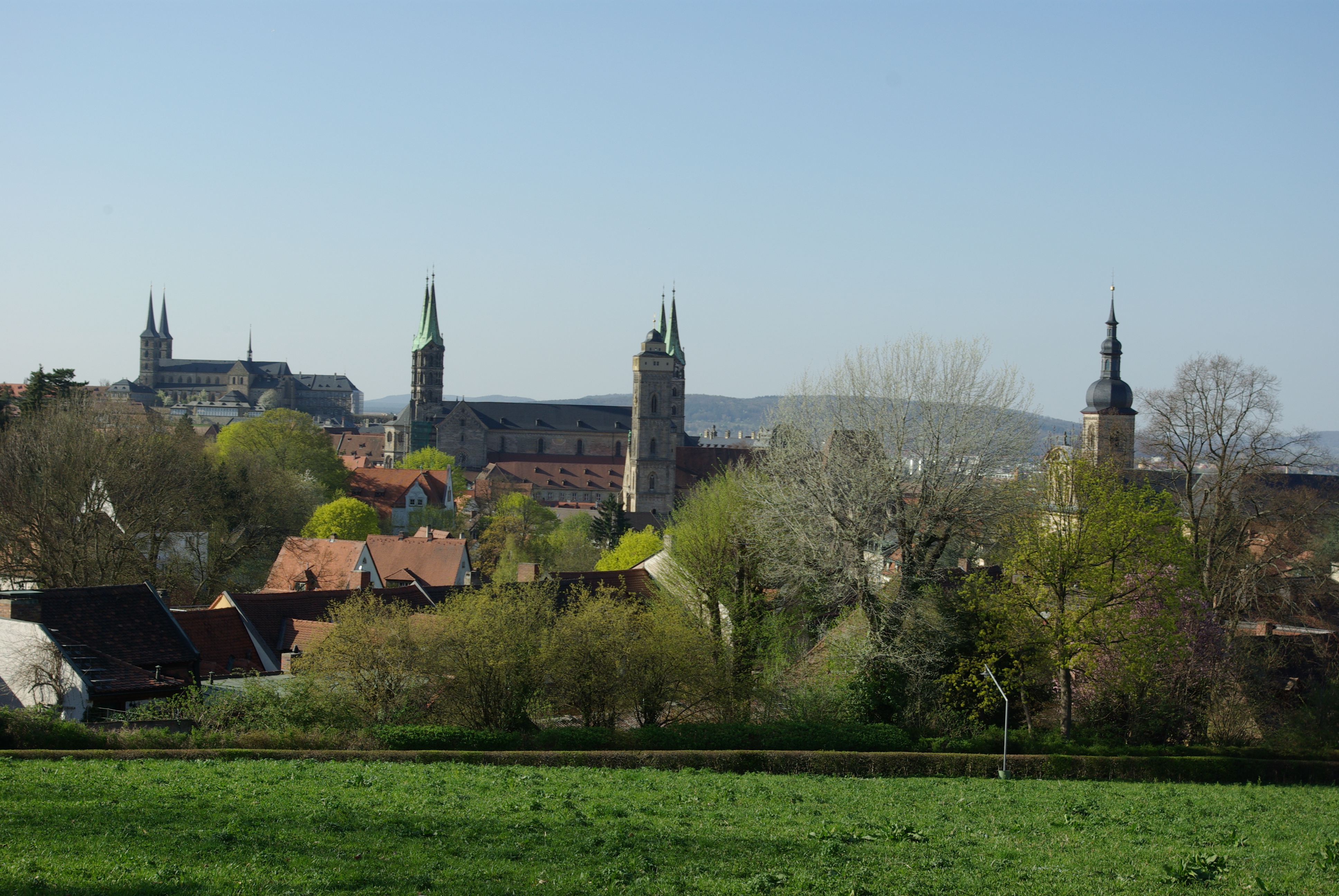
Opposite the Church is the national Icon museum of Macedonia with over forty masterpieces. All this within just a few yards of each other!

If you ever get the chance to visit you will find all this and more. You will also meet friendly people, find good quality low-cost accommodation, and a wealth of Byzantine architecture and art. This CNN video shows many of the places I have written about and I know you will like it. If you do ever visit Ohrid, please contact my friend Katerina Vasileska who runs a tourist business in Ohrid called Lost in Ohrid. She will be happy to arrange good accommodation, local tours, and generally be of assistance during your visit.
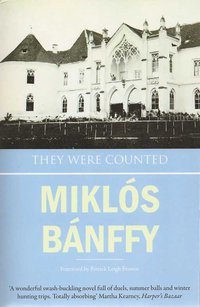
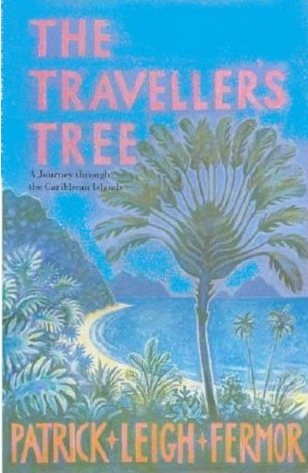
Finally, don’t forget that for the intrepid there is an opportunity to walk through Albania to Ohrid in May of 2011 with the Via Egnatia Foundation. See my recent post Walking back to Byzantium along the Via Egnatia where you can find out more and how to register your interest.

Click to play … there is a 30 second ad before the Ohrid movie starts.

Happy 96th Birthday Sir Patrick Leigh Fermor!

Paddy at home in the Mani

As the young Paddy Leigh Fermor embarked upon his European Odyssey in December 1933, would he have ever imagined that he would still be writing the story of that first adventure seventy eight years later? Today we all celebrate Paddy’s 96th birthday, and I would like to send Paddy all best wishes on behalf of all those who have subscribed to the blog and those that have made over 50,000 visits since we opened for business less than 12 months ago.

The last I heard from people who have some contact with Paddy he was well and even taking the odd swim. Let us also hope that he is writing, and has time to celebrate this birthday with some friends.

The Marques de Tamaron who is a friend of Paddy’s and was the Spanish Ambassador in London, wrote this in a review for the Spectator in 2003:

“Some years ago, a group of friends gathered to celebrate Paddy’s birthday. John Julius Norwich wrote and sang a new version of ‘You’re the Top’ in his honour:

You’re the million volts of the thunderbolts of Zeus,

You’re Leda’s swan, you’re the square upon the hypotenuse! …

And you’ll fill and thrill our hearts until we drop:

So from Bath to Burma, Fermor, you’re the top!”

I am sure that we all agree. Once more, a very Happy Birthday Paddy.

Numbered and bound copies of A Time To Keep Silence

I received the following note from Phil Holden, who resides in Athens, pointing out that A Time to Keep Silence was in fact first published in a numbered limited edition in 1953. I hope Phil does not mind me posting this letter.

Dear Tom,
I have been enjoying your blog about Paddy Leigh Fermor very much – thanks for the effort you have put into it. One point – in your list of Paddy’s books, you have A Time To Keep Silence listed as being published in 1957. That was the John Murray publication. However 500 copies were published in 1953 by the Queen Anne Press. Paddy signed the first 50 of these, which had been numbered and bound in dark blue leather. The other 450 were numbered but bound in cloth and were unsigned. It is a significant book in that the 500 copies represent the only time a numbered limitation took place with any of Paddy’s books and the first fifty of those, which he signed, are the only books he ever signed in a limited printed run (that is, not individual copies or at book signings and launches).
Keep up the good work, best wishes from Athens, Greece.
Phil Holden