Category Archives: Uncategorized

Like a Tramp 2016 raises £1,500

Patrick, Teddy and Tom

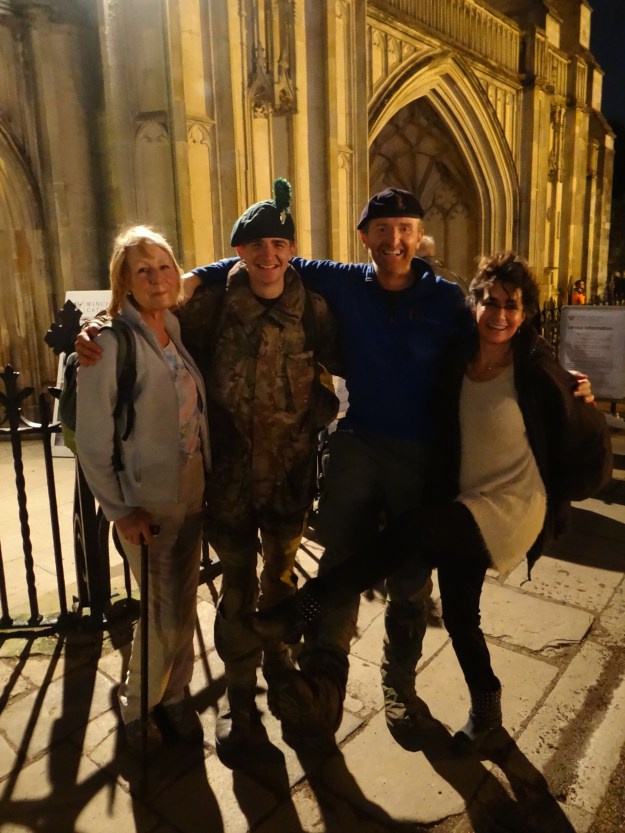
Patrick, Teddy and Tom after a cold night in Exton church. A rare glimpse of the sun and blue sky which didn’t last.

Thank you to all who donated to Shelter and Combat Stress. Donations breached the £1,500 mark so we are very pleased. Fog and mist spoiled any views for the three and a half days we tramped along the South Downs Way which was a disappointment, but on the whole the weather was pretty kind; cold but no rain. As ever we walked like tramps seeking charitable shelter. We slept in churches and were offered drier accommodation near Midhurst which was a blessing.

If you would like to make a donation to help the homeless and veterans suffering from PTSD this Christmas, the Just Giving page remains open.

A Merry Christmas to you all.

Tom

https://www.justgiving.com/teams/likeatramp2016

Like a Tramp 2016

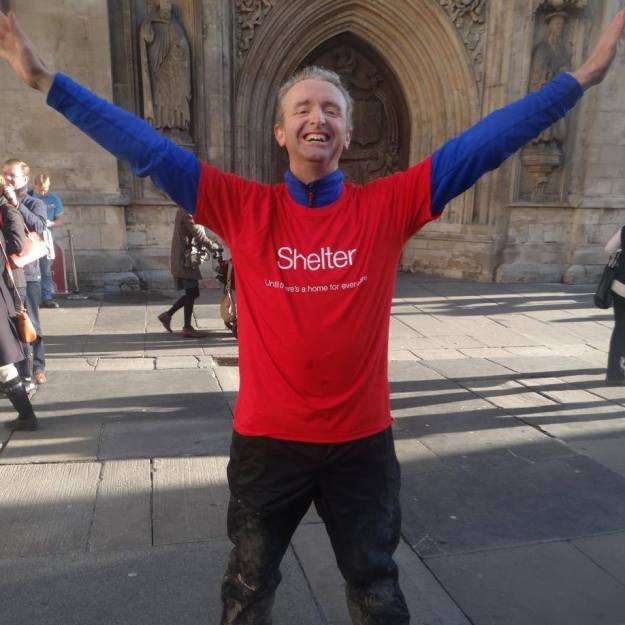
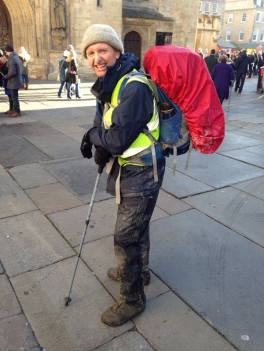
Completing my first walk to Bath in 2014

Completing my first walk to Bath in 2014

Hello to all Blog readers!

Thank you to so many of you for sponsoring me in the past as I have walked across southern England raising money for charity. This year, despite promising myself that I would retire from international competitive charity fundraising, I am off again.

This year (17-20 Dec) I will walk 70 miles along the South Downs Way with my son Patrick and his friend Teddy Chabo. We will walk as before, as tramps, sleeping rough and seeking charity and shelter along the way to continue our fund raising for Combat Stress and Shelter. Our goal is to continue to raise awareness of the need for support to veterans with mental health and PTSD issues, and the homelessness that can often come with it. These are two very worthy charities, and at this Christmas-tide, I am asking you once more, and for the last time, to make a small donation to help these causes.

Please visit our fundraising page linked below, and perhaps split any donation that you may make between the two charities, or give as you please.

To donate please click here to go to our Just Giving page.

Thank you from the three of us, and for all those who will be helped by your generosity and kindness.

A merry Christmas and a happy 2017 to you all.

With warm regards.

Tom Sawford

To donate please click here to go to our Just Giving page.

Sir Lewis Leigh Fermor’s Diary: Life in Colonial India

Map showing the area of India in which Fermor travelled during his first two field work seasons. [George Philip FRGS (ed.), Philips’ Record Atlas, London: The London Geographical Institute, 1934.]

Map showing the area of India in which Lewis Leigh Fermor travelled during his first two field work seasons. [George Philip FRGS (ed.), Philips’ Record Atlas, London: The London Geographical Institute, 1934.]

For those researching Paddy’s life, the Geological Society archives hold letters, papers and diaries of his eminent geologist father, Sir Lewis Leigh Fermor, and his experiences in India.

An introduction to the online element of his papers may be found here, and I quote …

The name Fermor may today be best known within the Society in association with the Fermor Fund, the bequest made by Sir Lewis Leigh Fermor’s second wife after her death to support research into her late husband’s areas of interest, or the Fermor Meeting. Outside geological circles it is more likely to be connected to Sir Patrick Leigh Fermor, Lewis Leigh’s celebrated travel writer son. Patrick could be said to have had adventure in his blood, with his father Lewis heading off to India at the age of 22, and being sent off on his first six month field work expedition less than a week later.

After applying for a job with the Geological Survey of India, Lewis Leigh Fermor (1880-1954) departed for Calcutta (Kolkata) in 1902. In 1909, after discovering six manganese minerals, his key report on the manganese deposits of the country was published. During WW1 he assisted the Railway Board and the Indian Munitions Board, for which he received an OBE in 1919. He led the surveying of the Archaean rocks of Madhya Pradesh both before and after the First World War. Although he officially became director of the Survey in 1932, he had previously acted as such for several years in the 1920s and from 1930 onwards. He retired from the Survey in 1935, but continued to live in India until 1939 as a consulting geologist, before returning to Britain.

The Society’s Archives hold a small number of notebooks and diaries formerly belonging to Fermor, in addition to personal papers such as his first Indian employment contract and a letter notifying him of a scholarship. His diaries are particularly interesting for the intriguing insight they give the reader into the life of both an early twentieth century geologist, and an English civil servant in British India.

Extracts from the diaries may be found online here.

Stavros Niarchos Foundation to Fully Repair and Restore Patrick Leigh Fermor’s House

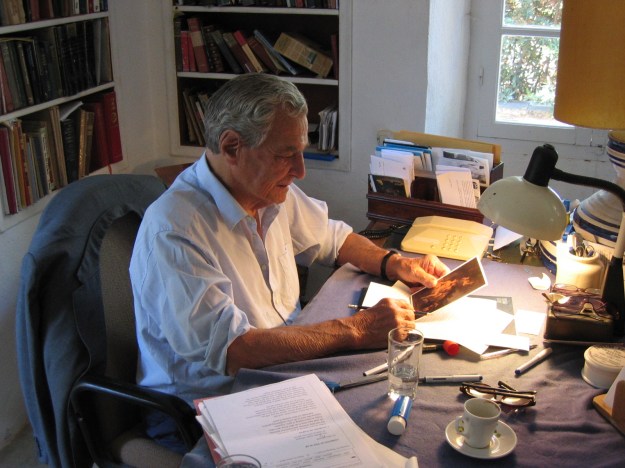
Patrick Leigh Fermor working at his home studio on 3 October 2004, then aged 89. Kardamyli. by Sean Deany Copyright 2012

Patrick Leigh Fermor working at his home studio on 3 October 2004, then aged 89. Kardamyli. by Sean Deany Copyright 2012

At last some very good news about the house at Kardamyli. The Benaki museum has made the following announcement in a press release as follows.

The Stavros Niarchos Foundation has approved a grant to the Benaki Museum to fully cover the repair and restoration works as well as the cost of the necessary equipment for the Patrick and Joan Leigh Fermor House in Kardamyli. This unique property will soon start operating as a centre for hosting notable figures from the intellectual and artistic worlds as well as a centre for educational activities in collaboration with Institutions in Greece and abroad.

The donation of Patrick and Joan Leigh Fermor

For many years Patrick and his wife Joan Leigh Fermor lived in Kardamyli in Messenian Mani, in the house which was designed by the architect Nikos Hadjimichalis in close collaboration with the Leigh Fermors.

In 1996, Patrick and Joan Leigh Fermor bequeathed their home in Kardamyli to the Benaki Museum, while still in life, with the intention that ownership of the house would be transferred to the Museum after their deaths. The option of donating the property to the Benaki Museum was suggested by their close friend Tzannis Tzannetakis. The bequest was accepted unreservedly by the Benaki Museum, particularly given Leigh Fermor’s close relationship with the Museum’s founder Antonis Benakis and his daughter Irini Kalliga.

According to the donation contract, the property must be used to foster the success of the Benaki Museum’s work, based on the decisions of its Board of Trustees. In addition, it may be used to host researchers seeking a quiet and welcoming place to work, while there is also provision for the option of renting the property for three months every year in order to secure its operating costs. Taking into consideration the donor’s personality and standing, the Museum added certain categories of guests such as writers, poets, artists and so on.

The Museum acquired full ownership of the property after the donor’s death, in the autumn of 2011. After receiving the gift, a study on its future use was initiated, and in parallel, a preliminary study on the repair and restoration of the property’s buildings was undertaken in collaboration with architects Andreas Kourkoulas and Maria Kokkinou and a budget was also drafted for the project. The Stavros Niarchos Foundation, in response to the Museum’s initial request for funding for the repairs and the acquis ition of the neces s ary equipment for the operation of the hous e, commissioned—and funded—a feasibility study, which was conducted by AEA Consulting, a firm specializing in the organization and management of cultural institutions. This study, which was based on the Benaki Museum’s proposal for the future operation of the house, led to a number of changes, mainly in regard to the financial planning respecting the sustainability of the project.

The Stavros Niarchos Foundation announced the approval of the Benaki Museum’s request to fully cover the repair works and the restoration of the Patrick and Joan Leigh Fermor House as well as its equipment, so that it can start operating as soon as possible.

The Benaki Museum’s Board of Trustees would like to once again thank the Stavros Niarchos Foundation for its continued and very generous support, and the inclusion of this project in its arts and culture grants. The unique location of the Leigh Fermor House, its distinctive architectural form and the luminance bestowed upon it by the author himself, in conjunction with the Benaki Museum’s supervision and the support of the Stavros Niarchos Foundation, guarantee the creation of an exceptional centre which will gain a high place among the many similar centers in Europe and the United States.

The property

The property is located in the Kalamitsi area on the outskirts of Kardamyli, in Messenia, and has a total area of about nine stremmata, a little over two acres. It is, by general consensus, one of the most beautiful properties in Greece. Its direct contact with the sea—narrow stone steps lead to a small pebble beach just below the estate—the low, discreet, stone buildings and the Mediterranean garden that goes down to the water, comprise an ideal environment for focus and the creative process.

In short, a sojourn in this place is a great gift that Greece can offer to notable figures from the intellectual and artistic worlds.

The vision

The creation of a centre in Greece (working title: The Patrick and Joan Leigh Fermor Centre), the operation of which, will commence in stages and planning of the following years will be based on evaluation of its activity.
The operations of the Patrick and Joan Leigh Fermor Centre will include:

– hosting of young writers and scholars for work and research purposes,
organization of higher-educational activities in collaboration with Universities and Institutions in Greece and abroad,
– honorary hosting of notable representatives from the fields of literature, the arts and other fields,
– organization of educational and cultural events for the general public and residents of Kardamyli,
– scheduled tours of the property, focusing on the donors, the history of the house and its use by the Benaki Museum,
– short term honorary hosting of benefactors and major supporters of the Benaki Museum.

As per a decision by the Museum’s Board of Trustees an international committee is to be set up, which will form and advise on the operation program of the Centre. The advisory committee will be unpaid, it will monitor the project underway and it will make recommendations regarding the selection of guests.

The Benaki Museum’s legal, financial and other services (including departments such as Educational Programs, Sponsorship and European Programs, Public Relations and Communication, and Conservation among others) will support and assist the project taking place at the Leigh Fermor House.

The Benaki Museum is aiming for the creation of an endowment based on third-party donations, which will be able to cover operating expenditure of the Centre and allow the proposed educational activities to evolve and grow.

Brief history – Up to date
– the archival material found in the house has been delivered to the executors of the will, in order for it to be handed over to the National Archives of the United Kingdom, as stipulated in the will,
– the staff selected by Leigh Fermor himself have been retained to ensure the ongoing care of the buildings and surrounding area are on a daily basis,
– the property has been insured,
– cataloguing of the library has progressed,
– detailed photography of the house and the recording of the household effects have been carried out,

– artworks and valuable books have been transferred to the facilities at the Benaki Museum in Athens for conservation and safekeeping, until completion of the requisite repairs,
– detailed mapping of the property has been completed as has the architectural and electromechanical study for repair of the buildings and maintenance of the gardens, with the principle of maintaining all those elements that render the property so unique (study team: Maria Kokkinou-Andreas Kourkoulas, Pantelis Argyros, Dimitris Pastras, Helli Pangalou),
– the process of legalizing buildings on the estate has been completed,
– the feasibility study by AEA Consulting on the future use, operation and viability of the house has been completed with funding from the Stavros Niarchos Foundation,
– two successive disinsectisations have been carried out for the protection of the house and
household effects, and in particular the wooden elements of the house such as the ceilings of the rooms, furniture, and so on,
– one bank account has been set up in Greece and one especially activated in the United Kingdom, in order to facilitate donations,
– discussions with Greek and foreign educational institutions regarding collaboration in the future operation of the Patrick and Joan Leigh Fermor Centre have been initiated,
– an implementation study for the repair work is in progress,
– a book in honor of Patrick Leigh Fermor, dedicated to his life and work, is in preparation and will be completed in 2016, and another publication about the house will follow,
– finally, a short—for the time being—presentation of the Leigh Fermor House has been uploaded onto the Benaki Museum website. A separate website for the house is currently in preparation, where detailed information about the project’s progress, the operation of the house, and scheduled events and guided tours will be posted. These presentations will also provide all the necessary details for donations to the endowment for the future operation of the Centre,
– from the day the Leigh Fermor residence came into the ownership of the Benaki Museum, the Museum has organized and/or coordinated a particularly large number of visits. During many of these visits, individuals working with the Museum have informed the guests about the house’s prospects and future programs. Revenue from visitor tickets is used exclusively for the needs of the house.

From now on:

– The commencement of the repair work is entirely contingent on the issue of the permit. It is anticipated that work will be completed in about 12 to 18 months from its commencement. Until such time as the preparation of the house for the repair work begins, the organized visits, upon arrangement with the Museum, will continue. (www.benaki.gr)
– The Benaki Museum is in the process of creating an endowment for the collection of donations, which will ensure that the operational expenditure of the Centre is covered and that the proposed educational activities will continue to evolve and grow.
– With the dual objective of informing the public of developments and the collection of donations, the Benaki Museum is planning a series of detailed presentations on the progress of the project and its future operation.
– More specifically, it is organizing a detailed presentation in early November 2016 in London, where there is a keen, ongoing interest in the author and the Kardamyli House, while in the interim, similar presentations are planned for Athens and Kardamyli.

For information about the Leigh Fermor House please contact Irini Geroulanou or Myrto Kaouki at the Benaki Museum, on the following numbers: 210 3671010 and 210 3671090, or by email: plfproject@benaki.gr

Download the full press release here.

Who was Stavros Niarchos?

What is the Stavros Niarchos Foundation?

The Sabotage Diaries – video by author Katherine Barnes


The Sabotage Diaries from Katherine Barnes on Vimeo.

I first wrote about this excellent book in March. Author Katherine Barnes has now produced a video which is worth a watch, even if only to view some of the extraordinary photographs showing SOE operations in mainland Greece.

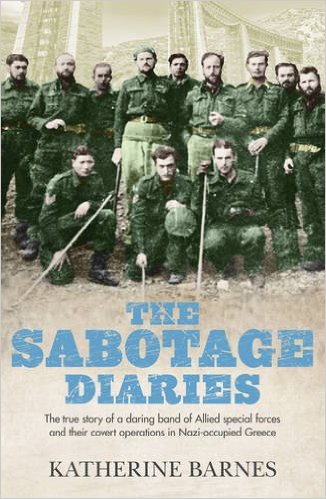
The Sabotage Diaries is the thrilling story of Allied engineer Tom Barnes, who was parachuted behind enemy lines in Greece In 1942 with eleven others to sabotage the railway line taking supplies to Rommel in North Africa. The target chosen was the Gorgopotamos bridge. Tom led the demolition party to lay the explosives while fighting raged between the Italian garrison and a combined force of Greek resistance fighters and Tom’s fellow-soldiers. A great story of courage and endurance.

Buy The Sabotage Diaries

The life, times and legacy of geologist Sir Lewis Leigh Fermor

Geoscientist Cover Dec_Jan15_16This article is by Ted Nield on the life, times and legacy of geologist Sir Lewis Leigh Fermor, as seen through the eyes of his more famous son.

First published by The Geological Society, in Geoscientist, December 2015.

“…having made the most solemn oaths to me [he] has quite cheerfully broken them all – you can never guess just what a blighter and a mongrel that man is – he even astonishers me – and I thought I knew him pretty thoroughly … there is one thing I regret and that is that I didn’t leave him straight away the first time I longed to – which was three days after my wedding day. He is impossible.”

So wrote Muriel Ӕileen Fermor (née Ambler, 1890-1997) on 1 February 1923 to her mother – convinced that her austere geologist husband Lewis Leigh Fermor (1880-1954) had been cheating on her in far-away Calcutta, where he was then Acting Director of the Geological Survey of India. (He became Director in 1932.) Their desultory marriage – already a separation in all but name – had but another two years to run. They were divorced in May 1925.

The marriage resulted in two children, Vanessa Opal (b. Calcutta, 1911) and Patrick Michael (b. Endsleigh Gardens, St Pancras, 1915). It is perhaps fortunate that ‘Paddy’ was born in England, away from Lewis, else he might also have copped a mineral for a middle name. After the Lusitania was sunk, Ӕileen decided to leave the baby in England rather than risk losing both her children. Thus Paddy was farmed out to friends and grew up hardly knowing his father at all.

For this reason, little of what we know of Lewis comes to us via him – despite the fact that Paddy grew up to be a great (and largely autobiographical) writer. However, his books do contain rare, but often highly touching glimpses of Lewis, illuminating the peculiar upbringing that colonial service often imposed upon the children of its staff.
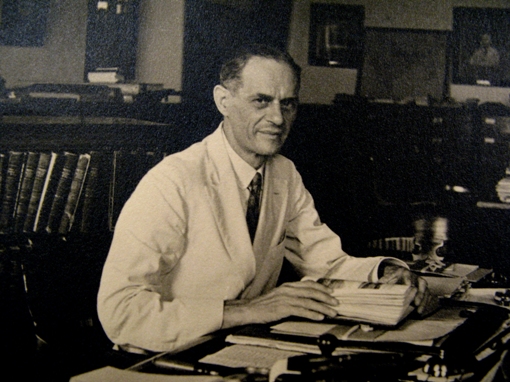
Sir Lewis Leigh Fermor at his desk in the Geological Survey of India, Calcutta.  From the Geological Society’s photograph collection.

By the time Paddy was 19, having been sacked from just about every school he was ever sent to and very far from achieving either his father’s ambitions (that he should study at science-strong Rugby, Haileybury or Oundle) or his mother’s (that he should go to Eton and join the ruling class) young Fermor was becoming tired of idling away his adolescence in Metropolitan dissipation. Aware he ought to become a writer but knowing he lacked material, he conceived the romantic idea of taking his meagre allowance and walking, alone, across Europe to Istanbul (or ‘Constantinople’, as he resolutely persisted in calling it), like a mendicant scholar of old.

The idea came to him in a flash, was the making of him, and met with (by today’s standards) shockingly little parental or other opposition. It was to prove the first in a lifetime of adventures, culminating most famously in his wartime work with the Special Operations Executive (SOE) in Crete, and his kidnap of the island’s commander-in-chief, General Kreipe – described in William Stanley Moss’s book Ill Met by Moonlight (1950) and the Powell & Pressburger film of the same name (1957), in which Paddy was dashingly portrayed by Dirk Bogarde.

The epic walk was described in three of the greatest travel books ever written in English (each, as they were published up to five decades later, a truly prodigious act of recall), marking the beginning of Paddy’s remarkable career as traveller, linguist, Hellenophile, polymath, autodidact, author, war hero and all-round national treasure. But when he set out for the Hook of Holland, just before Christmas on 8 December 1933, nobody would have believed that, one day, like his father, he too would become a Knight of the Realm – still less that his fame would completely eclipse that of his worthy forebear.

However, the eclipse is not quite total. The Society, at least, remembers Sir Lewis Leigh Fermor, through the gift of a substantial bequest that supports the Fermor Fund and the Fermor Meeting. But who was he, and what did he do?

Lewis Leigh Fermor (his middle name, given in honour of a family friend, was perpetuated through his children – but there is no hyphen) was born in Peckham on 18 September 1880, eldest of six. His father was a bank clerk. Adept at winning scholarships, after an initial 4d/week education at Goodrich Road Board School, Lewis moved to Wilson’s Grammar School, Camberwell, and the Royal School of Mines, studying metallurgy (with a view to a job in the Royal Mint).

Invited by Professor J W Judd (1840-1916, he became Student Assistant in Geology while working for his BSc. Judd also persuaded him to apply for a vacancy in the Geological Survey of India before graduating. He was appointed in 1902 – the year he joined the Society. He subsequently gained his degree by research, in 1909. Imperial later also bestowed upon him its DSc, for work he would perform in India: most notably a monumental tome on manganese ores.

We cannot be certain, but it is likely that his geological work in India led to his first marriage, because Muriel Ӕileen Ambler was the daughter of a quarrying magnate there. Educated by a series of governesses at the family home in Dulwich, she had returned to India, where the family had built a villa a few miles outside Dharhara, at Bassowni. While her brother Artie entered the family business, Ӕileen and her mother began the search for a husband in Calcutta. Ӕileen, spirited and venturesome, a lover of the theatre, was given to effusions and purple ink and liked to ennoble her Anglo-Irish family tree with glamorous royal connections of dubious accuracy.

She and Lewis met in 1907, probably in connection with the Survey’s work – the Survey had done load-bearing tests on the family’s product – and it was she who began the tradition of unofficially hitching the ‘Leigh’ onto the Fermor, even though it was only Lewis’s middle name. They seem an unlikely match, he so austere and ambitious, she so wild; but Lewis was, by all accounts a very elegant figure on the dance floor and his ambitiousness undoubtedly recommended him to his in-laws – and perhaps to Ӕileen, at least initially.

Colonial service staff received furloughs once every six years, so little Paddy was six when he first met his father. Embarrassed at being unable to impress this remote figure, Paddy camouflaged his youthful slowness, according to his biographer Artemis Cooper, by memorising long passages of literature by heart. Thus began his voracious love of books, and the first flexing of his prodigious memory.

Ӕileen never returned to India after World War 1, and (curiously for one so addicted to travel) Paddy never visited his father there. In 1924, Lewis once again came back to England, travelling with his family to Zweisimmen (near Gstaad). Paddy at that time had no school to go back to (having just been sacked again), so when sister Vanessa departed with her mother for England, Paddy stayed on with his father, who was joining a geological conference in Milan.

This was the first time Paddy and Lewis spent any time together, and sadly they were never to be as close again. Two particular memories turn up in Paddy’s writing about this special week. In the train to Lake Como, Lewis proudly demonstrated a knife he had just bought, by peeling an apple without breaking the skin. This he did – then tossing both peel and knife out of the window. Paddy became helpless with laughter. His annoyed father banished him to another carriage, where Paddy then tried to open the window – by pulling the communication cord.

Arriving in the Dolomites Lewis dressed for the field, where he collected specimens both geological and botanical. Paddy remembers cringing with embarrassment when he saw his father in this bizarre attire – his Norfolk jacket and ‘vast semi-circular cap, I think originally destined for Tibetan travel, like a bisected pumpkin of fur, armed with a peak, and with fur-lined ear-flaps that were joined (when not tied under the chin, which was worse still) by a disturbing bow on the summit.’

Worst of all, there was the geological hammer at his belt, bearing an arrow, marking it as government property. Lewis had joked to Paddy that only members of the civil service and convicts carried such hammers. Far from being amused however, and horrified by the thought that people might think his father a convict, nine year-old Paddy tried (under the guise of adjusting it for comfort) to turn the hammer around so that the arrow could not be seen.

This was to be the last time that father and son were to spend any extended time in one another’s company. As Cooper observes, Paddy was to grow up feeling ill at ease with his father, and the suspicion that he was a disappointment to him. On the other side, his mother was contrastingly jealous of him, seeing him as her, rather than Lewis’s, son (though she too, despite her possessiveness, blew hot and cold, turning clingy one minute and distant and uncaring the next).

Lewis had not been pleased to receive his gadabout son’s London tailoring bills (though he helped to settle them). So it is possible that Paddy’s proposed expedition may have seemed to him like a washing of hands. The hope that his son might become a scientist had died years before. Lewis (no doubt in desperation, because mathematics was one of Paddy’s many weak suits) had even suggested his son might consider a career in accountancy, so at a loss was the family to know what to do with him. At least this mad expedition was a goal, and his son’s own idea. His reply to news of his departure included a birthday gift of five pounds. (This was not the only birthday on which Paddy would have occasion to thank a geologist. On turning 21, two years into his trek, he learned that Sir Henry Hubert Hayden, one of Lewis’s predecessors as Director (1910-21) had bestowed a gift of £300 on him.)

Paddy would arrange for letters to be sent to him poste restante at various points along his projected route. Most important were those containing pound notes, but occasionally he found letters from his mother, often whimsical and amusing, and occasionally, more formal missives from Lewis: ‘full of geological advice’.

At the time when her favoured child was departing for Europe, Ӕileen herself was having a hard time. Divorced eight years, and suffering that diminution in her status, news had come through that Lewis was marrying again – to a certain Frances Mary Case. Within a year, Lewis was knighted, and thus her supplanter became ‘Lady Fermor’. Artemis Cooper speculates that this might have been a severe blow to the social-climbing Ӕileen; though in the days when directors of the British Empire’s geological surveys were habitually knighted, she surely realised what she was giving up – though this may not have made it any easier to bear.

Fermor’s main geological interest was (as reflected in the terms of the Fermor bequest) the rocks of the Archaean. Sir Thomas Holland had asked him to report on the manganese ore deposits of India, little expecting that Fermor (renowned for meticulous attention to detail) would take until 1909 to publish, nor that his report would run to nearly 1300 pages. Not only did this work earn Fermor great renown (and his FRS), it also revealed six new manganese minerals.

The experience gained in this work led to his being placed in charge, in 1911, of a systematic survey of the Archaean rocks of the Central Provinces (Madhya Pradesh), much of which he surveyed personally, at four inches to the mile. War interrupted this work, and Fermor finished his part of it in 1926.

His economic work continued – on copper, coal, iron ore, and mica, which led to an avalanche of publications in the Annual Reviews of the Mineral Production of India between 1921 and 1934. He also worked on the Deccan Traps, and even on meteorites (though his ideas about the origin of chondrules were incorrect – he thought they were formerly garnets). Finally, before retiring to Bristol and then Surrey, he began a memoir entitled ‘An attempt at the correlation of the ancient schistose formations of Peninsular India’. Sadly, this herculean project was destined never to advance beyond the opening general discussion (published 1940) and remained incomplete on his death.

His retirement in 1935, a year after being elected FRS, marked the beginning of a closer association with the Geological Society. He had already won its Bigsby Medal (1921), and he now joined Council (in 1943), and served as Vice President from 1945 to 1947.

When Paddy  learned that his father was dying, in 1954, he paid a final visit to him, in his new home near Woking. This at last was a home with the space to display his collection of early English glassware, as well as the fine Persian rugs he had collected. It was the first proper home that Lewis had ever owned – aptly named ‘Gondwana’ – and here he had hoped to finish his Archaean memoir. These hopes were dashed only a few months after moving in, when his final illness struck.

‘We had only met twice during the last six years and corresponded as little’ Paddy wrote. Hollow cheeked, and a sickly colour, ‘his enormous and luminous eyes, talking very slowly and almost inaudibly… The only consoling thing is that he has no idea he is dying. “Such a bore, being all cooped up when all the flowers are out”’. He died on 24 May. “What a strange business Daddy’s funeral was, a sort of nightmare’ Paddy wrote to Vanessa. ‘I am so glad you were there too – I don’t think I could have taken it if there hadn’t been your eye to catch now and then’.

In 1976, having just been declared clear of cancer himself, Paddy finally decided to visit India. After Christmas in Benares he went to Calcutta and found his way ‘rather timidly’ to the offices of the Survey. To his surprise, he found that ‘They seem to worship Daddy’s memory’. Indeed, Dr S V P Iyengar (1921-2012), Deputy Director General and a former pupil of H H Read and Robert Shackleton, described Lewis as ‘the most imaginative, helpful and constructive [figure, who] …contributed more than anyone else, and all his prophecies and conclusions have been proved right’ – a slight exaggeration, considering the chondrule theory, but understandable. As Cooper observes, such was the bitterness about Lewis that Paddy and his sister had absorbed from their mother, it was ‘strange’ for them to ‘discover him both loved and admired’.

The story of the Fermor bequest began in 1961, and in all took nearly 20 years. Lady Fermor wanted to make over a sum to be held in trust, the income being used to pay her a pension during her lifetime; but this was later shown to be impossible because of the Estate Duty that she would have to pay. Then, in October 1969, a letter from her solicitors arrived at Burlington House announcing her wish to make ‘a substantial bequest’. In March 1979, Lady Fermor presented the Society with a cheque for £1000 to establish the Fermor Lecture, held every three years, the first in October/November 1980. She was (eventually) granted Honorary Fellowship, and invited to attend the Fermor Lectures, which she did – enjoying the luxury of a free night in the ‘Fellows’ Bedroom’.

Lady Fermor died in November 1990, leaving the Society the residue of her estate minus some bequests to others. It is not known if the Society blushed about having made her sleep in the cellar when it found out that this residue amounted to £500,000-£600,000. It was, and remains, the Society’s biggest fund.

Related article:

Paddy’s childhood home: The Weedon Bec route near Northampton

Meeting Paddy at the 40th anniversary of the Battle of Crete

sutherlandJeanne Nutt and Iain Sutherland began their careers as professional diplomats in Moscow when Stalin was still alive. Although both had studied the language, literature and history they arrived in Moscow separately. Three decades later they would leave the city together, after three ageing leaders had died in a row and just as things were about to change for ever with Gorbachev’s perestroika.

By then, Jeanne’s career was long over. When she and Iain had married in 1955, she had been obliged, under rules not finally abolished until 1972, to resign. From then on her fate had been to pack and follow her husband wherever his career took him. She continued to take a lively and intelligent interest in the people and the politics of the places where she and her husband lived, and where they witnessed some of the turning points of the Cold War.

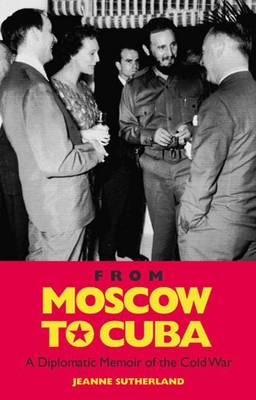
In her book From Moscow to Cuba and Beyond, A Diplomatic Memoir of the Cold War, she gave a flavour of the sometimes bizarre life diplomats led in those distant days.

The Sutherlands served in Cuba, Washington, Yugoslavia, Indonesia and Athens, where Iain was ambassador, and this is where they met Paddy. Her book focuses on their three tours of duty in Russia. The highlight of their first stint in Moscow was the death of Stalin in March 1953. That morning their maid arrived in their apartment shattered by grief. She made an inedible breakfast, broke down in tears, and fled. The old woman who guarded the front door was sobbing into her shawl. The following day the ambassador, the splendidly named Sir Alvary Gascoigne, went with his staff to pay their respects to Stalin as he lay in state in Moscow’s Hall of Columns. The ambassador insisted that all should wear top hats, wholly unsuitable headgear when the thermometer stood at -20C, and the diplomats were ushered past the coffin so fast that one of them missed Stalin altogether.

This account is taken from her diary of the events around the 40th Anniversary of the Battle of Crete.

Thursday, 21 May 1981

Lord and Lady Caccia arrived to take part in the Crete activities, this being the 40th anniversary of the battle. The Olympic (airlines) strike threatened to leave us without transport to Chania so we were all – the Australian and New Zealand delegations, Paddy Leigh Fermor and ourselves – given seats in the Minister (Averoff’s) plane which took off from Tatoi about 6. We arrived about 7.30 in Chania and poured into the already crowded Porto Veneziano Hotel. There were obviously too many, even of the British Delegation, to have a quiet taverna dinner altogether so we collected our party and Paddy and Johnny Craxton and had a fish meal at the taverna near the hotel.

The ceremonies of the next few days seemed never-ending as we toiled round with over 100 veterans, three Ministers of Defence and Mitsotakis, Scottish pipers, Australian buglers and Greek military bands. It was tiring, interesting and at times particularly moving, as in Galetas which was in the centre of the battle, and Souda Bay where the Australians broke into singing God Save the Queen as the anthems were played.

Sunday, 24 May 1981

The ceremony of the laying of the plaque dedicated to the members of the resistance in Crete who lost their lives, was delayed yet again and finally unveiled at 7.30 p.m. There were short speeches by Averoff and Iain and by Paddy Leigh Fermor at greater length after much agonising. (The story about the glass of water at the British Council lecture was true, he told me. When the attendant topped it up with more water it became cloudy and revealed to all that he was keeping up his courage with ouzo!)

Monday, 25 May 1981

The party set off from Heraklion for Mount Ida and the village of Anoya to meet Paddy Leigh Fermor’s resistance friends for a lunch in the mountains and to hear stories of how the men folk were shot and the village burned in reprisal for the acts of sabotage perpetrated by the SOE fighters. We collected the mayor and Dilys Powell in the Rolls and took it up the rough road to Psiloriti near the Cave of Zeus. Here the air was fresh and crisp, and together with the veterans of the underground resistance, we sipped raki and ate local cheese outside and then went inside for crisp hot lamb and more local wine; all this accompanied by playing of the lyre (lira) and singing by Paddy and his companions.

The climax was the ‘simple taverna party’ in the evening outside town for the veterans. It was given by Kefaloyannis, the large burly moustachioed Cretan (whom at the lunch I had taken to be a former shepherd and not a hotel owner), in his 600 bed hotel. Twenty or thirty of us were wined and dined, given champagne, serenaded by the hotel singers (more Filaden, Filaden), watched dancing and plate throwing and finally our host’s firing bullets through his hotel windows. Paddy told me the story of Kefaloyannis, who had abducted a young Cretan girl in the 1950s, the daughter of a Venizelos supporter and therefore a declared enemy, as K was a Royalist. When the island was on the brink of civil war over it he came down from the mountains, gave himself up and went to prison. Later they were married, but this did not last and he is now married to the sober black-dressed lady who was sitting on Iain’s right. Sitting opposite me was Paddy’s god-daughter whose father was shot, trying to escape from the village of Anoya, after sheltering Paddy several times during the war.

Home at 2 a.m.

Extracted from Jeanne Sutherland’s diaries and her book, From Moscow to Cuba and Beyond, A Diplomatic Memoir of the Cold War. Published by The Radcliffe Press in 2010 (p 276-277).

Greek media and environment professional seeking internship

Dear friends and readers.

I was recently stranded in Thessaloniki for a few hours whilst on my way to Skopje. It seemed like a good idea to see if I could have lunch with a Greek friend, Lia Papadranga, who I had met on my journey across Albania searching for the Via Egnatia in 2009. Lia is chief press officer for the Axios Delta national park, a great area of beautiful wetland just west of Thessaloniki.

Over a wonderful fish lunch Lia told me about her current Masters studies in Journalism and New Media, and the need to continue those studies with an Erasmus sponsored internship, ideally abroad. She told me that competition for such posts was tough and I offered to help by putting something on the Blog.

Lia is very hard working, bright and tenacious, with considerable experience in journalism and media. If you think that you may have an internship in your organisation please take a look at her CV here and introduction letter.

Thank you.

Tom

A bad day at the office

The Guardian newspaper is notorious for its errors. In these days of spell-checkers typos are less common. However, as this correction announcement shows, it, and its sister paper The Observer, are still capable of some major howlers. Clearly the author of the original book review had a very bad day at the office.

First published in the Guardian

A review of David Astor: A Life in Print, a biography of the former editor of the Observer, contained a number of errors (20 February, page 7, Review). In the article we suggested that William Waldorf Astor was named after a hotel, when in fact his name referred to the family’s native Rhineland village. He didn’t build Cliveden, as we suggested, but bought it, and he didn’t sack the editor of the Observer for spiking his contributions (although he did sack the editor of the Pall Mall Gazette, another Astor acquisition, for spiking his contributions). We said Katharine Whitehorn was women’s editor of the Observer when in fact she was a columnist. We said Patrick Leigh Fermor compared David Astor to Disney’s Pluto; Fermor actually compared the writer Philip Toynbee to that cartoon character. Terence Kilmartin replaced Jim Rose as Observer literary editor, not JC Trewin. During the war, David Astor didn’t merely suffer “a mild attack of dysentery” as suggested in the review. In fact he was wounded in action during a German ambush in the Ardennes. Terence Kilmartin is believed to have been involved in his rescue, and Astor was awarded the Croix de Guerre.

New Book: The Sabotage Diaries

Sabotage diariesThis book made much more sense to me following the excellent talk by Dr Roderick Bailey about the psychological effects of SOE operations on the men involved. Dr Bailey spoke at length about Operation Harling and this team.

The The Sabotage Diaries is written from the first person perspective of Tom Barnes (from his diaries) so has all the gripping suspense of a novel. It is a thrilling read of wartime exploits, daring, intrigue and resourcefulness. It is the true story of Allied engineer Tom Barnes, who was parachuted behind enemy lines in Greece in October 1942 with a small team of sappers and special operations officers. Their brief was to work with the Greek resistance in sabotage operations against the German and Italian occupation forces. Under-equipped and under-prepared but with courage to spare, their initial mission was to blow up a key railway bridge, cutting Rommel’s supply lines to North Africa, where the battle of El Alamein was about to begin. Operation Harling was only the start of a lengthy and perilous clandestine mission.

Written by Tom Barnes’ daughter-in-law, award-winning author Katherine Barnes, and drawn from Tom’s wartime diaries, reports and letters, plus many other historical sources and first-hand accounts, The Sabotage Diaries is a vivid and gripping tale of the often desperate and dangerous reality behind sabotage operations.

Buy The Sabotage Diaries

Catching up

Journey's end with Billy Moss' daughter Isabelle and Jody Cole Jones at Winchester Cathedral

Journey’s end with Billy Moss’ daughter Isabelle and Jody Cole Jones at Winchester Cathedral

I have returned. Some of you may have wondered if I had disappeared in a bog on my long walk before Christmas, others perhaps that there is nothing more to add to the Paddy blog.

Fortunately neither is true although the walk was massively hard. I suffered a bout of flu the week before and was quite uncertain if I would be well enough to start on time. The main symptoms did disperse, but I was very weak and probably not strong enough to tackle the hills and terrible ground conditions that we found (see this video here). It was not really until we reached drier conditions in Hampshire in the last two days that I had recovered my strength enough, but aided my by walking companion, my son, and the ever-present need to meet the target and raise money for the two chosen charities, we pressed on. We were joined by Billy Moss’ daughter Isabelle and his grand-daughter Jody Cole Jones for the last 10 km into Winchester. They wished to support the causes, and Combat Stress in particular, as they wanted to highlight their belief that Billy probably suffered from some form of post-traumatic stress which may have led to his early demise. The Just Giving page remains open for any final donations here.

Since then I have been in Germany celebrating Christmas with my youngest daughter Harriet, and then preparing for a new job which I started in the New Year. So I am now ready to get back in harness and present you with some fascinating material. As ever I am grateful to those of you who have been in touch with ideas and material. I look forward to a successful 2016 for us all and send you my best wishes.

Tom

Two tramps walking!

patrickI am very pleased to announce that I will be joined by my son on the walk this year. He has a close affinity with the aims and objectives of our walk which are to raise awareness of mental health issues and homelessness amongst veterans, and to raise £5,000 for two charities that assist them.

By Tom Sawford.

The walk dates are now set at 14-19 December, starting in Ottery St Mary in Devon and ending early Saturday afternoon at Winchester Cathedral. If you would like to join us for a day or so please get in touch.

You can support the two if us in our walk and the charities that we support by giving on our Just Giving page here. We would like to start the walk with £2,000 raised and have a way to go to reach that so please, please consider giving something – the Just Giving site takes all major currencies. Every donation helps, no matter how small or large!

Combat Stress is the UK’s leading Veterans’ mental health charity. Mental ill-health such as PTSD affects ex-Service men and women of all ages. Right now, the charity supports over 5,900 Veterans aged from 18 to 97, and spends over £15 million per annum delivering its unique range of specialist treatment and welfare support which is always free of charge.

Winchester Churches Nightshelter provides a vital lifeline to the homeless, and remains the only night shelter offering direct access emergency accommodation in Hampshire. They support up to 200 homeless people annually. There is a direct link between mental health problems such as PTSD and homelessness. Money raised will go direct to the homeless which I feel may be a better outcome than through a larger charity.

We hope that you will feel inspired to support the fundraising and make some (doubly !!!) generous contributions at the Just Giving page where you can choose to split your donations between the two charities if you wish.

There is a public Facebook page if you want to follow the progress. https://www.facebook.com/walkinghomeforchristmas/

Thank you all very much. Please donate here. https://www.justgiving.com/teams/likeatramp

Print

Language Itself Resists

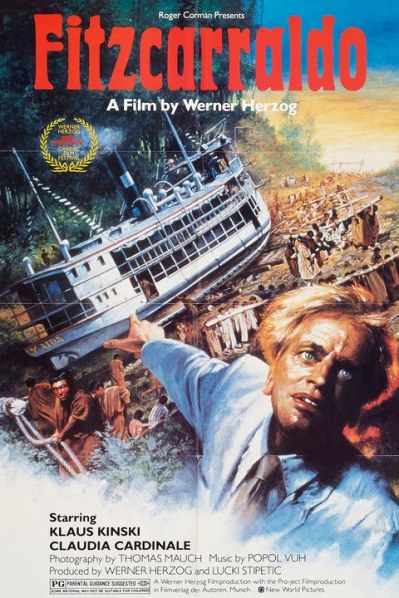
fitzAt the weekend I was watching with my partner the wonderful movie, The Mission, starring Jeremy Irons and Robert de Niro. The hot, humid, fly ridden jungle scenes reminded me of something by Werner Herzog that I had saved as a possible draft and it spurred me to share it with you.  It is clear that his experiences filming Fitzcarraldo were not particularly pleasant. This comes on the anniversary of our good friend Jasper Winn’s walk in the footsteps of Herzog’s 1974 walk from Munich to Paris in the depth of winter to save the life of a friend. 

by Werner Herzog

From the Paris Review

For reasons that escape me, I simply could not make myself go back and read the journals I kept during the filming of Fitzcarraldo. Then, twenty-four years later, my resistance suddenly crumbled, though I had trouble deciphering my own handwriting, which I had miniaturized at the time to microscopic size. These texts are not reports on the actual filming—of which little is said. Nor are they journals, except in a very general sense. They might be described instead as inner landscapes, born of the delirium of the jungle. But even that may not be entirely accurate—I am not sure.

A vision had seized hold of me, like the demented fury of a hound that has sunk its teeth into the leg of a deer carcass and is shaking and tugging at the downed game so frantically that the hunter gives up trying to calm him. it was the vision of a large steamship scaling a hill under its own steam, working its way up a steep slope in the jungle, while above this natural landscape, which shatters the weak and the strong with equal ferocity, soars the voice of Caruso, silencing all the pain and all the voices of the primeval forest and drowning out all birdsong. To be more precise: bird cries, for in this setting, left unfinished and abandoned by God in wrath, the birds do not sing; they shriek in pain, and confused trees tangle with one another like battling titans, from horizon to horizon, in a steaming creation still being formed. Fog-panting and exhausted they stand in this unreal world, in unreal misery—and I, like a stanza in a poem written in an unknown foreign tongue, am shaken to the core.

Santa Maria De Nieva, 14 October 1979

Seen from the air, the jungle below looked like kinky hair, seemingly peaceful, but that is deceptive, because in its inner being nature is never peaceful. even when it is denatured, when it is tamed, it strikes back at its tamers and reduces them to pets, rosy pigs, which then melt like fat in a skillet. This brings to mind the image, the great metaphor, of the pig in Palermo, which I heard had fallen into a sewer shaft: it lived down there for two years and continued to grow, surviving on the garbage that people threw down the shaft, and when they hauled the pig out, after it had completely blocked the drain, it was almost white, enormously fat, and had taken on the form of the shaft. it had turned into a kind of monumental, whitish grub, rectangular, cubic, and wobbly, an immense hunk of fat that could move only its mouth to eat, while its legs had shrunk and retracted into the body fat.

Iquitos, 8 December 1980

This morning, when I checked on the telex machine, Gloria was trying to make contact with the Narinho, the rusted-out ship that we had gotten to float here from Colombia, made buoyant with six hundred empty oil drums, but the onboard receiver must have been turned off. A young woman had shown up; she had no way to reach her husband, an electrician, who was on the ship. In the morning her child had been throwing up for two hours, then went into convulsions, and was suddenly dead. I did not know what I should say to the woman. She turned her face to the wall and cried; she had been keeping it in until then. I took her hand and held it, and when her silent sobbing had relaxed somewhat, I took her on the motorcycle and rode to the boat landing. The boatman did not want to set out because he was waiting for the cooks, but I hustled him off with the woman to the place where the Narinho was anchored. The woman was still very young, and it had been her first child, a son, only half a year old.

A still day, sultry. inactivity piled on inactivity, clouds staring down from the sky, pregnant with rain; fever reigns; insects taking on massive proportions. The jungle is obscene. everything about it is sinful, for which reason the sin does not stand out as sin. The voices in the jungle are silent; nothing is stirring, and a languid, immobile anger hovers over everything. The laundry on the line refuses to dry. As part of a conspiracy, flies suddenly descend on the table, their stomachs taut and iridescent. Our little monkey was wailing in his cage, and when I approached, he looked and wailed right through me to some distant spot outside where his little heart hoped to find an echo. I let him out, but he went back into his cage, and now he is continuing to wail there.

Iquitos, 18 December 1980

I have a snake on my roof again. A little while ago I heard something rustling up there, and then something dark fell into the banana fronds with a thwack. I took a look, and it was a poisonous brownish snake that had caught a bird, which was still peeping. I tried hitting the snake with a stick, but it disappeared like lightning into the grass. Only now and then did a blade quiver, and from the piteous cries of the bird I could tell where the snake was. I did not follow it into the grass, because I discovered that another snake was on the thatched roof, and directly above me a third snake was trying to get from a banana frond onto the platform of my hut. I tried to strike it with the machete, but the snake was too fast for me.

The power is still out. Evening descended on the countryside. What would happen if the rain forest wilted like a bouquet of flowers? Around me insects are dying, for which they lie on their backs. A woman in the neighborhood is suckling a newborn puppy after her baby died from parasites; I have seen this done before with piglets. Outside a bright moon is floating now above the treetops. The frogs, thousands of them, suddenly pause, as if they were following an invisible conductor, and start up again all at the same time. Their conversations come and go in curious waves. Waxy moonlight, as bright as neon, is shimmering on the banana fronds. I was called to the telephone in the house, and fell off the ladder that leads to my platform. It was one of very few phone calls that ever get through to us, and a stranger on the line was trying to make it clear to me that I was a madman, a menace to society. .. (more follows if you purchase the Paris Review issue here)

Read about Jasper Winn’s walk in Herzog’s footsteps here.

A glance at the life and times of Miklos Banffy

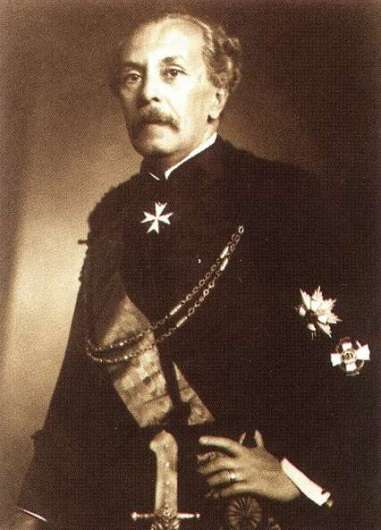
Count Miklós Bánffy

Count Miklós Bánffy

Many of you know that I admire the work of Miklos Banffy, the author and statesman who lived in Cluj, ran the opera house in Budapest, was foreign minister of Hungary and organised the last coronation of a king of Hungary. I have enjoyed the following article published on the blog of Lucy Abel-Smith who organised the first Transylvanian Book Festival and is planning a second for 2016. Enjoy this account of a recent tour through Hungary and Romania led by Lucy. Paddy very much followed in Banffy’s footsteps and wrote the foreword to the first English translation of Banffy’s wonderful Transylvanian Trilogy.

“In a brown velvet jacket and wide trousers he walked a little self conscious from one desk to the other… ‘I am drawing here, am writing there, at the third one I read’… I have forgotten what he did at the fourth… ’Somehow it seems more comfortable this way – he apologised and also I am very disorderly…”

In this charming description of his working habits, Miklos Banffy is disarmingly modest. This self deprecation is made all the more poignant by our visits to a few of his haunts – revealing something of this gifted, multilingual and many facetted man. Our journey was half in Budapest and then in Cluj and, at a slower pace in a few Hungarian Transylvanian villages in the traditional Saxon area. We behaved as if we were taking part in the Budapest Season before the war in a hectic race from place to place. From Cluj to Sibiu the pace was more measured.

Nearly seven decades after his death in Budapest in 1950, Miklos Banffy, one of the greatest novelists of the 20th century is only now being recognised by the English-speaking world. Jaap Scholten, in his Comrade Baron, describes what happened to so many of Banffy’s generation of Hungarian Transylvanians under Communism. Banffy’s own fate was no better. He died penniless, unsung and unread except by Hungarians. Jaap spoke to us over dinner on our first evening in the comfort of the Art’otel beneath the castle of Buda, on the bank of the Danube.

Day two began with a tour through the capital, bringing home the majesty of the Danube and the spirit of the 19th century movers and shakers in Buda and in Pest. At this time, Transylvania was still linked to the Kingdom of Hungary but ruled from Vienna. A visit to the truly National Museum, conceived by Ferenc Szechenyi, houses wonderful Renaissance furnishings from Slovakia and Transylvania including the great tomb monument of Michael Apafy (d. 1635), from Malancrav, which was relevant as this Baroque monument was carved by an artist from Spis and was commissioned for Malancrav, in Saxon Transylvania, where our journey would end.

Read more here.

Walking home for Christmas like a tramp

Tom in Bath at journey's end 2014

Tom in Bath at journey’s end 2014

Last year many of you made generous contributions to help me raise £2,500 for the homeless charity Shelter. This year I am almost doubling the distance I walk, and the nights out sleeping rough in the cold December weather, to achieve a doubling of the target to £5,000.

By Tom Sawford.

In December I will walk along the byways of England from the parish church of Ottery St Mary in Devon to Winchester Cathedral to raise awareness of the curses of Post Traumatic Stress Disorder and related homelessness. The route of around 120 miles will take me about 5-6 days and I will walk as a tramp, living off the goodwill of strangers, and sleeping rough in order to meet the goal of raising £5,000 for two charities that work tirelessly to assist those who struggle with these issues.

Combat Stress is the UK’s leading Veterans’ mental health charity. Mental ill-health such as PTSD affects ex-Service men and women of all ages. Right now, the charity supports over 5,900 Veterans aged from 18 to 97, and spends over £15 million per annum delivering its unique range of specialist treatment and welfare support which is always free of charge.

Winchester Churches Nightshelter provides a vital lifeline to the homeless, and remains the only night shelter offering direct access emergency accommodation in Hampshire. They support up to 200 homeless people annually. Residents benefit from a programme of practical and emotional support to help them to rebuild their lives and escape homelessness for good. Many of the people they deal with are ex-military. There is a direct link between mental health problems such as PTSD and homelessness. Money raised will go direct to the homeless which I feel may be a better outcome than through a larger charity.

I hope that you will feel inspired to support the fundraising and make some (doubly !!!) generous contributions at the Just Giving page where you can choose to split your donations between the two charities if you wish.

Some of you have asked about joining the walk and you would be very welcome to do so for some or all of the route. The dates are likely to be 12th or 13th December to 17th or 18th although these could shift to the right by a couple of days. I will publish the full route very soon.

There is a public Facebook page if you want to follow the progress. https://www.facebook.com/walkinghomeforchristmas/

Thank you all very much. Please donate here. https://www.justgiving.com/teams/likeatramp

#combatstress #homelessness #homeless #veterans

Print

Maggie Rainey-Smith’s new novel set in Greece

maggieFew of you may be familiar with the writing of Maggie Rainey-Smith, but you will most likely have seen her wonderful photographs taken at Paddy’s house during Maggie’s 2007 visit to Kalamitsi when researching the book that was to become Daughters of Messene. I am looking forward to reading more about the book but here is some background from a recent press release. You can review Maggie’s pictures and her tribute to Paddy written after his death here.

Maggie’s book is titled Daughters of Messene and seeks to shed light on the experiences of young Greek women shipped to New Zealand fifty years ago. The press release continues …

When almost 300 unmarried Greek women arrived in Wellington in the early 1960s, the established Greek community feared the scandal that might follow. Instead the women settled into life here and the event has largely been forgotten. Inspired by this migration, Maggie Rainey-Smith’s powerful third novel Daughters of Messene, explores the complex interweaving of family and political events that caused one young woman to flee Greece after the Civil War, and half a century later motivated her daughter to return.

Wellington writer Rainey-Smith’s idea for Daughters of Messene started with a friendship with her neighbour Maria, one of the original ‘Greek girls’ to settle here.

“My father was in Greece during the Second World War and was captured on Crete, spending four years as a prisoner of war in Poland,” says Rainey-Smith. “As a result, he was awarded a medal and certificate by the Greek Government in the 1980s. My neighbour at the time was Greek, and she helped me to apply to the Greek government on behalf of my dad.”

“We became good friends and I discovered that she had emigrated from Kalamata in Greece as part of a deal done between our two countries. The girls all had to be under thirty, unmarried, and they came to work in the hospitality industry. I became fascinated by their stories.”

Maggie’s two previous novels About Turns and Turbulence (Random House) are set in New Zealand, but research for her third novel – published by Wellington’s Mākaro Press working in collaboration with Whitireia publishing students – took her to Greece for three months in 2007. Although the trip wasn’t quite what she had expected.

“I spent most of my time in Kalamata searching for stories, but found that people were reluctant to speak of the Civil War. In desperation I caught a bus to the Mani and ended up staying ten days in picturesque Kardymili, where I had the great good fortune to meet eminent travel writer Sir Patrick Leigh Fermor. It seemed like a blessing on the story, and so I persevered with working through the secret and sometimes shocking stories of what was a terrible time for Greece.”

The book has taken seven years to write, and has been released as part of NZ Book Week this week.

Daughters of Messene is described by Owen Marshall as “A strong, fresh novel, dense with closely observed and convincing detail of life in Greece and aspects of its history.”

Greek-NZ poet Vana Manasiadis says, “In many ways Daughters of Messene is a tender love poem dedicated to a place and its people, to the profound bonds of blood, and the legacies such bonds leave us. The tale is both touching and vivid, the unfolding masterful, and the novel’s heroines, spirited, huge-hearted and tough (in the very best sense).”

You can pre-order Daughters of Messene here.

Print

Sons of Odysseus by Alan Ogden

Layout 1Sons Of Odysseus is a fascinating study of SOE heroes in Greece. Respected SOE expert and author Alan Ogden recounts how SOE missions through their courage, patience and determination, attempted to come to terms with reconciling British political and military objectives in the cauldron of internecine Greek politics.
From the very beginning, ‘political headaches’ abounded as SOE tried to establish a unified Greek resistance movement. For most Missions, it was a steep learning curve, accelerated by the experience of finding themselves in the middle of a bitter civil war during the winter of 1943 – 44, having to endure attacks by Axis occupation forces at the same time as being caught in fighting between EAM-ELAS and EDES guerrillas.

Living behind enemy lines for long periods of time, SOE officers and men were nevertheless able to bring off a series of spectacular sabotage acts and with the assistance of Greek partisan forces doggedly harassed German forces as they withdrew North in the autumn of 1944.

Ogden has been in contact with many of the families of these SOE heroes and has had access to letters, photographs and diaries. Drawing on these sources as well as official archives and published memoires, Sons Of Odysseus profiles the service records of nearly fifty SOE officers and men as they battled against a ruthless enemy, endured the privations of the Greek mountains and struggled to prevent civil strife. Their extraordinary stories illustrate the many and varied tasks of SOE missions throughout the different regions of Greece from 1942 – 44 and thus provide a fascinating collage of the history of SOE during the Axis occupation and in the run-up to the tragedy of the Greek Civil War of 1944-49.

Buy Sons Of Odysseus

Print

Travel writing creates adventurers

I saw this on the Stanfords website the other day. I liked it and thought many of you may as well.

Good travel writing makes you jealous.

It makes you want to walk in an author’s footsteps;
to see what they saw and feel what they felt.

The best travel writing inspires.

It instils the desire for discovery.

It challenges you to think new thoughts and find original experiences.

It creates adventurers.

Print

What was Patrick Leigh Fermor’s school reading list?

Not a normal post, but one where we are actively seeking your feedback and contribution via the comments section (see Leave a Reply above) in response to a question asked in an email from reader Jonathan in New Zealand.

One other question I have for the community , is (being a product of UK post 1970s progressive state education), what would be a basic reading list of the key classics (greek and Latin) that Paddy and his peers would have been exposed to during their school days?

Any ideas?

Print

Horatio Clare and Bill Bryson winners at Edward Stanford Travel Writing Awards

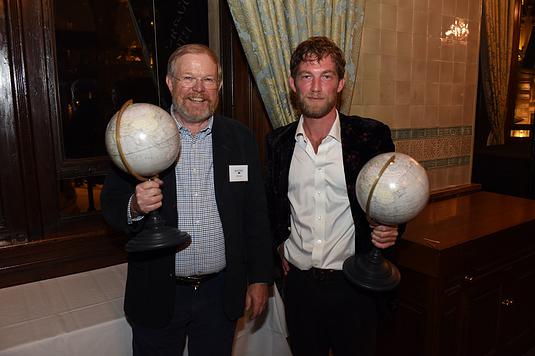
Winners Bill Bryson and Horatio Clare at the Edward Stanford Travel Writing Awards

Winners Bill Bryson and Horatio Clare at the Edward Stanford Travel Writing Awards

Some disappointment for our friend Nick Hunt in the Edward Stanford Travel Writing Awards, the results of which were announced at an event at London’s National Liberal Club this week. The winner was Down To The Sea In Ships: Of Ageless Oceans and Modern Men, Horatio Clare’s account of the ordinary men that place their lives in extraordinary danger on container ships on the high seas.
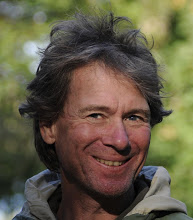
“In selecting a winner from our wonderful shortlist, we kept in mind that one of the great litmus tests of travel writing is companionship, how much the reader relishes the company of the writer,” said prize Chair, Barnaby Rogerson. “We wanted to be led on an adventure, we wanted new doors opened, fresh horizons of inquiry unveiled, we want to be filled with wonder and enthusiasm at the dazzling riches of our world. Down To The Sea In Ships: Of Ageless Oceans and Modern Men ticked every box.”

“It is a book charged full of vim and passion,” continued Rogerson. “Filled with polished, near poetic prose, it is alert to labour as well as beauty, the loneliness of long-distance sea travel as well as the communities that form below deck, and are dissipated with each new voyage.”

Chris Schüler, outgoing Chairman of the Authors’ Club, echoed Rogerson’s words adding that “Down To The Sea In Ships: Of Ageless Oceans and Modern Men is a book entirely worthy of its place amongst the Stanford Dolman’s illustrious list of past victors. In this first year of our partnership with Stanfords, we couldn’t have hoped for a better choice from our judges to capture the essence of this vital prize – a work of true literary excellence and cultural importance.”

As winner, Clare received a cheque for £5,000 and a specially commissioned hand-made globe by master globe-makers, Lander & May.

Best-selling travel author Bill Bryson was also honoured at the Awards when he received the Edward Stanford Award for Outstanding Contribution to Travel Writing. Selected from public nominations by specialists at high street and independent bookshops, including Waterstones, Blackwell’s, Daunt Books and the Hungerford Bookshop, this is the first time the Award has been presented.

“I am hugely honoured to receive this award,” said Bryson, “particularly as it comes from booksellers, my favourite people on the whole planet.”

Tony Maher, Managing Director of Edward Stanford Limited, said “Bill’s elegant, witty and amiable prose has been entertaining readers for many years. From adventures walking the Appalachian Trail, to defining the British better than any Brit has ever managed, he has a turn of phrase at once insightful and hilarious.

“The beauty in his writing is often its brevity and sincerity; it is understatedly, unassumingly, powerful. I couldn’t be more thrilled that he is the first recipient of the Edward Stanford Award for Outstanding Contribution to Travel Writing, and commend the public and our bookselling partners on their choice.”

As well as receiving his own handmade globe trophy, Bryson’s name was inscribed on a commemorative globe which will go on permanent display at Stanfords, Covent Garden. The names of future winners will be added to the globe in due course.

Maher also announced that the 2016 Edward Stanford Travel Writing Awards ceremony would move to coincide with the Stanfords Travel Writers Festival, which will take place at the Destinations Show, Olympia in February 2017.

Stanfords entered into sponsorship of the Stanford Dolman prize earlier this year, in association with the Authors’ Club and donor, Rev. Dr. Bill Dolman, doubling its funds and adding it to the newly created Edward Stanford Travel Writing Awards, alongside the Edward Stanford Award for Outstanding Contribution to Travel Writing.

Buy: Down To The Sea In Ships: Of Ageless Oceans and Modern Men

Print

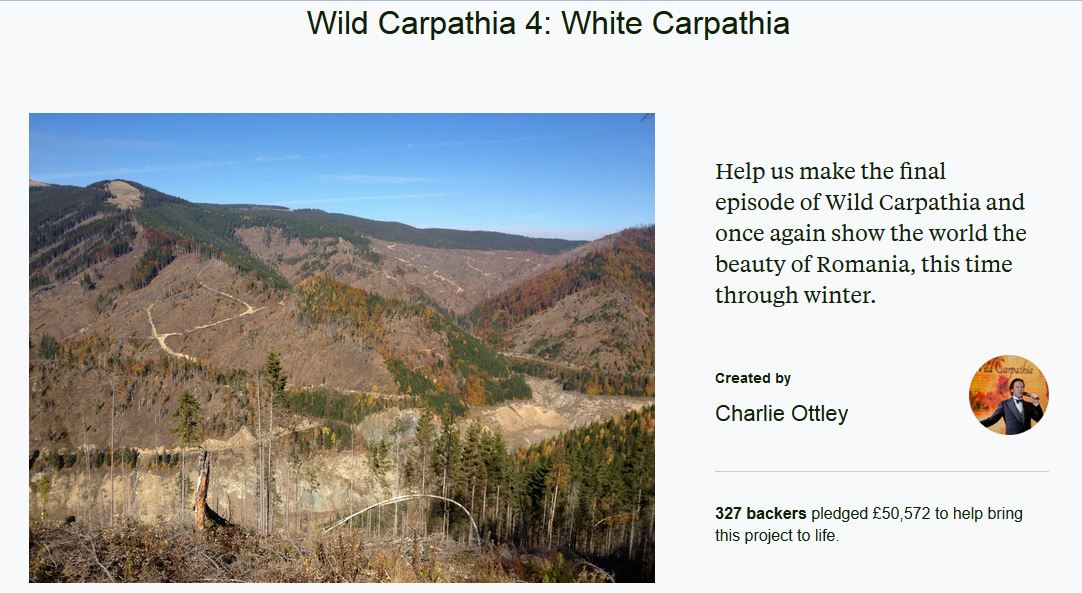
Wild Carpathia 4 fundraising a success!

CaptureFilming is to start immediately on Wild Carpathia 4. The target of £50,000 has been reached. A big donation of over Euro 20,000 was made by a Romanian country club and its members over the weekend which accelerated the funds towards the goal.

Thank you to all of you who follow the blog for your contributions. I am sure Paddy would have been pleased.

Audible

Jasper Winn in conversation with Dervla Murphy at Engage Arts Festival

Jasper Winn

Jasper Winn

Our good friend Jasper Winn is reprising his double act with Dervla Murphy this weekend at the Engage Arts Festival in Bandon, County Cork. Apologies for the short notice but perhaps some of our Ireland based followers will be able to attend. They appear at Bandon Grammar School on Sunday 27 September at 4.30 pm.

Jasper tells me he is currently working on a book about his time living with Berbers, and in October will be ‘setting off with a writer friend as his muleteer on a three week walk across England. I reckon it’s going to be fun.’ I have no doubt and will keep people updated.

Details of the Bandon Festival can be found here.

Audible

Dervla Murphy: ‘Older travellers are now more intrepid than the young’

Dervla Murphy

This makes great reading for those of us who are growing old, or who wish to grow old, disgracefully! Perhaps it is actually gracefully?

by Dervla Murphy

First published in the Telegraph, 23 September 2015

In her late 30s, Jane Austen serenely prepared for imminent middle age and soon was dressing as a maiden aunt with no hope of losing her maidenhood. Yet many of her relatives and friends lived energetically into their 80s and 90s; so why, 200 years ago, was middle age allowed to take over at 40? Was the bible to blame?

Until recently, its general prognosis seemed realistic: three-score years and 10, if you were lucky. My own generation took this ration so much for granted that I now feel absurdly smug about being 13 years into overtime. True, these last few years have revealed several tiresome worn parts, but the underlying logic here – that all machines wear out – makes restricted physical activity seem tolerable. And this despite the fact that the wanderlust, unlike other lusts, does not diminish with age.

For this reason I always feel one should avoid, for as long as possible, casual visits to the doctor. He/she is too likely to take blood samples, diagnose problems you haven’t yet noticed, prescribe medicines that benefit only Big Pharma and advise you not to go where you want to go.

In 1992, when I decided to cycle from Nairobi to Cape Town, my family and friends made no comment; it was the sort of thing Dervla did. Only a few anxious acquaintances, and sceptical interviewing journalists, drew my attention to the fact that I was 61; it wasn’t yet trendy to witter on about “40 being 60” and “80 being 60”.
In fact, ever since the bicycle was invented, cyclists have kept pedalling into their old age. Quite often one hears of grannies and grandads cycling across the United States or Canada, or from Helsinki to Gibraltar, or from Mexico to Patagonia. That’s the convenient thing about non-competitive cycling (or walking): the more of it you do, on a daily basis, the longer you can keep doing it.

Before affluence hit Ireland, many GAA (Gaelic Athletic Association) fans from my home town of Lismore thought nothing of cycling over the Knockmealdown mountains, on bicycles without gears, to an important hurling match in Thurles. They set out at sunrise and arrived home in the summer dusk having pedalled 120 miles. Now their grandchildren motor to fetch the milk from the corner.

Read the entire article here.

Audible

Painting the John Murray archive

Buchannan PaddyIn January’s report on the presentation by David McClay, the curator of the John Murray archive at the National Library of Scotland, I mentioned an exhibition of watercolours by Hugh Buchannan which is now moving to the John Martin Gallery in Albemarle Street from 18 September.

Buchannan’s paintings include details from a wide range of author material included within the archive from Byron, Austin, Sir Walter Scott, Irving and of course Paddy’s legacy.

The exhibition runs from 18 September to 10 October 2015 at the John Martin Gallery, 38 Albemarle St, London, W1S 4JG. Further details here.

You can download the catalogue as a pdf here.

Audible

Why (some of) the Most Popular Hiking Memoirs Don’t Go the Distance

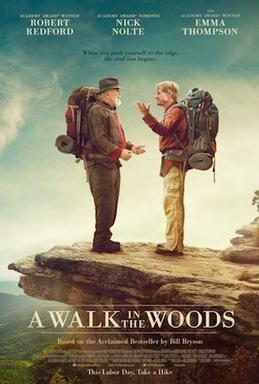
Whilst I find Bill Bryson amusing, his, possibly contrived, whimsey would probably get on my nerves if I read too much of him. I have never read A Walk in the Woods: Rediscovering America on the Appalachian Trail, but I have sometimes thought how it must be to walk it. During my Camino to Santiago de Compostela I walked for some days with a guy who had done it three times; he was all at once a loner but at the same time he craved company. I guess that you really do have to be a loner to walk all 2,200 miles of the Appalachian Trail. I thought that you might find this article interesting, and it may whet your appetite for watching the movie of the book (walking movies are all the rage) which stars Robert Redford and Nick Nolte, due for release 2 September.

By Robert Moor

First published in the New Yorker, 21 August 2015

When I was eighteen, I bought a copy of Bill Bryson’s A Walk in the Woods: Rediscovering America on the Appalachian Trail which remains, if my conversations with strangers are any indication, the only book anyone has ever read about the Appalachian Trail. It was summer. My friend Andy and I had driven across the country and ended up in the town of Sheridan, Wyoming, where we stayed for a week with a genial middle-aged couple, family friends of my friend. Scanning my hosts’ bookshelves, as I have a tendency to do, I was quietly horrified to discover that they were exclusively stocked with works of pop evangelicalism (Rick Warren and the like). It was a literary desert: xeric, Mosaic. Bryson’s book was the only one I’d brought, so, while Andy rode dirt bikes with a guy named Dusty, I lay on a fold-out couch in the basement, consuming it in controlled bursts, as if bolting food rations.

I had dreamed of hiking the Appalachian Trail since I was ten years old. From Bryson’s wry, well-researched account, I began to learn how it would feel to walk through two thousand miles of mountainous wilderness. What stood out most were the descriptions of “tranquil tedium,” a seemingly endless trudge through the “cubic” vastness of deep woods. “At times,” he writes, “you become almost certain that you slabbed this hillside three days ago, crossed this stream yesterday, clambered over this fallen tree at least twice today already. But most of the time you don’t think. No point. Instead, you exist in a kind of mobile Zen mode, your brain like a balloon tethered with string, accompanying but not actually part of the body below. Walking for hours and miles becomes as automatic, as unremarkable, as breathing.”

Around page one hundred, I reached the passage where Bryson and his hiking partner study a wall-map of the trail in an outdoors store, in Gatlinburg, and, overcome by the sight of how little of it they had already walked, decide to skip the state of North Carolina and drive to Virginia. I let out a howl of indignation and threw the book against the wall. But, needing to know how the book ended, I picked it back up again. I repeated the cycle (howl, throw, retrieve) when Bryson decided to skip the northern portion of Virginia and just drive up the trail, taking hikes here and there, and again when he quit a quarter of the way through the Hundred-Mile Wilderness, at which point he concludes, defiantly, “I don’t care what anybody says. We hiked the Appalachian Trail.”

There, in that basement, I resolved that one day I would hike the trail the right way: from end to end, in one continuous trip—what’s often called a “thru-hike,” always with that peculiar, abridged spelling, otherwise reserved for fast-food signage and nineteenth-century poetry.

I eventually did so, in 2009. It was roughly how Bryson described it: long, hard, and monotonous, but also beautiful and enlightening and wonderfully (and then, later, worryingly) slimming. While hiking the trail, I learned that whenever a thru-hiker met a day-hiker (as thru-hikers somewhat dismissively refer to those who are “just out for the day”), the day-hiker would invariably ask the same question: “Have you read ‘A Walk in the Woods’?”

Many thru-hikers bristle at this question. By quitting in Gatlinburg and then hop-skipping up the trail, Bryson bastardized the central conceit of a thru-hike, which is that you hike through—through mountains and valleys, through farms and small towns, through pain, through hunger, through nagging doubt. For thru-hikers, the continuity is the point, in the same way that running a marathon is more meaningful than running four separate 6.5-mile races. Certain thru-hikers, referred to as “purists,” take this emphasis on continuity to obsessive lengths. Some touch or kiss every blaze of white paint along the trail, while others carefully line up their shoes, like Japanese slippers, in the precise spot they entered a lean-to, so as to know exactly where to resume hiking the next day.

Bryson thus finds himself in the curious position of being both the outward face of the Appalachian Trail and its most inwardly mocked figure. This discrepancy will likely intensify when the film version of the book, starring Robert Redford and Nick Nolte, premières on September 2nd. I gather that some people who have thru-hiked the Pacific Crest Trail feel similarly about “Wild,” Cheryl Strayed’s best-selling hiking-memoir-turned-feature-film about hiking one third of the P.C.T. There is also the curious case of Paulo Coelho, the author of, among other books, “The Pilgrimage,” a best-selling account of walking the Camino de Santiago de Compostela, the famed network of pilgrimage routes across Spain (and beyond). Coelho quit in the town of O Cebreiro, some hundred miles short of his destination, and then rode in a bus to Santiago de Compostela. According to a profile of Coelho published in this magazine in 2007, the proprietor of a hotel along the Camino told Coelho that his book had done wonders for his business. “As Hemingway was for San Fermín, you are for the pilgrimage!” he exclaimed.

The question arises: why are the three most famous accounts of hiking three of the world’s most famous long-distance trails written by people who did not hike the whole distance?

One obvious answer: great writers are simply less athletic than your average human. But this theory crumbles upon closer inspection. John Muir walked a thousand miles, from Kentucky to the Gulf of Mexico, while Vachel Lindsay walked from Illinois to New Mexico, Matsuo Bashō walked the length of Honshu and back, Rory Stewart walked across the mountains of South Asia, Robyn Davidson walked across Australia, and Patrick Leigh Fermor walked across Europe.

In fact, I would argue that the loneliness and skull-bound nature of a long-distance hike fits quite nicely with the thinking out, if not the actual writing, of books. The dusty back aisles of Amazon are glutted with first-person accounts of successful thru-hikes, most of which tend to be buffed-up re-writes of the author’s trail journal. These books have a limited audience (namely, other thru-hikers), whereas the books that become best-sellers speak to people who would never embark on a long-distance hike in the first place. “A book about hiking the Appalachian Trail? Spare me. I could imagine it: We walked. We saw trees. We went up. We went down,” snarked a 1998 article in the New York Times, before praising the many charms of Bryson’s book.

The rare best-sellers leap this pitfall by hitching onto other well-established genres: Bryson’s is a humorous travelogue, Strayed’s a memoir about healing, and Coelho’s a quest novel. They also avoid the doldrums of strict, day-by-day linear storytelling. Instead, Bryson chunks his trip into discrete regions, drilling down into the history of each; Strayed pares the story back to a string of anecdotes, and then interweaves them with flashbacks from her rocky upbringing; and Coelho structures the walk around a series of spiritual “exercises”—battle a dog, climb a waterfall, raise a cross—assigned by his guide, Petrus. The reader is never tempted to skip ahead to see if the author finished the trek or not, because that has ceased to be the point.

Finally, all three narrators share the nervous, wide-eyed enthusiasm of a greenhorn. Reading the list of extraneous items that Bryson and Strayed packed for their thru-hikes—folding cutlery, a plastic dish, a spare gas bottle, four bandannas, a “big knife for killing bears and hillbillies”; a towel, binoculars, a foldable saw, a stainless-steel digging trowel, a metal votive-candle lantern, shampoo, conditioner, a hairbrush—made this minimalist’s teeth grind. But I imagine that a non-hiker might read that same list and think, “Oh wow, is that all? For four months?” Because they began in places of utter ineptitude and painfully ascended to the status of hardened veterans, Strayed, Bryson, and Coelho were able to fashion engaging emotional trajectories for their books. But that same lack of preparation and training made it exceedingly difficult for them to finish the trail, so they were ultimately forced to trim back their ambitions.

It has been twelve years since I last read A Walk in the Woods: Rediscovering America on the Appalachian Trail I picked it up once following my thru-hike, but I found I was too close to the material; I quibbled over every description, guffawed over every misstep. Recently, while working on my own book about trails, I picked up my old copy again. Reading it as a writer, rather than a hiker, it felt fresh. In a voice at turns erudite, acid, and tender, it somehow manages to provide a brisk overview of both the long history and the vast expanse of the trail. Bryson captures the alienating shift in perception that attends a return to civilization from an extended stay in the wilderness, and uses that weird lens to inspect the more grotesque aspects of American society. He manages to sound the depths of a lifelong friendship without becoming maudlin. And he ultimately succeeds in claiming a personal victory from an otherwise botched expedition. In the book’s concluding pages, he catalogues all he gained from his hike: “For a brief, proud period I was slender and fit. I gained a profound respect for the wilderness and nature and the benign dark power of woods. I understand now, in a way I never did before, the colossal scale of the world. I found patience and fortitude that I didn’t know I had. I discovered an America that millions of people scarcely know exists. I made a friend. I came home.”

In the end, as at the beginning, I found “A Walk in the Woods: Rediscovering America on the Appalachian Trail to be a delightful little book. Still, I don’t care what anybody, including the author, says: Bill Bryson did not hike the Appalachian Trail.

Buy A Walk in the Woods: Rediscovering America on the Appalachian Trail

The reader’s guide to walking: Why we do it and what we think about it

Walking for pleasure … No, let me start again. Walking as a recreational activity dates only from the late 18th century. Prior to that human beings walked because they had to – either they were nomadic or walking was their only way of going on a necessary journey. The Wordsworth family were pioneers; William and his sister Dorothy ate up the miles around their home in Grasmere. To read Dorothy’s journals is to be flabbergasted by how much walking the pair did, most days, in all seasons, all weathers, walking for maybe three hours at a time, Dorothy in her ankle-length skirts, and often just for a cup of tea. The curious side to this is how often Dorothy reports one or both of them as “ill” – bowel problems it seems – they got the exercise right but not the diet.

by Gerard Windsor

First published in The Sydney Morning Herald, 18 July 2015

Yet the Wordsworths were primitives on the recreational walking scene; generally they went out their own front door and were home the same day. As the 19th century wore on and the railways opened up, walkers could select a protracted itinerary far from home. That sub-species of travel writing, the record of the walking tour, was born.

First among the writers were the now unread George Borrow, and the rather more read R. L. Stevenson with his 1879 Travels with a Donkey in the Cevennes​ (read not least because of its re-enactment by the young Richard Holmes in his 1985 Footsteps). The genre flourished in the 20th century – Hilaire Belloc’s The Path to Rome (1902), Eric Newby’s A Short Walk in the Hindu Kush (1958), Patrick Leigh Fermor​’s trilogy of his walk from the Hook of Holland to Istanbul between 1933 and 1935 … On and on they stride.

Walking of this kind is a rarefied activity, restricted to the better-off citizens of First World countries. Compulsory walking, the endless forced marches of pedestrian refugees, is as common as ever. And over the whole enterprise of walking hangs the armageddon imagined by Cormac McCarthy in The Road where there’s no alternative, if there’s to be any salvation at all, but to walk. For a man such as McCarthy, whose other fiction has been so equestrian centred, this pedestrianism is the ultimate degradation.

Meanwhile leisure walking is a snowballing business, and increasingly up for analysis. A Foucault scholar, Frederic Gros​, has given us A Philosophy of Walking, a fair example of the Gallic intellectual’s blend of non-sequential abstraction and soaring rhetoric.

Gros doesn’t actually let on whether he himself has so much as walked to the boulangerie, but he does micro-studies of prodigious walkers, notably Rimbaud and Nietzsche. Given that one gave up his poetical vocation for a career (highly unsuccessful) in trade, and the other went mad, I can’t unravel Gros’ argument. But he does make one striking point – walking is very monotonous but never boring. I think that’s a very French, and fair, sort of distinction.

Much more feet on the ground is Canadian Dan Rubinstein​’s Born to Walk, an encyclopaedia of the benefits of walking, scary to the delinquent and cheering to the virtuous.

It’s full of facts and the results of studies – sitting is the new smoking, the catastrophic plunge in the number of children walking to school is in inverse proportion to the rise in obesity levels, regular exercise in a park or forest will halve chances of developing a mental illness, Australian adults average 9700 steps each day while Americans only manage 5100, and there was an epidemic of the wonderfully named hysterical fugue, alias dromomania, alias compulsive wandering, in Europe in the late 1800s.

Rubinstein, who likes to walk in the snow, is earnest, and also very secular, so that he’s sniffy about pilgrimages. But they’re not to be sneezed at; the walk to Santiago de Compostela​ is engendering books on an industrial scale: pioneer producers included David Lodge (solid), Paulo Coelho​ (an acquired taste), Shirley MacLaine (nutty).

For many Santiago pilgrims the walk ends on the Galician coast, at Finisterre. So Land’s End in Cornwall is also a fitting terminus for a walk. The superb Yorkshire poet, Simon Armitage, recently elected the new Professor of Poetry at Oxford, spent three weeks on the road in 2013, starting from Porlock (of Coleridgean memory) in Somerset and following the South West Coast Path for 250 miles to Land’s End. (He actually went on to the Scilly Isles, but not being Jesus he had to take a boat, so Land’s End is where he stopped walking.)

He records the trip in Walking Away, a sequel to his Walking Home, an account of his 2010 walk along the Pennine Way, the spine of England. He ends his new book unequivocally: “I won’t be doing any more long walks.” Twenty pages earlier he records his father (a great bit part) phoning him and saying, “I think this will be your last long walk”. Armitage comments “it’s less of an observation and more of an instruction, issued partly out of concern for my skeletal structure and partly as a response to increased child care duties.”
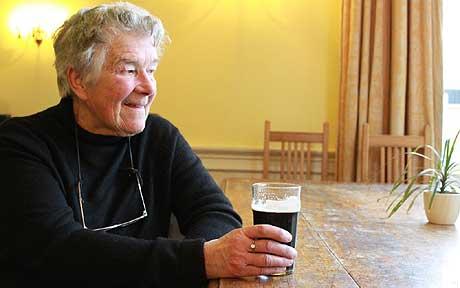
I wouldn’t bet on either of them being right. For both walks Armitage arranged in advance to give a reading every evening, pass a capacious sock around at the end, and spend the night as a guest of the local organiser. The strategy works well, and so do the books. Not least because Armitage is a born humorist, particularly adept at recording (or maybe recreating) snatches of dialogue. At his last reading, on the island of Tresco, a woman asks if she can come up and read some of his work.

” ‘I don’t know if that’s a good idea,’ I say. ‘I’ll be good at it. I’m an auctioneer,’ she replies.”

Walking books rely on two staples – the trials and the encounters of the way (once upon a time these were combined – dragons, or giants). Armitage’s encounters are fleeting; his hosts for the night, locals who accompany him part of the way. His family pop up in cameo appearances and he is joined periodically by his oldest male friend, an apparently charming sponger known as Slug. There is also a beautifully delivered story about someone thanked in the Acknowledgements as “the hooded lady who propositioned me on the path between Clovelly and Hartland Quay”.

In all these encounters Armitage presents himself as reticent, but readily recording the topics of the garrulous. There is no suggestion of any conversations about emotional issues or the meaning of life. It’s that sort of book. In one way Armitage’s main encounter is with the landscape. A student of geography at university, he weaves precision of observation and naming with a poet’s unforced lyricism.

The second staple of the walking book are the trials. The grimmer the better. I can’t think of a greater masterpiece of the genre than Apsley Cherry-Garrard’s 1922 The Worst Journey in the World, his account of an ordeal that no human should have survived during Scott’s fatal expedition to the Antarctic. Beside this account anything else is a stroll, a doddle. Cherry-Garrard has permanent rights to his title.

For Armitage the Pennines were infinitely bleaker than the South Coast, the weather far worse, his chances of getting lost stronger, the likelihood of his giving up more immediate. This gives an edge and a tension to Walking Home that Walking Away lacks, but the pair are a treat, just the things to slip into for a winter hike, around the heater.

Gerard Windsor’s most recent book is Angels Before Me: The Road to Santiago. He is about to attempt the European Peace Walk from Vienna to Trieste

In the footsteps of Marco Polo: the journey that changed William Dalrymple’s life

Taken from the introduction to the 25th anniversary edition of William Dalrymple’s first book In Xanadu: A Quest, and first published in The Spectator on 24 June 2015

At the end of the windy, rainy April of 1986, towards the end of my second year at university, I was on my way back to my room one evening, when I happened to trudge past my college notice board.

There my eyes fell on a bright yellow sheet of A4, headlined in capital letters THE GAILLARD LAPSLEY TRAVEL SCHOLARSHIP. It hadn’t been a good week. I was 21: broke, tired of revision for exams and already longing for the holidays. But stopping to look closer, I found that the notice was an announcement concerning a fund that had been established in the memory of some recently-deceased history don; its stated aim was to fund research travel for the college’s mediaeval historians. There were, I knew, barely a handful of mediaevalists in the college.

I walked straight over to the library, found a large quarto edition of The Times Atlas of World History and leafed through the pages to see what was the longest and most ambitious mediaeval journey I could think of following: the longer the trip, I figured, the larger the grant I could apply for.

An hour later I had typed out an application for an expedition to follow the outward journey of my childhood hero, Marco Polo, from Jerusalem to Kubla Khan’s Xanadu in Mongolia. The place names were the stuff of fantasy, and so, I felt sure, was the application. But I happened recently to have seen an article announcing that the Karakorum Highway linking Pakistan to China had just been opened to travellers. This meant that following Polo’s journey was technically feasible for the first time since the Soviet invasion had cut the hippy’s overland route a decade earlier. I posted the application in the letterbox of the don responsible, then went back to my revision and forgot all about it.

A month later, I was returning to my rooms from the last of the year-end exams when I found an embossed college envelope had been slipped under my door. Inside was a short letter and a cheque for the princely sum of £700: much the largest cheque anyone had ever written me. To my immense excitement, but also real foreboding, I found I had just committed myself to an enormously long and dangerous journey through a part of the world I was almost entirely ignorant about. To make matters worse, I had just been chucked by the girlfriend with whom I had planned to make the journey.

It was not a promising start; but the expedition which followed remains by far the most exhilarating I have ever undertaken: nothing I have done since, in half a lifetime of intense travel, has ever begun to equal the thrill of that 16,000-mile three month journey, walking, hitchhiking and bussing from one side of Asia the another. It was also a journey that, in a very real sense, changed my life forever.

I had already travelled in India, and the previous summer had hitchhiked from Scotland to Jerusalem following the route of the First Crusade. I read more widely still among the English travel writers, and Eric Newby, Bruce Chatwin, Peter Fleming, Patrick Leigh Fermor and especially Robert Byron were then my literary Gods, at whose altars I worshipped with an almost fundamentalist fervour. Now I was determined to write my own travel book, and from the first morning of the trip, on arrival in Jerusalem, I kept detailed notes with a view to producing a book that I wanted to be an updated homage to Robert Byron’s The Road to Oxiana, a text I loved so much and had read so often, that I knew great chunks of it by heart.

The result was In Xanadu: A Quest. The book, which was first published quarter of a century ago, in 1989, had a lucky reception. The early 1980’s was a time of disenchantment with the novel, and travel writing seemed to present a serious alternative to fiction. A writer could still use the techniques of the novel – to develop characters, select and tailor experience into a series of scenes and set pieces, arrange the action so as to give the narrative shape and momentum – yet what was being written about was true. Moreover, unlike most literary fiction, travel writing sold.

The success of Paul Theroux’s The Great Railway Bazaar, with its sales of 1.5m copies, had dramatically breathed life into the sort of travel memoir that had flourished in an earlier age, but which had languished since the European empires imploded after the Second World War. Its success inspired Bruce Chatwin to give up his job as a journalist and to go off to South America. The result – In Patagonia – was published in 1977, the same year Leigh Fermor produced A Time of Gifts. The final breakthrough came in 1984 with the publication of the celebrated travel writing issue of Granta: ‘Travel writing is undergoing a revival,’ wrote Bill Buford, the magazine’s editor, ‘evident not only in the busy reprinting of the travel classics, but in the staggering number of new travel writers emerging. Not since the 1930s has travel writing been so popular or so important.

So In Xanadu came out at just the right moment, when travel writing was at its most popular. Partly as a result of this lucky timing, the book got generous reviews, was an immediate bestseller and won a small clutch of prizes. It allowed me for the first time to think of writing as a feasible career. It nonetheless remains a text I have always felt deeply ambiguous about.

For In Xanadu records the impressions, prejudices and enthusiasms of a very young, naïve and deeply Anglocentric undergraduate. Indeed my 21 year old self – bumptious, cocky and self-confident, quick to judge and embarrassingly slow to hesitate before stereotyping entire nations – is a person I now feel mildly disapproving of: like some smugly self-important but charming nephew who you can’t quite disown, but feel like giving a good tight slap to, or at least cutting down to size, for his own good.

And yet this book brings back so very many happy memories. It retains, bottles and distills all the good humour, cheerfulness and joie de vivre of one of the very happiest periods of my life, a period when every day contained an adventure, a discovery or an epiphany. Re-reading it now, on the cusp of my 50th birthday, what was even more pleasurable than being reminded of forgotten places and adventures, was that sensation of recovering the raw intoxication of travel during a moment in life when time is endless, and deadlines, responsibilities and commitments are non-existent; when the constitution is elastic, and the optimism of youth undimmed; when experience is all you hope to achieve and when the world is laid out before you like a map, ready and waiting to be explored.

The great Swiss travel writer, Nicolas Bouvier, wrote that being on the road, ‘deprived of one’s usual setting, the customary routine stripped away like so much wrapping paper,’ reduces you, yet makes you at the same time more ‘open to curiosity, to intuition, to love at first sight… Travelling outgrows its motives. It soon proves sufficient in itself. You think you are making a trip, but soon it is making you—or unmaking you.’

For better or worse, In Xanadu made me. I am still with the editor who bought the book for Collins, Michael Fishwick: we have now worked on eight books together about the Middle East, and South and Central Asia – the world opened up for me by that 1986 journey. Shortly after it was published, I married my very charming flatmate, who had edited much of the manuscript, even though she was then working for finals. Together, we moved out to Delhi. She wanted to paint; I wanted to begin work on the book which became City of Djinns. Thirty years later, we’re still there, with three children, the eldest of whom is now herself at university, planning her own ambitious trips around the world.

I still see my two long suffering travelling companions. Lousia is now a skilled picture restorer, married a very handsome and rich young man, and they live in some style in the Anglo-Welsh marches south of Hay on Wye. Laura went on – to no one’s surprise – to become one of the country’s most successful – and formidable – businesswomen and pops up in the press every now and then having climbed some dizzying new corporate pinnacle.

Many of the countries we passed through have fared less happily. Syria, so hospitable to us, is now gripped by civil war and the Islamist anarchy of Isil. Pakistan, so thrillingly wild yet alluring then, is now a much more dangerous and tortured country than it was in the 1980s. Conversely, China – then a land of bicycles, Mao suits and tannoys blaring strident political slogans down every main street – has become the world’s newest economic superpower, something unimaginable at the time. So much has changed.

Travel writing has also changed. If travel writing used principally to be about place – about filling in the blanks of the map and describing remote places that few had seen – the best 21st-century travel writing is almost always about people: exploring the extraordinary diversity that still exists in the world beneath the veneer of globalisation. As Jonathan Raban memorably remarked: ‘Old travellers grumpily complain that travel is now dead and that the world is a suburb. They are quite wrong. Lulled by familiar resemblances between all the unimportant things, they miss the brute differences in everything of importance.’

Raban is not alone in this conviction. Colin Thubron, perhaps the most revered of all the travel writers of the 80s still at work. He is also clear that the genre is now more needed than ever: ‘Great swaths of the world are hardly visited and remain much misunderstood – think of Iran,’ he told me recently. ‘A good travel writer can give you the warp and weft of everyday life, the generalities of people’s existence that is rarely reflected in academic writing or journalism, and hardly touched on by any other discipline. Despite the internet, google maps and the revolution in communications, there is still no substitute.’

In Xanadu records a world that has in many ways already disappeared, and it is an oddly avuncular pleasure to see one’s own memories slowly turn into the raw material of history. Yet for all its youthful innocence and naivety, and the excruciating sense of entitlement exuded by the narrator, as well as the occasional downright silliness of the opinions he expresses, I am still immensely proud of this book, and prouder that the Folio Society have chosen to reissue it. This, after all, was the journey and the book which started everything for me. I feel immense nostalgia looking through the photographs the Folio Society has painstakingly selected from bundles of my old negatives, and hope that the text too still retains some interest, 25 years on: a message in a bottle from a lost moment in time and space, fished ashore and opened up anew.

Dervla Murphy in conversation with Jasper Winn, 8 July

dervla-murphy460_1670571cJasper Winn is a good friend of the blog and it seems he is to appear at Waterstones, Cork in conversation with Dervla Murphy on Wednesday 8th July at 7pm. For details phone 021 4276522.

Dervla Murphy will also be appearing at the Junction Festival in Clonmel on Monday 6th July at 7pm. For more information go to: The Junction Festival

And at the ‘Literary Brunch’ West Cork Literary Festival on Saturday 18th July with Anthony Sattin. For more information go to: West Cork Literary Festival

In November you can catch Dervla in London at the Slightly Foxed Readers Day, at the Art Workers Guild, Bloomsbury on Saturday 7th November. For more information go to: Slightly Foxed.


Walking from the east side of the Cascades across the Columbia Plateau to the Oregon border

When we imagine the interior of the United States I would guess that many of us think of wide open spaces where we can roam free on the range with what is left of the playing deer and antelope. Watching this longer installment from our long-time blog friend Owen Martel which covers the first part of his Walking the West – shore to shore across the USA – you realise that the US is not always walker friendly country.

For a place that values freedom there are an awful lot of No Trespassing signs, but it makes for interesting viewing. If you wish to watch more of Owen’s videos please visit his You Tube page.

Owen tells us

This one covers the whole stretch from the east side of the Cascades across the Columbia Plateau to the Oregon border. In retrospect, it was a shakedown, Murphy’s-law kind of episode, early enough in the trip that I was still getting into the swing of things. I was glad to revisit the happier interludes, and happy to work out a new perspective on the trickier parts.

Apologies in advance to Francis Fermor for another post not directly related to his relative.

Thank you – test successful

One word of advice. If you don’t want your email inbox jam-packed full, don’t ask hundreds of people to send you an email !!! Please stop replying now 🙂

Thank you all for your replies. The test was successful in that the notifications clearly work but there may be a problem with some email providers. We will work through it.

Have a great weekend and if in Europe a pleasant holiday weekend.

Tom