Category Archives: Paddy in the News

Initial fundraising for Kardamyli

The PLF Society has been moving forward quickly in its dealings with the Benaki over Paddy’s house. Achieving its restoration, and Paddy and Joan’s goal of turning it into a writer’s retreat is one of the main aims of the Society. Today they report on progress and are making an appeal for initial funds to finance critical works at the house until funding for the long-term work has been raised. The Benaki have come up with a plan which encompasses many uses which if achieved would meet the goals of Paddy’s bequest.

A summary of the PLF Society’s appeal is below, with further details to be found on the attached PDF.

Steady progress is being made on the Kardamyli house. The Benaki Museum has now sent us a document that sets out its plans and we have finalised the team that will look after the interests of the Society and its members: our lawyers Watson Farley & Williams are now supported by an experienced architect and we have appointed Grant Thornton as accountants.

You will see from the attached summary that we are now able to proceed with raising 20,600 € (about £15,000 or US$24,000) for preliminary things that need to be done at the house. As the amount of this initial fundraising is relatively modest, we are hoping that it will be possible to raise it from our members and others associated with the Society.

In July the Benaki will know if it has been successful in raising finance for the main renovation works planned for the house which are expected to cost some 630,000 €. In the event that some or all of these funds are not raised by the Benaki, the Society has pledged to find the remainder and for this we have made contingent plans to extend the fundraising to include external sources.

Read the full initial fundraising PDF here.

Link

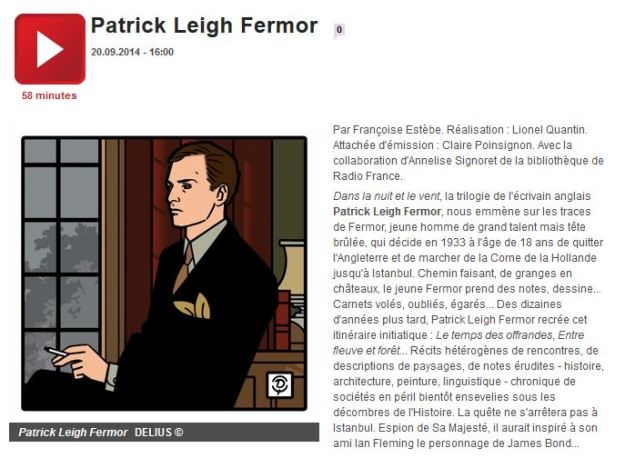
Capture1A broadcast on France Culture radio featuring Paddy speaking his best French, supported by Artemis Cooper and her father John Julius Norwich. Lovely to hear Paddy speaking and also to brush up some of the old French given that we all know the context. With contributions from others. Click the picture above to visit the site and then press the play icon. The player will open in a new window and can be a little slow to load so just be patient but the quality is fine and worth the wait.

Interesting that with this and the TV interview alongside the brilliant Nicolas Bouvier, the French are running neck and neck with the BBC for airtime about Paddy. Watch Paddy here (he appears around 29 minutes.)

El último aventurero romántico

A profile in Spanish from El Pais. The Spaniards appear to have a great interest in Paddy and his works, possibly encouraged by the translations of Dolores Payás, the author of Drink Time! which many of us enjoyed last year.

By Jacinto Antón

First published in El Pais, 3 July 2013

Es el efecto que provoca el recuerdo del viejo aventurero romántico, ¡diablo de hombre! Mientras hablamos de sir Patrick Leigh Fermor (Londres, 1915- Dumbleton, 2011) evocando sus hazañas, sus líos de faldas, sus viajes, la belleza de sus escritos, sus grandezas y debilidades, la admiración y, sí, el amor, que sentíamos por él, su amiga y biógrafa Artemis Cooper se pone de pie extemporáneamente y se pone ¡a bailar una danza griega! Yo diría que un sirtaki.

La escena resulta inesperada y sorprendente en esta tarde londinense en la pequeña librería Nomad Books de Fulham, donde tomamos los dos un té en tazas con portadas de Penguin rodeados de libros y silencio. La librera y los demás clientes nos miran con disimulo. La historiadora y editora Artemis Cooper, autora de la extraordinaria biografía Patrick Leigh Fermor, una aventura, recibida con unánimes elogios en Reino Unido y recién aparecida en España (RBA), es bien conocida en el barrio, donde vive con su marido, el célebre historiador militar Antony Beevor (inmerso, por cierto, en la batalla de las Ardenas), y su arrebato es recibido con británica flema. La observo danzar aferrado a mi cuaderno de notas, sin saber si he de sumarme al baile.

Hablábamos de la vitalidad de Leigh Fermor, el sensible y curioso adolescente que cruzó Europa andando en los años treinta, codeándose con aristócratas y domadores ambulantes de osos, el oficial de inteligencia, el valiente soldado de operaciones especiales que secuestró en un golpe de mano audaz al comandante de las tropas nazis en Creta, el guapo amante que conquistó a tantas bellas mujeres, el refinado, culto y políglota escritor que nos ha dejado libros tan hermosos como El tiempo de los regalos, Mani, Roumeli o Un tiempo para guardar silencio, el filoheleno émulo de Lord Byron que rescató las zapatillas del poeta y cruzó nadando el Helesponto a los 69 años. “Al entrar él en una habitación, todo el mundo se sentía más vivo, ligero”, recordaba la escritora. “En Atenas, cuando era pequeña, íbamos por las tardes a las tabernas y él hablaba con la gente, y pasaban cosas. Empezaba a cantar, canciones griegas que interpretaba de manera fenomenal. Y se ponía a bailar. Bailaba maravillosamente”. ¿Como Zorba?, le he preguntado interrumpiendo sus recuerdos. “Exacto. Mejor. Anthony Quinn bailaba de manera algo dejada, abandonándose. Paddy era más decoroso. Sus movimientos, majestuosos, enérgicos”. Y es entonces cuando Artemis Cooper, una mujer madura (1953), atractiva, culta y de refinada elegancia –no en balde, nacida como la honorable Alice Clare Antonia Opportune, es hija del segundo vizconde Norwich y nieta de Lady Diane Cooper– , ha retirado su silla con resuelta determinación, se ha levantado y ha ejemplificado cómo danzaba Leigh Fermor poniéndose ella a bailar. Observo que calza deportivas.

Read more here.

Among the Quick and the Dead

If you are coming to the end of a celebrated life, chances are that someone has already suggested writing your biography – a thought, as Oscar Wilde pointed out, that lends a new terror to death. The print run will be measured in thousands, and modern readers feel shortchanged unless all is revealed: sex, money, secrets, skeletons and dirty linen. The prospect is appalling but once you are dead, you probably won’t mind so much.

By Artemis Cooper

First published in The London Library Magazine, Spring 2013

I was commissioned to write the life of Elizabeth David by her literary executor, Jill Norman, in 1995 – by which time Mrs David had been in her grave for three years, and her papers had been expertly catalogued by Jill’s partner, the writer and book-dealer Paul Breman. Housed in two long rows of matching box-files, the archive marched the entire length of an airy studio in Rosslyn Hill. Most of the papers were to do with work, but my worries that there might not be enough material to make a good story soon evaporated. Her correspondents included Jane Grigson, Lawrence Durrell and John Lehmann, and in her own letters you can hear the irony in her voice, the salty chuckle.

And while her middle years were more sedate than her turbulent youth, what kept the narrative going was that in life Elizabeth was demanding and difficult. There was always a spectacular row brewing, with publishers, lovers, friends and family – sooner or later everyone fell foul of her, and a series of blistering letters (she kept copies) were left to tell the tale. When I wasn’t at Rosslyn Hill, sustained by cups of high-octane coffee, I was out interviewing. Derek Cooper told me how Elizabeth’s reluctance to be interviewed on radio almost wrecked an episode of The Food Programme devoted to her work, while Sybille Bedford described the way she could suddenly go cold on you from one second to the next. I had lunch with people who cooked a lot better than I did, and they often made me her favourite dishes. The exception was the novelist Paul Bailey who looked at what he had just bought for lunch and said, ‘I’m glad I’m cooking this for you and not Liza… She hated quail, and cauliflower.’

So I didn’t realise just how easy I’d had it until I began to tackle the life of Patrick Leigh Fermor, in 2001 – while he was still living it. I had known him since I was a child, and had already interviewed him for a previous book about wartime Cairo. He didn’t like the idea of a biography, and neither did his wife Joan. But friends had persuaded them that unless Paddy appointed someone to write his life, he might find himself the subject of a book whether he liked it or not. I was told I could go ahead, but I had to promise not to publish anything until after they were both dead, which I thought very sensible. I would be free to write without them looking over my shoulder, and they would never have to wince or groan at what I had written. The disadvantage was that it might be many years before the book saw the light, but that seemed a price worth paying.

Work got off to a slow start. Paddy did not like being interviewed, and would keep my questions at bay with a torrent of dazzling conversation. He was also very unwilling to let me see many of his papers, though the refusal always couched in excuses. ‘Oh dear, the Diary…’ It was the only surviving one from his great walk across Europe, and I was aching to read it. ‘Well it’s in constant use, you see, as I plug away at Vol III,’ he would say. Or, ‘My mother’s letters? Ah yes, why not. But it’s too awful, I simply cannot remember where they’ve got to…’ It was quite obvious that he and Joan, while being unfailingly generous, welcoming and hospitable, were determined to reveal as little as possible of their private lives. While they were more than happy to talk about books, travels, friends, Crete, Greece, the war, anything – they would not tell me any more than they would have told the average journalist. Oh to be back with the uncomplicated, properly archived dead!

Please don’t get me wrong, I did not wish Paddy and Joan dead. Far from it, because I realised I was going to need all the years that Providence could spare them just to write the book. I think I must have spent whole months in the doldrums: plodding away with the reading and the research, writing the easy passages, but feeling as if the book would never take off. It felt as heavy as cold dough.

In June 2003 Joan died unexpectedly, leaving Paddy numb with shock and grief. Joan had never stopped Paddy talking to me, encouraging us both to make the most of my visits to Kardamyli. Yet Paddy’s scruples did ease after her death. He talked more freely, but he could still wish he hadn’t said things. One afternoon he told me how he had written a long letter to his mother about the first great love of his life, Balasha Cantacuzene, soon after they began living together. He waited eagerly for his mother’s reply; but when it arrived, ‘all I found in the envelope was my own letter, torn to shreds.’ He looked up, and at that moment I suppose he caught a glimpse of his biographer’s cunning eyes, sharp teeth and whiskers. ‘You won’t put that in, will you?’ he said anxiously. ‘Oh no Paddy, of course not,’ I said, quickly resuming my expression of calm serenity.

As time went on I told similar fibs. When I stumbled on the fact that he had not been on horseback when first setting out on the Great Hungarian Plain (though he was a bit later) he looked rattled. ‘I thought the reader would be getting bored of me just plodding along on foot. I say, you won’t let on, will you?’ Oh no, Paddy, I won’t let on…

Most curious to me was how reluctant he was for the story of the Cretan vendetta to appear in print. It all began in occupied Crete in May 1943. As Paddy was checking a rifle he did not know was loaded, he inadvertently killed his Cretan guide, Yannis Tzangarakis. After the war Paddy sought out Yanni’s brother, Kanakis , to try and explain what had happened and beg his forgiveness. But Kanakis upheld the old Cretan code of honour, which demanded blood for blood. He used to lie in wait for Paddy on his regular returns to Crete, for reunions with his old brothers-in-arms. The feud was only dropped in 1972, and culminated with the traditional happy ending: Paddy was asked to baptize one of the Tzangarakis family. He called the little girl Ionna, after his wife Joan and the friend he had so tragically killed.

Paddy told me the story in great detail, and finished with the dreaded words ‘You won’t put that in, will you?’ Normally I would have reassured him, but this time I made a stand. ‘Why ever not?’ I asked. ‘Everyone concerned behaved according to their principles, until peace and reconcilliation triumphed: who could possibly object to that?’ He replied that the story was still a very sensitive one in Crete. I did not doubt it, but felt that enough time had elapsed for the tale to do no harm. I knew Paddy was still in touch with his god-daughter Ionna, then a young woman in her thirties, so I suggested we get in touch and ask her. If she didn’t mind, who else would? Paddy was not convinced: ‘I’ll have to dig out her address…’ And that was the last I heard of it, until I got in touch with Ioanna myself. How? By looking her up in his address book when he was taking a nap. Biography is not work for the morally squeamish.

There were certain things he hated talking about, one being his writing: ‘Well, you know, I just scribble away and then of course it has to be gone over quite a bit…’ Attempting to dig deeper, I once compared his vision of Greece to that of Kevin Andrews, author of a harrowing book which Paddy very much admired called The Flight of Ikaros. Andrews had much to say about the scars left by the Greek Civil War of the late 1940s, while in Paddy’s books it is scarcely mentioned. ‘His book shows Greece as Goya would have seen it,’ I went on, ‘wheras your Greece is more like a Claude Lorrain….’ It was a crude analogy, only made to get him to talk about why he wrote about Greece the way he did. Paddy looked utterly crestfallen and said, ‘Oh my God, am I that superficial?’

A romantic gallantry meant that he never talked about his girlfriends, either. After much cajoling he told me about Liz Pelly, to whom he lost his virginity; and after a while, I began to pick up the words and phrases he used to hint at his affairs. ‘We were terrific pals, you know,’ was one of them. Luckily, there were letters – but I had to be careful there, too. There was an open fireplace in his study, and I never wanted him to think of using it for anything other than keeping warm.

For people who went through the two world wars, letters were sacred. Not only did Paddy and Elizabeth keep all their letters, but their correspondents did too, giving you whole flights of conversation. Letters are the bedrock on which biography is built, and without their testimony, I don’t think biography as we know it is possible. I doubt that anyone can get under someone else’s skin on the basis of a lifetime’s worth of emails.

If writing lives of the recent past, the biographer relies on the goodwill of those who knew the subject best – usually their friends and family. It is they who are going to tell you what you need to know, show you the letters, point to possibilities. I have been blessed in those I have depended on, and have come to feel a great regard for nephews in particular – but I have never had to deal with a subject’s children, because neither Paddy nor Elizabeth had any. Elizabeth always knew she never wanted babies. Joan yearned for them, but by the time Paddy was ready to face the prospect of paternity it was too late.

Children must be one of the trickiest challenges one can face. How could they not resent this outsider rootling around? Even the most cooperative and understanding of people bring with them a freight of scruple and protectivness when they think about their parents’ lives.

I often thought about Elizabeth David and Patrick Leigh Fermor, when they first knew each other in Cairo towards the end of the war. Being young and attractive, they may well have fallen into bed together at some point. They remained in touch for the rest of their lives, having friends and books and tastes in common. They loved long lunches and dinners, too, especially if they stretched on for hours with plenty of talk and wine. Paddy drank for the sheer joy of being alive, and lived to be ninety-six. But after losing the love of her life in her later forties, Elizabeth drank to ease her sorrow. At one point the booze, mixed with sleeping pills, nearly killed her. She died aged seventy-nine.

Elizabeth was never in love with Paddy but she admired his books, and once invented an ice-cream – Glace au Melon de l’île St Jacques – inspired by his only novel: ‘[This] melon ice has a strange, almost magic flavour and that is why I have called it after that French Caribbean island so unfogettably conjured out of the ocean, only to be once more submerged, by Patrick Leigh Fermor in The Violins of Saint- Jacques’, she wrote in French Provincial Cooking. I made the ice for Paddy and Joan when they came to dinner one night. Paddy was delighted, and began thinking of all the artists, statesmen and writers who have given their name to particular dishes: Melba, Colbert, Demidoff, Rossini, Châteaubriant, Arnold Bennett… ‘I feel I’ve joined a very exclusive club,’ he mused. ‘An ice-cream – now there’s immortality for you! ’

A picture of Paddy at his house in Kardamyli

Searching through my archive I found this picture of Paddy taken in Kardamyli sometime in the 2000’s. Notice the dishes for cat food in the corner!

Paddy1

My Meeting with the Byron of Our Times

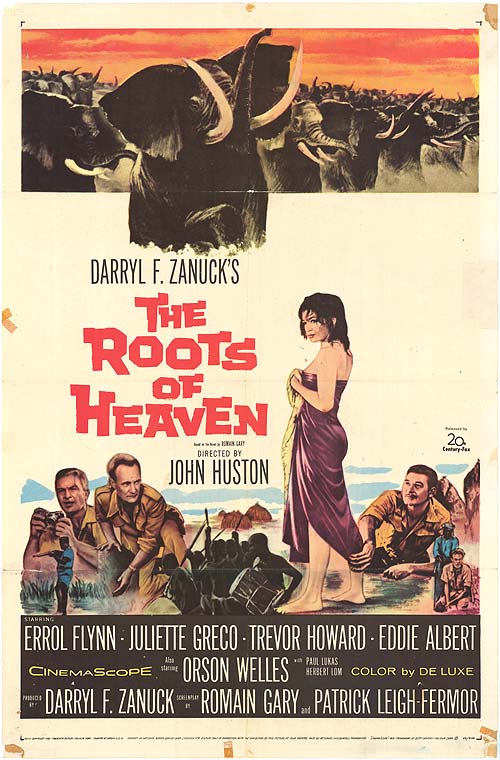
colour posterA curious mix of over the top homage to Paddy; criticism of Billy Moss’ “stilted” writing style; accusation that the editors of Abducting a General produced a “short, blatantly padded book” with the “last 20 pages provid[ing] a detailed guide to the abduction route that few visitors to Crete, apart from fanatics, would willingly endure”; followed by self-promotion of the writer’s own books about Errol Flynn, John Huston, and Somerset Maugham. Something here for everyone to gnash their teeth over including a claim that Paddy had a Greek son: but all-in-all quite enjoyable!!!

By Jeffrey Myers

First published in Standpoint Jan/Feb 2015.

I met the handsome, charming and dashing Sir Patrick Leigh Fermor (1915-2011) in May 2002. He belongs with authors as men of action — Melville, Conrad, Hemingway, Malraux and Orwell — who did not go to university and learned their lessons from violent experience. Leigh Fermor, whose reputation is based on three impressive achievements in travel, war and literature, has enjoyed after death a well-deserved revival of interest in his life and work. In 1933-34, in his late teens and after expulsion from school, he spent a year walking south-east across Europe, passing through nine countries from Holland to Turkey. In his leisurely 1,700-mile ramble, rough when solitary and poor, hedonistic as guest and lover, he moved effortlessly between peasants and patricians. Though his journey did not equal the agonising treks of Henry Morton Stanley through Equatorial Africa or of Wilfred Thesiger across the Empty Quarter of Arabia, it was a considerable feat of social and cultural exploration.

In April 1942 Leigh Fermor landed in Crete by parachute and set out, with resourcefulness and courage, on his second and most famous Byronic adventure. He spoke modern Greek and joined a handful of British Special Operations Commandos sent into the mountains of the Nazi-occupied island to organise the resistance and unleash a guerrilla uprising. His men attacked airfields and blew up a fuel base. He also watched helplessly as the Nazis took revenge by destroying whole villages and massacring thousands of civilians. While on Crete, he fired a rifle he thought was unloaded and killed a Greek comrade, setting off a blood feud that was not settled for many decades.

Leigh Fermor’s greatest wartime achievement was the daring capture of a German general, Heinrich Kreipe, on April 26, 1944. Dressed in German uniforms, Leigh Fermor and his men set up a roadblock. As the car slowed down around a sharp curve, they poured out of the darkness and restrained the general, who shouted, swore and punched until he was handcuffed and shoved onto the floor of the vehicle. They then smuggled their prisoner through the main town, Heraklion, west along the coast and into the mountains.

The general turned out to be a cultured captive, well versed in the classics, and had many lively talks with Leigh Fermor before he was taken to Egypt and then to a POW camp in Calgary, Canada. A moment of true understanding came when Kreipe, gazing at the white hills, quoted Horace’s Ode (1.9) — “Vides ut alta stet nive candidum Soracte” (See, the snows of Mount Soracte glare against the sky) — and Leigh Fermor quoted the rest of the Latin poem from memory. In April 1972 they appeared congenially together in a Greek television programme. When asked if he’d been treated well, the general replied, “Ritterlich! Wie ein Ritter” (Chivalrously! Like a medieval knight).

Leigh Fermor’s bold exploit inspired a book, Ill Met By Moonlight (1950), by his comrade-in-arms William (Billy) Stanley Moss and a 1957 film of that name with Dirk Bogarde as Leigh Fermor. (The title comes from A Midsummer Night’s Dream.) Moss — handsome, six years younger than Paddy and a veteran of the North African campaign — was educated at Charterhouse and spoke French and Russian but not Greek or German. He does not provide any historical or military background, bases his memoir on the diary he kept at the time and writes in a plain, often clichéd style. The first rather uneventful half — mostly marching, hiding and planning, with a few close calls — expresses admiration for the Greek partisans and leads up to the daring capture of the much older General Kreipe (born in 1895).

Leigh Fermor carries “an ivory-handled revolver and a silver dagger” and cuts a dashing figure. They had hoped to capture General Friedrich-Wilhelm Müller, a cruel “tyrant much loathed by the islanders” who was later hanged as a war criminal, but he was unexpectedly replaced by Kreipe. The capture takes place between the German headquarters and the general’s residence in the Villa Ariadne, built by Sir Arthur Evans during his excavations of the ancient Minoan palace of Knossos. After driving through Heraklion in the Opel, with Leigh Fermor wearing the general’s hat, they bluff their way through 22 German checkpoints — though one map shows only four checkpoints. (The gullible sentries, some suspected of complicity, were arrested and probably sent straight to the Russian front.) The commandos evade all the German patrols searching for Kreipe and, with many difficulties, bring him through the slopes of Mount Ida and down to the British ship on the south coast.

Kreipe — “a thick-set man . . . with thin lips, bull neck, blue eyes, and a fixed expression” — had come for a rest in Crete after two tough years on the Russian front. Concerned more for his dignity than for his life, he worries about the lost symbols of his rank and valour: his general’s hat and the Knight’s Cross of his Iron Cross. Though fairly stoical and cooperative, he complains about his minor injuries, poor food and lack of sleep. He and Leigh Fermor also exchange Greek verses from Sophocles, but do not establish a close connection. Though the commandos leave evidence suggesting only the British, not the Greeks, had captured the general, the Germans razed the nearest village and eventually killed 2,000 civilians.

Leigh Fermor’s version of the incident, Abducting A General (John Murray, £20), published last year, is a short, blatantly padded book. The foreword provides useful historical background. Only half the 189-page work contains the main text. Seventy pages reprint his hastily written intelligence notes sent from Crete to headquarters in Cairo. The most interesting dispatches describe his accidental  shooting of his close Cretan friend and his part in the executions, without trial, of Cretan traitors. (When I asked Sir Alec Kirkbride, the last surviving officer of T.E. Lawrence’s Arabian campaign if he had really killed a lot of lawless Arabs after the capture of Damascus in 1918, he casually replied, “Oh, not that many.”) The last 20 pages provide a detailed guide to the abduction route that few visitors to Crete, apart from fanatics, would willingly endure.

Leigh Fermor’s account has already appeared in his anthology Words of Mercury (2003) and been the basis of the two chapters on Crete in Artemis Cooper’s biography (2012). Based on memory rather than diaries and written in 1966, 22 years after the event, Abducting A General, like his earlier travel books, is filled with invented details. He gathered intelligence, carried out sabotage and prepared the Cretans to help the British recapture the island. His major difficulties were faulty radio transmitters, lack of transport, “rain, arrests, hide and seek with the Huns, lack of cash, flights at a moment’s notice, false alarms, wicked treks over the mountains, laden like a mule, fright among one’s collaborators, treachery, and friends getting shot”.

He is excited by the constant danger and, when disguised as a Cretan, by his close proximity to German soldiers. His book is more detailed than Moss’s about the history and geography of the island, more stylish and lyrical. He is devoted to his brave, loyal and sacrificial Cretan friends and comrades, whose language he speaks and whom he idealises: “we could not have lasted a day without the islanders’ passionate support: a sentiment which the terrible hardships of the occupation, the execution of the hostages, the razing and massacre of the villages, only strengthened.” But he ignores the conflicts between the Greek Communists and the pro-British partisans, which led to a civil war after the liberation of Greece. His hyperbolic and Homeric tributes to the Cretans — “their capacity to cross several mountain ranges at the same lightning speed on an empty stomach after swallowing enough raki and wine to lame other mortals for a week” — are excessive.

The main dangers of the abduction were the possibilities of stopping the wrong car, encountering other German vehicles and provoking savage reprisals. The identification and immediate escape in April 1944 was helped by Kreipe’s coloured metal pennants on the front fenders of his car. When seized, Kreipe lashed out with his fists, was manacled and had his legs tied. The whole episode took only 70 seconds. His badly injured driver, who could not keep up with the escaping partisans, had to be killed.

Since Leigh Fermor could also speak German, he writes more fully and positively than Moss about his relations with Kreipe, who bears up stoically under humiliating circumstances. The youngest son of the large family of a Lutheran pastor in Hanover, Kreipe was 48 years old and unmarried. He had a broad pale face, grey hair and jutting chin. A professional soldier, he had served in the army since 1914 and had recently won a Knight’s Cross on the Russian front. His moods during this ordeal ranged from cheerfulness to depression, and he sometimes slept under a blanket with Leigh Fermor and Moss, huddled together against the piercing mountain cold. Leigh Fermor writes in comradely fashion: “The General’s behaviour was most friendly and helpful throughout and he put up with the hardships of mountain travel and living rough with fortitude. Moss and I had the impression that he had lost his nerve a bit after the first contact with us. He certainly made no attempt to escape.” If he had broken his word, he would have been shot by the Cretans. On May 14, 1944, after 18 anxious days in the mountains, they all boarded the ship to Cairo. Spared the disastrous German defeats in Russia and in Greece, Kreipe remained in British custody until 1947.

The crucial military and moral question, which Moss ignores and Leigh Fermor answers with qualified affirmation, is whether the abduction of General Kreipe was worth the brutal German reprisals: whole villages destroyed and the massive slaughter of men, women and children in August 1944. The survivors rejoiced; the dead remained silent. But Leigh Fermor’s heroic exploit, still famous all over Greece, boosted morale during the dark days of the German occupation and gave a glimmer of hope for the final victory.

Leigh Fermor’s third major achievement was the travel books about his youthful journey that appeared decades later: A Time of Gifts (1977), Between the Woods and the Water (1986), and the unfinished and posthumously published The Broken Road (2013). A slow, procrastinating writer, blocked for much of his life by the weight of too much material, he resembled Penelope unwinding at night what she had woven by day. His wanderings abroad to write in Benedictine and Trappist monasteries, which he described in A Time to Keep Silence (1953), were also an escape from writing.

Fermor often indulges in unseemly displays of erudition. His learned digressions and serpentine style, his mannered mandarin, even baroque prose, which Lawrence Durrell called truffled and dense with plumage, were influenced by the work of Charles Doughty, T.E. Lawrence and Norman Douglas. This florid style clashes with his descriptions of colourful gypsies and cave-dwelling bandits — dressed in sheepskin jackets, high boots and billowing breeches, with daggers tucked into their belts and bandoleers charged with cartridges — rioting, feasting and firing their carbines into the air or, during a vendetta, into their enemies.

Fascinated by his achievements, I corresponded with Paddy (as everyone called him) while writing my biography of Errol Flynn. He had written the screenplay of one of Flynn’s best movies, The Roots of Heaven (1958), and been on the scene during the disastrous filming in French Equatorial Africa. He thought Hollywood screenwriting was a lark that enabled him to hang around and drink with colourful characters in an exotic setting. Flynn, Trevor Howard and Paddy were all drinking heavily, and there was some conflict when Paddy fell in love with the French singer Juliette Gréco, the co-star and mistress of his boss, the producer Darryl Zanuck. In a vivid letter of May 5, 2000, Paddy described the horrendous conditions — heat, disease, swarming insects and dangerous animals — while making the movie in the tropics. He got on well with the flamboyant Flynn, a kindred spirit, and gave a perceptive account of his character:

Errol seemed distinctly more intelligent than the run of actors. Full of original tangents, a great narrative gift, and a great sense of humour. He often referred to his learned father, a marine biologist at Belfast University. He loved reminiscing, largely about Hollywood. I asked him what the leading and most beautiful stars of the day were like. “Well, pretty good,” he said. “They’ve all got my scalp, I’m afraid.” There were lots of memories of his early days there, and his adventures. He was very funny about a yacht he shared with David Niven, and the girls they would take on trips. “We looked on them to supply the food. One pretty girl came on board with nothing but a loaf and a contraceptive device.” He took his acting seriously, and was absolutely adequate in his not very exacting role. He was on very good terms with all the other actors. His physical condition wasn’t too bad, troubled by hangovers now and then.

When I wrote again while working on my life of John Huston, who directed The Roots of Heaven, Paddy vividly recalled the savage Darwinian scene. Bangui, now in the Central African Republic, was the roughest and most primitive place of all:

The forests near Bangui were inhabited by very intelligent pygmies. We were “shooting” in the forest when the clouds broke and a large deluge of rain came down. Our procession of vehicles headed back to the ultra-modern hotel, like an up-ended mouth-organ on the banks of the Shari river, which was full of crocodiles. I got there with Errol and his girl, and we were astonished to find the whole of the ground floor a foot deep in termites, over which small bright green frogs from the Shari were leaping about in parabolas, while Juliette’s mongoose ran riot among them, killing and swallowing as many as he could, two legs sticking out of his mouth. A strange sight.

I also got in touch when writing my life of Somerset Maugham. Paddy was an Old Boy of Maugham’s alma mater, The King’s School,  Canterbury, and as a student had read Of Human Bondage. He was also a close friend of Maugham’s admirer and confidante Ann, the wife of Ian Fleming. After the war he had visited Maugham’s luxurious Villa Mauresque on Cap Ferrat. Since Paddy lived in Kardamyli, a remote village in the southern Peloponnese and my daughter was a Foreign Service officer in Athens, it was a perfect time to see him. So we rented a flat for three weeks, overlooking the sea and a few kilometres from Paddy’s village.

I rang him up from a local shop and he immediately invited me to come round for a talk. Since his house was hidden away and hard to find, he walked up to the main road and hailed me as I approached. Tall and straight, white-haired and sun-tanned, he was at 87 still a virile and impressive figure. He had designed his low, rambling, whitewashed, red-tiled home himself, and called it “a loose-limbed monastery and farmhouse with massive walls and cool rooms”. It had a shaded patio facing the Mediterranean, a flourishing garden, and a huge library filled with books in ancient and modern languages. He had created the setting he wanted and the life he wished to lead, travelled widely and wrote well, charmed everyone and seemed content.

Paddy wanted to correct Ann Fleming’s version of his embarrassing visit to Maugham, which she had exaggerated — with shattered drinking glasses and blood on the floor — to amuse Evelyn Waugh. Maugham had asked Ann to bring Paddy with her for dinner, and then (always generous to good-looking young authors) had invited him to stay on as his guest and write at the villa. Unnerved by Maugham’s severe expression and icy manner, Paddy drank far too much. Falling victim to the perverse tendency to talk about the very thing he was strictly forbidden to mention — Maugham’s debilitating speech defect — Paddy quoted the absurd belief that everyone in the College of Heralds had a stammer. That was bad enough. But noting that the day was the Feast of the Assumption, he mentioned Correggio’s painting of that subject in the Louvre and repeated a stammering friend’s bon mot: “That is a m-most un-un-w-warrantable as-assumption.”

Deeply offended, Maugham became even icier. Rising from the table and taking his leave, he rescinded his invitation by saying: “G-G-Goodbye. Y-Y-You will have left b-b-before I am up in the m-m-morning.” The wretched Paddy, who had not intended to wound his host, contrived to make matters even worse. Instead of waiting for the valet to pack his bag, he hastily threw his things together and caught a precious monogrammed sheet trimmed with Belgian lace in the zipper of his suitcase. He rushed down the stairs with the rest of the sheet trailing behind, frantically tore part of it off and escaped from the villa with shreds of fabric hanging out of his bag.

After our talk, Paddy signed some travel books I’d brought along. Specially buying another one, Mani: Travels in the Southern Peloponnese (1958), in the village shop, he inscribed it, surrounding his words with a cloud and a sketch of birds flying around the title page. When he mentioned bees and my daughter used the unusual word for “buzz” — zouzounizo — which he hadn’t heard for years, he praised her fluency in Greek. After drinks in his house Paddy invited all of us to dinner at a simple restaurant, set on a promontory overlooking the glistening sea, which he’d bought for Lela, his former and now ancient cook. I noticed that the cook’s son Giorgos — who greeted us warmly in excellent English and recommended the best dishes — was tall, blond, blue-eyed and very un-Greek looking.

Paddy, who didn’t see well at night, asked me to drive him home in his battered old Peugeot, which had stiff gears, negligible brakes and holes in the rusted metal of the floor. As we went down a steep hill towards the sea, which had no barrier, I suddenly realised that the brakes didn’t work and had to swerve violently to avoid submersion. Paddy, who’d had many close calls, was jovial and unconcerned about the dangerous episode. My instinctive feeling that Giorgos was Paddy’s son was confirmed when my daughter returned to Athens and impressed her Greek friends, who knew the truth, by mentioning that she’d dined with a national hero.

Paddy was the Byron of our time. Both men had an idealised vision of Greece, were scholars and men of action, could endure harsh conditions, fought for Greek freedom, were recklessly courageous, liked to dress up and displayed a panache that impressed their Greek comrades. Paddy also reminded me of a Bedouin chief’s tribute to another famous warrior, T.E. Lawrence: “Tell them in England what I say. Of manhood, the man, in freedom free; a mind without equal; I can see no flaw in him.”

Lecture: Curating the Paddy Leigh Fermor archive

General archive itemsThe inaugural lecture of the Patrick Leigh Fermor Society will take place on Monday 19 January 2015 at 7.15pm.

David McClay Curator of the PLF archive (and those of Joan Leigh Fermor and Xan Fielding) at the National Library of Scotland will present the Library’s recent acquisition of Paddy’s extensive and outstanding archives, including their recent activities and future plans at the Hellenic Centre, 16-18 Paddington Street, Marylebone, London W1U 5AS.

All are welcome to attend but for the sake of crowd control please RSVP (and enquiries) as follows:

tel: 020 7563 9835
fax: 020 7486 4254
e-mail: press@helleniccentre.org OR info@patrickleighfermorsociety.org

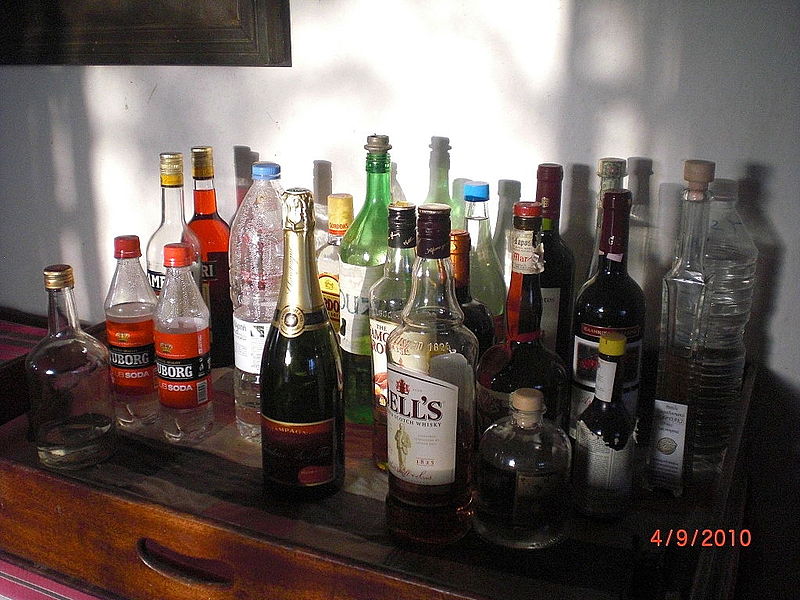
Paddy’s drinks cabinet

Kalamitsi drinks' cabinet 2010 by Rodolp de Salis

Kalamitsi drinks’ cabinet 2010 by Rodolp de Salis

I thought that you might enjoy this picture taken by Rodolph de Salis at Paddy’s house in 2010.

Maybe you are reading this just before lunch or ‘after the sun has passed the yardarm’ and it will accompany you as you settle down for a relaxing Drink Time!

Buy Drink Time!: In the Company of Patrick Leigh Fermor: a Memoir by Dolores Payás (translated by Amanda Hopkinson)

Travellers’ Century: Patrick Leigh Fermor now on YouTube


The event at Waterstones on Thursday with Benedict Allen introducing his 2008 film about Paddy’s life and work was a great success.

Organised by Barnaby Rogerson of Eland Publishing (who specialise in keeping the classics of travel literature in print), we were treated to a few glasses of wine before the film whilst chatting to an eclectic group who included general travel writing buffs, some who knew little about Paddy, and a group of keen PLF enthusiasts. Harry Bucknall, author of Like a Tramp, Like A Pilgrim: On Foot, Across Europe to Rome was in fine form, talking about a possible film project, and I particularly enjoyed meeting Rick Stroud who wrote the other book published this month about the abduction Kidnap in Crete: The True Story of the Abduction of a Nazi General.

Perhaps the highlight was a Q&A session afterwards where Benedict was joined by John Murray who features in the film talking about the challenges of editing Paddy’s work. John had some very interesting things to say about working with Paddy and shared some personal views about his life and relationships.

By strange coincidence I have now been told that the BBC film has now appeared in You Tube so you can all watch and enjoy it!

The house is not always empty …

It appears that some lucky people have been allowed to stay in the house at Kalamitsi. Who are they and did they pay? From a lovely new blog by Max Long.

Eventually I did find a room, and wallowed in the privilege of having a bed, a balcony overlooking the mountains, a table to write on. On my first night I had considered, in utter disappointment and desperation, going to Paddy Leigh Fermor’s house just a few kilometers south from the main village, to find some comfort by camping there. As I was to find out two days later, it was a very good thing I didn’t.

A few years ago, a Guardian journalist came to Kardamyli with similar intentions. He swum to Paddy’s house from the harbour, and I decided that it would be a nice idea to do the same. Following the footsteps of a footstep-follower.

I am not a confident swimmer, and have barely swum out a few tentative strokes in all the beaches I’ve been to so far, so it was quite a mental struggle for me to embark on what was to be a half hour swim along the rocks to the little pebble beach with a flight of stone steps leading up to the house. When I got there, there was a couple on the beach, but they spoke little English and could not confirm that this was Paddy’s house, so I walked up the steps anyhow, and soon the pebble mosaics on the floor, the large house of stone and painted grey-blue French windows, the seating area looking over the bay, confirmed that I was indeed at the right place.

However, it was with utter horror that I saw the freshly trimmed garden plants and trees, the recently used hosepipe… the open windows, the sound of plates watering the mouths of lunchers… the exposed breasts sunning themselves in the corner. I scuttled away, undetected but nevertheless thoroughly embarrassed. I later made for the front door. I could hear voices, evidence of clear use. I felt for a moment I might have traveled back in time to a former splendor of the wonderful house. All the reports by journalists and bloggers online had been of a desolate, abandoned home. I inquired at the front door. Yes, this was his house. No, I couldn’t visit. I walked away, burning with disappointment, but also with curiosity. The house is now in the hands of the Benaki museum, and my understanding is that it will be converted into a writer’s retreat or museum of its own. Who were these people who had the privilege to enjoy the place in the meantime?

(I visited the house again on my last morning and it was only after a lot of pleading that a disgruntled, shirtless, hairy and sandalled old gentleman allowed me a brief – less than two minute – look at the place. None of the moments of contemplation I had hoped for. The insistence with which he refused to allow me to access the house, and the simplicity of my request, made me think he could only be an extraordinarily cruel man. Sitting in Paddy’s study surrounded by books, he refused to give me either his name or any inkling of the Benaki’s future plans. I left, once again, in a rage.)

Full article here.

Another correspondent in an email to me this week coroborates the fact that people seem to be staying at or using the house …

I too was in Kardamyli in August.  I too walked around the outside of the house and up the steps from the beach.  I didn’t want to trespass, but when I realised there were people living there I decided to knock at the gate and ask them what was happening to the house.  Two twenty -something year old Greek girls in bikinis were there, and obviously staying there.  They wouldn’t let us visit.  I’ve no idea who they were.  My first reaction was that Paddy and Joan would surely be upset that their wishes are clearly not being respected.  On the other hand, perhaps it is good that someone is there because there are clearly a lot of Paddy pilgrims, and sooner or later there will be someone with less honorouble intentions, who enters the house and takes something away with them.
I can only assume they were local girls and that his old housekeeper or someone local must have an eye on who is there.  The place is obviously in need of urgent attention.
Mark

A Place in the Sun – The very slow progress toward a permanent retreat

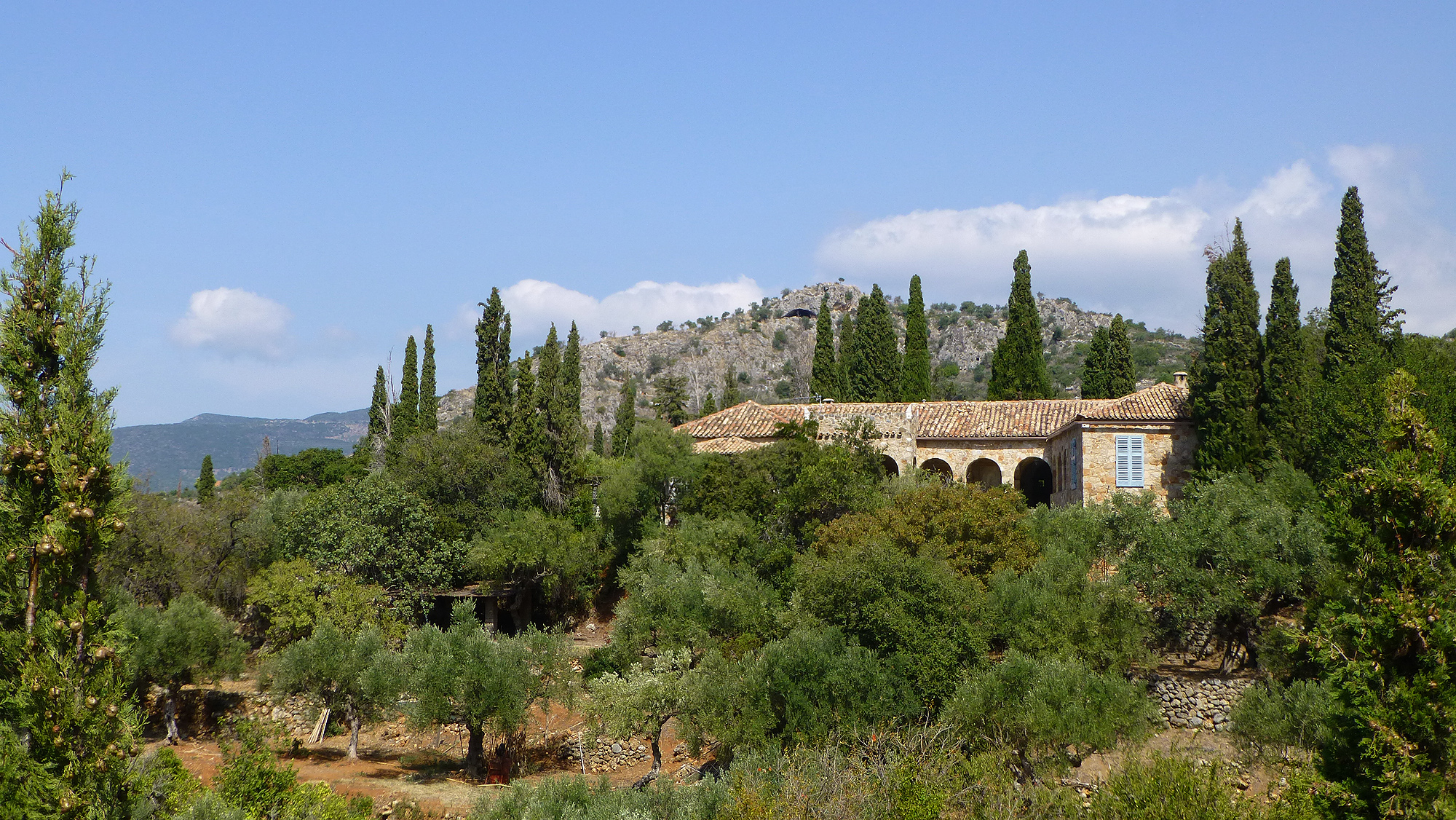
The house in Kalamitsi, September 2104 (John Chapman)

The house in Kalamitsi, September 2104 (John Chapman)

It appears it is the time for discussion about Paddy’s house at Kalamitsi to recommence. I was surprised when the article about his English home did not provoke any comments about the house in Greece which moulders away as the Benaki continues to drag its feet and struggle with its finances. The whole affair is a bit of a mess. It has been three years since the house was handed over to the Greeks but they appear to have done absolutely nothing with it. A house needs care. A house by the sea, even the Mediterranean, requires even more care. As Dolores Payas comments in her lovely book, Drink Time!, which I reviewed at the weekend, the house needs an awful lot of work and now the bill can only be higher.

Regular blog correspondent John Chapman who spends a lot of time in the area sent me this update at the weekend:

I sauntered down to the house at Kalamitsi. Absolutely no change since I last had a look around a fair few years ago. Still a bit of a mess. A cat mewled from within, so therefore someone feeds it and tends the garden. I could have leapt over the back wall into the garden, but decided against it. No-one I’ve talked to can make out what the Benaki are actually doing, or planning to do. The idea of a writers’ retreat is fine and dandy, but someone is building another vast edifice above the bay and the sound of a pile driver wouldn’t be too conducive to creativity!

And recently this article was published in the Weekly Standard.

By Dominic Green

First published in the Weekly Standard, 29 September 2014

Under the peak of Mount Taygetus, the wooded Vyros Gorge tumbles into the Gulf of Messinia at the small port of Kardamyli. Around the headland is a blue cove and the hamlet of Kalamitsi. A flock of low, white houses, their pantiled roofs the color of burnt orange, huddle under stripes of gray-green olive trees. A stony track declines sharply from the road. Then, as stones turn to sand, a narrow path forks uphill along the flank of a promontory. From the house at its summit, the olive terraces slide seawards towards a cliff.The Mani, a rocky peninsula hanging from the southern coast of the Peloponnese, is often compared to the Highlands of Scotland. The landscape is mountainous and mottled with scrub. The people are insular and excel at the arts of feud and hospitality. Their homes are crenellated with towers and battlements, fortifications against the Franks, the Turks, and the neighbors. The exterior of this particular house is a thick-walled cross between a farmhouse and a fortress. A door of medieval solidity stands sentry at the gatehouse; a metal grille permits parley with strangers.

Passing the gatehouse, however, the lines soften and the stone curves. On the left, a Moorish colonnade marches to the sea, past a file of bedrooms and a dozing cat, the last arch framing a blue half-circle. Along the central axis are more bedrooms. In one, a weathered tweed jacket and a pair of walking boots wait in the closet; on the lavatory wall is a sun-paled genealogy of the kings and queens of England.

The right wing is a single oblong, a library-cum-sitting room. Bookcases are cut into stone recesses. A table dressed in Cycladic swirls of green and white marble carries enough booze to float a battleship or an English house party. At the shaded eastern end of the room is a cushioned divan; at the western end, a wooden, windowed balcony of Balkan provenance floats over the azure sea like the cabin of a pirate captain.

The mantelpiece is jammed with photographs, souvenirs, and scraps of paper with friends’ phone numbers. On the Cycladic table, the host’s favorites, Famous Grouse and Stolichnaya, wait among half-empty evocations of the British Empire: Rose’s Lime Juice Cordial, Angostura bitters, a Greek variant of tonic water. But the bubbles in the tonic have long evanesced into the lemony Greek air: The host, the legendary soldier, traveler, and author Patrick Leigh Fermor, died in 2011; his partner, Joan Eyres Monsell, predeceased him in 2003. Their house is empty but for the cat, the orphan of Joan’s once-plural brood. The Leigh Fermors’ housekeeper, El-pi-da Bel-o-yan-nis, tends their home like a shrine. Outside, the gardener, Christos, clips and prunes beneath a straw hat.

The British are famous for removing ancient monuments from Greece, not for donating modern ones. The Leigh Fermors bequeathed their house to the Benaki Museum of Athens as a retreat for writers. But its future is not written in stone.

Sir Patrick Leigh Fermor, OBE, DSO—known to friends, retainers, and a global army of readers as Paddy—was the last living contender for the kingdom of literature’s Habsburg crest, the double-headed crown of man of letters and man of action. A conscientiously Byronic inheritor of the British romance with Greece, Leigh Fermor was a warrior-writer in the line of Philip Sidney and T. E. Lawrence. He was also one of the great stylists of 20th-century English prose.

Leigh Fermor’s writing, like his biography, is one of the last monuments of the imperial age, when the British were not merely worldly, but global. His tone is a late outcrop of Bloomsbury—delicate, languid, melodious, precise—but purged of provinciality. His clauses flow with a French rhythm, the décadence of Second Empire Paris, and are studded with a cosmopolitan glitter of linguistic borrowings and historical speculations. Leigh Fermor was a travel writer in the sense that Pepys was a diarist. Every turn of his road evokes reflections on history, art, religion, and language. Investigations of folk songs, dances, and cheeses lead to anecdotal hunts for a pair of slippers that might once have shod Lord Byron, or a fisherman who might be the lineal descendant of the last emperor of Byzantium.

Always the language rises to the occasion, be it scenic, romantic, antiquarian, or philological. Always the present is excavated to reveal the fragments of memory. No philhellene has written better on Greece than Leigh Fermor in Mani (1980) and Roumeli (1973). Few have eulogized lost youth and interwar Europe more elegantly than Leigh Fermor in A Time of Gifts (1977) and Between the Woods and the Water (1986), the record of his walk, aged 18, from the Hook of Holland to the Iron Gates of the Danube. A posthumous and incomplete third volume, The Broken Road (2014), carries the narrative into Greece through shepherds’ huts, urban mansions, and fishermen’s caves.

Leigh Fermor wrote his “great trudge” trilogy at Kalamitsi, in his writing studio and on collapsible tables in his garden. He also hosted several shelves-worth of scholars, artists, and travelers, including George Seferis and John Betjeman, the poets laureate of Greece and Britain. The house, its contents, and the books that were written here are the complete works of a unique sensibility and a museum of a literary era. If the house were in Britain, the National Trust would already have restored it. There would be a ticket booth in the gatehouse, a shop selling organic figs and artisanal olives, and perhaps a tea room as well. But the Benaki is a private museum. Along with many properties in Athens, it is akin to a penurious Getty or an expansive Stewart Gardner. The Leigh Fermors left no endowment. The Benaki did not create one in the three decades between the bequest and Leigh Fermor’s death. It did, however, fund its expansion with a bank loan of €15 million (around $20 million). In 2008, the Greek economy collapsed, and so did the Benaki’s finances.

Beyond the colonnade, the July sun flattens the sea into a two-dimensional blue wall. An island, necklaced with ruined walls and vegetation, floats in the bay like a green brick. From the cliff, a staircase snakes down the rock to a small beach. “Paddy used to swim around the island and back,” Elpida explains proudly and unprompted. She exhales in mourning.

Outside, the crickets clatter, a maraca orchestra so loud and constant that it becomes unheard. The fringes of the house abound in shaded spots for between 1 and 20 people: solitary nooks for contemplation and reading, sociable niches for sitting and dining. It is a home to be shared—when not struggling scrupulously at his writing studio, Leigh Fermor was a relentless entertainer—but it is empty of life. The stones, saturated in a human presence as strong and invisible as the crepitations of the crickets, are silent, crepuscular.

In September 2011, the Benaki commissioned plans for the restoration of the house, costing an estimated $800,000, and catalogued its library and papers. They fumigated and stored the most important items in Athens, including that poignant testimonial to sedentary toil, a first edition of Betjeman’s High and Low (1966), inscribed by the “pile-ridden poet.” The Benaki also signed a five-year memorandum of understanding with the Seeger Center for Hellenic Studies at Princeton for planning lectures on Paddy-related topics. Meanwhile, the publication of both The Broken Road and a biography by Artemis Cooper revealed a vast reservoir of affection. In Britain, a committee of Paddy’s friends offered to create a charity to raise funds for the restoration.

And then nothing happened.

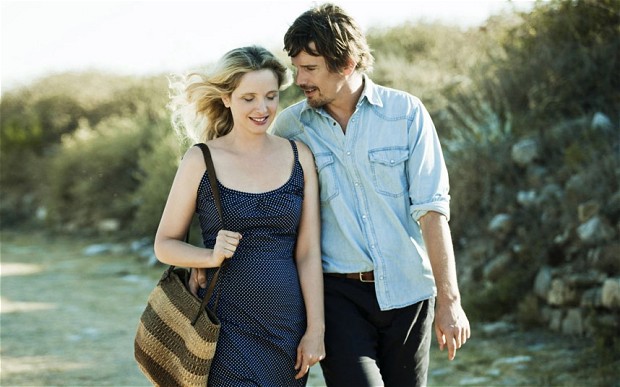
Part of the garden wall fell down, and visitors trickled in through the breach. In Britain, the natives grew restless. A Guardian journalist climbed the cliff stairs and peered through the locked windows. The Daily Telegraph described the house as “sad and neglected,” its shutters “rotting and falling off their hinges.” Artemis Cooper, a lifelong visitor, responded that the Benaki was doing its best, but Greece was amid “economic catastrophe.” The plans had not been abandoned, and the house, always a little ramshackle, was not neglected. Guests had stayed there, and Richard Linklater had filmed parts of Before Midnight (2013), with Julie Delpy and Ethan Hawke, there.

Tom Sawford runs an unaffiliated website for Paddy’s admirers. The talkbacks describe books moldering in an outhouse. There are offers of money and help, sympathy for the Benaki’s problems, and allegations of mismanagement. Sawford believes that if the museum had accepted the British group’s offer, the house would be “up and running” by now, its future secure: “Instead, the Byzantine structure of the Benaki has resulted in the house being left to rot.”

The Benaki’s English website places 16 individuals in the “front ranks of its benefactors” for giving “considerable property” to the museum. Patrick Leigh Fermor is not on the list. The museum has launched a global fund-raising campaign. On the website, donors can choose among 10 projects. Patrick Leigh Fermor’s house is not among them.

Irini Geroulanou is the deputy director of the Benaki. She returns my phone call immediately, puts me in touch with Elpida, and volunteers her own cell phone number, just in case. The Benaki, she says, has “finalized” its restoration plans and engaged a local firm of builders. There has been “positive” but “not final” interest from universities and foundations in Britain and America, and from the British Council and other foreign institutions in Athens.

“We plan to have five writers in the winter months, when Kardamyli is quiet,” Irini explains, “so they can keep each other company.” At other times, two “famous writers” will have the run of the place; presumably, the Benaki will check whether they are on speaking terms. There will be events for the villagers and an annual or biennial symposium, featuring “prominent artists and academics.”

All this is a thorough and conscientious reflection of Leigh Fermor’s wishes. But the “first and basic problem” remains: “the funding of the restoration.” The house is cooled only by its walls and the breeze. The wiring is erratic, a museum piece from the first age of electrification. The plumbing is functional, but explosive. The window frames and roof need replacing. The bedrooms are spartan: a bed, a table, a sink in a closet, and shelves of books. Writers would enjoy living and working in these hermit cells—the literary traces are an inspiration—but who else would want to squat among the ruins of someone else’s life? The electrics contravene EU regulations, and strangers keep climbing the garden wall.

Recently, Elpida Beloyannis un-locked the medieval door and found a young Englishman asleep in the gatehouse. He was resting before walking from Kalamitsi to England, in a pedestrian tribute to his idol. Paddy’s books have this effect on people.

Patrick Leigh Fermor lies in a Worcestershire churchyard, like a knight returned from the Crusades. But his readers, a pagan cult drawn to the gods of literature and the English ideal, come to Kalamitsi. They telephone Elpida at home, asking politely for access. They wish only to pay tribute, to inhale the atmosphere. They seek no material souvenirs here, or at the subsidiary shrine, the chapel in the hills above the village, where Leigh Fermor scattered some of Bruce Chatwin’s ashes.

Unfortunately, there are uninvited visitors, too. Snoopers are drawn by the barbaric talisman of celebrity, especially since the Benaki advertised the house by renting it for Before Midnight. The place is architecturally and historically unique, but the Benaki refuses to install a resident caretaker. Though the Benaki’s long-term commitment cannot be doubted, the house’s isolation and emptiness are tempting fate. Sooner or later, there may be damage: by the elements, by admirers, by looters. Byron’s slippers survived; Leigh Fermor’s books and boots may not.
If the Benaki opened the house to visitors, ticket sales might support a resident caretaker. If Paddy Leigh Fermor’s readers could donate to an online fund, the house could be repaired. If writers or interns lived there while the Benaki finds donors, the house would be guarded and its new life could begin.

“We are all quite optimistic that things will go as planned,” Irini Geroulanou says from Athens. “The PLF House will be open again to the public and used in the way that PLF desired and stated in his will.”

At Kalamitsi, the crickets rattle among the olives. Patrick Leigh Fermor’s legacy is caught in the aspic of its significance and the stagnant Greek economy. A secure posterity, or an avoidable scandal? In an example of life imitating art, I bump into Julie Delpy on returning to my hotel. “You’ve been there?” she asks. “The house is so beautiful. It’s my favorite place in the world.”

Dominic Green is the author of The Double Life of Doctor Lopez and Three Empires on the Nile.

I’m speechless!

Dumbleton from Miles 1

Miles Fenton who is Paddy’s nephew has commented about the house and is not happy with what has been done to it.

What have they done to the interior? Gutted it? I’m speechless!
And, as for the short back and sides to the exterior, all charm savagely removed.
So sad.

He sent me some pictures of how things used to be on the outside.

Dumbleton from Miles 2

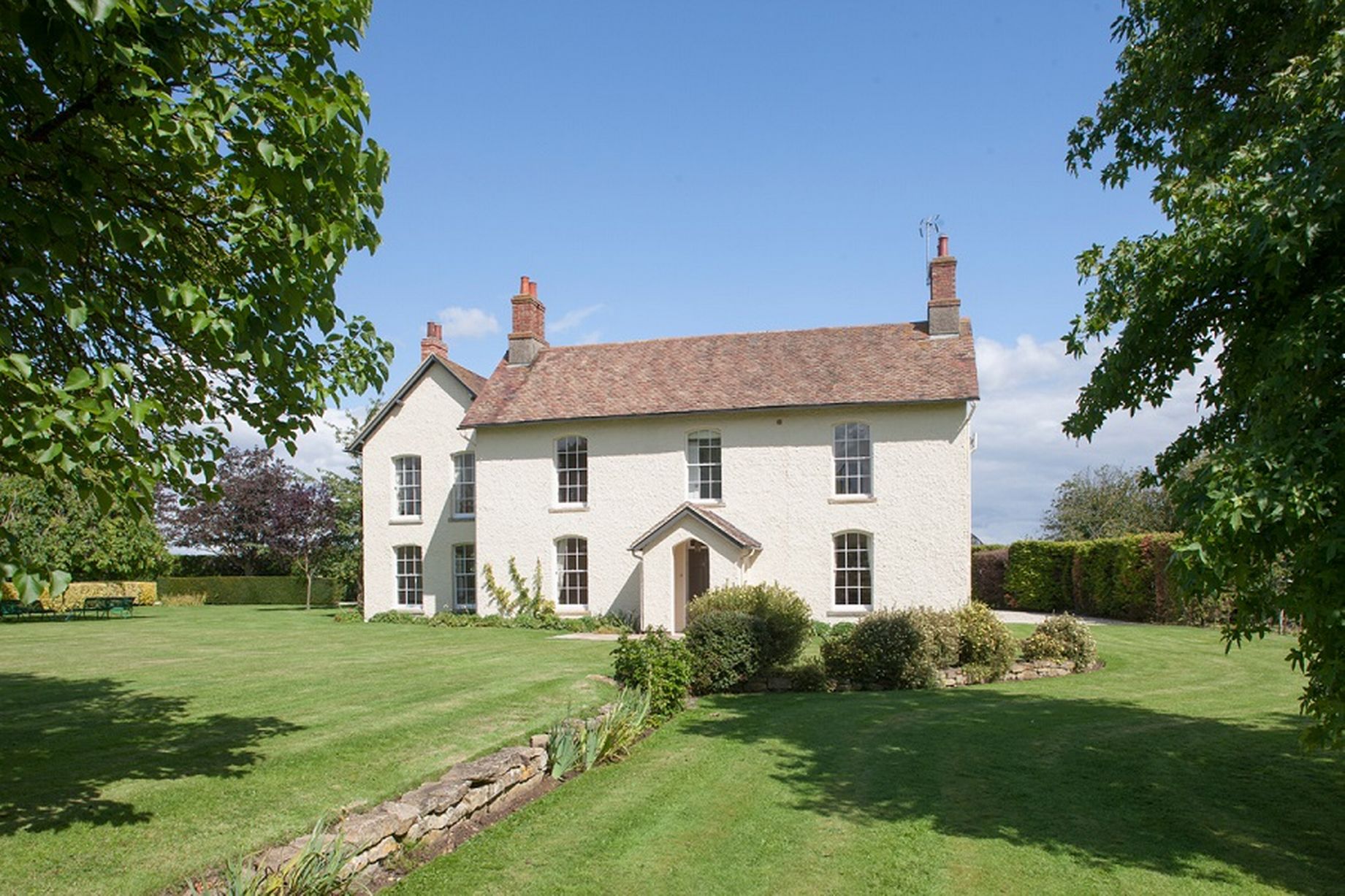
Paddy’s house at Dumbleton up for sale again

Paddy's former home in Dumbleton

Paddy’s former home in Dumbleton

The Mill House at Dumbleton which was home to Paddy and Joan in the UK is up for sale again.

Set in idyllic countryside, the house was sold by his estate following his death in 2011, and is back on the market for £1.8m. It looks to have been extensively refurbished. Interestingly the guide price last time was £2.5m.

Some details here.

Traveller’s Century – Benedict Allen seeking Patrick Leigh Fermor

Benedict Allen

Benedict Allen

Many will be aware of Benedict Allen’s 2008 BBC documentary where he follows Paddy’s journey and eventually gets to meet with Paddy at Kardamyli. It is rarely shown and unavailable on iPlayer. However, there will be a chance for some to watch the programme at Waterstones Piccadilly on Thursday 9th October at 6.30pm.

As part of their “Traveller’s Film Club” series of events, Benedict will introduce the programme after which there will be a screening. Further details of how to book are on this web page.

The Traveller’s Film Club are also showing films on Norman Lewis (September 16) and Wilfred Thesiger (November 13). See the same list.

Thank you to Mark Granelli for pointing this out to me. See some of you there!


Travel Writing Giants – Remembering Peter Matthiessen and Patrick Leigh Fermor

Peter Matthiessen

Peter Matthiessen

BBC Radio Four rarely disappoints. At least not over the course of a few hours where there will be enough variety and quality for everyone. On Good Friday the Point of View programme was given over to William Dalrymple William who celebrated the writing of Peter Matthiessen who died this month. Dalrymple compares him with another of his favourite travel writers, Patrick Leigh Fermor. “Both were footloose scholars who left their studies and libraries to walk in the wild places of the world, erudite and bookish wanderers, scrambling through remote mountains, notebooks in hand, rucksacks full of good books on their shoulders.”

Listen here on BBC iPlayer. The programme begins after about 30 seconds. If you are in a location where this is not possible, the text is below.

Happy Easter to all of you.

Tom

William Dalrymple pays tribute to two fellow travel writers – Peter Matthiessen, who died recently, and Patrick Leigh Fermor.

The great American writer Peter Matthiessen died earlier this month at his home in Sagaponak, New York, after a prolonged struggle with leukaemia. He was 86.

Matthiessen was one of my great literary heroes, a wonderfully versatile and profoundly truthful writer whose sentences oozed integrity and an austere clarity of thought and spirit. His writing drew on his richly restless and enviably courageous life, which was as remarkable an artefact as anything he actually wrote. He remains the only author to win the National Book Award for both fiction and non-fiction.

Matthiessen, a craggily handsome man, with clear blue eyes and a face that seemed to have been sculpted out of basalt, was at different times a naturalist-explorer and a deep sea fishermen, a pioneering environmentalist and editor, an artist and activist defending the rights of migrant labourers and Native Americans, as well as a CIA agent who underwent a strange metamorphosis into literary shaman and Buddhist sage. He lived and travelled in a variety of wild landscapes (rainforests, oceans, mountains, deserts and swamps) around the globe, and he set his books in these remote places – the Peruvian Andes and the jungles of New Guinea, Tierra del Fuego and the Tibetan Plateau, the Serengeti and the Bering Straits.

He is perhaps best known for a single great masterpiece, The Snow Leopard, a jewel of a book and one of the great travelogues of our time. The book tells the story of a long journey on foot to the Crystal Mountain in the Himalayas to study the wild blue sheep and to catch a glimpse of the rare and almost mythical snow leopard. But for Matthiessen, a Zen Buddhist recovering from the recent death of his wife, it was more of an inner journey of recovery and resignation than some zoological field trip.

In many ways, Matthiessen resembles Patrick Leigh Fermor, another lyrical writer who travelled widely and lived richly, setting his books across the globe. Like Matthiessen, Paddy – as everyone knew him- lived an enviable life. In his teens he walked from the Hook of Holland to Constantinople, while in his sixties he swam the Hellespont, in homage to Lord Byron who swam it in 1810. In between, he joined possibly the last cavalry charge in European history, participated in a Haitian voodoo ceremony, and pursued a passionate affair with a Byzantine princess. He was car-bombed in Greece, knifed in Bulgaria and pursued by German troops after being parachuted into occupied Crete where he kidnapped the Nazi commander.

Paddy and Peter were very different men of very different generations. Matthiessen was a blue-blooded New Yorker, descended from Friesian whalers, and grew up on post-war Fifth Avenue overlooking Central Park, in the same building as George Plimpton, with whom he later co-founded the Paris Review. The American 1960s marked him forever. He experimented with psychedelia, especially LSD, became an anti-Vietnam activist and his friends were the great New York writers of that era – Kurt Vonnegut, EL Doctorow and William Styron. Leigh Fermor, by contrast, had the speech patterns, polished brogues and formal manners of a pre-war British officer, and his conversation was peppered with the likes of “ripping”, “topping”, “I say!”, “frightful rot” and so on. His friends tended to be Brits of a similar background and era – Noel Coward, Dirk Bogarde, Diana Cooper, the Mitfords and later, Bruce Chatwin.
Nepal Himalayas Matthiessen describes the Nepal Himalayas in lyrical terms

It is also true that these two great descriptive writers wrote very dissimilar prose. Matthiessen’s writing had a spare and austere simplicity, yet was as beautiful and craggy as his wonderfully weather-beaten face. Here he is waking up in the Nepal Himalaya: “A luminous mountain morning. Mist and fire smoke, sun shafts and dark ravines: a peak off Annapurna poises on soft clouds… Pine, rhododendron, barberry and purple gentians. Down mountain fields, a path of stones flows like mercury in the sunlight; even the huts have roofs of silver slates.”

In contrast, Paddy’s books, with what Lawrence Durrell called their “truffled style and dense plumage”, were sometimes “madly, intoxicatingly over-written”. Yet at his best he was a soaring prose virtuoso with hardly an equal in modern English letters. For many of us his descriptions of walking through midwinter 1930s Germany have the status of sacred texts: “Sometimes the landscapes move further back in time,” he writes in the Winterreise chapter of his masterpiece, A Time of Gifts. “Pictures from illuminated manuscripts take shape; they become scenes which Books of Hours enclosed in the O of Orate, fratres. The snow falls; it is Carolingian weather… Then the rooks fell silent; the light dwindled over the grey fields; and life ebbed with a shudder like a soul leaving the body.”

Yet these two very different writers had so much in common. Both were footloose scholars who left their studies and libraries to walk in the wild places of the world, erudite and bookish wanderers, scrambling through remote mountains, notebooks in hand, rucksacks full of good books on their shoulders. Both were writers of great sensitivity and erudition, yet both were also men of action who became intelligence agents – Leigh Fermor in wartime Crete, while Matthiessen worked for the CIA in post-war Paris spying on American expatriate communists suspected of KGB links.

Both men moved easily from the world of the flesh to the world of the spirit and back. They understood what Paddy described in A Time to Keep Silence as “the capacity for solitude that accompanies the silent monastic life”.

The same was true of Matthiessen, who while the lively centre of many a mescaline-fuelled literary party in his youth, ended his day as a Roshi, or Zen Master. “Zen is really just a reminder to stay alive and be awake,” he said in one of his last interviews. “Zen is about appreciating your life in this moment. If you are truly aware for five minutes a day, then you are doing pretty well. We are beset by both future and the past, and there is no reality apart from the here and now.”

The world of literary travel writing, usually associated with the drumbeat of hooves across some distant steppe, has recently begun echoing instead with the slow tread of the undertaker’s muffled footfall. Within the last few years or so, Wilfred Thesiger, Norman Lewis, Ryszard Kapuscinski and Eric Newby have all – like Peter and Paddy – gone on their last journey. But for me, Leigh Fermor and Matthiessen remain, along with Bruce Chatwin, the greatest of them all.

On my last visit to see Paddy at the villa he built in Kardamyli, deep in the Greek Mani, I went with him to see the Byzantine chapel around which Chatwin had had his ashes scattered. The chapel was very small with a domed, red-tiled roof and round arcaded windows. It was a perfect place for anyone to end their days, and as we headed back I asked Paddy whether he would like to be buried there too.
Continue reading the main story

“Oh no,” he replied instantly. “My wife, Joan, is buried in Gloucestershire. I’d like to end up there. England is not a foreign country to me.” The same was true of Matthiessen who in the end found peace in Sagaponak, where he set up a Zen meditation centre at the back of his estate.

It’s a characteristic of many of the greatest travellers that they come back home in the end. TE Lawrence, another wandering writer turned intelligence agent, was the same. In Seven Pillars of Wisdom he wrote about what is I think a surprisingly common dilemma, and one I certainly recognise in my own life – that of the traveller who moves abroad, embraces another culture, immerses himself in it, and then finds that he has been changed forever by the experience and cannot ever fully return.

I had dropped one form and not taken on the other,” wrote Lawrence, “the inevitable fate of the man who could see things through the veils at once of two customs, two educations, two environments.” Matthiessen could not have put it better.

A Point of View is broadcast on Friday on Radio 4 at 20:50 BST and repeated on Sunday at 08:50 BST. Catch up on BBC iPlayer


Patrick Leigh Fermor profile: ‘Glitteringly told, impossibly romantic, unrepeatable today…’

As the long-awaited final volume of Patrick Leigh Fermor’s memoirs is published, Jonathan Lorie celebrates the brilliant travel writer.

By Jonathan Lorie

First published in The Independent, Saturday 14 September 2013.

“This is the Byron Room,” murmured John Murray the seventh, ushering me into the Regency drawing room of his publishing house in Piccadilly, where marble busts perched on carved bookcases under a white rococo ceiling. “And that fireplace is where they burned Lord Byron’s papers after he died.” He smiled sheepishly, for it was his own ancestor, John Murray the second, who committed one of the great vandalisms of literary history – burning the poet’s scandalous memoirs instead of publishing them. “And here,” he said with some relief, “is Paddy.”

Paddy, as Patrick Leigh Fermor was always known to friends, was a great crag of a man, scowling at a wooden desk, where a page of lopsided writing in black ink was refusing to do his bidding. “It’s no good,” he raised his tousled head and glowered at us, a handsome man with dark, mischievous eyes. Then he burst out laughing. “It’s a poem in medieval French I want to send to the Spanish ambassador, but I can’t remember the end of it!”

Leigh Fermor strode briskly over, despite his 89 years, shook my hand and launched into an unstoppable reminiscence of tramping across Europe in 1933. “I borrowed £15 from somebody and caught a boat to the Hook of Holland, heading for Constantinople. I got somebody to give me a letter to a very nice baron in Bavaria and I went to stay with him … And then I borrowed a horse off somebody and crossed the whole of the great Hungarian plain on this horse – it was the right way to see it – it was totally unspoilt then … At the Iron Gates I caught a ship for about 50 miles, then stayed with a very nice consul in Sofia …” And he rattled off the names of places and people that must have vanished long before I was born, in a lost world of feudal Europe, as though it were all just yesterday.

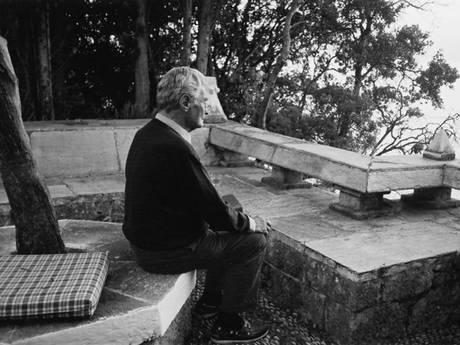
Patrick Leigh Fermor in later life

Patrick Leigh Fermor in later life

That epic journey and the power of his storytelling will be in many people’s thoughts this weekend, as Leigh Fermor’s final book of travel memoirs is published. Fans have been waiting three decades for this. The Broken Road is the last, missing volume in a trilogy that many thought would never be completed. It concludes the story he told that day in the Byron Room, of a youthful trek from London to Istanbul in 1933, catching the last echoes of an older order before the Second World War changed everything.

Across this vanished world Leigh Fermor had walked aged 19, meeting monocled aristocrats and ragged chimney sweeps, sleeping in cowsheds or in castles, dodging gypsy encampments, cadging lifts on cargo boats, falling for pretty girls, dancing and drinking and talking his way to the heart and soul of central Europe. The journey was enchanting, the writing rich and vivid.

But he never finished the trilogy. The two previous volumes – A Time of Gifts and Between the Woods and the Water – appeared in 1978 and 1986 to huge acclaim. They prompted Jan Morris to hail him as “the greatest of living travel writers”. Then the words stopped, 500 miles from Istanbul. For years, friends and fans pestered him to finish it. He never did. Perhaps it was the failing powers of old age, perhaps it was the pressure of living up to expectations, perhaps – like that medieval French poem – he could no longer recall enough of the ending. When he died in 2011 – seven years after our meeting in Piccadilly – it seemed another great loss to literature.

But three years before his death, his biographer Artemis Cooper had stumbled across a 45-year-old typescript filed at John Murray’s office. It was called “A Youthful Journey”, and it was Leigh Fermor’s early attempt to describe the post-Danube part of the route. Her interest rekindled his, and slowly he began to sift his way through this fading text, revisiting the great journey, reworking the words, a man in his nineties taking one last shot.

He never finished. The final manuscript was a mass of revisions and expansions that petered out just days from Istanbul. But Cooper and the travel writer Colin Thubron took it upon themselves to sort it into best order and present it to the world. It was perhaps a homage to their friend as much as a literary laying to rest. And John Murray published it, a posthumous memoir saved from oblivion at last.

The result is The Broken Road. It’s as charming as its predecessors, a fascinating glimpse of a vanished era. Leigh Fermor drifts through the pre-war Balkans, meeting White Russian officers, dancing at diplomats’ parties, falling in love with a French-speaking student, drinking slivovitz with coachmen and concierges. On a moonless night by the Black Sea he nearly drowns, but stumbles his way into a cave where a ragged gang of fishermen and sailors sitting around a fire take him in for a night of wild drinking and traditional dances. It is perhaps the emotional heart of this book – a moment from an ancient myth, which his derring-do and joie de vivre have brought to life – glitteringly told, impossibly romantic, unrepeatable today.

The book is also a little rougher in parts than its predecessors. I asked the editors about this. “What we were dealing with was very much a first draft, by his standards,” says Colin Thubron. “Neither we nor anyone else could finish the trilogy as Paddy would have wanted. It is, inevitably, less uniformly polished – or ‘buffed up’ , as Paddy might have said – than the previous two books. But there are passages as fine as anything he wrote, and it also reveals a certain, rather charming, youthful vulnerability.”

“It is much rougher in texture,” agrees Cooper, “but it is also unmistakeably Paddy. As a writer he is quite unique. That fusion of memory and imagination and landscape, nobody has ever achieved that with such immediacy.”

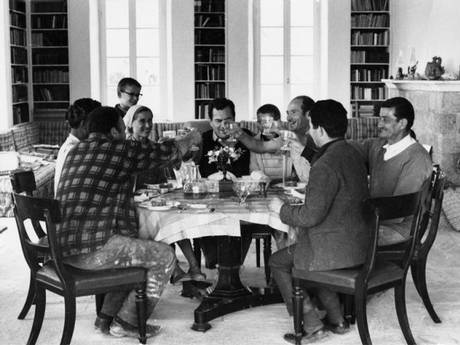
Patrick Leigh Femor sharing lunch with friends in Kardamyli

Patrick Leigh Femor sharing lunch with friends in Kardamyli

Quite how far he fused memory and imagination is an interesting question. All three of these books were written decades after the fact, with only a tattered map as aide-memoire. He had lost all but one of his diaries – some on the road, some in a neglected storeroom at Harrods. Like that other fine travel memoirist of the 1970s, Laurie Lee, you can’t help wondering how much of this actually happened.

Cooper has a theory: “Paddy once told me that everything that ever happened to him from the ages of five to 21 was etched on his mind, and to a certain extent that was true. But memory is not a CCTV camera in your head – it changes, develops, shrinks or expands or becomes more elaborate – especially if you write about it.”

Thubron agrees: “I think the vividness of his memory merged seamlessly with the richness of his imagination.”

It was an imagination fed by the life that he chose to live. What other travel writer can claim to have ridden in a cavalry charge across a castle drawbridge with sabres drawn, as he did during a Balkan rebellion? Or lived in a manor house with a Romanian princess, who he met on reaching Istanbul? Or kidnapped an enemy general and driven his staff car through 22 enemy checkpoints, as he did in wartime Crete?

The latter was his most famous exploit, and you can visit the place where it happened – a remote stretch of road beside an olive grove where Leigh Fermor lay in wait with a band of Cretan partisans. The episode was made into a book and film, Ill Met By Moonlight, starring Dirk Bogarde as Leigh Fermor. For years afterwards, Leigh Fermor was fêted throughout Greece for his wartime service with the partisans, when he had lived for months in mountain caves, organising resistance to the German occupation.

The war left him with a profound attachment to Greece and its people, and in the 1950s he and his wife Joan built a house there, on the Mani peninsula. It was famed for its elegance and its house guests. John Betjeman described the library, which looked over the sea, as “one of the rooms of the world”. The travel writer Bruce Chatwin chose to have his ashes scattered on the hills above, by Leigh Fermor.

Here he wrote two luminous books on Greece – Mani and Roumeli – and slowly began the trilogy which has now, finally, been completed. He nicknamed this work “The Great Trudge” – a view understood by his editors.

“It feels wonderful to have completed the trilogy,” says Cooper. “Paddy always felt a huge regret that he did not finish this book. But by the end of his life I think he knew that we would see it was published. Perhaps, on some level, he was able to leave the world knowing that it would see the light of day.”

“There is, in the end, nobody like him,” concludes Thubron. “A famous raconteur and polymath. Generous, life-loving and good-hearted to a fault. Enormously good company, but touched by well-camouflaged insecurities. I would rank him very highly. ‘The finest travel writer of his generation’ is a fair assessment.”

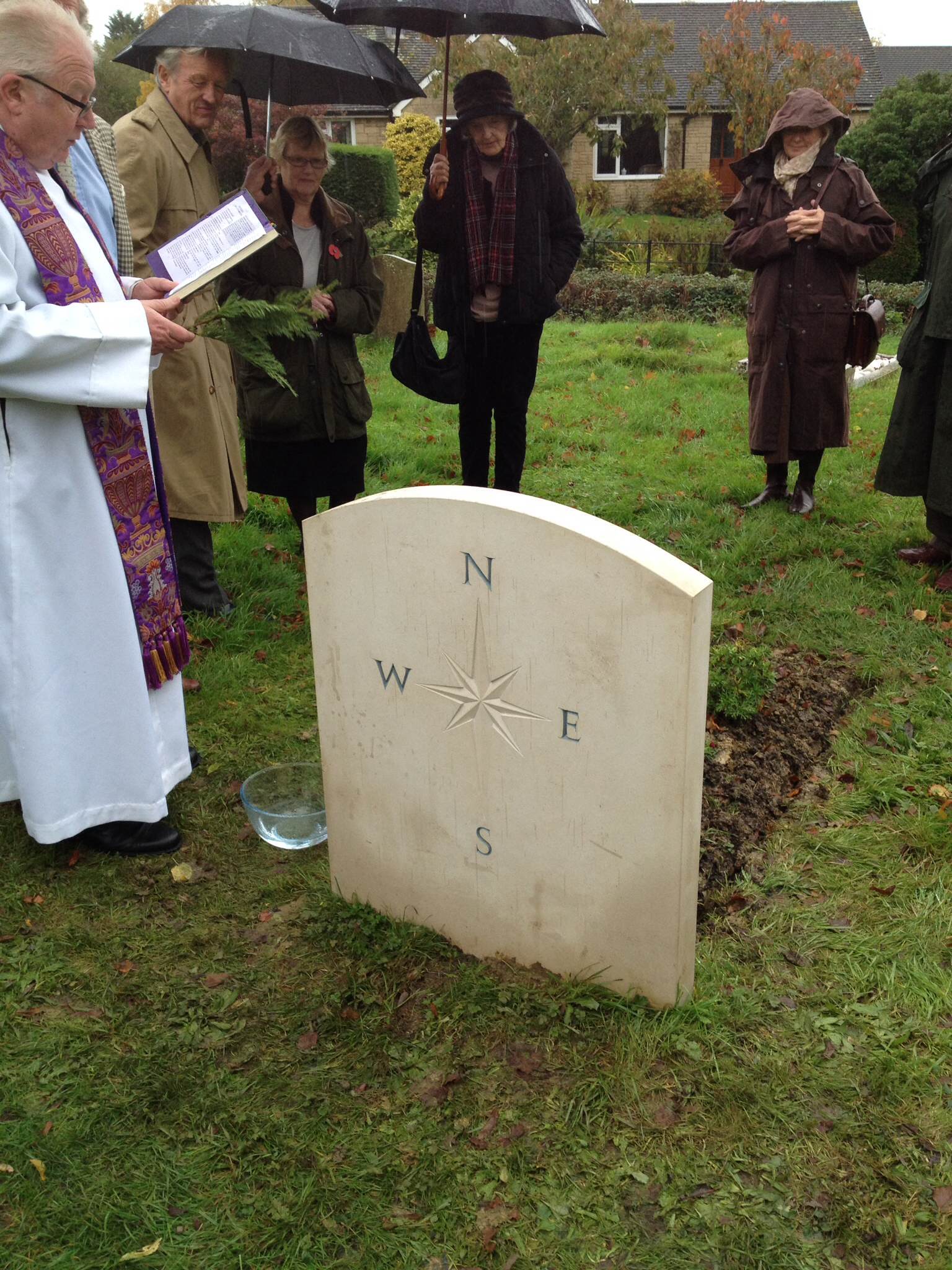
Paddy’s headstone unveiled

He was of that excellence which is of Greece

He was of that excellence which is of Greece

Paddy’s headstone was unveiled during a short service at Dumbleton on 8 November, his name day in Greece, the feast of the Archangel Michael (the Heavenly Brigadier as Paddy called him). It is Portland stone, like Joan’s.

The Greek inscription reads

‘HE WAS OF THAT EXCELLENCE WHICH IS OF GREECE’

Olivia Stewart, one of his executors chose it. The line is from a poem by Cavafy.

Among the friends gathered you can see Colin Thubron, Rita Walker (with poppy) who was with Paddy when he died, and Philippa Jellicoe (in black with hat), Bridget Kendall, married to Robert Kendall, Joan’s nephew. Also there were Cressida Connolly and her husband Charles Hudson (he’s the one holding the umbrella over Rev Nicolas Carter (who also toook Paddy’s funeral service), Olivia Stewart, Elizabeth Chatwin, Joey Casey (widow of Michael Casey, who was also Joan’s nephew), Martin Mitchell who was Paddy and Joan’s solicitor, Judith who designed the stone, and Artemis Cooper whose thumb is in the picture!

Paddy's headstone rear.

Paddy’s headstone rear.

Before Midnight, Telegraph review “a brave and blistering triumph”

Julie Delpy as Celine and Ethan Hawke as Jesse in Before Midnight

Julie Delpy as Celine and Ethan Hawke as Jesse in Before Midnight

Before Midnight, the third film in Richard Linklater’s Before Sunset series, finds Julie Delpy and Ethan Hawke at their blistering, bickering best, in and around Paddy’s house.

by Tim Robey

From the Telegraph, first published 20 June 2013.

The last time we saw Celine (Julie Delpy) and Jesse (Ethan Hawke) together on screen, they were shooting the breeze in Paris, in Richard Linklater’s Before Sunset (2004), a sequel to his gorgeous Viennese brief encounter, Before Sunrise (1995). A plane was missed, but a vital connection was re-established, and Linklater had faith in this pair’s future, handing them one of the best, most romantic endings in the history of the movies.

Nine years later, the couple are living out the consequences of that decision, for good and bad, in Before Midnight. They’ve settled down in Paris, as the unmarried parents of twin girls, whose bobbing blonde locks could hardly fail to gladden the heart. We catch up with the family on holiday in the Peloponnese, where Jesse, fully established as a novelist, pitches ideas to friends, and Celine, an environmental activist whose latest wind-farm project has just been vetoed, ponders a potentially stressful career change.

The first half of the movie is mainly sweetness and Mediterranean light – there’s Greek salad at the dinner table, and bumper ensemble chats about what lasts in life and what doesn’t. Linklater has always been a garrulous sort of filmmaker, never one to cut short his characters’ windier musings, but in this early phase of the film he makes us ever so slightly nervous we’re in for a mid-level Woody Allen-style travelogue, with a yoghurty side dish of seasoned philosophising.

We needn’t worry; these hints of complacency are all grist to the eventual mill. Right from the start, there are rumblings of the things that have worked out less well for the lovers. Leaving his first wife for Celine meant Jesse more or less abandoned Hank, his son from that marriage, who’s now in his early teens and based in Chicago. Though Hank has joined Celine and Jesse for part of their trip, their adieu at Kalamata airport, where the film starts, is a typically poignant one for Jesse, since it involves sending his son, as Celine puts it, “back behind enemy lines”. Jesse sacrificed a lot to move to Europe, and quick-tempered Celine picks up, with nuclear sensitivity, on his yearning to be a better dad, along with all the resentments and retaliatory demands this might entail.

Hawke and Delpy, who are both credited on the script too, have never found co-stars to bounce off more nimbly or bring out richer nuances in their acting. As in the earlier films, all the best sequences here are long, snaking duologues – the difference being that Celine and Jesse now know each other inside out, and exactly which buttons to push. As a gift from friends, they get a night to themselves, and the movie’s tone shifts at the key moment when they’ve walked to a local village and the sun sets, as if inviting the real sequel to begin. There’s a long and brilliant scene in a hotel room, plotted like great theatre, in which foreplay gets interrupted by mild irritation, sarcasm becomes a full-on domestic row, and soon we’re at Defcon 1.
Related Articles

Where we might have expected a gentle or rueful coda, we get a battle of the sexes as blistering as the best of Tracy/Hepburn, and infinitely more frank. The pair take turns to be witheringly funny about each’s others foibles, delusions, and vast deficiencies, which only billow when this sort of combat draws them out. In a breath, Hawke can be magnificently caustic – just wait for his quip about Celine’s “agony in the trenches of the Sorbonne” – and a clumsy stirrer of the hornet’s nest. Delpy is a mistress of the half-joke with a whole artillery of grievances at her fingertips, and the emotional capacity to fire them all at once. The way men and women can trample on each other’s dreams, even without intent, is a brave subject for this movie to unpick, given the wispy, tender optimism of those dreams when Celine and Jesse last met, and indeed first met. Each film asks whether this generation’s most durable movie couple will make it – only now, they’re asking the same question of themselves.

John Chapman’s April visit to Kardamyli

As many of you may know, John Chapman, the author of Mani Guide,  not only provides us with excellent pictures (here) and comments, he also a regular correspondent to the blog and contributes articles which I am always happy to share with you. Here is his most recent note to me. Clearly the man has too much time on his hands. Lucky him!

I spent the whole of April 2013 in Mani. A welcome change from that never-ending British winter. I was perched in an isolated house high above the Messenian Gulf with views over Kalamata and the distant Arcadian mountains. Often just accompanied by the tinkle of goat bells and hum of bees, and the loud meows of the two feral cats who adopted me.

Kardamili was 15 minutes drive away. I didn’t revisit Paddy’s villa, but I did talk to a number of locals, and foreigners who’d known him and the house. Prof. David Mason – Poet Laureate of Colorado, no less, was over with a group of extremely keen, bright eyed and bushy tailed students. Dave had lived in Kardamili in the ‘70s and had lived rough, with his first wife, in a small hut just above Paddy’s villa. He was soon invited for lunch by Paddy and Joan and remained a close friend and correspondent with them until Paddy’s death. I’d met Dave in Oxford some few years ago and it was great to see him again over dinner, with other locals and his students, overlooking the harbour at Kardamili.

David’s book, ‘News from the Village’ (Red Hen Press. 2010. ISBN 1597094714.) is highly recommended as a portrait of an American’s love affair with Greece and Kardamili in particular. He’d shown his students the hut he’d lived in, and they’d all swam off the same rocks as Paddy had. Frankly the Med’ in April is damned cold, and I certainly didn’t emulate them, but as one of them commented, ‘we’re tough in Colorado!’

Things were quiet in Kardamili. The Greek Easter was exceptionally late, early May. And I therefore had time to sit over a frappé or two with various friends. No-one was certain what was going to happen with Paddy’s house. Though towards the end of the month I heard, unverifiable of course, that a rich Englishman was going to restore the house, live in it for three  months of the year, and let the Benaki Foundation use it  for the remaining 9 months. We’ll see.

One myth I wanted to enquire about was Paddy’s linguistic skills. He certainly could speak Greek fluently, but some have claimed he spoke it like a native. I’ve seen TV footage of him speaking Greek and frankly his accent struck me as being very posh English. I asked someone from the Troupakis family, who knew him well, who confirmed my suspicions. Paddy had perfect Greek, but a marked English accent.

He was also an appalling driver. One of the Dimitreas family (Paddy’s Mourtzinos family) had once lovingly repainted their boat, only to have Paddy reverse ineptly into it. It seems it was a toss of the coin as to who drove the car. Joan was allegedly just as bad a driver!

Another oddity is that when Paddy signed a copy of his book about the Mani he would often draw a sketch of the coast near his house. This was reasonably accurate and certainly evocative. But he invariably added in about four or five seagulls. Very odd as they are a rarity in the Mani, and I’ve never seen more than one solitary seagull flapping over the bay in the more than twenty years I’ve been visiting the area.

Catch up with more of John’s contributions and photos by clicking here.

If you would like to send something to me to share with your fellow Friends of Paddy you can find out how in the About section.

Remembering Patrick Leigh Fermor 1915-2011

Today is the second anniversary of Paddy’s death and we miss him as much as ever. As we have seen with yesterday’s announcement of the death of Magouche Fielding, his generation of friends still with us is becoming smaller, but I know from the many comments that you make that Paddy, and his generation still have the ability to inspire us to read, to travel, and to experience new things in life.

I am sure that he would have enjoyed reading Artemis Cooper’s biography, if perhaps feeling somewhat embarrassed about certain revelations, but smiling at so many of the memories from his long and full life. No doubt he would have been eagerly awaiting the final installment of the story of his 1934 European adventure, The Broken Road, which is due out this September.

Here are a few pictures from my archive of Paddy and friends. May he, and all his friends, rest in peace.

This slideshow requires JavaScript.

The movie Before Midnight, featuring a certain house in a starring role

If you never get the chance to visit Paddy and Joan’s house in Karadmyli, it looks like you can have an extended viewing if you go to see the movie Before Midnight.

Related articles:

Before Sunset sequel, Before Midnight movie shooting in Greece at Paddy’s House

Intimate portraits from Kardamyli by Miles Fenton

At Home in the World

Paddy at the house in Kardamyli. Photo by Joan Leigh Fermor, Courtesy the New York Review of Books

War hero, self-made scholar and the greatest travel writer of his generation, Patrick Leigh Fermor lived on a remote peninsula in the Peloponnese until his death in 2011. From a humble house he built himself, now being restored by an Athens museum, he explored Greece’s romantic landscape—and forged a profound link to its premodern past.

by Lawrence Osborne

First published in the Wall Street Journal Magazine 27 September 2012.

A famous anecdote, told by Patrick Leigh Fermor himself in his book Mani, relates how on one furnace-hot evening in the town of Kalamata, in the remote region for which that book is named, Fermor and his dinner companions picked up their table and carried it nonchalantly and fully dressed into the sea. It is a few years after World War II, and the English are still an exotic rarity in this part of Greece. There they sit until the waiter arrives with a plate of grilled fish, looks down at the displaced table and calmly—with an unflappable Greek stoicism—wades into the water to serve dinner. Soon the diners are surrounded by little boats and out come the bouzouki and the wine. A typical Fermor evening has been consummated, though driving through Kalamata today one has trouble imagining the scene being repeated. The somniferous hamlet of the far-off 1950s is now filled with cocktail bars and volleyball nets. The ’50s, let alone the war, seems like another millennium.

Fermor, or “Paddy,” as many educated Greeks knew him, died last year at the age of 96. He is remembered not only as the greatest travel writer of his generation, or even his century, but as a hero of the Battle of Crete, in which he served as a commando in the British special forces.

This slideshow requires JavaScript.

“For as long as he is read and remembered,” Christopher Hitchens wrote upon Fermor’s death, “the ideal of the hero will be a real one.” Hitchens placed Fermor at the center of a brilliant English generation of “scholar warriors,” men forged on the battlefields of the mid-century: This included poet John Cornford, martyred in the Spanish Civil War, and the scholar and writer Xan Fielding, a close personal friend of Fermor’s who was also active in Crete and Egypt during the war, and a guest of the aforementioned dinner party. When Fermor said Fielding was “a gifted, many-sided, courageous and romantic figure, at the same time civilized and bohemian,” he could have been describing himself.

But Fermor was a man apart. Born in 1915 into the Anglo-Irish upper class—the son of a famous geologist—Fermor, literally, walked away from his social class and its expectations almost at once. At 18, he traveled by foot across Europe to Constantinople—a feat later recorded in his books A Time of Gifts and Between the Woods and the Water. In the ’30s he traveled through Greece, mastering its language and exploring its landscapes with meticulous attention. He fell in love with a Romanian noblewoman, Balasha Cantacuzene (a deliciously Byzantine name), and the outbreak of war found him at her family estate in Moldavia.

Because of his knowledge of Greek, the British posted him to Albania. He then joined the Special Operations Executive (SOE) and was subsequently parachuted into German-occupied Crete. In 1944 Fermor and a small group of Cretan partisans and British commandos kidnapped General Heinrich Kreipe, commander of the German forces on the island, and drove him in his staff car through enemy lines disguised in German uniforms. (They would have been shot on the spot if discovered.) Kreipe was later spirited away to British Egypt, but as they were crossing Mount Ida, a legendary scene unfolded. Fermor described it himself:

“Looking across the valley at [the] flashing mountain-crest, the general murmured to himself: ‘Vides ut alta stet nive candidum Soracte.’ [See how Mount Soracte stands out white with deep snow.] It was one of the [Horace odes] I knew! I continued from where he had broken off… The general’s blue eyes had swivelled away from the mountain-top to mine—and when I’d finished, after a long silence, he said: ‘Ach so, Herr Major!’ It was very strange. As though, for a long moment, the war had ceased to exist. We had both drunk at the same fountains long before; and things were different between us for the rest of our time together.”

After the war, now decorated for his heroism, Fermor settled in Greece. He and his wife, Joan Rayner, a well-traveled Englishwoman whom he’d met in Cairo, built a house just outside the village of Kardamyli, a few miles down the jagged coast from Kalamata, in the wild and remote Mani. It was a place that, even in the early ’60s, almost no one visited. “Homer’s Greece,” as he put it admiringly.

“It was unlike any village I had seen in Greece,” he wrote in Mani. “These houses, resembling small castles built of golden stone with medieval-looking pepper-pot turrets, were topped by a fine church. The mountains rushed down almost to the water’s edge with, here and there among the whitewashed fishermen’s houses near the sea, great rustling groves of calamus reed ten feet high and all swaying together in the slightest whisper of wind.” It was timeless. Kardamyli, indeed, is one of the seven cities that Agamemnon offers a scowling Achilles as a reward for his rejoining the paralyzed Achaean army at Troy in The Iliad.

“Not a house in sight,” Fermor later wrote of his adopted view, in a letter to his friend the Duchess of Devonshire, “nothing but the two rocky headlands, an island a quarter of a mile out to sea with a ruined chapel, and a vast expanse of glittering water, over which you see the sun setting till its last gasp.”

The house, still largely untouched from when Fermor lived there, was bequeathed to the Benaki Museum in Athens. As I walked through it alone during a visit there this spring, it reminded me in some ways of Ian Fleming’s Goldeneye in Jamaica, a spartan but splendidly labyrinthine retreat devoted to both a productive life and to the elegant sunset cocktail hour. In one bedroom stood a set of Shakespeare volumes with painstakingly hand-penned spines; on a wall, a painted Buddhist mandala. In the living room there were faded wartime photographs of Fermor on horseback, armed and dressed like a Maniot. The whole house felt like a series of monastic cells, their piety replaced by a worldly curiosity, an endless warren of blackened fireplaces, bookshelves and windows framing the sea.

Fleming and Fermor were, perhaps predictably, close friends. Fleming’s Live and Let Die freely quotes from Fermor’s book about the Caribbean, The Traveller’s Tree. It was Fermor who made Fleming (and, of course, Bond) long for Jamaica. But where Fleming retreated to Jamaica to knock out six-week thrillers, Fermor lived in his landscape more deeply; he explored with dogged rigor its ethnography, its dialects, its mystical lore. His books are not “travel” in the usual sense. They are explorations of places known over years, fingered like venerable books and therefore loved with precision, with an amorous obsession for details.

Fermor led an active social life, and the house in Mani, however remote, was a place that attracted many friends, literary luminaries and even admiring strangers over the years. His circle included the historian John Julius Norwich and his daughter, Artemis Cooper; the literary critic Cyril Connolly; the Greek painter Nikos Ghika; and the writer Bruce Chatwin. In an obituary for Fermor in 2011, The New York Times put it thus: “The couple’s tables, in Mani and in Worcestershire, were reputed to be among the liveliest in Europe. Guests, both celebrities and local people, came to dine with them. The journalist and historian Max Hastings called Mr. Leigh Fermor ‘perhaps the most brilliant conversationalist of his time, wearing his literacy light as wings, brimming over with laughter.’ ”

Standing on Fermor’s terrace, with its fragments of classical sculpture and its vertiginous view of a turquoise cove of stones, I felt as if the inhabitants of 40 years ago had momentarily gone inside for a siesta and would soon be out for a dusk-lit gin and tonic. It seemed a place designed for small, intimate groups that could pitch their talk against a vast sea and an even vaster sky.

It also had something neat and punctilious about it. While sitting there, I could not help remembering that Fermor had once sternly corrected Fleming for a tiny factual error in his novel On Her Majesty’s Secret Service. Didn’t Fleming know that Bond could not possibly be drinking a half bottle of Pol Roger? It was the only champagne, Fermor scolded, never sold in half bottles. It was exactly the sort of false note that Paddy never missed, and that the creator of Bond should not have missed either. Truth for Fermor lay in the details, and his books show the same straining eye for the small fact, the telling minutiae.

I noticed, meanwhile, a handsomely stocked drinks cabinet inside the house, in the cool, cavernously whitewashed living room lined with books—the selection dominated by a fine bottle of Nonino grappa. On the mantelpiece stood a card with the telephone numbers of his closest friends, Artemis Cooper (whose biography of Fermor is being published this month) and Deborah Mitford, later the Duchess of Devonshire.

Fermor had been at the heart of many aristocratic circles, including those of the notorious Mitford sisters. The youngest of the Mitfords—”Debo,” as she was known—became Fermor’s lifelong intimate and correspondent. Their polished and witty letters have recently been published in the book In Tearing Haste.

He was a frequent visitor at her country estate, Chatsworth, and the two were platonically entwined through their letters well into old age. They were, however, strange epistolary bedfellows. The Duchess hated books (“Quelle dread surprise,” she writes upon learning that a famous French writer is coming to dinner), while Fermor was the very definition of the dashing, encyclopedic gypsy scholar. In one letter the Duchess boasts that Evelyn Waugh gave her a signed copy of his latest book, which turned out to have blank pages throughout; he knew she hated reading. But the gardening-mad Duchess slyly understood all her correspondent’s erudite gags.

Their gossip was gentle and civilized, and underneath it flowed a kind of unrequited love. In his first letter of the collection, written in 1955 from Nikos Ghika’s house on Hydra, Fermor proposes having himself turned into a fish by a young local witch and swimming all the way from Greece to Lismore Castle in Ireland, where the Duchess was staying.

“I’m told,” he writes, “there’s a stream that flows under your window, up which I propose to swim and, with a final effort, clear the sill and land on the carpet…But please be there. Otherwise there is all the risk of filleting, meunière, etc., and, worst of all, au bleu…”

The Mani, meanwhile, was a far cry from English country houses and fox-hunting parties. Its remoteness and austerity—especially immediately after the war—were truly forbidding. As Fermor pointed out, this was a place that the Renaissance and all its effects had never touched. It was still sunk in Europe’s premodern past—a place still connected by a thousand invisible threads to the pagan world.

Above Kardamyli rise the Taygetus range and the forests that Fermor loved to wander. Steep paved footpaths called kalderimi ascend up into half-abandoned villages like Petrovonni and, above it, the church of Agia Sophia, which looks down on the Viros Gorge. In Mani Fermor remembers that it was here, near the city of Mistra, that Byzantium died out a few years after the fall of Constantinople, and where the continuously creative Greek mind lasted the longest. It is a delicate, luminous landscape—at once pagan and Christian.

Fermor discovered that Maniots still carried within them the demonology of the ancient world, filled with pagan spirits. They called these spirits the daimonia, or ta’ xotika: supernatural beings “outside” the Church who still—as Nereids, centaurs, satyrs and Fates—lived in the streams and glades of the Mani. They still believed in “The Faraway One,” a spirit who haunted sun-blazing crossroads at midday and who Fermor deduced to be the god Pan. The Mani was only Christianized, after all, in the 10th century. Fermor also described how an illiterate Greek peasant, wandering through archaeological museums, might look up at ancient statues of centaurs and cry, immediately, “A Kallikantzaros [centaur]!” To him, it was a living creature.

I hiked up to Exohori, where Bruce Chatwin had, 25 years ago, discovered the tiny chapel of St. Nicholas while he was visiting Fermor. (I had, in fact, been given Chatwin’s old room in the hotel next to Fermor’s house.) Chatwin venerated the older writer, and the two men would walk together for hours in the hills. Fermor, for his part, found Chatwin enchanting and almost eerily energetic. Yet Chatwin was inspired not just by Fermor but by where he lived. When Chatwin was dying, he converted to Greek Orthodox. It was Fermor, in the end, who buried Chatwin’s ashes under an olive tree next to St. Nicholas, in sight of the sea of Nestor and Odysseus.

Exohori felt as deserted as the other strongholds of the Mani, its schools closed and only the elderly left behind. It possesses an atmosphere of ruin and aloofness. I remembered a haunting passage from Mani in which Fermor describes how villagers once scoured out the painted eyes of saints in church frescoes and sprinkled the crumbs into the drinks of girls whom they wanted to fall in love with them. So, one villager admits to Fermor that it wasn’t the Turks after all.

As a former guerrilla of the savage Cretan war, Fermor felt at home here. It was a thorny backwater similarly ruled by a warrior code. Its bellicose villages were, almost within living memory, frequently carpeted with bullet casings. It was a vendetta culture.

The Mani was for centuries the only place in Greece apart from the Ionians islands and Crete (which, nevertheless, fell to the Turks in 1669) to remain mostly detached from the Ottoman Empire. Its people—an impenetrable mix of ancient Lacedaemonians, Slavs and Latins—were never assimilated into Islamic rule, and their defiant palaces perched above the sea never had their double-headed Byzantine eagles removed. Here, Fermor wrote, was “a miraculous surviving glow of the radiance that gave life to this last comet as it shot glittering and sinking across the sunset sky of Byzantium.” Mani, therefore, explores wondrous connections in our forgotten Greek inheritance (it argues, for example, that Christianity itself was the last great invention of the classical Greek world). But Fermor’s philhellenism was not dryly bookish. It was intensely lived, filled with intoxication and carnal play.

His contemporary and fellow Anglo-Irish philhellene Lawrence Durrell was, in so many ways, his kindred spirit in this regard. They were also close friends and had reveled together at the famous Tara mansion in Cairo during the war. Mani, in any case, stands naturally beside Bitter Lemons and Prospero’s Cell as love songs to the Greece of that era. In Ian MacNiven’s biography of Durrell, we find an enchanting glimpse of a riotous Fermor visit to Durrell in Cyprus just after the war. The two men stayed up half the night singing obscure Greek songs, rejoicing in shared Hellenic lore and making a lot of noise.

“Once as they went through Paddy’s vast repertoire of Greek songs far into the night, the lane outside the house filled with quiet neighbors, among them the usually boisterous Frangos, who told Larry, ‘Never have I heard Englishmen singing Greek songs like this!’ ” Their shared virtuosity in the Greek language was remarkable.

Greece, for some of the young prewar generation, held a special magic. It was a youthful Eden, a place linked to the ancient world that was doomed to disappear in the near future. It’s a mood cannily incarnated in Henry Miller’s The Colossus of Maroussi, which records journeys that Miller and Durrell undertook together in 1939. But no one sang Greece more profoundly than Fermor, and no one tried more ardently to argue its core importance to Western culture, both now and—a more radical argument—in the future.

Roumeli and Mani are his twin love songs to Greece, but it is in Mani that he most eloquently lamented the disappearance of folk cultures under the mindless onslaught of modernity and celebrated most beautifully what he thought of as an immortal landscape in which human beings naturally found themselves humanized.

Consider his illustration of the Greek sky that always seemed to hang so transparently above his own house: “A sky which is higher and lighter and which surrounds one closer and stretches further into space than anywhere else in the world. It is neither daunting nor belittling but hospitable and welcoming to man and as much his element as the earth; as though a mere error in gravity pins him to the rocks or the ship’s deck and prevents him from being assumed into infinity.”

The Longest Journey Will Always Lie Ahead

Last of the wartime generation of travel writers: Sir Patrick Leigh Fermor in 2011

Whilst digging around I came across this charming obituary to Paddy by Justin Marozzi who is famous for his book The Man Who Invented History: Travels with Herodotus, in which Justin describes an account of a lengthy retsina fuelled lunch with Paddy when he visited Kardamyli in 2007.

By Justin Marozzi.

First published in StandPoint July-August 2011

The longest walk has finally come to an end. After the most dashing life of literary wanderings, in which he crossed a continent on foot, fell in love and ran away with a beautiful princess, galloped into battle in a Greek cavalry charge, secluded himself silently with Trappist monks, kidnapped a German general, became one of this country’s greatest war heroes, swam the Hellespont and built a sun-filled house in the Peloponnese where he wrote what may yet prove to be one of the finest trilogies in modern literature, Sir Patrick Leigh Fermor’s ultimate journey was the return home to die in Worcestershire at the age of 96, an Englishman to the last.

The death of Leigh Fermor — friends and fans called him Paddy — removes the last link to that generation of travel writers who fought with such distinction in the Second World War. The prospect of that elusive final volume, which would see our footsore traveller and philhellene complete his serendipitous, marathon-walking tour from the Hook of Holland to reach the city he insisted on calling Constantinople, sometimes Byzantium, never Istanbul, is little short of exhilarating. All his fans who cherish the densely beautiful prose of A Time of Gifts (1977) and Between the Woods and the Water (1986) will be thrilled to hear the news from his biographer Artemis Cooper that an early draft “will be published in due course”. The posthumous gift cannot come soon enough.

The celebration of a life so well lived is likely to bring a renewed flash of interest in travel writing, a genre that has, almost from its very outset, been revered and reviled in equal measure. We may not know what sort of reception greeted the “publication” on clay tablets of the Babylonian Epic of Gilgamesh, the earliest forerunner of travel writing, if not of literature itself, but we are certainly familiar with the mauling received by the Ancient Greek Herodotus, the first great travel writer and historian, an exuberant pioneer of anthropology, geography, exploration, investigative journalism, tabloid hackery and foreign reportage in the 5th century BC. Within little more than a century, Cicero’s “Father of History” had become Plutarch’s “Father of Lies”, a classical harbinger of the suspicion which has bedevilled the first-person travelogue ever since. From Herodotus to Leigh Fermor via Marco Polo, John Mandeville and Bruce Chatwin, the hostile image of travel writer as self-indulgent fantasist and fibber has never been shaken off entirely.

In May, the doyen of American travel writers. Paul Theroux dropped in at the Hay Festival to promote his latest work, The Tao of Travel, an engaging distillation of travellers’ wisdom and a vade mecum worth popping into the Globetrotter suitcase this summer. The blaze of publicity surrounding Paul Theroux’s handshake that ended a 15-year feud with V.S. Naipaul, another writer who has excelled in the genre, suggests that contrary to many predictions, travel writing is in robust health. From one generation to the next it shrugs off with insouciance the obituaries that are written for it periodically by writers as diverse and removed from each other as Joseph Conrad and Claude Lévi-Strauss. Indeed the temptation must be to conclude that travel writing, like the poor, will always be with us.

In Britain, which has a proud heritage in this field, the ranks of great travel writers have been sadly thinned in recent years. The monumental Sir Wilfred Thesiger, author of Arabian Sands and The Marsh Arabs, last of the latter-day Victorian explorers, died in 2003. The same year saw the passing of the magnificent, under-appreciated Norman Lewis, whose Naples ’44 is one of the classic literary accounts to emerge from the Second World War.

In 2006, they were followed by Eric Newby, best remembered for his brave and hilarious A Short Walk in the Hindu Kush, a book that closes with the 20th century’s equivalent of the Stanley-Livingstone encounter. Newby and companion bump into Thesiger halfway up a mountain in Afghanistan, the formidable explorer trailing retainers and pack-animals bearing chests marked for the British Museum, bemoaning the declining standards of Savile Row and gleefully recounting his amputations of gangrenous fingers and removal of diseased eyes. They strike camp for the night. “The ground was like iron with sharp rocks sticking up out of it. We started to blow up our air-beds. ‘God, you must be a couple of pansies,’ said Thesiger.”

Profoundly different in their styles and interests, these three writers were bound nevertheless by the shared generational experience of war and their direct participation in it. Thesiger fought behind enemy lines in North Africa with the SAS, Newby was one of the earliest recruits to the Special Boat Section, as the SBS was then known, and Lewis was an intelligence officer in Naples.

Then there was Paddy. The last of his era was also surely the most admirable and admired of all, a Byronic incarnation of what Greeks call leventeia, defined in one of his most life-enhancing books as a “universal zest for life, the love of living dangerously and a readiness for anything”. His housemaster at King’s School, Canterbury detected “a dangerous mixture of sophistication and recklessness”. Leigh Fermor was the leading literary light among that band of travel writers who fought in the war and were coloured by it, whose lives and writings bear, to some degree at least, the imprint of that vast, world-changing hurricane. The justly celebrated Jan Morris, who caught the closing years of the war as an intelligence officer in Italy and Palestine, is already at a generational remove.

War may not have defined Leigh Fermor or his writing entirely (it brought to an end the first of his two great loves, a dreamlike romance with the Romanian princess Balasha Cantacuzene), but his quintessentially dashing, devil-may-care war record certainly underpins much of the affection with which his devoted fans view him today. In some instances, such as that of “The Greatest Living Englishman” blog that was published in his honour, it is a devotion that blossoms into outright adulation.

Meeting Paddy at his home in the Greek fishing village of Kardamyli in 2006, it was very difficult not to succumb entirely to hero-worship. My first sight of this unforgivably handsome man was sitting in what he called his hayati, a sun-bleached, south-facing winter chamber off what Betjeman called “one of the rooms in the world”, strewn with atlases, dictionaries, lexicons, icons, sculptures, lamps, flokkati goat-hair rugs, Turkish kilims and creased armchairs. He was clasping a Loeb edition of Herodotus. At 91, lunch remained unthinkable before two large vodka and tonics. Cigarettes were thoroughly approved of and an unstinting stream of retsina flowed alongside our conversation for hours. The polymath and oenophile was unstoppable. As the post-prandial ouzo shot to my head like a tracer-bullet, I had to pinch myself to remember that this debonair specimen of the literary man of action was the nonagenarian version of the 18-year-old adventure-seeking “tramp and pilgrim” who in 1933 had set out on his life-changing journey across Europe after a high-spirited farewell with friends in London: “A thousand glistening umbrellas were tilted over a thousand bowler hats in Piccadilly; the Jermyn Street shops, distorted by streaming water, had become a submarine arcade.”

If the prose-poetry of his books is riveting, at times sublime, very occasionally purple, the narrative of his war record is scarcely less vivid. Its crowning moment came at 9.30pm on April 26, 1944, when he stepped out on to a road in the heart of the rough Cretan countryside, intercepted a German staff car and kidnapped General Heinrich Kreipe with a team of Cretan resistance fighters and a fellow British officer in the Special Operations Executive (SOE). From a literary perspective, the glory of this episode had to wait until A Time of Gifts, the first instalment of his epic walk — a version was written in 1969 for the Imperial War Museum. In it Leigh Fermor described the terrifying, 18-day manhunt by German forces sweeping the island. At dawn one morning, surveying the crest of Mount Ida, the general started murmuring his way through a Horace ode. Recognising it as one of the few he knew by heart, the Englishman picked up where the German left off, reeling off the five remaining stanzas in perfect Latin.

“The General’s blue eyes swivelled away from the mountain-top to mine — and when I’d finished, after a long silence, he said: ‘Ach so, Herr Major!’ It was very strange. ‘Ja, Herr General.’ As though, for a long moment, the war had ceased to exist. We had both drunk at the same fountains long before; and things were different between us for the rest of our time together.”

Mani and Roumeli, which describe Leigh Fermor’s wanderings in southern and northern Greece respectively, were hailed by the FT as “two of the best travel books of the century” and contain numerous references to the courage, loyalty, humour and generosity of the Cretans among whom he fought. Artemis Cooper writes in Words of Mercury of the “unbreakable bond” war had forged between the Cretans and the SOE crowd. Typically, Leigh Fermor was not slow to acknowledge it.

In a touching tribute to the Cretan resistance, he translated the wartime memoirs of George Psychoundakis, his shepherd-guerrilla comrade-in-arms, and saw them into print. How many soldiers would have had the literary sensibility-or modesty-to recognise the value of an account told by a local resistance fighter, rather than a self-aggrandising story by yet another officer dropped behind enemy lines? In his introduction to The Cretan Runner, written in 1954, Leigh Fermor likened it to the Rualla Bedouin penning an Arab version of Lawrence’s Seven Pillars of Wisdom (the contrast with the self-promoting Lawrence, a very fine writer on the desert, is instructive). “For the roles were reversed, and the British officers and their signallers and NCOs, not the stage-mountaineers of most Resistance writing, were the foreign oddities; and it seemed to me that they were far better and more soberly appraised than their equivalents in English war books.”

Barnaby Rogerson, author and co-owner of Eland, a specialist publisher of travel literature classics, says war seared an indelible sense of place for this select group of writers. “I think the war gave the best of these travel writers a very intense relationship with one region, where their literary souls got mingled with a place apart, also a sense of writing for the dead others. This is obviously true of Paddy, who could sing, dance and drink as well as any Greek shepherd. I never could work out whether he was a reincarnation of Byron or Pan — probably both. Then there’s Norman Lewis with Naples and Sicily. Thesiger similarly bonded with Ethiopia in a totally passionate way as a boy and later as an adult soldier — and of course his best books are set in southern Arabia and Iraq.”

Thesiger was always more warrior than writer. It is only thanks to the persistent pressure of publishing friends, decades after his dramas in the desert, that we have his granite prose. He had seen wartime service under Orde Wingate in Abyssinia, served with SOE in Syria and then the newly-formed SAS in North Africa. In My Life and Travels, he wrote of his “passionate involvement with the Abyssinian cause”. Letters to his mother in 1943 describe how “bitter and discontented” he was not to have played a part at El Alamein. War was “exciting and exhilarating”.

During a lunch with Thesiger in the incongruous setting of his retirement home in the wastelands of Surrey suburbia, his misanthropic growl suddenly lightened into an animated purr as he spoke of his role in the Allied campaign in North Africa, having persuaded David Stirling, founder of the SAS, to take him on. “I said to him, ‘I hear you’re going to make a raid behind enemy lines. I speak Arabic and I know the desert. Three days later we were 150 miles or so behind lines. I came upon a tent packed full with people. Luckily there was no one on guard. I just raked it with machine gun fire a couple of times. It felt rather like murder.” The glacial blue eyes glowed.

The experience of war also formed a critical part of Lewis’s literary hinterland. He wrote in Naples ’44 of a decisive encounter that “changed my outlook”, shattering his “comforting belief that human beings eventually come to terms with pain and sorrow”. On November 1, 1943, contemplating a menu offering either disguised dogfish or horsemeat, he watched a group of blind orphan girls enter the restaurant scavenging for food. Each child was sobbing. “I knew that, condemned to everlasting darkness, hunger and loss, they would weep on incessantly,” he wrote. “They would never recover from their pain and I would never recover from the memory of it.” His horror of the war, combined with its alluring and unrepeatable intensity, propelled him into a lifetime of far-flung reporting from dangerous parts. It led also to his championing of the rights of indigenous peoples in “Genocide”, a seismically shocking Sunday Times article that resulted in the foundation of Survival International, the movement for tribal peoples, in 1969.

War likewise left its mark on Newby’s writings. It also brought him love. He fought gallantly with the SBS and was awarded the Military Cross for his courage during numerous sabotage missions along enemy coasts. Love and War in the Apennines, another Newby classic, tells the story of his time on the run after one dramatic and abortive SBS expedition, when he was smuggled out of a prison camp and later rescued by a young woman, Wanda, his future wife.

The travel writer Tim Mackintosh-Smith, who has spent most of the past decade writing an on-the-road trilogy in the footsteps and footnotes of his hero Ibn Battuta, the 14th-century Muslim traveller, says the war may have fostered a certain detachment among these writers. “War is death to, among other things, enthusiasms,” he says. “If you’ve been through it, nothing matters quite as much anymore. For someone writing travel, I think this may give a sort of lordly detachment to one’s observations, which isn’t a bad thing. I’m not sure that post-war generations can quite achieve this.” For John Gimlette, author of At the Tomb of the Inflatable Pig, war may have been an influence that “discouraged introspection and informality”. Today’s writers, he argues, have become less detached in their work, “using more humour and self-deprecation to place themselves amongst their subjects”.

The Second World War was only part of these writers’ stories. Theroux, who lists Leigh Fermor, Redmond O’Hanlon, Dervla Murphy, Colin Thubron, Lewis, Thesiger and Chatwin among those travel writers he most admires, believes there was another more important literary influence. “It wasn’t just the war, it was also the colonial world that defined them. They were writing with an imperial confidence.” We are talking in the bowels of the Royal Geographical Society, Britain’s Mecca for explorers and travel writers, and for a moment he could be speaking of Sir Richard Burton, another soldier-scholar, who made the haj to Mecca in disguise in the 1850s. “The end of the war also brought an end to this colonial mentality. Somehow the sense of superiority was dented during the course of the war. The bloom was off the rose. Brits could no longer travel as lords and sahibs and colonial masters.”

As the metaphorical baton passes from Leigh Fermor to Thubron, a master of lyrical prose, we lose a literary connection to that all-defining conflict of the 20th century and the more heroic age it encapsulated. The memory of it lives on, recorded in the words of historians, poets, journalists, soldiers, generals, biographers and travel writers alike. It was precisely in order to ensure that the “great and marvellous” deeds of another, much more ancient conflict were not “forgotten in time” or “without their glory” that Herodotus wrote his landmark Histories of the Persian Wars, 2,500 years ago. It is surely profoundly important that the world’s first history book, a fizzing masterpiece of storytelling, relied so heavily on experiential travel. Thucydides needed to get out more.

Scanning the horizon, there appears to be little reason to fret for the future of travel writing. A genre that seeks to understand a constantly changing world, with recourse to history, geography, politics, economics, biography, anthropology, philosophy, psychology and reportage, among other disciplines, is in little danger of losing its relevance. If you want to know what life was like in late 1930s former Yugoslavia, it is hard to beat Rebecca West’s Black Lamb and Grey Falcon, a meta-travel book (1,100 pages) of astonishing compass and vitality. For Iraq in the 1920s, who better than Freya Stark and Gertrude Bell to paint a many-layered portrait? The best travel writing opens up parts of the world that other disciplines can struggle to reach — and explain to a wider audience.

Consider the turmoil in the Middle East. While the breathless media rush to report the next dictator to catch Arab flu, leaving post-revolutionary countries like Egypt largely unreported in their wake, the field is left open for writers with more time and literary space on their hands to make sense of an irreducibly complicated society and situation. Digital communications, mass travel and the supposed shrinking of the world offer only the deadly delusion of a homogenised “global village”. News articles, foreign policy reports and jargon-filled government briefings on “failed states”, “post-conflict environments” and “stabilisation operations” pay only lip service to real-life complexities. What would Paddy have made of the Foreign Official who spoke to me the other day about “ground-truthing” in Benghazi? We should always beware of what Mauriac called “la tendance fatale à simplifier les autres”. Travel writing celebrates the world as it is, with nuance, shading and uncertainty.

William Dalrymple, who sped to fame in the late 1980s, after Theroux, Chatwin, Thubron, O’Hanlon and Jonathan Raban had blazed a renaissance trail of travel writing a decade earlier, points to the proliferation of fine writers of the genre far beyond these shores. It is parochial in the extreme to see this as a British or Western format. Among those with Indian roots alone Dalrymple lists Shiva and Vidia Naipaul, Pico Iyer, Amitav Ghosh, Vikram Seth, Pankaj Mishra and the novelist Rana Dasgupta, now working on a study of Delhi. Dalrymple says it will inevitably be a completely new take from his own City of Djinns, published in 1993, before Delhi and India had cast loose and surged forward at breakneck speed. “Each generation sees the world very differently,” he says.

Earlier this year, Kamal Abdel-Malek, Professor of Arabic Literature at the American University of Dubai, published America in an Arab Mirror, an anthology of Arab travel writing in the US during the past century that is at once unexpectedly illuminating and disquieting. OxTravels, a new anthology of writing co-edited by Rogerson, reveals a multicultural cast of 36 authors including Aminatta Forna, Oliver Bullough, Sonia Faleiro, Peter Godwin and Rory Stewart. “We could easily have added another three dozen, in a separate collection tomorrow, who would all be in the front rank,” says Rogerson. The compulsively readable Dutchman Cees Nooteboom would surely be among them. Ongoing translation of hitherto inaccessible foreign writers such as the fabulously curious, effervescent 17th-century Ottoman traveller Evliya Çelebi, author of the ten-volume Seyahatname or Book of Travels, only confirms the universality of the genre.

For a final verdict from the man Jan Morris called a “transcendentally gifted writer”, I travel to West London, where the two tribes of Holland Park and Shepherd’s Bush collide. Thubron is the first travel writer president of the Royal Society of Literature, a tribute both to his virtuoso skills and, if this is not wishful thinking, the enduring significance of the genre. His latest book, To a Mountain in Tibet, was published earlier this year to a symphonic swoon from the critics. It thrust the reader into an enchanted world of sky-dancers and demons, landscapes of fearful majesty and “charged sanctity” that clung to Thubron’s plangent prose. At the Tibetan border “the ebbing waves of the Himalaya hang the sky with spires while ahead the land smoothes into an ancient silence”. Nearing the lung-shredding, wind-haunted summit of his holy pilgrimage, “the mountain valley closes unsoftened around our strange heterogeneous trickle of beasts and humans drawn up like iron filings to the pass.”

Beyond the cool, book-lined sitting room, French windows open on to the blinding clatter of summer: shades of MacNeice’s sunlight on the garden. At 72, Thubron sounds a confident note. Travel writing’s long history of successful adaptation over many generations stands it in good stead, he says. “The genre is very flexible. It will always meld itself to what is there and available, which is abroad, and whether it’s more familiar or less familiar, it’s still going to need a voice to tell us about it. I do think the world has to be reinterpreted constantly, the impetus to explain it is just a human impulse. I don’t think any other genre has that opportunity.”

From Babylon to Ancient Greece, through the Middle Ages and into modern times, history suggests this: that for as long as the world continues to change and human nature remains the same, this curious international tribe will continue to go out and travel and write and tell stories that people want to read, fuelled by what Baudelaire called “la haine du domicile et la passion du voyage”. As Robert Louis Stevenson put it, “The great affair is to move.”

Paddy, of course, put it differently. One of his favourite sayings, which expressed his own creed as well as our preternatural need to travel, harks back to St Augustine. He personified it with élan: solvitur ambulando — it is solved by walking.

Related article:

Marathon Man – which includes the account of the retsina fuelled lunch with Paddy.

Print

An Encounter with Patrick Leigh Fermor

Patrick Leigh Fermor working at his home studio on 3 October 2004, then aged 89. Kardamyli. by Sean Deany Copyright 2012

Patrick Leigh Fermor working at his home studio on 3 October 2004, then aged 89. Kardamyli. by Sean Deany Copyright 2012

I was alerted to this article when its author, Sean Deany, posted some very nice comments on the blog. Thinking that this was one to share (there are some lovely pictures) I asked Sean if I could post on the blog. He very kindly said yes. Sean tells me he is off on a 1,700 km walk from Arles to Santiago de Compostela in 6 weeks time; so if you see an Aussie pilgrim reading A Time of Gifts wish him g’day.

by Sean Deany

In early 2001 restless and tired of my uneventful life I had the ambition to take a long walk and think things over. Hearing my complaints a good friend suggested to me that I should read Patrick Leigh Fermor’s two books “A Time of Gifts” and “Between the Woods and the Water”. Who? Was my reply. A bit surprised of my ignorance, he later supplied me with a tattered copy of the first book which would become a huge inspiration behind my travel ambitions. A few weeks later I discovered a near new copy of the second in the series of a planned trilogy. Then I had a great idea! I would write to Penguin Australia and naively ask them to forward my hand written letter to the author seeking his advice for my proposed walking tour across Europe.

This could have been the end to the matter. However and quite unexpectedly some weeks later a tiny envelope from Greece arrived into my post box. Inside it contained a two page hand scrawled response to my request  from the author himself Patrick Leigh Fermor. Common sense explained that I should not merely follow the same route he had taken all those years ago, since the world had changed to that of his youth when in hob nail boots he tramped across 1930s Europe. There and then he was really heading into the unknown! Instead he advised I should nonetheless traverse Europe, but perhaps begin in Portugal, Spain or France and head towards Eastern Europe by way of Poland and the Baltic States, before entering into Russia. From there I should swing down into the Crimea before plunging into the Caucasus. From there I could logically enter Turkey via Trebizond, following Xenophon’s Anabasis in reverse – all Greek to me –  before heading westwards to along the Turkish coastline! These were places he had always wanted to travel to, but now time was catching up on him and he doubted it would be possible. My head was by this time spinning in excitement with conflicting ideas into where and indeed when I should go.

Click here to read more …..

Crisis nips at the Benaki’s heels; what future for Paddy’s house?

Angelos Delivorias, director of the Benaki Museum.

Angelos Delivorias, director of one of the Greece’s foremost institutions, tells it like it is. These guys are the custodians of Paddy’s house. I can’t see conversion being on the top of their to do list for a while.

By Dimitris Rigopoulos

First published in Ekathimerini, 10 December 2012.

“How can you ask me if I’m well? Why would I be?” Dr Angelos Delivorias has no time for formalities on what promises to be another difficult day at the office. The director of the Benaki Museum is bitter and very, very angry. “I have to fire another 30 people by the end of December,” he practically spits.

In the three years since the onset of the crisis, it has all come tumbling down for the most dynamic museum in the Greek capital. During the boom of 2000 the Benaki opened its Pireos Street annex, the Museum of Islamic Art and the Nikos Hadjikyriakos-Ghika Gallery, but now it has had to reduce its opening hours, let personnel go, put the remaining staff on a four-day rather than a five-day week to reduce costs, and cut salaries by 40 percent.

“While I’m still feeling a modicum of optimism, I have just one goal: to keep the door open,” says Delivorias, letting out a long, troubled sigh.

Kathimerini spoke to Delivorias ahead of the upcoming publication of a book in which he lets all the skeletons out of the closet, fearlessly exposing politicians and providing a plausible answer for how the Benaki reached its current situation.

Titled, “An Account and an Apology,” the book, which is in Greek, goes over his own career as director of the Benaki for the last 40 years. The apology refers to “the degree of responsibility that lies with me and which I am not trying to shirk,” with him admitting that his biggest mistake was probably being overoptimistic.

Despite the sorry state of the Benaki today, Delivorias says that he would not take back some of his most important decisions if he had to do it all over again: not the huge boost to the preservation and research work carried out by the museum, not the main concept governing it, not the move to open new departments in other parts of the capital, not the independence of each individual department, and not the way he chose to administrate it.

“I never wanted to be the top dog; it is a matter of idiosyncrasy, family tradition and ideology,” Delivorias says.

“I have a very particular view on what Greece represents,” he continues. “A Greece that should not be just about its ancient past, if only in words… not just about Byzantium, nor the periods of foreign occupation. It should be about all this and about the present.”

Today, Delivorias has been accused of hiring when it was not absolutely necessary back when the museum was doing well. He doesn’t deny it. “I may not have needed all of them, but not hiring them wouldn’t have saved me,” he says. “And being kindhearted has never hurt.”

The worst part of his job today is having to go down lists of people who are up for the ax. “I just can’t take it,” says Delivorias. “I’m almost 80 after all.”

The Benaki’s financial woes are essentially due to the reduction of state subsidies, which went down from just over 2 million euros in 2010 to 842,000 last year. The changes this dramatic drop in funding caused sent shock waves through the institution that it may not be able to recover from, especially given that it is servicing a 15.3-million-euro bank loan worth.

“By law, the Benaki belongs to the state but it retains its administrative independence. The state has a legal obligation to cover the payroll as well as the museum’s operational costs. If you consider the payments we make in taxes and social security contributions, meanwhile, the state gets back what it gives and then some,” says Delivorias.

The Benaki Museum’s payroll currently stands at 5.3 million euros. State subsidies cover 6 percent of its expenses and the rest comes from sponsorships, ticket sales, the gift shop and bequests. The latter does not always go straight into the museum’s coffers as relations often contest the terms of bequests and drag the issue through the courts, a process that can take as long as 10 years, according to Delivorias.

As clouds continue to gather over the Benaki’s flagship in Kolonaki, Delivorias and his associates are now busy banging on doors asking for help. In one of his most recent initiatives, he asked a major charitable foundation to adopt one of the museum’s buildings for at least one year. He has also set up a committee of volunteers to try and drum up interest in sponsorships from Greeks in the US and Australia, though such initiatives normally take time to get results.

As far as private or corporate sponsorships are concerned, the crisis has seen many of them dry up.

“New money in Greece has never been renowned for its cultural and intellectual pursuits. There used to be a middle class that had a vision of modernization and of a different kind of Greece. This class is now gone,” says Delivorias. “What exceptions we have seen normally come with an unbearable quid pro quo.”

According to Delivorias, the Benaki desperately needs 2 million euros to stay afloat.

“I just a call from the accountant, who said we can cover the cost of November’s salaries from the gift shop revenues. But we can’t continue to operate this way,” explains an exasperated Delivorias, adding that he would like to see the institution change its legal status to that of a private entity that receives state funding.

“This is not a museum or an organization that expects everything from the state. I would say that a 50-50 split would be ideal, because this institution has potential,” he argues.

Despite its financial troubles, the Benaki is trying to stay active. It has several exhibitions organized and is planning to expand into new buildings with funding from the European Commission-backed National Strategic Reference Framework (NSRF).

“Unfortunately, the NSRF can’t give me money to pay my staff’s salaries,” says Delivorias.

Before Midnight movie premieres at the Sundance Film Festival

Ethan Hawke and Julie Delpy in "Before Midnight"

Ethan Hawke and Julie Delpy in “Before Midnight”

Things appear to have moved fast with the Before Midnight movie. In September we reported that filming had just taken place in Greece and at Paddy’s house at Kardamyli. The film appears to be complete and is currently premiering at the Sundance Film Festival in Utah (yes Utah).

The blurb from the festival says:

We meet Celine and Jesse nine years after their last rendezvous. Almost two decades have passed since their first encounter on a train bound for Vienna, and we now find them in their early forties in Greece. Before the clock strikes midnight, we will again become part of their story.

Director Richard Linklater continues his enchanting tale of a chance meeting between two strangers, bringing to it a nuanced perspective only gained by years lived. As it does in each film in the series, life carries with it new responsibilities and attitudes, forcing the two dreamers to reassess what they want next. Bolstered by an increasingly refined onscreen chemistry between lead actors Julie Delpy and Ethan Hawke, Before Midnight is a fitting third chapter in one of the great love stories of American independent cinema.

Apparently the next showing will be at the Berlin Film Festival.

Related articles:

Before Sunset sequel, Before Midnight movie shooting in Greece at Paddy’s House

The ultimate pilgrimage to Paddy’s house in the Mani?

Paddy with Goat! Photo by Joan Leigh Fermor, from the Trustees of the National Library of Scotland

If you wanted to make a trip to see Paddy’s house at Kardamyli and to visit the wider Mani this may be the one for you. In the company of Paddy’s biographer, Artemis Cooper, this six-day tour will take in Mistra, Monemvasia, and Paddy’s house in Kardamyli, as well as other sites in the Mani.

This tour has been arranged by Art Tours (sponsors of the Royal Geographic Society event about Paddy 24 Oct) and is designed to celebrate Paddy’s life, whilst exploring the dazzling, rocky region he loved best in Greece, and where he and Joan lived for over forty years.

It is a celebration of his life and travels and is planned to run from 7-12 May 2013. Artemis will bring a unique insight into Paddy’s life and personality, and to cover the wider history of the region she will be joined by art historian James McDonaugh.

If you would like to know more please download this pdf or contact Edward Gates at Art Tours Ltd on +44 (0)207 449 9707 or by email edward[at]arttoursltd.com

Writer’s last wish falls victim to the Greek recession – and response

A poorly researched article was featured in the Daily Telegraph on Monday which many of you may already have read. It concerned the perceived lack of progress towards meeting Paddy and Joan’s wishes with regard to the use of the house at Kardamyli, and  ‘state of disrepair’. This is a subject that I know many of you are concerned about. In response to an article by John Chapman following his spring visit to the house, there were many offers of help to which there will soon be a response.

Following the article below as is the summary of a response by Artemis Cooper which was posted on her Facebook page and a letter by Artemis has been written to the Telegraph to emphasise that work is being done behind the scenes and it is expected that an announcement can be made soon which will be clearly featured on this blog.

More than a year after the death of Sir Patrick Leigh Fermor, the seafront home in Greece where the travel writer spent most of his adult life is falling into disrepair, and his wish that it should become a writers’ retreat has not been honoured.

By Jim Bruce in Kardamili

First published in the Daily Telegraph 8 October 2012.

When Leigh Fermor and his wife, Joan, designed and built the house in the mid-60s their friend John Betjeman called it “a book in itself”

But now it is locked up and looks sad and neglected, its wooden shutters rotting and falling off their hinges.

Surrounded by sprawling gardens dotted with olive trees, the seven-bedroom house in Kardamili, in the Mani region of the southern Peloponnese, is estimated to be worth £1 million.

Leigh Fermor – who was awarded the DSO for one of the most daring feats of the Second World War, kidnapping the commander of the German garrison in Crete in April 1944 – had no children. He bequeathed the house to the private Benaki Museum in Athens, stipulating that it provide a home for writers visiting for a few months.

He also left it all the contents – including 7,000 books and several valuable paintings. But so far the Benaki does not appear to have begun to act on his wishes.

Greek locals and British expats in the picturesque tourist village are disappointed at the lack of progress, but mainly blame a lack of funds caused by the country’s severe economic slump.

Maria Morgan, a children’s author, who lives in Kardamili and was a close friend of Leigh Fermor and Joan, who died in 2003, said: “It makes me, and other villagers, very sad to see the house in this situation. If Paddy were still alive today, he would be extremely disappointed that his wishes for a writers’ retreat have not been carried out. Because of the economic crisis in Greece there’s no money for this sort of thing.”

She said that the Leigh Fermors received numerous visitors from around the world, including their close friends Betjeman and George Seferis, poets laureate of Britain and Greece respectively.

The library includes a first edition of Betjeman’s High and Low, with the handwritten inscription: “For Paddy and Joan inscribed with undying devotion by the pile-ridden poet John, 1969.”

But the house had always been open to local people. “All the villagers were friends of Paddy and Joan. They loved us to drop in and talk about our lives,” Morgan said.

David Rochelle, a British expat who runs a tourist shop in Kardamili, said: “The house was a massive party zone for the glitterati, with many famous visitors. It’s a beautiful house, but now it’s falling into ruin, and that’s very sad.” Elpitha Beloyiannis, housekeeper for Leigh Fermor for 11 years, has been kept on by the museum to look after the interior. She said: “The museum is trying to raise money for repairs, but it’s difficult with the economic crisis. I’m sure the museum will honour Paddy’s wishes.”

Last year, a notice on the museum website stated: “Over the next few months the Board of Trustees will announce how the house will be used.”

No announcement has yet been made however and the museum did not answer numerous calls and emails about the house.

The response by Artemis Cooper posted on her Facebook page on 8 October is as follows:

There was another piece, also in today’s Telegraph (‘Writer’s last wish falls victim to the Greek recession’, 8.10.12) about PLF’s house at Kardamyli. I have written a letter to the Editor which I hope will be published, because I felt it was very unfair – both to the Benaki Museum, and the people who look after the house. Just because the shutters are falling off (they’ve been like that for at least 15 years), people imagine nothing is happening.

The Benaki are determined to honour PLF’s wishes to use the house as a place for seminars and writing courses, as well as a writers’ retreat. The project has been outlined, costed, and a committee of ‘Friends of the House’ has been formed to help it come about. But at a time when Greece is undergoing a period of economic catastrophe, to expect the whole house to be refurbished and turned into a hub of literary endeavour in sixteen months is frankly unrealistic.

… and Artemis’ letter published in the Telegraph on 9 October:

SIR – Sir Patrick Leigh Fermor’s wish that his house in Kardamili, Greece, be turned into a writers’ retreat has not been abandoned (“Writer’s last wish falls victim to the Greek recession”, October 8).

Lola Bubbosh, who has close links with the Benaki Museum, to which Sir Patrick bequeathed his house, has outlined and estimated the cost of turning it into a retreat, while a committee, which I am on, has been set up in Britain to see it through.

Since Sir Patrick’s death over a year ago, people have stayed at the house, and Richard Linklater has just made a film there, with Ethan Hawke and Julie Delpy.

Things are moving forward. But in a time of economic catastrophe, one cannot expect the Benaki to refurbish the house and turn it into a full-blown writers’ retreat within a year.

Artemis Cooper
London SW6

John Chapman’s ManiGuide

The publication this week of the article by Kevin Rushby about his search for the memories of Paddy and Bruce Chatwin in the Mani prompted a degree of comment; not much of it particularly flattering. There were many unfavourable comparisons made with the excellent work of John Chapman in his ManiGuide website.

Back in 2010 I did a feature about the Guide saying ‘Having had a quick scoot around it certainly looks very comprehensive, so if you are planning on a visit to the Mani you may wish to use it…  the content looks very useful indeed.’

Following the comments about Rushby’s article I thought it would be a good idea to bring John’s work back to your attention, particularly as he has now become a regular contributor to the blog, having provided some excellent photographic material and articles.

As I said ‘ …. if you are planning on a visit to the Mani you may wish to use it.’ In fact I would recommend it. Visit —> Mani: A Guide and History by John Chapman

Related articles:

On the trail of Patrick Leigh Fermor in Greece

John Chapman at Kardamyli

John Chapman’s photographs of Paddy at home in Kardamyli 2005

Fermor Honoured by Gennadeion Trustees

Sir Patrick sings mantinades with Cretan musician

In 2004, Paddy was honoured for his life and work and links with Greece by the American School of Classical Studies at Athens. A report of the evening appeared in the summer 2004 edition of the Gennadius newsletter.

War hero and renowned writer Sir Patrick Leigh Fermor was honored in June at the Gennadeion Trustees’ Second Annual Awards Dinner. Knighted this past February, Sir Patrick published his latest book, Words of Mercury, earlier in the winter. Regarded by many as one of the finest writers of the twentieth century, in Greece Sir Patrick is famed as the war hero who parachuted into Nazi-occupied Crete in World War II, capturing its German commander. After the war, Sir Patrick eventually settled in Greece near Kardamyli, where he has lived ever since. His love for Greece has infused much of his writing.

The evening began with cocktails in the new lobby of Cotsen Hall, followed by tributes presented in Cotsen Hall itself in an unofficial baptism of the new facility. Among the speakers were former Prime Minister of Greece Tzannis Tzannetakis, Alan L. Boegehold, Dimitris Daskalopoulos, Haris Kalligas, and, in response, Sir Patrick himself. The award was presented by Edmund Keely, the 2003 winner. After the tributes, guests sat down to dinner in the terrace in front of Cotsen Hall, transfigured by tents, lights, and flowers. Halfway through the evening, a pair of Cretan musicians serenaded Sir Patrick and guests with mantinades.

Among the 150 guests were former Prime Minister George Rallis and Mrs. Rallis; Lady Madden, wife of the British Ambassador to Greece; Mrs. Kelly Bourdara, Vice-Mayor of Athens; Mr. and Mrs. George David; Mr. and Mrs. Nicholas Egon; Mr. Sture Linnear; Mrs. Theodoti-Artemis Mandilas; Mr. and Mrs. Dimitri Marinopoulos, Mr. Panagis Vourloumis, and both the Mayor and the former Mayor of Kalamata, where Sir Patrick is an honorary citizen.

Co-organizers for the evening were Mrs. Margaret Samourkas and Mrs. Lana Mandilas. Thanks to underwriting from The Samourkas Foundation, the evening raised $29,000 for the Library’s gardens.

A copy of the newsletter with more pictures can be found on the American School of Classical Studies at Athens website, or downloaded from the blog archive here.

Related article:

Artemis Cooper “Patrick Leigh Fermor in Greece.” – webcast online at the Gennadius May 2012