Author Archives: proverbs6to10

Unknown's avatar

About proverbs6to10

Interested in Byzantium and Patrick Leigh Fermor

Getting it right and that Taki article

I have to admit that there have been times over the last two years, when, running two blogs, I have either clearly been wrong to publish something, or I have posted an article that has created significant controversy and I subsequently wished I had not done so.

Life is always easy if one takes the uncontroversial path. I dare not mention the post I had in mind a year or so ago with the working title “Patrick Leigh Fermor: the Court Jester?” which was sparked by an interesting series of conversations and impressions I gained from reading ‘In Tearing Haste’. Whilst remaining an ardent admirer of Paddy, it would be wrong to say that he was a saint and beyond criticism. Few of us are.

Which brings me neatly to Taki, and the article that I posted last week entitled ‘Better a Hero Than a Celebrity’. Clearly Taki believes that he himself is beloved by all and can say and write what he wishes without fear of recrimination. He has a very old and a very thick skin. The article has sparked some significant debate in the comment section and I think it is worth bringing this to the attention of a wider audience for it sheds some light on Taki’s character and addresses some of the inaccuracies that I warn of in the introduction.

However, I stand by my response to the first comment which was as follows. Taki Theodoracopulos has had a place in European society over the last fifty years or so. Some may not like him, but clearly he has a role in commenting on the lives and loves of celebrities, which today appears to be of greater importance than the state of European banks and the future of the Euro; it is very big business. In fact Taki was one of the first ‘gossip columnists’. Whatever the inaccuracies of his article it meets the criteria of this blog. It is about Paddy and does possibly bring some new perspectives. This blog is fundamentally an archive of all on-line material about Paddy, and therefore the article stays.

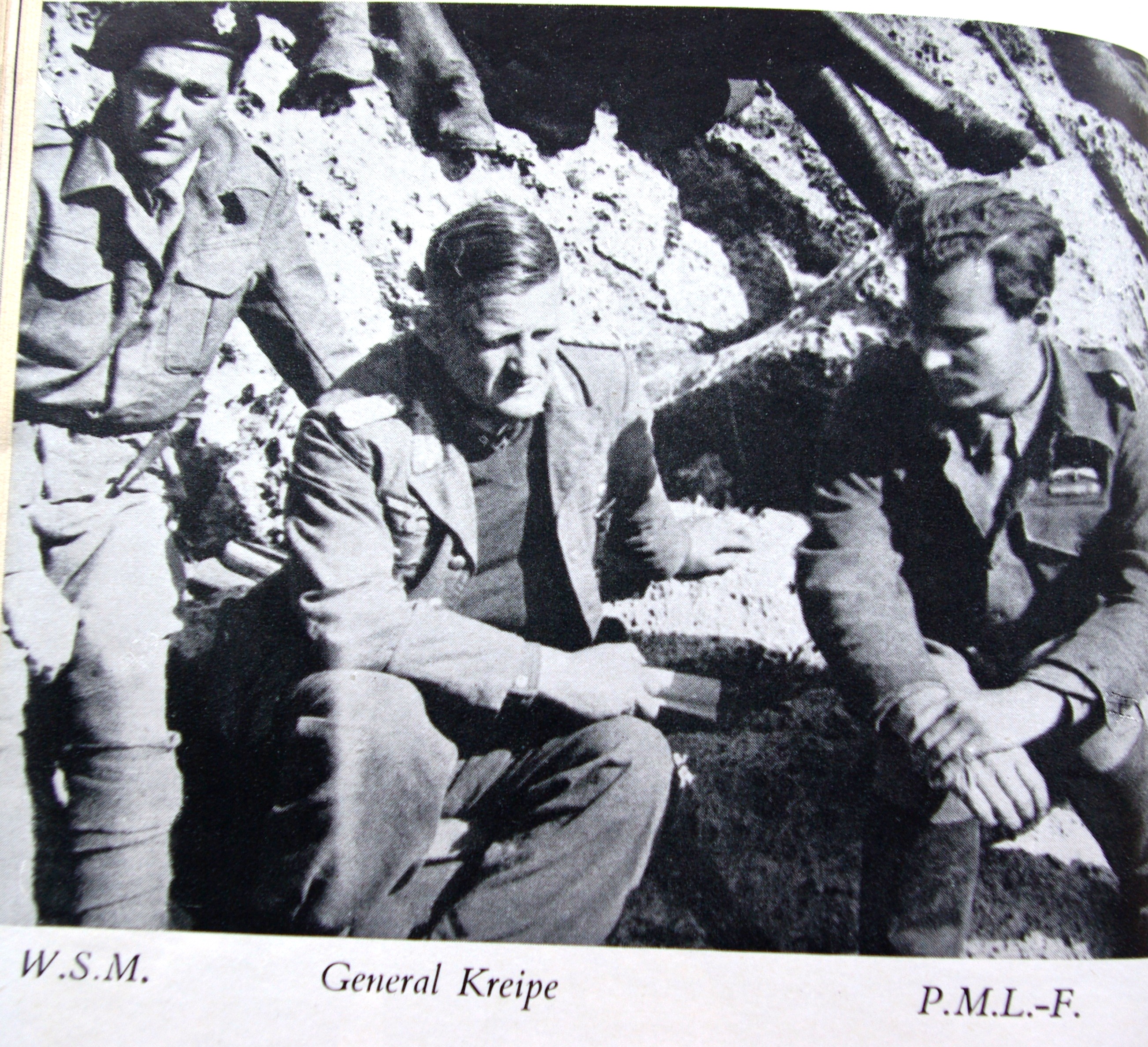
I think it would be useful to all to highlight the points discussed in the Comments section, particularly the major error Taki made in stating that Paddy had killed Albert Fenske, the driver of General Kreipe’s car. Paddy had nothing to do with his death which was against orders and not at all part of the plan. Additionally the story about Paddy witnessing the death of the last German commanding General of Crete is pure fiction; it just did not happen like that.

So what is the moral of this tale? Yes, I would like it to be all sweetness and light, but you can’t please all the people all of the time. Let’s keep up the debate and remember I am more than willing to take in and publish articles that you have found or have written yourself.

Here are the comments up to this evening …..

From Chris Lawson:

“Known to the cognoscenti as Taki Takealotofcokeupthenose, Theodoracopulos is a man for whom the word “snob” might have been invented. Note the casual dropping of Agnelli’s name into his piece and Taki’s snide comments on Dirk Bogarde. It is NOT true that Paddy killed the driver of Kreipe’s car. Apart from the story of the execution of Kreipe’s successor (Name, details of crimes? Doesn’t mean Kreipe’s predecessor?), this brings nothing new to the saga of Paddy’s life. I would respectfully request that you remove the piece.”

My reply:

“No Chris – I don’t do censorship. Your comment can stand as a beacon to my error in posting it. However, Taki has a place in society over the last 50 years and this blog is a repository about Paddy. It stays.”

Chris Lawson responds:

“Fine by me. Of course it was not an error posting it and I agree entirely and whole-heartedly about what you say about censorship. Yes, Taki certainly has a place in the cultural pantheon de nos jours, and my thoughts are just the latest in a stream of negative comments directed at the former inmate of H.M. prisons. Whatever else one has to say about the gent, he is certainly one of life’s great survivors.”

Tim Todd (who runs the Il Met by Moonlight site and is an expert on the operation) interjected:

“That Taki could be so fundamentally wrong about the death of Albert Fenske, Kreipe’s driver, tells me much about the appropriately named Taki.

I believe that Fenske’s death, at the hands of two of his Cretan andartes and contrary to instructions, caused Paddy no end of personal grief, perhaps second only to the accidental shooting of his Cretan friend. I once listened to Paddy talk about this latter incident when, in the mountains after a cadet’s exercise, he failed to check his rifle before cleaning it when it was returned to him. I have to tell you he was still mortified by the whole business and sixty odd years on he was still visibly upset by it. Tom our webmaster and I, know from the best of sources that Fenske’s death was much regretted by Paddy. My own feeling is that but for that we might have seen Paddy’s own account of the abduction published.

I am thoroughly disappointed that anyone claiming to know the man would dare suggest Fenske died at Paddy’s hand. Paddy, perhaps the most honourable man I have ever met, would though have accepted responsibility for anything that may have happened under his command. He was that sort of man.

It is perhaps as well that Tom has published Taki’s piece for it provides an opportunity to compare the two and set the record straight.

I am pleased to say that, through Annette Windgass, Fenske’s family have recently been made aware of Paddy’s great sadness of that particular outcome of the operation.”

 Chris Lawson gave us some more about the story of the General’s death:

“On the General who succeeded Kreipe, and two predecessors

The Commandant of Crete, appointed on 1 May 1944 after Kreipe’s kidnapping, was Generalleutnant Helmut Friebe, Commander of the LXIV Armeekorps. He was captured by the Americans in May 1945 and released in 1947.

Two former commanders of Crete were tried and executed in Athens on 20 May 1947, the anniversary of the German invasion of Crete. One was the bloodsoaked Friedrich-Wilhelm Mueller, who was to have been the original target for the kidnapping until he was replaced by Kreipe. Mueller had a reputation for brutality and numerous atrocities were committed under his regime.

The other was General Bruno Bauer, a paratroop officer, who was appointed in 1942, replacing General Alexander Andrae. Bauer had gained the reputation of being hard and fair, and the “most humane commander” of Crete. Antony Beevor describes him as truly unfortunate, as he was executed for crimes “committed under another general”. Three years later the Association of Former German Paratroopers requested that his remains be returned to Crete. George Psychoundakis, resistance fighter and author of the Cretan Runner (already much-mentioned by Tom), reburied his remains.

Taki’s fourth paragraph is a complete fantasy.”

George joined the argument:

“The only readable part of Taki’s remembrance (sic ) is the last sentence, horrible in its clarity and even worse that it is written by someone whose trotters are deep in that particular trough.

His comments however, are an excellent example of the sponger’s wiles. The mildly mocking comment by Agnelli, humbly repeated to establish the writer’s honesty, while at the same time making it clear that the writer enjoys the same societal position.

Then the personal revelations as told uniquely to Taki, and no other. Who is to say it did not happen? Taki’s favourite method of asserting inside knowledge always has been to quote the ‘ confidences ‘ of dead people.

The lustrously depicted tale of an unrepentant Nazi Officer going blithely to his death comes straight out of ‘Boys Own ‘.

Next we have the gay bitchiness in his description of PLF’s relationship with his wife. Once again the vampire straddles an innocent’s grave seeking the lifeblood of fame by association.

Chris Lawson ( thank you ) marshalled all the necessary facts to give the lie to Taki’s comments. He was probably as irked by them as I was.”

Tim Todd concludes it all: 

“Inaccurate accounts of historical events, for personal vanity, or a film-makers preference for ‘a story’ over fact, infuriate me. This is especially so when such accounts may subsequently become part of history for those without inquiring minds. Last week saw the release of a new video by National Geographic half of which was about the abduction of Kreipe. It is appallingly bad and inaccuracies abound. I am so glad that some colleagues of mine and I, who know a thing or two (but not all) about the abduction, rejected the film makers request to assist them for it has turned out every bit as bad as we feared. Having read some of Paddy’s comments about Ill Met By Moonlight, I can imagine what he might of thought of the latest misrepresentation.”

… and you say ….??
The Carpathian Snail

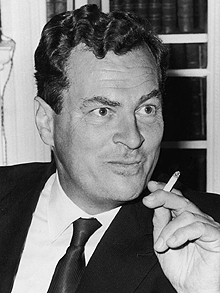
Patrick Leigh Fermor...British soldier and travel writer Patrick Leigh Fermor, 25th April 1966.

Paddy Leigh Fermor (obituary) was a man of many dimensions. He had an unquenchable curiosity about people and culture; when he met remote groups, be they Saxons in Transylvania, Vlachs in northern Greece or gypsies in Hungary, he would not just learn their language and song but remember it for the rest of his life. At Paddy’s last birthday party in London, William Blacker quoted two lines of a Romanian ballad in a speech about him; at the age of 96 Paddy sang the song in its entirety. There seemed no occasion at which he could not enliven the party by an adroit performance, or reminisce in half a dozen European languages.

by Patrick Reade.

First published in The Independent, 14 June 2011

For me it always involved a meal: the conversation would come to a point when there would an extraordinary outpouring of remembered verse or prose. He sang “Do you ken John Peel” in Italian once over tea in Dumbleton to entertain us – the verses were far more numerous than I had realised. And Peter Quennell told me many years ago of how Paddy pulled out of his memory an entire landscape of Cretan folk songs as they walked in the Abruzzi. He was known in Greece for his spontaneous ability to respond instantly to another table’s rhyming couplets – mandinathes, a feature of traditional party entertainment in which tables would compete for wit and content in the couplets.

His ear for language never failed him and he was interested in etymology, linguistics and semantics till the very end, correcting my own misattribution of medical terminology from Latin to Greek and then reciting in Ancient Greek the moment in Homer’s Iliad when Troy fell to the Greeks. He loved laughter, too, and in the Dean’s Close at Canterbury I heard him performing an entertaining parody of a John Betjeman poem in the garden where Thomas à Beckett’s assassins escaped. He had just been awarded an honorary degree by Kent University in the Cathedral and we were having tea with Jock Murray, his publisher.

He was the most generous person in spirit and in kind – he must have entertained thousands in his home in the Mani in southern Greece over many years – the names tumble out of the Dictionary of British Biography: academics, politicians and myriad writers, journalists and scholars, all ate at his table. He and his wife Joan were also extremely generous where they saw need and gave with an open hand.

Until last year he swam daily from his house, and swam across the Hellespont at the age of 70 – an astonishing feat, dodging the great liners from the Black Sea and coping with the current and the cold water and the Russian submarines beneath the surface.

On 1 June this year, 10 days before his death, he gave a small lunch party in the cool, stone-arched loggia of his home in Messenia and in the course of conversation we discussed our favourite 16th century pieces of poetry; he declaimed Sir Thomas Wyatt’s entire poem “They flee from me that sometime did me seek”.

For many he will be remembered for his correspondence as much as for his books – because by any reckoning he was a fabulous letter writer and responded to almost all who communicated with him until last year. From my first remembered encounter with him in 1961 when he pressed 12 shillings into my hand, until 50 years later, when he raised his wine glass to absent friends over lunch on the anniversary of Joan’s death, I can say that no other person I have encountered has shown such an embrace of laughter, learning, language and life as this towering genius of word and action. The great memorial will be his writing and a great excitement is that the third part of his trilogy about crossing Europe is due soon – I have seen it, and many have waited years for this crafted reminiscence so long in gestation, about which Paddy in self-mockery called himself “The Carpathian Snail”.

Event – Patrick Leigh Fermor: An Appreciation by Alexander Maitland, FRGS

A series of afternoon talks based on the Society’s Collections from 2.30-4.00 pm. This series of Collections-specific, monthly afternoon talks, given by speakers who have used the Collections to inspire their writing, travel or personal researches, intended to kindle interest from members and non-members alike in using our rich resources for their own projects.

Tickets: free to RGS-IBG members and educational users. Non-members: £5 payable in advance. Venue: Education Centre, Lowther Lodge.

Pre-booking required: Telephone: 020 7591 3044 Email: showcase@rgs.org

When: Mon 31 October 14:30 – 16:00 London

Where: Education Centre, Royal Geographical Society (with IBG) 1 Kensington Gore London SW7 2AR (map). Exhibition Road entrance.

More details here.

There are approximately 60 tickets left … see you there!

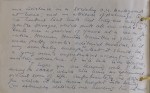
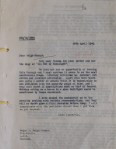
SOE’s correspondence to Paddy trashing the draft of Ill Met By Moonlight

“We have had the opportunity of reading this through and I must confess it seems to me the most unutterable trash. Literary criticism is, however, not within our province of officiality. Apart from that there are quite a number of points which it is undesirable to see published … and I very much doubt if descriptions such as that of General Gubbins acting as a horse in a sham bullfight would be sanctioned by those concerned.” Thus starts a correspondence from the War Office to Paddy on the subject of a draft of Stanley Moss’ book.

In April 1945 the War Office were in receipt of a draft Moss’ book Ill Met by Moonlight. Paddy’s recently released SOE file shows that not only were they sensitive to the security aspects of the book, but these Staff Officers thought very little of its literary style.

It appears that Moss had given Paddy ‘full powers’ to deal with the publication of the book. This seems to have dragged Paddy into some degree of trouble.

In a letter dated 29 March 1945 an officer says “LEIGH-FERMOR does not submit willingly to discipline, and I think, requires firm handling.”

The correspondence is quite amusing “Good taste and discretion are hardly attributes of the writer as illustrated by his description of one of his lady friends as an “over-sexed mongoose”. It is clear that the final version was quite severely edited, but some of the missing parts are quoted at length by Staff Officers who clearly had too much time on their hands .. or were they merely jealous that they had missed out on all the fun in Cairo?

Paddy himself in a covering letter to Colonel Talbot Rice with the submission of the draft for clearance says; “It is not a very good book – too much is made of too little” But he did think it would “sell like blazes”.

ugugukg

Better a Hero Than a Celebrity

Taki Theodoracopulos

Always a modest man, Taki Theodoracopulos, the great playboy and socialite, is someone who knows everybody, and it is no surprise that he too met Paddy as he recounts in this piece from his online Taki Magazine which humbly describes itself as being about ‘Cocktails, Countesses and Mental Caviar’! I am not sure if Taki gets the irony in the title 🙂 Beware some glaring errors.

First published in Taki Magazine 4 July 2011

I first met Sir Patrick Leigh Fermor in the summer of 1977 in Corfu. I was onboard Gianni Agnelli’s boat, and the charismatic Fiat chairman asked me to go ashore and bring “a very smart Englishman whose ancient Greek is much better than yours.” I knew “Paddy,” as everyone called him, by sight, because among us Greeks he was on a par with our ancient heroes. Leigh Fermor was not only famous for his books on Greece—Mani and Roumeli—he was renowned for his incredible heroics in a guerrilla operation in Crete in May 1944. Having spent two years disguised as a Cretan shepherd in the island’s rough mountains harassing German troops, Paddy dressed as a German police officer and stopped a car carrying General Karl Kreipe, the island commander. Having killed the general’s chauffeur, Leigh Fermor proceeded to wear the general’s hat and managed to bluff his way through Heraklion and 22 subsequent checkpoints. Kreipe was stuffed under the backseat while Leigh Fermor’s bat man and three hefty Greek rebels sat on him. For three weeks the group managed to evade frantic German search parties, finally marching the general over Mount Ida, the mythical post-birth hiding ground of Zeus.

“Heroics aside, Leigh Fermor was often compared to Lord Byron for being both a man of action and learning.”

One moonlit night high up, Fermor was guarding the general when Kreipe, gazing up at the snowy peak, recited the first line of Horace’s ode, Vides ut alta stet nive candidum…—“ You see how [Mount] Soracte stands out white with deep snow.…” Leigh Fermor then continued the poem in perfect Latin until the end. The two men stared at each other, realizing, as Paddy later wrote, that they had “drunk at the same fountain.” The German and the Englishman then made a pact. Kreipe gave his word as an officer that he would not try and escape; in return, Leigh Fermor never turned Kreipe over to the firing squad.

What follows came straight from Paddy to me in Corfu. Six months after Kreipe’s kidnapping, Leigh Fermor landed yet again on the island to celebrate its liberation. He was taken behind Heraklion’s main square, where the general who succeeded Kreipe was about to be shot. Paddy was aghast because the German was cool as ice and when Paddy introduced himself, the condemned said: “Ah, Leigh Fermor, you were lucky. Kreipe was an intellectual, a softie; I would have killed you on the spot.” When Paddy asked him if there was anything he could do for him, the German asked for one last cigarette, thanked him, smoked it while inhaling rather deeply, then said goodbye and went off and got shot ramrod-straight.

Heroics aside, Leigh Fermor was often compared to Lord Byron for being both a man of action and learning. His very good friend, Robert Byron (no relation), was a travel writer who greatly influenced Paddy, whose most celebrated book, A Time of Gifts, told the story of his walk across Europe from Rotterdam to Constantinople at age 18. Leigh Fermor continued writing travel books, and they stood out for rendering the past visible, for their evocation of youthful exuberance, and for the joy one felt reading them. He was a very good-looking man, an Anglo-Irishman whose adventures in Crete were made into a film back in 1957, Ill Met by Moonlight. The irony was that he was played by Dirk Bogarde, an outrageous homosexual whose greatest talent was spreading terrible rumors about others.

Leigh Fermor was 96 when he died but lived vigorously until the end. Three years ago his correspondence with the last surviving Mitford Girl, Deborah, dowager Duchess of Devonshire, was published to great acclaim. What a cast of characters in that book. Norman Douglas—another great influence—Steven Runciman, Osbert Lancaster, Cyril Connolly, Bruce Chatwin, and many others rich and famous and literate. Paddy was a hell of a ladies’ man, although he married only once—to Joan Rayner, who was his close and understanding companion until her death in 2003. The word ‘understanding’ is key. He also wrote the script for John Huston’s The Roots of Heaven, a vastly underrated film in which Errol Flynn made a comeback by playing a has-been of sorts, a character Flynn repeated successfully to the end.

One of Leigh Fermor’s great regrets was that while cleaning his weapon in the mountains of Crete it accidentally went off and killed his trusted guide. He told George Seferis, Greece’s first Nobel Prize winner for Literature, that this death was probably his life’s lowest point.

Leigh Fermor and his wife designed and built a beautiful but very simple house in Kardamyli, deep in the Peloponnese and overlooking the sea, and they lived there for most of his adult life. I was lucky to have met him, and now that I am of a certain age I realize how much better it must have been to have lived during heroic times—no matter whose side one was on—than today’s empty, horrible celebrity culture. Paddy, Rest in Peace.

The next stop After The Traveller’s Tree was ….

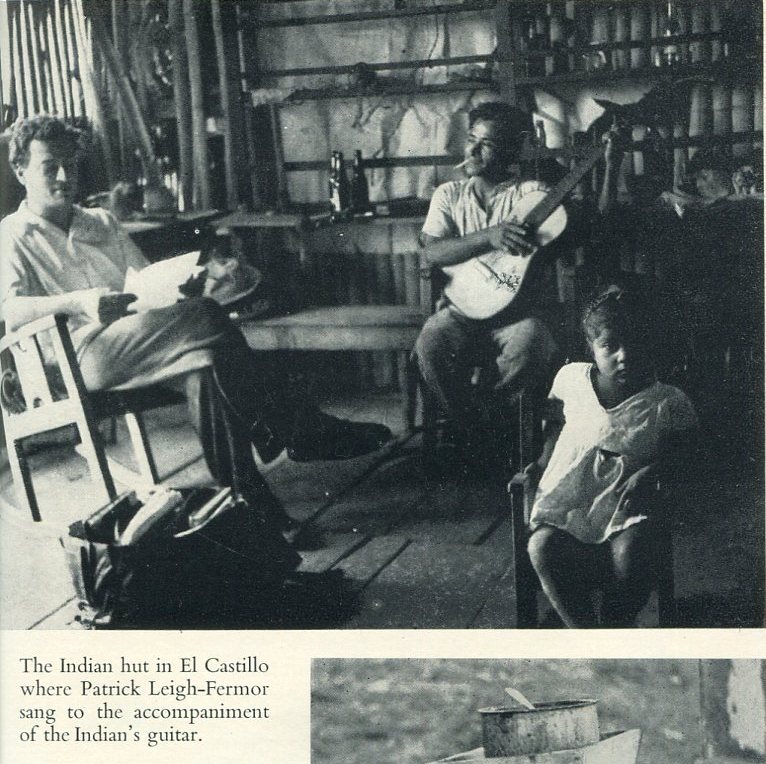
…. an Indian hut in El Castillo (Nicaragua?) where Paddy sang to the accompaniment of an Indian playing his guitar. What on earth did he sing? 

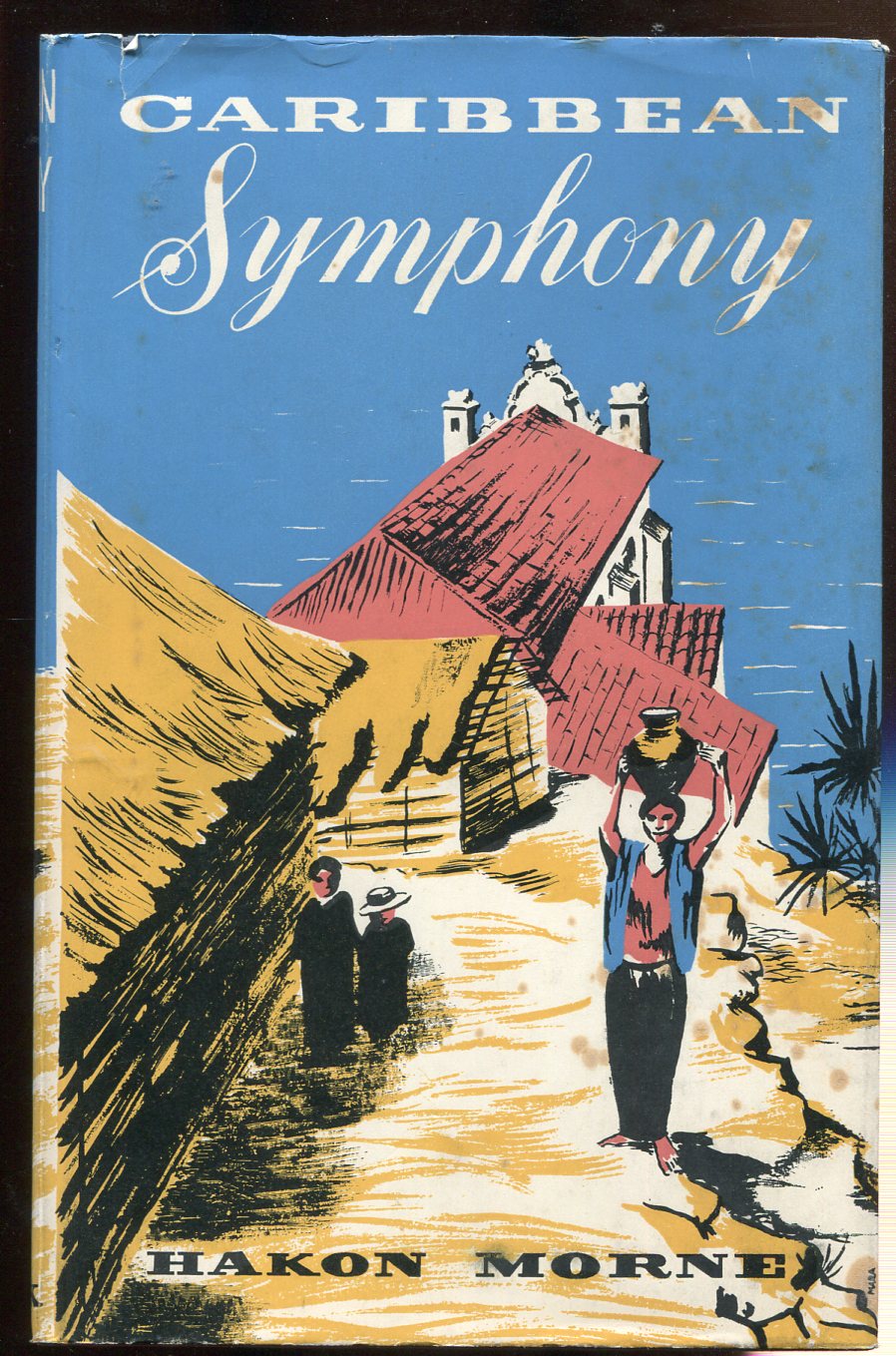
I am grateful to Phyllis Willis for being a better mole than me and finding Hakon Morne’s book translated into English as “Caribbean Symphony”. She has purchased a copy but was clever enough to get a couple of scans whilst she waits for her book to arrive. I am delighted to be able to share these with you now.

A few copies of the book are still available on Amazon.co.uk

The Eagle Has Two Faces: Journeys through Byzantine Europe

Alexander Billinis is an American with Greek parents and he is a very keen fan of Paddy’s writing. He has travelled and worked all over the Balkans and now lives with his family in Serbia, writing about the region, in particular the trials and tribulations of the Greeks. This review offers a very positive assessment of Alex’s latest book which is available from Amazon and all good booksellers

First published in Cape Cod Today.

Author Alexander Billinis’s subtitle to his book is, “Journeys through Byzantine Europe,” which he modestly describes as a “travelogue.”  Billinis, an international banker, traveler, and writer-journalist, has essentially written a romance with the Balkans. His love of the diverse Balkan peoples and of their history is evident with every paragraph.

The “Eagle” of his title is the two-headed Byzantine eagle, reflecting an empire, with Constantinople as its capital, that  looked eastward to Asia Minor and westward to the Balkans and Europe. The Byzantine Empire was the most advanced in the world, spreading knowledge and culture and prosperity until 1453, when Constantinople was ravaged by the Ottoman Turks and the whole empire thrown into its own dark ages for 500 cruel years.

It was not until the early 20th Century that the last of these lands, including Northern Greece, where my own parents were born, was freed from Ottoman rule. This left what are now the Balkan states 500 years behind the progress of the rest of Europe. Billinis’s travels take him and his wife through Greece and Bulgaria, Romania, Thrace, the region of Macedonia, to Serbia, the northern region of which fell under the Austro-Hungarian Empire rather than the Ottoman. Billinis’s father is from Hydra, an island near Athens, and his wife from northern Serbia. Their combined knowledge and impressions of the region give the book its unique flavor.

The book is liberally sprinkled with photographs reflecting the rich, different architectures of the various cultures that live in and have passed through the region. I’ve occasionally referred to the Balkans as “the dark region” of Europe because that area has been so eclipsed by Ottoman oppression that very little is known about its history and its own Christian empires compared with the rest of Europe. Billinis’s book sheds light on the darkness and brings the area and its people to life.

The book even addresses the Pontian Greeks of Russia and Greek-speaking enclaves that still exist in Italy.

For me, the book has been a Balkan primer and an enchanting read. It is essential reading if you want to round out your European history with 150 concise, but full, pages about Europe’s least known region written by one who has actually traveled its paths and tipped a glass of tsipouro with its people.

After The Traveller’s Tree … what was the next stop?

I have received a very interesting email from Bo Nensén  in Sweden. He recounts a story from the work of the prolific Swedish travel writer  Håkan Mörne, about Joan and Paddy travelling onwards to mainland South America after their travels in the Antilles. I think this is something that we know little about. It raises the question of how do we find out more about this episode in their travels? Take a look at Bo’s message and let’s see if we can find out more together.

[Edit: something this morning reminded me that Paddy once wrote about speaking Greek in South America – was it in Roumeli, Mani or even Three Letters? This may give us a clue. … Further edit – found it: the start of Chapter 3 of Roumeli when in Panama City]

Tom,

Like many others I was also delighted to find your PLF blog. I must have missed it when I made a search for PLF last year but in any case I then noted the existence of “In tearing haste” and ordered it even if I haven’t read it until two months ago when I first learned about his death.

I first discovered PLF when I in a Swedish English language book-club found “Between the Woods and the Water” in early 1988. Soon I ordered “A Time of Gifts” as well. Later in the 90’s I read the books again in correct order. Later I also ordered “Mani” and “Roumeli” but never really got to read them in full. Still earlier I even bought “A Time to Keep Silence” but it remains unread. In the later part of the 90’s I discovered through the Internet “Three Letters from the Andes”. A year before, 1996, when following my son to a shop for second-hand comics when investigating the shelfs for ordinary books I to my surprise found a Swedish translation of “The Traveller’s Tree” from 1954! Price 2:- SEK, i.e. approx. 20 p! This of course only covers the Antilles and as far as I know he has not written anything about the part of the travel through Central America(?)

I had no idea about his visit to the mainland until I happened to read a book by a Finland-Swedish travel writer by the name Håkan Mörne (1900-1961). In one of his books he describes how he on a ship on Lago de Nicaragua meets Joan and Patrick (and Costa) and how they travel together to the Atlantic coast. This part comprises 30-40 pages and there is even a picture of PLF when singing(!) Mexican songs.

Are you aware of this book? I don’t know if anything by Håkan Mörne is translated into English. The version I’ve got is called, in translation, “Volcanoes and Bananas” but there is a previous, somewhat longer edition titled “TheGilded Poverty” (which I’m now about to order from an antiquarian bookshop.

Yours

Bo Nensén, Örnsköldsvik, Sweden

Related category:

The Traveller’s Tree 

Subscribe to the Patrick Leigh Fermor blog and keep up with all the posts

You might like to know that on Sunday last we passed the 200,000 visit mark for the blog which is quite a milestone! 🙂 🙂

But the reason for this post is to remind you that you can subscribe to the Patrick Leigh Fermor blog and never miss a post. It is so easy with one click sign-up. No spam just each article delivered to your email inbox.

There is a lot to come with many articles in-line. Over the next year we can expect a lot of news about Artemis Cooper’s forthcoming biography and no doubt some updates on a publication date for Volume Three.

Just click on the subscribe button and join over 240 other readers …

A reconstruction of the Kreipe abduction in Crete

I believe this is something of a regular event in Crete. The story of the Kreipe abduction and then a ‘reenactment’ of the abduction on the actual spot it took place. The action starts at 2 minutes 20 seconds!

Don’t forget we have a whole section on these events and video as well:

Paddy talks about the abduction

General Kreipe, Paddy and the abduction gang on Greek TV 1972

more stories related to Ill Met by Moonlight 

Related article:

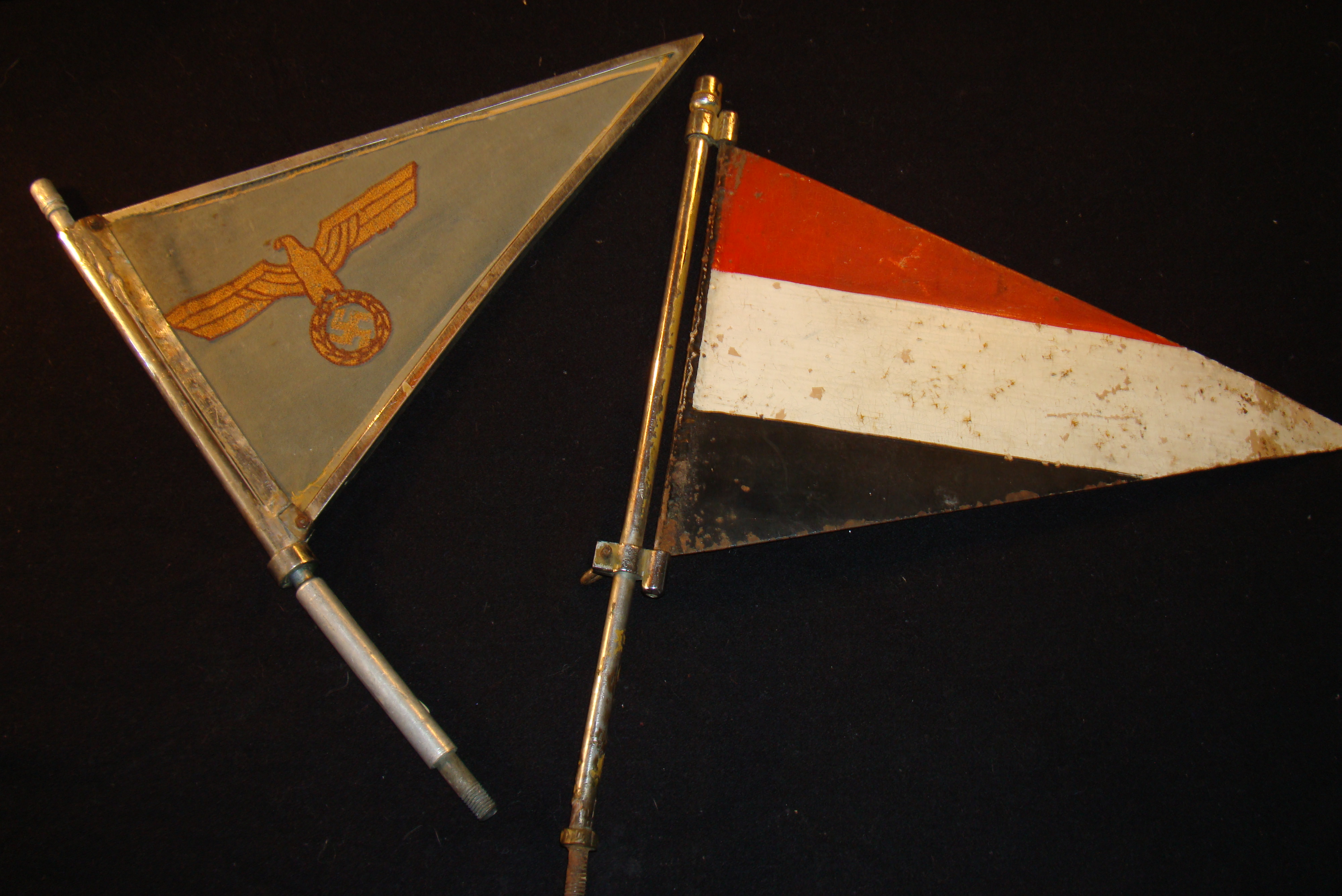
The Kreipe pennants 

Parish Notice – Travels With Paddy: The Blog Discussion Forum to close

The discussion Forum I created about a year ago has not been a total success. It has had very little use so I am going to allow it to expire on 27 September. There is plenty of comment and discussion in the comment section of the blog so I shall leave it at that for the moment.

The final gift of Patrick Leigh Fermor

We’d met him for the first time a few years ago at the memorial service for Earl Jellicoe in Athens, in his nineties but still handsome and charming. “You must come to our simple home”, he had said.

By Lauren O’Hara

First Published in Cyprus Mail 25 September 2011

I’d noted the “our” for I’d been told that although his beloved wife Joan had died in 2003, her room untouched and undisturbed.

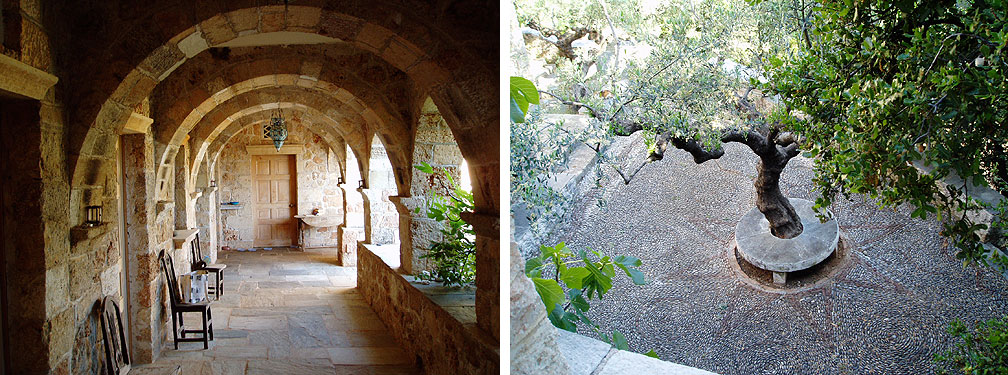
It’s true the house nestling into the cliffs and olive groves just beyond Kardimyli has a simplicity, but as we gathered last week to raise a glass to the life of Patrick Leigh Fermor and his legacy for the future, with its arched walkways and pebbled courtyards, it was one of the most beautiful houses I had seen in Greece.

A place to find hidden stone benches, or cushioned window seats, to curl up with books: a place at which to reflect, as the cragged mountains of the Mani deepen to red and each angle on the Aegean provides another view.

We never made it there while he lived, so it felt strangely intrusive to wander at will through rooms still alive with his life, now he was dead.

The shepherd sacks from Crete, the stacks of hardbacks, the black and white photos of the many visitors who had sat on the same sofas. It was as if he has just popped down to Lela’s tavern for a gin and would be back soon.

So it is a relief to know that the house has been left in his will in the secure hands of the Benaki Foundation, to be used not as a place of pilgrimage, although there are many who would happily make that journey, but as a ‘study centre’.

One can’t help but wish that everything will remain unaltered, for it feels perfect as it is. A monument in our madcap e-world to another way of living: a world of books and blotters, of conversation and contemplation.

Of desks with inkwells and the time to handwrite notes laden with stories and sketches.

Around the garden as the sun dipped and the moon rose, people formed and reformed into casual groups: academics and locals, tradesmen and scholars.

It was as if the place itself had absorbed the personalities of its owners, still able to offer warm hospitality to all even though they had gone.

Nancy Mitford apparently once wrote to Evelyn Waugh that “Paddy” was “wasting his excellent language on Greek peasants.”

But as I listened to the conversations drifting into the night air, I thought that is exactly what she had misunderstood.

He may have come from a privileged background, but why he is so loved here in Greece – why he is so loved by so many people everywhere – is that he knew, like all great writers, including his close friend Bruce Chatwin, whose ashes are scattered nearby, that class is no owner of wisdom.

A Time of Gifts indeed…

Related articles:

John Chapman’s photos of Paddy’s house 

Paddy’s Gloucestershire home for sale for £2.5m

John Chapman’s photos of Paddy’s house

A little nugget from a friend of John Chapman (of Mani Guide fame) about the handover of Paddy’s house to the Benaki. This prompted me to ‘reveal’ John’s excellent series of photographs of Paddy  and his house taken during a visit on 2005.

Hi John,

Two days ago we went to Patrick’s evening with the Benakeion Institute taking over ceremony so to speak and a kind of farewell for Paddy..The President of the institute gave a lovely speech in Greek, well thought and with very high appreciation for Fermor’s personality and character and his love for Greece..He regarded him as much more of ”kardamyliotis than British man” because he ”lived here longer and loved this place a lot”.

In any case I had a couple of British friends with me and we all enjoyed it.

To see more of the photographs click here (and scroll down a a bit).

Main Mani Guide site here.

Related article:

Mani: A Guide and History

The places in between by Paul Theroux

There are those who believe that technology has hijacked the whole of the visitable earth, snatched it away, miniaturised and simplified it, making travel so accessible on a flickering computer screen that there is no need to go anywhere except to your room. In a related way, the travel book is believed to have been not just diminished but made irrelevant by the same technology. Since we know everything – the information is easily dialled up – and the world has been so thoroughly winnowed by travellers, what is the use of a travel book? Where on earth would you go to remark each anxious toil, each eager strife, or watch the busy scenes of crowded life? Surely it has all been written.

by Paul Theroux

First published in the Financial Times, 27 May 2011

This isn’t a new conjecture. In 1972, in a blasé magazine piece of postmodernism, entitled “Project for a Trip to China”, the American writer Susan Sontag sat in her New York apartment ruminating on China. Sontag was that singular pedant, a theorist of travel rather than a traveller. She concluded her piece: “Perhaps I will write the book about my trip to China before I go.”

To such complacent and lazy minds, here is a suggestion. Try Mecca. After prudently having himself circumcised, learning to speak fluent Arabic, dressing as an Afghan dervish and calling himself Mirza Abdullah, the British explorer Sir Richard Burton travelled to the holy city of Mecca, a deeply curious unbeliever among devout pilgrims. This was in 1853. He published his account of this trip in three volumes several years later, his Personal Narrative of a Pilgrimage to Al-Madinah and Meccah. The last non-Muslim to do this and to write about it was Arthur John Wavell, of the distinguished British military family. An army veteran, and farmer in Mombasa, Kenya, Wavell developed an interest in Islam. In order to know more, he disguised himself as a Swahili-speaking Zanzibari, made the pilgrimage and wrote about it in A Modern Pilgrim in Mecca (1912). Wavell took the trip in the winter of 1908-1909, more than a century ago. No unbeliever has done it since. Now there’s a challenge for a technology-smug couch potato who prates that the travel book is over. Of course, this daring trip is not easy. It is, perhaps, not a journey for a gap-year student wishing to make his or her mark as a travel writer but it is a book I would want to read.

Nor has anyone, to my knowledge, gone in the footsteps of Apsley Cherry-Garrard. In the Antarctic winter of 1912-1913, “Cherry” sledged with two other men to observe the rookery of the emperor penguins and to remove some eggs. The six-week journey, pulling the heavy sledges themselves through the ice, was made in pitch darkness and temperatures of minus 79F. The men returned, delirious, starved and near death. How about that for a book?

A few years ago the journalist Tim Butcher attempted to retrace Henry Morton Stanley’s 1877 trip down the Congo River. He made a brave try but he failed. The river is as dangerous as ever, and though there are many friendly Congolese, the hostile ones are better armed than in Stanley’s time and more rapacious. Stanley spent three years on his epic journey – the first traverse and mapping of the continent’s mid-section. Butcher’s Blood River (2007) is a worthy book but it is not Stanley’s Through the Dark Continent (1878). The challenge remains, though God help the traveller who attempts it.

A modern version of Heinrich Harrer’s Seven Years in Tibet (1953) – he was there from 1944 to 1951 – has not been written either and, given the inflexibility, the disingenuousness and iron fist of the Chinese occupation, it would be fascinating. Harrer escaped from a British prisoner of war camp in India to make his trip. In the same spirit, the Italian Felice Benuzzi fled a British internment camp in Kenya to climb Mount Kenya – he did so, through the bamboo groves and the snow, with two fellow PoWs, and they descended to the camp to turn themselves in. He wrote an account of it, a book translated as No Picnic on Mount Kenya (1952). Kenya is full of prisoners and refugees in camps; none of them, so far, has duplicated Benuzzi’s gallant feat.

The people who wonder where the travel book is going should consider where it has been. In the course of compiling my Tao of Travel: Enlightenments from Lives on the Road, I have spent the past two years running to my nearest university library, taking out a dozen travel books at a time, reading them, making notes, extracting and typing out the best passages, then returning the books a week later and borrowing a dozen more.

After the first 300 books I was not entirely sure what a travel book is meant to be. Some are heroic jaunts, such as Benuzzi’s; some are ordeals or death marches – Cherry-Garrard’s The Worst Journey in the World (1922), or Geoffrey Moorhouse’s The Fearful Void (1974), the story of travelling for four months in the Sahara, mainly on foot; and some, such as Laurens van der Post’s Venture to the Interior (1952), are merely pretending to be ordeals. Others are best read in pairs, the same trip by fellow travellers and writers, such as Graham Greene’s dark Journey without Maps (1936) and, two years later, his cousin Barbara Greene’s Too Late to Turn Back – her cheerful account of the same trek through Liberia; or Dr Johnson’s Journey to the Western Isles of Scotland (1775), with Boswell’s Journal of a Tour to the Hebrides (1785). Some travel books are reminiscences written long after the fact, such as the wonderful two-volume retelling by Patrick Leigh Fermor of his walking through Europe before the war, A Time of Gifts (1977) and Between the Woods and the Water (1986).

There are too many categories to list – pilgrimages, both religious and secular; quests for peace of mind or love or a great meal; a search for the perfect wine and food pairing, or the jolliest spa experience. Many – perhaps most – are autobiographical but selectively so. Having a bad time on a trip is helpful. “Literature is made out of the misfortunes of others,” VS Pritchett once wrote. “A large number of travel books fail because of the monotonous good luck of their authors.”

There is a false and snobbish notion that the high watermark of travel writing occurred in the 1930s, with the work of Evelyn Waugh, Graham Greene, Peter Fleming, Robert Byron, Freya Stark and Rebecca West. Certainly in this period there flourished intrepid travellers with great prose styles but style was the important element, and the writers of this time sought to prove their own singularity by placing themselves in stark relief against a landscape that was primitive, or dangerous, or laughable, but in any case emphatically foreign. To my mind, the great travellers of that period and a bit earlier were the field anthropologists Bronislaw Malinowski in New Guinea, Margaret Mead in Samoa, Alfred Métraux in Easter Island, and Claude Lévi-Strauss in the hinterland of Brazil.

In my opinion, the best of travel, and of travel writing – ancient or modern – is a species of trespass combined with true discovery, the wanderer surprised and bringing back news of the outer world. It helps to be Captain Cook, or HM Stanley, or Knud Rasmussen in Arctic Greenland, with their pioneering journeys of discovery. But there are modest and just as readable more recent accounts of travel that evoke a sense of place, such as Carlo Levi’s Christ Stopped at Eboli (1945), Peter Matthiessen’s The Snow Leopard (1978), about Nepal and Jonathan Raban’s Bad Land (1996), on Montana.

When I arrived in Africa in the early 1960s, I realised how defective or insufficient the models were – Hemingway posturing and babbling in kitchen Swahili in The Green Hills of Africa (1943), or van der Post making a meal of a simple trip in Nyasaland (where I happened to live). Nothing had prepared me for the weather – it was colder than I had imagined in the Shire Highlands, where villagers went about in woolly jumpers; much hotter than I’d ever been in the far south of the Lower River, a district of bare breasts.

Though I read travel books in Africa, it did not occur to write one. I was struck by Dervla Murphy in Full Tilt (1965), travelling alone, a woman, riding a bike from Europe to India. She was a humble traveller, staying on the ground, making friends. Then there was VS Naipaul’s Area of Darkness (1964), a travel book with a theme – two themes really, the sentimental return to the motherland, the disappointment in the motherland. Naipaul’s book contained convincing dialogue. As a novelist, he was able to bring landscape to life. These were features I had valued in Mark Twain’s and Jack London’s journeys, the novelist’s art applied to travel. This suggested that I might write such a book myself, and that was the origin of my Great Railway Bazaar, which I wrote in 1974.

My travels in Europe and Africa began in 1963, almost 50 years ago. The world was quite different then and so was the travel book – some of them described the Sphinx and the Taj Mahal. In the 1980s and 1990s there was a profusion of travel books. These days, the bookstore browser is likely to yawn, seeing a shelf of them.

So where are we now? Of course, many would-be travel writers are plodding in the footsteps of those who have gone before and repeating or correcting the impressions. An irritating tendency of those books, and of travel pieces in general, is the use of the present tense: “I am on a bus in Bhutan and the woman next to me is smoking a cigar … ” There is a new frivolity in travel books, there is mock-drama, there is obvious embroidering, there is the frivolous quest as a theme. Such books do not interest me at all.

I have a love for reading about a really difficult trip, even better an ordeal. Such books, written with skill and appropriate detail, will always find a public, because they combine travel with problem solving and endurance, and that I suppose is the human condition. These people are suffering for us.

Not long ago, a Nigerian man was intercepted fleeing Libya, where he had been employed as a mechanic in the oil industry. His town was under siege, bombs falling, bullets flying. Prevented from going to Italy, he was being repatriated to Nigeria. He protested, saying, “Send me back to Libya – I would rather go there than home to Nigeria.”

This makes me wonder what Nigeria is like and provokes me to travel there. Around the same time, 1,000 people died in a rural village in Ivory Coast; this was a small news item in the western press, though when one person is injured in Jerusalem it’s on the front page as an outrage. I’d like to know why this is so. The fact that there are far fewer foreign correspondents makes the traveller more necessary as a witness and a reporter.

The world is not as small as Google Earth depicts it. I think of the Lower River district in Malawi, the hinterland of Angola, the unwritten-about north of Burma and its border with Nagaland. Nearer home, the urban areas of Europe and the United States. I do not know of a book that recounts the daily life in a ghetto in, say, Chicago; the secret life of a slum, or for that matter, the anthropology of Muslims on a depressed “sink estate” in the British Midlands.

The world is full of jolly places but these do not interest me at all. I hate vacations and luxurious hotels are no fun to read about. I want to read about the miserable, or difficult, or inhospitable places; the forbidden cities and the back roads: as long as they exist the travel book will have value.

‘The Tao of Travel’ by Paul Theroux is published by Hamish Hamilton

British Philhellene author, Patrick Leigh Fermor, donates Kardamyli home to Benaki

Late author, Patrick Leigh Fermor, has chosen Benaki Museum to donate his home in Kardamily. The donation was made through Giannis Tzanetakis, while the author was still alive and his home became the property of Benaki Museum after the death of the great British Philhellene on June 10th 2011.

Last Saturday, in honor of Patrick Leigh Fermor, Benaki Museum held an event at the late author’s home in Kalamitsi, Kardamyli, gathering acquaintances and friends from Greece and the UK, among them, UK Ambassador, Dr. David Landsman, Director of the British Council, Richard Walker, the executors of his will and his biographer.

Patrick Leigh Fermor lived for many years in Mani, in his home that he personally built, based on Nikos Chatdjimichalis designs.

His relationship with Benaki Museum dated years back; he kept contact with Antonis Benakis and Irini Kalliga later, while he maintained close friendly relations with the Institute’s director, Angelos Delivorias. Several years ago, it was decided by the donor and the museum, that his home would be used for the purpose of hosting researchers, poets and writers, visiting Greece to work for a few months. At the same time, for specified time periods, Benaki Museum will have the option to rent the author’s home, to obtain funds for maintenance and hosting. In the coming months, once recording procedures for the library and archives are complete, and all necessary maintenance activities are performed, the Administrative Committee of Benaki Museum will be announcing how the building will operate.

Source: ANA – MPA

Lawrence Durrell and Patrick Leigh Fermor – Bitter Lemons

I am republishing something that was first on the blog back in May 2010 following a request by Lynne Sanders.

In Bitter Lemons, the writer Lawrence Durrell describes a visit from Patrick Leigh Fermor –

“In that warm light the faces of my friends lived and glowed….Freya Stark…Sir Harry Luke…Patrick Leigh Fermor and the Corn Godess, who always arrive when I am on an island, unannounced and whose luggage has always been left at the airport (‘But we’ve brought the wine-the most important thing’).” [pp102-3]

“Last night the sound of the front door closing upon breathless chuckles and secretive ranting, then the voice of Patrick Leigh Fermor: ‘Any old clothes?’ in Greek. Appeared with his arm round the shoulders of Michaelis who had shown him the way up the rocky path in darkness. ‘Joan is winded, holed below the Plimsoll line. I’ve left her resting half way up. Send out a seneschal with a taper, or a sedan if you have one.’ It is as joyous a reunion as ever we had on Rhodes.

“After a splendid dinner by the fire he starts singing, songs of Crete, Athens, Macedonia. When I go out to refill the ouzo bottle at the little tavern across the way I find the street completely filled with people listening in utter silence and darkness. Everyone seems struck dumb. ‘What is it?’ I say, catching sight of Frangos. ‘Never have I heard of Englishmen singing Greek songs like this!’ Their reverent amazement is touching; it is as if they want to embrace Paddy wherever he goes.” (pp 104-5)

Related article:

Lawrence Durrell and Patrick Leigh Fermor by Thos Henley

My unrelenting vice

Bora Cosic

Bora Cosic

Bora Cosic on reading books no one else reads. Sometimes one feels a little like this about Paddy’s work; so few people you meet have actually read him. Thanks to Chris Lawson for bringing this to my attention. I think we can all enjoy this.

I remember a scene related to me by a poet of the Belgrade surrealist circle, Dusan Matic. In 1941 he took part in the Montenegro guerrilla revolt, and while the fighters-to-be were cleaning their guns around him, the poet sat on a nearby terrace, smoking and reading Nietzsche. He was annoyed by the many soldiers who came to light their cigarette on his, he told me, he didn’t have the nerves to support the smoking habits of an entire people’s liberation struggle. So he returned to his room in Belgrade during the unpleasant period of occupation, with its many dangers. When I think about it now, I don’t believe that Matic distanced himself from war because of this smoker episode, but rather because the masses of soldiers had interrupted him while reading.

It was quite a long time ago that Valéry Larbaud wrote about his observations of reading as a vice practiced with impunity. For myself, I know that this prolonged staring into a book interferes with the production routines in my family, the manufacture of everyday life – the admission of one who engages in the vice Larbaud describes. Personally I require many hours of reading, because I usually read tremendously thick books, and also notably boring ones; I am always convinced that at the core of an abstruse sentence lies the magnificence of a discovery just waiting to be made. And so I remain true to the pre-Socratic philosophers, Musil and Lacan.

But I am not alone. I have read books that no one else has read, says Paul Valéry. Books from technical disciplines, these interest me. Balzac systematically read dictionaries, not specific entries but from start to finish, as if following a narrative. How many interesting things there are to read, which at first glance might seem irrelevant and meaningless. One woman expected Erasmus to write something that would help her husband get a grip on himself, Roland Barthes relates. Or as Claudio Magris mentions, Montecuccoli wrote his aphorisms on the art of war in a Stettin prison, during his hiatus from the Thirty Years War. Were I a poet, I would dedicate the most beautiful poem to roux soup, admits Bela Hamvas. “A Meditation Upon a Broomstick” is the title of an essay by Swift. I would give everything to find out what a German wrote about a lemon peel, as Rousseau says, what Erasmus wrote to bring a neurotic man to reason, or Montecuccoli’s “Art of War”.

Reading has only recently become a silent act. Two hundred years ago everyone read aloud. This was dictated by church ritual, in which one, or better said everyone, had to listen to the “holy” text. In the first cathedrals entire choruses of believers spoke aloud this reading material that they viewed as godly. This muttering was further practiced by those few people on earth who at the time were, by some miracle, able to read, as if everyone one of them fulfilled the role of today’s speakers and leaders. Then some anonymous Copernicus of reading came along, who brought the entire practice inside by following his text “in his mind”. Thus the letter-for-letter literalness of ecclesial or school reading was lost. Because what goes through my head when I do the work of reading is not necessarily the same as what someone else wrote.

One readily discovers this when undertaking a fresh reading of something that was once familiar. Not only do I rediscover what I had forgotten, but also I realise that “there” in the text I had read long ago there is nothing of what I expected to find! This is the valuable reading of a text, which the reader has created within himself by grinding up a mass of foreign material in his mill and transforming it into something different through unexpected combinations. Read again, many incidences that remained in one’s mind from before play out in a different way entirely.

We carry within the texts that fall into our hands. There are philosophers who believe: the things that we find in books are those that we have brought to them. Borges said that – his protagonist writes an already existing book all over again, convinced that only the repeat exists, not the original. In Musil’s novel, by the way, there is a strange librarian, who guards thousands of books without every having opened even one of them. But still he knows everything about them, because we apparently sometimes also read when we are not reading. As it is, libraries make normal people anxious, seeming like overload, regardless how orderly the catalogues may be. I therefore do understand those who flee from reading as if it were the plague. Everyone has a right to their individual fears. Canetti finds a way out of this in a novel about books by causing the library to burn down. However, after every barbarian plundering there will always be someone who reads the few remaining recognisable characters lying in the ashes.

So my daily ploughing through the pages continues, my unrelenting vice. There are many people guilty of making me this way. My grandmother, first and foremost, who already taught me to read and write at age four. (As we see, there are two phenomena that run parallel to one another; writing is a form of reading, and reading means writing.) I immediately pounced on everything legible, attentively deciphering the labels on the kitchen containers for salt, coffee and sugar, on the advertising pamphlets in the boxes of soap, on the chocolate wrappers, the dates on the wall calendar, the words on the enamel sign indicating where the basement or bathroom was. I studied the receipts my mother brought back from shopping; there were all kinds of letters and entire words on the inside of Papa’s hat, on the edge of Mama’s scarf, on the seam of my T-shirt. And then the signboards, the scenery on the streets of the city where my life began!

Today I think that these very things, the linguistic imprint of daily human existence, were my first reading material, long before Karl May and Tom Sawyer. And then after I had read Dostoevsky and Proust for the first time there was still an immense amount of room for the global vices of all-purpose books, handbooks, guides, what we call “technical literature” but which also includes a lot of unscientific, fantastical and almost crazy things. Since my youth I have tended to seize upon this odd reading material. In a used book shop in Belgrade the bookseller always set aside these kinds of things for me: about the migration of birds, the unusual meteorological phenomena in the Alps, the form of address in official letters, and beekeeping. Even before that, in Slovenia, where both my grandfathers come from, I derived particular pleasure from reading a little book on home remedies, raising children, on “world events”, regulations about male and female servants in the kingdom, “eternal calendars”, spelling books for schools, and etiquette tips for the village and the city.

What kinds of crazy publications came out in Russia after the October Revolution! We needed a whole series of new handbooks in paperback: for the Soviet locksmith, the Soviet lathe operator, the Soviet electrician, wrote Trotsky. These included, among other things, explanations of how to drink less, get into fewer fights, play less card games, how to keep from hitting your wife and children, how to do the washing, open the window and sweep the room.

Out of all of these, I must admit that as a child I was most drawn to a cardboard book, which actually only consisted of book covers; there was no content because the covers alone were sufficient to advertise a chocolate factory. There were the little papers that were rolled around medicine bottles, that one stuck into boxes of sweets – this all was great fun to me at an age when I did not yet understand the meaning of individual words. And so this old Egyptian tradition – as applied to the production of modern medicines and confections – had a belated impact on a child’s consciousness by teaching him that books are not only found in books but many other places.

This idea was revisited by the Pop Art artists and even our avant-garde artists of the Slovenian group OHO. What a motley collection of poetic messages they packaged into bigger and smaller boxes, believing that this would allow them to participate in the production of reading. Once I bought an iron book, which told the history of many iron objects, but its cover was actually made of tin. A magazine published in former Yugoslavia had a plastic binding, made from the same material used to produce raincoats. I read my fill at various times, not only of printed texts, I was also a careful reader of book covers, bindings, and what is printed on the dust jacket. I would say that one finds an entire culture of the written word in abbreviated form, if one only looks at the narrow column printed on the inner flap of the book jacket, where there is a description as succinct as a dictionary entry telling what the book is about. If all the books in the world were to disappear, (as in “Fahrenheit 451”) and only the book covers remained, perhaps one could reconstruct human thought in this way.

Thus early on I learned that the greatest driving force behind mankind’s culture of the written word unremittingly leads to the exceptional, irregular and astonishing – from which Dadaism and all of Surrealist literature has sprung. Where the reading of apparently incomprehensible texts originates, as early on in Mannerism, then in the crazy dialogues of Lewis Carroll, Edward Lear and Ionesco. Those wonderful fantasies before death in “Krapp’s Last Tape” by Samuel Beckett. As if people might be able to near their end in a surreal manner that nevertheless seems normal. When the eye doctor bids me to read aloud a single letter on the wall of his office, do I stand before the end of all reading?

The Serbian and Croatian author and essayist Bora Cosic (1932) lives in Berlin and Rovinj. His is the author of some 30 novels, volumes of collected stories and essays, including his acclaimed novel “My Family’s Role in the World Revolution” (1969). He is one of the last authors to describe his native language as Serbo-Croatian in a rejection of nationalist literature. In 2002 he was awarded the Leipzig Book Prize for European Understanding.

The article originally appeared in the Neue Zürcher Zeitung on July 30, 2011.

Paddy’s Gloucestershire home for sale for £2.5m

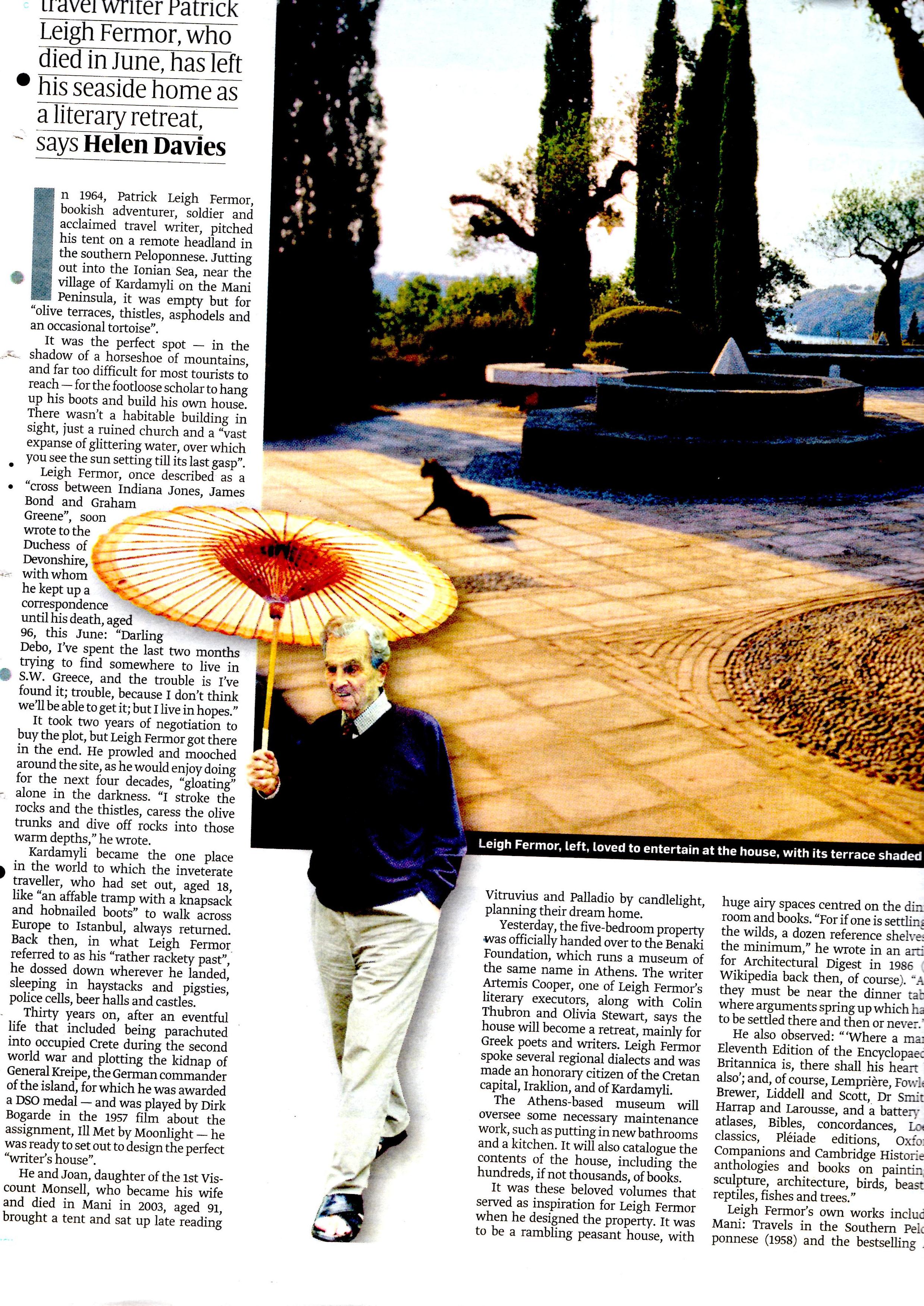
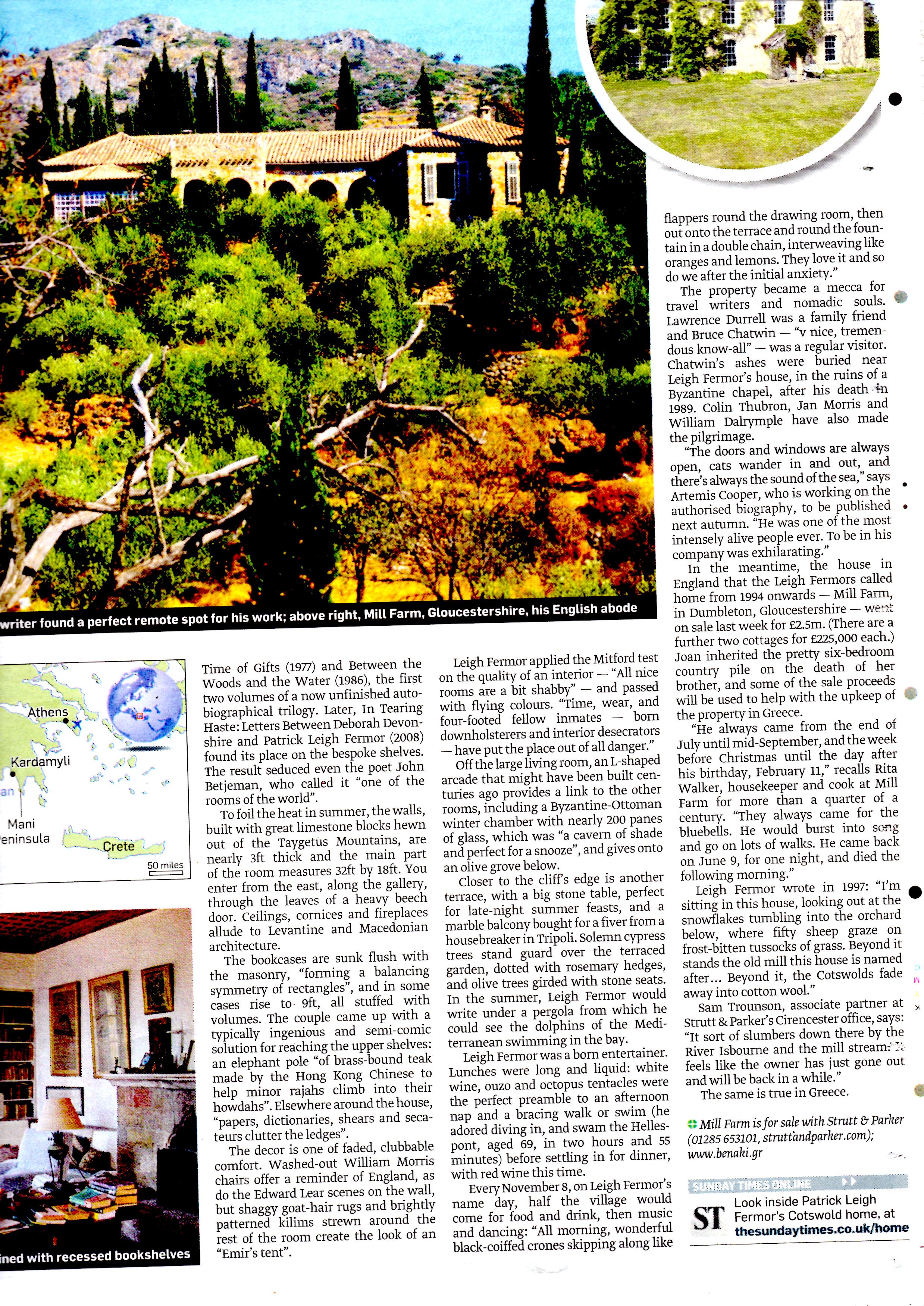
I am trying to obtain a better copy, but here is a scan from today’s Sunday Times property section, of an article about the sale of Paddy and Joan’s house in Dumbleton.

It does in in fact focus on his house in Kardamyli (which it correctly says is going to the Benaki) but it is trying to highlight, as these sections do, that the house in Dumbelton is for sale for £2,500,000. Property particulars from Right Move and a full brochure on the Strutt & Parker website.

My favourite travel book, by the world’s greatest travel writers

Paul Theroux, William Dalrymple, Kari Herbert, Colin Thubron and many more writers tell us about the travel book that most influenced their own life and work. Others that one could say are slightly less well-known, and very pleased to be placed into the pantheon of “world’s greatest travel writers” – Mr Jasper Winn 🙂 – are included.

I was very pleased to see two of Eric Newby’s books chosen; no surprises that they were A Short Walk in the Hindu Kush and my absolute favourite, Love and War in the Apennines.

William Blacker chose all of Paddy’s books, including Between the Woods and the Water. Yesterday he sent me an email pointing out some deficiencies in the way the Guardian had edited his submission – Now, what did he really expact from the Grauniad? – , including the quotation from Kim at the end. William’s original submission can now be revealed in all its full and original glory …

It was not just the books of Patrick Leigh Fermor – notably Between the Woods and the Water about Rumania – which inspired me, but also the man. He was the quintessential free spirit. He didn’t bother with university, but at the age of 18 set off into the blue, on foot, across Europe , simply hoping for the best. His journey lasted five years. On the way he picked up a bewildering multitude of European languages, which led on to extraordinary wartime adventures, and then to a series of breath-taking books, which are peerless, and among the great masterpieces of twentieth century literature. The resounding success he made of his special brand of non-conformity should fill all would-be wanderers and fellow free spirits with hope. Read about his life, read his books, and if you are not similarly inspired and exhilarated by Leigh Fermor’s example then, as Kim said, ‘Run home to your mother’s lap, and be safe’.

William emphasises, for those who might miss it, “that I wrote, very deliberately, ‘great masterpieces of twentieth century literature’ and not  ‘great masterpieces of twentieth century TRAVEL literature’ !”

The list of choices can be found in this article in the Guardian.

The troubled waters of the mind grow still and clear

Paddy in Greece photographed by Joan

Don’t you feel like me that with the passing of Paddy as one of the last of his generation we have clearly entered a new age dominated by uncertainty; a lack of confidence in the values we once held as unquestionably true? These beliefs that bound us (in the West?) together for the latter part of the twentieth century are now unravelling at an ever-increasing pace. As we enter the End Game of the economic crisis, and as the decade of The Forever War rumbles on like the noise of a busy road in the middle distance – there only when we take the trouble to notice – we suffer a dearth of leadership and heroes of substance. Paddy and those of his generation had no such crisis of confidence; they served without question. They sacrificed themselves for the things they believed in, and they provided the leadership, entrepreneurship, creativity, and wisdom that helped rebuild Europe after almost half a century of ethnic and social strife, and destructive war. Maybe they also share some blame for the way things turned out, but who will step up now?

In this considered profile, which prompted my rambling reflection, Paddy’s good friend Colin Thubron assesses his contribution, not as a warrior, but as a writer, and I think for the first time, reveals the torment of Paddy’s troubling writer’s block towards the end of his life.

by Colin Thubron

First published in the New York Review of Books, Volume 58, Number 14

When Patrick Leigh Fermor died in June at the age of ninety-six, it seemed as if an era had come to an end. He was the last of a generation of warrior–travel writers that included the Arabian explorer Wilfred Thesiger, the controversial mystic Laurens van der Post, and the indefatigable Norman Lewis of Naples ‘44. Among these, Leigh Fermor shines with the élan and the effortlessly cultured glow of an apparent golden age. A war hero of polymathic exuberance, brilliant linguistic skills, and an elephantine memory, he was sometimes fancifully compared to Lord Byron or Sir Philip Sydney.

Two pairs of books came to exemplify his achievement. The first pair—Mani (1958) and Roumeli (1966)—celebrated the Greece that held his abiding fascination and where he lived for forty-five years on a once-wild promontory in the Peloponnese. In Mani, especially, he described this backwater region as a world whose way of life had survived in a fierce and enchanted time warp.

The land he depicted is barely recognizable now—tourism, he observed, destroys the object it loves—but it was less the Greece of classical antiquity that beguiled him than the spirit and folk culture of the hinterland: the earthy, demotic Romiosyne that he once contrasted with the Hellenic ideal in a playful balance sheet of the country’s character.

In these, and in later books, the style was the man: robustly imaginative, cultivated without pedantry, unstoppably digressive, forgivably swanky, and filled with infectious learning. The impression—overflowing into elaborate footnotes and flights of learned fantasy—is one of omnivorous delight in the quirks and byways of history, art, language, genealogy, myth, song, superstition, costume, heraldry, and everything else that struck his fancy.

His literary models were Norman Douglas and Robert Byron, but his writing was more vivid than the one, more kindly than the other. Despite the richness of his prose (occasionally slipping into purple) he forged an illusion of intimacy with his readers, as if they were sharing his mind in the moment of writing. But in fact his manuscripts were worked, reworked, and reworked again with such painstaking perfectionism that his publisher (the benign Jock Murray) often had to reset his galley proofs wholesale. The apparently natural flow of words was in reality a densely worked choreography, which came at cost.

Fifteen years ago, swimming in the Ionian Sea beneath his home, where nobody could overhear us, Paddy (as friends and fans called him) suddenly confessed to me the writer’s block that would plague the rest of his life. The expectations of a now-avid public, and his own obsessive perfectionism, were taking their toll, and he could not overleap this cruel impediment.

I remember him strong into old age. He swam every morning, with a sturdy breaststroke far out to sea, the tattoo of a twin-tailed mermaid glistening on his shoulder. He still kept up a striding march in the Taygetus foothills, where he and his wife Joan had designed their own house above the ocean. It was a place of “mad splendor,” he wrote. Its sitting-room library—bookshelves banked nine feet high—opened onto a vista of cypresses and the Messenian Gulf, and was flagged with the greenish stone of Mount Pelion. In the afternoon Paddy would disappear into his study to confront—or escape—the demons of his failed writing, and would emerge to the liberation of ouzo or whiskey, generally to report some arcane piece of research—that the Huns wore stitched field-mouse skins, perhaps—or to share a passage of Ovid. We dined in the monastic half-cloister he had built beside his home, and once we visited the tiny, red-tiled Byzantine chapel where—five years before—he had buried the ashes of Bruce Chatwin.

The conflict between a natural gregariousness and the solitude of writing never quite resolved for him. In a short, intriguing study named A Time to Keep Silence (1953) he recorded his sojourn in three great French monasteries. He described this retreat not as a religious exercise, but as a need for a haven for writing, and the nature of its cleansing—”the troubled waters of the mind grow still and clear”—remains suspended like a question mark in the oeuvre of a man to whom self-revelation seemed indulgence.

The second pair of books, which established Paddy’s primacy among travel writers, must be among the most extraordinary ever written. In 1933, as a youth of eighteen, he left England for a journey that would take a year and a half. As “a thousand glistening umbrellas were tilted over a thousand bowler hats in Piccadilly,” he set out to walk to Constantinople (as he nostalgically called Istanbul). Walking stick in hand, a copy of Horace’s Odes in his rucksack, he pursued a meandering course up the Rhine and down the Danube, across the Great Hungarian Plain, into Romania and through the Balkans to Turkey.

It was almost forty-five years before he published the first part of this journey, and another nine years before the second. A Time of Gifts (1977) and Between the Woods and the Water (1986) represent prodigious feats of memory. They record the rite of passage of a precocious, exuberant young man as he encounters the peoples and languages of a Middle Europe now littered with obsolete names: Bohemia, Transylvania, Wallachia. His story must have become the dream journey of every enterprising and footloose adolescent.

Inevitably the accuracy of Paddy’s memory was questioned, and he was frank about occasional imaginative license and conflation. (His first diary was stolen in Munich, a solitary last one recovered years later in Romania.) Certainly his recall was extraordinary. I remember the first time we met (by chance), when he quoted verbatim from my first book passages that I had myself forgotten. A year before his death we chanted verses from the Rubáiyát of Omar Khayyám together in an antiphonal competition (which he won).

His urge to describe his epic journey more than forty years after its end was a deeply natural one. He was revisiting his youthful persona with the judgment and knowledge of maturity; yet in a sense he had remained unchanged. Despite his sophisticated learning, he retained an almost boyish innocence, as if the troubles of the modern age had bypassed him. In the Peloponnese, where he settled to live in the 1960s, he had remained in thrall to a more ancient, rooted culture than that of the urban West.

The final volume of his proposed trilogy—carrying its author through the Balkans and down the Black Sea coast to Turkey—became his tormenting and elusive project for the next quarter- century, and was never completed. Some near-finished version, however, survives him, and will eventually be published.

With his youthful trek done, Leigh Fermor’s career took off into near fable. Caught up in Greek unrest, he joined in a triumphal royalist cavalry charge against wilting Venizelist rebels. In Athens he fell in love with the artist Princess Balasha Cantacuzene, twelve years older than him, and lived with her in Moldavia for over two years, before World War II recalled him to London.

As a fluent Greek speaker he was recruited by the Intelligence Corps, and sent as a liaison officer with the Greek army first to Albania and finally to Crete, where he survived the brutal German invasion. For almost two years, while an officer in the Special Operations Executive, he lived disguised as a shepherd in the Cretan mountains, organizing the gathering of intelligence.

Then, in 1944, occurred the exploit that—more than any other—was to burnish him into legend. He and his fellow SOE officer Stanley Moss dreamed up a scheme of harebrained bravado. Dressed in stolen German uniforms, with a party of Cretan guerrillas, they ambushed the car of General Heinrich Kreipe, the German commander of occupied Crete, kidnapped him, and concealed him under the back seat. Moss took the wheel, Paddy donned the general’s cap, and together they drove through twenty-two checkpoints to emerge on the far side of Herakleion and march Kreipe for three weeks over the mountains, to be picked up by motor launch and taken to Egypt.

It was during this hazardous Cretan march, as the dawn broke over Mount Ida, mythical birthplace of Zeus, that the abducted general began to murmur a verse of Horace: Vides ut alta stet nive candidum/Soracte….1 It was an ode that Paddy knew by heart, and he completed the six stanzas to their end. “The general’s blue eyes had swivelled away from the mountain-top to mine,” Paddy later wrote,

—and when I’d finished, after a long silence, he said: “Ach so, Herr Major!” It was very strange. As though, for a long moment, the war had ceased to exist. We had both drunk at the same fountains long before; and things were different between us for the rest of our time together.

This precocious kidnapping was later reimagined in a lackluster movie named Ill Met by Moonlight (1957) with Dirk Bogarde playing Paddy. But there were other exploits too. Paddy had already engineered the defection of the Italian General Angelico Carta from Crete; and he was due to undertake a near-suicidal mission to Colditz when the war ended.

His upbeat account of these events was tempered by regret. He had planned that the abduction of Kreipe be bloodless, but his accompanying Cretan partisans slit the chauffeur’s throat, and rumors of grim German reprisals for the abduction have never quite died down. Above all, Paddy’s accidental shooting of one of his fellow guerrillas may have stained his memory of the whole period.

On June 16 Leigh Fermor was buried back in the English countryside, attended by an Intelligence Corps guard of honor, to lie beside his wife Joan, his dear comrade since 1946. This was, in a sense, fitting. For in certain ways he was exemplary of a wartime Englishness now almost gone, whose more dashing qualities merged seamlessly into the hardy stylishness of Greek leventéa.

To those who knew him, his books are hauntingly redolent of his sensibility. His conversation was irrepressibly warm and inventive far into old age, moving from arcane anecdotes to fanciful wordplay or bursting into polyglot song (sometimes singing the lyrics backward). His friends ranged from Deborah, Duchess of Devonshire—last of the six legendary Mitford sisters (his correspondence with her was published in 20082)—to early acquaintance with a raffish interwar bohemia and his own great predecessor, the travel writer and aesthete Robert Byron, whose borrowed rucksack he bore across Central Europe as a youth.

Almost the last time I met Paddy, he had returned home after an operation for suspected cancer, and I feared he would be depleted, his old zest gone. He was growing deaf, and he suffered from tunnel vision (which he called Simplonitis). For a while, sitting over lunch, he seemed subdued. Then something struck him. He perked up, and said: “You know, there is an apple lying on a table in the hall. It’s been there all weekend. Wouldn’t it be marvelous if it cocked a snook at Newton, and simply took off into the air!”

This was typical of his boyish resilience. In the field of travel he evoked both the youthful wanderer who discovers another world and the avid scholar who melds with it. His prose was too rich and elaborate to be a safe influence on others (although a few have tried); but he brought to the genre not only the distinction of his densely brilliant books, but his innate dignity, ebullient mind, and capacious heart.

  1. 1″See Mount Soracte white with snow….”
  2. 2The correspondence, In Tearing Haste , edited by Charlotte Mosley, was published in the US by New York Review Books (2010), which has also republished the other books by Patrick Leigh Fermor mentioned in this article, as well as The Traveller’s Tree .

Paddy remembered by the Marqués de Tamarón

Long time Blog followers may remember the article written for the Spectator by the Marqués de Tamarón when he was the Spanish Ambassador to London between 1999 and 2004. The Marqués reads this Blog and sent me an article he wrote for the Spanish daily newspaper ABC. There is no English translation, but following our recently established convention, I reproduce it here in Spanish.

Por el Marqués de Tamarón

First published in ABC, 2 July 2011

GRACIAS a no haber ido a la universidad, Patrick Leigh Fermor llegó a ser uno de los mejores escritores ingleses del siglo XX. Todo comenzó porque lo expulsaron del colegio al ser descubierto cogido de la mano con la hija del tendero de ultramarinos. Luego se empeñó en ir andando hasta Constantinopla (no quería decir Estambul) y ahí empezó a completar la nada desdeñable educación secundaria recibida. Emprendió el camino con 18 años, en 1933, y dos años después llegó a Constantinopla. Dormía en albergues de jóvenes, en un pajar o en los castillos de la nobleza centroeuropea, que brindó generosa hospitalidad y amistad —y amor en más de una ocasión— a aquel guapo y simpático muchacho inglés. Después prolongó el viaje por Grecia, donde participó en una carga de caballería contra un golpe de estado republicano y, más importante aún, conoció a la Princesa Balasha Cantacuzeno, una rumana hermosísima bastante mayor que él. Se enamoraron en el acto y pasaron dos años juntos viviendo en castillos remotos, mientras ella pintaba y él traducía libros. Hasta que estalló la Segunda Guerra Mundial y Patrick Leigh Fermor volvió apresuradamente a Inglaterra para alistarse, primero en la Guardia Real y luego en el Special Operations Executive. Se había disipado para siempre el peligro de ir a la universidad y aprender a hacer auditorías o el uso del aoristo. Podía seguir aprendiendo a ver, a vivir y a escribir, sin asomo de jactancia.

Su educación fue pues verdadera y honda: enriqueció y adiestró sus ojos, su mente y su corazón. Le sedujo el mosaico de lenguas, paisajes y arquitecturas que entonces aún sobrevivían en Europa, y sus gentes, tribus y naciones. Como era generoso brindó sus recuerdos y saberes, de palabra y por escrito, a propios y extraños.

Cuando celebramos sus 85 años en Londres se pudo comprobar por el ambiente durante la cena y por la subsiguiente oratoria de manteles que la imagen que todos tenían de su viejo o nuevo amigo (las edades de los comensales oscilaban entre los cien y los treinta cinco años) coincidían en varios rasgos: su alegría y su generosidad, y también su simpatía en el sentido más hondo, etimológico de la palabra. Curiosamente dieciséis años después, en su entierro, los comentarios fueron muy parecidos. Aquella noche en Londres el primero que habló, su amigo Jellicoe, dijo de él que la virtud que en grado menos relevante lo adornaba era la castidad. El anfitrión recalcó la generosidad de Paddy (ya para entonces nadie en Inglaterra llamaba de otra manera al distinguido escritor y héroe de guerra) recordando su insólita capacidad de querer y apreciar a todos los grupos nacionales o sociales que en general se detestaban entre ellos. Paddy admiraba a griegos y turcos, magiares y rumanos, judíos y alemanes, incluso a sus propios enemigos en tiempo de guerra, como el General Kreipe al que hizo prisionero en Creta y con quien recitó la oda I.ix. Ad Thaliarchum de Horacio contemplando las nieves del Monte Ida, en latín, claro. El propio anfitrión, siempre inquieto por el riesgo de pasar la eternidad en el cielo mal colocado al lado de algún pelmazo, le advirtió a Paddy que su virtud se vería recompensada doblemente, puesto que ya en el paraíso debían de estar esperándolo tantos amigos que él cita en sus viajes y tan distintos como los turcos viejos en la isla danubiana de Ada Kaleh, o las dos muchachas campesinas en Transilvania que descubrieron a Paddy y a su amigo nadando desnudos en el río y luego retozaron felices tras un pajar, o el Hermano Peter con quien jugó a los bolos, o los rastafarios caribeños con quienes habló sobre Haile Selassie, o el sabio danubiano de Persenbeug, o Dom Gabriel Gontard, septuagésimo octavo Abad de Saint-Wandrille.

Pero quien mejor definió en aquella larga y alegre sobremesa el carácter y el estilo de Patrick Leigh Fermor fue Norwich, cantando su peculiar versión de You´re the top aplicada a Paddy, que parodiaba a la vez al popular Cole Porter y al culto Browning con versos aliterativos y de rima interna tales como You´re the bubbling bard who finds it hard to stop / which is why we murmur, Fermor, you´re the top!

Sin embargo y con ser todo esto por completo verdadero además de risueño, no era toda la verdad. Dentro de este conversador brillante, ameno y alegre había un trabajador infatigable que corregía pruebas hasta agotar a su editor. Tenía la convicción —acertada por lo demás— de que el ritmo de la prosa requería cambiar varias palabras si se cambiaba una sola, con lo cual se producían unas cascadas de longitud incalculable. Cuando se vió aquejado por esa desesperante dolencia que es la sequía de la pluma del escritor —calculo que en su caso, como en otros, eso ocurrió cuando abandonó los cigarrillos, esos mismos que lo llevaron a la tumba hace unos días— y cada vez que le preguntaban por el volumen pendiente sobre su caminata a Constantinopla se enfadaba o entristecía, y a veces se refugiaba en mentiras inocentes, como cuando algunos amigos le sugerían que no intentase, por una vez, escribir con todos los esplendores barrocos de su prosa habitual, y que fuese menos ambicioso en este su probable último libro. Pero desarmaba a todos contestando con manso y modesto orgullo: «Es que yo no sé escribir de otra manera. No puedo». No era verdad; nunca es verdad cuando un escritor viejo dice eso. Paddy escribía maravillosas cartas llenas de humor y de amor, ambos expresados con sencillez al final de su vida. Y nunca perdió la gracia, en todos los sentidos de la palabra. Por dos veces, en estos últimos y tristes días después de su muerte, una vieja y querida amiga suya que expresamente desea ser citada, Debo Devonshire, me dijo «cuando escribas sobre Paddy cuenta cuánto hemos reído ». Dicho queda, o al menos apuntado.

Eterno caminante por la Via Pulchritudinis, buscó la belleza en lo pequeño y en lo grande. El mismo adolescente que acompañaba sus primeros pasos por los caminos fríos de Alemania a principios de 1934 con una reserva cuantiosa de poesía en la memoria, recitaba a veces a Lewis Carroll y otras el Stabat Mater o el Dies Irae. Y el mismo muchacho, ochenta años después, fue despedido en un funeral de honda belleza, ordenado por él en música y textos que incluían el Protoevangelio de Santiago. El cura anglicano terminó el oficio de cuerpo presente con un «Descansa en Paz y levántate en la Gloria». En exacto paralelo —Muerte y Resurrección— un corneta de su antiguo Regimiento de la Guardia Irlandesa acompañó la inhumación con los dos toques de ordenanza, Silencio y Diana.

El entierro coincidió con un rompimiento de gloria.

The above article scanned from the newspaper as a pdf can be found here, and as it appears on the Marqués’ blog.

Related article:

He’s the top

Fermor the Magnificent

Moss, Kreipe and Paddy

By Jeremy Bernstein

First published in the Los Angeles Times. January 18, 1998

Here is the scene: The time is late April of 1944. The place is near the summit of Mt. Ida, the highest mountain on Crete. There is still snow. Gathered are five Cretans, fully mustached and heavily armed. Three other men wear German uniforms. This is deceptive: Two of them are British officers (commandos). The third, however, is something else. If you are very familiar with German military uniforms, you will see from pictures of the group that he is a general. In these photographs he is not looking at the camera. He does not smile. It is little wonder. His name is Karl Kreipe. He was, until he was kidnapped two days before, the commanding general of the German occupation forces on Crete. He was due to be promoted to lieutenant general yesterday. German patrols are looking for him.

As dawn breaks over Mt. Ida, he murmurs to himself:

Vides ut alta stet nive candidum Soracte
(“Do you not see how Soracte is shining”)….

Then, surprisingly, one of the British officers continues,

nec jam sustineant onus
Silvae laborantes, geluque
Flumina constiterint acuto

(“beneath a heavy covering of snow, and how
The laboring trees can no longer hold up their burden,
And how the rivers are frozen by the sharp cold?”).

(Translation of the Latin was provided by Professor W.C. Dowling of Rutgers University.)

The officer continues through the next five stanzas to the end of Horace’s Soracte ode. Many years later, he wrote, “The general’s blue eyes had swiveled away from the mountaintop to my own — and when I’d finished, after a long silence, he said: ‘Ach so, Herr Major!’ It was very strange as though, for a long moment, the war had ceased to exist. We had both drunk from the same fountains long before, and things were different between us for the rest of our time together.”

Readers of this anecdote may divide into two groups: both, in my view, equally fortunate. A few of you will recognize this scene as one of the mosaic tiles out of which Patrick Leigh Fermor’s (the British major was he) magnificent travel book “A Time of Gifts” was composed. (Readers intrigued by this passing anecdote who want to know more about what was one of the most daring exploits of World War II will enjoy reading “Ill Met by Moonlight” by W. Stanley Moss — he was the other British officer — George G. Harrap & Co.: London, 1950, as well as “Crete: The Battle and the Resistance” by Antony Beevor, Penguin Books: New York, 1991. Both books have photographs.) You are fortunate readers because you have discovered this marvelous author. But those of you who have not discovered him are also fortunate: When you do, you will have in front of you hours of enormous pleasure and satisfaction. I should confess that, until a few years ago, I had never heard of Fermor either. But in the fall of 1993, I went on a bicycle trip around Crete. Looking for something to read, I found “A Time of Gifts” in a local bookstore. I glanced through the first few pages and decided there and then that I would try to read everything the man ever wrote.

While all of Fermor’s books (there are not that many, only half a dozen or so by my count) are autobiographical, he has never written an autobiography. Nor, as far as I can determine, has anyone written his biography. The best one can do is to snatch fragments from his own books and from books written by people who came across him in passing. Constructing a person’s life this way, especially the life of a man like Fermor, is like trying to cross a rapidly flowing stream by hopping from rock to rock. There are lacunae for which I simply cannot account. What, for example, was he doing living in a vast Romanian country house near the Russian border for about two years just before the war? And later, how did he come to spend an almost equal amount of time in the Caribbean: an experience that resulted in the first of his travel books, “The Traveller’s Tree”? Moreover, why was that book actually written in two monasteries in France where Fermor was a resident visitor? This experience resulted in a gem of a short book, “A Time to Keep Silence,” which, he informs us, began as letters written from the monasteries to the woman who was to become his wife. We are told nothing more about her, not even her name. Why, I don’t know. But here, at least, are a few of the steppingstones in his life.

Fermor, whom friends apparently call “Paddy,” was born on Feb. 11, 1915, in London. As he wrote in an introductory letter to Xan Fielding (one of his fellow clandestine officers on Crete who was responsible for the west of the island, while Fermor was responsible for the east) in “A Time of Gifts”: “In the second year of World War I, soon after I was born, my mother and sister sailed away to India (where my father was a servant of the Indian Government) he directed the Geological Survey of India, and I was left behind so that one of us might survive if the ship were sunk by a submarine.” Fermor was deposited with a country family which “left a memory of complete and unalloyed bliss.” But, he continued, “when my mother and sister got back at last, I rushed several fields away and fought off their advances in gruff Northhamptonshire tones; and they understood they had a small savage on their hands, and not a friendly one.” Taken in hand, he was sent to a series of schools, all of which “ended in uniform catastrophe.” He explained: “Harmless in appearance, more presentable by now and of refreshingly unconstricted address, I would earn excellent opinions at first. But as soon as early influences began to tell, these short-lived virtues must have seemed a cruel Fauntleroy veneer, cynically assumed to mask the Charles Addams fiend that lurked beneath: It coloured with an even darker tinct the sum of misdeeds which soon began heaping up. When I catch a glimpse of similar children today, I am transfixed with fellow-feelings, and with dread.”

By this time, his mother and father had separated, and in locus parentis he was sent to two psychiatrists, one of whom he later found out had treated Virginia Woolf. This was followed by a stay at a cramming institution where he prepared himself for the examination to get into a public school, in this case, King’s School, Canterbury. His tenure at King’s School was abruptly terminated when he was discovered holding hands with the daughter of a local green grocer ” in the back-shop on upturned apple baskets.” He notes that his house master’s penultimate report remarked that he had made “some attempts at improvement but more to avoid detection. He is a dangerous mixture of sophistication and recklessness which makes one anxious about his influence on other boys.”

While this is not necessarily an ideal recommendation for getting into a university, it does nicely for the army, Fermor’s next goal. Somehow he managed to winkle a decent letter to Sandhurst, the British West Point. The only obstacle was obtaining what was known as the school certificate (which I suppose was something like a GED), a high school degree for people who did not actually finish high school. To this end, he was sent at the age of 17 to London to live and work with a tutor. All went well, and he managed to pass the London certificate. But then the scheme came unglued. He lost interest in the army. He began to write poetry and to hang out with a Bohemian group of “Bright Young People” of whom he was the youngest. Then at 18, he had a perfectly lunar idea. He would walk (walk!) from Holland to Istanbul. As he wrote to Fielding: “I would travel on foot, sleep in hayricks in the summer, shelter in barns when it was raining or snowing and only consort with peasants and tramps. If I lived on bread and cheese and apples, jogging along on fifty pounds a year supplied by his father and supplemented by a £15 loan from the father of a school friend … there would even be some cash left over for paper and pencils and an occasional mug of beer. A new life! Freedom! Something to write about!” Something to write about, indeed — except that it would happen 40 years later! The first volume of the triptych describing this incredible 18-month journey, “A Time of Gifts,” appeared in 1977; the second, “Between the Woods and the Water” in 1986; we still await the third.

What makes a great writer? I find this as difficult to characterize as trying to characterize what makes a woman beautiful. In both cases, it is something we feel in our guts. One thing, it seems to me, that great writers have in common is an obsessive love of language: words, words, words. In Fermor’s case, it was a love for all languages. When he left England in 1933 for his walk, Fermor had, it appears, schoolboy French and some Latin and classical Greek. By the time he enlisted in the Irish guards in 1939, the Latin had turned into Romanian and the classical Greek into modern Greek of sufficient fluency so that he could pass for a Cretan shepherd during the three years that he was in the resistance. In addition, he had acquired enough German so that after Gen. Kreipe was abducted, he could pass for a German soldier when they drove the general’s car, with him in it, past the sentries who were guarding the complex in which he lived.

But that is not all. Everywhere he went he absorbed languages. Here is a passage from “Between the Woods and the Water,” in which Fermor has come upon a strange enclave of Orthodox Jewish woodcutters high in the Carpathian Mountains in Transylvania. He was as taken in by them as he was taken in by nearly everyone he encountered. They were curious about him and he about them, although they were initially wary of such an odd visitor. Then, he wrote, “everything took a different turn when scripture cropped up. The book in front of the Rabbi was the Torah, or part of it, printed in dense Hebrew black-letter that was irresistible to someone with a passion for alphabets; especially these particular letters, with their aura of magic. Laboriously I could phonetically decipher the sounds of some of the simpler words, without a glimmer of their meanings, of course, and this sign of interest gave pleasure. I showed them some of the words I had copied down in Bratislava Fermor kept diaries and this one miraculously reappeared after the war, sent by the people with whom he had left it on the continent from shops and Jewish newspapers in cafes, and the meanings, which I had forgotten, made them laugh; those biblical symbols recommended a stall for repairing umbrellas, or ‘Daniel Kisch, Koscher Wuerst und Salami.’ How did the Song of Miriam sound in the original and the Song of Deborah; David’s lament for Absolom; and the rose of Sharon and the lily of the valley? The moment it became clear, through my clumsy translations into German, which passage I was trying to convey, the Rabbi at once began to recite, often accompanied by his sons. Our eyes were alight; it was like a marvelous game. Next came the rivers of Babylon, and the harps hanging on willows: This they uttered in unfaltering unison, and when they came to ‘If I forget thee, O Jerusalem,’ the moment was extremely solemn. In the back of my diary are a few lines in Hebrew, utterly indecipherable to me; and underneath them are the phonetic sounds I took down from his recitation of them.”

And Fermor continues: “By this time the otherworldly Rabbi and his sons and I were excited. Enthusiasm ran high. These passages, so famous in England, were doubly charged with meaning for them, and their emotion was infectious. They seemed astonished — touched too — that their tribal poetry enjoyed such glory and affection in the outside world; utterly cut off, I think they had no inkling of this. A feeling of great warmth and delight had sprung up and the Rabbi kept polishing his glasses, not for use, but out of enjoyment and nervous energy, and his brother surveyed us with benevolent amusement. It got dark while we sat at the table, and when he took off the glass chimney to light the paraffin lamp, three pairs of spectacles flashed. If it had been Friday night, the Rabbi said, they would have asked me to light it; he explained about the shabbas goy. This was the Sabbath-gentile whom well-off Jews — ‘not like us’ — employed in their houses to light fires and lamps and tie and untie knots or perform the many tasks the Law forbids on the Seventh Day. I said I was sorry it was only Thursday (the Sabbath begins at sunset on Friday) as I could have made myself useful for a change. We said good night with laughter.” Considering the kind of world war he would fight (after his tour of duty in Crete, Fermor joined an airborne reconnaissance force that considered rescuing prisoners from a concentration camp just before the war ended), he knew, as well as anybody, what the fate of these woodcutters must have been. Part of the beauty of his writing is that here, and elsewhere, he allows us to fill in this blank for ourselves. We read these books knowing, as he does, that the world he is describing no longer exists. There is no need for him to tell us.

As Fermor wrote in his letter to Fielding, his original intention had been to walk across Europe, sleeping in hayricks and barns. It didn’t quite work out that way: He often slept in castles and mansions and, sometimes, instead of walking, he rode horses and fast motor cars or sailed on barges. It is clear that he was, and is, a man of extraordinary charm. A photograph of him taken in 1943 in Crete would pass for the photograph of a film star. His army contemporaries describe him as being Byronic. I am not sure what that means, except that at one point he seems to have swum the Hellespont. On his walk he made friends with nearly everyone he met. Some were Central European nobility with wonderful castles and libraries that he haunted. There were Gypsies and shepherds. There was a family of Czech acrobats he encountered in Vienna when he was trying to supplement his pound-a-week allowance with sketches in pencil. He couldn’t sell them a sketch, but they ended up giving him an autographed picture of themselves, which he kept as a remembrance. All of this is described in a language that is so rich and precise that, after reading a few pages, one shakes one’s head in wonder. (Reading Nabokov has the same effect on me.) If you are a writer, you either want to rush to your laptop or jump out of a window.

After his sojourns in the Caribbean and France, Fermor chose Greece as his permanent home. He lives, it says on the jackets of his books, in a house he designed and built himself. He has written two wonderful books about Greece, “Mani” and “Roumeli.” He ends “Roumeli” with a prose poem based on Greek place names. Here is a small part of it:

Chalcis is the flurry of the tide, Naxos the boxwood click of a rosary muffled by a nun’s skirt; Ossa is a giant’s tread, Pelion the beat of centaurs’ hoofs through glades of chestnut, Tempe a susurrus of plane trees, and Rhodes a flutter of moths.

Santorini zigzags to the sky at dawn like a lark singing but dies at sunset with the Dies Irae. Komotini is a muezzin’s call, Patmos the faraway trumpets of the Apocalypse.

The Dodacenese is a sea-song by twelve sponge-fishers, Antikythera a mermaid forsaken; Skopelos, a lobster’s and Poros, a mock-turtle’s song, Aegina a tambourine.

The Sporades are the sea’s whispers through olive trees.

And Patrick Leigh Fermor is a treasure and delight.

Sir Patrick Leigh Fermor – Memorial Service

Paddy’s Memorial Service will be held in London, at 11am on Thursday 15 December, at St James’s Piccadilly. I will update you as soon as more information is available.

A long stillness scooped out of the very heart of the sound

On this tenth anniversary of 9/11.

by Patrick Leigh Fermor

Conventual High Mass was at ten every morning, immediately after Tierce. The beginning of this office was austere enough: the same silent entry of the monks, the same taking up of positions in the stalls that I had seen the first day at Vespers. At a tap from the Abbot, the monks stooped almost double in silent prayer, their rows of tonsures appearing for a minute on either side of the aisle like tiers of discs.(Their heads were shaved once a fortnight. One day their scalps were as blue as burglars’ jowls; the next freshly pollarded and gleaming in their circles of hair.) All the canonical hours began in the same way: ‘Deus in adjutorium’, the hebdomadary monk’s voice sang on one note, ‘intende.’ ‘Domine’, the rest intoned in unison, ‘ad adjuvandum me festina.’ A hymn followed, one of those short poems with four-line verses in the Latin of the early church, sung to an unseizable little tune. Then, sitting back in their stalls, the monks chanted the morning psalms in antiphony, the Gregorian music booming from opposite sides of the chapel as each verse of St Jerome’s Latin succeeded its forerunner. Tierce ended, the officiating monk entered in his vestements, and the deacon and sub-deacon, the acolytes and torch-bearers. They genuflected together, and the Mass began. Every moment the ceremony gained in splendour. If it was the feast of a great saint, the enthroned abbot was arrayed by the myrmidons in the pontificalia. A gold mitre was placed on his head, and the gloved hand that held the crosier was jewelled at the point of the stigmata and on the third finger the great ring sparkled over the fabric. The thurifer approached the celebrant and a column of incense climbed into the air, growing and spreading like an elm-tree of smoke across the shafts of sunlight. The chanting became steadily more complex, led by a choir of monks who stood in the middle of the aisle, their voices limning chants that the black Gregorian block-notes, with their comet-like tails and Moorish-looking arabesques, wove and rewove across the threads of the antique four-line clef on the pages of their graduals. Then, with a quiet solemnity, the monks streamed into the cloister in the wake of a jewelled cross. Slowly they proceeded through the cylinders of gold into which the Gothic tracery cut the sunlight. Their footfalls made no noise and only the ring of the crosier’s butt on the flags and the clanging of the censer could be heard across the Greogorian. The procession reached the shadow-side, pausing a few minutes while the sixty voices sailed out over the tree-tops; and then back through the church door, where arcs and parentheses of smoke from the burning gums, after the sunlit quadrangle, deepened the vaulted shadows. The antiphonal singing from the stalls continued to build its invisible architecture of music: a scaffolding that sent columns of plainsong soaring upwards, to be completed by an anthem from the choir that roofed it like a canopy. The anthem was followed by a long stillness which seemed to be scooped out of the very heart of the sound. After long minutes, a small bell rang and then the great bell from the tower which told of the rites that were being celebrated and the mysterious events taking place; and the heads of the monks fell as if one blow had scythed them away. Next, an unwinding, a decrescendo. The Mass sang itself out, the kiss of peace passed like a whispered message down the stalls, the officiating court dispersed, and the vestements were removed. A monk extinguishing the candles, the hood went up, the Abbot intoned the opening verse of Sext and still on the same note, the response came booming back …

[Note: there are no paragraph breaks as that is how Paddy wrote this piece; 628 words and he really does not want to finish there! Paddy is writing about the Abbey of St Wandrille]

Excerpted from A Time To Keep Silence by Patrick Leigh Fermor Copyright 1957, 1982 by Patrick Leigh Fermor

The Kreipe pennants

The Kreipe pennants - Copyright Artemis Cooper 2011

The pennants from General Kreipe's car

What happened to the flags on General Kreipe’s car when Paddy abandoned it and joined the main abduction gang? Well here is the story. I am very grateful to Artemis Cooper for submitting this. I hesitate to say that this is a world exclusive, but it probably is! These have not been seen in public since the car drove through the heavily garrisoned town of Heraklion with the General in April 1944.

As I’m sure you know, just before abandoning the General’s car on the night of the abduction of Gen Kreipe, Paddy and George Tyrakis ripped off the two metal pennants that stood proudly on the bonnet. One might argue that, combined with Billy’s confident driving, it was those pennants that had let the car pass unchallenged through 22 German checkpoints! Since Billy had driven the car the pennants were given to him; and after his death, Billy’s daughters – Gabriella Bullock and Isabella Cole – felt that Paddy should have them. Paddy held onto them for many years, very much under wraps. I think the main reason he kept them hidden was because he had always felt so wretched about the death of Alfred Fenske, the General’s chauffeur.

They were kept in a tin trunk in his study, and very few people knew they were there. He showed them to me only once. The reason for that was so that I should be aware that after his death, they were to go to the Rethymnon Museum of History and Folklore. This had been arranged in the 1990s, with the encouragement of Niko Kokonas.

In August the flags were given to the Rethymnon Museum, according to Paddy’s instructions.

I have a photo of the flags. They stand about 15″ high, the triangular pennant sticking out about 12″. The first is painted red, white and black in horizontal lines, like the German flag. The other shows the gold Nazi eagle with outspread wings perched on a wreath, embroidered onto a piece of grey fabric which is then mounted onto the metal pennant.

I hope this is a real joy to all the Ill Met by Moonlight fans out there.

This article and photograph copyright Artemis Cooper 2011

William Dalrymple – The essence of a landscape

The author of “Nine Lives” discusses his friendship with Paddy Leigh Fermor, and the boom-and-bust cycle of travel literature.

Related article:

Patrick Leigh Fermor: The man who walked

Ill Met by Moonlight on BBC iPlayer until 5 September

Just a quick post. It appears that the Dirk Bogarde movie is on BBC iPlayer for those of you who can access it until 5 September.

Click here to access the site.

Journalist Maya Tsokli interviews Paddy

As part of the show “TRAVEL IN GREECE” the journalist Maya Tsokli discovers the area of ​​Kardamyli, and walks down a lane to a light blue door ….

A very good quality TV interview with Paddy brought to my attention by Thos Henley.

Πάτρικ Λι Φέρμορ:«Πατρίδα είναι εκεί που έχει κανείς τα βιβλία του»

Paddy contemplating a fine read

It roughly translates as “Patrick Leigh Fermor – Homeland is where one’s books are” and it is about “Unknown details of life, action and work of British writer of travel literature, as recounted specific ‘Tribune’ reporter Joy Kiosse”. You can enjoy in the Greek or if appalling at it like me use Google Translate. It is quite a good article. I like the first paragraph ….

In mythology, heroes were not immortal, and some are in today’s life. The memory but Patrick Leigh Fermor, Paddy’s, like shouting his friends, the Sun-Michael for Mani and the Cretans, will remain immortal. Written with a broad humanitarian education, self-taught, untamed, hero, kind and generous friend peculiar humor, fearless and bold, persistent traveler with an insatiable thirst to discover the world, polyglot and general man with deep knowledge of the classics and history, the Fermor took all these elements to the end of his life.

by Joy Kiosse

First published in Tovima on 2 July 2011.

Από την Πέμπτη 16 Ιουνίου ο σερ Πάτρικ Λι Φέρμοραναπαύεται στο μικρό κοιμητήριο που βρίσκεται στον περίβολο του ναού του Αγίου Πέτρου στο Ντάμπλτον της Αγγλίας, δίπλα στο μνήμα της συζύγου του Τζόαν. Είναι μια ήσυχη πράσινη πλαγιά περιτριγυρισμένη από ψηλά δέντρα.

Στη μυθολογία οι ήρωες δεν ήταν αθάνατοι- και κάπως είναι και στη σημερινή ζωή. Η μνήμη όμως του Πάτρικ Λι Φέρμορ, του Πάντι, όπως τον φώναζαν οι φίλοι του, του κυρ-Μιχάλη για τους Μανιάτες και τους Κρητικούς, θα μείνει αθάνατη. Συγγραφέας με πλατιά ανθρωπιστική μόρφωση, αυτοδίδακτος, ατίθασος, ήρωας, καλός και γενναιόδωρος φίλος με ιδιότυπο χιούμορ, άφοβος και παράτολμος, επίμονος ταξιδιώτης με ακόρεστη δίψα για να γνωρίσει τον κόσμο, πολύγλωσσος και γενικότερα άνθρωπος με βαθιά γνώση των κλασικών και της Ιστορίας, ο Φέρμορ κράτησε όλα αυτά τα στοιχεία ως το τέλος της ζωής του.

Ακόμη, είχε το χάρισμα να σαγηνεύει τους συνομιλητές του και ήταν εξαιρετικά αγαπητός σε όλες τις παρέες. Την τελευταία ημέρα του στην Καρδαμύλη, το μεσημέρι στο τραπέζι απήγγειλε με τη βραχνή πια φωνή του ένα μεγάλο ποίημα του Γουίτιερ. Ναι, είχε μνήμη! Οχι όμως μηχανική. Ακούγοντάς τον να απαγγέλλει και ταυτόχρονα να υποδύεται τον ήρωα του ποιήματος είχες τη βεβαιότητα ότι γνώριζε σε βάθος το νόημα κάθε στίχου, κάθε φράσης, κάθε λέξης.

Στο νοσοκομείο της Αθήνας την πρώτη φορά βαφτιστήρια και φίλοι από την Κρήτη και τη Μάνη βρέθηκαν δίπλα του, λες και είχαν ειδοποιηθεί με σήματα μορς. Ανάμεσά τους υπήρχε μια αυθόρμητη σχέση αγάπης και σεβασμού- όπως και εκείνος αγάπησε και σεβάστηκε την Ελλάδα. Ναι, το σπάνιο στοιχείο αυτής της σχέσης του με την Ελλάδα ήταν ο σεβασμός που έδειξε στον τόπο.

Μετά την πρώτη επέμβαση επέστρεψε στην Καρδαμύλη, ελπίζοντας ότι είχε ξεπεράσει για κάμποσο καιρό το πρόβλημα της υγείας του και ότι θα πρόφταινε να τελειώσει το βιβλίο του. Τρεις εβδομάδες αργότερα, την ημέρα που ο δήμαρχος της Καρδαμύλης θα του έδινε το χρυσό κλειδί της πόλης, χρειάστηκε να επιστρέψει εσπευσμένα στο νοσοκομείο. Και ύστερα από μια δεύτερη επέμβαση πήρε την απόφαση να γυρίσει στην Αγγλία, γνωρίζοντας πως δεν θα επέστρεφε ποτέ πια. Το ταξίδι είχε τελειώσει.

Ο Πάντι τιμήθηκε στη ζωή του όσο λίγοι συγγραφείς ή ακόμη και ήρωες. Την πρώτη φορά που θέλησαν να του απονείμουν τον τίτλο του ιππότη (ΟΒΕ), αρνήθηκε, λέγοντας ότι δεν τον άξιζε. Τελικά έγινε σερ το 2004, «κα θώς δεν θα ήταν… ευγενικό να αρνηθεί δεύτερη φορά». Πάντως ποτέ δεν ακούστηκε κάποιος να τον αποκαλεί «σερ». Ολοι τον φώναζαν Πάντι και στην Καρδαμύλη και στην Κρήτη «κυρ Μιχάλη»- ήταν το ψευδώνυμό του στα βουνά της Κρήτης και το δεύτερο χριστιανικό του όνομα, που κανείς δεν το ήξερε, παρ΄ όλα αυτά όμως οι Ελληνες το γιόρταζαν.

Διακρίσεις, διπλώματα- όσα δεν πήρε στα μαθητικά του χρόνια-, ασημένιες πλακέτες και πάλι διακρίσεις υπάρχουν στη Μάνη, περισσότερο ως έργα τέχνης, καδράκια σπαρμένα στα διάφορα δωμάτια. «Κυρ Μιχάλη, πρέπει να πιείτε αυτό το φάρμακο», «Κυρ Μιχάλη,έξω περιμένει ο τάδε, να έρθει;», «Κυρ Μιχάλη,ήρθε η βαφτιστικιά σου η Αγγλία»… Και ο κυρ Μιχάλης έγνεφε καταφατικά.

Του άρεσε να έχει κόσμο όταν δεν ήταν σκυμμένος στα χαρτιά του. Κατά βάθος του άρεσε και το «κυρ-Μιχάλης», καθώς στο πίσω μέρος του μυαλού του υπήρχαν πάντα η Κρήτη και οι συναγωνιστές του. Βαριά άρρωστος στο νοσοκομείο, τις νύχτες έβλεπε πως ήταν στη σπηλιά στα Ανώγεια και έτρεχε στο μπαλκόνι να το σκάσει, και άλλοτε πως τον κυνηγούσαν και έτρεχε για να μην τον πιάσουν.

Υπό τους ήχους μιας γκάιντας

Εκείνη την Πέμπτη ο καιρός ήταν χαρούμενος στη μικρή πολίχνη του Ντάμπλτον. Ο ήλιος μπαινόβγαινε στα σύννεφα πάνω από την εκκλησία όπου συγκεντρώθηκαν φίλοι και συγγενείς και παλιοί συμπολεμιστές του. Οταν έφθασε η σορός σκεπασμένη με τη βρετανική σημαία, ο ιερέας βρισκόταν στην άκρη του φράχτη περιμένοντας να δώσει την τελευταία ευχή. Μετά προχώρησαν μαζί στην εκκλησία, όπου στην πόρτα περίμεναν να αποδώσουν τιμές βετεράνοι της Ιρλανδικής Φρουράς. Μέσα στον ναό η τελετή ήταν σύντομη, χωρίς λόγους.

Η σοπράνο Σάρα Γκάμπριελ τραγούδησε ασυνόδευτη ένα απόσπασμα από τον «Ντον Τζιοβάνι» του Μότσαρτ, το εκκλησίασμα έψαλε δύο ύμνους, διαβάστηκαν δύο σύντομα αποσπάσματα από την «Κήπο του Κύρου» του σερ Τόμας Μπράουν και από το «Απόκρυφο Βιβλίο» του Πρωτευαγγελιστή, και το εκκλησίασμα ακολούθησε τη σορό στον περίβολο της εκκλησίας υπό τους ήχους μιας γκάιντας. Κοντά στο μνήμα ένας μουσικός της Ιρλανδικής Φρουράς σάλπισε το σιωπητήριο. Αυτό ήταν. Η σημαία διπλώθηκε, η σορός κατέβηκε, ενώ την έραιναν ροδοπέταλα και μια χούφτα χώμα που ήρθε από την Ελλάδα. Μετά σιωπή.

Δίπλα στο μαξιλαράκι με τα παράσημα- ανάμεσά τους ξεχωρίζει ο ελληνικός Φοίνικας- βρίσκονταν τα στεφάνια. Εκείνο από την Ελληνική Πρεσβεία στο Λονδίνο (άλλωστε ο πρέσβης κ. Α. Σάντης παρέστη στην κηδεία), ένα δάφνινο από το Μουσείο Μπενάκη με την ευχή «στο καλό Πάντι», ένα από τον αρχηγό του Γενικού Επιτελείου Στρατού της Ελλάδος, ένα από τους Βυρωνιστές, άλλα από την οικογένεια του συναγωνιστή και φίλου του λόρδου Τζέλικο, από την Αδελφότητα των Ελλήνων Βετεράνων, από το Βritish Council της Αθήνας, από βαφτισιμιές… και πολλά μικρά μπουκέτα αγριολούλουδα από φίλους.

Καρδαμύλη, «το σπίτι του»

Τους τελευταίους μήνες της ζωής του ο Πάτρικ Λι Φέρμορ τούς πέρασε στην Καρδαμύλη της Μάνης. Εκεί ήταν «το σπίτι του». Οταν τον ρωτούσαν οι δημοσιογράφοι ποια από τις δύο χώρες θεωρούσε πατρίδα του, ποιο από τα δύο σπίτια ένιωθε περισσότερο δικό του, εκείνο της Αγγλίας με τον παλιό μύλο, το ρυάκι και τα πανύψηλα δένδρα ή το άλλο, της Μάνης, «Πατρίδα είναι εκεί που έχει κανείς τα βιβλία του» απαντούσε. Και η αλήθεια είναι ότι τα βιβλία του Ντάμπλτον δεν μπορούν να συγκριθούν με τις βιβλιοθήκες της Καρδαμύλης. Εφέτος, στις αρχές του χρόνου, ο Πάτρικ Λι Φέρμορ επέστρεψε στην Καρδαμύλη, όπου προσπάθησε απελπισμένα να τελειώσει τον τρίτο τόμο της τριλογίας του. Πρόκειται για το τελευταίο μέρος του οδοιπορικού ενός 18άρη που ξεκίνησε από την Ολλανδία για να διασχίσει με τα πόδια όλη την Ευρώπη, ως την Κωνσταντινούπολη. Οι πρώτοι δύο τόμοι που εκδόθηκαν με τις αναμνήσεις αυτής της περιπέτειας, «Α time of Gifts» (1977) και «From the Woods to the Water» (1986) – έχουν μεταφραστεί στα ελληνικά-, γνώρισαν μεγάλη επιτυχία.

Σε αυτό το ταξίδι ο Φέρμορ μόλις που πρόλαβε να γνωρίσει έναν κόσμο ο οποίος, με τον Β΄ Παγκόσμιο Πόλεμο, θα χανόταν για πάντα. Ενα συστατικό γράμμα σε κάποιον ευγενή στη Γερμανία άνοιξε τη μία μετά την άλλη τις πόρτες των αρχοντικών και των κάστρων της Μεσευρώπης με τις πολύτιμες συλλογές έργων τέχνης και τις παλιές βιβλιοθήκες. Λίγα χρόνια αργότερα, μετά τον Πόλεμο, τίποτε από αυτά δεν υπήρχε. Ολα είχαν χαθεί, μαζί και ο τρόπος ζωής των φεουδαρχών αρχόντων και του αγροτικού πληθυσμού. Οι βομβαρδισμοί και το σοβιετικό καθεστώς έσβησαν έναν ολόκληρο κόσμο από τον χάρτη της Οικουμένης.

Οι Βρετανοί είχαν από καιρό ανακηρύξει τον Πάτρικ Λι Φέρμορ τον μεγαλύτερο ταξιδιωτικό συγγραφέα τους- ίσως τον κορυφαίο σε ολόκληρο τον κόσμο. Ο Φέρμορ δεν ήταν όμως μόνο ένας εξαιρετικός ταξιδιωτικός συγγραφέας. Οι περιγραφές του δεν περιορίζονταν στη διαδρομή. Τον ενδιέφερε η φύση, αλλά και ο άνθρωπος, οι ιστορίες που έλεγαν οι πέτρες και τα κτίσματα. Τον σαγήνευαν οι μικρές αφηγήσεις που άκουγε στα καφενεία. Τον βοηθούσαν να καταλάβει τους ανθρώπους και να κατανοήσει ό,τι κράτησαν από τον πολιτισμό τους. Σε αυτό τον βοήθησε πολύ και η ευκολία του στην εκμάθηση ξένων γλωσσών. Ακόμη και πρόσφατα διόρθωνε εκφράσεις και λέξεις συνομιλητών του στα ρουμανικά. Και εκείνοι δεν πίστευαν στα αφτιά τους…

ΓΙΑΤΙ ΔΕΝ ΕΠΕΣΤΡΕΨΕ ΣΤΗΝ ΚΡΗΤΗ – Η ΑΠΟΚΑΛΥΠΤΙΚΗ ΒΙΟΓΡΑΦΙΑ

Ο Πάτρικ Λι Φέρμορ καταγόταν από προνομιούχο οικογένεια.Ο πατέρας του,ο σερ Λούις,ήταν διευθυντής του Γεωλογικού Ινστιτούτου στην Ινδία,με αποτέλεσμα αυτός και η γυναίκα του να κρατηθούν για ένα πολύ μεγάλο διάστημα μακριά από τον γιο τους.Παιδάκι τον εμπιστεύθηκαν σε μια αγροτική οικογένεια και μεγάλωσε ελεύθερος στη φύση.Σε αυτή την ελευθερία οφείλεται ίσως ο ατίθασος χαρακτήρας του,αλλά και μια περίεργη,αυστηρή πειθαρχία,προσαρμοσμένη όμως στους δικούς του όρους.

Οταν,μετά τον Α΄ Παγκόσμιο Πόλεμο, μαζεύτηκε η οικογένεια,στο σπίτι γινόταν πολλή κουβέντα για πουλιά,για λουλούδια και για τόπους μακρινούς.Η μητέρα του,θέλοντας να του ανοίξει τους ορίζοντες- αφού το ένα μετά το άλλο τα σχολεία τον έδιωχναν-,του διάβαζε ποίηση και κλασικούς.Η οικογένεια τον προόριζε για στρατιωτικό.Γι΄ αυτό και εκείνος αποφάσισε να φύγει για την Ευρώπη.Χωρίς χρήματα,χωρίς χρονικούς περιορισμούς,σχεδόν χωρίς πρόγραμμα.Στο σακίδιό του είχε την κλασική ανθολογία ποίησης των εκδόσεων Οξφόρδης,τις Ωδές του Οράτιου,ίσως και κάποιο έργο του Σαίξπηρ.

Για να κρατά συντροφιά στον εαυτό του, όσο περπατούσε απήγγελε ποίηση,με αποτέλεσμα να τη μάθει απέξω,ενώ επαναλάμβανε όσα πρόφταινε να αρπάξει από τη γλώσσα κάθε τόπου από τον οποίο περνούσε.Κοιμόταν σε καπηλειά και αχυρώνες με την ίδια άνεση που έμενε σε πύργους και άκουγε τις ιστορίες των ανθρώπων που συναντούσε αναζητώντας τις ρίζες και τους μύθους των τόπων τους.Για να κερδίζει κάποια χρήματα έκανε ό,τι δουλειά έβρισκε- ενώ σχεδίαζε και προσωπογραφίες.Κάποια στιγμή έφθασε στον προορισμό: την Πρωτοχρονιά του 1935 τη γιόρτασε στην Κωνσταντινούπολη.Αλλά κάπου κατά τη διάρκεια του ταξιδιού οι σημειώσεις είχαν χαθεί.

Εφυγε από την Κωνσταντινούπολη με ένα ακόμη συστατικό γράμμα στην τσέπη.Αυτή τη φορά ήταν από τον έλληνα πρόξενο προς τον Πέτρο Σταθάτο στο Μόδι της Μακεδονίας.Υστερα από έναν σταθμό στο Αγιον Ορος,προχώρησε στο Μόδι.Η ατμόσφαιρα ενός ελληνικού σπιτιού και η αρχοντιά του οικοδεσπότη τού άνοιξαν τις πόρτες της Ελλάδας.Με ένα άλογο τριγύρισε στη Μακεδονία.Πλησίασε τους Σαρακατσάνους- για τους οποίους και έγραψε-,ώσπου κατέληξε στη Θεσσαλονίκη,όπου βρέθηκε στη μέση μιας σύρραξης ανάμεσα σε βασιλικούς και βενιζελικούς.Καθώς οι Σταθάτοι ήταν βασιλικοί και το άλογο ήταν δικό τους,προσχώρησε- πού αλλού;- στο στρατόπεδο των βασιλικών.Πάντως ο Φέρμορ δεν ήταν πολιτικοποιημένος.Αλλά ακόμη και αν ήταν,το έκρυβε τόσο καλά,ώστε κανείς δεν μπορούσε να τον τοποθετήσει σε «στρατόπεδο».

Το περιστατικό που τον σημάδεψε

Για τη ζωή και τις περιπέτειές του έχουν γραφτεί πολλά και έχουν ειπωθεί περισσότερα.Για την ιστορία της Κρήτης ο ίδιος έχει μιλήσει πολύ λίγο,ενώ δεν έχει γράψει τίποτε.Επρεπε να βρίσκεται παρέα με πάρα πολύ στενούς φίλους και να έχουν πιει πολύ κρασί για να πιάσει τη διήγηση.Και πάλι όμως,έκανε την ιστορία του ελαφριά,σχεδόν διασκεδαστική και εξωπραγματική.

Υπάρχει ένα τραγικό περιστατικό σε αυτή την ιστορία,που χάραξε τη ζωή του Φέρμορ και για το οποίο ο ίδιος δεν μίλησε ποτέ,ενώ ούτε ο υπαρχηγός του,στρατηγός Στάνλεϊ Μός,το αναφέρει στο βιβλίο του «Ιll met by moonlight» («Κακό συναπάντημα στο φεγγρόφωτο»),που είναι αφιερωμένο στην απαγωγή του στρατηγού Κράιπε.Το έψαξε η βιογράφος του Αρτεμις Κούπερ στα αρχεία του υπουργείου Πολέμου.

Στη Μάνη ο Φέρμορ διάβαζε και ξαναδιάβαζε το χοντρό ντοσιέ με τα χειρόγραφα και τις δακτυλογραφημένες σελίδες που ήταν γεμάτα διορθώσεις με τα τρεμουλιαστά και όπως πάντα δυσανάγνωστα γράμματά του.Ο τόμος είχε σχεδόν τελειώσει.Ηθελε ίσως κάποιο «χτένισμα» και υπολογιζόταν να κυκλοφορήσει πριν από τα Χριστούγεννα του 2011. Την επιμέλεια είχε η Αρτεμις Κούπερ,η οποία είχε επιμεληθεί και την έκδοση του «Words of mercury» το 2003.

Οι Βρετανοί έχουν από καιρό ανακηρύξει τον Πάτρικ Λι Φέρμορ τον μεγαλύτερο ταξιδιωτικό συγγραφέα τους- ίσως τον κορυφαίο στον κόσμο.Ο Φέρμορ δεν ήταν όμως μόνο ένας εξαιρετικός ταξιδιωτικός συγγραφέας.Οι περιγραφές του δεν περιορίζονταν στη διαδρομή.Τον ενδιέφερε η φύση,αλλά και ο άνθρωπος,οι ιστορίες που έλεγαν οι πέτρες και τα κτίσματα.Τον σαγήνευαν οι μικρές αφηγήσεις που άκουγε στα καφενεία.Τον βοηθούσαν να καταλάβει τους ανθρώπους και να κατανοήσει ό,τι κράτησαν από τον πολιτισμό τους.Σε αυτό τον βοήθησε πολύ και η ευκολία του στην εκμάθηση ξένων γλωσσών.Ακόμη και πρόσφατα διόρθωνε εκφράσεις και λέξεις συνομιλητών του στα ρουμανικά.Και εκείνοι δεν πίστευαν στα αφτιά τους…

The Traveller’s Tree: A Journey Through the Caribbean Islands

Before he was a writer, Patrick Leigh Fermor was merely a war hero, having earned his first fame from deep-cover exploits with the Greek Resistance. During World War II he hid in the rugged mountains of Crete, leading cat-and-mouse strikes against the German occupiers—experience that surely served him well a couple years later when, as he describes in his account of postwar travels in the Caribbean, The Traveller’s Tree, he ventured once again into hostile territory: the Dunghill in Kingston, Jamaica. This rickety slum, the “refuge of all the robbers and footpads and murderers of Jamaica,” was also the stronghold of the “passionately anti-white” Rastafari. Despite being warned that even police officers and black Jamaicans scarcely dared enter their compound, he strolls in with only feigned ignorance for armor. “I was just going for a walk,” he explains when accosted. “What are the Rastafari?”

by Timothy Farrington

First published in Book Forum

Before long, the droopy-lidded devotees of Jah are not only answering his question in detail but also “hospitably” rolling him a joint “unwieldy as an ice-cream cone.” Here already in Leigh Fermor’s first book, originally published in 1950, is the winning mix of nerve, curiosity, and cheer, so charming to readers and other cultists, that marks his two-part masterpiece, A Time of Gifts (1977) and Between the Woods and the Water (1986), an account of a rather longer walk, from Holland to Turkey. But unlike those volumes, The Traveller’s Tree, which skips along the Antillean island chain from Trinidad to Cuba, was written within only a year or two of the trip it records. Leigh Fermor’s European trek, on the other hand, had four decades to mellow and ramify in memory before he wrote about it. For all its remarkable vivacity, that later work doesn’t preserve the sort of small irritations that give some passages here a cranky (and often very funny) edge, complementing his usual lyricism. He notes that “hotel cooking in [Trinidad] is so appalling that a stretcher may profitably be ordered at the same time as dinner,” complains of the “thuggish vegetation” that blankets the southerly islands, and, on realizing that he has been the victim of a friendly prank, emits a “H’m” of pique.

The pranksters are three black waitresses—not a coincidence in a book that unavoidably centers on racial tension. Leigh Fermor revels in genealogy and loves explaining why who ended up where, historically speaking; elsewhere, he focuses on the “ethnological rock-pools of Europe,” peripheral groups whose racial history, rightly or wrongly, often feels slightly academic. But here, in presenting a “report on the birth pangs of our postwar world,” as Joshua Jelly-Schapiro puts it in his introduction, Leigh Fermor confronts again and again the raw wounds of incipient decolonization. A chance meeting with a Guadeloupean woman sets the tone: “You’re white and we’re black,” she shouts. “What of it?”

He worries at that question throughout with an open-mindedness unusual for his class and era (notwithstanding the use of terms, such as childish and primitive, that have long since been struck from the anthropological lexicon). He doesn’t just condemn segregation, he seems actually to feed on cultural miscegenation. The “blood-curdling gentility” of white Barbados looks all the more pathetic when juxtaposed with his portrait of “startlingly cosmopolitan” and “fantastically carefree” Trinidad—itself a mere appetizer compared with his thirty-eight-page treatment of Haitian voodoo (a certain slackness of narrative is one of the flaws he had yet to iron out). It supplements diligent fieldwork—he counts seventy distinct voodoo spirits—with library digging, Leigh Fermor being a man so book-drunk that he compares the delicate task of harvesting hearts of palm to the “handling of a codex.” In fact, he seems to stop at every library and graveyard in the islands, grateful for these rare outcroppings of history in the “recent world of the Antilles.”

Some people travel to blot home, or the past, from their minds. Not Leigh Fermor, who always keeps one compass leg fixed in his intellectual home—literary Europe. The book closes with words from his seatmate on the return trip, an emigrant Greek, and opens by describing his trip as an Odyssey. Sixty years and seven books later, that almost seems like an understatement. After all, Odysseus left home only once.