Tag Archives: Major General Heinrich Kreipe

Visit to the veteran of the Peloponnese by Wieland Freund (from Welt Online)

A 2007 interview with Paddy by Welt Online. The Germans have almost the same fascination for Paddy as we do. Afterall his first adventures took place in Germany (A Time of Gifts) and his part in the kidnap of General Kreipe has a particular fascination. 

He also confirms that “Volume Three” is being written – translated by Google – Oh yes, “he says in the rich sunshine,” I will write this book. There is to end on Mount Athos. From there, I have notes for every day. 

So here is the Google translated version. The original in German for the purists and the linguists is the next article below. 

Stop Press! I have had an offer to translate this properly and when I receive it I will replace the trash from Google. In the meantime, my apologies and enjoy trying to make sense of it!

Resistance fighters, hikers, travel writer Patrick Leigh Fermor went to Istanbul as a young man, kidnapped in 1944 in Crete an army general and now lives in Mani. There he kept on the typewriter by Bruce Chatwin. 

Since the sixties, the home of Patrick Leigh Fermor: the Mani peninsula in the Greek Peloponnese. 

That there could be his house did not think you would have to climb into a closet or throw himself into a rabbit hole in order to achieve it – this idea comes with the darkness and returns, turned back into the Enchanted. 

The way to Patrick Leigh Fermor, the Herodotus of the 20th century, leads, it seems, to the edge of the world and then one step beyond. The shimmering leaves of the olive grove, the giant lemon and the red, Greek past of heavy earth might as well be the props of a dream. 

“Paddy” came first in 1952 by Mani 

We keep a vigilant group of cypress trees and follow the overgrown path until a sky-blue gate. Do I need a spell, so it opens and appears Fermor, the travel writer, war hero, the legend? Knocking at least seems too little. 

With 92 years, Patrick Leigh Fermor of immortality as close as it is today even comes close. His way of fame is just off the beaten track to have the world, behind firmly closed doors or in such places as the taciturn Mani. 

Paddy, like not telling the familiar without reverence, came here in 1952 for the first time. How the Spartans and the Byzantines, who fled from Slavs and Turks, and of which he knows everything, he climbed the passes of the up to two and a half meters Taygetos, the Mani, the middle finger of the Peloponnesian hand, centuries made for a natural fortress.

Patrick Leigh Fermor in Berlin

The knocking does not answer 

The back of the slopes wrinkly rich almost to the bay. Bruce Chatwin, who came to Paddy as a “guru to worship” or how to overthrow a king, saw eagles soar over the house of Leigh Fermor. Twenty years later, Paddy Chatwin ashes buried – next to a crumbling Byzantine church not far from here. The Mani is famous for its action songs. 

Southward, on the faded, twinkling towers over the tiny villages, run, it means that a chasm into Hades. Leigh Fermor found it flooded. “Phosphorgefiedert,” he wrote, dip it into the cold depths and swim “through the heart as a huge sapphire. 

We knock in vain to dare us to elaborate the cobbled courtyard and whisper with the housekeeper. It leads us through the garden open arcades, which might as well bend over a cloister. 

Leigh Fermor is tattooed like a sailor 

Leigh Fermor has written so many monasteries in Europe, in towers of “solid ivory, and if anyone here was an escapist, The doors to the rooms, however, the numerous tables, which depends on the sound of glasses and laughter as a smoke curtain, speak a different language. 

Leigh Fermor speaks many. Photographs show it once hung over bursting with charm and zest for life, sometimes almost professorial, and again obviously as a sailor and tattooed. 

We wait under the coffered ceiling of the spacious, wonderfully cluttered living room, from which the English poet John Betjeman once wrote that it was “one of the rooms of the world.” On one wall hang paintings by Nicolas Ghika and John Craxton, leaning on a shelf worn, faded volumes of the great English stylist. On the floor there is a band “Sherlock Holmes”. “Enchanting easy, right?” 

The family left behind her son with strangers 

This could be Merlin: a jumble the gray, wavy hair, sharp features and eons of age in the eyes. Leigh Fermor carries the threadbare sweater a garret of scholars and the trousers of an artist in his studio. 

He is of overwhelming kindness, perfectly shaped “upper class”. In the sunlit bay he called almost everyone who comes to the question, “marvelous”: writers, painters, musicians. “They all knew.” – “I am,” he says mildly, “that old.” 

“For at least one of us children would remain alive, if a submarine sank the ship,” Paddy was in the care of a small family back in England. 

1933 – the first trip to Istanbul 

“I ran,” he says, “shouting and screaming across the yard. I never learned discipline. I was a difficult student. “-” Lazy? “-” Disobedience. “Even a psychiatrist who also treated Virginia Woolf was consulted. Paddy still flew from the school. He had kept up with the daughter of the greengrocer’s hands. 

The autumn of 1933 found him in a room not far from trouble blowing from London’s Shepherd Market, where he should have been cramming so that at least the military school would take him. 

Instead, he took a verse of George Herbert at his word: My way is free, free to the horizon, / Much like the wind. “In December 1933 he embarked for Holland. From there, he wanted to walk into a “green dragon”, Byzantium, which he never called Istanbul. 

On the trip report, the fans are waiting until today 

He is famous for getting lost in the widely spread European history, which he knows like no other. In Mani, one of his best books, the “opposite of a travel guide,” as he says, there is a footnote, the sheer joy of the strangest here, “and there crafty peoples’ lists of Greece: the Melevi Dervishes of” Tower the winds “, the fire dancers from Mavroleki, the hiking quack Eurytaniens. With the gypsies, whom he met in 1934 in the highlands of the Carpathians, said Patrick Leigh Fermor Latin. 

Paddy arrived on New Year’s Day of 1935 in Constantinople, and had better things to do than to write about his trip. He is one of the great English stylists working, slowly, life itself seems always in your way. 

It was not until 1977 “was published, the time of the gifts,” which describes his journey from Hoek van Holland to the middle Danube, nine long years later, “between forests and water”, which leads to the Iron Gate. The third book, the description of the phenomenon must last up to Constantinople, is still expected with such longing that leave a few words from the mouth of Paddy’s heave a sigh British press today. 

Where Chatwin’s old typewriter? 

When Sir Patrick, as he was allowed to call since 2004, was awarded in March in Athens the “Order of the Phoenix,” he told his casual way that he, because his handwriting was always bad, just learn to touch type. 

Oh yes, “he says in the rich sunshine,” I will write this book. There is to end on Mount Athos. From there, I have notes for every day. “We are walking through the garden, the Gulf of Messinia in a dozen colors of light blue. On the burnt grass stretches herself a hangover: “His great-grandmother one day was just there.” 

The studio is housed in an outbuilding. In an iron chest, which bears the inscription of “Traveller’s Club” that tape, books are stacked on the wall a faded French hunting scene. Somewhere there must be also Chatwin old typewriter, a 51er Olivetti. But where? Where? 

Soldier, he was happy because “was always something going on” 

On Mount Athos celebrated his 20th Birthday, then went to Athens, as he later went to Paris and Rome. With a Romanian princess, he lived in an old water mill in the Peloponnese, and followed her to finally Balení, the seat of her family in northern Romania. 

Russia and the horrors of communism were suddenly within reach. “Many of your friends were communists at that time.” – “I did not speak up,” he says. “ “I was so apolitical.” 

In Balení reached him of the war. He, which six years earlier at the Shepherd Market has become clear, “how little I was good for soldiers in peace time,” volunteered. The departure was hasty. “Not even my notebook I took with me. We were so naive. In a few months ago we believed us again. “It took decades. “Were you like a soldier?” – “In a way, yes. “ There was always something going on. ” 

In 1944, he kidnapped a German general 

Books are also in the bathroom and somewhere between them is a plaque commemorating the Battle of Crete. When she was lost, went back Leigh Fermor as major of the Special Operations Executive to Crete. One and a half years he lived disguised as a shepherd in a cave – “wrapped in white cloth from goat and horribly dirty” – and organized the Cretan resistance against the German occupiers. 

The rest is legend, one of the most daring commando raid of the Second World War. One night in April 1944, a large Opel on the road to Knossos, Paddy in a stolen German uniforms on the way. A scuffle and then, at the roadblocks, again and again the cry of “General car. 

For days wandered Leigh Fermor, the people and kidnapped the German General Kreipe through the mountains until they reached the coast, and finally Libya (Egypt). On the difficult journey Kreipe murmurs once verses of Horace. Leigh Fermor is one. „Ach so, Herr Major“,  

About the death, he never speaks 

Paddy has never really written about it. “Ill Met by Moonlight,” the book that tells this story in full, comes from Bill Stanley Moss, his former deputy, and was filmed with Dirk Bogarde as Leigh Fermor. 

When it first appeared in 1950, just came Paddy’s first book, “The Traveller’s Tree,” a description of his travels in the Caribbean out. DThen he was – in the UK, famous in Greece “He embodied an idea of the Renaissance,” writes Cooper, Artemis, “a man of action, which is just as much a scholar.” 

Cooper, the friend and daughter of a friend is writing Paddy’s biography, when he, as he says, “is just gone.” “But now that you mention it: We never really talk about it.” 

The stones for the house came with the donkey 

For lunch there are lemon chicken, tzatziki and Retsina. We sit on chairs Andalusian, a Venetian table at the foot of a guillotined by the passage of time Roman Sibyl. Leigh Fermor has picked up in Rome on the way, he collects nothing. 

He tells the story of Niko Kolokotronis, the Mauerermeister that the contract was to build his house, because six generations were Kolokotronis wall masters, and played all the violin. That was the beginning of the sixties. In the bay there was no electricity, donkeys brought the stones, and Paddy and his wife Joan were living in tents, until the house was finally finished. 

“I scribble in the studio in front of me,” reads a letter from the most beautiful, vibrant with life days in the bay.”Through the window I can see Joan, their army cats invites you to dinner; mass meows to rise, and their tails make waves like the sea.” 

A picture of his wife Joan (cats) in her hand 

Leigh Fermor demands a picture of the mantel, Joan in the forties, which he portrayed with a pencil. “Come on!” She called from a boat, as Paddy, like his hero, Lord Byron swam the Hellespont. “It took three hours.” 

Joan died in June 2003 here.”She was,” he says, his drawing in hand, “in truth much more beautiful. 

Original article here.
Besuch beim Haudegen des Peloponnes Von Wieland Freund (Welt Online)

Widerstandskämpfer, Wanderer, Reiseschriftsteller: Patrick Leigh Fermor ging als junger Mann nach Istanbul, entführte 1944 auf Kreta einen Wehrmachtsgeneral und lebt heute auf Mani. Dort bewahrt er die Schreibmaschine von Bruce Chatwin auf.

Dass es sein Haus gar nicht geben könnte, dass man in einen Schrank steigen oder sich in einen Kaninchenbau stürzen müsste, um es zu erreichen – dieser Gedanke kommt mit der felszerklüfteten Dunkelheit und kehrt tags, ins Verwunschene gewendet, zurück.

Der Weg zu Patrick Leigh Fermor, dem Herodot des 20.Jahrhunderts, führt, scheint’s, an den Rand der Welt und dann noch einen Schritt darüber hinaus. Die flirrenden Blätter des Olivenhains, die riesenhaften Zitronen und die rote, von Vergangenheit schwere griechische Erde könnten ebenso gut die Requisiten eines Traums sein.

“Paddy” kam erstmals 1952 nach Mani
Wir halten auf eine Gruppe wachsamer Zypressen zu und folgen dem zugewachsenen Pfad bis vor eine himmelblaue Pforte. Braucht es einen Zauberspruch, damit sie sich öffnet und Fermor, der Reiseschriftsteller, der Kriegsheld, die Legende erscheint? Klopfen jedenfalls scheint zuwenig.

Mit 92 Jahren ist Patrick Leigh Fermor der Unsterblichkeit so nahe, wie man ihr heute noch nahe kommt. Seine Art Ruhm ist nur abseits des Weltenrummels zu haben, hinter fest verschlossenen Türen oder an so verschwiegenen Orten wie der Mani.

Paddy, wie die Vertrauten nicht ohne Ehrfurcht sagen, kam 1952 zum ersten Mal her. Wie die Spartaner und Byzantiner, die vor Slawen und Osmanen flohen und von denen er alles weiß, erklomm er die Pässe des bis zu zweieinhalbtausend Meter hohen Taygetos, der die Mani, den Mittelfinger der peloponnesischen Hand, Jahrhunderte lang zu einer natürlichen Festung machte.

Read more here!

Life by the scenic route: Max Hastings reviews ‘Words of Mercury’

First publushed in the Daily Telegraph 12 Oct 2003

Paddy Leigh Fermor has lived one of the great picaresque lives of the 20th century. He left a minor public school under heavy clouds with no money and a penchant for wandering. From 1934, for five years, he sustained a lotus existence in eastern Europe and the Balkans, by charm, genteel begging and Byronic good looks. His parents must have despaired of him during this longest gap year in history.

Words of Mercury by Artemis Cooper

One of Evelyn Waugh’s characters observed in 1939: “It’s going to be a long war. The great thing is to spend it with friends.” Leigh Fermor pursued this policy with notable success. His 18 months as a British agent in Crete made him a legend, not least for the kidnapping of the German General Kreipe, theme of the later film Ill Met By Moonlight.

After the war, Paddy resumed his leisurely course. One can no more imagine him occupying an office desk, queueing for the weekly envelope, than some marvellous beast of the African bush taking up employment as a security guard. He wandered the world until, in 1950, he suddenly produced a small literary masterpiece about the Caribbean, The Traveller’s Tree.

Thereafter, at irregular intervals, he has written travel books and fragments of autobiography. On his visits to England, rural grandees and metropolitan hostesses fight for the privilege of his society. The home he created with his wife Joan on the south shore of the Peloponnese at Kardamyli is a small work of art in its own right, owing much to their pets, or – as he writes here – to four-footed “downholsterers and interior desecrators”. How he loves language and words!

What is charm? In Leigh Fermor’s case it is an infinite curiosity about other people. He treats Bulgarian peasants and English dukes exactly alike. John Betjeman once spoke of Paddy “sitting there listening to you, his eyes sparkling with excitement as he waited to hear what you might say next”. Generosity of spirit is among his notable qualities.

Read more here!

I say, old chap, that’s my favourite Horatian ode too! By Justin Cartwright

A review of Words of Mercury by Patrick Leigh Fermor, ed Artemis Cooper first published in the Independent

Sunday, 2 November 2003

The overwhelming impression this book left on me was of a lost world of aesthetic public schoolboys, powerful newspaper editors, friendly ambassadors, and an unspoken understanding of what it meant to be upper- middle-class and English. What it meant was easy access to embassies and aristocratic houses around Europe, bicycle polo in Hungary, and the possibility that the next shepherd you met would be an Etonian Special Operations officer, speaking classical Greek. Here you will find the term “middle class” applied in a pejorative sense, rather than in the current usage which has such a wide catchment. That John Murray, the publishers of this book and upper-middle-class publishers par excellence, are no longer family-owned, perhaps confirms that this world has passed. And with it a love of language and literary decoration.

To quote Jan Morris, Paddy Leigh Fermor is beyond doubt the greatest of living travel writers, although the term “travel writing” barely does justice to the beauty, the lustrousness and sensuality of his writing. Take this, for example, speaking of how Greek temples once looked before they were stark ruins: “But the reality of the ruins, re-cohering in cobalt and blood-red, studded with metal, gaudy with idols, shiny with spilt honey and blood and reeking with sacrificial smoke, will have replaced the tinted ivory artefacts that had stolen their place and the void between the cutting of the flutes on the columns and the laying of the tramlines begins to fill up with people and events.”

There are about 40 short pieces divided into headings: Travels, Greece, People, Books and Flotsam. Many of these pieces are from Leigh Fermor’s great books, Mani, Roumeli and A Time of Gifts. (In 55 years he has only written eight books.) Others are from scattered newspaper pieces and obituaries. All the major phases of his life are represented here: the wandering schoolboy heading for Istanbul, the two years just before the war he spent in Romania with a doomed aristocratic family after meeting the daughter of the family in Athens (the woman Artemis Cooper describes as the love of his life), the extraordinary exploits in war-time Special Operations in Crete, where he captured the German General, Heinrich Kreipe, and his post-war exploration of Greece, particularly Mani where he has lived for 40 years in a house he built with his wife Joan, who died recently. Their story will be told by Artemis Cooper in a biography to be published after his death.

Read more!

Photographs of Ill Met by Moonlight

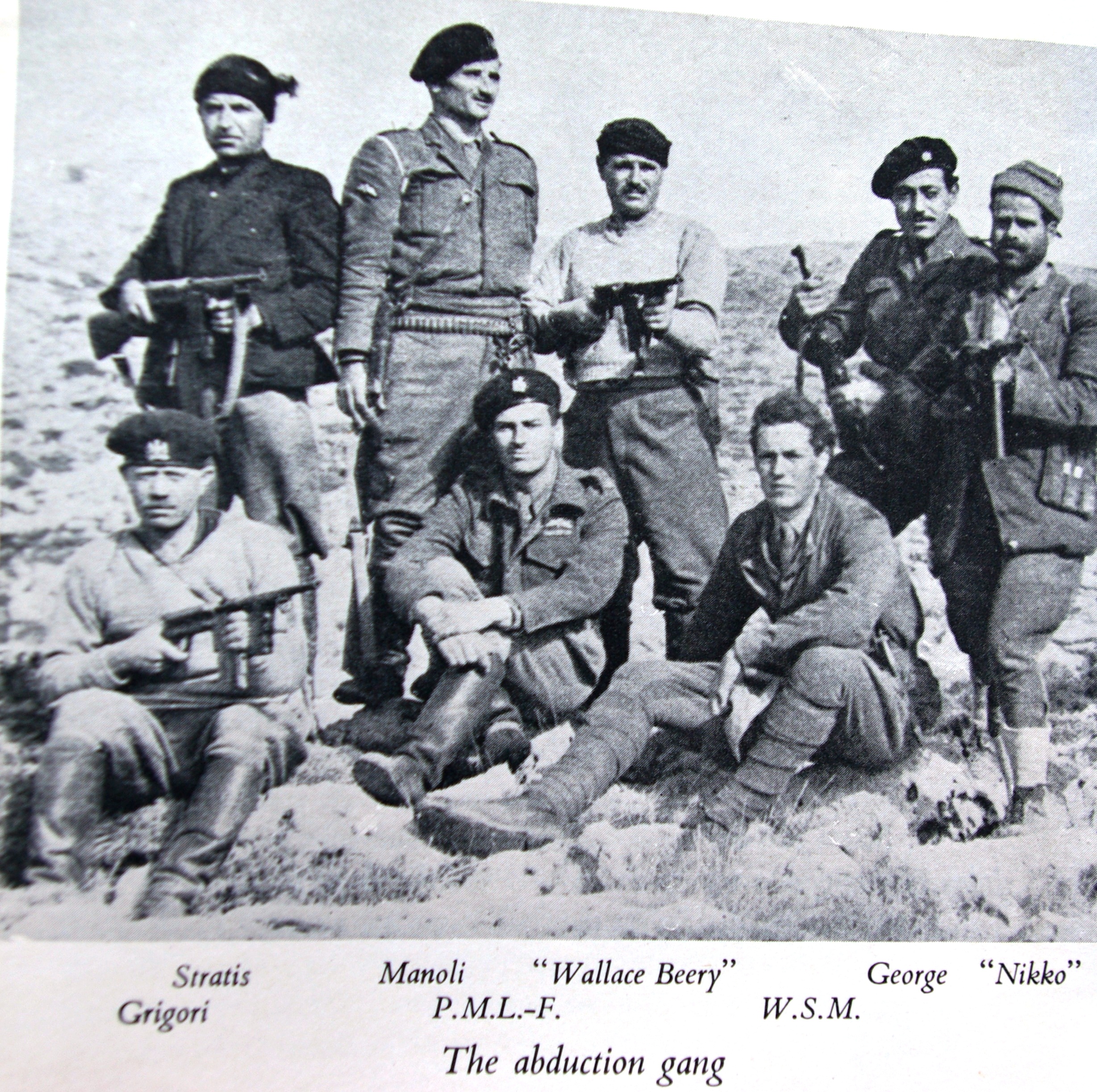
The abduction gang - PLF centre Moss to his left

Visit the photographs page to see pictures  from the book by William Stanley Moss which documents the famous abduction of the commander of German forces in Crete, General Heinrich Kreipe. They show the development of the story from the planning stage, the ‘abduction gang’ selection, and pictures taken during the escape with the General to the south coast and freedom.

Major Dennis Ciclitira Obituary from Daily Telegraph

Published: 12:00AM BST 16 Jun 2000

SOE officer undercover in Crete who organised the German surrender

MAJOR DENNIS CICLITIRA, who has died aged 81, was in charge of SOE’s operations in western Crete during the Second World War and eventually arranged for the German surrender of the island.

Ciclitira arrived on Crete just before Christmas 1943, taking over supervision for the area around the town of Canea from Xan Fielding. Liaison with the Cretan Resistance was led by the classicist Tom Dunbabin, who from the spring of 1942 had been supervising the activities of a handful of SOE officers, among them Patrick Leigh Fermor, who were living rough with the andartes or guerrillas in mountain eyries.

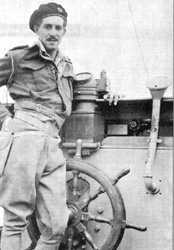
Ciclitira at sea between Cairo and Crete. (The Times)

One of Ciclitira’s first important tasks was to help to organise the evacuation of Leigh Fermor after he and Billy Moss had successfully abducted the commandant of the island, General Kreipe, from his staff car in April 1944. In his book Ill Met By Moonlight (1950), Moss describes encountering Ciclitira in his cave hideout.

“He has grown an impressive beard,” he wrote, “which he treats with the affection of a spinster for her favourite cat, and wears an elegant sort of musical comedy costume, complete with wine-coloured cummerbund, turban and the usual trappings.”

Two of Ciclitira’s men had already been killed by the Nazis, but despite their strenuous efforts to catch him, he managed to maintain wireless communications with Cairo and to arrange for Leigh Fermor and his prize to be picked up by motor launch. When he arrived at the rendezvous he found Moss and Leigh Fermor flashing their torches out to sea in frantic desperation, as neither knew the Morse Code for the pre-arranged signal. Fortunately, Ciclitira did.

Ciclitira left with them on the boat, but subsequently returned to Crete, where he operated under the codename Dionysios. In January 1945, the German garrison of 12,000 began to withdraw to the western end of the island, taking with them prisoners who included Costa Mitsotakis, later the Prime Minister of Greece but then an agent for the Resistance. The Germans had orders to execute all such captives, but Ciclitira managed to contact the German authorities with a view to making an exchange of prisoners.

Ciclitira went to the meeting with Captain Lassen of the Special Boat Section, who soon became exasperated by the horse-trading and suggested that his commando unit, who were hiding in the mountains, should play the Germans at football, with the winner to take all. This suggestion greatly amused Bishop Xirouhakis of Kydonia, who was mediating at the talks and offered to act as referee in any such match.

In the event, after Ciclitira had travelled by caique to Athens for further discussions, 36 German PoWs were exchanged for 10 Cretan agents, probably saving their lives. On May 8, Ciclitira received a message to contact General Benthag, the German commander, to make arrangements for a formal surrender. Dressed in suits, he and Mitsotakis – a fluent German speaker – presented themselves at Benthag’s headquarters. Preliminary terms were then agreed, but since the general could only surrender to an officer of equal rank, it was decided that he should be flown to the British HQ at Heraklion.

Benthag asked how Ciclitira proposed to contact his senior officer, and was most put out to discover that Ciclitira’s transmitter was hidden next door to German HQ, where the volume of radio traffic concealed Ciclitira’s own signals from direction-finding cars. The next evening, although the surrender had not been made public, Ciclitira and his comrades sneaked into Canea and invited their German counterparts to a party; the garrison provided them with a jazz band. The next day, Ciclitira joined in the wild celebrations that greeted Liberation.

Read the full Telegraph obituary.

The Moss Conundrum

I have been reading ‘In Tearing Haste: Letters Between Deborah Devonshire and Patrick Leigh-Fermor’ (2008), edited by Charlotte Mosley. It is really quite good and gets better as Debo writes more often to Paddy; she is very funny.

On page 22 of my paperback version in a letter from Paddy written on 26 August 1956 he writes:

“I was asked by W.S.M. (William Stanley Moss – his partner in the Kreipe kidnap escapade – see Ill Met by Moonlight) to a meal of reconciliation and amends, where we met as affable strangers. It was really a gasbag’s penance and I, having learnt the hard way, vouchsafed little more than a few safe monosyllables.”

Well what does this mean? It is clear something had caused a breakdown in what was once a good friendship. They had been through a lot together and to feel like this, there must have been something terrible to cause such a rift. Was it the way Moss portrayed the events of the Kreipe kidnap? The fact that Moss married Sophie? Who knows?

If anyone knows please add a comment to this article.

Welcome to the Patrick Leigh Fermor blog

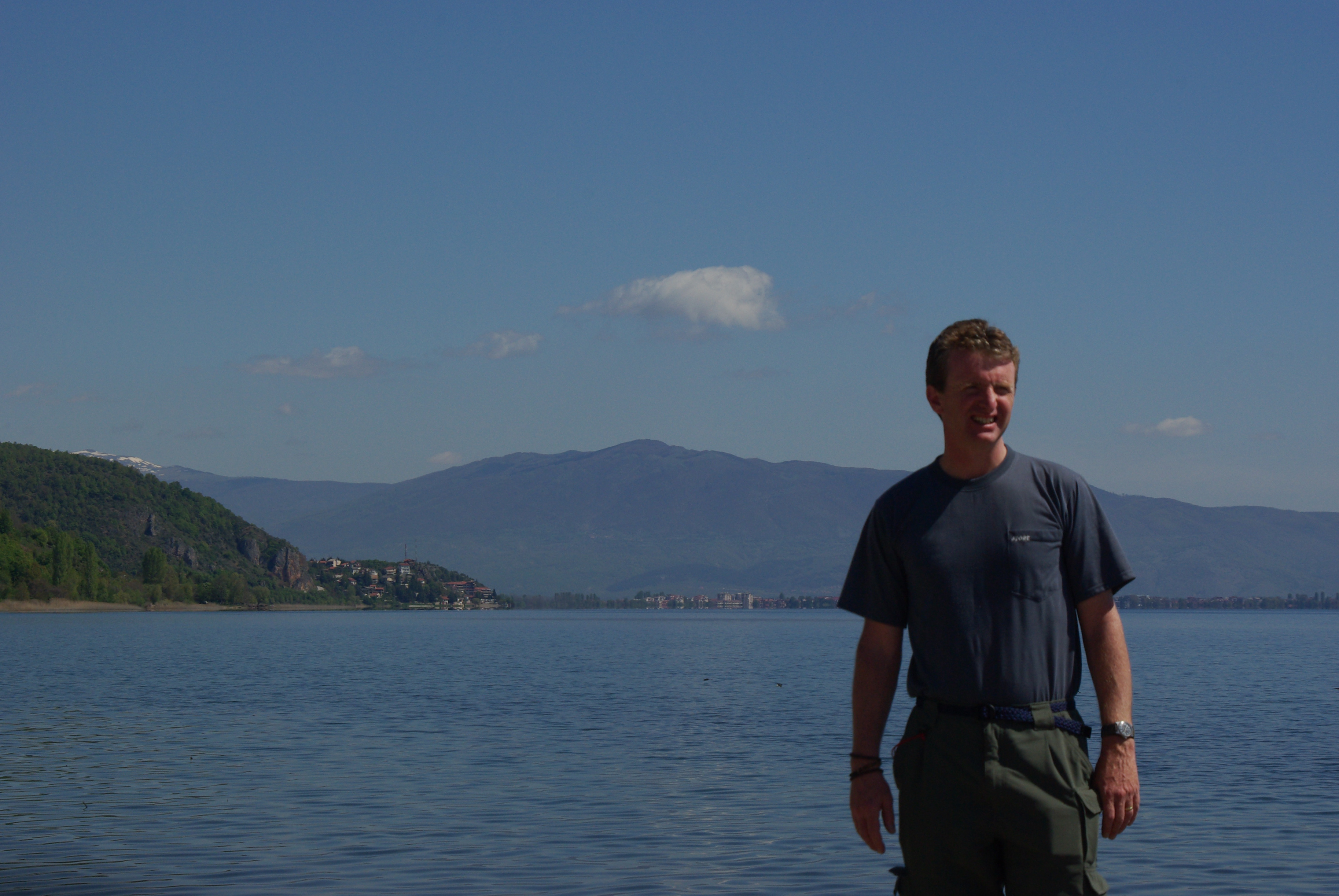
Tom at Lake Ohrid on the Via Egnatia, 2009

My name is Tom Sawford and I live in Winchester, Hampshire, England.

I first became aware of Paddy quite late in life; I guess he is an acquired taste. Maybe you need to have some awareness of the broad range of subject matter that he can, often without warning, cover in his books. Perhaps it is only after formal education, reading widely, developing a broad appreciation for history, and just plain living that you have the ability to grasp some of what he is getting at. A strongly developed vocabulary is also a boon; or at least a dictionary and of course now with access to Google it is possible to quickly research some of the more obscure topics that Paddy assumes mere mortals will be aware of. I remember the first time I read A Time of Gifts and being amused that Paddy clearly expected his readers to have at least a schoolboy/girl grasp of Latin as phrases pour out with no explanation or translation.

But surely that is the attraction of his work. It aims for the highest pinnacles of linguistic and intellectual endeavour and if you like what you read it drags you along with it, drinking from the cup of knowledge that Paddy offers.

He is of course so much more than a writer. It has been said that he is the ‘greatest English travel writer’. I don’t agree with that. I believe he travels to write, having so much more to say than to merely discuss the merits of one hotel over another or the quality of food in Greek fishing  villages. In my view he was the “Greatest Living Englishman”. Not that we don’t have other great Englishman (but perhaps less than we once had), but more than that he is that unique person who personifies what was once the mark of an Englishman; educated; heroic, handsome, generous; and modest (to a degree).

Sir Patrick Michael Leigh Fermor DSO OBE lived a full life, and had experiences that few others will likely ever have again. He had lived a pretty full life before the second world war, even living with a Romanian princess who was older than he, and during that conflict he applied his skills to fighting behind German lines, and was unique in achieving the capture, with “Billy” Moss, of the German Garrison Commander of Crete, Major General Kriepe. After the war he travelled, wrote, married, developed long-lasting friendships, and built a house in Greece. My epithet stands because few can match what he has done and also the manner in which he did it.

The purpose of this blog is to bring the life and work of Paddy, and his many colleagues, to the attention of a wider audience, and to create an archive of on-line material. He, and they, deserve to be recognised and remembered in a world that has changed much during their lives, but would be the poorer without them.

If you would like to help with the blog, make a contribution or anything else, please contact me tsawford[at]btinternet.com.

Tom Sawford

April 2010

Ill Met by Moonlight movie

The final movie from the famed Powell and Pressburger partnership starring Dirk Bogarde (as Paddy), Cyril Cusack (as Captain Sandy Rendel), David Oxley (as W. Stanley “Billy” Moss, M.C.) and the superb Marius Goring (as Major General Heinrich Kreipe). Not forgetting the island of Crete of course. Click the picture to watch the trailer!

Sophie Moss

Sophie Moss was wilful, lively and bloody-minded, with an almost total recall of a past in pre-Second World War Poland that was privileged yet full of turmoil. Later, in wartime Cairo, she lived with members of Britain’s Special Operations Executive in a house where wild parties were the norm.

Sophie Moss was born Countess Zofia Roza Jadwiga Elzbieta Tarnowska on 16 March 1917 on the estate of her father, Count Hieronim Tarnowski, at Rudnik in Galicia, south-eastern Poland. She spent her childhood roaming free, taming foxes, birds and deer. When she was 13 her parents separated, and she went with her mother, née Countess Wanda Zamoyska.

She married Andrew Tarnowski, a close cousin she had fallen in love with at 17 on a wolf hunt, and by 1939 she had had two sons; the elder died the day his brother was born. Sophie never forgot her return to her marital home with her second baby, (who would also soon die). She stood on Krakow Station: “I saw my train arriving with blood streaming down its side. Young military conscripts had travelled on the roof and, as it passed under a low bridge, had lost their lives. The sight of that train pouring blood was an omen of what, within days, was to be the fate of Poland.”

Within hours of the German invasion, refugees from western Poland started arriving. Sophie put them in bedrooms, then on mattresses, and in the stables, then had sheep and cows from the estate killed to feed them. She said that it was then that she grew up. She was persuaded by her husband and brother to flee with them. The men wanted to enlist abroad to fight for their country and, after an arduous and long journey they ended up in Palestine, and eventually Cairo, where she started the Polish branch of the Cairo Red Cross.

In autumn 1943, estranged from Tarnowski, she was invited to live in a villa with seven young British officers working for the Special Operations Executive. She moved in with a bathing suit, an evening gown and two mongooses she had rescued for 10 shillings.

She called this time her “university”, her teachers being the daredevil officers. Tara residents included Arnold Breene, Billy Maclean, David Smiley, Rowland Winn (later Lord St Oswald) and Xan Fielding. Another was William Stanley Moss (Billy), whom Moss went on to marry, in 1945.

In 1944 Moss and Patrick Leigh-Fermor kidnapped General Major Karl Kriepe, commander of the German forces occupying Crete; Billy’s account of the incident, Ill Met by Moonlight (1952), was made into a 1957 film.

Wild parties were thrown at the house, for diplomats, officers, war correspondents, princes, the British Ambassador and King Farouk. Moss tried to replicate the liqueurs from her father’s estate, using plums added to vodka. However, the concoction was always drunk before it had had a chance to ferment. At one party, Poles shot out all the light bulbs.

Another resident was a beer-drinking, house-trained bear, acquired in Russia by Poles who had been let out of Stalin’s gulags to form the Second Polish Army. Worried that the British authorities would not allow the bear to continue fighting with them into Europe, they asked Moss to take him while they retrained. She appealed to King Farouk, who declared: “You are my guest, and so is the bear!” and delegated Egyptian policemen to take it for walks. The bear went on to experience many battles, including Monte Cassino, and died in Scotland of old age. He now resides, stuffed, in London’s Sikorski Museum.

Last year Sophie’s poems, written mostly in Cairo during the war in Polish, were found. Sophie’s relation, the actress Rula Lenska, helped translate them at a launch held at the Sikorski Museum, the stuffed bear nearby In one poem she wrote: “If I fear death / it is of dying of boredom.”

Elisa Segrave