Tag Archives: Greece

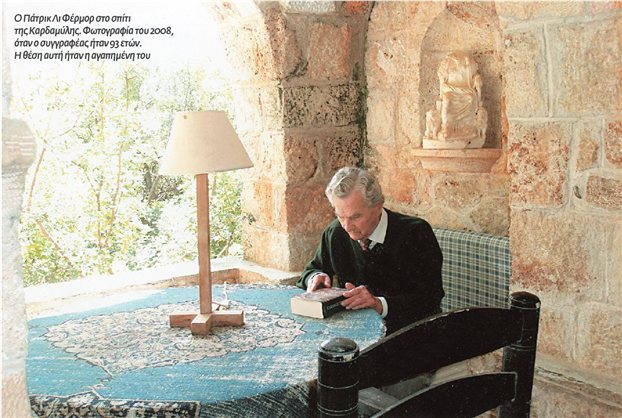
British Philhellene author, Patrick Leigh Fermor, donates Kardamyli home to Benaki

Late author, Patrick Leigh Fermor, has chosen Benaki Museum to donate his home in Kardamily. The donation was made through Giannis Tzanetakis, while the author was still alive and his home became the property of Benaki Museum after the death of the great British Philhellene on June 10th 2011.

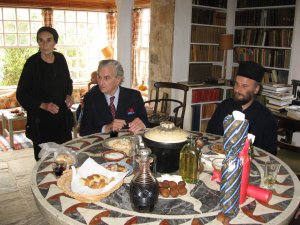
Last Saturday, in honor of Patrick Leigh Fermor, Benaki Museum held an event at the late author’s home in Kalamitsi, Kardamyli, gathering acquaintances and friends from Greece and the UK, among them, UK Ambassador, Dr. David Landsman, Director of the British Council, Richard Walker, the executors of his will and his biographer.

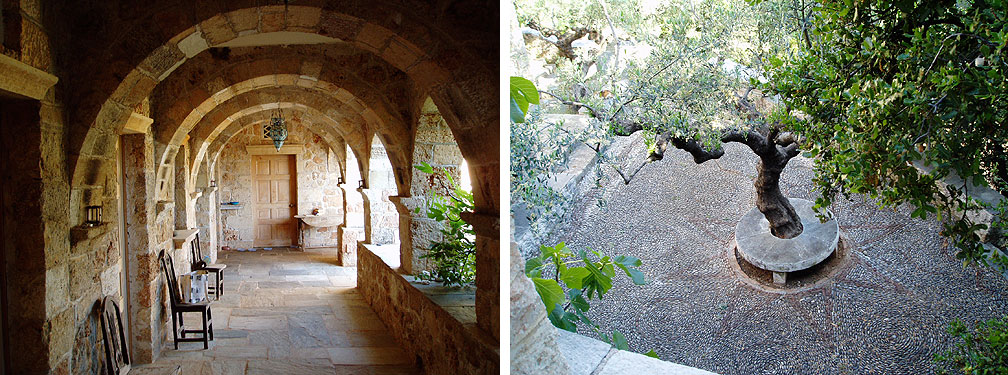
Patrick Leigh Fermor lived for many years in Mani, in his home that he personally built, based on Nikos Chatdjimichalis designs.

His relationship with Benaki Museum dated years back; he kept contact with Antonis Benakis and Irini Kalliga later, while he maintained close friendly relations with the Institute’s director, Angelos Delivorias. Several years ago, it was decided by the donor and the museum, that his home would be used for the purpose of hosting researchers, poets and writers, visiting Greece to work for a few months. At the same time, for specified time periods, Benaki Museum will have the option to rent the author’s home, to obtain funds for maintenance and hosting. In the coming months, once recording procedures for the library and archives are complete, and all necessary maintenance activities are performed, the Administrative Committee of Benaki Museum will be announcing how the building will operate.

Source: ANA – MPA

Paddy’s Gloucestershire home for sale for £2.5m

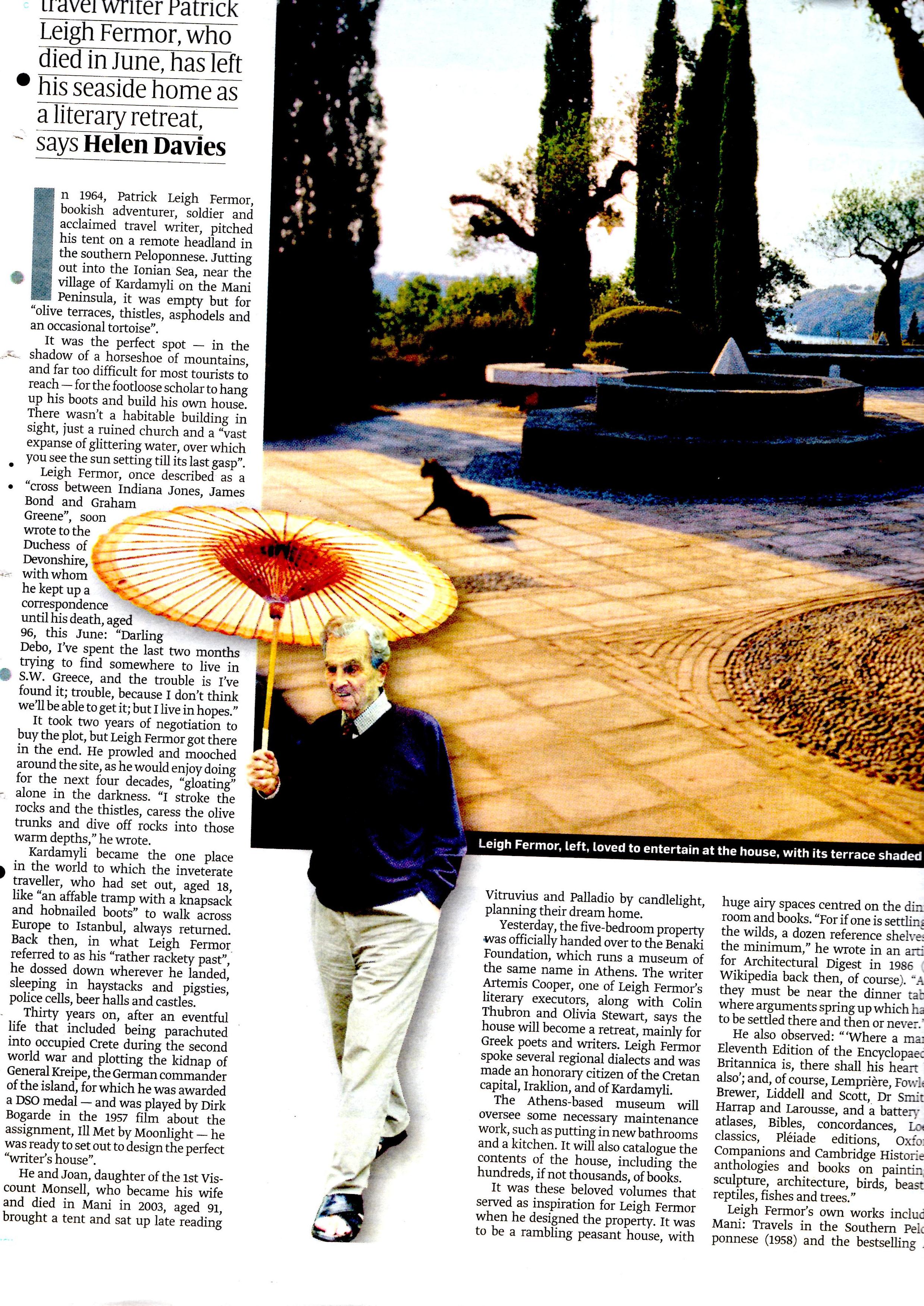
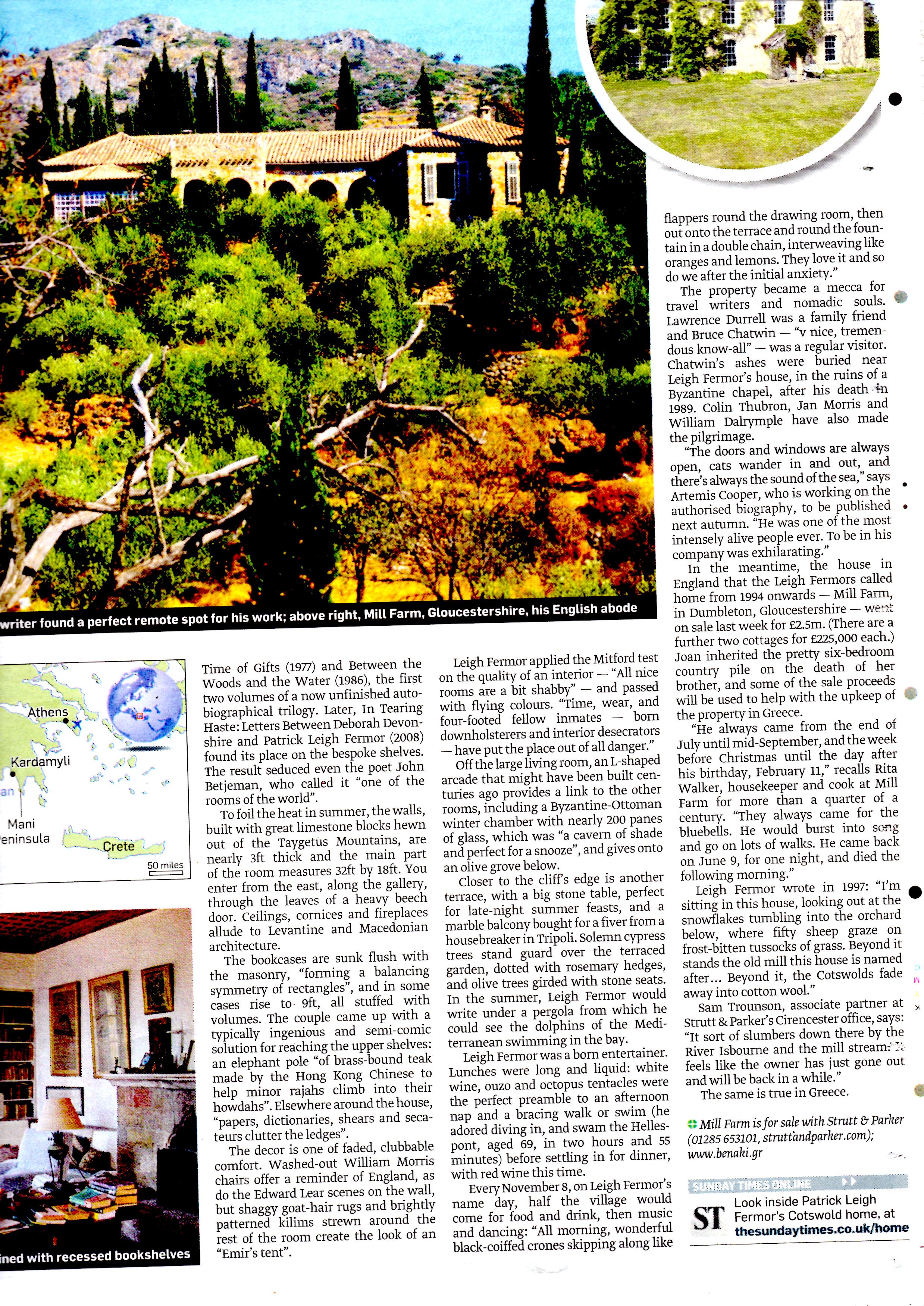
I am trying to obtain a better copy, but here is a scan from today’s Sunday Times property section, of an article about the sale of Paddy and Joan’s house in Dumbleton.

It does in in fact focus on his house in Kardamyli (which it correctly says is going to the Benaki) but it is trying to highlight, as these sections do, that the house in Dumbelton is for sale for £2,500,000. Property particulars from Right Move and a full brochure on the Strutt & Parker website.

The troubled waters of the mind grow still and clear

Paddy in Greece photographed by Joan

Don’t you feel like me that with the passing of Paddy as one of the last of his generation we have clearly entered a new age dominated by uncertainty; a lack of confidence in the values we once held as unquestionably true? These beliefs that bound us (in the West?) together for the latter part of the twentieth century are now unravelling at an ever-increasing pace. As we enter the End Game of the economic crisis, and as the decade of The Forever War rumbles on like the noise of a busy road in the middle distance – there only when we take the trouble to notice – we suffer a dearth of leadership and heroes of substance. Paddy and those of his generation had no such crisis of confidence; they served without question. They sacrificed themselves for the things they believed in, and they provided the leadership, entrepreneurship, creativity, and wisdom that helped rebuild Europe after almost half a century of ethnic and social strife, and destructive war. Maybe they also share some blame for the way things turned out, but who will step up now?

In this considered profile, which prompted my rambling reflection, Paddy’s good friend Colin Thubron assesses his contribution, not as a warrior, but as a writer, and I think for the first time, reveals the torment of Paddy’s troubling writer’s block towards the end of his life.

by Colin Thubron

First published in the New York Review of Books, Volume 58, Number 14

When Patrick Leigh Fermor died in June at the age of ninety-six, it seemed as if an era had come to an end. He was the last of a generation of warrior–travel writers that included the Arabian explorer Wilfred Thesiger, the controversial mystic Laurens van der Post, and the indefatigable Norman Lewis of Naples ‘44. Among these, Leigh Fermor shines with the élan and the effortlessly cultured glow of an apparent golden age. A war hero of polymathic exuberance, brilliant linguistic skills, and an elephantine memory, he was sometimes fancifully compared to Lord Byron or Sir Philip Sydney.

Two pairs of books came to exemplify his achievement. The first pair—Mani (1958) and Roumeli (1966)—celebrated the Greece that held his abiding fascination and where he lived for forty-five years on a once-wild promontory in the Peloponnese. In Mani, especially, he described this backwater region as a world whose way of life had survived in a fierce and enchanted time warp.

The land he depicted is barely recognizable now—tourism, he observed, destroys the object it loves—but it was less the Greece of classical antiquity that beguiled him than the spirit and folk culture of the hinterland: the earthy, demotic Romiosyne that he once contrasted with the Hellenic ideal in a playful balance sheet of the country’s character.

In these, and in later books, the style was the man: robustly imaginative, cultivated without pedantry, unstoppably digressive, forgivably swanky, and filled with infectious learning. The impression—overflowing into elaborate footnotes and flights of learned fantasy—is one of omnivorous delight in the quirks and byways of history, art, language, genealogy, myth, song, superstition, costume, heraldry, and everything else that struck his fancy.

His literary models were Norman Douglas and Robert Byron, but his writing was more vivid than the one, more kindly than the other. Despite the richness of his prose (occasionally slipping into purple) he forged an illusion of intimacy with his readers, as if they were sharing his mind in the moment of writing. But in fact his manuscripts were worked, reworked, and reworked again with such painstaking perfectionism that his publisher (the benign Jock Murray) often had to reset his galley proofs wholesale. The apparently natural flow of words was in reality a densely worked choreography, which came at cost.

Fifteen years ago, swimming in the Ionian Sea beneath his home, where nobody could overhear us, Paddy (as friends and fans called him) suddenly confessed to me the writer’s block that would plague the rest of his life. The expectations of a now-avid public, and his own obsessive perfectionism, were taking their toll, and he could not overleap this cruel impediment.

I remember him strong into old age. He swam every morning, with a sturdy breaststroke far out to sea, the tattoo of a twin-tailed mermaid glistening on his shoulder. He still kept up a striding march in the Taygetus foothills, where he and his wife Joan had designed their own house above the ocean. It was a place of “mad splendor,” he wrote. Its sitting-room library—bookshelves banked nine feet high—opened onto a vista of cypresses and the Messenian Gulf, and was flagged with the greenish stone of Mount Pelion. In the afternoon Paddy would disappear into his study to confront—or escape—the demons of his failed writing, and would emerge to the liberation of ouzo or whiskey, generally to report some arcane piece of research—that the Huns wore stitched field-mouse skins, perhaps—or to share a passage of Ovid. We dined in the monastic half-cloister he had built beside his home, and once we visited the tiny, red-tiled Byzantine chapel where—five years before—he had buried the ashes of Bruce Chatwin.

The conflict between a natural gregariousness and the solitude of writing never quite resolved for him. In a short, intriguing study named A Time to Keep Silence (1953) he recorded his sojourn in three great French monasteries. He described this retreat not as a religious exercise, but as a need for a haven for writing, and the nature of its cleansing—”the troubled waters of the mind grow still and clear”—remains suspended like a question mark in the oeuvre of a man to whom self-revelation seemed indulgence.

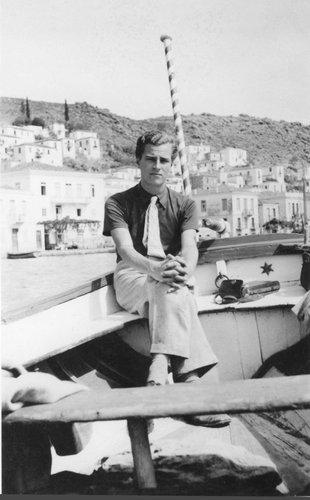
The second pair of books, which established Paddy’s primacy among travel writers, must be among the most extraordinary ever written. In 1933, as a youth of eighteen, he left England for a journey that would take a year and a half. As “a thousand glistening umbrellas were tilted over a thousand bowler hats in Piccadilly,” he set out to walk to Constantinople (as he nostalgically called Istanbul). Walking stick in hand, a copy of Horace’s Odes in his rucksack, he pursued a meandering course up the Rhine and down the Danube, across the Great Hungarian Plain, into Romania and through the Balkans to Turkey.

It was almost forty-five years before he published the first part of this journey, and another nine years before the second. A Time of Gifts (1977) and Between the Woods and the Water (1986) represent prodigious feats of memory. They record the rite of passage of a precocious, exuberant young man as he encounters the peoples and languages of a Middle Europe now littered with obsolete names: Bohemia, Transylvania, Wallachia. His story must have become the dream journey of every enterprising and footloose adolescent.

Inevitably the accuracy of Paddy’s memory was questioned, and he was frank about occasional imaginative license and conflation. (His first diary was stolen in Munich, a solitary last one recovered years later in Romania.) Certainly his recall was extraordinary. I remember the first time we met (by chance), when he quoted verbatim from my first book passages that I had myself forgotten. A year before his death we chanted verses from the Rubáiyát of Omar Khayyám together in an antiphonal competition (which he won).

His urge to describe his epic journey more than forty years after its end was a deeply natural one. He was revisiting his youthful persona with the judgment and knowledge of maturity; yet in a sense he had remained unchanged. Despite his sophisticated learning, he retained an almost boyish innocence, as if the troubles of the modern age had bypassed him. In the Peloponnese, where he settled to live in the 1960s, he had remained in thrall to a more ancient, rooted culture than that of the urban West.

The final volume of his proposed trilogy—carrying its author through the Balkans and down the Black Sea coast to Turkey—became his tormenting and elusive project for the next quarter- century, and was never completed. Some near-finished version, however, survives him, and will eventually be published.

With his youthful trek done, Leigh Fermor’s career took off into near fable. Caught up in Greek unrest, he joined in a triumphal royalist cavalry charge against wilting Venizelist rebels. In Athens he fell in love with the artist Princess Balasha Cantacuzene, twelve years older than him, and lived with her in Moldavia for over two years, before World War II recalled him to London.

As a fluent Greek speaker he was recruited by the Intelligence Corps, and sent as a liaison officer with the Greek army first to Albania and finally to Crete, where he survived the brutal German invasion. For almost two years, while an officer in the Special Operations Executive, he lived disguised as a shepherd in the Cretan mountains, organizing the gathering of intelligence.

Then, in 1944, occurred the exploit that—more than any other—was to burnish him into legend. He and his fellow SOE officer Stanley Moss dreamed up a scheme of harebrained bravado. Dressed in stolen German uniforms, with a party of Cretan guerrillas, they ambushed the car of General Heinrich Kreipe, the German commander of occupied Crete, kidnapped him, and concealed him under the back seat. Moss took the wheel, Paddy donned the general’s cap, and together they drove through twenty-two checkpoints to emerge on the far side of Herakleion and march Kreipe for three weeks over the mountains, to be picked up by motor launch and taken to Egypt.

It was during this hazardous Cretan march, as the dawn broke over Mount Ida, mythical birthplace of Zeus, that the abducted general began to murmur a verse of Horace: Vides ut alta stet nive candidum/Soracte….1 It was an ode that Paddy knew by heart, and he completed the six stanzas to their end. “The general’s blue eyes had swivelled away from the mountain-top to mine,” Paddy later wrote,

—and when I’d finished, after a long silence, he said: “Ach so, Herr Major!” It was very strange. As though, for a long moment, the war had ceased to exist. We had both drunk at the same fountains long before; and things were different between us for the rest of our time together.

This precocious kidnapping was later reimagined in a lackluster movie named Ill Met by Moonlight (1957) with Dirk Bogarde playing Paddy. But there were other exploits too. Paddy had already engineered the defection of the Italian General Angelico Carta from Crete; and he was due to undertake a near-suicidal mission to Colditz when the war ended.

His upbeat account of these events was tempered by regret. He had planned that the abduction of Kreipe be bloodless, but his accompanying Cretan partisans slit the chauffeur’s throat, and rumors of grim German reprisals for the abduction have never quite died down. Above all, Paddy’s accidental shooting of one of his fellow guerrillas may have stained his memory of the whole period.

On June 16 Leigh Fermor was buried back in the English countryside, attended by an Intelligence Corps guard of honor, to lie beside his wife Joan, his dear comrade since 1946. This was, in a sense, fitting. For in certain ways he was exemplary of a wartime Englishness now almost gone, whose more dashing qualities merged seamlessly into the hardy stylishness of Greek leventéa.

To those who knew him, his books are hauntingly redolent of his sensibility. His conversation was irrepressibly warm and inventive far into old age, moving from arcane anecdotes to fanciful wordplay or bursting into polyglot song (sometimes singing the lyrics backward). His friends ranged from Deborah, Duchess of Devonshire—last of the six legendary Mitford sisters (his correspondence with her was published in 20082)—to early acquaintance with a raffish interwar bohemia and his own great predecessor, the travel writer and aesthete Robert Byron, whose borrowed rucksack he bore across Central Europe as a youth.

Almost the last time I met Paddy, he had returned home after an operation for suspected cancer, and I feared he would be depleted, his old zest gone. He was growing deaf, and he suffered from tunnel vision (which he called Simplonitis). For a while, sitting over lunch, he seemed subdued. Then something struck him. He perked up, and said: “You know, there is an apple lying on a table in the hall. It’s been there all weekend. Wouldn’t it be marvelous if it cocked a snook at Newton, and simply took off into the air!”

This was typical of his boyish resilience. In the field of travel he evoked both the youthful wanderer who discovers another world and the avid scholar who melds with it. His prose was too rich and elaborate to be a safe influence on others (although a few have tried); but he brought to the genre not only the distinction of his densely brilliant books, but his innate dignity, ebullient mind, and capacious heart.

  1. 1″See Mount Soracte white with snow….”
  2. 2The correspondence, In Tearing Haste , edited by Charlotte Mosley, was published in the US by New York Review Books (2010), which has also republished the other books by Patrick Leigh Fermor mentioned in this article, as well as The Traveller’s Tree .

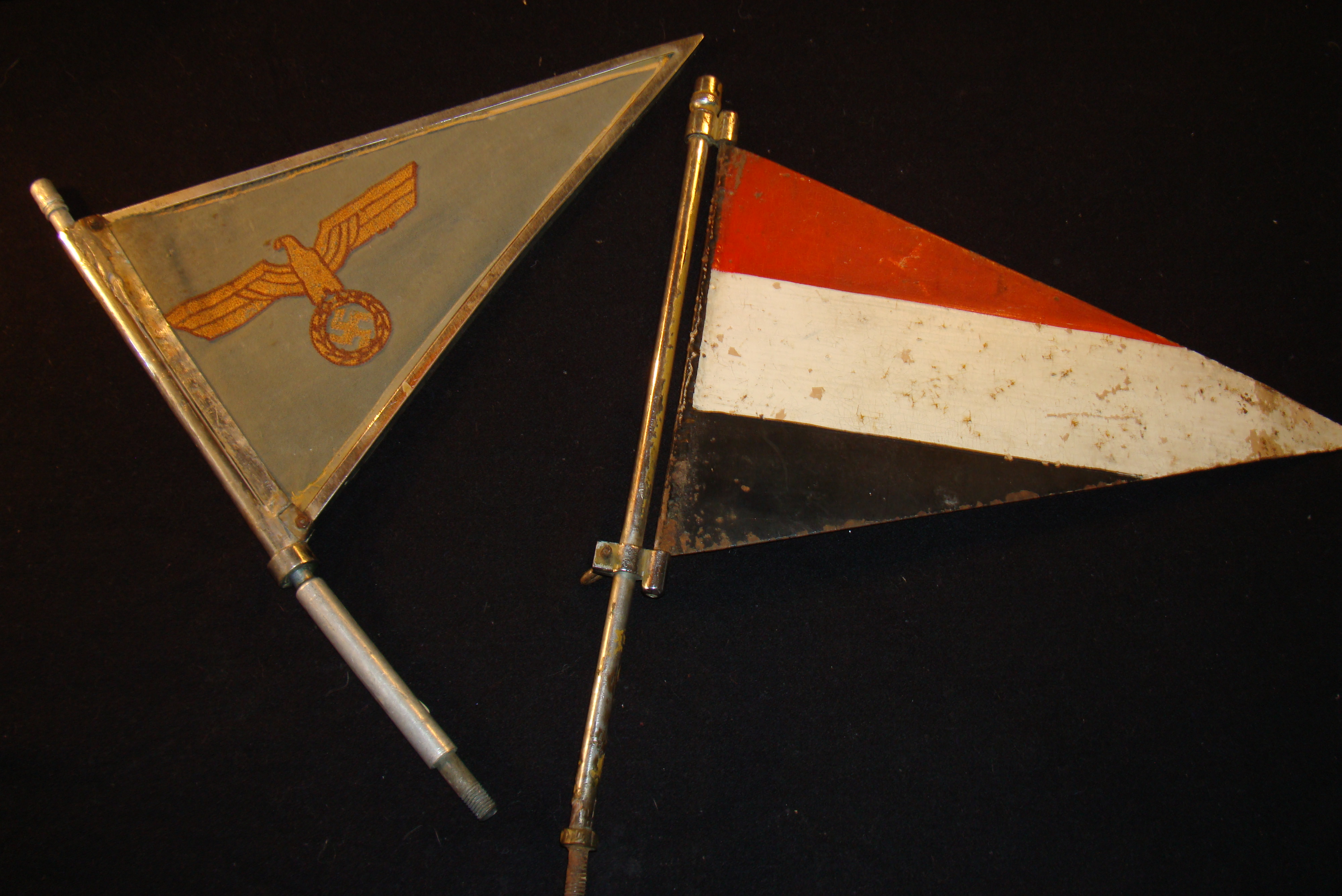
The Kreipe pennants

The Kreipe pennants - Copyright Artemis Cooper 2011

The pennants from General Kreipe's car

What happened to the flags on General Kreipe’s car when Paddy abandoned it and joined the main abduction gang? Well here is the story. I am very grateful to Artemis Cooper for submitting this. I hesitate to say that this is a world exclusive, but it probably is! These have not been seen in public since the car drove through the heavily garrisoned town of Heraklion with the General in April 1944.

As I’m sure you know, just before abandoning the General’s car on the night of the abduction of Gen Kreipe, Paddy and George Tyrakis ripped off the two metal pennants that stood proudly on the bonnet. One might argue that, combined with Billy’s confident driving, it was those pennants that had let the car pass unchallenged through 22 German checkpoints! Since Billy had driven the car the pennants were given to him; and after his death, Billy’s daughters – Gabriella Bullock and Isabella Cole – felt that Paddy should have them. Paddy held onto them for many years, very much under wraps. I think the main reason he kept them hidden was because he had always felt so wretched about the death of Alfred Fenske, the General’s chauffeur.

They were kept in a tin trunk in his study, and very few people knew they were there. He showed them to me only once. The reason for that was so that I should be aware that after his death, they were to go to the Rethymnon Museum of History and Folklore. This had been arranged in the 1990s, with the encouragement of Niko Kokonas.

In August the flags were given to the Rethymnon Museum, according to Paddy’s instructions.

I have a photo of the flags. They stand about 15″ high, the triangular pennant sticking out about 12″. The first is painted red, white and black in horizontal lines, like the German flag. The other shows the gold Nazi eagle with outspread wings perched on a wreath, embroidered onto a piece of grey fabric which is then mounted onto the metal pennant.

I hope this is a real joy to all the Ill Met by Moonlight fans out there.

This article and photograph copyright Artemis Cooper 2011

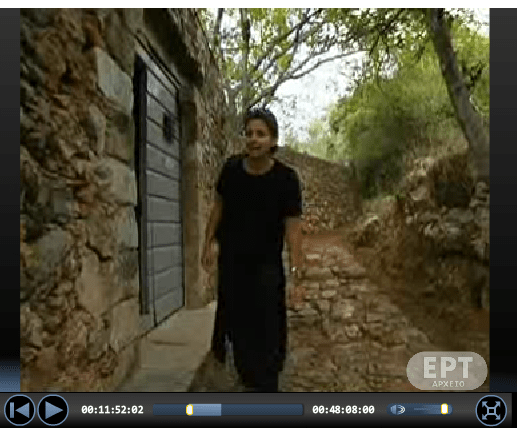
Journalist Maya Tsokli interviews Paddy

As part of the show “TRAVEL IN GREECE” the journalist Maya Tsokli discovers the area of ​​Kardamyli, and walks down a lane to a light blue door ….

A very good quality TV interview with Paddy brought to my attention by Thos Henley.

Πάτρικ Λι Φέρμορ:«Πατρίδα είναι εκεί που έχει κανείς τα βιβλία του»

Paddy contemplating a fine read

It roughly translates as “Patrick Leigh Fermor – Homeland is where one’s books are” and it is about “Unknown details of life, action and work of British writer of travel literature, as recounted specific ‘Tribune’ reporter Joy Kiosse”. You can enjoy in the Greek or if appalling at it like me use Google Translate. It is quite a good article. I like the first paragraph ….

In mythology, heroes were not immortal, and some are in today’s life. The memory but Patrick Leigh Fermor, Paddy’s, like shouting his friends, the Sun-Michael for Mani and the Cretans, will remain immortal. Written with a broad humanitarian education, self-taught, untamed, hero, kind and generous friend peculiar humor, fearless and bold, persistent traveler with an insatiable thirst to discover the world, polyglot and general man with deep knowledge of the classics and history, the Fermor took all these elements to the end of his life.

by Joy Kiosse

First published in Tovima on 2 July 2011.

Από την Πέμπτη 16 Ιουνίου ο σερ Πάτρικ Λι Φέρμοραναπαύεται στο μικρό κοιμητήριο που βρίσκεται στον περίβολο του ναού του Αγίου Πέτρου στο Ντάμπλτον της Αγγλίας, δίπλα στο μνήμα της συζύγου του Τζόαν. Είναι μια ήσυχη πράσινη πλαγιά περιτριγυρισμένη από ψηλά δέντρα.

Στη μυθολογία οι ήρωες δεν ήταν αθάνατοι- και κάπως είναι και στη σημερινή ζωή. Η μνήμη όμως του Πάτρικ Λι Φέρμορ, του Πάντι, όπως τον φώναζαν οι φίλοι του, του κυρ-Μιχάλη για τους Μανιάτες και τους Κρητικούς, θα μείνει αθάνατη. Συγγραφέας με πλατιά ανθρωπιστική μόρφωση, αυτοδίδακτος, ατίθασος, ήρωας, καλός και γενναιόδωρος φίλος με ιδιότυπο χιούμορ, άφοβος και παράτολμος, επίμονος ταξιδιώτης με ακόρεστη δίψα για να γνωρίσει τον κόσμο, πολύγλωσσος και γενικότερα άνθρωπος με βαθιά γνώση των κλασικών και της Ιστορίας, ο Φέρμορ κράτησε όλα αυτά τα στοιχεία ως το τέλος της ζωής του.

Ακόμη, είχε το χάρισμα να σαγηνεύει τους συνομιλητές του και ήταν εξαιρετικά αγαπητός σε όλες τις παρέες. Την τελευταία ημέρα του στην Καρδαμύλη, το μεσημέρι στο τραπέζι απήγγειλε με τη βραχνή πια φωνή του ένα μεγάλο ποίημα του Γουίτιερ. Ναι, είχε μνήμη! Οχι όμως μηχανική. Ακούγοντάς τον να απαγγέλλει και ταυτόχρονα να υποδύεται τον ήρωα του ποιήματος είχες τη βεβαιότητα ότι γνώριζε σε βάθος το νόημα κάθε στίχου, κάθε φράσης, κάθε λέξης.

Στο νοσοκομείο της Αθήνας την πρώτη φορά βαφτιστήρια και φίλοι από την Κρήτη και τη Μάνη βρέθηκαν δίπλα του, λες και είχαν ειδοποιηθεί με σήματα μορς. Ανάμεσά τους υπήρχε μια αυθόρμητη σχέση αγάπης και σεβασμού- όπως και εκείνος αγάπησε και σεβάστηκε την Ελλάδα. Ναι, το σπάνιο στοιχείο αυτής της σχέσης του με την Ελλάδα ήταν ο σεβασμός που έδειξε στον τόπο.

Μετά την πρώτη επέμβαση επέστρεψε στην Καρδαμύλη, ελπίζοντας ότι είχε ξεπεράσει για κάμποσο καιρό το πρόβλημα της υγείας του και ότι θα πρόφταινε να τελειώσει το βιβλίο του. Τρεις εβδομάδες αργότερα, την ημέρα που ο δήμαρχος της Καρδαμύλης θα του έδινε το χρυσό κλειδί της πόλης, χρειάστηκε να επιστρέψει εσπευσμένα στο νοσοκομείο. Και ύστερα από μια δεύτερη επέμβαση πήρε την απόφαση να γυρίσει στην Αγγλία, γνωρίζοντας πως δεν θα επέστρεφε ποτέ πια. Το ταξίδι είχε τελειώσει.

Ο Πάντι τιμήθηκε στη ζωή του όσο λίγοι συγγραφείς ή ακόμη και ήρωες. Την πρώτη φορά που θέλησαν να του απονείμουν τον τίτλο του ιππότη (ΟΒΕ), αρνήθηκε, λέγοντας ότι δεν τον άξιζε. Τελικά έγινε σερ το 2004, «κα θώς δεν θα ήταν… ευγενικό να αρνηθεί δεύτερη φορά». Πάντως ποτέ δεν ακούστηκε κάποιος να τον αποκαλεί «σερ». Ολοι τον φώναζαν Πάντι και στην Καρδαμύλη και στην Κρήτη «κυρ Μιχάλη»- ήταν το ψευδώνυμό του στα βουνά της Κρήτης και το δεύτερο χριστιανικό του όνομα, που κανείς δεν το ήξερε, παρ΄ όλα αυτά όμως οι Ελληνες το γιόρταζαν.

Διακρίσεις, διπλώματα- όσα δεν πήρε στα μαθητικά του χρόνια-, ασημένιες πλακέτες και πάλι διακρίσεις υπάρχουν στη Μάνη, περισσότερο ως έργα τέχνης, καδράκια σπαρμένα στα διάφορα δωμάτια. «Κυρ Μιχάλη, πρέπει να πιείτε αυτό το φάρμακο», «Κυρ Μιχάλη,έξω περιμένει ο τάδε, να έρθει;», «Κυρ Μιχάλη,ήρθε η βαφτιστικιά σου η Αγγλία»… Και ο κυρ Μιχάλης έγνεφε καταφατικά.

Του άρεσε να έχει κόσμο όταν δεν ήταν σκυμμένος στα χαρτιά του. Κατά βάθος του άρεσε και το «κυρ-Μιχάλης», καθώς στο πίσω μέρος του μυαλού του υπήρχαν πάντα η Κρήτη και οι συναγωνιστές του. Βαριά άρρωστος στο νοσοκομείο, τις νύχτες έβλεπε πως ήταν στη σπηλιά στα Ανώγεια και έτρεχε στο μπαλκόνι να το σκάσει, και άλλοτε πως τον κυνηγούσαν και έτρεχε για να μην τον πιάσουν.

Υπό τους ήχους μιας γκάιντας

Εκείνη την Πέμπτη ο καιρός ήταν χαρούμενος στη μικρή πολίχνη του Ντάμπλτον. Ο ήλιος μπαινόβγαινε στα σύννεφα πάνω από την εκκλησία όπου συγκεντρώθηκαν φίλοι και συγγενείς και παλιοί συμπολεμιστές του. Οταν έφθασε η σορός σκεπασμένη με τη βρετανική σημαία, ο ιερέας βρισκόταν στην άκρη του φράχτη περιμένοντας να δώσει την τελευταία ευχή. Μετά προχώρησαν μαζί στην εκκλησία, όπου στην πόρτα περίμεναν να αποδώσουν τιμές βετεράνοι της Ιρλανδικής Φρουράς. Μέσα στον ναό η τελετή ήταν σύντομη, χωρίς λόγους.

Η σοπράνο Σάρα Γκάμπριελ τραγούδησε ασυνόδευτη ένα απόσπασμα από τον «Ντον Τζιοβάνι» του Μότσαρτ, το εκκλησίασμα έψαλε δύο ύμνους, διαβάστηκαν δύο σύντομα αποσπάσματα από την «Κήπο του Κύρου» του σερ Τόμας Μπράουν και από το «Απόκρυφο Βιβλίο» του Πρωτευαγγελιστή, και το εκκλησίασμα ακολούθησε τη σορό στον περίβολο της εκκλησίας υπό τους ήχους μιας γκάιντας. Κοντά στο μνήμα ένας μουσικός της Ιρλανδικής Φρουράς σάλπισε το σιωπητήριο. Αυτό ήταν. Η σημαία διπλώθηκε, η σορός κατέβηκε, ενώ την έραιναν ροδοπέταλα και μια χούφτα χώμα που ήρθε από την Ελλάδα. Μετά σιωπή.

Δίπλα στο μαξιλαράκι με τα παράσημα- ανάμεσά τους ξεχωρίζει ο ελληνικός Φοίνικας- βρίσκονταν τα στεφάνια. Εκείνο από την Ελληνική Πρεσβεία στο Λονδίνο (άλλωστε ο πρέσβης κ. Α. Σάντης παρέστη στην κηδεία), ένα δάφνινο από το Μουσείο Μπενάκη με την ευχή «στο καλό Πάντι», ένα από τον αρχηγό του Γενικού Επιτελείου Στρατού της Ελλάδος, ένα από τους Βυρωνιστές, άλλα από την οικογένεια του συναγωνιστή και φίλου του λόρδου Τζέλικο, από την Αδελφότητα των Ελλήνων Βετεράνων, από το Βritish Council της Αθήνας, από βαφτισιμιές… και πολλά μικρά μπουκέτα αγριολούλουδα από φίλους.

Καρδαμύλη, «το σπίτι του»

Τους τελευταίους μήνες της ζωής του ο Πάτρικ Λι Φέρμορ τούς πέρασε στην Καρδαμύλη της Μάνης. Εκεί ήταν «το σπίτι του». Οταν τον ρωτούσαν οι δημοσιογράφοι ποια από τις δύο χώρες θεωρούσε πατρίδα του, ποιο από τα δύο σπίτια ένιωθε περισσότερο δικό του, εκείνο της Αγγλίας με τον παλιό μύλο, το ρυάκι και τα πανύψηλα δένδρα ή το άλλο, της Μάνης, «Πατρίδα είναι εκεί που έχει κανείς τα βιβλία του» απαντούσε. Και η αλήθεια είναι ότι τα βιβλία του Ντάμπλτον δεν μπορούν να συγκριθούν με τις βιβλιοθήκες της Καρδαμύλης. Εφέτος, στις αρχές του χρόνου, ο Πάτρικ Λι Φέρμορ επέστρεψε στην Καρδαμύλη, όπου προσπάθησε απελπισμένα να τελειώσει τον τρίτο τόμο της τριλογίας του. Πρόκειται για το τελευταίο μέρος του οδοιπορικού ενός 18άρη που ξεκίνησε από την Ολλανδία για να διασχίσει με τα πόδια όλη την Ευρώπη, ως την Κωνσταντινούπολη. Οι πρώτοι δύο τόμοι που εκδόθηκαν με τις αναμνήσεις αυτής της περιπέτειας, «Α time of Gifts» (1977) και «From the Woods to the Water» (1986) – έχουν μεταφραστεί στα ελληνικά-, γνώρισαν μεγάλη επιτυχία.

Σε αυτό το ταξίδι ο Φέρμορ μόλις που πρόλαβε να γνωρίσει έναν κόσμο ο οποίος, με τον Β΄ Παγκόσμιο Πόλεμο, θα χανόταν για πάντα. Ενα συστατικό γράμμα σε κάποιον ευγενή στη Γερμανία άνοιξε τη μία μετά την άλλη τις πόρτες των αρχοντικών και των κάστρων της Μεσευρώπης με τις πολύτιμες συλλογές έργων τέχνης και τις παλιές βιβλιοθήκες. Λίγα χρόνια αργότερα, μετά τον Πόλεμο, τίποτε από αυτά δεν υπήρχε. Ολα είχαν χαθεί, μαζί και ο τρόπος ζωής των φεουδαρχών αρχόντων και του αγροτικού πληθυσμού. Οι βομβαρδισμοί και το σοβιετικό καθεστώς έσβησαν έναν ολόκληρο κόσμο από τον χάρτη της Οικουμένης.

Οι Βρετανοί είχαν από καιρό ανακηρύξει τον Πάτρικ Λι Φέρμορ τον μεγαλύτερο ταξιδιωτικό συγγραφέα τους- ίσως τον κορυφαίο σε ολόκληρο τον κόσμο. Ο Φέρμορ δεν ήταν όμως μόνο ένας εξαιρετικός ταξιδιωτικός συγγραφέας. Οι περιγραφές του δεν περιορίζονταν στη διαδρομή. Τον ενδιέφερε η φύση, αλλά και ο άνθρωπος, οι ιστορίες που έλεγαν οι πέτρες και τα κτίσματα. Τον σαγήνευαν οι μικρές αφηγήσεις που άκουγε στα καφενεία. Τον βοηθούσαν να καταλάβει τους ανθρώπους και να κατανοήσει ό,τι κράτησαν από τον πολιτισμό τους. Σε αυτό τον βοήθησε πολύ και η ευκολία του στην εκμάθηση ξένων γλωσσών. Ακόμη και πρόσφατα διόρθωνε εκφράσεις και λέξεις συνομιλητών του στα ρουμανικά. Και εκείνοι δεν πίστευαν στα αφτιά τους…

ΓΙΑΤΙ ΔΕΝ ΕΠΕΣΤΡΕΨΕ ΣΤΗΝ ΚΡΗΤΗ – Η ΑΠΟΚΑΛΥΠΤΙΚΗ ΒΙΟΓΡΑΦΙΑ

Ο Πάτρικ Λι Φέρμορ καταγόταν από προνομιούχο οικογένεια.Ο πατέρας του,ο σερ Λούις,ήταν διευθυντής του Γεωλογικού Ινστιτούτου στην Ινδία,με αποτέλεσμα αυτός και η γυναίκα του να κρατηθούν για ένα πολύ μεγάλο διάστημα μακριά από τον γιο τους.Παιδάκι τον εμπιστεύθηκαν σε μια αγροτική οικογένεια και μεγάλωσε ελεύθερος στη φύση.Σε αυτή την ελευθερία οφείλεται ίσως ο ατίθασος χαρακτήρας του,αλλά και μια περίεργη,αυστηρή πειθαρχία,προσαρμοσμένη όμως στους δικούς του όρους.

Οταν,μετά τον Α΄ Παγκόσμιο Πόλεμο, μαζεύτηκε η οικογένεια,στο σπίτι γινόταν πολλή κουβέντα για πουλιά,για λουλούδια και για τόπους μακρινούς.Η μητέρα του,θέλοντας να του ανοίξει τους ορίζοντες- αφού το ένα μετά το άλλο τα σχολεία τον έδιωχναν-,του διάβαζε ποίηση και κλασικούς.Η οικογένεια τον προόριζε για στρατιωτικό.Γι΄ αυτό και εκείνος αποφάσισε να φύγει για την Ευρώπη.Χωρίς χρήματα,χωρίς χρονικούς περιορισμούς,σχεδόν χωρίς πρόγραμμα.Στο σακίδιό του είχε την κλασική ανθολογία ποίησης των εκδόσεων Οξφόρδης,τις Ωδές του Οράτιου,ίσως και κάποιο έργο του Σαίξπηρ.

Για να κρατά συντροφιά στον εαυτό του, όσο περπατούσε απήγγελε ποίηση,με αποτέλεσμα να τη μάθει απέξω,ενώ επαναλάμβανε όσα πρόφταινε να αρπάξει από τη γλώσσα κάθε τόπου από τον οποίο περνούσε.Κοιμόταν σε καπηλειά και αχυρώνες με την ίδια άνεση που έμενε σε πύργους και άκουγε τις ιστορίες των ανθρώπων που συναντούσε αναζητώντας τις ρίζες και τους μύθους των τόπων τους.Για να κερδίζει κάποια χρήματα έκανε ό,τι δουλειά έβρισκε- ενώ σχεδίαζε και προσωπογραφίες.Κάποια στιγμή έφθασε στον προορισμό: την Πρωτοχρονιά του 1935 τη γιόρτασε στην Κωνσταντινούπολη.Αλλά κάπου κατά τη διάρκεια του ταξιδιού οι σημειώσεις είχαν χαθεί.

Εφυγε από την Κωνσταντινούπολη με ένα ακόμη συστατικό γράμμα στην τσέπη.Αυτή τη φορά ήταν από τον έλληνα πρόξενο προς τον Πέτρο Σταθάτο στο Μόδι της Μακεδονίας.Υστερα από έναν σταθμό στο Αγιον Ορος,προχώρησε στο Μόδι.Η ατμόσφαιρα ενός ελληνικού σπιτιού και η αρχοντιά του οικοδεσπότη τού άνοιξαν τις πόρτες της Ελλάδας.Με ένα άλογο τριγύρισε στη Μακεδονία.Πλησίασε τους Σαρακατσάνους- για τους οποίους και έγραψε-,ώσπου κατέληξε στη Θεσσαλονίκη,όπου βρέθηκε στη μέση μιας σύρραξης ανάμεσα σε βασιλικούς και βενιζελικούς.Καθώς οι Σταθάτοι ήταν βασιλικοί και το άλογο ήταν δικό τους,προσχώρησε- πού αλλού;- στο στρατόπεδο των βασιλικών.Πάντως ο Φέρμορ δεν ήταν πολιτικοποιημένος.Αλλά ακόμη και αν ήταν,το έκρυβε τόσο καλά,ώστε κανείς δεν μπορούσε να τον τοποθετήσει σε «στρατόπεδο».

Το περιστατικό που τον σημάδεψε

Για τη ζωή και τις περιπέτειές του έχουν γραφτεί πολλά και έχουν ειπωθεί περισσότερα.Για την ιστορία της Κρήτης ο ίδιος έχει μιλήσει πολύ λίγο,ενώ δεν έχει γράψει τίποτε.Επρεπε να βρίσκεται παρέα με πάρα πολύ στενούς φίλους και να έχουν πιει πολύ κρασί για να πιάσει τη διήγηση.Και πάλι όμως,έκανε την ιστορία του ελαφριά,σχεδόν διασκεδαστική και εξωπραγματική.

Υπάρχει ένα τραγικό περιστατικό σε αυτή την ιστορία,που χάραξε τη ζωή του Φέρμορ και για το οποίο ο ίδιος δεν μίλησε ποτέ,ενώ ούτε ο υπαρχηγός του,στρατηγός Στάνλεϊ Μός,το αναφέρει στο βιβλίο του «Ιll met by moonlight» («Κακό συναπάντημα στο φεγγρόφωτο»),που είναι αφιερωμένο στην απαγωγή του στρατηγού Κράιπε.Το έψαξε η βιογράφος του Αρτεμις Κούπερ στα αρχεία του υπουργείου Πολέμου.

Στη Μάνη ο Φέρμορ διάβαζε και ξαναδιάβαζε το χοντρό ντοσιέ με τα χειρόγραφα και τις δακτυλογραφημένες σελίδες που ήταν γεμάτα διορθώσεις με τα τρεμουλιαστά και όπως πάντα δυσανάγνωστα γράμματά του.Ο τόμος είχε σχεδόν τελειώσει.Ηθελε ίσως κάποιο «χτένισμα» και υπολογιζόταν να κυκλοφορήσει πριν από τα Χριστούγεννα του 2011. Την επιμέλεια είχε η Αρτεμις Κούπερ,η οποία είχε επιμεληθεί και την έκδοση του «Words of mercury» το 2003.

Οι Βρετανοί έχουν από καιρό ανακηρύξει τον Πάτρικ Λι Φέρμορ τον μεγαλύτερο ταξιδιωτικό συγγραφέα τους- ίσως τον κορυφαίο στον κόσμο.Ο Φέρμορ δεν ήταν όμως μόνο ένας εξαιρετικός ταξιδιωτικός συγγραφέας.Οι περιγραφές του δεν περιορίζονταν στη διαδρομή.Τον ενδιέφερε η φύση,αλλά και ο άνθρωπος,οι ιστορίες που έλεγαν οι πέτρες και τα κτίσματα.Τον σαγήνευαν οι μικρές αφηγήσεις που άκουγε στα καφενεία.Τον βοηθούσαν να καταλάβει τους ανθρώπους και να κατανοήσει ό,τι κράτησαν από τον πολιτισμό τους.Σε αυτό τον βοήθησε πολύ και η ευκολία του στην εκμάθηση ξένων γλωσσών.Ακόμη και πρόσφατα διόρθωνε εκφράσεις και λέξεις συνομιλητών του στα ρουμανικά.Και εκείνοι δεν πίστευαν στα αφτιά τους…

A Greek video – Celebrating Sir Patrick Michael Leigh Fermor (1915-2011)

A Greek video commemorating Paddy, as well as colleagues and friends. Stirring music and great images. (PS – this will work as it is on You Tube 🙂 )

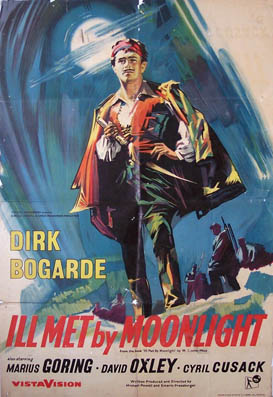
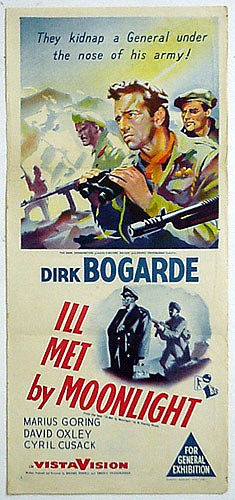
Ill Met by Moonlight film review

Ill Met by Moonlight movie poster

For a decade and a half, the partnership of Michael Powell and Emeric Pressburger illuminated the cinema with an array of extraordinary films. But the massive reputation the team garnered during and immediately after World War II – The Life and Death of Colonel Blimp, A Canterbury Tale, I Know Where I’m Going!, A Matter of Life and Death, Black Narcissus, and The Red Shoes in just five years! went into steep decline in the Fifties. There were no Archers films at all between The Tales of Hoffmann (’51) and Oh… Rosalinda!! (’55), and both of those were disastrous failures, critically and financially. Perhaps to cover themselves in the ultraconservative British film industry, Powell and Pressburger finished their partnership with two conventional war adventure movies – rattling good yarns that, alas, were widely perceived as rattling just a bit too much.

First published in Film Comment 13th March 1995 v 31:n2. p37(4)

The Battle of the River Plate (’56) was a box-office success and had a royal premiere, but it now looks like the corniest of the Archers movies. An account of Britain’s first major naval victory of WWII, it does have the great virtue of showing actual ships maneuvering about in an actual ocean instead of models in a tank – Powell’s main pleasure in directing the movie, one imagines. But this is exasperatingly offset by far too many shots of actors on studio bridgehead sets being doused with water as they strike poses in front of a cyclorama. The local color Powell provides is a bit sticky, too, given that Uruguay, where the German battleship Graf Spee was forced to seek shelter before being tricked into self-destructing, was and still is a nation notorious for its concealment of Nazis. Peter Finch, as the captain of the Graf Spee, manages an impressive performance, but none of the other actors in a lively cast Anthony Quayle, John Gregson, Patrick Macnee, Anthony Newley, Christopher Lee, John Schlesinger in a bit as a German sailor – has much chance to create a real person. The Germans are all decent fellows, really, whilst the characterization of the Brits is entirely on the level of good-show-chaps caricature.

Powell seemed rather attached to this movie in later years, but had no love at all for the very last Archers film, Ill Met By Moonlight (’57). “I felt imprisoned by the facts,” he was wont to complain; and there were problems with the script Pressburger provided. Ian Christie’s book about Powell, Arrows of Desire, goes so far as to refuse to list the film as a collaboration at all, his filmography (reproduced, incomplete and inaccurate as it is, in Powell’s memoirs) giving Powell’s name alone as writer, producer, and director. Dissension between Powell and Pressburger coincided with antagonism from the Rank Organisation, which refused them money for color. Once the film was finished, so were the Archers.

After Ill Met By Moonlight, then, the deluge. It would be foolish to suggest that the film – miserably renamed Night Ambush for U.S. release and cut by 11 minutes – is anywhere near the level of the team’s masterworks. Even so, it’s more interesting than legend suggests. The (true) story, set in occupied Crete in 1943, concerns the kidnapping of a German general (Marius Goring) by Cretan partisans led by a British officer, Patrick Leigh Fermor (Dirk Bogarde). Film buffs will recall that the real Leigh Fermor was one of the scriptwriters of John Huston’s The Roots of Heaven (also the author of some bestselling travel books). Then again, the film seems to ask, who exactly is the “real” Patrick Leigh Fermor – or the real anyone? Taking its title from a play concerned with dreams and disguises, magic and power, Ill Met By Moonlight is all about questions of identity.

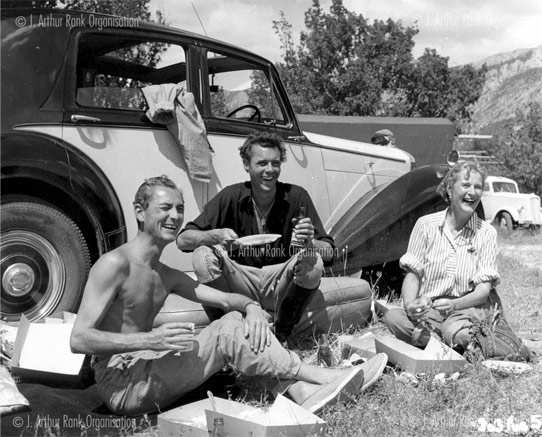
Xan and Daphne Fielding with Dirk Bogarde on the set of Ill Met by Moonlight

Under the credits, we see Dirk Bogarde in uniform; then, unexpectedly, we see him in the flamboyant outfit of a Cretan hill-bandit. A title informs us that Major Leigh Fermor was also known by the Greek code-name “Philidem.” In other words, there are two of him (at least), and on one level the adventure the film is about to unfold reflects a conflict in his personality. It’s a conflict shared, unknowingly, by his Nazi opposite number, the fierce, arrogant General Kreipe (an unlikely “proud Titania,” but it’s true that he “with a monster is in love” – the monster of Nazism). Kreipe’s human side is so rigorously repressed by the demands of war and “glory” that he is genuinely unaware of it; ironically, this humanness, which constitutes the true manhood of this Teuton warrior, is revealed by a boy (equivalent to Shakespeare’s Indian Prince?) – who, in turn, is the most grownup person in the movie.

Ill Met by Moonlight movie poster - Bogarde as Paddy the flamboyant Cretan

If “Philidem” appears under the credits, caped and open-shirted, a romantic dream-figure out of an operetta or a storybook, he is first seen in the film proper as a coarser, more down-to-earth version of the same thing – an ordinary Cretan peasant in a shabby suit, waiting for a bus. When he makes contact with the Resistance, his personality fragments further. To some, he is the mystical Philidem, Pimpernel of the Hellenes and righter of wrongs. To others he is “Major Paddy,” the happy-go-lucky Englishman of popular movie myth conducting war as if it were a branch of amateur theatricals, a gentleman adventurer relying on breeding to get him through and making fun of the whole business. To Bill Moss (David Oxley), the newly arrived junior officer sent to assist him, he is the cool, fast-thinking professional soldier. And to himself? In his quietly passionate defense of Cretan life and culture, he seems someone else again: a scholar and aesthete outraged by the barbarism and folly of war, and by the moronic arrogance shown by his captive toward the Cretan people.

Whatever his persona, Leigh Fermor is a chameleon who never seems to change very radically in himself. Perhaps because he has this quality of seeming all things to all men – and being those things – he remains unfazed by the monolithic might of the German military machine. Fluent in Greek, he can also speak German like a German and is easily able to assume another disguise, that of a faceless Nazi officer. Although he and Moss make fun of themselves – “If only I had a monocle!” muses Moss when Leigh Fermor tells him he “looks like an Englishman dressed like a German, leaning against the Ritz bar” – they are able to effect the kidnapping with an ease that seems appropriately Puckish. General Kreipe is ignominiously thrust onto the floor of his own limousine, gagged, and sat upon by a couple of the peasants he so despises. Kreipe’s rage is compounded by his firm conviction that he has been snatched by “amateurs” – a belief Leigh Fermor and Moss slyly make no objection to, knowing how it will gnaw at his already shaky Master Race self-confidence.

Soon, partisans and captive are up in the hills, where they stay for most of the movie (though the biggest of the film’s mountaineering set-pieces, a nocturnal descent through fog, was filmed on elaborately stylized studio sets). Once there, Kreipe determines to leave a trail for following German troops to pick up on – his cap, buttons from his uniform, even a couple of medals from his impressive display of such baubles never realizing that each emblem of his authority is no sooner dropped than it is retrieved by the vigilant Moss.

Rare Ill Met by Moonlight movie poster

Among Major Paddy’s partisans is a young war orphan, Nico, who has, while shinning up and down the mountains, much occasion to complain of his need of a pair of boots. Nico knows that the cost of a new pair will always be far beyond him; Kreipe, who has been friendly enough toward him in a rather patronizing way, seizes on this need by showing the boy his own impressive footwear and offering a gold coin with which to buy an identical pair. A German gold coin, he stresses, not one of the sovereigns Leigh Fermor keeps a supply of; it is, in fact, a coin the General is known to keep as a good-luck charm. Nico is impressed by the General’s largesse. But, of course, the Nazi requires a quid pro quo. All Nico has to do, when he goes down the mountain, is tell the searching German patrols where the General is, using the coin as a bona fides. But Kreipe has misjudged the boy (indeed, he can be said to have misjudged the whole of the human race): it never occurs to him that the boy will not do what he says. What Nico actually does is simply point the patrols in the wrong direction, leading them into an ambush; the magic gold coin is lucky for the Greeks, not the Germans. This makes the escape from Crete of the Britishers and their ill-met prisoner the easiest part of their long journey.

Once aboard a British ship, and naked of the symbols of military power, the General seems a new person – not such a bright man, not such a strong man, but also not such a bad man, either. He is visibly moved by the return of his possessions, especially the gold coin: despite his genuine pleasure in Nico’s company, Kreipe had assumed that the boy, like every non-German, is someone who can be bought and sold, and that “friendship” had been merely his gift, and not a privilege from which he might derive spiritual benefit rather than tactical advantage. The very simplicity of Nico’s ruse in deflecting rescue was the, final humiliation, the last stage in General Kreipe’s lengthy symbolic disrobing – which is precisely why his possessions can now be given back to him. If he started this modern midsummer night’s dream as imperious as Oberon, he ends it as foolish as the donkey-headed Nick Bottom. But then, Bottom the simple weaver is always better-liked by everyone than the unearthly and tyrannical monarch of Shakespeare’s enchanted forest.

And from his elaborate humiliation, the stiff-necked German learns a good deal about himself and about humanity. His curt acknowledgment at film’s end that he has been kidnapped not by amateurs but by professionals is also his acknowledgment of his own fallibility and that of the creed he has so proudly espoused. And so he regains a measure of dignity, along with those tokens of an identity he no longer needs. Nico himself get his new pair of boots after all (they belong to Leigh Fermor, who is barefoot in his final exchange with his prisoner), but, by a sad irony, is about to change identity as well: he will wait out the rest of the war far away from Crete in the distant England of which he has heard much but knows nothing. But at least he has a friend – a real friend, now – in General Kreipe, who has learned that the respect of an uneducated boy is worth more than a medal from the Fuhrer. “Gentles, do not reprehend / If you pardon, we shall mend.”

And Patrick Leigh Fermor, aka Major Paddy, aka Philidem – and, if you stretch your imagination just a smidge, aka Robin Goodfellow? – what of him? In the film’s closing moments, he is far from being self-assured intellectual or dashing amateur adventurer or legendary outlaw of the hills. He’s just a tired man who wants to go home and rest up. “How do you feel?” asks Moss. “Flat” is the reply. “You look flat!” says Moss. “I know how I’d like to look …” murmurs Leigh-Fermor wistfully. Moss knows what he’s going to say, and joins in the litany: “Like an Englishman dressed like an Englishman – and leaning against the Ritz bar!” It’s easy to imagine them ordering drinks at that renowned watering-hole with all the suavity required by this little fantasy. Still, the film’s last images of Crete receding in the distance, until all we can see is the sea, suggests that maybe Major Paddy’s heart is really back in those hills in the “fair and fertile” land that has become as much a Powellian landscape of the mind for us as the studio-built Himalayan convent of Black Narcissus or the monochrome Heaven of A Matter of Life and Death. And, as we depart both Crete and this film, we may reflect that being “dressed like an Englishman and leaning against the Ritz bar” would, for Patrick Leigh Fermor constitute yet another disguise. After all, he was Irish.

… now watch the movie trailer.

Ill Met by Moonlight

Related articles:

Patrick Leigh Fermor recounts the kidnap of General Kreipe on video

General’s long trip home

Gone for a walk in Greece

“YOU had better look out if you are going up to Anavriti.” The familiar words sound wonderful when spoken aloud in this cavernous, haunted and as yet sunless gorge. I repeat them, savouring their powerful energy.

Suddenly, I picture the streets of “roasting Sparta” and the Greek barber who, encouraged by his colourful customers, issued the warning as he clipped the dusty hair of a man now regarded as one of the world’s finest travel writers.

The barber’s words subsequently provided the opening salvo of what many believe is the best book in English about Greece.

by Ian Robert Smith

First published in The Australian 30 July 2011

Published in 1958, Patrick Leigh Fermor’s Mani: Travels in the Southern Peloponnese is a dense, erudite and hugely entertaining account of the author’s peregrinations in a region that, at the time, was remote, untamed and singularly archaic. Mani is also, more broadly, an affectionate portrait of a rural Greece where centuries-old customs were fast disappearing — “hammered to powder . . . between the butt of a Coca-Cola bottle and the Iron Curtain” — and for which today’s traveller hunts in vain.

I, too, am going up to Anavriti. And like Leigh Fermor when he came this way with his partner (later wife) Joan in the mid-1950s, I intend to use the village, perched on a spur of the Taygetos range, as a stepping stone into the Mani.

A battered copy of Leigh Fermor’s book resides in the top flap of my rucksack, both talisman and inspiration. Handily within reach in the side pocket is the Anavasi map of the region. Its bundled contours, crossed by the black-dotted lines of footpaths, reflect the momentous regions that await overhead.

Rich in myth and history, the Taygetos dominates the Spartan plain over which it looms like an impenetrable barrier. The northern foothills rise in the wilds of Arcadia. They shoot upwards into a vast, serrated ridge that culminates in the peak of Mt Profitis Ilias — at 2407m, the highest point in the Peloponnese — before dropping away through the Mani Peninsula.

Foothills clad in oak, hornbeam and black pine and daubed with villages buttress the eastern slopes. But the west is wild. Ancient gorges provide means of egress into this planetary world.

Some say this gorge is where the ancient Spartans left unwanted children to die. The rumble of plunging water resounds along its length.

In a large cave, a frescoed chapel, painted ox-blood red, crouches among icons and vases of the white Madonna lilies that grow wild on the slopes. Climbing further, past a sudden and terrifying drop, a curious sound wafts towards me; incoherent initially, it develops into an ethereal chanting that, echoing off the cliffs, sounds strange and beautiful in this wilderness. Bewilderment turns to rapt appreciation as I recognise the monks at Faneromeni Monastery, high above, conducting a Sunday morning service.

Beyond the monastery and a couple of antique threshing floors, Anavriti appears. Dwarfed by the glittering and snow-streaked Taygetos, several belfries and a cluster of stone houses adorn a hillside plumed with walnut, plane and cherry trees.

Not so long ago Anavriti had a thriving tanning and leather-goods industry and a population of several thousand. Nowadays, like most mountain villages in Greece, it is barely inhabited.

I amble along the main street, seeking wide balconies reached “by boxed-in staircases on wooden stilts”. In one such edifice, Leigh Fermor and Joan spent the night. Something similar faces a solitary taverna. Light-headed at finding myself in Anavriti at last, I lunch on spaghetti with rooster and abundant rose wine and, as a jovial crowd materialises, observe clouds thickening around the mountaintops. The taverna owner shrugs when I inquire what they portend, then asks, unhelpfully, whether I have a raincoat, before advising: “Go towards the good.”

This I attempt, only to become drenched, then unpleasantly steamed when the sun reappears, conjuring wondrous aromas from the glistening earth. The experience is chastening and, toiling upwards through fir forest, I conclude that following in the footsteps of literary legends can be tricky. Writing in Mani, Leigh Fermor gives fair warning.

“Feet became cannonballs,” he recounts, “loads turned to lead, hearts pounded, hands slipped on the handles of sticks and rivers of sweat streamed over burning faces and trickled into our mouths like brine.” I arrive, similarly challenged, at the author’s “unattractively alpine wall of mineral”.

It is the flank of Spanakaki Peak and also a crossroads. Intent on the Mani, Leigh Fermor bypassed Profitis Ilias and headed off to the right. Determined to tackle the summit, I veer left, up over a spur with a derelict sheepfold and across a meadow that, as thunder rumbles and rain buckets down, tilts vertically to the watershed. I reach this, hand-over-foot, but discover the view of the Messenian Gulf beyond obscured by thick mist breaking over the ridge.

Visibility shrinks to nothing as I’m engulfed, precipitating a tedious descent, followed by a forced march to the EOS refuge, where I meet a group from Athens who provide food, wine and spirited conversation. Occasionally the talk turns to Greece’s economic troubles and, predictably, as these are young people from the capital, nearly everyone has a sobering tale. They are related simply, without rancour and often with humour; but beneath the levity, disappointment and uncertainty are palpable.

The evening proves unexpectedly affecting and our farewells the next day, when I renew my assault on the summit, are heartfelt. I ascend through meadows thick with ferns, thyme and wildflowers, which give way to barren, stratified limestone, before an opening leads over the watershed. It might well be a door into another world.

Jagged pinnacles roll away to the north. Westward, rumpled slopes sundered by ravines plunge to the shores of the Messenian gulf. Silence reigns. Nothing moves except the clouds rolling across the peaks. I climb through them, tentatively over scree, on to a desolate platform scattered with stone huts and a roofless chapel dedicated to the prophet Elijah and crammed with icons, melted candles and votive offerings left by midsummer devotees.

The moment evokes a heady elation, tempered by disbelief that I am here, alone, atop the Peloponnese. Finally the sight of Kardamyli, fathoms below, reminds me it is time to catch up with Leigh Fermor. A headlong descent begins. Nightfall finds me in the Viros gorge. It is the ancient route to the coast: a massive, 14km-long canyon enclosed by fir-tufted cliffs and paved with boulders worn smooth by winter torrents, and not particularly restful.

Escaping next morning to Exochori, I locate a small chapel with a battered turret astride cicada-haunted olive terraces looking out to sea. In this lovely place, appropriate for a man who wrote so beautifully, the ashes of author Bruce Chatwin are scattered. I pause to pay my respects.

Kardamyli appears, its blond towers jutting above the sea. A cobbled path curls below the ancient acropolis. Nearby, adjacent to the reputed tombs of Castor and Pollux, I fall into conversation with a friendly English couple. Inevitably the name of Leigh Fermor comes up. We are speaking of the blood feuds in Mani when the woman says abruptly: “We’ve heard the funeral is on Thursday.”

Seeing my uncomprehending look, she adds, “You didn’t know? Paddy died last week.”

It was the day before I set out, ostensibly in his footsteps. The news fills me with sadness coupled with bewilderment at the workings of providence. I enter Kardamyli in a valedictory mood, passing through an arched gateway into a dusty square flanked by byzantine towers and a church.

In Mani, Leigh Fermor writes that Kardamyli was “unlike any village I had seen in Greece”. He and Joan loved it so much that they returned several years later and built a house in an olive grove.

Kardamyli remains laid-back and relatively unspoilt, with a long pebble beach, pretty stone houses, a small fishing harbour and friendly people. It is popular with trekkers who tackle the hinterland trails. But my walking days are over for now and my stay is marked by restlessness and an odd nostalgia. Each morning I swim to the wooded islet with the fortified wall and ruined chapel, a few hundred metres offshore. I scribble in cafes, drink with other travellers and dine out every night, once at Lelas, the waterfront taverna owned by the woman who was Leigh Fermor’s original housekeeper. Everyone, it seems, has a Paddy story to tell.

One morning, a strange impulse takes me. Just outside town, a path leaves the road and winds downhill through olive groves throbbing with cicadas. It continues, away from recent development higher up the slope, into a wilderness of trees and yellow grain fields where I pass a whitewashed chapel and, just beyond, a long stone wall, above which a mottled tile roof protrudes. Finally I come to a beach.

It lies just over the rocks, a hermetic cove enfolded by cliffs. A shiver sweeps through me when I realise: this is the place. Pushing through a wooden gate marked Private, I climb a stone staircase that zigzags up to a sprawling garden. Olive trees bestride ancient terraces.

The aromas of rosemary and cypress mingle in the hot, pulsating air. Paths of pebble mosaic thread between judiciously placed tables and benches of slate and a rambling house, built of golden stone, empty now, yet with the accumulations of a long and abundant life in place. An air of recent abandonment prevails. Leigh Fermor died in England.

Standing on the clifftop, beside one of those tables where so many delightful moments must have unfolded, I gaze out past the island to the distant peninsula, a smudge on the horizon. An age passes before I tear myself away.

Patrick Leigh Fermor’s Mani: Travels in the Southern Peloponnese was first published in 1958. The acclaimed war hero and travel writer died on June 10, aged 96.

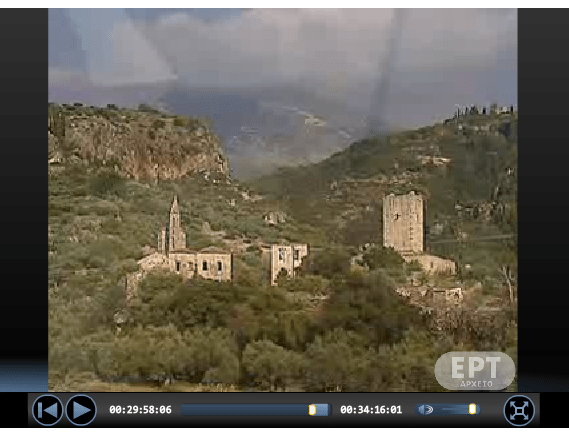
Paddy talks about his home in Kardamyli and the Mani

I doubt this has ever been seen outside of Greece. This video of Paddy is taken from a Greek TV documentary from 1999. We see scenes of Paddy working over his manuscripts, views of the library, dining room and the garden. He talks of his home and the Mani.

I am truly indebted to Nicolas Paissios for sending me this – and there is more to come 🙂


 Click the image to play. Let it run for a while and you will be taken on a journey to Paddy’s house.

Slightly Foxed by Roumeli

There are many keen Paddy bloodhounds out there who send me articles and information about Paddy that I would never find. One such is Hector Parra from Santiago in Chile who has sent me a number of interesting pieces, and this is the latest from London based ‘Slightly Foxed‘ which describes itself as:

“… a rather unusual book review. Friendly and unstuffy, with 96 pages of lively  recommendations for books of lasting interest – books that have stood the test of time and have left their mark on the people who write about them. An eclectic mix, covering all the main categories of fiction and non-fiction. Our contributors are an eclectic bunch too. Some of them you’ll have heard of, some not, all write thoughtfully, elegantly and entertainingly.”

You can give the review a try by clicking here. They also have a bookshop which looks like just the place to spend an hour or so browsing.

On the website they have re-published an article by Tim Mackintosh Smith about Paddy’s Roumeli: Travels in Northern Greece from issue no. 2 of Slightly Foxed (published June 2004) …

by  Tim Mackintosh Smith 

The only time I have been to Greece as it appears on the modern map was when I was barely out of short trousers. I went with that indispensable aid to travel, an aunt, and with the idea that I knew quite a lot about the place. My aorists and iota subscripts, however, were useless; that crucial moment for quoting Simonides on the dead Spartans never turned up. Even the sights were an anticlimax – bones of buildings, hordes of charabancs; the glory that was.

Sex had not yet reared its head, so I didn’t have that distraction. But I remember two other excitements. One was retsina, in unsuitable quantities, the other an experience in Athens when I wandered off alone. There was a demonstration; something, I imagine, to do with collapsing Colonels. It sucked me in and swept me along – bewildered at first, trying to catch hold of something familiar, then encouraged by smiles and guiding hands – until I fell in step, into the rhythm, and ended up chanting with the best of them. When the procession dispersed, having gone nowhere in particular, I was lost, thrilled and intoxicated.

Roumeli had the same effect when I first read it a dozen or so years later; it still does, reading it again another couple of decades on. One is drawn in and immediately disorientated. Who is the outlandish figure in a hairy kilt and hobnailed Ali Baba boots who takes us into the first chapter? A Sarakatsán nomad, apparently . . . The appendix on these people gleefully offers sixteen conflicting derivations for the name. Casting around for the familiar, I plumped for ‘Saracen’, for many features of Sarakatsán life rang bells: the poetry about Turkkilling, for example; the public exposition of bloodied nuptial bed linen; the censing of mothers after birth with nasty-smelling smoke. There were more, and all may be found in the bottom corner of Arabia where I live. But what about the wearing of clothes back to front as a sign of mourning? I had come across that, too – in an account of fourteenth-century Luristan. It was all a long way from the Parthenon.

In fact it is, as Patrick Leigh Fermor admits, off all the standard maps. So too is Leigh Fermor. In 1933, aged 18, he set out to walk from the Hook of Holland to Constantinople (a journey which remains in a sense unfinished, for the third volume of his account of it has yet to appear). During the Second World War he took part in covert operations in Albania and in Crete, where he planned and carried out his celebrated abduction of the German General Kreipe.

He has written on places and subjects as various as the Caribbean and monastic life in Normandy. But Greece is his passion, and for nearly forty years he has lived there on the Mani, the middle prong of the Peloponnese.

Mani, his brilliant wanderings on that peninsula, deliberately involved the reader in ‘the luxury of long digression’. Digressions presuppose progression; in Roumeli – Mani ’s successor, which rambles Greece north of the Gulf of Corinth – there is none. The book visits the hills of Thrace, the monasteries of the Meteora, the cafés of Athens, the scene of Byron’s death at Missolonghi and the parched ravines of Aetolia. But these visits form no greater journey. They are disconnected probings into unknown corners, an odd-and-end odyssey, and the result is a collection of essays, a mézé of red herrings.

There is a ‘main theme’, we are told in the Introduction; but that theme, Leigh Fermor confesses, is ‘a private theory of my own’. The theory – ‘The Helleno-Romaic Dilemma’ – suggests, at some length, that the Greek psyche is a zone of perpetual conflict between the glory that had been Athens and the sorrow that was Byzantium (we can probably now add a third antagonist, the bore that is Europe). All late-night, third-bottle stuff, and hardly the normal matter of A-to-B travel books. But the delight of it all is that, via these disjointed jaunts around the mainland interspersed with mini-cruises in the glittering archipelago of Leigh Fermor’s mind, we get to know a lot about Greece.

The mind, like the land, never fails to surprise – with ideas, and with anecdotes. The one about getting thrashed at billiards by Byron’s ancient great-granddaughter and the subsequent hunt for the poet’s slippers has been deservedly anthologized. But there are more private memories as well, wartime scenes sharpened by danger, polished by moonlight, tempered by time. He recalls an earlier battle too ‘(which I had watched from an empty stork’s nest in the top of an elm)’. I envy him those nonchalant brackets and, even more, that surreal vantage-point. It is also one he adopts when writing, some mental equivalent of the stork’s nest that enables him to see things through to their illogical conclusion: ‘It was a wonder, I thought, as we rocked along under that burning-glass of a sky, that the curling tobacco leaves didn’t catch fire and smoke themselves there and then.’

The Greeks certainly had a word for Patrick Leigh Fermor: idiosyncratic. (Although there is, as it happens, a precedent for the tobacco conceit. The fifteenth-century Persian traveller Abd al-Razzaq noted that, as a result of the intense heat in Oman, the chase became a matter of perfect ease, ‘for the desert was filled with roasted gazelles’.) If idiosyncrasy cannot by definition be imitated, it can certainly inspire. It was another traveller, Freya Stark – whose publisher was also John Murray – who lured me to Arabia over twenty years ago, but it was Patrick Leigh Fermor who led me to write about it. He will keep me writing, and always envious. The works of Freya and the other great twentieth-century travel writers may capture genius loci; in Roumeli and its companions there is something more, unconnected with place – genius libri.

The one thing I envy Leigh Fermor more than any other is his sounds: the sound of names (‘names to make the hair stand on end’; Learish names – where is the Akhond of Swat beside Polycarp of Trikke and Stagoi?); the rhythm of lists; above all, non-verbal sound. In his final chapter, ‘Sounds of the Greek World’, all three come gloriously together in an aural gazetteer of the land he knows inside out and loves to distraction. It goes not from A to B but from A to Ω, dissolving along the way into poetry. It is impossible not to fall into the rhythm and emerge intoxicated.

It is also hard, now, not to wonder what remains of Roumeli: whether the Meteorite monks still cling to their rock pinnacles and the Kravarites of Aetolia remember the old beggars’ jargon; whether the Sarakatsáns, who led us into this unexpected landscape, still live between their summer and winter pastures. Transhumant, tented nomads in the EC? Perhaps only ghosts are left, and this book.

The man who fell for Mani’s charms

Patrick Leigh Fermor in Greece in 2001. (Thanassis Stavrakis/Associated Press)

Travel writer Patrick Leigh Fermor, who died last week, called this Peloponnese peninsula home. Andrew Eames makes a pilgrimage.

By Andrew Eames

First published in The Independent, 18 June 2011

Somewhere about 100km beyond ancient Olympia I chucked my navigator out of the window; figuratively speaking, of course. She’d long since lost touch with reality, telling me to do U-turns and take sharp lefts where such things would only have ended in motorway carnage. Underneath me, the A7 unrolled its great tongue of Tarmac imperturbably towards Kalamata and yet she would have had me off the road and into the goat tracks among the prickly pears, so I gave up on her, imagining her left behind, sitting on a rock, still insisting that I recalculate my route.

I had another reason for wanting to enter the Mani peninsula, that middle finger of the southern Peloponnese, without the insistent voice of an out-of-date GPS. I was following the trail of a British writer who had been inspired and nourished by this once-wildest and most isolated region of Greece for well-nigh 50 years. Patrick Leigh Fermor hated wirelesses. He wrote in his book Mani: Travels in the Southern Peloponnese, that he “dreaded the day when the metalled highway would appear through the hills blocked by a column of motorlorries each of them loaded with a howling menagerie of wireless sets for the silent Mani.”

That’ll be me, then. So the silencing of my (wireless) navigator was a tribute, in a way, even though Leigh Fermor himself had just left.

I have long been an admirer of Leigh Fermor, who until his death last week at 96 was, in my opinion, Britain’s greatest living travel writer. My most recent book, Blue River Black Sea, was a journey made partly in his footsteps down the length of the Danube, and it had always been in my plans to make a trip to the Mani sooner or later, with the hope that I might get to meet the great man in his “perfect writer’s house” down by the sea beside Kardamyli. Tragically, I was a couple of days too late, so my journey became something of a pilgrimage instead, a celebration and a comparison between the Mani that Leigh Fermor wrote about in 1958, and the Mani of today.

When Leigh Fermor, with his wife Joan, first crossed into the Mani, he had done so on foot led by his navigator, a taciturn goat-herder called Yorgo, who took him up over the barrier of the Taiyetos mountains, through a “dead, planetary place, a habitat for dragons”, an inferno of rocks whose only living organisms survived “on a memory of water”.

Historically, the Mani’s very inaccessibility had made it an enclave of refugees, feudal villages, vendettas and turf wars. Its rugged infertility meant agriculture was virtually impossible, so its inhabitants tried their hand at everything from piracy to slave trading in order to survive.

For Leigh Fermor, that isolation translated into what he called “an Elysian confine” from the moment he first arrived in Kardamyli, a castellated hamlet on the edge of the sea “whose quiet charm grew with each passing hour”, which became his home. He believed he had found a place “too inaccessible, with too little to do, for it ever to be seriously endangered by tourism”. I would have liked to have asked him if he ever regretted that sentence.

Crossing the Taiyetos today is still something of an ordeal – if you are a car. The A7 fizzles out at Kalamata and it falls to a nimble-footed minor road to try to avoid the worst the mountains can do. The reward for getting through is an eagle’s view of the Mani, across mountains that tumble to the sea, with villages as barely-tolerated ochre encrustations on their elongated toes.

The English have bought houses here, undoubtedly some of them partly due to Leigh Fermor’s book. Package tourism has been drawn inevitably to the village of Stoupa, 7km south of Kardamyli, by the presence of a perfect horseshoe-shaped beach, but it is package tourism in its more restrained manifestation, and very contained.

Just along the coast, tourism is more select and discreet at Agios Nikolaos, a fishing harbour bobbing with caique boats, where the morning recreation is watching the fishermen return and set out their catch beside the harbour wall, a wall that will be lined with fish-restaurant tables when the sunset comes.

Kardamyli itself is not that much changed, largely thanks to its lack of beach; the 17th-century fortress houses are still there, in a more or less tumbledown state and the rest of town is a peaceful web of cobbled lanes, vegetable gardens, and balconied stone houses whiskered with vines and bougainvillea.

Tavernas line the shore, including one run by Lela, Leigh Fermor’s veteran housekeeper. The great man’s property itself, down by the beach at Kalamitsi, 1km south of Kardamyli, is no longer alone, but newer buildings maintain a respectful distance.

There’s talk of turning it into a museum, because the writer was as much revered in local life as in the wider literary world. “We called him Kyr Michalis,” says George Giannakeas, Lela’s son, who grew up as a little boy in the writer’s house. “He used to walk into Kardamyli every day to get the papers, often completely lost in his thoughts.”

I catch up with George as he is readying himself for the journey to the UK for the funeral, so I put the question to him: would Leigh Fermor have regarded the modern Mani as spoilt?

“He didn’t like the changes, but he never criticised. He could understand that everyone needed to benefit. If he didn’t approve of something, he would make positive suggestions. Lots of people spend one or two years here then start complaining, but he would never do that. He could sit and talk to anyone about anything. One of his best friends here was the petrol pump attendant. Every year he invited the villagers to his house for his name day, as he did this year, too. He will be sadly missed.”

Even into his 90s Leigh Fermor remained a great walker, said George, so partly out of tribute to him I tackled a couple of the local trails. From Kardamyli up to Agia Sophia, on a well-made path up through cicada-rich olive terraces, with the shoreline opening up below. And then up the Nupati Gorge, a resinous, scented ravine where I had to walk bent double much of the time, scrambling through ankle-snapping rocks the size of elephant’s skulls, a quick reminder of just how tough it was to move about before the days of roads.

Plenty of early- and late- seasonvisitors do a lot of walking here; the views are magnificent, the landscape pungent with ancient sweat. At this time of year, however, the heat is oppressive, the going too tough to be anything but an ordeal. Far better to stay in the sea breezes and read a good book. If you do, there’s one author I’d recommend.

Maggie Rainey-Smith’s tribute to Sir Patrick Leigh Fermor and her 2007 meeting

Please read Maggie Rainey-Smith’s tribute and further thoughts on her 2007 visit to Paddy’s house in Kardamyli.

The article includes some lovely new photographs, including pictures with Paddy inside his house

Mount Athos: A visit to the Holy Mountain

In February 1936 the young Patrick Leigh Fermor walked along the peninsula that we know as Mount Athos. It was there he celebrated his twenty-first birthday with Russian Orthodox monks. In 2011 the CBS ’60 Minutes’ programme gained access to the Holy Mountain, the first television since 1981. Here is a unique opportunity to take a wider look at the community and beauty of Mount Athos which made such an impression on the young Paddy.

Bob Simon steps back in time when he gets rare access to monks in ancient monasteries on a remote Greek peninsula who have lived a Spartan life of prayer in a tradition virtually unchanged for a thousand years.

The programme is in two parts and if you are dedicated and clever, there are many other ‘extras’ – I have provided some links below. Enjoy!

Part One:

Part One

Part Two:

Part Two

Transcript of Parts One and Two

Extras:

Behind-the-scenes travelogue to holy Mt. Athos

Mt. Athos’ autonomy

Bastions of the Orthodox faith

Extra: Don’t call it art!

Life on Mt. Athos


Tracing a writer’s journey through Greece

There are many authors of articles that stake a claim to follow in Paddy’s footsteps (I have even written my own!), but I never tire of the new perspectives that people bring to these places, some of which I doubt I will ever have the time to visit. They also are standard bearers for Pay’s work, bringing his wonderful work to the attention of a new generation who may be inspired by the man who is The Greatest Living Englishman.

First published in The Boston Globe, October 17, 2010

By Heidi Fuller-love

Areopoli (above) is a tiny town in Greece that helped inspire author Patrick Leigh Fermor to write “Mani.’’

KARDAMYLI, Greece — Named for Phrygia’s mythical king, Pelops, who is said to have conquered this savage region before his father had him chopped to pieces and fed to the gods, the Peloponnese region stretches a fat hand out from the bottom of Greece and points bony stone digits toward the Cyclades, Turkey, and Crete. “When God had finished making the world he had a sack of stones left over and he emptied it here,’’ the Maniots are fond of saying.

Passionate philhellene Patrick Leigh Fermor, the Irish adventurer-turned-travel-writer played by Dirk Bogarde in the classic war opus “Ill Met by Moonlight’’ (later called “Night Ambush’’) visited the middle “finger’’ in the 1950s . Impressed, he wrote “Mani,’’ his fascinating account of a journey by foot, mule, and “caïque,’’ or wooden boat, to the heart of this arid peninsula cut off from the world by the Taygetus mountains and dotted with stark stone towers inhabited by fiercely feuding locals.

Hiring a car at Kalamata to follow in his footsteps, I arrive 60 years later, via lush countryside spiked with cypress spears, at Kardamyli, where Fermor settled with his wife, Joan, after his Mani adventure. Fermor, now in his 90s, still lives in the pretty village that was once a major Spartan port.

Giorgos Giannakeas, the son of Lela, Fermor’s former housekeeper, runs a seaside taverna. He tells me that the sprightly writer is often seen striding down the main street lined with driftwood-decorated cafes. “Our village attracts hikers who come to climb the peaks of Taygetus mountain range, but our main visitors are British people who come seeking the great man,’’ he says, doling out a fragrant ladle of Lela’s moussaka .

Half an hour’s drive from Kardamyli, the tiny harbor of Gytheion, once the main seaport of ancient Sparta, bears little trace of its former glory. Worn marble steps climb to a warren of alleys where cats prowl hungrily and storekeepers sell feta cheese from grime-rimmed buckets.

Unable to feed their families, countless Maniots traveled from here to find work in the New World at the turn of the 20th century. “Our fathers had no choice. It was that or die of hunger,’’ says Zafeirakos Zafeiris, who owns a hotel overlooking the Laconian Gulf.

On leaving the port, they would have passed the Kranae peninsula where Paris and Helen shared that epic night of love whose belated climax was the Trojan war. As the sun descends over this weed-blown strip of land, fishermen beat squid like laundry and ink spurts out, staining the rocks.

Gateway to the Mani, Gytheion signals a dramatic change in scenery. Climbing steeply into the fierce sun, my rental car groans and spews clouds of cheap Greek diesel. At a gas station where I stop to fill the tank, pump attendant Adonis Grigorakakis, who, like many Maniots, grew up in the United States, tells me. “The thing you have to understand is it’s all mountains here, see? The only way you could get to one of the villages here was with a boat. And it was like that right up till, say, 20, 30 years ago.’’

I climb higher until the sea looks like shards of a broken mirror and I’m surrounded by scree-strewn slopes spiked with purple-flowered thyme where scrawny sheep, their udders ripe with the raw substance of the pungent local Sfela cheese, jingle fist-sized bells. It is the bleak scenery described so lovingly in Fermor’s book.

Just outside Areopoli — named for Greek war god Ares, I spot my first “pyrgospita.’’ Tall and square, these eyeless towers were once strongholds for a vendetta-loving local aristocracy. “Feuds lasted for centuries and were ended either by the destruction of a whole family in battle, or by the surrender of an entire clan who were then required to kiss the hands of the victors who had lost ‘guns’ (male children) in the battle,’’ a leaflet at the village’s eclectic war museum explains.

When Fermor arrived in Areopoli 60 years ago sporting rucksack, shorts, and a charmer’s grin, he met people who had never seen anyone from outside the Mani before. Nowadays, this atmospheric jumble of towers and tavernas woven together by skeins of bougainvillea attracts a multinational rag-bag of visitors who stop for “meze,’’ or snacks, before visiting the Diros grotto, a subterranean wonder world of salmon stalagmites sheltered in a booming sea cave beneath the village.

Vathia, farther along the coast, has changed too. The lively village where Fermor was teased by a shepherd girl is a ghost town where one or two renovated pyrgospita glitter, amid a brooding huddle of ruined towers. I peek into one of them. Cramped as a windmill, dank as a cave, it’s easy to imagine the misery of those feuding families who, as The Earl of Carnarvon reported in 1839 : “. . . have been born and married, have lived for 20 or 30 years, and in some cases . . . have even spent their whole lives within the enclosure of these gloomy walls.’’

High above a deeply indented coastline littered with shrines erected in the memory of those who lost control of their vehicles on these perilous roads, I reach the mule track leading to the remains of the Temple of Poseidon where sailors, about to round the dangerous Cape Matapan, once prayed for a safe passage. One of the mythical entrances to the Underworld, this is where Fermor ended his trip.

As a wind shrieks across the Taygetus’s scrub-covered shoulder blades, I contemplate the darkening stretch of sea where Fermor came in a caïque more than half a century ago. I imagine him jumping overboard and swimming into the tiny cave in pitchy blackness, hands feeling the splintered walls, seeking the crack that led down to Hades, and I suddenly feel very cold.

In the gathering gloom I drive back to Areopoli along a road lighted only by the flickering candles of accident-victim’s shrines. Entering a taverna I order Fermor’s favorite tipple as a pick-me-up.

Raising my tumbler of Retsina I drink a silent toast to the man who braved the capture of German General Kreipe during WWII, but was perhaps braver still in choosing to settle in this stunning, yet still savage region, whose history is one of constant strife.

Heidi Fuller-love can be reached at heidi.fullerlove@gmail.com.

Wandering scholar and war hero: the traveller’s tale

By Peter Terzian

November 27, 2005

On the telephone from his home in Greece, Patrick Leigh Fermor describes what he does as “travel writing” but adds “I hate the phrase.” Indeed, calling him a travel writer is a little like calling Proust a gossip columnist. Rather, Leigh Fermor is a great writer whose subject is travel.

In “A Time of Gifts” (1977) and “Between the Woods and the Water” (1986), he narrated two-thirds of what he calls his “great journey” – an 18-month walk he took across Europe in the years before World War II. (New York Review Books has just reprinted both volumes.). Readers have been waiting for the concluding book ever since, and some interviewers write that he is “pained” when the subject arises. But in the first few minutes of our conversation, Leigh Fermor, now 90 (“Unbelievable!” he says; “I never thought I would attain this dignified age”), volunteers that he is currently working on the journey’s end. “At the moment, I’m going down the Black Sea coast, the Bulgarian coast, halfway down it.” He is, he says, “the opposite of a Deadline Dick,” and a rigorous self-editor. “I cut like anything, because I’m inclined to overwrite a bit.”

Leigh Fermor “got the sack from school early,” he says, “because I was sort of useless. I was rather undisciplined.” At “18 and 3/4,” he pulled on a pair of hobnailed boots, packed a rucksack with some clothes, an “Oxford Book of English Verse” and a volume of Horace (both soon lost), and crossed the English Channel by ship to the Hook of Holland.

From there, on foot, he followed the Rhine through Germany and into Austria, where he met the Danube. After a detour to Prague, he resumed the river’s course through Slovakia and Hungary. His youth and openness brought him into contact with peasants, students, rich country gentlefolk and fellow vagabonds.

Almost without exception, Leigh Fermor describes the men and women he encountered as hospitable and generous, amused at his adventure and happy to provide him with conversation, lodging and bundles of food for the road. In a cafe in Stuttgart, Germany, Lise and Annie, two flirtatious students, picked him up for a weekend of parties and dancing. In a town on the banks of the Danube, over bottles of  Langenlois wine, a polymath mapped for him, on the back of a newspaper, the tribal wanderings of Huns, Visigoths and Vandals. (“This was the way to be taught history!” Leigh Fermor writes.) In Slovakia, he stayed with Baron Pips Schey, who introduced him to Proust’s work. As they sat up late in armchairs and walked through the spring countryside, the older man unraveled “an entire mythology” of fin-de-siècle Central Europe.

Walking alone, the teenage Leigh Fermor passed the time by reciting poetry. In “A Time of Gifts,” he details his memorized “private anthology”: “a great deal of Shakespeare … most of Keats’ odes; the usual pieces of Tennyson, Browning and Coleridge,” Kipling, “some improper stretches of Chaucer,” mastered chiefly for popularity purposes at school, Carroll and Lear and “The Rubaiyat of Omar Khayyam.” The list continues, through French, Greek and Latin, for three pages. (When he exhausted his repertoire, he declaimed verse backwards.) “I think people are absolutely wrong not making children learn things by heart at school,” he says. “Because if they learn it at a very young age, it’s with them for life.”

In “Between the Woods and the Water,” Leigh Fermor tramps through Mitteleuropa. It was “a season of great delight,” he writes, in which he hopscotched, via a series of introductions, among the castles of learned aristocrats. He rode horseback through Hungary and hiked the mountains of Romania (where he met a family of shepherds, gold-panning Gypsies, a rabbi at a logging camp and a nest of enormous eagles). The book leaves the 19-year-old at the Iron Gates gorge, between the Carpathian and Balkan mountains.

Much of the books’ appeal lies in Leigh Fermor’s exuberant, witty voice. He shares his delight in every piece of historical knowledge uncovered, every medieval castle stumbled upon, every alien language heard. At one point, he reflects on 16th century German painting  (“The severe Bürgermeister’s features of the Holy Child have the ferocity, sometimes, of a snake-strangling infant Hercules”). Elsewhere, he attempts to locate “the coast of Bohemia,” a setting in Shakespeare’s “The Winter’s Tale” long thought mythical.

During his trip, Leigh Fermor took plentiful, detailed notes and transcribed conversations. “I scribbled away like mad every night,” he tells me. Why did he wait 40 years before writing about his walking tour? “It’s a mystery,” he says; “I think it’s possibly I was putting it down for the right time, like putting down a wine to drink.” After the journey came a romance with a young painter – “a bit older than me, terribly nice” – and two idyllic years in Moldavia at her family’s “very tumbledown old country house, full of books. … I did a tremendous amount of reading there, more than writing.” When the war broke out, he says, “I didn’t realize it would take so long a time, and I left all my notes there like an idiot.” After the war, the Communist regime forced the family out of their home. Each member was allowed to bring one suitcase, and one of them thought to salvage Leigh Fermor’s diary. It took, in all, 26 years for him to be reunited with his notebook.

He visited Greece after his great walk, and his connection to the country deepened during World War II, when he was stationed on the island of Crete as a member of the British Special Operations Executive. The organization assisted the Cretan resistance after the Germans occupied the island, and Leigh Fermor spent much of his time hiding in remote caves dressed as a shepherd. In 1944, he led the kidnapping of the commanding German general, spiriting him off to Egypt by submarine. In “A Time of Gifts,” he recalls the moment when his captive began to recite a Horatian ode, and Leigh Fermor chimed in to complete it. “For a long moment, the war had ceased to exist.”

He feels so strongly about his time on the island that when asked whether he feels he’s achieved all he wants out of life, he replies quickly, “I should have written more about Crete.” His second in command, William Stanley Moss, published a book about the escapade, “Ill Met by Moonlight,” in 1950. (Dirk Bogarde played Leigh Fermor in the 1957 Michael Powell-Emeric Pressberger film based on the book.) “It would be rather old hat if I did it again,” Leigh Fermor says. “But there are lots of Cretans that I’d have liked to mention because they were so extraordinary.”

He wrote about other regions of Greece in “Mani” (1958) and “Roumeli” (1966), to be reissued by New York Review Books in May. (He has published three other books about his travels: “The Traveller’s Tree: A Journey Through the Caribbean Islands,” in 1950; “A Time to Keep Silence,” about his sojourns at two French monasteries, in 1957; and “Three Letters From the Andes,” in 1991.)

Leigh Fermor has spent the past four decades living in the southern Peloponnese, in the house that he designed with his wife, Joan, an architectural photographer, who died two years ago. They built their home using limestone blocks carved out of a nearby mountain range, hiring a local mason they met “purely by chance in the road. … He was a wonderfully inventive chap. He said to me, ‘For seven generations we’ve all been master masons, and we’ve all played the violin.'”

Together, Leigh Fermor and Joan had a life of “undiluted happiness,” he says. “We had the same ideas. She was highly literate, very charming and amusing, and a marvelous companion.” They traveled to the Far East and throughout Europe, “but mainly we lived here, and we’ve got thousands of books, so one’s got everything one needs here, and the sea handy to jump into.”

He takes great pleasure in describing the art-filled main room and the gardens, with “a descending staircase of olive groves with a lot of cypresses scattered among them” and “shady places where you can sit and write and read.” He is a consummate host to the many friends who come to Greece. “Do you know, we’ve been here for about 38 years. I went through the visitor’s book last week and counted up – spread over this period of time – 1,220 people have stayed under the roof.” I express astonishment. “I don’t know … It sounds like a milling mob, but it’s never that way.”

Shelves of reference books line Leigh Fermor’s dining room. He paraphrases T.S. Eliot, who told a mutual friend that “you must have books of reference handy for mealtimes, because that’s where questions crop up about history or literature, and these problems, one always thinks one will write them down and remember them after, but one doesn’t.” He lists the titles of some of his favorites: the “Encyclopedia Britannica,” “Lempriere’s Classical Dictionary,” “the ‘Oxford Companions to Literature’ in various countries, and art, religion and so on,” and “the thing that’s absolutely invaluable, ‘Chambers International Biographical Dictionary’ … It’s tip-top.”

Leigh Fermor laments that his “great traveling days I suppose are going downhill a bit,” in the same breath that he mentions recent trips taken to France, Spain and Morocco. (He also lives a quarter of the year in England.) I ask him if he’s traveled much in America. “No! I’ve spent a fortnight only. It’s most extraordinary. I’ve always meant to do it. And that fortnight was a very curious one, because I was invited there by the Pan-Cretan Association of America, and they all live in Long Island. So I went there and I saw really nothing but Greeks!”

Independent Obituary – Maurice Cardiff

Maurice Cardiff worked in the SOE and headed-up the British Council in Athens after the War which is where he first met Paddy. It was the start of a life-long friendship. In 1997 he published   “Friends Abroad: Memories of Patrick Leigh-Fermor, Lawrence Durrell, Peggy Gugenheim, Freya Stark and Others” which is an first class read.

First published in The Independent May 20, 2006

by  Artemis Cooper

Maurice Cardiff combined long service with the British Council with a parallel career as a writer. As “John Lincoln” he was the author of books including One Man’s Mexico (1967 – modestly subtitled “A Record of Travels and Encounters”), which was described by Graham Greene as “the best book on Mexico this century”. Cardiff worked for the British Council from 1946 to 1973, during which time he was posted to Greece, Italy,Cyprus, Mexico, Belgium, Thailand and France. For a compulsive traveller, endowed with infinite curiosity and acute observation, it was the perfect job. As Cultural Attach to the British Council he enjoyed the advantages of both diplomatic and academic life, without the formal restrictions of either.The youngest son of an army officer, he had been brought up in Herefordshire and educated at Eton, then Worcester College, Oxford. He fell in love with a young actress called Leonora Freeman, and since his parents disapproved of the match they eloped to Gretna Green and were married in April 1939. He was 23. They spent their honeymoon in Greece, where he began to learn Greek. When war broke out, he joined his two elder brothers in the Scots Guards.

Cardiff’s knowledge of Greek brought him to the attention of SOE (the Special Operations Executive). He was attached to the Political Warfare Executive in Cairo in 1943, and he spent the last months of the Second World War working with the Communist resistance in the Aegean Islands.

When the Greek army retook control, Cardiff was told to report to Athens, where Colonel Kenneth Johnston wanted to see him. He had known Johnston while training in Cairo, but was not prepared for what followed. As Johnston emptied his desk, he briefed Cardiff on the aims and management of the British Council. At the end of an hour Johnston got into a car and drove away. Cardiff was left in sole charge of the British Council’s branch in Athens.

The “British Committee for Relations with Other Countries” had been established in 1934. Two years later it was renamed the British Council and in 1938 it set up its first overseas operations in Egypt and Portugal. Its purpose was asserted in its Royal Charter of 1940 as promoting a wider knowledge of Our United Kingdom of Great Britain and Northern Ireland and the English language abroad and developing closer cultural relations between [the UK] and other countries for the purpose of benefiting the British Commonwealth of Nations.

Cardiff’s first task was to find a building to house the council’s activities, and make it ready for the staff who arrived a few months later. Among them was the young Patrick Leigh Fermor: still unknown as a writer, but idolised as a war hero throughout Greece. They remained friends for the rest of their lives, and Cardiff’s memories of Fermor appear in his last book, Friends Abroad (1997).

All his working life, Cardiff spent as little time as possible with the ex-pat community that orbited round embassies and country clubs, preferring to forge links among the writers and journalists, musicians, artists and teachers of whatever country he was in. He took great satisfaction in promoting young talent, and helping them organise courses of study, concerts or exhibitions in England. His favourite postings were the farthest-flung, those that gave him a degree of freedom. He was not so happy in Brussels or Paris, where the social round was relentless – in Brussels he even became a vegetarian for a while, to spare his overworked digestion.

It was also his job to welcome and entertain British artists passing through – though they weren’t always British. On one occasion, Cardiff discovered that Louis Armstrong was coming to Italy, and nothing had been laid on to welcome or celebrate his arrival. He immediately arranged a party of Italy’s finest musicians, all eager to meet the great man – who even sang a few songs towards the end of the evening.

When not in his office or entertaining Cardiff travelled as widely as he could, as often as possible. He never kept diaries as such, but into a succession of notebooks and poems he poured the full range of his interests, his curiosity and his observations. The notes became books. Heaven for Horses (1957) was a novel about post-war Italy’ he described his wartime experience in the Aegean in Achilles and the Tortoise(1958).

All the books he wrote in the course of his professional career were published under the pseudonym of John Lincoln. Only the later Friends Abroad, subtitled “Memories of Lawrence Durrell, Freya Stark, Patrick Leigh Fermor, Peggy Guggenheim and others”, appeared under his own name. There he recalls how the art collector Peggy Guggenheim – although fabulously rich – appreciated the scrupulous equality that he brought to their friendship. Cardiff insisted on paying his way, and often had her to stay (though he did have qualms about her sharing their bathroom in Cyprus with his three small boys).

Perhaps his most successful portrait is of Lawrence Durrell. He was a genial man, and excellent company’ but Cardiff saw a destructive streak in the way he treated his wife Eve’ over time it alienated Durrell from most of his friends and family, and eventually destroyed him.

In retirement, Cardiff and his wife settled in Oxfordshire. They continued to travel, but not to their old posts – they preferred new ground, which included Tibet, India and Ceylon. Cardiff had had a keen interest in Buddhism since his friend Osbert Moore rejected the world and retired to a Buddhist monastery -a strange, uneasy story that makes up the last chapter of Friends Abroad. Leonora died in 1997, and, six years later, Cardiff had to suffer the death from leukaemia of his middle son, David, a media historian, who shared his father’s love of poetry. In Maurice Cardiff’s last months he moved to London, to Highgate, where, despite increasing illness, he remained independent and self-reliant till the end.

I knew Patrick Leigh Fermor through his words, and he will know me by mine

I think I am quite privileged to receive so many positive comments about the blog from people I have never met. One thing many agree upon is that Paddy has had a significant impact upon their lives. In some cases reading A Time of Gifts has been life changing, with some literally getting out there on the road and creating their own journey.

One message that really struck a chord was from Thos Henley – after the old abbreviation of Thomas I am told – who was originally from my neck of the woods in Hampshire, England, but who set off on the road two years ago and is now living what I imagine to be a bohemian life somewhere on the left bank of the Seine in Paris. He has even written and recorded some of his own songs, one which includes a reference to Paddy; it is good music and worth listening to. [Edit – I have listened to it a few times now and it really is quite good; have a listen]

Thos’ story is very moving and I asked if he would like to share it with other blog readers. He agreed so over to Thos …

Thos Henley at Paddy's door

“I am a 22 year old musician and a writer from Netley Abbey, Hampshire. Around two years ago I set off the travel France. One of the reasons I did so, was because I had recently discovered Paddy’s work. After this eventful trip all around the country, I settled in Paris, which now acts as my home and I have not been back to England since. In this time I have walked around the largest lakes of Sweden, travelled the expanse of Europe, and released a record in Paris named GOLDEN EUROPE. One of the songs on the record is about my travelling companion on the trip through France. He was my Xan Fielding and in the song I reference Patrick Leigh Fermor. It is called ANOTHER BROTHER and you can find it by clicking here.

Recently, I took a trip with my girlfriend to Greece. We went to Patras and walked to the edge of the Peloponnese. Slowly moving down south we made our way to Kalamata and then Kardamyli. I became good friends with certain locals and on the third day I had a map drawn out for me, with the whereabouts to Paddy’s home.

When I got there, the soles of my shoes had withered away (an overdue happening as I had worn them out for years). I met his house-keeper who spoke a very gentle Greek-English. I was nervous and I could hear Paddy eating his lunch next door and after a few minutes of introducing myself to his assistant I learnt that he was just too old to see anyone. She explained that the emotional toll was too much for the man who had been through it all. Passion carried my persistence but in the end I started to feel like some kind of a stalker and I gave up. Leaving his incredible garden, I heard through an open window, the mumbled low tone of Sir Patrick himself, obviously inquiring about the energetic English boy who had just been at his ocean blue door.

Sitting on the wall that he had made some 20 years or so before my own birth, I began to write him a letter. I explained my story and the fact that in his words I had come to find some sense of freedom in this ever enclosing world in which we all reside. Tears and sweat dripped onto the scribbled words that, no matter how much I tried, would never portray truly what this man meant to me. I wrapped the piece of paper over and around my old Swedish compass. In the letter I had told him I left it for him, as I had no need for it now; it had guided me to his house, where I sat boiling in the Greek sun, and its job, in my eyes, was done.

I swam for hours that day, washing away the heat and the sadness of not meeting ‘my’ Byron. However after reaching my hotel, after the sun had died and the raging fire of the crickets sang in their clicking chorus, I began to see the up side of what I had done. Yes I may not have met the man, but the fact remained that I had been to his home which I wished to visit over my childhood home in England. It was his seas that I wished to swim in over any other ocean in the world and it was his door step where I wrote, what I still hold as the best piece of writing I have done to this day.

This is not an ego talking but personal victory. I can live my life here, in this rainy, grey city of lights, Paris, knowing in myself that Paddy read my words and opened the same compass that I had used for years, its red point quivering on the W. And he would go to sleep that night knowing once more that his life had indeed been the greatest life ever lived and was still just as appreciated as it had always been.

In the end I knew Patrick Leigh Fermor through his words, and he will know me by mine.”

Visit Thos’ MySpace page where there are more photographs, you can find some of his music and videos.

Don’t forget your pith helmet by Mary Beard

An interesting, if somewhat lengthy, review of Mani and Roumeli by Mary Beard in the London Review of Books from 2005. She contrasts the advice and style of Victorian travel books and guides with the modern. Mary Beard is also a noted classicist and her views are always worth a read.

First published in the London Review of Books 18 August 2005.

‘In the language and manners of every Greek sailor and peasant the classical scholar will constantly recognise phrases and customs familiar to him in the literature of Ancient Hellas.’ So the anxious tourist was reassured in the preface to the 1854 edition of Murray’s Handbook for Travellers in Greece. The message was simple: on a Greek boat you will find yourself back with Odysseus (‘the nautical contrivances and tactics of the ancients may be observed in daily use … the Greek seas are still as fickle as ever’); in a country cottage you will find yourself entertained by someone who could pass for Homer’s swineherd Eumaeus. ‘Even the ferocious attacks of vermin, which soon find out an Englishman, are exactly described in the graphic accounts given by Aristophanes of similar sufferings in Greek houses of old.’

Recapturing this world of antiquity was not, of course, without its hazards and difficulties, and the Handbook tried to demonstrate its own indispensability with some very lurid warnings about what could happen to the traveller who ventured to Greece unprepared. Health, indeed survival, was top of the agenda. ‘The abundance of fruit is a temptation to foreigners,’ it warned, ‘but nothing is more pernicious, or more likely to lead to fatal consequences.’ Protection against the Aristophanic vermin could be achieved only by means of a cheap but enormously complicated mosquito net whose daily assembling must have defeated all but the most obsessive and dexterous: ‘I have found that the best mode of entering it is to keep the opening in the middle of the mattress, and, standing in it, draw the bag entrance over my head.’ The problems of travel came a close second. Was it worth taking an English saddle? On balance yes, since they were so much more comfortable, but they did tend to injure the backs of the animals, given ‘the wretched condition’ of Greek horses. English servants, on the other hand, were better left at home, or if not at home, then in Corfu: ‘They are usually but little disposed to adapt themselves to strange customs, have no facility in acquiring foreign languages, and’ – revealing the characteristic blindness of the elite to the habitual discomforts of the working class – ‘are more annoyed by hardships and rough living than their masters.’ It was far more ‘agreeable and advantageous’ to hire a local, so long as no antiquarian knowledge was expected, let alone trusted if offered. For that, (hand)books were the thing. Continue reading

Xan Fielding’s Obituary from The Times

The following obituary of Xan Fielding was sent to me by blog correspondent Yvonne Carts-Powell to whom I am very grateful. It is from The Times and dated August 21, 1991. Times content is now subscription only so there is no point in putting up a link.

Xan Fielding, DSO, wartime secret agent and author, died in Paris on August 19 aged 72. He was born in India on November 26, 1918.

In his temperament, talents and physical courage Xan Fielding was well equipped to have made a mark in many spheres of life. Crete in the aftermath of the German invasion in May 1941 provided a theatre in which his individuality was able to blossom. Guerrilla warfare was particularly congenial to one of his character. He cherished the amateur’s view of war which saw it as a clash between the prowess of individuals and not as a contest between technologies backed by armaments industries and reserves of manpower. In addition to an innate romanticism, he possessed in abundance the classical Greek quality of arete (that excellence in thought and performance so often imperfectly translated as “virtue” in school texts) and revelled to the point of exultation in the exercise of his own initiative. Yet at the same time, through his mastery of the language and his psychological insight, he extended a discerning admiration to the often contrary and ferocious Cretan andarte groups which his efforts were designed, at least in part, to serve.

Regimental soldiering was anathema to him and the sharpest barbs of his wit were always reserved for the staff. But his exploits went far beyond being of mere nuisance value to the allied cause. In two remarkable years following the fall of Crete the efforts of Fielding and that other like-minded spirit, Patrick Leigh Fermor, built up a guerrilla network in the occupied island, facilitated the escape of many Australian and New Zealand soldiers who had remained in hiding and, most important, built up an intelligence network which provided invaluable information to the allies in North Africa on the movement of Axis materiel through this most important staging post.

Alas for the hopes of these romantics, who would have loved to have fulfilled the dream of the guerrillas and to have led an avenging descent out of the mountains to drive the German invader into the sea, such a moment was never to come. After the allied decision to invade Sicily and pursue the Italian option Crete was left to wither on the vine as a fruit to be plucked when a convenient moment should arrive. Guerrilla operations there were relegated to a sideshow and Fielding felt there was nothing more he could usefully do. More drama awaited him. Transferred to the Western European theatre, he was parachuted into France, captured by the Gestapo and escaped execution only thanks to the courage and resourcefulness of the ill-starred Christine Granville, to whom he later dedicated his book Hide and Seek (1954).

Alexander Wallace Fielding was born at Ootcamund, India, into a military family which had given long service in the subcontinent. His father was a major in the 50th Sikhs. After the death of his mother he was brought up in the South of France where her family had property and thus acquired fluent French. Sent to school in England at Charterhouse, he added the classics to his linguistic and cultural arsenal and acquired a profound knowledge of German through later studies at Bonn, Munich and Freiburg universities. This German sojourn gave him a thorough understanding of the nature of the Nazi threat to civilised values at a time when the British government under Chamberlain was temporising on the road to disaster. In a spirit of more than mild disillusionment Fielding wandered about Europe eventually gravitating to Cyprus. There after a short and unsuccessful flirtation with journalism on the Cyprus Times he ran a bar with not appreciably greater success. He simply could not comprehend the inability and unwillingness of his colonial compatriots to understand the island they administered while the automatic disdain which was extended to the governed populace was utterly odious to him. None of these attitudes endeared him to his British contemporaries and consequently made him a less than popular mine host in a colonial ethos. His determination to master Greek also made him an object of suspicion to the authorities, most of whom had neither the wit nor inclination to come to terms with the language. When war broke out Fielding went briefly to Greece, dreading the thought of being drafted into the forces in Cyprus and being forced to live by the dictates of the mess and the parade ground. But after Dunkirk, when Britain stood alone, this course came to seem a somewhat dishonourable one and he returned to Cyprus where he found a not totally uncongenial berth in army intelligence. Even this provided a somewhat circumscribed field for the exercise of his talents and it was not until after the German invasion of Crete that he was able to come into his own when he volunteered for service with the Special Operations Executive (SOE).

Put ashore on Crete from a submarine with a load of explosives and weapons, Fielding quickly linked up with local resistance leaders and adopted the protective camouflage of a Greek peasant. Nowhere in occupied Europe was resistance organised so quickly and effectively as it was in Crete. Clandestine operations took shape almost in the very chaos of evacuation. Fielding was lucky to team up with that other great linguist, philhellene and guerrilla leader, Patrick Leigh Fermor, and the mental kinship between the two men, who complemented each other in spite of their different temperaments, was instrumental in putting Cretan resistance operations on a sane and sound footing. Fielding realised at the outset that the task must be limited to building up an intelligence network and developing his guerrilla force with an eye to its use in the future, rather than wasting it in futile heroics which would certainly have drawn down ferocious reprisals on the unprotected civilian population. With great boldness he established an HQ not far from Crete’s northern coast from which he often sortied forth with impunity in his persona as a local to the town of Canea to visit the mayor who was astonished at the audacity with which the resistance leader virtually brushed shoulders with Wehrmacht officers on these calls.

With the battle for North Africa in full swing Crete had become a major staging post for the supply of Rommel’s forces and the intelligence Fielding was able to pass to the allies was invaluable. One of his most resounding successes was to be able to signal the precise air movements at Maleme airfield, thus enabling the RAF to intercept German supply aircraft on their way to the North African littoral.

After a spell in Egypt to rest and recuperate Fielding returned to Crete in 1942. In this second period one of his most remarkable feats was to engineer, in November 1943, a pact between the two main groups of andarte, the communist-led EAM-ELAS and the EOK, the national organisation of Crete.

But as the dream of liberating Crete faded Fielding felt more and more frustrated and early in 1944 he volunteered to join the French operations of SOE. Soon after being parachuted into the south of France, however, he and a French officer and another agent were stopped at a road block at Digne where minor discrepancies in papers, which had otherwise been forged with scrupulous care, led to their arrest and imprisonment by the Gestapo. Totally resigned to being shot, they were in fact rescued by the nerve and feminine guile of the SOE courier “Pauline”, Christine Granville, formerly a Polish countess. “Pauline” who had already been arrested herself but escaped after convincing her captors that she was a French peasant girl arrived at the prison at Digne and through a mixture of bribery and by telling the agents’ captors that the Americans had already landed on the French riviera, secured their release three hours before they were due to have been shot. Indeed Fielding was convinced that he was being marched from the prison to have precisely that sentence carried out on him and was astonished when he was, instead, bundled into “Pauline’s” car and driven off.

Fielding, who had already been awarded the DSO was given the Croix de Guerre by the French later in 1944 and did subsequently return briefly to Crete. But in the meantime Leigh Fermor had carried out his legendary abduction of the German general Kreipe later filmed as Ill Met By Moonlight, starring Dirk Bogarde as Leigh Fermor and with no decisive further action in prospect the atmosphere there was something of an anti-climax for Fielding. He was sent briefly to the Far East by SOE but here, too, the war was coming to an end. After witnessing the winding down of operations in Indo-China Fielding made a journey to Tibet on his own account.

After the war he wrote a number of books. Besides his account of SOE’s Cretan operations he published The Stronghold which combined the experience of his days as a kapetan of the resistance with a scholarly knowledge and love of the island, its history and culture, all of which shone through in his account. Among his other books were Corsair Country, an account of a journey overland along the Barbary coast from Tangier to Tripoli, and The Money Spinner, an elegantly constructed history of the Monte Carlo casino. At one time Fielding’s linguistic abilities gave him a useful income as a translator and he was also a technical adviser on Ill Met By Moonlight. He had, in spite of illness, been able, recently, to attend Greek celebrations of the 50th anniversary of the battle for Crete, and was among allied officers awarded the the commemorative medal of the resistance on that occasion.

He was twice married, first, in 1953, to Daphne Bath, nee Vivian. The marriage was dissolved and he married, secondly, in 1978, Agnes (“Magouche”) Phillips, daughter of Admiral John H. Magruder of the US navy.

Related post:

Xan Fielding Obituary (from The Telegraph)

Related category:

Obituaries

Paddy’s Friends

Zeus Xenios award

First publisjhed in Kathimerini 31 May 2003

FOO YUN CHEE

Greece yesterday paid tribute to 10 individuals, Greeks and foreigners, who, through their works, have helped increase awareness of the country, its culture and peculiarities. The 10 individuals, including writers, a violinist, a director, an entertainer, a composer, a stage designer and a singer follow a path first laid out by the ancient poet Homer, Ioannis Patellis, head of the Greek National Tourism Organization (GNTO) said.

“Homer was the first to advertise the attractions of our country to the outside world,” he said. Contemporary figures such as composers Mikis Theodorakis and Manos Hadjidakis, author Nikos Kazantzakis, opera singers Maria Callas and Agnes Baltsa and the legendary Melina Mercouri, through their achievements, have further continued the tradition of promoting Greece, he said.

Patellis said the success of these well-known personalities in their respective fields had been invaluable in promoting Greece as a tourist destination. The 10 individuals singled out this year have played an equally effective role in raising Greece’s profile abroad, he said. Starting this year, the GNTO intends to honor such individuals with a distinction aptly named Zeus Xenios (god of hospitality). The first Zeus Xenios awards were yesterday bestowed upon French-born Greek TV presenter Nikos Aliagas, Briton Patrick Leigh Fermor (who joined Greeks in fighting the German occupation during World War II and stayed on), Russian doctor of literature and translator of Greek poetry Mikhail Gasparov, Greek violin prodigy Leonidas Kavakos, Greek music composer Periklis Koukos, Greek singer Vicky Leandros, film director John Madden, Greek artist Mina Papatheodorou-Valyraki, Greek stage designer Nikos Petropoulos and Hollywood director-cum-actress Nia Vardalos.

But he went for a Burton instead …

I am still thoroughly enjoying ‘In Tearing Haste’ which is my ‘train’ book, read as I travel up and down to London. I am nearing the end but want to share some of my favourite bits. Here are a couple of impromptu PLF rhymes that he passed on to Debo in a letter dated 12 August 1958.

In early August 1958 Paddy and Joan, with Alan the Spy (is this Alan Pryce-Jones who had once been engaged to Joan?), and Roxanne Sedgewick climbed Mount Olympus in Greece. The climb was tough and Joan said that she was to be buried there if she fell down a crevasse. She did not want to be lugged down and placed on a train back to Athens. Paddy wrote her an epitaph:

Bury me here on Olympus
In the home of the lonely wall-creeper
But don’t take me back to Athens, please,
Stretched out on a second class sleeper …

Later that week upon their return the group grew to include Coote Lygon (Lady Dorothy (Coote) Lygon 1912-2001) who was in the WAAF during the war. As she smoked a cigar she told a story using all the regular RAF slang which inspired Paddy to write this:

‘What’s happened to Winko?’ asked Groupie.
The Mess Corporal wagged his old head:
‘He said that he’d fancy a Bass, sir,
But he went for a Burton instead …’

Ind Coope Burton Ale

A chronicler of a bygone age a rememberer of things past

An interesting background piece from Kathimerini which mentioned that Vol 3 was due in 2007! This is the first time I have come across a possible publication date. Obviously missed now, and who knows if that is due to editorial problems, being incomplete or perhaps this too will be delayed like his biography until after his death?

Patrick Leigh Fermor keeps alive in shimmering prose the spirit of the Greece he reveres

by Willard Manus, a freelance journalist who lives in the US and spends time in Greece

First published in Kathimerini 20 July 2006.

Reading Patrick Leigh Fermor today is both an exhilarating and depressing experience. Exhilarating because of the depth and brilliance of his prose, depressing because the Greece he portrays so memorably has been hammered to dust by the march of time.

Fermor, who was knighted in 2003, is best known in Greece and in his native Britain, where he was born 92 years ago. «The Traveller’s Tree,» published in 1950, dealt with the journey he made around the Caribbean islands in 1947-48. It won the Heinemann Foundation Prize for Literature, and established him as a writer of note.

His next two books were «A Time to Keep Silence» (1952), which described his stay in various European monasteries, and «The Violins of Saint-Jacque» (1956), a novel. A decade later, he published two books on Greece, «Mani: Travels in the Southern Peloponnese» and «Roumeli: Travels in Northern Greece,» which quickly earned him a reputation as the pre-eminent non-native writer on 20th century Greece.

Fermor’s attachment to Greece goes deep. His first experience of the country dated back to 1933, when, as a rebellious and untamed 19-year-old, he dropped out of Sandhurst and set out on a walking tour of Europe whose eventual destination was Constantinople. Envisioning himself as «a medieval pilgrim, an affable tramp with a knapsack and hobnailed boots,» he embarked, in midwinter, on a journey that eventually spanned three years and took him through the Netherlands, Germany, Austria, Hungary, Romania and, eventually, Greece.

Remarkably, Fermor did not write about his picaresque adventures in pre-war Europe until many years later. «So when ‘A Time of Gifts’ appeared in 1977 and ‘Beneath the Winds and the Water’ in 1986, the life of the mid-30s that he described had been utterly destroyed,» his biographer Artemis Cooper has noted, «and much of the land he had walked over was in the grip of communism for years. Yet his memory recreated this world with an astonishing freshness and immediacy, and recaptured the young man he was then: full of curiosity, optimism and joy in the vibrant diversity of the world.»

The concluding volume of Fermor’s trilogy is scheduled for publication (by John Murray Ltd) in early 2007. Continue reading

Philhellene’s progress: The writing of Patrick Leigh Fermor

As you know I trawl the net for Paddy related material to create the best online source of information about PLF and his friends and associates. Some of you may have come across this essay that attempts to analyse Paddy’s style and his literary achievement. In my view it is just one of many that emphasise how great the man is and how unequalled is his prose.

First published in New Criterion, Jan, 2001 by Ben Downing

I have carried the soldier’s musket, the traveler’s stick, the pilgrim’s staff. –Chateaubriand (what a great quote for Paddy!)

The captive must have been exhausted and afraid, but when, on the fourth day of his grueling forced march across Crete, he saw dawn break behind Mount Ida, the sight was so beautiful that it brought to his lips the opening of Horace’s Ode I.ix: “Vides ut alta stet nive candidum/ Soracte,”(1) he murmured. Then, just as he trailed off, one of his captors came in to take the poem over, reciting the rest of its six stanzas. At this, the captive’s startled eyes slanted down from the peak to meet those of his enemy, and, after a long thoughtful silence, he pronounced, “Ach so, Herr Major.” For the captive was a German soldier–the commander of the island’s garrison, no less. General Karl Kreipe (to give him his name) had been abducted on April 26, 1944 by a band of Greek guerrillas led by two English commandos. Over the next three weeks, the kidnappers picked their way across Crete, eluding the thousands of Nazi troops who hunted them, until eventually they were met by a British boat and whisked to Cairo, where Kreipe was handed over and the two commandos promptly awarded the D.S.O. One of these men was W. Stanley Moss, who in 1950 published a riveting account of the escapade, Ill-Met by Moonlight, later filmed by Michael Powell. The other was a certain Patrick Leigh Fermor. Disguised as a shepherd and (like Zeus in his Cretan boyhood) living largely in caves, he had spent much of the previous two years on the island organizing the resistance. Leigh Fermor it was who finished the quotation.

But where had he, who’d never completed high school, learned Horace so well? Had Kreipe asked him this, Leigh Fermor could have answered, savoring the irony, that he’d committed the odes to memory during his teenage Wanderjahr a decade earlier, when, just after Hitler’s rise to power, he’d walked clear across Germany (among other countries) with a volume of Horace for his vade mecum, often reciting the poems to himself as he tramped. About that experience he’d not yet written a public word, and would not do so for many more years. Similarly he held off recounting his aubade with Kreipe. At last, however, in the 1970s, he broached the subjects of his continental traverse and, in an aside to that account, of his fleeting bond with Kreipe. Some things are best waited for: the book in which Leigh Fermor set these matters down, A Time of Gifts (1977), along with its sequel, Between the Woods and the Water (1986), represent not only the capstone of his career but, in my opinion, the finest travel books in the language and a pinnacle of modern English prose, resplendent as Soracte or Ida in deep snow.

The deplorable fact that most Americans, even well-read ones, have never even heard, as I also had not until recently, of a figure who in Britain (to say nothing of Greece, where he lives to this day) is revered and beloved as war hero, author, and bon vivant; who is, in Jan Morris’s words, “beyond cavil the greatest of living travel writers”; and who, in those of the historian John Julius Norwich, “writes English as well as anyone alive”–all this spurs me to correct our oversight of the sublime, the peerless Patrick Leigh Fermor.

His turbulent early life is recounted in the introduction to A Time of Gifts. Shortly after his birth in 1915, his mother and sister went to join his father in India, while he was left behind “so that one of us might survive if the ship were sunk by a submarine.” For four years he was billeted with a Northamptonshire farming family, an experience that proved “the opposite of the ordeal Kipling describes in Baa Baa Black Sheep.” A halcyon period, this, but the taste for boisterous freedom he acquired in the fields made for trouble later on: “Those marvelously lawless years, it seems, had unfitted me for the faintest shadow of constraint.” Especially intolerable to him were academic strictures of any kind, and there ensued a long series of dust-ups and expulsions, hilariously related. At ten he was sent to “a school for difficult children,” among which misfits he lists

the millionaire’s nephew who chased motorcars along country lanes with a stick, the admiral’s pretty and slightly kleptomaniac daughter, the pursuivant’s son with nightmares and an infectious inherited passion for heraldry, the backward, the somnambulists … and, finally, the small bad hats like me who were merely very naughty. Continue reading

Literary legend learning to type at 92

An old interview for our archive. First published in The Guardian Friday 2 March 2007 18.12 GMT

By Helena Smith in Athens

Patrick Leigh Fermor in 2005 - Photograph: Eamonn McCabe

In a rare public appearance, the revered travel writer Patrick Leigh Fermor has revealed that he is only now – aged 92 – learning to type, in order to finish the trilogy that has been at the centre of his writing life for more than 30 years.

Leigh Fermor usually avoids the spotlight these days, to concentrate on his work, but this week made an exception as Greece, his adopted home, awarded him its highest honour, Commander of the Order of the Phoenix

Leigh Fermor, widely acknowledged as Britain’s greatest living travel writer, was unexpectedly told of the award in a letter from the office of Greece’s president last month. “I have no idea why they are doing this but I am deeply honoured and moved,” he told the Guardian after receiving the medal at a lavish ceremony in Athens.

“I think they’ve enjoyed reading my books and heard I was an eager participant, who got in the thick of things during the war,” said the author, who is also known for pulling off one of the greatest coups in Nazi-occupied Europe, orchestrating the capture of General Kreipe, the military commander on Crete – a feat immortalised by the book and film Ill Met by Moonlight.

Friends say Leigh Fermor, who has chronicled Greece for more than 60 years, is these days acutely aware of the passage of time and put aside precious writing time to make the trip from his home in the Mani on the southern Peloponnese. When he was handed the prestigious Travel Writers’ Guild award in 2004, he dispatched his biographer Artemis Cooper to pick up the gong.

Since the second half of the 80s, he has being toiling to complete the third volume of a trilogy depicting his extraordinary journey on foot from Rotterdam to Istanbul at the age of 18.

His painstaking perfectionism means his output has not been prolific. He wrote the first volume of the trilogy, A Time of Gifts – widely considered his greatest work – nearly four decades after the odyssey in 1977. The second, Between the Woods and the Water, was released in 1986. Ever since, fans have been desperate to read the third.

Like many of his generation, the acclaimed soldier-scholar has always written in longhand – delivering his masterpieces to his publisher in great flourishes of scrawl. It’s a process that has been widely blamed for the long gestation periods.

But help is at hand. Paddy, as he is known to his friends, has finally decided that with his handwriting degenerating into unreadability, it is time to type. This year he invested in a 1951 Olivetti (“I wouldn’t get a computer,”) and is currently working his way around the machine’s keyboard, according to friends.

“I’m going to finish that book,” he said. “I’m going home and I’m going to work really hard.”

Visit to the veteran of the Peloponnese by Wieland Freund (from Welt Online)

A 2007 interview with Paddy by Welt Online. The Germans have almost the same fascination for Paddy as we do. Afterall his first adventures took place in Germany (A Time of Gifts) and his part in the kidnap of General Kreipe has a particular fascination. 

He also confirms that “Volume Three” is being written – translated by Google – Oh yes, “he says in the rich sunshine,” I will write this book. There is to end on Mount Athos. From there, I have notes for every day. 

So here is the Google translated version. The original in German for the purists and the linguists is the next article below. 

Stop Press! I have had an offer to translate this properly and when I receive it I will replace the trash from Google. In the meantime, my apologies and enjoy trying to make sense of it!

Resistance fighters, hikers, travel writer Patrick Leigh Fermor went to Istanbul as a young man, kidnapped in 1944 in Crete an army general and now lives in Mani. There he kept on the typewriter by Bruce Chatwin. 

Since the sixties, the home of Patrick Leigh Fermor: the Mani peninsula in the Greek Peloponnese. 

That there could be his house did not think you would have to climb into a closet or throw himself into a rabbit hole in order to achieve it – this idea comes with the darkness and returns, turned back into the Enchanted. 

The way to Patrick Leigh Fermor, the Herodotus of the 20th century, leads, it seems, to the edge of the world and then one step beyond. The shimmering leaves of the olive grove, the giant lemon and the red, Greek past of heavy earth might as well be the props of a dream. 

“Paddy” came first in 1952 by Mani 

We keep a vigilant group of cypress trees and follow the overgrown path until a sky-blue gate. Do I need a spell, so it opens and appears Fermor, the travel writer, war hero, the legend? Knocking at least seems too little. 

With 92 years, Patrick Leigh Fermor of immortality as close as it is today even comes close. His way of fame is just off the beaten track to have the world, behind firmly closed doors or in such places as the taciturn Mani. 

Paddy, like not telling the familiar without reverence, came here in 1952 for the first time. How the Spartans and the Byzantines, who fled from Slavs and Turks, and of which he knows everything, he climbed the passes of the up to two and a half meters Taygetos, the Mani, the middle finger of the Peloponnesian hand, centuries made for a natural fortress.
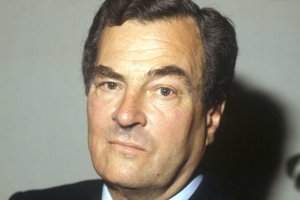
Patrick Leigh Fermor in Berlin

The knocking does not answer 

The back of the slopes wrinkly rich almost to the bay. Bruce Chatwin, who came to Paddy as a “guru to worship” or how to overthrow a king, saw eagles soar over the house of Leigh Fermor. Twenty years later, Paddy Chatwin ashes buried – next to a crumbling Byzantine church not far from here. The Mani is famous for its action songs. 

Southward, on the faded, twinkling towers over the tiny villages, run, it means that a chasm into Hades. Leigh Fermor found it flooded. “Phosphorgefiedert,” he wrote, dip it into the cold depths and swim “through the heart as a huge sapphire. 

We knock in vain to dare us to elaborate the cobbled courtyard and whisper with the housekeeper. It leads us through the garden open arcades, which might as well bend over a cloister. 

Leigh Fermor is tattooed like a sailor 

Leigh Fermor has written so many monasteries in Europe, in towers of “solid ivory, and if anyone here was an escapist, The doors to the rooms, however, the numerous tables, which depends on the sound of glasses and laughter as a smoke curtain, speak a different language. 

Leigh Fermor speaks many. Photographs show it once hung over bursting with charm and zest for life, sometimes almost professorial, and again obviously as a sailor and tattooed. 

We wait under the coffered ceiling of the spacious, wonderfully cluttered living room, from which the English poet John Betjeman once wrote that it was “one of the rooms of the world.” On one wall hang paintings by Nicolas Ghika and John Craxton, leaning on a shelf worn, faded volumes of the great English stylist. On the floor there is a band “Sherlock Holmes”. “Enchanting easy, right?” 

The family left behind her son with strangers 

This could be Merlin: a jumble the gray, wavy hair, sharp features and eons of age in the eyes. Leigh Fermor carries the threadbare sweater a garret of scholars and the trousers of an artist in his studio. 

He is of overwhelming kindness, perfectly shaped “upper class”. In the sunlit bay he called almost everyone who comes to the question, “marvelous”: writers, painters, musicians. “They all knew.” – “I am,” he says mildly, “that old.” 

“For at least one of us children would remain alive, if a submarine sank the ship,” Paddy was in the care of a small family back in England. 

1933 – the first trip to Istanbul 

“I ran,” he says, “shouting and screaming across the yard. I never learned discipline. I was a difficult student. “-” Lazy? “-” Disobedience. “Even a psychiatrist who also treated Virginia Woolf was consulted. Paddy still flew from the school. He had kept up with the daughter of the greengrocer’s hands. 

The autumn of 1933 found him in a room not far from trouble blowing from London’s Shepherd Market, where he should have been cramming so that at least the military school would take him. 

Instead, he took a verse of George Herbert at his word: My way is free, free to the horizon, / Much like the wind. “In December 1933 he embarked for Holland. From there, he wanted to walk into a “green dragon”, Byzantium, which he never called Istanbul. 

On the trip report, the fans are waiting until today 

He is famous for getting lost in the widely spread European history, which he knows like no other. In Mani, one of his best books, the “opposite of a travel guide,” as he says, there is a footnote, the sheer joy of the strangest here, “and there crafty peoples’ lists of Greece: the Melevi Dervishes of” Tower the winds “, the fire dancers from Mavroleki, the hiking quack Eurytaniens. With the gypsies, whom he met in 1934 in the highlands of the Carpathians, said Patrick Leigh Fermor Latin. 

Paddy arrived on New Year’s Day of 1935 in Constantinople, and had better things to do than to write about his trip. He is one of the great English stylists working, slowly, life itself seems always in your way. 

It was not until 1977 “was published, the time of the gifts,” which describes his journey from Hoek van Holland to the middle Danube, nine long years later, “between forests and water”, which leads to the Iron Gate. The third book, the description of the phenomenon must last up to Constantinople, is still expected with such longing that leave a few words from the mouth of Paddy’s heave a sigh British press today. 

Where Chatwin’s old typewriter? 

When Sir Patrick, as he was allowed to call since 2004, was awarded in March in Athens the “Order of the Phoenix,” he told his casual way that he, because his handwriting was always bad, just learn to touch type. 

Oh yes, “he says in the rich sunshine,” I will write this book. There is to end on Mount Athos. From there, I have notes for every day. “We are walking through the garden, the Gulf of Messinia in a dozen colors of light blue. On the burnt grass stretches herself a hangover: “His great-grandmother one day was just there.” 

The studio is housed in an outbuilding. In an iron chest, which bears the inscription of “Traveller’s Club” that tape, books are stacked on the wall a faded French hunting scene. Somewhere there must be also Chatwin old typewriter, a 51er Olivetti. But where? Where? 

Soldier, he was happy because “was always something going on” 

On Mount Athos celebrated his 20th Birthday, then went to Athens, as he later went to Paris and Rome. With a Romanian princess, he lived in an old water mill in the Peloponnese, and followed her to finally Balení, the seat of her family in northern Romania. 

Russia and the horrors of communism were suddenly within reach. “Many of your friends were communists at that time.” – “I did not speak up,” he says. “ “I was so apolitical.” 

In Balení reached him of the war. He, which six years earlier at the Shepherd Market has become clear, “how little I was good for soldiers in peace time,” volunteered. The departure was hasty. “Not even my notebook I took with me. We were so naive. In a few months ago we believed us again. “It took decades. “Were you like a soldier?” – “In a way, yes. “ There was always something going on. ” 

In 1944, he kidnapped a German general 

Books are also in the bathroom and somewhere between them is a plaque commemorating the Battle of Crete. When she was lost, went back Leigh Fermor as major of the Special Operations Executive to Crete. One and a half years he lived disguised as a shepherd in a cave – “wrapped in white cloth from goat and horribly dirty” – and organized the Cretan resistance against the German occupiers. 

The rest is legend, one of the most daring commando raid of the Second World War. One night in April 1944, a large Opel on the road to Knossos, Paddy in a stolen German uniforms on the way. A scuffle and then, at the roadblocks, again and again the cry of “General car. 

For days wandered Leigh Fermor, the people and kidnapped the German General Kreipe through the mountains until they reached the coast, and finally Libya (Egypt). On the difficult journey Kreipe murmurs once verses of Horace. Leigh Fermor is one. „Ach so, Herr Major“,  

About the death, he never speaks 

Paddy has never really written about it. “Ill Met by Moonlight,” the book that tells this story in full, comes from Bill Stanley Moss, his former deputy, and was filmed with Dirk Bogarde as Leigh Fermor. 

When it first appeared in 1950, just came Paddy’s first book, “The Traveller’s Tree,” a description of his travels in the Caribbean out. DThen he was – in the UK, famous in Greece “He embodied an idea of the Renaissance,” writes Cooper, Artemis, “a man of action, which is just as much a scholar.” 

Cooper, the friend and daughter of a friend is writing Paddy’s biography, when he, as he says, “is just gone.” “But now that you mention it: We never really talk about it.” 

The stones for the house came with the donkey 

For lunch there are lemon chicken, tzatziki and Retsina. We sit on chairs Andalusian, a Venetian table at the foot of a guillotined by the passage of time Roman Sibyl. Leigh Fermor has picked up in Rome on the way, he collects nothing. 

He tells the story of Niko Kolokotronis, the Mauerermeister that the contract was to build his house, because six generations were Kolokotronis wall masters, and played all the violin. That was the beginning of the sixties. In the bay there was no electricity, donkeys brought the stones, and Paddy and his wife Joan were living in tents, until the house was finally finished. 

“I scribble in the studio in front of me,” reads a letter from the most beautiful, vibrant with life days in the bay.”Through the window I can see Joan, their army cats invites you to dinner; mass meows to rise, and their tails make waves like the sea.” 

A picture of his wife Joan (cats) in her hand 

Leigh Fermor demands a picture of the mantel, Joan in the forties, which he portrayed with a pencil. “Come on!” She called from a boat, as Paddy, like his hero, Lord Byron swam the Hellespont. “It took three hours.” 

Joan died in June 2003 here.”She was,” he says, his drawing in hand, “in truth much more beautiful. 

Original article here.