Tag Archives: Crete

Perkins and Pendlebury in Crete, and a hunt for Xan Fielding’s grave

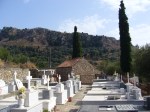
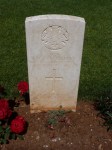
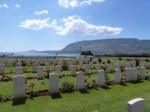
It’s holiday time and some of your fellow readers have been setting off in the footsteps fairly early this year. We had the excellent report from Paddy’s Italian Fans; the report from Kardamyli by our on the spot reporter John Chapman, and now a postcard from Julian Aburrow who visited Crete with his wife back in May; he sent us some pictures of the graves of Perkins and Pendlebury.

Julian was quite anxious to know whether Xan Fielding was buried on Crete, and as time ran out and his departure from the island loomed we asked Artemis Cooper if she had any better idea.

Dear Tom,
As you say, Xan died Paris and was cremated there. At some point after that Magouche, Paddy and Joan took his ashes into the White Mountains, and scattered them to the winds. Among Paddy’s photos now in the National Library of Scotland there is a photo which I think must have been taken at the time: in the foreground are a few beautiful red flowers (cut flowers that is, but not in a bouquet), a branch gnarled and bleached by the weather, and a great sweep of mountains beyond. If I go and see Magouche again, I will ask her to tell me in more detail. [Edit – of course Magouche passed away on 2 June 2013 just after Artemis wrote this note: see this article]

Artemis

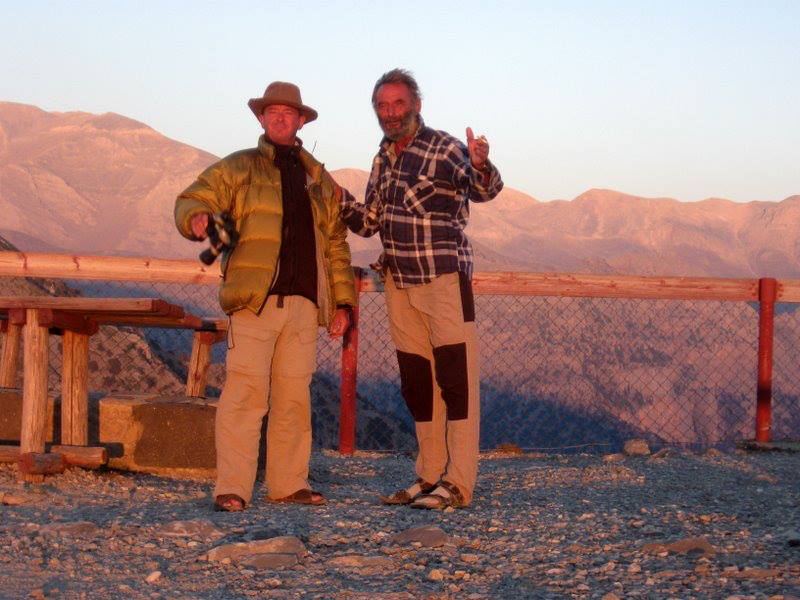
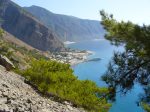
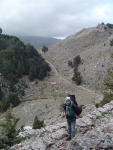
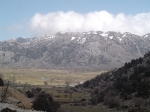
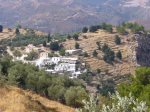
In the meantime a regular correspondent to the blog, Paul George (who is one of those unfortunate souls who is an ex-pat and lives in Crete – you have our sympathies Paul 🙂 ), got in touch with some pictures of his recent walk into the White Mountains to the area where Xan’s ashes were scattered. It is a harsh and bleak landscape; it makes you think of the toughness of men who lived and fought here during the war.

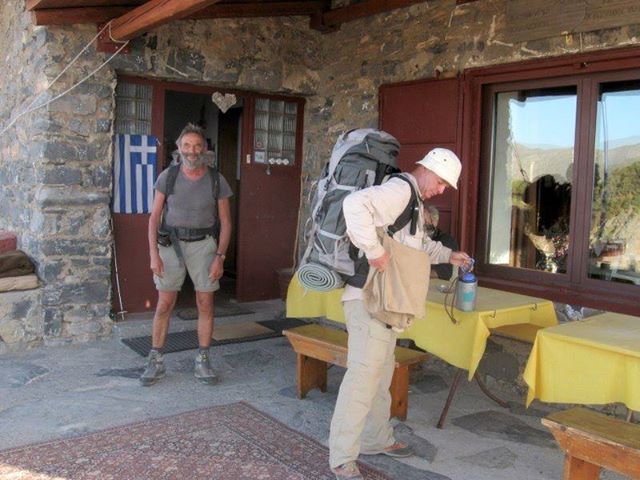
The mountain hut is Kallergi at @ 1700 mtrs….this is the location that Xan Fielding’s ashes were scattered… The photograph taken in the mountain is of me trekking up Melindaou…… Xan Fielding, PLF et al…..would have know and walked in this area.

Trekking up Melindaou

Trekking up Melindaou

Kallergi hut near the location that Xan's ashes were scattered

Kallergi hut near the location that Xan’s ashes were scattered

Kallergi hut @ 1700 m

Kallergi hut @ 1700 m

Staff Serjeant Dudley Churchill Perkins

Left behind on Crete after the evacuation and subsequently captured. He then escaped and lived on his wits, with help from the locals, until 1942. When he was finally evacuated and rejoined his group, he found that he no longer fitted in and transferred to a different group. He returned to Crete where he was met by Xan Fielding.
More info here: http://www.my-crete-site.co.uk/vasili.htm. Vasili, The Lion of Crete by Murray Elliott is a very good read.

Captain John Devitt Stringfellow Pendlebury

Instrumental in organising early resistance, mentioning his name was a key to getting help from the Cretans, who thought very highly indeed of him. He is still known on Crete today: when we went to Knossos a few years ago, someone tried to sell us a guide book. When
I showed him my copy of ‘The Palace of Minos, Knossos’ by JDSP, he said ‘Blebbery, still the best’. Blebbery being the closest pronunciation that they can manage.
Imogen Grundon’s book The Rash Adventurer is a great read. Also, he knew Dilys Powell, Humfrey Payne et al and was highly influential in both Egyptian and Greek archaeology. I admire him very much.
Hope this is of interest and look forward to yet more posts on the blog.
Best wishes

Julian Aburrow

Related article:

Read more about John Pendlebury here: The magnetic John Pendlebury

Audible

Wartime escapades by Patrick Leigh Fermor

The Times Literary Supplement describes this as “The last Renaissance man’s account – until now available only in Greek – of how German bombs wrecked his boat but not his spirit”. Enjoy.

Translated by Adrian Bartlett.

First published in The Times Literary Supplement, 5 June 2013.

Since 1976 my family has been to a small town in the eastern Peloponnese nearly every year. Early on we heard, from the local bus driver and others, how the Germans had sunk an escaping Englishman’s boat in the local harbour in 1941. The Englishman in question was Patrick Leigh Fermor. Later we made friends with Stratis Kounias, a man from the town, a distinguished academic who also returned there every summer. Stratis had embarked on writing a wartime history of the area and on hearing that we knew “Paddy” he asked for an introduction. Leigh Fermor agreed to write an account of the event. I am quite sure he had written and talked about it many times before – some of the phrases are repeated in the biography by Artemis Cooper (reviewed in the TLS, November 16, 2012); but this time he recounted it in Greek for the benefit of Stratis Kounias, although Stratis speaks perfect English. The following is my translation.– Adrian Bartlett

And now over to Paddy …

A BRIEF ACCOUNT OF MY ESCAPE

I had arrived in Greece as a lieutenant in the Intelligence Corps in November 1940. We were a branch of the Allied Military Mission. After Christmas we drove to Albania and were based at Koritsa as liaison officers to the 80th regiment led by Lieutenant-General [Georgios] Tsolakoglou.

I went along the whole front – Pogradec, Krystallopigi, Argirocastro, Tepeleniou, Leskovik, Ioannina and so on. I stayed two months there and after the German invasion I was asked to come down to Athens with the personnel intelligence unit, under the regiment commander Peter Smith-Dorrien (son of General Sir Horace Smith-Dorrien who fought in the First World War).

After the slow retreat from Perdika, Ptolemaida and so on we were for a time as if in the pass at Thermopylae, but eventually got to barracks in Athens. With the rapid advance of the Germans, Field Marshal Maitland-Wilson gave the order to prepare a second escape route from Greece, if a somewhat unorthodox one.

The Greek authorities had requisitioned for us a lovely sailing caïque. She was called Ayia Barbara, anchored at Sounion and belonging to Paulo Mela. She had a renowned captain in Michaelis Mistho from the Demon of Sparta. Apart from myself and P. Smith-Dorrien there was a wireless-operating sergeant, a very nice corporal who I think was called Costas Varthis, and six soldiers.

Our orders were to take possession of the caïque and proceed to a meeting with Field Marshal Wilson at Mili, on the east coast of the Peloponnese. We left Sounion on the afternoon of the April 24, 1941, the sergeant and I having previously destroyed our truck by pushing it into a gully at Sounion. We went past Hydra and moored off the island of Dokos.

In the morning there were many enemy aircraft, the thud of bombing, and trails of smoke in the direction of Nauplion. Later we heard they had set on fire the English ship the Ulster Prince; many British were either killed or captured. We waited till late afternoon to weigh anchor and it was night when we moored at the quay at Mili. It was very crowded there, hundreds of trucks and Greek and British soldiers in retreat. I called out repeatedly the name of the motorcyclist, Matthew, who was to wait for me there and take me to the Field Marshal, whom I finally found.

He had come from Athens with Prince Peter who was liaison officer to our mission, Field Marshal Wilson having come in another car. Also there was the government Deputy President, Vice-Admiral Sakellariou. These were going to Crete in a Sunderland aircraft. Our own aim in our present circumstances was to work our way south along the coast of the Peloponnese, to help other British and Greek military stragglers who wanted to get to Crete and had missed a ship.

Admiral Baillie-Grohman and Brigadier General Galloway joined the Ayia Barbara, and also some more men. We weighed anchor and headed south. After half an hour we pulled alongside an English battle cruiser, the HMS Bahram [Edit: Should HMS Bahram read HMS Barham which was lost at sea on the 25th November 1941?], which took all these men on board. We, with our original company from Sounion, P. Smith-Dorrien, Lieutenant Philip Scott, consul to Field Marshal Wilson, and six soldiers stayed on the Ayia Barbara and we set off at 1.30 am. Smith-Dorrien appointed Philip Scott responsible for the British personnel and me for the Greeks as I knew Greek fairly well, having travelled a lot around Greece before the war.

On the way we had some engine trouble, a blade of the propeller broke which compelled us to reach shore before sunrise. Our intention had been to head for Ieraka and hide the caïque, but in the morning of April 27, at 5.30, we arrived at Leonidion and moored at the quay in Plaka.

We hid the radio under some olive trees, took our weapons, had some breakfast. Our orders were to let no one board the caïqe during the day. Soon we would be taking up our headquarters in Crete.

At 1.30 pm a reconnaissance Fiesler-Stork plane flew over, at 2 another came and dropped four aerial torpedoes on the beach and did little damage, and then came some bursts of machine gun fire. At 2.15 they dropped another bomb close to the quay and at 2.30 a depth charge fell beside the Ayia Barbara, breaching her below decks and sinking her, with just half the mast showing above water. Luckily our boat had saved some important documents.

From then until 7pm the bombardment and dive bombing didn’t stop. One of the bombs fell close to us and wounded Captain Michaelis in the leg and damaged the radio, but to our surprise we repaired it enough to take with us, but not sufficiently to send our news to headquarters.

Some local people appeared, with bread, eggs, one or two chickens, wine and so on, and showed us much kindness, although it had been a terrible day.

P. Smith-Dorrien and I tried to buy one of the other small caïques in the harbour, but all had been damaged in the bombardment and were not fit for sea. We tried mules but failed again. We hoped to find a caïque further south. We passed the night there, in two convenient caves at the end of the beach. We went very early into Leonidion for provisions. The enemy were firing all around, but stopped at midday. I tried to salvage some things from the sunken caïque but without success. At 7 pm the Leonidion police brought and placed at our disposal a boat from a nearby village. It belonged to Panayioti Nikos Moschoviti, or Tsana, from Poulithra. The crew was the son of Nikos and another four of his relations. We agreed that they would take us to Kyparissia. Whether or not we could find a way to make progress, we had taken a decision to go for it, come what may. The local people were very keen to help us. We all boarded the boat, twenty-three of us together with the six crew, packed in like sardines, and we set off south under oar. Meanwhile the Greek crew of the Ayia Barbara set off to their respective homes while we stayed with Captain Michaelis, without whom we would have perished, Smith-Dorrien said.

The crew rowed for about six hours and at 5.30 am on April 29 we arrived at Kyparissia, coming to a dry river bed, 3–4 kilometres from the village. P. Smith-Dorrien and I tried to buy a caïque and in the evening we found one: Ayio Nikolao, 40 tons, which belonged to Pericles Meneksi, for 300,000 drachmas. After a moment we heard that the Germans had reached the village, and as luck would have it, eleven New Zealanders arrived by rowing from Porto Heli.

Many British troops had arrived in Kalamata by road in trucks and armoured vehicles. Many went to Crete on the Greek warships which were there, the others who stayed put up a fierce resistance to the advancing Germans, making an assault with bayonets, and many died or were taken prisoner. This year they are erecting a memorial in Kalamata in their honour.

The eleven New Zealanders were in a bad state of fatigue; we took them into our company and all left together at 9 pm. On April 30, we arrived at Velanidion and all had a day on the beach to recover. At 9 pm we tried to set off to Crete but the engine wouldn’t go into forward drive and broke down. P. Smith-Dorrien, Captain Michaelis and I made the steep climb to the high village, hoping to find someone to mend the engine or to find another caïque, without any success.

Meanwhile we learnt that the Germans had reached Monemvasia, Neapoli and Kalamata. The New Zealanders wanted to put to sea immediately but Smith-Dorrien forbade it. Then five more New Zealanders arrived and an Australian. A good mechanic from Velanidion, Nikolaos Kostakos, a relation of Captain Michaelis, patched up the damaged engine after many hours. We also found three Cretan soldiers who were trying to find a way to get home so we took these too. At 9 pm we set off for Cape Spatha on the north of Crete with the mechanic, N. Kostakos.

On May 2 we had extremely strong headwinds and violent storms. We were losing oil and a bearing was overheating; the engine died. We did the unthinkable and turned back with an improvised rig for the sails and got to Antikythera at 12. Smith-Dorrien, Captain Michaelis and I went to the village of Potamos and found there a very large caïque, the Despina, which belonged to Captain Nikolaos Manika from Chios and it was agreed that he would take us to Crete in exchange for 45,000 drachmas. He took all of us, leaving the following night, another four Australians having arrived there by various means. We now had 150 men, British and Greek, of all ranks. There was another caïque there which went to Crete with us. N. Kostakos stayed with the Ayio Nikolao in order to take care of the repairs and then take it on to Crete.

We weighed our anchors at 10.30 pm on May the 3rd and arrived on the 4th, mooring at Kastelli Kissamou at 5.30 am, where we organized a wonderful feast in a taverna. We were all quite ravenous, and then found a truck to take us to Chania.

P. Smith-Dorrien wrote warmly of Philip Scott and with much praise for Captain Michaelis Mistho, who later played a role in the secret transport of caïques in the Middle East, and I met him later in the war. Also we had the finest impressions of Corporal Costas Varthis and the wireless operators, always willing and with good humour in difficult moments. Lastly we felt grateful to all the Greeks who took care of us and helped us warm-heartedly in difficult times.

After sixteen days the war came to Crete in one part or another. A few months later Philip Scott was killed in battle in a western invasion, and Smith-Dorrien was killed towards the end of the war by a bomb falling on the King David Hotel in Jerusalem.

***

These notes are based on my own recollections, much helped by the account written by P. Smith-Dorrien on our eventual arrival at Chania in Crete. Following the death of Philip Scott, his father Sir Samuel Scott collected his letters and published them as a small book. One letter describes our flight and it is around this that I have written. About the night we left Leonidion he writes: “We all got into the boat, eleven English, six Greeks and the others that stayed on after the loss of the Ayia Barbara. The Greeks rowed for six hours with hardly a break. They were absolutely wonderful. We covered 15 miles and arrived at a fishing village further south”.

On our turning back after our first attempt to reach Crete, he writes:

“The caïque travelled badly and the mainsail was torn.”

He was about 20 years old, I was 26 and Smith-Dorrien between 30 and 40.

I love Leonidion and the whole of Tsakonia.

Patrick Leigh Fermor
Kardamili, August 2, 1995

Paddy’s Italian fans in the footsteps of Fermor and Moss

In the snow on top of Mount Ida

In the snow on top of Mount Ida

Some of Paddy’s fans from Italy recently struck out on an adventure in Crete to follow in the steps of Paddy and ‘Billy’ Moss and the rest of the abduction gang. They were on the route at the same time as Tim Todd and Chris White who, as regular readers will know, engage in some seriously detailed work on the route and the events of April 1944. However, the two groups did not manage to meet up in Crete, but did keep in touch with each other via the comments section of the blog!

Spiro Coutsoucos was leading the Italian group and passed me this short text explaining their motivation and a little about the journey which you can enjoy from the photographs that they sent me. The image of the crossing of Mount Ida is reminiscent of Moss’ own black and white image.

Most of us discovered Fermor (and the Peloponnese as well) thanks to “Mani”, which was the one and only book of Paddy’s translated into Italian until a few years ago. We are all good travelers and hikers and we love travel literature. Some members of the group were in Kardamili and hiked in Mani in spring 2009. We became more familiar on reading Paddy’s biography. After searching in vain for the abduction story among his other books we discovered Stanley Moss’s “Ill Met By Moonlight”. The next step was the exciting discovery of Tim Todd’s website.  And one day with Maria Cristina, who is our spring trek organizer we said… why not? Last winter we organized a meeting in Milan on the abduction story to propose the itinerary. A number of Italian fans of Fermor joined the meeting, some traveling considerable distances.

The next step was getting in touch with Cretan mountain guides to check the itinerary and locations.

We started hiking from Drossia, through Enagron, Axos, up to Anogia, Mount Ida, and down to Fourfouras, Petrochori, Ano Meros, Vrises, Ierakari. We then left Paddy’s way because we could not miss Moni Preveli. We rejoined Paddy’s footsteps again on Peristeres beach. Throughout the trek we enjoyed very pleasant weather, some very nice meetings with people related to Kreipe abduction, a huge amount of raki.  The whole team was very enthusiastic about our quest.

This slideshow requires JavaScript.

Xan Fielding Crete books to be republished

Xan Fielding in Crete

Xan Fielding (front centre) in Crete

I have just discovered that Xan Fielding’s books about his time in SOE and wartime Crete are to be republished by Paul Dry Books and will be available, if Amazon is to be believed, in June 2013.

Hide and Seek: The Story of a War-Time Agent
is available for pre-order now at £9.95 on Amazon – pre-order through the link above.

The Stronghold: The Four Seasons in the White Mountains of Crete
is also available for pre-order now at £9.95 on Amazon – pre-order through the link above.

These books are very difficult to get hold of and The Stronghold in particular is quite rare and sells for between £200-£500 on eBay.

Paul Dry Books link is here.

Don’t forget that you can also pre-order the third volume of Paddy’s trilogy,The Broken Road: From the Iron Gates to Mount Athos

Remote places and landscapes in Greece – Walks in the footsteps of Patrick Leigh Fermor: Part 7

Back to Crete for the seventh walk in Christian Peter’s series.

7.     From Sougia to Agia Roumeli – Crete

a.       One of the wildest and most difficult walks on Crete is the one along the coastline  between Sougia and Agia Roumeli. But it is rewarding as it offers not only a great variety of natural beauties, but also access to the Gorge of Tripiti which as “a clandestine landing point for the whole of the area” played a major role during the occupation. In his book “The Stronghold” Xan Fielding describes it  as “a needle-narrow opening in the littoral  ramparts, which travelers until recently believed to be inaccessible  except by sea” (p. 55). The Tripiti gorge marks the border between the provinces of Selino and Sfakiá and offers insights into the “highland labyrinth” above Koustogerako which during WW II “was probably the only habitable area in the whole of Crete  which could have sheltered in safety such a vast clandestine concourse as ours had been (Xan Fielding; Hide and Seek, p. 167).

Remote places and landscapes in Greece – Walks in the footsteps of Patrick Leigh Fermor: Part 4

The fourth of Christian Peter’s walks.

4.   Sfakián Monopatia – The old connection between Asi Gonia and Anopoli  – Sfakiá/Crete

How often did Paddy, Xan Fielding and George Psychoundakis walk the old Monopati from Asi Goni via Askifou to the Sfakian mountain villages of Anopoli and Agios Ioannis? Did that connection play a major role during the Cretan resistance?

The mountain region of Sfakiá is the heartland of what Xan Fielding called The stronghold.  Here, in the Highlands of the White Mountains, Crete until today remained as pure and unspoiled as it always was. The walk starts in the birthplace of the Cretan Runner, George Psychoundakis, then reaches the hamlet of Goni in the Askifou-Plateau and continues via to Kali Lakki to Anopoli. Next to Anopoli, on the ridge of the Aradena Gorge, lies the ruined village of Aradena, where in 1947 a vendetta broke out and made its inhabitants leave. Aradena is as well the imaginary village, where Ioanna Karystiani’s novel Suit in the earth (Greek title: Koustoumi sto choma) might take place. Karystiani’s family is originally from Askifou. Following the bridge over the gorge, the walker continues to Agios Ioannis, Crete`s highest mountain village. A little bit underneath of Agios Ioannis you can find a place called Sellouda, which for me is the most impressive place in entire Crete. With the Levka Ori in your back you stand thousand meters high above the sea spotting Africa on the horizon. Although the cliffs seem impossible to pass through you can easily follow a stone paved Kalderimi through steepest terrain which leads you almost thousand meters difference in altitude down to the church of Agios Pavlos on the beach. From there you can continue your two days trek to Agia Roumeli.

This slideshow requires JavaScript.

Books about the region:

Xan Fielding (1954): Hide and Seek. Secker and Warburg.

Xan Fielding (1955): The Stronghold: An account of the four seasons in the White Mountains of Crete. Secker and Warburg.

Ioanna Karystiani (2000): Suit in the earth (German title: Schattenhochzeit)

Loraine Wilson (2002): Crete. The White mountains. A walking and Trekking guide. Cicerone

Peter Trudgill (2008): In Sfakiá. Passing time in the Wilds of Crete. Lycabettus Press.

The life of the most extraordinary man to play Test cricket

Bob Crisp in 1935 at Cardiff, where South Africa were playing a match against Glamorgan. Photograph: Fox Photos/Getty Images

This article was sent to me by Charles Hennah, and I am sharing it with you for three reasons. The first his the life of Bob Crisp is pretty extraordinary and worth a read; as the generation who fought the war die-off we read less and less every day about these brave men. Second, Paddy gets a mention, but I doubt that they were very close even though they appear to have been virtual neighbours in the Mani. Finally, Crisp’s life was a mix of fact and fiction;he had this in common with Paddy.

From Kilimanjaro to war escapades, via Fleet Street and a wild century, the remarkable story of Major Robert Crisp, D.S.O, M.C.

by Andy Bull.

First published in the Guardian 5 March 2013.

“Not that it matters, but most of what follows is true.” That fine line is the first in William Goldman’s Oscar-winning script for Butch Cassidy and the Sundance Kid. Screenwriters enjoy a little more licence than journalists, but sometimes we play a little fast and loose too. “My concern with accuracy,” as Hunter S Thompson put it when someone pointed out to him that Richard Nixon didn’t actually sell used cars with cracked blocks, “is on a higher level than nickels and dimes”. The spirit of the story can be as important as the facts of the matter. It hasn’t been possible to check every detail in this article. But, for what it is worth, most of this is true too, one way or another.

Let’s start with the certainties. We can be sure of these few things, because they were set down in the Wisden Almanack: Bob Crisp played nine Tests for South Africa, the first of them in the summer of 1935, and the last of them in the spring of 1939, 77 years ago last week.

Crisp was a fast bowler, who had the knack of making the ball bounce steeply and, when the weather suited, swing both ways. His 20 Test match wickets cost 37 runs each. The best of them were the five for 99 he took against England at Old Trafford, including Wally Hammond, clean bowled when well-set on 29. Admirable but unremarkable figures those. A few more: Crisp took 276 first class wickets at under 20 runs each, twice took four wickets in four balls, and once took nine for 64 for Western Province against Natal. Impressive as those numbers are, they still seem scant justification for the description of Crisp Wisden gives in his obituary: “One of the most extraordinary men ever to play Test cricket.” But then, as the big yellow book puts it, “statistics are absurd for such a man.”

Wisden is right, the traditional measures aren’t much use. A few other numbers, the kind even Wisden’s statisticians don’t tally, may help make his case. The first would be two, which was the number of times Crisp climbed Mount Kilimanjaro. The next would be three, which is both the number of books he wrote, and the number of occasions on which he was busted down in rank and then re-promoted while he was serving in the British Army. Then there are six, which is the total number of tanks he had shot out or blown up underneath him while serving in North Africa, and 29, which is the number of days in which all those tanks were lost; 24 is the number of years he lived after being diagnosed with terminal cancer. And finally, most appropriately for a cricketer, comes 100, which is, well …

In 1992 Crisp, then 81, was in Australia to watch the 1992 World Cup. One of his two sons, Jonathan, had flown him there as a treat. At the MCG, Jonathan bumped into the old England wicketkeeper Godfrey Evans, who he knew through Evans’s work as a PR for Ladbrokes. “Godfrey said to me, ‘Your father is here? Oh God, I’ve got to meet him, he’s my hero,” Jonathan Crisp says. “I said ‘Come off it Godfrey, you were a proper cricketer, how can he be your hero?'” Evans replied that Bob Crisp was the first man make a 100 on tour. “I said ‘What? How can he be? Plenty of people have made 100s.’ And Godfrey said, “No, no, not runs, women, 100 women.”

Perhaps unsurprisingly, Jonathan Crisp and his brother were estranged from their father for a long time. Bob, too footloose for family life, abandoned them when they were still young.

In the mid-1950s Bob’s wife, the boys’ mother, won on the football pools. It was timely; Bob had just resigned in a fit of pique from his job on the Daily Express, who had told him he couldn’t run a scurrilous story about corruption in greyhound racing. Bob took her winnings and spent them all on a mink farm in Suffolk. “He did that, and did it so badly that my mother had to take it over and turn it into a successful business,” Jonathan says. “He ran off and got a job as a leader writer for the East Anglian Daily Times, a job which allowed him to live in the style he was accustomed to.”

Later, when Bob was 56, he ran further still, all the way to Greece. “He had some friends there who he could live with.” Jonathan says. “Or rather, live off.” When Jonathan found his father again, years later, Bob was living alone in a goat hut on the Mani peninsula. He had no running water, and no lavatory. But he did have a cravat, and a clipping from a biography of Field Marshal Alexander which read “the greatest Hun-killer I ever knew was Major Bob Crisp”. The page had been laminated, and Bob Crisp took great glee in handing it over to any Germans he met in the village. “He thought that sort of thing was funny.”

When Jonathan flew to Greece to meet his father, he found him at the head of table in Lela’s Taverna. “There were 10 women around him. And it was clear he was bedding all of them. He was 70 at the time.” Jonathan says that the lamentations of the local women became a familiar refrain: “You must help me, I am in love with your father.” Some of them were in their mid-20s. Some of them were in their mid-50s. It didn’t make any difference. Bob wasn’t the settling sort.

Lela’s was made famous by Patrick Leigh Fermor, who lived in that part of Greece at the same time. The two men, both writers and raconteurs, were friends and rivals. It would have given Crisp enormous satisfaction to read this story by Guardian journalist Kevin Rushby. When Rushby arrived in the village of Kardamyli last year, the locals had little recollection of Leigh Fermor (or, indeed, of another famous travel writer who had passed through, Bruce Chatwin), but could not stop talking about Bob. “What about Sir Patrick Leigh Fermor? You must know about him.” asked Rushby. “The old man shook his head. ‘No, I don’t think so. There was a writer called Robert. Now he was famous – cured himself of cancer by walking around Crete. He was very famous.’ [He] leaned back and shouted in Greek to his wife in the kitchen. She came through, cloth in hand. ‘Robert Crisp,’ she said, smiling. ‘What a wonderful man! So handsome!'”

Jonathan was too close to his mother to be that blind to his father’s faults, and too appreciative of his father to let those faults obscure his feats. “He was a remarkable and extraordinary man,” he says. “An absolute charmer. And an absolute shit.” The drinking, womanising, and gambling, Jonathan points out, “can seem heroic or can seem awful. It depends which side of the coin you were on.”

Not everyone had such a balanced view. As George Macdonald Fraser puts it in Flashman: “In England you can’t be a hero and bad. There’s practically a law against it.” One of Jonathan’s most vivid early memories is sitting down with a copy of the Eagle comic, only to open it up and find there was a story about his father in it, an illustrated account of his exploits in the war. “It was very odd, but he was that kind of man.” He and his brother, who are working on a book about their father’s life, are still trying to unravel the strands of his life, to sort, where they can, fact from fiction.

They think it is true, for instance, that just before Bob Crisp was called up for the South African team for the first time, for the tour to England, he climbed Kilimanjaro. The story goes just as he was coming down through foothills, he bumped into a friend of his and said: “It’s fantastic up there, have you ever been up?” He hadn’t. So Crisp turned right around and they climbed it again, together. Just below the summit, the friend fell and broke his leg, so Crisp picked him up, carried him up to the top, and then carried him all the way down again.

They know it isn’t true that, as the elderly Greek man reckoned, Crisp cured his cancer by walking around Crete. He was diagnosed when he was 60, and told it was terminal. “He had always wanted to walk around Crete with a donkey, so when he was told how ill he was he thought ‘fuck it’ and set off,” Jonathan says. Bob paid his way by selling the story to the Sunday Express. “When he came back he decided to row a boat around Corfu. But the boat sank.”

What cured Crisp’s cancer, it seems, was an experimental drug, an early form of chemotherapy, which he was given by the Greek doctors. He was told to apply it to his body, but instead he drank it. “It was so disgusting that he mixed it with a bottle of retsina and drank that instead.” There was a time, shortly after, when he was flown to England and the USA by various consultant oncologists, who were trying to find out whether he had found some miracle cure in the combination of this unknown chemical and rotgut alcohol.

That was his second death. The first was 30 years earlier. That was in the Libyan desert, the day after he discovered, while listening to the BBC’s 9 o’clock news on his tank’s wireless set, that he was to be awarded the Distinguished Service Order for conspicuous gallantry. Shell shrapnel hit his head. As he lay crumpled at the foot of his turret, Crisp felt “beyond a shadow of a doubt, that I was going to die. The darkness I was sinking in to was the darkness of the grave. Strangest of all, I didn’t care a damn. As I went out into eternal darkness the last thought I had was … death is easy.” He survived, thanks only, he was told by the gynaecologist who performed emergency surgery on him, “to the good thick bit of skull” that the metal hit.

So far as anyone can be, Bob Crisp was an honest memoirist. As his son says “like most biographers, while they appear to be critical of themselves they very rarely appear in a light that is totally unflattering”. He does write with startling honesty about his mistaken assault on an English tank. He accidentally killed its gunner, “a young lad, red hair, fair skin, freckled face. As they pulled him out, the head rolled side-ways and two, wide-open, empty eyes looked straight into mine. In that moment I touched the rock-bottom of experience.” The war moved so fast, though, that he scarcely had time to dwell on what he had done. More cheerfully, Crisp also admits that he once caught crabs after pinching another officer’s pair of silk pyjamas to sleep in (and foolishly tried to cure himself by dousing his genitals in high-octane petrol).

The early months of Crisp’s war were spent carousing in Alexandria, singing and dancing for his dinner (typically escalope Viennoise and a bottle of white wine) in the local cabaret clubs. He seduced a local showgirl, Vera, who he had to leave behind when he was sent to Greece. He writes so tenderly of their relationship that he almost persuades the reader he really was in love. Until he describes their final kiss: “I knew that I would always think of that last, innocent contact – and that if I ever missed her it would help me to remember how her breath always smelled, just a little bit, of garlic.”

Greece was little more than a rout, one long retreat from the border with Yugoslavia back to the bottom tip of the country. Along the way Crisp had three tanks blown up underneath him, hijacked a New Zealand officers’ Mess lorry, and shot down a low-flying German Heinkel bomber with a burst from his machine gun while it was in the middle of a strafing run. The beating he took seemed to fuel his thirst for action. He found it at the battle to lift the German siege of Tobruk, where he fought continuously for 14 days, on an average of 90 minutes sleep a night. He won his DSO at Sidi Rezegh, where he led his tank in a single-handed charge across an airfield that temporarily checked an advance of 70 German Panzers.

Crisp later told the cricket writer David Frith that his courage was a “reaction to the shame he felt at being afraid”. But his modesty concealed a darker truth, as he once confessed to Jonathan. To his shame, Crisp admitted to his son that he actually “loved the war. He enjoyed it. He thought it was fantastic”.

MacDonald Fraser, who also served in North Africa, writes brilliantly about men like Bob Crisp. They epitomise, Fraser says, “this myth called bravery, which is half panic, half lunacy”. After the attack on Sidi Rezegh, Crisp seemed to catch a fever for fighting. The next day, stranded on foot, he commandeered a signals tank whose crew had “never even fired their gun before”, let alone been in battle. Crisp hauled their officer out of his turret, and with a cry of “Driver advance! Gunner, get that bloody cannon loaded!” led them in a surprise attack on a group of German anti-tank guns. Afterwards the driver was so shell-shocked by this startling turn of events that he started running around in small circles with a wild look on his face. The poor chap hadn’t the faintest idea where he was or what he was doing.” Crisp cured him with a “tremendous kick up the backside”.

Jonathan Crisp says he has it on “very good authority from a lot of different people” that his father was recommended for the Victoria Cross, but Field Marshal Montgomery refused to allow it because Crisp was so ill-disciplined. He was demoted three times. But then he was also mentioned in despatches four times. Crisp was awarded the Military Cross instead. He was presented with it by King George VI, who asked him if his cricket career would be affected by the wound. “No sire,” Crisp replied. “I was only hit in the head.”

In fact Crisp was too injured to play cricket again. After the war he went back into journalism, and, almost a footnote in his life this, founded Drum, the radical South African magazine for the township communities. He fell out with his fellow editors there. “Like a lot of rogues,” Jonathan says. “He was very charming and entertaining until things started to go wrong.” So he came back to Britain to work on Fleet Street, and fell back in to his old friendships with two fellow rakes, Denis Compton and Keith Miller.

Having survived the war, and cancer, Bob Crisp finally died in his sleep, at home, in 1994. When Jonathan found his father’s body in the morning, there was a copy of the Sporting Life in his lap. The only thing Bob Crisp left in the world was a £20 bet on the favourite in that year’s Grand National. “It lost,” says Jonathan. “Of course.”

There is a line in Big Fish, Tim Burton’s movie about how we can never really know the lives of our parents, which goes: “In telling the story of my father’s life, it’s impossible to separate the fact from the fiction, the man from the myth. The best I can do is to tell it the way he told me. It doesn’t always make sense and most of it never happened … but that’s what kind of story this is.” Well, Jonathan Crisp knows that most of his father’s story really did happen. And if there are a few exaggerations and fabrications along the way, well, the story is truer for their inclusion. “One of the most extraordinary men ever to play Test cricket,” says Wisden. If there’s someone out there who tops him, I’d like to hear their tale.

Remote places and landscapes in Greece – Walks in the footsteps of Patrick Leigh Fermor: Part 1

Paddy is quite popular in Germany, there being a lot of interest in his work about Greece, and of course A Time of Gifts is set mostly in Germany. His is also famous for the Kreipe kidnap. We have many fellow blog readers from Germany, but one of the longest is Christian Peters who lives in Koln but has a passion for Greece. He sent me a series of short articles about walks in a variety of locations in Greece, with accompanying photographs. If you are thinking of what to do for your holidays in 2013, I hope that Christian’s articles which I will publish over a period of weeks will help to inspire you. Of course some are in the footsteps of Paddy. Over to Christian for an introduction …..

When I traveled in Greece this summer (2012), the consequences of the crisis were capable everywhere. The decrease in this year’s incoming tourism might create the need for a bit of stimulation. 🙂  And the remote places and landscapes, Paddy talks about in the introduction of his Mani-Book, are still there. They probably changed a lot during the last sixty years, but are still worth to be visited.

If you are interested I would send you a couple of ideas (8-10 walks and places with short texts and two or three photos each) of remote walks, places and landscapes in Greece I have been traveling during the last years. The places and walks are partly related to Paddy and his life, but there will be some, which I only assume, he would have liked.

1.    Walk one – Kalderimi in Western Crete – Selino

a.    Koustogerako, the village of the Paterakis Family in the Selino Eparchía of Western Crete, played a major role in the Cretan resistance during WWII. On the 29th of September 1943 it was completely burnt down by the Germans. Paddy visited the village a couple of times because Manoli Paterakis, one of the Kreipe abductors, was a close friend of him. Today, one of the most fascinating Kalderimi-Walks in Western Crete leaves the Omalos Plateau from Agii Theodori to the west, then descends into the Irini Gorge (Faragi Agia Irinis) until it reaches the main road heading towards Sougia between the villages of Moni and Livadas. From there it is only about an hour ascent up to Koustogerako.

Russians on Crete, oligarchs and controversial journalism

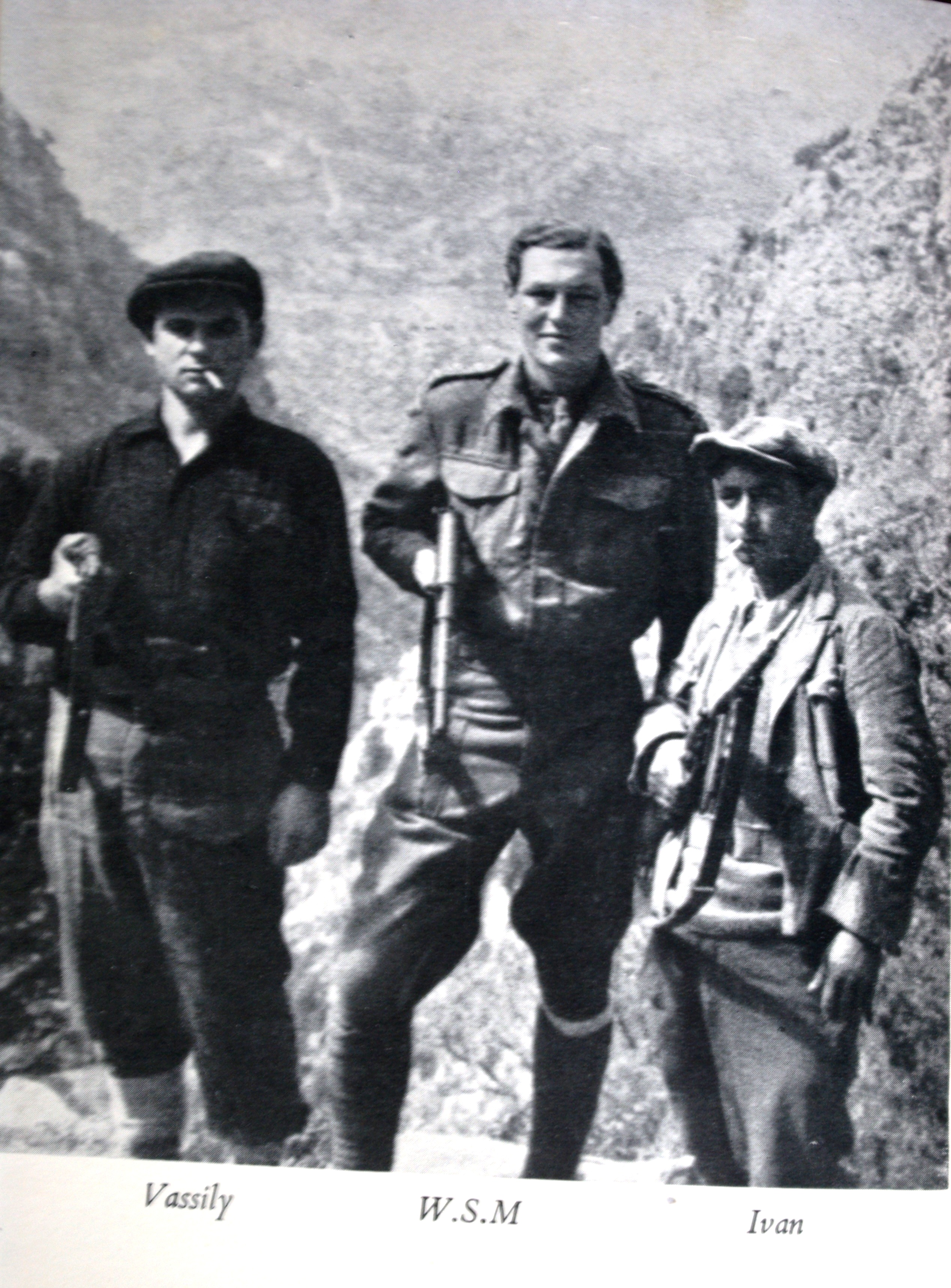
"Billy" Moss with his Russians

“Billy” Moss with his Russians

I was woken from my post New Year slumber by an email from someone called John Helmer who claims to be the longest-serving western journalist in Moscow. He said that he wanted to write a review of An Adventure and asked for the Paddy Blog community’s help in clarifying one or two points about mentions of Russians in Crete and whether or not Paddy had fired his weapon on any other occasion other than the unfortunate accident that led to the death of Yannis Tsangarakis. This all sounded fair enough and the Russian angle was clearly one that would make his article interesting for his Russian readers.

The experts on this subject generally are those involved in trying to prove the actual route of the kidnap in Crete as they have amassed a huge amount of general evidence in their years of research. Billy Moss mentions the Russians in Ill Met by Moonlight (and is pictured with them) and in his sequel, War of Shadows, they are mentioned regularly, forming a key part of his strike force in the vehicle ambush that Moss leads (see War of Shadows).

We passed on this information to Helmer who then wanted to dig deeper into the Russian angle. The problem is very little evidence exists, but Moss, who spoke Russian, mentions them time and time again. Helmer  remained unconvinced, stating that they may have been Bulgarians which is clear nonsense.

There are references to escaped Russians serving in ELAS units (see Sarafis, 1964) on the Greek mainland. When this was mentioned to Helmer he seemed to think that Moss was recruiting Russians as some sort of counter-propoganda move by the British against communists. Clearly Moss saw them as well-trained and aggressive fighters. Other sources have said that in other post-war SOE accounts mention is also made of Russians fighting alongside Cretan partisans.

Unless documentary evidence exists we may never know the extent of the number of Russians prisoners used as forced labour on Crete as they may well have been slaughtered by the retreating Germans (but where are they buried?). Any that did survive and fell into British hands were probably shot by their own side upon return to Russian control as happened in so many places. In war life is cheap; Russian life even cheaper.

Whilst these arguments were put to Helmer he clearly decided that was going to write a most extraordinary review full of venom and hyperbole. Some sources have previously questioned the Australian journalist’s balance and indeed it is said that he has a controversial reputation in Moscow with apparently inappropriate contacts to a number of Russian oligarchs. This short article appears to sum up what some think of his work and character.

Helmer makes some good points about the weaknesses in Paddy’s character, and Artemis’ biography, but it is a pity that he wraps up his prose with so much pent-up spite that the meaning is lost. Quite a lot of the ‘Paddy Magic’ has been lost as Cooper has revealed much more about the man behind the curtain, but his achievements and the pleasure he gave to so many cannot be taken away. It is certain that Helmer has missed a trick by not pursuing the Russians in Crete idea further.

This review is one to add to the list of reviews of the book, and a negative view is always welcome. You just wish that he could have done it with some style. Paddy would have liked that.

Read Helmer’s review here or click the picture.

Patrick Leigh Fermor: extract from the new biography

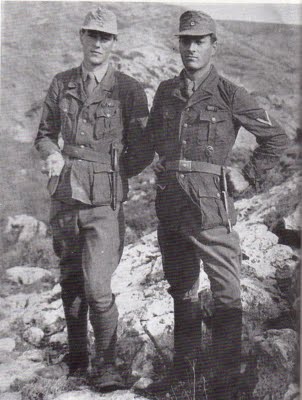
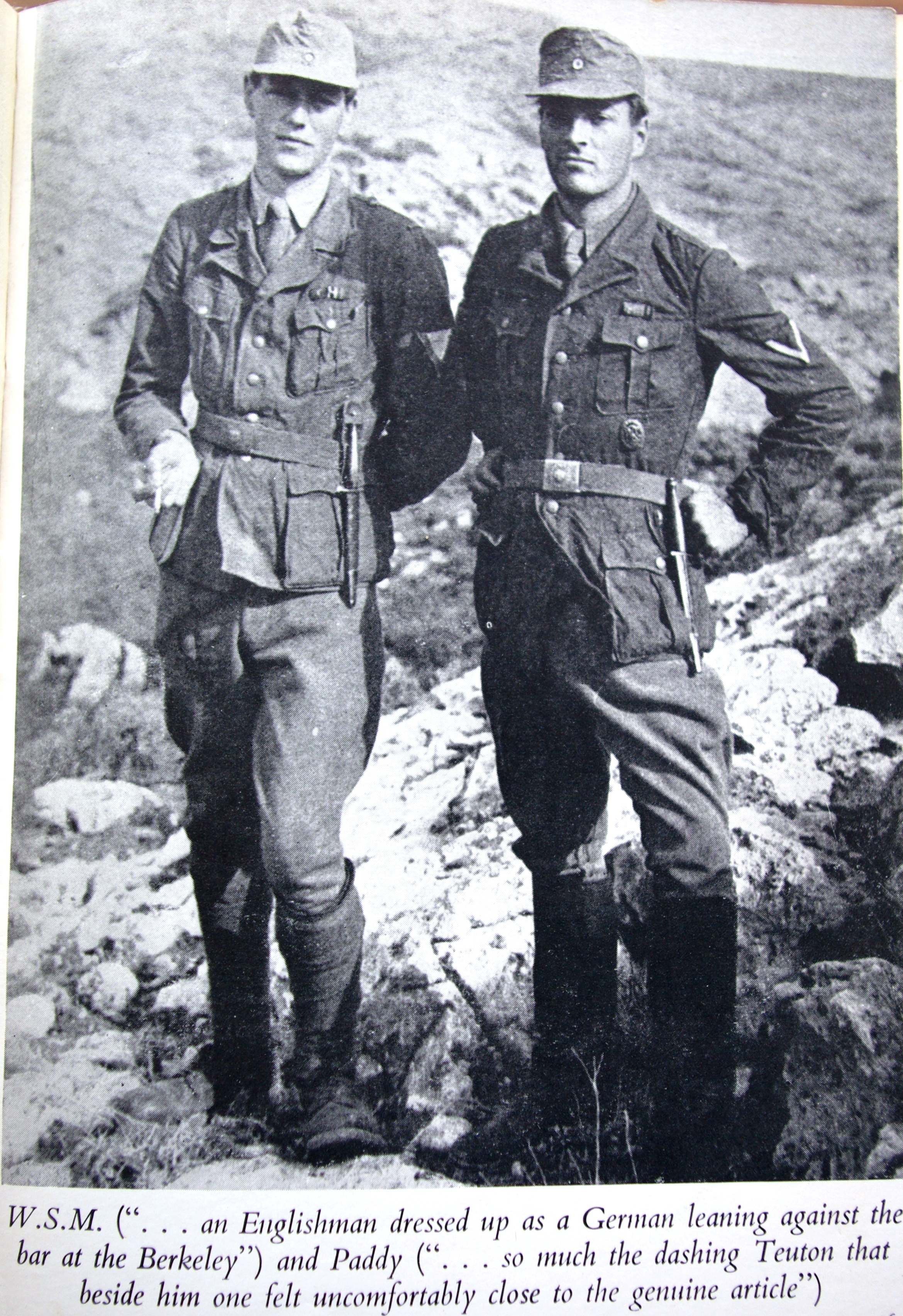
Patrick Leigh Fermor with Billy Moss in Crete, April 1944, wearing German uniforms Photo: Estate of William Stanley Moss, by permission

The Telegraph ran an extract from the biography over the weekend. It was the Kreipe kidnap again!

In an extract from her life of the travel writer and war hero Patrick Leigh Fermor, Artemis Cooper chronicles a daring kidnap in wartime Crete.

First published in the Daily Telegraph 29 September 2102.

After months of training in clandestine warfare in Palestine, Paddy Leigh Fermor joined the handful of SOE officers in occupied Crete who were working with the Cretan resistance in June 1942. His big chance came in the autumn of the following year when he formulated a plan to kidnap a German general: not just any general but the hated Gen Friedrich-Wilhelm Müller, responsible for the butchery of the Viannos villages in September 1943. Supposing Müller were kidnapped and whisked off the island? At a time when Greece was beginning to feel like a backwater as the war pushed up through Italy, an operation of this kind would generate a lot of noise and publicity: it would make the Germans look remarkably foolish, and give a terrific boost to Cretan morale.

Despite questions being asked about the mission because of the risks it posed to Cretan lives, the plan went ahead on January 6 1944. A car came to pick up Paddy and his number two, Billy Moss, a young Coldstreamer who had had a spell guarding Rudolf Hess, in the early hours of the morning, and drove them to Heliopolis where they met the rest of the party.

They flew to an airstrip east of Benghazi, where they spent two miserable weeks in sodden tents waiting for the weather to clear. Since it refused to oblige, they were flown to Bari, hoping for better flying conditions there. On February 4 they took off from Brindisi for Crete, aiming for the Omalo plateau, a tiny, shallow bowl in the jagged, snow-covered peaks in the mountains south of Neapolis. For the pilot, the zone was so restricted that the team could not be dropped in a “stick” formation – he would have to circle and come in again four times, dropping each man off individually.

Snow and loose cloud swirled around the open bomb-bay, and far below they could see the dropping zone marked by three pinpricks of light formed by three signal fires. Paddy was the first to jump. Welcoming Cretan hands hauled him to his feet, and then all eyes turned again to the snow-streaked sky. Paddy gave the all-clear with a torch to signal his safe arrival, but the clouds were thickening and the pilot could no longer see the signal fires: he was forced to turn back.

The bad weather continued. Paddy spent the next seven weeks in a cave with Sandy Rendel, the SOE officer in charge of the Lasithi area. But in late March came news that threw the whole mission into question. The intended victim, Gen Müller, had been posted to Chania as commander of Fortress Crete. SOE Cairo was informed, but decided to go ahead with the operation anyway. After all, the aim was to boost Cretan morale and damage German confidence; from this standpoint, one general was as good as another. Continue reading

Remembering Lord Jellicoe by Patrick Leigh Fermor

In February 2007, following the death of his friend, Paddy wrote about George Jellicoe in the Spectator magazine.

George Jellicoe, who died last week, was an early member of David Stirling’s SAS, and soon became commander of the Special Boat Service. We first met in pitch darkness soon after midnight on 24 June 1942 in a cove off southern Crete, both of us in rubber boats, one of them taking off Jellicoe and his comrades — most of them French — back to Mersa Matruh, the other landing me on the island for a SOE mission. We exchanged shadowy greetings. On landing, I soon learnt from the Cretans of the success of their long, strung-out series of raids, and the number of enemy aircraft and the stockpiles of ammunition and fuel they had destroyed.

When George and I met by daylight a year and a half later in Cairo, I was struck immediately by the tonic effect of his presence, his initiative and his inflexible determination, and his knack of command. Also, his humour and buoyant spirits. We became great friends. He had a gift for getting on with his own soldiers and sailors and, most importantly, with our Greek allies. Among many operations, he worked several times with General Christodoulos Tsigantis — the ‘General Gigantes’ of Lawrence Durrell’s Alexandria Quartet — the dashing, original and very effective commander of the Sacred Brigade, mostly enlisted from guerrillas who had escaped from occupied Greece and which he led brilliantly from Cairo to Rimini. Many years later, Tsigantis told a friend that George was the bravest man he had ever met.

When the tail end of the German army was retreating from north Athens, George — well in advance of the advance mission — was already pedalling into the city centre on a borrowed bicycle. As we know, the same energy and flair carried him through his successful spell as a diplomat, and to great heights in postwar politics.

Tidcombe Manor, in the Wiltshire downs, was a delightful retreat from his manifold duties, which were here replaced by swimming, riding, reading and music, and the company of friends, in which he was wonderfully abetted by his wife Philippa. George meanwhile had painlessly developed from a young centurion to an active senator and then to a retired paladin, and evenings there were marked by lively talk and much laughter, a spirited combination of punctilio and bohemia.

George often returned to Greece, where his name is revered. Below the window of the house in the southern Peloponnese, where these lines are being hastily written, a favourite promontory juts into the sea, affectionately known as ‘Jellicoe’s leap’.

You can read more about Lord Jellicoe on the Royal Society website.

Rory Cooper at Souda Bay and Chania

The pictures below were sent in by Rory Cooper who is a regular correspondent to the blog.

Hello Tom,

Am in Crete at the moment and have just come back from a visit to the CWGC in Souda Bay where John Pendlebury is buried. Here are a couple of photos as well as one of Gen. Kreipe from the Maritime Museum in Chania.

I have acquired a copy of the Erotokritos and will attempt a translation, although I have few illusions about making sense of 17th century Cretan dialect.

All the best,

Rory

Patrick Leigh Fermor Airport?

Here is an interesting suggestion passed to me by Danish blog reader Hans Christian Bogstad who is living in Belgium at the moment.

Dear Tom

You may be unaware but Crete is slowly building a new airport at Kastelli, which will eventually (2015 or later) replace the old  Heraklion airport currently in use. Kastelli is, of course, one of the sites where SBS units successfully carried out raids on German aircraft in 1942 and 1943 (Operation Albumen – I don’t think Paddy was involved personally).

In Greece it is the habit to name airports after national heroes. My personal initiative is to suggest to you and to the world at large that the new airport be named the Patrick Leigh Fermor Airport.

Is there any more distinguished hero to give his name to the new Cretan airport than Paddy? Even the much less deserving creator of 007 had an airport named after him in Jamaica.

It may help that Paddy already was an honorary citizen of Heraklion, and that he probably had a multitude of Greek friends, some in high places.

Clearly there is a distinct possibility that the Cretans already have a name in mind, but there is no harm in asking. Would any Greek (speaking) readers wish to take this on and make some approaches?

Hans Christian Bogstad


The Kreipe pennants – the story of their rediscovery by Billy Moss’ daughter

The pennants from General Kreipe’s car

Discovering the full details behind a particular story or event is often tricky with clarifications, enhancements, or downright contradictions emerging sometimes many years after the event. Fortunately we have not had to wait so long for some further detail to be added to the story I ran last year about what happened to the pennants on General Kreipe’s car at the time of the kidnap, and their subsequent discovery many years later.

‘Billy’ Moss’ daughter Gabriella Bullock read Artemis Cooper’s account of how the pennants were found after so many years in a trunk in Paddy’s house at Kardamyli. Gabriella then wrote to me to ask me to pass on the full story behind their (very fortunate) re-discovery in Ireland some years before and how they were passed by her mother (Sophie Moss née Tarnowksa) to her. It sounds like we are very lucky to have them at all.

Gabriella’s account starts during a recent visit to Crete …

In Rethymnon we met the delightful people who run the Folklore Museum. This is where the pennants from the General’s car are now housed, in accordance with PLF’s wishes. We found that they were very interested in the story of how the pennants were randomly and luckily rediscovered, and this leads me to think that the story definitely has a place on your website

In the early 1950s my family lived in Co. Cork, Ireland, but moved back (supposedly temporarily) to London in 1954. My parents intended to return, and left many of their possessions in the safe-keeping of various Irish friends or in store. My father never did go back to Ireland; indeed, in 1957, eight years before his death in 1965, my father also left England never to return. As things turned out, however, it was also many years before my mother went back, and all that had been left in storage was lost.

A number of years after my father’s death my mother bought a cottage near Cork, and thereafter divided her time between London and Ireland. I was staying with her at the cottage one summer in the late 1970s when a friend of hers announced that she had a trunk belonging to us which she wanted to return; it had been sitting in their attic since the 50’s.

A battered tin trunk duly arrived with my father’s name, rank and regiment painted on the outside in white. My elder sister has it now and it is, without doubt, the one described in the first chapter of our father’s book A War of Shadows, even down to the grains of sand:

“an old letter, a scrap of notepaper smeared with the sweat of one’s hip-pocket, the rain-spattered pages of a diary, an operational report written in the bloodlessly forbidding vocabulary of a headquarters’ clerk – these relics, discovered in a tin trunk which still creaks with grains of sand when you open the lid…”.

My mother opened and unpacked it, and said to me, “I think you’d better have these”. Amongst the things inside it were my father’s original diary, already entitled Ill Met by Moonlight, in remarkably good condition and perfectly legible, and the two German pennants.

It was a heart-stopping moment. My mother gave these things to me, and I gratefully and unthinkingly received them. I was in my mid-twenties then. The diary I still have. As for the pennants, they were much prized, and adorned a wall in my house for nearly 15 years.

But one day about 17 or 18 years ago, when I was re-reading IMBM, it dawned on me for the first time that in fact since it was Paddy who had taken them as trophies from the General’s car, they were rightfully his. So I gave them to him. This was in the early 90’s. Paddy was completely astonished, and moved, to see them again, so unexpectedly, after 50 years! He was awfully pleased, and after his death they were donated to the Folklore Museum in Rethymno, in accordance with his wishes.

And now they are back in Crete, which is absolutely as it should be.

With best wishes,

Gabriella Bullock

Further reading:

The Kreipe pennants

Articles about the kidnap in the Ill Met by Moonlight category

Previously unpublished images from the Kreipe kidnap

William Stanley Moss, PLF, and Manoli pose for photos before the kindap of General Kreipe

Paddy and ‘Billy’ Moss in a cave

I am very grateful to John Stathatos who sent these pictures from his family’s Cretan archive. The first with Manoli is one that I don’t think we have seen before in this setting.

I’m sending you a little present for the blog – scans of four original photographic prints of the Kreipe operation which I’ve dug out of the family archives.

The prints are on glossy photographic paper, and must have been produced by the British army press and propaganda section in Cairo very shortly after Paddy’s return. They were given a narrow white border, and all four have very slightly different dimensions, ranging from 185×143 mm for the vertical one to 147×199 mm for the group photo. They are in remarkably good shape considering their age, showing no evident deterioration beyond a very slight yellowing.

Note: certain of these images are kindly shown here by permission of John Stathatos. Please ask if you wish to reproduce.

Other pictures provided by John:

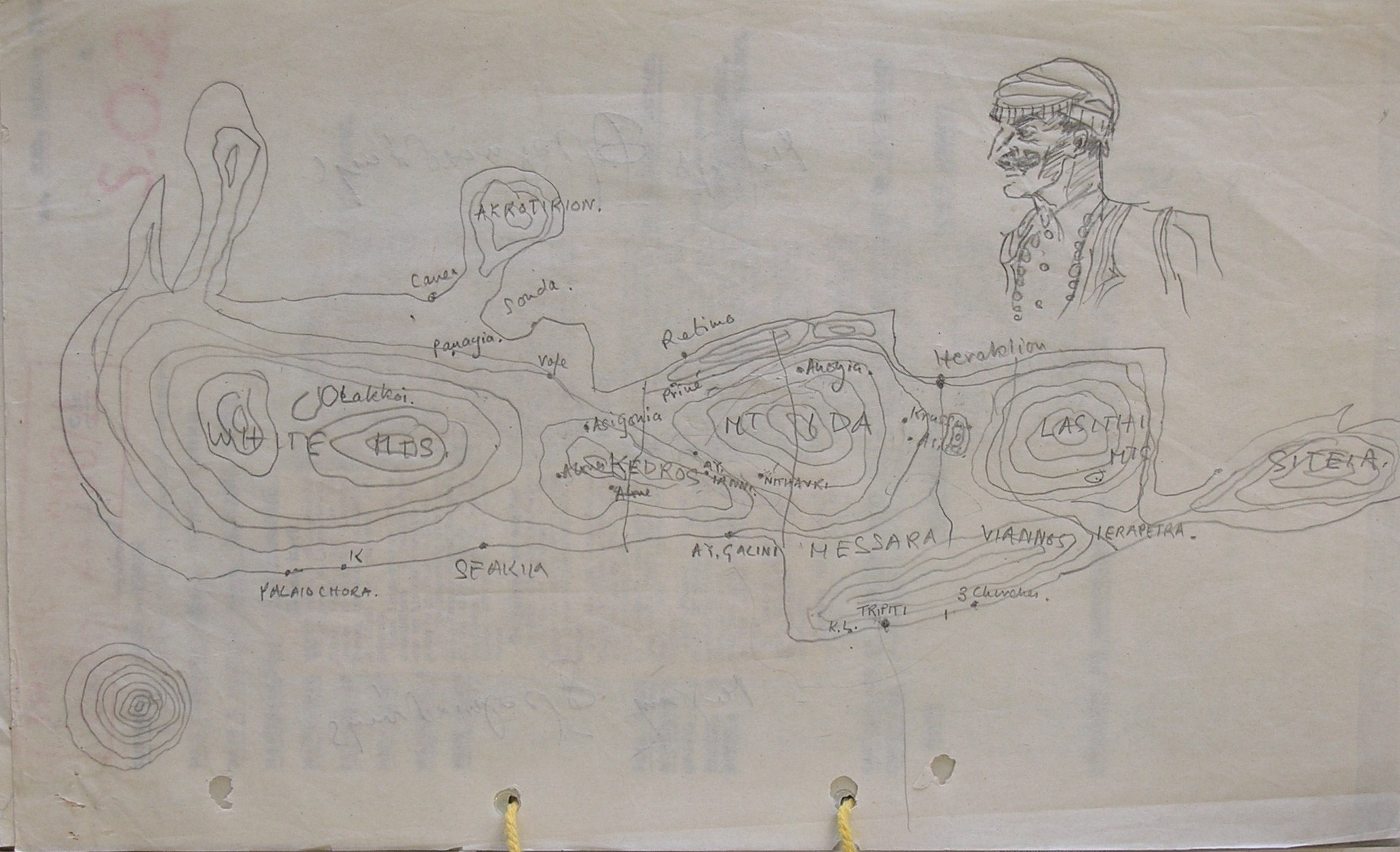
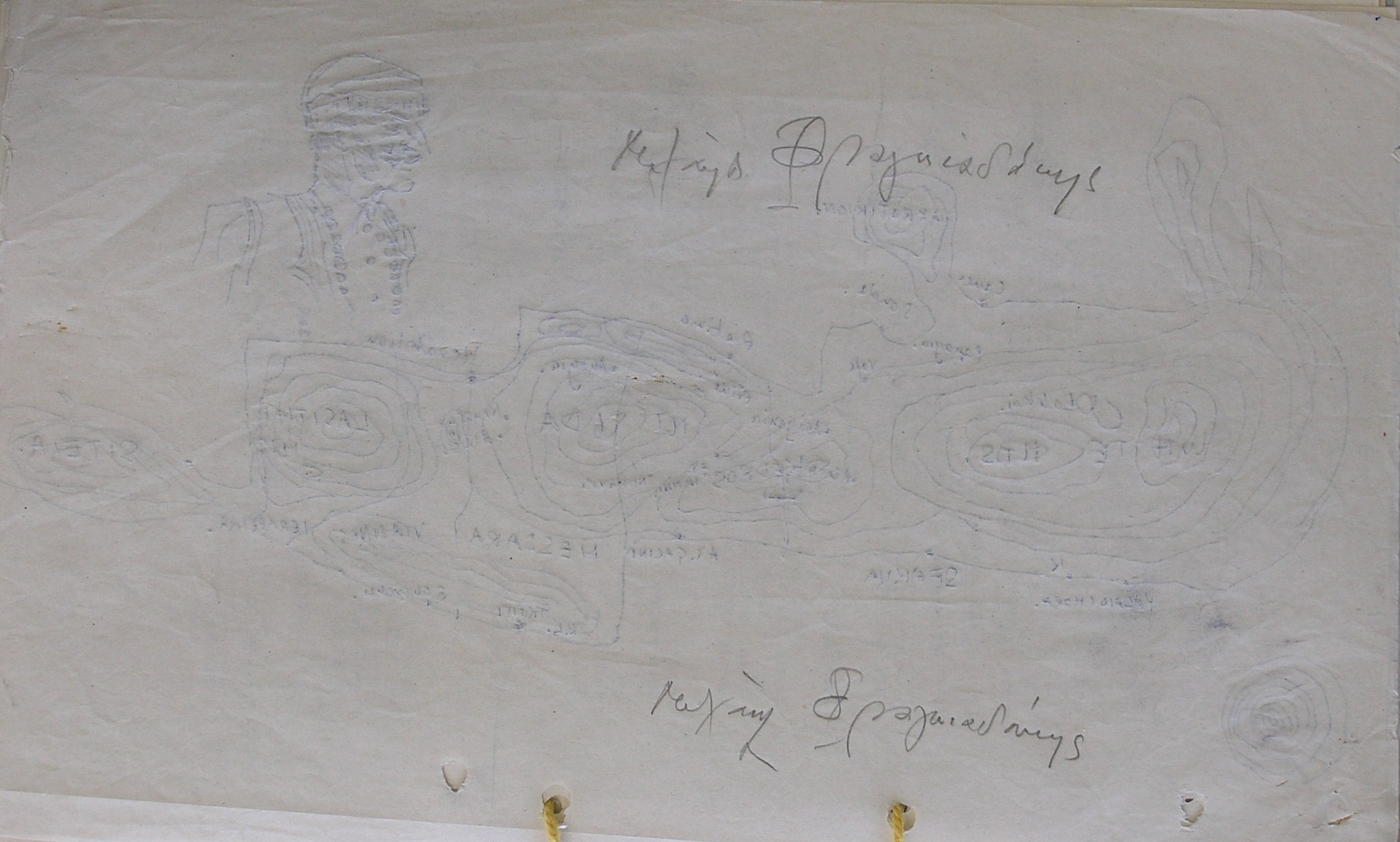
A map of Crete as drawn by Paddy on operations in Crete

Traveller’s Rest

New – Full length interviews with Kreipe and Paddy

We have all seen the famous 1972 video of Nico Mastorakis’ TV show “This is Your Life” which brought Kreipe and his old enemies together before the cameras. If you have not seen it you can find it here.

In this newly discovered video Nico Mastorakis presents a documentary about the whole kidnap event, and includes full length and exclusive interviews with Paddy and General Kreipe. The General even says that “next year I will spend my holiday in Crete.” I wonder if he ever did?

There is much more about the kidnap in the Video and Audio section. Take a visit now.


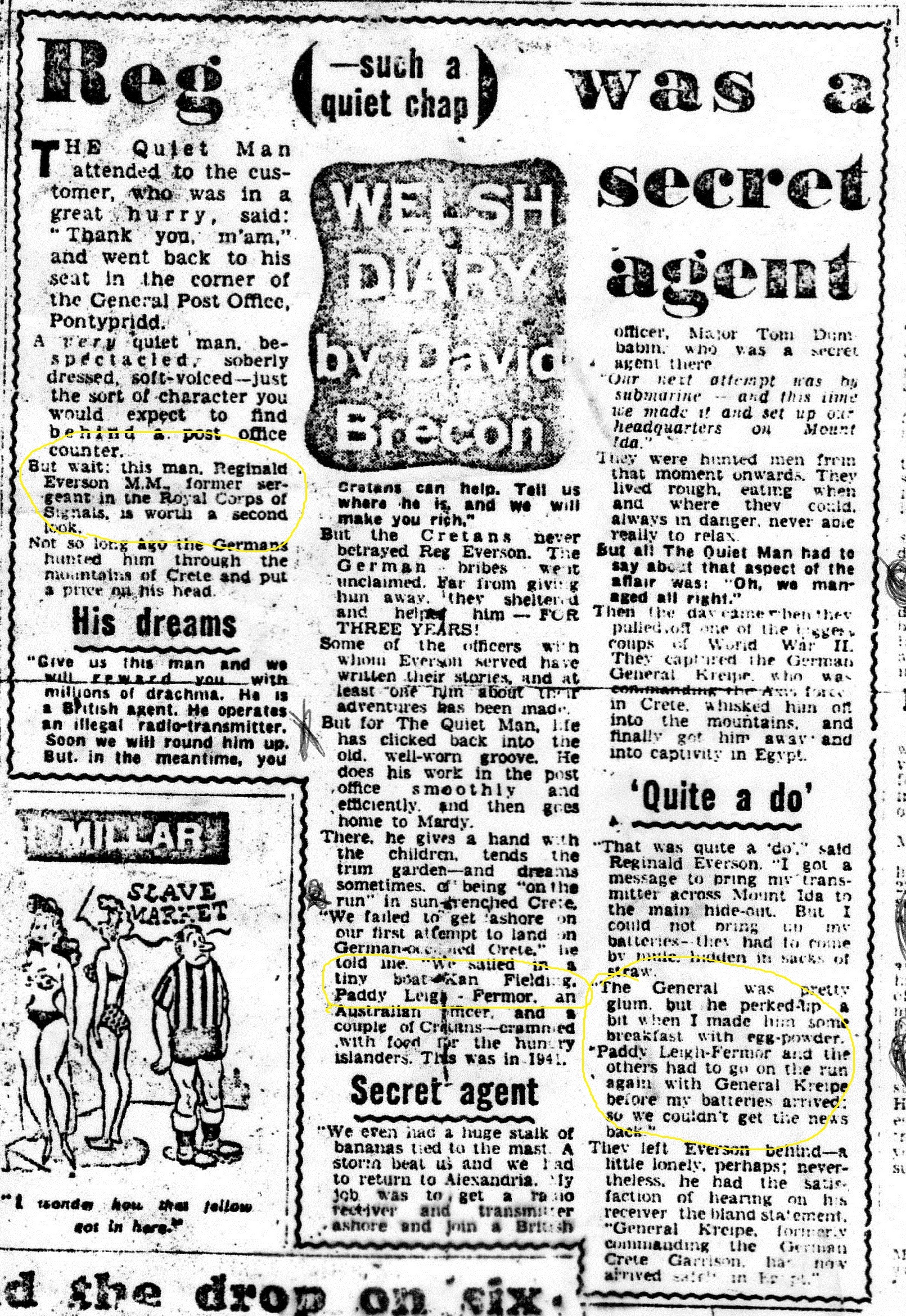
Reg Everson and his powdered egg breakfast for General Kreipe on Mount Ida

At Paddy’s funeral last year, I stayed afterwards for a drink with a small group at the hotel  which used to be the Dumbleton estate manor house, originally home to Joan’s family. A man from Wales introduced himself as Vince Tustin. I recognised the name as I had been in touch with Vince by email in the preceding weeks on the subject of his father-in-law who was in the SOE.

‘Reg Everson, my father-in-law, spent three years on Crete and much of that time he worked closely with Paddy as a radio operator.’ said Vince.

His wife then joined us and after a while she said ‘I asked my mum and dad why I was called Patricia. It was an unusual name for a girl in Wales at the time. And my dad told me I was named Patricia after his good friend Patrick Leigh Fermor. They had served together in Crete.’

Such was the impression that Paddy made on people. It is a lovely story in itself, and perhaps serves a reminder on this first anniversary of his death, that Paddy affected the lives of  many, in different ways, as a man as well as a writer.

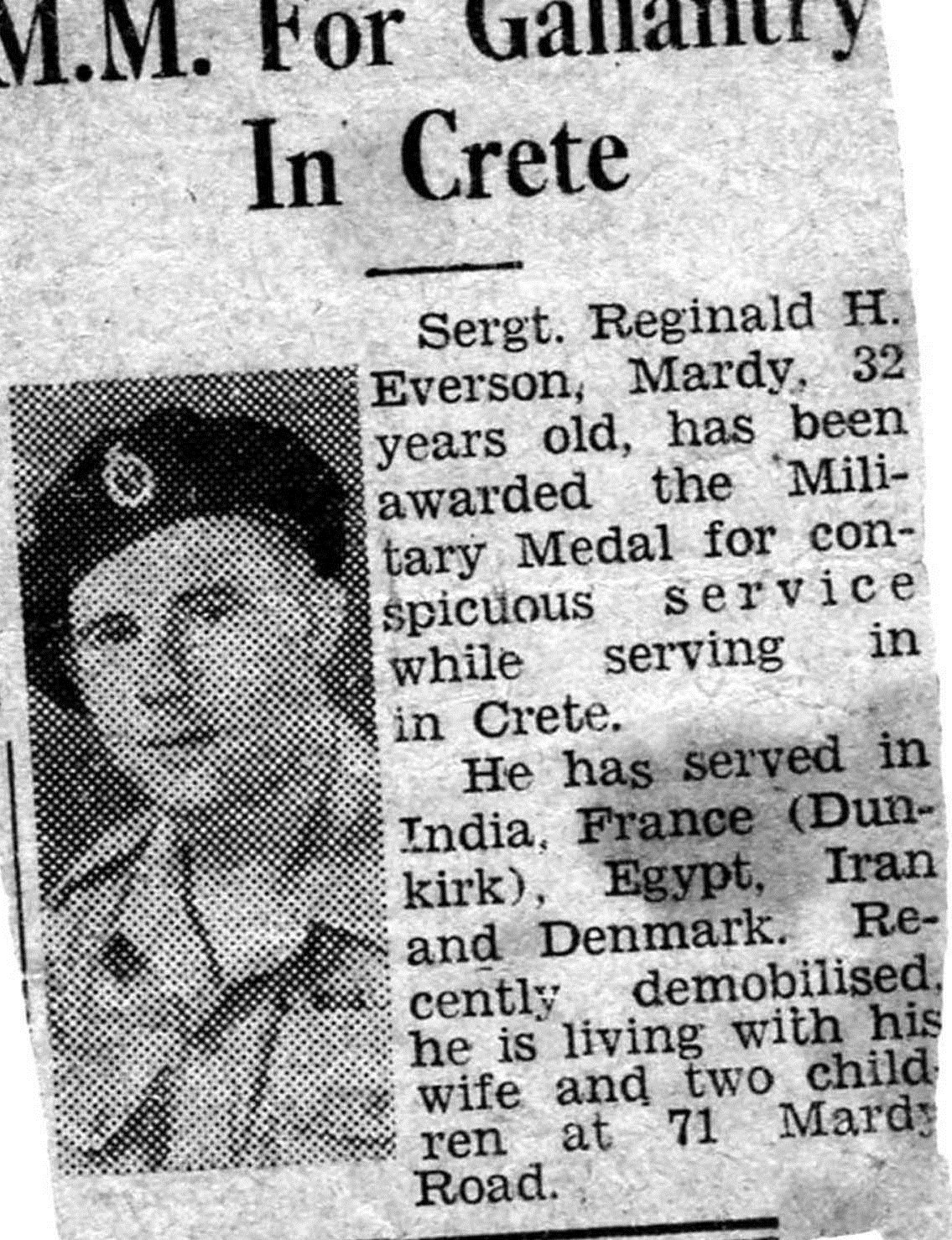
Vince told me that in the 1950’s Reg was interviewed by a local reporter.

I am sure that Reg didn’t want it to sound as if he was alone [on Crete]. He was a quiet mild mannered gentleman, and was in the Royal Signals from 1931 to 1946 and like so many servicemen lied about his age to get in, he was only 15 when he enlisted. For the three years he was on Crete his wife didn’t hear from him. His commanding officer was the only contact she had. People in the village even thought Reg had left her!

It wasn’t until I wrote a piece in the local paper that people understood where he had been because he didn’t speak about it. In the newspaper cutting from the 50s Reg talks about his involvement in the kidnap of General Kreipe and how he cheered up the General by making him some powdered egg for breakfast on Mount Ida.

We have his forged Cretan papers here, also a leaflet that was dropped by the Germans. He was awarded the Military Medal and Africa Star among other medals. He was also presented with a solid silver medal for bravery from the Maharaja of India.

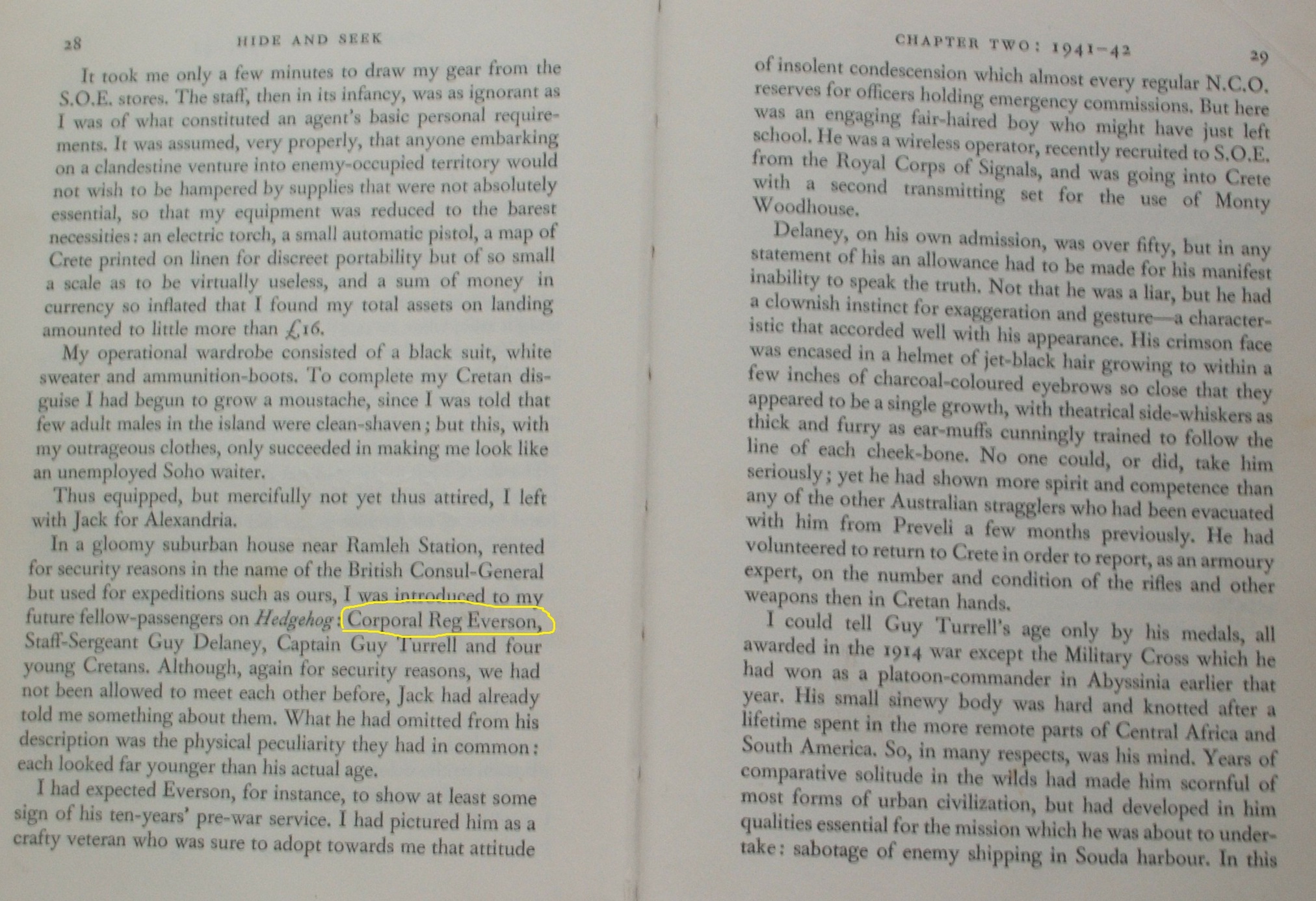
Reg Everson deployed to Crete with Xan Fielding, and Xan refers to this in his account of his time in Crete “Hide and Seek”.


In the newspaper interview Reg describes how he was summoned with his radio to Mount Ida to join the kidnap gang, but he had to wait for his heavy radio batteries to arrive so he made himself useful and he made breakfast for the General on Mount Ida …

“The General was pretty glum, but he perked-up a bit when I made him some breakfast with egg powder. Paddy Leigh Fermor and the others had to go on the run again with General Kreipe before my batteries arrived: so we couldn’t get the news [of the successful kidnap] back.”

Whilst we often hear the stories of the officers in SOE, we should not forget that they were supported by a large team including signallers such as Reg Everson who were especially brave. They risked being located by the Germans who were constantly trying to find the source of their signals to destroy the radios, and capture the highly skilled and valuable operators.

Patrick Leigh Fermor: We May Just Forget to Die, an essay by Margot Demopoulos

This is the probably most significant full length profile of Paddy that has appeared since his death. It is by Margot Demopoulos a writer who lives and writes in Los Angeles. Her fiction has appeared in The Briar Cliff Review, Mondo Greco, The Athenian, and other publications.

The interesting aspect of this profile is an extensive exploration of the events surrounding the Kreipe kidnap with particular attention to the contentious subject of post-operation reprisal by the Germans.

The subject line appeared in an earlier blog post from June 2011 where I highlighted Diana Gilliland Wright’s correspondence with Paddy.

On to the profile ….

“Englischer Student . . . zu Fuss nach Konstantinopel…” eighteen-year-old Patrick Leigh Fermor told the kindly woman sewing by the fire that snowy night at Heidelberg’s Red Ox. He sat at a nearby table, recording the day’s events in a notebook, hunting for German words in a dictionary, consulting maps for the next leg of the journey, “thawing and tingling, with wine, bread, and cheese handy,” as melting snow pooled around his boots.

“Konstantinopel?” Frau Spengler said. “Oh Weh! ” O woe! So far!

Far indeed, especially in the snowdrifts of mid-winter, but there he was — undaunted, spirits high, finally setting out on his own path — nearly two months into his journey to cross Europe on foot, with Constantinople the terminus. Nearly forty-five years later, he would publish the story of that journey in A Time of Gifts. Read More ….

Access the pdf of the article here.

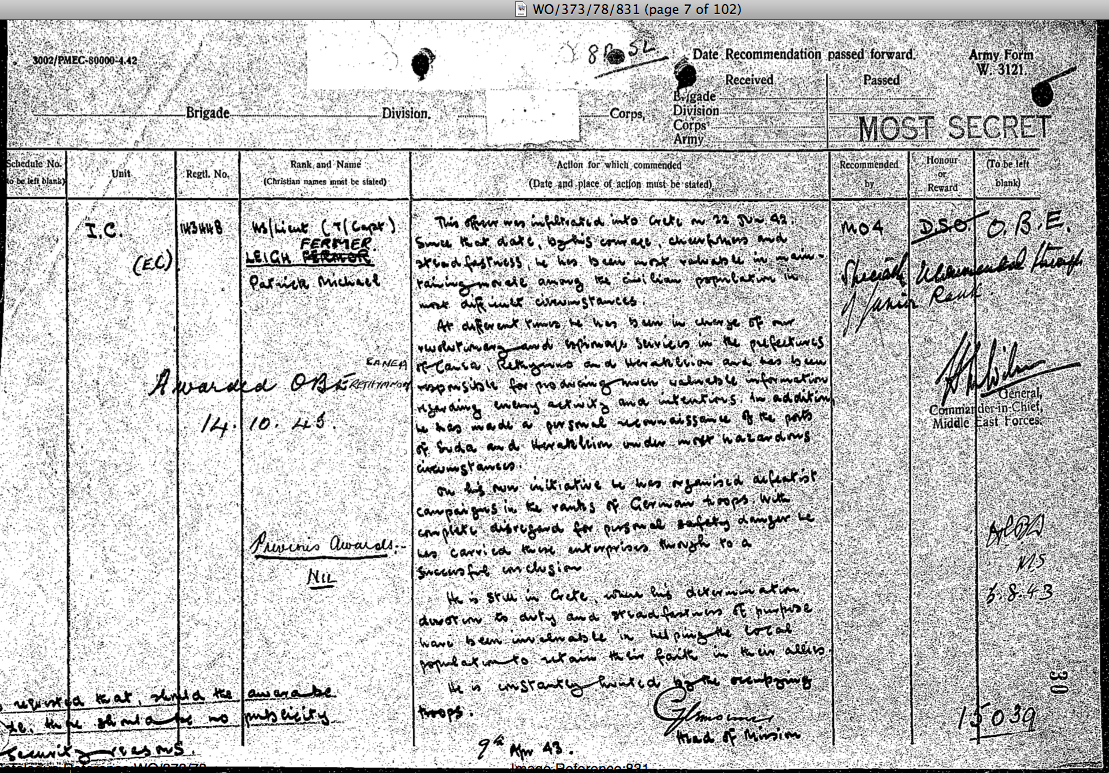
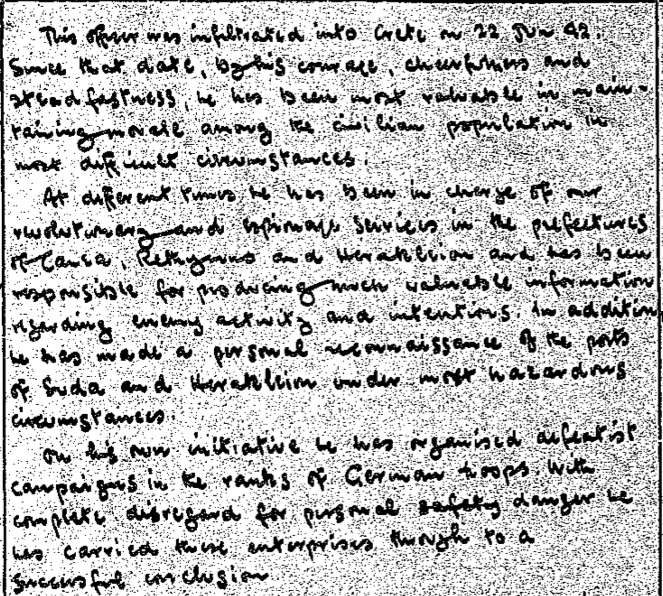
London Gazette Moss MC and Fermor DSO announcement

Billy Moss and Patrick Leigh Fermor

A copy of the Supplement to the London Gazette dated 13 July 1944, which announces the award of the Distinguished Service Order to Captain (temporary Major) Leigh Fermor and the Military Cross to Lieutenant (temporary Captain) Stanley Moss.

You can find the pdf here Moss MC and PLF DSO announcement (once open scroll down) or an online link here.

Patrick Leigh Fermor’s 1998 interview with Amalia Negreponte

Amalia Negreponte

I was alerted to this interview by Mark Granelli. As ever we have to be cautious about things that may have got lost in translation but I was a little suspicious about this interview as Paddy appears to go further out on a limb than recorded elsewhere. You will understand what I mean when you read it. Is she being totally honest? 

My reply to Mark was …

Mark – thanks for being such a good sleuth! I will put it up but I am slightly suspicious of this one. Paddy appears more political than I have ever read before. Maybe he opened up to her because she is very pretty, if a little thin.

But without further ado let’s go to the interview which can be found online at Amalia Negreponte’s website on 20 July 2011 ….

War hero, great hellenist, major British author, scholar and soldier, who played a prominent role behind the lines in the Cretan resistance during World War II (kidnapped German general, heading Nazi troops invading Greece). He was widely regarded as “Britain’s greatest living travel writer”, with books including his classic “A Time of Gifts” (1977).  A BBC journalist once described him as “a cross between Indiana Jones, James Bond and Graham Greene”

Patrick Leigh Fermor’s interview to Amalia Negreponti, published in my book:“Hellenists: Greece does not wound them” (LIVANIS publishing company, 1998), pre-published in “TA NEA” in 1998

Born: In England. First traveled to Greece: When he was 19 years old, in 1935, during his tour of Europe. Main bibliography: “Mani”, “Roumeli”, “The Violins of Saint-Jacques”, “Between the Woods and the Water’, “A Time of Gifts”. Lived most of his life after World War II: In Mani (Kardamyli); frequently travelling to England, where he recently passed away, 40 days ago. He will be remembered by all- and certainly by us Greeks- with gratitude, admiration, love.

Five images. A man dressed in a British Army uniform, alone, on a snowy mountain – he is in Albania, in 1941. He speaks fluent Greek. The Greek soldiers endearingly call him “The Englishman”. Whenever he can, he talks of poetry and literature. Second image, the same manly uniformed figure, next to Giorgos Seferis, in Cairo. He has just arrived, right after the tragic Battle of Crete. His sorrow is vividly reflected on his face. Third flash. Haifa, 1942. The officer, the blackboard and the class of uniformed men. It is one of the war lessons the officer with the penetrating gaze gives to the Allies.

Crete, 1944:While the British commando takes off the German Army uniform he has deceptively worn, his five Cretan companions and a British officer hold a German officer captive. He is General Heinrich Kreipe – the commander of the German Occupying Forces in Crete – recently kidnapped by the men. On peaceful nights, the captive and the English officer-kidnapper talk of Homer and the great tragedians.

Last image: Mani, 1998, in a small cottage. The man sets aside, just for a moment, his writing – the bookcase is full of his highly acclaimed books. His eyes sparkle. “Greece was in danger. She was suffering. I did what anyone else would have done. Nothing more, nothing less”. Without any need for introductions, he is Paddy. Michael. Filedem. Patrick Leigh Fermor.

Ramrod-straight, soft-spoken, keeping his youthful impetuousness intact. “Dear God! It was nothing!”, he says every once in a while, with extreme modesty and reserve, as soon as he is reminded of his legendary status and heroic activity. He talks of his books with the excitement of a small child.

Whenever he talks of the historical battles – always playing the leading role – he fought in Greece during World War II, he never uses the pronoun “I”. It is always “we”; whether he talks of British soldiers and fellow officers – he keeps mentioning Christopher “Monty” Woodhouse, Xan Fielding, John Pendlebury, the archaeologist-hellenist who died, fighting heroically, during the Battle of Crete – his Cretan companions – George Psychoundakis, Manolis Paterakis, George Tyrakis – or the whole of Greece.

We meet Patrick Leigh Fermor in mid-July at his home, in Kardamyli, Mani, where he permanently lives during the last few decades with his wife, in a cottage he built by himself. The 83-year-old Anglo-Irish Fermor, having fought for Greece throughout his life, throughout her difficult moments with vigour, self-sacrifice and passion that transcends heroism; awarded with all the possible military distinctions for his actions in battle; highly valued throughout the world for his books – they are considered “masterpieces” by the most severe European and American critics – and living a reclusive life, exclusively dealing with what he has been dreaming of since he was a child: book writing.

At the moment, he is fervently preparing the story of his adventures during the entire war. His achievements are known through official documents (Foreign Office), as well as his companions’ and historians’ memoirs. He, however, has remained silent until now.

“Since I was a child, I was determined to become a writer; that’s for sure”, Patrick Leigh Fermor – Paddy, to his friends – remembers. “For that reason – to collect experiences and meet different people and things – and since I wasn’t particularly good at school, I set out, when I was 18 years old, on a journey to Constantinople, a journey that would mark and determine my life”.

The journey lasted a whole year and included the whole of Europe. Alone and moneyless, Fermor sailed from England to the Netherlands and went on, through a snowy landscape, to Germany. He followed the course of the Rhine upstream and turned eastwards, towards the Danube. He crossed the borders to Austria and Czechoslovakia. He borrowed a horse in Hungary, crossed Transylvania, Romania and Bulgaria, over the Balkan mountain range and reached the Black Sea coast: Varna, Nesembar and Burgas; then, across the borders of Turkey, towards Edirne. On January 1, 1935, he reached Constantinople.

At the monasteries

His next stop was Greece. “My love for her was unconditional”. He lived in monasteries of Mount Athos, in Thrace and Macedonia, in Peloponnese and Athens. The few words of ancient Greek he had learnt at school turned, almost magically, to fluent modern Greek and Greece got an eternal hold on him. “And then, around 1936, I returned to England.

The months away from Greece seemed intolerable. That’s why when, in 1941, I joined the Intelligence Corps, I asked to be transferred to Greece, fighting at the time against Italy in Albania. It so happened”. And Patrick Leigh Fermor became an integral part of the Albanian Epic. And, right after that, of the Cretan Resistance. From 1941 until the bloody Battle of Crete, Fermor was there, in the first line, along the Cretan warriors who considered him “more Cretan than the Cretans”, he says with pride. “Where can I begin?

The long night marches, the growth of the Resistance form village to village, from mountain top to plain? Waiting for boats in secluded coves, waiting for drops of ammunition in plateaus, visiting intelligence gathering networks in cities, sending commandos on sabotage missions, escaping German raids, on the mountains, the eagle nests and the crags we used to live… Since the first Axis invasion of Greece, we English felt that we were allies of the only nation left to fight darkness and tyranny.

The rest of the world remained neutral, defeated “in peace” or, worse still, had joined the enemy – through alliances and treaties. When the war came to Crete, the solitary allies – Greece and England – fought hand in hand. And then came 1942. In horror and despair. England was being devastated by heavy bombardments, the Germans were marching at full speed towards Stalingrad, Erwin Rommel’s tanks and canons were hammering our lines in the desert, pushing us back towards our last line of defence, El Alamein; and the USA had not entered the war yet.

My men and I, driven out of Crete after the Battle of Crete on May 20, 1941, crushed and shattered, had escaped towards the Middle East. First Alexandria and Cairo. And then Haifa, near Palestine, where I taught allied officers in a war college. What did I teach? The essentials. Secret landings, sabotage, using enemy arms and ammunition, parachute drops, commando raids, evasion tactics, setting mobile radio stations – everything.

My heart and thought, however, were with Crete, suffering more than ever. Villages were being burnt. Thousands of Cretans were being taken captive. Inhuman tortures and mass executions were on the agenda every single day. But the Cretans had not given up. They were continuing the Resistance, in any possible way, with vigour and stoicism. But not only that. They were also helping, risking their lives and the lives of their own people, the English allies who had been trapped in the highland villages and mountains of Crete. They were taking care of them as if they had been their own children.

It was a great honour. We became and still are the children of the Greek people. I am grateful for that – to be part of such a brave and noble kind of people was the greatest honour for me. We were strangers who came to Greece from afar to take part in the battle, to fight, to shed our blood on your mountains. We, however, risked – of our own accord – our lives, whereas the Greeks who helped us at the time of our greatest weakness did not only risk their lives, but also the lives of their families and the destruction of their villages, their motherland. Therefore, let’s not talk of our own sacrifices…”. “I could no longer resist staying away from Crete – I longed to return there”.

Thus, on July 24, 1942, at midnight, he returned from the Middle East to Crete by fishing boat, assigned a special mission in Central Crete. “Hard times. We were cut off from Africa and any supply shipments, whereas the Germans ravaged Crete, killing and torturing civilians whenever the Resistance struck a blow against them. The only good thing for our Crete out of that period, until 1944, was that we were not affected by the Civil War raging in mainland Greece – we were not aware of it”. At the beginning of 1944, Filedem – who lived on the mountains of Crete, organizing the Resistance disguised as a Cretan shepherd – is ordered to return to Alexandria. “I didn’t want to leave”. However, he couldn’t help it. No matter how reluctant he was, Fermor finally left.

He returned a few months later as the leader of a highly important mission for Crete in particular and Greece in general: the kidnap of the German military governor of Crete. Unfortunately, the target, General Friedrich-Wilhelm Müller, was replaced by General Heinrich Kreipe just before he arrived.

“On February 4, 1944, I was parachuted into Lasithi, Crete. The rest of the team – Stanley Moss, Manolis Paterakis and George Tyrakis – couldn’t follow due to bad weather. During the next two months, they kept trying to join me, but it was impossible. Finally, on April 4, they arrived in Soutsouro by sea. We immediately started hatching the general’s kidnap plan.”

The kidnap

Fermor finally came up with an idea – dressed as a German soldier, he stopped the general’s car on his way home at what was supposed to be a routine check point; the rest of the team took care of the driver and drove the car and the general away – met with success.

Hunted by German patrols, the team moved across the mountains and villages of Crete “in order to evacuate our captive safely, making sure that no reprisals were taken against the civilian population”. Whenever he got off the car, Fermor was met with murderous stares and open enmity by the Cretans due to the German Army uniform he was wearing.

“I realized then what it meant to be a German. I felt lucky not to be one. Upon arriving in Sphachta, where my friend father Giannis Skoulas lived, his wife came out of their house and stared at me in disgust. Full of joy, I tried to embrace her. Get away! She screamed. It’s me, Michalis, I said. No point… It took some time for her to recognize me and get over the repulsion the German Army uniform was causing her”.

The outcome of the mission? General Heinrich Kreipe was sent to Cairo, safe and sound. “We treated him with respect, honour and care! After all, he was our captive”.

Fermor met Kreipe decades later – to discuss World War II. The atmosphere was genial… “He was well-versed in poetry, Latin and ancient Greek – I realized it when we kidnapped him. We had drunk from the same fountains, we had sprouted out of the same roots, well before the war started – and that changed things”. Even the usual reprisals were avoided.

Fermor left a letter to the Germans when he abandoned the general’s car: “Gentlemen, your Commander was taken captive by a British Battle Force under our command (editor’s note: Fermor and Moss). When you read this, the General will be in Cairo. We want to point out that the operation was conducted without any kind of help from the Cretans… Any reprisals against the local population would be unjustifiable and unfair. Auf baldiges Wiedersehen! (editor’s note: the two signatures). PS: We are sorry to leave the car”.

Fermor (his code names during the war were Michalis or Filedem), who was idolized by the Cretans because he constantly put his life at risk for Greece, seems to have been left alone, a symbol of an era of heroes. He transcends the meaning of the term hellenist; he is a philhellene, with all the idealism and struggle the term includes.

He reacts when I ask him whether Greece wounded him. “Of course not! How could she? I devoted my life to Greece; to justice. My success is my greatest satisfaction. I’m hurt when I see people attacking Greece – usually unjustly. I’m hurt when I see strangers treat her contemptuously and scornfully. I’m hurt when they ignore, use and distort history to strike a blow – for example, when they support FYROM.

The Turks

“I don’t want to hear anything more about “bad feelings” of the Greeks towards the Turks. For God’s sake! The Turks seized and illegally occupy Northern Cyprus – it’s a well-known fact. Fewer and fewer Greek are living in Constantinople anymore – as a direct result of the rioting, looting, extermination, murder, coercion and general pogrom they suffer.

Europe should never forget what Greece has offered and act accordingly. I’m not talking of ancient Greece; I’m talking of modern Greece – World War II Greece. Greece prevented the whole of Europe from collapsing when the sky blackened.

They should all remember what Greece stands for. Because ideas change, people die and monuments collapse with the passing of time.

What can’t be destroyed, however, is the spirit of the Greek people – it includes all virtues, it inspires, it shines – just like the light that shines on the Greek mountains: your mountains. Our mountains”.

“In 1941, those of us who survived the Battle of Greece fled to the Middle East. First Alexandria and then Cairo. Right there on the bank of the Nile and the city of Alexander the Great, I had the chance to meet and befriend Giorgos Seferis, who had also taken refuge there. His hard features betrayed an anxiety and a sorrow that transcended our everyday stress about the outcome of the war. In the Middle East during that critical phase of the war when everything seemed lost, Giorgos Seferis was giving his personal battle: in politics and letters – poetry”.

Seferis wrote the poem “Days of June 1941” when Fermor arrived in the Middle East, right after the Battle of Crete.

“The new moon came out over Alexandria with the old moon in her arms while we were walking towards the Gate of the Sun in the heart’s darkness–three friends”.

“There are times when I feel I’m still there”, says Fermor. “Feeling the sorrow for my dead companions and the lost battle, seeing that man with the dark eyes driving away the clouds with his words.

Just words. Words of an educated and scholarly man who had experienced the horror of broken bodies and the pain of loss”.

Fermor takes out an old photograph, depicting the poet and him. Both men are thoughtful. With heavy gazes. “We didn’t stay together long”, Fermor recalls, “I was always on the run – missions and training… “You have to reckon how to move. It’s not enough to feel, to think, to move”, he used to say – exactly the way he wrote.

He was always reserved and cautious. He didn’t talk much; you never got tired of listening to him. Modest and discreet. I respected him at the time. I loved him as a poet later. He was educated and had a breadth of knowledge transcending the borders of nations and civilizations.

Giorgos Seferis recorded our experiences with accuracy and sensitivity. Yes, we had come from all around the world, as he says in the poem “Last Stop”, “from Araby, Egypt, Palestine and Syria”. Although he was very reserved, he never got detached. You could see the accumulated strength inside him”.

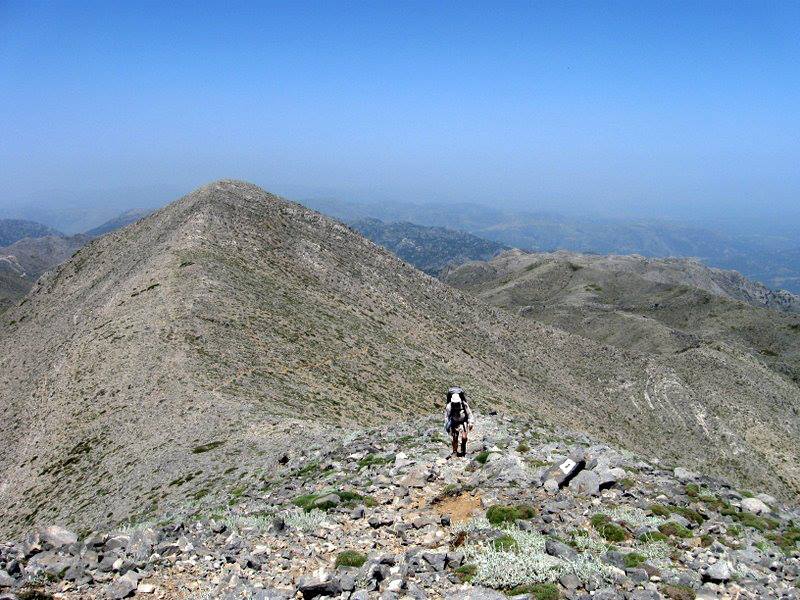
A Year of Memory: the top ten posts on the Patrick Leigh Fermor blog

As the year comes to a close it is time to reflect upon what has passed and to look forward to 2012. I make no predictions for the coming year. There are some things which are almost certain such as the continuing Euro crisis and the much anticipated publication of Artemis Cooper’s authorised biography about Paddy, but forecasts tend to be overtaken by events and are quickly forgotten.

What we can do is to look back on this year in the life and times of Patrick Leigh Fermor. The major event of course was Paddy’s death on 10 June at the age of ninety-six. A sad event for his family and close friends, but also for those of us who admired him for his writing and the life he lived. As the year closed it was time to celebrate his life at his Memorial Service held on 15 December in London.

As I hoped the blog has become a significant source of material about his life including rarely seen video. There have been over 228,000 visits over the last year and you have made it a much more interactive experience by using the comment facility to exchange information, provide your own memories of Paddy, and to express your admiration for him. At the time of his death I opened a page where you could express your thoughts about Paddy which has run to over 120 comments.

Paddy would probably have been somewhat bemused by the whole idea of the blog, but perhaps even more so by the interaction we now have with social networking sites with nearly 4,500 visitors finding the site from Facebook, and 850 via Twitter.

To conclude the year, and as the 365th post on the blog, let us take a look at some of the most popular articles over the last twelve months. Perhaps I can make one promise to you all which is that there is much more to come on the blog in 2012 which includes a lot of material submitted by you the readers of the blog.

The Funeral Service of Patrick Leigh Fermor, 16 June 2011 

Paddy’s funeral service was held on a typical English summer’s day at his home in Dumbleton. He returned to England just one day before his death and is buried beside his beloved Joan.

Obituary from The Independent by Paddy Leigh Fermor’s biographer Artemis Cooper 

Perhaps the definitive obituary.

Patrick Leigh Fermor … This is Your (Ill Met by Moonlight) Greek Life 

The amazing video from the Greek TV programme which reunited the participants of the Ill Met by Moonlight kidnap including Paddy, many of the Andartes, and General Kreipe and his wife.

Anthony Lane’s New Yorker article on Fermor is now free to view 

One of the most comprehensive profiles of Paddy which is now freely available to all. (the pdf download appears to be no longer available – click on the article to magnify to read and then drag your cursor to move around the page)

Intimate portraits from Kardamyli by Miles Fenton 

A series of personal photographs sent to me by Miles Fenton who is Paddy’s nephew and who now lives in Canada where he works as an artist.

Patrick Leigh Fermor recounts the kidnap of General Kreipe on video 

The ever popular video where Paddy talks in some detail about the Kreipe kidnap. (press play on Battle of Crete 7).

Colonel David Smiley 

David Smiley was a fellow occupant of Tara in Cairo with Paddy and Billy Moss et al who continued his military career with some distinction after the war and even led Japanese soldiers in a charge against VietMinh rebels!

Paddy’s eye for detail: Ian Fleming, Bondage, James Bond and Pol Roger 

It is probably the James Bond/Ian Fleming association which maintains the popularity of this article.

If food be the music of love … Bánffy’s lover in Cluj (Kolozsvár) 

No list of popular posts can be complete without the compelling combination of my passions for Paddy, Romania, Miklós Bánffy, and Cluj.

Patrick Leigh Fermor Memorial Order of Service 

The order of service from the joyful occasion that was Paddy’s Memorial Service.

Finally I would like to thank so many of you for your encouragement and support during 2011, and wish you all a very Happy New Year!

Tom Sawford

Snail’s pace to Byzantium: journey of a lifetime

This is a combination of profile and review of Words of Mercury. An interesting piece.

by Ann Elder

First Published in Athens News, 9 Jan 2004

“I HATE the word travel-writer,” London-born, Mani-based Patrick Leigh Fermor told a British journalist in 1995. Under the title Words of Mercury, a selection of his writings was published by John Murray this autumn. The excerpts from half a dozen of his books, some articles and reviews show clearly why he must flinch from being slotted anywhere confining.

As his followers know, he writes with an enchanted pen. Any topic he takes up becomes something ‘rich and strange’. He has a story-teller’s knack of compelling interest, like the Ancient Mariner mesmerizing listeners with his glittering eye. And he has a particular flair for catching the heightened receptivity and visceral thrill felt at new encounters, what Cavafy wished the traveler in his poem Ithaka:

Pray that your journey may be long,
that many may those summer mornings be
when with what pleasure, what untold delight
you enter harbours never seen before.”
(Kimon Friar translation)

Not least, Leigh Fermor wins readers’ allegiance by creating the sense of affinity with an engaging personality, uncensorious, untinged by chauvinism, reveling in life, akin in spirit to A E Housman, onetime professor of Latin at Cambridge, in his lines:

Could man be drunk forever
With liquor, love or fights
Lief should I rouse at mornings
And lief lie down at nights.

Edited by Artemis Cooper, a writer (Cairo in Wartime) and wife of historian Antony Beevor (Crete: The Battle and the Resistance), the book has five parts: travel, Greece, people, books and flotsam (finishing with a poem on Christmas maybe better forgotten). Cooper gives brief introductions to each piece and starts off with a succinct biography.

As an 18-year-old living on a pound a week in a flat off Picadilly in 1933, Leigh Fermor spent more time partying than buckling down to write. As fate had it, he had read The Station: Athos: Treasures and Men by the irreverent young Robert Byron in 1928. The ‘great and misunderstood spirit of Byzantium’ had greatly impressed him.

“About lamp-lighting time at the end of a wet November day, I was peering morosely at the dog-eared pages on my writing table,” he related later. “A plan unfolded – to set out across Europe like a tramp – a pilgrim or a palmer, an errant scholar, a broken knight.”

“The chief destination was never in a moment’s doubt. The levitating skyline of Constantinople pricked its sheaves of thin cylinders and its hemispheres out of the sea-mist; beyond it hovered Mount Athos; and the Greek archipelago.”

In excess of his wildest dreams, he found material to write about. All was grist to his mill, but his mill ground slowly. His writing proved to require long gestation. He became fanatical about polishing his product, and research, the more obscure, the more it seemed to appeal to him, like the origins of the Sarakatsans or the Laz-speaking Greeks of Trebizond. The first book about his venture, A Time of Gifts, came out in 1977, over 40 years later, and the second, Between the Woods and the Water about “those mysterious regions between the Vienna Woods and the Black Sea” as Saki put it – in 1986. In France they called him “l’escargot (the snail) of the Carpathes.”

Real life and events also delayed his writing. The trek took him about a year. He reached his goal on New Year’s Eve, 1934, after ending his traverse of Bulgaria with a splash, falling into the Black Sea on a cold December evening. He came to the coast some 150 miles north of the Bosphorus. “An old man was smoking a narghileh on the doorstep of a hut beside a little boat beached among the rushes – a Tartar fisherman, the only human being I saw all day,” he  wrote over 20 years later in an article in the May 1965 Holiday Magazine.

Darkness fell. “I lost my footing on a ledge and skidded – waist-deep into a pool. Jarred and shaken, with a gash on my forehead and a torn thumb, I climbed out, shuddering with cold. At the bottom of the pool, about two fathoms down, my torch was sending a yellow shaft through sea anemones and a flickering concourse of fish.”

Crawling round the rocks, he came to a veritable Cyclop’s cave sheltering a dozen Greek fishermen and Bulgarian goatherds with their 50 goats and cheese-making apparatus, eating lentils by a thornbush fire. The young wayfarer was soon dried and warm, tossing back slivovitz and eating fresh fried mackerel.

Leigh Fermor is in his element in the climax of this thoroughly Homeric episode, when one of the Greeks, Costa, turns out to be an unsung Nijinsky, his dancing invested with a ‘tragic and doomed aura.’ He performed the stunt  with which Greek cruise ships like to wind up their Greek night shows: dancing with a table between the teeth.

“On a rock, lifted there to clear the floor, the low, round, heavy table was perched. Revolving past it, Costa leaned forward: suddenly the table levitated itself into the air, sailed past us, and pivoted at right angles to Costa’s head in a series of wide loops, the edge clamped firmly in his mouth and held here only by his teeth. The dancer whirled like a dervish, till the flying table melted into a disc, finally returned to its rock, glasses, cutlery, lentil pot and cigarette burning on the edge of a plate undisturbed.”

Time in Greece he dates from his 20th birthday, February 11, 1935, when he arrived at Mt Athos as ‘snowflakes were falling fast’ and ‘in deep snow, trudged from monastery to monastery.’ In Athens later, he frequented the  Romanian embassy, meeting descendants of Phanariot hospodars, Ypsilantes, Ghikas and Cantacuzenes. As with Greece, he fell in love with Balasha Cantacuzene whose forebear, Emperor John Vl, invited the Seljuk Turks to  Europe (and is recalled sorrowfully in a Cavafy poem for having coloured glass not jewels in his coronation crown).

After time writing and painting in an old mill among the lemon groves overlooking Poros, they went to her decaying family estate in Moldavia. Published in 1961 was a perfectly pitched account of a picnic in sunlit  countryside by open carriage and on horseback on September 2, 1939, the last day of peace. “It had been a happy day, as we had hoped, and it had to last us a long time, for the next day’s news scattered the little society for ever.”

Utterly desolating is the Daily Telegraph weekend magazine article of May 1990 on his first breaking through the Iron Curtain in 1965. He found the Cantecuzene sisters in a Bucharest attic eking out a communist state pension  teaching. The gracious old houses he had stayed in among flowery meadows and nightingale-filled woods were psychiatric hospitals, their owners dead.

Leigh Fermor seems happiest gilding the past, writing to ‘the brave music of a distant drum,’ as old Khayyan put it, not dwelling on ‘bitter furies of complexity’ or ‘that gong-tormented sea’ of Yeats’s “Byzantium” which he refers to at the outset in Time of Gifts. The days of his youth were the days of his glory and he evokes them with zest, if no doubt some selective memory. He admits he is beset with ‘retrogressive hankerings,’ but these add to the richness of the embroidered prose dazzling his readers, to twist Yeats a bit. And sometimes he might be shoulder-to-shoulder with the poet:

Of all Arabia’s lovers I alone
Nor dazzled by the embroidery, nor lost
In the confusion of its night-dark folds,
Can hear the armed man speak.

His review of Edmund Keeley’s Cavafy’s Alexandria in a 1977  Times Literary Supplement (TLS) shows him at his serious best. He recalls “the blacked-out, jolly, rather wicked wartime port” he knew as a young British World War Two agent, then is off with Cavafy into the Judaeo-Hellenic Franco-Levantine city “old in sin, steeped in history, warrened with intrigue.”

He notes the depths of irony and dark humour in the notion of citizens aghast with consternation when the barbarians fail to invade them on cue. He ponders “the jagged Ithaka at the long Odyssey’s end; the imminent Ephialtes ready to sell the Thermopylae of the spirit.” He goes on: “Issued without preamble from an atmosphere of earthly delights these warnings sound as harsh, for a moment, as the words of Mercury after the songs of Apollo at the end of ‘Love’s Labour’s Lost.'”

Leigh Fermor is a mild Mercury though. In a review of Oxford classicist CM Bowra’s Primitive Song in a 1962 Spectator he commends him for eschewing ‘a softer technique, swaying to the seductions of every coincidence  and historical chance-shot.’ He himself tends to yield to the tempting vistas of ‘alluring byways.’

The selections from his writings on Greece include a report he wrote for London’s Imperial War Museum archives in 1969 on how the German commander General Heinrich Kreipe was abducted by a Cretan-British force he led in April 1944. While still controversial, the coup makes a cracking good story.

At Anoyeia where captors and captive rested, villagers were ‘convulsed by incredulity, then excitement and finally by triumphant hilarity. We could hear running feet in the streets, shouts and laughter. “Just think, we’ve stolen their General!”‘

Heading south round Psiloritis – Mt Ida of antiquity, over 2,200 metres high and snow-covered till late May – the getaways were to meet a British vessel on the coast to spirit them to Egypt. After a night in a shepherd’s hut sharing  one blanket, “a brilliant dawn was breaking over the crest of Mt Ida which we had been struggling across for two days. We were lying smoking in silence, when the General, half to himself, slowly said (in Latin): ‘See, how it stands, one pile of snow’. I was in luck. It is the opening line of one of the few odes of Horace I know by heart. I went on reciting where he had broken off (likewise in Latin);

‘neath the pressure yield
Its groaning woods; the torrents flow
With clear sharp ice is all congealed.
Heap high the logs, and melt the cold,
Good Thaliarch; draw the wine we ask,
That mellower vintage, four-year-old,
From out the cellar’d Sabine cask.

(Conington’s translation)

The stanzas are much-loved, ‘a picturesque Christmas card,’ say scholars. They evoke the perfect ambience in which to peruse the book. Those unfamiliar with Leigh Fermor will surely have appetites whetted for more. Those who know him and have his books around will dash for them to locate the extracts, then hotly debate the choices, such as the punning Achitectural Notes from a 1994 Spectator: “If you squinch, aisle screen,” and “Put those Saxon  here Norman,” and “Overhung? Per apse, when dais done.”

The author has covered himself. “Pure nonsense is as rare among the arts as an equatorial snowdrop”, he wrote in a review of George Seferis’s Illustrated Verses for Small Children in a 1977  TLS.

“He is consistently hunted by the occupying troops” – The commendation for Paddy’s OBE

It is clear the original intention was to award Paddy a DSO, but that was struck out in favour of an OBE. Paddy was later awarded the DSO for his part in the Kreipe abduction. Interestingly they had difficulties with his surname … Fermor is crossed out and replaced by Fermer!

The commendation reads:

This officer infiltrated into Crete on 22 Jun 42. Since that date, by his courage, cheerfulness and steadfastness, he has been most valuable in maintaining morale among the civilian population in most difficult circumstances.

At different times he has been in charge of our revolutionary and espionage services in the prefectures of Canea, Rethymnon and Heraklion and has been responsible for providing much valuable information regarding enemy activity and intentions. In addition he has made a personal reconnaissance of the ports of Suda and Heraklion under most hazardous circumstances.

On his own initiative he has organised defeatist campaigns in the ranks of German troops. With complete disregard for personal safety … he has carried these enterprises through to a successful conclusion.

He is still in Crete, where his determination, devotion to duty, and steadfastness of purpose have been invaluable in helping the local population to sustain their faith in their allies.

He is consistently hunted by the occupying troops.

Signed by Head of Mission 9 Apr 43.

(requested that should the award be made there should be no publicity for security reasons.)

The source for this is the Kew public records office. This is not in Paddy’s SOE file.


How to Kidnap a General – a review of Ill Met by Moonlight

Patrick Leigh Fermor and Moss

Patrick Leigh Fermor and Moss in German Uniform Prior to the Abduction of General Kriepe

“There was a rush . . . our torches illuminated the interior of the car — the bewildered face of the General, the chauffeur’s terrified eyes . . . [The] chauffeur was reaching for his automatic, so I hit him across the head with my kosh [blackjack] . . . and George . . . dumped him on the road. I jumped in behind the steering-wheel, and . . . saw Paddy and Manoli dragging the General out of the opposite door. The old man was struggling with fury . . . shouting every curse under the sun . . . [We bundled] him into the back seat [and he] kept imploring, ‘Where is my hat? Where is my hat?’ The hat, of course, was on Paddy’s head.”

First published in Time magazine 4 September 1950

Why a German general’s hat should be on a British officer’s head is pretty much the gist of III Met by Moonlight. For as the staff car, driven by Author Moss, moved along the road in northern Crete, sentries at no less than 22 German traffic-control posts smartly saluted the behatted “general”‘ and waved the car on. They had no inkling that prostrate on the floor in the back seat lay the real general, with guns pointed at his head. Twenty days later, on May 16, 1944, kidnaped Major General Karl Kreipe was handed over to British authorities in Cairo, putting finis to what Harold Nicolson has called “one of the best adventure stories that I have read.”*

Behind the Lines. The scheme of raiding German-held Crete and trotting off with the divisional commander was the brain child of youthful Major Patrick Leigh-Fermor and Captain W. Stanley Moss, who had achieved the schoolboy dream of becoming secret agents. At their base in Cairo, they shared a villa and sampled the fleshpots of Egypt. It was in a nightclub that they first hatched the plot that was to land their party from a motor launch on the south coast of Crete.

The two Britons could depend on help from guerrillas and from intelligence corpsmen hidden in the hills. One British agent, a Cretan, actually lived next door to General Kreipe’s Villa Ariadne, near the north coast. Through him, Moss and Leigh-Fermor learned the general’s daily routine to a nicety—off to headquarters by car at 9 a.m., back in the evening any time after 8 or 8:30 p.m., depending on how many rubbers of bridge he stayed to play.

Slowly, painstakingly, the two agents planned a night ambush. Hidden guerrillas lay at vantage points on the road to the villa, a buzzer and torch flashes relayed warnings of the general’s approach to the waiting kidnapers, who were in German uniforms.

After the snatch, the general (who quickly became resigned and quite amiable) was marched from cave to cave half the length of Crete, while the furious Germans fruitlessly finecombed the island. By the time a Royal Navy motor launch nosed in to a southwest beach and took off both captive and captors, Moss and Leigh-Fermor knew that they had achieved their principal aim—to astound the enemy and make him the laughingstock of the local population.

Author Moss wrote his story in the mid-’40s, but the British War Office refused to let it appear then. Today, having reached the elderly age of 29, Moss is a bit abashed by the “22-year-old exuberance (almost bumptiousness) with which it was written.” Bumptious or not, it is one of the most melodramatic and audacious stories of the war.

*And notably more successful than another daring plan hatched in Cairo. In November 1941, British commandos under 24-year-old Lieut. Colonel Geoffrey Keyes made their way 200 miles behind Axis lines in an attempt to capture or assassinate Nazi General Erwin Rommel. At night, with cork-blackened faces, Keyes and his commandos achieved complete surprise, wrecked Rommel’s HQ with grenades. But Keyes was killed and Rommel was untouched: he had gone to a birthday party.

Post-operation interrogation of Patrick Leigh Fermor

A very revealing file from Paddy’s debrief upon his return from Crete. He operated under the cover name of Michaelis Frangielakis. It is very extensive discussing day-to-day operations and organisation in Crete. An interesting conclusion is that Italian interrogations of prisoners were less brutal than those of the Germans, and were more successful being psychologically more sophisticated: “The Italians understood the Mediterranean mind and methods much better than the Germans.”

Joanna Lumley’s Greek Odyssey – tonight in Crete

Apologies for a second post so soon but it appears that in tonight’s episode Joanna will visit Crete and according to the blurb ‘… in the high remote mountains she spends time with the shepherds who played a key role fighting the Nazi occupation alongside British SOE Agent, Patrick Leigh Fermor – whose exploits became the basis for the film Ill Met by Moonlight.’ Don’t expect too much accuracy but I am sure that there will be oodles of gushing admiration for Paddy. 

Apparently ‘… Crete is also the birth place of Zeus and the home of raki, a local firewater that fuels traditional festivities.’ Enjoy but only available in the UK … and I am currently in Romania. 😦

A map of Crete as drawn by Paddy on operations in Crete

This map was  hand drawn by Paddy, probably whilst on operations in Crete 1943-44, including, perhaps, a self-portrait. The map is from Paddy’s SOE file.

The reverse of the map …

The drawing is typical of Paddy’s style. Compare it with this sketch sent to us by John Stathatos, about which John tells us:

This delightful sketch of himself in Cretan dress was penned at the top of a letter to my mother dated 17th November, 1944; as he explains, “I have been lost again in a forest of whiskers for about three weeks, and my old mountain chums are down in the plains now, looking incredibly wild and shaggy”.
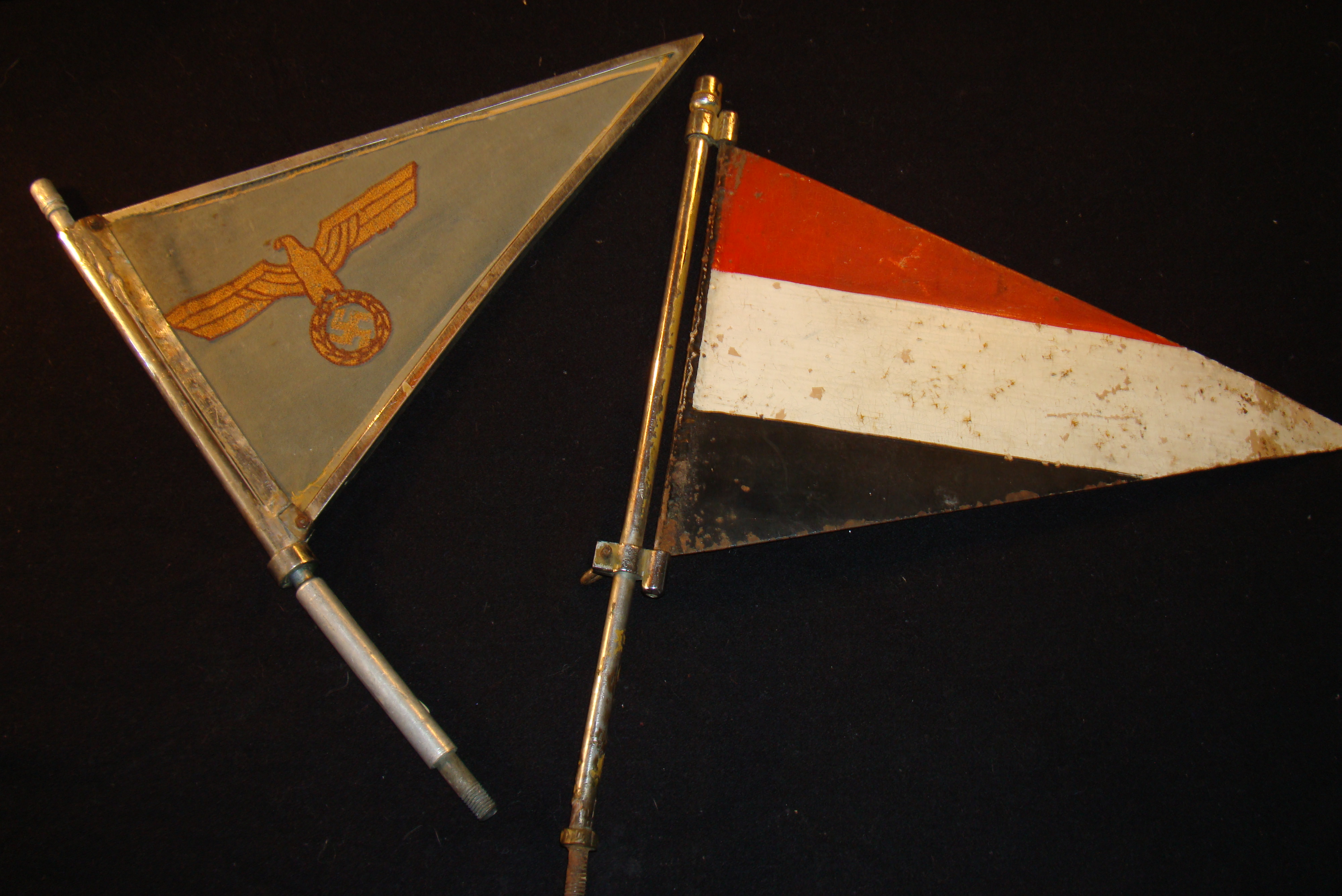
"I have been lost again in a forest of whiskers for about three weeks, and my old mountain chums are down in the plains now, looking incredibly wild and shaggy"

Related article:

Traveller’s Rest by John Stathatos

The oral heroic poetry of the Kreipe kidnap

I have extracted this from a fairly long book review about Professor M I Finley’s 1978 revised edition of his book The World of Odysseus. It has a fascinating section about an oral heroic song from Crete that is about Paddy and the Kreipe abduction, and how it had evolved in just the few years since the end of the war.
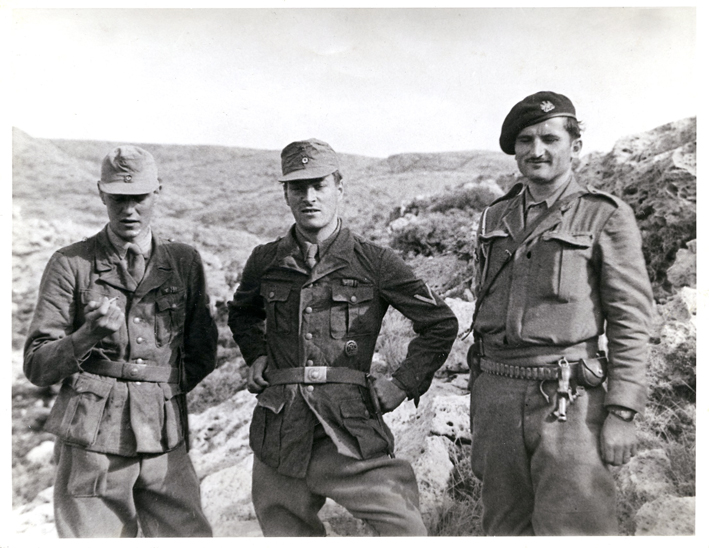
From Triumph of a Heretic by Bernard Knox, first published in the NYRB 29 June 1978.

It is now more than two decades since the Professor of Ancient History at Cambridge (who was then an ex-professor from Rutgers) published a book which in a limpid, hard-hitting prose and with a bare minimum of footnotes attempted to draw “a picture of a society, based on a close reading of the Iliad and Odyssey, supported by study of other societies….” This is how Professor Finley characterizes the book now, in the preface to a revised edition which makes only minor changes in the original text but adds two valuable and stimulating appendices, replying to criticism and bringing the argument up to date. He goes on to claim that “the social institutions and values make up a coherent system” which, however strange to us, is “neither an improbable nor an unfamiliar one in the experience of modern anthropology.” The fact that the later Greeks and the nineteenth-century scholars found it incomprehensible on its own terms he dismisses as “irrelevant” and adds that “it is equally beside the point that the narrative is a collection of fictions from beginning to end.” ….

… Oral heroic poetry is not a medium that preserves historical fact—as Finley pointed out, with a reference to the Chanson de Roland, which made out of a Basque attack on Charlemagne’s rear-guard an assault by Muslim beys and pashas, all carefully identified by names which are “German, Byzantine, or made-up.” A modern example, from the Second World War and from Greece itself, strengthens his case and gives a fascinating glimpse of epic “history” in the making.

In 1953 the late Professor James Notopoulos was recording oral heroic song in the Sfakia district of western Crete, where illiterate oral bards were still to be found. He asked one of them, who had sung of his own war experience, if he knew a song about the capture of the German general and the bard proceeded to improvise one. The historical facts are well known and quite secure. In April 1944 two British officers, Major Patrick Leigh Fermor and Captain Stanley Moss, parachuted into Crete, made contact with Cretan guerrillas, and kidnapped the German commanding general of the island, one Karl Kreipe.

The general was living in the Villa Ariadne at Knossos, the house Evans had built for himself during the excavations. Every day, at the same time, the general was driven south from the Villa to the neighboring small town of Arkhanes, where his headquarters were located. He came home every night at eight o’clock for dinner. The two British officers, dressed in German uniforms, stopped the car on its way home to Knossos; the Cretan partisans overpowered the chauffeur and the general. The two officers then drove the car through the German roadblocks in Heraklion (the general silent with a knife at his throat) and left the car on the coast road to Rethymo. They then hiked through the mountains to the south coast, made rendezvous with a British submarine, and took General Kreipe to Alexandria and on to Middle East Headquarters in Cairo.

Here, in Notopoulos’s summary, is the heroic song the bard produced:

“An order comes from British and American headquarters in Cairo to capture General Kreipe, dead or alive; the motive is revenge for his cruelty to the Cretans. A Cretan partisan, Lefteris Tambakis (not one of the actual guerrilla band) appears before the English general (Fermor and Moss are combined into one and elevated in rank) and volunteers for the dangerous mission. The general reads the order and the hero accepts the mission for the honor of Cretan arms. The hero goes to Heraklion, where he hears that a beautiful Cretan girl is the secretary of General Kreipe.

“In disguise the partisan proceeds to her house and in her absence reads the [English] general’s order to her mother. When the girl returns he again reads the general’s order. Telling her the honor of Crete depends on her, he catalogues the German cruelties. If she would help in the mission, her name would become immortal in Cretan history. The girl consents and asks for three days time in which to perform her role. To achieve Cretan honor she sacrifices her woman’s honor with General Kreipe in the role of a spy. She gives the hero General Kreipe’s plans for the next day.

“Our hero then goes to Knossos to meet the guerrillas and the English general. ‘Yiassou general,’ he says. ‘I will perform the mission.’ The guerrillas go to Arkhanes to get a long car with which to blockade the road. Our hero, mounted on a horse by the side of the blockading car, awaits the car of Kaiseri (that is what the bard calls Kreipe). The English general orders the pistols to be ready. When Kreipe’s car slows down at the turn he is attacked by the guerrillas. Kreipe is stripped of his uniform (only his cap in the actual event) and begs for mercy for the sake of his children (a stock motif in Cretan poetry).

“After the capture the frantic Germans begin to hunt with dogs (airplanes in the actual event). The guerrillas start on the trek to Mount Ida and by stages the party reaches the district of Sfakia (the home of the singer and his audience; actually the general left the island southwest of Mount Ida). The guards have to protect the general from the mob of enraged Sfakians. Soon the British submarine arrives and takes the general to Egypt. Our bard concludes the poem with a traditional epilogue—that never before in the history of the world has such a deed been done. He then gives his name, his village, his service to his country.”

So much for epic history. Nine years after the event the British protagonists have been reduced to one nameless general whose part in the operation is secondary and there can hardly be any doubt that if the song is still sung now the British element in the proceedings is practically nonexistent—if indeed it managed to survive at all through the years in which Britain, fighting to retain its hold on Cyprus, became the target of bitter hostility in Greece and especially among the excitable Cretans.

It took the Cretan oral tradition only nine years to promote to the leadership of the heroic enterprise a purely fictitious character of a different nationality. This is a sobering thought when one reflects that there is nothing to connect Agamemnon, Achilles, Priam, and Hector with the fire-blackened layer of thirteenth-century ruins known as Troy VII A (the archaeologists’ candidate for Homer’s city) except a heroic poem which cannot have been fixed in its present form by writing until the late eighth century, at least four illiterate centuries after the destruction.

To read the full article click here.

Hunting Hitler’s Henchmen on National Geographic tonight at 7.00 pm

This programme showing tonight covers the story of Paddy and Moss and the brave Cretans who captured General Kreipe. However, it comes with an ‘accuracy warning’. It appears that the makers approached Tim Todd and fellow experts but in the end Tim did not work with them as it appeared that the makers wished to stray from some of the facts. However, for those who know little enough about this, it may be no worse than the Powell-Pressburger movie. I have no idea if 7.00 pm means UK time or some other GMT + or – time.

You can find out more on the National Geographic website. The blurb describes it as follows:

Their bravery has inspired countless films but, until now, the real story of some of Britain’s greatest war heroes has remained in the shadows.

Hunting Hitler’s Henchmen is a film about some of Britain’s bravest military. With ex-special forces soldiers as guides, venture beyond the movies to meet the snatch squads: commandos sent behind enemy lines to take out Hitler’s most-feared generals.

They slipped into Nazi-led Libya to kill the infamous Desert Fox, General Erwin Rommel, and succeeded in snatching General Heinrich Kreipe from under the noses of 15,000 soldiers.

Risking their lives to disrupt the Nazi war machine, these are the heroes who inspired Hollywood: incredible men sent to eliminate Hitler’s top brass.

Getting it right and that Taki article

I have to admit that there have been times over the last two years, when, running two blogs, I have either clearly been wrong to publish something, or I have posted an article that has created significant controversy and I subsequently wished I had not done so.

Life is always easy if one takes the uncontroversial path. I dare not mention the post I had in mind a year or so ago with the working title “Patrick Leigh Fermor: the Court Jester?” which was sparked by an interesting series of conversations and impressions I gained from reading ‘In Tearing Haste’. Whilst remaining an ardent admirer of Paddy, it would be wrong to say that he was a saint and beyond criticism. Few of us are.

Which brings me neatly to Taki, and the article that I posted last week entitled ‘Better a Hero Than a Celebrity’. Clearly Taki believes that he himself is beloved by all and can say and write what he wishes without fear of recrimination. He has a very old and a very thick skin. The article has sparked some significant debate in the comment section and I think it is worth bringing this to the attention of a wider audience for it sheds some light on Taki’s character and addresses some of the inaccuracies that I warn of in the introduction.

However, I stand by my response to the first comment which was as follows. Taki Theodoracopulos has had a place in European society over the last fifty years or so. Some may not like him, but clearly he has a role in commenting on the lives and loves of celebrities, which today appears to be of greater importance than the state of European banks and the future of the Euro; it is very big business. In fact Taki was one of the first ‘gossip columnists’. Whatever the inaccuracies of his article it meets the criteria of this blog. It is about Paddy and does possibly bring some new perspectives. This blog is fundamentally an archive of all on-line material about Paddy, and therefore the article stays.

I think it would be useful to all to highlight the points discussed in the Comments section, particularly the major error Taki made in stating that Paddy had killed Albert Fenske, the driver of General Kreipe’s car. Paddy had nothing to do with his death which was against orders and not at all part of the plan. Additionally the story about Paddy witnessing the death of the last German commanding General of Crete is pure fiction; it just did not happen like that.

So what is the moral of this tale? Yes, I would like it to be all sweetness and light, but you can’t please all the people all of the time. Let’s keep up the debate and remember I am more than willing to take in and publish articles that you have found or have written yourself.

Here are the comments up to this evening …..

From Chris Lawson:

“Known to the cognoscenti as Taki Takealotofcokeupthenose, Theodoracopulos is a man for whom the word “snob” might have been invented. Note the casual dropping of Agnelli’s name into his piece and Taki’s snide comments on Dirk Bogarde. It is NOT true that Paddy killed the driver of Kreipe’s car. Apart from the story of the execution of Kreipe’s successor (Name, details of crimes? Doesn’t mean Kreipe’s predecessor?), this brings nothing new to the saga of Paddy’s life. I would respectfully request that you remove the piece.”

My reply:

“No Chris – I don’t do censorship. Your comment can stand as a beacon to my error in posting it. However, Taki has a place in society over the last 50 years and this blog is a repository about Paddy. It stays.”

Chris Lawson responds:

“Fine by me. Of course it was not an error posting it and I agree entirely and whole-heartedly about what you say about censorship. Yes, Taki certainly has a place in the cultural pantheon de nos jours, and my thoughts are just the latest in a stream of negative comments directed at the former inmate of H.M. prisons. Whatever else one has to say about the gent, he is certainly one of life’s great survivors.”

Tim Todd (who runs the Il Met by Moonlight site and is an expert on the operation) interjected:

“That Taki could be so fundamentally wrong about the death of Albert Fenske, Kreipe’s driver, tells me much about the appropriately named Taki.

I believe that Fenske’s death, at the hands of two of his Cretan andartes and contrary to instructions, caused Paddy no end of personal grief, perhaps second only to the accidental shooting of his Cretan friend. I once listened to Paddy talk about this latter incident when, in the mountains after a cadet’s exercise, he failed to check his rifle before cleaning it when it was returned to him. I have to tell you he was still mortified by the whole business and sixty odd years on he was still visibly upset by it. Tom our webmaster and I, know from the best of sources that Fenske’s death was much regretted by Paddy. My own feeling is that but for that we might have seen Paddy’s own account of the abduction published.

I am thoroughly disappointed that anyone claiming to know the man would dare suggest Fenske died at Paddy’s hand. Paddy, perhaps the most honourable man I have ever met, would though have accepted responsibility for anything that may have happened under his command. He was that sort of man.

It is perhaps as well that Tom has published Taki’s piece for it provides an opportunity to compare the two and set the record straight.

I am pleased to say that, through Annette Windgass, Fenske’s family have recently been made aware of Paddy’s great sadness of that particular outcome of the operation.”

 Chris Lawson gave us some more about the story of the General’s death:

“On the General who succeeded Kreipe, and two predecessors

The Commandant of Crete, appointed on 1 May 1944 after Kreipe’s kidnapping, was Generalleutnant Helmut Friebe, Commander of the LXIV Armeekorps. He was captured by the Americans in May 1945 and released in 1947.

Two former commanders of Crete were tried and executed in Athens on 20 May 1947, the anniversary of the German invasion of Crete. One was the bloodsoaked Friedrich-Wilhelm Mueller, who was to have been the original target for the kidnapping until he was replaced by Kreipe. Mueller had a reputation for brutality and numerous atrocities were committed under his regime.

The other was General Bruno Bauer, a paratroop officer, who was appointed in 1942, replacing General Alexander Andrae. Bauer had gained the reputation of being hard and fair, and the “most humane commander” of Crete. Antony Beevor describes him as truly unfortunate, as he was executed for crimes “committed under another general”. Three years later the Association of Former German Paratroopers requested that his remains be returned to Crete. George Psychoundakis, resistance fighter and author of the Cretan Runner (already much-mentioned by Tom), reburied his remains.

Taki’s fourth paragraph is a complete fantasy.”

George joined the argument:

“The only readable part of Taki’s remembrance (sic ) is the last sentence, horrible in its clarity and even worse that it is written by someone whose trotters are deep in that particular trough.

His comments however, are an excellent example of the sponger’s wiles. The mildly mocking comment by Agnelli, humbly repeated to establish the writer’s honesty, while at the same time making it clear that the writer enjoys the same societal position.

Then the personal revelations as told uniquely to Taki, and no other. Who is to say it did not happen? Taki’s favourite method of asserting inside knowledge always has been to quote the ‘ confidences ‘ of dead people.

The lustrously depicted tale of an unrepentant Nazi Officer going blithely to his death comes straight out of ‘Boys Own ‘.

Next we have the gay bitchiness in his description of PLF’s relationship with his wife. Once again the vampire straddles an innocent’s grave seeking the lifeblood of fame by association.

Chris Lawson ( thank you ) marshalled all the necessary facts to give the lie to Taki’s comments. He was probably as irked by them as I was.”

Tim Todd concludes it all: 

“Inaccurate accounts of historical events, for personal vanity, or a film-makers preference for ‘a story’ over fact, infuriate me. This is especially so when such accounts may subsequently become part of history for those without inquiring minds. Last week saw the release of a new video by National Geographic half of which was about the abduction of Kreipe. It is appallingly bad and inaccuracies abound. I am so glad that some colleagues of mine and I, who know a thing or two (but not all) about the abduction, rejected the film makers request to assist them for it has turned out every bit as bad as we feared. Having read some of Paddy’s comments about Ill Met By Moonlight, I can imagine what he might of thought of the latest misrepresentation.”

… and you say ….??