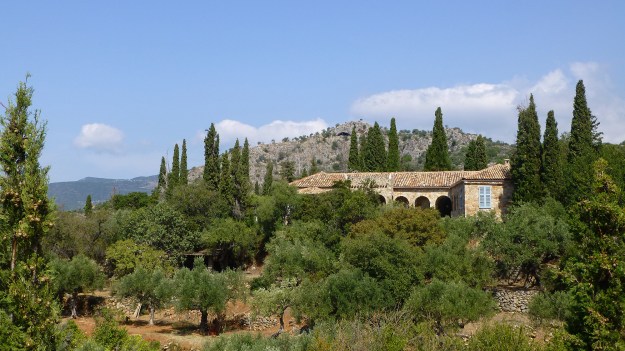
The house is not always empty …

It appears that some lucky people have been allowed to stay in the house at Kalamitsi. Who are they and did they pay? From a lovely new blog by Max Long.

Eventually I did find a room, and wallowed in the privilege of having a bed, a balcony overlooking the mountains, a table to write on. On my first night I had considered, in utter disappointment and desperation, going to Paddy Leigh Fermor’s house just a few kilometers south from the main village, to find some comfort by camping there. As I was to find out two days later, it was a very good thing I didn’t.

A few years ago, a Guardian journalist came to Kardamyli with similar intentions. He swum to Paddy’s house from the harbour, and I decided that it would be a nice idea to do the same. Following the footsteps of a footstep-follower.

I am not a confident swimmer, and have barely swum out a few tentative strokes in all the beaches I’ve been to so far, so it was quite a mental struggle for me to embark on what was to be a half hour swim along the rocks to the little pebble beach with a flight of stone steps leading up to the house. When I got there, there was a couple on the beach, but they spoke little English and could not confirm that this was Paddy’s house, so I walked up the steps anyhow, and soon the pebble mosaics on the floor, the large house of stone and painted grey-blue French windows, the seating area looking over the bay, confirmed that I was indeed at the right place.

However, it was with utter horror that I saw the freshly trimmed garden plants and trees, the recently used hosepipe… the open windows, the sound of plates watering the mouths of lunchers… the exposed breasts sunning themselves in the corner. I scuttled away, undetected but nevertheless thoroughly embarrassed. I later made for the front door. I could hear voices, evidence of clear use. I felt for a moment I might have traveled back in time to a former splendor of the wonderful house. All the reports by journalists and bloggers online had been of a desolate, abandoned home. I inquired at the front door. Yes, this was his house. No, I couldn’t visit. I walked away, burning with disappointment, but also with curiosity. The house is now in the hands of the Benaki museum, and my understanding is that it will be converted into a writer’s retreat or museum of its own. Who were these people who had the privilege to enjoy the place in the meantime?

(I visited the house again on my last morning and it was only after a lot of pleading that a disgruntled, shirtless, hairy and sandalled old gentleman allowed me a brief – less than two minute – look at the place. None of the moments of contemplation I had hoped for. The insistence with which he refused to allow me to access the house, and the simplicity of my request, made me think he could only be an extraordinarily cruel man. Sitting in Paddy’s study surrounded by books, he refused to give me either his name or any inkling of the Benaki’s future plans. I left, once again, in a rage.)

Full article here.

Another correspondent in an email to me this week coroborates the fact that people seem to be staying at or using the house …

I too was in Kardamyli in August.  I too walked around the outside of the house and up the steps from the beach.  I didn’t want to trespass, but when I realised there were people living there I decided to knock at the gate and ask them what was happening to the house.  Two twenty -something year old Greek girls in bikinis were there, and obviously staying there.  They wouldn’t let us visit.  I’ve no idea who they were.  My first reaction was that Paddy and Joan would surely be upset that their wishes are clearly not being respected.  On the other hand, perhaps it is good that someone is there because there are clearly a lot of Paddy pilgrims, and sooner or later there will be someone with less honorouble intentions, who enters the house and takes something away with them.
I can only assume they were local girls and that his old housekeeper or someone local must have an eye on who is there.  The place is obviously in need of urgent attention.
Mark

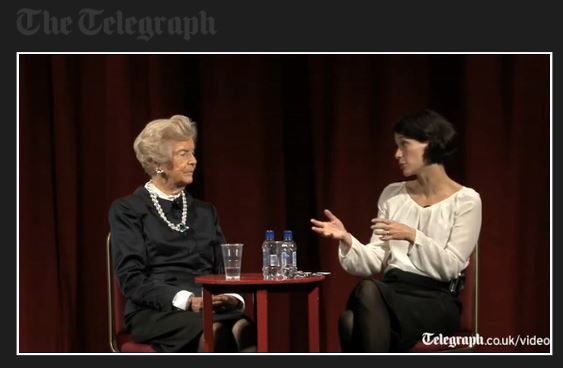
Duchess of Devonshire on her sisters and meeting Hitler

Debo was always confident in front of the camera and here she talks about some of the extraordinary events in her life. She was the girl who within a few short months danced with the young JFK and then had tea with Hitler. They don’t make ’em like this anymore.

The video has a low level of sound. Perhaps best to listen with headphones after the irritating advert.

Click on the picture to play.

Capture

Dowager Duchess of Devonshire – obituary

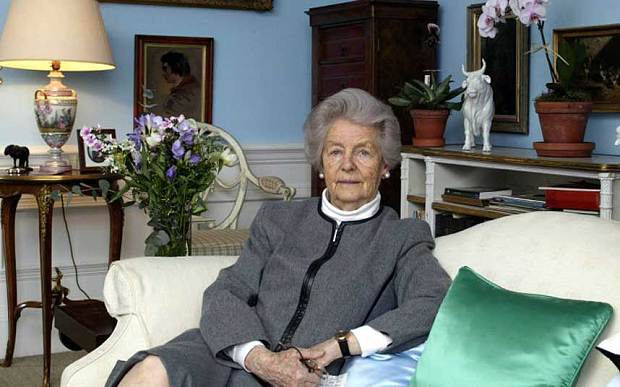
The Duchess at Chatsworth in 2005 Photo: REX

The Duchess at Chatsworth in 2005 Photo: REX

The Dowager Duchess of Devonshire was the devoted chataleine of Chatsworth and the last of the Mitford sisters.

First published in the Telegraph 24 September 2014

The Dowager Duchess of Devonshire, who has died aged 94, was the youngest and last of the celebrated Mitford sisters, and the chatelaine of Chatsworth, the “Palace of the Peak” in Derbyshire, which from the 1950s onwards she made into both a glorious public spectacle and, really for the first time, a consummately stylish private home.

She was born Deborah Vivien Freeman-Mitford on March 31 1920, the sixth daughter of the eccentric 2nd Lord Redesdale, well-known to readers of Nancy Mitford’s novels as “Uncle Matthew”. “Debo” (as she was always known) was repeatedly assured throughout her childhood by her eldest sister Nancy that “everybody cried when you were born” on account of her being yet another girl.

Debo took refuge in quaintly odd pursuits. Another sister, Jessica (“Decca”) Mitford, described her spending “silent hours in the chicken house learning to do an exact imitation of the look of pained concentration that comes over a hen’s face when it is laying an egg, and each morning she methodically checked over and listed in a notebook the stillbirths reported in the vital statistics columns of The Times”.

As the youngest in a family of seven, Debo was constantly and mercilessly teased, despite the bellowing championship of her father. She was passionately fond of the country and country pursuits, and did not suffer from the brilliant, restless boredom so well-documented by her sisters. None of the girls was sent to school, as their father thought education for girls unnecessary; a succession of governesses was employed, one of whom, Miss Pratt, had her charges playing Racing Demon daily from 9am until lunchtime.

As a girl Debo was a fine skater, and was invited to join the British junior team; but the idea was vetoed by her mother. As an adolescent she witnessed several scandals surrounding her sisters — Diana’s divorce and remarriage, Jessica’s elopement, Unity’s involvement with Hitler — as well as the disintegration of her parents’ marriage.

She was famous for having chanted as a child, in moments of distress: “One day he’ll come along, the Duke I love.” When she married Lord Andrew Cavendish in 1941, however, he was a mere second son. Debo wrote to her sister, Diana Mosley, then in Holloway prison: “I expect we shall be terrificly [sic] poor but think how nice to have as many dear dogs and things as one likes without anyone to say they must get off the furniture.”

Debo remained surrounded by dogs for the rest of her life. In The House: A Portrait of Chatsworth (1982), the delightful and bestselling book she wrote, in between doing a lot of sums to illustrate that 365 ordinary-sized residences could fit into The House, with its 7,873 panes of glass and 53 lavatories, the Duchess took care to inform the reader: “It’s a terrible place to house-train a puppy.”

In 1944 Andrew’s elder brother was killed in action, and in 1950 the 10th Duke unexpectedly died. The Devonshires were left with 80 per cent death duties which took 17 years to settle. In 1959 they moved to Chatsworth, uninhabited since before the war.

When she had first seen the house after the war she had thought it “sad, dark, cold and dirty. It wasn’t like a house at all, but more like a barracks.” It had not been redecorated for decades, and during the war had been home to a girls’ boarding school.

But Debo embraced her role of chatelaine gaily, as she set about redecorating the house. “Debo has become the sort of English duchess who doesn’t feel the cold,” reported Nancy, disconsolately.

The Duchess was both beautiful and deceptively literate, although exceptionally modest. Lucian Freud painted her when she was 34, and Debo used to delight in the story of how an old woman was heard remarking, as she stood before the painting: “That’s the Dowager Duchess. It was taken the year before she died.” When the painting was completed, Freud allowed the Duke and Duchess to see it at his studio. “Someone else was already there,” she later recalled. “Andrew looked long at the picture until the other man asked, ‘Who is that?’ ‘It’s my wife.’ ‘Well, thank God it’s not mine’.”

She also sat for Annigoni, to whom she found herself apologising for her face: “I know it’s not the sort you like.” The artist replied, not very graciously: “Oh well, it doesn’t matter, it’s not your fault.”

The Duchess kept aloof from her family’s literary and political pursuits. She visited her Fascist sister Diana in prison, and her Communist sister Decca in California, keeping a light touch with both.

After visiting Decca and doing the rounds of her Communist friends, Debo sent Decca a photograph of herself and her husband, dressed in their ducal robes for a coronation, garlanded with orders, chains and jewels, staring stonily ahead. Beneath the photo she wrote: “Andrew and me being active.”

Nancy used to address letters to her sister “Nine, Duchess of Devonshire”, her contention being that Debo never developed beyond the mental age of nine. Certainly the Duchess always maintained that she never read books and that her favourite reading matter was the British goatkeepers’ monthly journal, Fancy Fowl magazine and Beatrix Potter.

The epigraph in her book The House is taken from Hobbes, who was tutor to the 2nd and 3rd Dukes of Devonshire: “Reading is a pernicious habit. It destroys all originality of sentiment.”

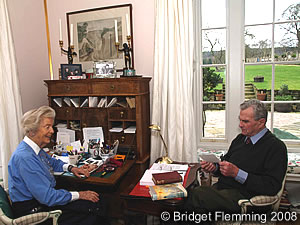
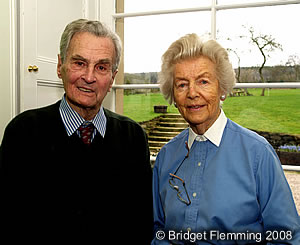
Debo and Paddy 2008

Debo and Paddy 2008

Paddy and Debo 2008

Paddy and Debo 2008

Chatsworth, however, was always filled with literati, and Patrick Leigh Fermor, a great friend, was determined that Debo was a closet reader, who sneaked books the way alcoholics sneak whisky. As a writer, she was a natural storyteller with a knack for the telling phrase and a delight in human eccentricities.

Certainly The House is a wonderfully rich and beautifully written work. It is organised around a Handbook of Chatsworth written in 1844 in the form of a letter from the “Bachelor Duke” (the 6th) to his sister and is full of very funny accounts of the foibles of earlier dukes and duchesses. Among other stories, it chronicles the war waged against woodworm by the wife of the 9th Duke (the former Lady Evelyn Fitzmaurice). Believing concussion to be the answer, the formidable beldame kept a little hammer in her bag to bang the furniture where they lurked.

The Duchess showed acute commercial flair in raising money for the Chatsworth estate, making a nonsense of her sister Nancy’s generalisation in Noblesse Oblige that aristocrats are no good at making money. She presided over the bread, cake, jam and chutney industries which grew up to feed the farm shop, which was described by the late Hugh Massingberd in The Daily Telegraph as “every greedy child’s idea of what a shop should be”.

Although the house had been open to the public ever since it was built, it was not until 1947 that the revenue from visitors went towards its upkeep. In 1973 the Duchess set up the Farmyard at Chatsworth, “to explain to the children that food is produced by farmers who also look after the land and that the two functions are inextricably mixed”. A little boy from Sheffield watched the milking, then told the Duchess: “It’s the most disgusting thing I’ve ever seen in my life. I’ll never drink milk again.”

Visitors to Chatsworth are able to buy items such as souvenirs, books, porcelain, knitwear, while the Farm Shop sells estate produce. A mail order business was established, along with cafés, restaurants and a commercial catering business.

Chatsworth Carpenters was an especially successful venture. The Duchess, in her gardener’s apron, was for many years a familiar sight at the Chelsea Flower Show, where she was to be seen busily selling furniture fit for a stately home to the owners of small town gardens.

The 11th Duke once observed: “My wife is far more important to Chatsworth than I am.” He added: “She is on the bossy side, of course; but I’ve always liked that in a woman.” She dealt heroically with her husband’s philandering nature and his weakness for alcohol, and the marriage was a happy one.

Despite living in a house overflowing with masterpieces by such artists as Rembrandt, Veronese, Murillo, Poussin and Reynolds, the Duchess always maintained that Beatrix Potter was her favourite artist, and Miss Potter’s enchanted world may indeed be the key to appreciating the genius loci of Chatsworth.

The Duchess was an ardent conservationist of vernacular architecture and was president of the Derbyshire Historic Buildings Trust. She also chaired the Tarmac Construction Group and the Rare Breeds Survival Trust.

Her devotion to making Chatsworth a viable financial concern was well rewarded in 1981 when a charitable trust, capitalised by the sale of certain treasures, was established to preserve The House for posterity.

In 2001 the Duchess published Counting My Chickens… and other home thoughts, a collection of sharply observed musings on Chatsworth, gardening, poultry, dry stone walling, bottled water, the United States, Ireland, the Today programme, the Turner Prize and other topics. On the modern fashion for hiring business consultants, she wryly observed: “He arrives from London, first class on the train… Most probably he has never been this far north, so the geography and the ways of the locals have to be explained, all taking his valuable time. After a suitable pause of a few weeks (he is very busy being consulted) a beautiful book arrives, telling you what you spent the day telling him.”

After her husband’s death in 2004 she published a poignant tribute in Memories of Andrew Devonshire (2007). Other publications included In Tearing Haste: Letters between Deborah Devonshire and Patrick Leigh Fermor (2008); Home to Roost … and Other Peckings (2009), a collection of occasional writings; and Wait for Me!… Memoirs of the Youngest Mitford Sister (2010). She was also a contributor to The Spectator and The Daily Telegraph. Her last book, All in One Basket, which brought together two earlier volumes of occasional writings, was published in 2011.

The Duchess claimed to buy most of her clothes at agricultural shows, adding: “After agricultural shows, Marks & Spencer is the place to go shopping, and then Paris. Nothing in between seems to be much good.”

Her dislikes included magpies; women who want to join men’s clubs; hotel coat-hangers; and drivers who slow down to go over cattle grids. She regretted the passing of brogues, the custom of mourning, telegrams, the 1662 Prayer Book, pinafores for little boys and Elvis Presley (“the greatest entertainer ever to walk on a stage”).

In 2003 she published The Chatsworth Cookery Book, introducing it with the words: “I haven’t cooked since the war.”

Debo Devonshire was appointed DCVO in 1999.

She is survived by her son Stoker, the 12th Duke of Devonshire, and by two daughters.

Dowager Duchess of Devonshire, born March 31 1920, died September 24 2014.

Related articles:

Listen to the 2010 BBC Radio 4 interview on Woman’s Hour here.

Never Marry a Mitford

The Duchess of Devonshire talks about Patrick Leigh Fermor

Our archive of articles about or including Debo

Paddy’s great friend Debo Devonshire, last of the Mitford sisters, has died

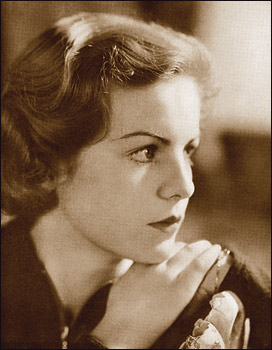
A young and beautiful Debo

A young and beautiful Debo

Deborah, or Debo as she was known to her friends, the Dowager Duchess of Devonshire, and the last surviving Mitford sister, has died aged 94. This announcement from the BBC news website. She was the last of Paddy’s friends from his younger days left alive. It is the end of an era.

Her son, the Duke of Devonshire, announced the death in a statement from Chatsworth House, her stately home.

The Mitford sisters fascinated – and sometimes scandalised – British society in the 1940s.

Unity was a friend of Hitler, Diana, the second wife of British fascist leader Sir Oswald Mosley, and Jessica a left-wing polemicist.

Deborah was more focused on her home life. Listen to the 2010 BBC Radio 4 interview on Woman’s Hour here.

Nicknamed the “housewife duchess”, she made Chatsworth one of the most successful and profitable stately homes in England after marrying Andrew Cavendish in 1941.

But along with her siblings, during her lifetime she moved in the same circles as Sir Winston Churchill, John F Kennedy and Evelyn Waugh.

She also accompanied her sister Unity to tea with Hitler in 1937, was painted by Lucian Freud, and amassed a collection of Elvis Presley memorabilia.

The statement from her son said: “It is with great sadness that I have to inform you that Deborah, Dowager Duchess of Devonshire, has passed away peacefully this morning.”
Deborah Deborah was the youngest Mitford sister

It added that an announcement about funeral arrangements would be made shortly.

Born Deborah Vivien Freeman-Mitford on 31 March 1920, the duchess was the sixth daughter of the 2nd Baron Redesdale.

The Mitfords’ childhood at their family home in the Oxfordshire village of Swinbrook was immortalised in her sister Nancy’s novels, The Pursuit of Love and Love in a Cold Climate.

Her parents made a poor job of hiding their disappointment that Deborah had not been born a boy, leaving Thomas their only son.

The Mitfords’ father disapproved of educating girls, famously insisting that hockey would make their ankles fat, and Deborah spent her formative years skating and hunting.

Her sister Unity’s infatuation with Hitler saw the young Deborah invited to tea with the German dictator, although the visit made little impression on her.

“If you sat in a room with Churchill,” she later recalled, “you were aware of this tremendous charisma. Kennedy had it too. But Hitler didn’t – not to me anyway.”

At Chatsworth, the Duchess took on a major role in running the house and its garden, which have been used in a number of film and TV productions.

In July 2002, the duchess and her husband spoke out against the government’s proposed ban on fox hunting.

Made a dame in 1999, she became the Dowager Duchess of Devonshire in 2004 after her husband died and their son inherited his title.

She wrote a book about her life, Wait for Me: Memoirs of the Youngest Mitford Sister, which was published in 2010.

Related articles:

Never Marry a Mitford

The Duchess of Devonshire talks about Patrick Leigh Fermor

Our archive of articles about or including Debo

A Place in the Sun – The very slow progress toward a permanent retreat

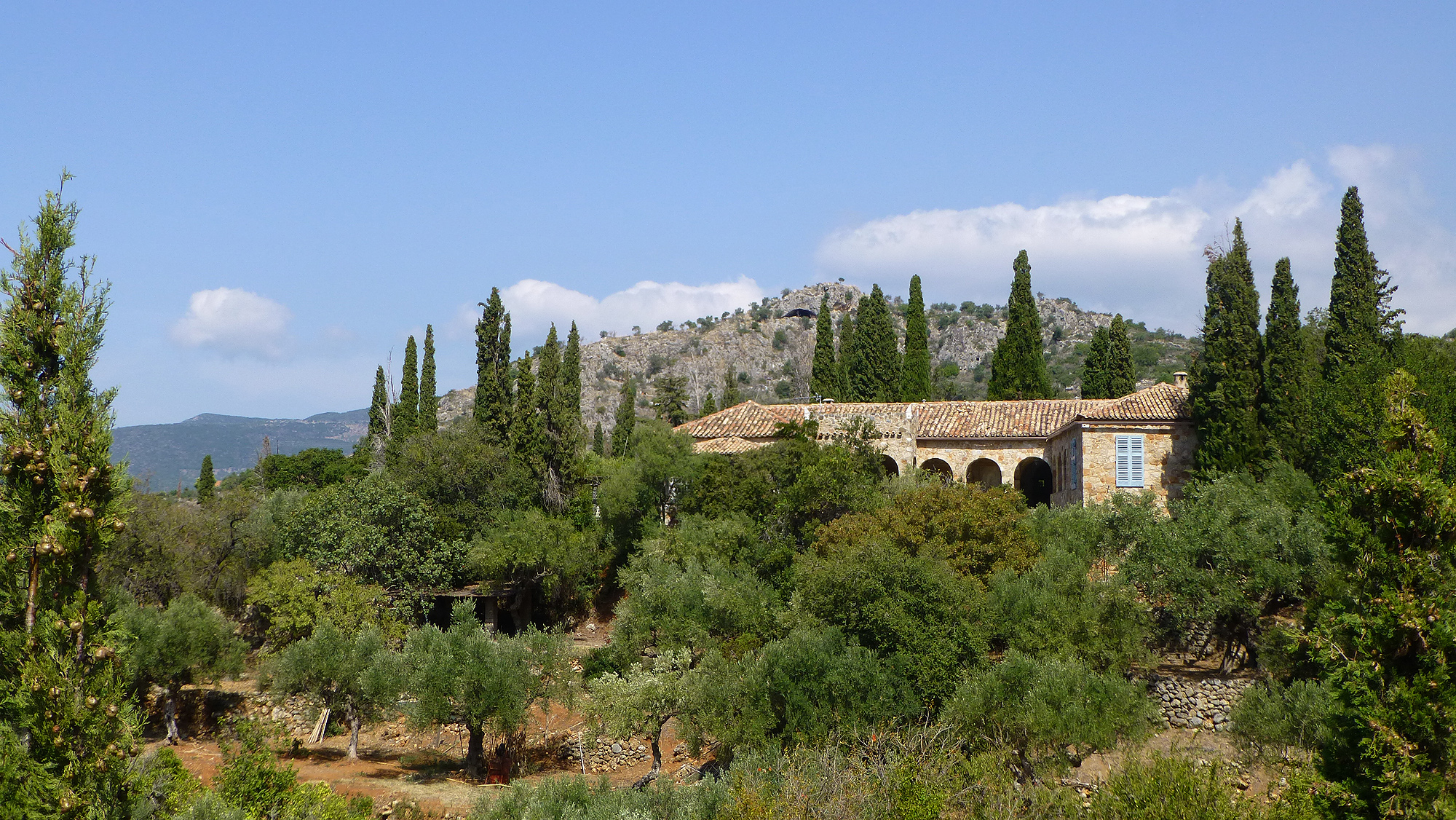
The house in Kalamitsi, September 2104 (John Chapman)

The house in Kalamitsi, September 2104 (John Chapman)

It appears it is the time for discussion about Paddy’s house at Kalamitsi to recommence. I was surprised when the article about his English home did not provoke any comments about the house in Greece which moulders away as the Benaki continues to drag its feet and struggle with its finances. The whole affair is a bit of a mess. It has been three years since the house was handed over to the Greeks but they appear to have done absolutely nothing with it. A house needs care. A house by the sea, even the Mediterranean, requires even more care. As Dolores Payas comments in her lovely book, Drink Time!, which I reviewed at the weekend, the house needs an awful lot of work and now the bill can only be higher.

Regular blog correspondent John Chapman who spends a lot of time in the area sent me this update at the weekend:

I sauntered down to the house at Kalamitsi. Absolutely no change since I last had a look around a fair few years ago. Still a bit of a mess. A cat mewled from within, so therefore someone feeds it and tends the garden. I could have leapt over the back wall into the garden, but decided against it. No-one I’ve talked to can make out what the Benaki are actually doing, or planning to do. The idea of a writers’ retreat is fine and dandy, but someone is building another vast edifice above the bay and the sound of a pile driver wouldn’t be too conducive to creativity!

And recently this article was published in the Weekly Standard.

By Dominic Green

First published in the Weekly Standard, 29 September 2014

Under the peak of Mount Taygetus, the wooded Vyros Gorge tumbles into the Gulf of Messinia at the small port of Kardamyli. Around the headland is a blue cove and the hamlet of Kalamitsi. A flock of low, white houses, their pantiled roofs the color of burnt orange, huddle under stripes of gray-green olive trees. A stony track declines sharply from the road. Then, as stones turn to sand, a narrow path forks uphill along the flank of a promontory. From the house at its summit, the olive terraces slide seawards towards a cliff.The Mani, a rocky peninsula hanging from the southern coast of the Peloponnese, is often compared to the Highlands of Scotland. The landscape is mountainous and mottled with scrub. The people are insular and excel at the arts of feud and hospitality. Their homes are crenellated with towers and battlements, fortifications against the Franks, the Turks, and the neighbors. The exterior of this particular house is a thick-walled cross between a farmhouse and a fortress. A door of medieval solidity stands sentry at the gatehouse; a metal grille permits parley with strangers.

Passing the gatehouse, however, the lines soften and the stone curves. On the left, a Moorish colonnade marches to the sea, past a file of bedrooms and a dozing cat, the last arch framing a blue half-circle. Along the central axis are more bedrooms. In one, a weathered tweed jacket and a pair of walking boots wait in the closet; on the lavatory wall is a sun-paled genealogy of the kings and queens of England.

The right wing is a single oblong, a library-cum-sitting room. Bookcases are cut into stone recesses. A table dressed in Cycladic swirls of green and white marble carries enough booze to float a battleship or an English house party. At the shaded eastern end of the room is a cushioned divan; at the western end, a wooden, windowed balcony of Balkan provenance floats over the azure sea like the cabin of a pirate captain.

The mantelpiece is jammed with photographs, souvenirs, and scraps of paper with friends’ phone numbers. On the Cycladic table, the host’s favorites, Famous Grouse and Stolichnaya, wait among half-empty evocations of the British Empire: Rose’s Lime Juice Cordial, Angostura bitters, a Greek variant of tonic water. But the bubbles in the tonic have long evanesced into the lemony Greek air: The host, the legendary soldier, traveler, and author Patrick Leigh Fermor, died in 2011; his partner, Joan Eyres Monsell, predeceased him in 2003. Their house is empty but for the cat, the orphan of Joan’s once-plural brood. The Leigh Fermors’ housekeeper, El-pi-da Bel-o-yan-nis, tends their home like a shrine. Outside, the gardener, Christos, clips and prunes beneath a straw hat.

The British are famous for removing ancient monuments from Greece, not for donating modern ones. The Leigh Fermors bequeathed their house to the Benaki Museum of Athens as a retreat for writers. But its future is not written in stone.

Sir Patrick Leigh Fermor, OBE, DSO—known to friends, retainers, and a global army of readers as Paddy—was the last living contender for the kingdom of literature’s Habsburg crest, the double-headed crown of man of letters and man of action. A conscientiously Byronic inheritor of the British romance with Greece, Leigh Fermor was a warrior-writer in the line of Philip Sidney and T. E. Lawrence. He was also one of the great stylists of 20th-century English prose.

Leigh Fermor’s writing, like his biography, is one of the last monuments of the imperial age, when the British were not merely worldly, but global. His tone is a late outcrop of Bloomsbury—delicate, languid, melodious, precise—but purged of provinciality. His clauses flow with a French rhythm, the décadence of Second Empire Paris, and are studded with a cosmopolitan glitter of linguistic borrowings and historical speculations. Leigh Fermor was a travel writer in the sense that Pepys was a diarist. Every turn of his road evokes reflections on history, art, religion, and language. Investigations of folk songs, dances, and cheeses lead to anecdotal hunts for a pair of slippers that might once have shod Lord Byron, or a fisherman who might be the lineal descendant of the last emperor of Byzantium.

Always the language rises to the occasion, be it scenic, romantic, antiquarian, or philological. Always the present is excavated to reveal the fragments of memory. No philhellene has written better on Greece than Leigh Fermor in Mani (1980) and Roumeli (1973). Few have eulogized lost youth and interwar Europe more elegantly than Leigh Fermor in A Time of Gifts (1977) and Between the Woods and the Water (1986), the record of his walk, aged 18, from the Hook of Holland to the Iron Gates of the Danube. A posthumous and incomplete third volume, The Broken Road (2014), carries the narrative into Greece through shepherds’ huts, urban mansions, and fishermen’s caves.

Leigh Fermor wrote his “great trudge” trilogy at Kalamitsi, in his writing studio and on collapsible tables in his garden. He also hosted several shelves-worth of scholars, artists, and travelers, including George Seferis and John Betjeman, the poets laureate of Greece and Britain. The house, its contents, and the books that were written here are the complete works of a unique sensibility and a museum of a literary era. If the house were in Britain, the National Trust would already have restored it. There would be a ticket booth in the gatehouse, a shop selling organic figs and artisanal olives, and perhaps a tea room as well. But the Benaki is a private museum. Along with many properties in Athens, it is akin to a penurious Getty or an expansive Stewart Gardner. The Leigh Fermors left no endowment. The Benaki did not create one in the three decades between the bequest and Leigh Fermor’s death. It did, however, fund its expansion with a bank loan of €15 million (around $20 million). In 2008, the Greek economy collapsed, and so did the Benaki’s finances.

Beyond the colonnade, the July sun flattens the sea into a two-dimensional blue wall. An island, necklaced with ruined walls and vegetation, floats in the bay like a green brick. From the cliff, a staircase snakes down the rock to a small beach. “Paddy used to swim around the island and back,” Elpida explains proudly and unprompted. She exhales in mourning.

Outside, the crickets clatter, a maraca orchestra so loud and constant that it becomes unheard. The fringes of the house abound in shaded spots for between 1 and 20 people: solitary nooks for contemplation and reading, sociable niches for sitting and dining. It is a home to be shared—when not struggling scrupulously at his writing studio, Leigh Fermor was a relentless entertainer—but it is empty of life. The stones, saturated in a human presence as strong and invisible as the crepitations of the crickets, are silent, crepuscular.

In September 2011, the Benaki commissioned plans for the restoration of the house, costing an estimated $800,000, and catalogued its library and papers. They fumigated and stored the most important items in Athens, including that poignant testimonial to sedentary toil, a first edition of Betjeman’s High and Low (1966), inscribed by the “pile-ridden poet.” The Benaki also signed a five-year memorandum of understanding with the Seeger Center for Hellenic Studies at Princeton for planning lectures on Paddy-related topics. Meanwhile, the publication of both The Broken Road and a biography by Artemis Cooper revealed a vast reservoir of affection. In Britain, a committee of Paddy’s friends offered to create a charity to raise funds for the restoration.

And then nothing happened.

Part of the garden wall fell down, and visitors trickled in through the breach. In Britain, the natives grew restless. A Guardian journalist climbed the cliff stairs and peered through the locked windows. The Daily Telegraph described the house as “sad and neglected,” its shutters “rotting and falling off their hinges.” Artemis Cooper, a lifelong visitor, responded that the Benaki was doing its best, but Greece was amid “economic catastrophe.” The plans had not been abandoned, and the house, always a little ramshackle, was not neglected. Guests had stayed there, and Richard Linklater had filmed parts of Before Midnight (2013), with Julie Delpy and Ethan Hawke, there.

Tom Sawford runs an unaffiliated website for Paddy’s admirers. The talkbacks describe books moldering in an outhouse. There are offers of money and help, sympathy for the Benaki’s problems, and allegations of mismanagement. Sawford believes that if the museum had accepted the British group’s offer, the house would be “up and running” by now, its future secure: “Instead, the Byzantine structure of the Benaki has resulted in the house being left to rot.”

The Benaki’s English website places 16 individuals in the “front ranks of its benefactors” for giving “considerable property” to the museum. Patrick Leigh Fermor is not on the list. The museum has launched a global fund-raising campaign. On the website, donors can choose among 10 projects. Patrick Leigh Fermor’s house is not among them.

Irini Geroulanou is the deputy director of the Benaki. She returns my phone call immediately, puts me in touch with Elpida, and volunteers her own cell phone number, just in case. The Benaki, she says, has “finalized” its restoration plans and engaged a local firm of builders. There has been “positive” but “not final” interest from universities and foundations in Britain and America, and from the British Council and other foreign institutions in Athens.

“We plan to have five writers in the winter months, when Kardamyli is quiet,” Irini explains, “so they can keep each other company.” At other times, two “famous writers” will have the run of the place; presumably, the Benaki will check whether they are on speaking terms. There will be events for the villagers and an annual or biennial symposium, featuring “prominent artists and academics.”

All this is a thorough and conscientious reflection of Leigh Fermor’s wishes. But the “first and basic problem” remains: “the funding of the restoration.” The house is cooled only by its walls and the breeze. The wiring is erratic, a museum piece from the first age of electrification. The plumbing is functional, but explosive. The window frames and roof need replacing. The bedrooms are spartan: a bed, a table, a sink in a closet, and shelves of books. Writers would enjoy living and working in these hermit cells—the literary traces are an inspiration—but who else would want to squat among the ruins of someone else’s life? The electrics contravene EU regulations, and strangers keep climbing the garden wall.

Recently, Elpida Beloyannis un-locked the medieval door and found a young Englishman asleep in the gatehouse. He was resting before walking from Kalamitsi to England, in a pedestrian tribute to his idol. Paddy’s books have this effect on people.

Patrick Leigh Fermor lies in a Worcestershire churchyard, like a knight returned from the Crusades. But his readers, a pagan cult drawn to the gods of literature and the English ideal, come to Kalamitsi. They telephone Elpida at home, asking politely for access. They wish only to pay tribute, to inhale the atmosphere. They seek no material souvenirs here, or at the subsidiary shrine, the chapel in the hills above the village, where Leigh Fermor scattered some of Bruce Chatwin’s ashes.

Unfortunately, there are uninvited visitors, too. Snoopers are drawn by the barbaric talisman of celebrity, especially since the Benaki advertised the house by renting it for Before Midnight. The place is architecturally and historically unique, but the Benaki refuses to install a resident caretaker. Though the Benaki’s long-term commitment cannot be doubted, the house’s isolation and emptiness are tempting fate. Sooner or later, there may be damage: by the elements, by admirers, by looters. Byron’s slippers survived; Leigh Fermor’s books and boots may not.
If the Benaki opened the house to visitors, ticket sales might support a resident caretaker. If Paddy Leigh Fermor’s readers could donate to an online fund, the house could be repaired. If writers or interns lived there while the Benaki finds donors, the house would be guarded and its new life could begin.

“We are all quite optimistic that things will go as planned,” Irini Geroulanou says from Athens. “The PLF House will be open again to the public and used in the way that PLF desired and stated in his will.”

At Kalamitsi, the crickets rattle among the olives. Patrick Leigh Fermor’s legacy is caught in the aspic of its significance and the stagnant Greek economy. A secure posterity, or an avoidable scandal? In an example of life imitating art, I bump into Julie Delpy on returning to my hotel. “You’ve been there?” she asks. “The house is so beautiful. It’s my favorite place in the world.”

Dominic Green is the author of The Double Life of Doctor Lopez and Three Empires on the Nile.

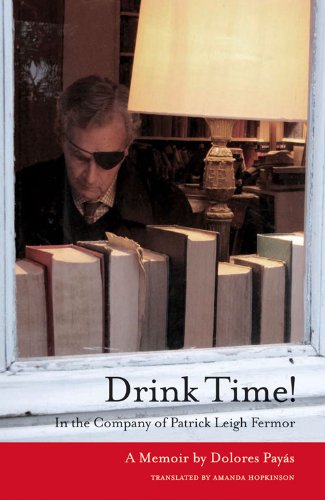
Drink Time! by Dolores Payás

Drink timeOne of the privileges of running this blog is that from time to time I get to meet some of Paddy’s friends and relations. At the relaunch of Billy Moss’ War of Shadows in May, I was introduced to Dolores Payás who was Paddy’s official translator into Spanish. She and her publisher told me that she had a book coming out in the summer called Drink Time!: In the Company of Patrick Leigh Fermor: a Memoir which was an account of her time staying with Paddy at Kardamyli over the last two years of his life.

Before I went away on holiday to France a copy of the book arrived in the post and I took it with me and it turned out to be a great choice for holiday reading. It is a short book at 111 pages but always entertaining.

Dolores stayed with Paddy for extended periods on a number of occasions in the two years before his death. She was given Joans’s room which appeared to remain a highway for the numerous cats that continued to live in and around the house. They were often alone with only Elpida for company as she prepared meals and looked after the house. At other times Paddy still hosted dinner parties which were always lively and went on into the early hours. He was as ever the kind host:

He was grateful for whatever gifts life brought to his door, whether in the way of quality conversation, a tasty meal, books, the sun that rose every morning, and the sea roaring at his feet. Life was generous to him and he responded in kind, offering the world his own universe by way of exchange.

Whatever they were doing there were two times of the day when Paddy would interrupt proceedings and announce it was drink time, and promptly move into the living room and help himself to a large drink be it vodka or gin. These times gave some pattern to the day and we are told that Paddy looked forward to them enormously. His capacity for drink appears to have remained undiminished even to the end.

Dolores and Paddy became close friends and she delights in offering us a very intimate portrait of the man. For true Paddy fans this book will be a very welcome addition to our bookshelves. Unlike the biography which lacked the personal touch, this book is quite intimate, and about two people, both of them deaf, enjoying time together even on the occasion of a strict telling off by Paddy’s Greek doctor. We get quite close to Paddy and Dolores is able to reveal something of his character and some of his more personal thoughts as he came towards the end of his life. If you want to understand more about Paddy the man, not the writer or bon viveur, you will enjoy Drink Time!

Drink Time!: In the Company of Patrick Leigh Fermor: a Memoir by Dolores Payás (translated by Amanda Hopkinson)

I’m speechless!

Dumbleton from Miles 1

Miles Fenton who is Paddy’s nephew has commented about the house and is not happy with what has been done to it.

What have they done to the interior? Gutted it? I’m speechless!
And, as for the short back and sides to the exterior, all charm savagely removed.
So sad.

He sent me some pictures of how things used to be on the outside.

Dumbleton from Miles 2

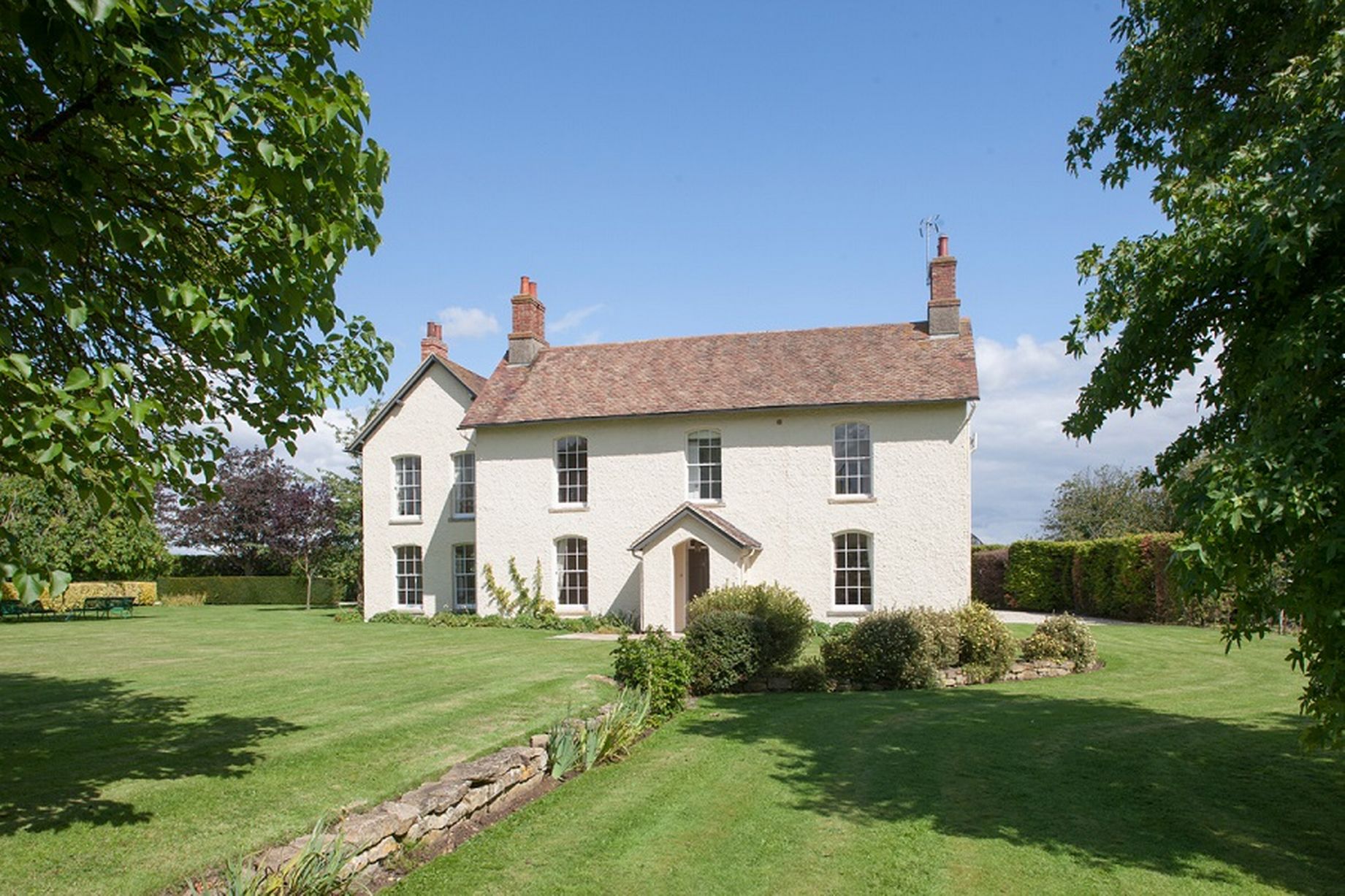
Paddy’s house at Dumbleton up for sale again

Paddy's former home in Dumbleton

Paddy’s former home in Dumbleton

The Mill House at Dumbleton which was home to Paddy and Joan in the UK is up for sale again.

Set in idyllic countryside, the house was sold by his estate following his death in 2011, and is back on the market for £1.8m. It looks to have been extensively refurbished. Interestingly the guide price last time was £2.5m.

Some details here.

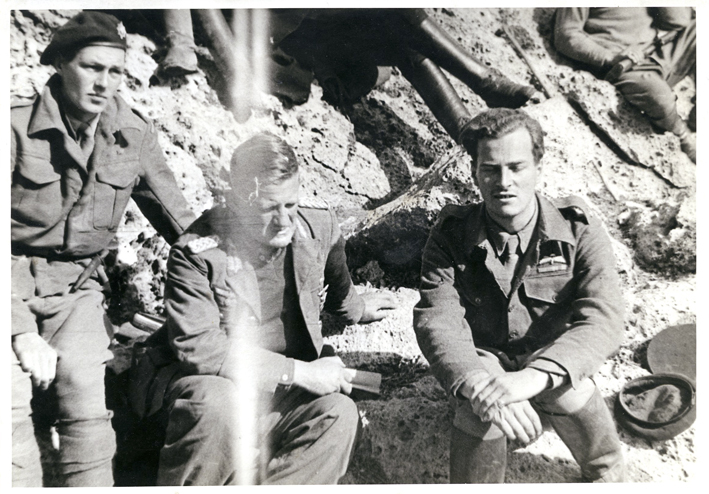
Hellraisers with deadly intent: the hard-living war heroes who captured a Nazi general

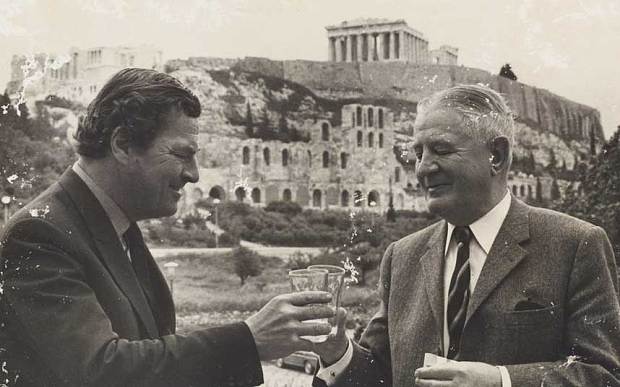
Patrick Leigh Fermor, left, met Heinrich Kreipe, his former captive, at a reunion in Greece in 1972 which included the famous Greek TV show

Patrick Leigh Fermor, left, met Heinrich Kreipe, his former captive, at a reunion in Greece in 1972 which included the famous Greek TV show

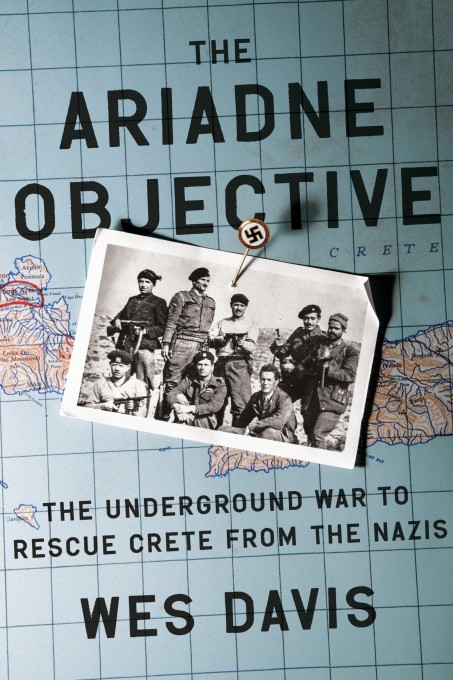
We are about to hit the season for new books about Paddy and associated book news and plugs here on the blog. There are two books about the Kreipe kidnap due out this autumn. Paddy’s own account Abducting a General: The Kreipe Operation and Soe in Crete will follow on 9 October, but first on the grid is Kidnap in Crete: The True Story of the Abduction of a Nazi General by Rick Stroud (Bloomsbury) which is published on Thursday 11 September. The introduction to this Telegraph article gives us a dramatic start: ‘Backed by local guerrillas, Patrick Leigh Fermor and William Stanley Moss led an audacious operation in wartime Crete that is celebrated in a new book’. I am sure we will be buying both! Some interesting new photographs to go with this article.

By Rick Stroud

First published in the Telegraph 7 September 2014

One evening, just before Christmas in 1943, three ex-public schoolboys sat naked in a steamy bathroom in Cairo discussing how to capture a German general from outside his headquarters on the island of Crete. They were agents of the Special Operations Executive (Force 133, Middle East).

In the hot bathwater was Xan Smiley, the son of a baronet, busy drawing maps in the condensation on the tiles. Perched on the edge of the bath were a handsome, name-dropping buccaneer, Patrick Leigh Fermor, known as Paddy, and a tall, “devilishly languid” young Coldstream Guards officer called William “Billy” Stanley Moss. Smiley was lecturing them on the mechanics of an armed ambush, about which he knew a great deal.

The bathroom was in a grand house that Moss had rented and christened Tara, after the ancient castle of the kings of Ireland. Tara came with a cook and several servants, including a butler called Abbas. At its centre was a vast ballroom, with floor-to-ceiling windows, two huge crystal chandeliers and a sprung parquet dance floor.

When Moss moved in with Pixie, his alsatian puppy, he began to look for kindred spirits to join him. He soon recruited a Polish refugee, the Countess Zofia Roza Maria Jadwiga Elzbieta Katarzyna Aniela Tarnowska, or Sophie, who Moss nicknamed “Kitten”. She arrived with a swimming costume, a uniform and two pet mongooses. Other Tara residents included two Force 133 agents operating in Albania: Lieutenant Colonel “Billy” McLean, a doyen of White’s club, and Xan Fielding, traveller, linguist and sometime bar-owner.

Smiley described the days spent at Tara as the happiest time of his life. “I loved it. I really loved it. We were all such good friends.”

Sophie remembered that whenever an agent left for the field, “there would be a big party and a car would call and those who were going to be parachuted into enemy territory left just like that, without a goodbye, without anything. We never allowed ourselves to be anxious. We believed that to be anxious was to accept the possibility of something dreadful happening to them.”

A few weeks after the bathroom conference, a German Junkers Ju 52 flew over the bright-blue Mediterranean towards Crete. On board was Major General Heinrich Kreipe, the newly appointed second in command of the island. The plane landed, Kreipe climbed from the aircraft and a soft breeze wafted the smell of thyme across the field. He was unaware that he had entered a trap that would soon spring shut, ruining his career, destroying his reputation and nearly costing him his life.

Meanwhile in Cairo, the New Year was seen in at Tara with high-octane revelry. The house was the hottest social spot in the city; its guests included diplomats, war correspondents and royalty.

Paddy on the roof of Tara in Cairo

Paddy on the roof of Tara in Cairo

Moss wrote in his diary about “the night we had the bullfight . . . the night we broke 19 windows”. The bullfight in the ballroom ended with a blazing sofa being hurled through a window and a Polish officer was encouraged to shoot out the lights. For their Christmas lunch, Leigh Fermor cooked turkey stuffed with Benzedrine tablets. Sophie remembered that, in Poland, they had made liqueurs by adding soft fruit to vodka. She tried to recreate this with prunes and raw alcohol. After 48 hours, someone tried the cocktail and collapsed. Sophie complained that he should have waited for three weeks before drinking it.

Early in January, Paddy Leigh Fermor got clearance to carry out his plan to kidnap a Nazi general; Billy was to be his second in command and they were joined by two Cretan guerrillas, Manolis Paterakis, Leigh Fermor’s right-hand man, and George Tyrakis. The equipment list read like something out of an adventure comic and included pistols, bombs, coshes, commando daggers, knuckle-dusters, knock-out drops and suicide pills.

Moss remembered sitting around a small red lacquer table at the Tara farewell party, faces lit by four tall candles, drinking and singing, as they waited to leave on the first leg of the adventure. Just before sunrise, Billy McLean appeared, a shy, nearly naked figure. He presented them with the complete works of Shakespeare and The Oxford Book of English Verse, which he thought had brought him luck in Albania; he hoped that the books would work the same magic for his friends.

When they flew over the rendezvous, Leigh Fermor jumped first, and was greeted by a party of guerrillas and an SOE agent, Sandy Rendel. Suddenly the weather closed in and clouds hid the ground, making it impossible to drop the others – they arrived by motor launch nearly two months later.

They were met on the beach by what Moss thought was a group of pantomime pirates. One, filthy, unshaven and dressed in rags, shook his hand, saying: “Hello Billy. You don’t know me. Paddy will be along in a minute.” It was Rendel. Leigh Fermor wore clothes that included a bolero, a maroon cummerbund that held an ivory-handled pistol and a dagger. He told Moss: “I like the locals to think of me as a sort o’ duke.”

The next fortnight was spent in planning and wild living. Moss found that “wine takes the place of one’s morning cup of tea and one often drinks a liberal quantity before brushing one’s teeth”.

The original target had been Lieutenant General Friedrich-Wilhelm Müller – “the Butcher of Crete” – but he had been transferred and his place taken by Kreipe. With the help of the Cretan underground intelligence, the kidnappers devised a plan to capture the general on his way home from his headquarters.

On the night of April 26 1944, Leigh Fermor and Moss, disguised as military policemen, flagged down the general’s car. As it stopped, the doors were torn open, 11 guerrillas leapt out of ditches along the sides of the road, and 90 seconds later, Kreipe was on his way towards Heraklion, handcuffed on the floor in the back of the Opel. Moss drove fast, bluffing the car through 22 German roadblocks, after which it was abandoned with a note saying that the abduction was a British commando initiative and that no Cretans were involved. Leigh Fermor hoped that this would stop any reprisals. Sometime that night, the guerrillas killed Kreipe’s driver.

It took nearly three weeks to get Kreipe to the rendezvous beach on the south coast. The kidnappers climbed Mount Ida, trudging above the snow line, over the summit and across some of the most rugged terrain in Europe. The general was dressed in the uniform he had put on for a quiet day at the office. Thousands of German soldiers surrounded the mountain, cutting off escape routes and access to the beaches. For several days, radio contact was lost with Cairo. When it was re-established, Leigh Fermor sent a signal that ended with the words “situation ugly”.

Sometimes the kidnap team passed within yards of enemy patrols, while in the distance they heard the thud of explosives as German engineers blew up villages. Throughout the journey, the kidnappers were led and protected by the guerrillas, who had risked their lives and those of their families to help the group escape. Kreipe was astonished at the loyalty and friendship shown towards the British. One guerrilla explained that “it is because the British are fighting for our freedom, while you Germans have deprived us of it in a barbarous way”.

Leigh Fermor and Moss developed a love-hate relationship with their captive. At one point, Kreipe looked at the snow-covered mountains and quoted from Horace; “Vides ut alta . . .” Leigh Fermor knew the ode and completed it, thinking that, for an instant, the war had ceased to exist and finding a strange bond with the general. Kreipe spent a lot of time complaining that he was not well, causing Moss to lose his temper and shout at him to be quiet. He later wrote in his diary: “I could have killed him.”

On May 14, they reached the only rendezvous beach not occupied by German patrols. Near midnight, they heard the noise of a motor launch, but when they tried to flash the recognition signal “Sugar Baker”, Leigh Fermor and Moss realised that they did not know the Morse for Baker. They were saved by Dennis Ciclitira, another SOE agent who had been ordered to return to Cairo. He appeared, grabbed the torch and, shouting “bloody fools”, flashed the code.

By midnight, Kreipe and his kidnappers were at sea, heading for Egypt and eating lobster sandwiches. The general told his captors: “It’s all very well, but this hussar stunt of yours has ruined my career.”

Back in Cairo, Leigh Fermor and Moss went straight to Tara, where they were given a hero’s welcome. News of the kidnap flashed around the world and quickly became a sensation. Newspapers carried pictures of the gneral, his arm in a sling, chatting to a group of senior British officers. Leigh Fermor was decorated with a Distinguished Service Order and Moss won a Military Cross. Kreipe was taken to London and interrogated. The interviewing officer described him as “rather unimportant and unimaginative”. He spent the rest of the war in Canada and was released in 1947.

In 1945, Moss married Sophie and, in 1950, published his account of the kidnap. Kreipe sued him for defamation of character, and won an injunction stopping the book’s publication in Germany. For the rest of his life, Leigh Fermor agonised over two things: the death of Kreipe’s driver and whether the “hussar stunt” had brought reprisals on to the heads of his friends, the heroic people of Crete.

Kidnap in Crete: The True Story of the Abduction of a Nazi General is available for pre-order or purchase. Click on the highlighted text.

Abducting a General: The Kreipe Operation and Soe in Crete is available for pre-order or purchase. Click on the highlighted text.

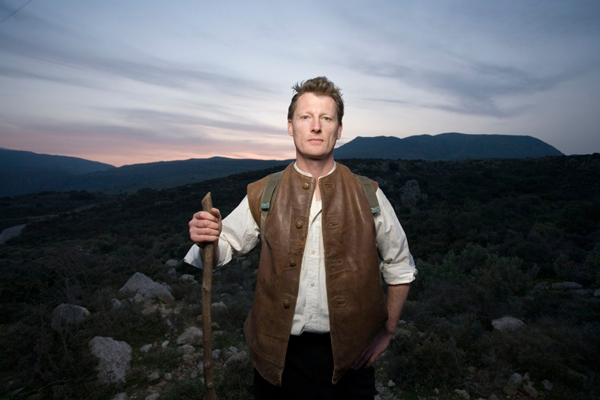
Traveller’s Century – Benedict Allen seeking Patrick Leigh Fermor

Benedict Allen

Benedict Allen

Many will be aware of Benedict Allen’s 2008 BBC documentary where he follows Paddy’s journey and eventually gets to meet with Paddy at Kardamyli. It is rarely shown and unavailable on iPlayer. However, there will be a chance for some to watch the programme at Waterstones Piccadilly on Thursday 9th October at 6.30pm.

As part of their “Traveller’s Film Club” series of events, Benedict will introduce the programme after which there will be a screening. Further details of how to book are on this web page.

The Traveller’s Film Club are also showing films on Norman Lewis (September 16) and Wilfred Thesiger (November 13). See the same list.

Thank you to Mark Granelli for pointing this out to me. See some of you there!


Two in one – Nick Hunt and Dolores Payas in Bristol 4 September

Nick Hunt, author of Walking the Woods and the Water is talking with Dolores Payas on the work of Patrick Leigh Fermor at Stanfords Bristol on 4th Sept at 6.30pm.

This is a great chance for those who live in the depths of the west of England to hear Nick talk about his walk to Dolores who has written a lovely volume about her time with Paddy at his house in Kardamyli. I will be reviewing her book, Drink Time, in September.

Tickets are nicely priced at £3.00 including a glass of wine. Too good to miss!

Details here.

Two books on the Kreipe kidnap published this autumn

It appears that we are to be blessed with two books about the kidnap this autumn. Decisions, decisions!

A Bookseller press release states:

Bloomsbury has signed world rights to an account of the kidnapping of a Nazi general involving writer Patrick Leigh Fermor, written by Rick Stroud.

The book, Kidnap in Crete, recounts the kidnapping of General Kreipe by Leigh Fermor and the Special Operations Executive in 1944, using eyewitness accounts to illustrate the context of the operation and the work of the Cretan resistance.

Stroud said: “When writing Kidnap in Crete I wanted to tell the story from all sides. I found a rich source of material in Leigh Fermor’s own account of the kidnap and in the papers now held in his archive at the National Library of Scotland. However, it was when collecting eyewitness accounts that the strands began to come together to create a clear and complete picture of events.”

The book will be published on 11th September, 2014, a month before John Murray releases Abducting a General, Leigh Fermor’s own account of the kidnaping, which has been previously unpublished. It will be released on 23rd October.

Armenia, Nicolas Bouvier and Paddy

This post is dedicated to Elizabeth who will enjoy listening to the French. My on-off hiatus on the blog continues due to personal circumstances but I had to write this short update before I depart to walk across Armenia. I was inspired to travel there by reading Nicolas Bouvier’s wonderful book, The Way of the World. Paddy buffs will know that he wrote the introduction to the English version.

Bouvier’s work describes his journey with his artist friend Thierry Vernet in a Fiat Topolino (like a 2CV)  from Geneva to Afghanistan in the 1953-54. It is a journey that would be impossible today. The book is beautifully written and such fun to read. He spent a lot of time writing about the Armenian community in north-western Iran which got me thinking about going to Armenia, and here I am going to Armenia.

I always like to make some spurious link to weave a bit of a yarn, and here I have it. Bouvier writes book including Armenians; Paddy writes introduction to said book; I travel to Armenia; and blog corespondent Mark Opstad (a long time ago) sends me a link to a French TV programme that includes Bouvier and Paddy. The latter speaking wonderful French but as ever struggling with technology; this time the microphone. Paddy suddenly appears around 29:10 (maybe he got stuck into the bar in the green room?) and proceeds to tell his story, but struggles to keep the microphone near his mouth. Note the “third hand” at 34:38 trying to keep it in the right position. At 47:00 Paddy inevitably ends up singing a Greek song.

Enjoy the video. As ever there is much more to come on the blog and I thank all of you who have got in touch with me. I just don’t have the time to keep up at the moment, but each and every one will receive a reply in due course.

Nicolas BOUVIER, Jacques LACARRIERE, Michel LE BRIS, Patrick LEIGH-FERMOR from Etonnants Voyageurs on Vimeo.

Ill Met by Goonlight – just 5 days left!!

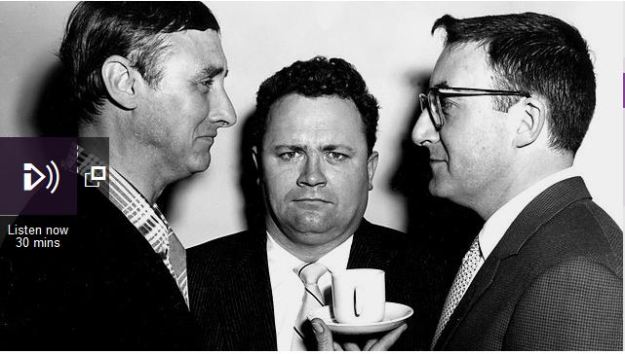
GoonsThe Goons as our heroes Paddy and Billy. Neddie Seagoon is sent to capture the German general who commands the island of Crete. Stars Spike Milligan. From March 1957.

Thanks to Tim Todd for pointing this one out. Just 5 days left to listen on BBC iPlayer for those who can get access (country specific).

Click the picture or here to go to the BBC iPlayer site.

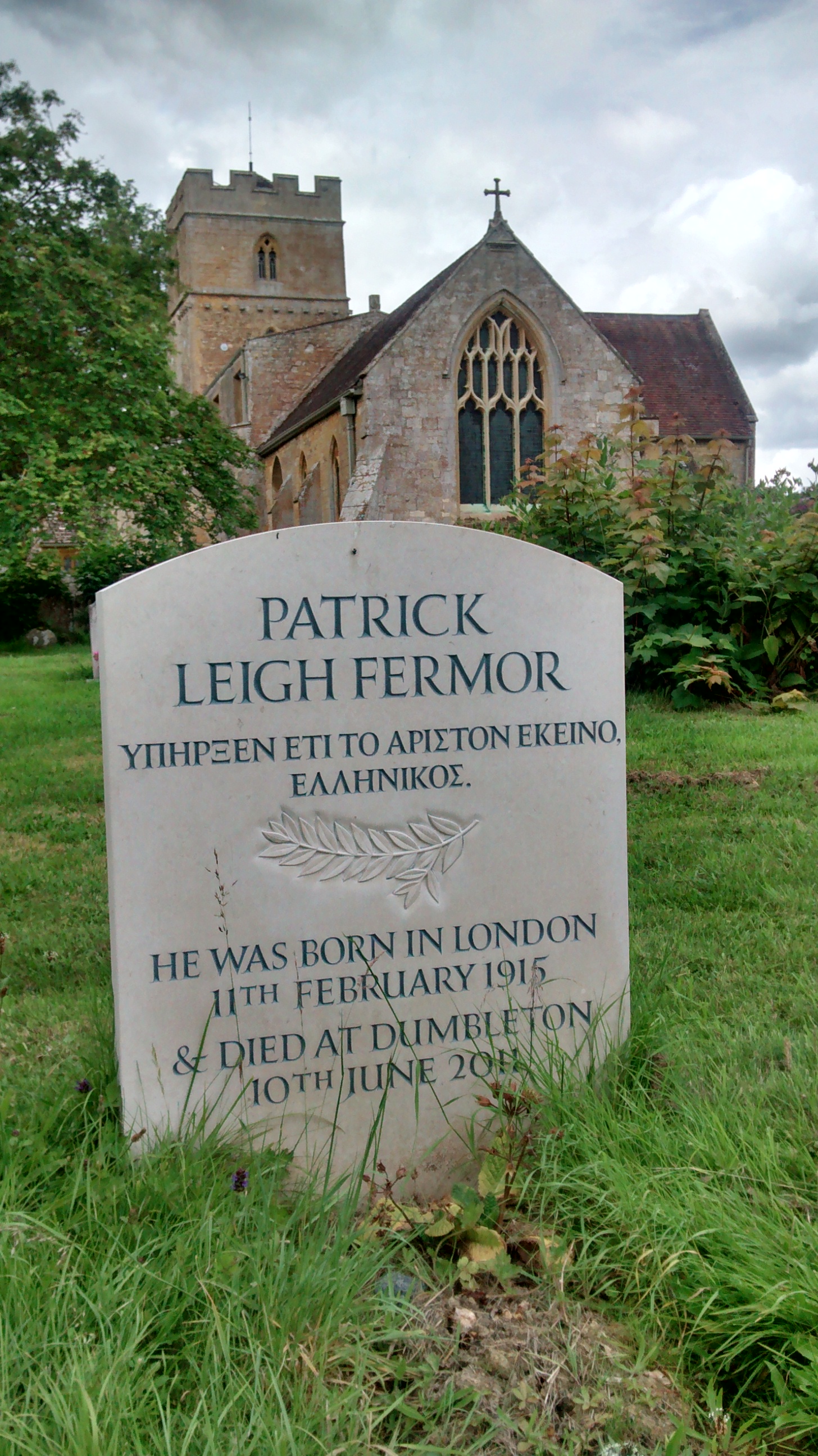
Visiting Paddy’s grave

image

We were in Stratford-upon-Avon at the weekend to watch two brilliant performances of Shakespeare’s Henry IV parts I and II, and on the way home we paused to visit Paddy’s grave. It was a lovely day and as ever a beautiful and peaceful setting. Do visit if you can; Dumbleton is just 5 minutes off the A46.

Relaunch of A War of Shadows by Billy Moss

A War of Shadows

A War of Shadows

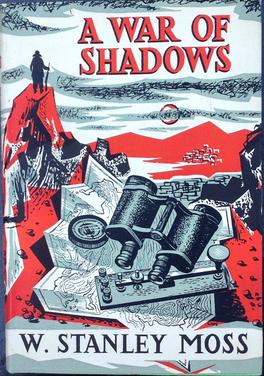
In 1952 Billy Moss published his second volume of war memoirs, focusing on his activities after the Kreipe kidnap which he had described so vividly in Ill Met by Moonlight.War of Shadows has recently been republished by Bene Factum and I was honoured to have been invited to the recent launch party at the RAF Club.

It is a darker book than Ill Met. It starts with a discourse on death in its many forms, variety of impacts, and importance. Billy is in reflective mood as he describes the last year of his war, during which time he engaged in ambushes in Crete with his Russians whilst Paddy was recuperating from his illness in Cairo. There were even plans made to repeat the kidnap with the replacement General!

From Crete, Billy is deployed to Macedonia where he encounters a more cynical form of resistance. As the war in Europe passed on towards the shrinking Germanic core, Billy volunteered for SOE operations in the Far East and was parachuted into Siam, where he saw out the dog days of the war, occasionally listening to test matches on the BBC World Service.

The launch of the book represents a significant triumph for his family, especially his daughters. There is a view that Billy’s part in the Kreipe kidnap has been played down over time with more attention on Paddy’s role. It is important therefore to Billy’s memory that his role is recognised and that people know that after the kidnap Billy continued to engage in fierce operations against the Germans and Japanese, showing tactical skill and great bravery.

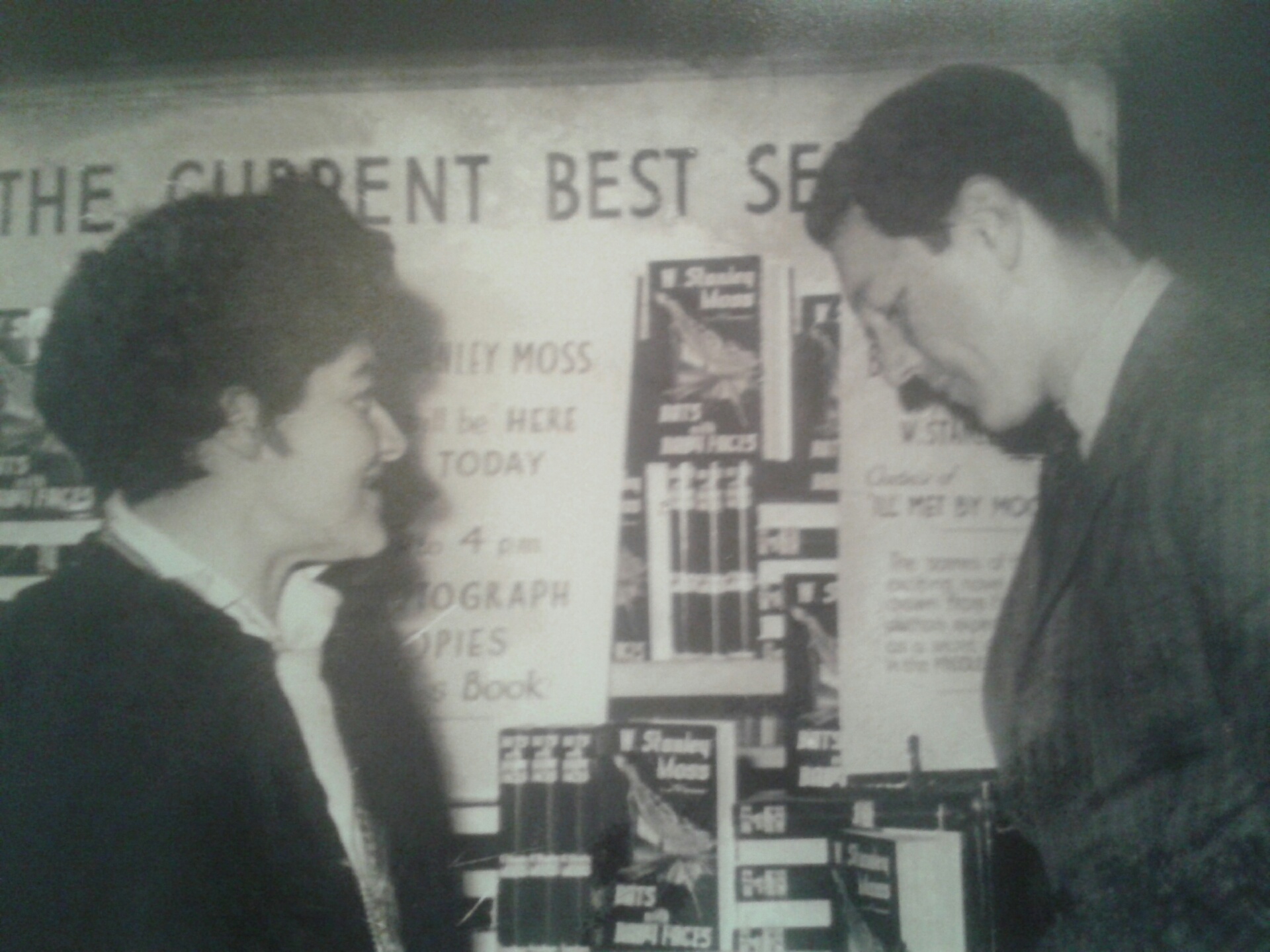
Billy Moss at a book signing in the early 1950's

Billy Moss at a book signing in the early 1950’s

I read A War of Shadows a couple of years ago (I managed to find a first edition) and it is a very enjoyable read, offering us more detail on the Crete operations and an interesting perspective on the way the war ‘wound down’. The new paperback edition has a delightfully personal introduction by Billy’s daughter Gabriella, and closes with an end-piece by acclaimed SOE writer Alan Ogden which is to all intents and purposes a short biography of Billy. So if you want to know more about this extraordinary man you should buy a copy of the new edition of A War of Shadows

Billy’s whole family are very much involved in preserving his memory. Proceeds from the book will go to support various charitable activities on Crete. At the launch, Billy’s granddaughter gave a wonderful speech honouring his memory. She wore a beautiful jacket of silver thread depicting Mongol horsemen at the charge with bows taut; this jacket belonged to her grandmother Sophie, the woman who dominated that vibrant community of heroes and free thinkers in Cairo that was Tara. The jacket was hand-made in Cairo from cloth that Sophie bought in the souk. The text of the speech follows.

You can purchase War of Shadows in all good book stores but if pressed for time click here to buy from Amazon. A War of Shadows

Thank you Anthony, on behalf of all my family, for your kind words – and for all you have done: this evening celebrates the first reprint of A War of Shadows since 1952, and I want to take this opportunity to say how enormously we appreciate your unstinting dedication in bringing this book back into the light.
For us it is a very special occasion, and I want to thank all of you for coming this evening – my family welcomes you all.

We have just returned from Crete where, 3 weeks ago, we commemorated together the 70th anniversary of the Special Operation Executive’s abduction of the German General Kreipe – the only successful such kidnap of the war – carried out by Paddy Leigh Fermor and Billy, with the help and support of a great swathe of the Cretan population. It was Billy’s diary, written in the field, which became the book, and then the film, Ill Met by Moonlight. Paddy and Billy spirited the General by boat to the Middle East.

From this point – or rather, from the point of his treasured friendship with Paddy – A War of Shadows takes up the story of the rest of Billy’s SOE war : in Crete for a second time, then Macedonia and the Far East. It is a candid observation of the times, places, personalities and politics. It liberally mixes humour with stark reality. Never melodramatic, it is at times a sobering and thoughtful book on what it actually means to be a soldier, dealing with death. At times it is also a very personal account : the answers to many questions lie within its pages.

Billy’s life, from the moment he was born, was extraordinary in so many ways but it was tragically short. He died in 1965. We his family carry him within us always, but it seemed that, as the decades passed, he would largely be forgotten by the world at large.

It is impossible to describe what it was to find, in Alan Ogden, Billy’s ultimate champion. Alan had already written about Billy and other SOE agents in his books Sons of Odysseus and Tigers Burning Bright. My parents first met Alan at the Special Forces Club in January last year, and it was he who absolutely insisted that Billy’s story should be told, and so he introduced them to his publisher, Anthony Weldon!

Alan threw himself into writing a short biography of Billy which is now published as the Afterword to A War of Shadows. ALAN, we are just so grateful for everything you have so generously done for Billy’s memory.

There are myriad ways in which we have felt support, and we owe a debt of gratitude to all of you whom we have gathered here tonight.

There are so many strands, and some of you have very particular links to my grandparents. ONE of you was a baby in wartime Cairo : SIMON, your mother was a marvellous and lifelong friend to them both. ONE of you is the son of their fellow Tara inmate, and named after another Tara inmate : XAN, your father was ever the dearest of friends. ONE of you, as a girl, knew them – and even knew Pixie the Alsatian – when they were living in Ireland in the 1950s : MERCEDES, you have vivid memories of Billy having to rescue you when Pixie had you pinned against a wall.

As I mentioned, we have just visited Crete. Some of us had been before, and for some of us it was the first time. It is hard to find words to express the experience, or our heartfelt gratitude towards the people there, or to say how much we are moved by their generosity of spirit.

There is also the most extraordinary of Cretan links: during the operation known in Crete as the Damasta Sabotage, one brave man was hit by an enemy shell full in the belly, and it seemed he could not possibly survive ; but survive he did – all this is described in A War of Shadows; and tonight one of his twelve grandchildren is here – a research biologist at Glasgow University – our dear EMMANOUELA.

So on behalf of Billy and all his family, we thank all of you for coming to share this evening with us. Let’s raise our glasses in Cretan fashion: Eviva!

Jan Morris – Travels Round My House

Jan Morris and members of the 1953 Everest team

Jan Morris and members of the 1953 Everest team

Jan Morris knows a good story when she sees one, and she is one too. A gravestone under the stairs; a posthumous book written and printed; over 60 books – history, biography and novels under her belt; Jan Morris has lived and written as a man, as a woman, and believes one day she may transcend both conditions. In this BBC Radio 3 Sunday Feature we hear Jan interviewed and can listen to readings from her books.

As the 60th anniversary of Hillary and Tenzing’s conquering of Everest approaches, writer and critic Anthony Sattin visits the Welsh home of Jan Morris and gets an exclusive peek into the scrap books and mementoes from that great Imperial adventure – part of the sketches and the relics of a lifetime’s travel.

Morris recalls the scoop that made her reputation; joining the successful Everest expedition of 1953, and, against extraordinary odds, reporting the successful ascent back to The Times of London, in code, and in perfect timing – the news reached London to be announced on the morning of the Coronation.

To ferry the news back to London she employed two runners who actually ran all the way from her wind-battered tent at the foot of Everest, 180 miles to Kathmandu and back; avoiding the clutches of Daily Mail journalists, eager to steal the story.

A committed Welsh Nationalist Republican – though not actively involved in burning things down or blowing them up – Morris tells of early years in Wales, hobnobbing with more active nationalists, and of her infatuation with things as diverse as Manhattan and her recently deceased cat Ibsen. She also discusses the ‘ten confused years’ during which she undertook gender reassignment, and the approach of mortality – hence the gravestone under the stairs.

Fellow writers Pico Iyer and Sara Wheeler, both talk of the inspiration she has provided over the years.

And for Jan, the last word, “It was all in aid of fun”.

Presenter: Anthony Sattin
Reader: Eleanor Bron
Producer: Sara Jane Hall

Listen to the programme by clicking on the picture below of Mount Everest.

Capture

Relaunch of Ill Met by Moonlight website to mark 70th anniversary

Capture

Ironically I was away in Munich when Tim Todd posted this comment on the Your Paddy Thoughts page. It has been 70 years since the kidnap and there are a number of events and publications associated with it. Both of Billy Moss’ books are being republished (more to follow), and, as has been already mentioned on here, a version of Paddy’s own account is due later this year.

Tim Todd is probably the leading authority on the kidnap and the route used during the evasion phase. He works very closely with Chris White on this project which never seems to be short of new aspects or details to investigate. The Ill Met by Moonlight website is very well worth visiting. Here is Tim’s update about his reworked site and a cautionary tale about retracing the route.

Well, today, Saturday 26th April 2014, is the 70th anniversary of the abduction of General Kreipe by Paddy, Billy and their Cretan colleagues.

To mark the occasion may I draw attention to my relaunched website and in particular to a transcription of Paddy’s own short report on the abduction. It is the first of a number of his reports that will be appearing on the illmetbymoonlight.info website now that I am free of another commitment that had taken up a lot of time.This report, one of nine by Paddy, can be found here.

Interest in his Cretan adventures remains as great as ever and I have just heard back from one party who did the full route in the last few weeks, from Dermati to Rodakino in a remarkable 7 days and three hours – and pushed himself to the point of exhaustion in the process. Aspiring route followers should not, under any circumstances, consider this a realistic target though as the parties concerned were not your average walkers by a long way. The report came back accompanied by a warning about map accuracy, not the first, and the recommendation is always to seek local guidance for the more remote locations and not to rely on GPS coordinates.

Nick Hunt on BBC Radio 4’s Saturday Live

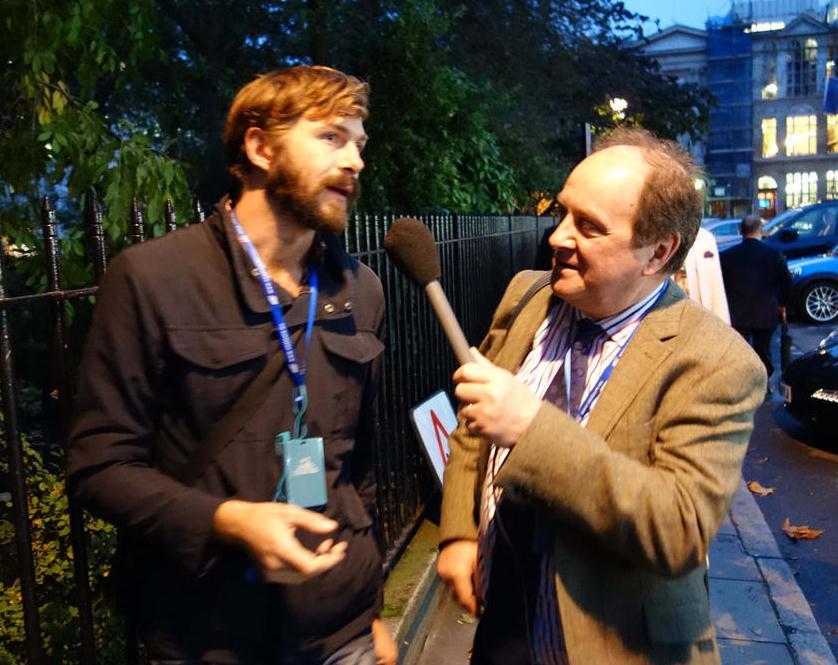
Nick Hunt and James Naughtie

Nick Hunt after his walk with James Naughtie

Many of you will now be reading Nick Hunt’s fine new book, Walking the Woods and the Water. As is usual Nick is hard at work promoting the book in a number of ways and this Saturday, 3 May, will find him on the quirky BBC Radio 4 programme Saturday Live from 9.00 am. 

He will be joined by the acerbic food critic Jay Rayner who has managed to achieve the nickname Acid Rayner due to his sour demeanor – [Edit – listening to the show Mr Rayner comes over as a pretty friendly type].

I am sure Nick and Jay will get down to discussing the quality of food on such a long journey. If you have read the book it is no surprise to say that it was extremely variable.

We wish Nick well with this excellent opportunity to let more people know about his journey and wonderful book. Brief programme details are available here.

Travel Writing Giants – Remembering Peter Matthiessen and Patrick Leigh Fermor

Peter Matthiessen

Peter Matthiessen

BBC Radio Four rarely disappoints. At least not over the course of a few hours where there will be enough variety and quality for everyone. On Good Friday the Point of View programme was given over to William Dalrymple William who celebrated the writing of Peter Matthiessen who died this month. Dalrymple compares him with another of his favourite travel writers, Patrick Leigh Fermor. “Both were footloose scholars who left their studies and libraries to walk in the wild places of the world, erudite and bookish wanderers, scrambling through remote mountains, notebooks in hand, rucksacks full of good books on their shoulders.”

Listen here on BBC iPlayer. The programme begins after about 30 seconds. If you are in a location where this is not possible, the text is below.

Happy Easter to all of you.

Tom

William Dalrymple pays tribute to two fellow travel writers – Peter Matthiessen, who died recently, and Patrick Leigh Fermor.

The great American writer Peter Matthiessen died earlier this month at his home in Sagaponak, New York, after a prolonged struggle with leukaemia. He was 86.

Matthiessen was one of my great literary heroes, a wonderfully versatile and profoundly truthful writer whose sentences oozed integrity and an austere clarity of thought and spirit. His writing drew on his richly restless and enviably courageous life, which was as remarkable an artefact as anything he actually wrote. He remains the only author to win the National Book Award for both fiction and non-fiction.

Matthiessen, a craggily handsome man, with clear blue eyes and a face that seemed to have been sculpted out of basalt, was at different times a naturalist-explorer and a deep sea fishermen, a pioneering environmentalist and editor, an artist and activist defending the rights of migrant labourers and Native Americans, as well as a CIA agent who underwent a strange metamorphosis into literary shaman and Buddhist sage. He lived and travelled in a variety of wild landscapes (rainforests, oceans, mountains, deserts and swamps) around the globe, and he set his books in these remote places – the Peruvian Andes and the jungles of New Guinea, Tierra del Fuego and the Tibetan Plateau, the Serengeti and the Bering Straits.

He is perhaps best known for a single great masterpiece, The Snow Leopard, a jewel of a book and one of the great travelogues of our time. The book tells the story of a long journey on foot to the Crystal Mountain in the Himalayas to study the wild blue sheep and to catch a glimpse of the rare and almost mythical snow leopard. But for Matthiessen, a Zen Buddhist recovering from the recent death of his wife, it was more of an inner journey of recovery and resignation than some zoological field trip.

In many ways, Matthiessen resembles Patrick Leigh Fermor, another lyrical writer who travelled widely and lived richly, setting his books across the globe. Like Matthiessen, Paddy – as everyone knew him- lived an enviable life. In his teens he walked from the Hook of Holland to Constantinople, while in his sixties he swam the Hellespont, in homage to Lord Byron who swam it in 1810. In between, he joined possibly the last cavalry charge in European history, participated in a Haitian voodoo ceremony, and pursued a passionate affair with a Byzantine princess. He was car-bombed in Greece, knifed in Bulgaria and pursued by German troops after being parachuted into occupied Crete where he kidnapped the Nazi commander.

Paddy and Peter were very different men of very different generations. Matthiessen was a blue-blooded New Yorker, descended from Friesian whalers, and grew up on post-war Fifth Avenue overlooking Central Park, in the same building as George Plimpton, with whom he later co-founded the Paris Review. The American 1960s marked him forever. He experimented with psychedelia, especially LSD, became an anti-Vietnam activist and his friends were the great New York writers of that era – Kurt Vonnegut, EL Doctorow and William Styron. Leigh Fermor, by contrast, had the speech patterns, polished brogues and formal manners of a pre-war British officer, and his conversation was peppered with the likes of “ripping”, “topping”, “I say!”, “frightful rot” and so on. His friends tended to be Brits of a similar background and era – Noel Coward, Dirk Bogarde, Diana Cooper, the Mitfords and later, Bruce Chatwin.
Nepal Himalayas Matthiessen describes the Nepal Himalayas in lyrical terms

It is also true that these two great descriptive writers wrote very dissimilar prose. Matthiessen’s writing had a spare and austere simplicity, yet was as beautiful and craggy as his wonderfully weather-beaten face. Here he is waking up in the Nepal Himalaya: “A luminous mountain morning. Mist and fire smoke, sun shafts and dark ravines: a peak off Annapurna poises on soft clouds… Pine, rhododendron, barberry and purple gentians. Down mountain fields, a path of stones flows like mercury in the sunlight; even the huts have roofs of silver slates.”

In contrast, Paddy’s books, with what Lawrence Durrell called their “truffled style and dense plumage”, were sometimes “madly, intoxicatingly over-written”. Yet at his best he was a soaring prose virtuoso with hardly an equal in modern English letters. For many of us his descriptions of walking through midwinter 1930s Germany have the status of sacred texts: “Sometimes the landscapes move further back in time,” he writes in the Winterreise chapter of his masterpiece, A Time of Gifts. “Pictures from illuminated manuscripts take shape; they become scenes which Books of Hours enclosed in the O of Orate, fratres. The snow falls; it is Carolingian weather… Then the rooks fell silent; the light dwindled over the grey fields; and life ebbed with a shudder like a soul leaving the body.”

Yet these two very different writers had so much in common. Both were footloose scholars who left their studies and libraries to walk in the wild places of the world, erudite and bookish wanderers, scrambling through remote mountains, notebooks in hand, rucksacks full of good books on their shoulders. Both were writers of great sensitivity and erudition, yet both were also men of action who became intelligence agents – Leigh Fermor in wartime Crete, while Matthiessen worked for the CIA in post-war Paris spying on American expatriate communists suspected of KGB links.

Both men moved easily from the world of the flesh to the world of the spirit and back. They understood what Paddy described in A Time to Keep Silence as “the capacity for solitude that accompanies the silent monastic life”.

The same was true of Matthiessen, who while the lively centre of many a mescaline-fuelled literary party in his youth, ended his day as a Roshi, or Zen Master. “Zen is really just a reminder to stay alive and be awake,” he said in one of his last interviews. “Zen is about appreciating your life in this moment. If you are truly aware for five minutes a day, then you are doing pretty well. We are beset by both future and the past, and there is no reality apart from the here and now.”

The world of literary travel writing, usually associated with the drumbeat of hooves across some distant steppe, has recently begun echoing instead with the slow tread of the undertaker’s muffled footfall. Within the last few years or so, Wilfred Thesiger, Norman Lewis, Ryszard Kapuscinski and Eric Newby have all – like Peter and Paddy – gone on their last journey. But for me, Leigh Fermor and Matthiessen remain, along with Bruce Chatwin, the greatest of them all.

On my last visit to see Paddy at the villa he built in Kardamyli, deep in the Greek Mani, I went with him to see the Byzantine chapel around which Chatwin had had his ashes scattered. The chapel was very small with a domed, red-tiled roof and round arcaded windows. It was a perfect place for anyone to end their days, and as we headed back I asked Paddy whether he would like to be buried there too.
Continue reading the main story

“Oh no,” he replied instantly. “My wife, Joan, is buried in Gloucestershire. I’d like to end up there. England is not a foreign country to me.” The same was true of Matthiessen who in the end found peace in Sagaponak, where he set up a Zen meditation centre at the back of his estate.

It’s a characteristic of many of the greatest travellers that they come back home in the end. TE Lawrence, another wandering writer turned intelligence agent, was the same. In Seven Pillars of Wisdom he wrote about what is I think a surprisingly common dilemma, and one I certainly recognise in my own life – that of the traveller who moves abroad, embraces another culture, immerses himself in it, and then finds that he has been changed forever by the experience and cannot ever fully return.

I had dropped one form and not taken on the other,” wrote Lawrence, “the inevitable fate of the man who could see things through the veils at once of two customs, two educations, two environments.” Matthiessen could not have put it better.

A Point of View is broadcast on Friday on Radio 4 at 20:50 BST and repeated on Sunday at 08:50 BST. Catch up on BBC iPlayer


Baron Pips von Schey

Originally posted as a comment on the Your Paddy Thoughts page, I thought this too good to be left buried deep in that page. My thanks to Brian Human who posted it here.

One of the most significant of the characters that inhabit Paddy’s pre-war world is Baron Philipps (Pips) von Schey. Paddy’s stay with Pips at the Schey country house at Kovecses enlivens the later pages of A Time of Gifts. This episode gets an unexpected reference in Edmund de Waal’s sparkling biography The Hare with Amber Eyes (p. 177 of the illustrated edition, Chatto & Windus, 2010) due to an important family connection.

In 1899 Baroness Emmy Schey von Koromla married de Waal’s great grandfather, banker Viktor von Ephrussi. Pips was her younger brother and Kovecses becomes a recurring presence in the lives of the Ephrussi family.

In The Hare Kovecses is described as ‘a very large and very plain eighteenth century house (“a large square box such as children draw”…) set in a flat landscape of fields with belts of willows, birch forests and streams. A great river, the Vah, swept past, forming one of the boundaries of the estate…There was a swimming lake with fretted Moorish changing huts, lots of stables and lots of dogs.’ Trains stopped ‘at the tiny halt on the estate.’ The Hare includes several pictures of Kovecses.

Pips is pictured in a pen-and-ink drawing playing Wagner at the piano. He had been educated by tutors and had ‘a wide circle of friends in the arts and the theatre, is a man around town in several capitals and is impeccably dressed…’. A further sign of his high profile: ‘Pips appears as the protagonist of a highly successful novel of the time by the German Jewish novelist Jakob Wassermann…Our aesthetic hero is a pal of archdukes…He is erudite about incunabula and Renaissance art…’. Kovecses became a retreat for the Ephrussi family, a refuge from the banking hothouse of Vienna for games, music and plays, for swimming, walking riding and shooting in the years before 1914.

With the advent of war, ‘Uncle Pips is called up, handsome in his uniform with its astrakhan collar, to fight against his French and English cousins’. In 1915 he ‘is serving as an imperial liaison officer with the German high command in Berlin, where he is instrumental in helping Rilke get a desk job away from the Front.’ Wartime shortages beset the Ephrussies in Vienna and in 1916 they go to ‘…Kovecses for the whole long holiday. This means that at least they can eat properly. There is roast hare, game pies and plum dumplings…’. By August 1918, ‘There are only two old man to tend the gardens and the roses on the long veranda are unkempt’ at Kovecse.

After the war Pips maintains his friendship with Rilke and gives his niece, Elizabeth, de Waal’s grandmother, an introduction to the poet. She sends him her poems and they correspond, though they never meet.

By the early 1930s and with the ascendancy of fascism and anti Semitism life became increasing difficult for the Ephrussies. In 1934 (the year of Paddy’s visit) ‘Viktor and Emmy holiday together at Kovecses, but since the death of her parents it is a strangely diminished place, with only a couple of horses in the stables and fewer gamekeepers and no great weekend shoots any more…The swimming lake has been let go. Its edges are susurrating reeds.’ Following the Anschluss in 1938 Viktor and Emmy flee Vienna for the relative safety of Kovecses. ‘In the summer of 1938 Kovecses looks much the same as it has done, a jumble of grand and informal…[but] The roses are more unkempt…The house is much emptier.’ The safety is only relative: ‘The borders are under review and Czechoslovakia is fissile. And Kovecses is just too close to danger.’ Germany occupied the Sudetenland; Emmy died at Kovecses on 12th October 1938 and was buried in the churchyard of the nearby hamlet. In early March Viktor got permission to leave for Britain, where he died in 1945.

The war and its aftermath wreaked their havoc on Kovecses and the Schey family, though happily Pips survived and Paddy records that he died in Normandy in 1957.

I have found that you can read The Hare with Amber Eyes on-line here.

‘The Ariadne Objective:’ Spooks, Germans and the battle for Crete

Ariadne-jacket-453x680A review of Wes Davis’ recently published book by Alexander Clapp.

First published in Ekathimerini.com 8 March 2014

On May 27, 1941, days after the first airborne invasion in history, the German army hoisted a Nazi flag atop an abandoned mosque in Hania, western Crete. The gesture was poignant. Crete – which had overthrown three centuries of Turkish rule just three decades prior – was again under the heel of an occupying power.

The Cretans were unshaken. The island’s peasantry armed itself with muskets and daggers and took to the crags and caves of the White Mountains. The campaign of sabotage that followed – an echo of repeated revolts against the Ottomans, Venetians and Arabs – marked the first mass civilian resistance to Nazi rule in Europe. “We had encountered for the first time an enemy that was prepared to fight to the bitter end,” marveled a German lieutenant.

Wes Davis’s “The Ariadne Objective” (Crown, 2013) traces the British intelligence service’s collaboration with this hardscrabble fifth column. The plans to wrest Crete from Nazi control formed part of a larger wartime strategy to “set Europe ablaze” through the Special Operations Executive (SOE), “Churchill’s secret army.” In Crete the stakes were particularly high. Cretan restlessness proved crucial to delaying Hitler’s march to the East. As the war in North Africa came to a close, the island was to become a strategic linchpin to the European theater. By 1943, the British naval command looked to Crete as a promising base from which to retake the Aegean and the Continent at large.

“The Ariadne Objective” distills existing accounts of the Cretan conflict – W. Stanley Moss’s “Ill Met by Moonlight,” George Psychoundakis’s “The Cretan Runner,” Antony Beevor’s “Crete” – into a thrilling, highly readable narrative. The book benefits from a remarkable group of protagonists. Just as the Greeks of 1821 attracted a spirited cast of Western philhellenes, so too did the Cretan resistance become a curious meeting ground for a platoon of Anglophone scholars. Most were Classicists who had scraped together the rudimentary basics of Modern Greek. Many – N.G.L. Hammond, Thomas Dunbabin – went on to hold distinguished academic posts after the war; others – Evelyn Waugh, Lawrence Durrell, Patrick Leigh Fermor – were to become the literary giants of their generation. “It was the obsolete choice of Greek at school which had really deposited us on the limestone,” recalled Leigh Fermor.

Davis weaves in and out of these figures’ fascinating back-stories. The book narrates Leigh Fermor and Xan Fielding’s respective hikes across Europe in vivid detail; the one-eyed Cambridge archaeologist John Pendlebury provides an excursion into the British excavations at Knossos; a chapter on life in wartime Cairo – including a detour into the rowdy antics of the “Tara villa” inhabitants – acts as a kind of comic relief from the grittiness of the Cretan front.

Sporting shepherds’ crooks and cork-dyed mustaches, these British guerrilla leaders spent months sleeping in caves, organizing resistance bands and smuggling supplies to the beleaguered islanders. Over time their efforts paid off. In the words of a German commander on Crete, the Nazis made the mistake of “regarding a quite substantial partisan movement as nothing more than a few gangs of cattle thieves.”

This thinking was not entirely unfounded. Some Cretans chose to collaborate with the Germans against their countrymen. Those who did resist were internecine and uncertain of their objectives. The available weaponry was hopelessly antiquated. “Stand still, Turk, while I reload” was still the threat of choice among the elderly fighters.

But if the Germans underestimated the determination of this ragtag uprising, so too did they misunderstand its means. In order to deny the Germans any legitimate right to bring reprisals against the local population, the British SOE commanders concentrated the Cretans’ efforts on disrupting Nazi supply lines, provoking discord between Axis commanders and draining the occupiers’ morale through a carefully crafted propaganda campaign. “We want not so much to kill Germans as to terrify and bamboozle them,” advised SOE resistance leader Tom Dunbabin. The smuggling of Italian commander Angelo Carta from Crete to Cairo in 1943 was one such bloodless blow to the enemy’s morale. It was also the dry run for a more devastating attack on German confidence – a ruse that forms the theatrical climax of the “The Ariadne Objective.”

On April 26, 1944 Patrick Leigh Fermor, W. Stanley Moss and a team of Cretan partisans abducted the German commander of Crete, General Heinrich Kreipe, from his headquarters at the Villa Ariadne in Iraklio. Passing through 22 enemy checkpoints, the team worked their way to the southern coast of Crete, sheltering in caves by day and evading German search parties by night. By May 15 Kreipe was in Alexandria; two weeks later he was a prisoner of war in Canada.

“The galvanizing effect of the mission could still be felt in the tense months that followed the end of the war,” writes Davis. “As the rest of Greece plunged into civil unrest – pitting factions of Communist partisans against each other and against various stripes of nationalists – Crete remained relatively calm.”

An intriguingly highbrow current runs through the book’s otherwise soldierly narrative. Greece was not merely a shared strategic prize for German battalions and British spies; it was also an intellectual middle ground for two competing nationalisms, each of which claimed the cultural mantle of the Classical world as its own. Evidence of this mutual enthrallment to antiquity resurfaces throughout “The Ariadne Objective.” The German invasion of Crete is code-named “Mercury.” The British cruisers stationed in the Eastern Mediterranean are named the Orion and the Dido. Shipping out to the front line, Pendlebury reads Edward Gibbon’s “Decline and Fall” for a crash course in military strategy. Following their conquest of Crete, the Germans import their archaeologists to tend to the island’s historical sites. The diary entry of a German commander flying out of Crete: “just as Daedalus had done so many centuries ago.” “Minotaurs, bull-men, nymphs of Ariadne, kings of Minos, and German generals – a splendid cocktail!” writes Moss after abducting Heinrich Kreipe.

The most arresting example comes a few days following the general’s capture. In a well-cited incident on the slopes of Mount Ida, Kreipe quietly quotes the opening lines of Horace’s “Soracte” ode. Taking up where the general had paused, Leigh Fermor, Kreipe’s captor, recites the rest of the poem’s 24 lines.

“It was a reminder that the war itself was the aberration, interrupting something far more important and lasting. The moment of connection he and the general had just shared had sprung from a deep-running current of literature, art, and civility,” notes Davis.

The incident – like much of the clash in Crete – represents a strange last flowering of the world of the 19th-century imperialist scholar. “The Ariadne Objective” examines that story ably and admirably. This is necessary reading for anyone interested in Greece in the Second World War.

Go east – the people get nicer, even if their dogs get nastier

Artemis Cooper’s review of Nick Hunt’s ‘Walking the Woods and the Water’. Hunt retraces the footsteps of Patrick Leigh Fermor across the suburban wastelands of Holland to the woods of Transylvania.

by Artemis Cooper

First published in The Spectator 10 April 2014.

When Nick Hunt first read Patrick Leigh Fermor’s account of his youthful trudge across Europe in A Time of Gifts and Between the Woods and the Water, he knew ‘with absolute certainty’ that one day he would make that journey himself. When I embarked on Patrick Leigh Fermor’s biography, I made an equally firm resolve that I wouldn’t walk a step of it. Paddy’s books had left me with a vision of a timeless Europe suspended somewhere between memory and imagination, and I didn’t want that vision distorted by layers of personal impressions.

But to Hunt the books posed a question. Eighty years on, was there anything left of the ‘gifts’ Paddy had enjoyed in prewar Europe? Was there still room enough for wildness, freedom and spontaneous hospitality? In this moving and profoundly honest book, the answer is ‘yes’.

Hunt was in his late twenties when he set out from London, and he got off to a bad start. In Holland and Germany he was obliged to walk for miles on tarmac, under motorways and across industrial and suburban wastelands. He had done no prior training — after all Paddy hadn’t, and what was more natural than walking? The result was tendonitis so severe that he was laid up for a week in Ulm, cursing his stupidity and looked after by a couple called Dierk and Dora.

He found that the kindness of strangers — who included musicians, caretakers, house-painters and Buddhist soap-makers —  was an ever recurring miracle. And like the grandees Paddy met, Hunt’s benefactors contacted their friends and relatives, urging them to help the traveller too. He found these guardian angels online, through the Couch Surfing network. Their website is designed to weed out loonies, but it still requires a high level of trust — a trust that was never misplaced. His hosts gave him food and drink, took him to the pub, lent him their laptops — and not once did he feel uncomfortable or threatened by them. At the same time, Hunt was more willing than Paddy to brave the elements. He often slept in the open, twice in sub-zero temperatures; and he became expert at ‘castle-squatting’ — finding snug holes in ancient walls.

As he walked on, the industrial sprawl gave way to landscapes that Paddy would have recognised. Hunt is often haunted by the ‘unimaginable inhumanity that lay between his walk and mine’, but at the same time many things remained startlingly similar. Swapping cigarettes is still a great ice-breaker; the sheepskin coats and cross-gartered moccasins were gone, but in a bar one morning Hunt could see that all the men there had known each other since childhood, and worked in adjoining
fields. Hungary still mourned the loss of Transylvania like an amputation, and still hated the Romanians. Just like Paddy, Hunt was told that the moment he entered Romania he would be attacked by bears, gypsies, wolves and thieves. But as the author observes, people became nicer as he travelled eastwards, although their dogs got nastier.

Hunt is not Paddy, and never pretends to be. Baroque architecture and princely lineage leave him cold, and he never plunges into historical speculation or conjures fantasies out of thin air. But one of the most moving passages in the book tells of his meeting with Ileana Teleki, the great-granddaughter of Count Jeno Teleki, one of Paddy’s hosts in Transylvania. With her, he visits a number of the country houses described in Between the Woods; but now they are gutted, abandoned or used to shelter those who would never recover from the experience of being a Romanian orphan: ‘Traumatised children,’ writes Hunt, ‘housed in the ruins of a traumatised culture.’

The reader familiar with Paddy’s oeuvre will find that something of him has rubbed off on Hunt, which is hardly surprising: he took no other books on the journey, and he feels intimately connected to his predecessor. So in walking through the wooded Pilis Hills, or in watching for changes in physiognomy as he crosses from one territory to another, he is — consciously or unsconsciously — paying homage to Paddy by absorbing his way of looking at things.

At the same time, I’ve learnt so much from the vivid way Hunt describes the physiological effects of trudging on for month after month. Sometimes it brings a sense of unlimited freedom, sometimes joy, sometimes an extraordinary, dreamlike dislocation, always accompanied by a dazzling sharpness of hearing and vision. I see now how that youthful walk informed so much of Paddy’s style. Before embarking on his journey, Hunt was going to write to Paddy. The letter was never written, and by the time he set off, Paddy was dead. How touched and fascinated he would have been to read this book.

Walking the Woods and the Water by Nick Hunt

Nicholas Brearley, pp.336, £10.99, ISBN: 9781857886177

Paddy’s attempt at buying a hat for Joan

It often takes me quite a while to post items that have been very kindly sent to me by some of our many readers. This is just one such example and I have to apologize as I have lost the details of whoever sent it to me. Suffice to say that the content on here is often the result of your hard work in finding items and sending them to me so please do keep it up and I will always acknowledge your contribution. This is unique example of being unable to do that. If you sent me the original link and are reading this please step forward! PS – the mystery contributor has been found. Thank you Rob MacGregor!

Below is an extract from Neville Phillip’s 2008 biography The Stage Struck Me! in which he mentions an amusing episode involving Paddy at the shops! Can you imagine him shopping?

You can actually read the whole book online via Google Books where we are told:

“The Stage Struck Me!” is a funny, informative and sometimes sad account of the life of a jobbing actor and writer in the 1940s and 1950s, full of anecdotes about the famous, the infamous, the charming and the downright loopy people he met along the way. After joining the South African Army and serving as a gunner in the coastal artillery, Neville Phillips was transferred to the entertainment unit where he spent four years doing shows for the Allied troops in North Africa and Italy. In 1946 he was demobbed to London and it was here that Neville Phillips met and got to know some truly remarkable people, as well as writing West End reviews, pantomime, cabaret, and a musical starring Pat Kirkwood. “The Stage Struck Me!” is a fascinating and sometimes poignant account of times, places and people that played such an important part in a young aspiring actor’s life.

buying a hat for Joan

Read the extract in pdf format here.

A Walk Through Time

young paddyIn the winter of 1933, an 18-year-old named Patrick Leigh Fermor set out from the Hook of Holland to cross Europe on foot. His goal was Istanbul, which he bookishly insisted on calling Constantinople. He had little more in his rucksack than a volume of Horace and a few blank notebooks. He also had a bad reputation: The masters who expelled him from school — for a flirtation with a local girl — saw only “a dangerous mixture of sophistication and recklessness.” He spent the next year charming his way through a doomed prewar landscape of landed aristocrats, feudal peasants and benevolent monks, sleeping alternately in schlosses and hayricks. It was a journey that would become legendary, not so much for the extraordinary things he saw and recorded as for his prose — an utterly unique, hybrid vehicle that combines youthful exuberance with a dense, dauntingly erudite display of verbal artifice. Unlike most authors of travel literature (a rattlebag genre that doesn’t really do him justice) Leigh Fermor does not confine his role to that of camera obscura. He builds dense whorls of wordplay to echo the carvings in an old church door; he slips into baroque historical fantasias, scattering a shrapnel of words like “gabions,” “hydromel,” “eyot” and “swingle­trees” at the unsuspecting reader. In between salvos, there are moments of ferocious humor and quiet, lyrical beauty.

By Robert F. Worth

First published in the New York Times, 7 March 2014

In part, this richness is a measure of the extraordinary gap between the experience and its narration. Leigh Fermor did not begin writing the first book about his journey, “A Time of Gifts,” until the 1970s. In the intervening decades, he had written several other books, becoming a fiercely learned autodidact and adventurer. His exploits during and after World War II — when he helped to kidnap the Nazi commandant in Crete and deliver him to a waiting British submarine — are said to have helped inspire his friend Ian Fleming, the author of the James Bond novels. As a result, the travel narratives are a kind of palimpsest in which his younger and older selves exist in counterpoint. He initially considered naming the first book “Parallax,” to reflect this split perspective.

Few books have been as keenly or lengthily anticipated as the third and final volume of Leigh Fermor’s youthful travels. (A second installment, “Between the Woods and the Water,” was published in 1986.) It never appeared; burdened by writer’s block and frailty, Leigh Fermor was still working on it when he died in 2011 at age 96. But he did leave a manuscript. His biographer, Artemis Cooper, and the British travel writer Colin Thubron chose to tidy it up and publish it as “The Broken Road,” a reference to the abrupt narrative halt before the author reaches Istanbul.

“The Broken Road” narrates Leigh Fermor’s travels in Bulgaria, Romania and Greece, a more tribal and violent world than Northern Europe. It does not always have the gemlike polish of the first two volumes. But it is an unforgettable book, full of strange encounters with a prewar Balkan cast of counts, prostitutes, peasants, priests and castrati. The greatest pleasure of all, as usual, is Leigh Fermor’s own infectious, Rabelaisian hunger for knowledge of almost every kind. His memory seems eidetic; his eyes miss nothing. He seems to carry within himself a whole troupe of sharp-eyed geographers, art historians, ethnologists and multilingual poets. For anyone who has tried to document a journey, reading him is a humbling and thoroughly inspiring experience.

“The Broken Road” is also full of his signature verbal architecture: The Orthodox bishops “in copes as stiff and brilliant as beetles’ wings, and the higher clergy, coiffed with globular gold mitres the size of pumpkins and glistening with gems, leaned on croziers topped with twin coiling snakes.” Or the Virgilian evocation of a passing flock of storks in the Balkan mountains, which goes on for pages: “All at once we were under a high shifting roof of wings, a flotilla that was thickening into an armada, until our ears were full of the sound of rustling and rushing with a flutter now and then when a bird changed position in a slow wingbeat or two, and of the strange massed creaking, as of many delicate hinges, of a myriad slender joints. They benighted the air.”

In some respects this book is even more satisfying than its predecessors because it is less guarded; the narrator emerges as an angrier, more troubled and more persuasive character. One of my few quarrels with “A Time of Gifts” is the dogged high-mindedness of Leigh Fermor’s youthful self. Where is the lust? Where is the rage? This man is 18 years old, for God’s sake. He never gives way to the curse-spitting xenophobia that overcomes most travelers (certainly me) at some point in their journeys. He runs into plenty of jams, and meets plenty of pretty young girls; but there is something a little too noble about him, too much of the innocent abroad.

This time things are different, and the young man seems to break free of his older narrator. At one point, lying on the damp earthen floor of a Bulgarian peasant’s hut, he gives way to revulsion at the “noisily hibernating rustics swathed all over this stifling hellhole.” He is overcome by self-hatred and yearns for the comfort and status of his school-bound peers. Elsewhere, he meets a spirited Bulgarian girl named Nadejda and falls in love with her; their romance, though apparently unconsummated, reeks of the adolescent emotional frailty that seemed absent in the earlier books.

One of the most vivid passages in “The Broken Road” takes place in Bucharest, where young Paddy (as all his friends called him) checks into what he takes for a modest hotel, the Savoy-Ritz, giving his bags to a baffled patronne. He returns late that night and discovers that it is not a hotel but a brothel. The laughing madam ushers him into the kitchen, where four attractive young prostitutes are eating a late supper: “I was given a chair and a glass of wine, and the girls on either side cut off bits of chicken breast and offered them on their forks with friendly solicitude.” The women, charmed by his youth and innocence, feed and fuss over him for several days, telling him stories about their clients and themselves, though he remains discreetly silent about whether he got anything for free.

“The Broken Road” ends in midsentence, and the editors have chosen to follow it with excerpts from the diary Leigh Fermor wrote in early 1935, mostly at Mt. Athos in Greece. These are fascinating precisely because they are so ordinary: Suddenly we see how lucky we are that Leigh Fermor chose to wait four decades before starting. Young men have strong legs and eyes, but it is the older narrator, with his multilayered perspective, who knows how to turn memory into art.

History also played a role. “The Broken Road” is strewn with ominous, proleptic hints about the future that only we — and the older narrator — are privy to. In “A Time of Gifts,” the Nazis were a constant presence, crass and often ludicrous, waiting to inherit Europe. In this book, it is both the Soviet boot and the Balkan breakup that lurk throughout, as young Paddy listens to his Bulgarian and Romanian friends spew hatred of one another. But he also evokes a quiet, starlit world where countless eccentricities of folk art and culture bloomed in isolated villages and persisted for centuries, untouched by the glare of television and the Internet. Much of this is gone now. We can be grateful he was there to record it.

THE BROKEN ROAD

From the Iron Gates to Mount Athos

By Patrick Leigh Fermor

Edited by Colin Thubron and Artemis Cooper

362 pp. New York Review Books. $30.

Transylvania Diary

Bran Castle — but don’t mention Dracula

A gentle and humorous review of the very first Transylvanian Book Festival.

By Thomas W. Hodgkinson

First published in The Spectator 21 September 2013

Ehe-Gefängnis. The word, strictly speaking (which is how one should always speak), means ‘marriage prison’, and refers to an austere cell maintained in some of the magnificent fortified Saxon churches of central Transylvania. When a local couple decided to divorce, they were first locked in this narrow room for several weeks. There was only one bed: single. There was one chair, one plate, one knife, one fork, one cup. The result was that within a few days, the couple would realise they didn’t actually need a divorce after all — not because they wanted to escape the hell of enforced proximity, but because they had fallen in love again.

I’m here in the pastoral heart of Romania, attending the first ever Transylvanian Book Festival: a three-day extravaganza of talks, tours and readings, featuring bitter poets, wry novelists and rueful academics, and all of them what you might call professionally interesting. This sets the conversational bar pretty high over lunch, I can tell you. For one thing, since arriving in Romania, I’ve learnt that you should never, under any circumstances, mention Dracula. I mention him once, but I think I get away with it. Then up steps Professor Roy Foster, warily, wearily perhaps, to speak of the unspeakable. And of course he turns it around, delivering a vampirically mesmerising talk, showing how Bram Stoker’s masterpiece is ultimately all about Ireland. And transgressive sex.

Along with war, one of the great narrative themes (laying aside, for a moment, transgressive sex) has always been the return from war, and returning home generally. The Odyssey and other stories about the Greeks returning from Troy, collectively known as nostoi, set the tone. Our word ‘nostalgia’, referring to a painful desire to return, can extend to the pain felt when you get home and find it isn’t what it used to be. Nostalgia is also a theme of this festival. The villages where we’re staying — Richis, Biertan, Copsa Mare — were built by Saxons in alien Romania in the 12th century, and sustained until 1990. Lured by the promise of a better life, many modern Saxons then moved to Germany. They called it ‘going home’, though often their new lives were in concrete blocks, while their derelict farms fell apart. Now, with the help of the Mihai Eminescu Trust, and in co-operation with the Saxons who remain, these old buildings are being restored. I had an idea of writing a spoof travel book, detailing my ten years spent living among the people of Chiswick. Or possibly even ‘amongst’ them, which always sounds like a more profound level of integration. But what I’ve seen here is curing me of the conceit.

A night on the tiles with William Blacker. His book Along The Enchanted Way, about his years living ‘amongst’ the people of northern Romania, also describes his passionate relationship with a gypsy beauty named Marishka. After midnight, we enter a bar in Richis, which is packed with gypsies, including brooding boys and a girl with what I can only call a bluge (my invented word for a cleavage that defies gravity). The place falls silent as we come in. Should I lose the straw hat? William has a discreet word with the barman, who slips on a CD of gypsy music, and soon the dance floor is all movement: clicking fingers and smacked thighs. I tap my foot dexterously to one side. Wine, then beer: oh dear. Beer, then tzuika (the local brandy): eureka!

My fiancée and I have the occasional argument, shall we say. Anya, who languishes in London while I whoop it up in Richis, is Russian, and her deadpan manner can be disconcerting. I asked her recently what kind of man she found attractive. ‘Clowns,’ she replied. While I’m here, lawyers push the sale of our flat in Chiswick, which is the size of an Ehe-Gefängnis. We’re after something bigger, within striking distance of central London. Hold your sides, if they hurt from laughing.

But I mustn’t complain about property prices, with so much of interest going on around me. Artemis Cooper speaking about Paddy Leigh Fermor; Jessica Douglas- Home on the Mihai Eminescu Trust, which she runs; young Nick Hunt reading from his forthcoming book about following in Leigh Fermor’s footsteps; and all presided over by the seraphic Lucy Abel Smith, mistress of ceremonies. This has been, quite simply, the best and most inspiring literary festival I’ve ever attended. But more even than the readings, what has made it special has been the beauty of the countryside, the warmth of the locals, and — dare I say it? — the incredible cheapness of Romanian beer, which in a bar sets you back about 50p a bottle. All of which has persuaded me I’ve no choice really but to move to Romania. Now I just have to tell Anya.

Publication day for Walking the Woods and the Water by Nick Hunt

Walking the Woods and the Water

Walking the Woods and the Water

Today marks a very important day for Nick Hunt as it is the publication day of his wonderful first book, Walking the Woods and the Water which describes his 2011-2012 journey walking in Paddy’s footsteps from the Hook of Holland to Istanbul.

Many of you will be familiar with the background and even supported Nick financially by donating to his crowd funding site which I publicised here under the title of “£1 a Week”. Since then we have been able to keep up with Nick following his return as he sought a new publisher and gave some thoughtful and entertaining public lectures.

I am sure Nick will now be in greater demand as this book is a gem. As I wrote a few weeks ago this is no simple homage to Paddy. It is a unique work of one man’s often very painful journey over eight months. The story is inhabited by interesting characters and is at times a very intimate work. We get very close to Nick and his thoughts during that long walk.

As a walker myself, one of the things missing from ATOG and BTWW was any mention of the pains of walking (we get some hint in The Broken Road when a hobnail from his boot puts Paddy in a lot of pain in Bulgaria). Whilst Paddy may have been lucky, it would be very surprising if he had not experienced some discomfort, and even fear, during his journey. Nick brings all this alive with gritty descriptions.

Nick does draw parallels with Paddy’s writing for his aim was to see what had changed during the last 80 turbulent years in Europe. Whilst his conclusion is that much has changed, there is also much that has not, in particular the attitudes and prejudices of the people he encounters.

I hope that there will be many positive reviews which will help Nick to achieve good sales, and it is not my intention to write a review as such. All I can say is that the book is a very enjoyable read; a wonderful read. It offers a major contribution to travel writing and it will inspire many of those that read the book to set out on journeys of their own, especially to Central and Eastern Europe.

If you enjoy reading my blog, and want to make a link with Paddy and his adventures, I ask you to buy a copy of Walking the Woods and the Water today. Unfortunately the book is only available in paperback, but I guarantee that you will enjoy it. If you don’t please contact me or make a comment, and I will surely post your comments here.

And it you doubt me, read what some others have said:

‘Nick Hunt has written a glorious book, rich with insight and wit, about walking his way both across and into contemporary Europe. He set out as an homage to Patrick Leigh Fermor’s legendary tramp across Europe in the early 1930s, but his journey became – of course – an epic adventure in its own right. A book about gifts, modernity, endurance and landscape, it represents a fine addition to the literature of the leg.’Robert Macfarlane, author of The Wild Places and The Old Ways: A Journey on Foot

This moving and profoundly honest book sometimes brings a sense of unlimited freedom, sometimes joy, sometimes an extraordinary, dream-like dislocation: always accompanied by a dazzling sharpness of hearing and vision. I see now how that youthful walk informed so much of Paddy s style. Before setting out Hunt was going to write to Paddy. The letter was never written, and by the time he set off, Paddy was dead. How touched and fascinated he would have been to read this book. –Artemis Cooper, author of Patrick Leigh Fermor: An Adventure and co-editor The Broken Road

‘Vivid and hard-won’ Giles Foden inConde Nast Traveller

‘Delightful, balanced and extremely well-written…an impressive and timely effort. A worthy literary tribute to the classic of British travel writing.’ –Vitali Vitaliev, author of Passport to Enclavia

‘A most enjoyable read and a worthy tribute to the originals’ –Caroline Sanderson, The Bookseller

‘Walking in the footsteps of Patrick Leigh Fermor from Rotterdam to Constantinople, Nick Hunt found that, 78 years later, everything and nothing has changed–Daily Telegraph interview with author

Walking the Woods and the Water is published by Nicholas Brealey (336pp), is available in paperback only and is ready to order from Amazon. Walking the Woods and the Water: In Patrick Leigh Fermor’s footsteps from the Hook of Holland to the Golden Horn

Patrick Fermor, aventurero del siglo XX

Spanish an adventureA review of An Adventure in Spanish from La Aventurade la Historia.

Viajó a pie por toda Europa, organizó la resistencia cretense en la Segunda Guerra Mundial, secuestró a un general alemán y escribió espléndidas obras relatando sus viajes. Dos libros recuerdan su increíble periplo vital

A los 18 años Paddy Fermor decidió abandonar su renqueante trayectoria estudiantil y atravesar Europa a pie. Salió de Londres, cogió un barco hacia Rotterdam y desde allí caminó hasta Constantinopla. Entre 1933 y 1934 cruzó el viejo continente durmiendo en cobertizos, habitaciones prestadas y tabernas. También se hospedó en castillos y casas señoriales. Su alegría innata, combinada con unos exquisitos modales le abrieron todas las puertas, y su infinita curiosidad atrajo todo tipo de compañías.

Patrick Leigh Fermor Nació en Inglaterra en 1915 y falleció en el mismo lugar en 2011. El margen vital de su dilatada existencia le permitió atravesar medio mundo y escribir brillantes libros de viajes. Recientemente se ha publicado en castellano su biografía (Patrick Leigh Fermor, RBA, 2013), a cargo de Artemis Cooper, y un pequeño texto escrito por su traductora, Dolores Payás (Drinking Time!, Acantilado 2013), que enriquece el relato de su vida con las charlas que mantuvo con él pocos meses antes de su muerte.

Read the full review here.

A new book by Patrick Leigh Fermor- Abducting a General – to be published in October

'Billy' Moss and Paddy Leigh Fermor

‘Billy’ Moss and Paddy Leigh Fermor

I have just learned that we can look forward to a new book by Paddy relating the events of the Kreipe kidnap. Based upon his own account called Abducting a General, the book is due to be published by John Murray in October 2014. A pity it misses the precise date of the 70th anniversary, but welcome nonetheless.

We will be blessed with a lot of new material about the abduction and its key players this year. We have already had the new book by Wes Davis, The Ariadne Objective, which contains a lot of new material after painstaking research, and ‘Billy’ Moss’ account of his time in SOE after the exploits on Crete, A War of Shadows, is also due for republication in April.

The John Murray website tells us this:

A daring behind-enemy-lines mission from the author of A Time of Gifts and The Broken Road.

One of the greatest feats in Patrick Leigh Fermor’s remarkable life was the kidnapping of General Kreipe, the German commander in Crete, on 26 April 1944. He and Captain Billy Moss hatched a daring plan to abduct the general, while ensuring that no reprisals were taken against the Cretan population. Dressed as German military police, they stopped and took control of Kreipe’s car, drove through twenty-two German checkpoints, then succeeded in hiding from the German army before finally being picked up on a beach in the south of the island and transported to safety in Egypt on 14 May.

Abducting a General is Leigh Fermor’s own account of the kidnap, published for the first time. Written in his inimitable prose, and introduced by acclaimed SOE historian Professor Roderick Bailey, it is a glorious first-hand account of one of the great adventures of the Second World War. Also included in this book are Leigh Fermor’s intelligence reports, sent from caves deep within Crete yet still retaining his remarkable prose skills, which bring the immediacy of SOE operations vividly alive, as well as the peril which the SOE and Resistance were operating under; and a guide to the journey that Kreipe was taken on from the abandonment of his car to the embarkation site so that the modern visitor can relive this extraordinary event.

The publication date for Abducting a General is set for 9 October.

The Ariadne Objective: The Underground War to Rescue Crete from the Nazis

Ariadne-jacket-453x680Recently I returned from a business trip to Cluj, the loveliest city in Romania, to find a parcel on my desk. It was a copy of The Ariadne Objective, a new book by Wes Davis about the resistance and SOE operations in Crete. It is added to my pile of books that I will read throughout the course of the year.Hugh and Gabriella Bullock (‘Billy’ Moss’ daughter) provided information to Wes about Billy and his wife Sophie Tarnowska. Hugh believes that this book makes ‘a different study of the people concerned’.

You can buy the book on Amazon. The Ariadne Objective: The Underground War to Rescue Crete from the Nazis

The blurb says this ….

The incredible true story of the WWII spies, including Patrick Leigh Fermor and John Pendlebury, who fought to save Crete and block Hitler’s march to the East.

In the bleakest years of WWII, when it appeared that nothing could slow the German army, Hitler set his sights on the Mediterranean island of Crete, the ideal staging ground for German domination of the Middle East. But German command had not counted on the eccentric band of British intelligence officers who would stand in their way, conducting audacious sabotage operations in the very shadow of the Nazi occupation force.

The Ariadne Objective tells the remarkable story of the secret war on Crete from the perspective of these amateur soldiers – scholars, archaeologists, writers – who found themselves serving as spies in Crete because, as one of them put it, they had made “the obsolete choice of Greek at school”: John Pendlebury, a swashbuckling archaeologist with a glass eye and a swordstick, who had been legendary archeologist Arthur Evans’s assistant at Knossos before the war; Patrick Leigh Fermor, a Byronic figure and future travel-writing luminary who, as a teenager in the early 1930s, walked across Europe, a continent already beginning to feel the effects of Hitler’s rise to power; Xan Fielding, a writer who would later produce the English translations of books like Bridge on the River Kwai and Planet of the Apes; and Sandy Rendel, a future Times of London reporter, who prided himself on a disguise that left him looking more ragged and fierce than the Cretan mountaineers he fought alongside.

Infiltrated into occupied Crete, these British gentleman spies teamed with Cretan partisans to carry out a cunning plan to disrupt Nazi maneuvers, culminating in a daring, high-risk plot to abduct the island’s German commander. In this thrilling untold story of World War II, Wes Davis offers a brilliant portrait of a group of legends in the making, against the backdrop of one of the war’s most exotic locales.