Patrick Leigh Fermor Society events March and April

We seem to be turning into a classified ads section for Paddy related events at the moment. It’s one announcement after another. Sorry about that but it just shows that there is a lot going on and it is only fair to give due warning so you can schedule your diaries or even your trans-Atlantic business trip if you happen to be coming this way. The PLF Society have two more events coming up which remain open to non-members in March and April.

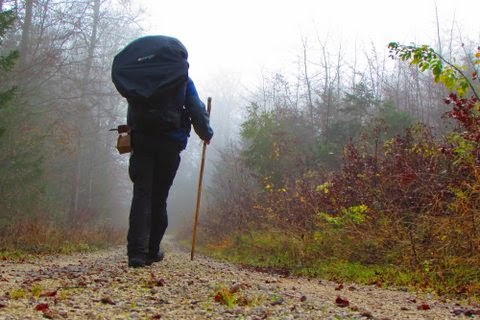
Walking across Europe in Paddy’s Footsteps
DATE: Monday 9th March 2015
TIME: 7:15pm
LOCATION: Great Hall, Hellenic Centre, 16-18 Paddington St, London W1U 5AS
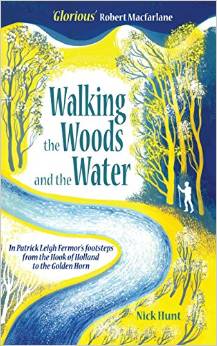
Writer and storyteller Nick Hunt, author of Walking the Woods and the Water,
recounts his modern day ‘great trudge’, walking in Paddy’s footsteps from the Hook
of Holland to Istanbul.
RSVP info@patrickleighfermorsociety.org

and …

In association with Pro Patrimonio, The Patrick Leigh Fermor Society presents
A Romanian Romance: Paddy in Transylvania and Moldavia A journey through time
DATE: Thursday 16th April 2015
TIME: 7:00pm
LOCATION: Romanian Cultural Institute, 1 Belgrave Square, London SW1X 8PH
Alan Ogden, author of Romania Revisited, will introduce the evening and briefly describe Romania in the 1930s.

Michael de Styrcea, nephew of Marshal of the Court Baron Ionel Mocsonyi-Styrcea, will then discuss Paddy’s time in Transylvania and the former Banat with illustrations from the Mocsonyi family archive.

The second part of the evening, led by Serban Cantacuzino C.B.E. (the founder of Pro Patrimonio) and his sister, Marie-Lyse Ruhemann, will be devoted to the story of Balasha Cantacuzino, her sister Pomme and Paddy.

RSVP info@patrickleighfermorsociety.org. Please note that the RCI has a capacity of 90 seats.

My Meeting with the Byron of Our Times

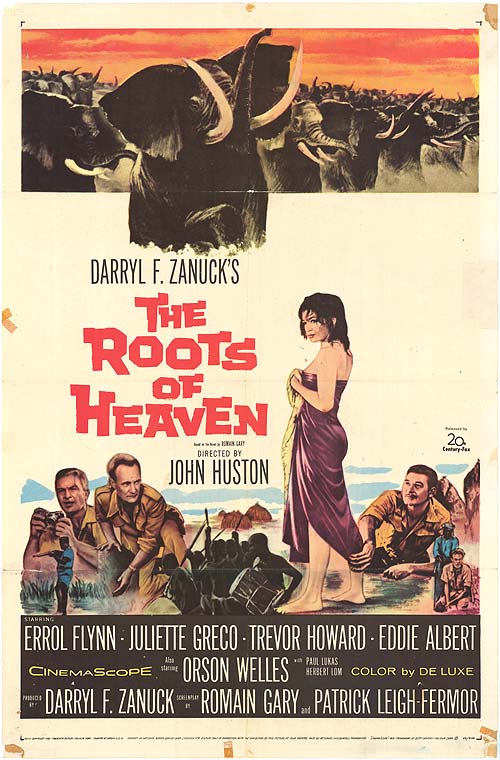
colour posterA curious mix of over the top homage to Paddy; criticism of Billy Moss’ “stilted” writing style; accusation that the editors of Abducting a General produced a “short, blatantly padded book” with the “last 20 pages provid[ing] a detailed guide to the abduction route that few visitors to Crete, apart from fanatics, would willingly endure”; followed by self-promotion of the writer’s own books about Errol Flynn, John Huston, and Somerset Maugham. Something here for everyone to gnash their teeth over including a claim that Paddy had a Greek son: but all-in-all quite enjoyable!!!

By Jeffrey Myers

First published in Standpoint Jan/Feb 2015.

I met the handsome, charming and dashing Sir Patrick Leigh Fermor (1915-2011) in May 2002. He belongs with authors as men of action — Melville, Conrad, Hemingway, Malraux and Orwell — who did not go to university and learned their lessons from violent experience. Leigh Fermor, whose reputation is based on three impressive achievements in travel, war and literature, has enjoyed after death a well-deserved revival of interest in his life and work. In 1933-34, in his late teens and after expulsion from school, he spent a year walking south-east across Europe, passing through nine countries from Holland to Turkey. In his leisurely 1,700-mile ramble, rough when solitary and poor, hedonistic as guest and lover, he moved effortlessly between peasants and patricians. Though his journey did not equal the agonising treks of Henry Morton Stanley through Equatorial Africa or of Wilfred Thesiger across the Empty Quarter of Arabia, it was a considerable feat of social and cultural exploration.

In April 1942 Leigh Fermor landed in Crete by parachute and set out, with resourcefulness and courage, on his second and most famous Byronic adventure. He spoke modern Greek and joined a handful of British Special Operations Commandos sent into the mountains of the Nazi-occupied island to organise the resistance and unleash a guerrilla uprising. His men attacked airfields and blew up a fuel base. He also watched helplessly as the Nazis took revenge by destroying whole villages and massacring thousands of civilians. While on Crete, he fired a rifle he thought was unloaded and killed a Greek comrade, setting off a blood feud that was not settled for many decades.

Leigh Fermor’s greatest wartime achievement was the daring capture of a German general, Heinrich Kreipe, on April 26, 1944. Dressed in German uniforms, Leigh Fermor and his men set up a roadblock. As the car slowed down around a sharp curve, they poured out of the darkness and restrained the general, who shouted, swore and punched until he was handcuffed and shoved onto the floor of the vehicle. They then smuggled their prisoner through the main town, Heraklion, west along the coast and into the mountains.

The general turned out to be a cultured captive, well versed in the classics, and had many lively talks with Leigh Fermor before he was taken to Egypt and then to a POW camp in Calgary, Canada. A moment of true understanding came when Kreipe, gazing at the white hills, quoted Horace’s Ode (1.9) — “Vides ut alta stet nive candidum Soracte” (See, the snows of Mount Soracte glare against the sky) — and Leigh Fermor quoted the rest of the Latin poem from memory. In April 1972 they appeared congenially together in a Greek television programme. When asked if he’d been treated well, the general replied, “Ritterlich! Wie ein Ritter” (Chivalrously! Like a medieval knight).

Leigh Fermor’s bold exploit inspired a book, Ill Met By Moonlight (1950), by his comrade-in-arms William (Billy) Stanley Moss and a 1957 film of that name with Dirk Bogarde as Leigh Fermor. (The title comes from A Midsummer Night’s Dream.) Moss — handsome, six years younger than Paddy and a veteran of the North African campaign — was educated at Charterhouse and spoke French and Russian but not Greek or German. He does not provide any historical or military background, bases his memoir on the diary he kept at the time and writes in a plain, often clichéd style. The first rather uneventful half — mostly marching, hiding and planning, with a few close calls — expresses admiration for the Greek partisans and leads up to the daring capture of the much older General Kreipe (born in 1895).

Leigh Fermor carries “an ivory-handled revolver and a silver dagger” and cuts a dashing figure. They had hoped to capture General Friedrich-Wilhelm Müller, a cruel “tyrant much loathed by the islanders” who was later hanged as a war criminal, but he was unexpectedly replaced by Kreipe. The capture takes place between the German headquarters and the general’s residence in the Villa Ariadne, built by Sir Arthur Evans during his excavations of the ancient Minoan palace of Knossos. After driving through Heraklion in the Opel, with Leigh Fermor wearing the general’s hat, they bluff their way through 22 German checkpoints — though one map shows only four checkpoints. (The gullible sentries, some suspected of complicity, were arrested and probably sent straight to the Russian front.) The commandos evade all the German patrols searching for Kreipe and, with many difficulties, bring him through the slopes of Mount Ida and down to the British ship on the south coast.

Kreipe — “a thick-set man . . . with thin lips, bull neck, blue eyes, and a fixed expression” — had come for a rest in Crete after two tough years on the Russian front. Concerned more for his dignity than for his life, he worries about the lost symbols of his rank and valour: his general’s hat and the Knight’s Cross of his Iron Cross. Though fairly stoical and cooperative, he complains about his minor injuries, poor food and lack of sleep. He and Leigh Fermor also exchange Greek verses from Sophocles, but do not establish a close connection. Though the commandos leave evidence suggesting only the British, not the Greeks, had captured the general, the Germans razed the nearest village and eventually killed 2,000 civilians.

Leigh Fermor’s version of the incident, Abducting A General (John Murray, £20), published last year, is a short, blatantly padded book. The foreword provides useful historical background. Only half the 189-page work contains the main text. Seventy pages reprint his hastily written intelligence notes sent from Crete to headquarters in Cairo. The most interesting dispatches describe his accidental  shooting of his close Cretan friend and his part in the executions, without trial, of Cretan traitors. (When I asked Sir Alec Kirkbride, the last surviving officer of T.E. Lawrence’s Arabian campaign if he had really killed a lot of lawless Arabs after the capture of Damascus in 1918, he casually replied, “Oh, not that many.”) The last 20 pages provide a detailed guide to the abduction route that few visitors to Crete, apart from fanatics, would willingly endure.

Leigh Fermor’s account has already appeared in his anthology Words of Mercury (2003) and been the basis of the two chapters on Crete in Artemis Cooper’s biography (2012). Based on memory rather than diaries and written in 1966, 22 years after the event, Abducting A General, like his earlier travel books, is filled with invented details. He gathered intelligence, carried out sabotage and prepared the Cretans to help the British recapture the island. His major difficulties were faulty radio transmitters, lack of transport, “rain, arrests, hide and seek with the Huns, lack of cash, flights at a moment’s notice, false alarms, wicked treks over the mountains, laden like a mule, fright among one’s collaborators, treachery, and friends getting shot”.

He is excited by the constant danger and, when disguised as a Cretan, by his close proximity to German soldiers. His book is more detailed than Moss’s about the history and geography of the island, more stylish and lyrical. He is devoted to his brave, loyal and sacrificial Cretan friends and comrades, whose language he speaks and whom he idealises: “we could not have lasted a day without the islanders’ passionate support: a sentiment which the terrible hardships of the occupation, the execution of the hostages, the razing and massacre of the villages, only strengthened.” But he ignores the conflicts between the Greek Communists and the pro-British partisans, which led to a civil war after the liberation of Greece. His hyperbolic and Homeric tributes to the Cretans — “their capacity to cross several mountain ranges at the same lightning speed on an empty stomach after swallowing enough raki and wine to lame other mortals for a week” — are excessive.

The main dangers of the abduction were the possibilities of stopping the wrong car, encountering other German vehicles and provoking savage reprisals. The identification and immediate escape in April 1944 was helped by Kreipe’s coloured metal pennants on the front fenders of his car. When seized, Kreipe lashed out with his fists, was manacled and had his legs tied. The whole episode took only 70 seconds. His badly injured driver, who could not keep up with the escaping partisans, had to be killed.

Since Leigh Fermor could also speak German, he writes more fully and positively than Moss about his relations with Kreipe, who bears up stoically under humiliating circumstances. The youngest son of the large family of a Lutheran pastor in Hanover, Kreipe was 48 years old and unmarried. He had a broad pale face, grey hair and jutting chin. A professional soldier, he had served in the army since 1914 and had recently won a Knight’s Cross on the Russian front. His moods during this ordeal ranged from cheerfulness to depression, and he sometimes slept under a blanket with Leigh Fermor and Moss, huddled together against the piercing mountain cold. Leigh Fermor writes in comradely fashion: “The General’s behaviour was most friendly and helpful throughout and he put up with the hardships of mountain travel and living rough with fortitude. Moss and I had the impression that he had lost his nerve a bit after the first contact with us. He certainly made no attempt to escape.” If he had broken his word, he would have been shot by the Cretans. On May 14, 1944, after 18 anxious days in the mountains, they all boarded the ship to Cairo. Spared the disastrous German defeats in Russia and in Greece, Kreipe remained in British custody until 1947.

The crucial military and moral question, which Moss ignores and Leigh Fermor answers with qualified affirmation, is whether the abduction of General Kreipe was worth the brutal German reprisals: whole villages destroyed and the massive slaughter of men, women and children in August 1944. The survivors rejoiced; the dead remained silent. But Leigh Fermor’s heroic exploit, still famous all over Greece, boosted morale during the dark days of the German occupation and gave a glimmer of hope for the final victory.

Leigh Fermor’s third major achievement was the travel books about his youthful journey that appeared decades later: A Time of Gifts (1977), Between the Woods and the Water (1986), and the unfinished and posthumously published The Broken Road (2013). A slow, procrastinating writer, blocked for much of his life by the weight of too much material, he resembled Penelope unwinding at night what she had woven by day. His wanderings abroad to write in Benedictine and Trappist monasteries, which he described in A Time to Keep Silence (1953), were also an escape from writing.

Fermor often indulges in unseemly displays of erudition. His learned digressions and serpentine style, his mannered mandarin, even baroque prose, which Lawrence Durrell called truffled and dense with plumage, were influenced by the work of Charles Doughty, T.E. Lawrence and Norman Douglas. This florid style clashes with his descriptions of colourful gypsies and cave-dwelling bandits — dressed in sheepskin jackets, high boots and billowing breeches, with daggers tucked into their belts and bandoleers charged with cartridges — rioting, feasting and firing their carbines into the air or, during a vendetta, into their enemies.

Fascinated by his achievements, I corresponded with Paddy (as everyone called him) while writing my biography of Errol Flynn. He had written the screenplay of one of Flynn’s best movies, The Roots of Heaven (1958), and been on the scene during the disastrous filming in French Equatorial Africa. He thought Hollywood screenwriting was a lark that enabled him to hang around and drink with colourful characters in an exotic setting. Flynn, Trevor Howard and Paddy were all drinking heavily, and there was some conflict when Paddy fell in love with the French singer Juliette Gréco, the co-star and mistress of his boss, the producer Darryl Zanuck. In a vivid letter of May 5, 2000, Paddy described the horrendous conditions — heat, disease, swarming insects and dangerous animals — while making the movie in the tropics. He got on well with the flamboyant Flynn, a kindred spirit, and gave a perceptive account of his character:

Errol seemed distinctly more intelligent than the run of actors. Full of original tangents, a great narrative gift, and a great sense of humour. He often referred to his learned father, a marine biologist at Belfast University. He loved reminiscing, largely about Hollywood. I asked him what the leading and most beautiful stars of the day were like. “Well, pretty good,” he said. “They’ve all got my scalp, I’m afraid.” There were lots of memories of his early days there, and his adventures. He was very funny about a yacht he shared with David Niven, and the girls they would take on trips. “We looked on them to supply the food. One pretty girl came on board with nothing but a loaf and a contraceptive device.” He took his acting seriously, and was absolutely adequate in his not very exacting role. He was on very good terms with all the other actors. His physical condition wasn’t too bad, troubled by hangovers now and then.

When I wrote again while working on my life of John Huston, who directed The Roots of Heaven, Paddy vividly recalled the savage Darwinian scene. Bangui, now in the Central African Republic, was the roughest and most primitive place of all:

The forests near Bangui were inhabited by very intelligent pygmies. We were “shooting” in the forest when the clouds broke and a large deluge of rain came down. Our procession of vehicles headed back to the ultra-modern hotel, like an up-ended mouth-organ on the banks of the Shari river, which was full of crocodiles. I got there with Errol and his girl, and we were astonished to find the whole of the ground floor a foot deep in termites, over which small bright green frogs from the Shari were leaping about in parabolas, while Juliette’s mongoose ran riot among them, killing and swallowing as many as he could, two legs sticking out of his mouth. A strange sight.

I also got in touch when writing my life of Somerset Maugham. Paddy was an Old Boy of Maugham’s alma mater, The King’s School,  Canterbury, and as a student had read Of Human Bondage. He was also a close friend of Maugham’s admirer and confidante Ann, the wife of Ian Fleming. After the war he had visited Maugham’s luxurious Villa Mauresque on Cap Ferrat. Since Paddy lived in Kardamyli, a remote village in the southern Peloponnese and my daughter was a Foreign Service officer in Athens, it was a perfect time to see him. So we rented a flat for three weeks, overlooking the sea and a few kilometres from Paddy’s village.

I rang him up from a local shop and he immediately invited me to come round for a talk. Since his house was hidden away and hard to find, he walked up to the main road and hailed me as I approached. Tall and straight, white-haired and sun-tanned, he was at 87 still a virile and impressive figure. He had designed his low, rambling, whitewashed, red-tiled home himself, and called it “a loose-limbed monastery and farmhouse with massive walls and cool rooms”. It had a shaded patio facing the Mediterranean, a flourishing garden, and a huge library filled with books in ancient and modern languages. He had created the setting he wanted and the life he wished to lead, travelled widely and wrote well, charmed everyone and seemed content.

Paddy wanted to correct Ann Fleming’s version of his embarrassing visit to Maugham, which she had exaggerated — with shattered drinking glasses and blood on the floor — to amuse Evelyn Waugh. Maugham had asked Ann to bring Paddy with her for dinner, and then (always generous to good-looking young authors) had invited him to stay on as his guest and write at the villa. Unnerved by Maugham’s severe expression and icy manner, Paddy drank far too much. Falling victim to the perverse tendency to talk about the very thing he was strictly forbidden to mention — Maugham’s debilitating speech defect — Paddy quoted the absurd belief that everyone in the College of Heralds had a stammer. That was bad enough. But noting that the day was the Feast of the Assumption, he mentioned Correggio’s painting of that subject in the Louvre and repeated a stammering friend’s bon mot: “That is a m-most un-un-w-warrantable as-assumption.”

Deeply offended, Maugham became even icier. Rising from the table and taking his leave, he rescinded his invitation by saying: “G-G-Goodbye. Y-Y-You will have left b-b-before I am up in the m-m-morning.” The wretched Paddy, who had not intended to wound his host, contrived to make matters even worse. Instead of waiting for the valet to pack his bag, he hastily threw his things together and caught a precious monogrammed sheet trimmed with Belgian lace in the zipper of his suitcase. He rushed down the stairs with the rest of the sheet trailing behind, frantically tore part of it off and escaped from the villa with shreds of fabric hanging out of his bag.

After our talk, Paddy signed some travel books I’d brought along. Specially buying another one, Mani: Travels in the Southern Peloponnese (1958), in the village shop, he inscribed it, surrounding his words with a cloud and a sketch of birds flying around the title page. When he mentioned bees and my daughter used the unusual word for “buzz” — zouzounizo — which he hadn’t heard for years, he praised her fluency in Greek. After drinks in his house Paddy invited all of us to dinner at a simple restaurant, set on a promontory overlooking the glistening sea, which he’d bought for Lela, his former and now ancient cook. I noticed that the cook’s son Giorgos — who greeted us warmly in excellent English and recommended the best dishes — was tall, blond, blue-eyed and very un-Greek looking.

Paddy, who didn’t see well at night, asked me to drive him home in his battered old Peugeot, which had stiff gears, negligible brakes and holes in the rusted metal of the floor. As we went down a steep hill towards the sea, which had no barrier, I suddenly realised that the brakes didn’t work and had to swerve violently to avoid submersion. Paddy, who’d had many close calls, was jovial and unconcerned about the dangerous episode. My instinctive feeling that Giorgos was Paddy’s son was confirmed when my daughter returned to Athens and impressed her Greek friends, who knew the truth, by mentioning that she’d dined with a national hero.

Paddy was the Byron of our time. Both men had an idealised vision of Greece, were scholars and men of action, could endure harsh conditions, fought for Greek freedom, were recklessly courageous, liked to dress up and displayed a panache that impressed their Greek comrades. Paddy also reminded me of a Bedouin chief’s tribute to another famous warrior, T.E. Lawrence: “Tell them in England what I say. Of manhood, the man, in freedom free; a mind without equal; I can see no flaw in him.”

Abducting a General – with Chris and Peter White, hosted by Harry Bucknall

Abducting a GeneralWaterstone’s Piccadilly will host an evening with the editors of  Abducting a General: The Kreipe Operation and SOE in Crete on Thursday, 12 March 2015, at 7:00 pm. This event is free but please reserve your place by email: piccadilly@waterstones.com

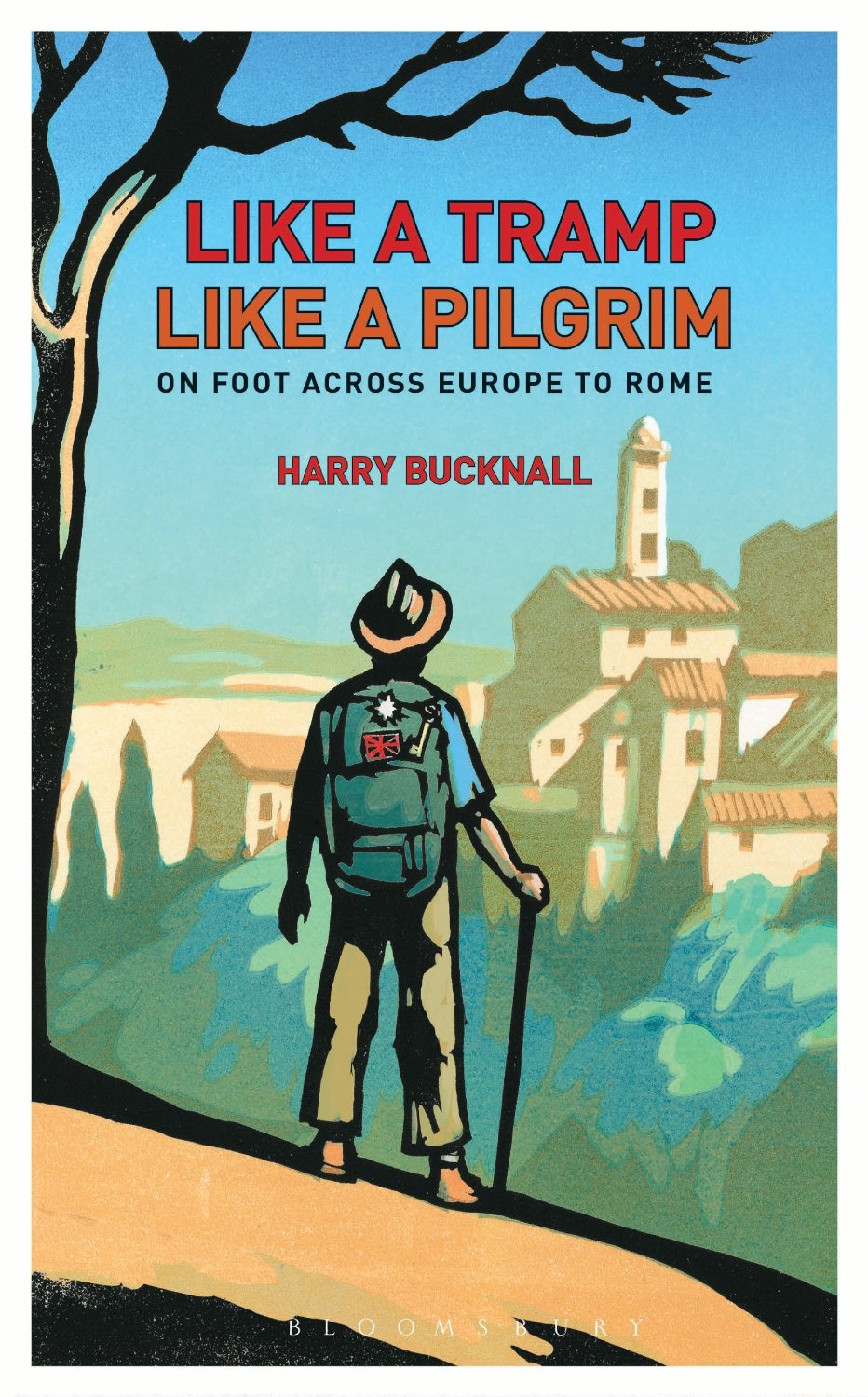
One of the greatest feats in Patrick Leigh Fermor’s remarkable life was the kidnapping of General Kreipe, the German commander in Crete, on 26 April 1944. He and Captain Billy Moss hatched a daring plan to abduct the general, while ensuring that no reprisals were taken against the Cretan population. We are thrilled to welcome historians Chris and Peter White here for an illustrated presentation on Fermor and this extraordinary event of the Second World War. This evening will be hosted by author and film-maker Harry Bucknall, author of Like a Tramp, Like A Pilgrim: On Foot, Across Europe to Rome. Further details: 0207 851 2400

Thirty per cent off Paddy’s Books at NYRB Classics

The NYRB is offering 30% off a number of Paddy’s books to mark the centenary of his birth. Follow the link below and click on any of the links on the NYRB page.

Click this link

Patrick Leigh Fermor, born on February 11, 1915, would have celebrated his 100th birthday today. To commemorate this anniversary and “one of the greatest travel writers of all time” (The Sunday Times), all New York Review Books titles by and about Leigh Fermor will be available at 30% off for a limited time, including the author’s renowned trilogy detailing his youthful trek across pre-World-War-II Europe: A Time of Gifts, Between the Woods and the Water, and The Broken Road.

Other Patrick Leigh Fermor titles available at 30%:

Mani: Travels in the Southern Peloponnese
Roumeli: Travels In Northern Greece
A Time to Keep Silence
The Traveller’s Tree: A Journey Through the Caribbean Islands
In Tearing Haste: Letters between Deborah Devonshire and Patrick Leigh Fermor
Patrick Leigh Fermor: An Adventure by Artemis Cooper

Traveller’s Film Club

Eland publications are pleased to announce that the Traveller’s Film Club is back!It is held at Waterstone’s, 203-206 Piccadilly, London W1. Annoyingly the notification was sent late so I had no time to notify you all about the event on 10 February on Freya Stark. There is however, still time to put into your diaries two other events.

Tuesday 3rd March
Hugh Thomson introduces the film he made on the writer and human rights campaigner, Andrew Graham-Yooll in Argentina. Graham-Yooll, himself Anglo-Argentine, returns after many years of exile to Argentina, prior to the Falklands War, to confront some of the generals. Doors will open at 6.30pm, the screening begins at 7.00pm.

Tuesday 14th April
Benedict Allen introduces the 2008 BBC documentary on Eric Newby from the Traveller’s Century series he presented, directed by Harry Marshall (Icon Pictures; this is a definite one for me! Again doors will open at 6.30pm, the screening begins at 7.00pm.

All screenings at 7pm, doors open at 6.30pm. Please book a free place at Piccadilly@waterstones.com

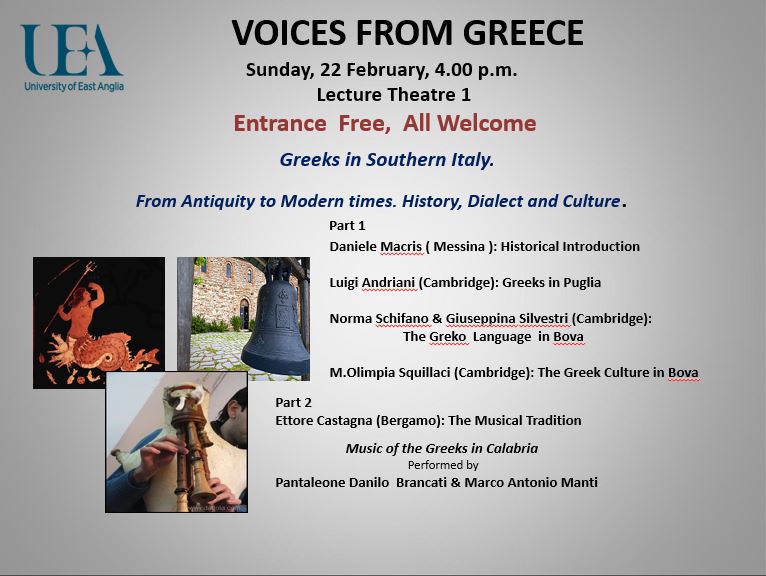
Voices From Greece day at the University of East Anglia

CaptureRegular blog correspondent Christos Paganakis has highlighted this event which is being held next weekend, 22 February, at the University of East Anglia. All are welcome. Contact  H.Anagnostopoulou[at]uea.ac.uk at UEA for details.

Christos tells me:

We have managed to resurrect our annual ” Voices From Greece ” day at the University here in Norwich ( the ones due for 2013+2014 were cancelled , due to funding from the Greek Min of Culture being unavailable due to the Economic Catastrophe in Greece )
I think the subject matter for this one might be of interest , and would certainly have interested Paddy , because it is all about the ethnically and culturally Greek populations still in southern Italy , their Language , Culture and Music , etc .

If it runs like previous ones it’ll start off with some lectures, then there’ll be a concert of traditional music and song related to the event theme , then mostly everyone goes out for a meal (where the musicians are usually inveigled into giving a second , extempore performance), and it all ends very late rather like a Greek peasant’s wedding, with earnest Oxbridge professors dancing the Pentoziali .

Listen to Harry and Nick

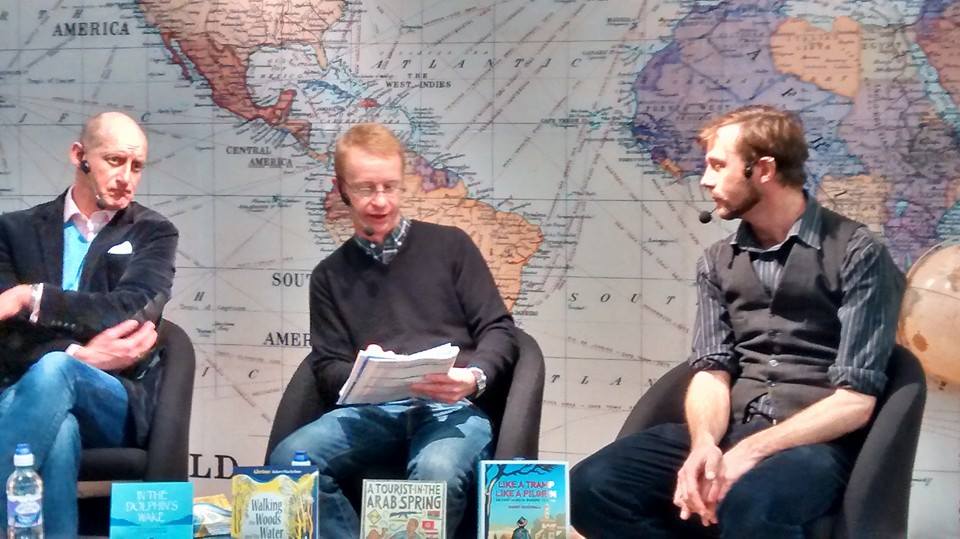
Harry Bucknall, Tom Cheshyre, and and Nick Hunt at the Stanford's Travel Writing Festival

Harry Bucknall, Tom Cheshyre, and and Nick Hunt at the Stanford’s Travel Writing Festival

I know that many of you would have liked to have joined me and dozens of others as we listened in awe to Blandford Forum’s leading travel writer, Harry Bucknall, at the recent Stanford’s Travel Writing Festival. Along with our very own Nick Hunt they kept us entertained with stories of their travels across Europe.

Harry is author of Like a Tramp, Like A Pilgrim: On Foot, Across Europe to Rome, whilst Nick has written the wonderful Walking the Woods and the Water: In Patrick Leigh Fermor’s footsteps from the Hook of Holland to the Golden Horn.

Like a Tramp, Like a Pilgrim

Walking the Woods and the Water
If you would like to find out what all the fuss was about you can now listen to a podcast of the event as Standford’s have put up all the talks on iTunes. Click here to listen to the deadly duo.

For more writers’ talks hit this link .

Happy Birthday Filedem! Born 100 Years Ago Today

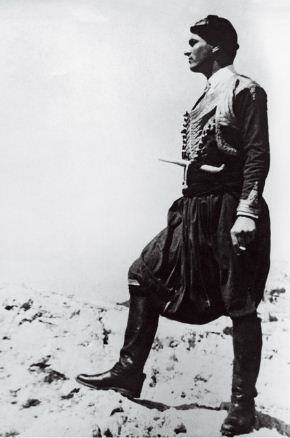
Paddy after the war in Byronic costume; Filedem? Courtesy of Benaki Museum

Paddy after the war in Byronic costume; Filedem? Courtesy of Benaki Museum

Happy birthday Patrick Leigh Fermor born on this day, 11th February 1915.

This has to be one of the most difficult occasions to mark. Should we go big or just keep it to something more modest? Perhaps it is the latter for today but something will be arranged for later in the year with the Patrick Leigh Fermor Society to properly celebrate his life and achievements.

To record your thoughts in this special year we have a new page “Marking Paddy’s Centenary”. Add your comments, birthday wishes, your favourite quotations from his works, or links to things of interest. It is your page: do with it as you will but do remember to play nicely.

Remember that Nick Hunt will be speaking and signing his book Walking the Woods and the Water at Hatchards in Piccadilly tonight 11th February.

Paddy as Filedem?

Paddy as Filedem?

To make this a proper celebration we need to sing. A very long time ago Marina Petsalis-Diomidis sent me a link to the song Filedem. As Paterakis recalls on camera during the 1972 reunion (see video section), Paddy liked the song so much that his comrades in Crete started calling him Filedem as a nickname. The song is a traditional Cretan song. Filedem -Φιλεντέμ – the name “File Edem” means “My friend Adam” in Turkish. The song is accompanied by some lovely scenes from Crete and Cretan hospitality. I have found an English translation of the words – it is all very racy and so typically Paddy – but you don’t need them to sing along loudly with the chorus in Greek.

The English lyrics in summary:

I am in love with a married woman
May God guide her
I am in love with a married woman
May God guide her

To renounce her husband
and love me.
To renounce her husband
And love me.

Filedem filedem..

White roses in your yard
How can you sleep alone
White roses in your yard.

Filedem filedem.

I am in love with a married woman
And she has two small children
I will be sending one (to fetch) water
And the other one (to fetch) wood.

Filedem, filedem

White and big roses
How can you sleep without a man
White and big roses.

Paddy’s Centenary – Petroc Trelawney on BBC Radio 3

Petroc Trelawney

Petroc Trelawney

Just a quick note to say that I have heard that Petroc Trelawney may play some appropriate music to mark Paddy’s birth on his Breakfast show on BBC Radio 3 next Wednesday 11 February. The show runs from 0630 to 0900.

Nick Hunt Marking Paddy’s Centenary

Harry Bucknall, Tom Chesshyre, and and Nick Hunt at the Stanford's Travel Writing Festival

Harry Bucknall, Tom Cheshyre, and and Nick Hunt at the Stanford’s Travel Writing Festival

In response to my request for ideas as to how to celebrate Paddy’s centenary this year we have had one or two ideas, but please come forward with more. So far we have the suggestion of a special page for your comments and quotes which we shall do, as well as a big Greek style party at my flat which appears to involve mass destruction of plates, furniture and ceilings with the unrestrained use of firearms in confined spaces. I am just checking the conditions of my lease and will come back on that one.

I have the idea of a one day event later in the autumn and shortly I will be asking you to vote for a couple of options via the wonderful Poll facility on WordPress.

Meanwhile, fresh from his successful debate with Blandford Forum’s leading travel writer, Harry Bucknall (author of Like a Tramp, Like A Pilgrim: On Foot, Across Europe to Rome) at the Standford’s Travel Writing Festival on Saturday, Nick Hunt will be out and about next week giving a couple of talks to mark the centenary. Nick will be in Waterstones Glasgow on 9th February and then at Hatchard’s Piccadilly on Wednesday 11th itself. Please do go along to support Nick and buy a copy of the really excellent Walking the Woods and the Water: In Patrick Leigh Fermor’s footsteps from the Hook of Holland to the Golden Horn. Nick is very entertaining and offers a very serious perspective on walking, Paddy, and his own personal experiences during his long walk which we did so much to support.

Elias Athanassakis – the car spotter – retells the story of Kreipe’s kidnap

My thanks to Nick Galousis who highlighted this You Tube video in which Elais Athanassakis, who passed away in 2002, tells the story of the build up to the kidnap and his part in it.

Paddy describes Elias in Abducting a General as “a very bright and enterprising young student working in our town organisation” and it was he who had to commit to memory all the details of the General’s car, even down to the size of the headlight slits, so as to ensure that the correct car was chosen on the busy road. He reconnoitered the route with Paddy and had the task of observing the road to signal back when the General was approaching and whether or not he was accompanied.

The video is in Greek which is great for those of us who speak Greek 🙂

A review of Artemis Cooper’s Cairo in the War 1939–1945 by Patrick Leigh Fermor

Paddy on the roof of Tara in Cairo

Paddy on the roof of Tara in Cairo

So it seems we can still find the occasional piece of Paddy’s original writing to get us excited. He reviews his good friend Artemis’ book, remaining very formal and making no mention of his friendship! Who else though was better placed to review this book than one of the residents of the infamous Tara?

by Patrick Leigh Fermor

This article first appeared in the TLS of September 1, 1989.


Artemis Cooper’s introductions and accompanying text to Duff and Diana Cooper’s published letters, A Durable Fire (1983), and to Lady Diana’s Scrapbook (1987), had a strong dash of her grandmother’s humour and lightness of touch; but only a most clairvoyant critic could have predicted Cairo in the War, 1939–1945. Her account, though it sticks punctiliously to fact, is as hard to put down as good fiction . The research is wide, detailed and scrupulous. She lays hold of the military background – the dramas unfolding just off-stage, but threatening to break out of the wings at any moment – with a soldierly grasp; and she seems to have talked at length with all the surviving dramatis personae.

Unleavened by personalities, military history can be heavy on the hand, and politics too, once the urgency has gone. The author’s skill redeems them both. As for the complex country and people on whom the war had impinged, she has segregated the strands with great discernment – the Copts, the Arabs, the Mamelukes, the Ottomans, all the sects and enclaves of the Mediterranean and the Levant, the Helleno-Judaeo-Ptolemaic nexus of Alexandria, the fellahin and the effendis and the nationalists, the rivalries of the Western European powers, with their local allegiances and clients and phobias, and, above all, the reigning Albanian dynasty and the predominating British presence and tutelage.

The author is particularly helpful and fair about the tensions between the last (in the persons of the young King Farouk and the proconsular Ambassador, Sir Miles Lampson), which culminated with British tanks all round the Palace, near-abdication and an enforced change of government: the German advance in the desert was the raison d’état. The enemy was held and driven back; certain froideurs remained at the top; but, astonishingly, the surface of the luxurious, dazzling and hospitable social life was hardly ruffled. At times this resembled the Duchess of Richmond’s ball before Waterloo, at others the Congress of Vienna: “The Kings sit down to dinner and the Queens stand up to dance . . .”. The pool at the Gezira Sporting Club sluiced hangovers away, the willow smacked the leather, polo-balls whizzed there all afternoon, and roulette-balls plopped at the Mohammed Ali after dark. There were enticing restaurants and enterprising night-clubs, party followed party and bedtime often coincided with the first muezzin’s call from the minaret of Ibn Tulun. Guilt about rationed London bit sharp now and then, but for those on short leave from the Desert, not deep.

Among the missions and staffs and the permanent officials, intrigue and gossip were as intense as in Mrs Hauksbee’s Simla. The author is eerily well informed about Groppi’s Horse and the Short-Range Shepherd’s Group and, a fortiori, about GHQ at Grey Pillars and SOE at Rustam Buildings (particularly the latter) and all the cross-currents, promotion-mania and the clashes – eg, “Bolo” Keble and Fitzroy Maclean – the political schisms of Southern Europe and their repercussions in Egypt. The pages on spies and counterespionage and raiding forces are one of the most impressive parts of the book.

The author is perceptive about the frustrations and amusements of all ranks of the assorted armies. There were shaming moments, but on balance it seems that arrogant behaviour towards the Egyptians may have been more frequent among the commissioned than the other ranks. In the case of a pasha who was insulted beyond endurance by a very drunk officer, nemesis was brisk and condign. The oblivious offender was inveigled to the pasha’s house. Most would have kept quiet, Artemis Cooper observes, but he was soon telling everyone, “You’ll never guess what happened to me last night — dashed unpleasant. I got buggered by six Nubians.”

In spite of the strains on high, the diplomatic world, the military, the cosmopolitan, the purely decorative and the intellectual interwove to a surprising degree, and lasting friendships were formed. The contribution of Greeks such as Seferis, and transplanted Greece-addicts like Lawrence Durrell and Robin Fedden, were important here. Poets and writers teemed, and Personal Landscape, the Nilotic equivalent of Horizon, was impressive. The author unfolds the catalogue of personalities with humour and understanding, though she is unduly dismissive of Sir Charles Johnston: cf his sonnet “The Lock”, and his Pushkin translations. The only omissions I can spot are Elizabeth David, the painter Adrian Daintrey and the writer-painter Richard Wyndham. Perhaps she should have included an eccentric cavalryman called Colonel Wintle, who got into hot water for taking a surrendered Italian general to luncheon, in full uniform, at the Turf Club.

The book ends with the calamitous post-war aftermath. Like the abstruse anecdotes, the range and choice of the photographs will promote sighs of delighted recognition and occasional ground teeth, and it is hard to think, on finishing, how this demanding book could have been handled better, more lucidly or more entertainingly.

You can buy Artemis Cooper’s Cairo in the War: 1939-45 on Amazon.

The Paddy blog is changing …

But don’t worry. It is only the look and layout that has changed. The format that I used up to now was no longer supported by WordPress who supply the engine behind the best blog about our favourite author and all round adventurer and gentleman.

I have chosen a neat and crisp format which is not so different to before and will enable me to take advantage of new features and plug-ins, when I get the time to find my way around.

You may find some of the older posts have lost a bit of formatting and where it is very bad I will try to sort out the issues, but with over 600 posts it won’t be possible to check them all. You can help me by getting in touch – see About & Contact – and informing me of howlers.

Would Paddy have understood any of the above? Probably not, but I am sure that if he had a computer he would enjoy browsing to find interesting articles and to look at pictures and videos of his dear friends and colleagues. More to come.

Finally it will be the centenary of Paddy’s birth on 11 February. If you have any suggestions about how we might mark this event please do come forward with your ideas and I will see what I can do.

Tom

The letter to the mysterious Mr Todhunter about Bob Bury

A letter dropping out of a book, in a hotel room in Ithaka. The letter referring to a wartime colleague in Palestine from 1941. The letter writer being Paddy to a mysterious “Mr Todhunter”. A delightful little article. Who can identify Mr Todhunter? What do we know about Bob Bury in Palestine? We know he met Paddy in Crete in 1944. You can comment at the end of this article or contact me.

By Andrew Pippos

First published in The Australian, 17 January 2015

A common feature among reviews of Patrick Leigh Fermor’s work is a reference to him as the greatest travel writer of his time. Because of such reviews I’d intended to read Fermor some day — the highest praise is a memorable introduction — but still hadn’t got around to it when I came across his 2003 collection Words of Mercury on the bookshelf of a hotel room in Ithaka, Greece, about two years ago.

A handwritten letter dropped from between the pages when I opened this book — and it may as well have fallen out of the sky, it may as well have been addressed to me, given my surprise to open a book by a famous writer and find inside a letter from the author himself.

Addressed to “Dear Mr Todhunter”, the letter was signed “Paddy Leigh Fermor” and dated 2004. Fermor turned 89 that year. His handwriting was both pretty and difficult to read: some words resolved only after you stared at them long enough. In the letter, Fermor asked Todhunter for help with his next project. Before coming to the nature of this help, he first offered some background: in 1941 he was visiting an Allied camp near Mount Carmel, Palestine, when he met a troop of Kurdish fighters led by a “clean-shaven figure with gold-rimmed spectacles”, whom Fermor learned was an Englishman named Bob Bury.

This Bury, “a delightful chap”, was training Kurds to form resistance groups in the event the Nazis broke through in the Middle East.

Next, Fermor’s letter told a story about his 1944 abduction of General Kreipe, the German commander of Crete. On a beach in southern Crete, Bury was among the small team of British soldiers who came ashore to meet Fermor and take custody of the captive general.

Kreipe and Fermor and the soldiers then sailed to Cairo. Bury would be killed a few months later in Italy.

Fermor wrote to Todhunter: “I want to write something about him (Bury), and would very much like to be in touch with his kith and kin. The only thing anyone seems to know about him is that he went to Eton. Would the provost of Eton know his family? I would be most beholden for any guidance!”

Todhunter, from what I can gather, was an editor in London. Years ago he might have visited the village of Vathi in Ithaka, stayed in that hotel on the town’s lake-like harbour, and left behind the letter and book by Fermor. Perhaps the book arrived there some other way.

Who was Bury? Did Fermor intend to write a story about him? The letter described Bury coming ashore in occupied Crete “with Tommy gun at the ready, very disappointed there would be no rough stuff involved”. He might have been a wartime version of the aristocrat who sought adventure in the crusades or the colonies.

After finishing school in 1933, Fermor walked across Europe to Constantinople, later writing about this experience in a trilogy of travel books, only two of which were published in his lifetime: A Time of Gifts, which tells of his travels from Holland to the Danube, and Between the Woods and Water, which takes him to the border of Serbia and Romania.

A final volume, The Broken Road, was published posthumously in 2013.

Wanting to know whether he did discover more about Bury, and why, at the age of 89, he wanted to write about an acquaintance who died 60 years earlier, I sent an email to Fermor’s biographer, Artemis Cooper. She replied the next day: “Paddy never did write about Bob Bury, but he used every possible excuse to postpone work on the book he was supposed to be writing — the third volume of his trilogy about his walk across Europe. He also thought about writing a book on Crete and another on Romania, but they never came to anything either.”

Cooper might have forgotten that she had already replied to my email, because a month later she wrote again: “Dear Andrew, Sorry I’ve been so slow to reply to you.” Cooper suggested the Bury material was for a book about Fermor’s time as a British special operations officer in occupied Crete. She added: “By 2004 Paddy’s eyesight was deteriorating fast: he could not admit it, but it was too late to begin any major project.”

Both replies provide for the one picture: Fermor avoided work on the unfinished trilogy by writing about his war stories from Crete (and such a book, Abducting a General, was published late last year). In that letter he was pursuing whatever idea gave him pleasure. Fermor, who died in 2011 at 96, intended to write as his blindness approached. He was already very old but had many years of work ahead of him.

Andrew Pippos is a Sydney-based writer.

Curating the Patrick Leigh Fermor archive

David McClay, curator of the John Murray archive

David McClay, curator of the John Murray archive

You may be forgiven for thinking that a lecture about curating Paddy’s archive could be a little dry, but for the one hundred and eighty people who attended last night’s event at the Hellenic Society in Paddington it turned out to be nothing of the kind.

By Tom Sawford

David McClay is the National Library of Scotland’s curator of the John Murray archive. He had travelled down to London to give the inaugural lecture of the Patrick Leigh Fermor Society and it was a great success for both. David led a large team of activists, technicians and photographers who have spent the best part of a year cataloguing and itemising Paddy’s extensive personal collection, and over 6,000 of Joan’s photographs.

We were given a glimpse of some of the material which includes over 10,000 letters and postcards as well as numerous corrected drafts of Paddy’s manuscripts, and surviving journals of his post-war journeys around Greece and other beloved places. The collection takes up over 16 metres of shelving and the catalogue is eighty one pages long. Fortunately Paddy gave David and the team some assistance with his various boxes labelled “Detailed Oddments” or “Not very important oddments” and so forth.

The story of the acquisition is interesting itself. The John Murray archive was donated to the museum in the 1980s and includes material from the authors published by the house including of course Lord Byron, Jane Austen, Charles Darwin and John Betjeman. The catalogue extends to over one million items and may have a value in excess of £100 million. When offered the PLF archive, the decision to purchase was not an instant yes as Paddy had no obvious relationship with Scotland. The decision to go ahead was based upon the relationship with John Murray, in particular John “Jock” Murray VI, and of course the recognition that Paddy’s work was unique and important in 20th century English literature.

Given Paddy’s long life, his varied career, and the circle of friends that he had, many of whom were significant figures in their own right, David McClay’s view is that there is a lot to be uncovered and the material could provide the basis for further biographies. He cited as an example Paddy’s friendship with Greek artist Nikos Ghika; he believes that their correspondence is worthy of publication. Many of the letters include drawings and small paintings by Ghika. The propensity to illustrate letters was common (as we have seen in the letters to Debo Devonshire – see In Tearing Haste), and other examples include those from John Craxton to Paddy: one of Craxton’s letters includes a sketch of the harbour view from his house in Crete. Likewise the guest book from Kardamyli is full of wonderful material and colourful illustrations.

Joan Fermor’s work should not be ignored. David McClay told us that she was a successful architectural photographer with an ability to bring her subjects to life which included many archaeological subjects. As we know she also took brilliant images of their friends.

For the student, biographer, or even just the casual visitor, there are other delightful inclusions such as a copy of Paddy’s beloved friend Xan Fielding’s post-war CV which ran to about 15 lines and included a list of his skills and talents which were:

Fishing with dynamite
Bull fighting
Skiing
Witchcraft
Sailing
Swimming

Clearly a man with all the vital talents to make him employable anywhere!

One of the most important messages to bring to you all, dear readers, is David’s view that this is “your archive”: it is freely available for you to visit whether you be a professional writer, academic or merely just wanting to hold, touch and read the ephemera of Paddy’s life. You are encouraged to visit Edinburgh and can request information. Soon much more will be available online for you to use or just to browse and amuse yourself. This positive drive towards public accessibility was very encouraging, and whilst every care has been taken to ensure that the materials will survive – storage in proper archival folders in acid free environments – the archive is a living entity and to be of any value it must be accessed. McClay made a special appeal for people to come forward with ideas about the origins of certain pictures, including who may have taken them, where and when. Much work still needs to be done and you, his friends and fans, may be able to help.

As well as the storage of the material and the process of digitisation of some items, the Library has plans to publicly display as much material as possible. I will keep you posted about events but David anticipates exhibitions in Edinburgh and then on tour to London. The renowned water colourist Hugh Buchannan has made some paintings of material from the archive which will feature in an exhibition of the Esterhazy Archive. These works will be on display at the NLS in the summer of 2015 and will move to London to be shown at the John Martin gallery in, of all places, Albemarle Street just up the road from John Murray.

It didn’t take long during the Q&A session for the subject of “the house” to come up. Charles Arnold, the leading light behind the PLF Society handled this one. It appears that the Society has engaged a leading law firm as well as accountants KPMG to work with the Benaki to establish a structure for the proper and transparent use of any funds that the Society may donate for the upkeep and renovation of the house at Kardamyli. We wish them luck with that!

The choice of subject for this first PLF Society event was a good one. It covered all aspects of Paddy’s life and reassured us that this valuable and fascinating material will be accessible by all. If you would like to find out more about the work of curating the archive or to help David McClay and his colleagues in the ongoing identification process you are encouraged to get in touch. Likewise if you have material – items received from Paddy – that you may wish to donate (or in some cases sell) you can contact David at d.mcclay[at]nls.uk

A milestone passed

CaptureJust a little note say that in the very last minutes of yesterday we had our one millionth view of the Patrick Leigh Fermor blog. Not bad in just over four years.

Thank you for following and do come back for more in 2015.

Tom

Lecture: Curating the Paddy Leigh Fermor archive

General archive itemsThe inaugural lecture of the Patrick Leigh Fermor Society will take place on Monday 19 January 2015 at 7.15pm.

David McClay Curator of the PLF archive (and those of Joan Leigh Fermor and Xan Fielding) at the National Library of Scotland will present the Library’s recent acquisition of Paddy’s extensive and outstanding archives, including their recent activities and future plans at the Hellenic Centre, 16-18 Paddington Street, Marylebone, London W1U 5AS.

All are welcome to attend but for the sake of crowd control please RSVP (and enquiries) as follows:

tel: 020 7563 9835
fax: 020 7486 4254
e-mail: press@helleniccentre.org OR info@patrickleighfermorsociety.org

The Patrick Leigh Fermor blog 2014 in review

CaptureHello to you all and a Happy New Year. I hope that your holidays were peaceful. This year promises to be interesting as it marks the centenary of Paddy’s birth on February 11th. As yet I know of no significant events to mark this but we shall see what occurs.

It is now traditional to review the previous years’ activity on the blog and as such I attach the report for 2014 prepared as usual by the WordPress.com stats helper monkeys. The big numbers are that you made around 230,000 visits to view the 82 new posts which brings our numbers up to 660 posts on the blog.

Quite amazingly we are just two or three thousand visits away from having over one million visits since I started the blog in 2010. I am looking forward to sharing more Paddy related material with you in 2015, and also to your comments which can sometimes be challenging but always informative and often very helpful to others who seek information.

Regards.

Tom

Here’s an excerpt from the WordPress report:

The Louvre Museum has 8.5 million visitors per year. This blog was viewed about 230,000 times in 2014. If it were an exhibit at the Louvre Museum, it would take about 10 days for that many people to see it.

Click here to see the complete report.

Why Couldn’t Patrick Leigh Fermor Finish His Masterpiece?

Photo: Sean Deany

Photo: Sean Deany

An interesting perspective is taken in this review of The Broken Road which takes as its subject Paddy’s inability to complete his trilogy and the perils of posthumous publication. By Jason Guriel First published in The New Republic, 23 December 2014 In 1933, a 19-year-old Englishman, finding himself booted from school for holding hands with a local, decided to cross Europe on foot. He had a mind to make it from the Hook of Holland down to Constantinople—unpurple “Istanbul” would never do. Even more romantic than the goal was the gear: used rucksack (its previous owner had tramped about with the travel writer Robert Byron), Oxford Book of English Verse, and ace sidekick (Horace). He slept outdoors, but in castles, too, as freshly minted friends—an ever-expanding network of social capital—reached ahead of the young traveler, by post, to ensure he would be received by the next available count or baron. But it wasn’t until the 1970s, over four decades later, that Patrick Leigh Fermor—by then, an established author and war hero—turned his full attention to writing up the European walk. A Time of Gifts appeared in 1977, followed by Between the Woods and the Water, in 1986. By the end of the first book, Leigh Fermor’s younger self had reached the edge of Hungary; by the end of the second, Bulgaria. There he waited, stalled in 1934, for decades. A cult began to fire up after the publication of these books. Blame the affable character Leigh Fermor cuts in the first two: ravenous for knowledge but willing to risk expulsion for the girl. He’s charming, too; he tries to pay his way (“…I would make a frantic flourish with two thousand-lei notes…”), but others wave him off (“These two bits of paper sank to the symbolic role of stage currency”). After decades of angry, quirky misfits, Leigh Fermor’s charming young man—the Ur-backpacker—would’ve seemed crisp. (Today, we would bloody him with the word “privileged.”) It’s unsurprising that a cult came to be transfixed; after the walk across Europe, Leigh Fermor helped carry out the kidnapping of a German general, spent time among monks, traveled in the Caribbean, erected a house in Greece (the setting for the recent Richard Linklater film Before Midnight)—his life was so colorful it seemed to stream from a prism. But he had chops, too. Vision. His prose was the slow output of an eye committed to registering exact contours, but only in original terms. “Blown askew, the Trafalgar Square fountains twirled like mops,” he writes near the start of A Time of Gifts. “Bristling regiments of lancers moved about like counter-marching cornfields,” he writes at another point. If you’re tasked with putting over a windblown fountain or marching lancers, there are no better solutions than these. At a time when plenty of upstarts have already committed to print their formative years—when trauma is trumpeted, and meta-memoir, over-Eggered—Leigh Fermor’s patient approach to prose is positively alien. His patience may have left him paralyzed, too. In 2011, when Leigh Fermor finally died, his younger self was still stranded at the edge of Bulgaria. But there was a manuscript. The intervention of editors, and the publication of The Broken Road, the final book of the trilogy—holiest of those systems by which we mete out the franchise—gets the younger self moving again. In a slightly more just universe, people would have lined up for The Broken Road with all the enthusiasm they bring to the subject of adolescent life in dystopias. On this side of the wormhole, however, The Broken Road was published earlier this year by NYRB Classics and is coming out in paperback next month. (John Murray brought it out in England in 2013.) NYRB Classics is to literature what the Criterion Collection is to film: a prestige imprint that, by issuing niche titles in handsome editions, attempts to rescue title from niche. We long ago ceded the useful word “curate” to artisanal butchers and Pinterest, but NYRB Classics curates in the best sense. (Mary Olivier: A Life, by May Sinclair, On Being Blue, by William Gass) Over the last few years, it has restored much of Leigh Fermor’s catalogue to the bookstore and done a public good. The Broken Road, however, is far from the fully realized book Leigh Fermor’s fans were hoping for. It covers the last leg of his journey, from Bulgaria to Constantinople, but as editors Colin Thubron and Artemis Cooper explain, the new book was composed before its predecessors, in the early 1960s, when a magazine invited 5,000 words from Leigh Fermor on “The Pleasures of Walking.” Leigh Fermor, then in his forties, finally began to set down the European journey of his youth, and came to focus on the final stretch. But in the mid-1960s, he abandoned the manuscript. When he resolved to return to the subject of his European travels in the 1970s, he started over, repositioning his narrator in London, the day of departure. The rest we know: Leigh Fermor’s renewed effort produced the two best works of travel writing of the twentieth century. But for the next two decades, he was unable to make headway on a book that would bring the trilogy to an end. The editors describe a “long ice age”: the “loyal and long-suffering” publisher was lost in 1993, the wife, ten years later. Leigh Fermor consulted a psychiatrist, but his energy had been flagging for some time. “The whole subject was beginning to feel stale, barren, written out, and he feared he no longer had the strength to bring it back to life,” is how Cooper puts it, darkly, in his recent biography of Leigh Fermor. Then, in 2008, the biographer turned up a copy of the ’60s manuscript, and the writer, in his nineties and abetted by magnifying glass, began to fuss with it. Not too long after, Leigh Fermor passed away. The 40-year-old text breaks off before reaching Constantinople—breaks off in the middle of a sentence, in fact, a rough edge the editors have respected. (No ellipsis sands it down.) They have supplemented the manuscript with fragments from a diary he kept, but the impressions of Constantinople are partial, and the diary firms up and expands only when Leigh Fermor finds himself among monasteries in Greece. And that’s where The Broken Road ends. The legendary destination of Constantinople, then, remains mostly unremarked upon: a rip in space around which the book, like sparkling debris, swirls—and around which thoughts of what could have been, the thoughts of the fanboy, spin. The poignant title is an imposition of the editors; the sacred text, a salvage job: recovered by apostles from the late author’s leavings and pieced together. What’s really absent, of course, isn’t so much an account of Constantinople, as a third book written by the mature author of the first two. Thubron and Cooper are clear about the lack of polish, but it’s not until you start in on The Broken Road that you realize how crucial to his prose was the mature writer’s patient, if unsustainable, perfectionism. Generic adjectives function as placeholders for yet-to-be realized images (“amazing colours,” “amazing robes,” “amazing sunset”), or serve to reel off a character quickly (“She was so pretty, kind, funny, intelligent, and good”). When he does write well, it’s often too well: a “sweep” of land “climbs and coils and leapfrogs clean across Northern Bulgaria from Serbia to the Black Sea”—a metaphor that sounds good (listen to that alliteration) but lacks the precision of Fermor’s better prose (land doesn’t have legs). “Plumed with poplars and mulberries,” on the very first page, is lovely enough, but the plume-idea comes to be plumed again and again. He is more original elsewhere. “The dome and the walls were almost intact,” he writes of a mosque, “but most of the plaster had fallen away and the minaret was broken diagonally near its base, exposing to the moon the twist of the stairs round their central pillar like the volutes of a smashed ammonite’s fossil.” That’s enough to keep you going, if you need the pellet; fans of A Time of Gifts, who will have already sought out the hardcover, will push forward on principle. The Broken Road, after all, belongs to a class of aesthetic object that includes The Beach Boys’ Smile, Orson Welles’s The Other Side of the Wind, and Nabokov’s The Original of Laura —works that benefit from their incompleteness because they spark speculation, devotion, delusion. Reviewers certainly seemed to be reassuring themselves. “Friends and fans, acolytes, devotees and disciples can all rest easy,” declared one. “In some respects this book is even more satisfying than its predecessors…” hazarded another. Why don’t they recognize that Leigh Fermor’s failure to bring off a third book—and it is a failure, let’s not pretend otherwise—only buttresses his legend? The line that weighs down the last page of Between the Woods and the Water, “TO BE CONCLUDED”—and that applied drag to Leigh Fermor’s last decades—gains even greater pull now that we know a proper conclusion cannot be provided. Had it been provided, and promptly, we might be slightly less romantic about the author. He might strike us as less tortured, less remote. Perhaps the release of recent long-gestating albums by Guns ‘n Roses and My Bloody Valentine has dissolved some of the legend that once occluded the very real humans behind those bands. Perhaps David Foster Wallace’s estate should’ve kept back The Pale King, his unfinished novel, for a generation or two. Let the corpse of work cool. Let the cult heat up. In Fermor’s case, The Broken Road is a carefully presented box of brilliant bits: a kit for keeping up one’s enthusiasm for one of the great travel writers of the previous century. It’s also part-emptied skull, part-time capsule: like its publisher, it extracts voice from void, paper from ashbin, expertly. (“Nearly all the people in this book …” Leigh Fermor observes, “were attached to trails of powder which were already invisibly burning.”) But The Broken Road is no place to begin—as Leigh Fermor himself may have sensed when he turned away from it more than four decades ago. Those wishing to fire up an enthusiasm would do well to search out any of the other books, including especially A Time of Silence: a slim, quick account of time spent among monks, whom Fermor’s fans, in their extreme, cultish devotion, can start to resemble.

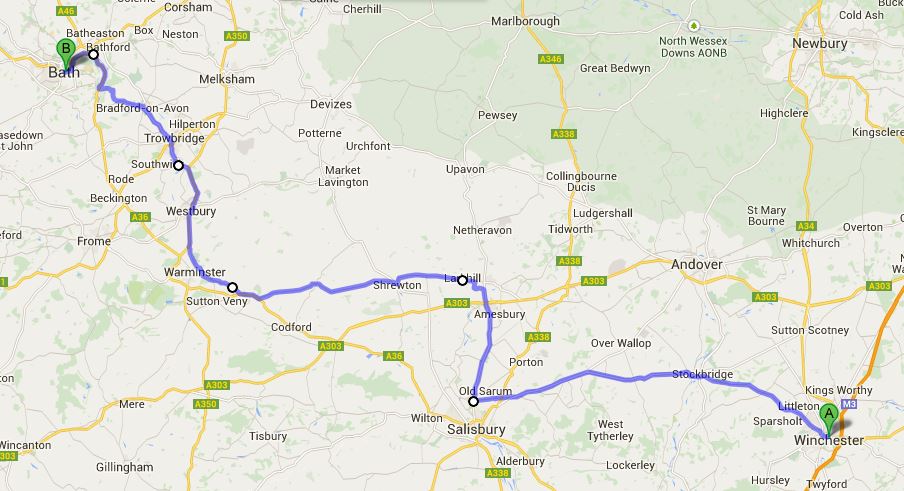
Update Walking from Winchester to Bath

Arrival in Bath

Arrival in Bath

I wanted to pass on my thanks to all of you who gave financial and moral support to me during my walk from Winchester to Bath . My goal was to raise both money for, and raise awareness of, the plight of homeless people.

Both objectives were achieved. Donors gave around £2,400 for the charity Shelter when including Gift Aid (UK taxpayers) which is a really excellent amount. It was so encouraging for me to see the donations tick up as I paced out my walk.

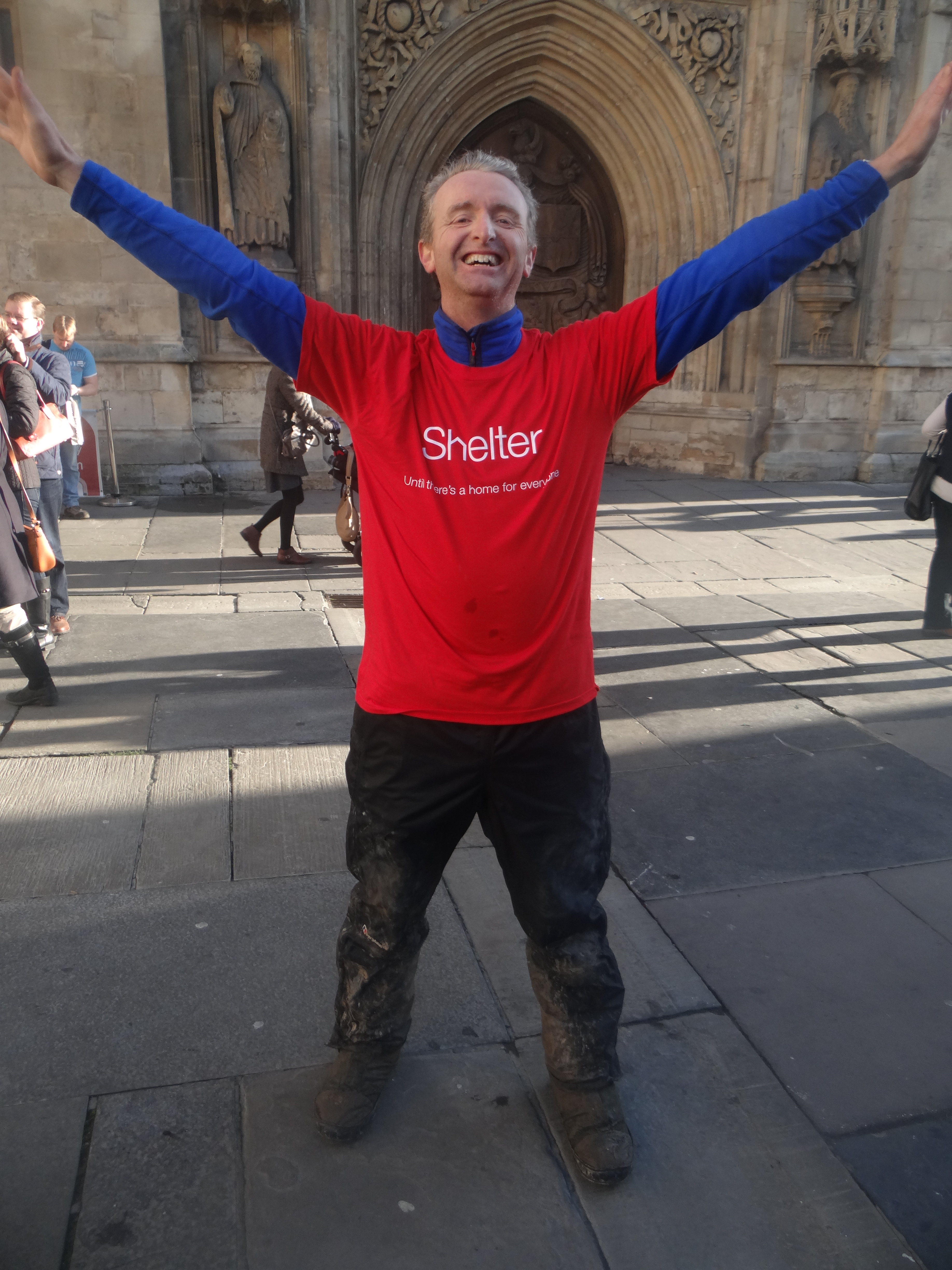
It was a hard exercise and my experiences of sleeping rough gave me a new insight into what it may mean to try to find somewhere relatively warm, dry and safe to sleep. I managed to sleep in a shed in Winterbourne Gunner, a church porch in Heytesbury in Wiltshire, and an abandoned caravan in the Frome valley. The distance was around seventy miles or 115 km and lasted just over three days. Each day brought new challenges which were mostly environment related, with a big variation from the leafy by-ways of Hampshire, to the slippery and muddy remoteness of Salisbury Plain, and finally the boggy ground of Somerset and Avon. In order to make my proposed arrival time of 11 o’clock Saturday morning I had to make use of an abandoned bicycle to get me the last six miles into Bath along the Kennet and Avon canal towpath.

It is still possible to donate via my Just Giving page here.

I was quite speechless when I finally arrived at Bath Abbey but felt an enormous sense of release and relief when a busker started to play the Soft Cell hit Tainted Love – see video!


Here are some pictures if you would like to look at them.


This slideshow requires JavaScript.

Once again thank you and I wish you all a very Merry Christmas and a Happy New Year. All the best.

Tom

“Testing you sorely” or is it “Sorely testing you”?

Splitting the infinitive is almost as controversial as splitting the atom, but clearly a lot easier to do. What I hope is not easy dear readers is to upset you by the variety of posts on this blog, and in particular some of the more recent ones.

Yesterday Francis Fermor added a most unkind comment saying that the blog is no longer interesting as it is no longer all about Paddy and that “too many people are joining the band waggon and taking advantage for their own personal ends.” This was in relation to the post about Owen Martell’s walk across the USA.

For one thing I don’t think Owen has made any money out of his adventures. At least he has not written any books on the subject that I can find. I post such things as I personally find them interesting and they fit with my editorial policy of being “Paddy related”. Owen contacted me after his first walk as he was interested in Paddy and had been inspired by him. I am sure the man himself would have been most interested in Owen’s journeys: a lot of you are. Paddy would have encouraged him and wanted to hear his story.

Paddy may be dead, and not much new will emerge, but his work and his life remain as an inspiration to many, including those who read this blog. A lot of people are inspired to set out on journeys of their own. Nick Hunt’s attempt to follow Paddy’s route was not for any great “personal end” but because he wanted to do it and thought that others might like to read about the great changes that Paddy himself wrote about via his Polymath. Ed and Charlotte walk parts of his route each year for no other end than they enjoy it and find one of those Songlines to follow; a Songline chanted by Paddy and now in our memory.

How long can I continue with material on here? As long as there is an audience, and my stats tell me that there is one with over 20,000 regular visits each month. We are now within a few thousand visits of one million since opening in 2010. That I find pretty phenomenal. People visit here for a variety of reasons and the material that I post attempts to address those varied interests.

So how long can I continue? There is plenty more directly related material and my self-appointed “task” here is to create a unique on-line archive of Paddy related material. So I will continue to do that. And I will do it until I test you so sorely that you leave me alone with just a few die-hards.

Finally, to continue the theme of “personal ends” I would like to remind you that I will start my 70 mile walk to Bath tomorrow on behalf of the charity Shelter in aid of the homeless and there is still plenty of time to donate via my Just Giving page.

Between 10-13 Dec you can join with me to increase awareness of the scourge of homelessness and to help raise funds for the UK’s leading charity for the homeless, Shelter. I will walk 70 miles from Winchester to Bath over one of the most sparsely populated areas in England, sleeping rough under a simple shelter, enduring the December cold, and the long, cold, lonely nights: just like THEM. All you have to do to join me from your warm home is to please give some money to Shelter at my Just Giving page. These are your fellow human beings and they deserve some help and comfort. You can join me walking to Bath Abbey on 13 Dec. Just email me or comment on this post. PLEASE SHARE THE FACEBOOK EVENT I CREATED (click here) on your Facebook timelines: it is a public event. Give your money: £, Euros, US $, Yen, Lei, or whatever here.

lucy

Owen Martell – Walking the West across the USA


You may remember in 2012 I posted a video of Owen Martell walking “the wrong way” across Europe from Istanbul to Edinburgh. It was quite an epic journey.

This last year or so Owen walked across the United States from Seattle to New Orleans pushing and sometimes dragging his load in a trolley contraption through snow and desert, encountering some very strange Americans, and just good normal people on his way. There were times when he had some close shaves, suffering from noxious gases in oil production fields, and getting caught up in “security situations” in an America that can sometimes be hostile to the wandering traveller as it fights the war against its unseen, and perhaps imagined, enemies.

I hope that you enjoy watching Owen’s journey in his wonderful You Tube video accompanied as ever by the delightful music of the very talented folk group Darlingside.

Watch Owen’s walk across Europe here.

An awfully big adventure: William Dalrymple on Paddy Leigh Fermor’s wartime exploits

William Stanley Moss, Leigh Fermor and Emmanouil Paterakis before the kidnap of General Kreipe. Photo: The Estate of William Stanley Moss

It is always good to read stuff by William Dalrymple. He is one of the writers whom I enjoy whatever he happens ot write, and I like listening to him too. In this New Statesman review he compares Abducting a General with Kidnap in Crete by Rick Stroud.

by William Dalrymple

First published in the New Statesman 4 December 2014

On 20 May 1941 the German army launched its airborne assault on Crete with the largest parachute drop in history: in less than an hour 15,000 men fell slowly into the olive groves and vineyards of the island. They had no idea that the British, using Ultra intercepts, knew of their plans and were sitting waiting for them. Resistance was so staunch – as much from ordinary Cretans as the Greek, New Zealand or British army units stationed there – that the elite Fallschirmjäger regiment was almost entirely wiped out in one day.

The story of that extraordinary civil resistance, and the long saga of the continued Cretan defiance of the Nazis throughout the rest of the war, is now well known. Perhaps the most famous moment of all is the abduction of the Nazi commandant of the island, General Heinrich Kreipe, on 26 April 1944 by a team of Special Operations Executive agents led by Paddy Leigh Fermor, later one of the great contemporary prose stylists and travel writers of our time.

There already exist at least four excellent accounts of this story. The first off the block, only five years after the war, was William Stanley Moss’s yarn Ill Met By Moonlight, which became a popular Powell and Pressburger film with the role of Paddy played by Dirk Bogarde. Five years later, a Cretan perspective came from a messenger in the resistance, George Psychoundakis, whose Greek manuscript, The Cretan Runner, partly written in prison, was translated into English by Paddy. I was a devoted disciple of Paddy, and the last time I went to stay with him in Greece he gave me his own annotated copy of Psychoundakis’s book. I have it by me as I write.

In 1991 the young Antony Beevor wrote the episode up in the first of his celebrated sequence of Second World War books, as Crete: the Battle and the Resistance. Finally, two years ago, Beevor’s wife, Artemis Cooper, brilliantly retold it in her biography Patrick Leigh Fermor: an Adventure.

Given the startling quality of these four accounts it is fair to ask if there is anything a new account can possibly add. The answer in this case is, surprisingly: a lot. Abducting a General brings into print for the first time Paddy’s own account of the kidnap, originally written for Purnell’s History of the Second World War, but up to now never published at full length (5,000 words were commissioned; Paddy characteristically delivered 30,000; 25,000 words were cut, and appear here for the first time, other than a brief extract in Cooper’s 2003 anthology Words of Mercury). The book also contains Paddy’s intelligence reports, sent from caves deep within Crete. Meanwhile Kidnap in Crete by Rick Stroud provides a rollicking outsider’s account, written with great verve and dash, containing much telling new material, some of which is gathered from previously untapped Cretan sources.

In 1941 the Allies seemed on the verge of defeat. The Nazis, who had already swept through most of northern Europe, had succeeded where the Italians, their Axis allies, had failed in Greece, and within a few weeks had broken through and taken Athens. Now they wished to take Crete and hold it as a staging post for evicting the British from Egypt and North Africa.

Given the advance knowledge of Nazi plans, Crete should have been the first German defeat of the war. But a fatal misunderstanding, which led the British wrongly to expect a substantial naval assault, turned the battle into a defeat. Despite record casualties the Germans managed to take several crucial airfields and land large numbers of reinforcements. By 27 May the British had begun to withdraw, but could rescue only half their soldiers: 16,000 were ferried to Egypt, but 17,000 spent the rest of the conflict as prisoners of war.

Nevertheless, communications remained open between the Allies in Alexandria and the spirited Cretan Resistance, and by early 1942 plans were afoot to raise morale through a series of intelligence operations. These were designed to disrupt the German occupation and avenge its horrors – mass executions and the punitive massacre of entire villages.

As a fluent Greek speaker, the 26-year-old Leigh Fermor was quickly singled out for intelligence work on the southern front and was sent first to Albania, then to Greece, as a liaison officer working with the Greek army. After the fall of Greece he found his way to Crete just in time to fight in vain against the German invasion. From there he was evacuated to Alexandria, where he set up house with several other SOE agents and a refugee Polish countess, Sophie Tarnowska, who moved in with her few possessions: “a bathing costume, an evening gown, a uniform and two pet mongooses”.

Before long Captain Leigh Fermor was sent back to Crete to work with the resistance. He and an odd collection of recently enlisted Greek-speaking classical scholars and archaeologists were parachuted into occupied Crete disguised as shepherds. For a year they lived a troglodyte existence in sheepfolds and under the stalactites of Cretan mountain caves, commanded by Tom Dunbabin, a former classicist who was a fellow of All Souls.

Occasionally, Paddy, dressed in a double-breasted suit as “a Heraklion gadabout”, would descend to the capital to gather intelligence. There he delighted in tempting fate by carousing at parties where German officers were present, on one occasion even teaching them the pentozali, a traditional Cretan dance said to make the dancers dizzy five times over. Paddy’s bravado once came close to backfiring when his companion Micky Akoumianakis offered everyone cigarettes that were quickly recognised as English, “and the dance came to an abrupt halt when the Germans asked him where he had got them. Thinking on his feet, Micky said he had bought them on the black market, which had been flooded with stuff left behind by the retreating allies. The soldiers fell for the story, drank more raki and the dizzying lessons went on.”

The port from which Paddy set off was captured by Rommel’s advancing Afrika Korps the day after he left. “It was a bad, low moment in the war,” he once told me. “The Germans seemed to be advancing in triumph in all directions.” He described watching wave after wave of Luftwaffe planes heading over in formation, and wondering if there were any hope of defeating the advance. It was partly for this reason that his bosses gave permission for his wild scheme to raise morale by kidnapping the German commander of the island.

The general’s routine was studied and the various possibilities for ambushing considered. In the end it was decided to stop his car at night on a deserted stretch of road between the officers’ mess, where Kreipe liked to play cards of an evening, and Villa Ariadne, his residence on the edge of the Palace of Knossos, where he would return each night for his dinner. The plan was to knock out the driver with a cosh and bundle the general on the floor of the staff car, with a knife to his throat, while Leigh Fermor would take his place, and his hat, and impersonate him as they drove to safety. That he was a man of the strictest routine and great punctuality made the idea in the end irresistible.

In Paddy’s own account of the abduction of Kreipe, the climax comes not as the general’s staff car is stopped at 9.30pm by a British SOE party dressed in the stolen uniforms of German military police, nor as they drive coolly through no fewer than 22 German checkpoints in the city of Heraklion with the general lying gagged at their feet, nor as the Cretan partisans help smuggle Kreipe into the Cretan highlands and thence to a waiting British submarine – but instead as “a brilliant dawn was breaking over the crest of Mount Ida”:

We were all three lying smoking in silence, when the General, half to himself, slowly said: “Vides ut alta stet nive candidum/Soracte . . .”

It is the opening line of one of the few Horace odes I know by heart. I went on reciting where he had broken off . . . The General’s blue eyes swivelled away from the mountain-top to mine – and when I’d finished, after a long silence, he said: “Ach so, Herr Major!” It was very strange. “Ja, Herr General.” As though, for a moment, the war had ceased to exist. We had both drunk at the same fountains long before; and things were different between us for the rest of our time together.

In her biography, Artemis Cooper has already drawn attention to the terrible moral dilemmas Leigh Fermor suffered during his work with the Cretan resistance, when the Nazis would wipe out whole villages in response to a single ambush. She also writes illuminatingly about the moment Paddy accidently shot his Cretan friend Yanni Tsangarakis, embroiling himself in a blood feud that was resolved only in the 1980s.

Rick Stroud’s account in Kidnap in Crete also examines these matters at length and provides what is probably the fullest, most fluent record of the kidnap yet written, while giving the Cretan partisans a more central role than they have received in any account since that of Psychoundakis. Weighing up the operation in the final chapter, he concludes that, “seen in isolation, the abduction was exactly what Kreipe called it: ‘a Hussar stunt’ – dangerous, exhilarating and with elements of an undergraduate prank about it. But Kreipe’s capture was one in the eye for the oppressors and a great morale booster for the islanders. Whatever it cost in life and property, many saw it as worth it. Even so, it is impossible to argue that the kidnap caused no reprisals.”

Reading these two accounts, it is easy to see why Pressburger originally landed on the Kreipe Operation for a movie: it inspired further fictional accounts (and then films) of similar operations, by Alistair MacLean in books such as The Guns of Navarone, which were once essential reading for all schoolboys of my generation. Having tried out these films on my kids, and seeing how slow they now look by contemporary standards, I can only hope that some producer quickly buys up the rights for both these books. It’s clearly time for a reshoot. l

Buy Abducting a General: The Kreipe Operation and SOE in Crete

Buy Kidnap in Crete: The True Story of the Abduction of a Nazi General

Buy William Dalrymple’s Return of a King: The Battle for Afghanistan

Thank you. The target is now £1,000!!!

The rough route Winchester to Bath

The rough route Winchester to Bath

Thank you to so many of you for donating to the charity Shelter in conjunction with my walk to Bath between 10-13 December. The approximate route is above – Google insists on roads even though I am walking over country – which offers an idea of where I shall be going. The original £500 target has been smashed and I have now doubled it to £1,000 so I still need you to give more. Please donate here!

Homelessness is a terrible scourge. I will “walk home for Christmas” from Winchester Cathedral to Bath Abbey to visit my daughter and to raise money in support of the UK charity for the homeless, Shelter.

I will be living out for three nights under a simple tarpaulin in the middle of a cold and damp British winter to try to experience something of what our homeless have to go through every day.

Whatever your location in the world, as long as you have a debit card, credit card or PayPal account you can contribute something to help.

We have beaten the first target; let’s beat the second one of £1,000. Please give as much as you can via my Just Giving site here, to help the homeless at this Christmas time. Thank you.

The plan is to arrive at Bath Abbey at midday on 13th December. I would be very happy to see any of you there if you can make it.

Tom

The Patrick Leigh Fermor Society is launched

Much discussed over the years, the Patrick Leigh Fermor Society has finally been formed by a group of UK-based Paddy enthusiasts, and is associated with the Alliance of Literary Societies. The press release issued by the Society to mark today’s launch follows. Not sure I agree with the estmate of £500,000 to restore the house but who are we to argue with the venerable Benaki? We shall watch the progress of the Society with great interest and hope to support its activities. At this time we wish them every success.

The Patrick Leigh Fermor Society has been formed to bring together the many PLF enthusiasts in this country and around the world. It will organise lectures and other events and plans to publish its journal The Philhellene three times a year.

The stated aims of the Society are to promote interest in the life and works of Patrick Leigh Fermor and to support his legacy, including contributing towards the upkeep of his house at Kardamyli, which he built between 1964 and 1966 on the west side of the Mani peninsula in the southern Peloponnese. The house is a cross between a farmhouse and a monastery, designed by PLF and his wife Joan, built of old stone among the olive groves, under the range of Mount Taygetus.

PLF died in 2011 and bequeathed the house to the Benaki Museum, to be opened as a researchers’ retreat, and the museum estimates that a total of some £500,000 will be needed for its restoration and upkeep. The Society will work closely with the Benaki towards achieving the necessary repairs and other tasks, so that the house can be reopened as soon as possible to fulfil PLF’s wishes.

In addition to devoting a substantial part of its subscription income to the dedicated fund that the Benaki has set up, the Society is inviting individual and corporate Sponsors to make donations of £100 upwards and several potential donors have already been identified prior to the launch of the Society. It is hoped that special arrangements to visit the Kardmyli house will be made for all members of the Society when they are in the area.

The annual subscription for ordinary members will be £20 a year and there is an option to become a life member for £200. The Society is a member of the Alliance of Literary Societies.

The website of the Society is http://www.patrickleighfermorsociety.org.

Enquiries to: Charles Arnold, Director on +44 (0) 20 8579 1948 or Julia Weston-Davies, Membership Secretary on +44 (0) 1451 850128

Paddy, Pope Francis and the Second Vatican Council

I couldn’t resist the headline. It is not often that we get Paddy and the Pope mentioned in the same article. So, shameless as this is, I am going to publish as it meets my editorial requirements of “establishing an online archive of all things Patrick Leigh Fermor”. It is also in Italian, but there is always Google Translate for the non-Italian speakers.

The context of the article is the visit of Pope Francis to Turkey – Istanbul link to Paddy – and this new Pope’s role in reinvigorating the Catholic Church and the “trans-Mediterranean” role he is developing.

Read all here.

Paddy’s drinks cabinet

Kalamitsi drinks' cabinet 2010 by Rodolp de Salis

Kalamitsi drinks’ cabinet 2010 by Rodolp de Salis

I thought that you might enjoy this picture taken by Rodolph de Salis at Paddy’s house in 2010.

Maybe you are reading this just before lunch or ‘after the sun has passed the yardarm’ and it will accompany you as you settle down for a relaxing Drink Time!

Buy Drink Time!: In the Company of Patrick Leigh Fermor: a Memoir by Dolores Payás (translated by Amanda Hopkinson)

Thinking of buying a Kindle for Christmas?

Kindle fireThe time to start buying Christmas presents is upon us. Some may be considering buying a Kindle for their family members of even as a treat for themselves.

The Kindle Fire is now available at an amazingly low price from £129. It is ideal for reading your favourite books but gives you a whole lot more as it is a tablet allowing you to connect to the web, view video, check email and access thousands of apps. Accessing and buying kindle books online is so easy and takes just a minute to buy and download your books.

If you buy from the Paddy blog via any of the links here it will help raise a few pounds to assist with some of the running costs of the site.

Buy the Kindle Fire here.

Listen to Dolores Payas on the Midweek programme

Drink timeA fascinating, amusing and loving contribution from Dolores Payas, author of Drink Time! on BBC Radio Four’s Midweek programme.

Catchup and listen to the programme by clicking this link. Dolores’ main contribution starts at the 14 minute spot.

Buy Drink Time!: In the Company of Patrick Leigh Fermor: a Memoir by Dolores Payás (translated by Amanda Hopkinson)

Like a Tramp Like a Pilgrim: On Foot, Across Europe to Rome by Harry Bucknall

Like a Tramp, Like a Pilgrim

One of the best travel books of the year has to be Like a Tramp, Like A Pilgrim: On Foot, Across Europe to Rome by former Coldstream Guards officer, and Blandford Forum’s premier travel writer, Harry Bucknall. Recounting his pilgrimage from Canterbury to Rome, it is fresh, and full of good humour.

By Tom Sawford

This is Harry’s second book. His first, In the Dolphin’s Wake, recounted a journey from Venice to Istanbul,  which is quite surprisingly a journey of more than 5,500 miles across the Aegean that included …

“the glories of Mount Athos, 36 islands, and every island chain in the Greek Archipelago. It also involved 57 sea passages on 35 ferries, four landing craft, three hydrofoils, a fishing caique, a sea plane, 11 buses, two trains, an open-top Land Rover, and a duck egg blue 1961 Morris Oxford.”

Like a Tramp, Like A Pilgrim: On Foot, Across Europe to Rome demonstrates Harry’s  development as a writer since his Greek Odyssey. As a Santiago peregrino myself I instantly empathised with the motivations, the pains, the joys, and the surprises to be found on the solo journey of a pilgrim. Even when walking with others there is a solitary dimension to pilgrimage which permits the walker to observe with a detached eye the changing landscapes, the historical dimensions of the road, and the sometimes absurd characters one meets on the way: Harry very successfully brings us a gently unfolding list of observations, anecdotes and stories of friendship.

The 1,500 mile route from Canterbury to Rome is an ancient and well travelled path. Our Anglo-Saxon chronicler Bede often sent his acolytes off to borrow books from the Vatican library but never made the journey himself. One has to ask if they managed to return them in time and how big the fines may have been.

It is a long journey and one much less well-known than other pilgrim routes such as the one to Santiago de Compostela. Only a handful of pilgrims start out each day, compared to sometimes hundreds in Spain. This makes Harry’s journey all the more interesting for his readers as he encounters things new, and brings a wryly observed perspective to others more familiar.

For me the second half of the journey was the most enjoyable. As Harry enters Italy the pace and temperament changes.  Less history.  More humour.  Rather like Nick Hunt and Paddy entering Slovakia there is some invisible border on such a journey.  One of the mind or the spirit. It may be related to something physical but it is more than this. From my own experience on the Camino it is clear that a long journey has many phases each with their own character. It is in Italy that Harry finds hilarious situations despite his tiredness. He reveals to us, and calmly copes with, the frustrations encountered in a country that does not function particularly well, whilst journeying with an ever growing band of assorted and garrulous pilgrims from many nations. 

As with all good travel books the tale ends with the enticing possibility of a further journey: a next phase. I look forward to that, but in the meantime I will recall with pleasure this enjoyable book. One for the Christmas list to help stave off (or possibly encourage?) wanderlust. It is potentially dangerous contraband.

Now, where did he get that title from? 🙂

Buy Like a Tramp, Like A Pilgrim: On Foot, Across Europe to Rome

Buy In the Dolphin’s Wake