Author Archives: proverbs6to10

Unknown's avatar

About proverbs6to10

Interested in Byzantium and Patrick Leigh Fermor

A Paddy centenary event in Verona – Omaggio a Patrick Leigh Fermor

Luigi Licci, who runs the bookshop La Libreria Gulliver in Verona, Italy, has contacted me to say that he will be running an event on 8 May to celebrate Paddy’s centenary and the publication in 4 June of Italian translation of The Broken Road, under the title La Strada Interrotta, published by Adelphi.

All are welcome at the event to be held at Villa Ca’ Vendri, Via Vendri 39, Quinto di Valpantena, Verona kicking-off at 8.45 pm. There will be talks by Paddy’s friend William Blacker, author of The Enchanted Way, and Matteo Nucci, a well known Italian author specialized on Greece who is also a regular contributor to the major Italian daily La Repubblica. The evening will finish with some excellent Italian food and wine.

Further details can be found on the La Libreria Gulliver website or telephone 045 8007234. If you are able to attend I hope that you have a wonderful time and only wish I could be there.

Thank you – test successful

One word of advice. If you don’t want your email inbox jam-packed full, don’t ask hundreds of people to send you an email !!! Please stop replying now 🙂

Thank you all for your replies. The test was successful in that the notifications clearly work but there may be a problem with some email providers. We will work through it.

Have a great weekend and if in Europe a pleasant holiday weekend.

Tom

Testing email notifications for Followers

Hello dear readers. I have been told by a long-term blog follower who has signed up to receive emails that he has not been receiving them of late. There are over 700 of you signed up and I would be grateful if upon receiving this “post” you could email me at tsawford[at]btinternet.com to say that you have received it or add a comment to this post (click Leave a reply top left of post as shown in this picture) .

Capture10

This is just a test to see if the function is working correctly. If I get a few replies I will ask for a halt to stop my inbox being swamped! If I have none, then I know to contact WordPress to see what can be done.

If you appear to be having intermittent problems ie you receive some but upon visiting the site it appears that others might not have got through, it is worth checking your spam box and also to mark the notification email address as “not spam” and add to your safe senders list.

Thank you in anticipation for your help.

Tom

David Attenborough on John Craxton

attenborough

This is a powerfully enjoyable combination. In this short clip Sir David Attenborough looks back at the art of John Craxton, Paddy’s book cover illustrator, whose paintings reflect the artist’s intense encounter with the natural world.

The full programme was first shown in on the BBC Culture Show in June 2011.

To watch the video click this link.

The Craxton exhibition, A Poetic Eye, opened recently by Sir David runs at the Dorset County Museum in Dorchester from 28th March to 19th September 2015, moving to Salisbury Museum early in 2016. The Museum is open from 10.00am to 4.00pm, Monday to Saturday.

Natural Born Heroes: The lost secrets of strength and endurance

An interesting new perspective on SOE, the kidnap, why the SOE guys and gals were able to cope with the hardships of their particular kind of warfare, and how it may help us all live healthier lives. Well that appears to be the claim which we could take with a pinch of apparently unhealthy salt! A review of Natural Born Heroes: The lost secrets of strength and endurance
by Chrisopher McDougall.

by Chris Maume

First published in the Independent, 9 April 2015.

One of the most daring, madcap episodes of the Second World War was the kidnapping by Patrick Leigh Fermor, dirty trickster supreme, and his band of British eccentrics and Cretan hard men, of the German general Heinrich Kreipe.

Seventy years later, youngsters in inner-city London and the suburbs of Paris were becoming experts in parkour, using the urban landscape as an obstacle course to be negotiated with joyful freedom and intense physical discipline.

Christopher McDougall connects these two points, and many in between, in a heady confection that encompasses, among other subjects, military history, archaeology, Greek mythology, neat ways to kill a man and ideas on health and fitness that might just change your life. A line from an old M People song kept coming to mind as I read on, the one about searching for the hero inside yourself.

The Kreipe caper involved an insane trek across the murderous Cretan terrain, which by then should already have done for the motley crew of poets and classicists who had been tasked with detaining on the island German soldiers who would otherwise have been marching on Stalingrad. Had they failed, the progress of the war may have been very different, as Winston Churchill would later acknowledge.

Few of the Special Operations Executive men who joined Leigh Fermor in the Mediterranean could be described as hero material, however: they tended to be, like him, romantic misfits, many of whom might not even have got into the regular army. They proceeded by brain-power and imagination, but on the rugged island of Crete they also needed to hack it physically. And McDougall thinks he knows how they did that.

“The art of the hero,” he contends, is the art of natural movement,” and his answer to the question of how the Cretan mob were able to achieve so much boils down to two basic strands: one is the idea that true physical strength comes not from muscle power but from the fascia profunda, the net of fibres that envelopes our bones and muscles and imparts the energy of “elastic recoil” that allowed us to spring across the savannah in pursuit of lunch, as well as chuck the rocks or unleash the slingshot that killed the lunch for us.

Learn to use your fascia profunda, says McDougall, and you’ll find yourself able to do things you never thought possible. The Cretans, skipping across peaks and valleys like mountain goats, do it naturally, and the SOE boys, he says, learned from them.

The other ancient secret which Leigh Fermor and Co unwittingly accessed, according to McDougall, was the idea of using fat, rather than sugar, as fuel. The fatty-meat, low-carb diet which sustained our hunter-gatherer ancestors until agriculture came along and spoiled everything, has resurfaced from time to time (remember the Atkins diet?), and McDougall believes it’s the way to go.

Cut out those grains, all that pasta and anything remotely sugary, and get some flesh inside you, he recommends. Do that while preventing your heart rate exceeding a certain mark (for which there’s a simple formula) and soon you’ll be lean, lithe and fighting fit. The guru of carbo-loading for distance runners, Dr Tim Noakes, he reminds us, eventually recanted – and, McDougall notes, the SOE boys and their local comrades could cross the mountains on little more than a few nuts and a drop of wine.

He constructs a fascinating edifice of ideas around these two notions, and eventually finds a modern-day hero of his own. But the pleasures of the book are as much to do with the fascinating panoply of characters, war heroes all, British, Commonwealth and Cretan, whose exploits contributed so much to Hitler’s downfall.

Buy Natural Born Heroes: The lost secrets of strength and endurance

Remembering Gallipoli

A small tribute to remember those on both sides who fought and died in Gallipoli, a bloody campaign that started 100 years ago today.

The words of the great Mustafa Kemal Atatürk resound clearly today:

Those heroes that shed their blood and lost their lives … You are now lying in the soil of a friendly country. Therefore rest in peace. There is no difference between the Johnnies and the Mehmets to us where they lie side by side here in this country of ours … You, the mothers who sent their sons from faraway countries, wipe away your tears; your sons are now lying in our bosom and are in peace. After having lost their lives on this land they have become our sons as well.

The video below includes an extremely moving song by Eric Bogle and is mixed with pictures from Gallipoli with past and present Canadian troops.

Initial fundraising for Kardamyli

The PLF Society has been moving forward quickly in its dealings with the Benaki over Paddy’s house. Achieving its restoration, and Paddy and Joan’s goal of turning it into a writer’s retreat is one of the main aims of the Society. Today they report on progress and are making an appeal for initial funds to finance critical works at the house until funding for the long-term work has been raised. The Benaki have come up with a plan which encompasses many uses which if achieved would meet the goals of Paddy’s bequest.

A summary of the PLF Society’s appeal is below, with further details to be found on the attached PDF.

Steady progress is being made on the Kardamyli house. The Benaki Museum has now sent us a document that sets out its plans and we have finalised the team that will look after the interests of the Society and its members: our lawyers Watson Farley & Williams are now supported by an experienced architect and we have appointed Grant Thornton as accountants.

You will see from the attached summary that we are now able to proceed with raising 20,600 € (about £15,000 or US$24,000) for preliminary things that need to be done at the house. As the amount of this initial fundraising is relatively modest, we are hoping that it will be possible to raise it from our members and others associated with the Society.

In July the Benaki will know if it has been successful in raising finance for the main renovation works planned for the house which are expected to cost some 630,000 €. In the event that some or all of these funds are not raised by the Benaki, the Society has pledged to find the remainder and for this we have made contingent plans to extend the fundraising to include external sources.

Read the full initial fundraising PDF here.

Link

Capture1A broadcast on France Culture radio featuring Paddy speaking his best French, supported by Artemis Cooper and her father John Julius Norwich. Lovely to hear Paddy speaking and also to brush up some of the old French given that we all know the context. With contributions from others. Click the picture above to visit the site and then press the play icon. The player will open in a new window and can be a little slow to load so just be patient but the quality is fine and worth the wait.

Interesting that with this and the TV interview alongside the brilliant Nicolas Bouvier, the French are running neck and neck with the BBC for airtime about Paddy. Watch Paddy here (he appears around 29 minutes.)

The Traveller’s Tree: The Travel Writing of Patrick Leigh Fermor

William Dalrymple introduces Artemis Cooper discussing Paddy’s writing including his first major work, The Traveller’s Tree, at the Jaipur Literature Festival

Eric Newby and Paddy: Two events in London this week – your reminder

Tuesday 14th April.

Eland publications are pleased to announce that the Traveller’s Film Club is back! It is held at Waterstone’s, 203-206 Piccadilly, London W1.

Benedict Allen introduces the 2008 BBC documentary on Eric Newby from the Traveller’s Century series he presented, directed by Harry Marshall (Icon Pictures; this is a definite one for me! Again doors will open at 6.30pm, the screening begins at 7.00pm.

All screenings at 7pm, doors open at 6.30pm. Please book a free place at Piccadilly@waterstones.com

******************************************************************************
Thursday, 16 April

Historian and travel writer Alan Ogden, writer and journalist Tom Fort, as well as some of Patrick Leigh Fermor’s friends belonging to the Romanian exile in London – Michael de Styrcea, Şerban Cantacuzino and Marie-Lyse Ruhemann, discuss the famous writer’s fascination with Romania, examining his vivid and meaningful perceptions and observations, backed by solid historical, cultural and linguistic knowledge.

The Enamoured Way: Patrick Leigh Fermor and Romania, Romanian Cultural Institute in London, Thursday, 16 April 2015 from 19:00 to 22:00.

Preceded by: The Opening of ‘Patrick Leigh Fermor: A Romanian Romance’

The exhibition follows, through a collage of old photographs and emblematic excerpts, Patrick Leigh Fermor’s Romanian escapades recalled in his hugely successful travel memoirs Between the Woods and the Water and The Broken Road, depicting people and landscapes that were at the root of the author’s lifetime attachment towards Romania.

Free entry. Reserve your place via Eventbright.

El último aventurero romántico

A profile in Spanish from El Pais. The Spaniards appear to have a great interest in Paddy and his works, possibly encouraged by the translations of Dolores Payás, the author of Drink Time! which many of us enjoyed last year.

By Jacinto Antón

First published in El Pais, 3 July 2013

Es el efecto que provoca el recuerdo del viejo aventurero romántico, ¡diablo de hombre! Mientras hablamos de sir Patrick Leigh Fermor (Londres, 1915- Dumbleton, 2011) evocando sus hazañas, sus líos de faldas, sus viajes, la belleza de sus escritos, sus grandezas y debilidades, la admiración y, sí, el amor, que sentíamos por él, su amiga y biógrafa Artemis Cooper se pone de pie extemporáneamente y se pone ¡a bailar una danza griega! Yo diría que un sirtaki.

La escena resulta inesperada y sorprendente en esta tarde londinense en la pequeña librería Nomad Books de Fulham, donde tomamos los dos un té en tazas con portadas de Penguin rodeados de libros y silencio. La librera y los demás clientes nos miran con disimulo. La historiadora y editora Artemis Cooper, autora de la extraordinaria biografía Patrick Leigh Fermor, una aventura, recibida con unánimes elogios en Reino Unido y recién aparecida en España (RBA), es bien conocida en el barrio, donde vive con su marido, el célebre historiador militar Antony Beevor (inmerso, por cierto, en la batalla de las Ardenas), y su arrebato es recibido con británica flema. La observo danzar aferrado a mi cuaderno de notas, sin saber si he de sumarme al baile.

Hablábamos de la vitalidad de Leigh Fermor, el sensible y curioso adolescente que cruzó Europa andando en los años treinta, codeándose con aristócratas y domadores ambulantes de osos, el oficial de inteligencia, el valiente soldado de operaciones especiales que secuestró en un golpe de mano audaz al comandante de las tropas nazis en Creta, el guapo amante que conquistó a tantas bellas mujeres, el refinado, culto y políglota escritor que nos ha dejado libros tan hermosos como El tiempo de los regalos, Mani, Roumeli o Un tiempo para guardar silencio, el filoheleno émulo de Lord Byron que rescató las zapatillas del poeta y cruzó nadando el Helesponto a los 69 años. “Al entrar él en una habitación, todo el mundo se sentía más vivo, ligero”, recordaba la escritora. “En Atenas, cuando era pequeña, íbamos por las tardes a las tabernas y él hablaba con la gente, y pasaban cosas. Empezaba a cantar, canciones griegas que interpretaba de manera fenomenal. Y se ponía a bailar. Bailaba maravillosamente”. ¿Como Zorba?, le he preguntado interrumpiendo sus recuerdos. “Exacto. Mejor. Anthony Quinn bailaba de manera algo dejada, abandonándose. Paddy era más decoroso. Sus movimientos, majestuosos, enérgicos”. Y es entonces cuando Artemis Cooper, una mujer madura (1953), atractiva, culta y de refinada elegancia –no en balde, nacida como la honorable Alice Clare Antonia Opportune, es hija del segundo vizconde Norwich y nieta de Lady Diane Cooper– , ha retirado su silla con resuelta determinación, se ha levantado y ha ejemplificado cómo danzaba Leigh Fermor poniéndose ella a bailar. Observo que calza deportivas.

Read more here.

Among the Quick and the Dead

If you are coming to the end of a celebrated life, chances are that someone has already suggested writing your biography – a thought, as Oscar Wilde pointed out, that lends a new terror to death. The print run will be measured in thousands, and modern readers feel shortchanged unless all is revealed: sex, money, secrets, skeletons and dirty linen. The prospect is appalling but once you are dead, you probably won’t mind so much.

By Artemis Cooper

First published in The London Library Magazine, Spring 2013

I was commissioned to write the life of Elizabeth David by her literary executor, Jill Norman, in 1995 – by which time Mrs David had been in her grave for three years, and her papers had been expertly catalogued by Jill’s partner, the writer and book-dealer Paul Breman. Housed in two long rows of matching box-files, the archive marched the entire length of an airy studio in Rosslyn Hill. Most of the papers were to do with work, but my worries that there might not be enough material to make a good story soon evaporated. Her correspondents included Jane Grigson, Lawrence Durrell and John Lehmann, and in her own letters you can hear the irony in her voice, the salty chuckle.

And while her middle years were more sedate than her turbulent youth, what kept the narrative going was that in life Elizabeth was demanding and difficult. There was always a spectacular row brewing, with publishers, lovers, friends and family – sooner or later everyone fell foul of her, and a series of blistering letters (she kept copies) were left to tell the tale. When I wasn’t at Rosslyn Hill, sustained by cups of high-octane coffee, I was out interviewing. Derek Cooper told me how Elizabeth’s reluctance to be interviewed on radio almost wrecked an episode of The Food Programme devoted to her work, while Sybille Bedford described the way she could suddenly go cold on you from one second to the next. I had lunch with people who cooked a lot better than I did, and they often made me her favourite dishes. The exception was the novelist Paul Bailey who looked at what he had just bought for lunch and said, ‘I’m glad I’m cooking this for you and not Liza… She hated quail, and cauliflower.’

So I didn’t realise just how easy I’d had it until I began to tackle the life of Patrick Leigh Fermor, in 2001 – while he was still living it. I had known him since I was a child, and had already interviewed him for a previous book about wartime Cairo. He didn’t like the idea of a biography, and neither did his wife Joan. But friends had persuaded them that unless Paddy appointed someone to write his life, he might find himself the subject of a book whether he liked it or not. I was told I could go ahead, but I had to promise not to publish anything until after they were both dead, which I thought very sensible. I would be free to write without them looking over my shoulder, and they would never have to wince or groan at what I had written. The disadvantage was that it might be many years before the book saw the light, but that seemed a price worth paying.

Work got off to a slow start. Paddy did not like being interviewed, and would keep my questions at bay with a torrent of dazzling conversation. He was also very unwilling to let me see many of his papers, though the refusal always couched in excuses. ‘Oh dear, the Diary…’ It was the only surviving one from his great walk across Europe, and I was aching to read it. ‘Well it’s in constant use, you see, as I plug away at Vol III,’ he would say. Or, ‘My mother’s letters? Ah yes, why not. But it’s too awful, I simply cannot remember where they’ve got to…’ It was quite obvious that he and Joan, while being unfailingly generous, welcoming and hospitable, were determined to reveal as little as possible of their private lives. While they were more than happy to talk about books, travels, friends, Crete, Greece, the war, anything – they would not tell me any more than they would have told the average journalist. Oh to be back with the uncomplicated, properly archived dead!

Please don’t get me wrong, I did not wish Paddy and Joan dead. Far from it, because I realised I was going to need all the years that Providence could spare them just to write the book. I think I must have spent whole months in the doldrums: plodding away with the reading and the research, writing the easy passages, but feeling as if the book would never take off. It felt as heavy as cold dough.

In June 2003 Joan died unexpectedly, leaving Paddy numb with shock and grief. Joan had never stopped Paddy talking to me, encouraging us both to make the most of my visits to Kardamyli. Yet Paddy’s scruples did ease after her death. He talked more freely, but he could still wish he hadn’t said things. One afternoon he told me how he had written a long letter to his mother about the first great love of his life, Balasha Cantacuzene, soon after they began living together. He waited eagerly for his mother’s reply; but when it arrived, ‘all I found in the envelope was my own letter, torn to shreds.’ He looked up, and at that moment I suppose he caught a glimpse of his biographer’s cunning eyes, sharp teeth and whiskers. ‘You won’t put that in, will you?’ he said anxiously. ‘Oh no Paddy, of course not,’ I said, quickly resuming my expression of calm serenity.

As time went on I told similar fibs. When I stumbled on the fact that he had not been on horseback when first setting out on the Great Hungarian Plain (though he was a bit later) he looked rattled. ‘I thought the reader would be getting bored of me just plodding along on foot. I say, you won’t let on, will you?’ Oh no, Paddy, I won’t let on…

Most curious to me was how reluctant he was for the story of the Cretan vendetta to appear in print. It all began in occupied Crete in May 1943. As Paddy was checking a rifle he did not know was loaded, he inadvertently killed his Cretan guide, Yannis Tzangarakis. After the war Paddy sought out Yanni’s brother, Kanakis , to try and explain what had happened and beg his forgiveness. But Kanakis upheld the old Cretan code of honour, which demanded blood for blood. He used to lie in wait for Paddy on his regular returns to Crete, for reunions with his old brothers-in-arms. The feud was only dropped in 1972, and culminated with the traditional happy ending: Paddy was asked to baptize one of the Tzangarakis family. He called the little girl Ionna, after his wife Joan and the friend he had so tragically killed.

Paddy told me the story in great detail, and finished with the dreaded words ‘You won’t put that in, will you?’ Normally I would have reassured him, but this time I made a stand. ‘Why ever not?’ I asked. ‘Everyone concerned behaved according to their principles, until peace and reconcilliation triumphed: who could possibly object to that?’ He replied that the story was still a very sensitive one in Crete. I did not doubt it, but felt that enough time had elapsed for the tale to do no harm. I knew Paddy was still in touch with his god-daughter Ionna, then a young woman in her thirties, so I suggested we get in touch and ask her. If she didn’t mind, who else would? Paddy was not convinced: ‘I’ll have to dig out her address…’ And that was the last I heard of it, until I got in touch with Ioanna myself. How? By looking her up in his address book when he was taking a nap. Biography is not work for the morally squeamish.

There were certain things he hated talking about, one being his writing: ‘Well, you know, I just scribble away and then of course it has to be gone over quite a bit…’ Attempting to dig deeper, I once compared his vision of Greece to that of Kevin Andrews, author of a harrowing book which Paddy very much admired called The Flight of Ikaros. Andrews had much to say about the scars left by the Greek Civil War of the late 1940s, while in Paddy’s books it is scarcely mentioned. ‘His book shows Greece as Goya would have seen it,’ I went on, ‘wheras your Greece is more like a Claude Lorrain….’ It was a crude analogy, only made to get him to talk about why he wrote about Greece the way he did. Paddy looked utterly crestfallen and said, ‘Oh my God, am I that superficial?’

A romantic gallantry meant that he never talked about his girlfriends, either. After much cajoling he told me about Liz Pelly, to whom he lost his virginity; and after a while, I began to pick up the words and phrases he used to hint at his affairs. ‘We were terrific pals, you know,’ was one of them. Luckily, there were letters – but I had to be careful there, too. There was an open fireplace in his study, and I never wanted him to think of using it for anything other than keeping warm.

For people who went through the two world wars, letters were sacred. Not only did Paddy and Elizabeth keep all their letters, but their correspondents did too, giving you whole flights of conversation. Letters are the bedrock on which biography is built, and without their testimony, I don’t think biography as we know it is possible. I doubt that anyone can get under someone else’s skin on the basis of a lifetime’s worth of emails.

If writing lives of the recent past, the biographer relies on the goodwill of those who knew the subject best – usually their friends and family. It is they who are going to tell you what you need to know, show you the letters, point to possibilities. I have been blessed in those I have depended on, and have come to feel a great regard for nephews in particular – but I have never had to deal with a subject’s children, because neither Paddy nor Elizabeth had any. Elizabeth always knew she never wanted babies. Joan yearned for them, but by the time Paddy was ready to face the prospect of paternity it was too late.

Children must be one of the trickiest challenges one can face. How could they not resent this outsider rootling around? Even the most cooperative and understanding of people bring with them a freight of scruple and protectivness when they think about their parents’ lives.

I often thought about Elizabeth David and Patrick Leigh Fermor, when they first knew each other in Cairo towards the end of the war. Being young and attractive, they may well have fallen into bed together at some point. They remained in touch for the rest of their lives, having friends and books and tastes in common. They loved long lunches and dinners, too, especially if they stretched on for hours with plenty of talk and wine. Paddy drank for the sheer joy of being alive, and lived to be ninety-six. But after losing the love of her life in her later forties, Elizabeth drank to ease her sorrow. At one point the booze, mixed with sleeping pills, nearly killed her. She died aged seventy-nine.

Elizabeth was never in love with Paddy but she admired his books, and once invented an ice-cream – Glace au Melon de l’île St Jacques – inspired by his only novel: ‘[This] melon ice has a strange, almost magic flavour and that is why I have called it after that French Caribbean island so unfogettably conjured out of the ocean, only to be once more submerged, by Patrick Leigh Fermor in The Violins of Saint- Jacques’, she wrote in French Provincial Cooking. I made the ice for Paddy and Joan when they came to dinner one night. Paddy was delighted, and began thinking of all the artists, statesmen and writers who have given their name to particular dishes: Melba, Colbert, Demidoff, Rossini, Châteaubriant, Arnold Bennett… ‘I feel I’ve joined a very exclusive club,’ he mused. ‘An ice-cream – now there’s immortality for you! ’

A Poetic Eye: John Craxton on Cranborne Chase and Crete

Figure in Tree Lithograph by John Caxton (1944)

Sir David Attenborough introduces the new exhibition of paintings by his long-time friend John Craxton which has just opened at the Dorset County Museum in Dorchester.

Watch Sir David’s introduction on video here.

John Craxton (1922-2009) was one of the most interesting and individual British artists of the 20th century. His life story, starting with wanderings on Cranborne Chase, was as colourful as his later pictures of the light, life and landscapes of Greece.

A new exhibition at Dorset County Museum in Dorchester will chart Craxton’s journey from Cranborne to Crete, from early paintings of dark and menaced war-time landscapes to joyful scenes painted under bright Cretan skies.

“John Craxton was one of the art world’s best-kept secrets, but his reputation has surged since his death,” said exhibition curator Ian Collins.”The retrospective exhibition at the Fitzwilliam Museum in Cambridge earlier this year attracted a huge number of visitors and we are hoping for a similar reaction here.”

“This exhibition will bring together many paintings and drawings never previously exhibited,” said Jon Murden, Director of Dorset County Museum. “It covers an extraordinary range of work from his early life in rural Dorset to Greece where he lived after the Second World War.”

Born in London into a large, musical and bohemian family, Craxton’s nomadic habit began early – staying lengthily with relatives and family friends and briefly at school after school until being pronounced unteachable.

From an early age Craxton lodged with an artist uncle and aunt in an ancient cottage, a short walk from the Pitt Rivers Museum in Farnham. Within this Aladdin’s cave of treasures from all periods and places, Craxton educated himself in art history and archaeology while revelling in untamed Dorset.

At 14 he saw Picasso’s Guernica in Paris with the paint still wet, and at 16 he was drawing in the French capital until forced home by looming war. Rejected for military service, he drew his first masterpiece at 19 – heralding a long series of haunted paintings and drawings which were studies in entrapment. A procession of solitary figures in dark and threatened landscapes were all emblematic portraits of the artist himself.

Mentored by Graham Sutherland, and enjoying a close friendship with Lucian Freud, Craxton won youthful fame with pictures hailed as highlights of the Neo-Romantic movement (a label the artist hated). He had great charm and luck. In the week that the Craxton family home was blitzed, his textile designer friend EQ Nicholson was moving into Alderholt mill house, on the Dorset-Wiltshire border. Craxton moved in too, and reflected the surrounding scenery in many of his war-time pictures.

In the first post-war summer, of 1945, John and Lucian went to the Scilly Isles as stepping stones to warmer climes. A year later John Craxton led the partnership to Greece, where, while always travelling widely, he would be based for the rest of his life.

Pictures initially inspired by Samuel Palmer and William Blake, and then by Picasso and Miro, finally owed more and more to Cretan frescoes and Byzantine mosaics as Craxton developed a linear colour language all his own. His singular art evolved from dark to light and from disquiet to joy. But to the end he visited Cranborne Chase – with late elegiac paintings and drawings of dead elms which seemed to come full circle with his war-time pictures of six decades earlier.

The new exhibition at Dorset County Museum, curated by Ian Collins, John Craxton’s biographer and executor, will explore Craxton’s journey into light and colour – following his travels from Dorset to Greece. The exhibition will run from 28th March to 19th September 2015, moving to Salisbury Museum early in 2016. The Museum is open from 10.00am to 4.00pm, Monday to Saturday. Full details here.

A picture of Paddy at his house in Kardamyli

Searching through my archive I found this picture of Paddy taken in Kardamyli sometime in the 2000’s. Notice the dishes for cat food in the corner!

Paddy1

Of Walking in Ice – a discussion with Jasper Winn

Copyright Jasper Winn http://www.theslowadventure.com/

Copyright Jasper Winn http://www.theslowadventure.com/

Many of you followed the slow adventure of Jasper Winn as he walked last November and December the 500 miles from Munich to Paris in the footsteps of German film-maker Werner Herzog. This podcast is the first of two that will cover the journey on the Outdoors Station. It is great to hear Jasper talking so eloquently and passionately about his walk and Herzog’s account, Of Walking In Ice: Munich – Paris: 23 November – 14 December, 1974, which was republished in the Autumn of 2014 to mark the fortieth anniversary of Herzog’s journey.

To listen to the podcast visit here.

Purchase Of Walking In Ice: Munich – Paris: 23 November – 14 December, 1974

The Inspired Voyage of Patrick Leigh Fermor

Patrick Leigh Fermor in Phlomochori, a village on the Mani peninsula, southern Peloponnese, Greece (Joan Leigh Fermor/John Murray Collection)

Patrick Leigh Fermor in Phlomochori, a village on the Mani peninsula, southern Peloponnese, Greece (Joan Leigh Fermor/John Murray Collection)

“The irony of the publication of his final, posthumous work is that it creates, retrospectively and almost accidentally, something of that meaningful arc for the entire trilogy. By the end, the lacquered manner has dissolved, and a different, far more touching and sympathetic hero emerges. The whole thing couldn’t have been better structured if the author had planned it this way all along.” It is somewhat ironic that many of the best reviews and profiles, and indeed the most lengthy and detailed, come from American publications. This is one of the best of the crop using a review of The Broken Road as the vehicle for a wider discussion of Paddy’s style of writing.

by Daniel Mendelsohn

First published in the New York Review of Books, 19 June 2014

“We shall never get to Constantinople like this.” This rueful aside, which comes toward the end of the first of the three books that the late Patrick Leigh Fermor devoted to his youthful travels on foot across Europe in the early 1930s, was to prove prophetic. “Like this” ostensibly refers to the author’s weakness for detours. By this point in A Time of Gifts—written some four decades after that remarkable journey and first published in 1977—it is late in 1933, and the high-spirited, precocious, poetry-spouting eighteen-year-old, long since expelled from school (“a dangerous mixture of sophistication and recklessness,” a housemaster clucked), weary of England, and hungry for adventure, finds himself in Czechoslovakia, having walked from the Hook of Holland through the Low Countries, southern Germany, and Austria, his battered copies of The Oxford Book of English Verse and Horace’s Odes firmly, famously in hand.

His plan at this point was to follow the Danube all the way to the Black Sea, whence he would head south to Constantinople—the name by which the romantic-minded youth, his head brimming with memorized verse, insisted on calling Istanbul. But in Bratislava, with Hungary and the continuation of his southeasterly route shimmering just across the great river, he finds himself unable to resist a Czech friend’s invitation to go north to see Prague, that “bewildering and captivating town.”

Here, as often with this erudite and garrulous author—the dashing autodidact and World War II hero, considered by some to be the greatest travel writer of the twentieth century—the geographical digression becomes a narrative one. As the impecunious Leigh Fermor zigzags around the city, the guest of his better-heeled and well-connected friend (the blithe sponging off obliging students, postmistresses, madams, diplomats, and aristocrats is an amusing leitmotif of his travels), goggling at the castles and bridges, the relics and the nightclubs, the text goggles and zigzags, too. And so we carom from the murder of the tenth-century Bohemian leader we know as “Good King Wenceslas” (actually, a duke; later a saint) to the brief Mitteleuropäisch reign of James I’s daughter, the so-called Winter Queen; from swoony evocations of medieval architectural details (“in King Vladislav’s vast Hall of Homage the ribs of the vaulting had further to travel, higher to soar”) to the tale of the Defenestration of Prague in 1618; from Kabala, Rosicrucians, the “sad charm” of the Habsburgs, and the tomb of the creator of the Golem to a triumphant conclusion (via an offhand rumination about the identity of Shakespeare’s Mr. W. H.) in which the teenaged narrator believes he has solved the mystery of where the mysterious “coast of Bohemia” in The Winter’s Tale could possibly have been. It is only after all this that the Leigh Fermor of 1933 heads south once again, to the Danube and his planned itinerary.

So it is possible to take “we shall never get to Constantinople like this” as a humorous acknowledgment by the author of a helpless penchant for digressions literal and figurative, one that will be familiar to anyone who has read even a few pages of Leigh Fermor’s books: the early one about the Caribbean, The Traveller’s Tree (1950); a slender volume called A Time to Keep Silence (1957), about his visits to three monastic communities; Mani (1958) and Roumeli (1966), his two lively and impassioned books about Greece, the country he loved best and where he ended up living part-time; and of course the trilogy of his walk across Europe—A Time of Gifts and its sequel, Between the Woods and the Water (1986), the first two installments, now completed by the posthumous publication last year of an unfinished final volume, The Broken Road.

The author’s chattiness, his inexhaustible willingness to be distracted, his susceptibility to detours geographical, intellectual, aesthetic, and occasionally amorous constitute, if anything, an essential and self-conscious component of the style that has won him such an avid following. It has more than a little in common with the “centrifugal lambency and recoil” he found in Central European design, the “swashbuckling, exuberant and preposterous” aesthetic that he so extravagantly admired in a picture of Maximilian I’s knights, which he came across one night while leafing through a book on German history in the luxurious apartment of a charming girl he met and ended up staying with in Stuttgart. (The strange new city, the chance meeting, the aesthetic reverie, the hints of money and eros: this would prove to be the pattern of the young man’s progress across the continent.)

It is indeed odd that, among the many classical authors to whom Leigh Fermor refers in his writing—none more famously than Horace, verses of whose Soracte Ode the author found himself swapping, in Latin, with a German general he had kidnapped on Crete during World War II, a famous incident that was later turned into a film starring Dirk Bogarde—Herodotus does not figure more prominently. There is no writer whose technique Leigh Fermor’s more closely resembles. Expansive, meandering, circular, it allows him to weave what is, after all, a relatively straightforward tale of a youthful backpacking hike into a vast and highly colored tapestry, embroidered with observations, insights, and lessons about the whole panorama of European history, society, architecture, religion, and art.

And yet the author’s charming and useful tendency to lose track of his destination became a serious real-life problem in the case of the books about the walk across Europe—the most beloved of his works, which have achieved the status of cult classics particularly among adventure-bent youth. (“Those bibles of backpacking seekers everywhere”: so Joshua Jelly-Schapiro, a young California-based writer and geographer who wrote the preface to a recent reissue of The Traveller’s Tree by New York Review Books, which has now republished nearly all of the author’s work.) However many the detours, Leigh Fermor’s youthful journey did have a destination, which the author finally reached: he got to “Constantinople” on New Year’s Eve, 1935, a little shy of his twenty-first birthday. The two installments he eventually published committed him inexorably to writing about that climactic arrival.

For A Time of Gifts, which ends with Leigh Fermor arriving at last in Hungary—he crosses the Danube from Slovakia in the spring, just in time to witness a magnificent Easter service at the Basilica of Estergom—closes with the legend “TO BE CONTINUED.” So too Between the Woods and the Water, which follows its young hero through many a Hungarian and Yugoslavian castle’s “antlered corridor” to the Iron Gates, the gorge on the Danube that forms the boundary between Serbia and Romania; he reaches them at the end of his nineteenth summer, on the Feast of the Dormition of the Virgin. (That the climaxes of both works are marked by great religious events is not accidental: the mondain and sensual Leigh Fermor, who always knew how to find his way into a count’s castle or a duchess’s good graces—Somerset Maugham once dismissed him as a “middle-class gigolo for upper-class women”—was beguiled by religious ceremonials; and, perhaps not so paradoxically, by intense religious feeling.) This book also ends with an all-caps promise: “TO BE CONCLUDED.”

But the conclusion never came. When Leigh Fermor died in 2011, at ninety-six, he had been afflicted by a writer’s block that had lasted a quarter of a century. Already soon after the publication of Between the Woods and the Water in the 1980s, he was worried that the subject was, in the words of his friend and biographer Artemis Cooper, “stale” and “written out.”* In the early 1990s, his wife Joan wrote to a friend that he was “sadly stuck”; not long after, Charlotte Mosley, who at the time was editing a volume of Leigh Fermor’s correspondence with the Duchess of Devonshire (another distraction), observed that “it takes his mind off Vol III which is clearly never going to appear.” Given his predilection for wandering, invention, and improvisation, it’s hard not to feel, in this culminating crisis, that the public expectation of a concrete result had caused a kind of creative paralysis. When Leigh Fermor’s name appeared on the 2004 Honors List, a fan wrote a letter to the Daily Telegraph declaring that the knighthood should be conditional on finishing the trilogy.

It now turns out that the work was, in a way, already complete. As you learn from the preface to The Broken Road (edited by Artemis Cooper and the British novelist and travel writer Colin Thubron), a preliminary draft describing the last leg of his European adventure had been composed long before, in fact when the idea for the books about the walking tour first germinated. In the early 1960s, Leigh Fermor was invited by the editor of Holiday to write an article on the “pleasures of walking.” As he began to write about his youthful journey, the floodgates of memory opened; he wrote to his longtime publisher and friend John Murray that the article had soon “ripened out of all recognition.” After nearly seventy manuscript pages he’d only got as far as the Iron Gates—at which point, frustrated by the need for compression, he began to write at the more expansive, elaborated pace he preferred, bringing his narrative as far as his arrival at the shores of the Black Sea.

This manuscript, tentatively known as “A Youthful Journey,” eventually formed the basis for the whole trilogy. After setting the pages aside for a decade (during which time he published Roumeli and built a fabulous house for himself in the Mani, the Wild West–ish tip of the southern Peloponnese, about which he also wrote: more distractions), the author went back to the beginning, expanding those compressed first seventy pages into what became the richly wrought narratives of A Time of Gifts and Between the Woods and the Water.

It was only when he was in his early nineties that Leigh Fermor finally summoned the will to confront the decades-old pages covering the final third of his journey, from the Iron Gates to the Black Sea—the part he’d slowed down to treat at greater length in the original manuscript—and painstakingly set about elaborating them in his inimitable style.

The text he was working on at his death, along with excerpts from his original travel journal—brief entries covering his stay in Istanbul and a much longer narrative about his visit to the monasteries of Mount Athos—make up The Broken Road: the long-awaited “Vol III.” Precisely because its author didn’t have time to bring his text to its usual level of high and elaborate polish, this final work—plainer, more straightforward, less elaborate, and more frank than its predecessors—provides some intriguing retrospective insights into Leigh Fermor’s distinctive tics and mannerisms, strengths and weaknesses.

Patrick Leigh Fermor with Spiro and Maria Lazaros, owners of the watermill at Lemonodassos, Greece, where he first stayed in the summer of 1935 (Patrick Leigh Fermor Archive/Trustees of the National Library of Scotland)

Patrick Leigh Fermor with Spiro and Maria Lazaros, owners of the watermill at Lemonodassos, Greece, where he first stayed in the summer of 1935 (Patrick Leigh Fermor Archive/Trustees of the National Library of Scotland)

In a review of Mani that appeared when the book was first published, Lawrence Durrell referred to the “truffled style and dense plumage” of Leigh Fermor’s prose. What you think of his writing, and indeed what you make of the final installment of his most beloved work, depends on your taste for truffles and feathers.

Structural rigor was, as we know, never Leigh Fermor’s strong point—inevitably, perhaps, in the case of narratives that follow a real-life itinerary. The two walking-tour books published during his lifetime have a fortuitous coherence—he is, after all, heading somewhere—but what holds the others together are the intensity of the author’s curiosity about whatever happens to (literally) cross his path, and the brilliance of his talk about them: the “saga boys” of Trinidad in their wildly patterned shirts, “worn with a flaunting ease and a grace of deportment that compels nothing but admiration”; the nomadic Sarakatsáns of the northern Greek region called Roumeli (Roumeli opens with a dazzling set piece about a Sarakatsán wedding); the miroloyia or funeral dirges that are the only poetry prevalent in the Mani; Jewish lumbermen in Romania; the Uniotes of Eastern Europe, who observe the Eastern Rite while submitting to the authority of Rome (a recurrent object of fascination).

Small wonder that a salient feature of Leigh Fermor’s style is the long list, that most unconstructed of devices. His penchant for lengthy enumerations confirms your suspicion that what delights this writer is the sheer abundance in the world of things for him to look at and learn about. Mani memorably opens with one such enumeration, in this case of the varieties of Greek communities throughout the world (to which the author hopes to add a group of Jews who, he has heard, live in the Mani):

I thought of the abundance of strange communities: the scattered Bektashi and the Rufayan, the Mevlevi dervishes of the Tower of the Winds, the Liaps of Souli, the Pomaks of the Rhodope, the Kizilbashi near Kechro, the Fire-Walkers of Mavrolevki, the Lazi from the Pontic shores,…the phallus-wielding Bounariots of Tyrnavos, the Karamandlides of Cappadocia, the Tzakones of the Argolic gulf,… the Basilian Monks,…both Idiorrhythmic and Cenobitic, the anchorites of Mt. Athos, the Chiots of Bayswater and the Guards’ Club,…the Shqip-speaking Atticans of Sfax,…the exaggerators and the ghosts of Mykonos, the Karagounides of the Thessalian plain,…the princes and boyars of Moldowallachia, the Ralli Brothers of India,…the lepers of Spinalonga…—if all these, to name a few, why not the crypto-Jews of the Taygetus?

There is an incantatory charm about such accumulations that, among other things, neutralizes the critical faculty. I have read this book three times—it is by far his best, a work in which the author’s high style finds an appropriate correlative in the piratical dash of his favorite region’s inhabitants—and have still never bothered to find out just who the “exaggerators of Mykonos” might be. Such stylistic prestidigitation is an advantage when you are a fabulist like Leigh Fermor, who admitted late in life to having distorted and elaborated his ostensibly nonfiction works.

A related stylistic tic, born of the author’s resistance to the strictures of factuality and his relish for long concatenations of chewy words, is the occasional flights of prose in which he indulges in extended imaginative riffs that allow him to leave, briefly, whatever scene he happens to find himself in and provide a bird’s-eye view of some bit of geography or history. Some of these, like the one in Mani in which the cock-a-doodle-doo of an Athenian rooster is picked up, from bird to bird, until it spreads around the world (“swelling now, sweeping south across the pampas, the Gran Chaco, the Rio Grande…to the maelstroms and the tempests, the hail and the darkness and the battering waves of Cape Horn”), are little more than self-indulgences.

But others can be deliciously pointed. In the same book, the author excitedly pays a call on a humble fisherman named Strati who, he has heard, is a remote descendant of an imperial Byzantine dynasty. As the kindly man tediously recounts the story of a near disaster at sea, Leigh Fermor sits across from him, constructing a private fantasy in which this last scion of the Paleologues is whisked to Istanbul to be crowned at Hagia Sophia as the emperor of a restored Byzantium. The increasingly funny oscillation between the two narratives and two narrative styles—one bejeweled (“Semantra hammered and cannon thundered as the Emperor stepped ashore; then, with a sudden reek of naphtha, Greek fire roared saluting in a hundred blood-red parabolas from the warships’ brazen beaks”), the other plainspoken (“I was never in a worse situation!… There I was, on all fours in the bilge water, baling for life”)—becomes a tart vehicle for ruminating about the special burden of history that contemporary Greece has to deal with.

A drawback of these predilections is that the books can sometimes feel like agglomerations of showy set pieces. (In her biography, Artemis Cooper describes Leigh Fermor’s mother, a bright and talented woman who found herself married to a dour geologist, as someone who “sparkled a little too brightly”; the son could be like that, too.) Roumeli, in particular, is a stew in which the ingredients, delicious as many are, never quite blend. At one point the author gets so bored with the book’s nominal subject that he writes at length about his years in Crete, which clearly he felt more passionately about. John Murray once observed, as Leigh Fermor was preparing to write his first book, that “there is no doubt that he can write though sometimes rather incoherently”; the problem, he went on, was to give the book “a sense of purpose.” It would remain a problem.

A certain narrative purposefulness, an organic shape, might, in other hands, have derived from an autobiographical impulse: the tale of a young man’s walk across Europe in the years just before World War II could, indeed, have made an ideal vehicle for a stirring Bildung narrative. But between his British distaste for public introspection and his magpie’s curiosity, Leigh Fermor is at his best when he avoids emotions and hews to the bright surfaces of things. He’s fascinated by, and knows an astonishing amount about, the glamour of history, the glitter of ceremonial, the gilt on a reliquary; and he knows how to make them gleam for us, too.

Leigh Fermor’s travel books are the works of a great talker, and his strong points are those of the best conversationalists. He has, to begin with, a memorably vivid turn of phrase. Turkish loanwords in modern Greek are like “a wipe of garlic round a salad bowl”; Armenians whom he encounters in Sofia are “grouped, their eyes bright with acumen on either side of their wonderful noses, in the doors of their shops, like confabulating toucans.” His deep affection and admiration for the Greeks are reflected in particularly colorful and suggestive writing. There is a passage in Mani in which the letters of the Greek alphabet become characters in a little drama meant to suggest the intensity of that people’s passion for disputation:

I often have the impression, listening to a Greek argument, that I can actually see the words spin from their mouths like the long balloons in comic strips…:the perverse triple loop of Xi, the twin concavity of Omega,…Phi like a circle transfixed by a spear…. At its climax it is as though these complex shapes were flying from the speaker’s mouth like flung furniture and household goods, from the upper window of a house on fire.

He also has the born teacher’s gift for bringing to arresting life the remote and complicated histories that lurk beneath the landscapes, architecture, and artifacts he encounters. Early in The Broken Road we find him in Bulgaria, where for the first time he gets a glimpse of a substantial number of Turks—“the westernmost remnants” of the “astonishing race” that had forged a mighty Asiatic empire and come close to overrunning Europe. This remarkable fact, which (he implies) Europeans themselves have lost track of, is vividly present to Leigh Fermor:

When we remember that the Moors of Spain were only halted at Tours, on the Loire, it seems, at moments, something of a fluke that St Peter’s and Notre Dame and Westminster Abbey are not today three celebrated mosques, kindred fanes to Haghia Sophia in Constantinople.

He is, too, a master of the illuminating aperçu. Italian statues of the Virgin Mary, he remarks in the course of a terrific excursus in Roumeli about Byzantine icons, “woo her devotees,” but “the expression of the Panayia, even at the foot of the Cross, says ‘No comment.’” And he knows how to leaven his legendary and occasionally irritating penchant for ostensibly offhand pedantic display (“What figure could seem more remote than Swiatopluk, Kral of the brittle Moravian realm?” he wonders aloud at one point in Between the Woods and the Water) with exclamations of disarmingly ingenuous charm. “With what ease populations moved about in ancient Greek lands, in the world conquered and Hellenized by Alexander, the wide elbow room of Rome and the Byzantine Empire!”

Wide elbow room: not the least part of Leigh Fermor’s appeal to us is his concrete sense, however romanticized it may have been, of the past as a kind of mythic outback, the habitation of grander, more authentic, more liberated men than we can hope to be today. Small wonder that the people Leigh Fermor admires the most are those canny and swashbuckling Maniots, with whom he clearly identified. His worshipful description of a famous Maniot leader in the Greek war of independence is, you suspect, a fantasy that the womanizing, hard-drinking writer had of an idealized self:

His fine looks and dignity and gracious manners were the outward signs of an upright and honorable nature, high intelligence, diplomatic skill, generosity, patriotism, unshakable courage and strength of will: qualities suitably leavened by ambition and family pride and occasionally marred by cruelty.

Certainly his need to sparkle at all costs could cause him to be cruel: at least a small part of Somerset Maugham’s hostility can be attributed to an evening during which Leigh Fermor, a guest at the older writer’s table, entertained the company by making fun of his host’s stutter.

The narcissistic glitter, the aversion to introspection, can hinder some of the books from being all they might have been. There is, among other things, a startling lack of interest in the politics that were seething beneath the landscapes he so loved to describe. A Time of Gifts covers his walk through Germany in 1933—a setting that, you’d think, would inspire some broader ruminations and deep thinking in a youth so fervently interested in history. But the young author—as his older self, to his credit, would acknowledge—“didn’t care a damn”; he thrilled to the dramas of the past, without seeming to care a great deal about their import for the present. “The gloom didn’t last longer than breakfast,” he blithely writes after the assassination of the Austrian chancellor Dollfuss in 1934.

The youthful apathy eventually ossified into a staunchly reflexive, monarchist conservatism. Leigh Fermor can summon outrage about the deprivations, during World War II and the cold war, suffered by his aristocratic Hungarian and Romanian friends; but given his deep and clearly authentic love of Greece, it is disturbing to read, in Artemis Cooper’s biography, that this extravagant philhellene—a friend of George Seferis, no less—never spoke out against the oppressive right-wing regime of the Colonels in the 1960s and 1970s.

His tendency to stick to the surfaces becomes a problem even when politics isn’t an issue—as, for instance, in the underpowered and, I think, overrated A Time to Keep Silence, about the Benedictine and Trappist monasteries where he spent some time in the 1950s in order to work quietly on his first couple of books, and about his visit to the abandoned cells of Orthodox Greek monks in Cappadocia. It is hard not to find amusing the underlying premise of the notoriously voluble and social author forced to be silent for the first time, an experience that gives him a fleeting, climactic appreciation of the outside world as an “inferno of noise and vulgarity entirely populated by bounders and sluts and crooks” when he returns to it. But such aperçus feel generic. Here as elsewhere, you feel that, whatever his interest in religion and spiritual devotion, he is finally far more comfortable flourishing his eruditions. (“The gulf between the cenobites of Rome and those of Byzantium was often in my mind.”) It is hard to write profoundly about spirituality when you don’t really like to talk about the inner life.

In The Broken Road, we get many of the things we love in Leigh Fermor. Here again, he goggles and zigzags, flirts and pontificates. There are the vivid descriptions and the donnish asides; a touching near romance with a Greek girl—his first exposure to the people who would capture his imagination later—and a fantastical encounter with dancing fishermen in a cave, which affords the elderly author a chance to discourse on Greek folk choreography in a way his younger self couldn’t possibly have done. (“The other great dancers of the hasapiko and the tzeibekiko, as the two forms of rebetiko dances are severally called…”)

Still, one of the most interesting revelations afforded by the new book is that the high style of later years was already more or less fully formed by the end of his great walking tour. This is clear from reading the latter part of the book—the original entries from the journal he was keeping during his voyage to Mount Athos after he left Istanbul. (Ironically, all we have of the long-awaited sojourn in the historic capital city are terse and colorless notes.) The prose here already bristles with the flights of invention and erudite riffs we know so well from the finished books:

I thought of the triremes of all the empires that have sailed these same waters, and called to mind the tales about Perseus, Jason and Odysseus, and the Tyrants of the Archipelago; the piracy of Mithridate…

In other important ways, the Leigh Fermor of this final book of the trilogy—which, as we know, was in fact the first installment to be written, and in many ways the freshest and least mediated by subsequent authorial fussing—isn’t quite the person familiar from the earlier books. A gratifying new element is an emotional frankness, even vulnerability, that was edited out of in the earlier books. Here, for the first time, you see the flip side of the blithe self-involvement and brash charm (“Not for the first time, I concluded despondently, I have wounded somebody badly without meaning to; nor, alas, for the last. But I wish I knew exactly how”). Here you get the moments of terror that, you always felt reading the earlier books, must have been part of all that solitary wandering: “Then my guts seemed to drain right out of me,” he writes at one point, “and a fit of panic came, thoughts of passing the night there, without food in the rain.”

And whereas in A Time of Gifts and Between the Woods and the Water Leigh Fermor liked more than once to draw attention to the “ecstasy” he always felt on realizing that nobody in the world knew where he was—an emotion that travelers today are unlikely ever to have, and that surely accounts for some of the nostalgic appeal of these volumes—here he admits, for the first time, to a paralyzing homesickness:

Outside now, the moon and stars are shining brightly on the snowy roofs, and making a silver track across the inky sea. I do so wonder what everyone is doing at home now.

I have said that Patrick Leigh Fermor’s first two books about his great adventure lacked the satisfying structure of Bildung narratives. The irony of the publication of his final, posthumous work is that it creates, retrospectively and almost accidentally, something of that meaningful arc for the entire trilogy. By the end, the lacquered manner has dissolved, and a different, far more touching and sympathetic hero emerges. The whole thing couldn’t have been better structured if the author had planned it this way all along. When you put down The Broken Road you feel what he himself felt on departing from Mount Athos, another place of quiet that he had to leave in the end in order to rejoin the noisy world: “a great deal of regret.”

Reminder – Abducting a General editors at Waterstones Piccadilly 12 March

A reminder for this week’s event which should prove very interesting.

kreipe event

Ada Kaleh – Atlantis on the Danube

adaFor those who want a little more background to Ada Kaleh, this piece from Big Think is useful and makes a nice connection with the recent Turkish operation to move the tomb of Suleyman Shah from deep inside Syria.

By Frank Jacobs

First published in Big Think

So you thought Turkey’s lightning-speed relocation of the Tomb of Suleyman Shah in Syria was the weirdest map story you heard this week? Wait until you hear about Turkey’s other exclave: Ada Kaleh — the Ottoman Empire’s last gasp, on an island since swallowed up by the Danube.

During the night of 22 to 23 February, a Turkish Army task force went 25 miles deep into Syria to evacuate a tiny, Turkish-controlled plot of land on the left bank of the Euphrates. The focus of their attention was the safe removal of the Tomb of Suleyman Shah and the 40 Turkish soldiers guarding it. Anything else left behind was put beyond use with explosives.

Ankara felt its exclave was threatened by the approaching front line between Islamic State and the Kurds, whose offensive radiating from Kobane seems poised to chase IS across the river. The Tomb has now temporarily been relocated to a place literally a stone’s throw south of the border: still inside Syria, but easier to keep an eye on. It’s not the first time the Tomb has moved and, along with it, Turkey’s territorial claim to the surrounding area. In 1973, the exclave shifted 50 miles north from its original location to avoid the rising waters of Lake Assad (see also #649).

Bizarrely, that exact fate had befallen Turkey’s only other exclave just two years earlier. Ada Kaleh, an Ottoman island in the Danube on the border between Serbia and Romania, disappeared beneath that river in 1971. In fact, one could be forgiven for thinking the Tomb of Suleyman Shah and the island of Ada Kaleh are cartography’s answer to the Lincoln and Kennedy assassinations — such is the number of weird parallels between both places.

  • Both were located on great rivers.
  • Turkey’s sovereignty over both exclaves was contested by their neighbors.
  • Both were threatened by the construction of a dam downstream.
  • Both consequently disappeared beneath the waves in the early 1970s.
  • In both cases, removal of the exclave to another location on the river was proposed (unsuccessfully, in the case of Ada Kaleh).
  • The remains of both exclaves were dynamited.
  • Both places act as bookends to Ottoman history: the Tomb symbolizes its beginning, Ada Kaleh its end.

Turkey gave up the claim to its last Balkan possession in 1923, barely nine decades ago. Thus ended a centuries-old tug-of-war between east and west over an island, just 220 km downstream from Belgrade, the Ottomans once dubbed “the Key to Serbia, Hungary and Romania.”

Although it’s been over four decades since Ada Kaleh has been wiped off the face of the Earth, there is at least one mapmaker that still upholds its memory — good old Google. Type in the island’s name in Google Maps or Google Earth, and you’re transported to a stretch of Danube just as blue as any other, except for the pin labelled… Ada Kaleh.

Zoom out a little, and you’ll find yourself in the Iron Gates, a stretch of the river winding its way through a spectacular set of gorges, about 40 straight miles north of the point where Serbia, Romania, and Bulgaria meet. Set in the middle of Europe’s mightiest river and surrounded by these spectacular outcrops of rock, Ada Kaleh’s location was as exotic as it was strategic.

One mile long and a quarter mile wide, the island was a spit of sand and gravel thrown up by the Danube’s meandering flow. Some claim that the island was known to the ancients as Cyraunis, an island mentioned in the Histories (5th c. BC) as “covered in olive trees.” Although blessed with a Mediterranean microclimate — figs and almonds thrived on the island, but so did vipers and scorpions — it is more likely Herodotus was referring to the Kerkennah archipelago off the Tunisian coast.

Even more unconvincing (but nevertheless frequently repeated) is the claim that Ada Kaleh was the midpoint for Trajan’s Bridge, constructed in 101 AD to facilitate Rome’s troop movements during its war with the Dacians. The bridge was in fact constructed near Șimian, an island 20 miles downstream from Ada Kaleh, where its foundations are still visible. Destroyed in 230 AD, the Bridge held the record for world’s longest arch bridge for over a millennium.

One of the island’s first verifiable mentions is in an official report from 1430 by the Teutonic Knights, who refer to it by the name of Saan. Throughout history, it has carried many other names, including Caroline Island, Uj-Orsova Sziget (in Hungarian), Orsovostrvo (in Serbian) and Insula Orșovei (in Romanian), Neu-Orschowa (in German), Porizza (in Italian) and Aba-i-Kebir (in Arabic). Its most widely used name is Ada Kaleh, literally meaning “Island Fortress” in Turkish.

Far more charming, but completely unfounded, is the legend that says the island was named after a sultan called Kaleh, who was so in love with Ada, one of his wives, that he forsook the rest of his harem to live on the island with only her. She clearly felt less enthused at that prospect, drowning herself in the river.

Because of its location, the island became strategically significant during the struggle between the Austrian and Ottoman empires for dominance on the Balkan Peninsula. In 1689, Austrian troops built a pentagonal fortress on the island, which they called Neu-Orschowa. The fortress was destroyed by the Ottomans two years later (with a little help from their Hungarian vassals). Undeterred, the Austrians built another fortress after they regained the island in 1692. Perhaps they shouldn’t have: in 1699, the Ottomans took over the island for most of the next two centuries.

The Austrians did make two comebacks. In 1716, during the Second Austro-Turkish War, they took over again and, as if they couldn’t help themselves, again started reinforcing the fortress. It didn’t do them much good: after a four-month siege in 1738, during the Third Austro-Turkish War, they were kicked out again. The Austrians came back again briefly in 1789, during the Fourth Austro-Turkish War, but returned the island in the Treaty of Sistova (1791).

That treaty concluded the long series of Austro-Turkish conflicts that had started in 1526 with the Battle of Mohacs. In the 19th century, Ada Kaleh would gradually lose its strategic importance, even as Ottoman power in the Balkans waned. But the island remained a magnet for history-book events. In 1804, Serbian rebels led by Milenko Stojković caught and executed the Janissary junta who had fled Belgrade and taken refuge on the island. It was plundered by the Russian army during the Turkish-Russian war of 1806-1812. Lajos Kossuth, the leader of the Hungarian Revolution of 1848, found refuge on the island after its collapse.

In 1867, the Ottomans evacuated Serbia. And following defeat in the Turkish-Russian war of 1877-78, the Sublime Porte was forced to grant independence to Romania, losing all its possessions north of the Danube. Following age-old tradition, the Austrians had taken advantage of the Ottoman retreat to re-occupy the island. But a funny thing happened during the Berlin Treaty of 1878 that formalized the new geopolitical reality: it simply forgot all about Ada Kaleh.

Soon, a strange accommodation took root: Austro-Hungary was the de facto overlord, but the island’s inhabitants remained de jure subjects of the Sultan, who retained the island as his personal possession. When in 1903 a mosque was built on the foundations of a former Franciscan monastery, the Sultan himself paid for its 30-by-50-feet carpet. Ada Kaleh also kept such trappings of Ottoman governance as a Mudir (mayor) and a Kadir (judge), appointed by Constantinople.

The Ottoman flag continued to fly over Ada Kaleh, but its citizens were exempt from tolls, taxes, and military service — Ottoman as well as Austro-Hungarian. But the islanders were able to vote in the momentous Ottoman general elections of 1908, the first since 1878, and the first to be contested by political parties.

The island’s peculiar place in the world inspired Mor Jokai, one of Hungary’s most famous 19th-century authors, to write Az Arany Ember (“The Golden Man”) in 1872. A thinly disguised Ada Kaleh is called “No Man’s Island” in the book, as it manages to obtain a charter from two rivaling empires, guaranteeing its existence “outside all borders.” Jokai paints the island as a utopian paradise beyond time and place, where peace and beauty rule supreme, far from war and nationalism.

But nationalism did strike Ada Kaleh. In 1913, Hungary — which at that time still extended to the northern shore of the Danube — unilaterally annexed the island. It would prove to be the country’s last enlargement before World War I, and as such, constitute Hungary’s territorial high-water mark. For after the war, the Treaty of Trianon (1920) would dismember it, and grant both the northern shore and the island itself to Romania.

Neither annexation was recognized by the Turks. As late as 1918, they insisted on sending a detachment of gendarmes from Constantinople to keep the peace on the island, its last European possession west of Edirne. The Turks finally gave up Ada Kaleh when they signed the Treaty of Lausanne (1923), which established the Republic of Turkey as the successor to the Ottoman Empire.

In that same year, Ada Kaleh voted to join Romania — in the process losing its fiscal privileges. When Romania’s King Carol II visited the island in 1931, he was so struck by local poverty that he reinstated Ada Kaleh’s tax-exempt status. The island thus could resume its role as an exotic, romantic, and profitable destination, attracting tourists by the thousands.

With its lush microclimate, its mainly Turkish population and its narrow, crooked streets, the free port of Ada Kaleh was a slice of the Muslim Orient marooned deep in Christian Europe. The locals survived from fishing and growing tobacco, but thrived on the tourist trade and on smuggling.

The island, dominated by the picturesque ruins of the fort, was practically the only place in Romania where you could get unfiltered Turkish coffee, from copper kettles that were boiled in sand. The main drag, called Ezarzia, was packed with coffee houses and shops specializing in textiles and jewelry. They also offered perfumes, Turkish delight, fruit jams, and tobacco products, all from locally grown crops. At the height of the tourist season, the streets of this “Little Turkey” were crowded, the air heavy with the smell of tea, coffee and Ada Kaleh brand cigarettes.

Ada Kaleh was a multicultural place. Its 600 to 1,000 inhabitants included Romanians, Hungarians, and Germans, but the majority of Turks were in fact a mix of Arabs, Albanians, Turks, and Kurds. The island’s peculiar status attracted some peculiar people. The Hungarian “raw-foodist” Béla Bicsérdy, whose philosophy mixing Zoroastrianism with veganism was immensely popular in 1920s Transylvania, briefly set up a utopian colony on Ada Kaleh. When people started dying from the extreme fasting promoted by the lifestyle guru, his cult collapsed. Discredited, Bicsérdy died in 1951 in Billings, Montana.

After the Second World War, Ada Kaleh found itself on the border between two different types of communism. Fearing its citizens would flee across to the less repressive Yugoslav side of the river, Romania restricted access to the island. Visitors had to hand over their passports, and were forbidden to spend the night on Ada Kaleh. Locals could not cross to or from the island after 8 pm.

Gheorghe Gheorghiu Dej, Romania’s communist leader, had a small factory built on the island to compensate the loss of employment. But he also signed the island’s death warrant: Dej negotiated the agreement with Yugoslavia to build the Iron Gates Hydroelectric Dam, which would drown the island. Some structures, including parts of the mosque, the bazaar and the graveyard, were moved to Şimian, but plans to move the community in its entirety to that nearby island came to nothing.

In 1965, some islanders joined the Turkish minority in Romania’s Dobruja region. They took the Sultan’s carpet along with them to the mosque of Constanța, on Romania’s Black Sea coast. Although Turkey’s flag no longer flew over the island, it had not forgotten about its last Balkan colony. In 1967, then-Prime Minister Süleyman Demirel visited Ada Kaleh, inviting its inhabitants to move to Turkey, which most of them did.

By 1968, the island was depopulated. Before the island disappeared under the waves in 1971, the remaining buildings, including the island’s distinctive minaret, were dynamited so as not to obstruct future shipping. And there it rests now, 130 feet below the surface of the Danube: Ada Kaleh, an Ottoman Atlantis, surviving only in legend, destroyed in exchange for a few thousand megawatts of electricity.

Ada Kaleh receives a fitting epitaph in the closing pages of Between the Woods and the Water, as Patrick Leigh Fermor reminisces about the place he visited as a young man in 1934, on his walk from London to Constantinople: “The islanders of Ada Kaleh have been moved to another islet downstream (quod non – FJ) and their old home has vanished under the still surface as though it had never been. Let us hope that the power generated by the dam has spread well-being on either bank and lit up Rumanian and Yugoslav towns brighter than ever before because, in everything but economics, the damage is irreparable. Perhaps, with time and fading memories, people will forget the extent of their loss.”

Read related articles about Ada Kaleh here.

Patrick Leigh Fermor Society events March and April

We seem to be turning into a classified ads section for Paddy related events at the moment. It’s one announcement after another. Sorry about that but it just shows that there is a lot going on and it is only fair to give due warning so you can schedule your diaries or even your trans-Atlantic business trip if you happen to be coming this way. The PLF Society have two more events coming up which remain open to non-members in March and April.

Walking across Europe in Paddy’s Footsteps
DATE: Monday 9th March 2015
TIME: 7:15pm
LOCATION: Great Hall, Hellenic Centre, 16-18 Paddington St, London W1U 5AS
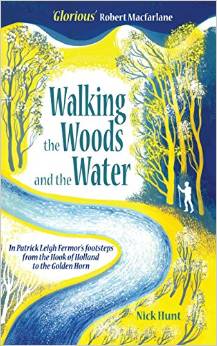
Writer and storyteller Nick Hunt, author of Walking the Woods and the Water,
recounts his modern day ‘great trudge’, walking in Paddy’s footsteps from the Hook
of Holland to Istanbul.
RSVP info@patrickleighfermorsociety.org

and …

In association with Pro Patrimonio, The Patrick Leigh Fermor Society presents
A Romanian Romance: Paddy in Transylvania and Moldavia A journey through time
DATE: Thursday 16th April 2015
TIME: 7:00pm
LOCATION: Romanian Cultural Institute, 1 Belgrave Square, London SW1X 8PH
Alan Ogden, author of Romania Revisited, will introduce the evening and briefly describe Romania in the 1930s.

Michael de Styrcea, nephew of Marshal of the Court Baron Ionel Mocsonyi-Styrcea, will then discuss Paddy’s time in Transylvania and the former Banat with illustrations from the Mocsonyi family archive.

The second part of the evening, led by Serban Cantacuzino C.B.E. (the founder of Pro Patrimonio) and his sister, Marie-Lyse Ruhemann, will be devoted to the story of Balasha Cantacuzino, her sister Pomme and Paddy.

RSVP info@patrickleighfermorsociety.org. Please note that the RCI has a capacity of 90 seats.

My Meeting with the Byron of Our Times

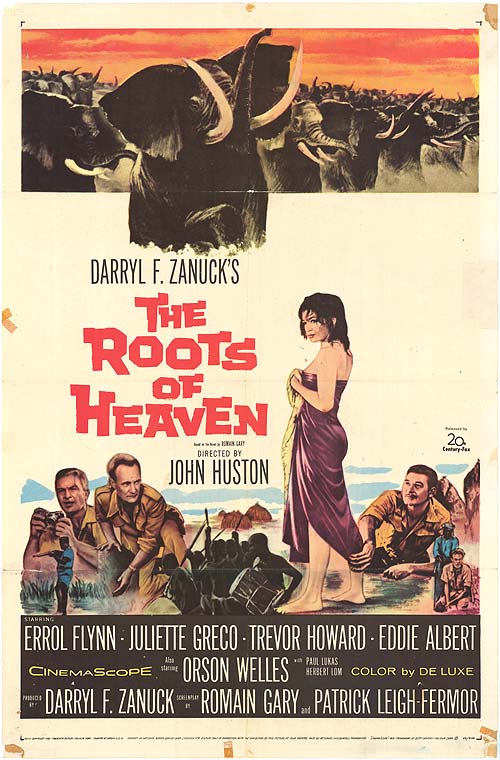
colour posterA curious mix of over the top homage to Paddy; criticism of Billy Moss’ “stilted” writing style; accusation that the editors of Abducting a General produced a “short, blatantly padded book” with the “last 20 pages provid[ing] a detailed guide to the abduction route that few visitors to Crete, apart from fanatics, would willingly endure”; followed by self-promotion of the writer’s own books about Errol Flynn, John Huston, and Somerset Maugham. Something here for everyone to gnash their teeth over including a claim that Paddy had a Greek son: but all-in-all quite enjoyable!!!

By Jeffrey Myers

First published in Standpoint Jan/Feb 2015.

I met the handsome, charming and dashing Sir Patrick Leigh Fermor (1915-2011) in May 2002. He belongs with authors as men of action — Melville, Conrad, Hemingway, Malraux and Orwell — who did not go to university and learned their lessons from violent experience. Leigh Fermor, whose reputation is based on three impressive achievements in travel, war and literature, has enjoyed after death a well-deserved revival of interest in his life and work. In 1933-34, in his late teens and after expulsion from school, he spent a year walking south-east across Europe, passing through nine countries from Holland to Turkey. In his leisurely 1,700-mile ramble, rough when solitary and poor, hedonistic as guest and lover, he moved effortlessly between peasants and patricians. Though his journey did not equal the agonising treks of Henry Morton Stanley through Equatorial Africa or of Wilfred Thesiger across the Empty Quarter of Arabia, it was a considerable feat of social and cultural exploration.

In April 1942 Leigh Fermor landed in Crete by parachute and set out, with resourcefulness and courage, on his second and most famous Byronic adventure. He spoke modern Greek and joined a handful of British Special Operations Commandos sent into the mountains of the Nazi-occupied island to organise the resistance and unleash a guerrilla uprising. His men attacked airfields and blew up a fuel base. He also watched helplessly as the Nazis took revenge by destroying whole villages and massacring thousands of civilians. While on Crete, he fired a rifle he thought was unloaded and killed a Greek comrade, setting off a blood feud that was not settled for many decades.

Leigh Fermor’s greatest wartime achievement was the daring capture of a German general, Heinrich Kreipe, on April 26, 1944. Dressed in German uniforms, Leigh Fermor and his men set up a roadblock. As the car slowed down around a sharp curve, they poured out of the darkness and restrained the general, who shouted, swore and punched until he was handcuffed and shoved onto the floor of the vehicle. They then smuggled their prisoner through the main town, Heraklion, west along the coast and into the mountains.

The general turned out to be a cultured captive, well versed in the classics, and had many lively talks with Leigh Fermor before he was taken to Egypt and then to a POW camp in Calgary, Canada. A moment of true understanding came when Kreipe, gazing at the white hills, quoted Horace’s Ode (1.9) — “Vides ut alta stet nive candidum Soracte” (See, the snows of Mount Soracte glare against the sky) — and Leigh Fermor quoted the rest of the Latin poem from memory. In April 1972 they appeared congenially together in a Greek television programme. When asked if he’d been treated well, the general replied, “Ritterlich! Wie ein Ritter” (Chivalrously! Like a medieval knight).

Leigh Fermor’s bold exploit inspired a book, Ill Met By Moonlight (1950), by his comrade-in-arms William (Billy) Stanley Moss and a 1957 film of that name with Dirk Bogarde as Leigh Fermor. (The title comes from A Midsummer Night’s Dream.) Moss — handsome, six years younger than Paddy and a veteran of the North African campaign — was educated at Charterhouse and spoke French and Russian but not Greek or German. He does not provide any historical or military background, bases his memoir on the diary he kept at the time and writes in a plain, often clichéd style. The first rather uneventful half — mostly marching, hiding and planning, with a few close calls — expresses admiration for the Greek partisans and leads up to the daring capture of the much older General Kreipe (born in 1895).

Leigh Fermor carries “an ivory-handled revolver and a silver dagger” and cuts a dashing figure. They had hoped to capture General Friedrich-Wilhelm Müller, a cruel “tyrant much loathed by the islanders” who was later hanged as a war criminal, but he was unexpectedly replaced by Kreipe. The capture takes place between the German headquarters and the general’s residence in the Villa Ariadne, built by Sir Arthur Evans during his excavations of the ancient Minoan palace of Knossos. After driving through Heraklion in the Opel, with Leigh Fermor wearing the general’s hat, they bluff their way through 22 German checkpoints — though one map shows only four checkpoints. (The gullible sentries, some suspected of complicity, were arrested and probably sent straight to the Russian front.) The commandos evade all the German patrols searching for Kreipe and, with many difficulties, bring him through the slopes of Mount Ida and down to the British ship on the south coast.

Kreipe — “a thick-set man . . . with thin lips, bull neck, blue eyes, and a fixed expression” — had come for a rest in Crete after two tough years on the Russian front. Concerned more for his dignity than for his life, he worries about the lost symbols of his rank and valour: his general’s hat and the Knight’s Cross of his Iron Cross. Though fairly stoical and cooperative, he complains about his minor injuries, poor food and lack of sleep. He and Leigh Fermor also exchange Greek verses from Sophocles, but do not establish a close connection. Though the commandos leave evidence suggesting only the British, not the Greeks, had captured the general, the Germans razed the nearest village and eventually killed 2,000 civilians.

Leigh Fermor’s version of the incident, Abducting A General (John Murray, £20), published last year, is a short, blatantly padded book. The foreword provides useful historical background. Only half the 189-page work contains the main text. Seventy pages reprint his hastily written intelligence notes sent from Crete to headquarters in Cairo. The most interesting dispatches describe his accidental  shooting of his close Cretan friend and his part in the executions, without trial, of Cretan traitors. (When I asked Sir Alec Kirkbride, the last surviving officer of T.E. Lawrence’s Arabian campaign if he had really killed a lot of lawless Arabs after the capture of Damascus in 1918, he casually replied, “Oh, not that many.”) The last 20 pages provide a detailed guide to the abduction route that few visitors to Crete, apart from fanatics, would willingly endure.

Leigh Fermor’s account has already appeared in his anthology Words of Mercury (2003) and been the basis of the two chapters on Crete in Artemis Cooper’s biography (2012). Based on memory rather than diaries and written in 1966, 22 years after the event, Abducting A General, like his earlier travel books, is filled with invented details. He gathered intelligence, carried out sabotage and prepared the Cretans to help the British recapture the island. His major difficulties were faulty radio transmitters, lack of transport, “rain, arrests, hide and seek with the Huns, lack of cash, flights at a moment’s notice, false alarms, wicked treks over the mountains, laden like a mule, fright among one’s collaborators, treachery, and friends getting shot”.

He is excited by the constant danger and, when disguised as a Cretan, by his close proximity to German soldiers. His book is more detailed than Moss’s about the history and geography of the island, more stylish and lyrical. He is devoted to his brave, loyal and sacrificial Cretan friends and comrades, whose language he speaks and whom he idealises: “we could not have lasted a day without the islanders’ passionate support: a sentiment which the terrible hardships of the occupation, the execution of the hostages, the razing and massacre of the villages, only strengthened.” But he ignores the conflicts between the Greek Communists and the pro-British partisans, which led to a civil war after the liberation of Greece. His hyperbolic and Homeric tributes to the Cretans — “their capacity to cross several mountain ranges at the same lightning speed on an empty stomach after swallowing enough raki and wine to lame other mortals for a week” — are excessive.

The main dangers of the abduction were the possibilities of stopping the wrong car, encountering other German vehicles and provoking savage reprisals. The identification and immediate escape in April 1944 was helped by Kreipe’s coloured metal pennants on the front fenders of his car. When seized, Kreipe lashed out with his fists, was manacled and had his legs tied. The whole episode took only 70 seconds. His badly injured driver, who could not keep up with the escaping partisans, had to be killed.

Since Leigh Fermor could also speak German, he writes more fully and positively than Moss about his relations with Kreipe, who bears up stoically under humiliating circumstances. The youngest son of the large family of a Lutheran pastor in Hanover, Kreipe was 48 years old and unmarried. He had a broad pale face, grey hair and jutting chin. A professional soldier, he had served in the army since 1914 and had recently won a Knight’s Cross on the Russian front. His moods during this ordeal ranged from cheerfulness to depression, and he sometimes slept under a blanket with Leigh Fermor and Moss, huddled together against the piercing mountain cold. Leigh Fermor writes in comradely fashion: “The General’s behaviour was most friendly and helpful throughout and he put up with the hardships of mountain travel and living rough with fortitude. Moss and I had the impression that he had lost his nerve a bit after the first contact with us. He certainly made no attempt to escape.” If he had broken his word, he would have been shot by the Cretans. On May 14, 1944, after 18 anxious days in the mountains, they all boarded the ship to Cairo. Spared the disastrous German defeats in Russia and in Greece, Kreipe remained in British custody until 1947.

The crucial military and moral question, which Moss ignores and Leigh Fermor answers with qualified affirmation, is whether the abduction of General Kreipe was worth the brutal German reprisals: whole villages destroyed and the massive slaughter of men, women and children in August 1944. The survivors rejoiced; the dead remained silent. But Leigh Fermor’s heroic exploit, still famous all over Greece, boosted morale during the dark days of the German occupation and gave a glimmer of hope for the final victory.

Leigh Fermor’s third major achievement was the travel books about his youthful journey that appeared decades later: A Time of Gifts (1977), Between the Woods and the Water (1986), and the unfinished and posthumously published The Broken Road (2013). A slow, procrastinating writer, blocked for much of his life by the weight of too much material, he resembled Penelope unwinding at night what she had woven by day. His wanderings abroad to write in Benedictine and Trappist monasteries, which he described in A Time to Keep Silence (1953), were also an escape from writing.

Fermor often indulges in unseemly displays of erudition. His learned digressions and serpentine style, his mannered mandarin, even baroque prose, which Lawrence Durrell called truffled and dense with plumage, were influenced by the work of Charles Doughty, T.E. Lawrence and Norman Douglas. This florid style clashes with his descriptions of colourful gypsies and cave-dwelling bandits — dressed in sheepskin jackets, high boots and billowing breeches, with daggers tucked into their belts and bandoleers charged with cartridges — rioting, feasting and firing their carbines into the air or, during a vendetta, into their enemies.

Fascinated by his achievements, I corresponded with Paddy (as everyone called him) while writing my biography of Errol Flynn. He had written the screenplay of one of Flynn’s best movies, The Roots of Heaven (1958), and been on the scene during the disastrous filming in French Equatorial Africa. He thought Hollywood screenwriting was a lark that enabled him to hang around and drink with colourful characters in an exotic setting. Flynn, Trevor Howard and Paddy were all drinking heavily, and there was some conflict when Paddy fell in love with the French singer Juliette Gréco, the co-star and mistress of his boss, the producer Darryl Zanuck. In a vivid letter of May 5, 2000, Paddy described the horrendous conditions — heat, disease, swarming insects and dangerous animals — while making the movie in the tropics. He got on well with the flamboyant Flynn, a kindred spirit, and gave a perceptive account of his character:

Errol seemed distinctly more intelligent than the run of actors. Full of original tangents, a great narrative gift, and a great sense of humour. He often referred to his learned father, a marine biologist at Belfast University. He loved reminiscing, largely about Hollywood. I asked him what the leading and most beautiful stars of the day were like. “Well, pretty good,” he said. “They’ve all got my scalp, I’m afraid.” There were lots of memories of his early days there, and his adventures. He was very funny about a yacht he shared with David Niven, and the girls they would take on trips. “We looked on them to supply the food. One pretty girl came on board with nothing but a loaf and a contraceptive device.” He took his acting seriously, and was absolutely adequate in his not very exacting role. He was on very good terms with all the other actors. His physical condition wasn’t too bad, troubled by hangovers now and then.

When I wrote again while working on my life of John Huston, who directed The Roots of Heaven, Paddy vividly recalled the savage Darwinian scene. Bangui, now in the Central African Republic, was the roughest and most primitive place of all:

The forests near Bangui were inhabited by very intelligent pygmies. We were “shooting” in the forest when the clouds broke and a large deluge of rain came down. Our procession of vehicles headed back to the ultra-modern hotel, like an up-ended mouth-organ on the banks of the Shari river, which was full of crocodiles. I got there with Errol and his girl, and we were astonished to find the whole of the ground floor a foot deep in termites, over which small bright green frogs from the Shari were leaping about in parabolas, while Juliette’s mongoose ran riot among them, killing and swallowing as many as he could, two legs sticking out of his mouth. A strange sight.

I also got in touch when writing my life of Somerset Maugham. Paddy was an Old Boy of Maugham’s alma mater, The King’s School,  Canterbury, and as a student had read Of Human Bondage. He was also a close friend of Maugham’s admirer and confidante Ann, the wife of Ian Fleming. After the war he had visited Maugham’s luxurious Villa Mauresque on Cap Ferrat. Since Paddy lived in Kardamyli, a remote village in the southern Peloponnese and my daughter was a Foreign Service officer in Athens, it was a perfect time to see him. So we rented a flat for three weeks, overlooking the sea and a few kilometres from Paddy’s village.

I rang him up from a local shop and he immediately invited me to come round for a talk. Since his house was hidden away and hard to find, he walked up to the main road and hailed me as I approached. Tall and straight, white-haired and sun-tanned, he was at 87 still a virile and impressive figure. He had designed his low, rambling, whitewashed, red-tiled home himself, and called it “a loose-limbed monastery and farmhouse with massive walls and cool rooms”. It had a shaded patio facing the Mediterranean, a flourishing garden, and a huge library filled with books in ancient and modern languages. He had created the setting he wanted and the life he wished to lead, travelled widely and wrote well, charmed everyone and seemed content.

Paddy wanted to correct Ann Fleming’s version of his embarrassing visit to Maugham, which she had exaggerated — with shattered drinking glasses and blood on the floor — to amuse Evelyn Waugh. Maugham had asked Ann to bring Paddy with her for dinner, and then (always generous to good-looking young authors) had invited him to stay on as his guest and write at the villa. Unnerved by Maugham’s severe expression and icy manner, Paddy drank far too much. Falling victim to the perverse tendency to talk about the very thing he was strictly forbidden to mention — Maugham’s debilitating speech defect — Paddy quoted the absurd belief that everyone in the College of Heralds had a stammer. That was bad enough. But noting that the day was the Feast of the Assumption, he mentioned Correggio’s painting of that subject in the Louvre and repeated a stammering friend’s bon mot: “That is a m-most un-un-w-warrantable as-assumption.”

Deeply offended, Maugham became even icier. Rising from the table and taking his leave, he rescinded his invitation by saying: “G-G-Goodbye. Y-Y-You will have left b-b-before I am up in the m-m-morning.” The wretched Paddy, who had not intended to wound his host, contrived to make matters even worse. Instead of waiting for the valet to pack his bag, he hastily threw his things together and caught a precious monogrammed sheet trimmed with Belgian lace in the zipper of his suitcase. He rushed down the stairs with the rest of the sheet trailing behind, frantically tore part of it off and escaped from the villa with shreds of fabric hanging out of his bag.

After our talk, Paddy signed some travel books I’d brought along. Specially buying another one, Mani: Travels in the Southern Peloponnese (1958), in the village shop, he inscribed it, surrounding his words with a cloud and a sketch of birds flying around the title page. When he mentioned bees and my daughter used the unusual word for “buzz” — zouzounizo — which he hadn’t heard for years, he praised her fluency in Greek. After drinks in his house Paddy invited all of us to dinner at a simple restaurant, set on a promontory overlooking the glistening sea, which he’d bought for Lela, his former and now ancient cook. I noticed that the cook’s son Giorgos — who greeted us warmly in excellent English and recommended the best dishes — was tall, blond, blue-eyed and very un-Greek looking.

Paddy, who didn’t see well at night, asked me to drive him home in his battered old Peugeot, which had stiff gears, negligible brakes and holes in the rusted metal of the floor. As we went down a steep hill towards the sea, which had no barrier, I suddenly realised that the brakes didn’t work and had to swerve violently to avoid submersion. Paddy, who’d had many close calls, was jovial and unconcerned about the dangerous episode. My instinctive feeling that Giorgos was Paddy’s son was confirmed when my daughter returned to Athens and impressed her Greek friends, who knew the truth, by mentioning that she’d dined with a national hero.

Paddy was the Byron of our time. Both men had an idealised vision of Greece, were scholars and men of action, could endure harsh conditions, fought for Greek freedom, were recklessly courageous, liked to dress up and displayed a panache that impressed their Greek comrades. Paddy also reminded me of a Bedouin chief’s tribute to another famous warrior, T.E. Lawrence: “Tell them in England what I say. Of manhood, the man, in freedom free; a mind without equal; I can see no flaw in him.”

Abducting a General – with Chris and Peter White, hosted by Harry Bucknall

Abducting a GeneralWaterstone’s Piccadilly will host an evening with the editors of  Abducting a General: The Kreipe Operation and SOE in Crete on Thursday, 12 March 2015, at 7:00 pm. This event is free but please reserve your place by email: piccadilly@waterstones.com

One of the greatest feats in Patrick Leigh Fermor’s remarkable life was the kidnapping of General Kreipe, the German commander in Crete, on 26 April 1944. He and Captain Billy Moss hatched a daring plan to abduct the general, while ensuring that no reprisals were taken against the Cretan population. We are thrilled to welcome historians Chris and Peter White here for an illustrated presentation on Fermor and this extraordinary event of the Second World War. This evening will be hosted by author and film-maker Harry Bucknall, author of Like a Tramp, Like A Pilgrim: On Foot, Across Europe to Rome. Further details: 0207 851 2400

Thirty per cent off Paddy’s Books at NYRB Classics

The NYRB is offering 30% off a number of Paddy’s books to mark the centenary of his birth. Follow the link below and click on any of the links on the NYRB page.

Click this link

Patrick Leigh Fermor, born on February 11, 1915, would have celebrated his 100th birthday today. To commemorate this anniversary and “one of the greatest travel writers of all time” (The Sunday Times), all New York Review Books titles by and about Leigh Fermor will be available at 30% off for a limited time, including the author’s renowned trilogy detailing his youthful trek across pre-World-War-II Europe: A Time of Gifts, Between the Woods and the Water, and The Broken Road.

Other Patrick Leigh Fermor titles available at 30%:

Mani: Travels in the Southern Peloponnese
Roumeli: Travels In Northern Greece
A Time to Keep Silence
The Traveller’s Tree: A Journey Through the Caribbean Islands
In Tearing Haste: Letters between Deborah Devonshire and Patrick Leigh Fermor
Patrick Leigh Fermor: An Adventure by Artemis Cooper

Traveller’s Film Club

Eland publications are pleased to announce that the Traveller’s Film Club is back!It is held at Waterstone’s, 203-206 Piccadilly, London W1. Annoyingly the notification was sent late so I had no time to notify you all about the event on 10 February on Freya Stark. There is however, still time to put into your diaries two other events.

Tuesday 3rd March
Hugh Thomson introduces the film he made on the writer and human rights campaigner, Andrew Graham-Yooll in Argentina. Graham-Yooll, himself Anglo-Argentine, returns after many years of exile to Argentina, prior to the Falklands War, to confront some of the generals. Doors will open at 6.30pm, the screening begins at 7.00pm.

Tuesday 14th April
Benedict Allen introduces the 2008 BBC documentary on Eric Newby from the Traveller’s Century series he presented, directed by Harry Marshall (Icon Pictures; this is a definite one for me! Again doors will open at 6.30pm, the screening begins at 7.00pm.

All screenings at 7pm, doors open at 6.30pm. Please book a free place at Piccadilly@waterstones.com

Voices From Greece day at the University of East Anglia

CaptureRegular blog correspondent Christos Paganakis has highlighted this event which is being held next weekend, 22 February, at the University of East Anglia. All are welcome. Contact  H.Anagnostopoulou[at]uea.ac.uk at UEA for details.

Christos tells me:

We have managed to resurrect our annual ” Voices From Greece ” day at the University here in Norwich ( the ones due for 2013+2014 were cancelled , due to funding from the Greek Min of Culture being unavailable due to the Economic Catastrophe in Greece )
I think the subject matter for this one might be of interest , and would certainly have interested Paddy , because it is all about the ethnically and culturally Greek populations still in southern Italy , their Language , Culture and Music , etc .

If it runs like previous ones it’ll start off with some lectures, then there’ll be a concert of traditional music and song related to the event theme , then mostly everyone goes out for a meal (where the musicians are usually inveigled into giving a second , extempore performance), and it all ends very late rather like a Greek peasant’s wedding, with earnest Oxbridge professors dancing the Pentoziali .

Listen to Harry and Nick

Harry Bucknall, Tom Cheshyre, and and Nick Hunt at the Stanford's Travel Writing Festival

Harry Bucknall, Tom Cheshyre, and and Nick Hunt at the Stanford’s Travel Writing Festival

I know that many of you would have liked to have joined me and dozens of others as we listened in awe to Blandford Forum’s leading travel writer, Harry Bucknall, at the recent Stanford’s Travel Writing Festival. Along with our very own Nick Hunt they kept us entertained with stories of their travels across Europe.

Harry is author of Like a Tramp, Like A Pilgrim: On Foot, Across Europe to Rome, whilst Nick has written the wonderful Walking the Woods and the Water: In Patrick Leigh Fermor’s footsteps from the Hook of Holland to the Golden Horn.

Like a Tramp, Like a Pilgrim

Walking the Woods and the Water
If you would like to find out what all the fuss was about you can now listen to a podcast of the event as Standford’s have put up all the talks on iTunes. Click here to listen to the deadly duo.

For more writers’ talks hit this link .

Happy Birthday Filedem! Born 100 Years Ago Today

Paddy after the war in Byronic costume; Filedem? Courtesy of Benaki Museum

Paddy after the war in Byronic costume; Filedem? Courtesy of Benaki Museum

Happy birthday Patrick Leigh Fermor born on this day, 11th February 1915.

This has to be one of the most difficult occasions to mark. Should we go big or just keep it to something more modest? Perhaps it is the latter for today but something will be arranged for later in the year with the Patrick Leigh Fermor Society to properly celebrate his life and achievements.

To record your thoughts in this special year we have a new page “Marking Paddy’s Centenary”. Add your comments, birthday wishes, your favourite quotations from his works, or links to things of interest. It is your page: do with it as you will but do remember to play nicely.

Remember that Nick Hunt will be speaking and signing his book Walking the Woods and the Water at Hatchards in Piccadilly tonight 11th February.

Paddy as Filedem?

Paddy as Filedem?

To make this a proper celebration we need to sing. A very long time ago Marina Petsalis-Diomidis sent me a link to the song Filedem. As Paterakis recalls on camera during the 1972 reunion (see video section), Paddy liked the song so much that his comrades in Crete started calling him Filedem as a nickname. The song is a traditional Cretan song. Filedem -Φιλεντέμ – the name “File Edem” means “My friend Adam” in Turkish. The song is accompanied by some lovely scenes from Crete and Cretan hospitality. I have found an English translation of the words – it is all very racy and so typically Paddy – but you don’t need them to sing along loudly with the chorus in Greek.

The English lyrics in summary:

I am in love with a married woman
May God guide her
I am in love with a married woman
May God guide her

To renounce her husband
and love me.
To renounce her husband
And love me.

Filedem filedem..

White roses in your yard
How can you sleep alone
White roses in your yard.

Filedem filedem.

I am in love with a married woman
And she has two small children
I will be sending one (to fetch) water
And the other one (to fetch) wood.

Filedem, filedem

White and big roses
How can you sleep without a man
White and big roses.

Paddy’s Centenary – Petroc Trelawney on BBC Radio 3

Petroc Trelawney

Petroc Trelawney

Just a quick note to say that I have heard that Petroc Trelawney may play some appropriate music to mark Paddy’s birth on his Breakfast show on BBC Radio 3 next Wednesday 11 February. The show runs from 0630 to 0900.

Nick Hunt Marking Paddy’s Centenary

Harry Bucknall, Tom Chesshyre, and and Nick Hunt at the Stanford's Travel Writing Festival

Harry Bucknall, Tom Cheshyre, and and Nick Hunt at the Stanford’s Travel Writing Festival

In response to my request for ideas as to how to celebrate Paddy’s centenary this year we have had one or two ideas, but please come forward with more. So far we have the suggestion of a special page for your comments and quotes which we shall do, as well as a big Greek style party at my flat which appears to involve mass destruction of plates, furniture and ceilings with the unrestrained use of firearms in confined spaces. I am just checking the conditions of my lease and will come back on that one.

I have the idea of a one day event later in the autumn and shortly I will be asking you to vote for a couple of options via the wonderful Poll facility on WordPress.

Meanwhile, fresh from his successful debate with Blandford Forum’s leading travel writer, Harry Bucknall (author of Like a Tramp, Like A Pilgrim: On Foot, Across Europe to Rome) at the Standford’s Travel Writing Festival on Saturday, Nick Hunt will be out and about next week giving a couple of talks to mark the centenary. Nick will be in Waterstones Glasgow on 9th February and then at Hatchard’s Piccadilly on Wednesday 11th itself. Please do go along to support Nick and buy a copy of the really excellent Walking the Woods and the Water: In Patrick Leigh Fermor’s footsteps from the Hook of Holland to the Golden Horn. Nick is very entertaining and offers a very serious perspective on walking, Paddy, and his own personal experiences during his long walk which we did so much to support.

Elias Athanassakis – the car spotter – retells the story of Kreipe’s kidnap

My thanks to Nick Galousis who highlighted this You Tube video in which Elais Athanassakis, who passed away in 2002, tells the story of the build up to the kidnap and his part in it.

Paddy describes Elias in Abducting a General as “a very bright and enterprising young student working in our town organisation” and it was he who had to commit to memory all the details of the General’s car, even down to the size of the headlight slits, so as to ensure that the correct car was chosen on the busy road. He reconnoitered the route with Paddy and had the task of observing the road to signal back when the General was approaching and whether or not he was accompanied.

The video is in Greek which is great for those of us who speak Greek 🙂

A review of Artemis Cooper’s Cairo in the War 1939–1945 by Patrick Leigh Fermor

Paddy on the roof of Tara in Cairo

Paddy on the roof of Tara in Cairo

So it seems we can still find the occasional piece of Paddy’s original writing to get us excited. He reviews his good friend Artemis’ book, remaining very formal and making no mention of his friendship! Who else though was better placed to review this book than one of the residents of the infamous Tara?

by Patrick Leigh Fermor

This article first appeared in the TLS of September 1, 1989.


Artemis Cooper’s introductions and accompanying text to Duff and Diana Cooper’s published letters, A Durable Fire (1983), and to Lady Diana’s Scrapbook (1987), had a strong dash of her grandmother’s humour and lightness of touch; but only a most clairvoyant critic could have predicted Cairo in the War, 1939–1945. Her account, though it sticks punctiliously to fact, is as hard to put down as good fiction . The research is wide, detailed and scrupulous. She lays hold of the military background – the dramas unfolding just off-stage, but threatening to break out of the wings at any moment – with a soldierly grasp; and she seems to have talked at length with all the surviving dramatis personae.

Unleavened by personalities, military history can be heavy on the hand, and politics too, once the urgency has gone. The author’s skill redeems them both. As for the complex country and people on whom the war had impinged, she has segregated the strands with great discernment – the Copts, the Arabs, the Mamelukes, the Ottomans, all the sects and enclaves of the Mediterranean and the Levant, the Helleno-Judaeo-Ptolemaic nexus of Alexandria, the fellahin and the effendis and the nationalists, the rivalries of the Western European powers, with their local allegiances and clients and phobias, and, above all, the reigning Albanian dynasty and the predominating British presence and tutelage.

The author is particularly helpful and fair about the tensions between the last (in the persons of the young King Farouk and the proconsular Ambassador, Sir Miles Lampson), which culminated with British tanks all round the Palace, near-abdication and an enforced change of government: the German advance in the desert was the raison d’état. The enemy was held and driven back; certain froideurs remained at the top; but, astonishingly, the surface of the luxurious, dazzling and hospitable social life was hardly ruffled. At times this resembled the Duchess of Richmond’s ball before Waterloo, at others the Congress of Vienna: “The Kings sit down to dinner and the Queens stand up to dance . . .”. The pool at the Gezira Sporting Club sluiced hangovers away, the willow smacked the leather, polo-balls whizzed there all afternoon, and roulette-balls plopped at the Mohammed Ali after dark. There were enticing restaurants and enterprising night-clubs, party followed party and bedtime often coincided with the first muezzin’s call from the minaret of Ibn Tulun. Guilt about rationed London bit sharp now and then, but for those on short leave from the Desert, not deep.

Among the missions and staffs and the permanent officials, intrigue and gossip were as intense as in Mrs Hauksbee’s Simla. The author is eerily well informed about Groppi’s Horse and the Short-Range Shepherd’s Group and, a fortiori, about GHQ at Grey Pillars and SOE at Rustam Buildings (particularly the latter) and all the cross-currents, promotion-mania and the clashes – eg, “Bolo” Keble and Fitzroy Maclean – the political schisms of Southern Europe and their repercussions in Egypt. The pages on spies and counterespionage and raiding forces are one of the most impressive parts of the book.

The author is perceptive about the frustrations and amusements of all ranks of the assorted armies. There were shaming moments, but on balance it seems that arrogant behaviour towards the Egyptians may have been more frequent among the commissioned than the other ranks. In the case of a pasha who was insulted beyond endurance by a very drunk officer, nemesis was brisk and condign. The oblivious offender was inveigled to the pasha’s house. Most would have kept quiet, Artemis Cooper observes, but he was soon telling everyone, “You’ll never guess what happened to me last night — dashed unpleasant. I got buggered by six Nubians.”

In spite of the strains on high, the diplomatic world, the military, the cosmopolitan, the purely decorative and the intellectual interwove to a surprising degree, and lasting friendships were formed. The contribution of Greeks such as Seferis, and transplanted Greece-addicts like Lawrence Durrell and Robin Fedden, were important here. Poets and writers teemed, and Personal Landscape, the Nilotic equivalent of Horizon, was impressive. The author unfolds the catalogue of personalities with humour and understanding, though she is unduly dismissive of Sir Charles Johnston: cf his sonnet “The Lock”, and his Pushkin translations. The only omissions I can spot are Elizabeth David, the painter Adrian Daintrey and the writer-painter Richard Wyndham. Perhaps she should have included an eccentric cavalryman called Colonel Wintle, who got into hot water for taking a surrendered Italian general to luncheon, in full uniform, at the Turf Club.

The book ends with the calamitous post-war aftermath. Like the abstruse anecdotes, the range and choice of the photographs will promote sighs of delighted recognition and occasional ground teeth, and it is hard to think, on finishing, how this demanding book could have been handled better, more lucidly or more entertainingly.

You can buy Artemis Cooper’s Cairo in the War: 1939-45 on Amazon.