Tag Archives: Patrick Leigh Fermor

The Moss Conundrum

I have been reading ‘In Tearing Haste: Letters Between Deborah Devonshire and Patrick Leigh-Fermor’ (2008), edited by Charlotte Mosley. It is really quite good and gets better as Debo writes more often to Paddy; she is very funny.

On page 22 of my paperback version in a letter from Paddy written on 26 August 1956 he writes:

“I was asked by W.S.M. (William Stanley Moss – his partner in the Kreipe kidnap escapade – see Ill Met by Moonlight) to a meal of reconciliation and amends, where we met as affable strangers. It was really a gasbag’s penance and I, having learnt the hard way, vouchsafed little more than a few safe monosyllables.”

Well what does this mean? It is clear something had caused a breakdown in what was once a good friendship. They had been through a lot together and to feel like this, there must have been something terrible to cause such a rift. Was it the way Moss portrayed the events of the Kreipe kidnap? The fact that Moss married Sophie? Who knows?

If anyone knows please add a comment to this article.

Welcome to the Patrick Leigh Fermor blog

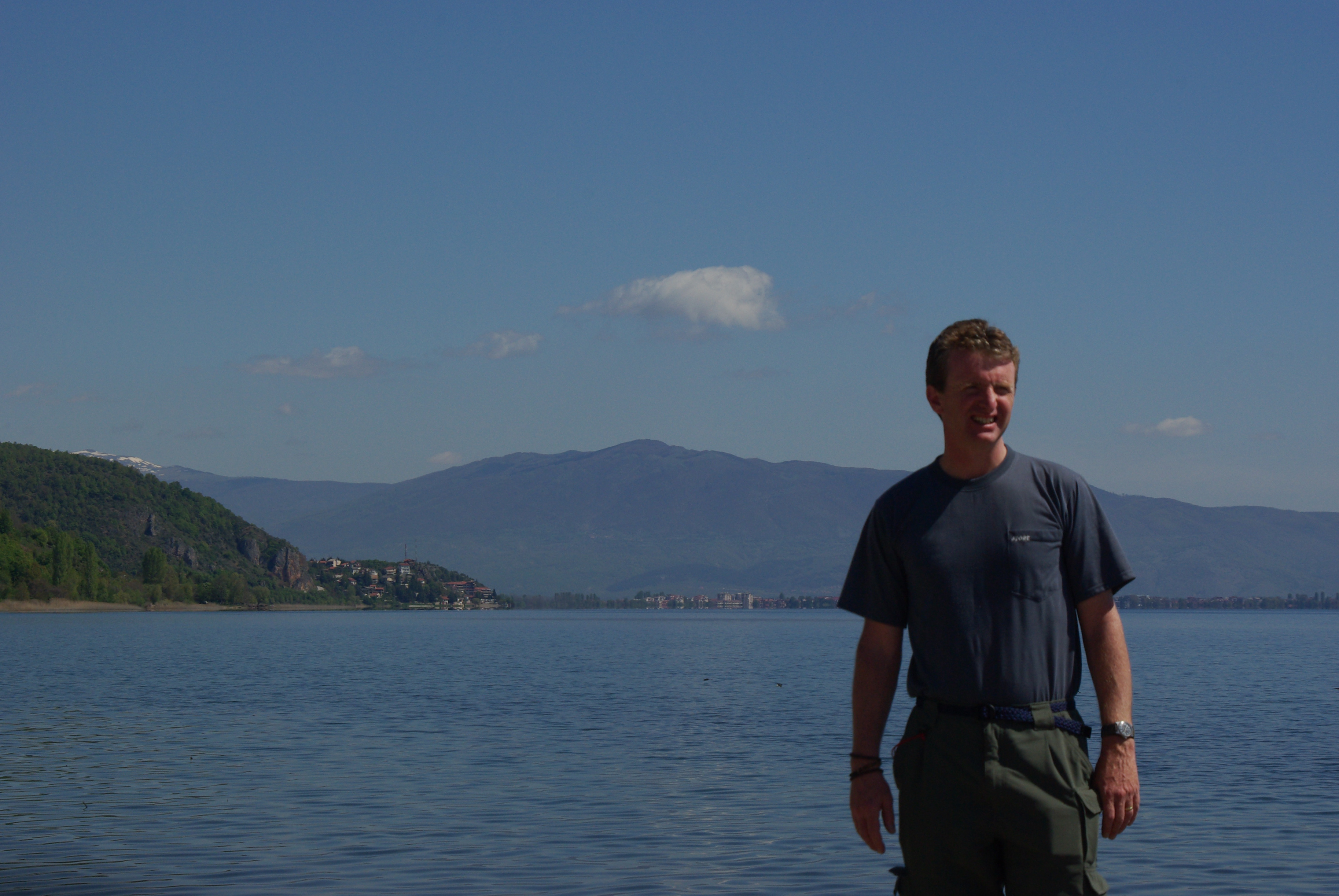
Tom at Lake Ohrid on the Via Egnatia, 2009

My name is Tom Sawford and I live in Winchester, Hampshire, England.

I first became aware of Paddy quite late in life; I guess he is an acquired taste. Maybe you need to have some awareness of the broad range of subject matter that he can, often without warning, cover in his books. Perhaps it is only after formal education, reading widely, developing a broad appreciation for history, and just plain living that you have the ability to grasp some of what he is getting at. A strongly developed vocabulary is also a boon; or at least a dictionary and of course now with access to Google it is possible to quickly research some of the more obscure topics that Paddy assumes mere mortals will be aware of. I remember the first time I read A Time of Gifts and being amused that Paddy clearly expected his readers to have at least a schoolboy/girl grasp of Latin as phrases pour out with no explanation or translation.

But surely that is the attraction of his work. It aims for the highest pinnacles of linguistic and intellectual endeavour and if you like what you read it drags you along with it, drinking from the cup of knowledge that Paddy offers.

He is of course so much more than a writer. It has been said that he is the ‘greatest English travel writer’. I don’t agree with that. I believe he travels to write, having so much more to say than to merely discuss the merits of one hotel over another or the quality of food in Greek fishing  villages. In my view he was the “Greatest Living Englishman”. Not that we don’t have other great Englishman (but perhaps less than we once had), but more than that he is that unique person who personifies what was once the mark of an Englishman; educated; heroic, handsome, generous; and modest (to a degree).

Sir Patrick Michael Leigh Fermor DSO OBE lived a full life, and had experiences that few others will likely ever have again. He had lived a pretty full life before the second world war, even living with a Romanian princess who was older than he, and during that conflict he applied his skills to fighting behind German lines, and was unique in achieving the capture, with “Billy” Moss, of the German Garrison Commander of Crete, Major General Kriepe. After the war he travelled, wrote, married, developed long-lasting friendships, and built a house in Greece. My epithet stands because few can match what he has done and also the manner in which he did it.

The purpose of this blog is to bring the life and work of Paddy, and his many colleagues, to the attention of a wider audience, and to create an archive of on-line material. He, and they, deserve to be recognised and remembered in a world that has changed much during their lives, but would be the poorer without them.

If you would like to help with the blog, make a contribution or anything else, please contact me tsawford[at]btinternet.com.

Tom Sawford

April 2010

Easter 1934 – Paddy reaches the Hungarian border at Esztergom

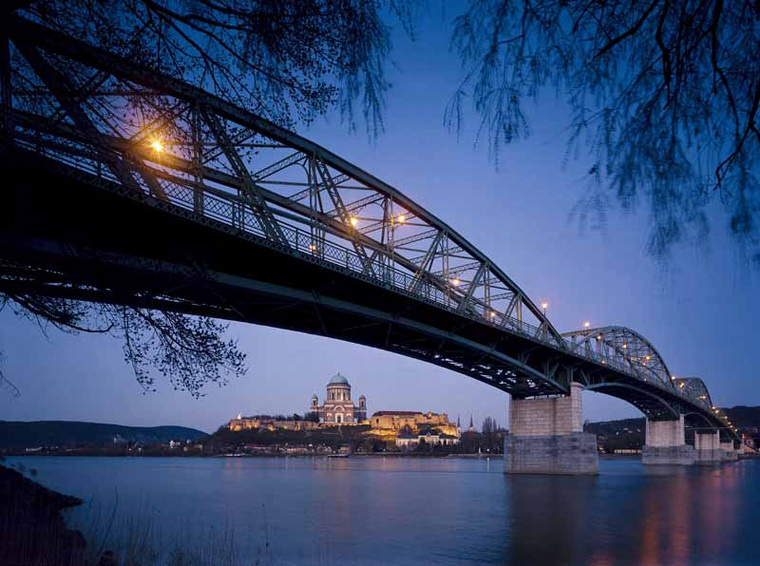
After what must have seemed an amazing four months to a young man of eighteen, Paddy arrives at the Czechoslovak-Hungarian border at Esztergom, which as he says (p 276 A Time of Gifts) contained ‘the Metropolitan Cathedral of all Hungary’. It is these last closing pages of his first volume that he describes the colourful preparations for an Easter service as he watches from no-man’s land in the middle of the bridge spanning the Danube. It is from this point that he picks up the story in volume two ‘Between the Woods an the Water’.

Wikipedia tells us: Esztergom (Hungarian pronunciation: [ˈɛstɛrɡom], also known by alternative names), is a city in northern Hungary, about 50 km north-west of the capital Budapest. It lies in Komárom-Esztergom county, on the right bank of the river Danube, which forms the border with Slovakia there.

Esztergom was the capital of Hungary from the 10th till the mid-13th century when King Béla IV of Hungary moved the royal seat to Buda.

Esztergom is the seat of the prímás (see Primate) of the Roman Catholic Church in Hungary. It’s also the official seat of the Constitutional Court of Hungary. The city has the Keresztény Múzeum, the largest ecclesiastical collection in Hungary. Its cathedral, Esztergom Basilica is the largest church in Hungary.

Imagine Paddy standing in the middle of this bridge looking at the cathedral

Ill Met by Moonlight movie

The final movie from the famed Powell and Pressburger partnership starring Dirk Bogarde (as Paddy), Cyril Cusack (as Captain Sandy Rendel), David Oxley (as W. Stanley “Billy” Moss, M.C.) and the superb Marius Goring (as Major General Heinrich Kreipe). Not forgetting the island of Crete of course. Click the picture to watch the trailer!

Sex O’Clock High by Patrick Leigh Fermor

“Sex O’Clock High” – Get out your dictionaries, standby to Google … reading this short article by Paddy for the New Statesman (written in 1963) is at once both a joy and a frustrating, dizzying cornucopia of colourful and fiendish alliteration (thanks to my friend Carl Hagan for leading me to this)

Taken from the New Statesman archive, 1 March 1963. The author of The Traveller’s Tree and A Time of Gifts, Sir Patrick Leigh Fermor is the doyen of British travel writers. He is also the central figure of W Stanley Moss’s Ill Met By Moonlight, a true tale of derring-do in wartime Crete. Now aged 91, he has written only rarely for the New Statesman: perhaps this item taxed the sub-editors’ patience too far.

It was an iridescent August morning and the effects of morphia and onanism were wearing off. Sitting up, Jack sipped his Earl Grey. Then he slipped into the Isabella-coloured pantaloons and a pair of Blucher boots proffered by his plimsolled and Jesuitical Jeames, byronically knotted his lavallière, donned a cardigan and a spenser and threw on a raglan. Trying a gibus, a trilby, an Anthony Eden, a fedora and a tam o’shanter, he finally pulled a billycock over his ears, narcissistically fluffed out his imperial and his dundrearies and, putting a lucifer to his Henry Clay, strolled downstairs to the electronic brougham.

Jill, attended by her gamp-grasping Abigail, was waiting for him by the wistaria’d Belisha beacon, her marcelled pompadour peeping roguishly from a Dolly Vardon in sarsenet. Soon, however, the brougham broke down. (Lack of volts? of amps, ohms, farads or watts?) The Jehu whispered that Jeames was a Jonah. Jill panicked, but their neighbour, jovial, Good-Samaritan Tom – a true Nimrod, martial in a stetson fitted with a havelock, a macfarlane, knickerbockers and wellingtons – quixotically gave them a lift in his phaeton, leaving Jeames there with the titanic gladstone-bag. (It was Shanks’s mare for him: Hobson’s choice.) They bowled over the macadam, passing many a stanhope and many a victoria, past Boniface with his churchwarden stuffed with cavendish outside the Marquis of Granby, where a peeler saluted; they finally settled under the bougainvillaea. But the food? Would they have a Barmecide feast: dine with Duke Humphrey? Jim thought of wartime maconochies and murphies. But soon Jeames arrived and panglossian Tom declared that it was all Sir Garnett.

They sipped John Collinses and grog with their sandwiches and discussed a lucullan soubise while Jeames cooked an Arnold Bennett omlette, boeuf strogonoff and, though Jill was banting, a gargantuan Chateaubriand. They washed these down with a Toby jug full of negus followed by a jeroboam of Mouton Rothschild. (Saturnine Jeames, their Ganymede, a professing Rechabite but secret slave to John Barleycorn, pharisaically out-Heroded Herod by swallowing a dozen baby Guinnesses.) Hermetic bakelite yielded pralines of filberts and logan berries, and soon Tom was sadistically guillotining his pêche Melba into procrustean slices. Jill put a Maréchal Niel behind her ear and picked a posy of hyacinths, dahlias, eschscholtzias, zinnias and Lady Diana Manners, while Jack, their amphitryon – a true epicure – extracted Napoleon brandy from the tantalus and offered Tom a Romeo and Juliet.

How they laughed at Tom’s odysseys! Jill declared that their Homeric and stentorian Mentor was a regular Munchausen. He related that, to forget an Oedipus complex, he had once crossed from a zeppelin to a mongolfier over a volcano somewhere in the Atlantic (O, for an atlas!), and, in his halcyon days, had performed caesarians in the Americas and taken Wassermans in the Gilbert Islands, broken up manichaean cabals with colts, bowie knives and shrapnel, joined the Fabians in San Salvador, practised as a psychiatrist and cured some Hudson Bay cyprians of nymphomania and the lotharios of Baffin land of priapism, seduced vestals in Rhodesia with aphrodisiac cereals, played cicerone to a croesus in Saudi Arabia, haussmannized Washington with mansards, swapped sanbenitos for fermorite in Liechtenstein, galvanized vandals with sapphics, published clerihews in morse and braille, taught Monroevians Sir Roger de Coverley, diddled Jack Ketch in Vancouver with a coup de Jarnac, turned the Trotskyites of Gorki into luddites among the diesels, mithridatized himself against nicotine in Virginia, prosecuted paulicians for simony in Columbia, driven St Simonism out of the Sorbonne, won pyrrhic victories with half-nelsons over herculean apaches in Sidi-Bel-Abbès, performed veronicas with mackintoshes in Bolivia, buggered a Buchmanite in Tasmania, stolen a strad from a musical Wykehamist in the Dolomites, built a mausoleum for a Maxim-gun mogul, out-witted the dogberries of Port Said, and confuted the Arians of Alexandria. He had lost his burberry at the Derby but returned from the Cesarewitch with a tin Lizzy-load of bradburies. A Mae West once saved him from Davy Jones between the Behring Straits and the Humboldt current. He had ranted, Roscius-like, among the thespians of the Palladium, sold plutonium and ammonia to Zwinglians in Louisiana, hunted Reynard and Bruin with yahoos and mohocks beyond the Mason-and-Dixon line, eaten a shaddock in mistake for a greengage when struck by Daltonism in Smithfield, bowdlerized pasquinades for Huntingdonians in Ekaterinoslav, and been boycotted as a quisling and almost lynched by Stakhanovites in the Bodleian.

Over the Benedictine, Jill told a rocambolesque story of how, as a girl, in Paris, with her hair tied en cadogan, she had slipped on a melted esquimau by a Wallace and fallen into a vespasienne! Mesmerized by Tom, she only tittered masochistically when he said her spooneristic malapropisms were Freudian. It was turning into bacchanal.

Were her feelings for Tom just platonic, Jill mused. How namby-pamby Jack seemed after the other’s hectoring rhodomontades. Sitting on the edge of a chesterfield by a Chippendale davenport that evening, she heaved a maudlin sigh and unscrewed her Parker to write Jack a collins.

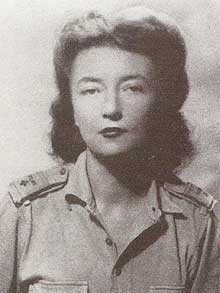
Sophie Moss Obituary from Daily Telegraph

Sophie Moss

Sophie Moss, who has died aged 92, was, as Countess Zofia Tarnowksa, the hostess of a villa in wartime Cairo where high-spirited young SOE agents on leave from secret assignments behind enemy lines held some of the most riotous parties of the war.

With considerable misgivings (and a fictitious chaperone), she agreed to join the all-male household on Gezira island at the invitation of her future husband, the officer Billy Moss, and moved in with her few possessions, which included a swimsuit, an evening dress, a uniform and two pet mongooses.

In the field, Patrick Leigh Fermor, Billy McLean, David Smiley, Rowland Winn and Xan Fielding were cold, hungry, lice-ridden and in constant danger. But on leave with months of back pay to spend, they held uproarious parties at the villa, which they called Tara.

These attracted the most distinguished soldiers, diplomats, writers and, on one occasion, King Farouk, who arrived with a crate of champagne. The evenings grew steadily more rowdy. Usually glasses were smashed. One night some chairs were broken when a mock bullfight was staged. On another, Sophie’s Polish friends shot out all the light bulbs, and on yet another a sofa caught fire then was hurled through a plate-glass window.

Since costly repairs were needed afterwards, Abbas, the butler-cook, tried to raise funds by accosting guests at the gate and holding out his tarboosh for contributions. Sophie put a stop to this, then remembered how soft fruits were added to vodka to make delicious liqueurs on her father’s Polish estates. The household agreed to an experiment using the bath, in which prunes were mixed with raw alcohol from the local garage. The results were disappointing, though Sophie insisted that this was because they were too impatient to wait for the mixture to mature. When they started drinking it after three days, two imbibers passed out.

The bathroom had other uses. In late 1943, when Leigh Fermor and Moss were planning a kidnapping on Crete, they sat around wearing next-to-nothing while David Smiley, fresh from Albania, explained how to organise the perfect ambush – drawing a diagram on the steamed-up tiles. After their success in capturing General Heinrich Kreipe, Leigh Fermor and Moss returned to Tara as heroes.

Zofia Roza Maria Jadwiga Elzbieta Katarzyna Aniela Tarnowska was born on March 16 1917 at Rudnik, a forested estate near Tarnobrzeg, a town in south-eastern Poland founded by her family in 1593. Over the centuries the Tarnowskis had held some of the highest offices in Poland. But Sophie’s father descended from a cadet branch of the family, and wanted to be only a country gentleman. His marriage was unhappy, and Sophie and her brother Stanislaw grew up headstrong and mischievous.

Her tricks and practical jokes turned her governesses into nervous wrecks until her mother sent her to a convent. Sophie got into trouble for standing on a pudding to prove it was inedible, ran away and refused to go back. She was happiest with animals, galloping through the forests on horseback or playing with deer, foxes, a goat and a red squirrel.

In 1937 she married Andrew Tarnowski, a member of the senior branch of the family. Her first son was under two when he died (on the day she gave birth to her second) in July 1939. As war drew closer, Sophie decided that she would never abandon Poland and burned her passport. It was, as her daughter said, “a very romantic and Polish thing to do”, but it changed nothing. On September 8, when the Germans were pouring over the western frontier and the Russians were approaching from the east, she set off by car for Romania with her husband and their baby, her brother, his fiancée Chouquette and her sister.

On arriving in Belgrade she lost her second son before the family drove on to Greece and Palestine. Her husband, now a corporal in the Carpathian Rifles, was on leave in Jerusalem when he told Sophie he was in love with Chouquette. Later Sophie accompanied Chouquette and her son to Cairo, where an uncle of King Farouk, who had often hunted on the Tarnowski estates, had offered them a luxurious villa. She soon moved out.

After joining the International Red Cross, Sophie met General Sikorski, Poland’s prime minister, who suggested she start a Polish branch of the humanitarian organisation. She agreed, but only if it were established without ranks. “Are you a communist?” asked Sikorski. “No” was the reply. But senior Polish ladies might resent a badge of superiority on someone whose husband was only a corporal, she explained. The general agreed, but when he departed she had difficulty confirming her position.

Finally she presented a large bouquet of flowers to the wife of the British ambassador in Cairo, Sir Miles Lampson – with whose help she was equipped with a committee, an office and a truck to
deliver clothes and food. She also visited hospitals and arranged patients’ outings, and helped Polish PoWs in Germany to contact their scattered families.

After divorcing Andrew, she married Billy Moss in 1945. The couple settled in London, where he prepared his Cretan diary about the kidnapping for publication as the best-selling Ill Met By Moonlight. But money was always tight. She lost a third son, but had two daughters. She and Moss translated a book of short stories by the Polish writer Bruno Schultz. But by the late 1950s, their marriage was over. She took in lodgers and spent time in Ireland, where she became a keen gardener.

In 1957 Sophie and her brother were allowed to visit their childhood home, where the NKVD had used the cellars as a jail during the war. They were not allowed into the building, but were treated to an open-air banquet by dozens of old retainers and peasants. At Gora Ropczycki, the house where she and her first husband had lived till 1939, old farmhands thanked her for keeping up their spirits in the first days of the war.

After the fall of communism Sophie’s nephew Adam bought back Rudnik, and Sophie presided over a family gathering in 1999. But too much had changed for her to contemplate settling there.

Last year some of the poems she had written in Cairo were published in a private edition. One, which was translated into English, asks for the white wings of her childhood guardian angel to take her home.

She died on November 22, surrounded by her family in Sussex.

Sophie Moss

Sophie Moss was wilful, lively and bloody-minded, with an almost total recall of a past in pre-Second World War Poland that was privileged yet full of turmoil. Later, in wartime Cairo, she lived with members of Britain’s Special Operations Executive in a house where wild parties were the norm.

Sophie Moss was born Countess Zofia Roza Jadwiga Elzbieta Tarnowska on 16 March 1917 on the estate of her father, Count Hieronim Tarnowski, at Rudnik in Galicia, south-eastern Poland. She spent her childhood roaming free, taming foxes, birds and deer. When she was 13 her parents separated, and she went with her mother, née Countess Wanda Zamoyska.

She married Andrew Tarnowski, a close cousin she had fallen in love with at 17 on a wolf hunt, and by 1939 she had had two sons; the elder died the day his brother was born. Sophie never forgot her return to her marital home with her second baby, (who would also soon die). She stood on Krakow Station: “I saw my train arriving with blood streaming down its side. Young military conscripts had travelled on the roof and, as it passed under a low bridge, had lost their lives. The sight of that train pouring blood was an omen of what, within days, was to be the fate of Poland.”

Within hours of the German invasion, refugees from western Poland started arriving. Sophie put them in bedrooms, then on mattresses, and in the stables, then had sheep and cows from the estate killed to feed them. She said that it was then that she grew up. She was persuaded by her husband and brother to flee with them. The men wanted to enlist abroad to fight for their country and, after an arduous and long journey they ended up in Palestine, and eventually Cairo, where she started the Polish branch of the Cairo Red Cross.

In autumn 1943, estranged from Tarnowski, she was invited to live in a villa with seven young British officers working for the Special Operations Executive. She moved in with a bathing suit, an evening gown and two mongooses she had rescued for 10 shillings.

She called this time her “university”, her teachers being the daredevil officers. Tara residents included Arnold Breene, Billy Maclean, David Smiley, Rowland Winn (later Lord St Oswald) and Xan Fielding. Another was William Stanley Moss (Billy), whom Moss went on to marry, in 1945.

In 1944 Moss and Patrick Leigh-Fermor kidnapped General Major Karl Kriepe, commander of the German forces occupying Crete; Billy’s account of the incident, Ill Met by Moonlight (1952), was made into a 1957 film.

Wild parties were thrown at the house, for diplomats, officers, war correspondents, princes, the British Ambassador and King Farouk. Moss tried to replicate the liqueurs from her father’s estate, using plums added to vodka. However, the concoction was always drunk before it had had a chance to ferment. At one party, Poles shot out all the light bulbs.

Another resident was a beer-drinking, house-trained bear, acquired in Russia by Poles who had been let out of Stalin’s gulags to form the Second Polish Army. Worried that the British authorities would not allow the bear to continue fighting with them into Europe, they asked Moss to take him while they retrained. She appealed to King Farouk, who declared: “You are my guest, and so is the bear!” and delegated Egyptian policemen to take it for walks. The bear went on to experience many battles, including Monte Cassino, and died in Scotland of old age. He now resides, stuffed, in London’s Sikorski Museum.

Last year Sophie’s poems, written mostly in Cairo during the war in Polish, were found. Sophie’s relation, the actress Rula Lenska, helped translate them at a launch held at the Sikorski Museum, the stuffed bear nearby In one poem she wrote: “If I fear death / it is of dying of boredom.”

Elisa Segrave

This Patrick Leigh Fermor blog

Patrick Leigh Fermor and Moss

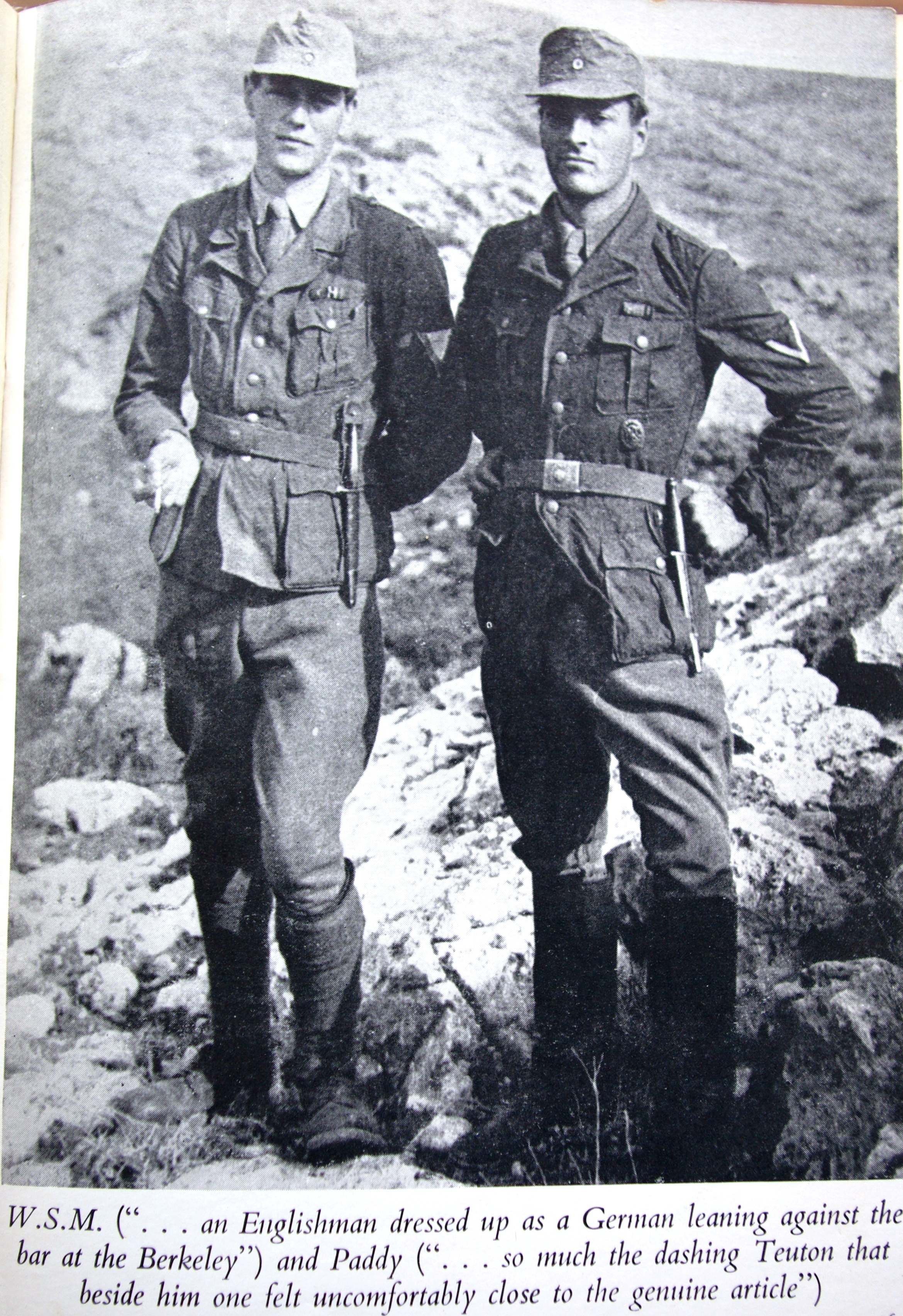
W Stanley Moss and Patrick Leigh Fermor in German Uniform Prior to the Abduction of General Kriepe

The blog is live but only in a test phase at the moment. I will be adding a little more content before I am satisfied but the idea is to post interesting pieces about Paddy, his life, times, travels, war, friends etc.

As far as possible I also want to gather together what material I can such as photographs etc.

Once we are going I would welcome as many comments as possible!

Ralph Stockbridge

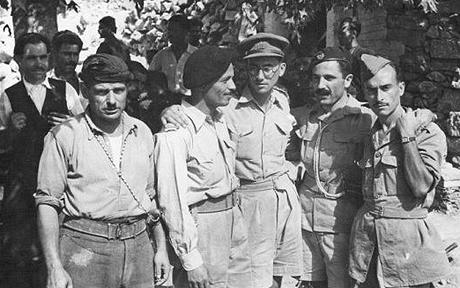
Stockbridge (centre, in the spectacles) with some of his comrades in Crete

Ralph Stockbridge, who has died aged 92, was awarded two MCs for the notable part that he played in the Cretan Resistance to the German occupation; he spent the remainder of his career working for MI6.

During his time in Crete he knew and worked with Paddy.

Read his Telegraph obituary here.