Tag Archives: SOE

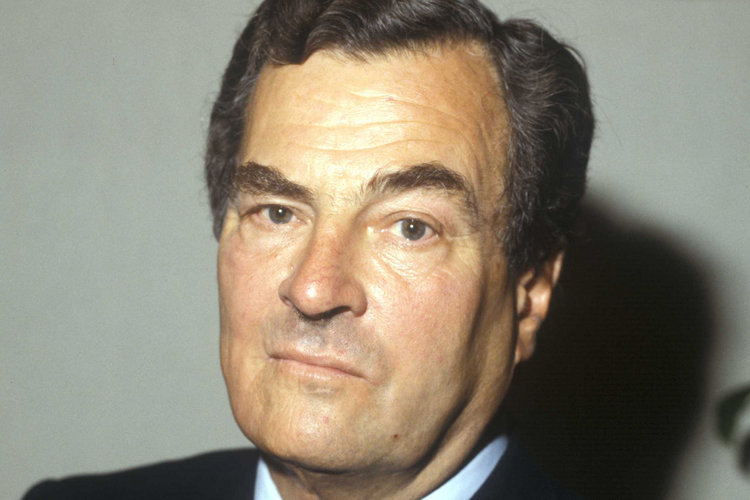
Xan Fielding’s Obituary from The Times

The following obituary of Xan Fielding was sent to me by blog correspondent Yvonne Carts-Powell to whom I am very grateful. It is from The Times and dated August 21, 1991. Times content is now subscription only so there is no point in putting up a link.

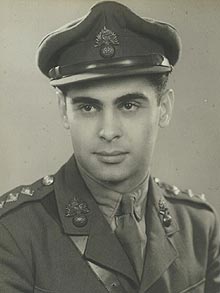
Xan Fielding, DSO, wartime secret agent and author, died in Paris on August 19 aged 72. He was born in India on November 26, 1918.

In his temperament, talents and physical courage Xan Fielding was well equipped to have made a mark in many spheres of life. Crete in the aftermath of the German invasion in May 1941 provided a theatre in which his individuality was able to blossom. Guerrilla warfare was particularly congenial to one of his character. He cherished the amateur’s view of war which saw it as a clash between the prowess of individuals and not as a contest between technologies backed by armaments industries and reserves of manpower. In addition to an innate romanticism, he possessed in abundance the classical Greek quality of arete (that excellence in thought and performance so often imperfectly translated as “virtue” in school texts) and revelled to the point of exultation in the exercise of his own initiative. Yet at the same time, through his mastery of the language and his psychological insight, he extended a discerning admiration to the often contrary and ferocious Cretan andarte groups which his efforts were designed, at least in part, to serve.

Regimental soldiering was anathema to him and the sharpest barbs of his wit were always reserved for the staff. But his exploits went far beyond being of mere nuisance value to the allied cause. In two remarkable years following the fall of Crete the efforts of Fielding and that other like-minded spirit, Patrick Leigh Fermor, built up a guerrilla network in the occupied island, facilitated the escape of many Australian and New Zealand soldiers who had remained in hiding and, most important, built up an intelligence network which provided invaluable information to the allies in North Africa on the movement of Axis materiel through this most important staging post.

Alas for the hopes of these romantics, who would have loved to have fulfilled the dream of the guerrillas and to have led an avenging descent out of the mountains to drive the German invader into the sea, such a moment was never to come. After the allied decision to invade Sicily and pursue the Italian option Crete was left to wither on the vine as a fruit to be plucked when a convenient moment should arrive. Guerrilla operations there were relegated to a sideshow and Fielding felt there was nothing more he could usefully do. More drama awaited him. Transferred to the Western European theatre, he was parachuted into France, captured by the Gestapo and escaped execution only thanks to the courage and resourcefulness of the ill-starred Christine Granville, to whom he later dedicated his book Hide and Seek (1954).

Alexander Wallace Fielding was born at Ootcamund, India, into a military family which had given long service in the subcontinent. His father was a major in the 50th Sikhs. After the death of his mother he was brought up in the South of France where her family had property and thus acquired fluent French. Sent to school in England at Charterhouse, he added the classics to his linguistic and cultural arsenal and acquired a profound knowledge of German through later studies at Bonn, Munich and Freiburg universities. This German sojourn gave him a thorough understanding of the nature of the Nazi threat to civilised values at a time when the British government under Chamberlain was temporising on the road to disaster. In a spirit of more than mild disillusionment Fielding wandered about Europe eventually gravitating to Cyprus. There after a short and unsuccessful flirtation with journalism on the Cyprus Times he ran a bar with not appreciably greater success. He simply could not comprehend the inability and unwillingness of his colonial compatriots to understand the island they administered while the automatic disdain which was extended to the governed populace was utterly odious to him. None of these attitudes endeared him to his British contemporaries and consequently made him a less than popular mine host in a colonial ethos. His determination to master Greek also made him an object of suspicion to the authorities, most of whom had neither the wit nor inclination to come to terms with the language. When war broke out Fielding went briefly to Greece, dreading the thought of being drafted into the forces in Cyprus and being forced to live by the dictates of the mess and the parade ground. But after Dunkirk, when Britain stood alone, this course came to seem a somewhat dishonourable one and he returned to Cyprus where he found a not totally uncongenial berth in army intelligence. Even this provided a somewhat circumscribed field for the exercise of his talents and it was not until after the German invasion of Crete that he was able to come into his own when he volunteered for service with the Special Operations Executive (SOE).

Put ashore on Crete from a submarine with a load of explosives and weapons, Fielding quickly linked up with local resistance leaders and adopted the protective camouflage of a Greek peasant. Nowhere in occupied Europe was resistance organised so quickly and effectively as it was in Crete. Clandestine operations took shape almost in the very chaos of evacuation. Fielding was lucky to team up with that other great linguist, philhellene and guerrilla leader, Patrick Leigh Fermor, and the mental kinship between the two men, who complemented each other in spite of their different temperaments, was instrumental in putting Cretan resistance operations on a sane and sound footing. Fielding realised at the outset that the task must be limited to building up an intelligence network and developing his guerrilla force with an eye to its use in the future, rather than wasting it in futile heroics which would certainly have drawn down ferocious reprisals on the unprotected civilian population. With great boldness he established an HQ not far from Crete’s northern coast from which he often sortied forth with impunity in his persona as a local to the town of Canea to visit the mayor who was astonished at the audacity with which the resistance leader virtually brushed shoulders with Wehrmacht officers on these calls.

With the battle for North Africa in full swing Crete had become a major staging post for the supply of Rommel’s forces and the intelligence Fielding was able to pass to the allies was invaluable. One of his most resounding successes was to be able to signal the precise air movements at Maleme airfield, thus enabling the RAF to intercept German supply aircraft on their way to the North African littoral.

After a spell in Egypt to rest and recuperate Fielding returned to Crete in 1942. In this second period one of his most remarkable feats was to engineer, in November 1943, a pact between the two main groups of andarte, the communist-led EAM-ELAS and the EOK, the national organisation of Crete.

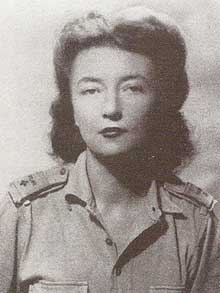
But as the dream of liberating Crete faded Fielding felt more and more frustrated and early in 1944 he volunteered to join the French operations of SOE. Soon after being parachuted into the south of France, however, he and a French officer and another agent were stopped at a road block at Digne where minor discrepancies in papers, which had otherwise been forged with scrupulous care, led to their arrest and imprisonment by the Gestapo. Totally resigned to being shot, they were in fact rescued by the nerve and feminine guile of the SOE courier “Pauline”, Christine Granville, formerly a Polish countess. “Pauline” who had already been arrested herself but escaped after convincing her captors that she was a French peasant girl arrived at the prison at Digne and through a mixture of bribery and by telling the agents’ captors that the Americans had already landed on the French riviera, secured their release three hours before they were due to have been shot. Indeed Fielding was convinced that he was being marched from the prison to have precisely that sentence carried out on him and was astonished when he was, instead, bundled into “Pauline’s” car and driven off.

Fielding, who had already been awarded the DSO was given the Croix de Guerre by the French later in 1944 and did subsequently return briefly to Crete. But in the meantime Leigh Fermor had carried out his legendary abduction of the German general Kreipe later filmed as Ill Met By Moonlight, starring Dirk Bogarde as Leigh Fermor and with no decisive further action in prospect the atmosphere there was something of an anti-climax for Fielding. He was sent briefly to the Far East by SOE but here, too, the war was coming to an end. After witnessing the winding down of operations in Indo-China Fielding made a journey to Tibet on his own account.

After the war he wrote a number of books. Besides his account of SOE’s Cretan operations he published The Stronghold which combined the experience of his days as a kapetan of the resistance with a scholarly knowledge and love of the island, its history and culture, all of which shone through in his account. Among his other books were Corsair Country, an account of a journey overland along the Barbary coast from Tangier to Tripoli, and The Money Spinner, an elegantly constructed history of the Monte Carlo casino. At one time Fielding’s linguistic abilities gave him a useful income as a translator and he was also a technical adviser on Ill Met By Moonlight. He had, in spite of illness, been able, recently, to attend Greek celebrations of the 50th anniversary of the battle for Crete, and was among allied officers awarded the the commemorative medal of the resistance on that occasion.

He was twice married, first, in 1953, to Daphne Bath, nee Vivian. The marriage was dissolved and he married, secondly, in 1978, Agnes (“Magouche”) Phillips, daughter of Admiral John H. Magruder of the US navy.

Related post:

Xan Fielding Obituary (from The Telegraph)
Related category:

Obituaries

Paddy’s Friends

One Man’s Great Game: Lieutenant Colonel “Billy” McLean

When you get involved with the life and times of Patrick Leigh Fermor, you find all sorts of possible avenues to explore. One group I am trying to bring together on the blog are the occupants of Tara in Cairo during the war. Given my interest in the Balkans, Albania in particular, I followed the route of “Billy” McLean and the British Military Missions to Yugoslavia and Albania which were manned by SOE men. Billy was an occupant of Tara and Xan Fielding wrote his biography. Of course Paddy was there as well.

In the course of my investigations I have read, in the last few weeks, the book Eastern Approaches by Fitzroy MacLean who as a very young Brigadier was personally chosen by Churchill to lead the mission to Tito’s partisans, and Billy McLean’s biography – One Man in His Time. Both books are interesting and I will review them if I have time. I have to say I was a little disappointed in Xan’s writing style, but it is workmanlike and is probably an accurate portrayal.

Billy McLean’s life is absolutely fascinating. He was a real adventurer and never stopped his adventures or travel until he died in 1986. I have dug out his obituary from the Daily Telegraph Second Book of Obituaries – Heroes and Adventurers, and as I did before with Xan Fielding’s obit, I have retyped it word for word as I cannot find an online version.

Go on, explore your own Paddy related avenue, and maybe write to me and we can publish for others to hear about!

First published in the Daily Telegraph, 20 November 1986.

Lieutenant Colonel “Billy” McLean, who has died aged 67, spent 40 years playing his own version of the Great Game. Like some latter-day knight errant, he travelled tirelessly in the Muslim world, working always against the encroaching influence of the Soviet Union, while at the same time seeking adventure among tribal peoples.

McLean’s unusual life often had elements of intrigue that no one else could unravel. “What is Billy really up to?” was a question that would be asked at the bar of White’s Club as he set off on another trip to Jordan or Iran, Morocco or the Yemen.

In McLean’s character there were shades of Buchan and Lawrence and Thesiger. All seemed to coalesce in the Yemen, where from five years, from 1962, McLean helped the royalists under Iman al-Badr to resist President Nassar’s attempts to take over the country. He made numerous reconnaissances in the Yemen desert and many arduous journeys, by camel and on foot, to the royalist forces in their remote mountain strongholds.

It was entirely due to McLean that Britain never followed America in recognising Nassar’s, and the Soviet Union’s, puppet republican government in the Yemen; and it was he who persuaded the Saudis to increase their aid to the Iman’s forces. Thanks also to McLean, the royalists received Western mercenary support and arms from the RAF. Largely as a result of McLean’s efforts, North Yemen did not become one of Nassar’s fiefdoms and did not join its neighbour South Yemen (Aden) in the Communist camp.

Neil Loudon Desmond McLean was born on November 28 1918, a direct descendent of “Gillean of the Battle-Axe”, known in Argyll in the 13th century.

After Eton and Sandhurst (where he rode several winners in point-to-points), McLean was commissioned into the Royal Scots Greys and sent to Palestine [prior to the war] in 1939.

At the end of the following year he went to occupied Abyssinia [Ed: Ethiopia] where he proved himself an outstanding guerrilla leader, as part of Orde Wingate’s Gideon Force. He led a force of Eritrean and Abyssinian irregulars – known as “McLean’s Foot” – against the Italians near Gondar.

His burgeoning career as an irregular soldier continued in Special Operations Executive; in 1943 he led a five man military mission to Albania, to co-ordinate resistance to the Axis powers. Peter Kemp (qv) described his first meeting with McLean when he parachuted into Albania to join the mission: “Approaching up the hill with long, easy strides came a tall figure in jodhpurs and a wide crimson cummerbund, a young man with long fair hair brushed back from a broad forehead and wearing a major’s crown on the shoulder straps of his open-necked army shirt.”

With one break, McLean remained in Albania until the German retreat from that country and inspired those under him with his military skill and courage. He was promoted to lieutenant-colonel at the age of 24.

His contacts with the Albanian communist leader Enver Hoxha turned sour when the left-wing elements of SOE favoured the partisans at the expense of the Zogist faction led by Abas Kupi, which McLean supported against charges of collaboration with the Germans.

In 1945 he volunteered for SOE duties in the Far East, where he became military adviser in Kashgar, Chinese Turkistan. Here he learnt the ways of the Turkis, Uzbeks, Kazaks, Tajiks and Tartars, who were under threat of domination by the Soviet Union, and travelled extensively in Asia. McLean’s fascination and sympathy with Muslim minorities and tribal peoples would continue for the rest of his life. He devoted much of his time to the cause of the Pathans and the Kurds, as well as the royalist Yemenis.

After the war he sought election to Parliament, twice unsuccessfully for the Preston South constituency, in 1950 and 1951. He became Conservative MP for Inverness in 1954, and held the seat until the 1964 general election.

As a Highlander himself, McLean was able to identify with the Celtic character of his constituents. But they could not be expected to appreciate the reasons for his long absences on the Middle East.

While he was an MP, and afterwards, McLean was, as described by a colleague, “a sort of unpaid under-secretary for the Foreign Office”. His political contacts in the Muslim world were probably unique among Westerners, in particular his relationship with King Saud during the Yemen war and his personal friendship with King Hussein over many years. In the mid-1960’s he was involved in an unsuccessful attempt to “spring” a revolutionary leader from jail in Algeria [Ed: using a yacht and accompanied by King Leka of the Albanians who fancied coming along for the ride. The attempt was foiled by the CIA who wanted the ‘kudos’ of freeing the man, which they did some months later].

McLean was always passionate in defence of British interests, as he saw them, which did not always accord with the Government’s view. In his later years, still pursuing those interests he visited Somalia, Iran, Western Sahara, the Pakistan-Afghanistan border, China, Israel, Turkey and Jordan.

In 1979 Harold Macmillan wrote to McLean: “You are one of those people whose services to our dear country are known only to a few.”

By his many friends and admirers he will be remembered as possibly the last of the paladins. While his role may not always have been appreciated in Britain, his independence and total integrity were recognised n all the countries where his influence was felt.

Alongside his flair for guerrilla fighting, he had a passion for secret enterprises, deep-laid schemes, and political complexities. He combined acute political understanding with military gifts ideally suited to irregular warfare.

His comrade-in-arms in Albania and the Yemen, David Smiley, has written of McLean: “His charming character seemed languid and nonchalant to the point of idleness, but underneath this façade he was unusually brave, physically tough and extremely intelligent, with a quick, active and unconventional mind.”

His wisdom, sense of humour, human curiosity and kindness endeared him to a wide circle of contemporary friends and younger people, who saw his values as ones they could respect without sentimentality or danger of being considered old-fashioned. He revelled in argument and banter, and was always interested in the opinions of the younger generation.

McLean was both a keen shot and underwater fisherman: one of his great pleasures was to spear moray eels off the coast of Majorca. He was very partial to Middle Eastern and Chinese cooking.

He married, in 1949, Daska Kennedy (neé Ivanovic), who supported, sustained and understood him during his unconventional life.

Related article:

Xan Fielding Obituary

Major Stanley Beckinsale obituary

First published in the Telegraph: 12:03AM BST 06 Sep 2004

Major Stanley Beckinsale, who has died aged 84, was a founder member of the para-naval section of the Special Operations Executive (Middle East) and was awarded an MC for evacuating several hundred Allied soldiers from enemy-held Crete.

In May 1941, the Anglo-Anzac forces in Crete were narrowly but decisively defeated by General Student’s airborne force. The para-naval section of SOE Middle East, part of Force 133, based in Cairo, was given the task of putting agents on the island to organise the retrieval of British and Commonwealth servicemen who had taken refuge in the mountains.

 The operation was run from Alexandria by Commander Francis Pool, RNR, a rotund figure known as “Skipper”. He was landed by submarine to make contact with the Cretans who were assisting the fugitives, often at great risk to themselves, and travelled between them on the back of a donkey, dodging the German patrols en route.

A few troops were rescued in this way, but it was considered too great a risk for submarines – and a rusty old trawler from Haifa was chosen for the job. After being fitted with a captured Italian 20mm Breda gun in the stern and six Lewis guns mounted at various points, the vessel was named Hedgehog, and Beckinsale was made second-in-command.

On his first trip to the south coast of Crete, Beckinsale ran into a Force 10 gale. Hedgehog had several tons of concrete fore and aft as ballast, and the former fish-hold was loaded with captured Italian rifles and Army boots for the guerrillas. New Year’s Eve 1942 was spent pumping the bilges and throwing the deck cargo overboard; but on the evening of the fourth day, the crew could see the Cretan mountains looming in the distance and smell the wild thyme on the wind.

The inlet chosen for the landing was little more than a cleft in the rocks with a small beach, well away from the German garrisons. When the signal flashed from the shore, they came in and moored by the light of a full moon. Their agent, Tom Dumbabin, a Fellow of All Souls, emerged from the shadows to report that he had managed to collect 150 Allied soldiers and a Greek Orthodox priest.

They lay up the next day, loaded their passengers and slipped anchor at dusk in order to begin the return trip to Alexandria. But the following morning, the lookout heard the engine of an approaching plane, and they quickly altered course. The deck was strewn with passengers, and Beckinsale hastily covered them all with blankets and ran to his Lewis gun. The Italian Arado circled several times before turning away, apparently satisfied that the ship was a coaster on German business.

Stanley Eustace Beckinsale was born in London on March 9 1920. He went to grammar school at Belvedere, Kent, and then to Reading University, where he read Agriculture and rowed in the VIII. The outbreak of war interrupted his studies and, in 1939, he was commissioned into the 1st Battalion Royal Tank Regiment before being recruited by SOE.

Beckinsale joined Saad, the first para-naval ship in the Red Sea, as an engineer in 1940. The schooner carried a crew of four, and was the only one with a draught shallow enough to carry it over the minefields. After the fall of Massawa, Eritrea, his unit was given the task of cleaning up the Italian garrisons on the islands guarding the entrance. He and his comrades negotiated the surrender of more than 2,000 Italian troops manning the batteries on five separate islands.

In 1942, in a further three operations, Hedgehog landed at Crete, where Beckinsale and his comrades rescued more than 100 additional people who were trapped on the island. The trawler was also instrumental in putting ashore a number of British agents, including Patrick Leigh Fermor (who later kidnapped General Kreipe, the commander of the island’s garrison) and George Jellicoe, of the Special Boat Section, who was on his way to sabotage planes at Heraklion airfield.

On Beckinsale’s last trip to south Crete, Hedgehog docked at Mersa Matruh, escaping just a few hours before Rommel’s Panzers arrived on their way to El Alamein. He later made long-distance reconnaissance trips in his 26ft caique Constantinos, some of which covered 1,000 miles and kept him at sea for more than a month. He was awarded the MC and was also mentioned in dispatches for capturing several Italian schooners.

In 1945 the para-naval section was disbanded. Beckinsale was posted back to England for a spell before spending a year with the Central Commission, Food and Agriculture, in the North Rhine Province of Germany. After being demobilised in the rank of major, he farmed in Oxfordshire for 22 years.

Beckinsale subsequently settled in a village in Wiltshire, where he went into partnership with Tom Thain, a former fellow member of the SOE. Together they formed Dentiststone Restoration, a company specialising in restoring stonework, tracery and statuary; among their clients were Wells and Winchester Cathedrals, Romsey Abbey and the Brighton Pavilion.

He retired in 1990. An avid reader, he particularly enjoyed the study of English history and mediaeval architecture.

Stanley Beckinsale died on August 17. He married first, in 1946, Joyce Bolt, who predeceased him. He married secondly, in 1970, Mary Hackett (née Collins); she survives him with a son and a daughter from his first marriage and a daughter from his second.

Xan Fielding Obituary

After much searching I can bring you what I believe to be the only on-line obituary to Xan Fielding which I have retyped from the Daily Telegraph Second Book of Obituaries: Heroes and Adventurers. This includes a special tribute from Paddy to one of his closest friends.

First published in the Daily Telegraph 20 August 1991

Xan Fielding, the author, translator, journalist and adventurous traveller, who has died in Paris aged 72, lived a charmed life as a Special Operations Executive agent in Crete, France and the Far East during the Second World War.

Short, dark, athletic and a brilliant linguist, he was God’s gift to operations in rugged mountainous regions and wherever his languages were needed.

Major Fielding was awarded the DSO in September 1942, “for going into a town”, as he said later with a typical modesty.
He had a boyish, slightly rebellious spirit which he shared with many of his contemporaries in SOE. His self-confessed, or self-proclaimed, amateurishness certainly belied a tough professionalism, great resourcefulness and bravery in action. Fielding was the sort of man one would be happy to go into the jungle with.

While still in his early twenties he was responsible for clandestine and subversive activities in large areas of enemy-occupied Crete. He survived numerous encounters with German forces, only to be rumbled by the Gestapo in France towards the end of hostilities in Europe.

Even then his luck held. Locked in a death cell at Digne in 1944, he was “sprung” in an audacious move by Christine Granville (nee Krystyna Skarbeck) whose SOE exploits matched his.

Alexander Wallace Fielding was born at Ootacamund, India, on November 26 1918. His family had long links with the Raj and his father was a major in the 50th Sikhs.

Xan’s mother died at his birth and he was largely brought up at Nice, where his grandmother’s family had considerable property. Fluent in French, he subsequently became a proficient classicist at Charterhouse and then studied briefly at Bonn, Munich and Freiberg Universities in Germany. He saw what was happening in that country and was so shocked at the attitude of the Chamberlain government that he came close to joining the Communist party.

At the end of the 1930s Fielding – who had recently been sacked as a sub-editor on the Cyprus Times and was by now unsuccessfully running a bar – found himself a misfit in the Mediterranean colony. Colonial officials abhorred his refusal to adopt their disdainful description of Cypriots as “Cyps”. That he was also reasonably fluent in Greek rendered him suspect to district commissioners, who could not speak the language of the people they administered.

At the outbreak of the Second World War, haunted by the thought that he might find himself trapped in Cyprus for the duration, he fled to Greece and found asylum on St Nicholas, an island owned by the anthropologist, Francis Turville Petre. Fielding dreaded not so much the battlefield as joining the conventional officers’ mess. But eventually news of the fall of France, the Dunkirk evacuation and the Battle of Britain induced a “stab of guilt”.

He returned to the colony and was commissioned into the Cyprus Regiment, which appealed to him on account of its perverse refusal to have any regimental pride.

On hearing in Cairo that Cretans had taken up arms against the Germans, he yearned, as he wrote later, to help lead “this concerted uprising of the technically non-combatant”.

When Crete fell, Fielding was interviewed in Egypt by SOE. He was asked: “Have you any personal objection to committing murder?” His response being deemed acceptable, Fielding was put ashore in Crete with a load of weapons and explosives by Cdr “Crap” Miers, VC, skipper of the submarine Torbay.

Continue reading

Walking towards Byzantium

A Review of Artemis Cooper’s “Words of Mercury” by William Dalrymple published in the Guardian.

First published in the Guardian 13 December 2003

William Dalrymple relishes Words of Mercury, a selection from the work of Patrick Leigh Fermor, Britain’s greatest living travel writer.

Skill with the sword usually precludes much competence with the pen. For all that Sir Philip Sidney could write sequences of Petrarchan sonnets as well as lead buccaneering raids on the Spanish Netherlands, or Siegfried Sassoon write his anti-war memoirs while also winning the Military Cross, bookishness and military machismo are rarely found roosting together (after all, it’s no secret, as the old joke goes, that military intelligence is a contradiction in terms).

The great exception to this rule in our own time is Patrick Leigh Fermor. For though he is one of our finest prose stylists and – since the death this summer of his only possible rival, Norman Lewis – without question our greatest living travel writer, he was also responsible for one of the most audacious special operations coups of the second world war.

Leigh Fermor’s own account of the abduction of General Kreipe, the German commander of the Nazi occupation forces in Crete, is published for the first time in Artemis Cooper’s wonderful new anthology of Leigh Fermor’s work, Words of Mercury. The story is a famous one, and in the film version, entitled Ill Met by Moonlight, Paddy was played by the dashing Dirk Bogarde. But in Leigh Fermor’s own account, the climax comes not as the general’s staff car is stopped at night by a British SOE party dressed in stolen German uniforms, nor as the Cretan partisans help smuggle the general into the Cretan highlands and thence to a waiting British submarine; but instead as “a brilliant dawn was breaking over the crest of Mount Ida”: “We were all three lying smoking in silence, when the General, half to himself, slowly said: ‘ Vides ut alta stet nive candidum Socrate’. It was the opening lines of one of the few Horace odes I knew by heart. I went on reciting where he had broken off … The General’s blue eyes swivelled away from the mountain-top to mine – and when I’d finished, after a long silence, he said: ‘Ach so, Herr Major!’ It was very strange. ‘Ja, Herr General.’ As though for a moment, the war had ceased to exist. We had both drunk at the same fountains long before; and things were different between us for the rest of our time together.”

It is an archetypal Leigh Fermor anecdote: beautifully written, fabulously romantic and just a little showy. For Leigh Fermor’s greatest virtues as a writer are also his greatest vices: his incantational love of great waterfalls of words, combined with the wild, scholarly enthusiasms of a brilliant autodidact. On the rare occasions he gets it wrong, Paddy has been responsible for some of the most highly coloured purple passages in travel literature. But at his best he is sublime, unbeatable.

For as well as being a war hero, one of the world’s great long-distance walkers, and as tough a traveller as you could find, Leigh Fermor has always been a writer of great intelligence, sensitivity and profundity. Here he is, for example, describing a French Cistercian monastery, where he says he discovered “the capacity for solitude and the recollectedness and clarity of spirit that accompany the silent monastic life. For in the seclusion of a cell – an existence whose quietness is only varied by the silent meals, the solemnity of ritual and long solitary walks in the woods – the troubled waters of the mind grow still and clear, and much that is hidden away and all that clouds it floats to the surface and can be skimmed away; and after a time one reaches a state of peace that is unthought of in the ordinary world.”

Words of Mercury is a cornucopia, full of the rarest gems, but it is also a rather odd book: part collected journalism, part greatest hits anthology, with a few other surprising odds and ends thrown in, such as a memoir about the eccentric Scottish genealogist Sir Ian Moncrieffe of that Ilk. This tells of Moncrieffe’s huge pleasure in discovering that he was directly descended from “The Blood Countess, Elizabeth Bathory, Monster of Csejthe [who] was convicted in 1610 of the slow murder – in order that their blood might magically preserve her beauty – of more than six hundred girls.” In a similar mood, there is also a letter from Paddy to the editor’s grandmother, Lady Diana Cooper, and a footnote directing the reader towards the “strongly recommended” work of the military historian Antony Beevor, who just happens to be the editor’s husband (though in fairness, it appears that this warm endorsement comes from Leigh Fermor rather than Cooper).
-Read More!>

Captain Henry Diacono

Captain Henry Diacono, who has died aged 86, was a member of SOE and was dropped into enemy-occupied France in 1944.

Published: 6:46PM BST 23 Apr 2010

Captain Henry Diacono

On February 6 that year, Diacono was dropped “blind” – that is to say, with no reception committee to meet him – into France, landing near Chartres. Accompanying him was René Dumont-Guillemet, who became leader of the “Spiritualist” circuit to the east of Paris.

They landed at 3am in a ploughed field some 15 miles from the farmhouse that was their destination. They had no time properly to hide their suitcases and parachutes, and after crossing fields, ditches and fences were still in the open when it grew light. A barn where they might have hidden up for the day had a sign on it in gothic lettering and they decided to avoid it. Then, as they passed a house in a small village, they heard the sound of a programme being broadcast in heavily-jammed English.

Dumont-Guillemet knocked on the door, while Diacono stood behind him, revolver drawn. After a few moments hesitation, they were allowed in. They washed and rested and were given directions for continuing their journey.

After a night in their “safe” house, they returned to collect their belongings but found, to their consternation, that they had disappeared. It seemed that their arrival had been spotted and that their arrest might be imminent.

At that moment a peasant appeared; and, after several minutes of verbal fencing, he told them that he had watched them hurriedly bury their possessions, had recovered them and put them in his house for safe-keeping.

Continue reading

Visit to the veteran of the Peloponnese by Wieland Freund (from Welt Online)

A 2007 interview with Paddy by Welt Online. The Germans have almost the same fascination for Paddy as we do. Afterall his first adventures took place in Germany (A Time of Gifts) and his part in the kidnap of General Kreipe has a particular fascination. 

He also confirms that “Volume Three” is being written – translated by Google – Oh yes, “he says in the rich sunshine,” I will write this book. There is to end on Mount Athos. From there, I have notes for every day. 

So here is the Google translated version. The original in German for the purists and the linguists is the next article below. 

Stop Press! I have had an offer to translate this properly and when I receive it I will replace the trash from Google. In the meantime, my apologies and enjoy trying to make sense of it!

Resistance fighters, hikers, travel writer Patrick Leigh Fermor went to Istanbul as a young man, kidnapped in 1944 in Crete an army general and now lives in Mani. There he kept on the typewriter by Bruce Chatwin. 

Since the sixties, the home of Patrick Leigh Fermor: the Mani peninsula in the Greek Peloponnese. 

That there could be his house did not think you would have to climb into a closet or throw himself into a rabbit hole in order to achieve it – this idea comes with the darkness and returns, turned back into the Enchanted. 

The way to Patrick Leigh Fermor, the Herodotus of the 20th century, leads, it seems, to the edge of the world and then one step beyond. The shimmering leaves of the olive grove, the giant lemon and the red, Greek past of heavy earth might as well be the props of a dream. 

“Paddy” came first in 1952 by Mani 

We keep a vigilant group of cypress trees and follow the overgrown path until a sky-blue gate. Do I need a spell, so it opens and appears Fermor, the travel writer, war hero, the legend? Knocking at least seems too little. 

With 92 years, Patrick Leigh Fermor of immortality as close as it is today even comes close. His way of fame is just off the beaten track to have the world, behind firmly closed doors or in such places as the taciturn Mani. 

Paddy, like not telling the familiar without reverence, came here in 1952 for the first time. How the Spartans and the Byzantines, who fled from Slavs and Turks, and of which he knows everything, he climbed the passes of the up to two and a half meters Taygetos, the Mani, the middle finger of the Peloponnesian hand, centuries made for a natural fortress.

Patrick Leigh Fermor in Berlin

The knocking does not answer 

The back of the slopes wrinkly rich almost to the bay. Bruce Chatwin, who came to Paddy as a “guru to worship” or how to overthrow a king, saw eagles soar over the house of Leigh Fermor. Twenty years later, Paddy Chatwin ashes buried – next to a crumbling Byzantine church not far from here. The Mani is famous for its action songs. 

Southward, on the faded, twinkling towers over the tiny villages, run, it means that a chasm into Hades. Leigh Fermor found it flooded. “Phosphorgefiedert,” he wrote, dip it into the cold depths and swim “through the heart as a huge sapphire. 

We knock in vain to dare us to elaborate the cobbled courtyard and whisper with the housekeeper. It leads us through the garden open arcades, which might as well bend over a cloister. 

Leigh Fermor is tattooed like a sailor 

Leigh Fermor has written so many monasteries in Europe, in towers of “solid ivory, and if anyone here was an escapist, The doors to the rooms, however, the numerous tables, which depends on the sound of glasses and laughter as a smoke curtain, speak a different language. 

Leigh Fermor speaks many. Photographs show it once hung over bursting with charm and zest for life, sometimes almost professorial, and again obviously as a sailor and tattooed. 

We wait under the coffered ceiling of the spacious, wonderfully cluttered living room, from which the English poet John Betjeman once wrote that it was “one of the rooms of the world.” On one wall hang paintings by Nicolas Ghika and John Craxton, leaning on a shelf worn, faded volumes of the great English stylist. On the floor there is a band “Sherlock Holmes”. “Enchanting easy, right?” 

The family left behind her son with strangers 

This could be Merlin: a jumble the gray, wavy hair, sharp features and eons of age in the eyes. Leigh Fermor carries the threadbare sweater a garret of scholars and the trousers of an artist in his studio. 

He is of overwhelming kindness, perfectly shaped “upper class”. In the sunlit bay he called almost everyone who comes to the question, “marvelous”: writers, painters, musicians. “They all knew.” – “I am,” he says mildly, “that old.” 

“For at least one of us children would remain alive, if a submarine sank the ship,” Paddy was in the care of a small family back in England. 

1933 – the first trip to Istanbul 

“I ran,” he says, “shouting and screaming across the yard. I never learned discipline. I was a difficult student. “-” Lazy? “-” Disobedience. “Even a psychiatrist who also treated Virginia Woolf was consulted. Paddy still flew from the school. He had kept up with the daughter of the greengrocer’s hands. 

The autumn of 1933 found him in a room not far from trouble blowing from London’s Shepherd Market, where he should have been cramming so that at least the military school would take him. 

Instead, he took a verse of George Herbert at his word: My way is free, free to the horizon, / Much like the wind. “In December 1933 he embarked for Holland. From there, he wanted to walk into a “green dragon”, Byzantium, which he never called Istanbul. 

On the trip report, the fans are waiting until today 

He is famous for getting lost in the widely spread European history, which he knows like no other. In Mani, one of his best books, the “opposite of a travel guide,” as he says, there is a footnote, the sheer joy of the strangest here, “and there crafty peoples’ lists of Greece: the Melevi Dervishes of” Tower the winds “, the fire dancers from Mavroleki, the hiking quack Eurytaniens. With the gypsies, whom he met in 1934 in the highlands of the Carpathians, said Patrick Leigh Fermor Latin. 

Paddy arrived on New Year’s Day of 1935 in Constantinople, and had better things to do than to write about his trip. He is one of the great English stylists working, slowly, life itself seems always in your way. 

It was not until 1977 “was published, the time of the gifts,” which describes his journey from Hoek van Holland to the middle Danube, nine long years later, “between forests and water”, which leads to the Iron Gate. The third book, the description of the phenomenon must last up to Constantinople, is still expected with such longing that leave a few words from the mouth of Paddy’s heave a sigh British press today. 

Where Chatwin’s old typewriter? 

When Sir Patrick, as he was allowed to call since 2004, was awarded in March in Athens the “Order of the Phoenix,” he told his casual way that he, because his handwriting was always bad, just learn to touch type. 

Oh yes, “he says in the rich sunshine,” I will write this book. There is to end on Mount Athos. From there, I have notes for every day. “We are walking through the garden, the Gulf of Messinia in a dozen colors of light blue. On the burnt grass stretches herself a hangover: “His great-grandmother one day was just there.” 

The studio is housed in an outbuilding. In an iron chest, which bears the inscription of “Traveller’s Club” that tape, books are stacked on the wall a faded French hunting scene. Somewhere there must be also Chatwin old typewriter, a 51er Olivetti. But where? Where? 

Soldier, he was happy because “was always something going on” 

On Mount Athos celebrated his 20th Birthday, then went to Athens, as he later went to Paris and Rome. With a Romanian princess, he lived in an old water mill in the Peloponnese, and followed her to finally Balení, the seat of her family in northern Romania. 

Russia and the horrors of communism were suddenly within reach. “Many of your friends were communists at that time.” – “I did not speak up,” he says. “ “I was so apolitical.” 

In Balení reached him of the war. He, which six years earlier at the Shepherd Market has become clear, “how little I was good for soldiers in peace time,” volunteered. The departure was hasty. “Not even my notebook I took with me. We were so naive. In a few months ago we believed us again. “It took decades. “Were you like a soldier?” – “In a way, yes. “ There was always something going on. ” 

In 1944, he kidnapped a German general 

Books are also in the bathroom and somewhere between them is a plaque commemorating the Battle of Crete. When she was lost, went back Leigh Fermor as major of the Special Operations Executive to Crete. One and a half years he lived disguised as a shepherd in a cave – “wrapped in white cloth from goat and horribly dirty” – and organized the Cretan resistance against the German occupiers. 

The rest is legend, one of the most daring commando raid of the Second World War. One night in April 1944, a large Opel on the road to Knossos, Paddy in a stolen German uniforms on the way. A scuffle and then, at the roadblocks, again and again the cry of “General car. 

For days wandered Leigh Fermor, the people and kidnapped the German General Kreipe through the mountains until they reached the coast, and finally Libya (Egypt). On the difficult journey Kreipe murmurs once verses of Horace. Leigh Fermor is one. „Ach so, Herr Major“,  

About the death, he never speaks 

Paddy has never really written about it. “Ill Met by Moonlight,” the book that tells this story in full, comes from Bill Stanley Moss, his former deputy, and was filmed with Dirk Bogarde as Leigh Fermor. 

When it first appeared in 1950, just came Paddy’s first book, “The Traveller’s Tree,” a description of his travels in the Caribbean out. DThen he was – in the UK, famous in Greece “He embodied an idea of the Renaissance,” writes Cooper, Artemis, “a man of action, which is just as much a scholar.” 

Cooper, the friend and daughter of a friend is writing Paddy’s biography, when he, as he says, “is just gone.” “But now that you mention it: We never really talk about it.” 

The stones for the house came with the donkey 

For lunch there are lemon chicken, tzatziki and Retsina. We sit on chairs Andalusian, a Venetian table at the foot of a guillotined by the passage of time Roman Sibyl. Leigh Fermor has picked up in Rome on the way, he collects nothing. 

He tells the story of Niko Kolokotronis, the Mauerermeister that the contract was to build his house, because six generations were Kolokotronis wall masters, and played all the violin. That was the beginning of the sixties. In the bay there was no electricity, donkeys brought the stones, and Paddy and his wife Joan were living in tents, until the house was finally finished. 

“I scribble in the studio in front of me,” reads a letter from the most beautiful, vibrant with life days in the bay.”Through the window I can see Joan, their army cats invites you to dinner; mass meows to rise, and their tails make waves like the sea.” 

A picture of his wife Joan (cats) in her hand 

Leigh Fermor demands a picture of the mantel, Joan in the forties, which he portrayed with a pencil. “Come on!” She called from a boat, as Paddy, like his hero, Lord Byron swam the Hellespont. “It took three hours.” 

Joan died in June 2003 here.”She was,” he says, his drawing in hand, “in truth much more beautiful. 

Original article here.

I say, old chap, that’s my favourite Horatian ode too! By Justin Cartwright

A review of Words of Mercury by Patrick Leigh Fermor, ed Artemis Cooper first published in the Independent

Sunday, 2 November 2003

The overwhelming impression this book left on me was of a lost world of aesthetic public schoolboys, powerful newspaper editors, friendly ambassadors, and an unspoken understanding of what it meant to be upper- middle-class and English. What it meant was easy access to embassies and aristocratic houses around Europe, bicycle polo in Hungary, and the possibility that the next shepherd you met would be an Etonian Special Operations officer, speaking classical Greek. Here you will find the term “middle class” applied in a pejorative sense, rather than in the current usage which has such a wide catchment. That John Murray, the publishers of this book and upper-middle-class publishers par excellence, are no longer family-owned, perhaps confirms that this world has passed. And with it a love of language and literary decoration.

To quote Jan Morris, Paddy Leigh Fermor is beyond doubt the greatest of living travel writers, although the term “travel writing” barely does justice to the beauty, the lustrousness and sensuality of his writing. Take this, for example, speaking of how Greek temples once looked before they were stark ruins: “But the reality of the ruins, re-cohering in cobalt and blood-red, studded with metal, gaudy with idols, shiny with spilt honey and blood and reeking with sacrificial smoke, will have replaced the tinted ivory artefacts that had stolen their place and the void between the cutting of the flutes on the columns and the laying of the tramlines begins to fill up with people and events.”

There are about 40 short pieces divided into headings: Travels, Greece, People, Books and Flotsam. Many of these pieces are from Leigh Fermor’s great books, Mani, Roumeli and A Time of Gifts. (In 55 years he has only written eight books.) Others are from scattered newspaper pieces and obituaries. All the major phases of his life are represented here: the wandering schoolboy heading for Istanbul, the two years just before the war he spent in Romania with a doomed aristocratic family after meeting the daughter of the family in Athens (the woman Artemis Cooper describes as the love of his life), the extraordinary exploits in war-time Special Operations in Crete, where he captured the German General, Heinrich Kreipe, and his post-war exploration of Greece, particularly Mani where he has lived for 40 years in a house he built with his wife Joan, who died recently. Their story will be told by Artemis Cooper in a biography to be published after his death.

Read more!

Photographs of Ill Met by Moonlight

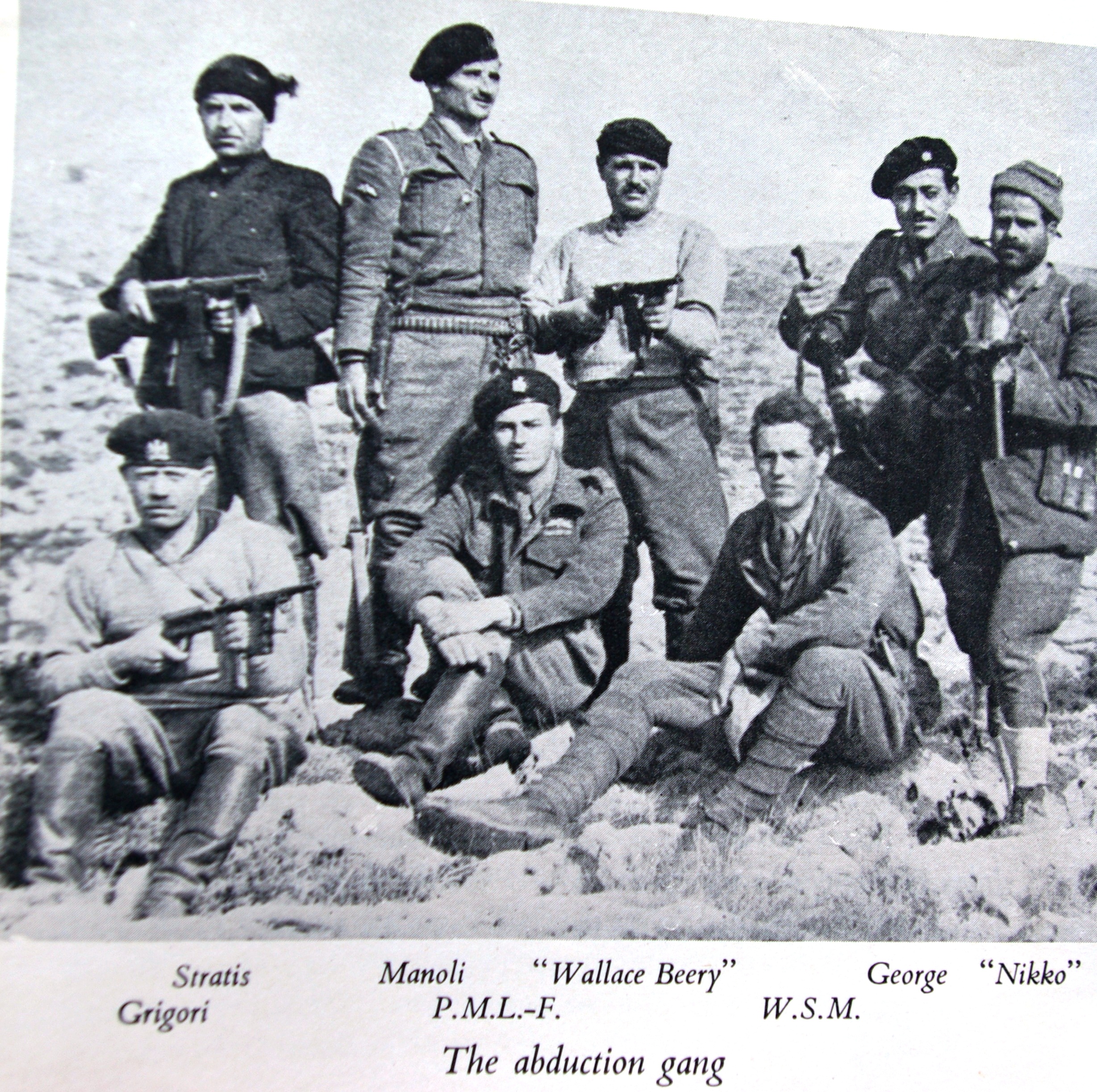
The abduction gang - PLF centre Moss to his left

Visit the photographs page to see pictures  from the book by William Stanley Moss which documents the famous abduction of the commander of German forces in Crete, General Heinrich Kreipe. They show the development of the story from the planning stage, the ‘abduction gang’ selection, and pictures taken during the escape with the General to the south coast and freedom.

Ill Met by Moonlight movie

The final movie from the famed Powell and Pressburger partnership starring Dirk Bogarde (as Paddy), Cyril Cusack (as Captain Sandy Rendel), David Oxley (as W. Stanley “Billy” Moss, M.C.) and the superb Marius Goring (as Major General Heinrich Kreipe). Not forgetting the island of Crete of course. Click the picture to watch the trailer!

Colonel George Lane

Colonel George Lane, who has died aged 95, fought with SOE and was awarded an MC for his service with the Commandos during the Second World War; captured on a secret mission, he was invited to tea by Field Marshal Rommel, who, Lane always thought, courteously prevented him from being shot by the Gestapo.

Read the full Telegraph obituary.

Sophie Moss Obituary from Daily Telegraph

Sophie Moss

Sophie Moss, who has died aged 92, was, as Countess Zofia Tarnowksa, the hostess of a villa in wartime Cairo where high-spirited young SOE agents on leave from secret assignments behind enemy lines held some of the most riotous parties of the war.

With considerable misgivings (and a fictitious chaperone), she agreed to join the all-male household on Gezira island at the invitation of her future husband, the officer Billy Moss, and moved in with her few possessions, which included a swimsuit, an evening dress, a uniform and two pet mongooses.

In the field, Patrick Leigh Fermor, Billy McLean, David Smiley, Rowland Winn and Xan Fielding were cold, hungry, lice-ridden and in constant danger. But on leave with months of back pay to spend, they held uproarious parties at the villa, which they called Tara.

These attracted the most distinguished soldiers, diplomats, writers and, on one occasion, King Farouk, who arrived with a crate of champagne. The evenings grew steadily more rowdy. Usually glasses were smashed. One night some chairs were broken when a mock bullfight was staged. On another, Sophie’s Polish friends shot out all the light bulbs, and on yet another a sofa caught fire then was hurled through a plate-glass window.

Since costly repairs were needed afterwards, Abbas, the butler-cook, tried to raise funds by accosting guests at the gate and holding out his tarboosh for contributions. Sophie put a stop to this, then remembered how soft fruits were added to vodka to make delicious liqueurs on her father’s Polish estates. The household agreed to an experiment using the bath, in which prunes were mixed with raw alcohol from the local garage. The results were disappointing, though Sophie insisted that this was because they were too impatient to wait for the mixture to mature. When they started drinking it after three days, two imbibers passed out.

The bathroom had other uses. In late 1943, when Leigh Fermor and Moss were planning a kidnapping on Crete, they sat around wearing next-to-nothing while David Smiley, fresh from Albania, explained how to organise the perfect ambush – drawing a diagram on the steamed-up tiles. After their success in capturing General Heinrich Kreipe, Leigh Fermor and Moss returned to Tara as heroes.

Zofia Roza Maria Jadwiga Elzbieta Katarzyna Aniela Tarnowska was born on March 16 1917 at Rudnik, a forested estate near Tarnobrzeg, a town in south-eastern Poland founded by her family in 1593. Over the centuries the Tarnowskis had held some of the highest offices in Poland. But Sophie’s father descended from a cadet branch of the family, and wanted to be only a country gentleman. His marriage was unhappy, and Sophie and her brother Stanislaw grew up headstrong and mischievous.

Her tricks and practical jokes turned her governesses into nervous wrecks until her mother sent her to a convent. Sophie got into trouble for standing on a pudding to prove it was inedible, ran away and refused to go back. She was happiest with animals, galloping through the forests on horseback or playing with deer, foxes, a goat and a red squirrel.

In 1937 she married Andrew Tarnowski, a member of the senior branch of the family. Her first son was under two when he died (on the day she gave birth to her second) in July 1939. As war drew closer, Sophie decided that she would never abandon Poland and burned her passport. It was, as her daughter said, “a very romantic and Polish thing to do”, but it changed nothing. On September 8, when the Germans were pouring over the western frontier and the Russians were approaching from the east, she set off by car for Romania with her husband and their baby, her brother, his fiancée Chouquette and her sister.

On arriving in Belgrade she lost her second son before the family drove on to Greece and Palestine. Her husband, now a corporal in the Carpathian Rifles, was on leave in Jerusalem when he told Sophie he was in love with Chouquette. Later Sophie accompanied Chouquette and her son to Cairo, where an uncle of King Farouk, who had often hunted on the Tarnowski estates, had offered them a luxurious villa. She soon moved out.

After joining the International Red Cross, Sophie met General Sikorski, Poland’s prime minister, who suggested she start a Polish branch of the humanitarian organisation. She agreed, but only if it were established without ranks. “Are you a communist?” asked Sikorski. “No” was the reply. But senior Polish ladies might resent a badge of superiority on someone whose husband was only a corporal, she explained. The general agreed, but when he departed she had difficulty confirming her position.

Finally she presented a large bouquet of flowers to the wife of the British ambassador in Cairo, Sir Miles Lampson – with whose help she was equipped with a committee, an office and a truck to
deliver clothes and food. She also visited hospitals and arranged patients’ outings, and helped Polish PoWs in Germany to contact their scattered families.

After divorcing Andrew, she married Billy Moss in 1945. The couple settled in London, where he prepared his Cretan diary about the kidnapping for publication as the best-selling Ill Met By Moonlight. But money was always tight. She lost a third son, but had two daughters. She and Moss translated a book of short stories by the Polish writer Bruno Schultz. But by the late 1950s, their marriage was over. She took in lodgers and spent time in Ireland, where she became a keen gardener.

In 1957 Sophie and her brother were allowed to visit their childhood home, where the NKVD had used the cellars as a jail during the war. They were not allowed into the building, but were treated to an open-air banquet by dozens of old retainers and peasants. At Gora Ropczycki, the house where she and her first husband had lived till 1939, old farmhands thanked her for keeping up their spirits in the first days of the war.

After the fall of communism Sophie’s nephew Adam bought back Rudnik, and Sophie presided over a family gathering in 1999. But too much had changed for her to contemplate settling there.

Last year some of the poems she had written in Cairo were published in a private edition. One, which was translated into English, asks for the white wings of her childhood guardian angel to take her home.

She died on November 22, surrounded by her family in Sussex.

Sophie Moss

Sophie Moss was wilful, lively and bloody-minded, with an almost total recall of a past in pre-Second World War Poland that was privileged yet full of turmoil. Later, in wartime Cairo, she lived with members of Britain’s Special Operations Executive in a house where wild parties were the norm.

Sophie Moss was born Countess Zofia Roza Jadwiga Elzbieta Tarnowska on 16 March 1917 on the estate of her father, Count Hieronim Tarnowski, at Rudnik in Galicia, south-eastern Poland. She spent her childhood roaming free, taming foxes, birds and deer. When she was 13 her parents separated, and she went with her mother, née Countess Wanda Zamoyska.

She married Andrew Tarnowski, a close cousin she had fallen in love with at 17 on a wolf hunt, and by 1939 she had had two sons; the elder died the day his brother was born. Sophie never forgot her return to her marital home with her second baby, (who would also soon die). She stood on Krakow Station: “I saw my train arriving with blood streaming down its side. Young military conscripts had travelled on the roof and, as it passed under a low bridge, had lost their lives. The sight of that train pouring blood was an omen of what, within days, was to be the fate of Poland.”

Within hours of the German invasion, refugees from western Poland started arriving. Sophie put them in bedrooms, then on mattresses, and in the stables, then had sheep and cows from the estate killed to feed them. She said that it was then that she grew up. She was persuaded by her husband and brother to flee with them. The men wanted to enlist abroad to fight for their country and, after an arduous and long journey they ended up in Palestine, and eventually Cairo, where she started the Polish branch of the Cairo Red Cross.

In autumn 1943, estranged from Tarnowski, she was invited to live in a villa with seven young British officers working for the Special Operations Executive. She moved in with a bathing suit, an evening gown and two mongooses she had rescued for 10 shillings.

She called this time her “university”, her teachers being the daredevil officers. Tara residents included Arnold Breene, Billy Maclean, David Smiley, Rowland Winn (later Lord St Oswald) and Xan Fielding. Another was William Stanley Moss (Billy), whom Moss went on to marry, in 1945.

In 1944 Moss and Patrick Leigh-Fermor kidnapped General Major Karl Kriepe, commander of the German forces occupying Crete; Billy’s account of the incident, Ill Met by Moonlight (1952), was made into a 1957 film.

Wild parties were thrown at the house, for diplomats, officers, war correspondents, princes, the British Ambassador and King Farouk. Moss tried to replicate the liqueurs from her father’s estate, using plums added to vodka. However, the concoction was always drunk before it had had a chance to ferment. At one party, Poles shot out all the light bulbs.

Another resident was a beer-drinking, house-trained bear, acquired in Russia by Poles who had been let out of Stalin’s gulags to form the Second Polish Army. Worried that the British authorities would not allow the bear to continue fighting with them into Europe, they asked Moss to take him while they retrained. She appealed to King Farouk, who declared: “You are my guest, and so is the bear!” and delegated Egyptian policemen to take it for walks. The bear went on to experience many battles, including Monte Cassino, and died in Scotland of old age. He now resides, stuffed, in London’s Sikorski Museum.

Last year Sophie’s poems, written mostly in Cairo during the war in Polish, were found. Sophie’s relation, the actress Rula Lenska, helped translate them at a launch held at the Sikorski Museum, the stuffed bear nearby In one poem she wrote: “If I fear death / it is of dying of boredom.”

Elisa Segrave