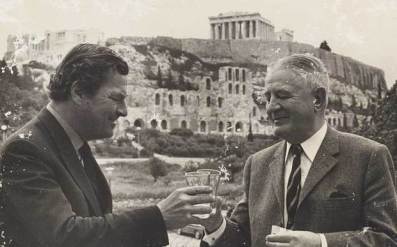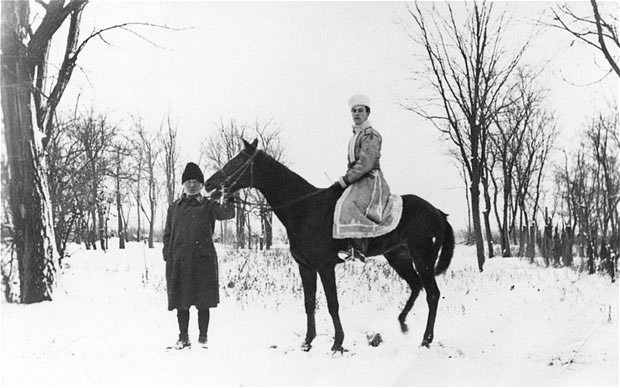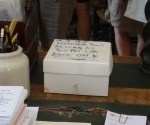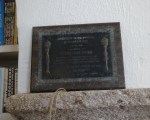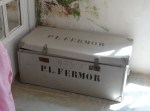
John Pendlebury details from Winchester College War Cloister memorial site

Pendlebury at Winchester College 1923

Pendlebury at Winchester College 1923

Pendlebury’s biography taken from the Winchester College War Cloister memorial website to mark the 76th anniversary of his death

He was the only son of Herbert Stringfellow Pendlebury FRCS, a consulting surgeon at St. George’s Hospital and then of the Royal Waterloo Hospital in London. John Pendlebury’s mother was Lilian Dorothea, the daughter of Sir Thomas Lane Devitt, 1st Baronet, and Chairman of Lloyd’s Register of Shipping. However, she died in 1921, and in 1925 Herbert Pendlebury married Mabel Webb, daughter of Mr. Richard Webb of Wanganui, New Zealand.

John Pendlebury was successful at school: he won the Leslie Hunter Prize, was Head of House, in Senior Division, Sixth Book, and gained an Exhibition for Classics at Pembroke, Cambridge (his father’s college). All this was despite the loss of an eye: “One of his eyes, lost as a child, had been replaced by a glass one. I heard later that, when out of his office, he used to leave it on his table to show that he would be back soon.”

At Winchester, he won the high jump (twice) and the hurdles. In his third year at Cambridge he won the high jump at Fenner’s and also against Oxford. In 1927 he leaped to fame with a jump of six feet at Queen’s Club, breaking the record set by M J Brooks over 50 years before. He also represented England that year. He then won a Scholarship at Pembroke College and a First in the Classical Tripos, Part II with special distinction in Archaeology. Later that year he went to the British School of Archaeology at Athens. That year he married Hilda White, daughter of Edmund White, of Caldy, Wirral.

He quickly gained an international reputation as an archaeologist and donated some of his finds to the College, where they are still held in the Treasury. In 1932 he was appointed Neil Lecturer at Pembroke, and a Fellow of the Royal Society of Antiquaries and a Fellow of the Royal Society. That year he and his wife had a son, David John Stringfellow Pendlebury (D 1945-1950), and later a daughter.

He excavated in Macedonia, at Tel el Amarna (where he was Director from 1930 to 1936), at Knossos in Crete (where he was Curator 1930-35), and at Mount Dicte (also in Crete). His publications included “Aegyptiaca” (1930), “Handbook to the Palace of Minos” and “Tel el Amarna” (1935), and “The Archaeology of Crete” (1939). Pendlebury discovered many ancient sites in Crete, an island which he knew better than any other Englishman. “He was on excellent but independent terms with Sir Arthur Evans but, when he was away from Knossos and the Villa Ariadne, he was constantly on the move. He got to know the island inside out. No peak was too high or canyon too deep for him to claw his way up or down. He spent days above the clouds and walked over a thousand miles in a single archaeological season. His companions were shepherds and mountain villagers. His brand of toughness and style and humour was exactly right for these indestructible men. He knew all their dialects and rhyming couplets. Micky Akoumianakis, the son of Sir Arthur’s overseer, told me he could drink everyone under the table and then stride across three mountain ranges without turning a hair.” (Speech delivered by Sir Patrick Leigh Fermor on the 60th Anniversary of the Battle of Crete – reprinted in The Spectator 20th October 2001).

During the war he served as an officer in the Intellegence Corps. Commissioned into the cavalry, he was transferred in May 1940 to MI(R), the forerunner to the Special Operations Executive. SOE was formed in July 1940 and Pendlebury worked for the organisation for the rest of his life.

The British were expecting Greece to be attacked by Italy in the near future and assembled a group of Greek supporters to help with resistence in the event of being over-run. Pendlebury was one of these. The Greek nationals were however suspicious of the mission and its motives and refused to allow some of the party into the country, although Pendlebury was known and trusted and was allowed in. In November 1940, 50 Commando was sent to Crete to garrison the strategic harbour of Suda Bay. This freed up Greek troops to move to the Italian front. They arrived on November 26th, only to find that their orders had been changed and that they were to move to Heraklion. There Pendlebury met them, fixing up good billets for them in a school, a tobacco factory, and barrack buildings on the airfield. With 50 Commando, Pendlebury became involved in operations against Axis targets in the surrounding waters: “Pendlebury and the Cretans made guerrilla strikes on Kasos, the Dodecanesian island twenty-five miles from the easternmost cape, and there was a far-flung caique operation on Castellorizo, off the south coast of Turkey.” (Leigh Fermor).

In April 1941, the Germans intervened in Greece to support their faltering Italian allies. Greece was soon over-run and most of the Commonwealth troops who had fought there ended up in Crete. It was obvious that the Germans would attack the island next. Pendlebury slipped across to Kasos again to try to find out from his spies there exactly when the Germans would launch their operation. This would have been valuable intelligence, since although, through Enigma intercepts, the Allied commander, Major General Bernard Freyburg (2nd New Zealand Expeditionary Force, in command of the Allies on the island, knew the date and time already, he could not use the information for fear of giving away its source. However, it was too late. As Pendlebury reached Heraklion on May 21st 1941, the invasion was already under way. Ultimately, the German landings at Heraklion and Rethymnon were unsuccessful, disastrously so, and at Heraklion the Cretans played a huge role in the success of the defence: “Heraklion is a great walled Venetian city. The enemy forced an entry through the Canea Gate, and after fierce fighting they were driven out by the British and Greeks with very heavy losses. This was the first astonishing appearance of Cretan civilians, armed only with odds and ends – old men long retired and boys below military age, even women here and there – suddenly fighting by our side, all over the island. In Heraklion the swastika flag, which had briefly been run up over the harbour, was torn down again. The wall was manned by Greek and British riflemen, successful counter-attacks were launched and, apart from this one break-in, the town and the aerodrome remained firmly in our hands until the end… The battle raged on. Heraklion stood firm and we had similar tidings from the Australians and Greeks defending Rethymnon. After the lines of communication had been cut, we had no glimmer of the turn things were taking in Maleme over in the west. We thought we had won. The news became still more bitter later on, when we learnt that the enemy casualties had been so heavy that for a long time they had considered abandoning the campaign.” (Leigh Fermor).

Pendlebury visted the British headquarters at Heraklion where Leigh Fermor met him for the only time: “It must have been during a lull in this racket that I saw Pendlebury for the first and only time. ‘One man stood out from all the others that came to the cave,’ I wrote later on. I was enormously impressed by that splendid figure, with a rifle slung like a Cretan mountaineer’s, a cartridge belt round his middle, and armed with a leather-covered sword-stick… He had come to see the Brigadier to find out how he and his friends could best contribute, and his presence, with his alternating seriousness and laughter, spread a feeling of optimism and spirit. It shed light in the dark cave and made everything seem possible. When he got up to go, someone said, ‘Do show us your sword-stick!’ He smiled obligingly, drew it with comic drama and flashed it round with a twist of the wrist. Then he slotted it back and climbed up into the sunlight with a cheery wave. I can’t remember a word he said, but one could understand why everyone trusted, revered and loved him.

After leaving the cave, Pendlebury and Satanas headed for the Kapetan’s high village of Krousonas by different routes. They hoped to launch flank attacks on the steadily growing throng of dropped parachutists west of Heraklion. He got out of the car with a Cretan comrade and climbed a spur to look down on the German position. They were closer than he thought and opened fire. Pendlebury and his friend fired back.

Here the fog of battle begins to cloud things. Pendlebury and a Greek platoon were still exchanging fire with the Germans when a new wave of Stukas came over and Pendlebury was wounded in the chest. He was carried into a cottage, which belonged to one of his followers, George Drossoulakis, who was fighting elsewhere and was killed that same day. But his wife Aristeia took him in and he was laid on a bed.” (Leigh Fermor).

The Germans then occupied the area, Kaminia, near Heraklion. “The place was overrun with Germans; nevertheless, one of them, who was a doctor, cleaned and bandaged the wound. Another came in later and gave him an injection. He was chivalrously treated. The next morning he told the women of the house to leave him. They refused and were later led away as prisoners. A field gun was set up just outside… and a fresh party of parachutists was soon in the house.” (Leigh Fermor).

The arrival of the second group of Germans signalled the end for Pendlebury. “Here was an English soldier dressed in a Greek shirt and with no identification. A neighbour’s wife saw them take him out and prop him against the wall. Three times they shouted a question at him, which she couldn’t understand. Three times he answered ‘No’. They ordered him to stand to attention and then opened fire. He fell dead, shot through the head and the body.”

His fate was uncertain for many years and was only properly established decades later. “Much later we learnt what happened to Pendlebury. At first his body was buried near the spot where he fell. Later, the Germans moved him to half a mile outside the Canea Gate beside the Rethymnon road. I remember bicycling past his grave the following year dressed as a cattle-dealer. It was marked with a wooden cross with his name on it, followed by ‘Britischer Hauptmann’. There was a bunch of flowers, and new ones were put there every day until the enemy shifted the grave to somewhere less central…
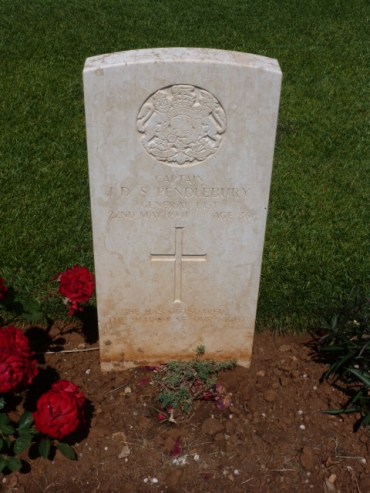
John Pendlebury's grave CWGC in Souda Bay

John Pendlebury’s grave CWGC in Souda Bay

Meanwhile legends were springing up. For the Cretans, it was the loss of an ally and a friend with a status close to that of Ares or Apollo. For the enemy, he was a baleful and sinister figure, a darker T.E. Lawrence, and perhaps he was still lurking in the dreaded mountains. Many bodies were exhumed until a skull with a glass eye was dug up and sent to Berlin – or so they said. According to island gossip, Hitler had been unable to sleep at night for fear of this terrible incubus, and kept the trophy on his desk. To the SOE officers who were sent to Crete to help the Resistance, he was an inspiration. His memory turned all his old companions into immediate allies. We were among friends. Pendebury – Pedeboor – Pembury – however it was pronounced, eyes kindled at the sound.”

The official family announcement of Pendlebury’s death in The Times, on June 2nd 1942, ended with words taken from Horace (Odes I.24): “quis desiderio sit pudor aut modus tam cari capitis.” [What restraint or limit to grief should there be for a man so beloved?]

Pendlebury was eventually buried in grave 10.E.13 of the Suda Bay War Cemetery, Crete. The inscription on his tombstone reads: “He has outsoared the shadow of our Night”, a quotation from Adonais: “An Elegy on the Death of John Keats”, by Percy Bysshe Shelley.

Twelfth Night by Louis MacNeice

Louis MacNeice

Louis MacNeice

We all know the line “For now the time of gifts is gone” but are we familiar with the full poem? Louis MacNeice wrote Twelfth Night shortly after the end of World War 2. It is one of a group in which MacNeice records the loosening of the social bonds that bound British citizens, and the armed forces in particular, during the war.

Twelfth Night by Louis MacNeice

Snow-happy hicks of a boy’s world –
O crunch of bull’s-eyes in the mouth,
O crunch of frost beneath the foot –
If time would only remain furled
In white, and thaw were not for certain
And snow would but stay put, stay put!

When the pillar-box wore a white bonnet –
O harmony of roof and hedge,
O parity of sight and thought –
And each flake had your number on it
And lives were round for not a number
But equalled nought, but equalled nought!

But now the sphinx must change her shape –
O track that reappears through slush,
O broken riddle, burst grenade –
And lives must be pulled out like tape
To measure something not themselves,
Things not given but made, but made.

For now the time of gifts is gone –
O boys that grow, O snows that melt,
O bathos that the years must fill –
Here is dull earth to build upon
Undecorated; we have reached
Twelfth Night or what you will … you will.

A Happy New Year to you all

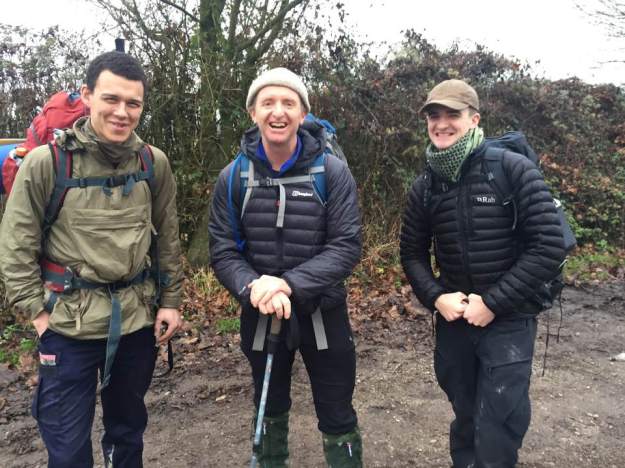
Teddy, Tom, and Patrick on the South Downs Way fundraising in December 2016

Teddy, Tom, and Patrick on the South Downs Way fundraising in December 2016

Thank you for reading the blog in 2016 and for engaging in lively debates via the comments section. The most controversial issue is the state and status of Paddy’s house, but we end the year with some hope that the Benaki will be able to make some progress as seen by their recent press release.

Please do keep sending me material. I probably say this every year, but I have a good backlog of items, many of which have been kindly donated by some of you. Forgive me if I don’t get round to publishing them immediately, or even quickly; it can often take me an hour or more for the more complex posts and time as you know is short and precious. My goal is to have everything up on the site one day. There is plenty of good material to come in 2017 and I wish you all a very Happy New Year.

The Like a Tramp 2016 Just Giving site will close in a few days. So far we have raised over £7,000 for homeless and mental health charirites. The most recent 2016 tramp has had donations of over £1,850. It would only take a few more donations to take us over the magic £2,000 mark. If you would like to donate in any currency, please follow this link.

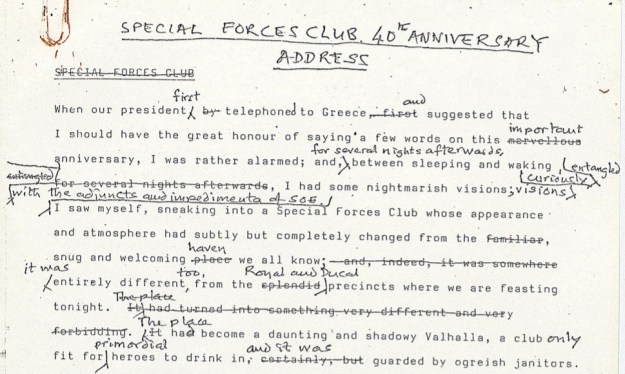
Patrick Leigh Fermor addresses the Special Forces Club on its 40th anniversary

Opening paragraph Special Forces Club 40th anniversary dinner

Opening paragraph Special Forces Club 40th anniversary dinner

My thanks to Gaz Wild who discovered this gem in the PLF archive of the National Library of Scotland last year. There are two versions, one a pdf of Paddy’s original with many handwritten corrections, and a tidied up draft made after his death. It would have been written in 1985 for the 40th Anniversary Dinner of the Special Forces Club, and is referred to in a letter of Paddy’s to Rudi Fischer dated 10 November 1985, which appears in Dashing for the Post page 393, para 2. Paddy remembers especially John Pendlebury, Mike Cumberlege, and Manoli Paterakis.

A special treat for the holiday period. I hope that you enjoy it.

19850000-plf_address_sf_club_40th_anniversary

19850000-plf_address_sf_club_40th_anniversary-tidied

Kennt ihr das Land in deutschen Gauen

One of my favourite posts from 2011. I thought I would share this one more time at this Christmas time. A Merry Christmas to you all and I wish you a peaceful 2017. Thank you for supporting the blog during the course of another year. Please keep sending in your contributions and comments; they keep it lively …

I guess that many of us enjoy the chapter in A Time of Gifts when the eighteen year old Paddy spent two nights in Stuttgart with two very pretty nineteen year old German girls, Lise and Annie. It was Epiphany, 6th January 1934, and they went to a party where Paddy had to pretend to be Mr Brown, a family friend. He particularly enjoyed singing a song about the Neckar Valley and Swabia. Paddy could not remember all the words but his stunning memory recalled most of them (page 66).

As we approach that time of year I thought we ought to share this delightful song.

Here is a link to the music sung by a German choir (it should download the file to your computer which is harmless and does still work). The words are below so that you too can sing along! Let’s hear it now, one two three ….

  1. Kennt ihr das Land in deutschen Gauen,
    Das schönste dort am Neckarstrand?
    Die grünen Rebenhügel schauen
    Ins Tal von hoher Felsenwand.

Refrain:
Es ist das Land, das mich gebar,
Wo meiner Väter Wiege stand,
Drum sing’ ich heut’ und immerdar:
Das schöne Schwaben ist mein Heimatland!

2. Kennt ihr das Land in deutschen Gauen,
Mit Wald und Flur so reich bekränzt,
Wo auf den weiten, reichen Auen
Im Sonnenschein die Ähre glänzt?
Es ist das Land, . . . . .

3. Kennt ihr das Land in deutschen Gauen,
Wo Tann’ und Efeu immer grün,
Wo starke Männer, edle Frauen
In deutscher Kraft und Sitte blühn?
Es ist das Land, . . . . .4. Kennt ihr das Land im deutschen Süden,
So oft bewährt in Kampf und Streit,
Dem zwischen seiner Wälder Frieden
So frisch die deutsche Kraft gedeiht? Ja, wackre Deutsche laßt uns sein!
Drauf reichet euch die deutsche Hand;
Denn Schwabenland ist’s nicht allein:
Das ganze Deutschland ist mein Heimatland!

Like a Tramp 2016 raises £1,500

Patrick, Teddy and Tom

Patrick, Teddy and Tom after a cold night in Exton church. A rare glimpse of the sun and blue sky which didn’t last.

Thank you to all who donated to Shelter and Combat Stress. Donations breached the £1,500 mark so we are very pleased. Fog and mist spoiled any views for the three and a half days we tramped along the South Downs Way which was a disappointment, but on the whole the weather was pretty kind; cold but no rain. As ever we walked like tramps seeking charitable shelter. We slept in churches and were offered drier accommodation near Midhurst which was a blessing.

If you would like to make a donation to help the homeless and veterans suffering from PTSD this Christmas, the Just Giving page remains open.

A Merry Christmas to you all.

Tom

https://www.justgiving.com/teams/likeatramp2016

A lifelong search for erotic, alcoholic, intellectual and courageous diversion

Paddy at Baleni, Romania 1938

Paddy at Baleni, Romania 1938

Alerted to this by blog correspondent Brent McCunn, he asks “How can one, considering age, standing, and a lower consumption of booze incorporate this quote into ones mission statement? …he was on a lifelong search for erotic, alcoholic, intellectual and courageous diversion..

By Harry Mount

First published in the Literary Review

Anthony Powell said that John Betjeman had ‘a whim of iron’. To judge by these compulsive letters, Patrick Leigh Fermor had a pleasure-loving streak of purest titanium. From the first letter, written in 1940, soon after he joined the Irish Guards, until the last in 2010, sent when he was ninety-four, he was on a lifelong search for erotic, alcoholic, intellectual and courageous diversion. One moment he’s in Crete, meeting the partisans who helped him kidnap the Nazi general Heinrich Kreipe, his most dashing escapade. The next he’s at Chatsworth, sitting next to Camilla Parker Bowles – ‘immensely nice, non-show-off, full of charm and very funny’.

In between, it’s back to the Mani peninsula and the enchanting seaside home he and his wife, Joan, built in the mid-1960s. It was only there, in Greece, and then, in his fifties, that Leigh Fermor had a real adult home and reined in the wanderlust – and the lust. Until then, he’d continued the manic travels that began with his walk as a teenager across Europe in the 1930s. In the letters we follow him as he flits from borrowed Italian castello to French abbey to Irish castle, taking the edge off his ‘high-level cadging’ by making jokes about it. In 1949, he wrote to Joan: ‘Darling, look out for some hospitable Duca or Marchesa with a vast castle, and try and get off with him, so that he could have us both to stay.’

Leigh Fermor was less in search of luxury than entertainment. A 1954 letter to Ann Fleming skewers the super-rich aboard Stavros Niarchos’s gin palace: ‘it’s pretty good hell aboard: no sort of connecting link between all the guests, disjointed conversation, heavy banter, sumptuous but straggling meals at all hours … Why the hell don’t they have more fun with their money?’ After each of his gilded weekends, there arrives the perfectly weighted and amusing thank-you letter for the relevant duchess or Schloss-proprietor. For those in search of the model of the perfect bread-and-butter letter, look no further.

Reading these letters is like gobbling down a tray of exotically filled chocolates, with no horrible orange creams to put you off. What prevents Leigh Fermor’s eternal pleasure hunt from getting a bit sickly are two things: the undeniable bravery – and seriousness – of his war record, and his intellect. Unlike most playboys, he was an addicted reader of high-minded obscurities, among them John of Ruusbroec, a 14th-century Flemish mystic, and St Angela of Foligno, a 13th-century founder of a religious order. Hardly light holiday reading. His literary gifts were considerable and are on display in a pitch-perfect Betjeman pastiche from 1954, reprinted here: ‘Beadles and bell ropes! Pulpits and pews! … And patum peperium under the yews!’ Moreover, Leigh Fermor’s appetite for socialising extended beyond dukes and Cretan war heroes. In a coffee house in Macedonia, his interest in other people and countries is so great that he recognises all the languages being spoken: Greek, Pontian, Turkish, Bulgarian, Romanian, Ladino, Russian, Georgian and Gheg, an Albanian dialect.

Unlike most writers – a narcissistic bunch, largely – Leigh Fermor had a longing to amuse. His letters are illustrated with little drawings of maps, castles and his half-built Mani house. The letters explain what propelled this desire: ‘whorish anxieties about being liked’. Underneath the titanium, pleasure-seeking exterior and the intellect lay melancholy, sparked by the failure to complete books on time – or at all, in the case of the third volume of his self-styled ‘Great Trudge’ memoir of his 1930s walk. Ever self-aware, he refers to himself as ‘L’Escargot des Carpathes’, a nickname first coined by Le Monde. He acknowledges, too, the inevitable ‘inaccuracies of memory’, which meant that journeys that had taken place half a century earlier were sexed up in his travel writing.

He is also aware of the selfishness of the affairs he conducted with the knowledge of his future wife, Joan, even as she subsidised him from her private income. The letters to his mistresses include grippingly salacious, easily decoded euphemisms. When he thinks he might have given crabs to Ricki Huston, wife of the film director John, he writes of ‘the beginnings of troop-movements in the fork’. And here’s an entry for the 1959 Bad Sex Award: ‘Woke up at midday, longing for ping-pong, and sentimentally stroked the handle of your cast-down bat.’

You get the impression that, after he was kicked out of King’s, Canterbury for holding hands with a greengrocer’s daughter, Leigh Fermor never really grew up; that he started walking across Europe, aged eighteen, and never properly stopped. References to his mother – ‘so terrifying and destructive … so full of odd delusions and manias’ – might explain why.

Adam Sisman is a model editor. He is prepared to admit faults in his subject, not least the baroque style of Leigh Fermor’s books, ‘which can seem convoluted and overworked’. Not so the letters, aimed more precisely at amusing rather than dazzling their recipients, albeit with the odd bit of purple prose – ‘Their horses are caparisoned to the fetlocks.’

Leigh Fermor was charm personified. It isn’t evanescent British charm, as described by Anthony Blanche in Brideshead Revisited: ‘Charm is the great English blight. It does not exist outside these damp islands. It spots and kills anything it touches. It kills love; it kills art.’ Leigh Fermor’s charm was of a healthier, more worthwhile variety, because underneath lay intellect and, ultimately, love and art.

Buy Dashing for the Post: The Letters of Patrick Leigh Fermor

Like a Tramp 2016

Completing my first walk to Bath in 2014

Completing my first walk to Bath in 2014

Hello to all Blog readers!

Thank you to so many of you for sponsoring me in the past as I have walked across southern England raising money for charity. This year, despite promising myself that I would retire from international competitive charity fundraising, I am off again.

This year (17-20 Dec) I will walk 70 miles along the South Downs Way with my son Patrick and his friend Teddy Chabo. We will walk as before, as tramps, sleeping rough and seeking charity and shelter along the way to continue our fund raising for Combat Stress and Shelter. Our goal is to continue to raise awareness of the need for support to veterans with mental health and PTSD issues, and the homelessness that can often come with it. These are two very worthy charities, and at this Christmas-tide, I am asking you once more, and for the last time, to make a small donation to help these causes.

Please visit our fundraising page linked below, and perhaps split any donation that you may make between the two charities, or give as you please.

To donate please click here to go to our Just Giving page.

Thank you from the three of us, and for all those who will be helped by your generosity and kindness.

A merry Christmas and a happy 2017 to you all.

With warm regards.

Tom Sawford

To donate please click here to go to our Just Giving page.

Benaki update on Paddy’s house

The Benaki museum have provided an update on Paddy’s house. You can visit the webpage on their website. The highlights are as follows:

– the Benaki Museum has applied for the necessary permits to the Greek State (Structuring Service – Municipality of Kalamata) and is waiting for their issuing so that the works can start.

– the informative event planned for November 2016 in London has been rescheduled for early 2017, so that the availability of the speakers of the event is confirmed. The final dates of the event will be announced soon.

– discussions with educational institutions regarding collaboration in the future operation of The Patrick and Joan Leigh Fermor Centre are progressing.

– a book in honor of Patrick Leigh Fermor, dedicated to his life and work, is in preparation and will be completed within the first semester of 2017. Another publication on the house in Kardamyli is also scheduled to be published soon.

The scope of the repair works:

According to the study and the proposal of the future and considering that the PLF house can provide ideal accommodation for up to 5 people/couples at a time, minor building interventions will be carried out without altering the form of the house. More specifically, the 5 guestrooms will each include a bedroom, an independent workplace and bathroom. (Basic kitchen equipment will be provided in the guesthouses located outside the main house). This setting ensures that all guests will be offered a large separate living space, perfect for isolation and uninterrupted concentration. Moreover, common spaces will be used as places of assembly and not as workplaces. All spaces created – apart from the basement, which may be considered the least privileged – will include large openings, a view and plenty of light and ventilation.

Apart from the fireplaces in some of the rooms, the house hasn’t had any other form of heating up till now. A heating and cooling system will be installed underground or through the roof, in order to keep the façades intact. The plans also include the full replacement of the electrical, plumbing and sewerage system, as well as the repair of the bathrooms and kitchen. Furthermore, repair and partial replacement of the roofs as well as reconstruction of the hencoop are also planned.

Along with the construction works, the garden shall be thoroughly cleaned, properly pruned and any damaged plants will be replaced. The current form of the garden will not be altered. Members of the Mediterranean Garden Society, who have visited the house, have expressed their interest in helping with the works in the garden.

Visit the Benaki website here.


A Ghika rock painting at Kardamyli?

image001I was sent this picture by email from Jeffrey Cox. I don’t recall seeing it during my recent visit. Does anyone else know anything about it? Is it some mythical character?

Greetings Tom.

I read your notes on your recent tour of Paddy’s house near Kardamyli.

Last April my wife and I also arranged a private tour of the house through Elpida. I had been alerted to a portrait painted by Paddy’s friend Nikos Hadjikriakos-Ghika on a rock exposed in the wall just inside Paddy’s front door. Here it is. To my mind it’s an amazing work – quite 3 dimensional.

Last weekend Britain based travel writer Dominic Green did a piece for our National broadsheet (The Weekend Australian) entitled “On the trail of Patrick Leigh Fermor” – plenty on Nikos but no mention of this portrait. Are you aware of it? Regards, Jeffrey Cox

Behind the scenes at the Benaki

dsc07322The debate about the state and status of the house at Kalamitsi continues. Despite asking for input I have heard nothing from the Benaki. However, I received a very nice email from Michael Torrens who wishes to offer a different perspective to my own in the article below, and is critical of my stance and that of others who appear to lack patience with the Benaki or who may, in his opinion, have got their facts wrong. We shall see how things turn out. I disagree with some of his comments e.g. the state of security during the visit. I remain dismayed that the Benaki cannot respond officially.

I was reviewing some recent articles and was reminded that in June 2016, Dominic Green wrote a similar report to mine which I published here.

Following my article some suggested that we should write an email in Greek to the Benaki to seek a response and to ask for reassurance that items will be removed and the house properly secured. If you would like to draft something for me (and that you could all send to the Benaki) to send in Greek please get in touch. See how in the About and Contact page.

Michael’s email went like this:

Dear Tom,

I must first congratulate you on your blog. It is, de facto, the most important and widely read vehicle for communication between those who appreciate Paddy and wish to have a finger on the pulse of developments. It must be a lot of work for you but it is irreplaceable.

However that makes accuracy all the more important. That is why I respectfully ask you to read through the attached document and publish it on the site.

As I intimate, I have been concerned at the degree of misinformation and the level of dissatisfaction, which I decided to investigate in my own way, totally independently. I know a lot more than I can state, but it is essential to be diplomatic and let some things evolve in their own time. I may be able to answer any personal questions of yours as long as I do not overstep my confidentiality agreements.

It is really very important over the next months to repair the damage and set up an atmosphere of trust and reconciliation so that fundraising for the functional stage of the Centre can get started efficiently.

That is why I hope you will be objective and supportive even though the document may appear mildly critical even of you. It is supposed to reset the balance.

Thanks for your time,

Regards,

Michael

By Michael Torrens

I visited the Kardamyli house this summer with a group from the Patrick Leigh Fermor Society. The condition of the property was surely the same as when Tom Sawford went but my conclusion was rather different to that which he communicated recently. Certainly major refurbishment is indicated but my impression was that there is no urgent structural work necessary to protect the place until the whole integrated renovation project starts. Therefore replacing (e.g.) broken shutters separately would be an inefficient use of funds.

I, too, have been interested by what is now called the PLF Project and aware of certain differences of opinion. Rather than contribute my own unsubstantiated view I decided to discover what problem, if any, actually existed. I was fortunate (as a resident of Athens traveling frequently to London) to be able to initiate personal, face to face, ongoing discussions with both the staff at the Benaki museum and also the trustees of the Patrick Leigh Fermor Society. All have welcomed me and been exceptionally cooperative for which I wish to express my thanks. I would also like to thank John Kittmer, the British Ambassador, for meeting me and giving his advice.

The only problem that I have been able to identify is a profound general lack of trust and confidence, associated with inadequate information, distortion of information and false conclusions.

Perhaps I am in a good position to be objective about the situation and so I venture these comments.

  • Anyone familiar with the combination of raising a huge sum of money and performing renovations of old buildings (I once worked in an ecclesiastical architect’s office) will know that it takes time. A long time.
  • The renovation project is now fully planned and funded. I consider that the achievements of the Benaki up to the present, bearing in mind the current economic climate, are little short of miraculous.
  • I have been privileged to see the formal AEA feasibility study, architect’s drawings and business plans and consider, within the limits of my experience, that everyone should be reassured that the project will be managed at an international level and stop moaning.
  • Benaki has had a security policy in place, especially when there were more than ten visitors; the fact that someone did not see it is perhaps how it should be. Items of more significant value have already been removed. Perfect security would require no access at all. Those concerned about danger this winter should know that all the contents are now in the process of being packed for storage and/or restoration during the building work.
  • It has been suggested to the Benaki that information should be provided more frequently. I would also suggest that anyone who feels the need to criticize such information because they believe they know better should just keep quiet and await results. I have been privileged to learn a lot of confidential information, for example on the proposed management structure. Please be patient, all will be revealed when appropriate.

Paddy had many personal discussions with the Benaki on his vision for the future of Kardamyli. The property was finally left to the Museum at the start of the financial crisis without any form of endowment. It is necessary to re-emphasize that the Benaki museum has the total legal and financial responsibility. I hope that everyone can be persuaded to help this project and create a favorable climate for fundraising when the Patrick and Joan Leigh Fermor Centre opens and needs additional funding for running costs in a couple of years’ time. I have examined the relevant documents and collected as much objective information as I can. I am satisfied that the Benaki have proceeded exactly according to the wording of the deed of gift. Those who are not satisfied with the speed of response should spend more time appraising the practical difficulties.

The making public of a private opinion may be said to be justified by the concept of freedom of speech. However it is, in the age of blogs and the Internet, also a form of journalism. I would like to suggest that the quality of journalism depends most particularly on the veracity of the source material. What was it Alexander Pope said about ‘a little learning’?

Important! Venue change – Routes of the Heart: Lucy Abel Smith’s Transylvania

Please refer to yesterday’s post here.

The RCI London have had to make a venue change to John Sandoe Bookshop as below. I’m not sure if you still need to get free tickets via Eventbrite link , but this says Sold Out. Don’t let that worry you: just turn up on the night. NB – the timing at the new location is earlier – 1830 start. The Eventbrite site still gives the old start time.

John Sandoe bookshop location here.

Dear All,
This is to inform you that, due to completely unforeseen circumstances, the “Routes of the Heart: Lucy Abel Smith’s Transylvania” event, scheduled for 22 November at 7pm, has been cancelled. The event is to be staged at John Sandoe Bookshop, 10 Backlands Terrace, London SW3 2SR on the same day 22nd November, between 6.30pm and 8.30pm.
We apologise for any inconvenience and look forward to welcoming you to all our future events.

Best wishes,

RCI London

Routes of the Heart: Lucy Abel Smith’s Transylvania

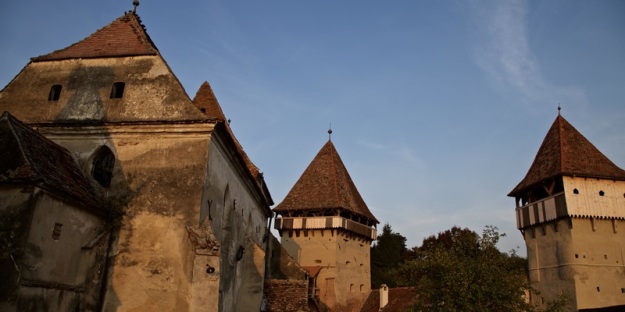
https-cdn-evbuc-com-images-25411158-126282815867-1-originalTransylvania, with its rich natural and historic heritage, enjoys a huge revival as a cultural and touristic destination. Historian Lucy Abel Smith is one of the British enthusiasts who have contributed, through her writing as well as various projects, to transforming this land of diversity and overwhelming beauty into a hotspot of unforgettable discoveries. The Romanian Cultural Institute in Belgravia is proud to provide the setting for the launch event of her latest book, ‘Travels in Transylvania: The Greater Târnava Valley‘, a new foray into the culture and history of central Romania.

When: Tuesday 22 November, 7pm
Where: Romanian Cultural Institute London, 1 Belgrave Square, SW1X8PH

Admission is free but by ticket from Eventbrite.

This charming and accessible guide takes as its focus the towns and villages of the Greater Târnava Valley, home to an exceptional cultural heritage. Here Romanian, Hungarian, Saxon, Jewish and Roma cultures come together in an extraordinarily rich mix, against the backdrop of some of the loveliest landscapes in Europe. The main towns are Sighișoara and Mediaș, with their towers and citadels. The villages are famous for their unique fortified churches and unspoilt rural way of life. The guide to the sights of the valley also includes sections on the plethora of flora and fauna, bee-keeping, winemaking and gypsy heritage, as well as an outline of the region’s complex and often turbulent history.

“There is still to be seen the stunning landscape, ancient farming methods and extraordinary botanical variety. But there is so much more. We travel through a fraction of ancient Hungary to encounter a vast array of the peoples of Central Europe, all up until recently living together, yet in distinct communities with different customs, architecture, costumes and languages. We find the Vlachs and the Szeklers, the Hungarians, the Saxons, and the the Jews, the Gypsies and others, such as the Armenians, who settled here to take advantage of this tolerant and diverse land in the very heart of Europe.” – Lucy Abel Smith

Lucy Abel Smith is a Fellow of the Society of Antiquaries, a historian and art historian, specializing in Europe and the Balkans. She has been leading tours for Museum Societies since her early 20s, specialising in Central and Eastern Europe and the Balkans. Her first tour to Romania was in the early 80s for the then British Museum Society (www.realityandbeyond.co.uk). In 2013, Lucy Abel Smith founded the Transylvanian Book Festival (www.transylvanianbookfestival.co.uk), whose second edition has just been completed. Together with her husband, she hosts a contemporary sculpture show, ‘Fresh Air’, in their garden in the Cotswolds every other year, where they strive to exhibit the work of a sculptor from Central Europe. The artist whose works were exhibited in 2013 was Vlad Olariu from Cluj, Romania.

When: Tuesday 22 November, 7pm
Where: Romanian Cultural Institute London, 1 Belgrave Square, SW1X8PH

Free entrance. Please book your ticket on Eventbrite.

Manolis Paterakis and the Guns of Navarone?

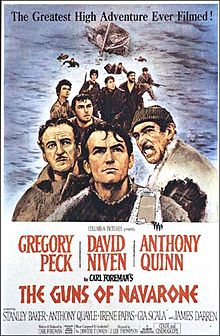
220px-gunsofnavaroneAn interesting and fun observation by Jamie McCullum. Dig out your old copies of the movie and see for yourself?

Dear Tom,

Something just caught my attention which may interest the readers of your PLF site (I’ll let you be the judge!)

I was watching the Guns of Navarone this afternoon and in the scene when the heroes are captured in the village of Mandrakos (Ed: somewhere around 1 hr 50 mins?), the German officer flicks through a book of wanted andartes.
Remarkably the first photo is of Manolis Paterakis!

With best regards and thanks again for your continued brilliant work on the PLF site. I love it.

With best wishes,
Jamie


Major Alexis Casdagli and the f*ck Hitler bookmark

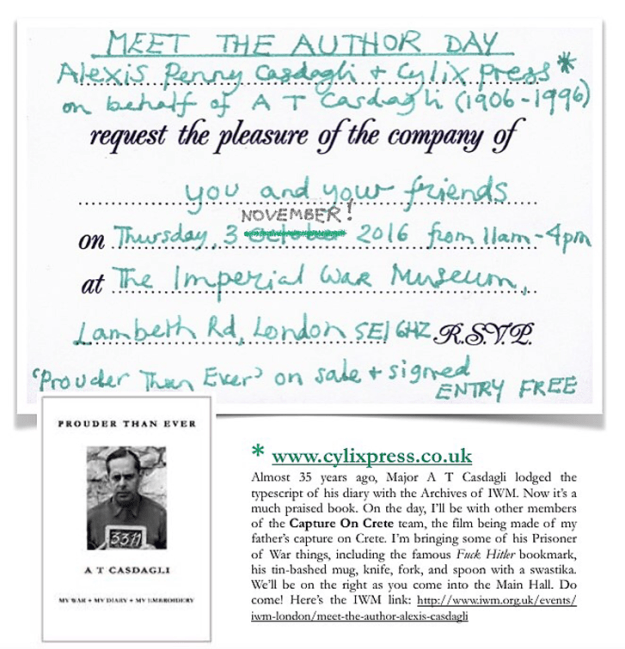
image001Back in April I published an article about Major Alexis Casdagli. It was very popular and received quite a few comments.

I have received an invitation from his daughter Penny for a book signing at the Imperial War Museum to be held on Thursday 3 November. It is to me “and all my friends” and as I count you all as such, you must therefore be invited! Penny will be there with some of her father’s POW memorabilia including the now infamous fuck Hitler embroidered bookmark!

I am sure Penny would be delighted to see you if you have time to pop by.

How to respond to a Greek tragedy

My post yesterday about the condition of Patrick Leigh Fermor’s house in Kardamyli – A Greek Tragedy? – appears to have stirred up the proverbial hornets nest which can be evidenced in the comments below the article and in the PLF groups on Facebook. Whilst everyone appears to share the disappointment, there is a split between those that say that “this is Greece and it will get sorted out in a Greek way” which appears to be a euphemism for “a long time”, and those who hold up their hands and say “something should be done”, and quickly.

dsc07296Let’s continue the debate on here. Many useful suggestions have been made. Some have talked about crowdfunding. Whilst this sounds good it is worth noting that the funds to restore the house are very substantial indeed; that attempts have been made to assist (see PLF Society aims); and maybe that funding is not the issue as the Stavros Niarchos Foundation appear to have offered the cash. Others have suggested raising the profile and mentioned contacting the BBC journalist John Humphreys who owns a house in the Mani and broadcast a BBC Radio 4 programme about Paddy and his Mani life a couple of years ago. If anyone has a direct line to him, then please go ahead as all publicity or pressure must surely help.
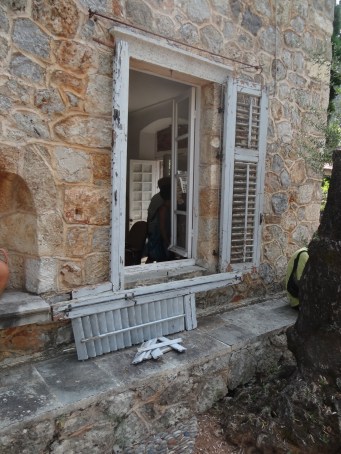
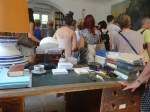
Unsurprisingly I have come in for some personal criticism for even mentioning the state of the house and appearing to blame the Benaki. A few have even gone so far as taking what I have written as implicit criticism of Greece, its people, Nana Mouskouri, and the Greek way of doing things. It is certainly not the latter but I am very critical of the Benaki who could at least take some basic measures like properly securing the house and its contents against the weather and intruders, and closing it to visitors until such time as proper arrangements can be made. They could also be more effective in their communications and keep to their stated timetable with regards to public updates.

One person has suggested that the most effective thing would be for all concerned to address their concerns directly to the Benaki. You can do this by emailing plfproject@benaki.gr

What I can assure you is that the Paddy blog remains independent of all organisations and pressure.  The views expressed are mine, and often yours. I will support the Benaki when it communicates effectively with all of us and demonstrates some real progress, for we, his fans and admirers, are stakeholders just as much as the Benaki management.

A Greek tragedy?

dsc07302It comes as no real surprise that the follow-up to the announcement made by the Benaki Musuem in July of this year (see Stavros Niarchos Foundation to Fully Repair and Restore Patrick Leigh Fermor’s House) regarding the donation of the Stavros Niarchos Foundation is, well, what should we say? Non-existent.

by Tom Sawford

The July press release did state that commencement of repairs were dependant upon the issue of certain “licences” but nothing appears to have happened, and worse, the house faces yet another winter in a condition that one can only describe as dilapidated.

In August, Elizabeth and I visited the house which was being used by an Italian writer and his family as a summer retreat. The Benaki arranges tours. Naively I imagined that the tour, led by Elpida, would be for perhaps 4-6 people. In the end we had around thirty visitors milling around picking up what they liked whilst Elipda spent about half an hour writing out receipts by hand for the Euro 10 entrance fee. There was more concern about “take no photos” than for the house and its movable – or should I say, removable – property.

Dismayed was how I would describe our feelings when we found Patrick Leigh Fermor’s house in Kardamyli house in such a very poor condition. Window frames and shutters were rotting. Furniture was worn and torn, and getting worse by uncontrolled use. Most distressing of all, despite the Benaki’s statement that “artworks and valuable books have been transferred to the facilities of the Benaki Museum in Athens for conservation and safekeeping,” I found almost his entire library of first editions were available to pick up and read, mark with greasy hands, and who knows, perhaps pocket? Items that most of us would categorise as valuable, at least for their symbolism and sentimental value, such as medallions and small photographs of Paddy and Xan etc, were lying insecurely on shelves and mantelpieces. One would think that most people who visit would be respectful, but who knows, someone may be tempted to remove a few of these small items.

We have to hope that real progress will be made, but the events mentioned in the original press release, including a talk in London in November to update us all on progress have not occurred – your Blogger has heard of no plans. At this rate, by the time anything happens and work commences, the initial ten year period that the Benaki is required to implement Paddy’s wishes will have passed. My understanding of the bequest is that the cash-strapped museum will then be free to sell the property if it so chooses. We can each make up our own mind about what might happen then.

A selection of photographs that I was not supposed to take follow.

Event reminder: The Cretan Legacy, 26 October at 7.00 pm

If you are sorting out your diary for next week and happen to be in London on Wednesday, a good way to spend the evening may be to come along to Waterstones Piccadilly to this special event.

Our good friend, ex-Coldstream Guards officer, sometime Pilgrim, and author of In the Dolphin’s Wake and Like a Tramp, Like a Pilgrim, Harry Bucknall has been busy over the summer arranging a very special event be held at Waterstones Piccadilly on Wednesday 26th October at 7pm. The Cretan Legacy, a panel discussion, will examine the SOE abduction of General Heinrich Kreipe carried out by Paddy Leigh Fermor, Billy Moss and men of the Greek Andantes on Crete in 1943.

The panel, chaired by former Irish Guards Officer and SAS Squadron Commander, James Lowther-Pinkerton, will include Alan Ogden, SOE expert and author of Sons of Odysseus; Chris White, contributing author to Abducting a General; Rick Stroud, author of Kidnap in Crete and Dr Klaus Schmider, military historian, senior lecturer at the Dept of War Studies, RMA Sandhurst and Wehrmacht expert. With audience questions, the panel will discuss whether “this Hussar Stunt” – as Kreipe referred to his capture – was worth the undertaking in both the short and long term and assess its achievement, legacy and place in the annals of military history, endeavour and folklore.

No doubt there will be wine and a chance to chat to friends old and new so do come along if you can to Waterstones Piccadilly on Wednesday 26th October at 7pm. All you have to do is reserve a £5 ticket in store or by emailing Piccadilly@waterstones.com. I think just turning up on the night will be just fine too.

Herberts & Herbertinas

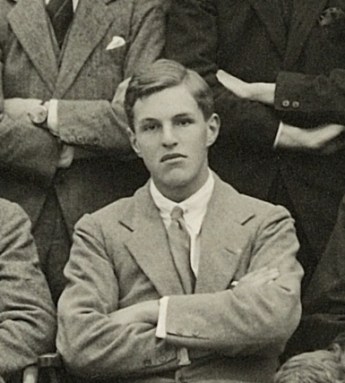
Steven Runciman at Cambridge in 1925, photographed by Cecil Beaton

Steven Runciman at Cambridge in 1925, photographed by Cecil Beaton

Following up on the book review about Steven Runciman that we published in September, I have found this really enjoyable and in-depth article about Runciman and the new biography. Worth some of your time. It starts brilliantly “I met Steven Runciman several times towards the end of his long life. On one occasion he told me, as he told many people, that as a young man he had danced with a friend of his mother who, in her own youth, had danced with Prince Albert. He seemed slightly disconcerted when I insisted that he dance a few steps with me so that I could say I had danced with a man who danced with a girl who danced with the Prince Consort, but he did it and our little turn round the room made me feel in some psychic way closer to the court of Queen Victoria.”

By Rosemary Hill

First published in the London Review of Books

Of course Paddy gets a small mention

Maurice Cardiff, the army officer who ran the council temporarily before Runciman arrived, recalls him vividly dealing with his improbable staff as they all gamely muddled through. ‘He had two kinds of yesses, one short, even clipped, was a true affirmative; the other, long drawn out with a dip in the middle, signified “no”. The distinction was lost on Paddy, who on the strength of the longest of drawn out “yesses” would set out on a six-week tour of the islands or a trip round the Peloponnese.’ No doubt Runciman was not displeased to have Leigh Fermor, always something of a loose cannon, out of the office for a while.

How can one live as a sponger?

Yes indeed. How can one live as a sponger? Quite well apparently if Paddy’s letters are to be believed. Sara Wheeler was clearly not that impressed by Paddy the man but she does like the book.

An extract from a Guardian book review by Sara Wheeler

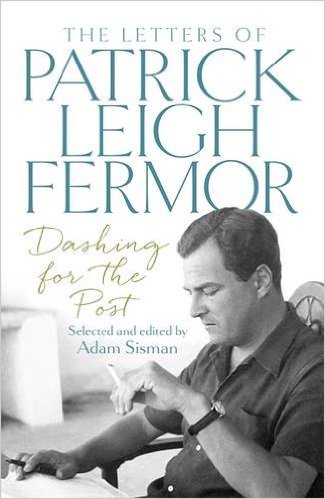
The late Patrick Leigh Fermor was born 11 years before Morris, and the pair have long shone among the brightest stars in the travel writing firmament. Besides Artemis Cooper’s biography, we have recently had a selection of letters between PLF and Deborah Devonshire (In Tearing Haste). This new offering, Dashing for the Post: The Letters of Patrick Leigh Fermor, contains 174 letters spanning 70 years, from 1940 to 2010. What does it add?

When the volume opens our man is a 24-year-old officer cadet. Besides the chronological spread, the book has a geographical one, ranging from what is now Cameroon to Panama via Cyprus (Leigh Fermor devotes many fascinating pages to the 1956 Cyprus crisis). Much was written in the house the Leigh Fermors built in the 1960s in the Greek Mani.

Many characters and episodes are new. Lady Wentworth emerges wearing “a gigantic and very dishevelled auburn wig that looked as though it was made of strands from her stallions’ tails gathered off brambles”. Errol Flynn is “a tremendous shit but a very funny one”, and Leigh Fermor reports from his own groin, where he notes “troop movements in the fork” and has to tell an adulterous girlfriend that he has pubic lice. The references to Mt Athos are topical, given that Putin is buying up the holy mountain.

Dashing for the Post: The Letters of Patrick Leigh Fermor is hugely entertaining, funny and occasionally moving. Leigh Fermor was a prodigious and discerning reader and his literary comments are a joy. He quotes in French, Greek, Latin, Romanian and Russian. As a counterweight, in almost every letter he conjures a scene, whether “a square pool of icy starlight in the cloisters” or Greece in autumn, “suddenly clean deep earth and vegetation colours after the rain, lighter veils of shadow cast by solids, evening air the colour of hock, pale magnesium shadows, clarity of vision … all the way to Mars”. Diana Cooper is one of his most regular correspondents. PLF describes her letter-writing as “dazzling hell-for-leather style” – the phrase applies to his own style just as well.

One tires of the endless references to titled friends. It undignifies the writer, almost irretrievably
Adam Sisman has edited the book brilliantly and meticulously. At times he is wittier than Leigh Fermor. The great man, the reader learns from Sisman’s note, has been commissioned to contribute a chapter to a book “with the arresting title Memorable Balls”.

Great fun it might all be, but the reader balks at the man who emerges from these pages. First, how can one live as a sponger? PLF spent most of the years covered here cadging opulent dwellings from rich friends. If the accommodation isn’t up to scratch, he complains, describing a “scribbling stopgap” on the Greek island of Evia as “hellish”. I’ve spent many weeks in that particular house. It’s lovely. But it’s small, plain and simple, so not to his maj’s liking. Second, one tires of the endless references to titled friends. It demeans the writer, almost irretrievably. The people he lives among in his Greek village, on the other hand, “are so backward they don’t know the difference between nice and nasty”.

… one is left wondering about the inner life. Leigh Fermor talks of “whorish anxieties about being liked”, as if everyone doesn’t have them, and bouts of “melancholia”. Who knows? As Morris wrote: “Is that how it was?”

Buy Dashing for the Post: The Letters of Patrick Leigh Fermor

Dashing for the book: A lifetime of letters from Paddy Leigh Fermor

dashing for postWell. It is here. Almost. Coming soon!!. Dashing for the Post: The Letters of Patrick Leigh Fermor is published on 6 October, but you can pre-order now. The long awaited anthology of Paddy’s letters to a wide circle of friends and correspondents to complement the wonderful In Tearing Haste, a volume of letters between himself and Deborah Cavendish, Duchess of Devonshire. Something for the Christmas list perhaps?

by Justin Marozzi

First published in the Spectator

Here is a veritable feast for fans of Paddy Leigh Fermor. This is the story of a well-lived life through letters. The first is from a 24-year-old recruit eager to do battle with the enemy in 1940. The last is by a tottering nonagenarian of 2010, still hoping, 75 years after his ‘Great Trudge’ across Europe, that he might just finish the final volume that had eluded him for decades.

The anthology offers the most vivid explanation yet for why he didn’t. Letters were flying to and from all corners of the world — Adam Sisman reckons that Paddy wrote a whopping 5,000 to 10,000. There were parties to attend, cocktails to drink, countries and castles to visit, mountains to climb, literary-historical-geographical-anthropological quests to pursue, digressions to indulge, other books and articles to write along the way.

His wide array of correspondents reflected his interest in high society, literature and the arts, history, adventure, beautiful women and Greece, as well as an enduring gift for friendship. Apart from his beloved wife Joan, Deborah Devonshire, Ann Fleming and Diana Cooper were foremost among them. Then there was George Seferis, the poet, diplomat and Nobel laureate; the artist and sculptor Niko Ghika; George Katsimbalis, the ‘Colossus’ of letters; Lawrence Durrell; wartime brother in arms Xan Fielding; his lovers Princess Balasha Cantacuzène, Lyndall Birch and Ricki Huston. A regular recipient was his long-suffering publisher Jock Murray, a man of saintly patience.

Letters to Murray typically blend jaunty descriptions of place and adventures (the summer of 1959 found him playing lord of the manor in the castle of Passerano outside Rome, preparing to fly a ‘vast heraldic banner several yards square’ from the highest tower) with anguish and apologies for the endless tarrying and non-arrival of finished manuscripts. (‘No please don’t come here yet because I simply can’t face you till I hand over the completed vol., for shame, confusion etc.’) He agreed to write a foreword to the memoirs of Prince Michel Cantacuzène-Spéranski, kinsman of his first great love Balasha from his arrival in Athens in 1935 (he was 20, she was 36). In 2007, more than a decade later, he was still writing ruefully of his inability to get it done. ‘I am deeply sorry and penitent about behaving so hopelessly.’

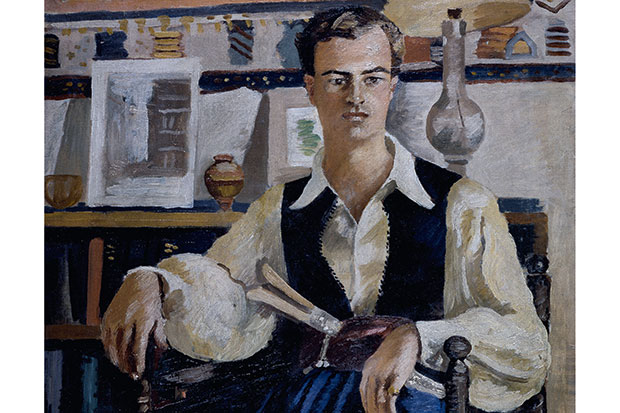
Portrait of a youthful Patrick Leigh Fermor in Cretan costume, by Adrian Daintrey (oil on canvas), Chatsworth House, Derbyshire

Portrait of a youthful Patrick Leigh Fermor in Cretan costume, by Adrian Daintrey (oil on canvas), Chatsworth House, Derbyshire

Generally impecunious, he charmed his way into borrowing houses from friends, from Diana Cooper’s farmhouse in Bognor to Sir Walter and Lady Smart’s manor-house in the Eure. The plan was always to write, the irresistible counterweighing temptation was for amusement and company. In 1954, he was inviting Lawrence Durrell to come and stay with him on Hydra, where he was staying in Niko Ghika’s mansion: ‘It’s the best bit of high-level cadging I’ve done for years, a real haul.’

Philhellene to the core, he was never keen on the Turks. One suspects he had never forgiven them for taking Constantinople (he couldn’t bear to call it Istanbul) in 1453. ‘I admire their undoubted stirring qualities — honesty, courage and so on — but have never managed to like them or be amused by them,’ he wrote to Freya Stark in 1953.

Luigi Barzini once likened reading Norman Lewis’s prose to ‘eating cherries’. Readers of this collection may feel the same thing. The prose is simultaneously poised and effervescent, polymathic in its dazzling range of references but never pompous. The funeral of the Duke of Devonshire in 2003, he wrote to his lifelong friend John Julius Norwich, was ‘a mixture of a vicarage garden party and the Field of the Cloth of Gold’. Hydriot girls in plastic high-heeled shoes and ‘blinding satin dresses of apple green, scarlet, royal blue and petunia… look exactly like boiled sweets’.

Though there are a few bleak times, including a letter to Colin Thubron in which he confesses to feeling ‘rather gloomy’ about not being included in a Times list of the 50 greatest writers since 1945, mostly they are banished by high spirits. He pokes fun at John Betjeman with an excruciating parody. The first verse sets the tone.

Eagle-borne spread of the Authorised Version!
Beadles and bell ropes! Pulpits and pews!
Sandwiches spread for a new excursion
And patum peperium under the yews!

And how about the impromptu limerick about a dubious cleric.

The Archbishop of Spetsai & Hydra
Condemned bestial vice ex-cathedra.
(But he rogered a bay-horse
Outside the pronaos
And a skewbald inside the exedra.)

For all his love of the great and the good, outright wealth on the grandest scale bored him. ‘There is something colossally depressing about contact with the very rich,’ he wrote after rubbing shoulders with Aristotle Onassis and Stavros Niarchos in the Aegean. ‘What I want to know is: why the hell don’t they have more fun with their money?’

Sisman has done a tremendous job selecting and editing this treasure-trove of letters. The guide to the dramatis personae and footnotes double up as a concise version of Debrett’s and pick up on literary references that would escape a lesser writer and reader.

In the last letter here, from 2010, Paddy expresses the by now familiar worry and apprehension about finishing that elusive third volume to complete the trilogy with A Time of Gifts and Between the Woods and the Water, perhaps his most admired titles. He closes with the hope that ‘perhaps it will all be OK in the end’. It was.

Buy Dashing for the Post: The Letters of Patrick Leigh Fermor

Event: The Cretan Legacy

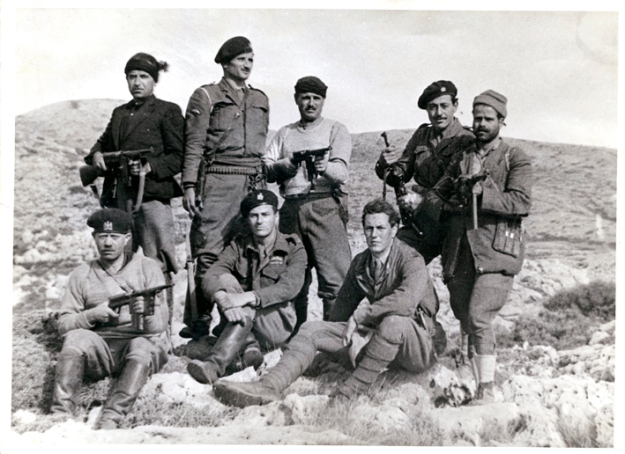
The kidnap gang pose before the action (Courtesy of Estate of William Stanley Moss)

The kidnap gang pose before the action (Courtesy of Estate of William Stanley Moss)

Our good friend, ex-Coldstream Guards officer, sometime Pilgrim, and author of In the Dolphin’s Wake and Like a Tramp, Like a Pilgrim, Harry Bucknall has been busy over the summer arranging a very special event be held at Waterstones Piccadilly on Wednesday 26th October at 7pm. The Cretan Legacy, a panel discussion, will examine the SOE abduction of General Heinrich Kreipe carried out by Paddy Leigh Fermor, Billy Moss and men of the Greek Andantes on Crete in 1943.

The panel, chaired by former Irish Guards Officer and SAS Squadron Commander, James Lowther-Pinkerton, will include Alan Ogden, SOE expert and author of Sons of Odysseus; Chris White, contributing author to Abducting a General; Rick Stroud, author of Kidnap in Crete and Dr Klaus Schmider, military historian, senior lecturer at the Dept of War Studies, RMA Sandhurst and Wehrmacht expert. With audience questions, the panel will discuss whether “this Hussar Stunt” – as Kreipe referred to his capture – was worth the undertaking in both the short and long term and assess its achievement, legacy and place in the annals of military history, endeavour and folklore.

No doubt there will be wine and a chance to chat to friends old and new so do come along if you can to Waterstones Piccadilly on Wednesday 26th October at 7pm. All you have to do is reserve a £5 ticket in store or by emailing Piccadilly@waterstones.com

Roumeli revisited? The Last Transhumance, a documentary film on shepherds


When I heard about this film it immediately made me think of the wonderfully compelling start to Roumeli and the story of the Sarakatsani, transhumance shepherds of Greek origin. This film by Romanian filmmaker and photographer Dragos Lumpan documents some of the last transhumance shepherds in Europe and Turkey. It is a record of something that will possibly completely die out in the next few years. Those Sarakatsani that Paddy mentions have almost all been absorbed into mainstream Greek society and the very first Romanian family that Dragos filmed gave up this lifestyle in 2008. It is interesting to note that despite writing for over forty pages about their origins, way of life, and most famously the details of their wedding ceremony, Roumeli is not directly mentioned in the Wikipedia references or bibliography; something that should perhaps be corrected.

Dragos Lumpan has 100’s of hours of footage from a project that has taken many years to complete, and he is now seeking some additional funding to help with post-producton costs. You may wish to help. Perhaps we can continue Paddy’s work by helping out a little? Dragos explains the importance of the project:
The title of the film wasn’t chosen for the sake of its dramatic sound. These ARE the last transhumances. These people and their way of life are not to be forgotten. Shepherds are strong enough to move mountains, which they actually did. They never back down and they never surrender to any obstacle. This is how they made their way into our history and this is how the history must remember them. The importance of this project goes beyond its artistic value. This film will be the last record of one of the things that shaped our history, out culture and ultimately our humanity.

The shepherds who still walk for hundreds and hundreds of miles in search of available pastures for their animals sleep outside most of the year, usually around their flocks protecting it.  They live in a parallel world not because they reject the modern times but because they embrace tradition. But the ones who still do it are fewer and fewer. The film will show the yearly cycle of life within these communities, showing their direct connection with nature cycle, with the astronomical calendar and with the people around them.

Transhumance represents a cultural heritage that has moulded for centuries the cultural landscape. Nowadays, transhumance is replaced by sedentary forms of sheep breeding. In many regions it is already extinct. The disappearing of transhumance affects not only the spiritual, social and cultural life, but also the mountain regions’ biodiversity.

To assist you can visit the Indiegogo page here. There are many rewards to those that can offer even modest amounts and a second movie trailer.

Dragos also has a website about the project with a number of photographs.

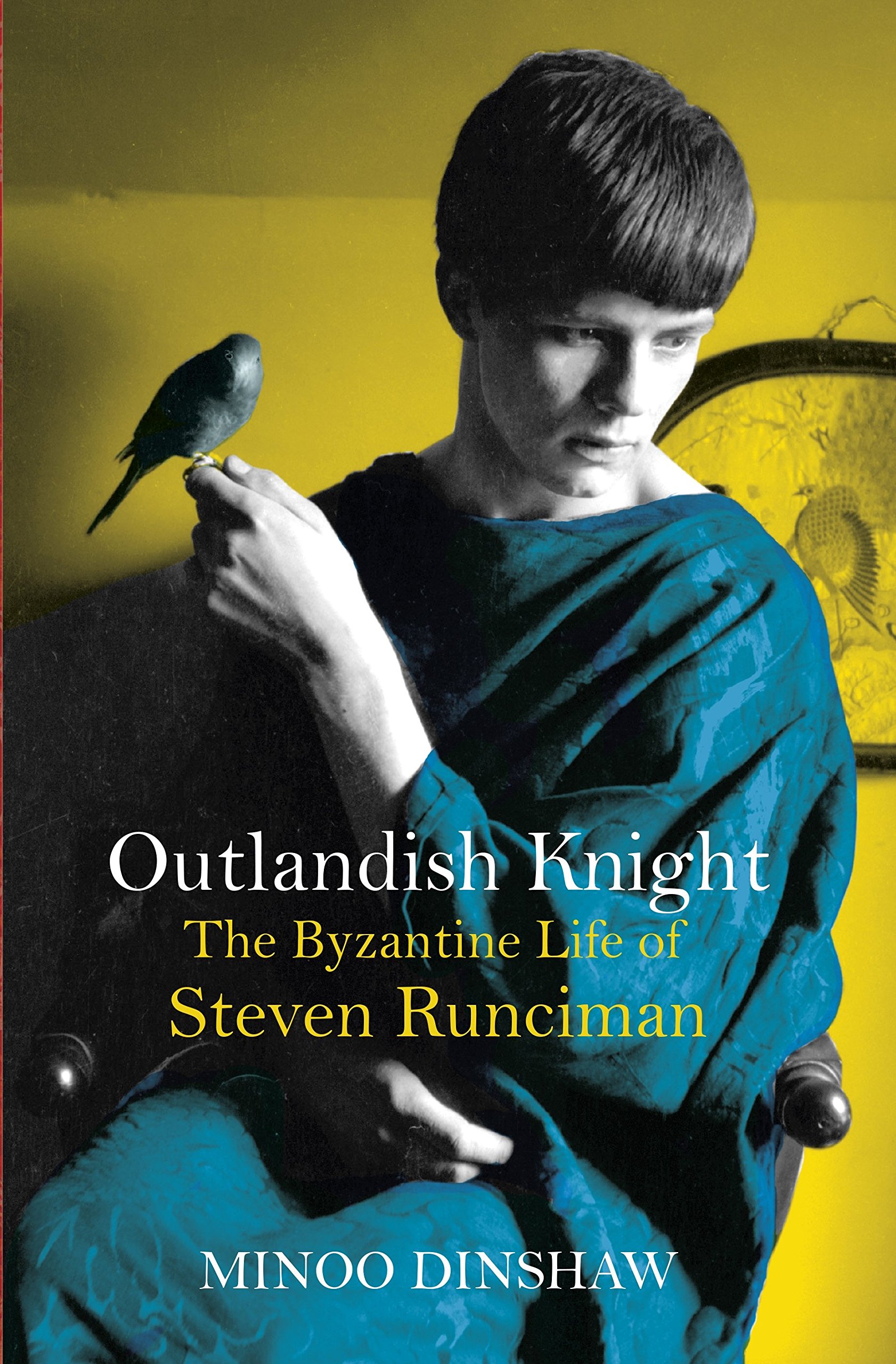
Outlandish Knight: The Byzantine Life of Steven Runciman

birdman-runciman

Birdman – a portrait of Steven Runciman by Cecil Beaton (1920’s)


A new book which may be of interest to some. Runciman and Paddy worked together at the British Council in Athens after the second world war.

By the time he died, in 2000 at the age of 97, Sir Steven Runciman knew that he was a “‘relict of a past age’”, the “embodiment of a…nearly mythical era.” Minoo Dinshaw’s brilliantly entertaining biography of the great historian of Byzantium restores him to public view and provides a vivid picture of many aspects of 20th-century Europe that now seem almost as remote as the crusades and religious schisms he described in his books.

First published in The Economist, 9 September 2016

Runciman was not aristocratic by birth—his grandfather, a shipping magnate, had established the family fortune—but he was immensely grand and well connected. His parents were the first married couple to sit together in the House of Commons. And his father, who was part of Lord Asquith’s cabinet before the first world war, survived the declining fortunes of the Liberal party to lead the doomed mission to Czechoslovakia in 1938. He could claim in 1991 to have known every 20th-century prime minister except Sir Henry Campbell-Bannerman, who died when he was a toddler, and Bonar Law, “‘whom nobody knew’”. Introduced by his governess to French, Latin and Greek by the age of seven, he won scholarships to Eton—in an era of clever men like George Orwell, Cyril Connolly and Anthony Powell—and to Cambridge, where he lived in the “scornfully beautiful Great Court” of Trinity College. Through his friend Dadie Rylands (they were named the Tea Party Cats “for their velvety urbanity”) he met Lytton Strachey, John Maynard Keynes and other members of the Bloomsbury group.
Despite frequent trips to London to socialise with the “bright young people” (and be photographed with his budgerigar by Cecil Beaton), Runciman won the first-class degree and prize fellowship that were to launch his academic career. Of the Cambridge spies recruited in the 1930s, Guy Burgess was a pupil and friend and Anthony Blunt a “supercilious” colleague. Employing political and diplomatic connections to the full, he travelled in style to Romania, Bulgaria and Asia. He established his reputation with histories of the emperor Romanus Lecapenus, the first Bulgarian empire and Byzantium. When he inherited wealth from his grandfather in 1938, he gave up his university fellowship.
Unfit for military service, Runciman spent the war in the Balkans and the Middle East: in Sofia as press attaché to the British Legation, Jerusalem, Cairo and Istanbul. There he narrowly escaped a bomb blast, spent three years as professor of Byzantine history and art, and became an honorary Dervish. Between 1945 and 1947 he led the British Council in Athens. Osbert Lancaster, a witty cartoonist, and Patrick Leigh Fermor, who would become a glamorous writer, were there. Greece was lurching towards civil war and Runciman gained an abiding love for the country, pleasure from upstaging the British ambassador and the position of Astrologer Royal.

On his return to Britain, Runciman split his time between London and the Hebrides, and wrote the books that were to make his name: the ground-breaking three-volume “History of the Crusades”; and a succession of works on Byzantine history that drew on a wide variety of sources, Muslim and Greek, most notably “The Sicilian Vespers” and “The Fall of Constantinople”. Francis Birrell, a Bloomsbury acquaintance, had greeted Runciman’s first book with the acknowledgment that fewer than “half a dozen people were really competent” to review it (and that he was not one of them). There were no such reservations about later volumes, which were lively, authoritative and well received.

Runciman was not to everyone’s taste. He loved to tease, possessed a “queenly persona”, snubbed people who failed to interest him and “had a tongue like a viper if he wanted to use it”. He was a gossip who adored royalty; he entertained the Queen Mother to lunch at the Athenaeum Club every year; four queens are said to have attended his 80th-birthday party.

Despite being able to compose an alphabet of lovers with every letter except Q (“I shall die Qless”), he was to claim that he had “never been in love”. He retained a wide circle of loyal friends and was a popular laird of the Isle of Eigg, not least because he would invite his musical friends to stay and perform at the village hall. (Yehudi Menuhin was “memorably described” by the ferryman as “a handy man for a ceilidh”). He gave his name and time to numerous public bodies and causes, at home and abroad. A final apotheosis, three months before he died, for his service as Grand Orator to the Patriarch of Constantinople, was a descent by helicopter on the Holy Mountain of Athos.

Mr Dinshaw’s choice of subject for his first book is an inspired one. He interweaves the strands of a long and variegated life with sympathy, elegance and awareness of the wider picture. In recognition of Runciman’s fascination with the supernatural, chapters are headed with quotations from Arthur Waite’s “The Key to the Tarot”. He refers frequently to novelists such as Evelyn Waugh and Olivia Manning, authors of trilogies about the war. And his turn of phrase is as arresting as Runciman’s own—one family friend is “unceremonious, crapulous”. Mr Dinshaw has done Runciman proud. To whom will he turn his attention next?

Buy Outlandish Knight: The Byzantine Life of Steven Runciman. Click the link.

Sir Lewis Leigh Fermor’s Diary: Life in Colonial India

Map showing the area of India in which Fermor travelled during his first two field work seasons. [George Philip FRGS (ed.), Philips’ Record Atlas, London: The London Geographical Institute, 1934.]

Map showing the area of India in which Lewis Leigh Fermor travelled during his first two field work seasons. [George Philip FRGS (ed.), Philips’ Record Atlas, London: The London Geographical Institute, 1934.]

For those researching Paddy’s life, the Geological Society archives hold letters, papers and diaries of his eminent geologist father, Sir Lewis Leigh Fermor, and his experiences in India.

An introduction to the online element of his papers may be found here, and I quote …

The name Fermor may today be best known within the Society in association with the Fermor Fund, the bequest made by Sir Lewis Leigh Fermor’s second wife after her death to support research into her late husband’s areas of interest, or the Fermor Meeting. Outside geological circles it is more likely to be connected to Sir Patrick Leigh Fermor, Lewis Leigh’s celebrated travel writer son. Patrick could be said to have had adventure in his blood, with his father Lewis heading off to India at the age of 22, and being sent off on his first six month field work expedition less than a week later.

After applying for a job with the Geological Survey of India, Lewis Leigh Fermor (1880-1954) departed for Calcutta (Kolkata) in 1902. In 1909, after discovering six manganese minerals, his key report on the manganese deposits of the country was published. During WW1 he assisted the Railway Board and the Indian Munitions Board, for which he received an OBE in 1919. He led the surveying of the Archaean rocks of Madhya Pradesh both before and after the First World War. Although he officially became director of the Survey in 1932, he had previously acted as such for several years in the 1920s and from 1930 onwards. He retired from the Survey in 1935, but continued to live in India until 1939 as a consulting geologist, before returning to Britain.

The Society’s Archives hold a small number of notebooks and diaries formerly belonging to Fermor, in addition to personal papers such as his first Indian employment contract and a letter notifying him of a scholarship. His diaries are particularly interesting for the intriguing insight they give the reader into the life of both an early twentieth century geologist, and an English civil servant in British India.

Extracts from the diaries may be found online here.

Following Michalis in Mycenae

13694300_10105313766032178_664315251_oSoon I will be travelling to the Mani and will make my first visit to Paddy’s house, something that is rather belated, but an experience that I am looking forward too very much. My friend Ryan Eyre from Seattle has been on a long trip to Europe this summer. Not long after he stayed with me here in Winchester, he travelled to Greece and found himself in historic Mycenae. What he discovered was a virtually moribund tourist industry, and an interesting story about Patrick Leigh Fermor.

By Ryan Eyre

On a recent visit to Mycenae, the Oreia Eleni Hotel seemed the obvious place to stay. The Oreia Eleni, also known as La Belle Helene and the House of Schliemann, is a simple hotel but rich with historical associations. Heinrich Schliemann lived in the building during his excavation work at Mycenae in the 1870s and a generation or more later it was converted into a hotel. Agamemnon Dassis is the current proprietor and is the third-generation of his family to run it. He lives in a house next door with his wife and young daughter. A youthful looking man in his late 40s, Agamemnon is an energetic and quite attentive host.

Mycenae is one of the most visited archaeological sites in Greece but Greece’s economic woes have definitely affected business in the modern village half a mile below the citadel. The number of tourists has declined in recent years and most people who currently visit Mycenae do so as a day-trip and pass through the village without stopping. The owners of the almost empty shops, restaurants and hotels in Mycenae sit rather forlornly, waiting for customers who largely never appear.

I was the only guest at the Oraia Eleni during my two-night stay and Agamemnon told me that I was in fact the first guest they had had in three weeks. This was in July. As a guest, I benefited from being able to talk to Agamemnon at length.

The second day of my stay he showed me the small museum that is on the ground floor of the building. Agamemnon’s father photocopied famous people’s signatures from the guestbook and they are displayed in note-card size form behind glass. He pointed out the signatures of Agatha Christie (I was staying in the same room she supposedly did), Virginia Woolf, Stephen Spender, Carl Jung, Jean-Paul Sartre, Alec Guinness, Charlton Heston and J.K. Rowling (among others) and provided some anecdotal information about each visit. I was interested to note that Albert Speer, Heinrich Himmler, Joseph Goebbels and Herman Goering all passed through in the 1930s (it was unclear whether they visited separately or together).

Up to that point Patrick Leigh Fermor’s association with the hotel hadn’t crossed my mind. Thinking about it for a moment it seemed obvious he must have stayed here. I asked Agamemnon whether Leigh Fermor’s signature could be found anywhere on the display. “Oh, yes, I forgot to mention him”, Agamemnon said before pointing out PLF’s name scrawled in his own and dated from 1960.

“He came here many times over the years. He came in the 1950s, and in the 1960s and many times afterwards I remember when I was a young man he telephoned and asked me whether I was George. I said no, I am his son. Who is this? This was in Greek but I could tell from the accent that it was a foreigner. He said, tell George that Michalis from Kardamyli called. I was a little confused. Later I met him. As I said, he came here a number of times. I also visited him in Kardamyli. One time when his wife was in England he came and stayed for a week. He was a great man, a very great man. I last saw him in 1998. When I came back here in 2007 after some years living abroad I did not contact him before he died. I regret this.”

I didn’t immediately tell Agamemnon my own story about meeting Patrick Leigh Fermor in Kardamyli in 2009. That evening at the dinner table and after drinking an ouzo and some wine, I asked him to sit with me because I wanted to tell him something. I began to recount my last trip to Greece when I had gone to the Mani to try to meet the author, who was then 94 years old.

“You met him in the end?” Agamemnon asked before I could go on much further. I told him I had written PLF a brief letter that I had dropped off at his house and ended up being invited to lunch the next day, where I spent several hours drinking, eating and talking with the great man.

I acknowledged I was extremely lucky. Agamemnon agreed and opened up more. He told me about how Paddy would come to Mycenae and disappear for the entire day, only returning at night. Paddy didn’t tell people he was a famous writer; Agamemnon only discovered this on his own.

Paddy was pretty self-deprecating and didn’t take himself so seriously. He was happy to talk to all sorts of people and showed genuine curiosity in their lives. “He had this constant curiosity about people and the world. That’s why he lived so long,” Agamemnon remarked.

He told me about various friends of Paddy’s who have stayed at the Oraia Eleni and that the Patrick Leigh Fermor Society had also passed through in the last two years.

Moving into more salacious territory, he then told me that he was going to tell me something about Paddy that most people haven’t heard. He didn’t have the heart to tell the members of the PLF Society when they visited. Agamemnon asked me to keep it off the record so I can’t fully disclose what I heard. What I will say is that it was an anecdote that I have very reason to believe is true and confirms that well into his 70s Paddy was sexually active with women who were not his wife and were considerably younger than himself. Agamemnon and I agreed that Paddy’s mixture of looks, charm and erudition was remarkable. “He really had the mentality of a teenager,” Agamemnon added.

Drinking wine and hearing these stories as the only guest in an atmospheric place gave me the thrilling feeling of luck and leventia, or feeling of lightness, that Paddy would refer to in connection with Greece. It was an evening that reminded me why I travel.

Travels in Transylvania: The Greater Tarnova Valley

The UNESCO World Heritage fortified church in Viscri

The UNESCO World Heritage fortified church in Viscri

Whenever I mention Transylvania to friends and acquaintances most express a strong desire to visit this land of mystery. Few however, can place Transylvania on a map and even less ever actually travel there. Readers of the Paddy blog will know that PLF passed through in 1934 and returned during communist times. I have had the privilege of working and travelling there, and it is through this association that I met Lucy Abel Smith who is the organiser of the Transylvanian Book Festival 2016 and author of this new Blue Guide.

If you are thinking of visiting Romania with all its cultural, historical, and natural riches, it may be difficult to decide where to start for it is a large country with a relatively small population. Transylvania itself is an area three times the size of Wales with diversity in all corners. The recently published Blue Guide Travels in Transylvania: The Greater Tarnova Valley helps by picking one area and offers a detailed insight from someone who has been living and travelling since the time of Ceausescu, describing a journey through this one part of Transylvania, the fabled “Saxon Lands” of the south-east that Lucy knows so well. It essentially takes as its theme a 120km long journey along the course of the Tarnova river from Odurheiu Secuiesc in the Gurhui mountains, westwards along the Tarnova valley via Ruritanian cities like the beautiful Sighisoara and ends in Blaj.

Lucy herself describes the area thus:

“… there is still to be seen the stunning landscape, ancient farming methods and extraordinary botanical variety. But there is so much more. We travel through a fraction of ancient Hungary to encounter a vast array of the peoples of Central Europe, all up until recently living together, yet in distinct communities with different customs, architecture, costumes and languages. We find the Vlachs and the Szeklers, the Hungarians, the Saxons, and the the Jews, the Gypsies and others, such as the Armenians, who settled here to take advantage of this tolerant and diverse land in the very heart of Europe.”

The landscape that these peoples crafted and the architecture that they developed is both beautiful and unique. Accommodation is plentiful and will suit all budgets, with food on the whole being local and organic in many cases. It is easily accessible with flights from Vienna, London, and Munich amongst others, direct to Cluj, Turgu Mures, Bucharest, and soon Brasov. Above all the people are welcoming and it is safe. If you take Lucy’s excellent guide you won’t go far wrong. Your journey can be extended north to the baroque city of Cluj, west to Sibiu (a Saxon city and European City of Culture), or south to the large Saxon city of Brasov which is not far from the so-called Dracula’s castle (the violent warlord Vlad Dracul did live there) in Bran.

Lucy Abel Smith

Lucy Abel Smith

Lucy writes from a very personal perspective and is an engaging writer with an informative but never patronising style. She is an art historian and her explanations of church art – frescoes, altar-pieces and statues – are thorough but never boring. The guide is packed full of useful information, including accommodation details, and background history. There are some useful maps and illustrations. It could do with some colour photographs but other than this, the Blue Guide Travels in Transylvania: The Greater Tarnova Valley would be an invaluable aid for the independent traveller.

Malancrav, near Sighisoara, Romania

Malancrav, near Sighisoara, Romania

If you are thinking of an alternative holiday in Romania you could do worse than combine a tour of the Tarnova valley with a few days at the second Transylvanian Book Festival which runs from 8th to 11th September. Full details can be found on the Festival website.

For those who have any questions about travel in Transylvania I would be more than happy to attempt to answer them. See the About and Contact page for details of how to get in touch.

Stavros Niarchos Foundation to Fully Repair and Restore Patrick Leigh Fermor’s House

Patrick Leigh Fermor working at his home studio on 3 October 2004, then aged 89. Kardamyli. by Sean Deany Copyright 2012

Patrick Leigh Fermor working at his home studio on 3 October 2004, then aged 89. Kardamyli. by Sean Deany Copyright 2012

At last some very good news about the house at Kardamyli. The Benaki museum has made the following announcement in a press release as follows.

The Stavros Niarchos Foundation has approved a grant to the Benaki Museum to fully cover the repair and restoration works as well as the cost of the necessary equipment for the Patrick and Joan Leigh Fermor House in Kardamyli. This unique property will soon start operating as a centre for hosting notable figures from the intellectual and artistic worlds as well as a centre for educational activities in collaboration with Institutions in Greece and abroad.

The donation of Patrick and Joan Leigh Fermor

For many years Patrick and his wife Joan Leigh Fermor lived in Kardamyli in Messenian Mani, in the house which was designed by the architect Nikos Hadjimichalis in close collaboration with the Leigh Fermors.

In 1996, Patrick and Joan Leigh Fermor bequeathed their home in Kardamyli to the Benaki Museum, while still in life, with the intention that ownership of the house would be transferred to the Museum after their deaths. The option of donating the property to the Benaki Museum was suggested by their close friend Tzannis Tzannetakis. The bequest was accepted unreservedly by the Benaki Museum, particularly given Leigh Fermor’s close relationship with the Museum’s founder Antonis Benakis and his daughter Irini Kalliga.

According to the donation contract, the property must be used to foster the success of the Benaki Museum’s work, based on the decisions of its Board of Trustees. In addition, it may be used to host researchers seeking a quiet and welcoming place to work, while there is also provision for the option of renting the property for three months every year in order to secure its operating costs. Taking into consideration the donor’s personality and standing, the Museum added certain categories of guests such as writers, poets, artists and so on.

The Museum acquired full ownership of the property after the donor’s death, in the autumn of 2011. After receiving the gift, a study on its future use was initiated, and in parallel, a preliminary study on the repair and restoration of the property’s buildings was undertaken in collaboration with architects Andreas Kourkoulas and Maria Kokkinou and a budget was also drafted for the project. The Stavros Niarchos Foundation, in response to the Museum’s initial request for funding for the repairs and the acquis ition of the neces s ary equipment for the operation of the hous e, commissioned—and funded—a feasibility study, which was conducted by AEA Consulting, a firm specializing in the organization and management of cultural institutions. This study, which was based on the Benaki Museum’s proposal for the future operation of the house, led to a number of changes, mainly in regard to the financial planning respecting the sustainability of the project.

The Stavros Niarchos Foundation announced the approval of the Benaki Museum’s request to fully cover the repair works and the restoration of the Patrick and Joan Leigh Fermor House as well as its equipment, so that it can start operating as soon as possible.

The Benaki Museum’s Board of Trustees would like to once again thank the Stavros Niarchos Foundation for its continued and very generous support, and the inclusion of this project in its arts and culture grants. The unique location of the Leigh Fermor House, its distinctive architectural form and the luminance bestowed upon it by the author himself, in conjunction with the Benaki Museum’s supervision and the support of the Stavros Niarchos Foundation, guarantee the creation of an exceptional centre which will gain a high place among the many similar centers in Europe and the United States.

The property

The property is located in the Kalamitsi area on the outskirts of Kardamyli, in Messenia, and has a total area of about nine stremmata, a little over two acres. It is, by general consensus, one of the most beautiful properties in Greece. Its direct contact with the sea—narrow stone steps lead to a small pebble beach just below the estate—the low, discreet, stone buildings and the Mediterranean garden that goes down to the water, comprise an ideal environment for focus and the creative process.

In short, a sojourn in this place is a great gift that Greece can offer to notable figures from the intellectual and artistic worlds.

The vision

The creation of a centre in Greece (working title: The Patrick and Joan Leigh Fermor Centre), the operation of which, will commence in stages and planning of the following years will be based on evaluation of its activity.
The operations of the Patrick and Joan Leigh Fermor Centre will include:

– hosting of young writers and scholars for work and research purposes,
organization of higher-educational activities in collaboration with Universities and Institutions in Greece and abroad,
– honorary hosting of notable representatives from the fields of literature, the arts and other fields,
– organization of educational and cultural events for the general public and residents of Kardamyli,
– scheduled tours of the property, focusing on the donors, the history of the house and its use by the Benaki Museum,
– short term honorary hosting of benefactors and major supporters of the Benaki Museum.

As per a decision by the Museum’s Board of Trustees an international committee is to be set up, which will form and advise on the operation program of the Centre. The advisory committee will be unpaid, it will monitor the project underway and it will make recommendations regarding the selection of guests.

The Benaki Museum’s legal, financial and other services (including departments such as Educational Programs, Sponsorship and European Programs, Public Relations and Communication, and Conservation among others) will support and assist the project taking place at the Leigh Fermor House.

The Benaki Museum is aiming for the creation of an endowment based on third-party donations, which will be able to cover operating expenditure of the Centre and allow the proposed educational activities to evolve and grow.

Brief history – Up to date
– the archival material found in the house has been delivered to the executors of the will, in order for it to be handed over to the National Archives of the United Kingdom, as stipulated in the will,
– the staff selected by Leigh Fermor himself have been retained to ensure the ongoing care of the buildings and surrounding area are on a daily basis,
– the property has been insured,
– cataloguing of the library has progressed,
– detailed photography of the house and the recording of the household effects have been carried out,

– artworks and valuable books have been transferred to the facilities at the Benaki Museum in Athens for conservation and safekeeping, until completion of the requisite repairs,
– detailed mapping of the property has been completed as has the architectural and electromechanical study for repair of the buildings and maintenance of the gardens, with the principle of maintaining all those elements that render the property so unique (study team: Maria Kokkinou-Andreas Kourkoulas, Pantelis Argyros, Dimitris Pastras, Helli Pangalou),
– the process of legalizing buildings on the estate has been completed,
– the feasibility study by AEA Consulting on the future use, operation and viability of the house has been completed with funding from the Stavros Niarchos Foundation,
– two successive disinsectisations have been carried out for the protection of the house and
household effects, and in particular the wooden elements of the house such as the ceilings of the rooms, furniture, and so on,
– one bank account has been set up in Greece and one especially activated in the United Kingdom, in order to facilitate donations,
– discussions with Greek and foreign educational institutions regarding collaboration in the future operation of the Patrick and Joan Leigh Fermor Centre have been initiated,
– an implementation study for the repair work is in progress,
– a book in honor of Patrick Leigh Fermor, dedicated to his life and work, is in preparation and will be completed in 2016, and another publication about the house will follow,
– finally, a short—for the time being—presentation of the Leigh Fermor House has been uploaded onto the Benaki Museum website. A separate website for the house is currently in preparation, where detailed information about the project’s progress, the operation of the house, and scheduled events and guided tours will be posted. These presentations will also provide all the necessary details for donations to the endowment for the future operation of the Centre,
– from the day the Leigh Fermor residence came into the ownership of the Benaki Museum, the Museum has organized and/or coordinated a particularly large number of visits. During many of these visits, individuals working with the Museum have informed the guests about the house’s prospects and future programs. Revenue from visitor tickets is used exclusively for the needs of the house.

From now on:

– The commencement of the repair work is entirely contingent on the issue of the permit. It is anticipated that work will be completed in about 12 to 18 months from its commencement. Until such time as the preparation of the house for the repair work begins, the organized visits, upon arrangement with the Museum, will continue. (www.benaki.gr)
– The Benaki Museum is in the process of creating an endowment for the collection of donations, which will ensure that the operational expenditure of the Centre is covered and that the proposed educational activities will continue to evolve and grow.
– With the dual objective of informing the public of developments and the collection of donations, the Benaki Museum is planning a series of detailed presentations on the progress of the project and its future operation.
– More specifically, it is organizing a detailed presentation in early November 2016 in London, where there is a keen, ongoing interest in the author and the Kardamyli House, while in the interim, similar presentations are planned for Athens and Kardamyli.

For information about the Leigh Fermor House please contact Irini Geroulanou or Myrto Kaouki at the Benaki Museum, on the following numbers: 210 3671010 and 210 3671090, or by email: plfproject@benaki.gr

Download the full press release here.

Who was Stavros Niarchos?

What is the Stavros Niarchos Foundation?

Transylvanian Saxon and polymath, Rudolf Fischer – obituary

Rudolf Fischer

Rudolf Fischer

Rudolf Fischer, who has died aged 92, was a historian, linguist and polymath who advised and guided foreign writers through the minutiae of eastern European history, language, etymology and ethnography; the foremost of these, Patrick Leigh Fermor, acknowledged in 1986 that his debt to Fischer was “beyond reckoning”.

First published in the Telegraph 12 June 2016.

Fischer’s friendship with Leigh Fermor began after Fischer wrote a letter to him full of praise for A Time of Gifts (1972), the first volume of Leigh Fermor’s travel trilogy, with, attached to it, a long list of all the inaccuracies, misspellings and contradictions. Months passed without a response, and Fischer feared that his constructive criticism had gone down badly. In fact, Leigh Fermor was delighted, and wrote, eventually, asking if Fischer could bear to advise on his next volume. Gradually drafts of Between the Woods and the Water starting appearing in parcels from the Peloponnese which Fischer pored over meticulously.

There resulted a correspondence which lasted for decades, thrashing out the finer points of Transylvanian history, language, costume, traditions and legends. Fischer also read and made corrections to Leigh Fermor’s final, posthumous, volume of the trilogy, The Broken Road, published in 2013, and edited by Artemis Cooper and Colin Thubron.

Among others he also helped Bruce Chatwin, Robert Kaplan (who devoted an entire chapter to him in Eastward to Tartary), Dervla Murphy, Colin Thubron, Robin Hanbury-Tennison, Adam Sisman and William Blacker, many of whom made the pilgrimage to his small book-lined flat in Budapest.

Rudolf Fischer was born on September 17 1923 in the medieval city of Brasov, Kronstadt, in the Transylvania region of Romania. His father, Josef Fischer, was a Hungarian Jew, a descendant of the Hatam Sofer, the 19th-century leader of the Haredic movement which resisted modernisation and mysticism. His mother, Bertha Meldt, was a Saxon Lutheran. Rudolf attended the local Saxon school. But talk of war prompted his father to migrate with him to Australia, leaving his wife and younger son behind, for fear that the older one, Rudolf, would be enlisted.

The next few years were spent helping his father on a chicken farm on the outskirts of Sydney and serving in the alien corps of the Australian army in New Guinea, before attending Sydney University, where he met his first wife, Janet Gleeson-White.

At university Fischer studied under John Anderson, a Scottish philosopher, whose acolytes formed the libertarian movement known as the Sydney Push, one of whose principles was that no statement or assumption was to remain unchallenged. This, as one writer on Australian philosophy, James Franklin, later observed, was all very well but “hard on the wives and children”.

In the early 1950s Fischer moved to Britain, earning a living as a teacher. He felt that cultural life of London compensated for the poor living conditions in an attic flat; it was a view not shared by his wife, who was struggling with small children. So in 1957 the family travelled back to Australia. The marriage broke down, however, and Fischer returned alone to Europe in 1962 where, on a visit to Romania, he met his second wife, Dagmar von Melchner, a distant cousin.

After living in Greece for eight months, the couple moved to London, where, in 1968, Fischer became English Language editor for the New Hungarian Quarterly – an achievement given that his first language was German – and so they moved to Budapest, where they remained for 48 years. There, with Dagmar, he brought up his second family, deepened his knowledge of Central Europe and became a guide, critic and friend to writers of all nationalities who passed through Budapest.

Fischer’s library was packed with obscure 19th-century reference books on the Balkans and the Austro-Hungarian Empire, as well as a large map from 1853 of Europäischen Turkei – more accurate, he assured everyone, than the modern ones. Rudolf Fischer was a link to the pre-war Saxon world of Transylvania, and with his fine moustache, upright and dignified manner, collection of exotic Eastern European hats and excellent grasp of all the relevant languages, he more than fitted the part.

He was buried in Brasov in the family grave in a small Saxon Lutheran cemetery at the end of the street on which he had been born.

He is survived by his second wife Dagmar and his five daughters.

Rudolf Fischer, born September 17 1923, died February 18 2016

The Sabotage Diaries – video by author Katherine Barnes


The Sabotage Diaries from Katherine Barnes on Vimeo.

I first wrote about this excellent book in March. Author Katherine Barnes has now produced a video which is worth a watch, even if only to view some of the extraordinary photographs showing SOE operations in mainland Greece.

The Sabotage Diaries is the thrilling story of Allied engineer Tom Barnes, who was parachuted behind enemy lines in Greece In 1942 with eleven others to sabotage the railway line taking supplies to Rommel in North Africa. The target chosen was the Gorgopotamos bridge. Tom led the demolition party to lay the explosives while fighting raged between the Italian garrison and a combined force of Greek resistance fighters and Tom’s fellow-soldiers. A great story of courage and endurance.

Buy The Sabotage Diaries