Yearly Archives: 2011

Paddy visits the wonder that is Ohrid

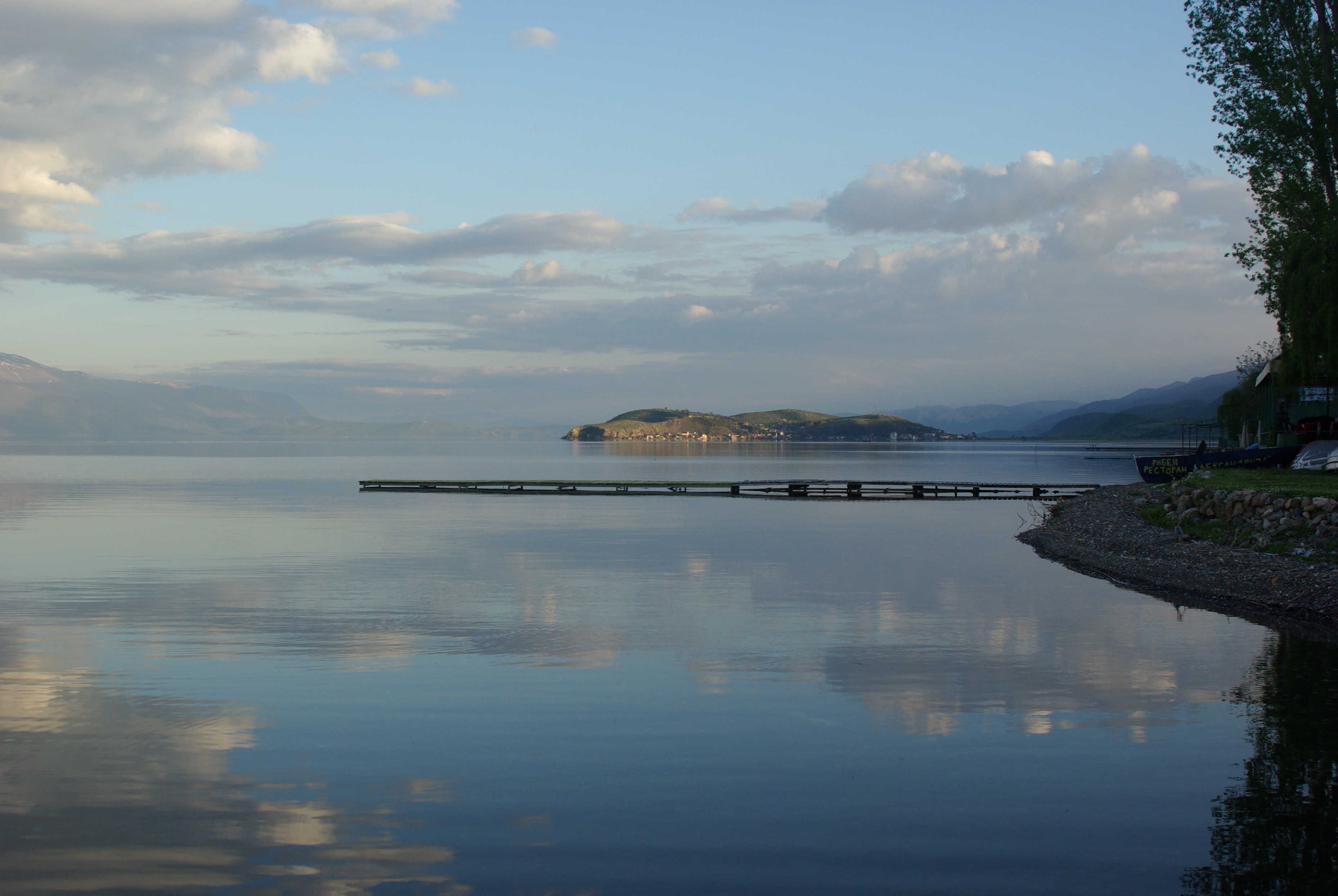
I suppose it is a good thing to aim to be objective in life. It shows wisdom and maturity, and an ability to balance all the arguments. For me however, all objectivity vanishes when I think of Ohrid! The setting of this beautiful city on the edge of the vast and wondrous eponymous lake is simply stunning.

Although he does not state it specifically, I believe Paddy visited Ohrid and its environs when on a motor tour from France to Greece with Joan in her Sunbeam Rapier in 1960. He tells the story to Debo in a letter dated 23/24 October 1960 (see page 67 of In Tearing Haste). Paddy describes visiting “Serbian Macedonia and wonderful lakes with frescoed Byzantine monasteries on the shores … (which) held us up for days.” There is little doubt in my mind that he is referring to Ohrid, and having been there myself I can understand why; it is a wonder that he ever left!

It is said that Ohrid, Macedonia, once had 365 churches although there are now only around twenty-five which remain open. Its name means City of Light and it has over 220 days of sunshine each year. The town creeps up the hillside surrounding a central esplanade and harbour dominated by the statue of St Clement, who was the student of Saint Cyril and his brother Methodius. They were the authors of the Cyrillic alphabet (approx 864 AD) which was created by the Byzantines to bring the Slavic nations into the Orthodox Church rather than let them fall under the influence of Rome during the early days of the schism between the two churches.

Ohrid is full of Byzantine history. The influence of the Empire can be seen everywhere from the statues to the fortress but principally in the churches and the ancient Basilica. The original church of St Clement was destroyed by the Ottomans who built a mosque on the site which has a clear view of the Lake. Clement’s relics were secretly moved by the Christian citizens of Ohrid to the smaller and less important Church of St Mary Psychosostria. Over time this church became known as the Church of St Clement, but the confusion is now ended as in 2000 the Macedonian authorities rebuilt the Church of St Clement on the original site. His relics have been moved back there to rest in peace. The site includes the remains of original Baptistry, and there are many mosaics all in very good condition.

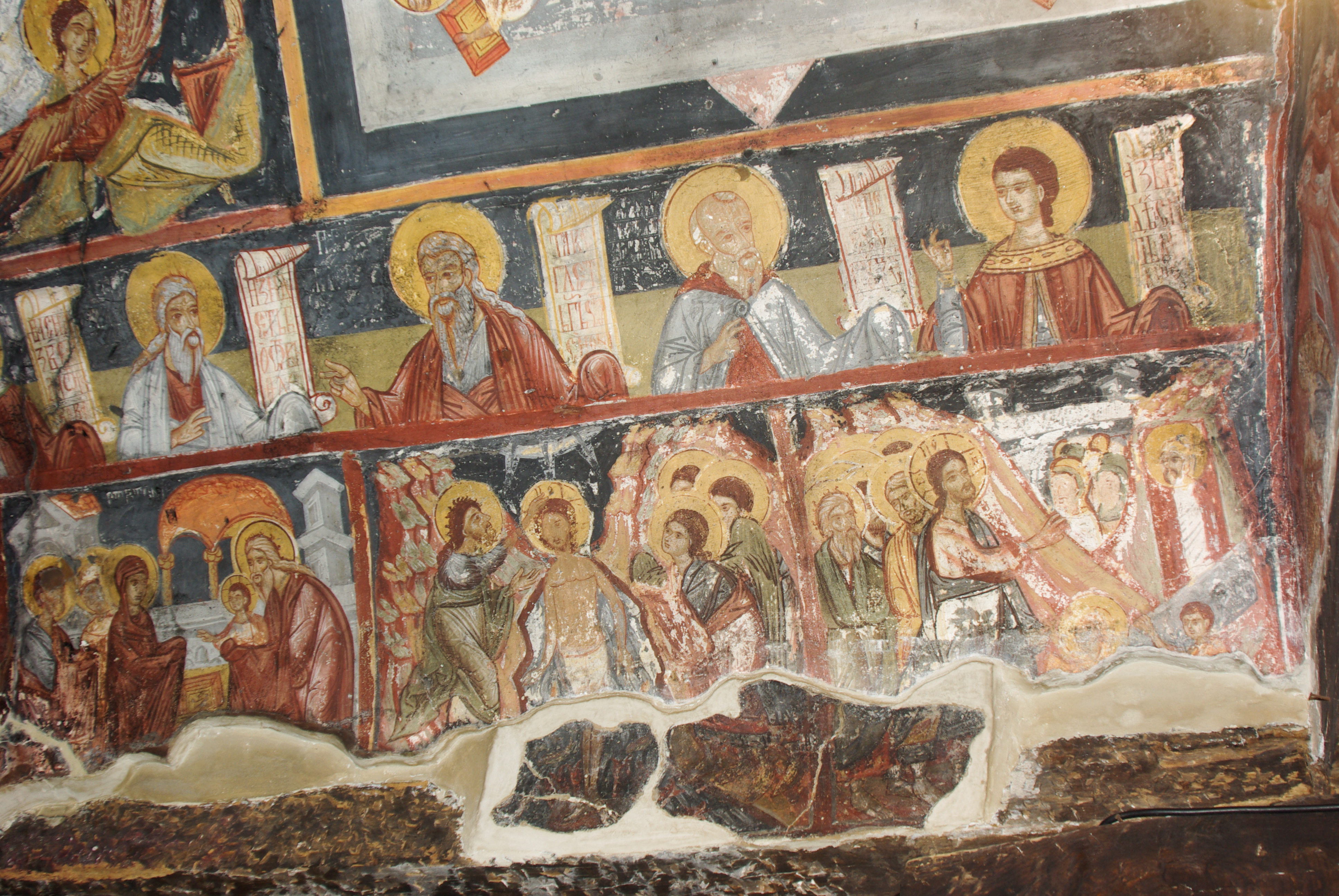
The Church of St Mary is a wonder. Built in 1295 by the deputy Progon Zgur who was a relative of the Emperor Andronicus II Paleologus, it has twenty-nine scenes from the life of the Virgin around the walls. These frescoes are in generally excellent condition with little of the wear or defacement one often finds elsewhere. The reason for this is that most of the frescoes were obliterated by soot from candles. They were cleaned and restored only since 1960. The have to be seen to be understood. The ‘keeper’ of the frescoes is an amazing Macedonian lady with long black hair, with braided pigtails; the church and the frescoes are her passion, probably the centre of her life. She has produced a long book and the frescoes were the subject of her PhD. She says that the fresco of the Virgin that dominates the Apse is painted from lapis lazuli originating in Afghanistan. That one fresco would have cost something in the order of one kilogramme of gold (at today’s prices that is roughly $56,000).

Opposite the Church is the national Icon museum of Macedonia with over forty masterpieces. All this within just a few yards of each other!

If you ever get the chance to visit you will find all this and more. You will also meet friendly people, find good quality low-cost accommodation, and a wealth of Byzantine architecture and art. This CNN video shows many of the places I have written about and I know you will like it. If you do ever visit Ohrid, please contact my friend Katerina Vasileska who runs a tourist business in Ohrid called Lost in Ohrid. She will be happy to arrange good accommodation, local tours, and generally be of assistance during your visit.

Finally, don’t forget that for the intrepid there is an opportunity to walk through Albania to Ohrid in May of 2011 with the Via Egnatia Foundation. See my recent post Walking back to Byzantium along the Via Egnatia where you can find out more and how to register your interest.

Click to play … there is a 30 second ad before the Ohrid movie starts.

Darkness is my closest friend

Kaiaphas was the Chief Priest in Jerusalem around AD 30. Beside his house which faced the Mount of Olives, was a long flight of steps than ran from Mount Zion to the base of the Kidron Valley.

It was down these steps that Christ would have walked after the Last Supper to the Garden of Gethsemane to begin his vigil and await his inquisitors. When he was arrested he would have been forcibly taken back up these steps to the house of Kaiaphas to face his interrogation.

The site of the house has been accurately identified and on the lower levels there are places that served effectively as dungeons. One of them was a cell that was a pit from which there was no escape. Whilst this was only rediscovered relatively recently, it was known in Byzantine times as we find numerous Byzantine crosses carved into the limestone as marks of reverence.

As I stood in that pit today, looking up at the circular exit in the roof which was the only way in and out, I thought of the mixed emotions running through Christ’s mind, who knew his own fate, as I listened to Psalm 88, the psalm of prisoners:

Lord, you are the God who saves me;

day and night I cry out to you.

May my prayer come before you;

turn your ear to my cry.

I am overwhelmed with troubles

and my life draws near to death.

I am counted among those who go down to the pit;

I am like one without strength.

I am set apart with the dead,

like the slain who lie in the grave,

whom you remember no more,

who are cut off from your care.

You have put me in the lowest pit,

in the darkest depths.

Your wrath lies heavily on me;

you have overwhelmed me with all your waves.

You have taken from me my closest friends

and have made me repulsive to them.

I am confined and cannot escape;

my eyes are dim with grief.

I call to you, Lord, every day;

I spread out my hands to you.

Do you show your wonders to the dead?

Do their spirits rise up and praise you?

Is your love declared in the grave,

your faithfulness in Destruction?

Are your wonders known in the place of darkness,

or your righteous deeds in the land of oblivion?

But I cry to you for help, Lord;

in the morning my prayer comes before you.

Why, Lord, do you reject me

and hide your face from me?

From my youth I have suffered and been close to death

I have borne your terrors and am in despair.

Your wrath has swept over me

your terrors have destroyed me.

All day long they surround me like a flood;

they have completely engulfed me.

You have taken from me friend and neighbour —

darkness is my closest friend.

Masada shall never fall again

Despite taking water from the Jordan to irrigate many thousands of hectares of land, much of southern Israel remains stony desert with just the occasional acacia tree clinging to life. To the east of the rift valley are the mountains of Moab in Jordan which was as far as Moses was permitted to come as he could not enter the Promised Land. Between those hills and those on the Israeli side is the still vast Dead Sea.

I was quite amazed by its size, even though it is diminishing rapidly by approximately 80 cm in depth per year. It is said that it will disappear completely in around ten years’ time, and already I could see large lagoons forming as the bed is exposed in certain areas.

The remains of the ramp built by the Romans to assault the fortress of Masada

As we headed south, out of the Israeli mountains the fortress of Masada rose sharply out of the rocky desert. We knew what it was without being told by our guide as it stands separate, proudly apart from the surrounding hills having been separated by an earthquake many millennia ago.

I took the option of walking up the Snake Path to the summit, the route that King Herod the Great would have taken to his palace on the northern edge. This is the route the Jewish Zealots would have used as they tried to hide away from the Romans of Vespasian and Titus during their brutal suppression of the Jewish revolt of the AD 60’s.

The ramp the Romans built from the western side to gain a position to assault the Jewish is still in place although much eroded. After all it is 2,000 years old. Amazingly you can still see many of the Legion camps and the siege wall the Romans would have built to contain the besieged Jews.

There are many doubts about Josephus Flavius’ account of the taking of Masada, and I wondered if he embellished the story in favour of the Jews, particularly the story of the mass suicide (certain archaeological evidence does cast some doubt on this). Josephus was a leader of the resistance to the Romans but when captured had gone over to them, and gained favour with Vespasian. Did he feel a pang of guilt as he realized that the taking of Masada meant the end of the resistance of his people? Did he try to make some amends by slanting some aspects of the story in favour of the Jews? We shall never know but the story of Masada is etched on the hearts of all Israelis, and to this day the Oath of their soldiers includes the words “Masada shall never fall again”.

Happy 96th Birthday Sir Patrick Leigh Fermor!

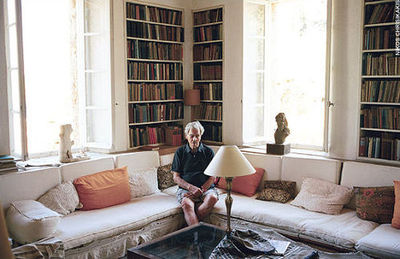
Paddy at home in the Mani

As the young Paddy Leigh Fermor embarked upon his European Odyssey in December 1933, would he have ever imagined that he would still be writing the story of that first adventure seventy eight years later? Today we all celebrate Paddy’s 96th birthday, and I would like to send Paddy all best wishes on behalf of all those who have subscribed to the blog and those that have made over 50,000 visits since we opened for business less than 12 months ago.

The last I heard from people who have some contact with Paddy he was well and even taking the odd swim. Let us also hope that he is writing, and has time to celebrate this birthday with some friends.

The Marques de Tamaron who is a friend of Paddy’s and was the Spanish Ambassador in London, wrote this in a review for the Spectator in 2003:

“Some years ago, a group of friends gathered to celebrate Paddy’s birthday. John Julius Norwich wrote and sang a new version of ‘You’re the Top’ in his honour:

You’re the million volts of the thunderbolts of Zeus,

You’re Leda’s swan, you’re the square upon the hypotenuse! …

And you’ll fill and thrill our hearts until we drop:

So from Bath to Burma, Fermor, you’re the top!”

I am sure that we all agree. Once more, a very Happy Birthday Paddy.

In Bethlehem it is Christmas every day

On my Patrick Leigh Fermor blog we have often discussed the objective of walking in Paddy’s footsteps. Perhaps to achieve some physical challenge, but there is undoubtedly more to it: a spiritual connection in time and space, and perhaps a sympathetic experience with those of our hero in the same place, even after the passage of time.

A pilgrimage to the Holy Land entails effectively walking in the footsteps of Jesus Christ. I am sure there could be some debate about various aspects, but Israel and Jerusalem (in ancient history) is a small place, and I have little doubt that most of the places I have visited so far are the places that Christ himself and his disciples lived in, where they studied, and where they experienced his betrayal.

As one looks from the Garden of Gethsemane towards the Golden Gate in the well preserved walls of Jerusalem, who could doubt that when Christ said he knew his betrayer was coming, he could see them coming out of that gate, with torches lit, and perhaps armour and swords clanking, in the cold of the night, just a few hundred yards way. The amazing thing was he remained in his place and awaited his fate.

As we experienced some of his last hours we also worked our way through the Israeli security wall to Bethlehem and the Church of the Nativity, which was mainly built by Justinian on around 530 AD. In Bethlehem it is Christmas every day, but poverty is all around. Life has not treated the descendants of those Shepherds particularly well for all the wealth brought to their city by pilgrims over the 1,700 years since Saint Helena, the mother of Constantine the Great, first visited and ‘uncovered’ the birth place of Christ.

Weddings, Wilderness and Wailing Walls

My day started very early with a pre-dawn run by the Sea of Galilee and then a decent swim in the lake where I was accompanied by a large and noisy family of Russian speaking Jews.

Like Paddy, we normally travel independently and this is my first experience of group travel. So far it is fine. It does however mean that you can sometime move too fast or too slow. Today we visited Cana the site of Christ’s first miracle, and then the city of Nazareth, taking in the (wonderful) Greek Orthodox Church of the Annunciation where Mary was meant to have been drawing water from a spring when the angel Gabriel appeared to her. Orthodox liturgy and art have an ever increasing draw upon me. The frescoes show scenes from the life of the Virgin similar to the Church of St Mary Psychosostria in Ohrid. There is a second church of the Annunciation in Nazareth and perhaps we did not have enough time to explore this or the covered market where we found of all things in Nazareth the quarter of the carpenters.

The atmosphere changed as we drove south into the wilderness of Judea which is now part desert and part verdant agricultural land transformed by the miracle of pumping water away from the Jordan to feed the demands of Israel and Europe for fresh green vegetables and exotic fruit. The border with Jordan is marked with high wire fences and minefields, and an Arab population which tends the land but no longer owns it in law.

After passing through Jericho, which claims the status of oldest continuously inhabited city, we stopped in the stony desert before Jerusalem to conduct an act of worship and take the Eucharist overlooking the Greek Orthodox monastery of St George of Kozibe which clings to a rocky cliff above the route of the road which may have been the same road that Christ referred to when he told the story of the good Samaritan. As the service started we were joined by a young Bedouin with his donkey. He wanted to sell us his scarves but stood patiently completing the circle around our Priest; almost like Elijah taking his place at a Jewish feast where a place is left for him.

Ever upwards the road led us to Jerusalem, past the wired-in Jewish settlements and the military checkpoints. Higher and colder than we had experienced; heavily populated and so naturally green, we entered the old city at the Jaffa Gate at sunset. I was reminded of what King David commanded so long ago in Psalm 122: Pray for the Peace of Jerusalem.

By the Sea of Galilee

“O Sabbath rest by Galilee!

O calm of hills above,

Where Jesus knelt to share with thee

The silence of eternity,

Interpreted by love!”

The third verse of John Greenleaf Whittier’s hymn, Dear Lord and Father of Mankind, describes perfectly the scene today as I commenced my Holy Land pilgrimage. It is a calm place and as dawn broke this morning the mist that covered the Sea of Galilee slowly lifted revealing the hills of the Golan Heights to our East. I enjoyed the freedom of running by the lake and taking an impromptu swim.

The lake, so smooth and calm, is intimately associated with the life and teaching of Christ, and of many of his disciples, including Simon-Peter, who were fisherman from the area of Capernaum. The road over the hills from Nazareth through the Valley of the Pigeons ends at the village of Magdala. Jesus took that road on his journey to Galilee and it was at Magdala that he first met Mary whom we know as Magdalen.

I will write short dispatches, internet access permitting, for both my blogs as my journey progresses. As one correspondent said to me in an email recently, I do manage to stretch the point sometime, and my excuse for posting on both blogs is that there will be some direct relevance to MyByzantine blog, but for my Patrick Leigh Fermor blog the point is much less clear! As far as I know Paddy never visited Israel – I now expect corrections! – but he does love churches, and religious art, and I shall be seeing much of that in the next few days, so I think (and hope) Paddy might approve!

Numbered and bound copies of A Time To Keep Silence

I received the following note from Phil Holden, who resides in Athens, pointing out that A Time to Keep Silence was in fact first published in a numbered limited edition in 1953. I hope Phil does not mind me posting this letter.

Dear Tom,
I have been enjoying your blog about Paddy Leigh Fermor very much – thanks for the effort you have put into it. One point – in your list of Paddy’s books, you have A Time To Keep Silence listed as being published in 1957. That was the John Murray publication. However 500 copies were published in 1953 by the Queen Anne Press. Paddy signed the first 50 of these, which had been numbered and bound in dark blue leather. The other 450 were numbered but bound in cloth and were unsigned. It is a significant book in that the 500 copies represent the only time a numbered limitation took place with any of Paddy’s books and the first fifty of those, which he signed, are the only books he ever signed in a limited printed run (that is, not individual copies or at book signings and launches).
Keep up the good work, best wishes from Athens, Greece.
Phil Holden

He’s the top

The following review of Words of Mercury was first published in The Spectator. It is unusual as it was written by the Marques de Tamaron who was the Spanish Ambassador in London in 1999-2004. He and his wife stayed with Debo  at Chatsworth in November 2000 (see p 322 In Tearing Haste). The Marques is clearly a fan!

by  Santiago Tamaron

First published in The Spectator Oct 4, 2003

The perfect anthology, like the perfect hors d’oeuvre, should turn us into gluttons. The many small dishes add up to a balanced and nourishing meal, but they are so exquisite that they whet one’s appetite for more. And the anthology should also include unexpected delicacies, things that even the literary gourmet had not heard about.

This book fulfils both requirements but also a third, more difficult one: it presents a complete portrait of the author. The compiler, Artemis Cooper, writes an introduction which is a model of informative brevity, but also succeeds – with her selection of essays and book chapters, plus an unpublished letter and a dazzlingly original poem, under the headings of Travels’, ‘Greece’, ‘People’, ‘Books’ and ‘Flotsam’ and with a few explanatory words now and then – in capturing the essence of Patrick Leigh Fermor, the man as well as the literary oeuvre. If there was ever a writer of whom it can be said that le style c’est l’homme, it is he. And the essence of Paddy (as the compiler and many others call him) is not his superb English or his arcane erudition, but his obvious and contagious enjoyment of everything he writes about.

Of course, if he enjoys the sights and sounds and smells of the landscapes he travels through, and the words he hears and reads in a dozen languages or two, if he admires the stones and paintings, the plants and trees and the strangely shaped clouds and mountains in the Balkans or the Danubian basin or the Himalayas, if he cares and makes you care about Mozarabic liturgy (in Latin only, naturally, and only in Toledo), or about Phanariot genealogy or Bulgarian shepherd dances or the punctilio of Cretan blood-feuds, it is because all these wonders are not dry-as-dust erudition for Paddy, they are perfectly alive, in his memory and, through his magical language, in our minds.

It is not that he refuses reality and the unprecedented scale of the destruction brought upon civilisation by the bestiality of the 20th century. He knows and indeed he tells us that the island of Ada Kaleh in the Danube, with its melancholy and beautiful remnant of Ottoman life, was flooded by the Iron Gates dam built in 1971. He knows that the happy Transylvanian country house of his friend Tibor (‘jolly, baronial, rubicund, Jager-hatted and plumed, an ex-Horse Gunner’) had been turned by the communists into a lunatic asylum. Even sadder, when he returned to Baleni, the house in Moldavia belonging to his friend Balasha Cantacuzene and her sister, where he lived during the months before the start of the second world war (the most poignant memory in this book is the perfect early autumn mushroom-gathering picnic on the last day of peace), he found that ‘the house had completely vanished. Some industrial buildings, already abandoned, had taken its place, and the trees had been cut down long ago.’ The author is fully aware that many of the things he loves have been destroyed, but I think that he also realises that the joy and pain and privilege of a writer is to save the memories and thereby the physical beauty of past glories, and this he does supremely well and with an immense joie de vivre.

Two months ago he told friends that he had read in the morning Othello, which had depressed him so much that in the afternoon he had read A Midsummer Might’s Dream, which had greatly gladdened him. Clearly Shakespeare, like so many other muses and marvels, is no museum piece for Paddy but part of his daily life. That is why he is truly cultured and never pedantic.

He is a generous writer. I have never found an ounce of spite or envy in his books, or sarcasm in his occasional irony (‘the agglutinative harshness of the Turks, laced with genteel diaereses, sounded like drinking out of a foeman’s skull with a raised little finger’). He genuinely likes and understands Greeks and Turks, Magyars and Rumanians, Germans, Austrians and Jews, even enemies in times of war like General Kreipe whom he abducted in Crete. There is not a dull character in the vast gallery in these pages where barons, bandits and beggars abound, where scholars and poets are colourful and ladies are beautiful (although the latter circumstance is usually left untold, for Paddy is most un-Byronic in his reticence about his own loves).

Some years ago, a group of friends gathered to celebrate Paddy’s birthday. John Julius Norwich wrote and sang a new version of ‘You’re the Top’ in his honour:

You’re the million volts of the thunderbolts of Zeus, /You’re Leda’s swan, you’re the square upon the hypotenuse! …/And you’ll fill and thrill our hearts until we drop: /So from Bath to Burma, Fermor, you’re the top!

Most readers of Words of Mercury will, I think, agree with this assessment.

The Marques de Tamaron is the Spanish Ambassador in London.

Images of Cluj by Alin Niculescu

There is one respect in which I have a definite advantage over Paddy in terms of the places he visited. I have been lucky enough to get to know well the city of Cluj-Napoca due to my regular visits. Paddy had but one night there with Angéla, but it was one of one of love and passion!

Last week I visited Bucharest for the first time. If this had been my first introduction to Romania I doubt that I would have been keen to return. To be fair it was literally a flying visit, and I did not make it right into the centre, however, it cannot compare with the genuine attractions of Cluj: its compact size; the Baroque architecture; the lively bars and restaurants in the old centre; the intimate cultural life; and its position in a valley surrounded by gently rolling hills. I have also made some good friends in this capital of Transylvania.

I have often written about Cluj, but to many of you the city probably remains a mystery. To help you get more of a feel for a place that I have come to feel strongly about, I wanted to showcase the work of  Alin Niculescu, a professional cameraman from Cluj. He has made a number of short films about the city, highlighting it over the seasons. They are just a few minutes long and if you are curious to know more about the city, they will give you a feel for its size, architecture, and position. In some scenes he also captures the relaxed and friendly mood of its citizens.

This first film is entitled Snowy Night at Cluj. This is broadly how the city looks at the moment.

Snowy Night at Cluj Full HD from Alin Niculescu on Vimeo.

This second movie shows a panorama over the city in the summer.

Cluj-Napoca from Alin Niculescu on Vimeo.

You can see more of Alin’s work on his website here

Related category:

Articles about Cluj and Transylvania

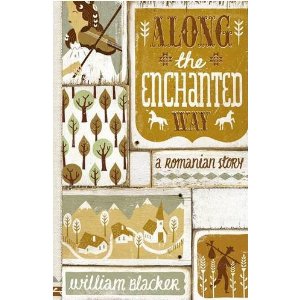
Paddy Reviews “Along the Enchanted Way: A Romanian Story “

Paddy reviews  William Blacker’s book about his eight years living in rural Romania and is so inspired he let’s himself go “sends (my) thoughts winging back to earlier Moldavian scenes – to ghostly hospodars with their nearly mythical princesses in tall branched crowns, trooping around the walls of fortress-monasteries in frescoed processions.”

First published in the Sunday Telegraph 30 August 2009

Along the Enchanted Way: A Romanian Story

By William Blacker

‘Transylvania, the Banat of Temesvar, the Tatra mountains, Bukovina, Moravia, Bohemia, Wallachia, Moldavia, Bessarabia, the Carpathian range, the Maramures …’ these were the place-names in East Europe where William Blacker, a young, civilised and erudite traveller, hoped to settle and take root. The last of the names (pronounced Maramooresh) is a precipitous and ravishing Romanian region, where Blacker made his life-determining plunge into Europe, immediately after the fall of the Berlin Wall in 1989.

The moment it fell, he headed for Dresden and then Prague, then further east still; he was in search of an older and wilder Europe. Soon he was hobnobbing with the descendants of Saxon families, brought there eight centuries earlier by Bela of Hungary to guard his eastern frontier from the Tartars, a transplanting which had changed everything. Seven western medieval cities had sprung up, monasteries and churches had followed, and the whole apparatus of the Middle Ages had come into being in the Carpathians.

An elderly Saxon couple took Blacker under their wing on sight, so did many others. The story teems with odd characters. One of them is an engaging, dissolute descendant of a Hungarian family who is the father of two fascinatingly beautiful girls, with a Romanian gipsy mother, with both of whom in succession William fell in love. Apart from their spirits and fine looks, these girls brought with them the whole geist of the gipsy world – its dialects, its manifold skills, its amazing singing and dancing and magic and, of course, as a tribe, its challenging knack of being forever at odds with the civic authorities. The wandering of their ancestors had brought the gipsies all the way from north-west India, through Persia and Egypt and the Levant, and scattered them over the West.

It was not just the Saxons and the gipsies that fascinated the new arrival. The Romanian influence proved equally strong. With the Magyar language to the west and Slavonic to the north and the south, and the Black Sea to the east, the Romanians speak the only Latin language in Eastern Europe, and they are proud of this linguistic heirloom. In AD 103 Trajan led his legions over his great Danube bridge, defeated King Decebalus and added the Dacian kingdom to the Roman Empire and the bas-relief of his victory was sent spiralling above his Forum in Rome and stands there still.

Romania is an extraordinary country. I remember it with great clarity, when I was 19, trudging from Holland to the Bosporus, those unending beech forests where the brooks fell from ledge to ledge, gathered in pools, or tumbled in waterfalls, where one could sleep in clearings among hollowed tree-trunks or ‘swing wells’ and scores of lambs, and be woken up by an old shepherd blowing down a bronze horn three yards long, a half-muffled and half- echo sound, like the trumpets of Tibetan shepherds. It was a world of icicles, birds calling, hayricks and scythes.

Perhaps to balance the complexities of his two love affairs, Blacker threw himself into raising funds for the upkeep and repair of the ancient buildings he had settled among. Like his friends, he was outfitted in rough white homespun and the padded and cross- gartered cowhide moccasins – opinci – which the upland shepherds wear all year.

William, who grew up on the South Downs and the north country and Ireland, brings all the skills of his unfettered upbringing to bear on Romania – horse-breaking, tree felling, haymaking and rick building – which, with a passion for the classics and literature and history, seem to have been a perfect run-in to this strange chapter of his life.

The rigours of snow covered the whole of his first winter. It was a time of rugging up soon after the early sunset and diving straight under the blankets and into The Brothers Karamazov and Anna Karenina by lamplight; in a later season the day would end with rowdy evenings at the Krcma – drinking tavern – of amazing dancing and song. I wonder if some of the evenings revolved, as in my young days, around a klaka of a hundred crones in a barn, all with spindles and distaffs and an endless gift for storytelling? One had to look out for the prints of wolves and bears on the way home.

This is a wild and captivating story, ending in great thanks to his neighbours in Maramures and Sighisoara – we are spared Vlad the Impaler – and also to his parents, who gave him such free reign in childhood. William Blacker has written a book close to this reviewer’s heart, and sends thoughts winging back to earlier Moldavian scenes – to ghostly hospodars with their nearly mythical princesses in tall branched crowns, trooping around the walls of fortress-monasteries in frescoed processions. With a change of pace these are followed by the author and his swarm of friends in a cantering troop of near-Lippizaners through the autumn beech woods. Nowadays it looks as though he might branch out much further south – down, down into Italy where, historically speaking, his nearest apposite neighbour might be Lars Porsenna of Clusium.

Walking back to Byzantium along the Via Egnatia

Have you ever fancied going to Albania? Would you like to walk the route of a famous – and in places intact – Roman road to Byzantium? Visit the Byzantine marvels at Ohrid and experience the sheer romanticism of Lake Ohrid? Then your luck is in as the Via Egnatia Foundation are in the early stages of planning a walk in May 2011.

The likely route is from Elbasan in Albania to Ohrid in Macedonia. There is the possibility of doing the walk in reverse as well, giving a couple of date options.

Full details have yet to be finalised but you can at least register your interest with them by visiting the Via Egnatia Foundation website and telling them you would like to know more.


Some of you know that I made this walk in 2009. You can read an account of my journey here. I hope to make the walk again this year. It will be of interest to those with an interest in Byzantium and those who like Patrick Leigh Fermor: he was a liaison officer in Albania at the start of WW2 and visited Ohrid and its Byzantine churches and chapels in the 1960’s.

Some video of our adventure in 2009:

Dancing in Dardhe

A composite video of the route to Ohrid

Some fool singing The Lumberjack Song

Related article:

Walking to Find Byzantium

Related category:

Via Egnatia

Voyages around a genius

At some point, when I get truly organised, it is my intention to create a section on the blog for all the book reviews I can find that relate to Paddy’s work. Until that time I beg your indulgence for yet another review of Words of Mercury. However, this has two strong claims to your time and attention. Firstly it is short, and secondly it is a delightful read!

ByRoger Hutchinson

First published in LivingScotsman.com 15 November 2003

If you or I were to take a hike in December down a deserted Black Sea coastline in Bulgaria, miss our way after dark, fall into a deep, cold pool and lose our torch and boots, we would certainly drown on the spot or die shortly afterwards from exposure.

When Patrick Leigh Fermor does exactly the same thing he crawls out alive and is adopted within the hour by half-a-dozen Greek fishermen who dry him, clothe him, sit him beside a bonfire, feed him slivovitz and mackerel, play bouzoukis, sing songs and perform antic dances through the night. Some travel writers are born or made; others have it wished upon them.

Leigh Fermor is undoubtedly the greatest travel writer to have emerged from the 1980s genre-boom. Comparisons with the likes of Bruce Chatwin, Colin Thubron, William Dalrymple, Jan Morris and even the mythical avatar of them all, Robert Byron, are fruitless – Leigh Fermor out-travels them, out-scholars them and out-writes them by a country mile.

He writes English, in fact, as well as anybody else alive and a great deal better than most. Leigh Fermor’s prose style is a wonderful thing. He was born with an uncanny facility for languages and the ability to pick up a local demotic – any local demotic – almost on contact. His deployment of his native language is consequently blessed with a huge and exotic vocabulary, instinctively flawless grammar and what he usefully describes – while attributing the advice to Auberon Herbert – as “the importance of keeping a proper balance between words of Anglo-Saxon and Latin root … a Latin preponderance endangered one’s themes and sent them ballooning away in abstract drifts … that could only be rescued by tethering them to the ground and reality with short Anglo-Saxon pegs.”

This hardworking, heavenly English has been set loose in half a dozen books on the most suitable of themes: the life and times of Patrick Leigh Fermor. Since he set off to walk from the Hook of Holland to Constantinople in 1933 at the age of 18, Leigh Fermor has led so adventurous an existence that without evidence to the contrary we would be tempted to dismiss it as fantasy.

But the evidence is there. He really did stay in fairytale castles and sleep with glamorous mittel-Europeans. He really did parachute into occupied Crete, swagger around with banditti and kidnap a German general. He really did explore the West Indies, climb the Andes and the Himalayas, write books in monasteries, follow the rainbow and return always to his adopted homeland of Greece. He is impossibly, infuriatingly, irresistibly romantic.

He has written sparingly. There has been almost a decade between each of his last four books. As the last pair of those – A Time of Gifts and Between the Woods and the Water – were the first two volumes of a trilogy recalling that magnificent pre-war hike to the Bosphorus, we and his publishers have been on tenterhooks since 1986, prayerfully beseeching Leigh Fermor to tear himself away from Mani and escort us to old Stamboul.

The publishers, John Murray, have meantime sated our hunger, firstly with a collection of letters home from the Andes and now with Words of Mercury, a short anthology, edited by Artemis Cooper, which is best described as a Patrick Leigh Fermor primer. About half of the entries are filched from his earlier books. The rest are reprinted magazine articles, doodles and a glorious gift of a letter to Artemis’s grandmother, Lady Diana Cooper.

It will do to be going on with. Those of us who know almost by heart the Delphinia episode and the story of how he found Lord Byron’s slippers really have no objection to reading them again. Those who don’t, should. And the journalistic miscellenia, which include pieces on the building of his fabled house on the southern tip of the Peloponnese, Cavafy, and Iain Moncreiffe (of that Ilk) are more than valuable. But most tantalising of all, provocative to the point of cruelty, is the fact that Words of Mercury contains a couple of essays that point alluringly towards the last stage of his 1930s perambulation.

We left him meandering towards Turkey at the end of Between the Woods and the Water. We know he eventually got there. According to a 1965 article in Holiday magazine, which Cooper reprints, the journey involved that wintry escapade with Black Sea fishermen. “Laughing and out of breath,” Leigh Fermor recalls, “Costa collapsed with mock melodrama. The raki travelled round the cave in a hubbub of laughter and the flames threw a beltane chiaroscuro over hilarious masks. Another bottle was miraculously discovered …”

Yes, Patrick – open it. Do

Related article:

The mystery of The Black Sea Cave

Related category:

Words of Mercury

Well Met By Sunlight

This is from an excellent website devoted to Powell and Pressburger the producers of Ill Met by Moonlight, and recalls the  Fielding’s first meeting with Dirk Bogarde.

By Daphne Fielding (wife of Technical Advisor and SOE agent on Crete, Xan Fielding)
From her book  The Nearest Way Home (London: Eyre & Spottiswoode, 1970)

Daphne writes in her chapter, “Well Met by Sunlight”…
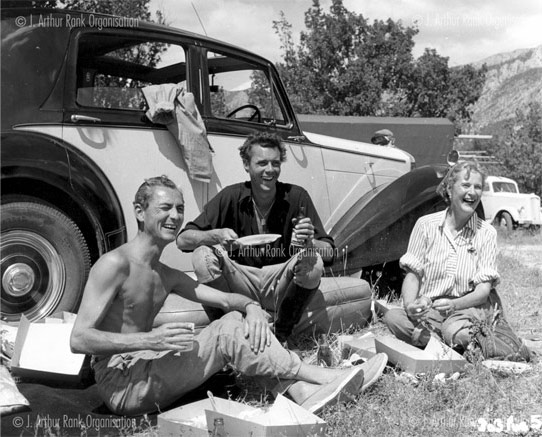
Xan and Daphne Fielding with Dirk Bogarde

Long before leaving England, long before our journey along the Barbary Coast, long before our marriage in fact, Xan had been asked by the film director Michael Powell to act as technical adviser on the production of Ill Met by Moonlight, the story of the abduction of the German General Kreipe by Paddy Leigh Fermor in enemy-occupied Crete. Afterwards the project had been postponed until Xan had almost forgotten it. Now, five years later, he was summoned by telegram to the south of France where work on the film was due to begin in a few days’ time.

… Xan agreed to take Salote [one of their dogs] with him, leaving me to follow with Sunflower [the other dog] as soon as I had arranged with a newspaper to write a series of articles on the making of the film, which would give me a valid reason for joining the unit.

Xan wrote to me a few days later from Nice to say that in spite of the urgency of his summons there was no sign of Michael Powell or of any film unit in the vicinity. Meanwhile he was enjoying the luxury of the Hotel Negresco, where rooms had been booked for him …

I arrived just in time. On the very next morning a car turned up at the Negresco to take us to Draguignan, which had been chosen as the unit headquarters. Here we learnt that the actor cast for the role of Paddy was Dirk Bogarde. He was not staying at Draguignan, however–there was no proper place for a star in a little market town already overcrowded with the production staff, camera crews, sound engineers … but in St. Raphael, on the coast, where Xan was to meet him before shooting started.

Though I looked forward to meeting him too, I was rather nervous about it, for in spite of my newspaper commission I still felt like an interloper. I was almost relieved when our repeated attempts to reach him were in vain: Mr. Bogarde was busy, had just gone out, was not available. Eventually, in the bar of his hotel, we ran to earth his manager Tony Forwood, whose blue eyes sized us up in a wary glance, then suddenly twinkled. “So you’re the Fieldings, are you?” he said. “Dirk’s upstairs in his room. I’ll go and fetch him.”

When he reappeared with him a few minutes late they both seemed to be enjoying some private joke, which added to my confusion, especially as I happened at that moment to be trying to extricate myself from the dogs’ leads which had wound themselves round my legs. Dirk’s smile turned to a broad grin as he watched my antics. “Just how many legs have you got?” he asked.

After the ice was broken, at ease with him, I said, “You seemed to be avoiding us on purpose.”

“I was”, he admitted. “Mickey had told me about Xan’s war record and I’d conjured up a dreadful picture of you both — ‘The Major and his Wife’, a sort of Osbert Lancaster cartoon. I couldn’t bear the idea of meeting you. If it hadn’t been for Tony …”

… “Yes”, said Tony. “I told him Xan didn’t have a clipped moustache and you weren’t wearing a regimental brooch, so we took the plunge.”

“Anyway, now we’re met”, Dirk concluded.

“Well Met by Sunlight”, I said to myself.

Two days later, after the cast had assembled, there was a final reading of the script followed by a wardrobe meeting. Though some of the costumes did not meet with Xan’s approval — “they look more Ruritanian than Cretan”, I heard him complain — Dirk at least could not have been dressed more authentically, for I lent him my Cretan guerrilla’s cloak, and Xan had brought with him a black silk headkerchief which had been part of his own wartime disguise and which he now taught Dirk to bind over his brow in the proper Cretan fashion.

Dirk was rather alarmed by this unfamiliar headgear. “What on earth do I look like?” he asked.

“The genuine article”, Xan truthfully assured him. “Very dashing. Just like Paddy.”

Next morning the whole unit was up before dawn, ready to move off for the first day’s shooting and, as the sun rose, the long convoy of char-a-bancs, headed by the director’s yellow Land Rover, was on its way to the chosen location up in the hills.

I had been slightly worried about my unofficial position. Was I entitled to a seat on one of the buses? And was about Sunflower and Salote [her dogs]? With characteristic thoughtfulness, Dirk solved the problem for me. “There’s plenty of room in my car”, he said, “for you and Xan and the two dogs. I’ll call for you.” And so we set off, in undeservedly grand style, in the star’s Bentley.

This was to be our daily programme for several weeks and I never tired of it … The locations had of course been chosen for their suitability, but to me they seemed to have been specially selected for their beauty and variety …

It was also fascinating to watch the various members of the cast at such close quarters, to see each one’s interpretation of his role. For the first time I realised what an exacting and exhausting job film-acting must be, especially for anyone as meticulous as Dirk Bogarde. Before each take he would sit by himself, so withdrawn that his nervous tension was contagious. Throughout working hours he remained apart and abstracted, hardly reverting to his own character even when off the set. But once the strain was over — during the luncheon break, for instance, or when packing up for the day — he resumed his normal personality and the relief from his intense concentration would lead to an outburst of high spirits and gaiety which usually took the form of teasing me.

Knowing that I was in awe of the director, and knowing too that shyness makes me clumsier than usual, he would score off me by suddenly saying, “Look out, Daphne, those dogs of yours are eating Mickey’s sandwiches”, or, “I didn’t like to tell you at the time, but during that last take one of your six legs was almost in shot.” I became so apprehensive lest Salote or Sunflower, or indeed myself, might unconsciously stray within the range of the camera … I took exaggerated measures of precaution … and would almost take to my heels at the sight of Michael Powell for fear of a reprimand.

During the last stages of the production we all moved from Draguignan up to Peira Cava, a skiing resort close to the Italian border, and here Paddy Leigh Fermor joined us for a few days.

Paddy’s impending visit had been dreaded by Dirk as much as the prospect of meeting Xan and me. I sympathised with him, realising how awkward it must be for an actor to play a living character when that character is watching him at it. Xan tried to reassure him:

“Don’t worry, Paddy’s not a typical army officer or guerilla leader. He’s not a typical anything, he’s himself, a romantic figure, in the Byron tradition. Very erudite, a sort of Gypsy Scholar, with an inexhaustible fund of incidental knowledge. He can talk to you for hours about hagiography or heraldry or …”

“He sounds too damned intellectual for me.”

But Paddy’s charm and adroitness immediately overcame Dirk’s prejudices, in spite of an incident on the night of his arrival which might have affected their future friendship.

One of Paddy’s wartime henchmen, Ciahali Akoumianakis, who had played a leading part in the abduction of the general, was also attached to the unit as a technical adviser and had brought with him from Crete a demijohn of tsikoudia, the potent local spirit, which he had been saving for just such as occasion as this. “We’ll have a proper Cretan glendi”, he said but, since no other member of the unit would touch the stuff, it remained for Paddy, Xan and myself to help him celebrate in the appropriate fashion — with some trepidation on my part, for I knew from personal experience that a glendi involves a great deal of noisy singing and dancing and is likely to last all night.

By midnight, long after everyone else in the hotel had gone to bed, the tsikoudia was beginning to take effect, and Paddy and Xan had broken into song. Soon the bar, empty but for the four of us, was resounding with matinades punctuated by the thump of feet performing the pentozali.

“Please stop it”, I begged them. “You’re keeping everyone awake.”

“But we’ve only just begun”, they objected, “and the bottle’s still half-full.”

“In that case I’m going to bed”, I announced, foreseeing, as I fled, an irate Michael Powell appearing in the bar like Christ in the temple.

Even from upstairs the sound of revelry, though not quite so deafening, continued for some time, unabated. I was on the point of going back to make one last attempt at stopping it, when it came to an end. A few minutes later Xan stumbled in.

“Dirk came down”, he announced.

“No wonder. Was he furious?”

“He looked a bit angry. But all he said was, ‘Some people have to work in the morning and want to get to sleep.’ He’s right of course. I don’t blame him. Anyway, Paddy and I have just slipped a note under his door to say we’re sorry.”

In the morning Dirk did not even mention the matter, nor did anyone else in the unit. But Paddy did. At breakfast he casually remarked to Michael Powell: “Who the devil was making that fiendish din last night? I couldn’t sleep a wink.”

Such frivolity and exuberance endeared him to everyone, though these qualities did not accord with the preconceived idea of him which some members of the unit had formed. “I just can’t see him capturing a German general”, Dirk’s dresser said. “He’s not the strong, silent type at all.”

“What about Major Fielding?” Dirk asked.

“Major Field? Oh, yes. He looks like a f…..g little killer.”

Whether this was meant as a compliment or not, from then on Xan was referred to on the set as F.L.K.

[At the conclusion of the film, the Fieldings drove with Dirk to Paris to catch a flight and en route stayed in the Hermitage in Digne “one of Dirk’s favourite hotels in France.”]

For Xan, however, Digne had other associations. It was here, while working as a secret agent during the occupation, that he had been arrested by the Gestapo and sentenced to death. In fact the house in which he had been imprisoned was next door and we could see it from our bedroom window. Dirk was extremely upset when Xan mentioned this to him over dinner.

“You should have told me at once”, he said. “We could easily have stayed somewhere else. We’ll move out now if you like, it must be horrid for you …’

“Not at all”, Xan told him. “I don’t mind a bit. In fact I’m glad to be back here in such different circumstances. After all this time. Twelve years … Good heavens, it’s twelve years exactly, to the very day!”

“This calls for a bottle of champagne”, said Dirk.

Prince Charles in Transylvania

By William Blacker.
First published in the Financial Times 27 August 2010.

When in early 1990 I first went to Transylvania, leaving behind the bright lights of western Europe and adjusting my eyes to the more sober tones of its eastern reaches, I could hardly believe that such a place still existed. In deep winter I crossed the northern Carpathian Mountains and came down, through misty forests and snow-covered roads, into the Middle Ages – or something astonishingly like it. Horses or oxen pulling sleighs occupied the roads, and cows and geese wandered freely. The villagers were dressed in smocks, sheepskin coats and fur hats, and had rough leather strapped to their feet, with woollen cloth wrapped around their calves held in place by thongs; footwear truly from another age, as worn by peasants depicted in ­medieval illustrated manuscripts.

I was just a few hours east of Vienna, but crossing the border into Romania was a journey back in time. I settled there, and for more than 10 years I was fortunate enough to be able to live a rural life that previously I had known only through the pages of a Hardy or Tolstoy novel.

I was astonished by the visual purity of the new environment in which I found myself. It was a country still commercially chaste, and innocent of the garish trappings of the capitalist world. There was no advertising, no neon lights, no plastic, no brash petrol stations (just a few simple pumps), very few cars – and all of the same make – that chugged and jolted over rough roads marked by the occasional rusting road sign. There were horses pulling carts, with foals trotting along beside them, outnumbering motor vehicles by 50 to one. In the villages, the houses were either of wood with carved and fretted verandas, or of brick or stone and lime-washed in soft blues, greens and ochres. All around there were huge and echoing forests, hay meadows so filled with flowers that they seemed to be part of some endless garden, and almost always, in the background, loomed the glittering Carpathian Mountains.

It was a land vividly described by Patrick Leigh Fermor in one of the great travel books of the 20th century, Between the Woods and the Water, and by Gregor Von Rezzori, whose beautiful autobiography The Snows of Yesteryear is set in Moldavia and Transylvania, and captures in dream-like prose this dream-like world. The landscape still has this ethereal quality; it stretches for miles in every direction, all unfenced just as in England in the 18th century before the land enclosures. There is nothing else like it left in Europe.

On my early journeys through this antique land, travelling was not always straightforward. There were almost no restaurants, shops, hotels, or guest houses. When walking over the hills, often guided by the steeples of village churches, I had to rely upon the kindness of strangers. Sometimes I might share a room with snoozing lambs, and discover a hen and her chicks under my bed. At other times I slept in hay barns, and my supper was milked directly from the udder of a goat that had wandered into a smoky cottage kitchen.

Now, however, life is a bit easier. There are comfortable hotels in the medieval town of Sighisoara, and excellent pensions in the beautiful Saxon villages of Viscri, Malancrav and Cund (at the end of a spectacular, winding road leading north from the town of Dumbraveni), or in the ethnically Hungarian Zabola, and Miclosoara. These villages provide locally-grown food, and sometimes, as at Cund and Zabola, of the highest quality.

Prince Charles and companions at the medieval village of Viscri, Transylvania
The Prince (left) visiting the village of Viscri

English travellers might be surprised to discover that some of these guesthouses are owned by HRH the Prince of Wales. Prince Charles first visited Transylvania in 1998, saw the wild beauty of the country, and came under a similar spell to that which captivated Leigh Fermor and others before him. He realised that this pristine central European landscape of forests, hay meadows and historic villages, until then barely touched by the brute hand of the modern world, was of international importance, and must somehow be preserved. Since then he has done much to draw attention to the predicament of what the ecologist Dr Andrew Jones calls “the last truly medieval landscape in Europe”.

Through such charities as the Mihai Eminescu Trust, the International Network for Traditional Building, Architecture and Urbanism (Intbau) and the Transylvania Trust, the prince has helped in saving hundreds of houses all over Romania, and in training multitudes of villagers in traditional building techniques. It is hoped that by preserving the villages and the countryside around them, and by encouraging traditional craftsmanship and small-scale farming, the economies of the villages can recover and thrive.

As part of this approach Prince Charles has bought several endangered properties in Transylvania and turned them into comfortable guesthouses. The buildings are restored using traditional materials, with lime renders and locally-produced hand-made bricks and terracotta tiles. One of them, which the prince has owned for some years, is in the village of Viscri. The latest purchase is in the remote village of Zalánpatak in the ethnically Hungarian part of Transylvania, and opens to paying guests next month. I recently paid a visit.

Prince Charles’s guesthouse in Zalánpatak, Transylvania
Prince Charles’s guesthouse in Zalánpatak, Transylvania opens next month

As I drove further and further from civilisation, the road became narrower, rougher and leafier, and I seriously began to wonder whether I was on the right track. But then, at last, a tiny village appeared, by the side of which ran a sparkling brook shaded by tall poplars. The Prince’s house, with its simple wooden verandah and outbuildings also of wood, or lime-washed in blue, is by no means grand, but the serenity of the view from the verandah on that still summer’s evening was about as perfect as one could hope to find. It was somewhere that one can describe, without wildly exaggerating, as a heavenly place.

With his guesthouses the prince hopes to persuade discerning travellers to come to admire the old village architecture; to walk or ride from one village to another through the breathtaking but only half-tamed countryside of meadows, wooded hills, and trickling streams; to see evidence of wolves and bears, and all the other wildlife that survives here in abundance, but which in other parts of Europe is either extinct or on the edge of extinction; and to understand why Romania is such a special country.

But, in spite of Prince Charles’s influence on conservation in Romania, most parts of the historic landscape of Transylvania are being devastated by a rash of uncontrolled modern development, which worsens by the year, and is now reaching a critical point.

Many might have thought that Romania’s rural architecture had been “saved” when the communist dictator, Nicolae Ceausescu, was executed on Christmas Day 1989, and that his deranged plan to bulldoze the villages and move their inhabitants into purpose-built blocks had been put to rest. But in reality it was only after Ceausescu’s death that the real destruction of the villages began.

Now, in the construction free-for-all of modern Romania, the country’s historic architecture is being rubbed out at a frightening pace, and the sad irony is that its destruction is being made greatly worse by European Union money pouring into the country in the form of agricultural subsidies. Those receiving these grants (often vast sums by local standards) are demolishing their old village houses and using the money to replace them with hideous and incongruous modern buildings, painted in garish orange, luminous yellow or vivid purple, often with windows of mirrored glass and stainless steel railings. It is a kitsch that is infecting the whole country. Even as I write, in a beautiful village that has until now escaped the ravages of the modern world, I can hear the demolition of a huge oak-beamed and terracotta-tiled barn in order to make way for someone’s dream villa. The 18th-century house next to it is apparently soon to follow. It is like living in southern Ireland in the 1960s, when rows of proud Georgian houses were demolished to make way for modern developments. It is almost beyond belief that the Romanian government can allow villages like those in the Saxon area of Transylvania, or in Oltenia near Campulung Muscetel, which are as picturesque as the hill towns of Tuscany or England’s Cotswold villages, to be destroyed in this way. The country’s tourist industry is bound to suffer as a result.

The modern world and EU money are doing Ceausescu’s architectural destruction for him. And, because only richer farmers are eligible for EU grants, the subsidies are squeezing out the smaller, self-sufficient farmers whose harmless methods of caring for the land naturally preserve the biodiversity of the region, and its historic appearance. Botanists will tell you that once the unique medieval wildflower meadows are gone, which now exist only in Romania, they can never be recreated.

So the message is this: Romania is a deeply fascinating country, but if you want to see and feel something of this fascination, go there soon. If the Romanian government and the EU do not speedily put their heads together to do something quickly and seriously to protect what remains of the country’s all too fragile beauty, within a few years there will be little left to see: the fascination will be gone, and the spell broken.

William Blacker’s book about his life in a rural Transylvanian village is ‘Along the Enchanted Way’ (John Murray)

…………………………………………..

Details

Prince Charles’s guesthouse at Zalánpatak opens next month, with five double rooms costing £86 including breakfast. His other guesthouse, at Viscri, has already accepted occasional guests, but opens fully from spring 2011, with three doubles available at the same price. All profits go to building conservation work in the area. For details of both see www.transylvaniancastle.com. The closest airport in Romania is Cluj-Napoca, which has direct flights from the UK, France, Italy, Spain and Germany

Patrick Leigh Fermor blog: 2010 in review

Thank you for all your support and comments in 2010. The success of this blog has been incredible and it just goes to show how popular Paddy remains. I am sure you will want me to send him all our best wishes for good health and progress with Vol 3 in 2011.

The stats helper monkeys at WordPress.com mulled over how this blog did in 2010, and here’s a high level summary of its overall blog health:

Healthy blog!

The Blog-Health-o-Meter™ reads Wow.

Crunchy numbers

Featured image

About 3 million people visit the Taj Mahal every year. This blog was viewed about 40,000 times in 2010 since it opened in March. If it were the Taj Mahal, it would take about 5 days for that many people to see it.

In 2010, there were 136 new posts, not bad for the first year! There were 164 pictures uploaded, taking up a total of 126mb. That’s about 3 pictures per week.

The busiest day of the year was September 25th with 435 views. The most popular post that day was Angéla and Paddy’s visit to Cluj-Napoca.

Where did they come from?

The top referring sites in 2010 were facebook.com, mail.live.com, digg.com, mail.yahoo.com, and surprisedbytime.blogspot.com.

Some visitors came searching, mostly for patrick leigh fermor, patrick leigh fermor obituary, leigh fermor, duke of devonshire, and debo devonshire.

Attractions in 2010

These are the posts and pages that got the most views in 2010.

1

Angéla and Paddy’s visit to Cluj-Napoca September 2010
1 comment

2

Xan Fielding Obituary May 2010
12 comments

3

Photographs April 2010
1 comment

4

About & Contact March 2010
18 comments

5

Chatsworth Celebrates the Many Lives of Deborah Devonshire May 2010

Kennt ihr das Land in deutschen Gauen

I guess that many of us enjoy the chapter in A Time of Gifts when the eighteen year old Paddy spent two nights in Stuttgart with two very pretty nineteen year old German girls, Lise and Annie. It was Epiphany, 6th January 1934, and they went to a party where Paddy had to pretend to be Mr Brown, a family friend. He particularly enjoyed singing a song about the Neckar Valley and Swabia. Paddy could not remember all the words but his stunning memory recalled most of them (page 66).

As we approach that time of year I thought we ought to share this delightful song.

Here is a link to the music sung by a German choir. The words are below so that you too can sing along! Let’s hear it now, one two three …. 

  1. Kennt ihr das Land in deutschen Gauen,
    Das schönste dort am Neckarstrand?
    Die grünen Rebenhügel schauen
    Ins Tal von hoher Felsenwand.

Refrain:
Es ist das Land, das mich gebar,
Wo meiner Väter Wiege stand,
Drum sing’ ich heut’ und immerdar:
Das schöne Schwaben ist mein Heimatland! 

2. Kennt ihr das Land in deutschen Gauen,
Mit Wald und Flur so reich bekränzt,
Wo auf den weiten, reichen Auen
Im Sonnenschein die Ähre glänzt?
Es ist das Land, . . . . .

  3. Kennt ihr das Land in deutschen Gauen,
Wo Tann’ und Efeu immer grün,
Wo starke Männer, edle Frauen
In deutscher Kraft und Sitte blühn?
Es ist das Land, . . . . .4. Kennt ihr das Land im deutschen Süden,
So oft bewährt in Kampf und Streit,
Dem zwischen seiner Wälder Frieden
So frisch die deutsche Kraft gedeiht? 

Ja, wackre Deutsche laßt uns sein!
Drauf reichet euch die deutsche Hand;
Denn Schwabenland ist’s nicht allein:
Das ganze Deutschland ist mein Heimatland!