Category Archives: Ill Met by Moonlight

Battle of Crete: Sinking of HMS Gloucester remembered 70 years on

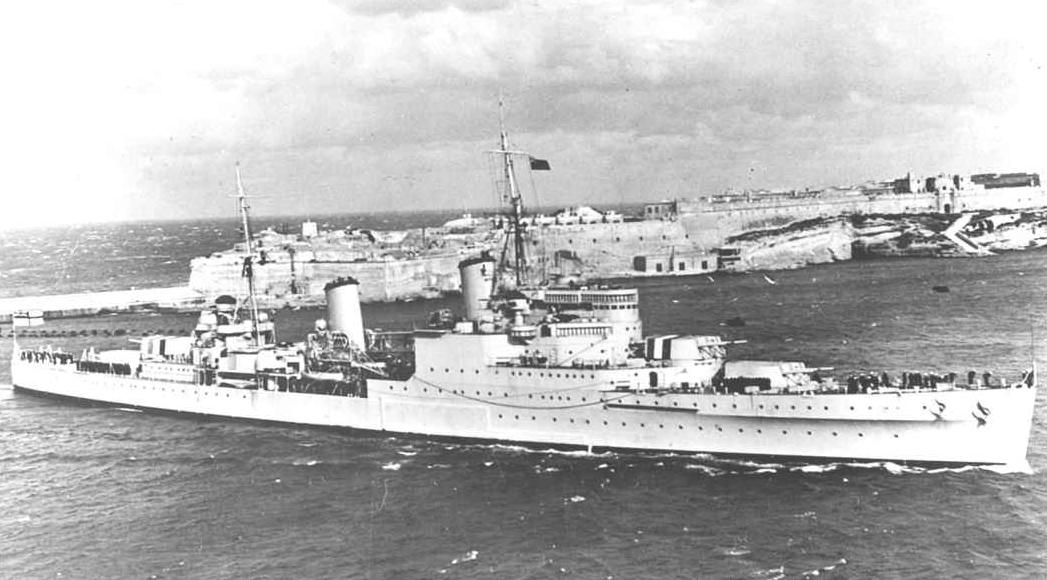
Emotional memories of the loss of HMS Gloucester 70 years ago, with the loss of 700 hands. Taking part in the Battle for Crete, she was sunk on the 22nd May 1941 by Ju.87s and Ju.88s.

Watch here on the BBC website.

Six-inch gunned "Town" class cruiser HMS Gloucester

Crete, Greece: Ghostly soldiers on the Battle of Crete anniversary

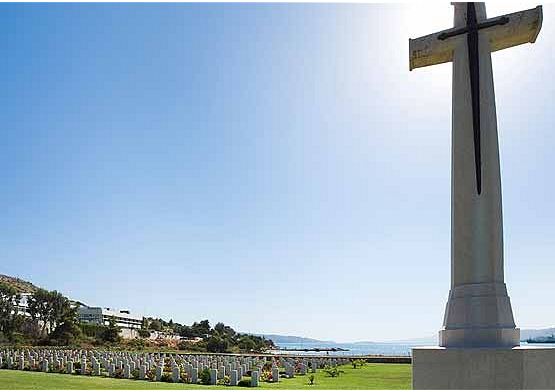
The Commonwealth War Cemetery at Souda Bay in Crete where the main anniversary commemorations will take place

It was sunny but cold, last month in Crete – what the locals call “ilios me dontia”, sun with teeth. I sat on the beach at Sfakia on the south coast of the island. Around me a toddler played among the stones while taverna owners were applying final licks of paint in preparation for the new tourist season.

My late father sat on the same beach in May 1941. Around him there was chaos and despair. Evelyn Waugh, who was there too, later captured the scene in the novel Officers and Gentlemen: “The ghosts of an army teemed everywhere. Some were quite apathetic, too weary to eat; others were smashing their rifles on the stones, taking a fierce relish in this symbolic farewell to their arms.”

This tiny harbour is the finish to the story of the Battle of Crete, which started 70 years ago on Friday, May 20 — a significant anniversary that will be commemorated across the island. There are few veterans left now, but strands of the narrative may still be picked up among the rocks and wild flowers of the beautiful western end of Crete.

I had long meant to do this journey, to discover what my father – and thousands of others – went through. He himself hadn’t been the best source as he wouldn’t say much about it. And then he died, with the story largely untold.
Related Articles

To help me uncover it, I enlisted the services of a Briton who has been a resident of Crete for 25 years and offers guided tours of the key sites. For Tim Powell, tourist guide, musician and lover of all things Cretan, the Battle of Crete was characterised by the heroic resistance of the civilian population. “This ‘insurgency’ led to a declaration that for every German soldier killed, 10 Cretans would be executed — which of course did nothing to stop them,” he said.

He started the story at the end, the Commonwealth War Cemetery at Souda Bay where the main anniversary commemorations will take place. The 1,500 headstones memorialise some colourful characters, none more vivid than John Pendlebury, an archaeologist with a glass eye who was operating in Crete as a secret agent when he was killed on May 22 1941.

The battle and its aftermath of guerrilla resistance threw up a cast of such chaps — suave British secret agents, brave Cretan warriors, even a monocle-wearing German aristocrat — whose deeds are recorded in some compelling accounts. Ill Met by Moonlight, for example, recounts the kidnap of the German General Heinrich Kreipe in 1944, masterminded by the secret agent (and future travel writer) Patrick Leigh Fermor.

But the Crete campaign also included many ordinary soldiers and civilians whose names and actions remain unrecorded and for whom the experience was far from glamorous. One of them was my father, a lance sergeant in the Northumberland Hussars, who was evacuated to Crete from Athens towards the end of April 1941 after mainland Greece fell to the Nazis.

He dug in with a force of about 21,000 combat-ready British, Australian, New Zealand and Cretan soldiers to defend the island. The Germans launched their attack on May 20 in wave after wave of paratroop drops by parachute and glider. What followed was a series of military blunders on both sides in which the Allies managed to snatch defeat from the jaws of victory.

The key fighting took place around the airfield at Maleme, and Hill 107 above it, to the west of Chania. Since 1974 Hill 107 has been the site of the German War Cemetery on Crete, the last resting place of 4,465 soldiers of whom nearly 2,000 were killed on that first day.

Many fell not to soldiers but to civilians. “The Germans had never seen something like this in Europe,” explained George Bikoyiannakis, the owner of the Café Plateia in the village of Galatas near Chania, the site of fierce fighting. “These people were fighting with farming tools. Even broomsticks. They would tie kitchen knives to them and use them as spears.”

George runs a little museum next to the church that commemorates the heroic efforts of locals and New Zealanders to defend the village. The Kiwis are remembered in the name of a street, Neozilandon Polemiston, which means “Road of the New Zealand Warriors”. Down a narrow alley, a garden gate has been fashioned from an old piece of British Matilda tank.

The civilian resistance — by women and priests and as well as men young and old — offended the Nazis’ sense of how war should be waged and their commander, General Kurt Student, ordered reprisals to be carried out “with exemplary terror”. The sites of these massacres are marked by monuments across the island, some of them displaying the skulls and bones of victims behind glass.

At Alikianos a marble column and canopy bear witness to one of the bravest feats of the Battle of Crete, in which 850 lads of the locally recruited 8th Greek Regiment held out for a week against German onslaught. More than 200 villagers, ranging in age from 14 to 80, were subsequently shot in reprisal.

“The Germans were surprised because the women didn’t turn away,” said Powell. “They watched their husbands and sons being executed.” The significance of the action at Alikianos is that it bought the Allies time to organise the evacuation of Crete. On May 27, realising the island was lost, the Allied commander, Major General Bernard Freyberg, ordered his forces to retreat south across the Levka Ori, the mountains that form the snowy spine of Crete, to an embarkation point on the southern coast.

My father and his fellow Geordies abandoned the ground they held around Chania and joined the exodus. The route they took, with little or no food, in rotting boots, under frequent attack from Stuka dive bombers, was nicknamed the Via Dolorosa. Today you can drive it in your little Nissan or Peugeot hire car.

In 1941 it was a dirt track that ended in the five-mile-long Imbros Gorge. A Stuka was shot down as it came in for the attack here. Its propeller is one of the prize exhibits in the war museum at Askifou, which lies on the Via Dolorosa. Walking the gorge myself, I tried to imagine the Stuka screech my father once remarked on, but all I could hear was goat bells.

His reward for reaching Sfakia, where Royal Navy ships evacuated 16,000 men over four nights, was to be told there was no room for him. He would have to stay behind and wait to be captured. All told, 5,000 Allied troops didn’t make it off Crete. None of those left behind was above the rank of lieutenant colonel.

One eyewitness talked of the “damnable and disgraceful scramble for priority, a claim to the privilege of escape based on rank and seniority”. Evelyn Waugh thought it a shameful episode. My father didn’t mention it.

After sitting on the beach at Sfakia I sat down for lunch at one of those spruced-up tavernas and ordered a plate of gigantes, butterbeans in tomato sauce. Then I remembered that butterbeans were my father’s favourite thing to eat. He would have appreciated a plateful as he sat twiddling his thumbs just a few feet away, waiting to be captured.

He spent the next four years, from the ages of 20 to 24, in various POW camps in Germany, but he took it all on the chin. The only bit I can remember him grumbling about was having to march the 50 miles back over the mountains, along the Via Dolorosa, after being taken prisoner. He said he could have done without that.

By Nigel Richardson – First published in The Telegraph

Related articles:

A Meeting between Paddy and George Psychoundakis the “Cretan Runner”

Ride of the Valkyries: The Vichy perspective on the German invasion of Crete

Patrick Leigh Fermor recounts the kidnap of General Kreipe on video

Crete: 11th Day Movie with Paddy

Scholar in the wilds – a profile of Patrick Leigh Fermor

A comprehensive profile of Patrick Leigh Fermor.

By James Campbell. First published in The Guardian 9 April 2005

As a teenager, Patrick Leigh Fermor walked through Europe to Turkey, sleeping in hayricks and castles. Forty years later he wrote two pioneering books about it; a third is still in progress. He lived in Romania, met his wife in Egypt, and was decorated for his wartime exploits in Crete. Now 90, he continues to work in the house he built in Greece in the 1960s.

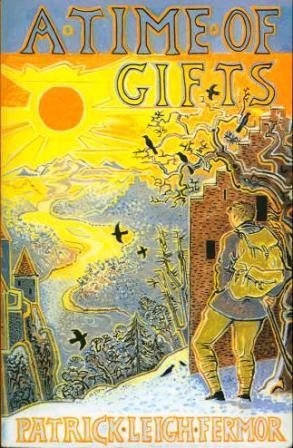
“So here’s the traveller,” a Hungarian hostess greets the teenage Patrick Leigh Fermor as he trudges towards her Danubian country house. The year is 1934 and Leigh Fermor is four months into his walk from the Hook of Holland to Constantinople, undertaken to shake off what he refers to, 70 years on, as “my rather rackety past”. The journey is captured, with erudition and fond detail, in A Time of Gifts (1977) and Between the Woods and the Water (1986). They are unique in several respects, not least that they were written more than 40 years after the events described. Leigh Fermor derived the former title from a couplet by Louis MacNeice, “For now the time of gifts is gone – / O boys that grow, O snows that melt”, which encapsulates the double vision involved in evoking one’s own adolescence from a distance. A concluding volume, which will take the boy to his destination, has long been promised.

Leigh Fermor is not a “travel writer” – like others, he disavows the term – but there is no denying he is a traveller. After Constantinople (as he still insists on calling it, though the name was changed to Istanbul in 1930), he moved to Romania, where he stayed for two years, barely conscious of the inklings of war from beyond the Carpathian mountains. In the 1950s, he explored the then-intractable southern finger of the Peloponnese known as Mani, where he lives, followed by a similar journey in the north of Greece, making his reports, in characteristically exuberant style, in the books Mani (1958) and Roumeli (1966). His stays in French monasteries, where he achieved “a state of peace that is unthought of in the ordinary world”, are recorded in an exquisite book of fewer than 100 pages, A Time to Keep Silence (1957).

Mani: Travels in the Southern Peloponnese

Mani: Travels in the Southern Peloponnese

He is also a scholar, with a facility for languages so prodigious that he would amuse himself on his footslog by singing German songs backwards and, when those ran out, reciting parts of Keats the same way: “Yawa! Yawa! rof I lliw ylf ot eeht”, etc. “It can be quite effective,” he says. After a lunch of lemon chicken at home in Mani, accompanied by an endlessly replenished carafe of retsina, he entertains his guest with a rendering of “It’s a Long Way to Tipperary” in Hindustani.

In addition, Leigh Fermor is recognisably that figure many writers of the past century have yearned to be, the man of action. When the inklings could no longer be ignored in 1939, he abandoned his Romanian idyll and enlisted in the Irish Guards. A major in Special Operations Executive during the second world war, he was awarded the DSO for heroic actions on German-occupied Crete. Few writers are entitled to include in their Who’s Who entry: “Commanded some minor guerrilla operations.” His publisher, John Murray, whose father, the late “Jock” Murray, edited most of Leigh Fermor’s books, describes him as “almost a Byronic figure. If you met him on a train, before long he would be reciting The Odyssey , or singing Cretan songs. He loves talking, and people are always absorbed by him.”

Known as Paddy to the acquainted and unacquainted alike, Leigh Fermor has turned 90. He is still sturdy, with an all-round handsome appearance. Here is a man who at 69 swam the Hellespont (or Dardanelles), two kilometres wide at its narrowest, in emulation of Byron and Leander, who swam it nightly for the love of Hero. Leigh Fermor swam it under the concerned watch of his wife Joan, who followed in a small boat, and averted her eyes as he narrowly missed being sunk by a liner. An innocent sweetness hovers about his face, which finds a focus in his eyes as he makes a joke or stumbles on a happy recollection. There is a dash of the old soldier, clubbable and courteous, in his approach, his speech punctuated by “Look here …” and “I say …”, and not much of the “rather rackety” figure he claims to have been before he cured his ills by walking. When, relatively late in life, he became a mentor to Bruce Chatwin, the younger writer adopted Leigh Fermor’s motto, solvitur ambulando – it is solved by walking.

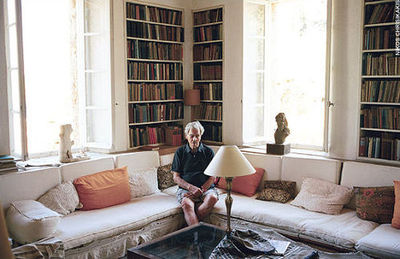
Paddy at home in the Mani

After more than six decades in the country, Leigh Fermor is inextricably tied to Greece. His command of the language extends to several regional dialects. He is an honorary citizen of the Cretan capital Heraklion, and of the village of Kardamili in Mani, and is a proud godfather to children in both places. In the mid-1960s, as if to lay the foundation for a committed life, he built a house that reflects the various aspects of his personality. Perched on a peninsula jutting into the Gulf of Messenia, it overlooks a small uninhabited island, behind which the sun sets nightly. He has described how he and Joan camped in tents nearby as the works progressed, studying Vitruvius and Palladio, but admits that the design was largely the result of improvisation. Ceilings, cornices and fireplaces allude to Levantine and Macedonian architecture. Hard by the commodious living room, an L-shaped arcade, which might have been built centuries ago, provides a link to the other rooms and gives on to an olive grove below. Out of nowhere, cats materialise on chairs and divans, prompting Leigh Fermor to remark on “interior desecrators and natural downholsterers”. The great limestone blocks of the main structure were hewn out of the Taygetus mountains, visible in the background, as the sea is present in the foreground. A weathered zigzag stone staircase leads down to a horseshoe bay. “There was no road here at all when we came. The stone had to be brought up by mule. We got most of the tiles from another part of the Peloponnese, after an earthquake. They were happy to be rid of them – couldn’t understand why we wanted this old stuff. They wanted everything new.” The master mason behind the house was a local craftsman, Niku Kolokatrones, whom Leigh Fermor met by accident while out walking. “I spotted his bag of carpenter’s tools and told him I was looking for somebody to help me build a house. He said, ‘Why not take me? I can do everything.’ And he was absolutely right.”

It was finally fit for habitation in 1968, and the couple “lived very happily here for 30 years”. Joan Leigh Fermor, daughter of the Conservative politician and First Lord of the Admiralty in Ramsay MacDonald’s coalition government, Bolton Eyres Monsell, died in 2003 at 91, after a fall. The couple met in wartime Cairo. She took the photographs for several of his books, including the first, The Traveller’s Tree (1950), an account of a journey through the West Indies, and for Mani and Roumeli – although these pictures have sadly been omitted from later editions.

He was born in London in 1915, to Sir Lewis Leigh Fermor, who became director-general of the Geological Survey in India, and Eileen Ambler, who was partly raised there. His childhood relationship with his parents was “rather strange, because I didn’t really know either of them until I was about three-and-a-half. My mother returned to India after I was born, leaving me with a family in Northamptonshire. I spent a very happy first three years of my life there as a wild-natured boy. I wasn’t ever told not to do anything.” When his mother returned, at the end of the first world war, “my whole background changed. We went to live in London. And she was rather unhappy, because I didn’t really know much about her, or my father or my sister, who had been born four years earlier. They hadn’t seen me since I was a few months old.” He claims he was “more or less tamed after that”, though he has written that his lawless infancy “unfitted me for the faintest shadow of constraint”.

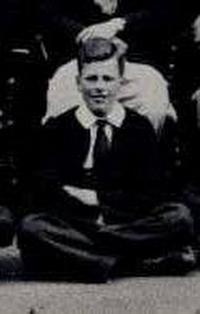
Patrick Leigh Fermor at school, Kings Canterbury

His mother “adored anything to do with the stage” and wrote plays that were never produced. She made friends with Arthur Rackham, who painted a picture inside the front door of their house in Primrose Hill Studios “of Peter Pan in Kensington Gardens, being blown along in a nest with a ragged shirt for a sail”. He wonders if it’s still there. When the time came to think about school, the “wild boy” re-emerged, and he was beaten from one educational establishment to another. “I didn’t mind the beatings, because there was a bravado about that kind of thing.” At one stage, he was sent to a school in Suffolk for disturbed children – or, as he puts it, “where rather naughty children went” – and later to King’s School, Canterbury, the oldest public school in England, where the unruly old boys included Christopher Marlowe. “It was all rather marvellous,” says Leigh Fermor, who casts a rosy light on almost all experience, “but my discipline problems cropped up again. Things like fighting, climbing out at night, losing my books.” Among his contemporaries at King’s was Alan Watts, who later wrote popular books on Zen Buddhism and became a hippie guru. In his autobiography, Watts recalled Paddy “constantly being flogged for his pranks and exploits – in other words, for having a creative imagination”. Watts confirms the familiar tale that Paddy was expelled “for the peccadillo of taking a walk with the daughter of the local greengrocer”. Leigh Fermor recalls: “She was about eight years older than me – totally innocent, but it was a useful pretext for the sack. I think it was very kindly meant. Far better to get the sack for something slightly romantic than for just being a total nuisance.”

Believing that the best place for a nuisance was the army, his parents tried to direct him towards Sandhurst, but his academic failures put paid to that too. The military historian Antony Beevor, who was an officer cadet at Sandhurst, and has known Leigh Fermor for many years, believes he would not have prospered. “I think he may have had a romantic idea of what army life was like, but he would have found the peacetime garrison incredibly stultifying. Army life in the 1930s was very staid. Paddy was too much of a free spirit.”

It was then that Leigh Fermor came up with a scheme “to change scenery”. Envisaging himself as “a medieval pilgrim, an affable tramp with a knapsack and hobnailed boots”, he decided to walk across Europe to Turkey. “It was a new life. Freedom. Something to write about.” To make it even more improbable, he set out in December when, as he states in the opening paragraph of A Time of Gifts, “a thousand glistening umbrellas were tilted over a thousand bowler hats in Piccadilly; the Jermyn Street shops, distorted by stream ing water, had become a submarine arcade.” When his ship docked in Rotterdam, “snow covered everything”. He dossed down wherever he landed, on one occasion outside a pigsty to the sound of “sleepy grunts prompted by dreams, perhaps, or indigestion”.

In addition to his sleeping bag, Leigh Fermor packed the Oxford Book of English Verse and a volume of Horace. An allowance of £4 a month was to be collected along the way. “My general course was up the Rhine and down the Danube. Then to Swabia, and then into Bavaria.” At the time, he had published a few poems (“dreadful stuff”), but was inspired to switch to travel writing by Robert Byron, whose book about a journey to Mount Athos in north-eastern Greece, The Station , had recently been published. “I was keeping copious notes, songs, sketches and so on, but in Munich a disaster happened. I stayed at a Jugendherberge and my rucksack was pinched, with all my notes and drawings.” And then comes the Paddy stroke: “In a way it was rather a blessing, because my rucksack was far too heavy. It had far too many things.” His sleeping bag was lost too -“good riddance, really” – and his money and passport. “The British Consul gave me a fiver – said pay me back some time.”

Leigh Fermor has pursued his literary career haphazardly. His Caribbean book was originally meant to be a series of captions for photographs. Then came his only novel, The Violins of Saint-Jacques (1953), followed by A Time to Keep Silence and Mani , all written in the mid-50s, after which he restricted himself to one public outing per decade. However, the 40-year interlude between the events of his European journey and the writing of the books enhances their appeal. At times, the hero of A Time of Gifts seems like a boy faced with a tapestry on which the entire history and culture of Europe is portrayed, unpicking it thread by thread. Byzantine plainsong; Yiddish syntax; the whereabouts of the coast of Bohemia (it existed, for 13 years); the finer nuances of regional architecture – “the wild scholarly enthusiasms of a brilliant autodidact”, as the writer William Dalrymple says. Theories are worked out, set down and often jettisoned, before another day’s walking begins. No one modulates as energetically from speculations on the origin of Greek place names to the “not always harmful effects of hangovers” as Leigh Fermor does. “If they fall short of the double vision which turns Salisbury Cathedral into Cologne,” he writes of his sore heads, “they invest the scenery with a lustre which is unknown to total abstainers.” When it came to writing about the journey, Leigh Fermor claims that “losing the notebook didn’t really seem to matter. I’d got all the places I’d been to noted down in another little notebook. Early impressions and all that sort of thing would only have been a hindrance.” It is impossible to say where imagination gets the upper hand over memory, and aficionados are adamant it does not matter.

Dalrymple, who as a student set out to follow the route of the First Crusade in emulation of Leigh Fermor, says: “I can’t think of any younger writers who have tried to write like Paddy, who have succeeded in the attempt. Not that I haven’t tried. When I set out on my first long journey in the summer vacation I had just read A Time of Gifts and I tried to write my logbook in faux-Paddy style. The result was disastrous. Just last summer I visited Mani and reread his wonderful book, and found myself again trying to write like him. I should have learned my lesson by now.” Dalrymple feels that the strongest influence of Leigh Fermor on the younger generation of travel writers “has been the persona he creates of the bookish wanderer: the footloose scholar in the wilds, scrambling through the mountains, a knapsack full of good books on his shoulder. You see this filtering through in the writing of Chatwin and Philip Marsden, among others.”

According to Jeremy Lewis, author of a biography of Cyril Connolly, with whom Joan was friendly, “Occasionally, one comes across some unromantic soul who objects to Leigh Fermor on the prosaic ground that he couldn’t possibly remember in such persuasive detail the events of 60 years ago.” Lewis suspects that “quite a lot of it is made up. He’s a tremendous yarn-spinner, and he has that slight chip on the shoulder of someone who hasn’t been to university. Sometimes one gets the feeling that he’s desperate to show he’s not an intellectual hick. He’s quite similar to Chatwin in that way. With Chatwin I find it irritating, but not with Leigh Fermor.” Lewis adds, “There is also a strong boy-scout element about him, which annoys some people, singing round the campfire and so on. I doubt if there was ever anything very rackety about Paddy.”

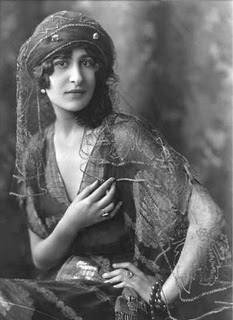
Balasha Cantacuzene

He has been asked many times why the composition of the books was delayed for so long, and has finessed the reply to his characteristic self-effacement: “Laziness and timidity.” He had a shot at writing during his sojourn in Romania in the late 1930s, “but I thought it was no good, so I shoved it aside. And I was right, actually, because when I tried it much later it all began to flow.” His companion in Romania, the first love of his life, was a young painter, Balasha Cantacuzene, whose family was part of an “old-fashioned, French-speaking, Tolstoyan, land-owning world. They were intensely civilised people. I spent the time reading a tremendous amount … when I wasn’t making a hash of writing. I felt rather different at the end of it all, from the kind of person I’d been before.”

After the communist takeover at the end of the war, the Ceausescu government branded the Cantacuzenes “elements of putrid background” and forced them to leave their property. Leigh Fermor made it his mission to rescue them from their new dismal circumstances, eventually succeeding in slipping into the country on a motorcycle and contacting Balasha and her sister. They met for only 48 hours. “We dared risk no more, and during that time I was unable to leave the tiny flat where they were then living, for fear of being seen.” He found that their early thoughts of leaving Romania had lapsed, “partly from feeling it was too late in the day; also, they said that Romania, after all, was where they belonged”.

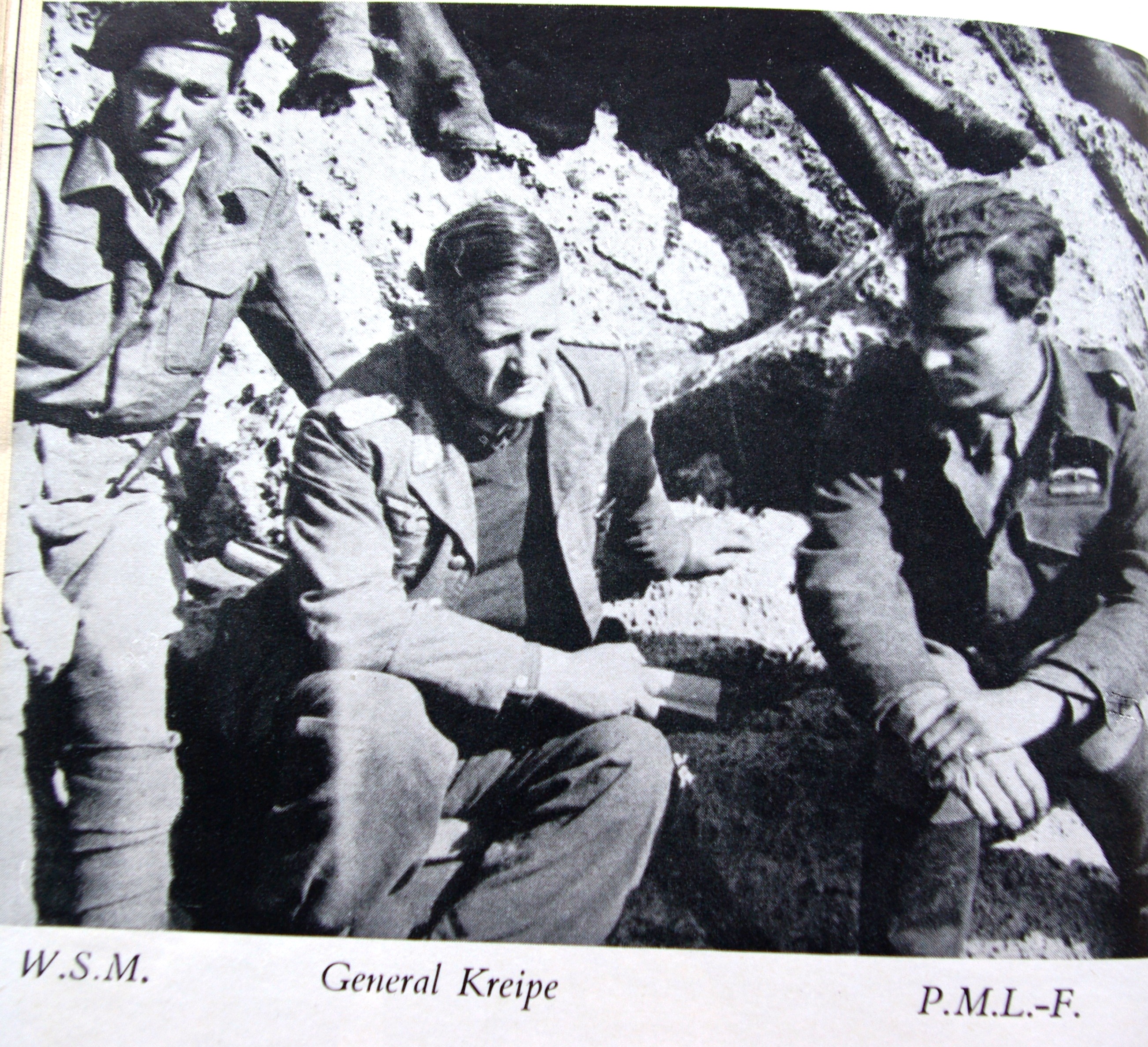
His war service was spent mainly on Crete. After the British retreat from the island in May 1941, Leigh Fermor was among a small number of officers who remained, helping to organise resistance to the occupation, “living up in the mountains, dressed as a shepherd, with my wireless and so on”. In the spring of 1944, after an onslaught on villages “with fire and sword” by German troops in reprisal for the rash actions of some Cretan guerrillas, Leigh Fermor conceived a plan to kidnap the general responsible for the carnage, and to spirit him off to Cairo. The idea was to make a “symbolic gesture, involving no bloodshed, not even a plane sabotaged or a petrol dump blown up; something which would hit the enemy hard”. Together with a select band of associates, British and Cretan, he succeeded – except that the officer they were after, General Müller, had already left Crete, and they found themselves taking charge of his replacement, a milder figure by all accounts, General Kreipe. After three weeks of trekking through the mountains, they managed to get the captive on board a vessel bound for Egypt.

The events were drawn into a book, Ill Met by Moonlight (1950), by Leigh Fermor’s comrade in the operation, W Stanley Moss, and an inferior film in 1957, with Dirk Bogarde playing Paddy. He is polite about the actor, whom he met, but it is clear that Bogarde’s performance as Major Fermor failed to impress. “I didn’t go to the opening, or anything like that. It was all so much more interesting than they made it seem.” The military historian MRD Foot has referred to the Cretan escapade as “a tremendous jape”, which in Leigh Fermor’s opinion puts it in a “rather frivolous perspective”. Beevor, whose book The Battle for Crete (1991), pays handsome tribute to Leigh Fermor’s actions, feels the description of the kidnapping as a “jape” is unjust. “What was very clever about the Kreipe operation was that it was planned meticulously to give the Cretans a tremendous boost to morale. They needed to do something that would damage the Germans, but was not going to provoke civilian casualties. They were absolutely scrupulous about this.” Certain accounts of the exploit have suggested that it resulted in reprisals against the local pop ulation, but, says Beevor, “they are completely wrong. I’ve been through all the relevant documentation, and there is nothing to suggest that the kidnapping of General Kreipe provoked direct reaction from the Germans. It wasn’t just a jape. When I was researching my book, a member of the Cretan resistance told me, ‘The whole island felt two inches taller’.”

Captor and captive, stuck together in freezing caves (the general had to sleep between Leigh Fermor and Moss, all sharing a single blanket), found a common bond in the Odes of Horace. In a report written at the request of the Imperial War Museum in 1969, published in Artemis Cooper’s anthology of Leigh Fermor’s writings, Words of Mercury (2003), he described what happened: “We were all three lying smoking in silence, when the general, half to himself, slowly said: ‘Vides ut alta stet nive candidum / Soracte …’ [You see how Soracte stands gleaming white with deep snow]. I was in luck. It is the opening line of one of the few Odes of Horace I know by heart. I went on reciting where he had broken off: ‘… Nec iam sustineant onus …’ and so on, through the remaining five stanzas to the end.”

Moss, Kreipe and Paddy

The heroics in eastern Crete had a surprise sequel, which throws into relief the absurdity of war. Some 30 years later, Leigh Fermor was asked to take part in a Greek television programme based on This Is Your Life , in which the subject was to be General Kreipe. “I felt quite certain when I heard about it that it was not on the level, and so I found out General Kreipe’s number and got on the telephone to him. I said, ‘It’s Major Fermor’. He said, ‘Ach, Major Fermor, how are you? It seems we are going to meet again soon.’ I said, ‘So you are coming?’ He said, ‘Yes, of course I’m coming. Tell me, what’s the weather like? Shall I bring a pullover?’ And you know, it was the most terrific success. They were all there.” The exception was Moss, who died in 1965; and it is probably safe to discount the Cretan guerrillas who carried off the general’s chauffeur and slit his throat, much to Leigh Fermor’s displeasure.

He writes in a small studio apart from the main house. Dictionaries, volumes of Proust, books of verse in various languages and back issues of the TLS occupy every surface. Asked if he has a title in mind for the promised last volume of his European trilogy, he looks suddenly pained and answers no. He describes himself as “a very slow writer”. His pages are laboriously revised and readers who revel in his florescent style may be surprised to learn that the finished sentences are pared down from something the author considers “too exaggerated and flowery and overwritten”. Murray says: “It’s rather like a musician: each time he changes a word, he has to go back and change all the other words round about it so that the harmony is right.” Murray recalls “seven versions of A Time of Gifts being submitted to my father. And each one would be written-over, with bubbles containing extra bits. The early manuscripts are like works of art themselves.”

As he is writing, Leigh Fermor thinks of one or two friends “that it might amuse. How would they respond? Where would they sneer?” He refers to his old notebooks for things like dates and place names, but relies on memory for a clearer vision of the walking boy and the snows. “I’ve written quite a large amount. For some reason, I got a sort of scunner against it several years ago. I thought it wasn’t any good. I always think that. But now I think I was wrong. I’m going to pull my socks up and get on with it.”

Patrick Leigh Fermor

Born: February 11, 1915, London.

Education: 1929-33 King’s School, Canterbury.

Married: 1968 Joan Eyres Monsell.

Employment: 1945-46 deputy director British Institute, Athens.

Books: 1950 The Traveller’s Tree; ’53 The Violins of Saint-Jacques; ’57 A Time To Keep Silence; ’58 Mani; ’66 Roumeli; ’77 A Time of Gifts; ’86 Between the Woods and the Water; ’91 Three Letters from the Andes; 2003 Words of Mercury.

Some awards: 1944 DS0; ’47 honorary citizen of Heraklion, Crete; ’58 Duff Cooper Memorial Prize; ’78 WH Smith Award; ’86 Thomas Cook Travel Book Award; ’91 Companion of Literature; 2004 Knighthood.

One year on … the Patrick Leigh Fermor Blog

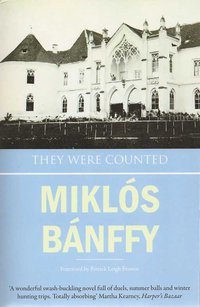
I am back. Sorry that I have been so quiet for the last few weeks. I don’t have any real explanation. Excuses may range from work commitments through some form of ‘writer’s block’ (where has my muse gone?) to the genuine excuse of being totally absorbed by Miklos Banffy’s first volume of his trilogy – They Were Counted.

This is an exceptionally good book. I will write about it at greater length at some future date, but I do recommend it. He can sometimes get a little bogged down by Hungarian politics, but when he gets going, describing balls, duels, gambling and love, he really does have a very fine style. Paddy wrote the forward to the English translation whilst staying at Chatsworth during Christmas 1998. Much of the story is set in Kolozvar (Cluj) and our old friend the Hotel New York, where Paddy and Angéla went for a cocktail, is frequently mentioned.

We have just had a blog anniversary. The Patrick Leigh Fermor blog started in late March 2010. In that time it has reached almost the very top in any Paddy search you care to mention. There have been over 64,000 visits, 156 postings, 206 comments, and there are now well over 100 subscribers (you can sign up in the top right of the home page so that you receive future posts by email – no spam).

When I started I wondered if there would be any interest in our heroic and talented subject. There were just a few dozen visits in the first month. But visits grew rapidly to a peak of 9,400 in January 2011. We now track at nearly 7,000 visits a month on average so you are not alone in your interest in The Greatest Living Englishman.

I am extremely grateful to all of you who have got in touch with me with messages of support; offers of information; and especially to those who have sent me material to publish. I can assure you that there is much more material (I have over 60 items in various stages of draft) and it will come in a steady stream. To one of you, please be assured I remain your #1.

Finally, let’s not forget why we are here. Paddy is now 96 years of age and, as far as I can tell, in reasonably good health. I am sure we wish him all good health and pray that he is working as fast as he can on that third volume. It is without doubt one of the most eagerly anticipated books of the decade.

Why not visit some of our top posts?

Patrick Leigh Fermor recounts the kidnap of General Kreipe on video

A Meeting between Paddy and George Psychoundakis the “Cretan Runner”

Patrick Leigh Fermor – star of the silver screen?

On the Pontic shores where the snowflakes fall

I knew Patrick Leigh Fermor through his words, and he will know me by mine

Well Met By Sunlight

This is from an excellent website devoted to Powell and Pressburger the producers of Ill Met by Moonlight, and recalls the  Fielding’s first meeting with Dirk Bogarde.

By Daphne Fielding (wife of Technical Advisor and SOE agent on Crete, Xan Fielding)
From her book  The Nearest Way Home (London: Eyre & Spottiswoode, 1970)

Daphne writes in her chapter, “Well Met by Sunlight”…

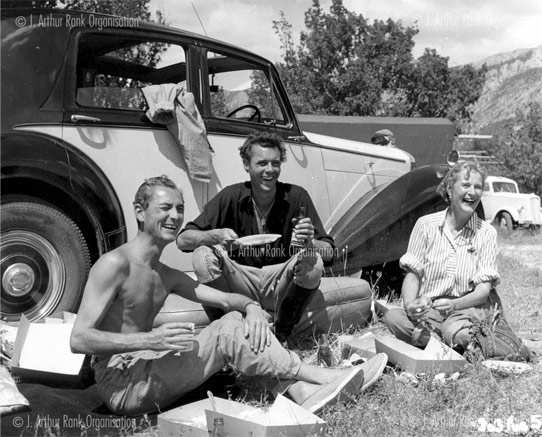
Xan and Daphne Fielding with Dirk Bogarde

Long before leaving England, long before our journey along the Barbary Coast, long before our marriage in fact, Xan had been asked by the film director Michael Powell to act as technical adviser on the production of Ill Met by Moonlight, the story of the abduction of the German General Kreipe by Paddy Leigh Fermor in enemy-occupied Crete. Afterwards the project had been postponed until Xan had almost forgotten it. Now, five years later, he was summoned by telegram to the south of France where work on the film was due to begin in a few days’ time.

… Xan agreed to take Salote [one of their dogs] with him, leaving me to follow with Sunflower [the other dog] as soon as I had arranged with a newspaper to write a series of articles on the making of the film, which would give me a valid reason for joining the unit.

Xan wrote to me a few days later from Nice to say that in spite of the urgency of his summons there was no sign of Michael Powell or of any film unit in the vicinity. Meanwhile he was enjoying the luxury of the Hotel Negresco, where rooms had been booked for him …

I arrived just in time. On the very next morning a car turned up at the Negresco to take us to Draguignan, which had been chosen as the unit headquarters. Here we learnt that the actor cast for the role of Paddy was Dirk Bogarde. He was not staying at Draguignan, however–there was no proper place for a star in a little market town already overcrowded with the production staff, camera crews, sound engineers … but in St. Raphael, on the coast, where Xan was to meet him before shooting started.

Though I looked forward to meeting him too, I was rather nervous about it, for in spite of my newspaper commission I still felt like an interloper. I was almost relieved when our repeated attempts to reach him were in vain: Mr. Bogarde was busy, had just gone out, was not available. Eventually, in the bar of his hotel, we ran to earth his manager Tony Forwood, whose blue eyes sized us up in a wary glance, then suddenly twinkled. “So you’re the Fieldings, are you?” he said. “Dirk’s upstairs in his room. I’ll go and fetch him.”

When he reappeared with him a few minutes late they both seemed to be enjoying some private joke, which added to my confusion, especially as I happened at that moment to be trying to extricate myself from the dogs’ leads which had wound themselves round my legs. Dirk’s smile turned to a broad grin as he watched my antics. “Just how many legs have you got?” he asked.

After the ice was broken, at ease with him, I said, “You seemed to be avoiding us on purpose.”

“I was”, he admitted. “Mickey had told me about Xan’s war record and I’d conjured up a dreadful picture of you both — ‘The Major and his Wife’, a sort of Osbert Lancaster cartoon. I couldn’t bear the idea of meeting you. If it hadn’t been for Tony …”

… “Yes”, said Tony. “I told him Xan didn’t have a clipped moustache and you weren’t wearing a regimental brooch, so we took the plunge.”

“Anyway, now we’re met”, Dirk concluded.

“Well Met by Sunlight”, I said to myself.

Two days later, after the cast had assembled, there was a final reading of the script followed by a wardrobe meeting. Though some of the costumes did not meet with Xan’s approval — “they look more Ruritanian than Cretan”, I heard him complain — Dirk at least could not have been dressed more authentically, for I lent him my Cretan guerrilla’s cloak, and Xan had brought with him a black silk headkerchief which had been part of his own wartime disguise and which he now taught Dirk to bind over his brow in the proper Cretan fashion.

Dirk was rather alarmed by this unfamiliar headgear. “What on earth do I look like?” he asked.

“The genuine article”, Xan truthfully assured him. “Very dashing. Just like Paddy.”

Next morning the whole unit was up before dawn, ready to move off for the first day’s shooting and, as the sun rose, the long convoy of char-a-bancs, headed by the director’s yellow Land Rover, was on its way to the chosen location up in the hills.

I had been slightly worried about my unofficial position. Was I entitled to a seat on one of the buses? And was about Sunflower and Salote [her dogs]? With characteristic thoughtfulness, Dirk solved the problem for me. “There’s plenty of room in my car”, he said, “for you and Xan and the two dogs. I’ll call for you.” And so we set off, in undeservedly grand style, in the star’s Bentley.

This was to be our daily programme for several weeks and I never tired of it … The locations had of course been chosen for their suitability, but to me they seemed to have been specially selected for their beauty and variety …

It was also fascinating to watch the various members of the cast at such close quarters, to see each one’s interpretation of his role. For the first time I realised what an exacting and exhausting job film-acting must be, especially for anyone as meticulous as Dirk Bogarde. Before each take he would sit by himself, so withdrawn that his nervous tension was contagious. Throughout working hours he remained apart and abstracted, hardly reverting to his own character even when off the set. But once the strain was over — during the luncheon break, for instance, or when packing up for the day — he resumed his normal personality and the relief from his intense concentration would lead to an outburst of high spirits and gaiety which usually took the form of teasing me.

Knowing that I was in awe of the director, and knowing too that shyness makes me clumsier than usual, he would score off me by suddenly saying, “Look out, Daphne, those dogs of yours are eating Mickey’s sandwiches”, or, “I didn’t like to tell you at the time, but during that last take one of your six legs was almost in shot.” I became so apprehensive lest Salote or Sunflower, or indeed myself, might unconsciously stray within the range of the camera … I took exaggerated measures of precaution … and would almost take to my heels at the sight of Michael Powell for fear of a reprimand.

During the last stages of the production we all moved from Draguignan up to Peira Cava, a skiing resort close to the Italian border, and here Paddy Leigh Fermor joined us for a few days.

Paddy’s impending visit had been dreaded by Dirk as much as the prospect of meeting Xan and me. I sympathised with him, realising how awkward it must be for an actor to play a living character when that character is watching him at it. Xan tried to reassure him:

“Don’t worry, Paddy’s not a typical army officer or guerilla leader. He’s not a typical anything, he’s himself, a romantic figure, in the Byron tradition. Very erudite, a sort of Gypsy Scholar, with an inexhaustible fund of incidental knowledge. He can talk to you for hours about hagiography or heraldry or …”

“He sounds too damned intellectual for me.”

But Paddy’s charm and adroitness immediately overcame Dirk’s prejudices, in spite of an incident on the night of his arrival which might have affected their future friendship.

One of Paddy’s wartime henchmen, Ciahali Akoumianakis, who had played a leading part in the abduction of the general, was also attached to the unit as a technical adviser and had brought with him from Crete a demijohn of tsikoudia, the potent local spirit, which he had been saving for just such as occasion as this. “We’ll have a proper Cretan glendi”, he said but, since no other member of the unit would touch the stuff, it remained for Paddy, Xan and myself to help him celebrate in the appropriate fashion — with some trepidation on my part, for I knew from personal experience that a glendi involves a great deal of noisy singing and dancing and is likely to last all night.

By midnight, long after everyone else in the hotel had gone to bed, the tsikoudia was beginning to take effect, and Paddy and Xan had broken into song. Soon the bar, empty but for the four of us, was resounding with matinades punctuated by the thump of feet performing the pentozali.

“Please stop it”, I begged them. “You’re keeping everyone awake.”

“But we’ve only just begun”, they objected, “and the bottle’s still half-full.”

“In that case I’m going to bed”, I announced, foreseeing, as I fled, an irate Michael Powell appearing in the bar like Christ in the temple.

Even from upstairs the sound of revelry, though not quite so deafening, continued for some time, unabated. I was on the point of going back to make one last attempt at stopping it, when it came to an end. A few minutes later Xan stumbled in.

“Dirk came down”, he announced.

“No wonder. Was he furious?”

“He looked a bit angry. But all he said was, ‘Some people have to work in the morning and want to get to sleep.’ He’s right of course. I don’t blame him. Anyway, Paddy and I have just slipped a note under his door to say we’re sorry.”

In the morning Dirk did not even mention the matter, nor did anyone else in the unit. But Paddy did. At breakfast he casually remarked to Michael Powell: “Who the devil was making that fiendish din last night? I couldn’t sleep a wink.”

Such frivolity and exuberance endeared him to everyone, though these qualities did not accord with the preconceived idea of him which some members of the unit had formed. “I just can’t see him capturing a German general”, Dirk’s dresser said. “He’s not the strong, silent type at all.”

“What about Major Fielding?” Dirk asked.

“Major Field? Oh, yes. He looks like a f…..g little killer.”

Whether this was meant as a compliment or not, from then on Xan was referred to on the set as F.L.K.

[At the conclusion of the film, the Fieldings drove with Dirk to Paris to catch a flight and en route stayed in the Hermitage in Digne “one of Dirk’s favourite hotels in France.”]

For Xan, however, Digne had other associations. It was here, while working as a secret agent during the occupation, that he had been arrested by the Gestapo and sentenced to death. In fact the house in which he had been imprisoned was next door and we could see it from our bedroom window. Dirk was extremely upset when Xan mentioned this to him over dinner.

“You should have told me at once”, he said. “We could easily have stayed somewhere else. We’ll move out now if you like, it must be horrid for you …’

“Not at all”, Xan told him. “I don’t mind a bit. In fact I’m glad to be back here in such different circumstances. After all this time. Twelve years … Good heavens, it’s twelve years exactly, to the very day!”

“This calls for a bottle of champagne”, said Dirk.

A photograph of Xan and Daphne Fielding with Dirk Bogarde

Xan and Daphne Fielding with Dirk Bogarde on the set of Ill Met by Moonlight


Related category:

Ill Met by Moonlight

A Meeting between Paddy and George Psychoundakis the “Cretan Runner”


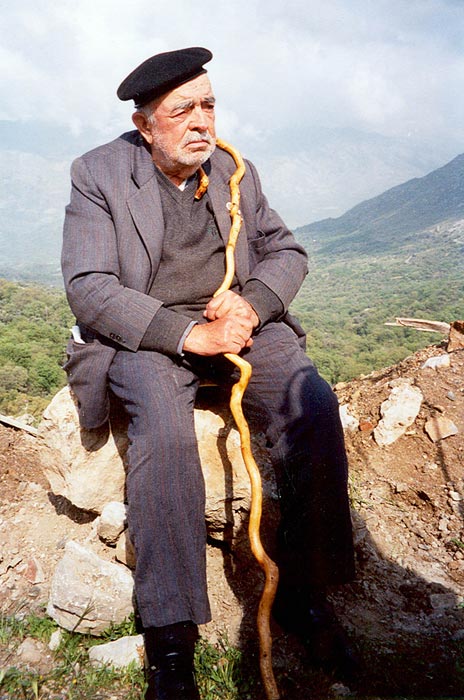
George Psychoundakis in 2004(?)

A bond deeper than blood. The friendship forged in wartime Crete between Patrick Leigh Fermor and shepherd George Psychoundakis was commemorated in George’s memoir about the Resistance, The Cretan Runner. With the book republished, it was time to meet again.

by Allison Pearson

First published in The Daily Telegraph, Saturday 13th June 1998

Two old men sitting at a table talking about the war. A Cretan and an Englishman. A voluble eye-popping tenor and a growly teddy-bear bass. “Remember the sick doctor we disguised as an old woman and carried for miles to get help?” “Yes, and remember when you dressed up as a general and kidnapped a real one!”

They interrupt each other. They sigh for the dead. They laugh for dear life, knowing exactly how much it can cost. Although one of the men speaks only Greek, I think I can detect a rhythm to their reminiscing: the Cretan talks everything up and the Englishman plays it right back down again. The sudden memory of one “bad Greek” acts on the Cretan’s weathered face like a drawstring, pulling it taut to a scowling walnut. But the Englishman, all silky diplomacy, jumps in and offers a more optimistic assessment of the fiend in question: “I think he just lost his head a bit.”

Later, when the Cretan mentions the Englishman’s name in the course of what sounds like a pretty fulsome tribute, his friend stops translating for me altogether. What did he say? “He was more than kind about me.” Yes, but what did he say? “Oh, I couldn’t possibly repeat it.”

The bashful Briton is Patrick “Paddy” Leigh Fermor, traveller, scholar- gypsy, war hero and writer of genius. His fiery friend is George Psychoundakis, author of The Cretan Runner, an extraordinary account of the anti- Nazi Resistance on the island, which was translated by Leigh Fermor and is now republished.
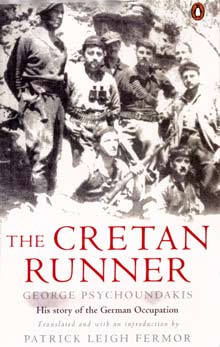
The Cretan Runner

There have been other memoirs of wartime Crete, such as Xan Fielding’s Hide and Seek and Ill Met by Moonlight, W Stanley Moss’s record of the kidnapping of General Kreipe (later made into a movie, with Dirk Bogarde assigned to fill Leigh Fermor’s dashing boots). But those were visitors’ books. George’s story, as Leigh Fermor points out in the introduction, is unique. It is no longer the locals who are colourful aliens, but the Allied officers and their wireless operators – good sorts and good sports in the main but, none the less, foreigners with some very dodgy customs. “A most peculiar man,” George says of one buffer. “He had pyjamas and a washbasin.”

Even more baffling for the Cretans, who think Nature is a place where you go and shoot things, the buffer turned out to be an amateur botanist and geologist: “He was not only in love with different kinds of weeds but with stones as well.”

Paddy and I have been sitting in the front room of George’s small vine-clad house, outside Khania in western Crete, for more than two hours now. At least one of us is reeling under the bombardment of Cretan hospitality. Celestial cheese tarts made by Sofia, George’s wife, have given way to nuts, glistening sweetmeats and, as if that weren’t enough, shots of tsikoudia, a spirit so lethal it feels less like drinking a liquid than sipping scalded air. After three of these, I am not entirely sure whether the spools on my tape recorder are going round: after four, I don’t care.

George – one eye sleepy, the other coal black with embers of mischief – is joking about whether he should have given lessons in sheep stealing (a local speciality) to one of the wireless operators. “So when he got back to Scotland he could have organised sheep rustling.” Paddy pretends, unconvincingly, to be shocked.

Through the window behind them, you can see the White Mountains – a range so towering and snowy, even on this May day, that it is hard to tell where rock stops and cloud begins. More than half a century ago, those slopes were Paddy and George’s stamping-ground. “George’s life was dangerous and absolutely exhausting,” explains Paddy. But George is having none of it: “I felt as if I were flying. Running all the way from the top of the White Mountains to Mount Ida. So light and easy – just like drinking a cup of coffee.”

George has difficulty walking now – at 78 he leans on a stick as gnarled as himself – but his mind can leap from memory to memory, as if he were still flying. I ask George what he thought the British had learnt from the Cretans and vice versa. “What they learnt, because there was very little to eat, was to drink a lot and to dance and to shoot for joy in the air. We saw how much they loved our country and it made us love it still more. The fact that they loved Crete so much gave us even greater courage.”

The first time George Psychoundakis met Patrick Leigh Fermor he thought he was very tall. The young Cretan had just crawled on all fours through thick bushes into the heap of boulders where the officer was hiding. In fact, the Englishman was not especially lofty (a touch over 5ft 9in, according to his passport). It was the Greek who was tiny. “As fine-boned as an Indian,” recalls Leigh Fermor. “Lithe and agile and full of nervous energy.”

Anyway, height didn’t matter much back then. It was the July of 1942 in occupied Crete and the stature of men was not measured in inches, rather in a bewildering range of abilities. These included: keeping cool when a member of the Gestapo approaches your mule while it is carrying a combustible load of wheat and wireless; keeping warm in a cave-bed with a canopy of stalactites; and finding the courage to tuck into a dinner of local produce – grass cooked with snails. “We took the grass blade by blade, picked off the broken shells and ate it with much laughter,” recalls George.

Psychoundakis was a runner for the Resistance – a vertical postman, he delivered messages and equipment at barely credible speed. On a map, Crete doesn’t look too daunting – a sirloin steak beaten to a succulent sliver by a butcher. But it rises so sharply into such broken-toothed cragginess that it is pointless to measure it in miles: the islanders calculate distances in the time taken to smoke cigarettes. George’s wartime business was mainly conducted at eagle-height, or as he felt his way down the vertebrae of his homeland towards some hiding place where even goats didn’t dare.

He was 21 years old when he first met the 27-year-old Leigh Fermor. George addressed Paddy as Michali (all the Allied soldiers had Greek nicknames) or sometimes Mr Michali in half-amused respect (irreverence being the key to the Psychoundakis psyche). Paddy, meanwhile, code- named George either the Clown or the Changeling, for his cockeyed wit, his impish insubordination and a magical ability to spirit himself out of trouble.

Patrick Paddy Leigh Fermor and Billy Moss

The two men were not just worlds apart: a glance at their biographies suggests you would need to hire a time machine to bring them together. Born in Asi Gonia, a village with a long history of giving invaders a hard time (asi is Arabic for uncommandable), George lived the kind of peasant life that had not changed for centuries. His family slept together in a single room with a beaten earth floor. After a scratchy education at the local primary school, he followed his father on to the mountains as a shepherd. By the time German parachutes blotted out the sky in May 1941, he had visited only two of Crete’s towns and had never seen the capital, Heraklion.

By contrast, Leigh Fermor was born into a smart Anglo-Irish family and educated at prep school and King’s, Canterbury. [Just like someone else we know] By 1939, he had walked across every country between London and Constantinople – a stroll commemorated in his two dazzling volumes, A Time of Gifts and Between the Woods and the Water – and also appeared to have drunk in most of their national literatures.

Scrape through what Leigh Fermor called his “Fauntleroy veneer”, though, and you find a rougher grain. With his parents abroad for the first four years of his life, Paddy was entrusted to the family of a small farmer and, left uncultivated, he ran wild. The experience, he later wrote, “unfitted me for the faintest shadow of constraint”. His behaviour at a flurry of schools led to his being sent to two psychiatrists, although it is unlikely that either rivalled Paddy’s clinical diagnosis of himself as “a very naughty boy”. He was finally expelled from King’s for crimes that included “trying to be funny” and holding the hand of a greengrocer’s daughter. His housemaster’s report noted: “He is a dangrous mixture of sophistication and recklessness, which makes one anxious about his influence on other boys.”

Almost 70 years later, I find it hard to improve on that verdict, save to replace the word dangerous with delightful. As it turned out, his influence on other boys was all to the good, and the most remarkable boy of all was George Psychoundakis.

While Paddy was in Kent writing “bad and imitative verse” and lapping up ancient Greek because it was a passport to a world of heroes, George was scavenging books from the village priest and the doctor, and occupying the long woolly hours by the sheepfold composing patriotic poems and beady skits on local life. (An early effort entitled Ode to an Inkspot on a Schoolmistress’s Skirt sounds distinctly Paddy-like in its high- flown cheekiness).

Although George’s father, Nicolas, was illiterate, he could recite by heart the whole of the Erotocritos, the 17th-century Cretan epic poem that comprises 10,000 lines of rhyming couplets. And the rhythm lodged in the son’s head and on his tongue: poetry to these people was not the object of solemn study but a spur to the spinning of legends and the cue for a bloody good song.
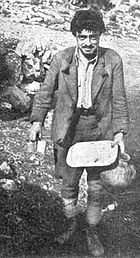
George Psychoundakis during the Resistance

Which is to say that when the ragged and practically barefoot Cretan wriggled into the hiding-place of the Englishman in 1942, they had more in common than an enemy. George spoke only one perfect sentence of English – “I steal grapes every day” – but Paddy soon extended his repertoire. On long marches to the coast to meet supply vessels or during the dark hours awaiting a parachute drop, the Britons taught the Greeks folk-songs and the Greeks taught them mantinadas – waspish local couplets with a sting in the tail.

On their first trek together, Paddy recalls how George recited a poem he had written on the unambitious theme of The Second World War So Far. “It covered the invasion of Poland, the fall of France, the German invasion of Greece and Rommel’s final advance. It lasted more than two hours and finished on a note of triumphant optimism and presage of vengeance, which he emphasised by borrowing my pistol and firing it into the sky with the remark that we would soon be eating the cuckolds alive.”

Leigh Fermor, meanwhile, attempted to satisfy Psychoundakis’s ravenous curiosity about the world. What was Churchill like? Why do the Scots wear kilts? How about astronomy, religion, trains? How many sheep does the average Englishman own?

The task of the British Special Operations Executive in Crete was to assist the local Resistance. Having spent centuries in revolt against the Venetians and the Turks, the islanders didn’t actually need much encouragement. During the airborne invasion in 1941, when many young Cretans were away on active service, descending parachutists were met by old men, women and children – by anyone, in fact, who could point upwards and shoot. “Aim for the legs and you’ll get them in the heart,” ran the local wisdom. Four thousand Germans died. Those who survived took swift revenge. Reprisals, read one Wehrmacht memo, “must be carried through with exemplary terror”. Between May and September of that year, 1,135 Cretans were executed.

The Cretan Runner begins with the invasion. “Out of the sky the winged devils of Hitler were falling everywhere … the aeroplanes came and went like bees in a bee-garden.” One grounded plane is set upon by furious locals till it resembles “a bit of bread thrown on to an ant-hill”. From the opening pages, you get a pungent impression of the Psychoundakis style – a vertiginous mix of the epic and the demotic, the Homeric and the homely. Of the enemy, George writes: “They reached to our very bowels and provoked a storm in the soul of the race like the hiss of a poisonous snake about to strike.” No British account of the battle of Crete could contain a sentence like that. Too purple. Too embarrassing, frankly. But it feels utterly true to George and the hot-blooded rhetoric of his race.

Perhaps the greatest surprise of a book that documents the burning of villages, the casual slaughter of comrades and a life of mesmerising danger is how often it makes you smile. No stranger to hardship anyway, George embraces discomfort as though it were a shy friend with a lot to offer. We see George at the end of a knackering three-day trek using pieces of wood to mime someone hobbling. We hear him enthusing over yet another dank hiding-place as though he were writing for some actionable travel brochure: “The cave was perfect. We collected our drinking and washing water from stalactites. We arranged luxurious couches for ourselves from the branches of various shrubs that were better than the softest mattress!”

Best of all, there is George richly enjoying his British friends, not least their congenital inability to walk over the rocky landscape. (In one incident, Leigh Fermor threw himself pluckily at a high stone wall in emulation of local bravado, only to fall off backwards: the Cretans in the party walked around the side of the wall, shaking their heads and laughing.)

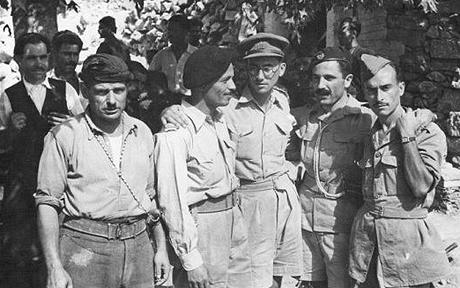
SOE officer Ralph Stockbridge (centre, in the spectacles) with some of his comrades in Crete

“It was plain that George was enraptured with the excitement of our secret life,” says Paddy. The same could be said of all of them, I think. As a boy Leigh Fermor confessed to being guilty of “a bookish attempt to coerce life into a closer resemblance to literature”. In this case, the literature was Greek. The Cretans, for their part, seemed all too willing to live up to the legends the Englishmen had imbibed at school. Most battles look romantic only in retrospect, if then: Crete was different. It seems to have struck its leading men as touched with an air of romance, even as the drama was unfolding. As they approached by boat on a moonless night, the first the soldiers knew of the island was perfume, the scent of wild thyme that wafts miles out to sea.

Once on shore, they changed into local costume – breeches, black bandanas, embroidered waistcoats and spiffy jackboots. There were lessons in how to curl their new moustaches. They were an extraordinary bunch – poets, archaeologists, free spirits thirsty for adventure. SOE chose them because they had some knowledge of ancient Greek. But, as Leigh Fermor explains, since Greek was no longer compulsory at school, those who opted for it had already marked themselves out as “a perverse and eccentric minority”.

I cannot get enough of the photographs of the Resistance taken through those years in the mountains. Remember, these are snapshots captured at a time when to have a likeness of yourself in existence was itself a threat to that existence. There is the legendary Xan “Aleko” Fielding, looking uncannily like the young Hemingway. Gimlet-eyed and bare- chested, he regards the lens with Olympian amusement. And there is Yanni Tsangarakis, one of the bravest and most trusted guides, slightly woebegone behind a Zebedee moustache, and the redoubtable Manoli Paterakis, whose unforgettable profile suggests he may have been the love-child of Montgomery of Alamein and a peregrine falcon. [I think he’s trying to say he was nasally overendowed]

Looking at the smiley countenance of Tom Dunbabin – a fellow of All Souls in peacetime – you can see why he inspired such love; ditto the gaunt saintly faces of Aleko Kokonas, the schoolmaster of Yerakari, and his wife, Kyria Maria. And then, of course, there are Paddy and George: the first as debonair and unfeasibly handsome as Errol Flynn casting about for a galleon to capture; the second apparently auditioning for the role of Puck.

In Louis de Bernieres’s novel Captain Corelli’s Mandolin, set in wartime Cephalonia, there is a posh Englishman who lives in a cave and comes out declaiming ancient Greek. He is a bit of a joke. And, to be sure, there is something potentially laughable about the Boy’s Own aspect of all this dressing up and blowing stuff up. What redeems it from absurdity, what transforms it into real rather than fantastical heroism, is the nagging presence of death, which circled above these lives like a hawk. There was nothing comic-book about Anton Zoidakis, captured by German soldiers, tied to their vehicle and dragged along the road until his face and his life were wiped away. And even George’s account of merry scrapes is pulled up short when 20 Gestapo visit Asi Gonia: “They said I was wanted for interrogation and if didn’t go to Retimo before January 17 they would set fire to the whole village.”

Three of George’s fellow runners were executed, two after what the Wehrmacht would probably have considered exemplary torture. In his superb book Crete: The Battle and the Resistance, Antony Beevor points out that the penalty for a shepherd caught whistling to warn of the approach of a German patrol was death.

War had transformed George Psychoundakis’s life. In February 1943, it enabled the former shepherd boy to travel abroad for the first time. He was spirited off to SOE headquarters in Egypt, where he was knocked sideways by wonders, not least the grass in the Gezira gardens: “Fat, short grass like green velvet carpet.” As for the zoo, “I could almost have deemed that I was in the middle of paradise”. The most misguided character in the whole of The Cretan Runner is the soldier who advised George not to climb up the Pyramids because it was “very tiring and tricky”. A short hop later, the Cretan runner got out his stiletto and “cut my name and fatherland” into a stone at the top.
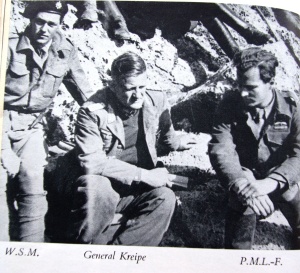
Moss, Kreipe and Paddy

On the day the war was over, a “high-spirited Mr Leigh Fermor” bought a dubious Mr Psychoundakis a lot of drinks. “If I drink all that I’ll be drunk,” protested George. “But my child, what is drink meant for? It’s no use for anything else,” replied Paddy.

Soon after, in a school where a whole village was gathered together, George recited a heart-stopping poem he had written on the lovely village of Yerakari, now destroyed, where once “white houses lay like doves asleep along the sill of heaven”. He had survived, but for a while it was hard to see what for.

Fortune, who had smiled on George in a time of insane adversity, appeared to doze off once the shooting stopped. Because of missing documents and in spite of his British Empire Medal (awarded in 1945), he was arrested as a deserter and imprisoned for several months. One can scarcely imagine the wound inflicted on his pride. Over three days, that great shaggy helmet of hair all fell out. Subsequently, he had to do two more years of fighting in the civil war. Returning at last to Asi Gonia, George found all the sheep stolen and his family in gruesome poverty. The Changeling had run out of magic.

George took a job as a navvy working on a road. At night, he sheltered once more in a cave and by the light of an oil lamp began to fill notebook after notebook with a furious, cramped hand. “I think he undertook this task as a kind of exorcism of the gloom of his circumstances, ” says Paddy. When they met up again in 1951, George gave his friend the completed work: Pictures of Our Life During the Occupation. Better known as The Cretan Runner.

Leigh Fermor, now living on the Greek mainland, took the precious grime-covered manuscript home to translate. George, meanwhile, was working to help his old friend, too. In 1943, with a German patrol approaching, Paddy, who was checking what he thought was an empty rifle, accidentally shot Yanni Tzangarakis in the leg. He died soon afterwards, but not before absolving his friend of all blame. Paddy was devastated: imagine killing the proud son of a country for which you were willing to lay down your own life.

This wretchedness was deepened by foolish rumours that eventually led to a vendetta being declared by some of Yanni’s relatives. This was only laid to rest after years of delicate negotiation by George, who found a very Cretan solution to the Englishman’s impasse: Paddy Leigh Fermor became godfather to Yanni’s great-niece. In Greek society, this bond is deeper than blood.

Two old men sitting at a table talking about the war. A Cretan and an Englishman. “We’d better censor that, George, it’s libellous,” says Paddy, trying to sound stern. As usual, he fails.

George goes off into the bedroom and comes back with a rifle. It is nearly as tall as he is, and its working parts are in similarly creaky order. As George poses with the gun, the photographer asks him to smile. George scowls and spits out a guttural retort. “Oh dear, oh dear,” says Paddy, shaking his head and laughing. What did George just say? “He said he won’t smile because he’s killing Germans.”

At the front of A Time of Gifts, Leigh Fermor quotes from Louis MacNeice’s great poem:

For now the time of gifts is gone
O boys that grow,
O snows that melt,
O bathos that the years must fill.

Since the war, both men have found satisfactions. Leigh Fermor, though unfairly saddled with the label of travel writer, has become one of the greatest exponents of English prose.

Psychoundakis, meanwhile, has translated both the Odyssey and the Iliad into Cretan and been honoured by the Academy of Athens. Still, I can’t help wondering whether the time since their great adventure had been an anti-climax.

“To some extent all our lives were in those years,” admits Paddy. “Of course, one went on to do interesting things, but … ” George has come up now and stretches out his fingertips to reach the shoulders of his friend, the tall Englishman. “Ah, George says to tell you that those years up in the mountains were the best years of his life. He’ll never forget it. Never. And that’s why he wanted to commemorate our days together.”

Just as we are getting ready to leave, George gives Paddy a photograph. It is of George himself and Xan Fielding, taken somewhere in the mountains. You can just make them out. The emulsion is breaking up and great snowy specks of it are blizzarding them into oblivion. Yet looking back at the Cretan resisters, we see only a thrilling clarity. Their existence was both mortally serious and a great wheeze – perhaps a definition of the best kind of life you can hope to lead.

Years after the war ended, George Psychoundakis sang for his friend Patrick Leigh Fermor a mantinada. This is what it said:
With patience first and patience last, and doggedness all through,
A man can think the wildest thoughts and make them all come true.

Related articles:

The obituary of George Psychoundakis aka The Cretan Runner

General’s long trip home

Related category:

Ill Met by Moonlight

Crete: Island of Heroes

“The courage of the Cretan facing the firing squad is legendary … When executions were to take place I would leave my desk and walk out onto the balcony to watch their moment of death. Nowhere else have I witnessed such love of freedom and defiance for death as I did on Crete.” So said General Alexander Andre, the German Commander of the Occupation Forces on Crete.

This video features pictures from the film 11th Day and includes some pictures of Paddy, including a new one to me at least of himself and Moss with the kidnap gang.

It is said that the Germans had never encountered the extent of civilian resistance that they encountered on Crete.

Retribution was swift. The German High Command wanted to break the spirit of the populace and do it quickly. In this they failed and failed miserably. In retaliation for the losses they incurred, the Nazis spread punishment, terror and death on the innocent civilians of the island. More than two thousand Cretans were executed during the first month alone and twenty five thousand more later.

Even in the face of certain death while standing in line to be executed, Cretans did not beg for their lives. This shocked the German troops. Kurt Student, the German Paratrooper Commander who planned the invasion, said of the Cretans, I have never seen such a defiance of death. General Alexander Andre, the German Commander of the Occupation Forces was amazed and said: “The courage of the Cretan facing the firing squad is legendary. Cretans turn into mythical figures. They are so proud of their moment of death that one can hardly fail to admire their courage. When executions were to take place I would leave my desk and walk out onto the balcony to watch their moment of death. Nowhere else have I witnessed such love of freedom and defiance for death as I did on Crete.”

Related article:

Patrick Leigh Fermor recounts the kidnap of General Kreipe on video

Crete: 11th Day Movie with Paddy

General’s long trip home

Related category:

Ill Met by Moonlight
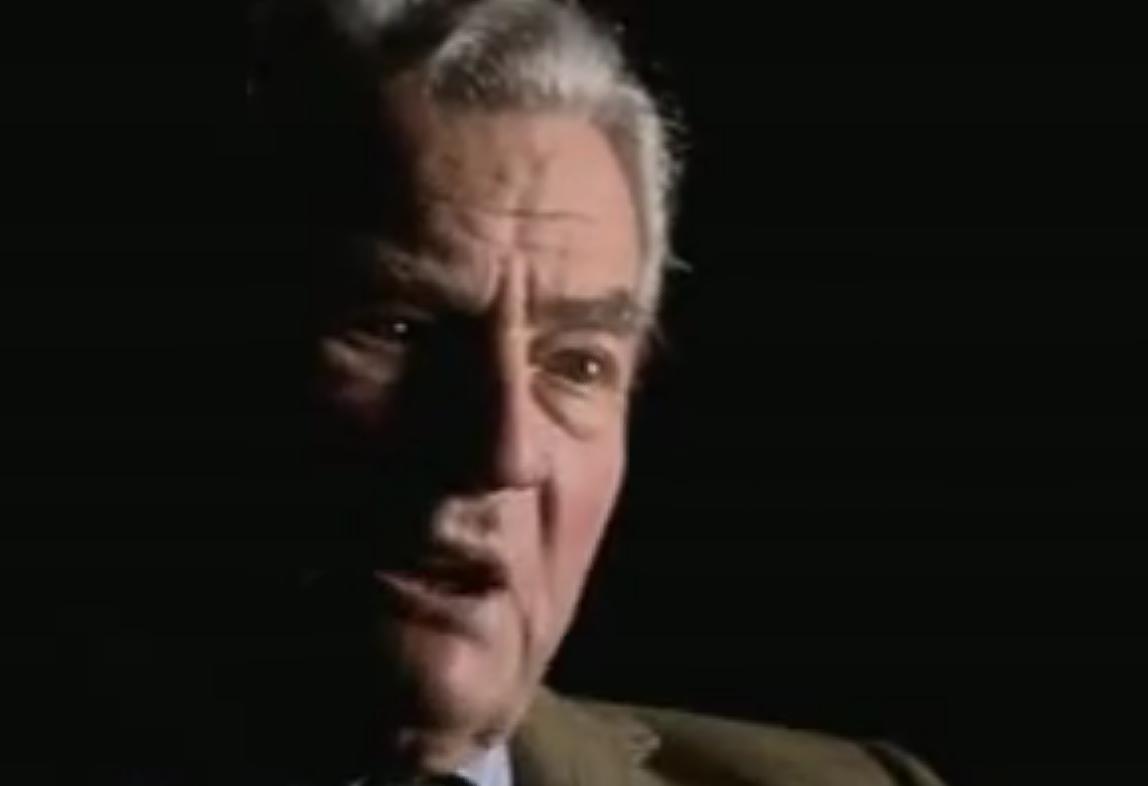
Patrick Leigh Fermor recounts the kidnap of General Kreipe on video

Patrick Leigh Fermor recounts the kidnap of General Kreipe

Finally we have Paddy on video! A kind soul has posted the movie 11th Day on You Tube. Part seven deals with the kidnap of General Kreipe and includes a detailed explanation of the famous Mount Ida Horace moment: “Ach so, Herr Major”.

I have found all parts of the film from You Tube and have embedded them on a special new page Video.

Why not put your feet up and enjoy the whole movie which covers the brave Cretan resistance and the part that Paddy, Moss and others played in it?

But to start you off here is Patrick Leigh Fermor recounting for you the events of what we now know as Ill Met by Moonlight.

Visit the movie 11th Day site.

Related article:

Ill Met by Moonlight movie trailer
Related categories:

Il Met by Moonlight

General’s long trip home


Patrick Leigh Fermor and Moss

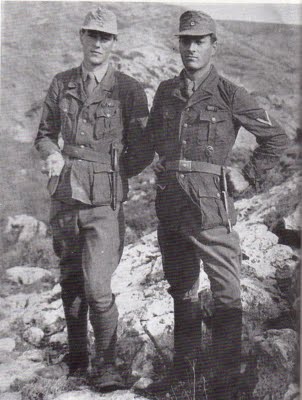
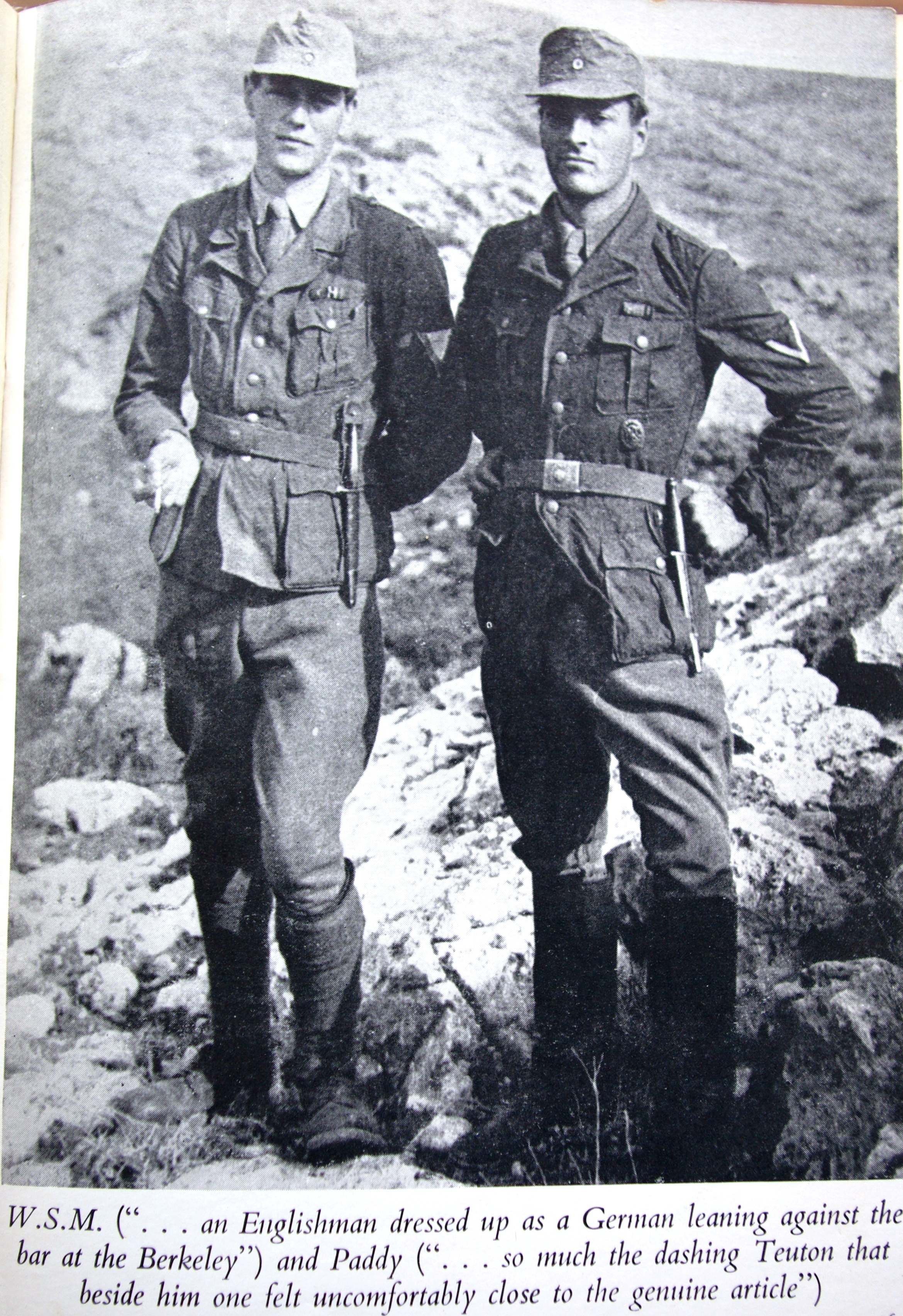
Patrick Leigh Fermor and Moss in German Uniform Prior to the Abduction of General Kriepe

Something interesting to add to the Ill Met by Moonlight story.
First published in the Daily Mail 19 July 2007

By Charles Legge

Question: The book Ill Met by Moonlight tells the story of the kidnapping of German General Kreipe. What became of him after he was taken to Cairo?
In January 1944, Cairo East section of the British Special Operations Executive (SOE) hatched a daring plot to kidnap the commander of the 22nd InfantryDivision based on Crete, General-Leutnant Friedrich-Wilhelm Muller.

The plot was led by Major Patrick Leigh Fermor, along with his second-in-command, Captain W. Stanley Moss (later author of Ill Met by Moonlight, a book made into a film of the same name), and two Greek SOE agents, all of whom arrived by sea.

General Major Kreipe succeeded Muller on March 1, 1944, but SOE elected to continue with the kidnap mission. Joining with Cretan partisans, the SOE agents studied Kreipe’s daily work habits and his travel route from his quarters at Knossos to the divisional headquarters at Ano Arkhanais.

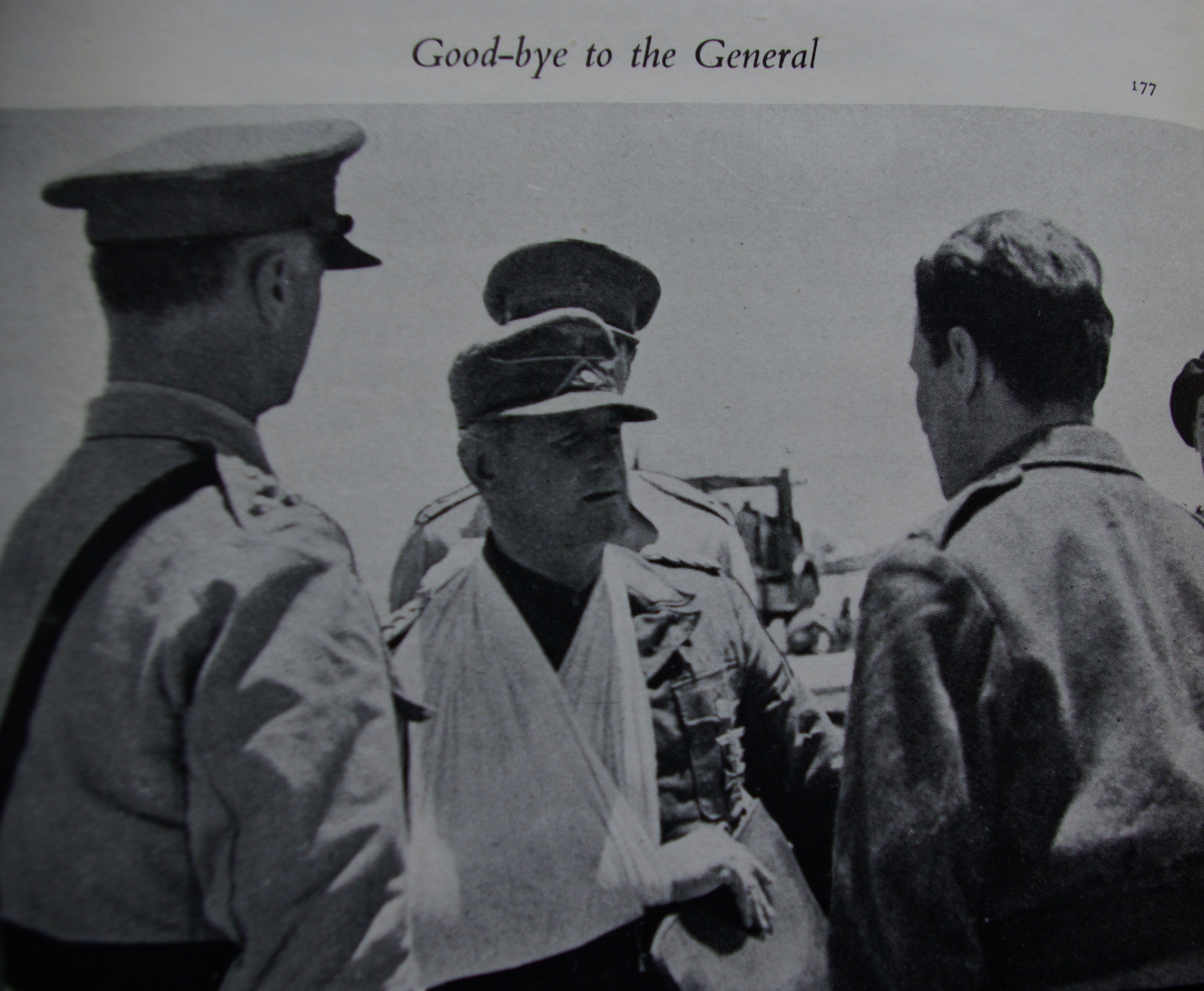
Saying goodbye to General Kreipe

On the evening of April 26, 1944, Major Leigh Fermor and Captain Moss, dressed as German military policemen, stopped Kreipe’s staff car on a hairpin turn under the guise of a routine traffic control point. After pulling the General out of the car and throwing him into the back seat, the agents drove him to an isolated spot, where he was taken on a gruelling cross-country trek over the mountains to the southern shore of the island.

On May 14, 1944, the SOE agents and their captive German general were picked up by a British motor launch off a desolate beach near Rodakino and spirited away to Mersa Matruh, Egypt. Leigh Fermor and Moss both received the Distinguished Service Order for the operation.

Kreipe was taken to London for interrogation before being transferred to prisoner-of-war camp near Calgary in Canada. He was later returned to the UK and imprisoned at Island Farm, Special Camp 11 near Bridgend. He was twice treated for diabetes at hospital Camp 99 at Shugborough Park in Staffordshire.

On October 10, 1947, he was transferred from Camp 99 to Hamburg via Southampton aboard the El Nil. Kreipe was honourably discharged from the military in 1947 and retired to Hanover.

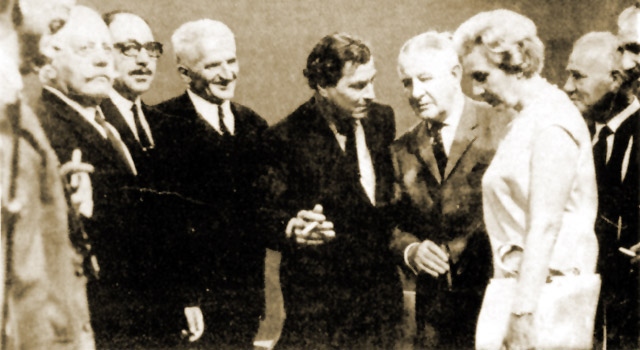
Kreipe flanked by surviving andartes while talking to Paddy on Greek TV

On May 7, 1972, the abduction team (minus Moss, who had died tragically in 1965) held a reunion in Greece at which Kreipe was also present. During the banquet, Leigh Fermor, in fluent Greek and German, said: ‘After 28 years, General, we apologise to you for what happened and hope you have no hard feelings.’ The white-haired general, sitting with his wife, nodded and said, ‘None; otherwise I would not be here.’ Later Kreipe and his captors appeared on the Greek This Is Your Life programme. When asked how he was treated by his abductors, Kreipe said firmly, ‘Ritterlich’ chivalrously.’ Kreipe died in Hanover in 1976 at the age of 81, Patrick ‘Paddy’ Leigh Fermor was knighted in 2004.

Related article:

Ill Met by Moonlight movie trailer
Related categories:

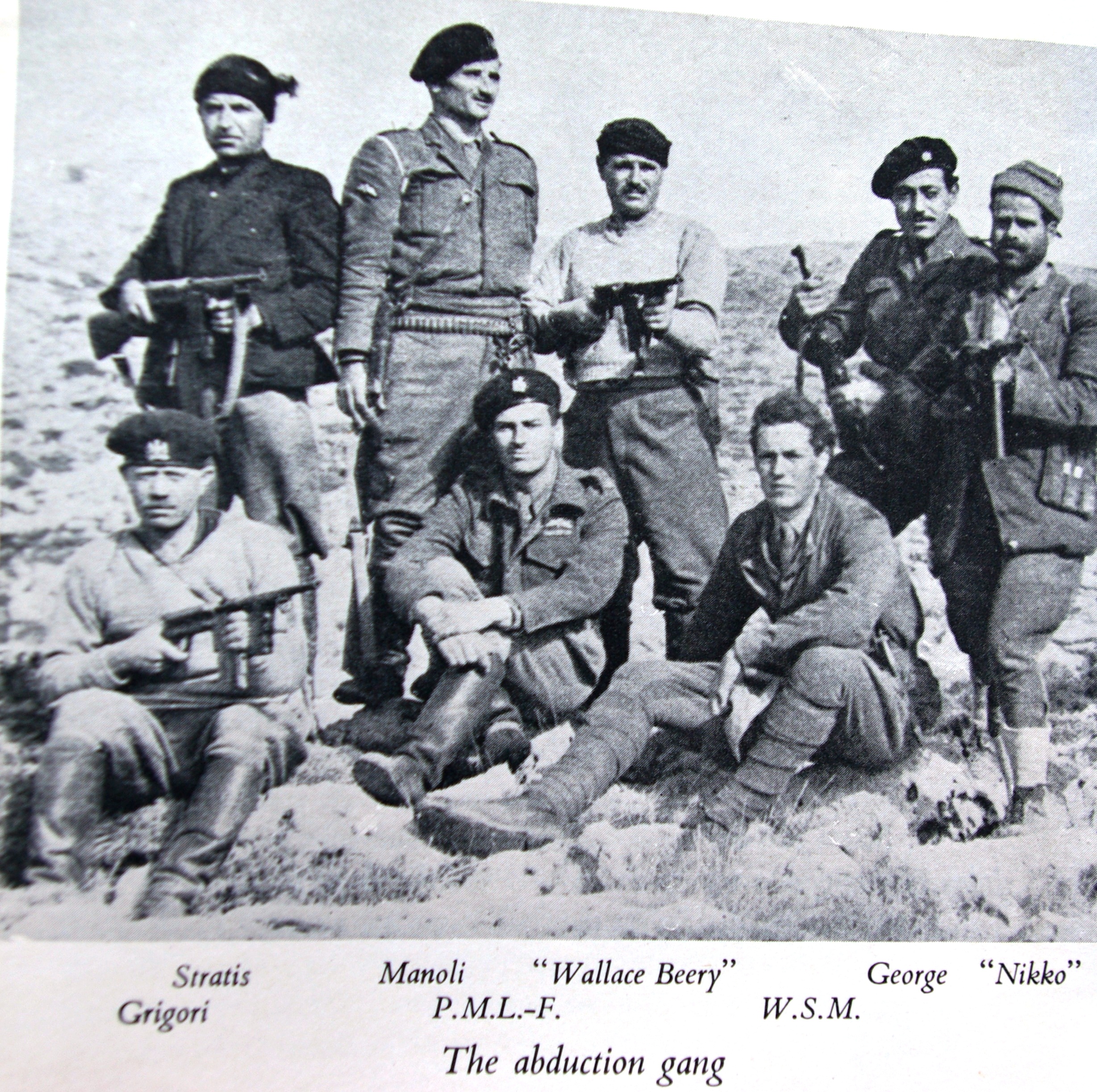
Ill Met by Moonlight – photographs from the book by William Stanley Moss
Ill Met by Moonlight
Where d’you get them bird-like ways recruit Leigh-Fermor?

I am currently reading my first edition of A War of Shadows, William Stanley Moss’ sequel to Ill Met by Moonlight. It covers Moss’ wartime activities from the point after he and Paddy arrived back in Cairo with the captured General Kreipe.

Moss returned to Crete to attempt a repeat of the first escapade but was frustrated in this by much increased levels of security and constant betrayal by the Communist ELAS andartes. He was then posted to (Greek) Macedonia and finally to the Far East where he saw out the war.

Paddy was unable to accompany Moss to Crete as he had been brought down with a very severe attack of rheumatic fever after the rigours of the Kreipe kidnap, and the harsh conditions they experienced whilst on the run. As we know Paddy did recover and returned to Crete. It is perhaps a little ironic that whilst Paddy was described as being somewhat less physically strong, it is Paddy who has outlived virtually all of his contemporaries and, as far as we know, still swims even to this day.

There is one little piece that amused me and I would like to share it with you. Whilst Moss was waiting upon his expected return to Crete after the failure of his second kidnap mission (he never made it back, being sent to Macedonia instead), he joined Paddy in Beirut where he was convalescing at the home of the commander of the British legation. Moss and Paddy were sitting on a patio enjoying whisky and soda, recounting stories and Moss relates the following (p 68):

Though a little thin in the face, Paddy looked surprisingly well; and it was only when he walked that one could have guessed that he had just recovered from so dangerous an illness. “But I manage to crack along,” he said, “—like some strange bird.”

We laughed at the recollection of an incident at the Guards’ Depot during the early days of the war, when Paddy had been a recruit in the Irish Guards. “Recruit Leigh-Fermor!” the drill sergeant had bawled across the parade ground. ”Why’re you walkin’ about like some strange bird? Where d’you get them bird-like ways? Put ‘im in the book, Corporal Driscoll. For walkin’ about like some strange birrrd!”

Having been on the wrong end of Guards sergeant-major’s humorous put-downs I can sympathise! Perhaps my fondest memory is of an Irish Guards Sergeant-Major ordering us to get sorted out before an orienteering event at Sandhurst: “Get into your t’ree groups … A, B, C, and D!”

Photographs of Ill Met by Moonlight

The abduction gang - PLF centre Moss to his left

Visit the photographs page to see pictures  from the book by William Stanley Moss which documents the famous abduction of the commander of German forces in Crete, General Heinrich Kreipe. They show the development of the story from the planning stage, the ‘abduction gang’ selection, and pictures taken during the escape with the General to the south coast and freedom.

Major Dennis Ciclitira Obituary from Daily Telegraph

Published: 12:00AM BST 16 Jun 2000

SOE officer undercover in Crete who organised the German surrender

MAJOR DENNIS CICLITIRA, who has died aged 81, was in charge of SOE’s operations in western Crete during the Second World War and eventually arranged for the German surrender of the island.

Ciclitira arrived on Crete just before Christmas 1943, taking over supervision for the area around the town of Canea from Xan Fielding. Liaison with the Cretan Resistance was led by the classicist Tom Dunbabin, who from the spring of 1942 had been supervising the activities of a handful of SOE officers, among them Patrick Leigh Fermor, who were living rough with the andartes or guerrillas in mountain eyries.

Ciclitira at sea between Cairo and Crete. (The Times)

One of Ciclitira’s first important tasks was to help to organise the evacuation of Leigh Fermor after he and Billy Moss had successfully abducted the commandant of the island, General Kreipe, from his staff car in April 1944. In his book Ill Met By Moonlight (1950), Moss describes encountering Ciclitira in his cave hideout.

“He has grown an impressive beard,” he wrote, “which he treats with the affection of a spinster for her favourite cat, and wears an elegant sort of musical comedy costume, complete with wine-coloured cummerbund, turban and the usual trappings.”

Two of Ciclitira’s men had already been killed by the Nazis, but despite their strenuous efforts to catch him, he managed to maintain wireless communications with Cairo and to arrange for Leigh Fermor and his prize to be picked up by motor launch. When he arrived at the rendezvous he found Moss and Leigh Fermor flashing their torches out to sea in frantic desperation, as neither knew the Morse Code for the pre-arranged signal. Fortunately, Ciclitira did.

Ciclitira left with them on the boat, but subsequently returned to Crete, where he operated under the codename Dionysios. In January 1945, the German garrison of 12,000 began to withdraw to the western end of the island, taking with them prisoners who included Costa Mitsotakis, later the Prime Minister of Greece but then an agent for the Resistance. The Germans had orders to execute all such captives, but Ciclitira managed to contact the German authorities with a view to making an exchange of prisoners.

Ciclitira went to the meeting with Captain Lassen of the Special Boat Section, who soon became exasperated by the horse-trading and suggested that his commando unit, who were hiding in the mountains, should play the Germans at football, with the winner to take all. This suggestion greatly amused Bishop Xirouhakis of Kydonia, who was mediating at the talks and offered to act as referee in any such match.

In the event, after Ciclitira had travelled by caique to Athens for further discussions, 36 German PoWs were exchanged for 10 Cretan agents, probably saving their lives. On May 8, Ciclitira received a message to contact General Benthag, the German commander, to make arrangements for a formal surrender. Dressed in suits, he and Mitsotakis – a fluent German speaker – presented themselves at Benthag’s headquarters. Preliminary terms were then agreed, but since the general could only surrender to an officer of equal rank, it was decided that he should be flown to the British HQ at Heraklion.

Benthag asked how Ciclitira proposed to contact his senior officer, and was most put out to discover that Ciclitira’s transmitter was hidden next door to German HQ, where the volume of radio traffic concealed Ciclitira’s own signals from direction-finding cars. The next evening, although the surrender had not been made public, Ciclitira and his comrades sneaked into Canea and invited their German counterparts to a party; the garrison provided them with a jazz band. The next day, Ciclitira joined in the wild celebrations that greeted Liberation.

Read the full Telegraph obituary.

Ill Met by Moonlight movie

The final movie from the famed Powell and Pressburger partnership starring Dirk Bogarde (as Paddy), Cyril Cusack (as Captain Sandy Rendel), David Oxley (as W. Stanley “Billy” Moss, M.C.) and the superb Marius Goring (as Major General Heinrich Kreipe). Not forgetting the island of Crete of course. Click the picture to watch the trailer!