
Tag Archives: Lismore Castle

Hibernian idyll – Oliver O’Hanlon on Patrick Leigh Fermor in Waterford

Patrick Leigh Fermor: Lismore Castle and its surroundings made a lasting impression on the travel writer. Photograph: Hulton Archive/Getty Images

One for the Irish in us!

The author Dervla Murphy is not the only travel writer closely associated with Lismore in Waterford. Another well-known member of that club linked to the town is the English writer Patrick Leigh Fermor who first visited in 1956.

By Oliver O’Hanlon

First published in The Irish Times

Lismore Castle, complete with what Fermor described as its Rapunzel tower, and its surroundings, made a lasting impression on the writer who is best remembered for his tales of travel to far-off lands. His first great adventure led him on a year-long walk from Rotterdam to Istanbul at age 18.

Fermor was a friend of Lismore castle’s owners, Andrew Cavendish and his wife Deborah, who had the titles of Duke and Duchess of Devonshire. She was the youngest of the six Mitford sisters and was known to her friends as Debo.

She met Fermor (known as Paddy) at a party in 1940. He was a 25-year-old intelligence officer and she was 20, engaged to an army officer. They met again at parties in London in the 1950s and began corresponding in 1954.

Around 600 of their letters survive. Some have made their way into edited books, shining a light on their friendship. They also provide an insight into their impressions of Lismore, and Ireland generally, during the second half of the 20th century.

Writing in May 1956 after his first visit, Fermor thanked his hosts for a “lovely Paradise stay in Lismore”.

He claimed that after the trip, he existed in a “glorious afterglow of it” and that whenever he thought of it, he found himself “smiling with the inane felicity of a turnip lantern”.

In a letter to a friend afterwards, Fermor enthused that Lismore was “beyond all expectations, absolute bliss throughout”. From his description, it seems to have taken on an other-worldly quality in his imagination.

He paints a vivid picture of the usually mundane flora and fauna that one would expect to see in such a setting. Petals from a magnolia tree fell like giant snowflakes. Trees so overgrown with lichen took on the appearance of green coral. This, together with drooping ferns and lianas, prompted Fermor to say that it almost had the appearance of an equatorial jungle.

He explained that the castle and the “primeval forest round it were spellbound in a late spring or early summer trance”. He noted that there was a heavy rhododendron blossom everywhere and likened the river Blackwater, which runs alongside the castle and gardens, to the Limpopo river in Africa.

Days were spent travelling around the neighbourhood, smelling gorse burn, visiting cows, observing salmon being hauled in at Dromana, and drinking Guinness as they went on their odyssey. Trips were also arranged to Helvick and Ardmore.

On a later holiday, he tells of visits to the Lismore wine vaults and a “sawdust scattered drinking hell” in the town with Andrew.

His initial positive reaction to Lismore does not seem to have dimmed with the passing of time.

After a visit in April 1984, almost 30 years after his first visit, he declared that he was still “living in the afterglow of those lovely days at Lismore”. He admitted that it was “more marvellous than ever, even than that glorious first sojourn”.

As much as it was an appreciation of Lismore, it seems that it was the human connection that Paddy savoured during his trips there. He enjoyed meeting the family, who seemed to him like “saints and angels in human form”, horse riding, the outings and the “fun, jokes and everything”.

It was also the simpler things that appealed to him at Lismore such as watching a sunset stream through tree branches on a walk through the wood above the river before dinner on his last day. A meeting with a woman who lived in a cottage in the wood, and who gave them tea and Guinness and currant buns, stayed in his memory.

On his departure from Lismore, he felt that he was an “exile wandering far away from Eden”. Their friendship lasted for decades and has been described as a “platonic attraction” between two people known for their “youthful high spirits, warmth, generosity and an unstinting enjoyment of life”.

Paddy was an avid letter writer and penned somewhere between 5,000 and 10,000 letters in his lifetime. Apart from the residents of Lismore castle, he had other correspondents in Ireland.

He wrote to Enrica (Ricki) Huston, wife of John Huston, at St Clerans near Craughwell in Galway. Letters recount tales of his visits to Birr, Luggala, and other global adventures. She was the person who rescued him after he got into a brawl at a hunt ball in Kildare at 3am after having imbibed too much.

It’s not clear if he would have had enough material for a book on Ireland but it would certainly have made for interesting reading if he did.
Paddy’s Irishness

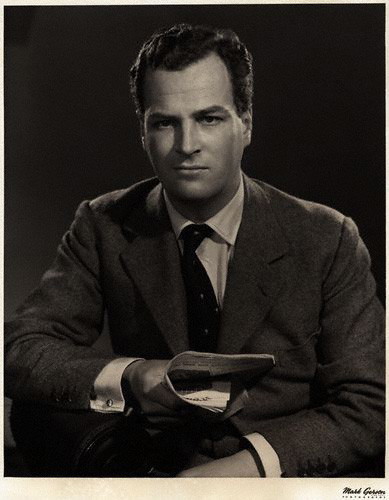
Paddy by Mark Gerson, bromide print, February 1954 (National Portrait Gallery)

Paddy by Mark Gerson, bromide print, February 1954 (National Portrait Gallery)

This gets better as you read it. I wasn’t going to publish it but I thought you might like the second half at least 🙂

By Michael Duggan

First published in the Irish Examiner 7 June 2016.

Patrick Leigh Fermor died five years ago this month, aged 96, and though he claimed to be part Irish, he was a man of the world, who walked from the Hook of Holland to Istanbul in his teens, and who later became a great travel writer.

British soldier and travel writer, Patrick Leigh Fermor, on April 25, 1966. Pictures: Evening Standard/Hulton Archive/Getty Images
ON the third of May, 1810, Lord Byron jumped into the waters of the Hellespont and swam the tumultuous four miles separating Asia from Europe.

In Greek mythology, Leander used to swim across this same stretch of water every night to visit his lover, Hero, who would light a lamp to guide his way.

Byron claimed that swimming the Hellespont was his greatest achievement. 174 years later, another English writer, Patrick Leigh Fermor — also, like Byron, revered by many Greeks for his part in a war of liberation — repeated the feat. Leigh Fermor, however, was 69 when he did it. Byron was 22.

The Hellespont swim, with its mix of literature, adventure, travel, bravery, eccentricity and romance, is an apt metaphor for Leigh Fermor’s life. ‘Paddy’, who died five years ago this month, at the age of 96, seemed to embody the lot.

And he claimed Irishness, too.

Leigh Fermor was born in London in 1915. His father was in Calcutta, where he worked in the Indian civil service. His mother, Aeileen, had planned to follow him, with Paddy and Paddy’s older sister, but the sinking of the Lusitania frightened her that both her children might die at once.

Paddy was packed off to a small terraced house in Northamptonshire. He was loved by his foster parents, and allowed to roam free around the town and countryside with their other children.

In June, 1919, his mother and sister returned from India and Paddy was whisked back to London. He did not adapt well to school. His education was a series of disasters and recoveries, experiments and ignominious expulsions.

After a time living it up with the fast set in London, Paddy decided to walk every mile from the Hook of Holland to the Gates of Constantinople.

Aged 18, this is more or less what he did. He disembarked in Rotterdam on December 8, 1933 and reached Istanbul on New Year’s Day, 1935.

By then, he had mingled with bargemen, peasants, nobles and gypsies, made countless friends, learned songs and languages, had love affairs, slept rough, slept in castles, and savoured a culture on the eve of extinction.

During the Second World War, he led a party of English commandos and local guerrillas, who, disguising themselves as German soldiers, kidnapped the general in command of Crete and smuggled him off the island.

After the war, he began to write, while continuing to indulge his eclectic tastes for travel, wild parties, seedy nightclubs and monastic retreats.

He eventually settled in Greece. where he was loved, with his wife, Joan, and became a legend among travel writers.

Patrick with Joan Rayner, after their wedding at Caxton Hall, Westminster, London, January 17, 1968. Picture: Evening Standard/Hulton Archive/Getty Images
The centrepiece of his achievement was a trilogy of books about his epic trek across Europe.

To get a flavour, new readers might try the opening pages of Between the Woods and the Water. The author is crossing the bridge at Esztergom, entering Hungary for the first time.

He attends the Holy Saturday ceremony at the cathedral. He is in the company of a local grandee, who “carried his scimitar slung nonchalantly in the crook of his arm” and who polished his rimless monocle with a silk bandana.

The passage concludes with the words “I kept wondering if all Hungary could be like this.” The first-time reader is left wondering whether all of Patrick Leigh Fermor could be like this. The books sometimes feel like a never-ending purple passage.

But this is not to say that everything they have to offer is there glittering on the surface. In A Time of Gifts, there is a charming vignette in a little tobacconist’s shop in Goch. Paddy picks up a ‘stocknagel’, a curved, aluminium plaque about an inch long.

On it is a view of the town and its name, and he tacks it onto his walking stick.

Then, with no preamble, the camera angle widens out to show a town hung with Nazi flags.

We hear “the crunch of measured footfalls” as Stormtroopers march into the square. It is the restraint of the writing that deepens the sick feeling in the reader’s stomach.

Intriguingly, Paddy liked to claim he was descended from Counts of the Holy Roman Empire, who came to Austria from Sligo.

Paddy could recite ‘The Dead at Clomacnoise’ (in translation) and perhaps did so during a handful of flying visits to Ireland in the 1950s and 1960s, partying hard at Luggala House or Lismore Castle, or making friends with Patrick Kavanagh and Sean O’Faolain in Dublin pubs.

He once provoked a massive brawl at the Kildare Hunt Ball, and was rescued from a true pounding by Ricki Huston, a beautiful Italian-American dancer, John Huston’s fourth wife and Paddy’s lover not long afterwards.

And yet, a note of caution about Paddy’s Irish roots is sounded by his biographer, Artemis Cooper, who also co-edited The Broken Road, the final, posthumously published instalment of the trilogy.

“I’m not a great believer in his Irish roots,” she told me.

“His mother, who was a compulsive fantasist, liked to think that her family was related to the Viscount Taaffes, of Ballymote. Her father was apparently born in County Cork.

“But she was never what you might call a reliable witness.”

“She was an extraordinary person, though. Imaginative, impulsive, impossible — just the way the Irish are supposed to be, come to think of it. She was also one of those sad women, who grew up at the turn of the last century, who never found an outlet for their talents and energies, nor the right man, come to that. All she had was Paddy, and she didn’t get much of him.”

Patrick Leigh Fermor: An Adventure, by Artemis Cooper
Paddy never tried to get to the bottom of his Irish ancestry, afraid, no doubt, of disturbing the bloom that had grown on history and his past, a recurring trait.

“His memory was extraordinary,” Artemis notes, “but it lay dangerously close to his imagination and it was a very porous border.”

But she is in no doubt about how exceptional a man he was: “The thing that inspired me most about him was his responsiveness to people, whoever they were.

“I had known him all my life. When I wrote the book, I was in my fifties and he in his nineties.

“He didn’t have to impress or charm me, and he never set out to do so. But he was so curious, so responsive.

“Every time I mentioned a book I thought he might like he, he made a note of it.

“Every time I told a joke, he roared with laughter. Every time I told a story, he sat forward, eager to hear how it was going to turn out.

“That wasn’t me, it was him. He made me feel funnier, better-read and more intelligent than I ever could be, and he did that to everyone,” she says.

A bugler from his former regiment, the Irish Guards, delivered the ‘Last Post’ at Paddy’s funeral five years ago.

It marked the passing of an extraordinary man: soldier, writer, adventurer, charmer.

We may not see his like again.