Tag Archives: Bucharest

A Time of Gifts: Forgiveness

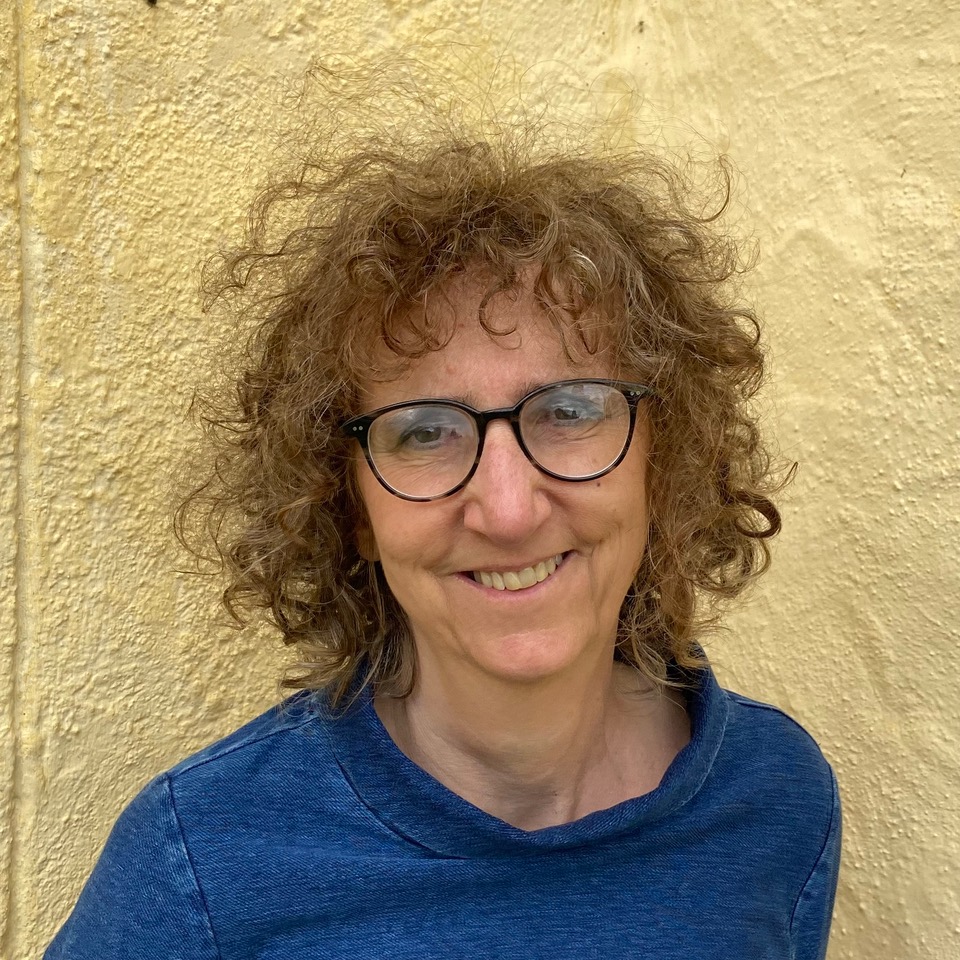
Marina Cantacuzino

I hope that you have enjoyed the series by Nicholas Mellor over the last few weeks. To end the series, Nicholas has invited Marina Cantacuzino (daughter of Sherban) to close with what he calls a “final coda to ‘A Time of Gifts”. Nicholas has presented this whole series to friends as  “A Time of Gifts: A Song Cycle in Four Movements”; perhaps you might also see it in that way?

By Marina Cantacuzino


‘I never wore the beryl necklace. By the time I was old enough to understand what it represented, my grandmother had already offered it up to fund humanitarian aid for revolutionary Romania. Instead of resting on my shoulders or on my sister Ilinca’s, it had been transformed into medicine and morphine for a Bucharest hospital with empty shelves.

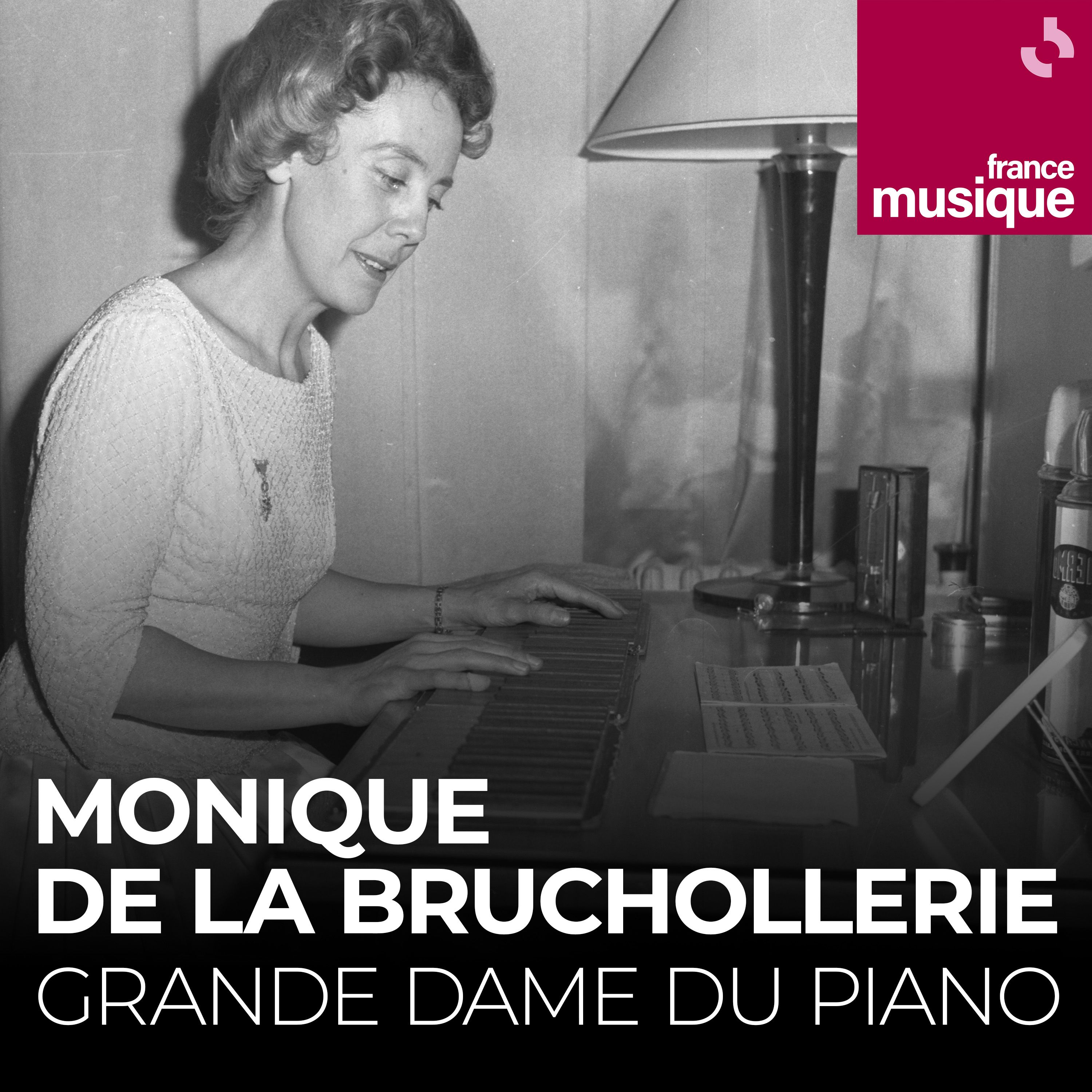
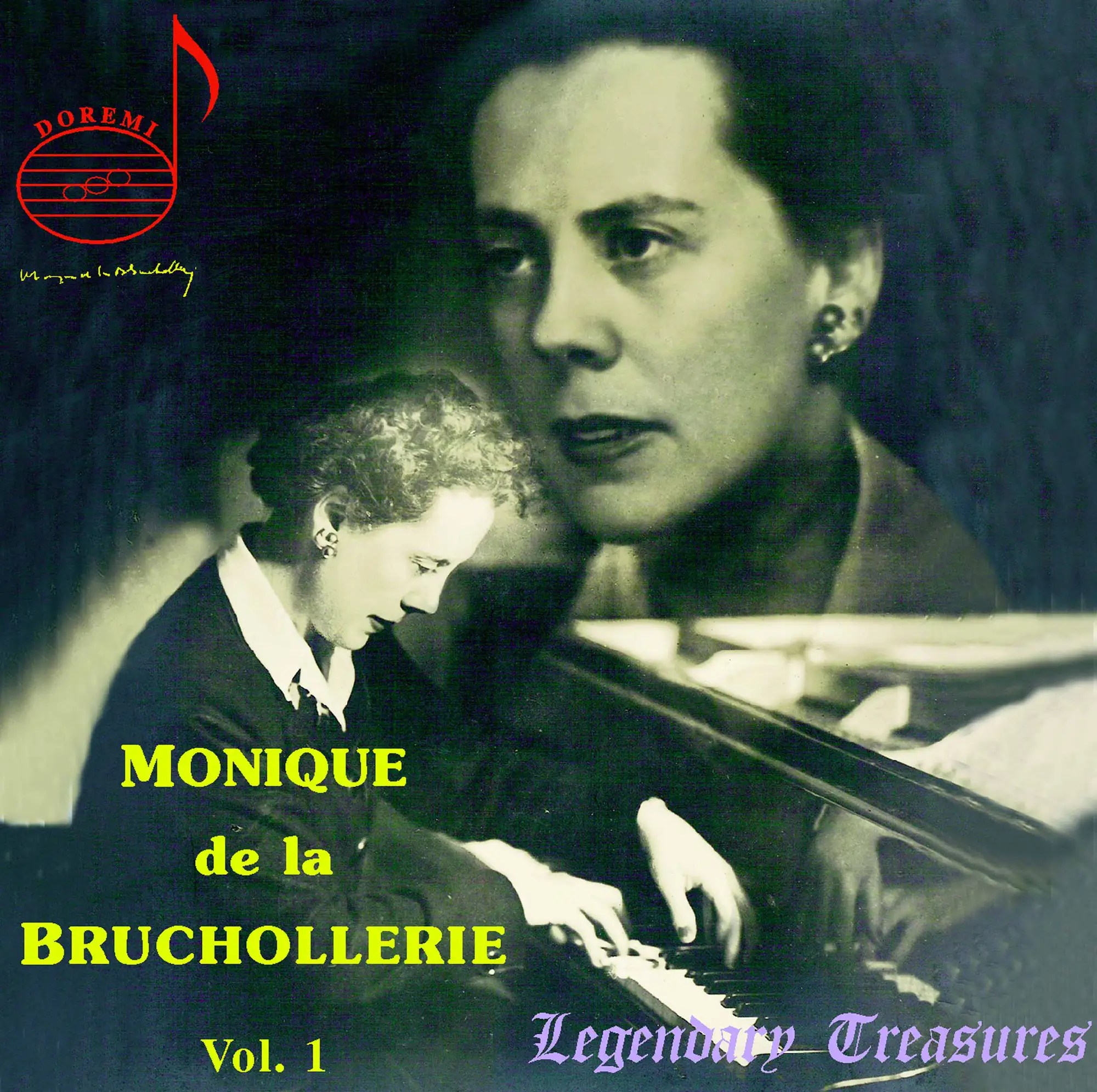
For years, I thought of Monique de la Bruchollerie as simply the courier – the exotic French pianist who carried the necklace from my grandfather to my grandmother, keeping it for eighteen years before it was finally retrieved. That is the story that has already been told in ‘A Time of Gifts: the Pianist’. But that was never the whole story.

When Trauma Crosses Generations
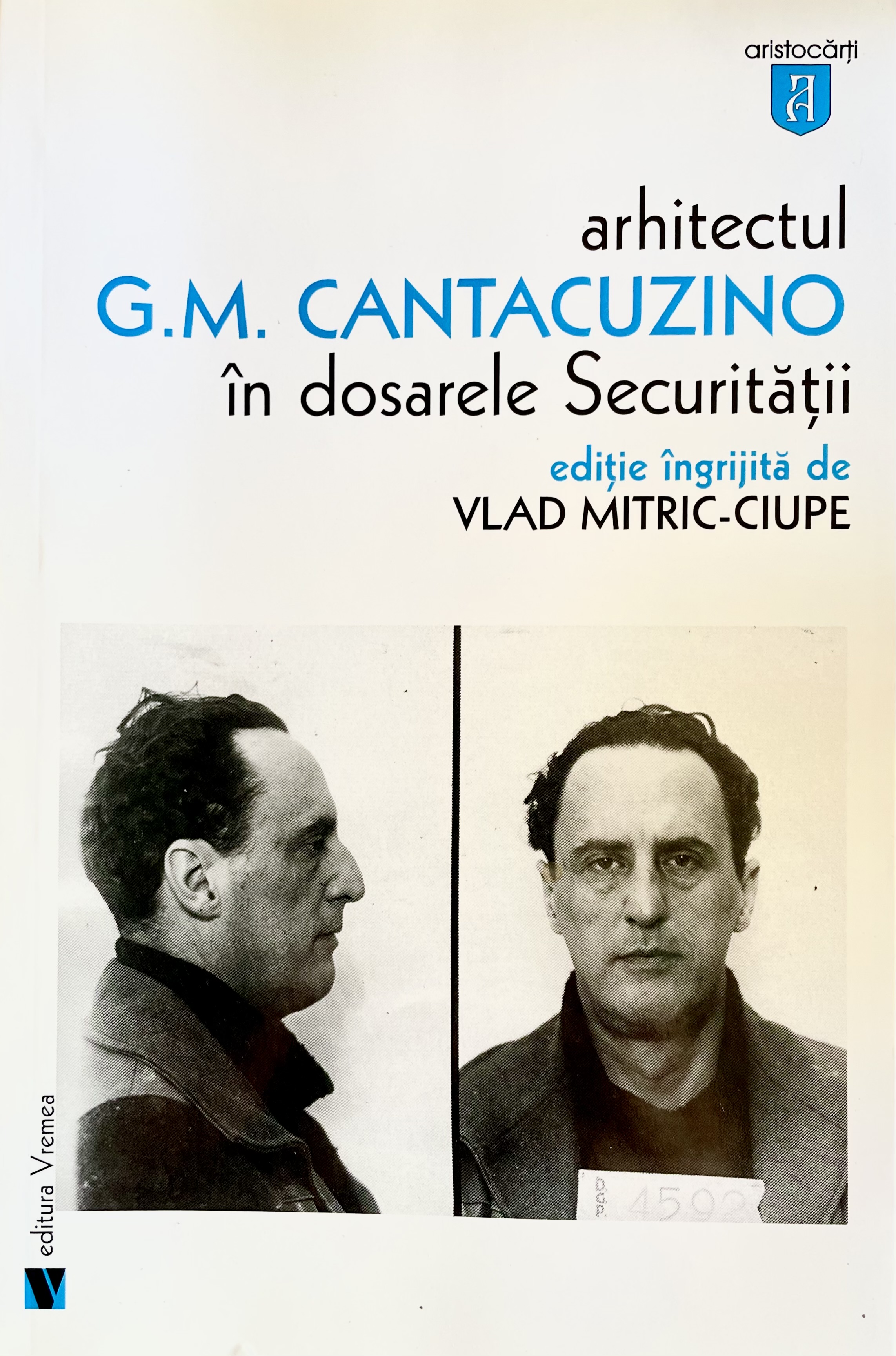
George Matei Cantacuzino Securitatae file

George Matei Cantacuzino Securitatae file

Over time, I’ve come to understand Monique and my recent ancestors as inseparable from my work with The Forgiveness Project, a charity committed to ending cycles of revenge and promoting restorative solutions in the aftermath of trauma. Monique’s trauma remained unresolved. My grandfather, George Matei Cantacuzino, classified by the Communists as a ‘person of unclean origin and refused permission to join his family in England, dealt with his trauma of captivity and separation through writing and painting. He died in 1960 aged 61. My grandmother who came to England with their two young children in 1939 never saw her husband again.
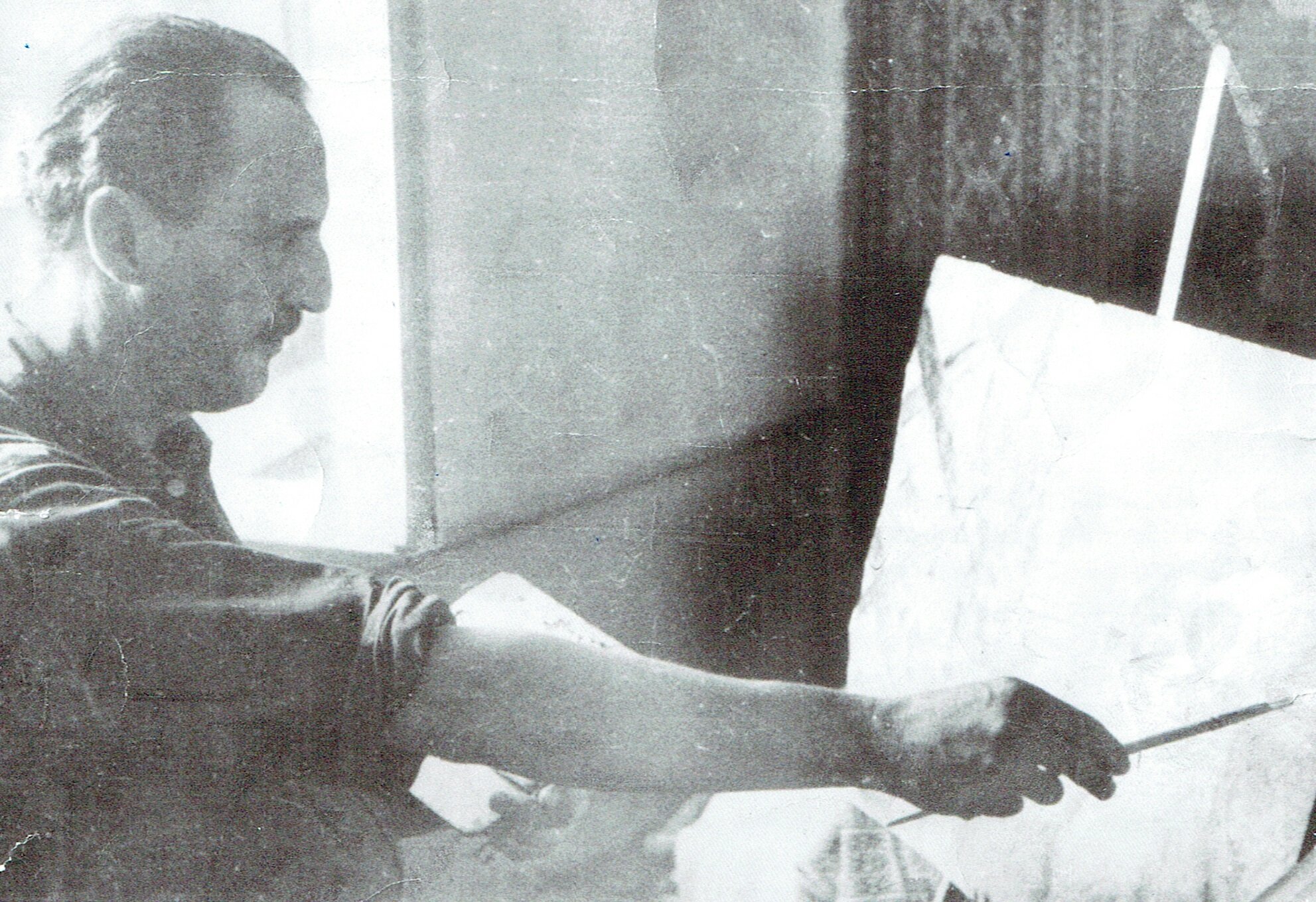
George Matei Cantacuzino in his studio

George Matei Cantacuzino in his studio

She kept his memory alive by telling her seven grandchildren stories about him, nurturing a connection so deep that a few days before he died, she dreamt she was making up a camp bed for her youngest grandchild, only for it to turn into a coffin. In the dream my grandfather then appears before her, calmly saying, ‘That bed is for me.’ As children, her telling of the dream both thrilled and appalled us.  My grandmother’s life gave rise to a quiet stoicism; her sunken blue eyes couldn’t hide her sorrow even though she insisted she was happier as a chicken farmer in Kent than she’d ever been belonging to the aristocratic milieu of Bucharest that had welcomed the young Leigh Fermor into their midst.

For us, the grandfather we never knew became a myth, a legend, a person to be admired and memorialised as an architect, artist and writer. This can happen when trauma goes unresolved: it crosses from one generation to the next. Views become entrenched. Certain perspectives are lost. The virtuoso who helped my family becomes a footnote. Her gift of music and courage, her suffering erased by a government that wanted the story to disappear.

My father grew up in England, eventually becoming an architect and heritage conservationist. After 1989, he devoted himself to Romania – founding Pro Patrimonio, working to preserve the wooden churches and painted monasteries. Later I watched Brexit shatter him. He couldn’t understand how the country that had welcomed him in 1939 could turn its back on Europe. When he died in February 2018, I was convinced he was broken as much by Brexit as by leukaemia.

What did I inherit from all this? Not a necklace. Not property or title. I inherited stories about separation and loss, about how political decisions shatter families, about the weight carried by those who flee. I inherited my father’s conviction that the past shapes who we become.

And I inherited a question: what do we do with suffering?

Forgiveness as Gift

In 2004, I founded The Forgiveness Project. It was a political act – a response to the language of division and reprisal surrounding the invasion of Iraq. But unconsciously, it was also part of my attempt to understand what I had inherited from my Romanian roots: unresolved trauma, and the ways people survive what has been done to them without allowing it to poison everything that follows.

The project collects and shares stories of people who have experienced terrible harm – violence, murder, terrorism, genocide – and found ways to move beyond vengeance.

This isn’t about forgetting or excusing. It’s about what becomes possible when people refuse to let perpetrators define their future, when they choose understanding over bitterness, when they interrupt cycles of retaliation. The Forgiveness Project doesn’t demand that people forgive. Some find it impossible. Others discover it gradually. What the project does is create space for people to explore the possibility, to hear from others who’ve walked that path, to make their own choices about how to carry their pain forward.  Pain I’ve discovered is the greatest motivator to forgive.

I’ve spent twenty years now listening to stories. A mother who lost her son to violence chooses to work with young people at risk. A man wrongly imprisoned for decades refuses to spend his freedom consumed by rage. A survivor of the Rwandan genocide reconciles with her neighbour who participated in the killing. These aren’t abstract achievements. They’re concrete demonstrations that human beings possess a remarkable capacity for transformation.

I won’t claim forgiveness is the ultimate gift – that sounds too grand. But it might be one of the most difficult ones. It requires acknowledging harm without being consumed by it. It means recognising that perpetrators are human without excusing what they did. It demands that we interrupt cycles of vengeance even when those cycles feel justified, even when the authorities who caused harm never admit it, even when – as with Monique – there’s no compensation, no acknowledgement, no justice.

The Thread

Nearly ninety years ago, Patrick Leigh Fermor walked into Romania and was welcomed by my family. They offered hospitality to a penniless wanderer. His writings became a kind of preservation – capturing a vanished world before the wars tore it apart.

1947, my grandfather entrusted jewellery to the French pianist. Monique carried it across borders, performed in Romania despite the risks, paid for her generosity with her career and health. Her trauma remained unresolved, her story buried in official silence.

To make peace with the trauma of the past requires making amends or finding meaning. Each generation has tried to respond to harm in ways that didn’t simply perpetuate it. My grandfather endured prison rather than betray his principles. My grandmother offered up the necklace rather than keep it as a reminder of her lost husband. My father rebuilt Romania’s heritage. My aunt tirelessly translated her father’s writing which had been banned by the Communist government. Monique played three concerts in one day and lost everything. Each tried to respond to harm in ways that didn’t simply perpetuate it.

My sister, Ilinca Cantacuzino, also inherited our father’s conviction that heritage matters. Her artistic journey shares a similar interest to mine in the intergenerational consequences of unresolved trauma. Threading our grandfather’s life into her own, her art has become a form of visual storytelling that shows how destructive legacies can be transformed into something of beauty and meaning.
The Trio by Ilinca Cantacuzino

When Romania joined the EU in 2007, a cultural transformation began with literary and visual creators bringing their skills and knowledge to breathe new life into the country which they or their parents and grandparents had left. Ilinca took advantage of this revival, creating a show in the modernised vaults of Bucharest’s iconic bookstore, Liberia Carturesti. Legături de sânge (“In the Blood”) was an exhibition combining her work with that of our grandfather, drawing on kinship, blood ties and invisible inheritance.
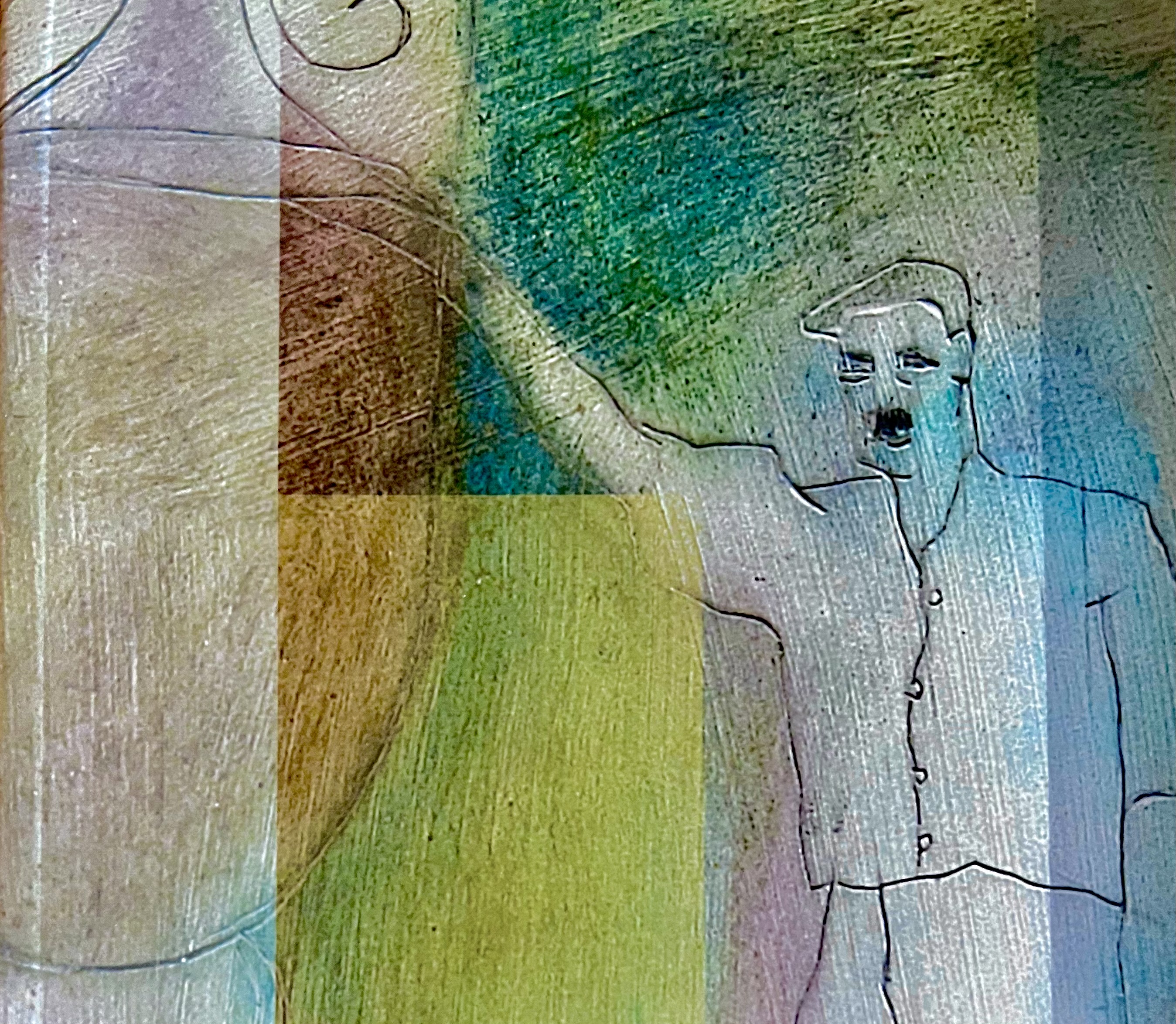
GMC ‘muncitor’ by Ilinca Cantacuzino

In making works which speak to our grandfather’s deep love of his country, her art pays homage both to her personal and national heritage. Her paintings are in dialogue with our grandfather’s oils, watercolours, and architectural drawings. Though Ilinca, like me, never knew our grandfather, the connection between their work is clear – not just in the use of colour, but in the way emotions seem to pass across the generations.

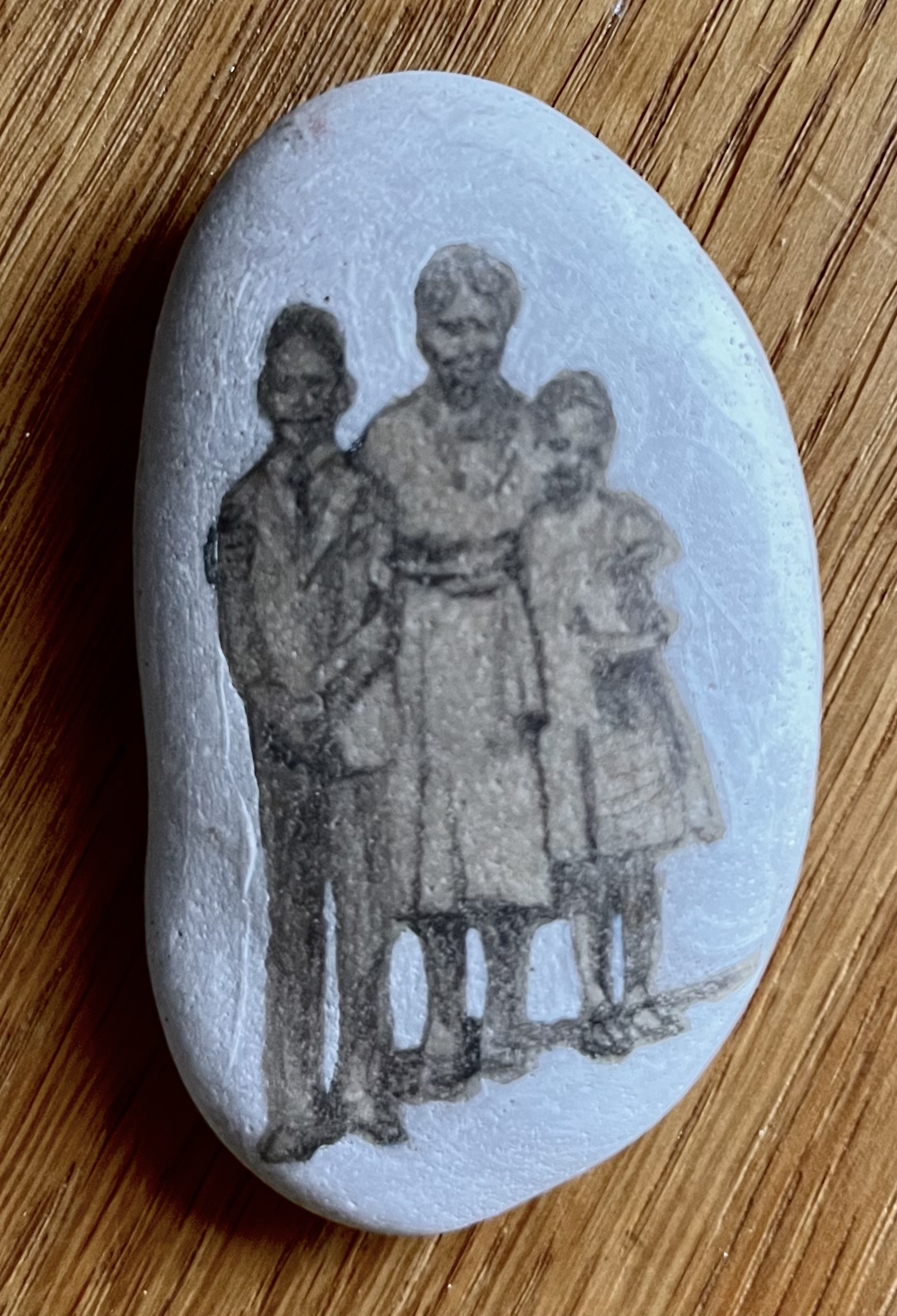
Smoke and burning are recurring symbols of memory, time and destruction. Ghost, a portrait of our grandfather, is a multimedia piece using ink and smoke. Piatra Statica I and Piatra Statica II (Stone Still 1 and II) are drawings on pebbles of our grandfather and grandmother with one pebble originating from a river in Romania and the other from a beach in Kent.  These ‘found objects’ give an iconic sense of place as well as referring to the arbitrary and impermanent nature of lives torn apart.
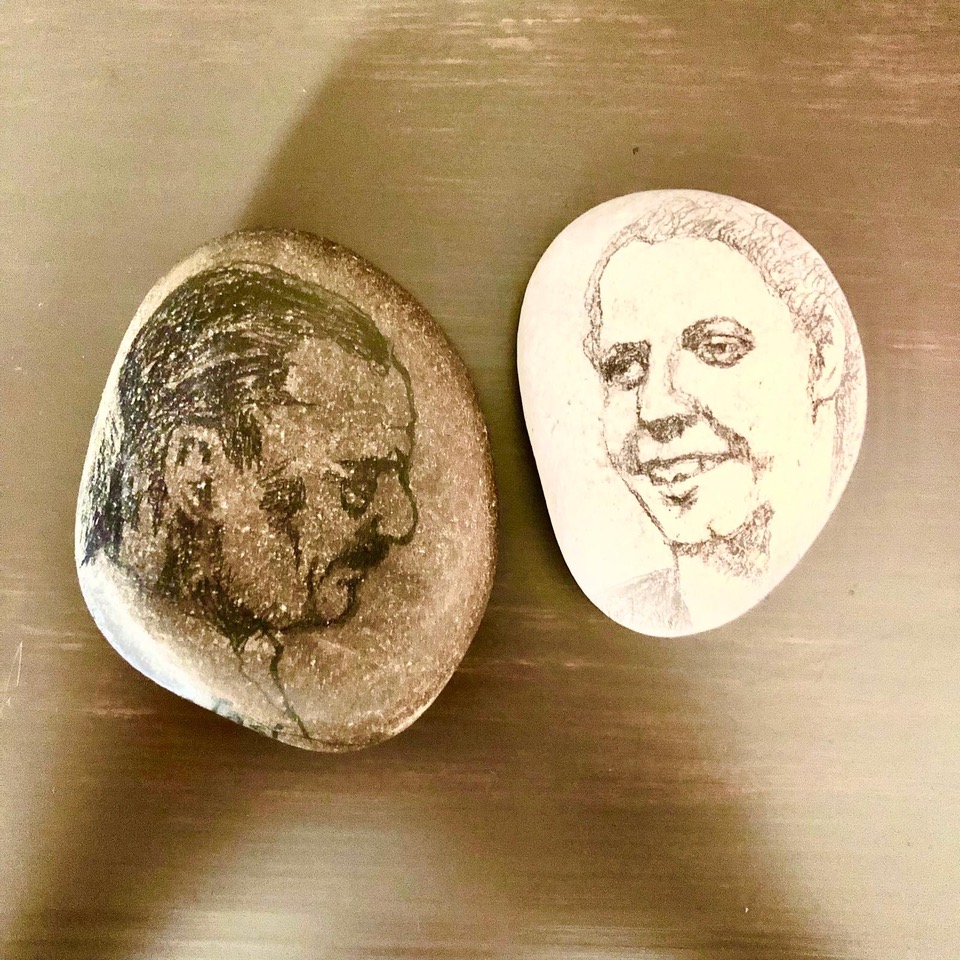
Piatra Statica I and Piatra Statica II (Stone Still 1 and II) by Ilinca Cantacuzino
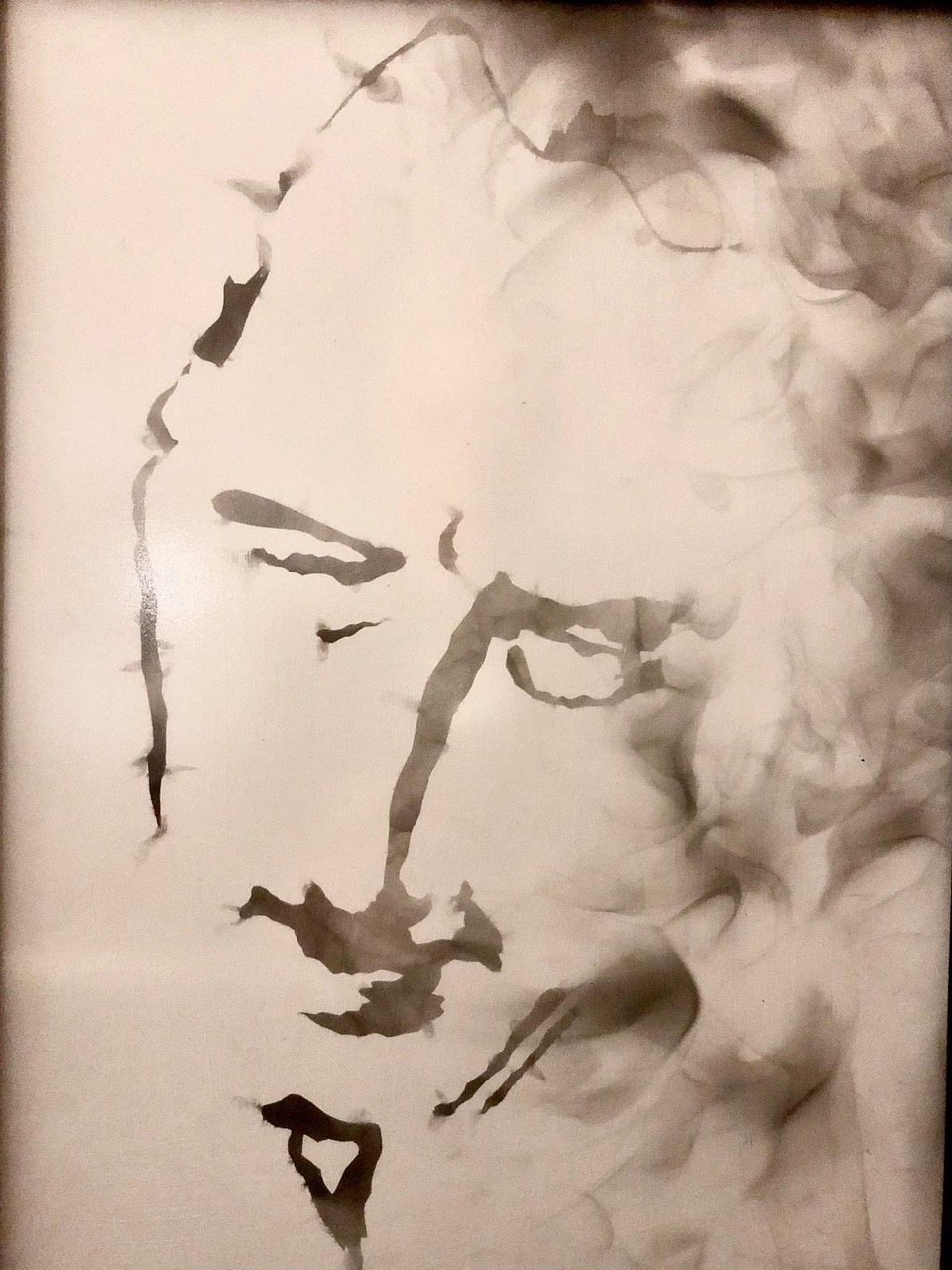
Ghost by Ilinca Cantcuzino

One of her works Unfold is an installation, a series of notebooks in which Ilinca kept a visual record of her interior conversations signifying how intergenerational relationships connect threads between past and present. She once said that not knowing our grandfather was the bond, “In a way this enabled him to become my muse. . .  His influence on my spiritual and artistic life has remained undiluted.  I grew up knowing him only through his paintings and my grandmother’s memories.’

In the years to come, Ilinca exhibited more of her work in Romania alongside that of our grandfather, gradually reintroducing a man whose reputation had been deliberately suppressed through censorship. In the post-communist 21st century, a growing appetite was emerging among Romanians to rediscover and engage with their own heritage.
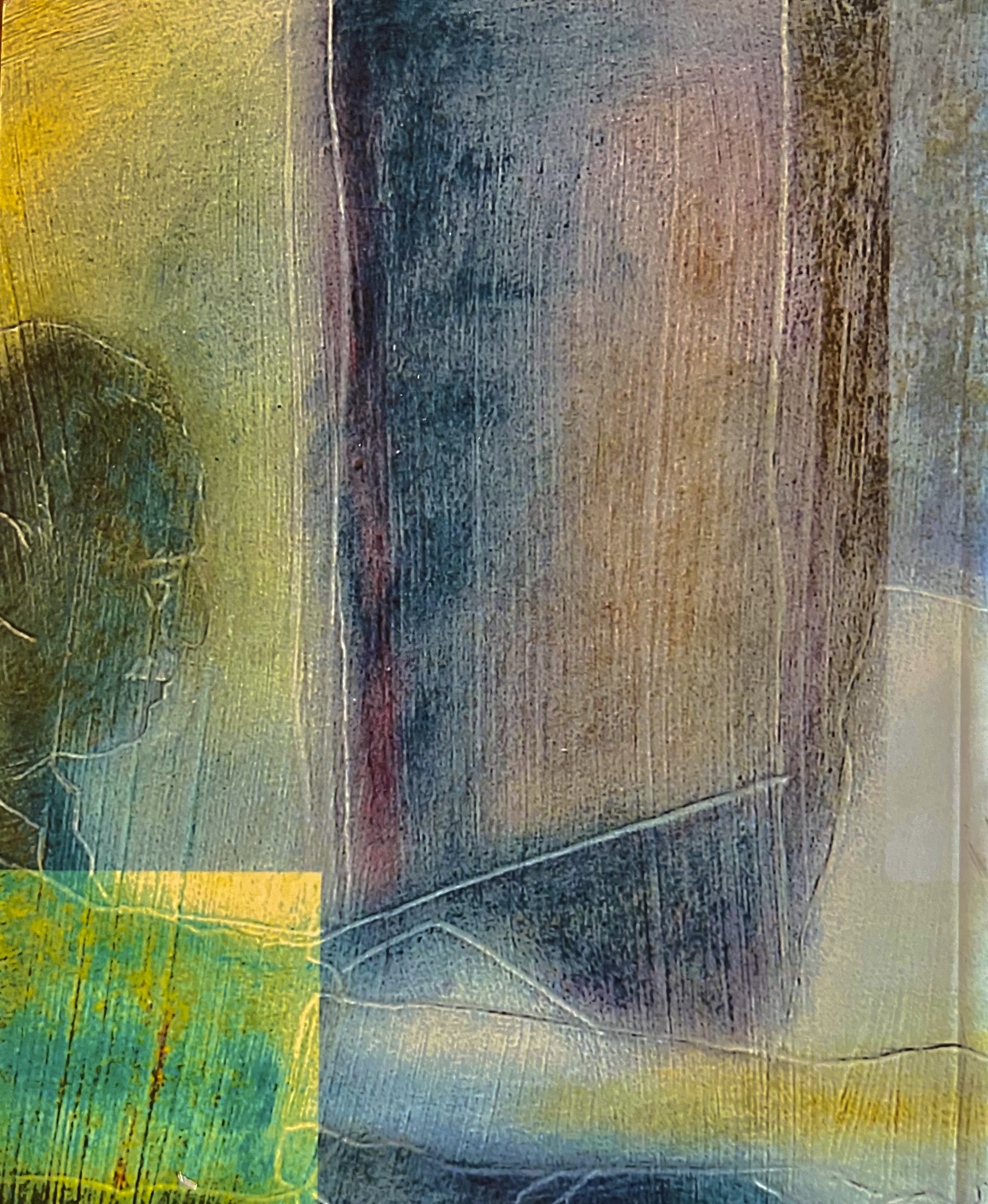
GMC – ‘pictor’ by Ilinca Cantacuzino

Finding Meaning

The essence at the heart of my work could be summed up in the words of the great Russian writer and dissident Aleksandr Solzhenitsyn in The Gulag Archipelago:

If only there were evil people somewhere insidiously committing evil deeds, and it were necessary only to separate them from the rest of us and destroy them. But the line dividing good and evil cuts through the heart of every human being. And who is willing to destroy a piece of his own heart?

When I came across this passage – a little while after founding The Forgiveness Project – it struck me how perfectly it articulated the ethos of the charity.

At the same time, my aunt was translating her father’s letters, opening up a whole new understanding of his life for us.  In his final years our grandfather had taken refuge in letter-writing – letters contemplating love, nature, memory and the proximity of good and evil. Many of these letters were written to his English friend, Simon Bayer, whom he had met whilst fighting in the First World War.  One letter in particular, written in 1955, caught my attention. In it my grandfather ponders the effect of his five years as a political prisoner, addressing his correspondent’s presumption that his past ordeals must surely mean he is filled with bitterness. He replies: ‘I think of evil as inherent in human nature, as the natural shadow cast by good. I do not have any feelings of resentment. Because I do not stand in judgement on the actions of others, I have nothing to forgive.’
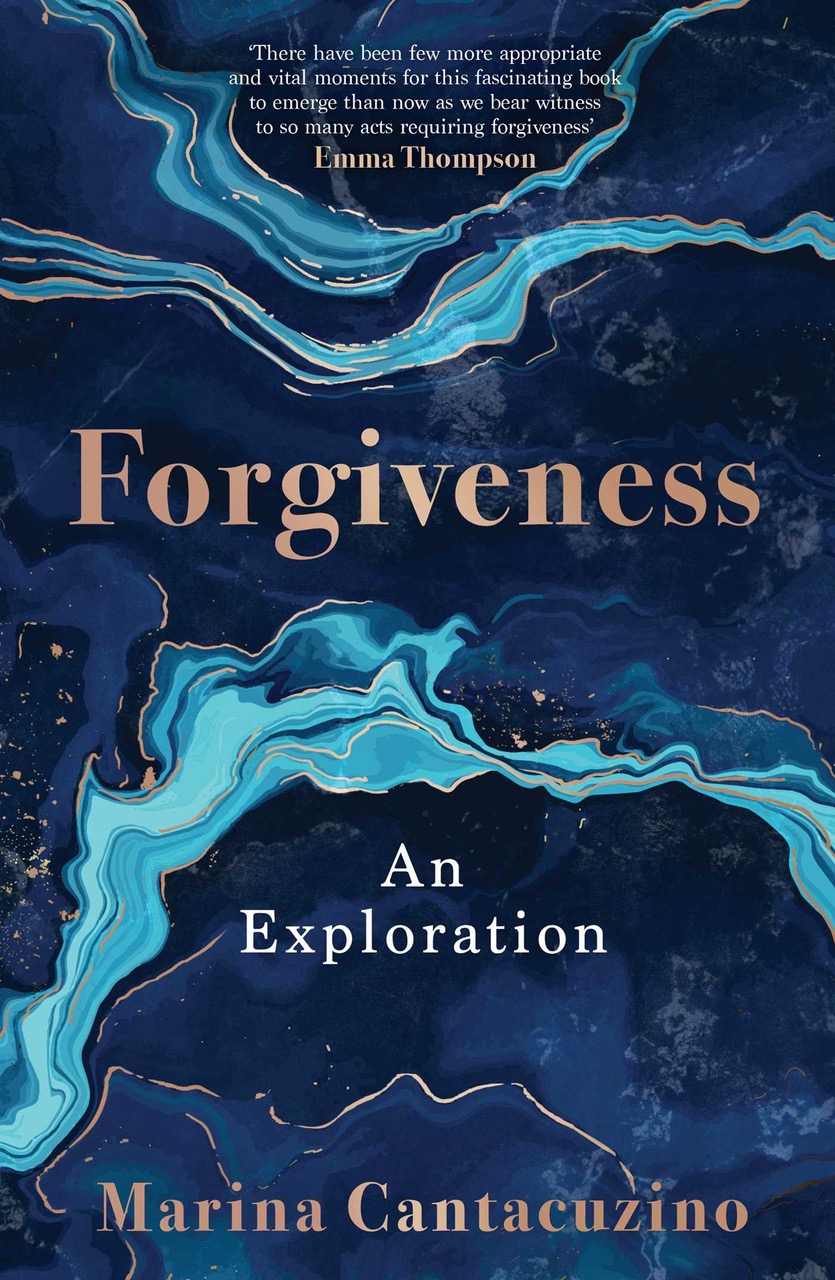
Forgiveness: An Exploration by Marina Cantacuzino

Forgiveness: An Exploration by Marina Cantacuzino

It is a remarkably openhearted statement coming from a man who under the Communist regime was tortured and vilified, and lost almost everything.

The beryl necklace is gone, sold nearly thirty-five years ago. But it represented to me that some things matter more than possession, that generosity can transform objects into meaning, that how we respond to suffering shapes not just ourselves but generations to come.  Not as certainty but as question. Not as answer but as practice. One story at a time, one choice at a time, one moment at a time when someone decides that the harm done to them won’t define what they do next.

I am also reminded of the prescient words of psychoanalyst, Roger Woolger, known best for his ancestor work, who once stated that: ‘It is the responsibility of the living to heal the dead. Otherwise their unfinished business will continue to play out in our fears and phobias.’

Marina Cantacuzino is a writer, campaigner and the founder of The Forgiveness Project

Sources and References

Ilinca’s exhibition: descriptions of the art from this https://londongrip.co.uk/2011/08/art-the-arts-in-romania-by-teresa-howard/

Family History:

  • Cantacuzino family archives and personal correspondence
  • Marina Cantacuzino, ‘My Romanian father was broken as much by Brexit as by leukaemia’, The Independent, 2018
  • Princess Sanda Cantacuzino (1899-1992): refugee to England 1939, lived in Kent
  • George Matei Cantacuzino (1899-1960): architect, essayist, imprisoned 1948-1953 at Aiud Prison Camp
  • Șerban Cantacuzino CBE (1928-2018): architect, heritage conservationist, founded Pro Patrimonio 2000

Monique de la Bruchollerie:

  • See ‘The Pianist and the Necklace’ for detailed references
  • Winner, IV International Chopin Piano Competition, Warsaw, 1937
  • Three concerts, Cluj, 18th December 1966
  • Car accident, 18th December 1966, Carpathian mountains
  • Death: 15th December 1972, Paris, aged fifty-seven

The Forgiveness Project:

  • Founded by Marina Cantacuzino, 2003
  • Charity collecting and sharing stories of forgiveness and reconciliation
  • Works with victims and perpetrators of crime and conflict
  • Website: http://www.theforgivenessproject.com
  • Marina Cantacuzino, The Forgiveness Project: Stories for a Vengeful Age (Jessica Kingsley Publishers, 2015)

Brexit and Șerban Cantacuzino:

  • EU Referendum, 23rd June 2016
  • Keith Lowe, Savage Continent: Europe in the Aftermath of World War II (Viking, 2012)
  • Șerban Cantacuzino’s work on European heritage and cross-border cooperation documented in Pro Patrimonio archives

Pro Patrimonio:

  • Founded 2000 by Șerban Cantacuzino as Romania’s National Trust equivalent
  • Works to preserve Romanian architectural heritage, particularly wooden churches and painted monasteries
  • Eight vernacular wooden churches in Maramureș designated UNESCO World Heritage sites (with Sherban as rapporteur general)

Historical Context:

  • Patrick Leigh Fermor, A Time of Gifts (1977) and Between the Woods and the Water (1986)
  • Patrick Leigh Fermor’s relationship with Princess Bălașa Cantacuzino, 1934-1939
  • The beryl necklace: given to Monique de la Bruchollerie 1947, recovered 1964, sold 1989
  • Romanian Revolution, December 1989: execution of Nicolae and Elena Ceaușescu, 25th December 1989
  • Humanitarian mission to Bucharest, December 1989-January 1990 (funded by sale of beryl necklace)

The Securitate:

  • Romanian secret police, 1948-1989
  • Estimated one informer for every forty-three Romanians by 1980s
  • Files on approximately 700,000 Romanian citizens
  • Post-1989: files opened to those who were surveilled; many chose not to know who informed on them

Themes and Influences:

  • Intergenerational trauma and its transmission
  • Unresolved trauma and institutional denial
  • Forgiveness as interruption of cycles of vengeance
  • The role of diaspora communities in post-conflict reconstruction
  • Heritage preservation as peace-building

Note: This essay draws on family archives, personal experience, and the documented history of the Cantacuzino family’s experience of exile, imprisonment, and post-communist reconstruction. The Forgiveness Project’s work is documented through published stories and research available at www.theforgivenessproject.com.
 

A Time of Gifts: A Postscript to ‘The Beryl Necklace and the Watermelon’

Dear readers. A belated Happy New Year to 2026, and I hope that all is well.

Nicholas Mellor, The author of our last piece, The Beryl Necklace and the Watermelon, has had a number of people contact him with regard to that last piece. One in particular felt that the role of Monique de la Bruchollerie could do with further explanation, particularly the comment:

‘In 1946, recognising a rare opportunity, George Matei befriended a French pianist named Monique de la Bruchollerie who was visiting Bucharest for a series of concerts. He entrusted her with a ring and a beryl necklace to deliver to his refugee wife.’

Nicholas’ correspondent asked during a phone call, ‘Did I appreciate who Monique de la Bruchollerie was and how courageous she was during her tours of Romania, and how talented she was? Could you share more of Monique de la Bruchollerie’s story?’ And so here it is. Nicholas would welcome any further comments on any gaps or errors in the story of the Beryl Necklace and the Watermelon

By Nicholas Mellor

Bucharest, 1947

Some careers, as Patrick Leigh Fermor understood of journeys, begin with a single performance and end somewhere unimaginable. In the summer of 1947, a French pianist named Monique de la Bruchollerie arrived in Bucharest for a series of concerts. She was thirty-two. Ten years earlier, she had competed in the International Chopin Piano Competition in Warsaw—the third such competition ever held—where she placed seventh and became the first French musician to win a prize. The jury had included foreign delegates by then: Marguerite Long from Paris, Arthur de Greef from Brussels.

What she could not have known, stepping off the train into July heat, was that this Bucharest visit would set events in motion spanning two decades, ending on an icy mountain road in December 1966.

The concerts were well-received. In a city still trying to understand the new communist reality settling over it, Monique’s playing offered something. At one performance sat George Matei Cantacuzino—architect, essayist, liberal politician. Already under surveillance. His wife Sanda and their children had fled to England in 1939, expecting reunion within months. The war lasted six years. Now Romania had fallen under Soviet control. Cantacuzino was trapped. He gave Monique a beryl necklace and a ring. Would she carry them to his wife in England? She agreed.

Monique also befriended Monica Lovinescu, the literary critic who would become a voice of resistance from exile in Paris, broadcasting on Radio Free Europe. With Lovinescu’s circle, Monique spent days at Mangalia on the Black Sea. The friendship would last until her death in 1972.

The Ring, the Necklace, and the Securitate

Monique returned to France. She sent the ring to England. The necklace she kept. For eighteen years it remained with her—whether through oversight or design, we cannot know.

Meanwhile, the Securitate was tightening its grip. Romania’s secret police had been established in 1948 with Soviet NKVD assistance. Initially staffed by former royal police, it was soon purged and rebuilt with ardent communists to ensure absolute loyalty to the party. By the 1980s, it would deploy one agent or informer for every forty-three Romanians—a high enough ratio to make organising dissent nearly impossible. Recruits came from everywhere: the regime deliberately fostered the sense that anyone might be watching. Surveillance, blackmail, torture. Files on an estimated 700,000 citizens by 1989. Fear as the primary weapon.

When Cantacuzino was arrested in March 1948—his second arrest, this time serious—his interrogators made him account for every meeting, every contact. In his statement to the secret police, preserved in the archives, he wrote: ‘Last summer I met Madame Monique de La Bruchollerie. I tried to introduce her to Romanian composers and we became friends. When she returned to France, on her way to England where she was to give concerts, I asked her to take a ring to my wife… When she returned to Romania in December 1947, I met her quite often.’

The careful parsing of words. The attempt to make innocent friendship from what the authorities suspected was something more. Did the Securitate know about the necklace? The archives do not say. Cantacuzino was sentenced to five years of hard labour. He was released in 1953 and died in 1960. He never saw his family again.

And Monique? She continued. Concerts across Europe. Performances with Celibidache, Karajan, Ansermet. Richter spoke of her ‘cavalier spirit’. She recorded Tchaikovsky with octaves that challenged Horowitz, Saint-Saëns at speeds that seemed impossible.

Her return to Romania

In 1957, Monique returned to Romania. The worst of the Stalinist terror had passed. She gave dozens of concerts—Bucharest, Timișoara, Cluj. Romanian critics praised her. Audiences called out, ‘Monique is coming!’—the familiarity being its own tribute.

The Securitate, if they remembered her earlier connection to Cantacuzino, no longer cared. Or perhaps calculated that whatever small defiance she had represented in 1947 was now safely in the past. Either way, she performed without incident.

In December 1966, Monique returned to Romania for what would be the last time. Fifty-one years old, at the height of her fame. On 17th December, she performed in Bucharest. Cella Delavrancea wrote: ‘Monique de La Bruchollerie’s musical signature is cavalierism. She has performed in our country many times over the years. She has enchanted audiences each time… One heard: “Monique is coming… Monique is coming,” the familiarity being the expression of supreme homage. Today, Monique de La Bruchollerie has reached the summit of interpretive art.’

The next day, she performed in Cluj. Not one concert but three: 10am for students, then recitals at 4pm and 8pm. Two performances so that more people could attend in a city hungry for culture. Her final encore: Debussy’s ‘La Cathédrale Engloutie’—The Sunken Cathedral. The music rises from the depths, a vision of bells ringing beneath the waves, then sinks back into silence.

Romanian authorities were to arrange her flight to Zagreb, where her tour—which had taken her as far as India—was to conclude. But there was no flight. She was placed in a small official car, driven by a Romanian government driver through the Carpathian mountains in a December snowstorm.

The driver drove fast. Too fast. Without winter chains on the icy mountain roads. On a corner, he lost control. The car crashed. After three days in a coma, Monique emerged into a new reality: skull fractured, an arm broken arm in multiple places, damage to the central nervous system, paralysis on one side, loss of vision in her right eye. And her right hand—the hand that had played Tchaikovsky and Saint-Saëns at impossible speeds—was broken beyond repair.

Silence

The Romanian authorities asked her to keep silent in the interests of Franco-Romanian relations. Her lawyer, René Floriot, obtained a signed commitment from the Romanian government: one million francs in compensation. It was never paid. Over three years, Romania sent sixty thousand old francs and then nothing more. The negotiations reached a stalemate. Monique was forced to sell family heirlooms to pay for medical treatment.

In 1970, Maître Floriot attempted to use Ceaușescu’s state visit to Paris to obtain intervention. It came to nothing. Perhaps more promises.

Monique returned to teaching at the Paris Conservatoire, where she had begun after her mother’s death in 1959. She could no longer perform, but she could pass on what she knew. Her students included Cyprien Katsaris and Jean-Marc Savelli, who would themselves become significant pianists.

She died on 15th December 1972. Six years after the accident. Six years almost to the day. She was fifty-seven.

Coda

There is a story that a recording survives from that final concert in Cluj on 18th December 1966. Debussy’s ‘La Cathédrale Engloutie’. With hindsight it is almost unbearably poignant, because we know what came next. We hear the premonition in the performance, one of thousands she had given over a thirty-three-year career.

What remains is this: a career cut short by an accident that should never have happened. A beryl necklace that traced an improbable journey from wartime Bucharest to London to Paris and back again, transformed finally into medicine for a country in revolution. A friendship between a French pianist and Romanian intellectuals that lasted across decades and exile and the Iron Curtain. And a series of chance meetings—a concert attended, a favour asked, a small act of defiance in accepting jewels to smuggle—that rippled outward in ways no one could have predicted.

Patrick Leigh Fermor, staying with the Cantacuzinos in the 1930s, could not have imagined how their cousin’s beryl necklace would one day connect to a pianist’s tragedy in communist Romania. Monique de la Bruchollerie, accepting George Matei’s request in 1947, could not have known that her path would cross Romania’s again and again until it ended on an icy mountain road. Monica Lovinescu, befriending a visiting pianist at the Black Sea, could not have foreseen that their friendship would last through decades of exile and repression.

Somewhere in the archives of the Securitate, could be found George Matei Cantacuzino’s confession: ‘I met Madame Monique de La Bruchollerie. We became friends.’ A small act of friendship, preserved by the very authorities who sought to suppress it. The beryl necklace made it to England eventually. The friendship endured. The piano playing that once filled concert halls from Paris to Bucharest to Boston, fell silent. The cathedral sank beneath the waves.

A Time of Gifts: The Beryl Necklace and the Watermelon

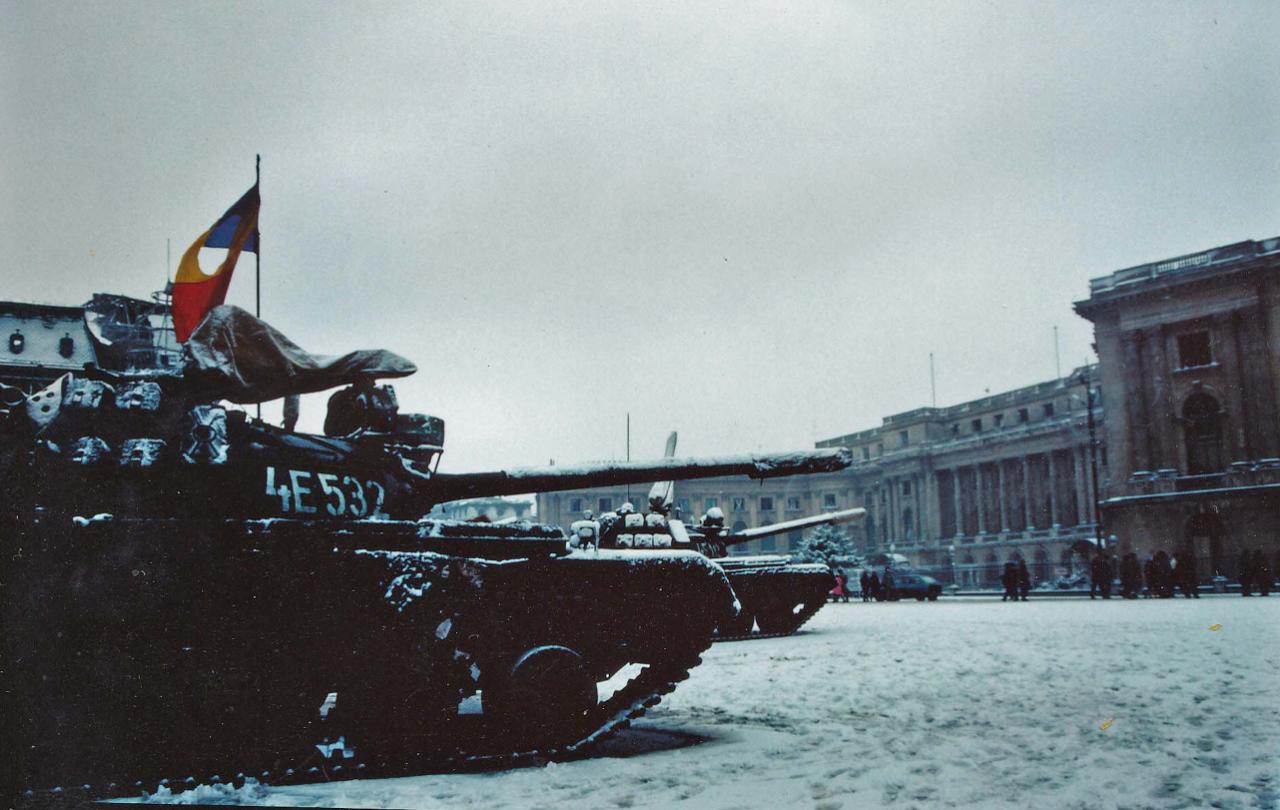
Romanian Army tanks stand idly by. Bucharest December 1989. Nicholas Mellor

It is time to end the Paddy blog posting drought and recommence activities. I have had another busy year and occasionally one needs a break. I am indebted to Nicholas Mellor for writing a fascinating account of his December 1989 aid journey to Bucharest whilst Romania was in the midst of its bloody revolution. Read on to find out how an Iranian watermelon played a key part in Ceaușescu’s downfall.

The Beryl Necklace and the Watermelon by Nicholas Mellor

Romania, December 1989

Some journeys, as Patrick Leigh Fermor knew, begin with a casual invitation and end somewhere unimaginable. December 1989: whilst families across Europe were enjoying reunions and Christmas celebrations, I found myself driving eastward across a snow-covered continent in a blue Transit van—bound for Bucharest, capital of a country reeling from the bloodiest of the year’s revolutions.

It had been an extraordinary autumn. In June, Poland’s Solidarity had won their impossible election. By August, Hungary was cutting the wire on its Austrian border. On 9th November, the Berlin Wall fell—not through war but through the sheer weight of people demanding freedom. Prague followed with its Velvet Revolution, so called because not a window was broken, not a shot fired. By early December, five Soviet satellites had thrown off their chains. Only Romania remained.

And whilst I drove, Nicolae Ceaușescu—the most isolated of Eastern Europe’s dictators—was making his final moves. On 16th December, his forces had opened fire on protesters in Timișoara. Two days later, even as bodies were being counted, he flew to Tehran for a state visit, becoming the only head of state to pay homage at Ayatollah Khomeini’s tomb. President Rafsanjani gave him several gifts, including a watermelon. By 20th December, Ceaușescu was back in Bucharest giving televised addresses about foreign interference. On 21st December, he appeared on the balcony of the Central Committee building for a rally meant to demonstrate his continued authority. One minute into his speech, the crowd began to shout. ‘Ti-mi-șoa-ra!’ The chant grew louder. For the first time in twenty-four years, Ceaușescu’s face registered something close to panic. That was the last time he would be seen in public as leader of Romania.

The journey had been funded by a beryl necklace—itself a relic of an earlier separation. In the 1930s, Patrick Leigh Fermor had lived amongst the Cantacuzinos, Romanian aristocratic nobility of Greek-Phanariot origin who traced their lineage to Byzantine emperors. He fell in love with Princess Bălaşa Cantacuzino; they lived together until the war separated them in 1939. Another branch of the family, Prince George Matei Cantacuzino, sent his wife Princess Sanda and their children to England that same year, intending to follow in two or three years. The war lasted six, and when it ended, Romania fell under Soviet control. George Matei, forbidden to leave, was sentenced in 1948 to five years hard labour.

In 1946, recognising a rare opportunity, George Matei befriended a French pianist named Monique de la Bruchollerie who was visiting Bucharest for a series of concerts. He entrusted her with a ring and a beryl necklace to deliver to his refugee wife. Monique returned to Paris and sent the ring on to London. The necklace she kept. For eighteen years it remained lost to the Cantacuzino family until, in 1964, Princess Sanda’s sister finally tracked down Monique and recovered it.

Twenty-five years later, as Romania erupted, the Cantacuzino family—now living in London—sent me a faxed list of urgently needed medicines. Marie-Lyse, George Matei’s daughter, made an extraordinary offer: her family would sell the beryl necklace to help fund a humanitarian mission. This family heirloom, smuggled out during one dark chapter, would now return in spirit during another.

The Journey

Three of us left London on Boxing Day: myself, Peter Tweedie—a complete stranger whose business had loaned him a van and whose Romanian wife gave us contacts in Bucharest—and Christopher Besse, a doctor who could verify our cargo and distribute it properly. We’d loaded the van the night before: box after box of medical supplies, close to 20 kilograms of controlled drugs alone. We created a sign for the sides of the van which read: ‘Medical Aid for Romania’.

Through France, Belgium, and Germany, the familiar world slipped past—neat villages, motorways, petrol stations whose attendants mostly understood a little English. At every border crossing, guards saw our makeshift sign and waved us through. Sometimes they saluted. We kept the radio on whenever we could pick up a signal. The news was fragmentary: the revolutionary government was in control but there were also reports the Securitate was mounting counterattacks. Casualty figures ranged from hundreds to thousands. On Christmas Day, the Ceaușescus had been executed. A hasty trial, the firing squad, pictures of the bodies had been shown on the broadcast media to prove they were really dead.

Yugoslavia was different. This was where Eastern Europe properly began. The border guards examined our papers more carefully before waving us through. One young guard told us we were brave. Or perhaps foolish. His smile suggested he wasn’t sure which.

Darkness fell as we approached the Bulgarian border. And with darkness came snow. Within an hour it was a blizzard. The roads were terrible—cracked, potholed, evidently neglected for years, and now covered in a blanket of snow. We didn’t dare stop. We swapped seats whilst still moving, the passenger climbing over whilst the driver squeezed across, awkward and slightly dangerous but stopping seemed worse. Hour after hour through the endless swirl of snow in the headlights and the occasional flash of Cyrillic signs we couldn’t read.

Dawn came slowly on 27th December, grey and grudging. Through the murk we saw the bridge across the Danube. Behind us, Bulgaria—still communist in structure if not name. Ahead, Romania—in revolution, in chaos, possibly still in civil war. On the Romanian side, a few soldiers manned the border post. When they saw our sign, their faces changed. They smiled. One saluted. And we saw it: the Romanian flag with a hole cut in its centre where the dictator’s crest had been torn out.

The forty miles from the border to Bucharest took three hours. Villages with no lights, no sign of life. Soldiers at checkpoints waved us through. Civilians stood in small groups in the snow, talking urgently. Posters and painted slogans everywhere: ‘Libertate!’ Freedom! ‘Jos Ceaușescu!’ Down with Ceaușescu!

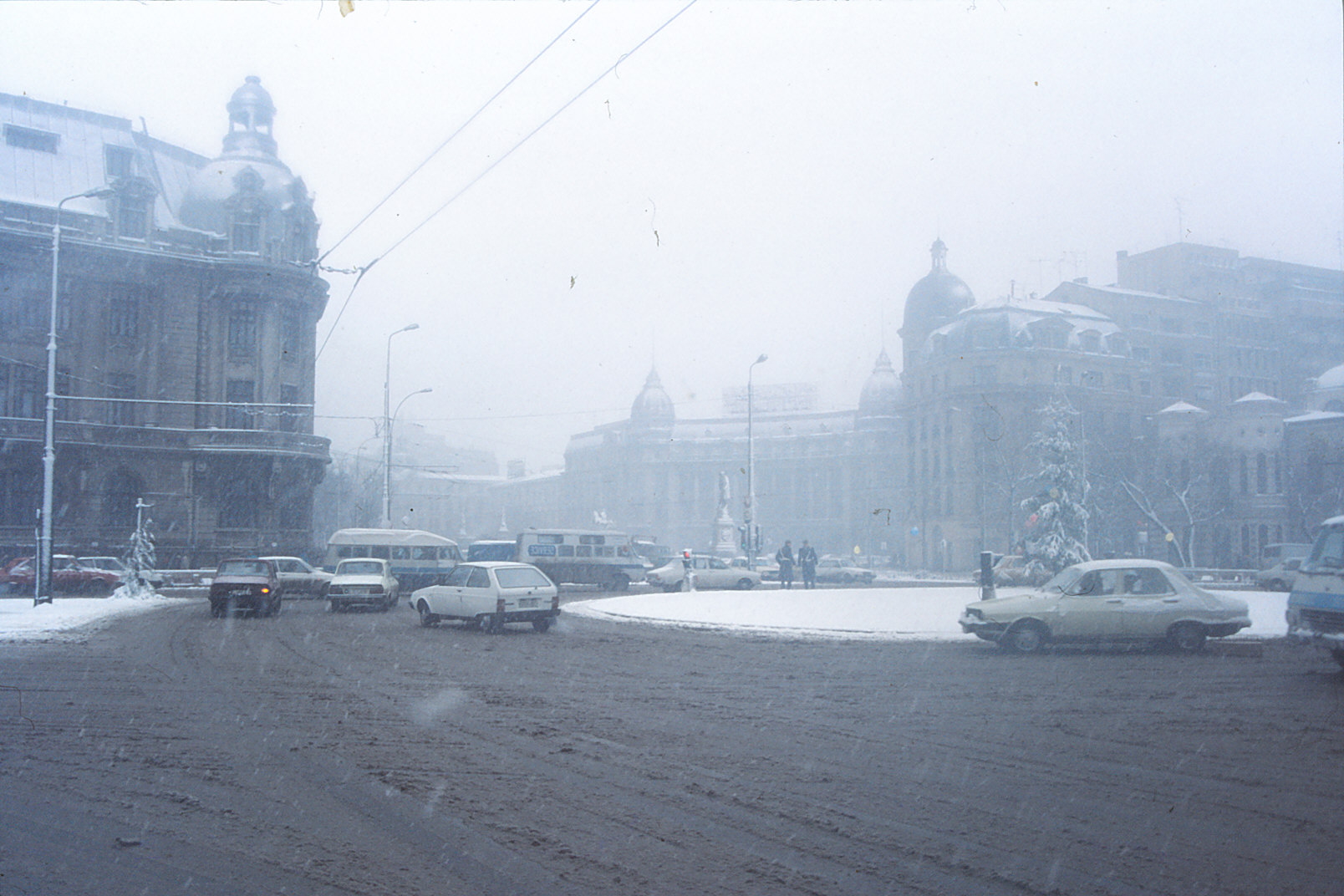
Arriving in Bucharest December 1989. Nicholas Mellor

Bucharest

Bucharest appeared through the snow like a city from a dream. Grand nineteenth-century boulevards, massive grey apartment blocks, and everywhere the signs of recent violence. We were guided to the main surgical hospital. Crowds gathered around the entrance. As we pulled up, someone must have read our sign because word spread quickly. ‘Medicamente!’ Medicine! ‘Din Anglia!’ From England!

The hospital director came out—a tired-looking man in a white coat stained with blood. He shook our hands with both of his, words pouring out in a mixture of Romanian, French, and broken English. Thank you. Thank God. You came. We need everything.

Hospital staff formed a human chain to pass the boxes inside. The director wanted to show us what we’d come to help with. The smell hit us immediately: blood, disinfectant, unwashed bodies. In one ward, a young man lay conscious on an operating table as a surgeon extracted a bullet from his arm with what looked like mediaeval instruments. There was no anaesthetic—they’d run out. Melting snow pooled on the floor from doors left open to the winter air.

Peter Tweedie’s parents-in-law insisted we stay with them—a small wooden house on the edge of the city, nothing like the grand estates where Fermor had stayed with the Cantacuzinos in the 1930s. They gave us their bed, filled a tin bath with water heated on the wood-burning stove, fed us soup that tasted like the best meal we’d ever eaten.

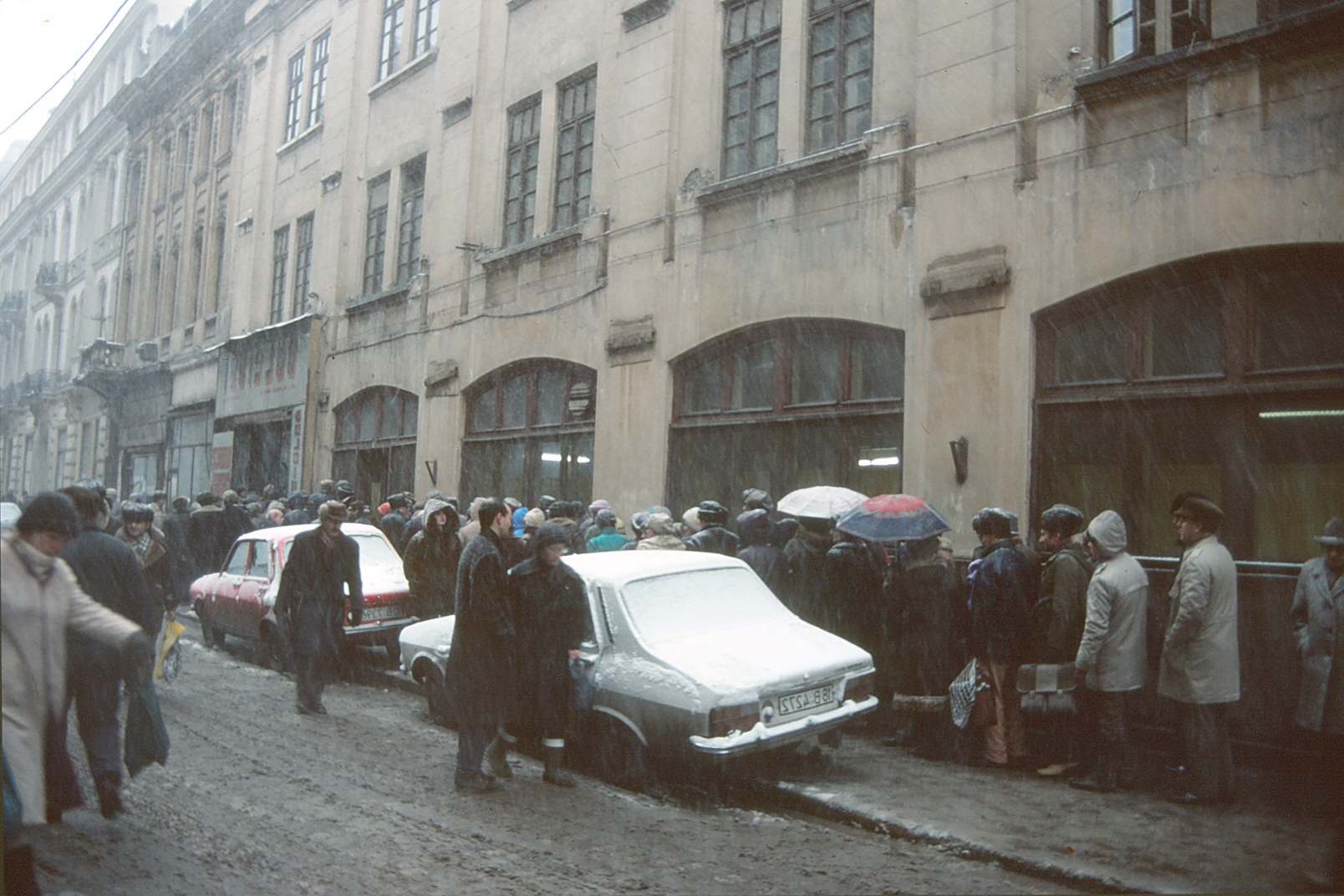
Bread queues Romania 1989. Nicholas Mellor

As we sat by the fire that evening, drinking țuică from small glass tumblers, we watched the television, they were broadcasting ‘Gone with the Wind with Romanian subtitles. It was constantly interrupted not with adverts but to show pictures of the executed dictator sprawled on the ground along with his wife. We reflected on those pivotal moments that determine the course of history. The crowds turning against Ceaușescu during his final speech. The dictator fleeing by helicopter. The trial on Christmas Day. ‘We still don’t believe it,’ our host said. ‘For forty years we lived under him. And now he is gone. Romania is free.’ He said the word—free—with something like wonder, as if testing whether it was real.

The blizzard that had followed us to Bucharest intensified. Reports came in that all routes in and out of the city were impassable. We were snowbound. The days passed. The old man would rise in the early hours to queue for bread. On New Year’s Eve, we went to their neighbours house where on the table was a feast.

In the centre of the table were slices of bright pink watermelon.

‘Where did you get this?’ I asked, astonished. Fresh fruit in midwinter Romania was impossible.

Peter’s father-in-law smiled. ‘When they took the palace, people took what they could. Ceaușescu never got to eat this. The Ayatollah’s gift.’ He raised his glass. ‘To the dictator’s last meal that he never ate. To freedom.

Epilogue

As midnight approached in that snow-bound house on the edge of Bucharest, our glasses raised in the wavering candlelight, I thought of Patrick Leigh Fermor. Not just because of the Cantacuzino connection, but because of what he understood about journeys: they are not measured in miles but in transformations. The beryl necklace had crossed Europe twice—once fleeing darkness, once rushing towards it. The watermelon had travelled from Tehran to Bucharest, meant for a dictator’s table, now shared amongst strangers celebrating uncertain freedom.

In the mountains of Crete in 1944, Fermor and his captive General Kreipe had gazed at Mount Ida at dawn. The general, despite his uniform, quietly began to recite Horace: Vides ut alta stet nive candidum Soracte—’Do you see how Soracte stands white with deep snow.’ Fermor, recognising the Latin, continued the quotation. For a brief moment, captor and captive were united, ‘drinking from the same fountain’ of Western civilisation even as the war raged around them.

Here we drank from a different fountain—țuică and watermelon, sharing the taste of a dictator’s unfinished business. Different fountains, perhaps, but the same deep human need to make meaning from chaos through shared ritual.

We toasted Romania’s uncertain rebirth, the necklace that had funded our journey, and the peculiar convergence that had brought strangers together at this particular moment in this particular place. Patrick Leigh Fermor understood something essential: the real adventure lies not in witnessing extraordinary events, but in those fleeting moments when—through some alchemical combination of circumstance, courage and chance—one briefly becomes part of them.

History, as I discovered that New Year’s Eve, is best tasted rather than merely observed. And it tasted of watermelon—pink and sweet and impossibly incongruous in a snow-bound Bucharest as the clock struck midnight on 1990, the year Europe would be whole and free again.

La Vie a Bucarest – Chronique Mondaine

While doing some semi-related research, Richard Augood stumbled across the following press clippings from the society page titled ‘La Vie a Bucarest – Chronique Mondaine’, in Le Moment, the main french-language newspaper of Bucharest at the time. Richard was kind enough to send them to me to share with you all.

According to Wikipedia , Le Moment was a French language daily newspaper published from Bucharest. The newspaper was founded in 1935 by Alfred Hefter, and was in serious financial difficulties and about to go under in 1939. The paper eventually ceased publication in 1940.

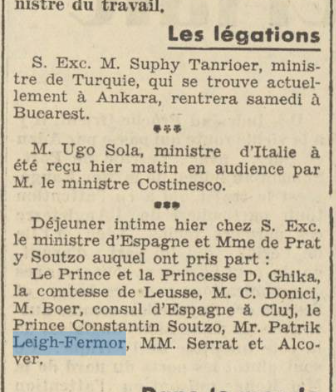
This snippet comes from the edition of 12 January 1936 and you will notice that Balasha Cantacuzene was also there. Quelle surprise!

Le Moment mentions Patri(c)k Leigh Fermor 12 January 1936

and this is from the same section of the same publication’s 9 May 1936 edition:

Le Moment mentions Patri(c)k Leigh Fermor 9 May 1936

Richard comments:

What’s notable is that PLF seems to have had absolutely nothing to do with the large and active British community in Bucharest at the time. He is never mentioned in any of the numerous newspaper articles of the time that relate to them, often with lengthy lists of names.

Richard found them on a site called Arcanum, which is a Hungarian repository of thousands and thousands of scans of newspapers from Hungary and Romania. He hasn’t actually searched the site for any mentions of other characters who crop up in The Trudge, as he is busy researching something quite different (Olivia Manning-related) and he just stumbled across these by chance.

Arcanum is a paid site, and he has offered to look anything up and run a few queries. Dear readers, do you have any suggestions? Add them to the comments section.