It is too soon for me to gather my thoughts, but if you would like to leave a comment or tribute to Paddy there is a page to do just that.

Your Paddy Thoughts - click the image

It is too soon for me to gather my thoughts, but if you would like to leave a comment or tribute to Paddy there is a page to do just that.
Your Paddy Thoughts - click the image
by Harry Mount
First published in the Telegraph 10 June 2011
Leigh Fermor, who has just died at 96, was blessed with many gifts, among them good looks, into old age, and an admirable war record. The two attributes were reflected in Dirk Bogarde being cast to play him in Ill Met by Moonlight, the story of Leigh Fermor’s daring kidnap, on Crete, of the German officer, General Heinrich Kreipe.
But his most extraordinary gift was his writing skill. Travel writers often depend on unusual destinations – the Antarctic, or wherever – or unusual stunts – ie taking a fridge to the Antarctic. Leigh Fermor went to more conventional places, but wrote about them beautifully.
His two best books – A Time of Gifts (1977) and Between the Woods and the Water (1986) – tell the story of his walk in 1933, aged 18, from the Hook of Holland to Constantinople. They combine total recall of events that happened half a century before, with his poetic, classical prose – itself rooted in his mastery of Latin and Greek (ancient and modern).
He is a lesson to all travel writers. It’s not enough to travel; you must be a writer, too.
There are a number of reports on Twitter saying that Paddy has died. The posts started at around 12.30 pm today UK time.
I do know from reliable sources that Paddy has been gravely ill and may have been evacuated back to the UK from an Athens hospital.
These reports need substantiating but I do fear they may be true. I will keep the blog updated.
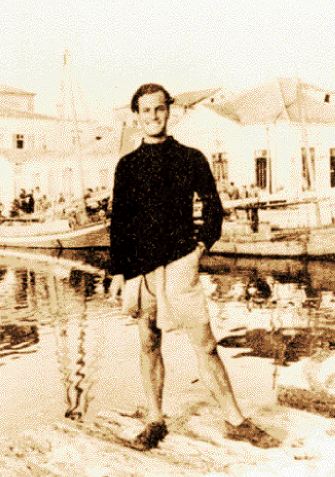
I have created a new page where anyone can post comments about Paddy’s life, his work, friends … in fact anything vaguely related to Paddy. With a life spanning 96 years there is a lot we can write about and share with each other.
Don’t be shy, you can even be un-British and be a bit emotional. No-one will mind. It is important that we share our thoughts about the Greatest Living Englishman.
You can find the page at the right-hand end of the navigation menu in the header … for the non-technical here is a picture!
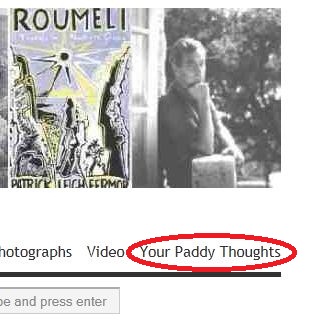
This is from the television review pages of the Independent covering Benedict Allen’s 2008 ‘Traveller’s Century’ series and the episode that focused on Paddy’s walk ending at the Iron Gates. I have seen this programme and share some of the frustrations of the author, but on balance it was a pretty fair programme given the tight time slot of just one hour.
by Deborah Orr
First published in The Independent 8 August 2008
The bit that delighted us all in this final episode of Travellers’ Century was a clip from another television show. There he was, Patrick Leigh Fermor, the star of the Greek version of This Is Your Life, meeting all the resistance fighters that he had worked with on Crete during the Second World War. And there, unbelievably, and every bit as thrilled to be reunited with Leigh Fermor as all the others, was the German former general Heinrich Kreipe. The two men grinned, hugged and fell into excited conversation, absolutely chuffed to see each other again. That is charm, is it not, the ability to inspire the deep affection of a man you only ever knew because you had spearheaded his humiliating wartime capture, then imprisoned him in a cave? A man, indeed, who was then portrayed in the film of the operation, Ill Met by Moonlight, as a bull-necked, grunting, Nazi ugly, while his nemesis was played by Dirk Bogarde?
I’ve been lucky enough to meet Leigh Fermor – dazzlingly charismatic company in his nineties – on a couple of occasions. So it seemed apposite to gather round the telly with the mutual friends who introduced us, so that we could all watch this film about his life together. Such is the fervour of loyalty that the man inspires, though, that it quickly became apparent that this show, or perhaps any show, would disappoint us. The first heckles came when Benedict Allen described Leigh Fermor as “the accidental superstar of travel writing”, a description we all decided would make him squirm. Concerns over tone were swiftly replaced with outright indignation, when Allen announced that he would be retracing the steps of Leigh Fermor’s first great walk across Europe, which he set off on in 1933, aged 18, in order to judge whether his descriptions had been “accurate”. This idea, again we all agreed with some disgruntlement, was facile beyond belief.
Allen’s idea was perhaps not such a weird one, though. Leigh Fermor’s book detailing the first leg of his journey had been published in 1977, after all, decades after he had made it. The delay had come about because his notes had been stolen in Romania. Again, it is testament to the affection he inspires that the local people who recovered the young Englishmen’s journal hung on to it in the hope that they would one day get the opportunity to return it to him. We all abhorred Allen’s attitude, nevertheless. When he suggested that Leigh Fermor’s two books describing his travels, A Time of Gifts and Between the Woods and the Water, might have been “endlessly worked and reworked, with whole decades of hindsight”, there was a generally mutinous feeling in the room that our man was being seriously impugned.
Allen regained a little trust when he decided, having visited some little-altered spots in Heidelberg, that the writer had indeed told it like it was. But when Allen changed his tune, and started suggesting that the books were weirdly apolitical, and offered too little detail about his own inner life, we sank again into despondency. The purity of Leigh Fermor’s writing comes from his scrupulous observation of what he encountered, and the beauty with which he describes it. He doesn’t bang on about himself. Anyway, on it went, as we nit-picked every assertion. By the time Allen got to interview Leigh Fermor, at his home of very many years in the Peloponnesus, we hated and resented him, and were only too happy to dismiss the interview itself as a dead loss. “And the programme was too long,” we agreed at the end. “If we thought that, what did everyone else think?” Actually “everyone else” would probably have enjoyed the thing a great deal more, not being hampered, like us, by an almost deranged sense of hyper-loyalty.
First published in the Geographical August 2004
by Robin Hanbury-Tenison

Robin Hanbury-Tenison
Patrick Leigh Fermor is a unique mixture of hero, historian, traveller and writer: the last and the greatest of a generation whose like we won’t see again. Bringing the landscape alive as no other writer can, he uses his profound and eclectic understanding of cultures and peoples, their origins and current place in the world, to paint vivid pictures–nobody has illuminated the geography of Europe better through literature. Everything is grist to his mill; nothing is ever banal. He expects much of his readers and we’re kept on our toes, constantly reaching for the dictionary or Brewer’s. In return for these achievements, he was finally knighted this year at the age of 88. He had modestly refused this honour previously on the grounds that all he had done was “write a few books”.
I first met Paddy (as he has always been known) in Athens in 1954 when I was a callow 18-year-old travelling through Greece. I remember sitting at a cafe in Metaxas Square while waves of witty erudition washed back and forth between him and my older travelling companion, and being humbled into awed silence. Paddy has always appeared larger than life, both in his personality and in his relatively rare and carefully honed writing. We corresponded from time to time over the years and eventually met again when he and his wife Joan had my wife and me to lunch at their house in Greece, where we were made to feel instantly at home.
Since Joan’s death, Paddy has spent more time in England, which gives us all more opportunity to see him. In May this year, a dinner was held for him by the Travellers Club, at which he was presented with a specially commissioned map of the route that he followed through Europe during the early 1930s and that he later wrote about so vividly. He spoke at the dinner and, now 89, held us all spellbound with some classic tales. One of the club waitresses was from Sofia and, to her delight and the amazement of all around, he launched into apparently fluent Bulgarian as she served him.
The bare details of his life, too, delight and amaze. The son of Sir Lewis Leigh Ferrnor, the director of the Geological Survey of India, Paddy was sacked at 17 from King’s School, Canterbury (for the terrible crime of “holding hands with the greengrocer’s daughter”), and spent the next 18 months walking to Constantinople, a journey that he wrote about with apparent total recall some 40 years later in A Time of Gifts, the first volume of a trilogy. It was followed by Between the Woods and the Water. We still await the final volume.
In the Second World War, Paddy served with the Special Operations Executive–the precursor of the SAS–and, because he spoke Greek, was parachuted into Crete behind enemy lines to help organise resistance against the Germans. In April 1944, having already spent more than a year living there, he pulled off one of the most dramatic exploits of the war.
Dressed as Feldpolizei corporals, Paddy and Captain Billy Moss–who subsequently wrote the book on which the film Ill Met by Moonlight was based–stopped the car in which General Heinrich Kreipe, the recently arrived commander of the German occupation forces, was being driven by his chauffeur. The driver was removed and handed over to members of the Cretan Resistance, while Paddy put on the general’s hat and proceeded to drive on through 22 control posts. The car was then abandoned, and the two soldiers marched their prisoner through that night and the next day to a cave high in the mountains.
In order to avoid reprisals against the Cretans, leaflets were to be dropped all over Crete, containing a message that the BBC also broadcast: that the general was safe, and would be treated with the respect due his rank; that the operation had been carried out by British officers; and that they were all on their way to Cairo by submarine. Two days later, they woke among some rocks near the summit of Mount Ida, just as dawn was breaking. Half to himself, General Kreipe recited in Latin the opening line of a Horace ode. As Paddy subsequently described in his report to the Imperial War Museum: “He was in luck. It is the opening line of one of the few odes of Horace I know by heart–Ad Thaliarchum, I.ix” and he went on to recite the remaining five stanzas. “The general’s blue eyes swivelled away from the mountain-top to mine–and when I’d finished, after a long silence, he said: ‘Ach so, Herr Major!’ It was very strange. ‘Ja, Herr General.’ As though, for a long moment, the war had ceased to exist. We had both drunk at the same fountains long before; and things were different between us for the rest of our time together.”
After the war, Paddy spent six months travelling through the Caribbean with Joan Eyres-Monsell–the woman who, 20 years later, was to become his wife–and Costa, the great Greek photographer. The result was his first book, The Traveller’s Tree, which brought the Caribbean to the notice of post-war Britain. Back then, the many islands they visited were thoroughly run down. The great buildings–of church, state and planters’ wealth–were mostly ruined and rotten. In the depressed economic climate immediately following the war, the future looked bleak; indeed, ‘King Sugar’ was about to die, this time as a victim of sugar beet and the macropolitics being played out between the USA and Europe.
Yet Paddy still managed to reveal the archipelago’s romance and magic, and The Traveller’s Tree was hailed as a masterpiece and won the Heinemann Prize. Paddy’s portrayal of the islands could be said to have jump-started the tourism industry upon which the Caribbean has since largely depended.
It was the Caribbean, too, that provided the backdrop to Paddy’s only novel, The Violins of Saint-Jacques, which brings alive the glamour and the passions of the planters in their heyday. This tale of a rich island being destroyed by a volcanic eruption in the middle of a splendid planters’ ball is based on the true story of the annihilation in 1902 of St-Pierre, the old capital of Martinique. There, 26,000 people died instantly in the New World’s Pompeii. The sole survivor was the town drunk, who was incarcerated in a cell below ground. He spent the rest of his life as an exhibit in Barnum and Bailey’s Circus.
Paddy eventually returned to Greece, where, during the 1960s, he built a wonderful house above a private cove near the fishing village of Kardamili in the southern Peloponnese. There, in a large room that John Betjeman, an early visitor, called “one of the rooms in the world”, he and Joan entertained a string of artists and writers with copious quantities of retsina, and Paddy wrote.
His greatest book, Mani, was about a journey through that little-known and, at the time, archaic region; the book has been in print ever since. Paddy travelled simply, staying with fishermen and farmers, which enabled him to capture the essence of the region, as this extract reveals:
Beyond the bars of my window the towers descended, their walls blazoned with diagonals of light and shade; and, through a wide gap, castellated villages were poised above the sea on coils of terraces. Through another gap our host’s second daughter, wide hatted and perched on the back of a wooden sledge and grasping three reins, was sliding round a threshing floor behind a horse, a mule and a cow–the first cow I had seen in the Mani–all of them linked in a triple yoke. On a bank above this busy stone disc, the rest of the family were flinging wooden shovelfuls of wheat in the air for the grain to fall on outstretched coloured blankets while the husks drifted away. Others shook large sieves. The sun which climbed behind them outlined this group with a rim of gold and each time a winnower sent up his great fan, for long seconds the floating chaff embowered him in a golden mist.
Almost every page has its own literary tour de force, often with intimidating displays of learning and research mixed with fantasy, imagination and acute descriptions of the scene itself. In his next book, Roumeli, about the minority communities of northern Greece, Paddy becomes fascinated by the last true nomads of the region, the Sarakatsans. His description of their wanderings is, for me, the best sort of literary geography lesson, and has even more geopolitical relevance now than when he wrote it:
The sudden cage of frontiers which sprang up after the Balkan Wars failed to confine them and they fanned out in autumn all over southern Albania and across the lower marches of Serbia as far as Montenegro and Herzogovina and Bosnia and into Bulgaria to the foothills of the Great Balkan. Those who thought of the Rhodope mountains as their home–the very ones, indeed, in the highlands that loom above the Thracian plains–were particularly bold in the extent of their winter wanderings. Not only did they strike northwards, like those I saw by the Black Sea, but, before the Hebrus river became an inviolable barrier, their caravans reached Constantinople and up went their wigwams under the walls of Theodosius. Others settled along the shores of the Sea of Marmara and spread over the rich green hills of the Dardanelles. Many crossed the Hellespont to pitch camp on the plain of Troy. Bold nomads would continue to the meadows of Bythinia and winter among the poplar trees or push on into Cappadocia and scatter their flocks across the volcanic wildernesses round the rock monasteries of Urgub. The boldest even reached Iconium, the home of Jellalludin and the metropolis of the whirling dervishes. They never looked on these enormous journeys as expatriation: until the deracination of the 1920s, much of Asia Minor was part of the Greek world; and even beyond its confines there were ancient Greek colonies.
Those attempting today to sort out the chaos in what was, for a while, southern Yugoslavia could learn a lot from reading Paddy’s books.
One of the main criticisms of Paddy’s writing is that there simply isn’t enough of it. But very few 20th-century writers, with perhaps the exception of Graham Greene, have managed to be prolific while maintaining consistent quality of this kind. The relatively small number of books (much boosted by the release of the paperback of Words of Mercury this mouth) is the work, to quote Anthony Sattin in the Sunday Times, of “one of the greatest travel writers of all time”, a heartfelt wanderer truly involved in mankind.
New editions of both Mani and Roumeli will be published by John Murray near the end of this year. A Time of Gifts and Between the Woods and the Water were reissued by John Murray in March. Words of Mercury is out now in paperback.
Early inspiration: Following Paddy around the Caribbean
Though Patrick Leigh Fermor’s most famous works recount his European travels, it was the Caribbean that inspired his first book. Fifty years later, Robin Hanbury-Tenison and his wife retraced Paddy’s steps:
We hired horses and rode, as Paddy did, between tall forest giants, listening to the jungle buzz and background twitterings. Suddenly, a beautiful, melodious note rang out. This was followed after o moment by three more notes of startling clarity and sweetness and the theme, a bit like the opening bars of Beethoven’s Fifth, was repeated every few minutes. It was a rufous-throated solitaire, which Leigh Fermor describes as making “a noise so melancholy that it seemed the perfect emanation of these sad and beautiful forests. It haunts the high woods of Dominica and nowhere else in the world.”
How does everything about a place change in 50 years, and yet the place itself remain the same? It is because of that unique mixture of cultures that is the Caribbean–and no-one has captured and evoked the extraordinary differences between the islands better than Paddy did in The Traveller’s Tree. Ash says: “Each island is a distinct and idiosyncratic entity, a civilisation, or the reverse, fortuitous in its origins and empirical in its development. “And then again, quoting an old Jamaican: “We’re always going somewhere. But we never get there.”
Patrick Leigh Fermor, however, not only travelled but also arrived. And those of us who read his dispatches home–those calm, intelligent tales of lives lived elsewhere–are in his debt.
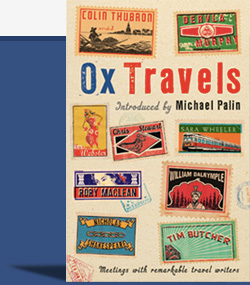 Read some great travel stories by some of the best travel writers, including Paddy’s account of the Black Sea cave, and help Oxfam projects at the same time. Introduction by Michael Palin.
As the Oxfam website says ….
“OxTravels is our fantastic new compilation of short travel stories, produced in collaboration with Profile Books and Hay Festival.
When Britain’s most lively, critical and thought-provoking travel writers are asked to recall a significant encounter – one that has enriched them as a writer – the result is a book that will broaden everyone’s horizons. In the words of Michael Palin, who introduces the book, “It’s impossible to read their contributions without wanting to go and get the rucksack out.”
OxTravels has a stellar line-up of contributors. Featuring stories from Paul Theroux, Patrick Leigh-Fermor, Colin Thubron, Dervla Murphy, Chris Stewart, Victoria Hislop, William Dalrymple and thirty other leading travel writers.
Its RRP is £9.99, but Oxfam shops have a special price of £8.99! All the writers have donated their royalties to Oxfam and all proceeds go towards funding Oxfam’s work fighting poverty and suffering around the world. Ox-Tales, OxTravels’ predecessor, raised more than £130,000 for our work!
For a review of Ox Travels click here.
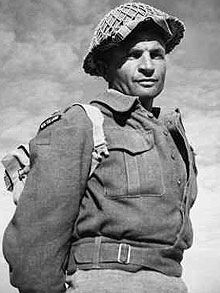
Captain Charles Upham VC & Bar
Only three men have ever won double VCs, and the other two were medical officers: Col A Martin-Leake, who received the decoration in the Boer War and the First World War; and Capt N G Chavasse, who was killed in France in 1917. Chavasse’s family was related to Upham’s. Upham won his first VC in the Battle of Crete in 1941, the 70th anniversary of which has just passed. Paddy of course fought in the battle, and then continued the fight on the island with SOE.
First published in the Telegraph November 23 1994
For all his remarkable exploits on the battlefield, Upham was a shy and modest man, embarrassed when asked about the actions he had been decorated for. “The military honours bestowed on me,” he said, “are the property of the men of my unit.”
In a television interview in 1983 he said he would have been happier not to have been awarded a VC at all, as it made people expect too much of him. “I don’t want to be treated differently from any other bastard,” he insisted.
When King George VI was conferring Upham’s second VC he asked Maj-Gen Sir Howard Kippenberger, his commanding officer: “Does he deserve it?”
“In my respectful opinion, Sir,” replied Kippenberger, “Upham won this VC several times over.”
A great-great nephew of William Hazlitt, and the son of a British lawyer who practised in New Zealand, Charles Hazlitt Upham was born in Christchurch on Sept 21 1908.
Upham was educated at the Waihi Preparatory School, Christ’s College and Canterbury Agricultural College, which he represented at rugby and rowing.
He then spent six years as a farm manager, musterer and shepherd, before becoming a government valuer in 1937.
In 1939 he volunteered for the 2nd New Zealand Expeditionary Force as a private in the 20th Battalion and became a sergeant in the first echelon advance party. Commissioned in 1940, he went on to serve in Greece, Crete and the Western Desert.
Upham won his first VC on Crete in May 1941, commanding a platoon in the battle for Maleme airfield. During the course of an advance of 3,000 yards his platoon was held up three times. Carrying a bag of grenades (his favourite weapon), Upham first attacked a German machine-gun nest, killing eight paratroopers, then destroyed another which had been set up in a house. Finally he crawled to within 15 yards of a Bofors anti-aircraft gun before knocking it out.
When the advance had been completed he helped carry a wounded man to safety in full view of the enemy, and then ran half a mile under fire to save a company from being cut off. Two Germans who tried to stop him were killed.
The next day Upham was wounded in the shoulder by a mortar burst and hit in the foot by a bullet. Undeterred, he continued fighting and, with his arm in a sling, hobbled about in the open to draw enemy fire and enable their gun positions to be spotted.
With his unwounded arm he propped his rifle in the fork of a tree and killed two approaching Germans; the second was so close that he fell on the muzzle of Upham’s rifle.
During the retreat from Crete, Upham succumbed to dysentery and could not eat properly. The effect of this and his wounds made him look like a walking skeleton, his commanding officer noted. Nevertheless he found the strength to climb the side of a 600 ft deep ravine and use a Bren gun on a group of advancing Germans.
At a range of 500 yards he killed 22 out of 50. His subsequent VC citation recorded that he had “performed a series of remarkable exploits, showing outstanding leadership, tactical skill and utter indifference to danger”. Even under the hottest fire, Upham never wore a steel helmet, explaining that he could never find one to fit him.
His second VC was earned on July 15 1942, when the New Zealanders were concluding a desperate defence of the Ruweisat ridge in the 1st Battle of Alamein. Upham ran forward through a position swept by machine-gun fire and lobbed grenades into a truck full of German soldiers.
When it became urgently necessary to take information to advance units which had become separated, Upham took a Jeep on which a captured German machine-gun was mounted and drove it through the enemy position.
At one point the vehicle became bogged down in the sand, so Upham coolly ordered some nearby Italian soldiers to push it free. Though they were somewhat surprised to be given an order by one of the enemy, Upham’s expression left them in no doubt that he should be obeyed.
By now Upham had been wounded, but not badly enough to prevent him leading an attack on an enemy strong-point, all the occupants of which were then bayoneted. He was shot in the elbow, and his arm was broken. The New Zealanders were surrounded and outnumbered, but Upham carried on directing fire until he was wounded in the legs and could no longer walk.
Taken prisoner, he proved such a difficult customer that in 1944 he was confined in Colditz Castle, where he remained for the rest of the war. His comments on Germans were always sulphurous.
For his actions at Ruweisat he was awarded a Bar to his VC. His citation noted that “his complete indifference to danger and his personal bravery have become a byword in the whole of the New Zealand Expeditionary Force”.
After his release from Colditz in 1945 Upham went to England and inquired about the whereabouts of one Mary (“Molly”) McTamney, from Dunedin. Told that she was a Red Cross nurse in Germany, he was prepared, for her sake, to return to that detested country. In the event she came to England, where they were married in June 1945.
Back in New Zealand, Upham resisted invitations to take up politics. In appreciation of his heroism the sum of £10,000 was raised to buy him a farm. He appreciated the tribute, but declined the money, which was used to endow the Charles Upham Scholarship Fund to send sons of ex-servicemen to university.
Fiercely determined to avoid all publicity, Upham at first refused to return to Britain for a victory parade in 1946, and only acceded at the request of New Zealand’s Prime Minister.
Four years later he resisted even the Prime Minister’s persuasion that he should go to Greece to attend the opening of a memorial for the Australians and New Zealanders who had died there – although he eventually went at Kippenberger’s request.
In 1946, Upham bought a farm at Rafa Downs, some 100 miles north of Christchurch beneath the Kaikoura Mountains, where he had worked before the war. There he found the anonymity he desired.
In 1962, he was persuaded to denounce the British government’s attempt to enter the Common Market: “Britain will gradually be pulled down and down,” Upham admonished, “and the whole English way of life will be in danger.” He reiterated the point in 1971: “Your politicians have made money their god, but what they are buying is disaster.”
He added: “They’ll cheat you yet, those Germans.”
Upham and his wife had three daughters, including twins.
In November 2004 Paddy was awarded a Lifetime Achievement Award by the British Guild of Travel Writers. He is in good company alongside Eric Newby, John Blashford-Snell, and ….. Judith Chalmers? This account is from its website.
Author Patrick Leigh Fermor has been awarded the British Guild of Travel Writers’ (BGTW) highest honour in recognition of his 60-year writing career. The award was announced at the BGTW’s annual gala dinner held on Sunday night at the Savoy Hotel, London.
Patrick, 89, divides his time between Greece and Worcestershire and his biographer, Artemis Cooper, accepted the award on his behalf from BGTW Chairman, Melissa Shales.
In 1933, when he was just 18, Patrick walked from Rotterdam to Constantinople, through Germany, Turkey and Greece. His epic journey inspired his books, A Time of Gifts and Between the Wood and the Water, two classics of modern travel writing. His exploits in Crete with the SOE during WWII were the basis for the famous Dirk Bogarde film, Ill Met by Moonlight.
Over the years he has taken readers from Germany to the Caribbean, austere Benedictine monasteries and the high peaks of the Pyrenees and Andes. His 1958 book, Mani, explored the remote southern tip of Greece, then a place where foreign visitors were curiosities to be gawped at by the locals. He fell in love with the region and built a home in an olive grove.
Patrick, who continues to write, said: “Travel writing is like interpreting an ancient and dusty mosaic. Only by gently pouring on water, bit by bit, does the real pattern emerge.”
Commenting on his Lifetime Achievement Award, Melissa Shales said: “Patrick Leigh Fermor’s rich, flowing style, soaring imagination and wonderful journeys have inspired generations of younger travel writers. It is truly an honour to present him with this award.”
Speaking from his home in Greece Patrick said: “I am so sorry not to be with you to say how very moved and honoured I am by the choice of the British Guild of Travel Writers. I am very grateful for this splendidly encouraging pat on the back. I feel spurred on to do better. Meanwhile, as I am in my studio just above the sea, I plan to dash down the steps, dive in and swim towards the noonday sun revelling in this moment of glory.”
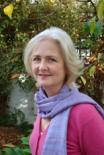
Artemis Cooper
Just a quick note to regular readers and those who search for this book – there are many Google searches for this proposed biography.
It came to my attention that a book called Biography of Patrick Leigh Fermor by Artemis Cooper and Antony Beevor is due to be published by Penguin in September 2011. At least that is what it says on Amazon and a number of on-line book sites.
I contacted Amelia Fainey who is Publicity Director for Penguin books as my belief was that the agreement (and if I recall correctly actually mentioned in In Tearing Haste) is that the book will be published after Paddy’s death.
Amelia responded thus:
Hello
I’m afraid we don’t have a date scheduled for this yet – possibly 2013 – certainly not this September!
A
So, if you were hoping for a book this autumn you will have to wait …. at least two years, and I suspect a lot longer than that.
A biography of Paddy by Artemis Cooper?
Artemis Cooper talks about Words of Mercury
 Patrick Leigh Fermor